Keep up to date with the latest news, insights, and travel trends from Europe, including detailed coverage of major developments, practical tips for navigating new processes, and on-the-road reports from our "merry band of travelers."

Barcelona’s Sagrada Família Nears Major Construction Milestone

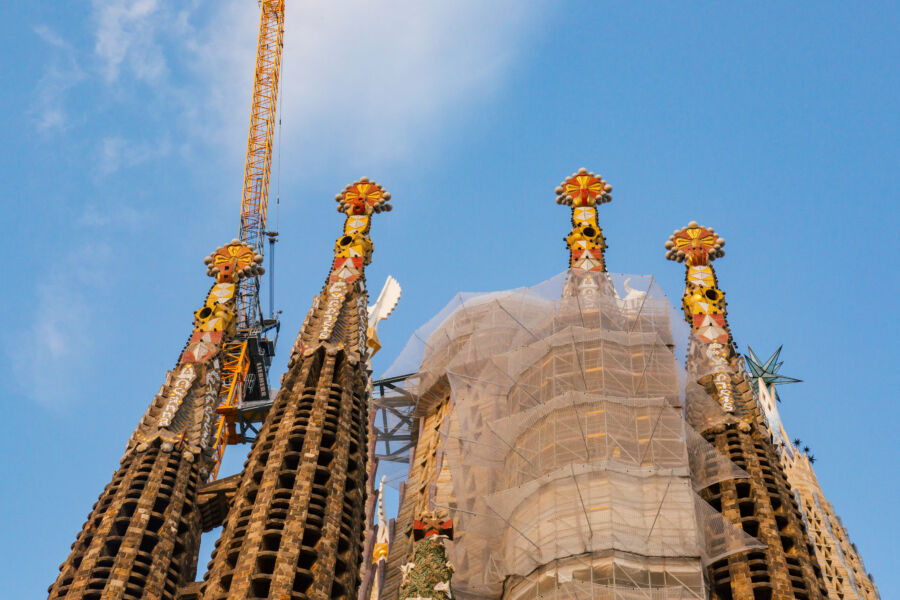
You might have heard that Barcelona’s famously unfinished church is about to be finished. Well…not quite. The Sagrada Família, the Modernista masterpiece of Antoni Gaudí, will not truly be “finished” for a long time. However, its most striking element will soon be shedding much of its scaffolding: In 2026, builders expect to complete the church’s central Jesus Tower, just in time for the centenary of Gaudí’s death on June 10.

Since construction began in the late 1800s, the exterior of the Sagrada Família has been dominated by cranes, scaffolding, and all sorts of construction miscellanea. Gaudí labored on the church for 43 years, from 1883 until his death in 1926. For the century that followed, workers continued to toil to bring Gaudí’s vision to life — an inspiring act by a community of committed people who were willing to work on a church that they knew wouldn’t be completed in their lifetimes.

Sagrada Família with scaffolding covering its top
Sagrada Família has always been a work in progress.

Today, 17 of the church’s planned 18 towers are fully constructed, and the last and tallest one — the Jesus Tower — is in its very final stages. When finished, the Jesus Tower will rise 172 meters (about 560 feet) and be topped with a cross that will be visible even from out at sea. It will also mean that, for the first time ever, the top of the Sagrada Família will be free of scaffolding. But other major elements of the church will remain under construction, including the baptistery, Chapel of the Assumption, and the Glory Façade — which one day will be the main entrance.

So why are we seeing headlines about the church being “finished”? It’s largely because June 10, 2026, is the centenary of Gaudí’s death — an arbitrary deadline that developers set for themselves a long time ago. To their credit, completing the main tower is a huge achievement that’s worth celebrating. But the church is still far from truly “finished.”

Top of Sagrada Família, covered in scaffolding.
The completion of the Jesus Tower means the top of Sagrada Familía will no longer be covered in scaffolding.

Beyond the chapels and entrances that remain works in progress, other elements of Gaudí’s original vision still have a long way to go. For example, Gaudí designed a grand esplanade leading up to the church. But in the 1950s, a shortsighted mayor (figuring the church would never truly be completed) sold the land destined for the esplanade. Now, it’s filled with drab, doomed apartment blocks that the city must buy back to fulfill Gaudí’s full plans.

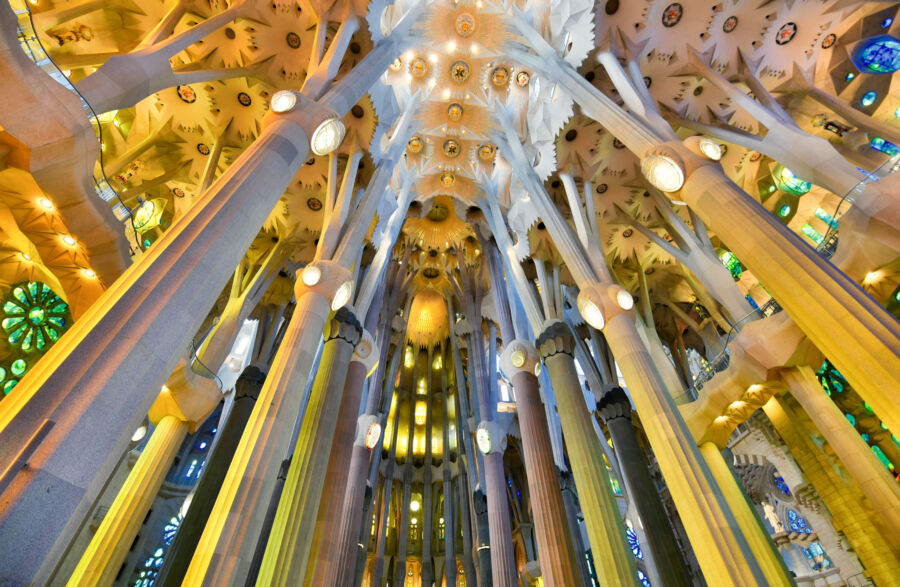
Regardless of the incomplete nature of its exterior, the interior of the Sagrada Família remains a sight to behold. The nave, transept, and aisles feature breathtaking displays of Gaudí’s distinctive engineering and love of nature. Columns rise like tree trunks, complete with branches, leaves, and knot-like capitals, as light filters through stained-glass windows to create the effect of a rainforest canopy. It’s an awe-inspiring symphony of colored light, which Gaudí purposefully curated to help encourage a contemplative mood.

Sagrada Família interior
The interior of Sagrada Família.

Recognizing that his masterpiece would be a decades-long project, Gaudi once famously said, “My client is not in a hurry.” And, even with the nearing completion of the Jesus Tower, that remains the case. If you visit the Sagrada Família in 2026 (and many years beyond) you will still see some scaffolding. You will still encounter construction sites. And you will still have to use your imagination to picture Gaudí’s vision fully achieved.

But soon, that imagination won’t be required for the church’s iconic towers. While the Sagrada Família won’t be truly “finished,” this is a major step forward in the church’s lengthy history.


We’d like to hear from you! As a member of our merry band of travelers, please weigh in on this article by using the comments below. Meanwhile, many of these topics will also be covered on Rick Steves’ Europe’s various social media platforms — FacebookInstagramX, and TikTok — and we hope you’ll join the conversation there as well.

EES Is Europe’s First Step Toward ETIAS

You’ve always needed a passport to travel to Europe. And in the future, you’ll need a few other things as well. Big changes are on the horizon, which will require you to apply for approval and pay a fee to visit Europe. But don’t panic: None of this is required yet — and won’t be for a while.

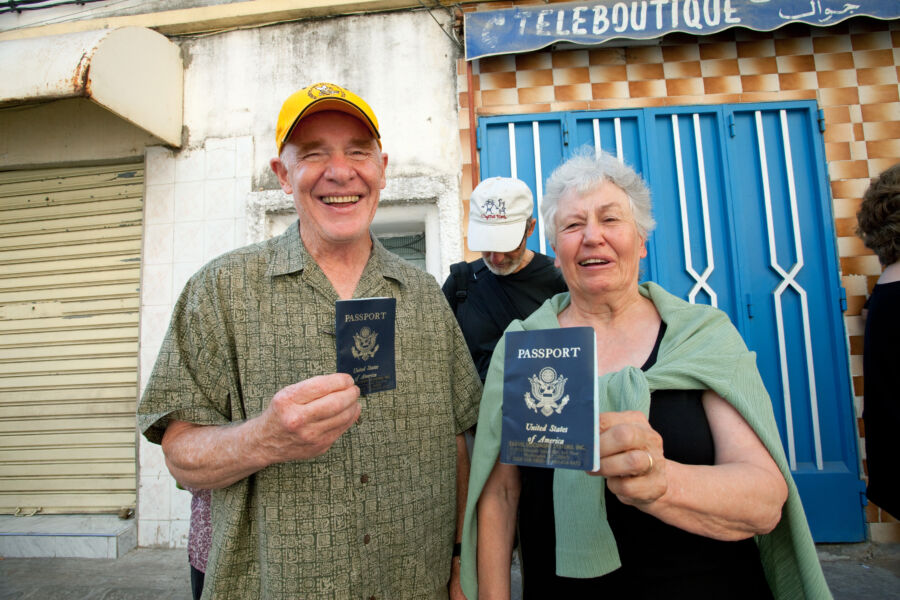
Two people holding up American passports
In the future, you’ll need more than just a passport to visit Europe.

If you haven’t already, you’re about to start hearing a lot about the European Travel Information and Authorization System (ETIAS). This is a long-planned addition to Europe’s immigration process, which will require travelers to preregister and pay a small fee…someday. ETIAS has been delayed repeatedly, and it’s still not coming for at least another year (maybe more). But Europe is taking its first steps to prepare for it. As it does, you’ll see new technologies at borders — and will soon have to say goodbye to passport stamps.

Starting October 12, the European Union (EU) will begin rolling out its Entry/Exit System (EES) operations, which will consist of upgraded technology at the borders of the 29 Schengen Zone countries. This area covers much of Europe, from Iceland to Italy, from Sweden to Spain, and from Portugal to Poland. (Notably, Ireland and the United Kingdom are not included — but the UK has its own similar system, the ETA, already in effect.) This technology will create a cohesive system to help stop illegal immigration and better identify those who overstay their 90-day tourist visas.

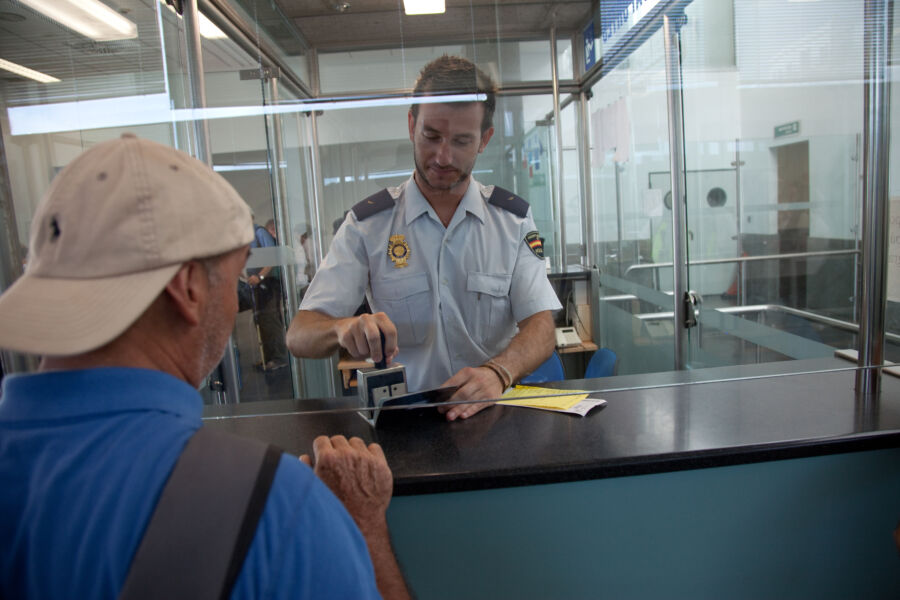
For now, travelers don’t need to do anything; book your flights and plan your trip as normal. But when you first land in Europe, you’ll probably notice that everything is becoming more digital. Facial recognition technology may greet you at immigration, and your passport will be scanned — not stamped. (Those still craving a stamp can try asking a border guard…but no promises.)

A passport stamped at immigration
Once ETIAS takes effect, passport stamps will be passé.

The EES rollout is expected to take about six months, meaning it won’t be fully operational until around April 2026. Once it is, it will be another six months until ETIAS is required, as the EU wants to make sure its systems are running smoothly before taking this big next step. So, you won’t have to fill out an application or pay a fee to visit Europe until at least October of next year…and, if previous delays are any indication, it might be even later than that.

This all may sound intimidating, but it’s far from unprecedented. ETIAS is essentially the same process as the United Kingdom’s ETA and the United States’ ESTA requirements — all part a broader effort to streamline immigration by digitizing the process as much as possible. While crossing a border will likely always involve some sort of waiting, these upgrades are helping make the once-archaic process more efficient…even if it means your passport will no longer be a stamp-filled scrapbook of your travels.


We’d like to hear from you! As a member of our merry band of travelers, please weigh in on this article by using the comments below. Meanwhile, many of these topics will also be covered on Rick Steves’ Europe’s various social media platforms — FacebookInstagramX, and TikTok — and we hope you’ll join the conversation there as well.
This Pride Month, Take Pride in Broadening Your Perspective

It’s Pride 2025, and I’m reflecting on last September, when I slipped along the matrix of communist-era buildings in Sofia at midnight to visit one of only five gay bars in all of Bulgaria. The blue-lit basement bar was unremarkable, really: just a cluster of cozy couches populated by a light crowd of locals ringing a small, empty dance floor.

Unsure if I’d find someone friendly and fluent in English to talk with, I entered with a book tucked under my arm. Fortunately, I didn’t need it long. Soon, Ivan waltzed over with a wide smile, excellent English, and an invitation to join his friends.

The three Bulgarians and I talked about my upcoming travels and their life as gay people in Bulgaria. They enjoyed cosmopolitan Sofia — but wouldn’t dream of coming out to their banking industry colleagues. I pondered how my company’s CEO had marched in the Seattle Pride parade and eagerly asked if he’d see me there. But there wasn’t much time to reflect, because soon the dance floor was no longer empty as we laughed and danced to Bulgarian pop music late into the night. Already, the country was feeling less foreign.

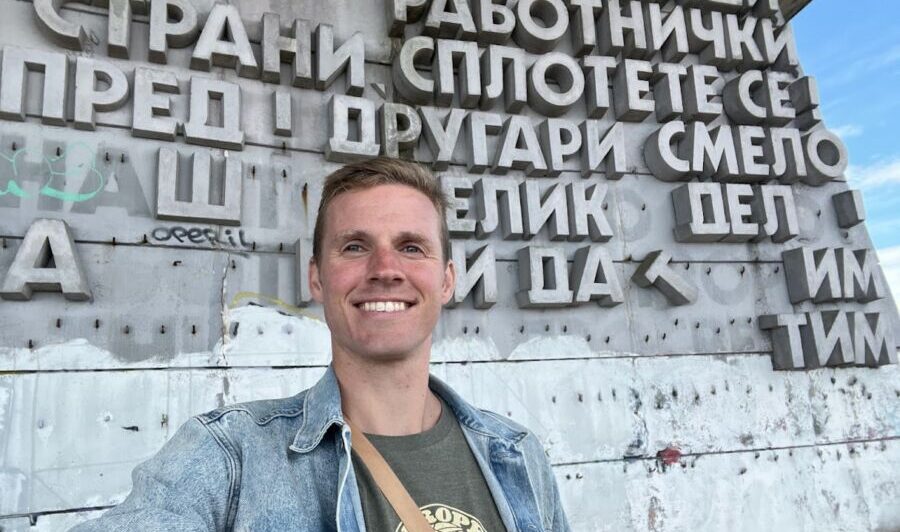
A smiling person standing before a wall in Bulgaria
Gabe Gunnink in Bulgaria, fall 2024

I endeavored to visit gay bars in Bulgaria and Turkey last year not because I’m a party animal, but because I’m a cultural chameleon. Turkey scores a 36/100 on the global LGBTQ+ equality index — and it actually outperforms Bulgaria in public opinion polls. I was fascinated to experience what life is like for queer people in these places.

As I danced with Ivan and his crew in Sofia — and later talked with a man who’d recently fled Russia on a rooftop gay bar in Istanbul — I swelled with gratitude for the queer community that transcends nationality. I also brimmed with hope that my new friends’ cultures would follow the same steady march toward LGBTQ+ rights I’d seen in my own American society until they too could hold hands in public and bring their partners to office parties.

Steady forward progress. That’s the way human rights work, right?

Then I returned home to anti-trans election ads, companies shuttering diversity programs, and friends having passports changed against their will. Overwhelmed by these setbacks, I was reminded of Amsterdam’s Homomonument.

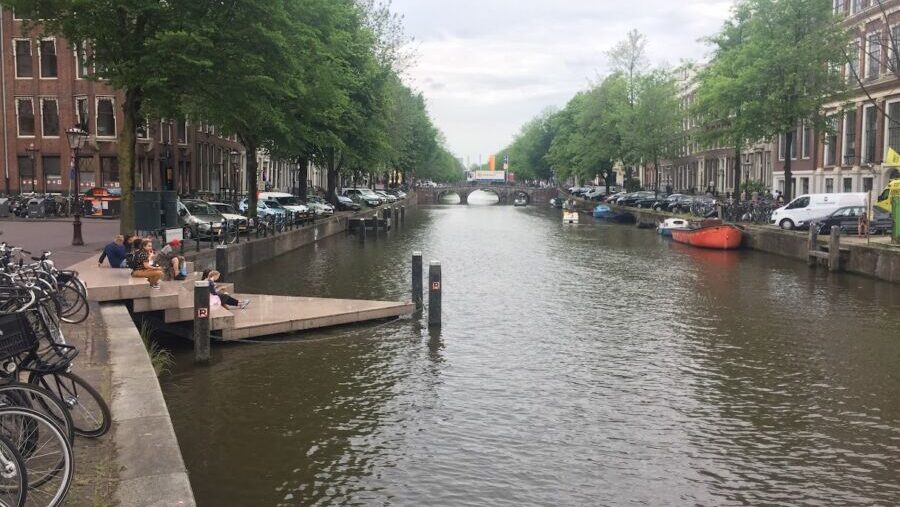
The Homomonument is a vast triangle — each side longer than a tennis court — stretching out along the Keizersgracht canal. It was built in 1987 to honor the LGBTQ+ victims of World War II, after police arrested Dutch activists trying to place a lavender wreath at Amsterdam’s National War Memorial. The eastern point of the monument is a staircase leading down to the water, the steps of which are often lined with wreaths. Each corner features a smaller pink triangle — the symbol stitched to sexual minorities in concentration camps.

A triangular chunk of concrete juts into a canal in Amsterdam
Part of Amsterdam’s Homomonument juts into the Keizersgracht canal

But life was not always tragedy for the queer victims of Nazi Germany. For the first third of the 20th century, Germany was home to the world’s first gay movement. Magnus Hirschfield pioneered the scientific study of gender and sexuality. Gay bars, gay movies, and gay pop songs fueled a thriving subculture. Queer people may have existed at society’s margins, but society made those margins plenty wide…

…until the margins were burned.

As it turns out, the march of human rights is not steady forward progress. My new friends in Bulgaria are not promised a future in which they can marry. My friends in Ohio and Oklahoma aren’t guaranteed protection from employment and housing discrimination. And rights given can be taken away.

Just this year, Stonewall National Monument, the first US monument to LGBTQ+ people, had its history twisted. Famous for the 1969 Stonewall riots that catalyzed the LGBTQ+ rights movement, the Stonewall Inn was surprised to find the National Park Service had removed all mentions of transgender people from its website. The acronym LGBTQ+ was axed to LGB — a galling erasure, given that trans activists Marsha P. Johnson and Silvia Rivera emerged as the leading figures from the riots.

In response, this Pride season, I invite you to explore queer history and culture with the spirit of a thoughtful traveler: exercising curiosity, embracing culture shock, and pursuing understanding over judgment. So, as you would if you were visiting Sweden, Spain, or Sicily, consider seeking out books, films, and conversations that connect you to people unlike yourself. (I’ve provided a few recommendations below!) Because whether you’re part of the LGBTQ+ community, a proud ally, or unsure what to think about queer culture, we all have plenty to learn. And a broader perspective is something we can all take pride in.


Gabe Gunnink is a Monday Night Travel host for Rick Steves’ Europe. His recommended queer books and movies include:

  • The Death and Life of Marsha P. Johnson (2017). This film investigates the murder of the famous trans activist while also exploring her vibrant life and work.
  • Rustin (2023). A biopic uncovering the legacy of Bayard Rustin, the organizer of the 1963 March on Washington and a gay rights activist.
  • Less (Andrew Sean Greer, 2017). In this Pulitzer Prize-winning novel, middling author Arthur Less travels the world as an excuse to skip his ex-lover’s wedding.
  • Last Night at the Telegraph Club (Malinda Lo, 2021). This novel follows a young Chinese American woman as she finds love and community in San Francisco’s lesbian bars during the Red Scare.
  • A Queer History of the United States (Michael Bronski, 2011). A dense but enlightening exploration of the long, overlooked queer history in our country.


We’d like to hear from you! As a member of our merry band of travelers, please weigh in on this article by using the comments below. Meanwhile, many of these topics will also be covered on Rick Steves’ Europe’s various social media platforms — FacebookInstagramX, and TikTok — and we hope you’ll join the conversation there as well.
What to Know About Spain’s Anti-Overtourism Protests

Recently, you may have seen news about “anti-tourism” protests in Europe, especially in Barcelona and beach towns across Spain. Is it still safe to travel to these places? In short: Yes, absolutely. But it’s smart to understand what’s behind Europe’s frustration about overtourism, so you can avoid inconveniences — and do your part to be a good traveler.

Spain has seen a steady, pronounced rise in international tourism over the past few years. Last year, the country broke records with 94 million international arrivals — a 10 percent increase over 2023, pushing Spain ahead of Italy as the world’s second-most visited country (after France). Understandably, locals in many heavily touristed communities are alarmed and frustrated by the ever-increasing number of visitors clogging their communities — and, especially, by the reluctance of local authorities to thoughtfully curtail these problems.

We “Rick Steves” travelers from North America — who tend to go on brief, targeted trips to cultural destinations — represent only a small fraction of these numbers. The biggest piece of Spain’s problematic pie is beach tourism: holidaymakers from Britain and Northern Europe who flock to the Costa del Sol, Canary Islands, and other Mediterranean destinations for long vacations. Many of the recent protests have focused on these beach towns, though one major cultural destination — Barcelona — has seen its share as well.

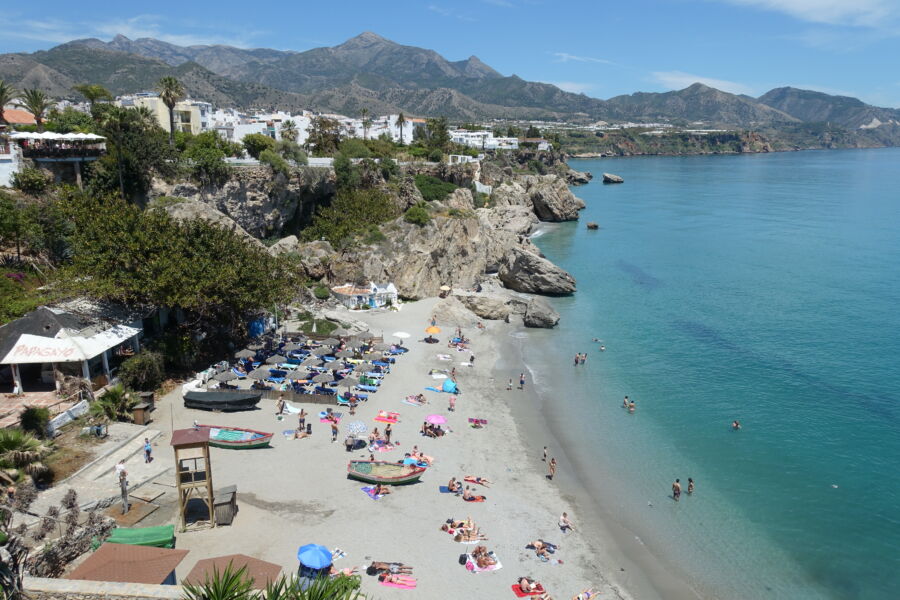
A beach in Nerja, Spain
Heavy beach tourism to places like the Costa del Sol are key targets of Spain’s protests.

Last July, you may have heard about “anti-tourism” protests in Barcelona, when a few thousand locals marched down the Ramblas chanting “Barcelona is not for sale” and slapping red tape across some businesses. To emphasize their point, a few protesters (harmlessly) sprayed water guns at tourists — a detail that succeeded in its primary goal: grabbing international headlines. This sentiment has continued into 2025, with several Spanish cities seeing a wave of protests in April. Organizers have also discussed plans for additional protests on June 15.

If you’re planning a trip to Spain, this might sound alarming at first. But it’s important to understand that, while typically characterized as “anti-tourism” protests, more precisely these are “anti-overtourism” protests. In most of these places, tourism represents a significant part of the local economy. (That wave of tourism in 2024 poured more than €125 billion into Spain.) Because of this, most locals are happy to host a certain critical mass of visitors. But when that number is exceeded, it begins to negatively impact quality of life, cost of living, and other markers of a livable community. So, naturally, locals push back.

One critical distinction is that these protests are typically not targeted at you, the tourist (even if a few of us might catch a little flak in the process). Rather, they’re designed to pressure local authorities to legislate more proactively to encourage sustainable tourism. One popular target is short-term apartment rental services like Airbnb, which locals (rightly) observe as increasing housing prices for residents and changing the character of neighborhoods that used to feel more local. A stated aim of these protests is demanding further restrictions on this form of accommodations.

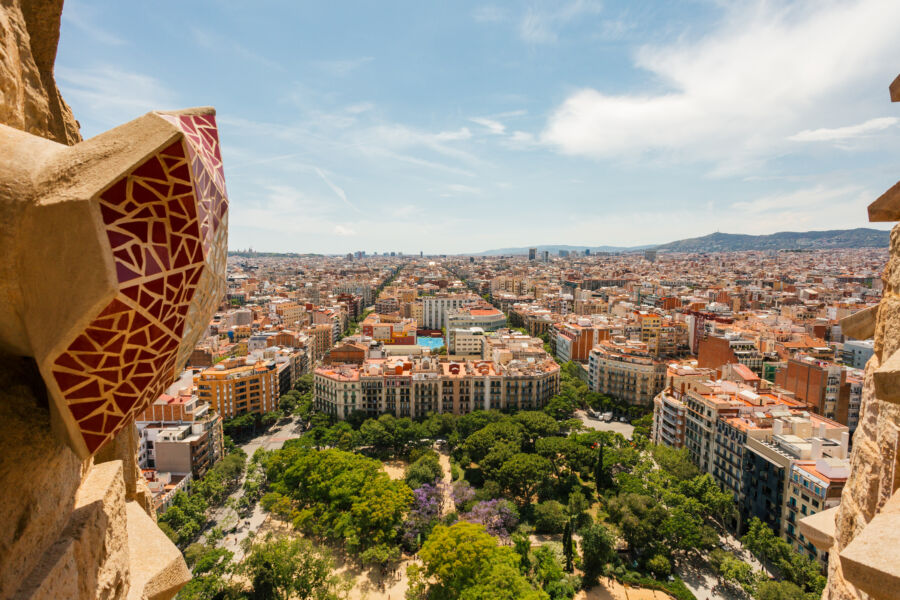
Barcelona's skyline
The impact of short-term rentals are a growing concern in cities like Barcelona.

It’s also worth keeping in mind that demonstrations of all kinds are common in Europe, which loves to exercise its rights to assembly and free speech. Strikes, for example, occur frequently across the continent, advocating for (or against) all sorts of issues. And, as with Spain’s anti-overtourism protests, it’s in your trip’s best interest to try and skirt them. A march in Barcelona and a train strike in Italy can cause bumps in your itinerary.

Luckily, they’re often avoidable. High-profile protests like these are designed to make a point by seizing people’s attention, and are therefore advertised well in advance. That’s just one more reason to tune into local news, wherever you’re traveling: to increase your chances of finding out about planned protests before you stumble upon them. If you know when and where they’re taking place, you can make a point to steer clear.

If you do accidentally come across a protest like this, it’s wise to quickly and discreetly remove yourself from the situation. (Of course, this is simply good advice for traveling anywhere: If you see a demonstration brewing, before wandering into the middle of it, be very clear on what it’s about and whether it’s a smart place for you to be.)

And what if, despite all efforts, you do wind up crossing paths with protesters? You’re probably going to be just fine. There have been no reports of injury or other lasting difficulties for travelers. Much more likely, you may simply be jeered for a few minutes; popular tourist sights and thoroughfares could be temporarily closed off; and, yes, there’s an astronomically small chance that you might get spritzed with a water gun. (That said, of the estimated 15 million tourists who went to Barcelona last year, maybe a dozen or two got a little wet…leaving them momentarily soggy, but unharmed. If you’re seeking reassurance, just do the math.)

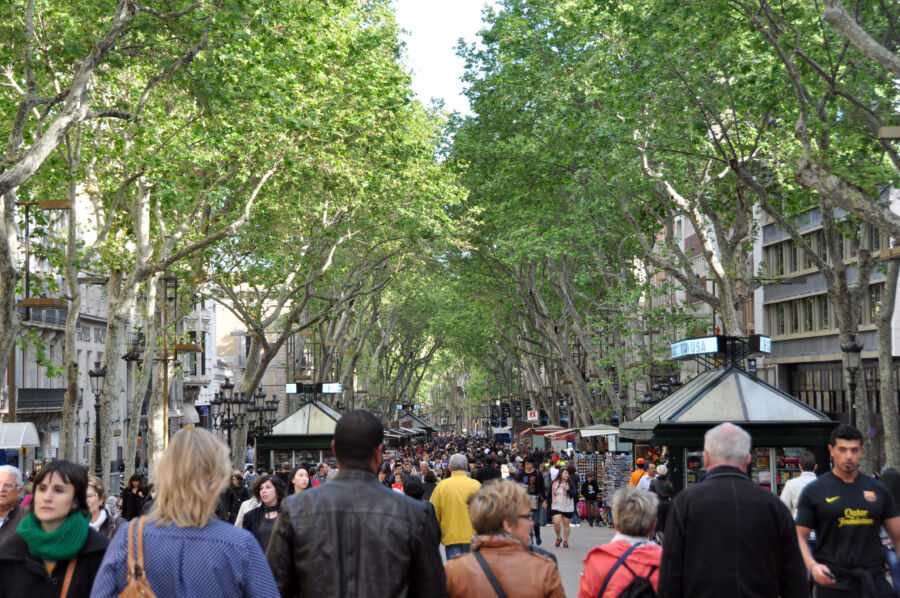
The crowded Ramblas street in Barcelona
The Ramblas is one of Barcelona’s most touristed locations.

All of this speaks to the practical side of traveling to places where these protests might be happening. But for the thoughtful traveler, the protests are also a reminder to check yourself. Protests, strikes, and demonstrations can, and should, give you pause. It’s important to understand that many communities, overwhelmed by their own popularity, would actually prefer if at least some of us tourists would steer clear. Rather than feeling defensive, take this trend as an opportunity to be more mindful about how travel, and your presence, might negatively impact the places you’re visiting.

The same principles of good travel — whether to a place that’s oppressively “overtouristed,” or one that’s pin-drop quiet — remain the same: Visit with a spirit of curiosity and empathy, treating everyone you meet with respect and consideration; be conscientious, seeking to minimize your footprint by thoughtfully consuming resources; avoid contributing to congestion by considering visits to lesser-known alternatives (or going at a less busy time); and try to understand the local point of view about what constitutes a “good traveler” versus a “bad traveler,” to make sure you’re striving to be the former.

Europe is grappling with how to handle overtourism. Venice, for example, reinstated its “Access Fee” this year (primarily targeting day-trippers), and protests like those in Spain might become more frequent. So far, these trends have not affected Rick Steves’ Europe tours or our travel advice in general. But we’ll continue to keep an eye on them, and in the unlikely event that things escalate beyond causing discomfort or inconvenience to travelers, of course, we’ll update this post.

However, our sense is that these protests are fundamentally peaceful, entirely reasonable, and important in prodding people on both sides of the “tourism equation” to challenge assumptions and strive to interact more constructively and sustainably with one another.


We’d like to hear from you! As a member of our merry band of travelers, please weigh in on this article by using the comments below. Meanwhile, many of these topics will also be covered on Rick Steves’ Europe’s various social media platforms — FacebookInstagramX, and TikTok — and we hope you’ll join the conversation there as well.
Iberian Power Outage Is a Reminder to Pack Your Flexibility

When the lights go out across Spain and Portugal, what do you do? If you’re on a Rick Steves tour, you appreciate having a well-connected tour guide to navigate the headaches, try to relax and make the most of the experience — and, most of all, be glad you packed your flexibility.

Travel is intensified living — even when everything’s going smoothly, bumps in the road can feel like mountains. The best way to mitigate any turbulence is to stay loose. When you travel “tight,” small hiccups feel like big disasters. But when you pack your flexibility, you can roll with the punches, embrace inconveniences, and give your trip the chance it deserves to thrive in the face of disruption.

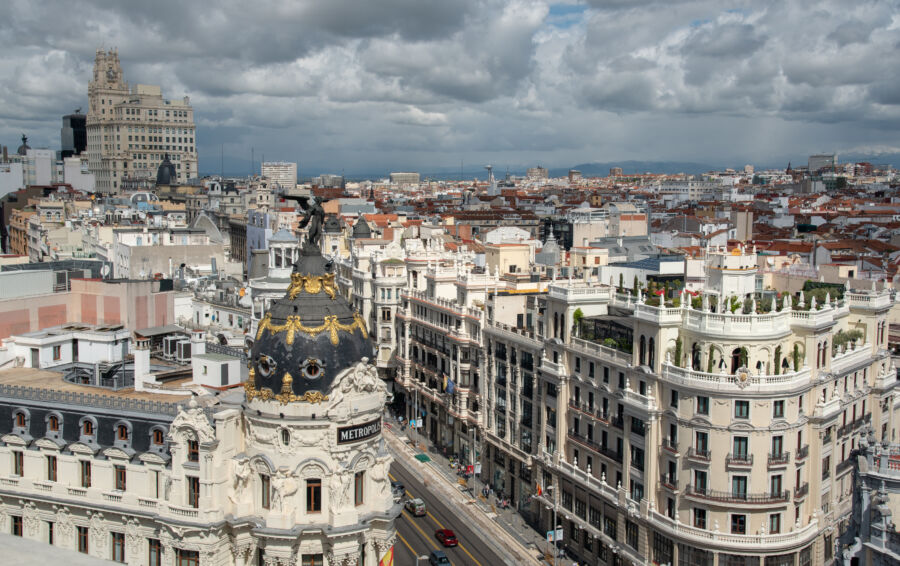
Madrid skyline
The blackout left entire cities like Madrid without power.

We were all reminded of the importance of this on April 28, when the power went out across the Iberian Peninsula. The outage made international headlines, as Spain and Portugal essentially ground to a halt — causing major problems for millions. It also created significant challenges for our tour groups.

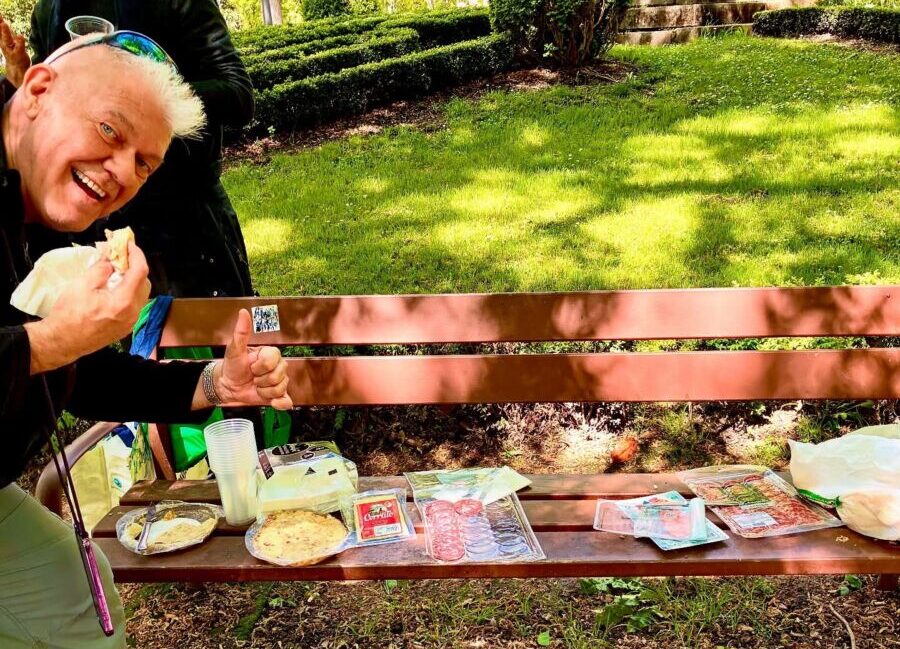
But they made the most of it. In Madrid, one guide gathered bottles of wine and encouraged her group to have a happy hour in their hotel lobby. Hotel staff — happy to encourage the spirit of makeshift conviviality — brought candles out as the daylight faded, and the atmosphere shifted quickly from inconvenience to we’re-all-in-this-together (-and-pass-the-vino) camaraderie. Another group was on an orientation walk in the Portuguese seaside village of Nazaré when the blackout hit. With their afternoon plans scrapped, they popped into an ice cream shop and conducted an impromptu taste test of every flavor, with the owner cheering them on. (“It’s all going to melt, anyway!”) Sometimes, it’s those moments when things go sideways that create the most vivid travel memories. In fact, on their post-tour evaluations, nearly every traveler on both of these tours cited the outage as the biggest “wow” moment of their trip.

Picnic supplies on a park bench
Whether in hotel lobbies or local parks, picnics and happy hours were a popular solution to the power outage on Rick Steves tours.

Other groups faced more severe disruptions. One was on a train, midway between Barcelona and Madrid, when the blackout hit… leaving them in the middle of nowhere, stranded on the plains of Spain. At times like this, we’re grateful to have not only great guides, but also a wonderful network of local contacts who are always happy to step in and help. The owner of a Spanish bus company we partner with volunteered to personally drive several hours into the countryside to bring the group to Madrid — an incredibly generous (if impractical) offer. In the end, it took 14 hours for the train to finally show up in Madrid… at 2:30 in the morning. And that driver was standing by to whisk the weary travelers directly to their hotel, which had already stocked their rooms with enough snacks to tide them over until breakfast.

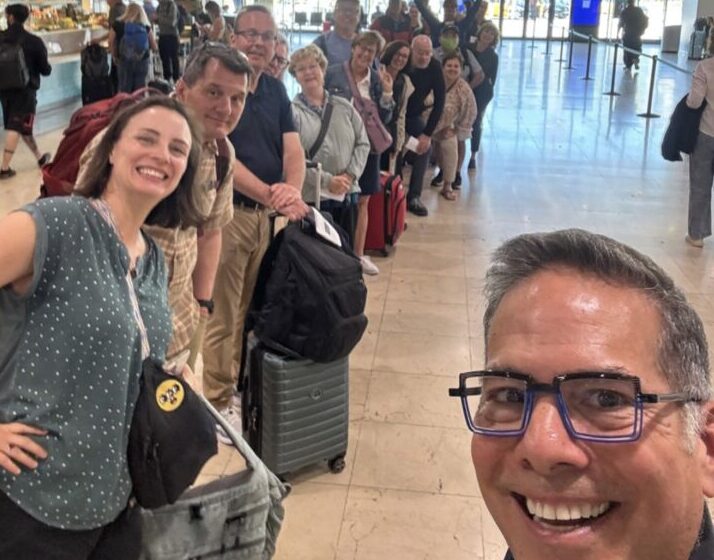
And sometimes, packing your flexibility can make your trip better when an issue doesn’t arise. A fourth tour group watched the blackout roll across the country a couple days before their own train trip. Accepting their reality, they braced for severe delays…and were pleasantly surprised when their train came as planned, and they made it to their destination right on time.

A happy group of travelers waiting for a train
One tour group braced for delays…and were happily surprised when everything went smoothly.

Of course, this outage was a serious situation, and many locals (and travelers) faced much more severe consequences. We are extremely grateful that this crisis resulted only in delays and minor disappointment — and, in some cases, a few happy travel memories. Our guides, our European friends and partners, and our wonderfully “loose” travelers turned what could have been a (literally) dark day into a case study in good, flexible travel.

This experience is also a reminder that, no matter how organized you are, it’s impossible to entirely avoid mishaps on your trip. Rain might fall on your alpine hiking day. The bus you’re waiting for may never show up. And, at the worst possible moment, the lights might go out. But if you pack your flexibility, you’re more likely to view these hiccups not as the end of your adventure, but merely as a plot twist…one that made your travel story even more interesting.


We’d like to hear from you! As a member of our merry band of travelers, please weigh in on this article by using the comments below. Meanwhile, many of these topics will also be covered on Rick Steves’ Europe’s various social media platforms — FacebookInstagramX, and TikTok — and we hope you’ll join the conversation there as well.
Eurovision: Europe’s Flamboyant Geopolitical Cabaret

On May 17, nearly 200 million Europeans will gather around their TVs for one of the biggest — and quirkiest — events on the European calendar: the Eurovision Song Contest. Part talent show, part cultural showcase, part political soap opera, Eurovision is one of the world’s longest-running televised programs. If you’re in the mood for something bizarre, brilliant, and oh so European, this might be for you.

Stripped down to basics, Eurovision is a music competition. But any fan will tell you that it’s much more than that. It’s a glitzy, campy, over-the-top display of Europe’s diversity — and a funhouse mirror of its modern sociocultural tensions.

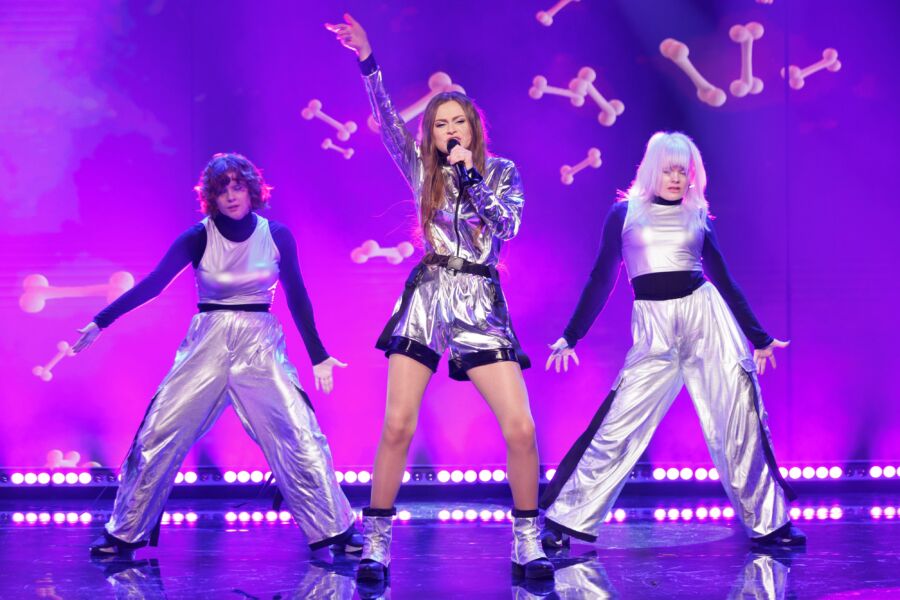
Dancers in silver suits in front of a screen showing dog bones.
Ireland’s submission, “Laika Party,” features a mix of space suits and dogs (Photo: EBU)

If you’ve seen the 2020 film of the same name starring Will Ferrell and Rachel McAdams, you have a faint idea of how Eurovision works. In a nutshell: Every year, musical acts across Europe submit original songs in hopes of representing their country. The songs must abide by a handful of rules: no longer than three minutes, no more than six artists on stage at once, no expletives, no lip-synching — and no live animals. After that, just about anything goes…meaning the performances can get wild.

To get a taste, here is a montage of Eurovision 2025 submissions. Towel-clad Swedes are singing about saunas, Croatia is re-creating nightmares in the mud, and Estonia appears to really, really love coffee. Past acts have seen disco aliens, vampires singing opera, a puppet turkey — you name it. Songs range from kid-friendly, to innuendo-heavy, to downright vulgar. (Parental guidance is advised.) Everything looks like a Broadway musical collided with a sci-fi film.

The acts are selected by national broadcasters, such as the UK’s BBC and Italy’s RAI. The final consists of 26 acts: 20 that qualify through semifinals, the “Big Five” (France, Germany, Italy, Spain, and the UK, who always get a spot because they fund most of the spectacle), and the host country — the previous year’s champion. The finalists each perform their song live in one stupendous glitter-filled grand finale, before voting begins to determine the winner.

Dancers singing in front of a fake sauna.
Sweden’s “Bara Bada Bastu” is all about saunas (Photo: EBU)

And that’s when the political drama heats up. Voting is split between the public and national juries, and the country that earns the most combined points wins. The public votes much like you would on American Idol, casting ballots by phone to rank the top 10 performances. This normally winds up reflecting the quality of the acts: The song that earns the top public vote is the people’s consensus pick for which was “best.”

But the national vote is totally different. Each country also has a jury, who simultaneously rank their top 10. But these picks can lean on international alliances (or grudges) more than onstage talent. Eurovision asks juries to be apolitical, yet countries angry at each other often withhold points — while others consider it a nice diplomatic gesture to give a fellow nation their top vote. Juries announce their rankings with brutally dramatic pauses.

Because of this, Eurovision winds up reflecting real-world friction. Greece and Turkey withheld points from each other for years — until 2000, which was seen as a big step in their testy relationship. In the mid-2000s, as the UK grew wary of the EU’s eastward expansion, Brits enjoyed grumbling about how former Yugoslav republics were unfairly throwing off the arithmetic by still voting as a bloc. Ukraine won in 2022, with nearly every country giving them votes as a statement against Russia’s invasion. And last year, Switzerland’s victory was seen as a “neutral” choice amid the Israel–Palestine conflict.

Nemo, representing Switzerland, won Eurovision 2024 (Photo: Sarah Louise Bennett, EBU)

While today’s Eurovision is filled with political passive-aggressiveness, the competition actually began as an act of peace and unity. In 1956, the European Broadcasting Union (EBU) launched the contest to bring war-torn Europe together through music and cultural exchange. Just seven countries competed in the first edition, but Eurovision’s popularity quickly boomed. It has now outgrown even the continent, with participants like Armenia, Israel, and Australia (because they are EBU members).

Eurovision has launched some legendary careers, as well. ABBA was a nobody until they won Eurovision 1974 with “Waterloo,” and Céline Dion’s victory for Switzerland in 1988 sparked her rise to international stardom. More recently, Italian rock band Måneskin has ridden their 2021 victory to global fame.

If you want to tune in from the US, the Eurovision finals will be streamed on Peacock on Saturday, May 17 at noon Pacific Time (3 p.m. Eastern). If you’re in Europe, consider popping into a pub that’s showing it — or finding a watch party. (Some cities erect big screens, just like for a World Cup match.) Wherever you watch, prepare to be wowed, confused, and maybe even a little uncomfortable as the spotlight highlights some of Europe’s emerging talent…and some of its simmering tensions.


We’d like to hear from you! As a member of our merry band of travelers, please weigh in on this article by using the comments below. Meanwhile, many of these topics will also be covered on Rick Steves’ Europe’s various social media platforms — FacebookInstagramX, and TikTok — and we hope you’ll join the conversation there as well.
Vatican City Updates: Pope Francis’ Funeral, St. Peter’s Hours, and the Conclave

It’s been quite a year for Vatican City. The 2025 Jubilee has drawn pilgrims from around the globe, St. Peter’s has rolled out a new skip-the-line reservation system…and now, the passing of Pope Francis will set off a series of events that might impact your travels. If you’ll be in Rome in the next few weeks, you have a potentially once-in-a-lifetime opportunity to take part in a global phenomenon. But also, you should anticipate large crowds and abnormal hours.

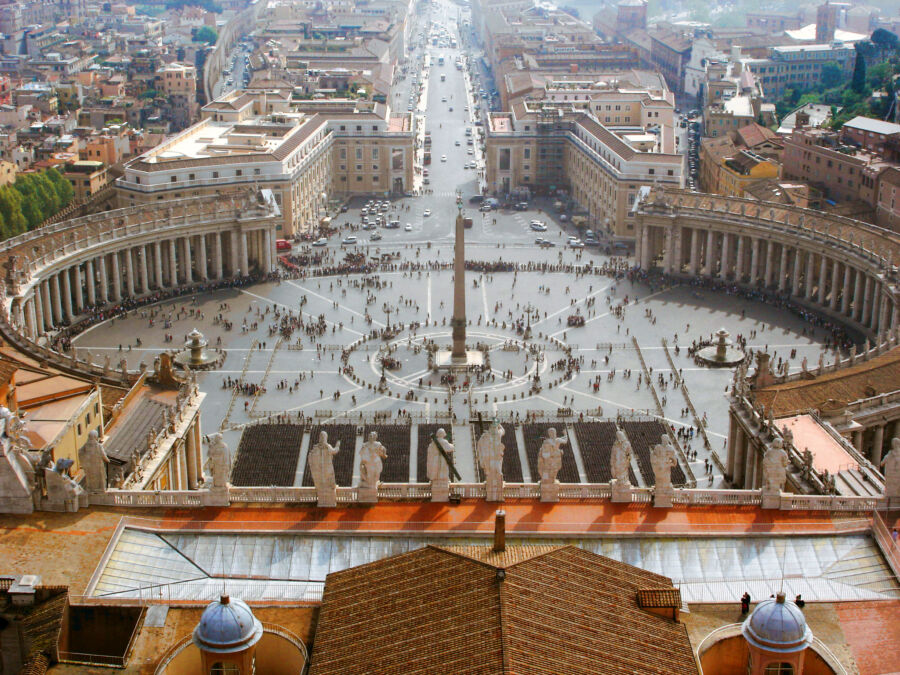
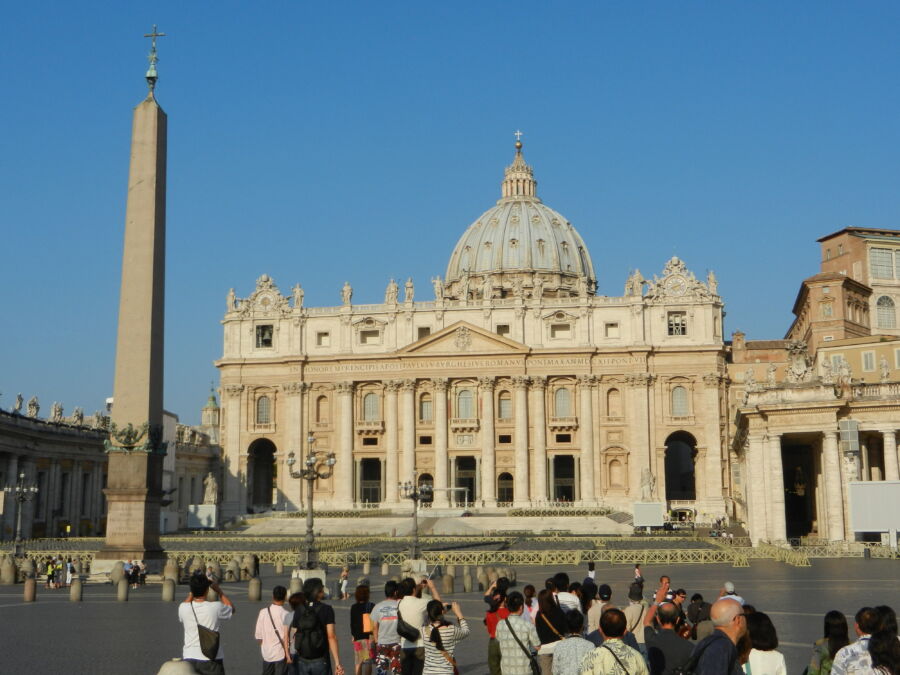
St. Peter's Square
St. Peter’s Square will soon be filled with thousands attending the funeral of Pope Francis.

When a pope dies, the tiny, peaceful Vatican stirs from its timeless slumber and becomes headline news. Millions of people converge on Vatican City, and hundreds of millions around the world watch raptly on TV.

The body of Pope Francis is lying in state in front of the main altar at St. Peter’s Basilica, and it will remain there until his funeral on Saturday, April 26. Between now and then, hundreds of thousands will file through for one last look at their pope. To try and accommodate these crowds, St. Peter’s will open at 7 a.m. and close at midnight on Thursday, April 24 — and 7 p.m. on Friday, April 25. Vatican authorities have said they will shut down St. Peter’s Square before the basilica closes, but that those in line will be allowed to wait overnight so they don’t lose their place.

The pope’s funeral will take place on Saturday at 10 a.m. local time and will be held outside, in St. Peter’s Square. His coffin will be carried out to the square, where a eulogy will be given. Most popes are then laid to rest in the crypt below St. Peter’s Basilica — however, Pope Francis requested to be buried at the church of Santa Maria Maggiore (near Rome’s Termini train station). This will also happen Saturday, after the funeral.

During this time, Rome’s tourism sights will remain open, and we don’t anticipate extraordinary crowds. (Jubilee crowds in general, which we originally cautioned might be huge, have thus far been fairly manageable.) The only exception to this will be Santa Maria Maggiore, which will likely see throngs of pilgrims and security personnel as the pope is laid to rest.

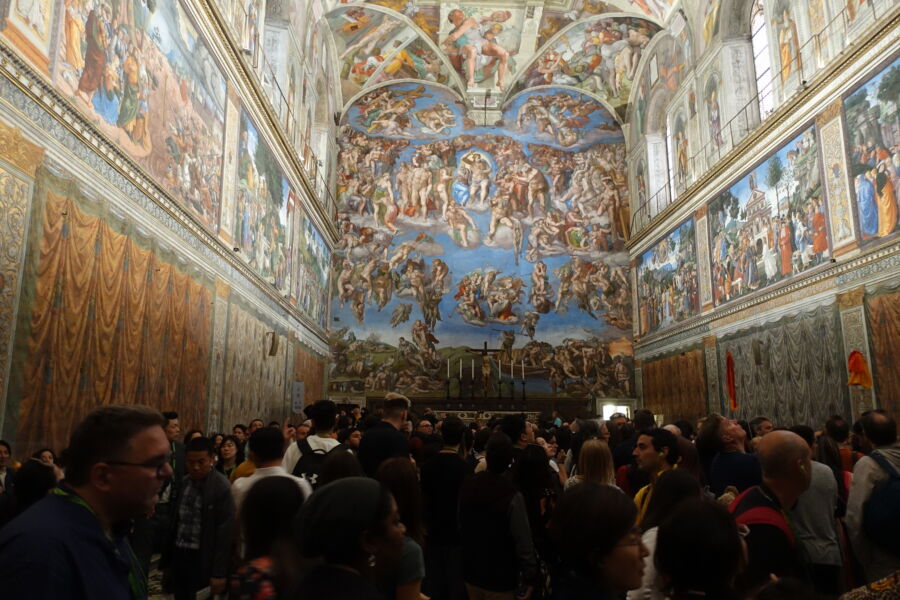
Vatican City will be a whole different story. Standard tourism visits to St. Peter’s and its dome are closed while mourners pay their respects to the pope’s body. (The basilica’s new timed-entry system will resume on Sunday, April 27.) The Vatican Museums will remain open until 8 p.m. on Friday, April 25, but will close on Saturday for the funeral. The museums will reopen on Monday, April 28 — apart from the Sistine Chapel, which will be closed to prepare for the conclave.

The conclave is one of the world’s most unique and particular electoral processes (one that was recently dramatized in the 2024 Oscar-winning thriller of the same name). While Pope Francis is being laid to rest, roughly 130 cardinals, representing Catholics around the globe, will descend on Rome to elect a new pope. Once they’ve assembled, the crimson-robed cardinals are stripped of their mobile phones, given a vow of secrecy, and locked inside the Sistine Chapel. This begins the conclave (from the Latin cum clave, meaning “with key”).

The Sistine Chapel
The ever-crowded Sistine Chapel will be closed for the conclave.

The conclave will begin on May 7. Most last a few days, but some can take weeks — it depends how quickly a consensus is reached. As the cardinals cast votes, their used paper ballots are burned in a stove inside the chapel. The smoke rises up and out the tiny chimney, visible to the crowds that will have assembled in St. Peter’s Square. Black smoke means they haven’t yet agreed on a new pope.

Finally, the anxious crowd will look up to see a puff of white smoke emerging from the chapel. The bells in St. Peter’s clock tower will ring out gloriously, the crowd will erupt, and Romans watching on TV will hail taxis to hurry to the square.

On the balcony outside St. Peter’s, the newly elected pope will step up and raise his hands as thousands chant “Viva il Papa!” A cardinal will introduce him to the crowd, announcing his newly chosen name. “Brothers and sisters,” the cardinal will say in several languages, “habemus papam…we have a pope.”


Update: This article was updated on April 28.

We’d like to hear from you! As a member of our merry band of travelers, please weigh in on this article by using the Comments below. Meanwhile, many of these topics will also be covered on Rick Steves’ Europe’s various social media platforms — FacebookInstagramX, and TikTok — and we hope you’ll join the conversation there as well.
New Ways to Visit St. Peter’s, the Colosseum, and Other Rome Sights

A handful of Rome’s most popular sights have rolled out new admission procedures in 2025, in hopes of smoothing out their visitor experience. So if your next trip to the Eternal City includes St. Peter’s Basilica, the Roman Forum, the Colosseum, or the Trevi Fountain, you might be able to skip the line — or at least save some time by planning ahead. Here’s what to know, and a few tips.

You can now book timed-entry slots to visit St. Peter’s

Vatican City: St. Peter’s Basilica

St. Peter’s is the greatest church in Christendom. Regardless of your faith, visiting is a must — and because of this, St. Peter’s ends up on nearly every Roman itinerary. (Particularly this year, as 2025 is a Jubilee Year in Rome.) That means it’s crowded.

For generations, pilgrims and tourists alike have been able to visit the basilica for free through a first-come, first-served process. This is still possible, but it requires waiting in a (normally long) line.

However, you can now wait in a much shorter line by booking timed-entry slots. The prices and details vary based on your desired experience. If you just want to visit the inside of the basilica — impressive for its sheer size, not to mention artistic treasures like Michelangelo’s Pietà and Bernini’s bronze canopy — it’s €7 per adult. If you want to climb the dome to marvel at Michelangelo’s architectural brilliance (and enjoy a great view), it’s €17 — or €22 to take the elevator. A ticket for the dome includes access to the basilica, so there’s no need to double-book.

These slots can be booked exclusively through the St. Peter’s ticketing website. Reservations to visit the Treasury Museum and tour the Vatican Necropolis are available as well. You can book for groups up to 15 people, and kids aged 7–18 get reduced tickets. (Little ones under 7 are free.) Tickets also come with a link to an audioguide, though you may find the free Rick Steves’ Audio Tour more enjoyable and informative.

Once you buy your ticket for a specific date and time, you’ll receive a confirmation email and, within 48 hours of your visit, a QR code to present at the checkpoint along with arrival instructions.

This part is a little confusing. Currently, ticketholders need to stay to the right of the main entrance line. You’ll pass souvenir stands and go through a tiny walkway that makes you feel like you’re in the wrong spot. But keep on going, and you’ll soon reach the checkpoint for people with reservations. (Feel free to ask someone working for the Vatican if you need help.) After your QR code is scanned, you’ll go through a quick security check.

Your reservation will only let you enter during a specific time range. We recommend showing up 15–30 minutes early, to give yourself time to find the right entrance. Right now, lines (if any) for reservation holders are very short, but this is likely to change as more people learn of this time-saving option.

These tickets are not required. If you’d prefer to show up, wait, and see the basilica for free, you still can. (Climbing the dome, however, costs €8–10 without a reservation.) Lines are shortest early in the morning. Either way, remember to cover your knees and shoulders. Roman church rules still apply, and modest dress is a must, regardless of ticket status.

There’s a new website to book tickets to visit the Colosseum, Roman Forum & Palatine Hill

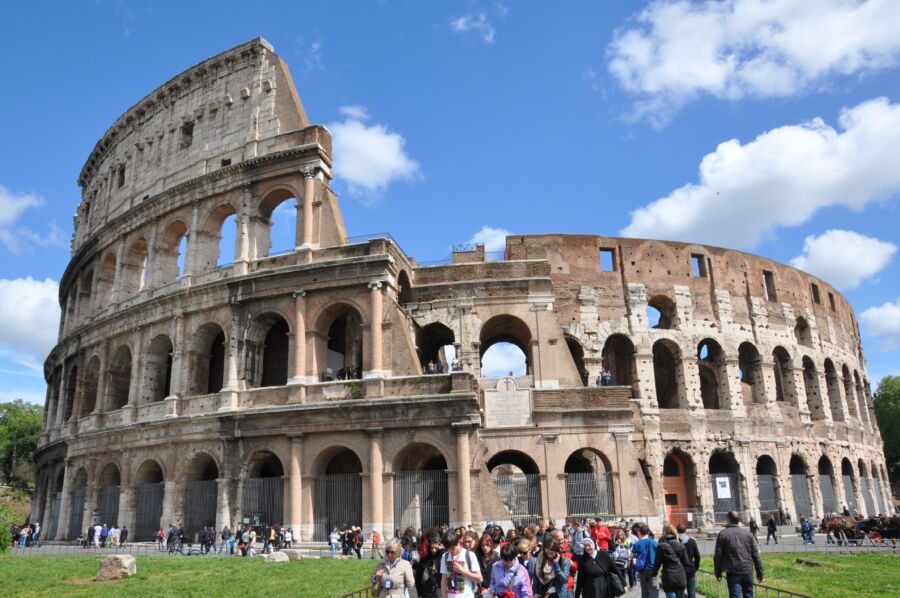
Rome: The Forum, Colosseum & Trevi Fountain

A few of the Eternal City’s most visited sights have also received updates to their admission processes. Prepurchased tickets to the Colosseum, the Roman Forum, and Palatine Hill are mandatory — there are no onsite sales — and now must be purchased through the new Parco Archeologico website. One basic ticket still covers all three sights (although you must book a specific time to enter the Colosseum), and you must show valid photo ID when you enter.

This is a new website, and it’s going through some growing pains. If you have trouble accessing it, try again in the morning or late at night (Pacific Time). Like staff, some websites ending in .it actually stop working when sites close for the day. Frustrating as this might be, it’s still important to only buy your tickets from this website. Many travelers have reported fake ticket portals, so beware of scams.

Once you secure your tickets, we still recommend showing up early — particularly for midday, peak-season reservations, when even those with timed entries to the Colosseum can face long lines. (The Forum, however, does have a new, less crowded entrance on the west side, below Capitoline Hill.)

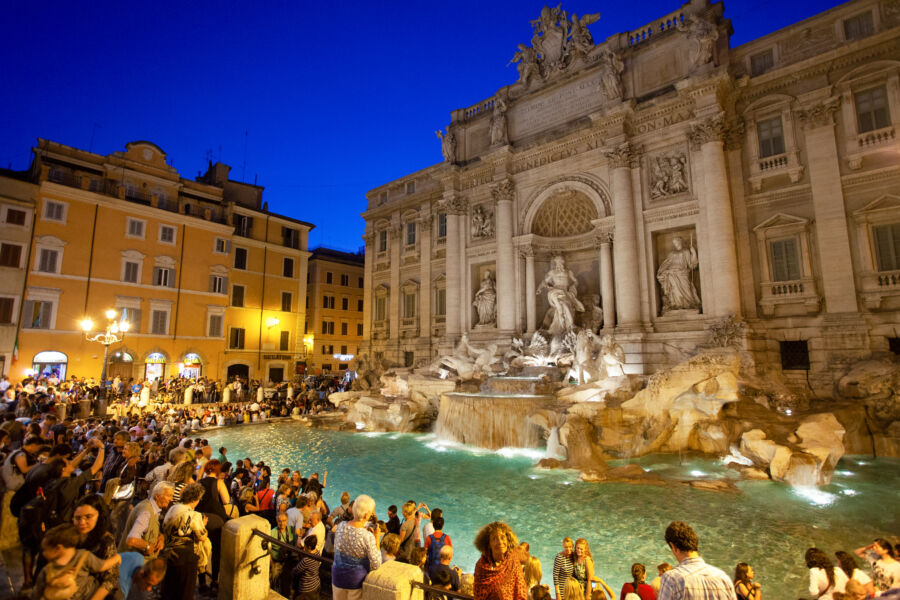
The Trevi Fountain now limits the number of people who can visit it at once

Meanwhile, the Trevi Fountain now limits visitors in hopes of providing a less crowded experience. It’s still free to visit, but you might have to wait around 10 minutes in line to get in. Once you’ve been admitted, you can stay at the fountain as long as you like — and toss in as many coins as you wish. Access is not restricted after 9 p.m.

Across Europe, systems like these are becoming the norm as cities and sights grapple with new ways of handling mass tourism. (Venice, for instance, has reinstated the Venice Access Fee for select days this year.) While these measures may take a little getting used to, the ultimate goal is to preserve Europe’s great wonders…and give you a better overall experience.


We’d like to hear from you! As a member of our merry band of travelers, please weigh in on this article by using the comments below. Meanwhile, many of these topics will also be covered on Rick Steves’ Europe’s various social media platforms — FacebookInstagramX, and TikTok — and we hope you’ll join the conversation there as well.
Celebrating the Mighty Women of European History

March is Women’s History Month, and we’re celebrating the many ways that women have impacted the story of Europe. While these contributions come in many forms — both well-known and forgotten to history — we’re focusing on women who have led their people to greatness. In so many cases, women leaders are both rare and highly successful, characterized by both longevity and prosperity. Here are a few examples of exemplary European woman leaders, taken from our Rick Steves guidebooks (with thanks to co-author Gene Openshaw).

Empress Maria Theresa (1717–1780), the only woman to officially rule the Habsburg Empire in that family’s 640-year dynasty, is widely regarded as one of its greats. The first modern ruler of the Age of Enlightenment, Maria Theresa was a social reformer who ended the feudal system, taxed the Church and the nobility, provided education and health care to her subjects, and welcomed the boy genius Mozart into her court. She inherited an empire that was threatened by land-hungry rivals…and left one that had been preserved and strengthened. It was under Maria Theresa’s 40-year rule that Europe first began to recognize Austria as a great power.

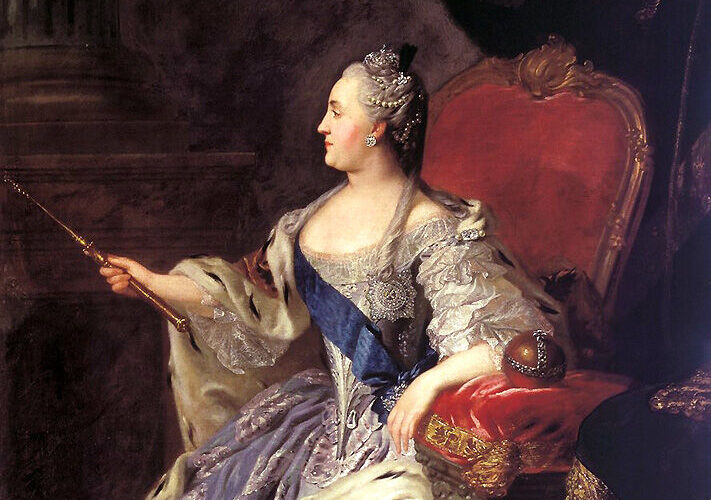
A portrait of Catherine the Great sitting on a throne
Catherine the Great

Russia is another European power that enjoyed a high-water mark under a female monarch: Catherine the Great (1729–1796). A Prussian blueblood, Catherine married Russia’s Czar Peter III, then quickly overthrew him in a palace coup. Shrewd and practical, she was admired for her military prowess, for her respect for the word of law, and for her promotion of the multiethnic nature of her fast-expanding empire. Over her 34-year reign, Catherine transformed St. Petersburg into a world-class city, with a no-nonsense Neoclassical grandeur that still defines it today; her art collection fills the Hermitage, one of the world’s finest palaces.

England’s Queen Elizabeth I (1533–1603) reigned for 45 years of flourishing trade, mounting global influence, and artistic expression. After her navy sank 72 ships of the Spanish Armada in a single power-shifting battle (in 1588), Britannia ruled the waves. Elizabeth surrounded herself with intellectuals, explorers, and poets, from William Shakespeare to Walter Raleigh to Francis Bacon. She also diplomatically navigated the Protestant/Catholic divide that wracked post-Reformation Europe, reestablishing stability and sanity following the chaotic rule of her father, King Henry VIII.

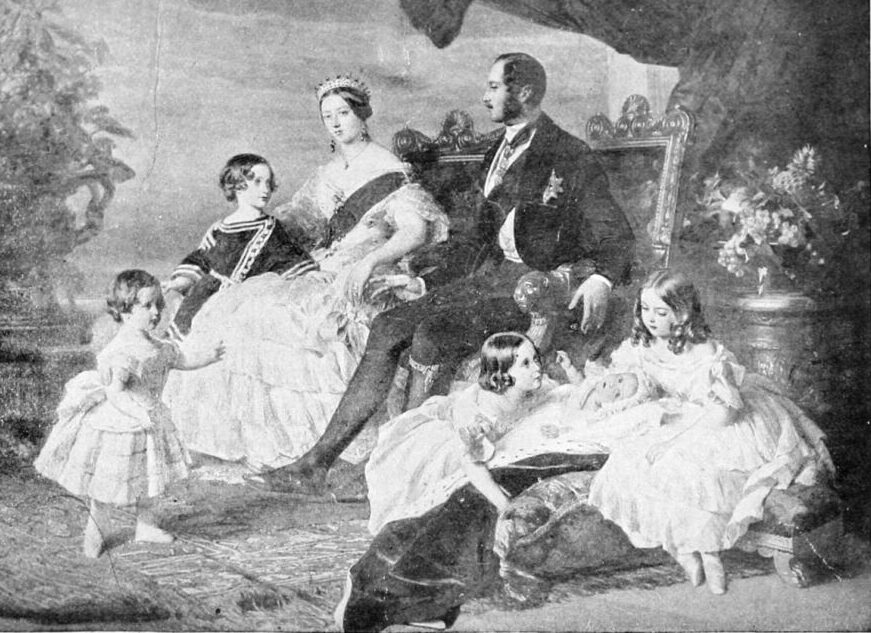
Queen Victoria (1819–1901), with her regal demeanor and 64-year reign, came to symbolize the global dominance of a British Empire upon which the sun never set. One of history’s first constitutional monarchs — who gracefully oversaw the peaceful transfer of power from the nobles to the people — Victoria mastered the savvy art of influencing events behind the scenes, establishing a template for post-divine right monarchs. During her reign, England powered Europe and the world into the Industrial Revolution. Railroads, the telegraph, the telephone, and newspapers laced the planet together, and English culture flourished in the form of Dickens novels, Tennyson poems, Sherlock Holmes stories, and Gilbert and Sullivan operettas. Victoria — along with her beloved husband, Prince Albert — promoted the arts and sciences and were role models for an entire nation, influencing generations of Brits with their wholesome “middle-class values” and devoted parenting.

Queen Victoria surrounded by her family
Queen Victoria and Prince Albert, with five of their nine children

Yet another notable Englishwoman monarch was Queen Elizabeth II (1926–2022), who took the throne amidst the rubble of World War II and held it for a record seven decades. From Winston Churchill to Margaret Thatcher, and from to Tony Blair to Boris Johnson, Elizabeth presided over Britain’s tumultuous late 20th and early 21st centuries with a stiff-upper-lip adherence to tradition in a changing world.

Consider the different ways that these leaders employed their femininity to their advantage. Both Queen Victoria and Maria Theresa secured and expanded their realms not by warfare, but through shrewd intermarriage of their many children to Europe’s crowned heads. Victoria’s descendants include the current monarchs of Spain, Norway, Sweden, Denmark…and, of course, England (King Charles III is her great-great-great grandson). Maria Theresa was nicknamed the “Grandmother of Europe” for her many royal descendants; with 16 children, she was either pregnant or had a newborn for much of her rule. However, not every marriage worked out: Maria Theresa’s daughter, Marie-Antoinette, married France’s King Louis XIV — the ultimate divine monarch — then lost her head in the French Revolution.

Meanwhile, Catherine the Great and Queen Elizabeth I are believed to have cleverly parlayed sexual politics to consolidate their power. Catherine was rumored to have had many strategic romantic entanglements — both with high-ranking members of the Russian nobility, and with foreign heads of state. And Elizabeth, often called the “Virgin Queen,” may have been married only to her country, but she flirtatiously wooed opponents to her side. (“I know I have the body of a weak and feeble woman,” she’d coo, “but I have the heart and stomach of a king.” And, sure enough, she got her way.)

Beyond these major names, many other European lands have also boasted standout women rulers:

France’s Queen Eleanor of Aquitaine (1124–1204) led a crusade, fostered the arts, and eventually married into England’s royal family — becoming Queen of England and giving birth to Richard the Lionheart.

In Poland, “King” Jadwiga (1373–1399) merged her realm with a powerful neighbor by marrying the king of Lithuania, creating the Jagiellonian dynasty that presided over Poland’s historical apex. (Despite Jadwiga’s many contributions, the sexism of the age dictated that she be called a “king” rather than a “queen.”)

Queen Isabel of Castile (1451–1504) married Ferdinand II of Aragon, uniting much of Spain and kicking off its Golden Age. Known collectively as the “Catholic Monarchs,” Isabel and Ferdinand drove out the Moors (completing the Reconquista) and financed Columbus’ lucrative voyages to the Americas.

Angela Merkel speaks at a conference
Angela Merkel

In the Netherlands, Queen Wilhelmina (1880–1962) ruled for 58 years, seeing her country through two world wars. And in our own time, Angela Merkel led Germany as chancellor for 16 years (2005–2021), becoming the de facto leader of the European Union. Steadily steering her nation through a tumultuous time, she earned great respect around the world as well as back home, where many Germans affectionately refer to her as Mutti (“Mommy”), while others have dubbed her “the new Iron Chancellor.”

Women’s History Month provides an occasion to pay our respects to the women who have shaped — and continue to shape — Europe’s story. As Empress Maria Theresa’s rival, the Prussian king, once grumbled: “When at last the Habsburgs get a great man…it’s a woman.”


We’d like to hear from you! As a member of our merry band of travelers, please weigh in on this article by using the comments below. Meanwhile, many of these topics will also be covered on Rick Steves’ Europe’s various social media platforms — FacebookInstagramX, and TikTok — and we hope you’ll join the conversation there as well.
ETIAS Pushed Back to 2026

The European Union has announced that its European Travel Information and Authorization System (ETIAS) — once rumored to be launched this year — will be pushed back until 2026.

ETIAS is a proposed new step to Europe’s immigration process, which will require travelers to fill out an application (and potentially pay a small fee) before boarding your flight. It may sound intimidating, but it’s essentially the same process as the United Kingdom’s ETA and the United States’ ESTA requirement: new digital systems intended to streamline international travel.

The Departures terminal at an airport
ETIAS will not go into effect until 2026.

Once launched, ETIAS will be required to enter this bloc of 30 countries. If approved, your ETIAS will be digitally linked to your passport and last for three years (or until your passport expires).

But that’s all down the road. For now, you don’t need to do anything. The European Union is still getting its entry-and-exit ducks in a row and will give at least six months’ notice before ETIAS goes into effect — which, the EU says, will not be until 2026. So if you’re heading to continental Europe this year, keep on travelin’ as you were.


We’d like to hear from you! As a member of our merry band of travelers, please weigh in on this article by using the comments below. Meanwhile, many of these topics will also be covered on Rick Steves’ Europe’s various social media platforms — FacebookInstagramX, and TikTok — and we hope you’ll join the conversation there as well.