March is Women’s History Month, and we’re celebrating the many ways that women have impacted the story of Europe. While these contributions come in many forms — both well-known and forgotten to history — we’re focusing on women who have led their people to greatness. In so many cases, women leaders are both rare and highly successful, characterized by both longevity and prosperity. Here are a few examples of exemplary European woman leaders, taken from our Rick Steves guidebooks (with thanks to co-author Gene Openshaw).
Empress Maria Theresa (1717–1780), the only woman to officially rule the Habsburg Empire in that family’s 640-year dynasty, is widely regarded as one of its greats. The first modern ruler of the Age of Enlightenment, Maria Theresa was a social reformer who ended the feudal system, taxed the Church and the nobility, provided education and health care to her subjects, and welcomed the boy genius Mozart into her court. She inherited an empire that was threatened by land-hungry rivals…and left one that had been preserved and strengthened. It was under Maria Theresa’s 40-year rule that Europe first began to recognize Austria as a great power.
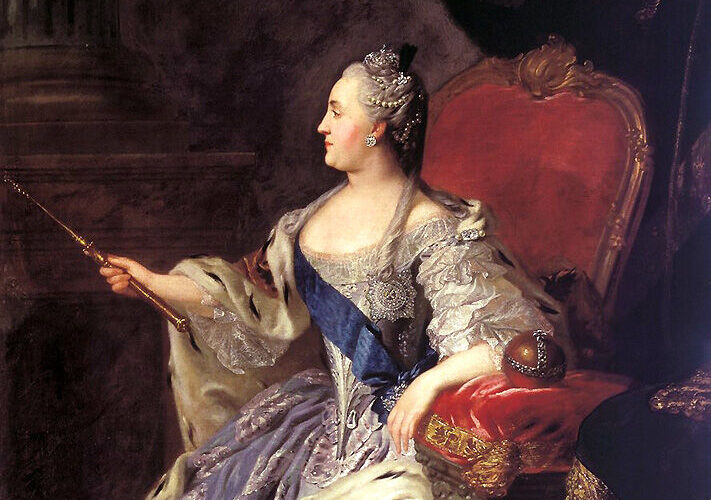
Russia is another European power that enjoyed a high-water mark under a female monarch: Catherine the Great (1729–1796). A Prussian blueblood, Catherine married Russia’s Czar Peter III, then quickly overthrew him in a palace coup. Shrewd and practical, she was admired for her military prowess, for her respect for the word of law, and for her promotion of the multiethnic nature of her fast-expanding empire. Over her 34-year reign, Catherine transformed St. Petersburg into a world-class city, with a no-nonsense Neoclassical grandeur that still defines it today; her art collection fills the Hermitage, one of the world’s finest palaces.
England’s Queen Elizabeth I (1533–1603) reigned for 45 years of flourishing trade, mounting global influence, and artistic expression. After her navy sank 72 ships of the Spanish Armada in a single power-shifting battle (in 1588), Britannia ruled the waves. Elizabeth surrounded herself with intellectuals, explorers, and poets, from William Shakespeare to Walter Raleigh to Francis Bacon. She also diplomatically navigated the Protestant/Catholic divide that wracked post-Reformation Europe, reestablishing stability and sanity following the chaotic rule of her father, King Henry VIII.
Queen Victoria (1819–1901), with her regal demeanor and 64-year reign, came to symbolize the global dominance of a British Empire upon which the sun never set. One of history’s first constitutional monarchs — who gracefully oversaw the peaceful transfer of power from the nobles to the people — Victoria mastered the savvy art of influencing events behind the scenes, establishing a template for post-divine right monarchs. During her reign, England powered Europe and the world into the Industrial Revolution. Railroads, the telegraph, the telephone, and newspapers laced the planet together, and English culture flourished in the form of Dickens novels, Tennyson poems, Sherlock Holmes stories, and Gilbert and Sullivan operettas. Victoria — along with her beloved husband, Prince Albert — promoted the arts and sciences and were role models for an entire nation, influencing generations of Brits with their wholesome “middle-class values” and devoted parenting.
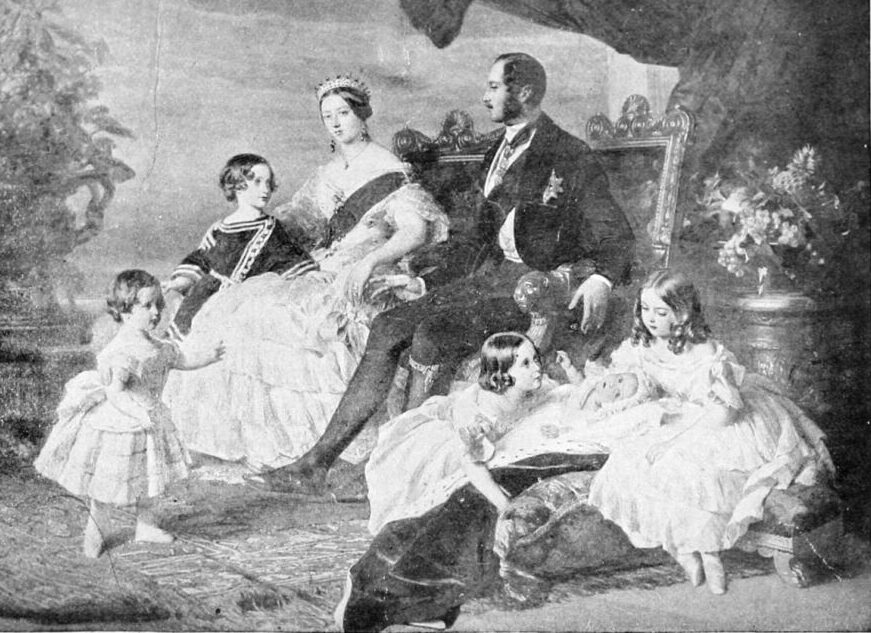
Yet another notable Englishwoman monarch was Queen Elizabeth II (1926–2022), who took the throne amidst the rubble of World War II and held it for a record seven decades. From Winston Churchill to Margaret Thatcher, and from to Tony Blair to Boris Johnson, Elizabeth presided over Britain’s tumultuous late 20th and early 21st centuries with a stiff-upper-lip adherence to tradition in a changing world.
Consider the different ways that these leaders employed their femininity to their advantage. Both Queen Victoria and Maria Theresa secured and expanded their realms not by warfare, but through shrewd intermarriage of their many children to Europe’s crowned heads. Victoria’s descendants include the current monarchs of Spain, Norway, Sweden, Denmark…and, of course, England (King Charles III is her great-great-great grandson). Maria Theresa was nicknamed the “Grandmother of Europe” for her many royal descendants; with 16 children, she was either pregnant or had a newborn for much of her rule. However, not every marriage worked out: Maria Theresa’s daughter, Marie-Antoinette, married France’s King Louis XIV — the ultimate divine monarch — then lost her head in the French Revolution.
Meanwhile, Catherine the Great and Queen Elizabeth I are believed to have cleverly parlayed sexual politics to consolidate their power. Catherine was rumored to have had many strategic romantic entanglements — both with high-ranking members of the Russian nobility, and with foreign heads of state. And Elizabeth, often called the “Virgin Queen,” may have been married only to her country, but she flirtatiously wooed opponents to her side. (“I know I have the body of a weak and feeble woman,” she’d coo, “but I have the heart and stomach of a king.” And, sure enough, she got her way.)
Beyond these major names, many other European lands have also boasted standout women rulers:
France’s Queen Eleanor of Aquitaine (1124–1204) led a crusade, fostered the arts, and eventually married into England’s royal family — becoming Queen of England and giving birth to Richard the Lionheart.
In Poland, “King” Jadwiga (1373–1399) merged her realm with a powerful neighbor by marrying the king of Lithuania, creating the Jagiellonian dynasty that presided over Poland’s historical apex. (Despite Jadwiga’s many contributions, the sexism of the age dictated that she be called a “king” rather than a “queen.”)
Queen Isabel of Castile (1451–1504) married Ferdinand II of Aragon, uniting much of Spain and kicking off its Golden Age. Known collectively as the “Catholic Monarchs,” Isabel and Ferdinand drove out the Moors (completing the Reconquista) and financed Columbus’ lucrative voyages to the Americas.

In the Netherlands, Queen Wilhelmina (1880–1962) ruled for 58 years, seeing her country through two world wars. And in our own time, Angela Merkel led Germany as chancellor for 16 years (2005–2021), becoming the de facto leader of the European Union. Steadily steering her nation through a tumultuous time, she earned great respect around the world as well as back home, where many Germans affectionately refer to her as Mutti (“Mommy”), while others have dubbed her “the new Iron Chancellor.”
Women’s History Month provides an occasion to pay our respects to the women who have shaped — and continue to shape — Europe’s story. As Empress Maria Theresa’s rival, the Prussian king, once grumbled: “When at last the Habsburgs get a great man…it’s a woman.”
We’d like to hear from you! As a member of our merry band of travelers, please weigh in on this article by using the comments below. Meanwhile, many of these topics will also be covered on Rick Steves’ Europe’s various social media platforms — Facebook, Instagram, X, and TikTok — and we hope you’ll join the conversation there as well.
Josephine Baker renounced her US citizenship and became a french citizen, since her entertainment career was very well received there. So sort of an American, but more a European at heart. Most important, because the occupied Nazi troops took her for a harmless, simple “entertainer,” they didn’t realize she was a key member of the french resistance. She courageously disregarded her own safety in order to gather information that helped win WWII for France and the other allies.