Do you need to register online and pay a €5–10 “access fee” if you’re going to Venice? It depends on which day you’re visiting — and if you’re staying the night. Here’s what you need to know.
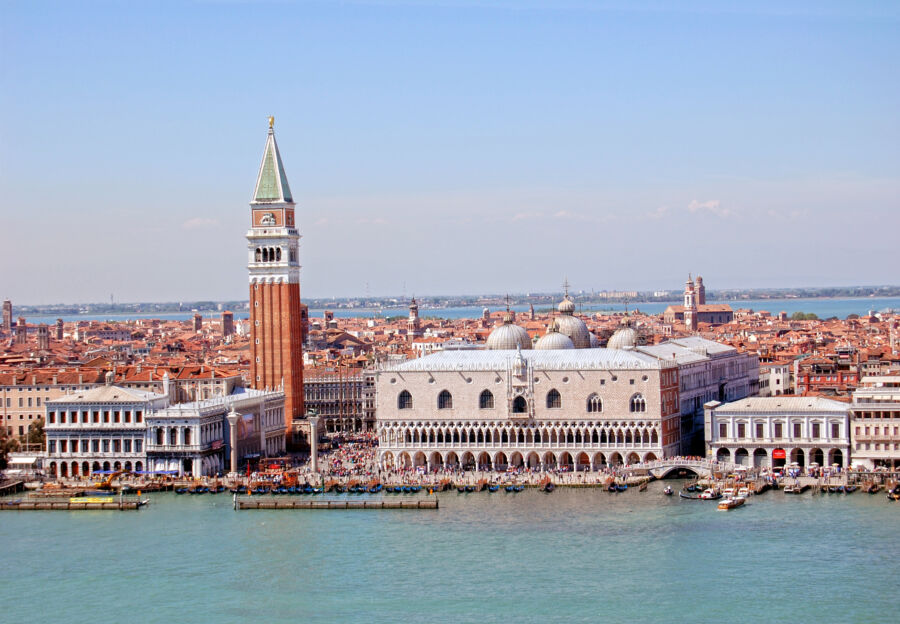
In attempt to mitigate the impact of heavy tourism, Venice charges an access fee (and requires preregistration) for visitors on select busy days in the spring and summer.
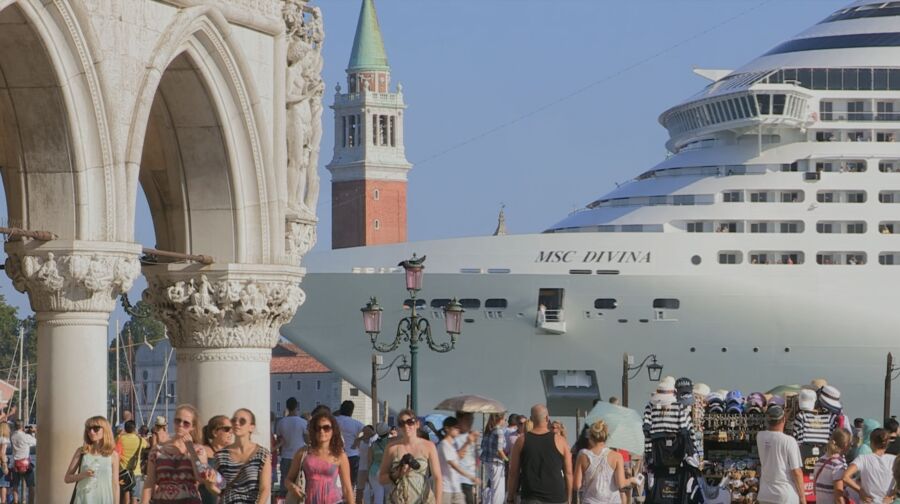
It’s designed, in part, to deter day-trippers (including cruise passengers), whom locals view as having a negative impact on both infrastructure and worsening crowd concerns, without supporting the local economy by paying for accommodations and the other expenses of a longer stay.
Confusingly, travelers staying overnight in Venice during these days don’t have to pay the fee — but they still have to preregister. This means everyone must take action, if visiting Venice on dates the access fee is required.
What are the dates?
The access fee will be in effect every Friday, Saturday, and Sunday from April 3 through July 26 — plus April 6; the entire week of April 27; and the entire week of June 1. That’s 60 days in total:
- April: 3–6; 10–12; 17–19; 24–30
- May: 1–3; 8–9; 15–17; 22–24; 29–31
- June: 1–7; 12–14; 19–21; 26–28
- July: 3–5; 10–12; 17–19; 24–26
If you’re heading to Venice on a day not listed above, you don’t need to worry about the fee or registration.
How much is the fee?
It depends on how far ahead you register. If you register more than four days ahead of your visit, the cost is €5 per person, per day. If you register closer to your visit, it’s €10. You’ll pay online as part of the registration process.
How do I register?
Head to the Venice Access Fee official website to register and pay. Each member of your party (including children) must be registered individually. Registrants will receive a QR code, which is essentially your ticket to Venice. Keep this handy: You may be asked to show it as you enter the city, and authorities say they plan to conduct random checks throughout town.
What if I’m staying overnight?
If you are staying overnight in Venice, you still must register — but you don’t have to pay the fee. A handful of other groups are exempt from paying as well, including children under 14 and people with disabilities.
To do this, head to the same Venice Access Fee official website, click “Book your exemption,” and select the option that applies to you. You’ll likely need to show proof of your exemption (such as details of your accommodations booking). Once complete, you’ll receive a QR code as well.
What if I’m on a Rick Steves tour?
If you’re on a Rick Steves tour that goes to Venice, we’ll provide details on exactly how to claim your exemption. In a nutshell: If your visit to Venice occurs in the middle of the tour itinerary, we’ll take care registering on your behalf; but if your tour begins in Venice, that means you’ll be arriving on your own…and will need to register yourself.
What parts of Venice are affected?
The access fee applies to anyone visiting the main historical center of Venice proper. So if you’re arriving by train at the Venezia Santa Lucia station, by bus at Piazzale Roma, by car at the Tronchetto parking garage, or on a water bus or water taxi from the airport, that means you.
Venice’s Mestre train station and its airport are both on the mainland and do not require registration. So if you’re just passing through either of these — such as a flight transfer — you don’t need to worry.
Officially, nearby islands like Lido, Murano, and Burano are not included. However, if you’re heading to one of these, you’re likely visiting Venice as well…so this will almost certainly impact you.
Why is this all happening?
Venice has long been a bucket-list destination, where romantics revel in elegant decay. But increasingly, facing a rising tide of tourism (and actual rising tides), Venice’s decay is becoming less elegant…and more concerning. The city’s fragile infrastructure, limited transportation, and narrow walkways are struggling to contend both with climate change and with the massive crowds that descend upon it year after year.
If you’ve been to Venice recently, you’ve probably seen this. Seaweed is inching up marble staircases, providing a tangible benchmark of rising sea levels; an afternoon vaporetto ride down the Grand Canal is like a floating sardine can of luggage and selfie-snappers; and never-ending lines of single-file meanderers take forever to cross skinny bridges or pass through narrow corridors. Because of these crowds, a visit to Venice can be cramped and exhausting.
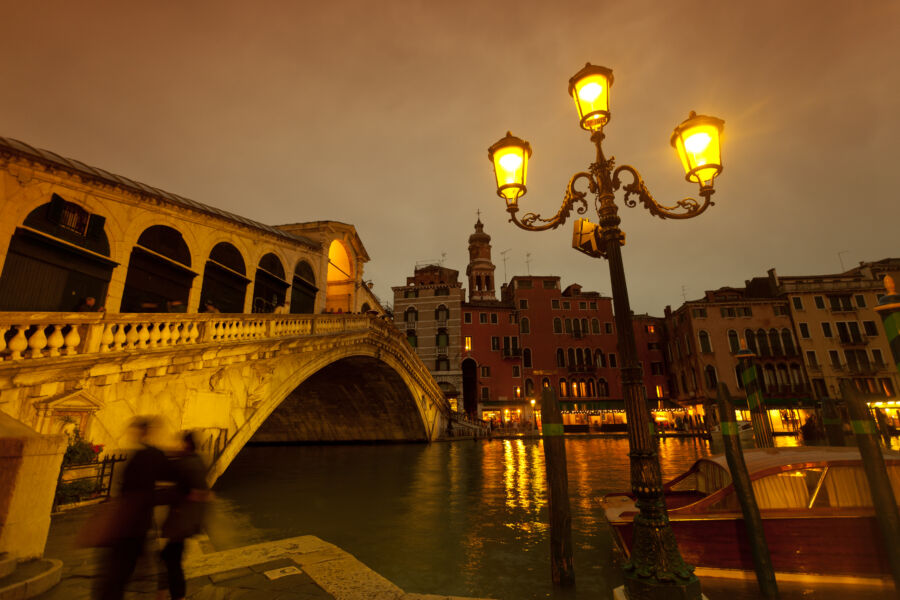
But that’s during the day. At night — when the cruise groups have gone back to their ships — Venice becomes another world, free for travelers to get lost among its (now empty) passageways as the soaring voices of gondoliers and haunting tunes of stray accordionists echo across its shimmering canals.
The access fee is trying to give a bit of this magic back to daytime Venice by thinning out the day-tripping crowd…or at least profiting from the hordes to help fund infrastructure projects.
How do Venetians feel about the access fee?
Opinion is mixed. While many locals applaud any effort to curb overcrowding, others believe this one is mainly symbolic — and they’re skeptical that a relatively small fee will have any real impact (either as a deterrent for day-trippers, or as a fundraising measure). Some are dubious about the fact that even fellow Italians now must pay to enter one of their own cities. (The policy’s targeting of day-trippers is aimed not only at cruise-trippers, but also at Italians who come into the city to party; Venice has become a popular spot for local bachelor and bachelorette parties, which has added to its congestion.)
What else do I need to know?
Based on what we’ve learned from the program’s first few years, here are some final tips:
- Enforcement may vary, but it’s important to take this seriously. The past couple years, travelers reported being checked frequently when the access fee was first introduced — and less so later in the season. But don’t try and skirt it. Failure to show a valid QR code can result in a hefty fine — money that’s better spent on a spritz on Saint Mark’s Square.
- Beware of scams. Only the Venice access fee official website issues valid QR codes. These are not transferable, so anyone trying to sell you one is a red flag.
- And don’t rush. Venice will not “sell out” of QR codes. There’s no need to get yours months in advance. We recommend registering 1–2 weeks ahead of your trip — enough time to avoid the €10 hike, but still close enough to ensure your itinerary is fixed.
This isn’t the first time Venice has taken action to protect its fragile infrastructure. In 2020, the city completed its ambitious MOSE project, a series of dams that help protect against rising sea levels. In 2021, it blocked large cruise ships from entering its lagoon, after one crashed into an embankment of the Giudecca canal. And last year, on top of the access fee, Venice started limiting tour groups to a maximum of 25 people — and prohibiting loudspeakers. Your wait at that skinny bridge is now a bit shorter…and the sounds of Venice no longer include the amplified voices of tour guides.
Together, these measures are striving to preserve the unique characteristics that make Venice…Venice. And if all goes well, its collection of twinkling canals and mysterious passageways will remain a traveler’s fantasy wonderland for decades to come.
We’d like to hear from you! As a member of our merry band of travelers, please weigh in on this article by using the comments below. Meanwhile, many of these topics will also be covered on Rick Steves’ Europe’s various social media platforms — Facebook, Instagram, X, and TikTok — and we hope you’ll join the conversation there as well.
It is about time we considered the damage caused by tourists, rising water,etc. ALso, Somme of the visitors are respectful of people or the places they visit. Aa a former teacher of yesterday I am shocked at the lack of courtesy and basic manners. I hope you will have a tour to Venice and will include Assisi. Thanks
He already does at least one tour which goes to those two places… his BOI 17 days.
Will Rick do the same for those going to Europe on his tours with regard to ETIS?
My family and I stayed in Venice last summer during these days. We followed the instructions and registered for our exemption online weeks before our trip. I cannot remember if anyone checked our documents before our after our ferry journey from Pula, Croatia. Our AirBnB host did check our exemption documents and charged us a per person lodging tax. It was a discounted rate for our 14 year old. I carried the documents just in case, but we were never checked; however, we avoided the big crowded touristy areas.
The per person hotel tax has been in place for years, and is standard throughout all of Italy, with prices varying according to the city. This is a totally separate thing, and no one is going to check your documents to see if you paid the tax. It is automatically charged to you when you pay your hotel bill. The money apparently goes to each city for civic and infrastructure improvements.
So does this mean that Rick’s tours which includes Venice will now be max 25 people?
Hi Mookie! Our tours range from 23–28 people, and in Venice we work within the guidelines by adding guides to split the group if needed.
We plan on visiting Venice in September 2025. Will we still need to be registered since it is not during the May thru July dates?
Hi Janice, Travis here. Nope, since your visit occurs outside of the Access Fee dates, you won’t have to register or pay a fee. Happy travels!
I’m going in February to attend the Carnivale event. My dates were not included, kind of surprising because it’s very crowded then. Looks like I don’t have to do anything, true?
Hi Mary Ann, Travis here. Correct: Since your visit occurs outside of the Access Fee dates, you won’t have to register or pay a fee. Happy travels and enjoy Carnivale!
I am so glad they have this fee. They also prohibit those horrible cruise ships.
We were there in July and stayed on the island so the only fee was the tax, which is very reasonable and we paid that in cash.