Traveling through immigration in Europe has changed. The European Union has implemented its Entry-Exit System (EES), a fully electronic way to check your passport when crossing borders. While most countries are handling this process smoothly, some are struggling a bit — and this has led to some alarming headlines and high-profile social media posts about long lines and serious delays. So, what should you actually expect the next time you fly to Europe?
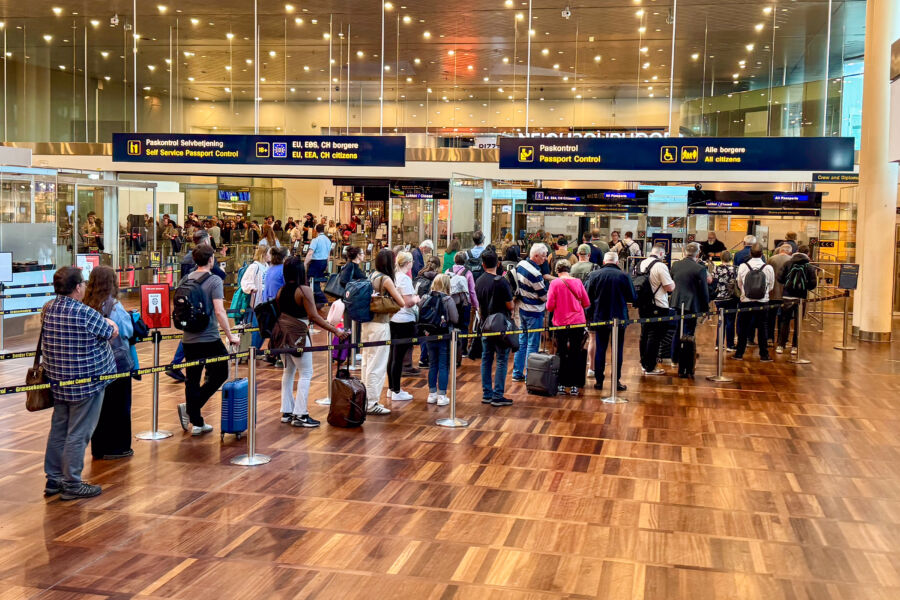
We’ve chatted with researchers, guides, and travelers to collect a wide assortment of on-the-ground observations to answer your questions.
What’s the first thing I need to know?
That the vast majority of people we’ve spoken with had a positive experience with EES. No major delays, no missed flights, nothing out of the ordinary from typical international travel. Many even said “nothing felt different,” or even that the process felt smoother and faster than before.
Among those who did encounter long lines, most noted that local staff was on hand to usher people with tight connections to the front of the line. Some major airports have permission to temporarily pause EES altogether, at peak times, to allow the queues to die down. So, if you’re heading to Europe soon and have been fretting over those catastrophic reports, keep in mind that many are one-off incidents or headlines fishing for clicks.
That said, this is a new protocol — and with any major change, there are quirks being worked out, potential bottlenecks, and things worth knowing before you go.
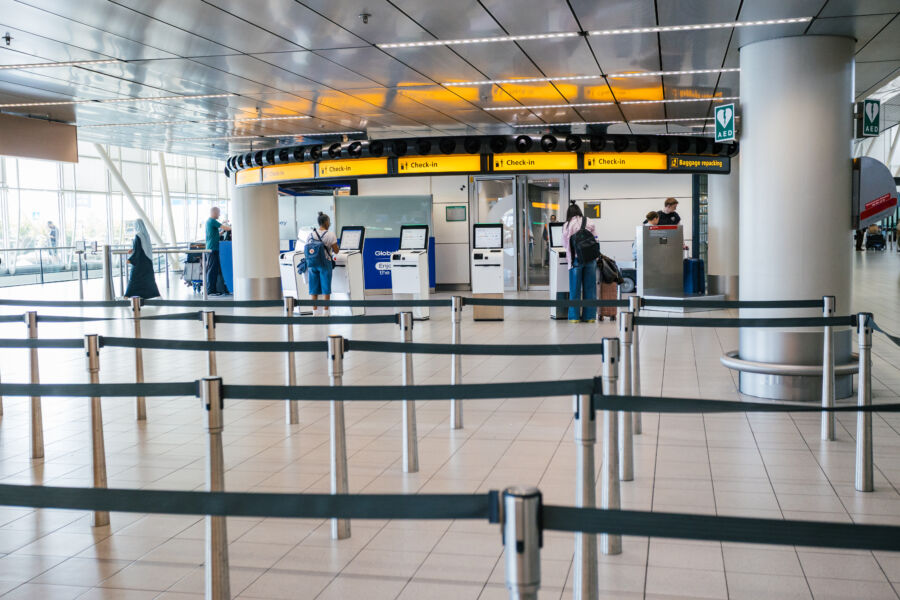
OK, so…what is EES?
The Entry-Exit System is Europe’s technological upgrade to its immigration process, which effectively replaces passport stamps. When you first arrive in Europe, the system scans your biometric data (like your fingerprints and face), creates a profile for you, and stores it for three years. This makes it way easier for participating countries to track who you are, when you enter, and when you leave. Think of EES as a digital way for you to “clock in, clock out” every time you visit Europe.
EES was soft-launched back in October. Since then, each participating country has been rolling out its system individually. Some have found it no problem to implement……while others have had a tougher time with logistics. (More on that in a moment.) The date all countries were required to have EES up and running was April 10 — which is why you’re seeing so much news about it right now.
What countries are included?
The 29 Schengen countries — that’s most of continental Europe, plus Iceland. These are the countries that have long operated without internal border checks; when you first land in one, you go through immigration…but traveling between them is as easy as crossing US state lines.
Key countries not included in EES are the United Kingdom and Ireland. The UK has its own similar process (called the ETA), and Ireland’s Common Travel Agreement keeps its immigration process more aligned with Britain than continental Europe. Turkey and the non-EU Balkan countries — like Serbia, Montenegro, Albania, Kosovo, and Bosnia and Herzegovina — are also not included.
Who does EES impact?
EES applies to travelers who are not citizens of the Schengen countries — like American tourists. If you have dual citizenship with a Schengen country and travel with that passport, EES does not apply to you. (But be sure you use the line for European passport holders.)
Where, exactly, do I go through EES?
You’ll encounter EES at the point where you first enter the Schengen zone. This could be your final destination, or it could be on a connection to another European flight. Here are four sample itineraries:
- Flying from the US direct to Paris? You’ll go through EES in Paris, because France is a Schengen country.
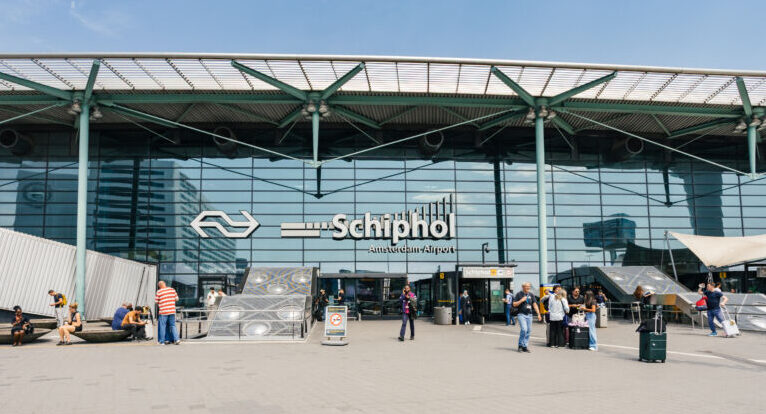
- Flying from the US to Berlin, with a transfer in Amsterdam? You’ll go through EES in Amsterdam, because the Netherlands is a Schengen country and it’s your first point of entry to the Schengen zone.
- Flying from the US to Barcelona, with a transfer in London? You’ll go through EES in Barcelona, because the United Kingdom is not in the Schengen zone — but Spain is.
- Flying from the US to Dublin? You won’t go through EES, because Ireland is not in the Schengen zone.
It’s also worth noting that wherever you go through EES has no bearing on where you claim your luggage. If you’ve checked a bag, it will be checked through to your final destination.
What does going through EES look like?
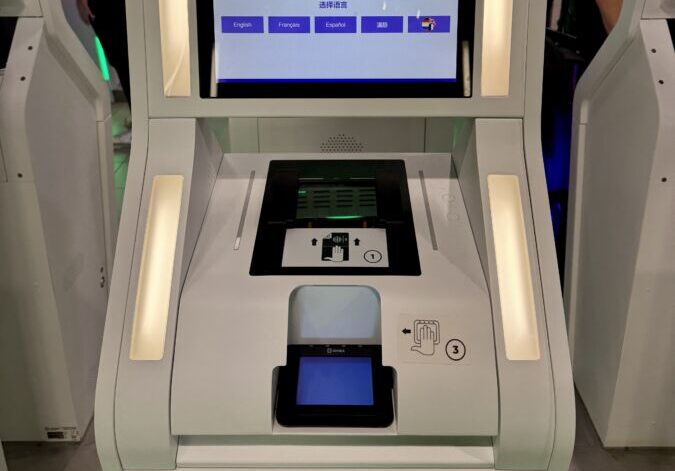
When you arrive in Europe and head toward immigration, you’ll encounter a self-service kiosk that scans your passport, your face, and your fingerprints. The kiosk creates a profile for you that will be used to track the length of your current stay and any further European travel.
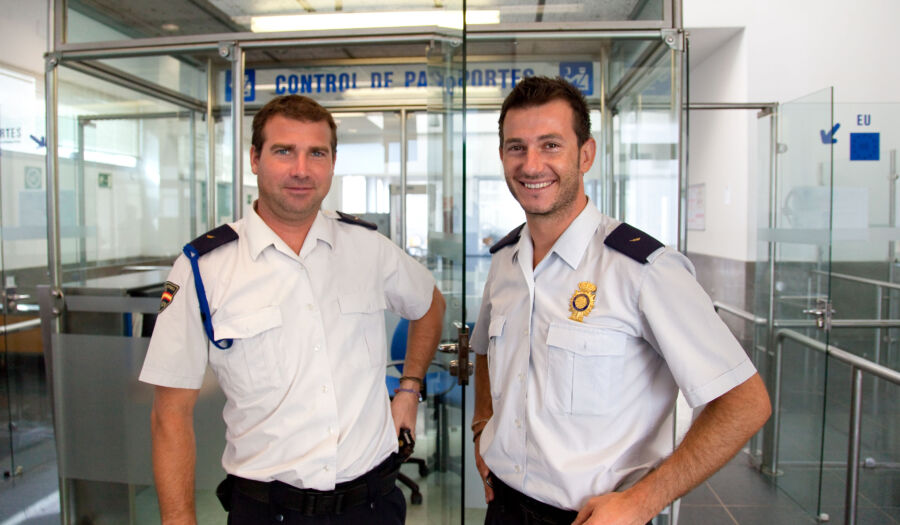
After this, you’ll go through a standard border control check. This will most likely happen at an e-gate — an automated gate where you’ll once again do a passport, face, and fingerprint scan to verify your identity (with no human interaction and no stamps given). However, there are often still conventional human-staffed passport booths standing by, where a person will scan and stamp your passport. You may be sent to one of these for a variety of reasons — or, frankly, for seemingly no reason whatsoever, especially during these early stages of EES, when some airports rely on manual checks to keep things moving.
But Europe wants to know when you arrive and when you depart — it’s called the Entry and Exit System, after all — so you’ll also go through a similar process before your return flight. Since you’re already registered, you’ll skip the kiosks and go straight to the e-gates, where the system can confirm it’s you departing (and that you haven’t overstayed your 90-day tourist visa).
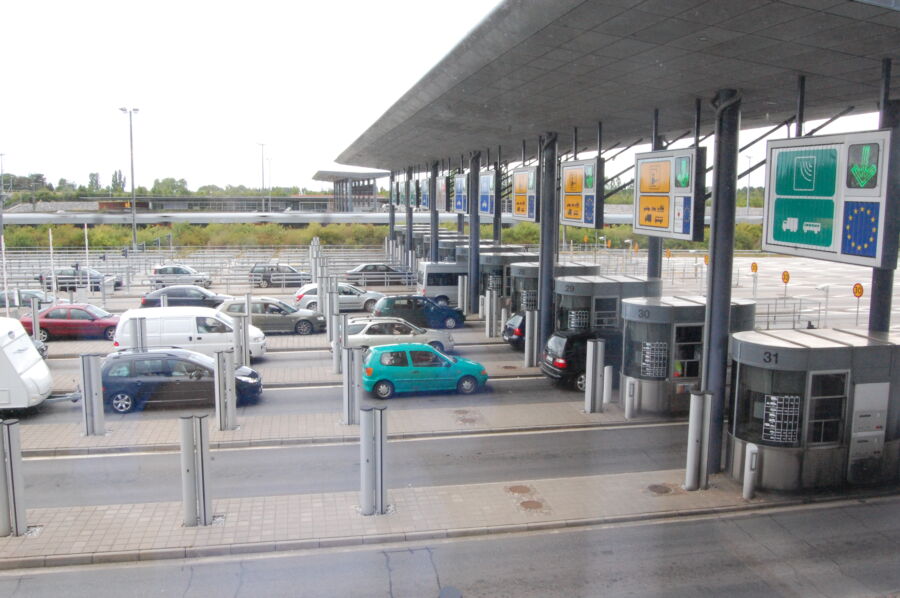
One thing that often gets overlooked: EES applies to all Schengen ports of entry. For most travelers, that means an airport — but if you’re arriving in Europe by car, boat, cruise ship, or train, you’ll go through EES, too. Traveling from London to Paris on the Eurostar? You’ll “clock in” to Europe at St. Pancras International, as you go through French immigration before boarding the train. (And most travelers have said it’s a breeze.)
If I’ve already registered, do I have to do this again?
No…and yes. Once you arrive in Europe and are registered for EES, the system stores your profile for three years (or until you get a new passport). Until then, clocking in and clocking out of Europe will be relatively simple: After stepping up to the e-gates and scanning your passport, the machine will confirm it’s you…and off you go.
But here’s the catch: During this rollout period, travelers are finding that it’s often the same line for those who have already registered and those who still need to register. This is understandably frustrating, as it largely defeats the convenience of already being registered. But Europe’s thinking here seems to be that, since EES is so new, the vast majority of travelers are first-timers and therefore need to create a profile — so airports are all-hands-on-deck to help speed up this process.
Some airports have already dedicated separate lines for those already registered and those needing to register — and in the (hopefully near) future, this will become more and more common. But for now, even if you already have an EES profile, you may get stuck waiting alongside those who are not.
Is this actually causing delays?
Most travelers, at most airports, are reporting minimal, if any, extra delay caused by EES. If anything, it just makes the entry procedure slightly more confusing, as you now need to find your way to the right place to register and/or cross the border. But if you read signs carefully and don’t hesitate to ask staff, it’s generally smooth sailing.
Yet as mentioned, some countries are struggling more than others. Two of the biggest “delay hot spots” appear to be Spain and Portugal, with cities like Barcelona and Lisbon occasionally seeing long lines of travelers — both inbound and outbound — waiting an hour or two for their turn at the EES kiosks.
However, many of these reported delays have less to do with EES than with staffing problems: Airports were simply overwhelmed with incoming flights and didn’t have enough border staff on hand to handle the queues.
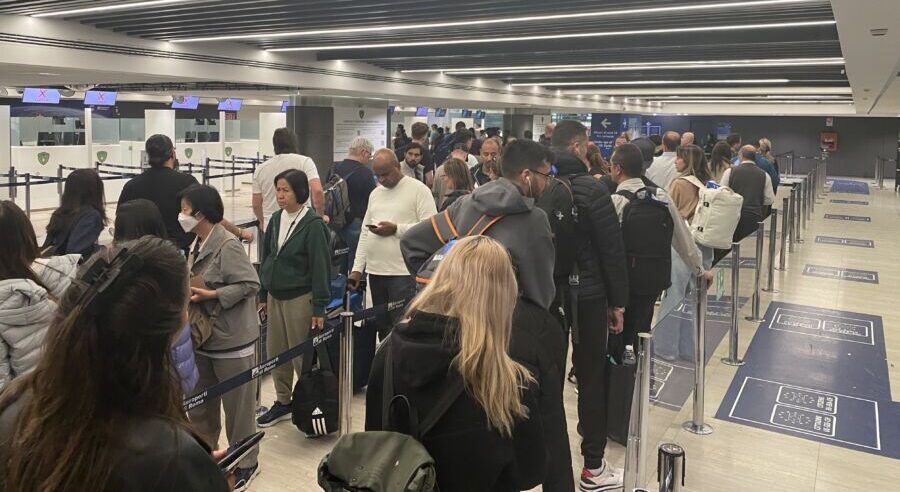
Also, when EES is causing a backlog, most airports have been generally good at managing it. Many have officers who usher people with tight connections to the front of the line, and some can also temporarily pause the process, if they recognize that EES is causing a logjam.
I’m about to fly to Europe. What should I do?
Above all, don’t panic. Avoid stewing over fearmongering headlines that are clearly trying to get clicks. Yes, there’s a potential for some delays, especially at a few key airports. But most travelers are having no real problems. Knowing what to expect will help you navigate the process and give you more confidence.
First, assess whether a long line would significantly impact your itinerary. Do you have a tight connection at the same airport where you’ll need to register for EES? Or will you encounter EES only at your final destination? If it’s the latter, any delay — while nevertheless frustrating — won’t cause you to miss a flight. You’ll just check into your hotel a little later.
For those with the short layover, consider researching how that airport has been handling EES lately by asking travelers who have recently been there. (Posting on the Rick Steves’ Europe Travel Forum and Rick Steves’ Europe Facebook Group are great places to start.) Most likely, the airport will be handling EES just fine. If you really think there’s a high chance your travels will be interrupted, consider making an itinerary adjustment. That said, given that EES seems to be smooth in most places, don’t automatically force yourself into a grueling six-hour layover because there was an off-chance of a delay.
Either way, don’t dilly-dally on your connection. Find the correct line as quickly as possible and don’t hesitate to check in with the staff if you’re cutting it close.
And keep in mind that, in a way, none of this is new. International travel has always carried the risk of delay. Immigration lines have long swung between hours-long inchworm affairs and “done in a flash” — EES or not. When you cross a border, you’re always subject to long lines, tight connections, and factors out of your control.
So…why is all this happening?
There are two reasons. First, and most immediate, is to improve Europe’s immigration process and security. EES is designed to create a cohesive system that will make it easier for Europe to stop illegal immigration and better identify those who overstay their 90-day tourist visa. Instead of relying on a border guard to manually monitor passport stamps, EES can instantly verify both your identity and your travel status.
But EES is also Europe’s stepping stone toward an even bigger goal: the European Travel Information and Authorization System (ETIAS). This will effectively serve as a straightforward application to travel to Europe, requiring travelers to preregister and pay a small fee before they board their plane.
While this may sound intimidating, it’s far from unprecedented: ETIAS is essentially the same process as the United Kingdom’s ETA and the United States’ ESTA requirements — all part of a broader effort to streamline immigration by digitizing the process as much as possible.
However, ETIAS is not in effect yet — and will not be until at least October. (And don’t worry, you’ll hear plenty about it from us as it gets closer.) For now, you don’t need to worry about registering or paying a fee if you’re flying to Europe this spring, summer, or early fall. Instead, plan your trip as you always would…just be ready for things to look a little different when you land. EES is now part of the immigration experience. But with a little understanding and some mental preparation, it doesn’t have to be stressful.
We’d like to hear from you! As a member of our merry band of travelers, please weigh in on this article by using the comments below. Meanwhile, many of these topics will also be covered on Rick Steves’ Europe’s various social media platforms — Facebook, Instagram, X, and TikTok — and we hope you’ll join the conversation there as well.
Whoever decided that electronic scans of fingerprints was a good thing to include is apparently too young to know that fingerprints wear off as you age (yes, it’s true), and getting a clear reading can be nearly impossible. At DMV or renewing my passport, I always have to slap on a lot of hand lotion to make mine scan (and it still takes multiple tries). I dread the day when even that no longer works because I’m in my late 70s and my fingertips are now mostly just wrinkles.
You’re so right. I am 60. For the last 10 years my fingerprints are basically non readable. I do use the lotion some border agents supply or keep a small supply on me. Being in the healthcare field I have to constantly wash my hands.
I have the same concern! They couldn’t get my fingerprints for my TSA Precheck . I am 84.
Travelling from YOW on a very tight connection 50 minutes…through CDG (6am) and Amsterdam (8:30 with Air France (KLM) t(10:30am) to get to Johannesburg. May 8-9. We were in Lisbon In October and were finger printed and Face picture at that time…
What can I expect as I have never been through CDG before?
All examples are for entering Schengen zone. Please provide example of exiting.
1. Assume that a direct to US flight would be the single exit.
2. For connecting flights such as Lisbon to Amsterdam and then to LA, do you go through the process twice? Once leaving Lisbon and then leaving Amsterdam?
Thanks
We just flew home from Amsterdam 2 days ago. Going thru EES at entry was stressful because it wouldn’t read my fingerprints (age 69 and worked in healthcare) but it read my husband’s just fine. It took me an extra 45 or so minutes in line to see an immigration officer who once again scanned my fingerprints. On departing from Amsterdam, the security scanner only wanted my passport and a photo – no fingerprints required. It took us about 45-50 minutes to get through check-in, bag drop, security and passport control. This was at 6:50am, things were much busier just a couple of hours later. One of the reasons we got through so quickly was because we had Sky Priority with Delta which had separate security and passport lines. I should also mention that Amsterdam’s Schiphol airport has an app that allows you to book a time slot for security with a special line. We were about 15 minutes early for our appointment time but they let us through anyway. It is a 15 minute window so a little tricky to plan ahead of time but you can edit your time slot if necessary. We also used the Global Entry app when we arrived back in the US which allows you to submit your customs declaration and photo in the app and it gives you a 1 hour window to skip the Global Entry kiosk and go directly to the customs officer line at Global Entry.
Your info is so helpful. Thank you.
Hi Judy, Travis here. When you depart, you’ll “clock out” of EES at your last stop within the Schengen Zone — so if you’re connecting in Amsterdam, you’ll go through there. (And you’ll just do it once; in Amsterdam, not in Lisbon, too.) The process will be quicker, as you will have already been “registered” — but still don’t hesitate to flag an attendee if you find yourself short on time.
The article noted that “ Two of the biggest “delay hot spots” appear to be Spain and Portugal, with cities like Barcelona and Lisbon occasionally seeing long lines of travelers — both inbound and outbound — waiting an hour or two for their turn at the EES kiosks.”
I am flying to Madrid, laying over, then on to Porto, Portugal. I will exit Portugal to Spain through Lisbon. Why are there delays outbound? I thought EES was for entry. I will have gone through it in Madrid when entering Europe? Leaving this Thursday so an andwer would be appreciated.
Great article BTW. No BS just facts. Thank you.
I am an EU citizen. My wife is not. We flew round trip from JFK to MAD. We left on April 18 and returned May 2. We had no idea that EES was implemented. After landing in MAD, my wife had to have her face and fingerprints scanned. Face was easy, but fingerprints were tricky. The machine was finicky. She had to try a few times to have them captured correctly. Also, while there was no line, there were also no one fluent in English.
Departing Madrid was much easier. She had her prints and face already recorded and the fingerprint scanner was less finicky. This process replaces manual passport checks and the old school stamping of your passport “book”. I hope this helps.
I just travelled through Munich on April 19 and there was quite a bit of confusion and chaos in regard to the new process. Airport personnel directed us into one line and then another, seemingly without clear training on the workflow. I’m sure it will work out in time. Fortunately there was a “Fast Lane” with posted flights that were boarding so passengers on those could have expedited entry. I did have trouble with the kiosk taking my fingerprints and needed to try 2 more kiosks before finding one that worked.
Anyone has gone through Milan (MXP) in the last 2 weeks? I am flying JFK to MXP tomorrow night. I have a tight train connection. TIA
We breezed through Munich on April 1. They had a lot of people working the entry points to help us and took us less than a minute to have our passport, face and fingerprint scans completed. Hopefully our exit goes as smoothly.
Has anyone entered or exited America Vespucci Airport /Florence since this was implemented?
I flew into Florence from London in late March. Took about 1 1/2 hours for approximately 100 people to get through. Staff did not seem to know what they were doing. Randomly sent people to kiosks where most were rejected because (as I understand it now) we were not yet registered. Then when I finally got to an agent it took a very long time to process through because they appeared to be having computer problems. Exit at Pisa was fast and easy!
We flew 3weeks ago from New Orleans to London then on to Palermo. In Palermo, it took about 30 minutes to move through EES (only 2 agents working). It was well controlled – no issues. After one week, we flew from Palermo to Naples. Kiosk to scan our passports and look at camera. Very fast. After another week, left Naples back to New Orleans thru London. This was a much longer process. Anyone not an EU citizen was in the same line regardless of having been scanned already. There were no kiosks, just 3 agents. There was, as mentioned in the article, agents pulling people whose boarding time was within 10 minutes. It took us about 45 minutes to clear the EES area. A couple of us even had to be fingerprinted again (not sure why). We made all of our connections and flights but going forward I wouldn’t book any tight connects!
We just tried to “check in” on KLM/Air France on line. They will not allow us without a clearance such as the ETIAS. We aren’t staying not staying in France, just making a connection. I thought this wasn’t effective until about October 2026?
Hi Laura, Travis here. Correct: ETIAS is not in effect yet (and won’t be until at least October). I’m not sure of your exact scenario or what the airline said, but what we know is: If you’re flying to the UK, you’ll indeed need a preclearance (called the ETA) — but if flying to continental Europe, you’ll go through EES in person when you land. If you’re still encountering issues, I’d inquire directly with your airline or post in the Rick Steves’ Travel Forum or Facebook Group to see if others have had that exactly issue with them. Thanks for reading!
Anyone have direct knowledge of EES process for those with dual citizenship (US and Irish). Flying nonstop from the US to Italy in June and then returning nonstop from Italy to the US in July.
(1) On the outbound flight from US to Italy – do I entirely use the Irish (EU) passport, both when leaving the US and when entering Italy?
(2) On the return flight from Italy to US – do I use the Irish (EU) passport when leaving Italy and then upon arrival in US switch to US passport (and my Global Entry)?
Thanks for any insights.
You should carry both passports at all times, until you are comfortable with the passport procedures. Assuming your flights are booked, and your US Passport info is entered in your profile. You will want to have your Irish passport out to show someone at the US airport, that you are kool to enter the EU. Irish will not ever need ETA nor ETIAS in the future to enter any Country in EU, including UK. You show your EU Passport when you enter the EU. You show your US Passport entering the US. Always have BOTH passports redily available at all times while clearing, leaving and entering borders.
We are flying to Keflavik airport in Iceland for a connecting flight to Rome. So what I am reading above means we will go through EES when we arrive? (from the USA)
Having not travelled abroad for a few years.
Just checking so I know if we will need to let them know about our connecting flight time.
Hi Robin, Travis here. Correct, you will go through EES at Keflavik. However, that airport is typically very good about managing connections (Iceland is the pioneer of “stopover” tourism). Most reports say that the EES time there is minimal, but if there is a line, definitely flag an agent — Keflavik recognizes that many people flying there have quick transfers on to Europe, and you won’t be the only one with a tight turnaround.
Arrived in Portugal in February. Leaving on Thursday. I did not go through the entry process, so what will be required when I leave? Anybody been through this?
Hi Deb, Travis here. First off, lovely to hear that you had three months in Portugal! Second, because of the timing of this, you’re in a unique (but not unheard of) transitional scenario — and are one of the rare cases where you might actually have to register as you leave Europe. There are normally EES kiosks at the departure line for reasons like this, and you’ll likely be directed toward them (although you also may just be waved through, like usual, with the understanding that you’ll be registered next time you come to Europe). I’d give yourself a bit of extra time just in case, as Portugal is unfortunately one of those “delay hot spots” (although it’s been getting better!) It’s smart to have proof of your original arrival (like a Passport stamp or a place ticket) to show you did fly in before EES was implemented — then ask an agent when you arrive, and make your unique situation clear. You’ll get through, it just may take an extra step or two!
Has anyone been through EES at CDG? I have a 1 hour connection and am worried about making it.
I had no issues at this airport. An hour connection is difficult at all times but if you can deplane first and hustle to the area, it will improve your chances. It ran smoothly for me.
What is the best cream/lotion to make your “old” fingerprints work?
Husker’s lotion-used it in Connecticut for prints for a required permit with good results.
Travelling next week from the USA to the Faroe Islands (a non-Schengen country…yes, I double checked) via a connecting flight in Iceland. Do I still need to go through the EES in Keflavik? The only time my feet will be in Iceland is moving between my arrival gate (D-gates) to my connecting flight’s departure gate (C-gates). On the return flight from the Faroe’s, again via Keflavik, another “exiting” pass through the EES kiosk will make the system think I was in Iceland for a week when I was only there for a few hours. What am I missing here?
We have a stop in AMS for 1 hour on the way to Tanzania. Do we have to worry about EES or do we bypass it?
Too tight. I flew into AMS to fly to Athens April 1 with 1:50 transfer time, and barely made it cutting three different lines. AMS customs personal were confused. Directed us to the wrong line, scanners were off line. Total mess. Unprepared.
Exited via CDG April 24, and faced long lines again. Seeing long manual lines, they directed US citizens to the machines and they were hand holding people through trying multiple machines. We got through after several attempts. EES is NOT ready for prime time.
Flying to the Azores in October
Is EES in effect
Fran
Yes it is. Be prepared to wait in line for a while. System flowed but it was backed up.
We are flying US to Slovenia via Istanbul in late summer. Unfortunately Turkish Airlines changed our connection so that we have 65 minutes to connect in IST. From the great article, it appears we register for EES on arrival in LJU not IST. Same for our return via Dubrovnik?
This summer, I’ll be flying into Budapest and expect to do the initial “clocking in” process when arriving in Hungary. We then take a river cruise and disembark in Prague. From Prague we are training to Oxford, UK. To return home, I’ll be flying out of London. My question is…Where will I go thru the exit “clocking out” process in this itinerary?
We fly to Vienna through Amsterdam on Monday / Tuesday. We only have 50 minutes between flights. I hold an Irish passport in addition to US but my husband only has US so we will have to go through EES. Does anyone know how AMS has been recently? This will be happening at about 6am Tuesday May 12. I’m very concerned with that tight connection.
Is this the same carrier for both flights? 50 minutes is a rush at AMS without customs. Why do they allow these tight connections. To much anxiety. Add EES and if it has not improved in the last month, it will be a problem.
I will be arriving in Amsterdam with a wheelchair escort at the airport. Usually being in a wheelchair makes going through customs and immigration faster, but I know I have no fingerprints anymore, so what will happen then? And will my 2 travel partners have to go in a separate line or can they come to the wheelchair area with me? Thanks!
Thank you for the email and this quality tip. We fly to Valencia in June via AMS, so this is important to do as soon as we land.
My daughters and I had a frustrating experience at Schiphol on 4/9. After an overnight flight, we easily went through the EES kiosk process, Doing so, each of us was assigned a “Route” number: 1 or 2. One daughter was assigned Route1 and I and my other daughter were assigned Route 2. No one explained why or what that meant but since we didn’t want to be separated, we all went through Route 2 as advised by staff. As it turns out, Route 1 folks (including people with US passports) were quickly able to use the e-gates. Route 2 folks went through the manual passport checking process, however, there were only 3 staffed booths. The lines were endless and painfully slow. I asked a staff member if we could use the e-gates since they were quite empty but he said that we would be rejected since we had already been assigned to Route 2. In all, it took 2.5 hours to get out of the airport, almost all attributable to passport control. The only positive was that our rooms were ready when we got to the hotel!
We had a very unpleasant experience at the Munich airport. We were making a connection to get back to United States. The line was extremely long because only four of the six machines were in operation. The two airport personnel were no help to those who didn’t understand the process. And then once we got through, the line was extremely slow getting through The rest of security.
Part two Lufthansa ended up holding the flight for 30 minutes because so many of us were held up through customs.
I went through EES in Rome two weeks ago. No problems. No waiting. I did wonder why I had to be processed to leave Italy, but now I understand. BTW, it was by a human not machine and they have different lines for different countries.
Why did you have to be processed going out of Italy?
Has anyone entered using EES by air and exited via cruise ship? Just wondering about that process.
Can I request a manual passport check and avoid EES digital biometric data captured and retained for three years?
Thanks
FYI. I avoid the facial scan in USA airports due to warrantless data sharing within current admin. Yes, longer lines, but worth it for privacy.
I was returning to the US on April 13 from Brussels. No one really knew what they were doing. Masses of people in line. As my departure time grew closer and closer I talked to the people who were directing(?) the line re my imminent departure and was met with ‘everyone must wait’. Of course, I missed my flight. After getting in touch with my airline and making a new reservation, and I was trying to leave to get to my hotel, I had to wait another hour. Can’t say I was pleasant to the personnel. It was absolutely absurd. The next morning I arrived 6 hours before departure and made it through in 2 hours. There were still people running like crazy to make their flights later in the morning. Crazy
.
Everything in this article is exactly my experience. There were no issues, there were plenty of airport employees to assist, and it ran smoothly. The only delay is when the people can’t figure out how to put their passport on the scanner. It’s a no-brainer, it’s simple, and it’s fast.
Arrived from the US into Frankfurt on Apr 9. Registering for EES there was a bit confusing, maybe because we were not aware of this. We thought maybe it was early ETIAS. In any event, there were people there to assist, a minor delay. We also went through an officer as well and got stamped in.
Flew into Naples (DFW connect thru London) on April 6. Took us 1 1/2 hours to get thru EES and no real organization or line control (Bella Chaos!). Left April 16 and that was a bit more stressful since they only announce the gates an hour before departure. A VERY long line when we started and the EES machines were offline so they were doing manually with 2 agents. But they added agents AND pulled people that needed to get to their gates ASAP. Ended up taking us 30-40 minutes to get through so not a problem…but still stressful.