The European Union (EU) has been in the news a lot lately, as it grapples with its role in a changing world and evolving relationship with the United States. And while frustrations with its sometimes-clunky policies and heavy-handed bureaucracy are genuine, with so much misunderstanding in our world today, it’s important to remember that at its core, the EU is a peace project…and a highly successful one, too. Here’s a simple rundown of why the bloc was founded, how it works, and how it impacts the way we experience Europe today.
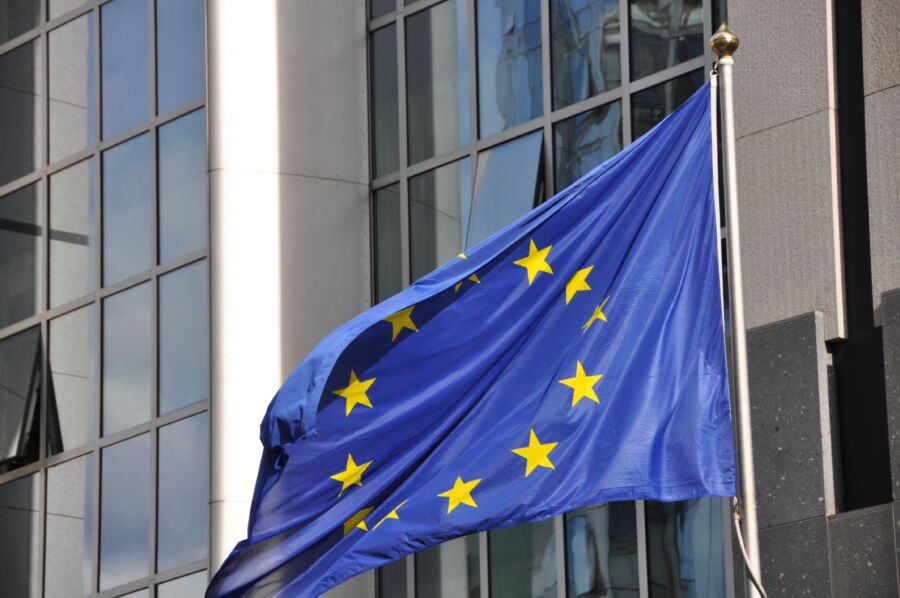
The History of the EU
In the late 1940s, Europe had to take a good hard look in the mirror. Brawls between its combustible countries had sparked two world wars in just 25 years, decimating generations, economies, cultures, and global stability. So the continent collectively wondered: How can we stop this from happening again?
The Treaty of Versailles, which tried to answer this question after World War I, didn’t work. The sanctions it slapped on Germany — ceding territory, paying fines, reducing military, and essentially being required to take full blame for the war — proved too harsh. Instead of knocking Germany down, it stoked German anger and sparked the rise of the Nazi party. Arguably, the Treaty of Versailles didn’t just end World War I…it started World War II.
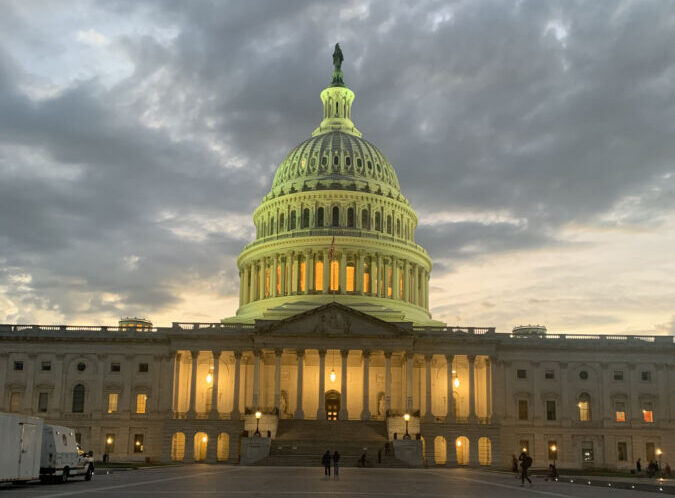
So after World War II concluded, a French politician named Jean Monnet proposed the opposite approach. Monnet lived in Washington, DC, and was fascinated by the United States’ system of united states: parts of a whole that operate independently, but still share essential resources and work toward a collective prosperity. On his walks home from government meetings, Monnet dreamed up a similar model for Europe. (Today, the French Embassy in Washington features a Parisian-style bench as a nod to Monnet’s love for nearby Rock Creek Park, where inspiration struck.)
Monnet pitched his idea for a united Europe, and America bought in. Through the Marshall Plan, the US helped European countries get back on their feet while Monnet put his brainchild into action. America’s thinking here was twofold. First, European collaboration greatly reduced the chance of infighting sparking another world war. Second, the US could benefit significantly. With the Soviet Union looming behind the Iron Curtain at Europe’s eastern fringe, America’s support could ensure western European nations emerged from World War II as democracies, allies, and trading partners…instead of as communist adversaries.
As the United States helped western Europe rebuild, Monnet and France’s foreign minister, Robert Schuman, drafted a plan for the American-backed countries to mimic the US and pool resources. They opted for coal and steel — war materials — which allowed participating nations not only to collaborate to achieve better manufacturing and quicker prosperity…but also to keep an eye on each other.
On May 9, 1950, the Schuman Declaration launched the European Coal and Steel Community — and six nations agreed to try it out: France, Italy, West Germany, Belgium, the Netherlands, and Luxembourg. And while the name “European Union” wouldn’t emerge until 1992, this is the founding of the EU as we know it today. Like America celebrates July 4, the EU celebrates May 9 as “Europe Day.”
It worked. Within years, those six countries were doing so well that they wanted to move beyond coal and steel. They added more areas of collaboration and formed an elected government — the seed for today’s gigantic European Parliament — ensuring their citizens could democratically vote on representatives to this growing union. More success came, and by the 1970s, other European countries asked if there was room for them, too.
Denmark, Ireland, and the United Kingdom joined in 1973, then Greece in 1981, then Spain and Portugal in 1986. Over decades, this “European Union” grew to 28 countries (now 27, after the UK famously left via Brexit), including some former Soviet states — a major victory for global democracy. With each enlargement, the EU assumed new problems to solve and adopted new citizens to care for.
Today’s European Union is a true family of nations. It recognizes that common European problems are best solved by working together, instead of “every nation for itself.” And, the thinking goes, with that collaboration also comes a better chance of prosperity and happiness for all of Europe.
This vision may seem overly utopian. (And, at times, it is.) But at its core, the European Union was founded — and continues to succeed — as a peace project. This upcoming May 9 will mark 76 years without war between EU countries. And, after Europe leveled itself with two world wars in 25 years, that’s quite an accomplishment.
How the EU Works
Today’s European Union has grown far beyond just sharing coal and steel resources to avoid war among its countries. It oversees common political policies while also funding infrastructure projects, cultural preservation measures, and initiatives that ensure the Champagne in your glass comes from the French region of Champagne. Meanwhile, the EU allows free movement — meaning an Italian citizen can easily study, work, and live in France, Sweden, or any EU country.
That movement also extends to trade, making the EU one huge market. This helps its (relatively small) countries play ball with bigger, stronger economies — like the US and China — who, in exchange, can easily tap into the EU’s 450 million consumers at once (instead of juggling 27 different rates and requirements). Twenty-one EU countries also use a common currency, the euro, making things even easier.
This has worked for decades and helped once-struggling economies like Ireland catch up with the rest of the world. But times are changing, and America wants to out-muscle the EU. European leadership must now figure out how to ensure this doesn’t smother what their members — and allies — have long enjoyed.
These chats will wind their way through the EU’s intertwined system of government, which is intimidatingly complex (and not exactly the sexiest for a travel company to cover). But untying this bureaucratic knot helps reveal what people like and dislike about the bloc.
The EU has many branches, but four see the most action. First is the European Council, which consists of the elected leaders of each member country (think French president Emmanuel Macron and Italian prime minister Giorgia Meloni). They set the EU’s overall direction and leave it to the other branches to take forward.
Of these, the European Commission wields the most power. This is the EU’s executive arm, which drafts laws based on the Council’s instruction. It’s made up of 27 “commissioners” (one from each EU country), who manage different portfolios ranging from climate to economy to “intergenerational fairness.” The Commission president — currently Ursula von der Leyen — is the de facto leader of the EU.
Once the Commission proposes legislation, it’s reviewed by two other branches: the European Parliament — similar to our House of Representatives, where each country directly elects reps — and the Council of the European Union, which is made up of groups of each country’s cabinet members like defense ministers, agricultural ministers, and so on. (Did we mention the EU is commonly criticized for being heavily bureaucratic?)
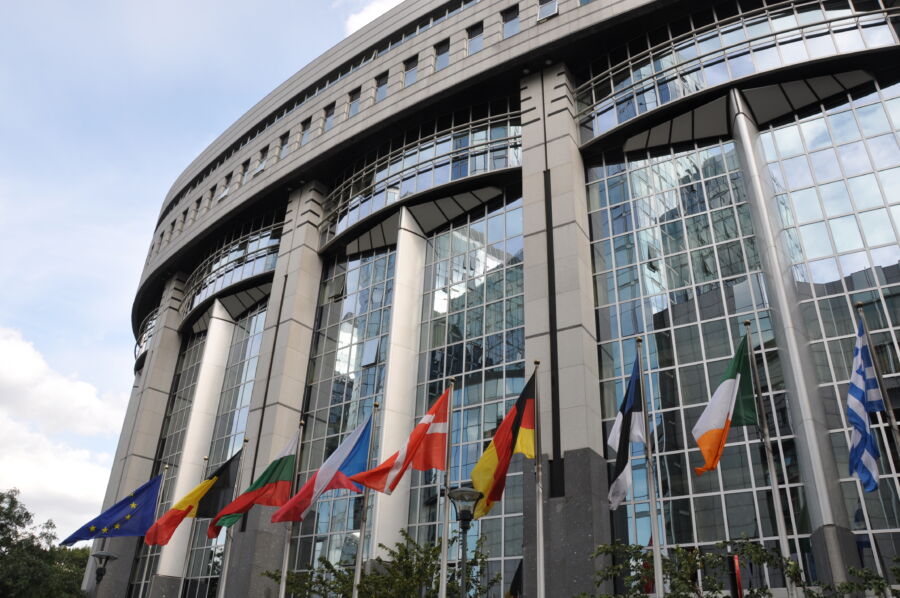
This government labyrinth is by no means perfect. The EU’s work often proves too idealistic, and its clunky processes regularly get in its own way. Europeans (and American visitors) love to vent about how the EU’s regulation-happy mindset results in things like dictating the proper curve of a cucumber (yes, they once did this). It expects people to actually know the difference between the European Council and the Council of the European Union. And often the stronger, richer countries — like France and Germany — give more than others.
But even the biggest Euroskeptic recognizes that, by weaving together the economies of former enemies — like France and Germany — everyone has become so interconnected, that EU countries will never again suffer devastation from a major war between one another. Many — like France and Germany — still don’t agree on most things. But they’re too intertwined to take up arms over their differences.
For Europeans, that’s often enough to see the EU as successful and worthwhile — even if some American critics might find it less convincing. But a big difference here is that Europe really knows what a war is. Of course, if you have a loved one who served, you know, too…but as a society, the United States can’t remember actually hosting a war.
Europe can. It ripped itself to shreds twice in our grandparents’ generation. France lost as many people as America lost in the Iraq War, in just one day, during World War I, many times — and lost as many people as we lost in Vietnam in one month. And it happened again, and again, and again until, by the end of World War II, roughly half of French men between 15 and 30 were casualties. Every European country has a similar story.
Because of this, Europeans prefer to deal with the EU’s endless diplomacy and bureaucracy rather than dabble in a once-in-a-while war. This peace project has many flaws, but it’s innovative and awe-inspiring nonetheless. And it’s effective: In 2012, the European Union and its 450 million citizens were rewarded with the Nobel Peace Prize for “turning Europe from a continent of war to a continent of peace.”
How the EU Impacts Travelers in Europe
When Jean Monnet brainstormed the modern European Union, he based his peace-driven idea on America’s model of independent states, united by a greater goal. With the help of the US, Monnet planted the seeds for a bloc that has not only established today’s European peace and prosperity — but also impacts how we experience Europe.
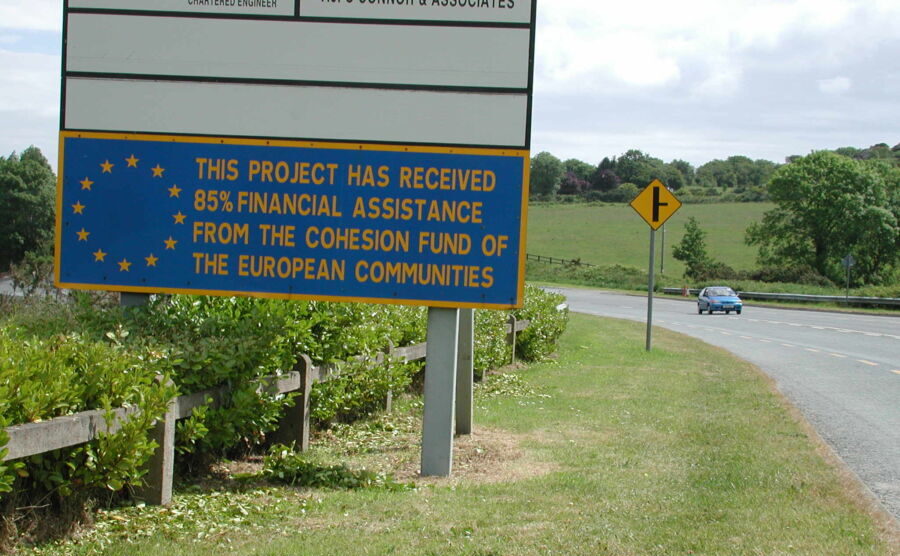
When European integration hit full swing, many feared each country’s independent pride and individual culture would be threatened. But just the opposite seems to be happening. The EU promotes identity among its nations by annually allocating hundreds of millions of euros for cultural heritage protection. Ireland, for example, receives EU funds that keep traditional Irish dance schools alive, help preserve the Irish language, and ensure the Cliffs of Moher receive proper maintenance. All 27 EU countries receive similar funding.
But this goes deeper than just protecting national culture. Borders can get messy, and don’t always line up perfectly with cultural identity. (Just ask the Basque people, who live on both sides of the Spanish-French border.) The EU is filled with ethnic groups that have their own heritage, and a lot of Europe’s historic troubles have come from fears of their identities being squashed. Preserving peace on a sprawling, multiethnic continent requires respecting and celebrating diversity beyond just a national flag. It means understanding that residents of Palermo aren’t just Italian, they’re Sicilian.
Therefore, the EU works to protect ethnic heritage — sometimes even more than “national” heritage. Rick often references a friend of his, who is an archeologist in Tirol, a region spanning parts of Italy and Austria. When he wants money to excavate a castle, he goes to the EU. If he says, “I want to do something for Austria,” he often comes home empty-handed. So instead, he says he wants to do something for Tirol…and gets funding.
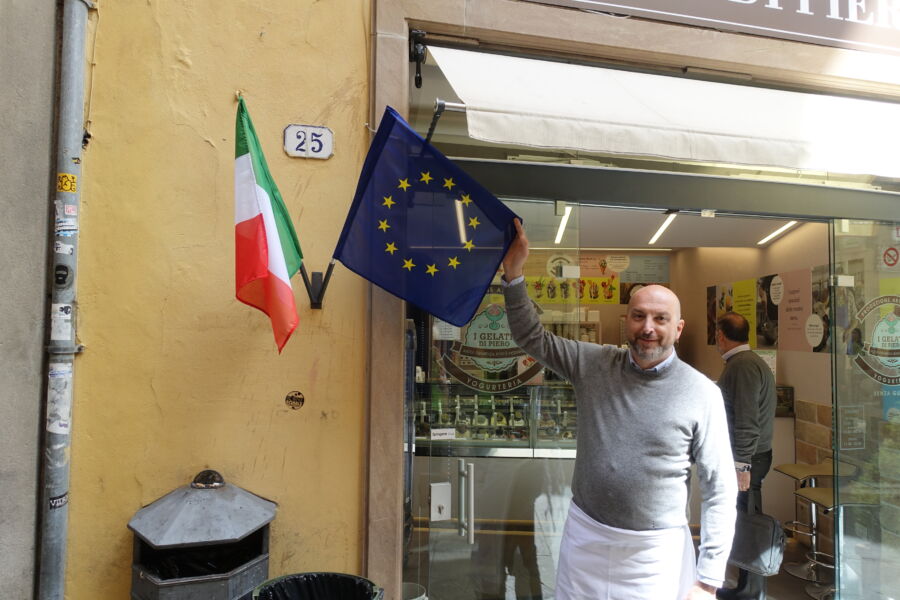
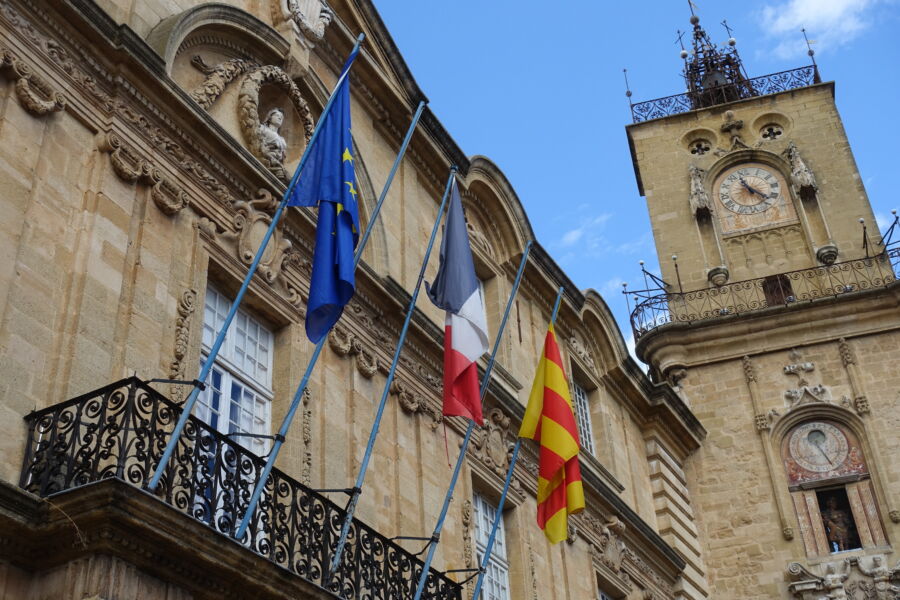
The result of this is that the EU impacts who we meet in Europe. If you share a table with a local at Munich’s Hofbräuhaus, they might say they’re Bavarian. They also might say they’re German, or European. On Sundays in Barcelona, you’ll clasp hands and dance the Sardana with someone who identifies as Catalan — and Spanish, and European. Many city halls fly three flags, reflecting three loyalties: region, nation, and Europe. And, in the eyes of the EU, they all have an important part to play in this greater project of collaboration.
The EU also helps us travel Europe. Bolstering infrastructure was an early ideal of the bloc. There weren’t many (if any) freeways in Portugal or Greece when they first joined — now, you’ll drive EU-funded highways in both, getting to your destination hours earlier than you once would have. You’ll cross between Austria and Slovenia without a passport stamp or currency exchange…just a sign on the road and a different cheese at your next breakfast. Trains are faster and better, and immigration and customs will soon be more streamlined through the EU’s Entry/Exit System.
And the EU affects how we enjoy Europe. In Italy, it works to protect a key element of regional and national pride: food. If you spot an EU logo on your prosciutto di Parma, you can rest assured that the dry-cured ham is not only from Parma, but it’s aged at least 12 months in just the right conditions. (No shortcuts allowed.) You’ll pour a glass of Chianti from a bottle with a sticker on it, confirming that every step of the wine’s production took place in Chianti. EU funding also helps protect Neapolitan pizza recipes…The list goes on, but you get the point: Like Italians, the EU believes Italian food should be Italian.
These efforts don’t always resonate with the American worldview. We might reasonably point out that, while US troops are fighting for global peace, Europe is busy making sure Champagne only comes from Champagne. Why, then, should America continue supporting Europe?
It’s two different approaches for defending peace. While Europe has invested in “soft power” measures like building infrastructure and protecting identity, America has sunk its funds into “hard power” — building a military industrial complex. Both have proven effective in protecting against global warfare… So is one “right” and the other “wrong”? There are pros and cons to both, and we could all benefit from getting together and trading notes. Travel is the best way to do this.
And when you travel Europe, you’ll see the impact the European Union has had on the continent. Now over 75 years old, the EU is once again assessing its role in a changing world. But remembering how it started — as a peace project, dreamed up in a park in Washington, DC — is crucial to appreciating how far it’s come.
We’d like to hear from you! As a member of our merry band of travelers, please weigh in on this article by using the comments below. Meanwhile, many of these topics will also be covered on Rick Steves’ Europe’s various social media platforms — Facebook, Instagram, X, and TikTok — and we hope you’ll join the conversation there as well.