A new year always brings changes to the travel landscape, and 2026 is no different. If you’re planning a trip to Europe this year, here are some general trends and key 2026 events to know before you go.
Border Technology: ETIAS, EES, and More
Arriving in Europe is becoming more high-tech. Instead of chatting with a border guard and getting your passport stamped, you’ll increasingly go through a self-service kiosk. That’s because, through much of 2026, the Schengen countries (consisting of most of Europe) are phasing in their new Entry/Exit System (EES) — a cohesive set of face-scanning machinery that you’ll encounter at every Schengen port of entry.

While EES technology aims to make international travel safer and more streamlined, it’s just the precursor to an even bigger development: the EU’s Electronic Travel Information and Authorization System (ETIAS). This visa-waiver program will be rolled out near the end of 2026, and — similar to the United Kingdom’s ETA — will require Americans, Canadians, and many other non-European travelers to preregister and pay a small fee before flying to Europe. You likely won’t need to worry about ETIAS in 2026 unless you’re visiting late in the year (it will be introduced in mid-October at the earliest), but keep an eye on the news — and read our detailed coverage of EES and ETIAS.
The Rise of Artificial Intelligence
AI is becoming a bigger and bigger presence in the travel industry. You’re bound to encounter AI-powered technology throughout your trip, from online booking agents to museum apps that customize self-guided tours based on your tastes. Meanwhile, general AI tools like ChatGPT, Gemini, and Copilot are happy to promise everything you need to plan your vacation. But savvy travelers should tread with caution; AI’s advice isn’t always trustworthy. For our guidance on the best — and worst — uses for AI in trip planning, read our tips on traveling with AI.
Price Increases
As Europe gets more crowded, many “overtouristed” locations are increasing prices…in a variety of ways. Some are straightforward and unavoidable, such as tourist taxes — an extra fee, often paid when you check into your hotel — which are expected to go up significantly in popular cities like Berlin, Amsterdam, and Edinburgh in 2026.
Other cost increases are couched as crowd-management measures. For example, the Venice Access Fee (which is returning this year) charges tourists a few extra euros to visit during select peak-season days. Meanwhile, some popular sights (like many National Trust properties in England) are getting into dynamic pricing: charging more on in-demand days (with discounts for booking ahead). While charging more can feel greedy at first, the goal here is to encourage more “balanced” tourism, by shifting visitors from the busiest times to quieter ones and evening out the crowds, to give you a better overall experience.
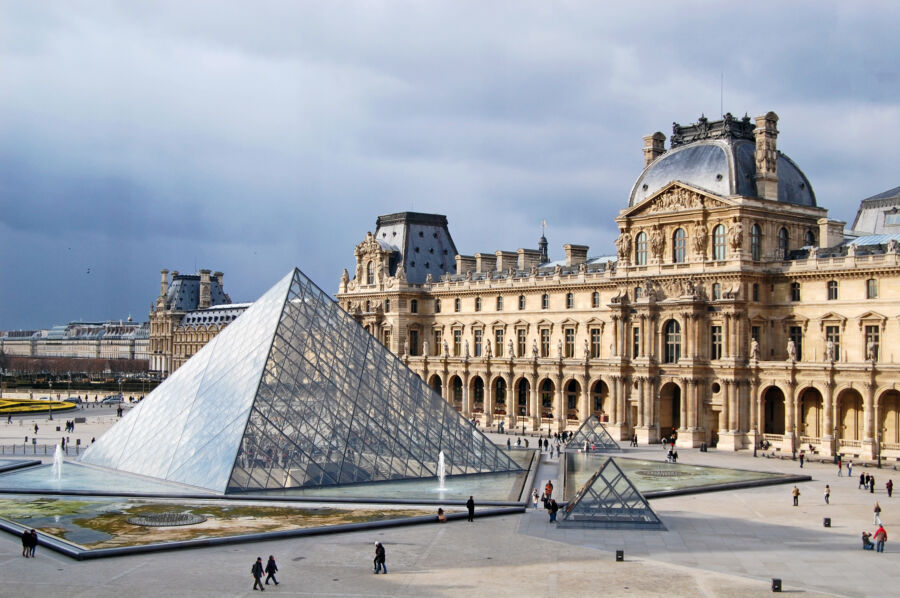
In the same vein, many European countries are experimenting with “locals-only” prices. This is similar — and possibly in response — to what the United States does with its national parks, which charge one price for Americans and another price for everyone else. Early adopters, including the Louvre museum and The Last Supper in Milan, now charge separate prices for EU citizens and non-EU citizens. Don’t be surprised if others follow their lead.
Events
While ETIAS, artificial intelligence, and price increases are Europe-wide travel trends, there are also a few location-specific dates to be aware of in 2026. If you’ll be in (or near) any of these places when these events are happening, prepare for heightened crowds, increased prices, and difficulty booking hotels.
Winter Olympics (Northern Italy; February 6–22)
Milan and Cortina d’Ampezzo (in the Dolomites) are hosting the 2026 Winter Games. Unless you’re traveling specifically for the Olympics, it’s best to avoid this area in February, as crowds will be heavy and lodgings will be scarce (and expensive). Even elsewhere in Italy you might experience a similar Olympic effect. Read our tips for Olympic travel.
Gaudí’s Sagrada Família (Barcelona; June 10)
Barcelona’s beloved, perennially-under-construction cathedral is commemorating 100 years since the death of its architect, Antoni Gaudí. The church and city will be mobbed on and around this date. Note that some travelers are mistaking this buzz as a sign that Sagrada Família is about to be “completed” — but it’s not. While a major part of the church (the central tower) should be finished by this date, Gaudí’s masterpiece is still a work in progress. Read more about the Sagrada Família’s milestone moment.

World Cup (Everywhere; June 11–July 19)
Although the FIFA Men’s World Cup is taking place in North America, you’ll feel its impact all over Europe in June and July. Travelers can expect to see large TV screens set up in public squares and may encounter unexpected closures of sights and shops that suspiciously coincide with match times. Keep an eye on the tournament schedule: if you’re in a country on the day its team plays, watching with locals can be an unforgettable experience.
Note that, because of the time difference, most matches will air in the evening (European time). Pubs will be slammed, and celebrations may continue late into the night if the home team wins.
But while bars will be crowded, other sights might be more open. Some experts predict that the World Cup could make Europe less busy this year — as Europeans (and American soccer fans) focus their travel budgets on attending the tournament rather than touring Europe.
Eclipse (Iceland, Spain, and Portugal; August 12)
The path of totality for a solar eclipse will pass through parts of Iceland, Spain, and Portugal in mid-August. If you’re traveling to these countries around this time, book your hotels early — eclipse hunters are an enthusiastic bunch, and they plan far ahead. Oh, and bring eye protection!
Stay Tuned
Being aware of these 2026 trends and events is crucial to staying ahead of their impact…or using them to your advantage. Keep an eye on this Updates and Insights blog; as the year unfolds and more information develops, we’ll continue sharing news right here — to help you plan your trip with confidence and enjoy it to the fullest.
We’d like to hear from you! As a member of our merry band of travelers, please weigh in on this article by using the comments below. Meanwhile, many of these topics will also be covered on Rick Steves’ Europe’s various social media platforms — Facebook, Instagram, X, and TikTok — and we hope you’ll join the conversation there as well.
Thank you for all this important information. I knew I could be sure you would keep me informed of all the changes coming to entering Europe You are my trusted source for travel information.
I was in Italy after the EES was in use at FCO. However, it didn’t work for me. My finger prints are pretty much worn out because, as an artist working with dye sublimation, my finger prints are pretty much burned off with the handling of items after they have been “fried” at 400*F. So, I was directed to what had been the regular process. I plan to return in the Fall and I’ll be interested to see what happens then.
Is there a schedule of when each country will start using the EES? I read that it should be fully implemented by April 10. I’ll keep checking for updates at your website and other locations.
Hi Elizabeth, Travis here. Alas, no, there is no official schedule of a country-by-country rollout of EES. The goal is, indeed, to have it fully implemented (AKA at all EU entry ports) by mid-April. There’s always a chance that gets delayed, but for now it’s a good deadline to plan for. Check back indeed!
Thanks for your consistently solid information and helpful promotion of “good” tourism. I am a regular international traveler but usually am planning and booking solo. However, I am 75 and my friend of the same age now has challenges walking long distances or over rough terrain. We both want to find a good trip to Istanbul in late 2026 or probably 2027. Your currently promoted Istanbul trips are described as rigorous. Do you have anything planned for the future that might be better for my friend–that might have options so I can do the heavier walking/hiking but she can take it easier?. If not, do you have recommendations? Thanks and hoping your health is solid these days.
I am younger than 75, but I did find the “rigorous” definition of Istanbul a bit overblown. We had a person on our tour in fall of 2022 who did not feel up to the walk through some market areas. She just picked up the tour after that section ( we were on a little private bus- the driver took her to a place where she could have tea and take pictures while waiting for the rest of the tour to walk up the Fatih- Fener area.) The Guides with Rick Steves Tours are very flexible. That being said, if one can’t walk a mile- or maybe 2, then some forms of travel will naturally be reduced.
Your insights, information and comments are FABULOUS! Thank you so much! We love you, stay well,
Minnie
Just went through a Paris connection ON rebook during the storm in AMS. Two years ago it took four and a half hours through security-30 minutes, border control-4 hours . This time, 30 minutes. Security-29 minutes. New border control 1 minute! Amazing!
Very cool to hear this! Heading to Paris in July of this summer. Never been at that airport.
The Olympics? The Paralympics is a far better experience – the athleticism is a notch higher than the winter and summer games; the proximity of the athletes with the audience is more immediate; the crowds – there are no crowds; the prices for tickets, hotels, and transportation are a small fraction of the Olympic games; and the vibe is competition on the rink and slopes, and friendship in the stands and elsewhere. You really can still plan now for this year and go, or start working on LA ’28!
It’s interesting that local/tourist price differences for adults are just now coming onto the scene– us students have dealt with this for years! While nearly all of the most popular museums in Europe have student discounts or let under-26’s go free (which is awesome!), this almost never applies to non-EU students. I’m not necessarily complaining, I completely understand that we don’t pay taxes in those countries, but it did always seem odd to me that only foreign students & young people seemed to be specifically targeted.
Hi Olivia, once you have traveled a bunch, you will understand the need for some of these additional charges. They have been a long time coming. Also, it’s “we“ students…
Thank you for correcting my grammar on that comment! I’m a tad embarrassed to have missed the error. I do understand and agree that different prices for tourists and locals help keep museums and historic sites accessible to locals, and that local accessibility should be prioritized. You’re right that you’ve likely traveled far more than I have– is there another dimension to this topic that I’m missing? If so, I’d love to learn about it.
My wife and I were in Turkey and Greece this last November (loved the Turks!) We found that many of the ‘combo’ tickets were going away. In Athens especially the Acropolis ticket, I gather, used to serve other venues, it did not. The archeological museum did also did not serve museums like the Christian and Byzantine museum.