2025 is a Jubilee year — so if your travel plans include Rome, it’s important to know what the Jubilee is all about, and to prepare for increased crowds.
Since the year 1300, the Roman Catholic Church has proclaimed a “Jubilee Year” every 25 years. It’s a time when the pope invites pilgrims from all corners of the globe to leave the conflict and instability of our world and come together in a spirit of peace and hope in Rome. It’s a time when the faithful re-establish their relations with God, with each other, and with creation…a time to promote the dignity of all persons.
Roughly 30 million pilgrims are expected to congest Rome while converging on the Vatican. And while they will likely have a plan — the Church puts on many special events for the Jubilee — casual tourists should be prepared as well.
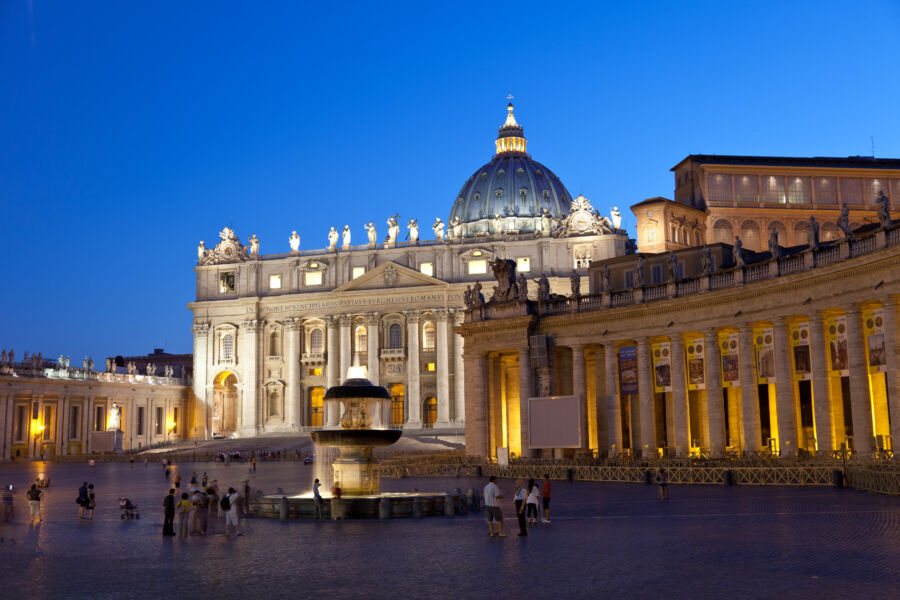
First, major sights like the Colosseum, Forum, and Vatican Museums will be beyond slammed — so book your tickets well in advance if these are on your must-see list. The reservation process at many is in flux given the expected increase in travelers: For example, the Vatican Museums (with the famous Sistine Chapel) have already opened up ticket sales through May 2025 — so you’ll need to keep tabs on the changing procedures as your departure date approaches. As soon as you’re able to book a slot, do it.
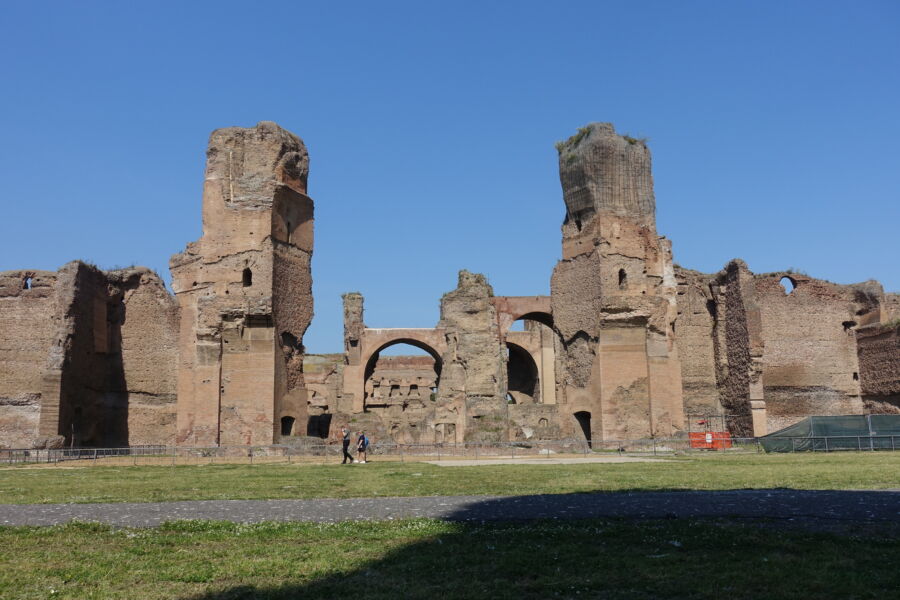
Alternatively, consider skipping these altogether (or accepting that you’ll have to) and instead focus on lesser-known gems that offer similar thrills without the throngs. Instead of fighting crowds at the Colosseum and jostling through the Forum, visit the nearby (and never-crowded) Baths of Caracalla for an inspiring look at ancient engineering on a grand scale. The National Museum of Rome has a stunning collection of sculptures and mosaics, which are yours to ogle without being bumped by backpacks and selfie snappers. Or leave the city altogether and take an easy train ride out to Ostia Antica, where you’ll be alone with the sprawling, evocative remains of Rome’s early port. (Our Rome guidebook covers the biggies, along with these underappreciated alternatives — including detailed instructions on how to visit each one.)
Or take a break from sightseeing and roam Rome’s many vibrant, relatively untouristy neighborhoods. Swap language lessons with beer-sipping students around a public fountain in Monti; ponder a what-if alternate reality while ogling Fascist architecture in EUR; or head to Testaccio, beloved by Romans for its nose-to-tail market, and graze among the many food stalls, seeing how many different bites you can fit into a couple of hours.
If you’re hoping to take part in official Jubilee events, it’s best to plan ahead. (It’s difficult to just show up and walk through the Holy Door of Saint Peter’s.) Those hoping to participate should sign up for a (free) “Pilgrim’s Card” and then register for individual events. To do this, visit the official Jubilee website (or download the Jubilee mobile app), create an account, and select your event. Registration for everything is open for the entire Jubilee year — through January 5, 2026 — so once you know your travel plans, get your card and secure your spots.
(Note that a regular tourist visit to Saint Peter’s is not considered an official Jubilee event — so you won’t need a Pilgrim’s Card to see Michelangelo’s tender Pietà or Bernini’s brilliant Baroque baldachin. But if you want to visit the Holy Door, you will need one.)
While the Jubilee will bring crowds, it will also bring improvements. Tourists and Romans alike will appreciate new parks along the banks of the Tiber, improved bike paths throughout the city, a people-friendly zone surrounding St. Peter’s (replacing a people-unfriendly roadway), and other pleasant surprises as Rome shows off its cultural wonders in good style.
Should you visit Rome in 2025? If you’re a practicing Roman Catholic, it could be a lifelong memory. If you’re flexible, consider a Roman rain check this year, and maybe go elsewhere in Europe.
And if you really are committed to seeing Rome in 2025, do it — but do it smartly. Be realistic about the impact the Jubilee may have on your experience, book your rooms long in advance, get your most essential tickets reserved ASAP, and fill your days with dimensions of the Eternal City that are not eternally crowded.
While you’re there — regardless of your faith — consider embracing the pope’s call to help make our troubled world a little more peaceful with a little more hope. Buon viaggio!
Update: This article was updated on January 2.
We’d like to hear from you! As a member of our merry band of travelers, please weigh in on this article by using the Comments below. Meanwhile, many of these topics will also be covered on Rick Steves’ Europe’s various social media platforms — Facebook, Instagram, X, and TikTok — and we hope you’ll join the conversation there as well.
We’re coming to Italy in June. Have been before. Planning independent travel to Florence and Cinque Terre. Hoping we can chill and have missed the bulk of the Jubilee crowds.
Will be there in November. Are we safe?
Safe from what???
From massive crowds ? 😁
Will be there in late April. Will the crowds have began to congregate by then?