As Rick likes to say, there are two IQs for travelers: those who queue…and those who don’t. But this advice isn’t just for how to beat crowds at big-ticket attractions. New systems have streamlined the process of passport renewal and going through Immigration and Customs, and you can now save time both at the sight you’re heading to — and the airport you’re heading through. So as this year’s travel plans begin to take shape, here’s what to know…and a few tips.

First, renewing your passport is now as easy as online shopping. No more waiting at courthouses and DMVs: The US State Department has rolled out an online passport renewal program, where you can do it all from your couch — photo, payment, everything. Make sure you read all of the requirements (for example, you must still possess a passport that expires within a year or expired less than five years ago) and as always, plan ahead. While the renewal process is now easier and more convenient, it still takes six to eight weeks for your new passport to arrive.
Using your passport to cross borders also looks different, as automated checkpoints that use “e-gates” are becoming standard — especially at European airports. At Immigration, you’re now likely to be met by a machine that scans your passport, takes the worst possible photo of you, and then lets you through; sometimes, you’ll also follow up briefly with a (human) border guard.
When approaching these checkpoints, review the signs carefully: Some lanes are marked for EU passports only, while others are for all passports. So far, the e-gates at many airports are open only to Europeans, but a few also permit Americans. Noticing this can save you a long wait in line.
During this process, you might see signs that say “Biometric Passports Required” — but fear not: You probably have one. All U.S.-issued passports since 2007 are required to be biometric (also called e-passports), meaning they contain a protected chip that stores your information. This means stamps are becoming obsolete, and the pages of your passport will no longer be an inked scrapbook of your travels. Those still craving a stamp can try asking a border guard, but no promises.
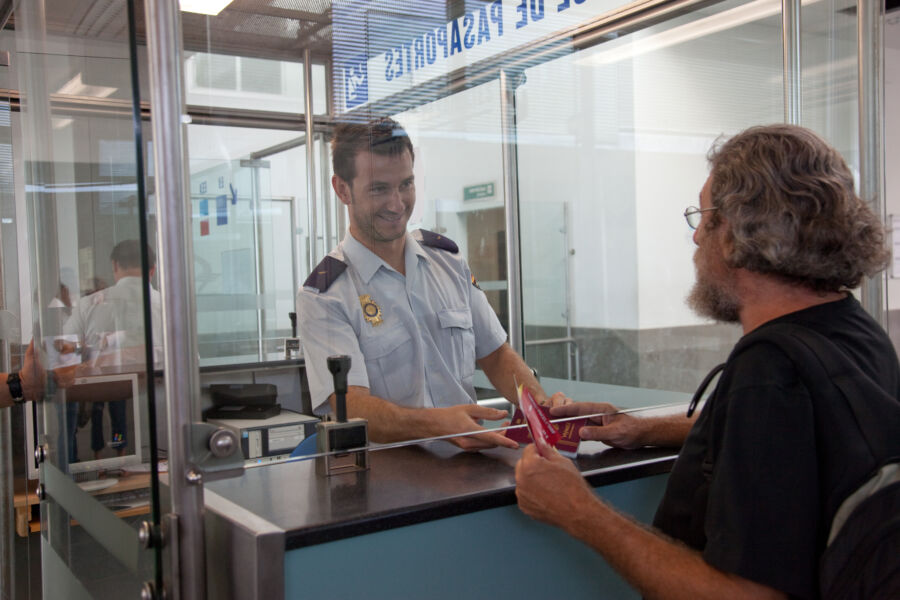
Even with these improvements, reentering the United States can still be a pain. Long lines are common at any US Immigration checkpoint — but there are a couple of handy tricks to help reduce your wait time.
For frequent international travelers, Global Entry is a good investment. For a fee of $120 (which must be renewed every five years, and many major credit cards will reimburse), it registers you as a “trusted traveler,” meaning you just walk up to the dedicated machine, take your picture, and then meet briefly with a Customs agent. There is, naturally, a catch: In order to be approved, you must go through a background check and conduct an in-person interview with a TSA officer (normally at an airport). But after that hassle, you’ll enjoy expedited reentry at nearly all major US airports — and even a few international ones. (Here is the list of airports that accept Global Entry.) Better yet, Global Entry also includes TSA Precheck for domestic flights — saving you lots of time in TSA lines, anytime you fly within the US.
As an alternative to Global Entry, consider Mobile Passport Control (MPC) — an underappreciated app that can also save you time. It’s free and requires no background check or interview: Simply download the app and upload your passport information. Then, when your plane lands, answer a few basic questions about your trip. The app will generate a QR code, which is essentially your landing form. At passport control, just look for the MPC logo…and wave goodbye to the hundreds still standing in the old-school Immigration line.
Crossing a border will likely always involve some sort of waiting, but these technological upgrades are making the once-archaic process more efficient. And by taking advantage of these, travelers will find it’s becoming easier to get your passport…and to use it.
We’d like to hear from you! As a member of our merry band of travelers, please weigh in on this article by using the comments below. Meanwhile, many of these topics will also be covered on Rick Steves’ Europe’s various social media platforms — Facebook, Instagram, X, and TikTok — and we hope you’ll join the conversation there as well.
Great travel tips thank you
Thanks