This February, we at Rick Steves’ Europe are mindful of the many important ways that our area of expertise — Europe — dovetails with Black history.
While most accounts of European history are (perhaps understandably) “Eurocentric” — focused on the established, white-dominated narrative — Europeans have been making recent strides to acknowledge the until-now-overlooked contributions of people of color. Many parts of Europe — especially Ireland and the United Kingdom — observe Black History Month in October; in the Netherlands, it’s called “Black Achievement Month.”
For much of Europe’s story, people of African descent appear on the margins of recorded history — often as servants, slaves, and entertainers — though many managed to become successful and well-respected. St. Maurice, a third-century Egyptian who commanded a Roman legion and was martyred for protecting fellow Christians, was a revered figure in the Middle Ages. And legends of King Arthur’s roundtable included a Black knight, Sir Morien.
Both names — Maurice and Morien — mean, roughly, “Moor-like.” In Europe, the term “Moor” was employed broadly to describe anyone from the African continent, whether Moorish or not. In our travels, antiquated depictions of “Moors” — which tend to be exaggerated caricatures, with very dark skin and red lips — can shock modern sensibilities, as we encounter them around the edges of famous squares, statues, and paintings.
For centuries — from the 1520s through the American Civil War — various European states (including Portugal, Great Britain, Spain, France, and the Netherlands) actively participated in the transatlantic trade of enslaved Africans, who were ripped from their homes, crowded onto ships, and transported in horrifying conditions to North America, where they were doomed to generations of suffering, exploitation, and disadvantage.
But Europe’s story also includes many people of color who made important contributions to society. Included in this lengthy list is Alexandre Dumas (1802–1870), the French novelist of African and Haitian descent who wrote The Three Musketeers and The Count of Monte Cristo; Juan de Pareja (1606–1670), a freed-slave-turned-student of the Spanish painter Diego Velásquez who gained acclaim as an artist in his own right; and Ignatius Sancho (1729–1780), born on a slave ship, who became a well-respected writer and composer in London, where he advanced the abolitionist cause. The Jamaican-born nurse and entrepreneur Mary Seacole (1805–1881) cared for injured British troops and founded successful businesses during the Crimean War; however, as is so often the case with Black narratives, Seacole’s story was overshadowed by her white peer, Florence Nightingale.
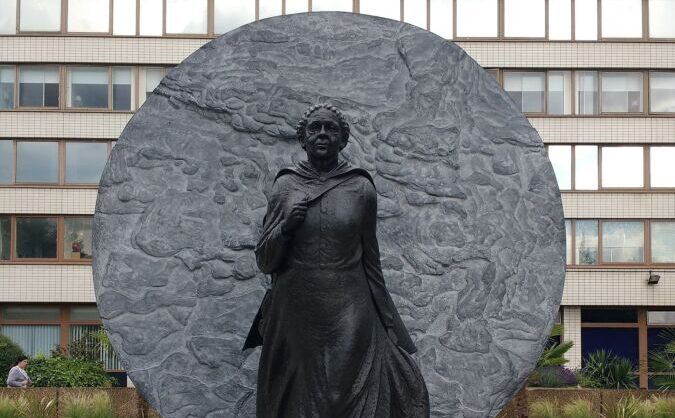
Europe has greatly benefitted from the contributions of many Black Americans, as well, especially in cosmopolitan hubs such as Paris and Berlin. When jazz — created by Black musicians in New Orleans — spread around the world in the 1920s and 1930s (the Jazz Age), these cities became European centers of the form, hosting performances by Duke Ellington and Louis Armstrong. To this day, jazz is beloved throughout Europe. Also in the Roaring Twenties, the American-born dancer, singer, and actress Josephine Baker was the toast of Paris, a trendsetter in both in fashion and culture; she later worked with the French Resistance against Nazi rule during World War II.
Berlin has played host to several prominent Black Americans who made an impact on the city’s history. Olympian Jesse Owens humiliated Hitler’s white supremacist stance by dominating the 1936 Olympics. Martin Luther King, Jr. traveled to both West and East Berlin in 1964, preaching against the divisiveness of walls. Activist and philosopher Audre Lorde introduced notions of Black pride and feminism to German society as a visiting professor during the 1980s and 1990s. And in 2008, even before he’d been elected to the American presidency, Barack Obama enjoyed a rock-star reception when he spoke before more than 200,000 people at the Brandenburg Gate.

Like the United States, Europe continues to reckon with dated attitudes surrounding people of color. For instance, in 2004, the Viennese coffee company Julius Meinl redesigned its historic mascot, which had caricatured African features. In 2020, following the murder by police of George Floyd, Black Lives Matter protests that began in the US spread around the world; in Bristol, England, activists toppled a statue of the slave trader Edward Colston and dumped it into the harbor. And in recent years, both the king and the prime minister of the Netherlands have formally apologized for their country’s role in the slave trade.
Here at Rick Steves’ Europe, we celebrate Black History Month as an important reminder to continue our ongoing mission of uncovering and incorporating Black stories in our guidebooks and other content — so that we can help introduce travelers to these powerful, often-overlooked narratives all year round.
Speaking of which…what are we missing? In the Comments, please share your thoughts on how Black history has helped shape Europe.
We’d like to hear from you! As a member of our merry band of travelers, please weigh in on this article by using the comments below. Meanwhile, many of these topics will also be covered on Rick Steves’ Europe’s various social media platforms — Facebook, Instagram, X, and TikTok — and we hope you’ll join the conversation there as well.
I would just point out that Mack Robinson (Jackie Robinson’s older brother) won the silver medal in the same Berlin Olympics dominated by Jesse Owens.
https://lipsiusbau.skd.museum/ausstellungen/1-million-rosen-fuer-angela-davis/
Here’s a link to a fascinating exhibition about Prof. Angela Davis. A fugitive who faced the death penalty, she was idolized in East Germany