If you’re planning a trip to Europe in the next year or two, you’ll probably find increased options to travel by train between major cities. That’s because it’s much greener to travel by rail than by air. And so, in an effort to reduce carbon emissions, Europe is reinvesting in high-speed rail travel — resulting in cheaper, more frequent train options competing with routes that have long been dominated by short-haul flights.
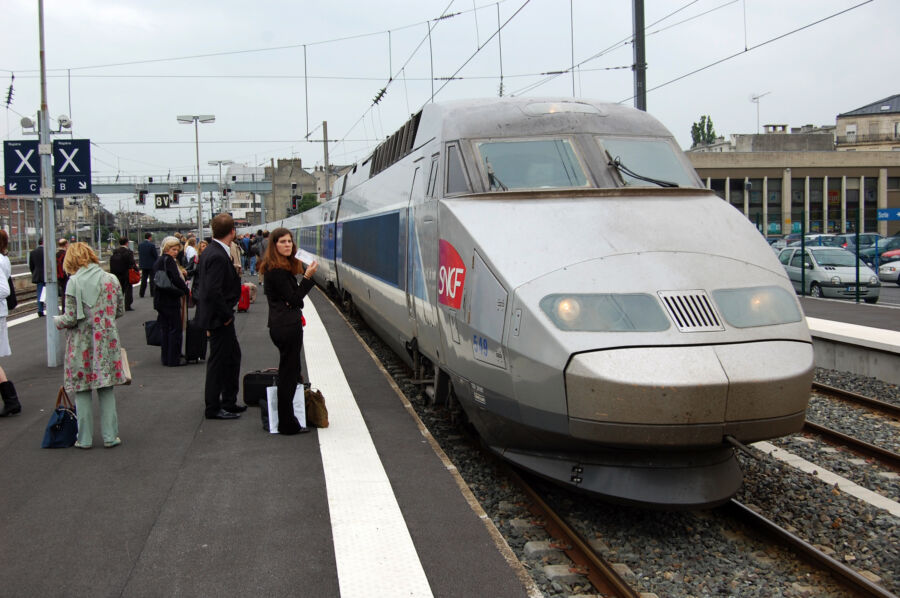
The European Commission (the policy-making arm of the European Union) is spearheading this initiative to make intra-European travel not only more sustainable, but also more seamless. Along with improving rail infrastructure throughout its member countries, the EU is hoping to launch a single, Europe-wide digital booking system. Once implemented, this will let you check timetables, book seats, and manage your tickets across Europe in one platform, instead of juggling multiple apps — SNCF in France, Deutsche Bahn in Germany, SJ in Sweden, SBB in Switzerland, and so on.
Rail travel already offers many perks over air travel. Rather than making the long and costly trip to and from airports in the distant outskirts — sitting in the back of a taxi during rush-hour gridlock or linking light rail lines together — you zip from city center to city center. Trains are also roomier, more scenic, and more relaxing than cramped airplanes. While rides are often longer than flights, high-speed trains (which can rocket through the countryside at nearly 200 miles per hour) make some formerly tedious trips surprisingly quick. Barcelona to Madrid was once an all-day journey…now it takes about as long as watching a movie.

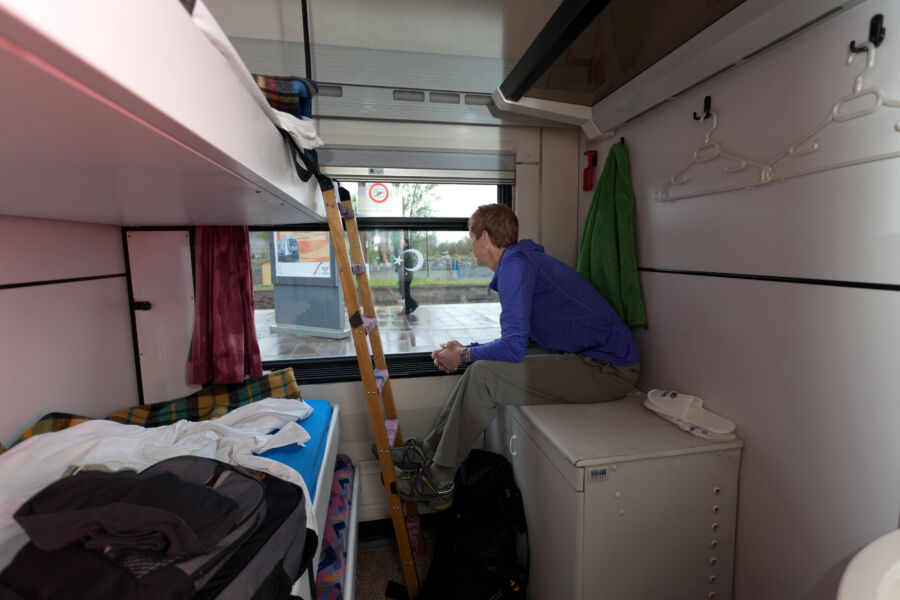
And on longer routes, savvy travelers can consider a variety of overnight trains. Night trains are a great way not only to save money — one sleeper ticket is often cheaper than a plane ticket plus a night in a hotel — but also to save time. By falling asleep in one city and waking up in another, you’ve gained a day for sightseeing. (If you do go this route, be sure to read Rick’s tips for night trains.)
And your options — overnight and midday — are increasing. The appropriately named European Sleeper, dedicated to overnight train travel, just announced a new seasonal service from Brussels to Venice. Meanwhile, France’s SNCF and Italy’s Trenitalia are opening more trains between Paris and Milan (with seats available for as low as €29); Spain’s Renfe has announced new services between Barcelona and Toulouse, France; and in countries like Hungary, Portugal, and the Czech Republic, already high-speed rail continues to pick up speed. (To read more on this, check out the New York Times’ article on European rail travel.)
So as you plan your next European adventure, consider swapping out short flights for train rides. Your options are expanding, the prices are dropping, and — coming soon — the booking process is about to get easier than ever. Plus, by choosing train over plane, you’ll have a more relaxed journey…and leave less of a carbon footprint.
We’d like to hear from you! As a member of our merry band of travelers, please weigh in on this article by using the comments below. Meanwhile, many of these topics will also be covered on Rick Steves’ Europe’s various social media platforms — Facebook, Instagram, X, and TikTok — and we hope you’ll join the conversation there as well.