It’s Pride 2025, and I’m reflecting on last September, when I slipped along the matrix of communist-era buildings in Sofia at midnight to visit one of only five gay bars in all of Bulgaria. The blue-lit basement bar was unremarkable, really: just a cluster of cozy couches populated by a light crowd of locals ringing a small, empty dance floor.
Unsure if I’d find someone friendly and fluent in English to talk with, I entered with a book tucked under my arm. Fortunately, I didn’t need it long. Soon, Ivan waltzed over with a wide smile, excellent English, and an invitation to join his friends.
The three Bulgarians and I talked about my upcoming travels and their life as gay people in Bulgaria. They enjoyed cosmopolitan Sofia — but wouldn’t dream of coming out to their banking industry colleagues. I pondered how my company’s CEO had marched in the Seattle Pride parade and eagerly asked if he’d see me there. But there wasn’t much time to reflect, because soon the dance floor was no longer empty as we laughed and danced to Bulgarian pop music late into the night. Already, the country was feeling less foreign.
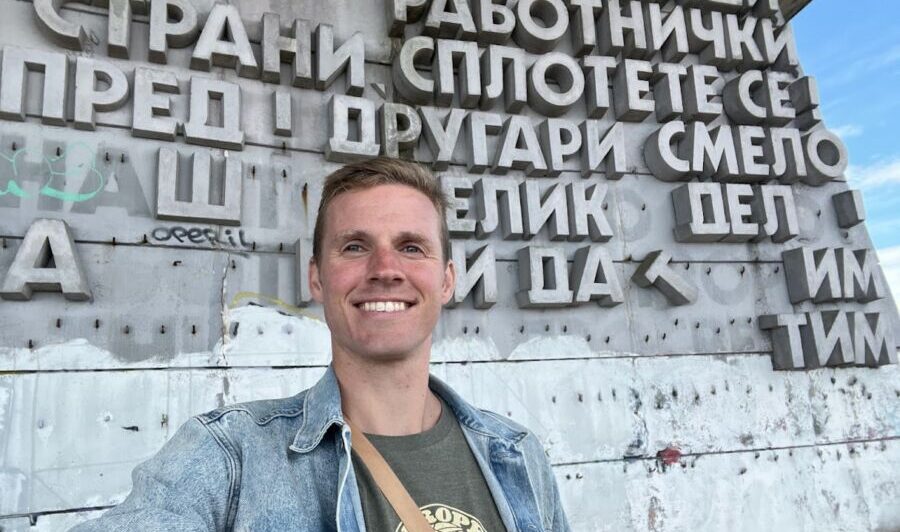
I endeavored to visit gay bars in Bulgaria and Turkey last year not because I’m a party animal, but because I’m a cultural chameleon. Turkey scores a 36/100 on the global LGBTQ+ equality index — and it actually outperforms Bulgaria in public opinion polls. I was fascinated to experience what life is like for queer people in these places.
As I danced with Ivan and his crew in Sofia — and later talked with a man who’d recently fled Russia on a rooftop gay bar in Istanbul — I swelled with gratitude for the queer community that transcends nationality. I also brimmed with hope that my new friends’ cultures would follow the same steady march toward LGBTQ+ rights I’d seen in my own American society until they too could hold hands in public and bring their partners to office parties.
Steady forward progress. That’s the way human rights work, right?
Then I returned home to anti-trans election ads, companies shuttering diversity programs, and friends having passports changed against their will. Overwhelmed by these setbacks, I was reminded of Amsterdam’s Homomonument.
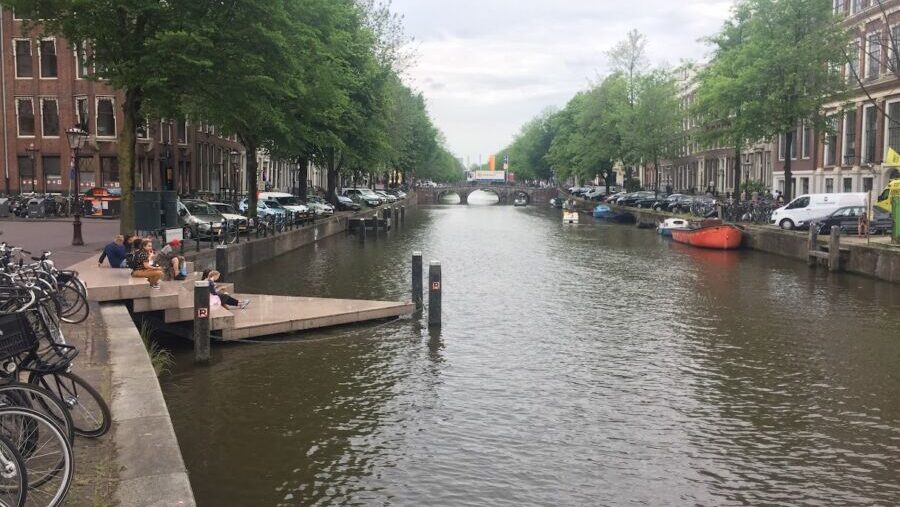
The Homomonument is a vast triangle — each side longer than a tennis court — stretching out along the Keizersgracht canal. It was built in 1987 to honor the LGBTQ+ victims of World War II, after police arrested Dutch activists trying to place a lavender wreath at Amsterdam’s National War Memorial. The eastern point of the monument is a staircase leading down to the water, the steps of which are often lined with wreaths. Each corner features a smaller pink triangle — the symbol stitched to sexual minorities in concentration camps.
But life was not always tragedy for the queer victims of Nazi Germany. For the first third of the 20th century, Germany was home to the world’s first gay movement. Magnus Hirschfield pioneered the scientific study of gender and sexuality. Gay bars, gay movies, and gay pop songs fueled a thriving subculture. Queer people may have existed at society’s margins, but society made those margins plenty wide…
…until the margins were burned.
As it turns out, the march of human rights is not steady forward progress. My new friends in Bulgaria are not promised a future in which they can marry. My friends in Ohio and Oklahoma aren’t guaranteed protection from employment and housing discrimination. And rights given can be taken away.
Just this year, Stonewall National Monument, the first US monument to LGBTQ+ people, had its history twisted. Famous for the 1969 Stonewall riots that catalyzed the LGBTQ+ rights movement, the Stonewall Inn was surprised to find the National Park Service had removed all mentions of transgender people from its website. The acronym LGBTQ+ was axed to LGB — a galling erasure, given that trans activists Marsha P. Johnson and Silvia Rivera emerged as the leading figures from the riots.
In response, this Pride season, I invite you to explore queer history and culture with the spirit of a thoughtful traveler: exercising curiosity, embracing culture shock, and pursuing understanding over judgment. So, as you would if you were visiting Sweden, Spain, or Sicily, consider seeking out books, films, and conversations that connect you to people unlike yourself. (I’ve provided a few recommendations below!) Because whether you’re part of the LGBTQ+ community, a proud ally, or unsure what to think about queer culture, we all have plenty to learn. And a broader perspective is something we can all take pride in.
Gabe Gunnink is a Monday Night Travel host for Rick Steves’ Europe. His recommended queer books and movies include:
- The Death and Life of Marsha P. Johnson (2017). This film investigates the murder of the famous trans activist while also exploring her vibrant life and work.
- Rustin (2023). A biopic uncovering the legacy of Bayard Rustin, the organizer of the 1963 March on Washington and a gay rights activist.
- Less (Andrew Sean Greer, 2017). In this Pulitzer Prize-winning novel, middling author Arthur Less travels the world as an excuse to skip his ex-lover’s wedding.
- Last Night at the Telegraph Club (Malinda Lo, 2021). This novel follows a young Chinese American woman as she finds love and community in San Francisco’s lesbian bars during the Red Scare.
- A Queer History of the United States (Michael Bronski, 2011). A dense but enlightening exploration of the long, overlooked queer history in our country.
We’d like to hear from you! As a member of our merry band of travelers, please weigh in on this article by using the comments below. Meanwhile, many of these topics will also be covered on Rick Steves’ Europe’s various social media platforms — Facebook, Instagram, X, and TikTok — and we hope you’ll join the conversation there as well.