On May 17, nearly 200 million Europeans will gather around their TVs for one of the biggest — and quirkiest — events on the European calendar: the Eurovision Song Contest. Part talent show, part cultural showcase, part political soap opera, Eurovision is one of the world’s longest-running televised programs. If you’re in the mood for something bizarre, brilliant, and oh so European, this might be for you.
Stripped down to basics, Eurovision is a music competition. But any fan will tell you that it’s much more than that. It’s a glitzy, campy, over-the-top display of Europe’s diversity — and a funhouse mirror of its modern sociocultural tensions.
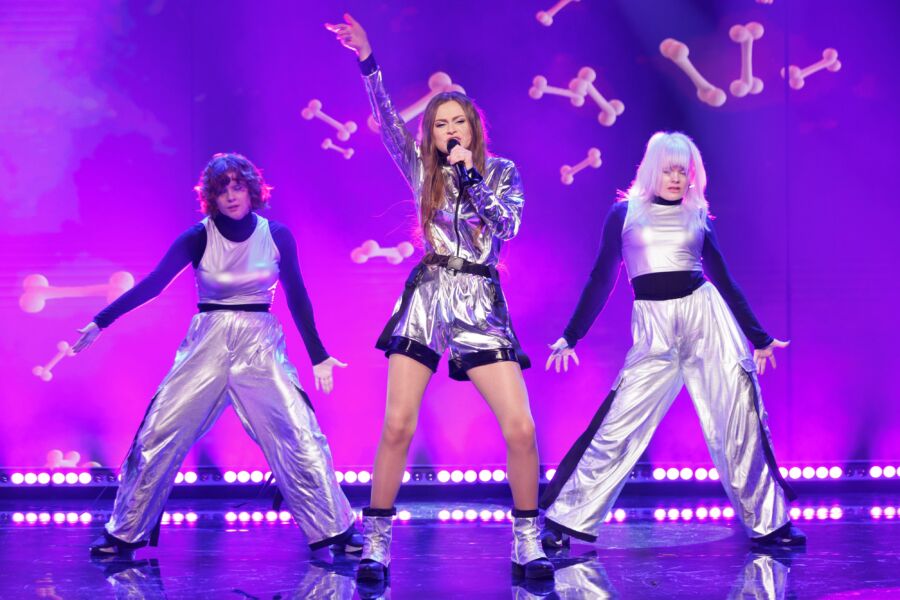
If you’ve seen the 2020 film of the same name starring Will Ferrell and Rachel McAdams, you have a faint idea of how Eurovision works. In a nutshell: Every year, musical acts across Europe submit original songs in hopes of representing their country. The songs must abide by a handful of rules: no longer than three minutes, no more than six artists on stage at once, no expletives, no lip-synching — and no live animals. After that, just about anything goes…meaning the performances can get wild.
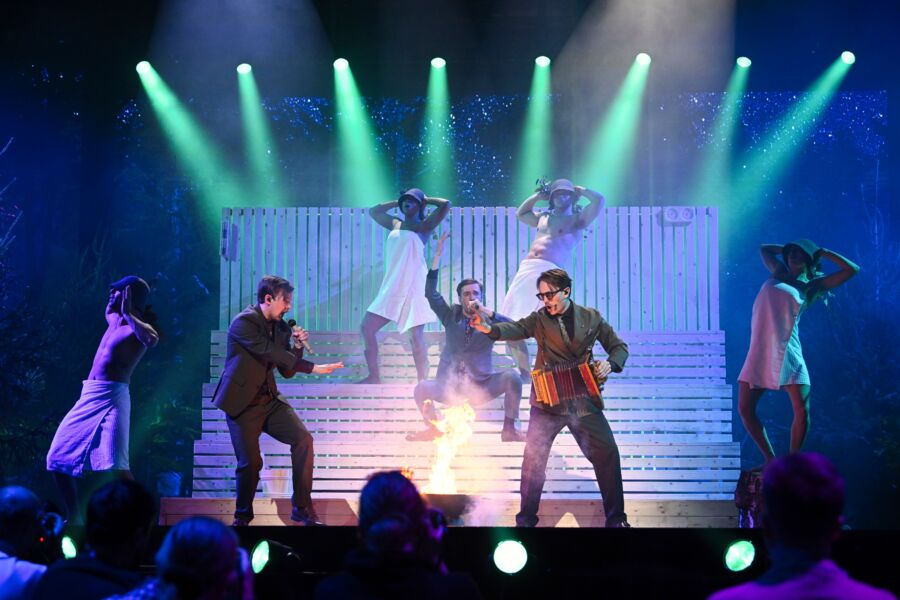
To get a taste, here is a montage of Eurovision 2025 submissions. Towel-clad Swedes are singing about saunas, Croatia is re-creating nightmares in the mud, and Estonia appears to really, really love coffee. Past acts have seen disco aliens, vampires singing opera, a puppet turkey — you name it. Songs range from kid-friendly, to innuendo-heavy, to downright vulgar. (Parental guidance is advised.) Everything looks like a Broadway musical collided with a sci-fi film.
The acts are selected by national broadcasters, such as the UK’s BBC and Italy’s RAI. The final consists of 26 acts: 20 that qualify through semifinals, the “Big Five” (France, Germany, Italy, Spain, and the UK, who always get a spot because they fund most of the spectacle), and the host country — the previous year’s champion. The finalists each perform their song live in one stupendous glitter-filled grand finale, before voting begins to determine the winner.
And that’s when the political drama heats up. Voting is split between the public and national juries, and the country that earns the most combined points wins. The public votes much like you would on American Idol, casting ballots by phone to rank the top 10 performances. This normally winds up reflecting the quality of the acts: The song that earns the top public vote is the people’s consensus pick for which was “best.”
But the national vote is totally different. Each country also has a jury, who simultaneously rank their top 10. But these picks can lean on international alliances (or grudges) more than onstage talent. Eurovision asks juries to be apolitical, yet countries angry at each other often withhold points — while others consider it a nice diplomatic gesture to give a fellow nation their top vote. Juries announce their rankings with brutally dramatic pauses.
Because of this, Eurovision winds up reflecting real-world friction. Greece and Turkey withheld points from each other for years — until 2000, which was seen as a big step in their testy relationship. In the mid-2000s, as the UK grew wary of the EU’s eastward expansion, Brits enjoyed grumbling about how former Yugoslav republics were unfairly throwing off the arithmetic by still voting as a bloc. Ukraine won in 2022, with nearly every country giving them votes as a statement against Russia’s invasion. And last year, Switzerland’s victory was seen as a “neutral” choice amid the Israel–Palestine conflict.

While today’s Eurovision is filled with political passive-aggressiveness, the competition actually began as an act of peace and unity. In 1956, the European Broadcasting Union (EBU) launched the contest to bring war-torn Europe together through music and cultural exchange. Just seven countries competed in the first edition, but Eurovision’s popularity quickly boomed. It has now outgrown even the continent, with participants like Armenia, Israel, and Australia (because they are EBU members).
Eurovision has launched some legendary careers, as well. ABBA was a nobody until they won Eurovision 1974 with “Waterloo,” and Céline Dion’s victory for Switzerland in 1988 sparked her rise to international stardom. More recently, Italian rock band Måneskin has ridden their 2021 victory to global fame.
If you want to tune in from the US, the Eurovision finals will be streamed on Peacock on Saturday, May 17 at noon Pacific Time (3 p.m. Eastern). If you’re in Europe, consider popping into a pub that’s showing it — or finding a watch party. (Some cities erect big screens, just like for a World Cup match.) Wherever you watch, prepare to be wowed, confused, and maybe even a little uncomfortable as the spotlight highlights some of Europe’s emerging talent…and some of its simmering tensions.
We’d like to hear from you! As a member of our merry band of travelers, please weigh in on this article by using the comments below. Meanwhile, many of these topics will also be covered on Rick Steves’ Europe’s various social media platforms — Facebook, Instagram, X, and TikTok — and we hope you’ll join the conversation there as well.
I first became aware of Eurovision in the 70s, thanks to Monty Python’s Flying Circus, as they parodied it several times. A few years ago we were traveling in Great Britain in May, and we were able to watch the BBC’s coverage with Graham Norton. We’re paying close attention this year, as Sweden is the favourite to win, and we’ll be there next May. If the stars align, we’ll experience Eurovision for ourselves live in 2026!