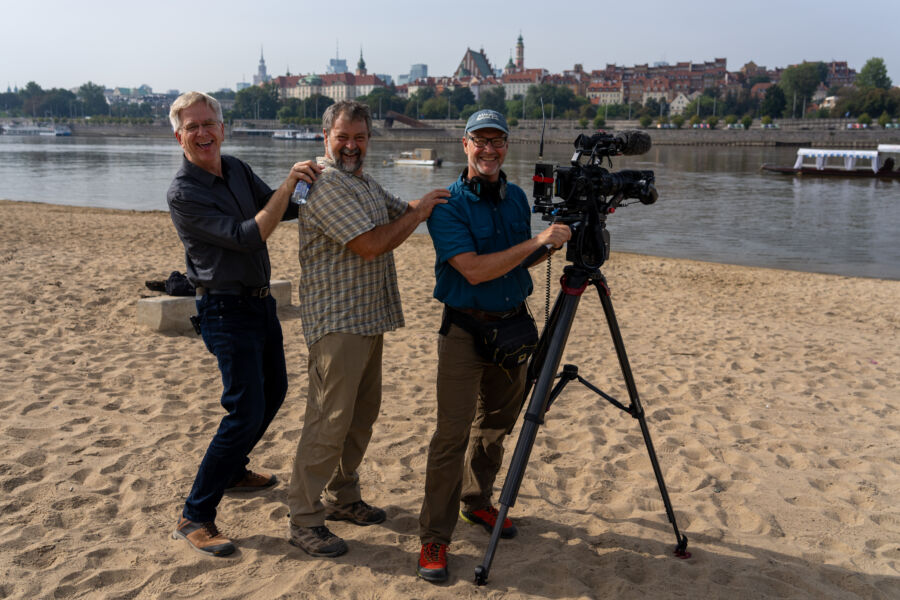
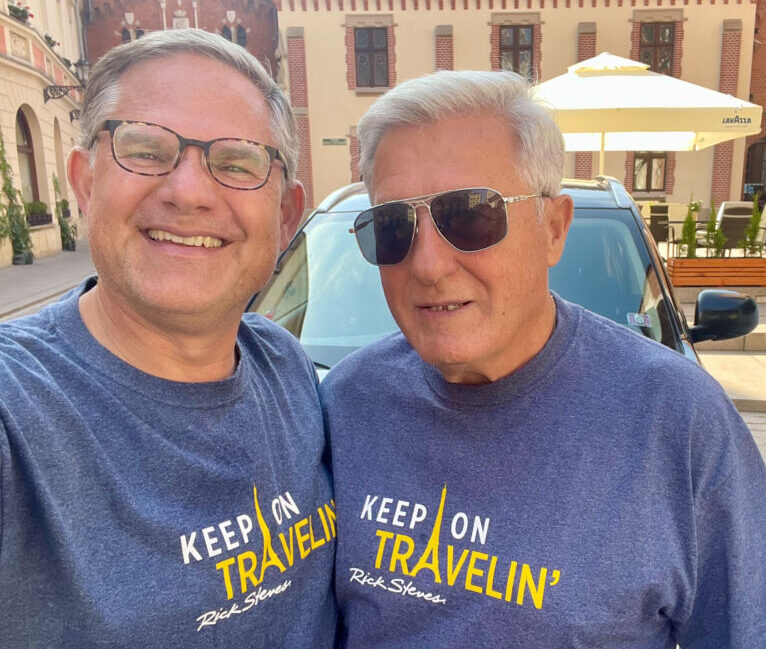
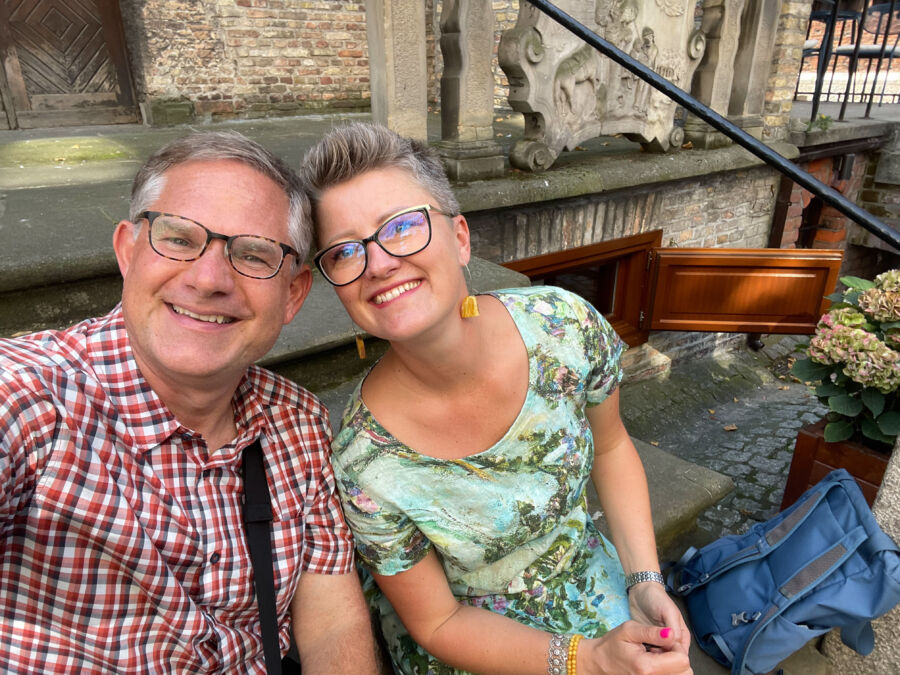
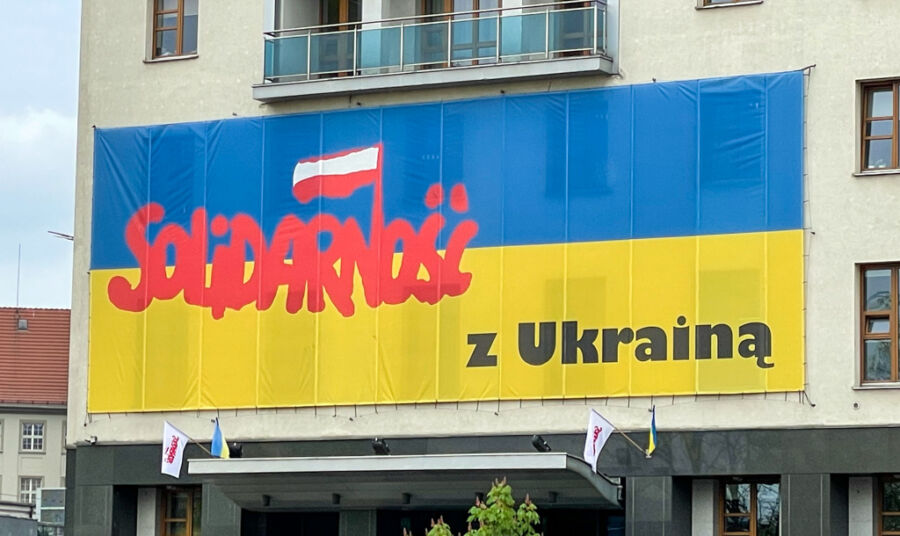
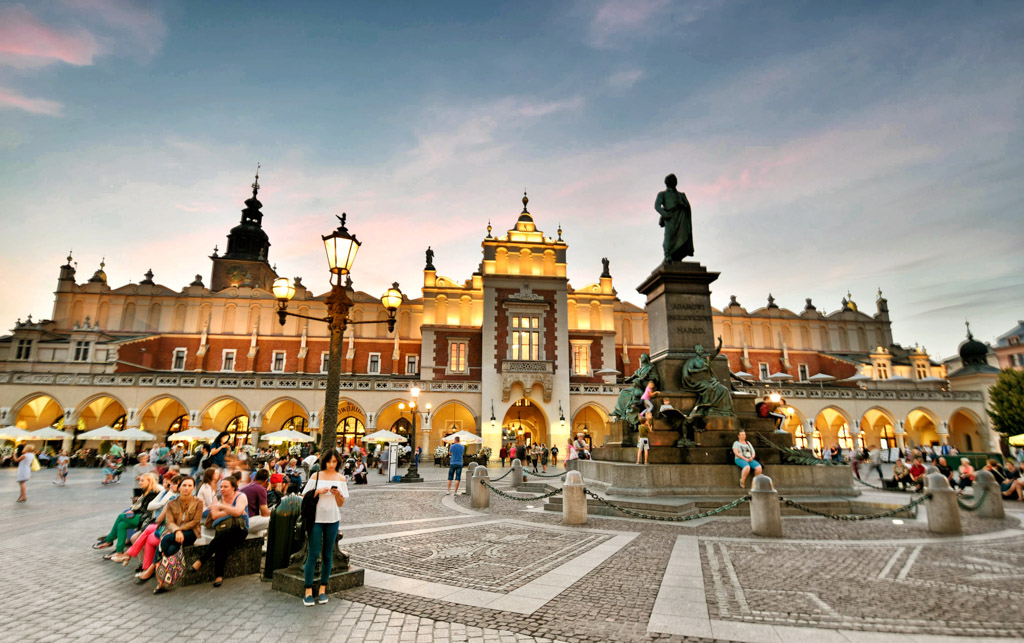
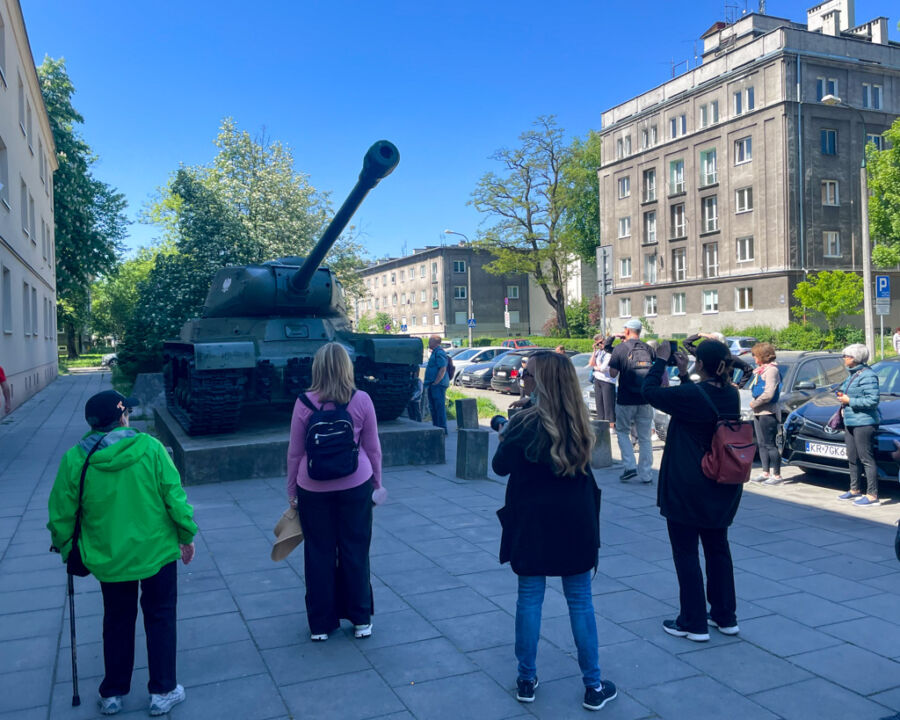
My vote for Europe’s most underrated country, Poland is packed with vivid experiences, a rich and proud culture forged by a hard history, and wonderful people. As our brand-new Rick Steves Poland one-hour special premieres on public television, I’ve been thinking about why Poland gets under my skin. I’ve brainstormed this list of 10 definitive Polish experiences, which you can enjoy vicariously on our new TV show… or by going there in person. And, since I had the privilege of working with Rick, producer Simon Griffith, camera operator Karel Bauer, and editor Steve Cammarano to make our new special, I’ve also included a few behind-the-scenes insights.
Listen for the Kraków Bugler
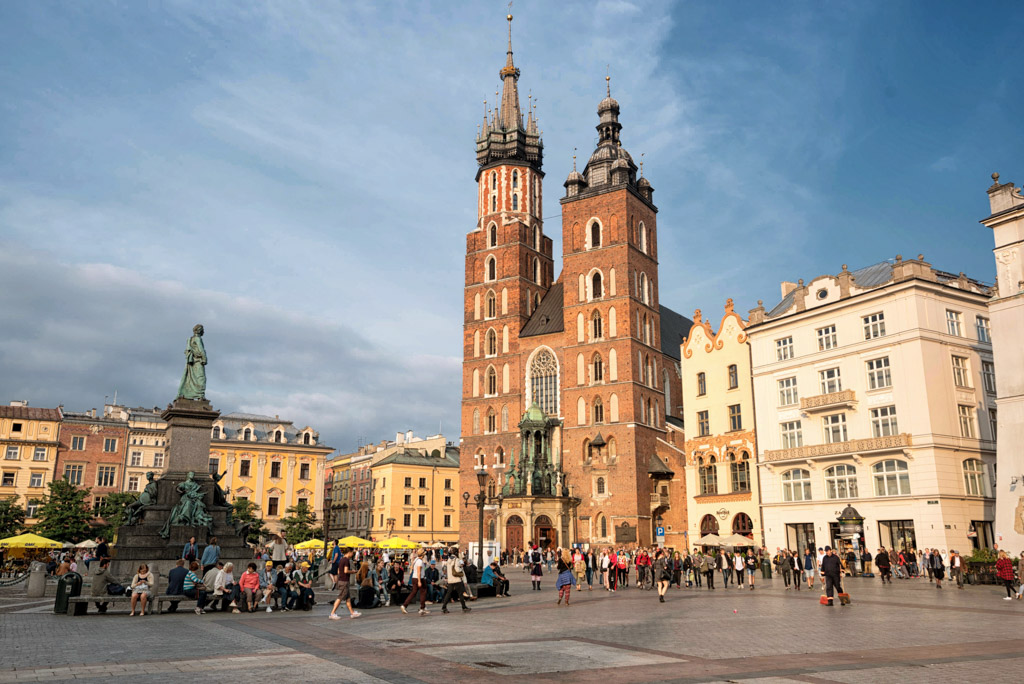
In Kraków — Poland’s finest (and most popular) town — everything converges on the vast and atmospheric Main Market Square, which bustles day and night with locals, tourists, vendors, and the rustle of pigeons. Rising up from one corner of the square are the two steeples of St. Mary’s Church, the taller of which is officially the town’s watchtower. And since anyone can remember, at the top of each hour, a bugler comes to the window and plays a soulful tune called the hejnał… which stops short midway through (recalling the legend of a watchman whose throat was pierced by an arrow while sounding the alarm).
This brief medieval moment fades into the background hubbub… but if you listen for it, you’ll know you’re in Kraków. The national radio station even broadcasts it each day at noon — the Polish answer to the BBC’s “pips.” For our TV show, in addition to filming the hejnał from the square below, we huffed up the spiral stone steps to the top of the tower for the watchman’s-eye-view of the ritual.
Nibble Gingerbread in Toruń
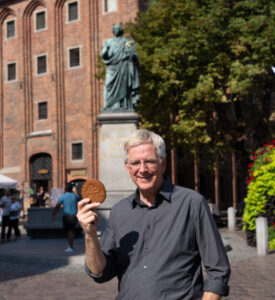
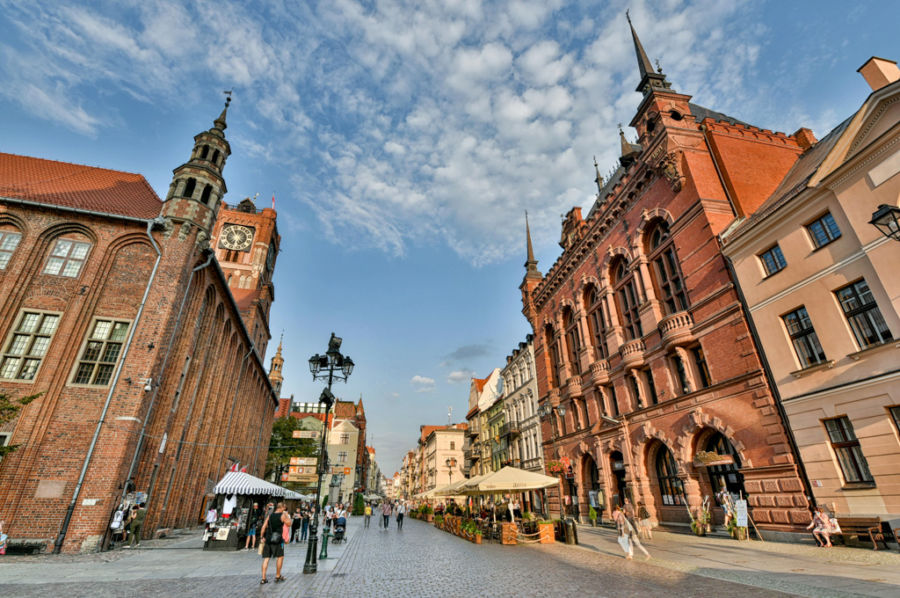
If you tell a Pole that you’ve been to the town of Toruń, they might ask you: “Well, then. Did you bring me some gingerbread?” Toruń is synonymous with gingerbread, and its red-brick streets are lined with shops selling every variation imaginable — from basic bulk cookies to high-end pralines. We filmed one of the many medieval bakeries where costumed guides teach local kids all about the history and traditional preparation of this spicy sweet (which bakes for, as they say, “10 Hail Marys”).
While this seems like a gimmick, it’s rooted in real history: In the Middle Ages, Toruń’s Hanseatic League trading connections gave bakers access to exotic spices — such as ginger, cinnamon, clove, and peppercorn — to aid digestion. And the honey in gingerbread dough was a natural preservative, allowing it to be traded far and wide. All of that said, come for the gingerbread…and stay for an all-around great town, as Toruń (the birthplace of Copernicus) is also simply a delightful place to hang out.
Grapple with a Hard History
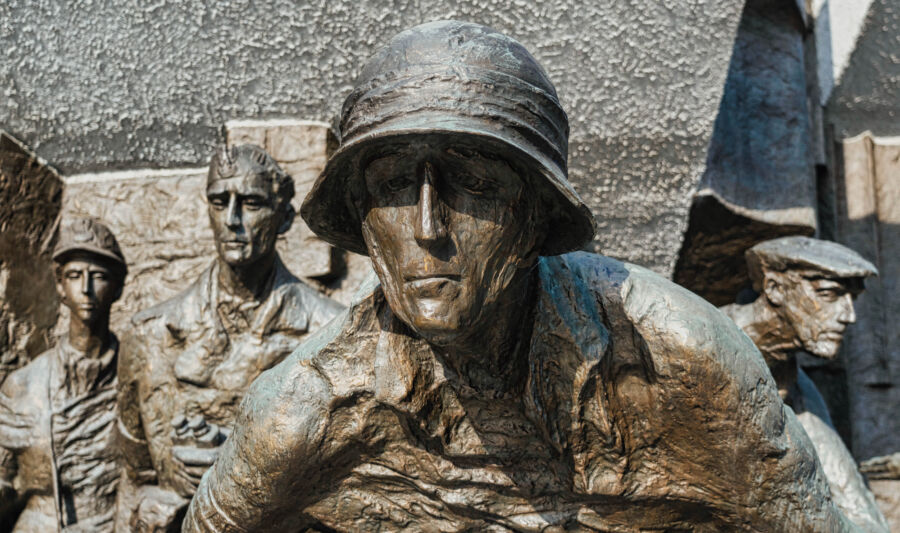
Poland is big and broad and flat — the “path of least resistance” between the Germanic lands to the West and the Russian realm of the East. And for that reason, Poland has been invaded, leveled, rebuilt, and leveled again, and again, and again. A powerful dimension of traveling here is coming to better understand Poland’s hard-fought history, from its disappearance from the European map for 123 years following three Partitions; to World War II and the Holocaust (which was carried out by the occupying Nazis largely on Polish land); to our present day, when Ukrainian refugees fleeing Putin’s invasion of their country have boosted and transformed the local population. There are few places with a history as epic, as tragic, and as beautiful as Poland — and the Poles love to tell that story, in stirring monuments, top-of-the-line museums, and everyday conversations that make you realize that in this country, everyone’s a historian.
Enjoy a Chopin Concert — Grand or Intimate
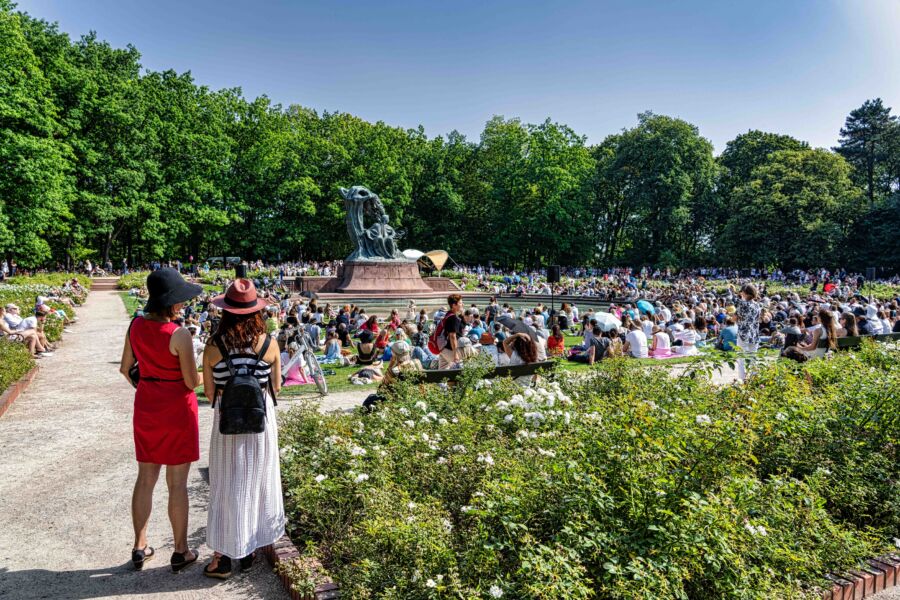
The Poles revere — roughly in this order — Jesus Christ, the Virgin of Częstochowa, St. John Paul II… and Frederick Chopin. In Chopin’s hometown of Warsaw, there are plenty of ways to enjoy a concert of the great composer’s music. Each Sunday through the summer, it feels like the entire city turns out in Łazienki Park for an outdoor performance in front of the giant Chopin statue. Alternatively, head to the Chopin Boutique Hotel, where owner Jarek Chołodecki opens up his drawing room each evening for an old-fashioned salon concert. There’s something deeply moving about attending a concert in a room (or a park) among Polish people who wipe away their tears at the beautiful music.
Pig Out on Pierogi, Pączki, and More
When it comes to satisfying, nourishing comfort food, few cultures can rival Poland. Whether you have a Polish babcia (as I did), or it’s your first time experiencing this cuisine, Poland’s specialties are delicious and craveable. While the classic pierogi (stuffed dumplings) and pączki (jelly donuts) are cornerstones, there’s also a wide variety of soups (savory, beety borscht and rye-flavored żurek), hearty dishes like gołabki (cabbage rolls) and bigos (flavorful stew), and, of course, vodka.
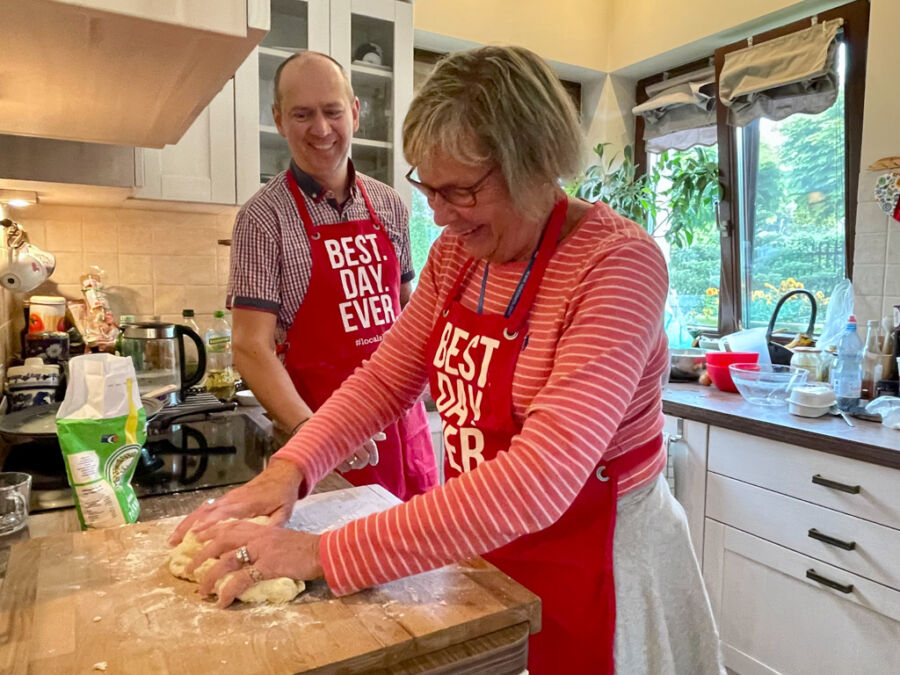
For our TV show, Rick and our local guide, Tomasz Klimek, dug into a spread of all the Polish classics, offering a delicious primer for anyone Poland-bound. Tomasz also taught Rick how to do a proper Polish vodka toast (na zdrowie!) and gave him a lesson in making pierogi by hand. (Our Best of Poland tour also features that same pierogi-making lesson, in a local home; or you can book the experience as an independent traveler through Kraków Urban Tours.)
Acquire a Taste for Polish Artists
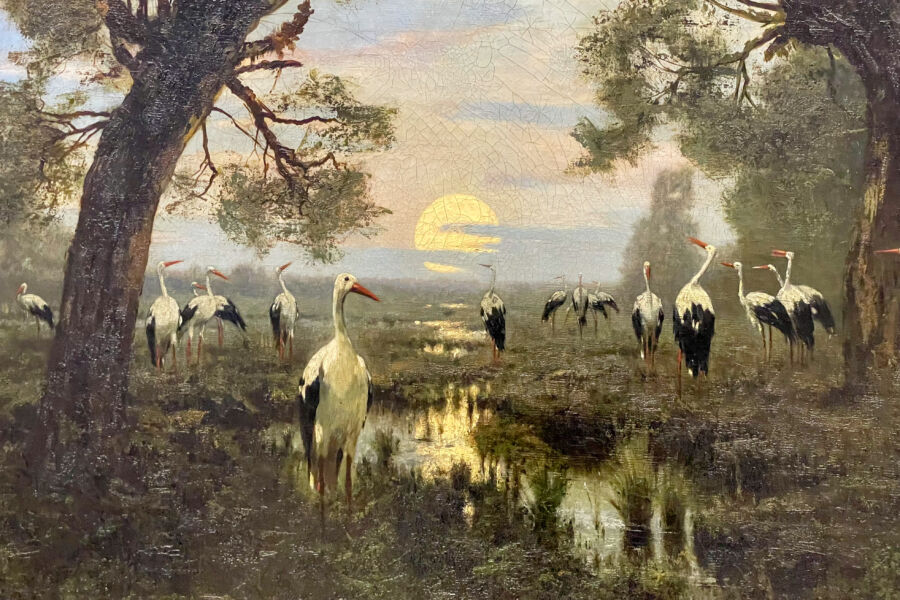
Beyond Poland’s borders, its artists aren’t particularly well-known. But one of the joys of delving into a culture is getting to know talented painters who, through no lack of talent or fault of their own, have been overlooked by the Western European-oriented “art history” canon. I find it hard to pull myself away from the great art museums in places like Kraków and Warsaw, where Jan Matejko’s movie-screen-sized canvases capture epic moments from that rousing Polish story; and serene, gripping, powerful canvases of the Młoda Polska (“Young Poland”) school illustrate how Art Nouveau was a pan-European movement. Go ahead: Stand in front of a work of art with a signature you can’t pronounce — Stanisław Wyspiański, Jacek Malczewski, Olga Boznańska — and let yourself be moved.
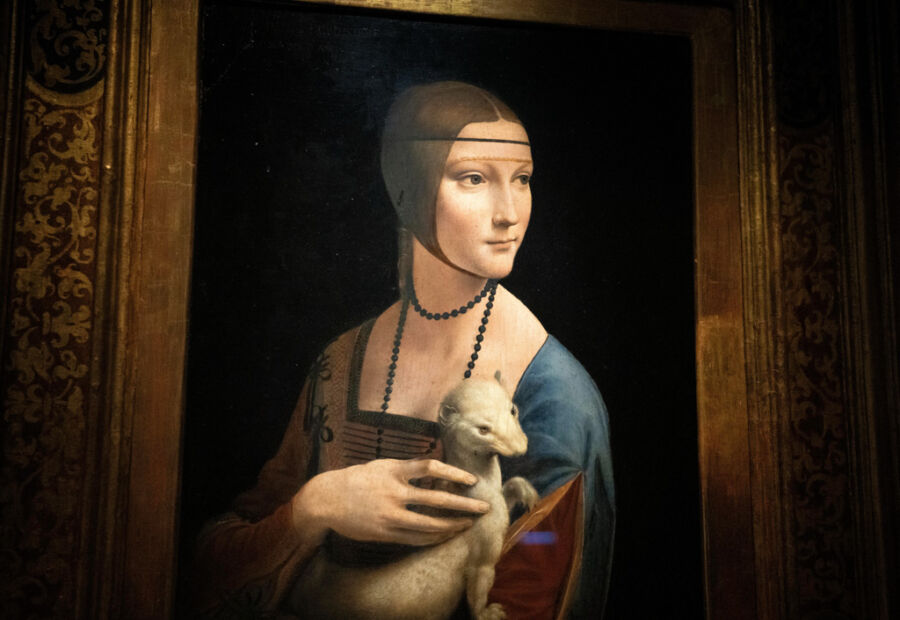
On our show, we visited the new Stanisław Wyspiański museum in Kraków, and also featured a non-Polish painting: the stunning Lady with an Ermine by Leonardo da Vinci, on display at Kraków’s Czartoryski Museum. But that’s a whole other story…
Get Caught Up in the Story of Solidarity, in Gdańsk
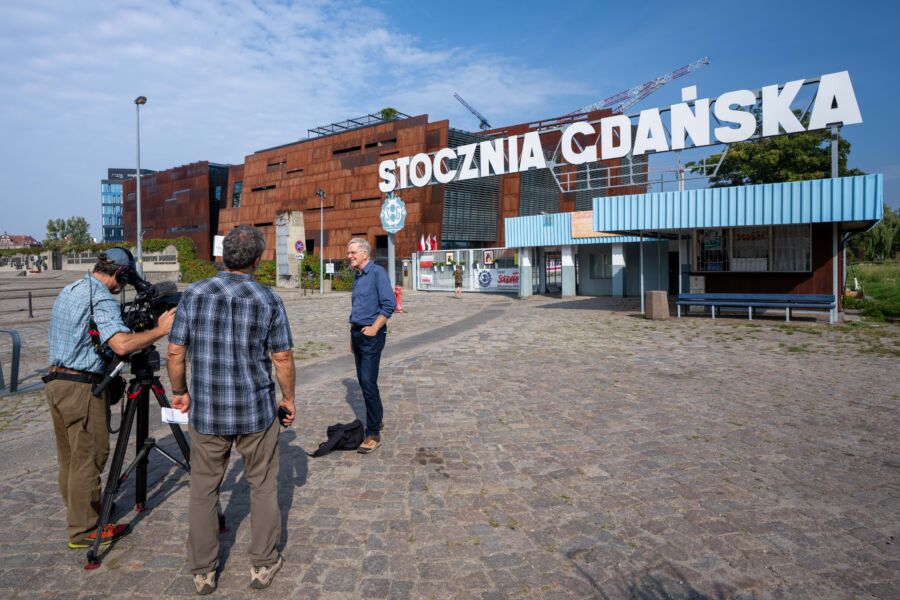
While today it’s a gorgeous Hanseatic town of skinny gabled town houses, towering red-brick churches, and a thriving food and nightlife scene, not that long ago Gdańsk was famous for something very different: its gritty, rusted shipyards. In the 1980s, these Soviet-built factories became the crucible for the Solidarity movement that marked the beginning of the end of communism in Poland, and ultimately, throughout Central and Eastern Europe.
Lech Wałęsa still lives here, and in the place where he led those pivotal trade union strikes, the state-of-the-art European Solidarity Center does a wipe-a-tear-beautiful job of telling the story of the brave shipyard metalworkers, crane operators, and electricians who stood up to a powerful empire… and prevailed. Few sights in Europe leave me with more goosebumps. (We aaalmost got the chance to meet Lech Wałęsa while filming in Gdańsk, but he happened to be out of town while we were there. Next time!)
Get Trendy and Urbane
If you think of Poland as being dated and old-fashioned — toothless grannies wrapped in tattered shawls, sleepy and gray town squares, dreary food — you are outrageously out of date. Especially in its urban centers, Poland feels as fresh, vibrant, experimental, creative, and youthful as anywhere in Europe. For our TV show, we made a point to show off the “post-industrial” trend that’s sweeping Polish cities, where gloomy old red-brick factories are being transformed into glittering old-meets-new megamalls. And we filmed some great foodie experiences, from my favorite trendy Warsaw Polish-fusion restaurant (Bibenda) to the lively food-truck scene in Kraków’s thriving Kazimierz district.
Learn about Jewish Heritage
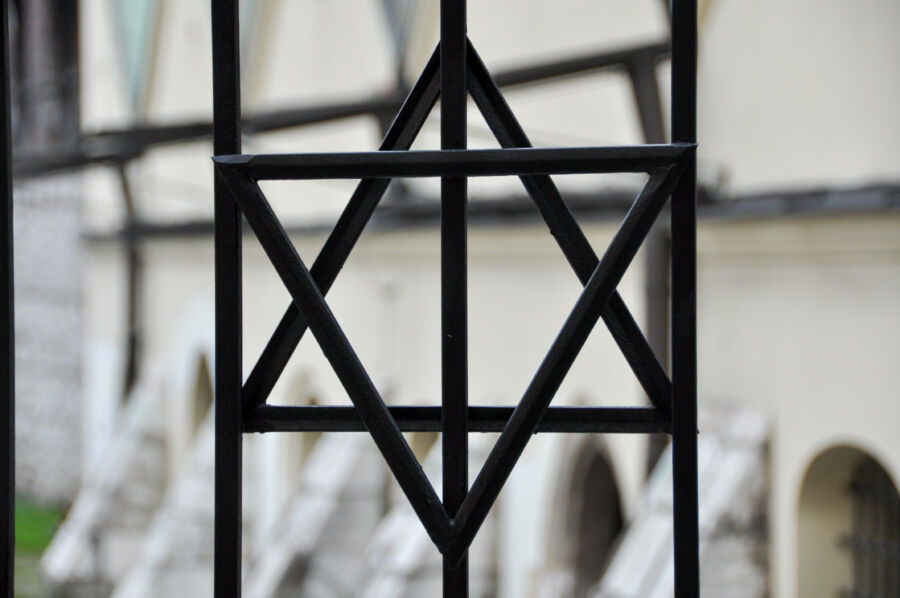
Speaking of Kazimierz, that’s a neighborhood with two very different personalities: By night, it’s a trendy nightspot, heaving with students out dining well and partying. By day, it’s one of Poland’s most important locations for Jewish heritage, with synagogues, cemeteries, museums, and poignant memorials on seemingly every corner. Thanks to a relatively progressive medieval king (named, you guessed it, Kazimierz) — who invited Jews to settle in his realm, as they were being ejected from so many others — Poland had, for centuries, Europe’s largest and most thriving Jewish population. While that population was decimated by the Holocaust, recently Poland has returned to its Jewish roots and is becoming a major destination for people seeking to better understand their family’s connection to this land (as beautifully depicted in the recent, Oscar-winning film A Real Pain).
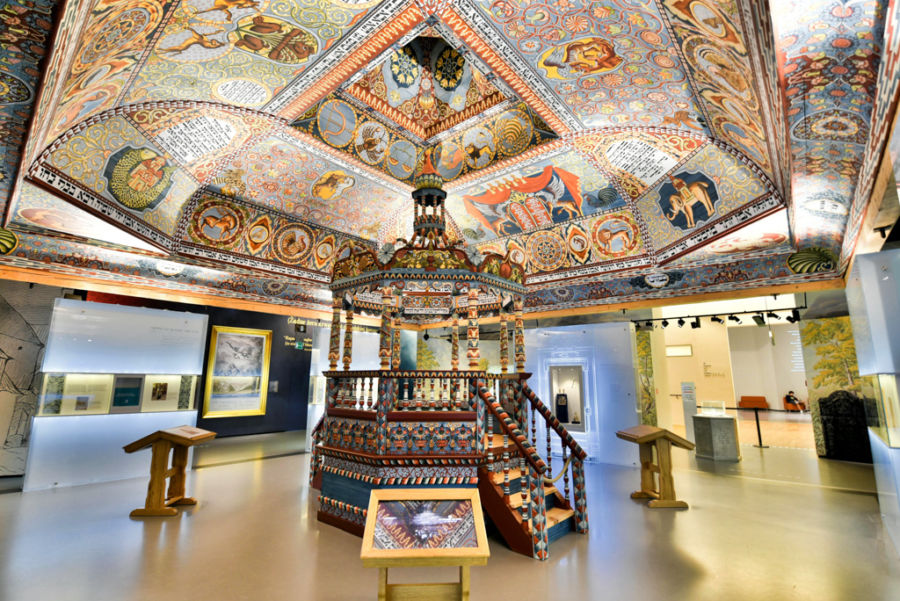
Poland has an abundance of memorials, like the Auschwitz-Birkenau Memorial and Museum, that are difficult but important to experience. But it also has, increasingly, beautiful celebrations of the Jewish culture that thrived here for centuries — from jovial klezmer music concerts in dusty old libraries to the fantastic Museum of the History of Polish Jews in Warsaw. We made a point to feature all of these in our new show.
Connect with the Polish People
I’ve been traveling to Poland for more than 25 years. And over thirty-something visits, what sticks with me most of all isn’t any of the above. It’s those beautiful interactions I’ve enjoyed with the Polish people I’ve met along the way: Learning from a dynamic, delightful Polish guide, who has a strong sense of mission about helping outsiders understand her passion for her homeland. Sharing a bag of pretzels with my compartment-mates on a long train ride, transforming gruff frowns into warm smiles. Sensing a tender pride and gentle kindness emanating from people on the street, who remind me of my own Polish ancestors.
When I first started traveling here — in the late 1990s — English was less commonly spoken, and many locals had a hard patina of gruffness, left over from the trauma and paranoia of communism. But today, that baggage is being left in the past. English is widely spoken, the country feels rejuvenated and forward-looking, the Poles have emerged from their shells…. and they’re excited to meet people who’ve come from so far away, and flattered by your interest in their treasured homeland.
I hope you’ll get a chance to watch our new Rick Steves Poland special. More than that, if Poland hasn’t yet made it to your “wish list” of future travels, I hope this post — and the show — inspire you to give it another look. Poland is a place that really gets under your skin… if only you give it a chance.
If you’d like to enjoy these experiences from the comfort of your living room, be sure to tune into our brand-new, one-hour Rick Steves Poland special. It’s airing this month at public television stations nationwide (check your local listings) and streaming on PBS Passport.
Or sign up for our Rick Steves Best of Poland in 10 Days tour. A few years ago, I had the pleasure of creating this tour alongside my RSE home office colleague, Robyn Stencil, and our wonderful team of Polish tour guides — some of whom are also featured on our new TV show. I can’t imagine a better way to experience Poland, including every single one of the experiences on this list. While this popular tour is sold out for 2025, seats for 2026 will be released soon… stay tuned!
“Slow travel” has more than its share of advocates. And often, I do love to linger. But in my recent travels, I’m surprised to find myself cultivating a new appreciation for “fast travel.” When you get a quick look at a place, then move on, you travel like an Impressionist…and leave wanting more.
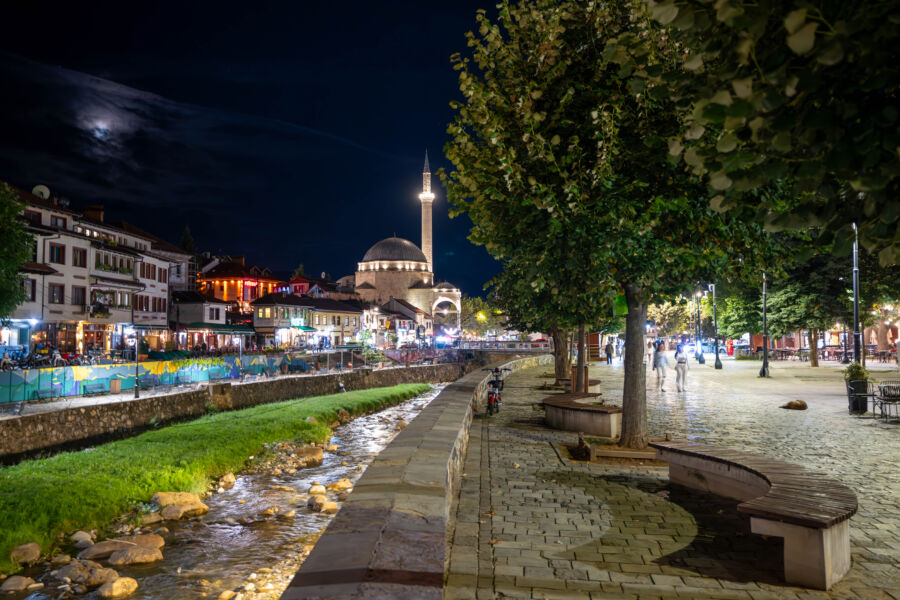
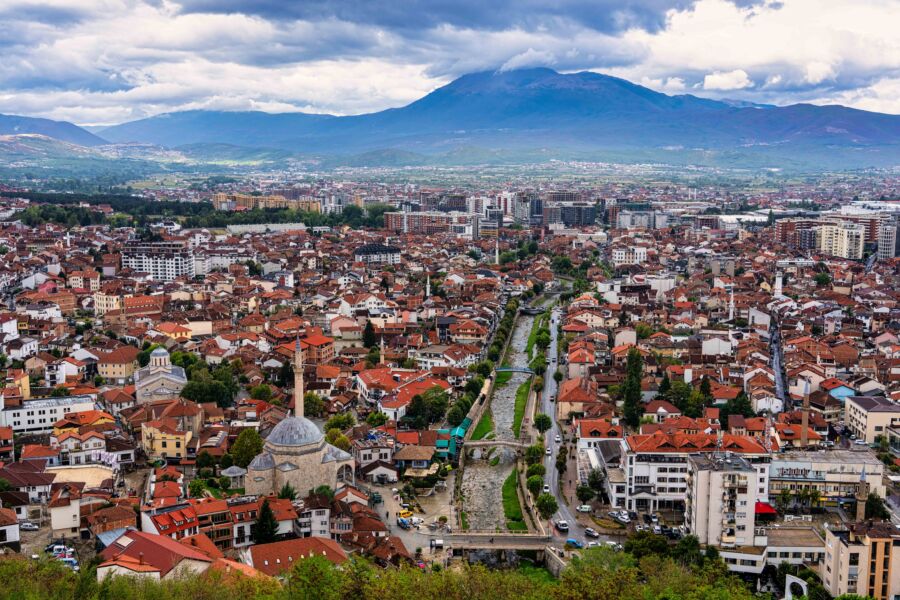
One sunny September evening, I eased my way through sloppy, ungovernable roundabouts as I drove into Prizren, Kosovo — the Ottoman-style historic capital of Europe’s youngest country. I’d had an exhilarating day of travel, starting out in the intense capital city, Prishtinë; joyriding a quick loop through the rugged landscapes of the Accursed Mountains; and visiting a pair of Serbian Orthodox monasteries of such cultural importance that wars have been fought over them.
Even as I was gliding on a traveler’s high, I was pretty beat. The hour was nearing 6:30 p.m., and the hazy orange sun was preparing to abruptly tuck itself behind the peaks that hemmed in the horizon. Navigating my way into Prizren’s town center, I negotiated an unmarked maze of torn-up roads, lucked upon a parking lot where I could ditch my car, ran to my B&B to drop off my bag…then hit the town before dark.
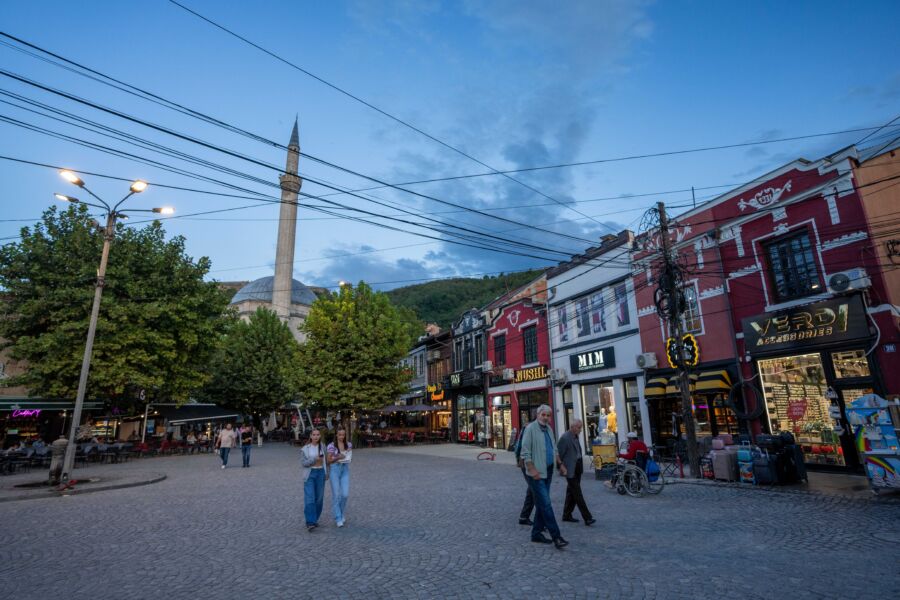
As I rushed double-time down to the main square, past outdoor cafés and the bored guards standing at the gate of the town’s Orthodox church, the call to prayer crackled forth from the soaring minaret of the Sinan Pasha Mosque.
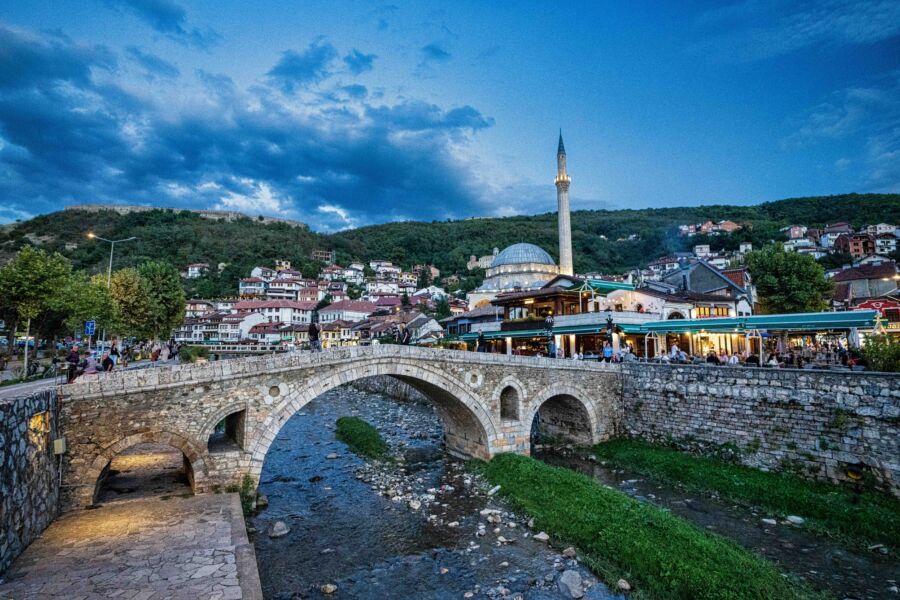
In a matter of minutes, I was stepping out onto Prizren’s Stone Bridge, gracefully spanning the Lumbardh River as it has since the 16th century. While there was still just a hint of light in the sky, I savored a photo safari — wandering up and down the embankments in search of my favorite views of that classic bridge, the exclamatory mosque, the dour citadel slumping over the hilltop, and the distant mountain backdrop.
After dark, I stowed my camera and enjoyed a memorable dinner: a scorch-your-fingers crock of elbasan (or tavë kosi), a traditional dish resembling a cheesy, oven-baked fondue interwoven with delectable bits of tender veal, sopped up with fresh, crispy, rustic bread. Then I enjoyed more strolling and people-watching, picked up a few groceries for breakfast, and got a good night’s sleep.
In the morning, I expected rain but awoke to only clouds. Counting myself lucky, I hiked up to the fortress and enjoyed the panoramas over this historic settlement that so perfectly fills its niche in the mountains. By the time I descended to the main square and nursed a coffee at a tipsy sidewalk table — watching locals stop by the humble landmark fountain for a sip or scrub — the sun made a surprise appearance. After another photo safari, I grabbed my bag, found in my car, and hopped on the highway to North Macedonia.
To be honest, it was hard to pull myself away from this unexpectedly delightful town, after just a few waking hours. Prizren got under my skin, and part of me wished I’d planned more time, maybe even a second night. I’d had only an enticing taste, and it left me wanting more.
But then, I remembered something I’ve learned over a lifetime of travel: Sometimes, it’s not a bad thing to leave wanting more. It’s certainly better than getting tired of a place. And often, a fleeting visit creates the most vivid memories.
I had a lot of those “leave wanting more” experiences on this trip, lacing together an ambitious itinerary through the Balkans — revisiting a few old favorites and finally making it to places I’ve always dreamed about. I had about two weeks for the trip, and when I drew up my preliminary “wish list,” it was clear that I faced a tough choice: Skip half of my list. Or go very, very fast.
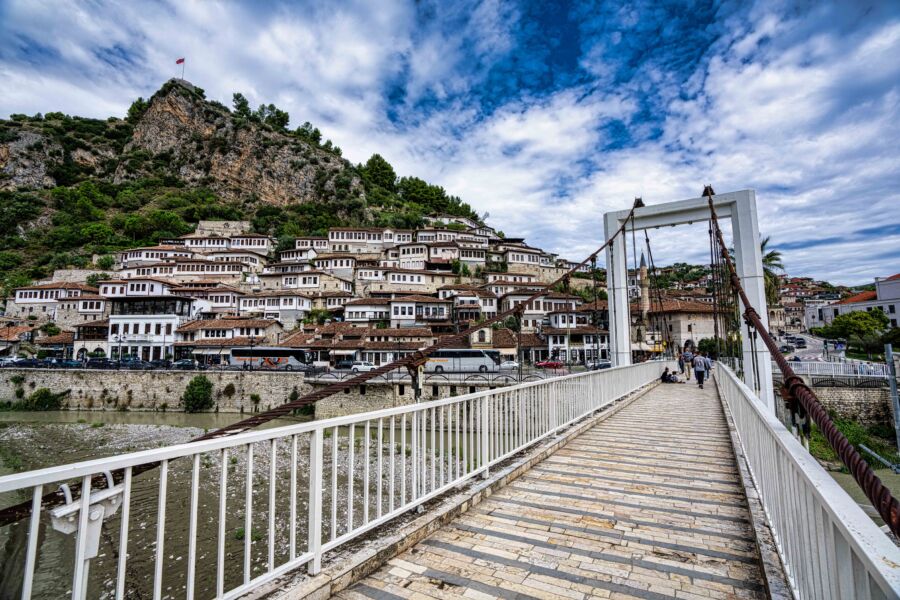
I opted for the whirlwind trip. And Prizren was just one of the many stops that left me wanting more. In Belgrade, I had time for just one twilight stroll around Kamerlengen Fortress, overlooking the point where the Danube meets the Sava. During my few hours in Prishtinë, I counted at least a half-dozen cafés and restaurants where I’d like to have nursed a drink or meal. At Lake Ohrid, I never quite captured the perfect sunset rays on the Church of St. Jovan. And in Albania, I scarcely saw Berat — just a quick glimpse on my way to Gjirokastër.
In each case, of course I’d prefer to have lingered — if only I had unlimited time. But here’s the thing: We really don’t have unlimited time, do we? And as I look back, those “too-quick” visits left some indelible impressions that will stick with me forever.
I was in each place just long enough to tease an air of mystery, stoking my imagination to run wild about the potential that hid up each unexplored lane and behind each unentered facade…while sparing me the disappointment of discovering that some of those places would fall short of expectations.
§ § §
I’m not suggesting that “fast travel” is always the best approach. There are many places I can barely pry myself away from: Budapest, London, Ljubljana, Sarajevo, Barcelona… even after a week in these cities, I’d happily double it. And sometimes it’s those tiny, remote places that tempt you to really settle in. That alpine village, perched proudly on its ledge, overlooking a green valley and a panorama of cut-glass peaks. That Tuscan hill town, with its labyrinth of stony lanes, enoteche, trattorie, and gelaterie. That quaint thatched-roof village, at some misty fringe of the British Isles, that tempts you to pull the ripcord on the rat race and permanently join the cast of characters at the local pub. That Norwegian fjordside hamlet, with its red-and-white boat sheds on skinny stilts watching over a vast, still, contemplative fjord.
Digging into a special place for a long stay, you have the deeply rewarding experience of getting to know every last intimate detail. You begin to recognize locals, and they begin to recognize you. You memorize each scenic bend in the footpath. You detect subtle differences in the taste of coffee or pastries from one place to the next… and settle on your favorite. You notice the nuances in the weather from one day to the next, becoming adept at armchair meteorology.
But the reality is, we don’t always have that kind of time, or money — especially Americans, who (as Rick Steves likes to say) have the shortest paid vacations in the rich world.
There’s a clear contrast among travelers: Americans go fast. Our journey to Europe is long, tiring, time-consuming, and expensive; our time off is limited; we want to make the absolute most of it. In fact, we find it’s tricky to sell tour itineraries that are more than two weeks long.
Two weeks? For Europeans, that’s a quickie beach break. European travelers, who prefer to go slow, are aghast — even offended — at how quickly I’m moving from place to place. Later on this fall’s trip, I spent just one night on the alluring Cycladic islet of Folegandros. Europeans — from the Greek man who ran my B&B, to the British tourists on the catamaran next to me — literally did a double-take upon hearing of my one-nighter. It left them stumped and stammering. And yet… I still had a blast, with what little time I had there.
Europeans figure, if a place is worth a day, then surely, it’s worth five or ten. But the fact is, most Americans don’t have the luxury of lingering. And if our choice is between seeing a place quickly, or not seeing it at all, many of us opt for the former.
There’s a certain traveler’s snobbery when it comes to those of us who move quickly. We’re looked down upon, as if somehow we’re “doing it wrong.” But rather than be embarrassed about going fast, embrace it. Cultivate the art — and the mindset — of having a satisfying visit on the go.
Try this thought experiment: Slow travel — lingering in a favorite place — is Realism or Romanticism, with its closely observed details and its precisely articulated details. Meanwhile, fast travel is Impressionism: Sloppy, quick brushstrokes that capture a unique, unrepeatable moment in time… a vivid impression that sticks with you. When you travel fast, you travel as an Impressionist. And sometimes, those dashed-off impressions carry the most emotional weight. After all, there’s a reason everyone loves Van Gogh and Monet.
This “leave wanting more” philosophy also allows us to practice several traits of a good traveler. It forces us to adopt a mindset of abundance, treasuring the fleeting moments we have with a place, rather than a mindset of scarcity, being pointlessly annoyed at the many “things we didn’t get around to.” The Impressionist traveler is constantly reminded of the value of spontaneity: You can’t get to everything anyway, so you become flexible…follow your instincts…go where the spirit moves you. And then, as you move on to the next place, you find yourself savoring those dashed-off-yet-indelible impressions.
§ § §
Driving out of Prizren, I suddenly recalled another time I left wanting more. A couple of years ago, I was part of the guide team who led the first-ever outing of our Best of Poland tour. We had painstakingly constructed that itinerary to balance time in the three great cities of Poland: Gdańsk, Warsaw, and Kraków. And, to offer tour members a chance to catch their breath in a smaller town, we included one night in delightful, red-brick Toruń, famous as the hometown of Copernicus and of Poland’s favorite gingerbread.
Toruń is insistently lovable. And, sure enough, our tour members fell for it…hard. We arrived in the mid-afternoon, checked into the hotel, gave them an hour or so to freshen up and/or explore, then did a brief walking tour on our way to a gingerbread-making demonstration. Everyone was on their own to find dinner and prowl the floodlit cobbles to their hearts’ content. The next morning, early risers had another shot at the town. And by 10:00, we were on the bus and underway to Warsaw.
As we pulled out of town, consensus (bordering on mutiny) quickly coalesced around the opinion that one night was nowhere near enough for Toruń. They wanted more, more!
I tried to articulate the same thought that struck me as I departed Prizren: Maybe they liked it so much, in part, because it was such a quick visit. It gave them just enough time to get an enticing taste of the town…a sense of place…to put it on their mental map. Part of it comes down to tour logistics, sure. But it’s also intangible: Some places simply work better as a one-nighter.
I have not dug deeper in Prizren; maybe if I did, I would find it merits another night, or more. But I have spent a good bit of time in Toruń. And from that experience, I know that what our tour group did there represents about 90% of what’s really worth doing. In other words, if we’d spent another night — or even just a few more hours — I’m sure the tour members would have enjoyed it. But maybe, just maybe, they might be surprised how quickly they’d reach a point of boredom… or even begin to wonder if this was really the very best use of their precious, limited time.
It reminds me of that old joke: Houseguests, like fish, begin to stink after three days. There’s an exceedingly fine line between “just enough time” and “too much time.” And based on experience, I’m confident about which side of that line I’d rather fall on.
I’ve often found this to be the case on a second visit to a place that intrigued me the first time: Yes, I enjoy having more time there. But in the end, the longer visit is often less impactful than the shorter one. In my traveler’s imagination, my mental painting of the place is more detailed…but I’ve sacrificed that sloppy, beautiful Impressionistic flourish.
Of course, this also requires a mindful approach to travel: Letting things be as they are. Embracing and fully appreciating whatever winds up on your itinerary, whether it’s a long stay or a short one. And accepting that sometimes, it really is OK — maybe even better — to leave wanting more.
Are there places where you’re glad that you “left wanting more”? Or do you think that fast travel is always bad travel? Share your thoughts in the Comments.
If you appreciate my approach to travel, consider picking up a copy of my memoir, The Temporary European: Lessons and Confessions of a Professional Traveler. This ideal stocking stuffer for the traveler in your life is currently on sale, for 20% off, as part of our Rick Steves’ Europe Holiday Sale. Thanks to all of you who’ve already read and enjoyed my book! I love hearing about your travel tales, too.
Looking back on my recent travels, I’ve been thinking about what makes a country great. “Greatness” can mean strength and power. Or it can signify wisdom, maturity, respect, and an honest reckoning with the past.
In my travels, I observe a disparity in how various lands think about their history: Some societies acknowledge the more challenging elements of their past, while others only embrace the most flattering version of themselves.
As fractured as we are these days, I genuinely believe that good, caring, intelligent people can agree to disagree on a broad range of issues. Should the government take a heavy hand, or a light one, in collecting taxes, regulating guns or abortion, and guiding the trajectory of a society? What role should the USA play on the world stage? How much immigration is “too much,” and how should we treat those immigrants? You have your opinions; I have mine; sometimes they don’t align. That’s life in a healthy democracy. That’s what elections are for.
However, one thing that I believe is not a partisan issue — or, at least, shouldn’t be — is the fundamental truth of history. Facts matter. What happened, happened. And whether those events were good or bad, the only way for a society to evolve is to be honest about its past, warts and all. That’s why, when those who seek or hold political power begin to selectively reinterpret the past — dispensing with inconvenient truths — I find it alarming, not as a Democrat or a progressive, but as a patriotic American.
This is not a distinctly American challenge. Every country’s story is filled with both moments of virtue, and moments that are regrettable, even “evil.” As I travel from place to place, I’m struck by how each society makes intentional choices about how to reckon with their history. And over time, I’ve also seen how this can vary depending on the swing of the political pendulum.
And so, to provide some international context for the debates we’re having in 2024 USA, join me on a trip to a few case studies of how other societies have gotten this right…and, in my view, ones that have gotten it wrong.
Poland: The Museum of the Second World War
In Gdańsk — the northern Polish city where World War II began — museum curators designed what was to be Europe’s definitive museum of the Second World War. It told the complicated story of wartime Poland, yes; but expanded its view to encompass a global perspective on the war, and how it affected various lands and peoples.
However, shortly before the museum’s scheduled opening in 2017, the ruling Law and Justice government — which felt the exhibit “wasn’t Polish enough” — intervened. They replaced the director with a political appointee, and installed a new mission to stir the patriotic souls of Polish taxpayers. New exhibits, mainly profiling Polish heroes and victims, were hastily squeezed into any available space. The intentionally ambiguous, thought-provoking final room was re-envisioned and now shows a rabble-rousing film (called “The Unconquered”) espousing a naively, almost offensively pro-Polish point of view.
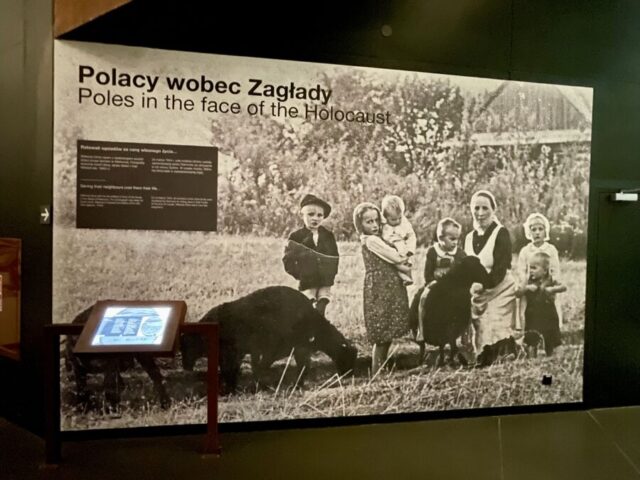
Revisiting the museum not long ago, I stumbled upon one exhibit that I suspect was added by the politicized director. At the entrance to a room filled with portraits of Jews who were murdered by the Nazis in Polish territory stands a wall labeled “Poles in the face of the Holocaust.” Posted information and touchscreens explained how Poles saved the lives of Jews, despite the fact that Poland was the only Nazi-occupied land where such assistance could be punished by death.
This is an inspiring story, to be sure. And there were many righteous Poles who came to the assistance of their Jewish neighbors. But there were also many Poles who colluded with the Nazis, and many more who turned a blind eye to their atrocities. Is it expecting too much for these facts to be acknowledged in the museum, as well?
Soon after, in 2018, the Law and Justice party made it illegal to state that the “Polish nation” was in any way responsible for the atrocities of the Holocaust, under punishment of prison. Under diplomatic pressure from the US Department of State, the law was later softened to remove the criminal component. However, a civil court can still prosecute “whoever claims, publicly and contrary to the facts, that the Polish Nation or the Republic of Poland is responsible or co-responsible for Nazi crimes committed by the Third Reach.” And so, an important part of Poland’s World War II story goes untold.
(It’s worth noting that Poland’s Law and Justice party was defeated in late 2023 by a centrist coalition; as new, more moderate leadership reshapes Poland, it will be fascinating to see if those changes ripple down to the displays of this museum.)
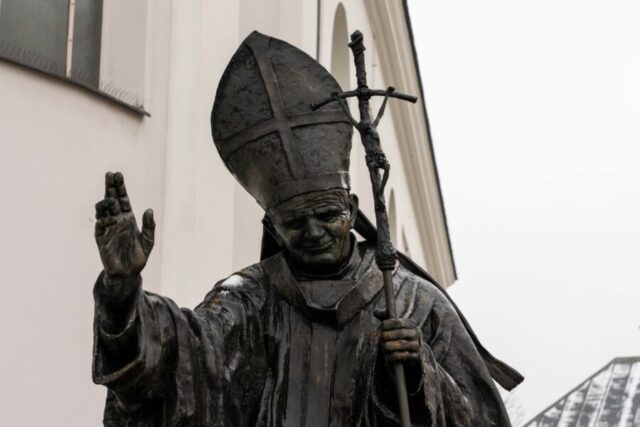
A few days earlier — at the opposite end of Poland, in the town of Wadowice — I toured the museum at the birth house of St. John Paul II. The slickly produced, inspiring, touching museum did a beautiful job of telling the life story of Karol Woytyła, who lost his parents at a young age, entered the priesthood, and eventually became the spiritual leader of one billion Catholics and a critical figure in the final ideological battles of the Cold War.
The museum tells this story so well, in fact, that I didn’t realize until after I’d left that it had omitted some important topics — specifically, the child molestation scandals within the Catholic Church that were covered up under Pope John Paul II’s watch.
Chatting with some Polish friends about this, I was reminded that these things aren’t as black-and-white as they may first seem. Yes, the Pope should have done more. However, John Paul II recognized that he was in a unique historical position as a high-profile crusader against Soviet oppression, and that he played a critical inspirational role in the democratization of his homeland, Poland. Perhaps there were pragmatic reasons for him to avoid publicly addressing a scandal that would have undermined so much of what he was trying to accomplish.
I’m not entirely persuaded by this reasoning. But it certainly got me thinking more deeply about the full complexity of that chapter in Polish (and Catholic Church) history. I don’t believe “canceling” John Paul II is the answer. Rather, his legacy deserves a complete and nuanced discussion. And I regret that this museum is so reluctant to have that conversation.
History is made by “great” people who, like all people, are flawed. Even the greatest among us have blind spots and vulnerabilities; arguably, it’s a person’s ability to navigate complicated realities and make impossible choices that propels them to greatness.So then, why are we so afraid to be honest about those flaws?
Germany: Documentation Centers and Holocaust Memorials
Let’s cross the border, to a country that dispenses with the kid gloves when handling its own history. In my travels, I have encountered few societies that more conscientiously grapple with their checkered past than Germany. Yes, Germany.
Even to this day, when many people think of Germany, one of their first associations is along these lines: backed a lunatic dictator; tried to take over the world; murdered millions through genocide and conquest; destroyed much of Europe.
Resenting Germany for their crimes in World War II and the Holocaust is understandable, even deserved. But in my 25 years of traveling around Germany, I’ve been impressed by their willingness to be open, candid, and contrite about their history. They even have a term for it: Vergangenheitsbewältigung, “coming to terms with the past.”
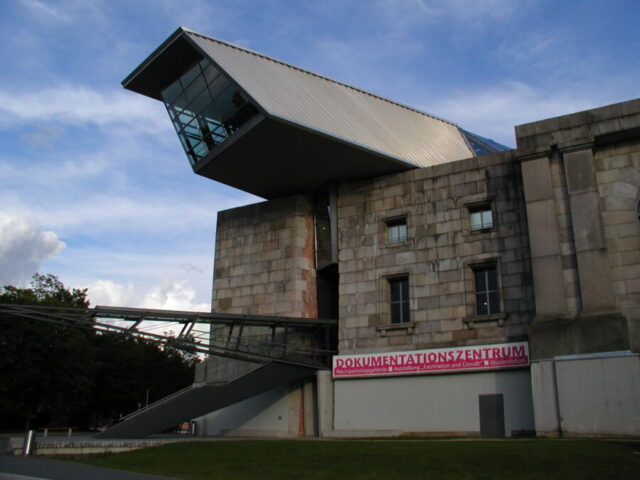
Throughout Germany, I’ve visited perhaps a dozen different “Nazi documentation centers.” That’s a buzzword for a museum that offers a thoughtful, entirely transparent, and no-holds-barred assessment of Germany’s culpability in its crimes of the 20th century. It’s a fascinating exercise in the defendant presenting an ironclad case on behalf of the prosecution. Germany’s documentation centers confront visitors — both German and foreign — with abundant, meticulously collected evidence, always compelling and often gruesome, of their own crimes. No excuses are offered, and there isn’t a whiff of defensiveness — just a matter-of-fact mea very, very culpa.
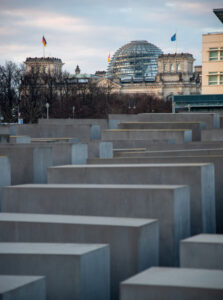
In the German capital of Berlin, immediately adjacent to the landmark Brandenburg Gate and just down the street from the Reichstag stands a sprawling monument consisting of 2,711 stony slabs. The Memorial to the Murdered Jews of Europe, occupying this privileged position in the very heart of Germany’s leading city, is just one of countless memorials, large and small, all across the country, that constantly remind Germans of their historical crimes.
It’s hard to imagine that a country could ever “do enough” to make up for such heinous acts. But as a frequent visitor here, I’m impressed. Even younger Germans — now generations removed from these atrocities — may grow a little weary of these constant reminders. And yet, they recognize that this is their legacy.
The Netherlands: Dutch Resistance and Colonialism
Next door is a country that was occupied by Nazi Germany: the Netherlands. And on a recent visit to Amsterdam, I was struck both by how the Dutch are honestly reckoning with their role in history…and how they still have a ways to go.
The recently re-envisioned Dutch Resistance Museum traces the story of the Netherlands under Nazi occupation. It’s an exercise in stirring the Dutch patriotic soul with tales of both suffering and valiant resistance — much like the World War II museum in Poland. But, to its credit, the Dutch museum also owns up to aspects of that story that some might prefer to dismiss.
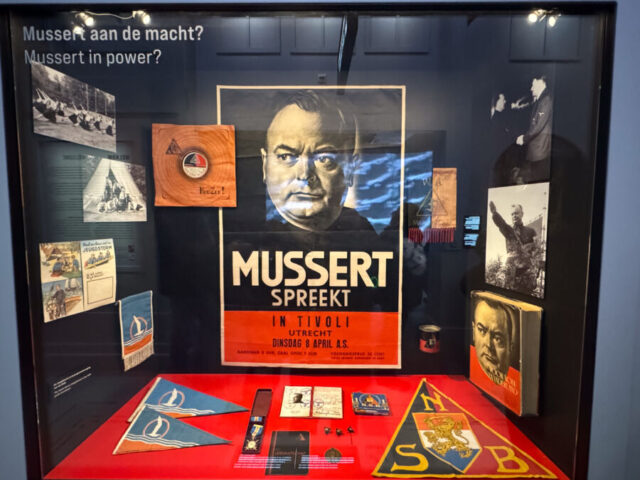
Early on, the exhibit takes pains to introduce us to Anton Mussert, who led the NSB, the local version of the Nazis. And it unflinchingly explains that 25,000 young Dutchmen volunteered to join the Waffen-SS, accepting Hitler’s invitation to stand with him in “Germanic Brotherhood.” After the war, at least 120,000 Dutch collaborators were arrested.
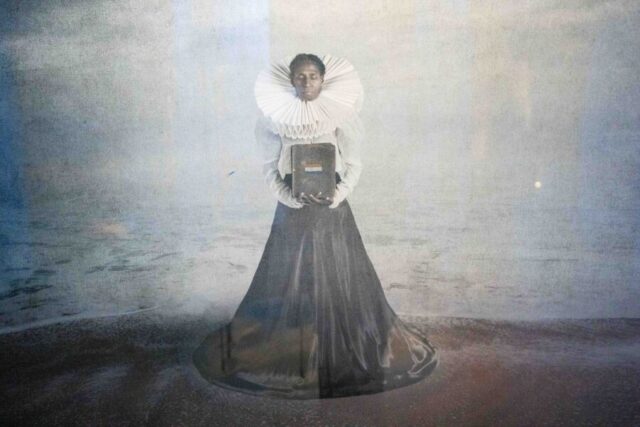
Of course, questionable Dutch deeds extend much farther back than the 20th century. As one of Europe’s great colonial powers, the Netherlands was fabulously wealthy in the 17th and 18th centuries. Amsterdam’s ornate city center — with its concentric canals, stately townhouses, grand museums and palaces, and gilded carillons — was financed primarily through plundered resources, the exploitation of human labor at the far ends of the globe, and Dutch participation in the transatlantic trade of enslaved human beings.
This is an aspect of Dutch history that many visitors (and, until recently, even many Dutch people) gloss over. But that is now changing. In 2023, the former Tropenmuseum (“Tropics Museum,” built nearly a century ago to show off colonial riches to Dutch citizens) was re-envisioned as the “World Museum.” Many of those same artifacts from former Dutch holdings — as far afield as Indonesia (the “East Indies”) and the Caribbean (the “West Indies”) — are still on display. But now they are given proper context, explaining the lives of the people exploited by the Dutch, from their own perspectives.
On the one hand, it’s impressive to see the Netherlands making these strides: For example, then-Prime Minister Mark Rutte (in 2022) and King Willem-Alexander (in 2023) have both formally apologized for the Dutch role in the slave trade. On the other hand, like any society, not everyone is comfortable with the changing times. The Dutch sidekick to Santa Claus, Zwarte Piet (“Black Pete”), is still usually performed by a white man in Blackface — and in a recent poll, more than half of Dutch respondents continue to support Zwarte Piet’s traditional appearance. And in November of 2023, an anti-immigrant party took the highest total of seats in the Dutch parliament.
Progress sometimes comes in fits and starts…but it’s progress.
New Zealand/Aotearoa: Waitangi Treaty Grounds
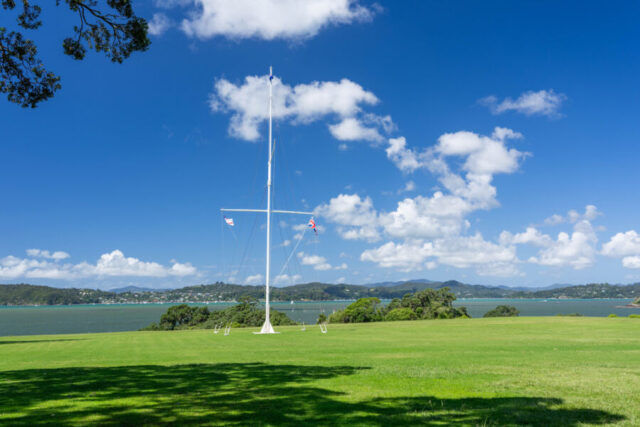
On a recent trip to New Zealand/Aotearoa, I visited the Waitangi Treaty Grounds on the Bay of Islands. This is essentially the birthplace of the modern nation of New Zealand, where local Māori tribal leaders signed a treaty with emissaries of the British crown to establish formal colonies on the island. Today you can walk across the grassy field where the treaty was signed, but only after you’ve toured a powerful, beautifully curated museum.
The museum is the best implementation I’ve seen of a “dual narrative” approach — equally weighting the perspectives of both the Māori and the English to tell a complete story. In fact, for most of the exhibit, you see the Māori point of view on one wall, and the English point of view on the opposing wall. It’s fascinating to experience the history of this island through the eyes of its two dominant groups, simultaneously — a parallax view that is both informative and moving.
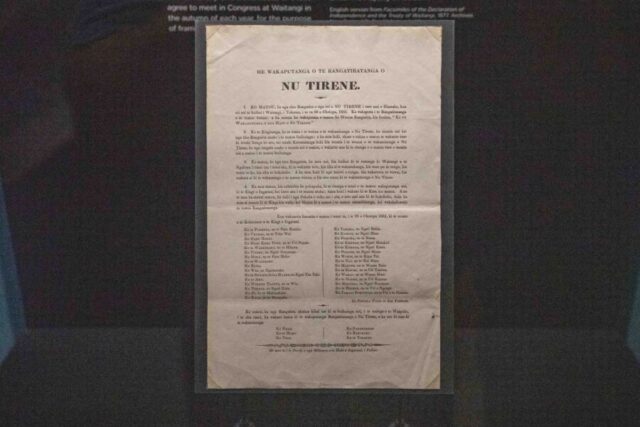
In the darkened hall that displays the actual treaty, exhibits detail how the document was translated misleadingly into the Māori language. Key concepts like “sovereignty” were phrased in such a way to give Māori leaders the impression that they, and not the Queen of England, were still essentially in control of their island.
I was impressed and inspired to see a society that — rather than try to spin past events in a way that would present the European settlers in a flattering light — plainly acknowledged their misdeeds: We misled the people who were here first. And we were wrong.
New Zealand inspires me. It’s perhaps the planet’s most forward-thinking nation when it comes to the rights of its indigenous population. This national conversation began in earnest in the 1970s — on the one hundredth anniversary of the Treaty of Waitangi — and much progress has been made. While “reparations” is an abstract and hard-to-sell idea when it comes to the descendants of enslaved Black people in the USA, in New Zealand, it’s a reality: Vast tracts of the country’s land has been formally returned to Māori control. While there’s certainly more to do, New Zealand is making real strides in owning up to its historical crimes.
And this trickles down to everyday life, as well. Increasingly, Kiwis from both Māori and European backgrounds are embracing the indigenous name for their archipelago: Aotearoa. Kiwis, regardless of their background, greet each other with a cheery “Kia ora!” — evoking the Māori origins of the land upon which they all reside together today. As an American, this inspires me to do better — so much better. (And if we need a role model closer to home, we need only look to our northern neighbor — Canada has made impressive gains in better acknowledging the rights of its First Nations peoples.)
Hungary: Slide from Democracy
Now let’s cross hemispheres again, to a place that may be one of the worst-case scenarios for a society retconning its own narrative: Hungary.
Since first taking power in 2010, Prime Minister Viktor Orbán and his party, Fidesz, have aggressively revised history to suit their nativist political agenda. An exhaustive list of examples could fill volumes. But even just as a traveler who drops into the country every year or two, I’ve seen the effects firsthand: streets and squares renamed for obscure historical footnotes; the vast plaza surrounding the Parliament building completely transformed with new monuments and memorials; and, perhaps most alarmingly, a wholesale revision of the national school curriculum to ensure that the version of history taught to every Hungarian student is perfectly in line with the Fidesz agenda.
And what is that version of history? Essentially, it’s the most flattering possible view of Hungary. Fidesz history presents the country either as a heroic warrior, or a tragically maligned victim of foreign aggression, full stop. Orbán’s story of Hungary is designed to instill unquestioned pride and patriotism: We have always been in the right, just as we are today.
Here are just three examples:
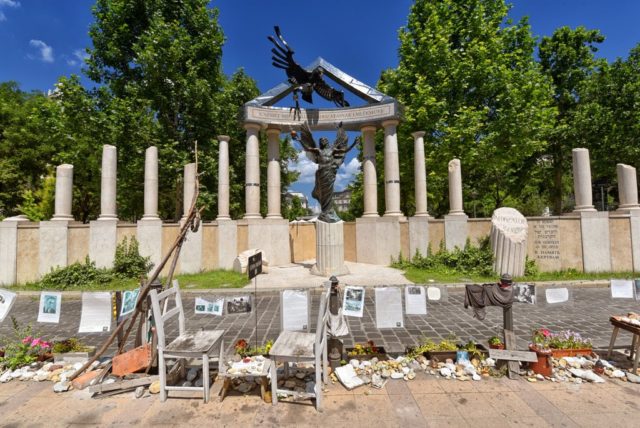
On Liberty Square, Fidesz erected a melodramatic monument to the “victims of fascism.” It’s overloaded with symbolism suggesting that Hungary was a peace-loving land, minding its own business, until Hitler invaded in 1944. In front of the monument, locals have assembled their own makeshift counter-monument — documenting how, in fact, Jews were terribly mistreated by Hungarian authorities, and tens of thousands were deported to certain execution by Hungary’s pre-Nazi leadership.
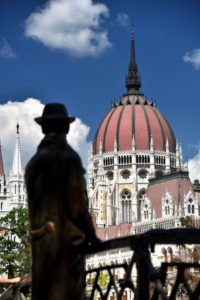
A couple of blocks away once stood a beloved statue of the communist reformer Imre Nagy, casting his judgmental gaze over the Parliament. However, there was a problem: Nagy may have led the 1956 Uprising against the USSR (and was later sham-tried and executed). But he was also a communist himself, who sought reform from within. The Fidesz worldview simply can’t tolerate such nuance. Nagy was a communist; all communists are bad; therefore, we must remove Nagy’s statue from this favored location. Under cover of darkness and without any warning, one night in the waning days of 2018, it was relocated far from the Parliament.
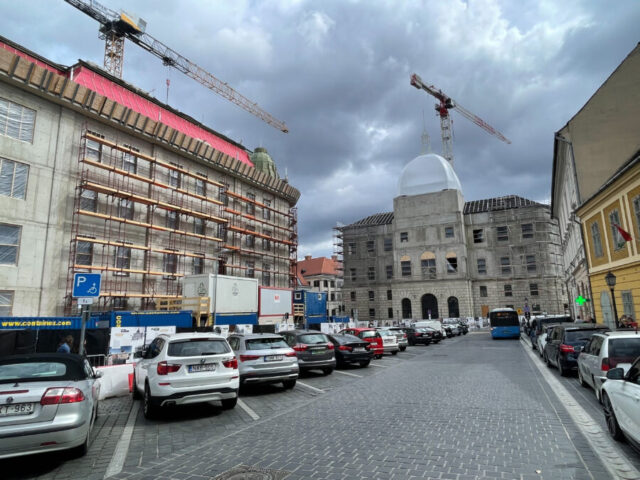
Up at Buda Castle, Orbán has moved his office into the former National Dance Theater and is busily redeveloping the castle quarter, transforming it into his new seat of government. Old buildings — destroyed in World War II and never rebuilt — are being re-created from scratch, with little rhyme or reason. It’s a hodgepodge that randomly juxtaposes buildings from this and that era, based on how pretty or grand or imposing they look rather than their actual role in history — an almost too on-the-nose embodiment of this cherry-picking approach to Hungarian history.
Orbán has become a darling of certain corners of the American right. Perhaps those Orbán supporters should travel to Budapest, talk to Hungarians on the street, and observe how his approach has eroded two decades of fragile progress in recovering from totalitarianism…including the distorted, oversimplified way that Hungarians are encouraged to view their own complicated history.
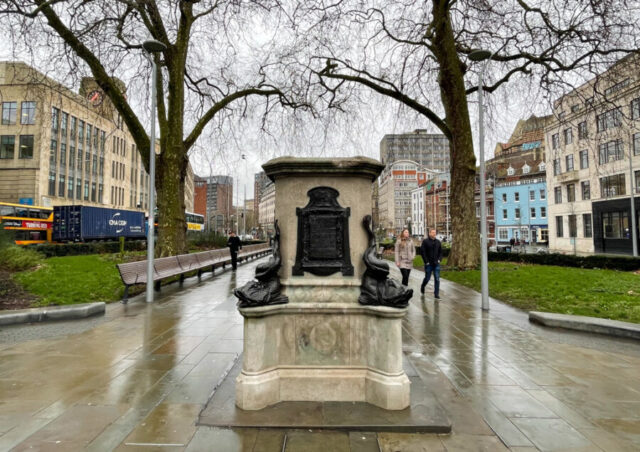
Colston is one of many historical figures who became a flashpoint during the global Black Lives Matter protests in the spring and summer of 2020. You may recall how a giant statue of Colston was toppled by protesters, dragged down the hill, and dumped into the harbor. (Later, the statue was dredged out of the harbor and displayed in a local museum.)
On my visit to Bristol, about two years after this event, I found myself following breadcrumbs of Colston’s legacy around the city. The plinth that once held Colston’s statue — and boldly declared him “one of the most virtuous and wise sons of [the] city” — stood empty. In a parish church, stained-glass windows honoring Colston had been removed; a nearby information panel explained this decision. And in a city history museum, Colston sneered out from a composite painting of prominent Bristolians. His image was identified completely, and accurately: “Slave trader; merchant and philanthropist.”
Back home, we’ve had debates about whether and how we should remove statues honoring problematic historical figures, whether they be Confederate generals or slave-owning Founding Fathers. You may believe that tearing down these statues is just as bad as what Poland or Hungary is doing. But observing Bristol’s approach demonstrates that it’s possible, even responsible, to remember these figures — completely and honestly, in all of the ways they both aided and harmed others — without honoring them. The challenge — one that Bristol rose to — is to find a constructive way to preserve history without remaining beholden to it.
Should we replace those statues with carefully worded plaques, offering a more complete and nuanced explanation of their role in history than simply “virtuous and wise”? Should the statues be collected into an open-air museum (as Budapest did with its communist statues, in Memento Park), so those generals can preach their racist ideology to each other, removed from polite society, without needlessly confronting passersby? Should we create a Museum of American Racism — a series of Slavery Documentation Centers — that detail the shameful crimes of our past, as a reminder and a warning to Americans in the present and the future?
Again, Bristol inspires me to do better.
Back Home: The United States of America
After hopscotching around our globe, we return home to the United States of America. With the benefit of comparing notes with other societies, how does the USA measure up?
When we’re at our best, we make strides toward reckoning honestly with our past sins. The Museum of African American History in Washington, DC, for example, does a beautiful, complete, and even-handed job of telling the story of Black Americans and their ancestors.
Juneteenth — a celebration that originated in the Black community to commemorate the abolition of slavery — is now a federal holiday, and more and more organizations (including Rick Steves’ Europe) show their respect by closing their offices for the day.
And even in my own lifetime, I have observed the USA doing a more honest job of acknowledging our genocide against Native American tribes — though nowhere near to the righteous degree of New Zealand/Aotearoa or Canada.
However, in recent years — as the political pendulum swings to dizzying extremes — I fear that we are facing a rising tide of people who would prefer to simply edit out the most uncomfortable details in our national narrative.
In some states, textbooks are being rewritten to downplay our heritage of slavery and racism. These days, ambiguity and intentional omission trump clarity and specificity in explaining to our children exactly how certain people have been treated by our country, and still are, and why.
Critical Race Theory (CRT), paired with the deathly curse of “woke” — both concepts that originated in the Black community — have been appropriated and cruelly weaponized. Terms like these have become an excuse for (mainly) white Americans to shut down any healthy conversation about our shared national narrative that makes them uncomfortable.
Look: I’m not interested in wading into the “woke culture wars.” In fact, I’m sticking to my guns: The importance of history can and should be a nonpartisan issue. History matters, to everyone, even if they don’t realize it. And an honest and frank acknowledgement of the facts of history, by any society, is always a good thing. History tells us where we’ve been, and it helps us figure out where we’re going.
I believe this even more strongly having traveled to places where people grapple constructively with their history, and to places where people would rather hide from it. And I’m here to tell you: Societies in the first group are stronger, healthier, smarter, more successful, and more respected on the world stage than places in the second group. Honesty can be painful, but it’s how we grow and become better.
If you believe that contemporary Germans owe it to the world — and the six million Jews their ancestors murdered in gas chambers — to continue to reckon with their past crimes; if you think that child molestation scandals deserve to be acknowledged in a retelling of the life of John Paul II; if you respect the Dutch for including the stories of collaborators along with stories of victims and uprisers in their Resistance Museum; if you admire the Kiwis for acknowledging that their island was deceptively taken from people who’d been on Aotearoa for centuries earlier; if you think it’s a shame that Viktor Orbán removed the statue of a great communist reformer just because he was also, technically, a communist; if you appreciate Bristol’s nuanced approach of remembering Edward Colston without honoring him — then you should also be willing to face the discomfort of teaching our children about America’s shameful heritage of slavery and racism, and so many other topics that deserve open and frank conversation.
When you brush aside inconvenient realities, they don’t simply go away. They just fester, impacted and infected. They wait there, only getting uglier and worse, slowly beginning to stink, until they’re eventually kicked up again by some future generation — and have become an even worse problem to deal with.
It’s very easy to see blemishes when looking at other cultures, from afar. It’s much harder to see them when we look in the mirror. But we owe it to ourselves, and to future generations, to avoid the temptation to slide into denial. So the next time someone tries to dodge a conversation about less-than-noble elements of our past, consider asking them: Why does it make you so uncomfortable to reckon honestly with our nation’s history? Because that’s what healthy, functioning societies do.
It’s hard to imagine a more eventful year for travel than 2022. Reflecting on the last 12 months, I’m astonished at how much has happened in the world of travel — and in my own travels. It was a year of returning to the road despite COVID, yes…but also the invasion of Ukraine, the death of the Queen, and so very much more. I’m not usually in the habit of quoting communist despots, but this saying from Vladimir Lenin suits our kitchen-sink times: “There are decades where nothing happens, and there are weeks where decades happen.”
And so, here’s a recap of my 2022 travels. I hope it serves as a snapshot of the “state of travel in 2022” — one of the wildest, fastest-changing years I can remember. If you’ve been to Europe this year, you may find some of this relatable. If you haven’t, it may be illuminating. And mixed in are some personal travel stories I hope you can enjoy vicariously.
Fair warning: This recap is long. (I’m trying to tell you — a lot happened in 2022!) Bear with me and feel free to skim. If you’d like more information on any of these topics, I’ve linked to posts on my blog or on my Facebook page, where I was very busy this year, tracking my travels. (If you aren’t on Facebook, you may not be able to read some of those posts.) I plan to continue my frequent, real-time travel updates as I hit the road again in 2023. If you’d like to follow along, be sure to subscribe to my blog and follow me on Facebook.
Late 2021: Omicron Rising
One year ago, in the mellow days after Thanksgiving 2021, news broke of a scary new COVID variant that was spreading rapidly around the globe. For a brief moment, Omicron was, frankly, terrifying; some hardy travelers (including both Rick and I) had made tentative first forays back to Europe in 2021, and we were looking forward to “post-COVID” European trips in 2022. Our bus tours were nearly sold out, and we’d already started booking some guidebook-research trips. Omicron tapped the brakes on all those travel dreams. But gradually, it became clear that the new variant was more virulent, but less deadly that the original; rather than being a harbinger of more lockdowns in 2022, it marked a pivot toward travelers learning to live with COVID as we got on with our lives.
We pride ourselves on updating our Rick Steves guidebooks in person, typically every two years. But the global pandemic interrupted that routine, and we wound up taking an extra two-year hiatus on all of our titles. Rick, our managing editor Jennifer Davis, our publisher Avalon, and the rest of us at Rick Steves’ Europe knew it would be a massive project to get those books fully up to date, post-COVID. To get as many books out as possible by the end of 2022, we’d have to hit the ground running, do more research than we’d ever done in a single year, and compress our production timeline to do it faster than ever, to boot. Jennifer moved mountains to come up with a smart plan, and we spent most of the winter making research assignments and booking trips.
We were ready to hit the road.
Early 2022: Back to Europe!
When I took off for London in mid-February of 2022, I was the first one out — leading the vanguard of a team of 20 co-authors and researchers who would fan out across Europe to whip those books into shape. (Rick followed just a few weeks behind, hitting 10 cities on a 40-day research trip of his own.)
As a sign of the times, three things happened during my first week in London: A few days before I took off, Buckingham Palace announced that Queen Elizabeth had contracted COVID. Around the time I landed, Boris Johnson announced the end of all COVID restrictions for the UK. (Both would be gone, in very different ways, by year’s end.) And a couple of days into my trip, Russia invaded Ukraine. (More on that later.)
For more than 20 years, I’ve spent three months of each year in Europe, mainly updating our guidebooks. At first, the forced break of COVID was, frankly, welcome: I’d been getting burned out, even jaded, and I didn’t mind having a rest. But after two long years, I was champing at the bit to get back to guidebook work. I was excited, and nervous.
That first morning, I woke up and surveyed my list: I had about 12 days to update our 600-page Rick Steves London guidebook. I had to start somewhere. So why not Westminster Abbey? I rode the bus to England’s top church and, before stepping inside, I snapped a photo to commemorate the occasion and posted it on Facebook.
One hour later, I came back outside with loads of handwritten updates scrawled into the margins of that book. One section down; hundreds more to go. By the way, that Facebook photo wound up being by far my biggest ever — more than 11,000 people “liked” it. It was clear that I wasn’t the only traveler excited to be tiptoeing back to normal after such a long delay.
I worked hard in London — visiting, as I always do, virtually every single hotel, restaurant, museum, shop, and so on to personally check in with each business owner and to update their listing. I was very happy to confirm that the vast majority of our favorite small businesses — the mom-and-pop hotels and restaurants that are the cornerstone of our guidebooks, and of our style of travel — had survived the pandemic. I did notice another trend, however: Life changes. There were more divorces, retirements, and ownership changes than ever before. Some people call the COVID era “The Great Reshuffle.” Anecdotally, it’s clear to me that anyone who was contemplating a lifestyle change took a hint from the pandemic.
I also made a point to slow down and enjoy being back on the road — a pledge I’d made to myself during those many, many long months without travel. After many trips to London, I’d never actually been to Abbey Road. My Beatles fandom recently re-ignited thanks to Peter Jackson’s Get Back documentary, I decided it was time to change that — and made a point to add a 30-minute detour to that famous crosswalk at the end of a busy day of research.
On my day off, I headed to Kew Gardens to update our guidebook listing. And then I realized I was just a short bus ride from Richmond, the setting of Ted Lasso (a TV show which, like many people, I’d found much solace in during those dark pandemic nights). I managed to find Ted’s “local” and his apartment, and sat on a bench on Richmond Green watching dogs chase tennis balls for 30 minutes — which, strangely enough, may be my favorite travel memory for all of 2022.
From London, I flew to Rome, where I had another 10 days to update another 600-page guidebook. Whereas in London, it had struck me that most people were “over” COVID (with very few precautions and little masking), Italy was still behaving very cautiously: You still had to show your up-to-date vaccination card to enter a museum or restaurant, and masking was near-universal.
In Rome, too, I made a point to linger and enjoy. At one of my favorite sights in the Eternal City — the Protestant Cemetery — I enjoyed getting to know the local cats who hang out at the nearby cat hospice. But there was plenty of hard work to be done; on one gloomy day, I hit the pavement in the streets surrounding Termini train station, and updated 47 hotels in a single day.
While that was grueling, it was a treat simply checking out with our many hoteliers and restauranteurs, who take such good care of our readers (and, often, also our tour groups) that they feel like part of the extended “Rick Steves family.” Everyone was ramping up for what they hoped would be a busy year, but expressed concern that customers weren’t bouncing back as quickly as expected. In those early months of 2022, the one-two punch of Omicron and the Ukraine invasion had scared off many travelers. Roman hoteliers told me that they’d seen a flurry of cancellations.
In both cities, I noticed a big trend: During the pandemic, technology had been adopted in a big way. This makes sense: Before COVID, how many of us had ordered groceries through an app, or connected with friends and coworkers via video chat? In Europe, more and more museums allowed (or even required) prebooking tickets online, and many did away with borrowable audioguides in favor of apps you download to your own device.
One of the biggest changes was the rapid adoption of “contactless” or “tap” payment — by credit card, smartphone, or smartwatch. Upon boarding a public bus, instead of rummaging around in your pocket for loose change, you can now simply tap your card or phone against the pay pad. I love this system, which makes paying for everything so much easier.
While still on the road, I submitted both London and Rome — the full guidebook text files, plus dozens upon dozens of virtually marked-up maps. Back in the home office, our amazing editorial and cartographic team began the heroic effort of tidying up and finalizing those chapters to send to our publisher. I wrapped up with more research in Naples and Tuscany (Siena, Pisa, Lucca) before heading home.
Home Interlude: The Temporary European
I was back home for just a few weeks before returning to Europe on a second trip. This quick interlude was a blur, but it coincided with the promotion of my new travel memoir. Back in 2020, when it became clear I’d be grounded for a while, I took a sabbatical from my office work to collect many years’ worth of blog posts and turn them into a cohesive book. It turned out to be a beautiful opportunity to reflect on my two decades of traveling and working with Rick Steves. As I refined and filled in gaps, it became clear that all of those stories had the same theme: traveling as a temporary European.
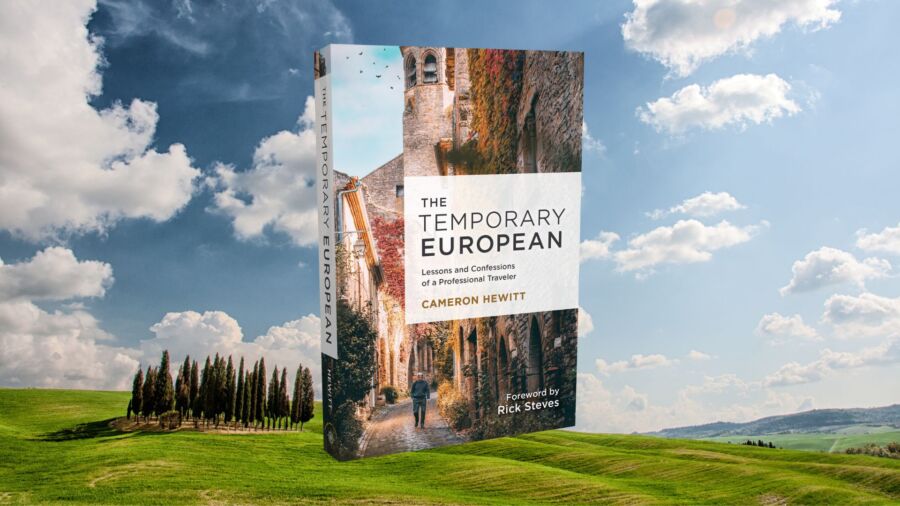
The Temporary European: Lessons and Confessions of a Professional Travelercame out in early 2022. It’s a collection of my favorite travel tales, plus behind-the-scenes chapters about what it’s like to work with Rick Steves, write guidebooks, lead bus tours, and make travel television. It also gave me a chance to introduce the world to my wife’s well-traveled Great-Great Aunt Mildred, whose personal travel motto I’ve appropriated as my own: Jams are fun!
Early 2022 was a strange time to come out with a book. Bookstores weren’t really doing in-person author appearances, and virtual ones were already kind of passé. So, while the book was well-received, I didn’t quite get the “book tour” of my wildest dreams. That said, my publisher, Travelers Tales, set up several book readings over the late spring and summer where I had the chance to connect with my fellow travelers in person. It’s been just wonderful meeting many of you at cool independent bookstores — from Seattle to San Francisco to Columbus, Ohio — and hearing about your travels.
(Gratuitous plug: If you enjoy my approach to travel — or know someone who might, and need a stocking stuffer — you can get The Temporary European for 30% off through the end of the year on Ricksteves.com, as part of our Holiday Sale. And Amazon.com has the Kindle edition priced at an incredibly low $1.99 through December 4. Get yours now!)
Before long, it was time to head back to Europe. Next up: Poland!
The Ukraine Invasion…and Touring Poland
Back in 2020, we were all ready to run the inaugural departure of a brand-new Best of Poland in 10 Days tour, which I’d helped design (with the multitalented Robyn Stencil from our Tour Operations team). In fact, I was going to come out of “tour guide retirement” after many years of focusing on guidebook research to lead that tour myself — with a team of talented, mostly newly hired Polish tour guides.
Like so many other travel dreams, that got scrapped…but only temporarily. And in early May, I flew to Gdańsk — on Poland’s Baltic Coast — to meet Robyn, those four Polish guides, and our intrepid group to begin the tour.
It was a tall order: Not only had I not led a tour in many years, but it was a brand-new tour, and I’d be mentoring some talented guides who — fantastic though they were — had mostly not been on a full Rick Steves tour before. Plus, we had some complicated COVID restrictions to carefully implement: Testing all the guides and tour members before the tour, checking vaccination cards at the first night’s meeting, and ensuring that everyone remained safely masked on the bus.
All of that would have been complicated enough. But we were also leading a tour in a country whose neighbor, Ukraine, had recently been invaded by a hostile empire.
Russia’s February invasion of Ukraine is one of the most impactful geopolitical events in Europe in recent memory. I was fortunate enough to travel in Ukraine back in the fall of 2018; I learned a lot about the complicated historical “brotherhood” between Ukraine and Russia, and about the military standoff that was already happening in the country’s east. With this in mind, as Putin’s threats escalated over the winter, I had a very bad feeling that he was not bluffing.
The war in Ukraine — which has already cost somewhere on the order of 100,000 Ukrainian lives, and 100,000 Russian ones — has been somehow both shocking and utterly predictable.
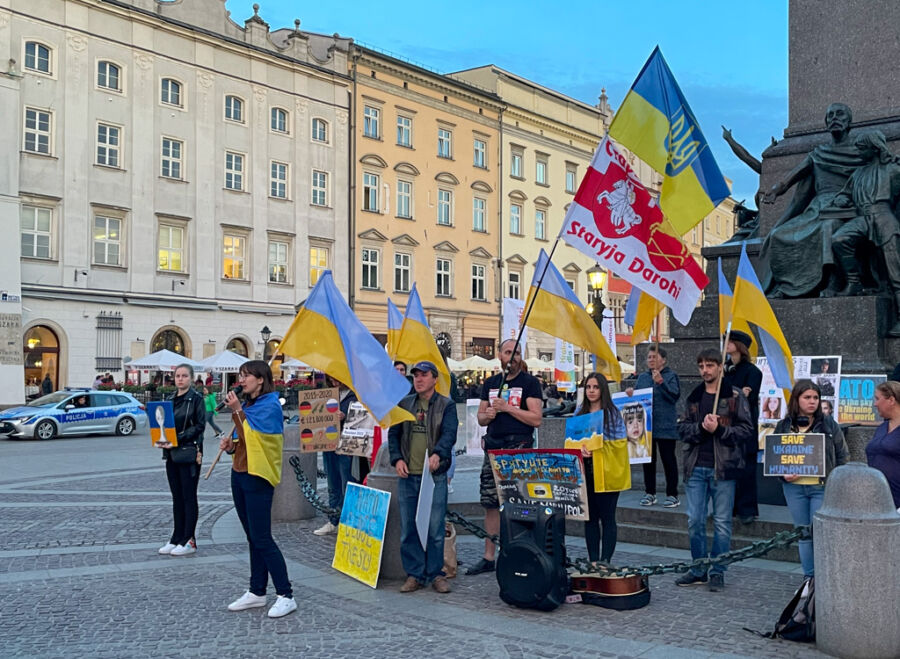
Throughout Europe, I’ve seen Ukrainian flags and demonstrations of solidarity everywhere. While we in North America have (mostly) been cheering on President Volodymyr Zelenskyy and his ragtag resistance form afar, Europeans understand that the stakes are very high. For one thing, many Europeans are fundamentally pacifistic — a painfully hard-learned lesson from two devastating world wars. My sense is that they’re simply horrified at the thought of such atrocities happening anywhere on European soil.
On a more pragmatic basis, Europe still gets much of its oil from Russia. They want to stand up to Putin, which means boycotting (as much as possible) Russian oil exports. And that means scrambling for alternatives (whether it’s keeping open nuclear power plants that were slated to be decommissioned, as in Germany, or doubling down on coal, as in Greece). It also means that energy prices this winter will be extremely high, causing great anxiety and leaving Europeans scrambling to cut heating costs. (On a recent visit to a heated outdoor pool in Switzerland, a sign politely informed swimmers that they’d lowered the temperature by one degree Celsius. Every little bit helps!)
Of course, in Poland — as Ukraine’s neighbor, and a place with a history of unpleasant relations with Russia — the stakes are higher still. Something like two million Ukrainian refugees had crossed into Poland by the time our tour began in early May. I think many of us visitors were expecting to see tent cities and shantytowns filled with refugees…but we were surprised, and impressed, at how constructively Poland has absorbed all of these new arrivals into their society.
One day, I was having lunch with our Polish guides in the red-brick downtown of Gdańsk, and one of them pointed out a handsome old building across the street. “That was an underutilized dorm and activity center for Scouts,” one of them told me. “That sign with the Ukrainian flag by the door explains that now it’s housing refugees.”
In the context of all of this, our new Poland tour seems incredibly insignificant. But it was a fascinating case study in how the situation in Ukraine has (or hasn’t) affected travel. A few of our tour members told us they’d considered cancelling the tour after the war broke out, but decided to stick with it.
As soon as our tour members arrived in Poland and took a walk, they realized that it was a perfectly safe and stable place to be. It helps that Poland is in NATO; Putin understands that messing with Poland would have extreme consequences (which we saw recently, when a couple of missiles — apparently accidentally — crossed that border, and briefly put the world on high alert).
Long story short: The tour was a huge success. The itinerary came off without a hitch, even though it was the first time we’d done it. (Our biggest “problem” was that we kept arriving at the next town faster than our conservative estimates.) Those new guides were wonderful, and each of them has gone on to lead the tour on their own, to great acclaim. And our tour members — about half of whom, like me, have Polish ancestry — were thrilled they’d joined us.
It was a special treat for me to share some of my favorite places and experiences with the group. Particularly memorable was the chance to attend an outdoor Chopin concert in Warsaw’s huge Łazienki Park. This important custom, which dates back more than six decades, was suspended for three years due to COVID. It was a very special treat that we happened to be there for the first concert of the season. The park was filled with Varsovians who were thrilled just to be together again, appreciating the music of their beloved composer.
If anything, what was happening in Ukraine enhanced the educational value of the tour, allowing our tour members to better understand all of the complexities of what was going on next door.
One of our favorite moments came on a night when we’d planned a fairly conventional dinner for the group. Our hotelier, Jarek — a longtime friend to Rick Steves travelers who use our guidebooks — mentioned that he’d hired several Ukrainians to work in his restaurant. We had a brainstorm: Rather than cooking Polish dishes, as they normally do, how would those Ukrainian chefs like to cook us a traditional Ukrainian meal, to celebrate their home culture? They jumped at the chance and served us a delicious and unforgettable menu of their favorite flavors from back home. And Jarek invited a musician to serenade us on the traditional Ukrainian stringed instrument called a bandura, to boot.
If that’s not great travel…I don’t know what is.
Summer in Europe: Travel Gains Momentum
From Poland, I flew to Amsterdam, where I did more guidebook research in the Netherlands (updating five cities in five days), then Belgium (where Antwerp bucked the trend of small businesses surviving the pandemic — I had to scramble to replace nearly half of our listings). And then it was on to Scotland.
Things everywhere had already changed dramatically even since the spring. Most COVID restrictions had gone by the wayside. Masking had become rare. And the crowds — who, back in March, had seemed to be tentatively dipping a toe in the water — were full-on diving back into Europe.
In June, I spent three weeks traveling all over Scotland, updating a guidebook whose first edition I’d pioneered back in 2015. In the intervening years, other researchers had passed through to put their touches on it. Discovering all the wonderful fixes and additions that happen to a guidebook over time is one of my favorite things about my work.
I enjoyed being in sunny Edinburgh during the Queen’s Platinum Jubilee, then rented a car and did a two-week road trip through the Highlands. This was a good old-fashioned European road trip, with loads of castles, moody glens, and delightful encounters. I watched a thrilling sheepdog demonstration in the cold drizzle, listened to some top-notch traditional music in an Inverness pub, and set sail to the Isle of Iona. I was thrilled to pull over for a perfect roadside encounter with a “hairy coo” (shaggy Highland cattle). And then, following up on one of the many great leads my fellow travelers suggested on my Facebook page, I discovered a wonderful up-close-and-personal hairy coo experience at a remote ranch. I didn’t even mind when I got drenched with rain for three days on Skye. (Well…maybe a little.)
Even just since my previous visit, Outlander has come to play a huge role in driving Scottish tourism. While it’d be easy to be cynical about the Outlander-ization of Scotland, I’m on board for two reasons: First, the novels and TV show are meticulously researched and — despite being a time-travel fantasy — do a great job of actually educating people about Scotland. And second, I saw firsthand that many people may come “for” Outlander, but once here, they wind up excited about Scotland in its own right. If a TV show, or a movie, or a book, gets people to a place that deserves to be on itineraries on its own merits…then I’m all for it.
Another big theme in Scotland this summer — likely driven, at least in part, by all those Outlander fans — was that the whole country was stuffed to bursting. Especially in smaller communities (such as the Isle of Skye), staffing levels remained inconsistent, and there simply weren’t enough B&B beds or restaurant tables to go around. I had trouble booking rooms for my June trip, even though I started looking way back in February; many of our top-rated B&Bs told me that even in January, they were sold out through the entire summer. And restaurants were booked out days, weeks, even months in advance. If you didn’t reserve well ahead in certain places, you’d wind up dining on groceries or takeout fish-and-chips. If you’re heading to Scotland anytime near summer, book as far ahead as you can.
Nessiegate
I was on a travel high one morning as I left Inverness and headed across the middle of Scotland to the Isle of Skye. My route took me right past the touristy north shore of Loch Ness, so I pulled over at the heavily hyped tourist zone along the lakeshore to check some details for our book.
And then…something inside me just snapped.
Immersed in one of the tackiest tourist traps in Europe, surrounded by greedy and crass roadside attractions, I felt an almost physical revulsion. I found myself feeling very sorry for all those unwitting travelers who’d come to this place, at a great investment of time and money, to stare out over an empty loch, then buy some overpriced trinkets.
On the rest of my journey to Skye, I occupied myself by mentally composing a Roger Ebert-type takedown of Loch Ness. That night, settled into my B&B, I had an absolute hoot writing up my little Nessie rant. It was a critique of the crassness of the Loch Ness tourist machine, yes. But more than that, it was intended as practical advice for the travelers who look to me for advice: Skip Loch Ness, because your limited time is better spent elsewhere. (You can read the complete rant here. Much fun as I hope this is to read, the Comments are even more entertaining.)
I chuckled myself to sleep and woke up to a predominantly positive response from my followers, on the order of “Thanks for the warning!” To be honest, I forgot all about Loch Ness.
But then, a Glasgow-based tabloid newspaper saw my post and published an article about it. (With everything going on in the world these days, I can’t fathom why a reporter would spend time scouring my paltry social media presence for material. But I digress.)
The story got picked up by another tabloid. Then another. Then another. I knew things had gotten a bit out of hand when I received a message from BBC Scotland, asking if I’d like to appear on their primetime news broadcast to “elaborate” on my thoughts about Loch Ness.
It was fascinating to have a firsthand experience with a British tabloid news cycle. For a very short while, I was the bane of the Highlands. One Inverness paper even posted a “person on the street” video of several people telling me, one after another, how wrong I was:
All of that I could take in stride. But I also heard from Scottish individuals — some of whom lived along the shores of Loch Ness — who were, understandably, hurt and offended that I’d be so dismissive. It was an important lesson: My intended audience was North American travelers planning a Scottish itinerary. But when something “crosses over” to an unintended audience — in this case, the Scottish public — it just hits different.
I couldn’t blame these people for being offended. I actually corresponded with some of them, most notably Toby from Loch Ness Living, who made some great points — including that it’s not really fair to judge a place based on such a quick visit. The general sentiment was this: If you’d spent a day or two here, had gotten off the beaten path, really explored and settled in, you’d come to appreciate the full beauty of Loch Ness. And on that point, I cannot disagree.
(Others were more succinct. One private message I received on Facebook read simply: “You boring yank twat.”)
In the end, I feel a lot of empathy for people who work in the Loch Ness tourist industry. But I’m not the only one who let them down. The fact is, to a traveler, “Loch Ness” is that insanely tacky and touristy strip that I drove along that day. The local tourist industry is designed to steer passersby to that version of Loch Ness, and only that version of Loch Ness.
As all of this played out over the next few days, I had plenty of time to consider what, exactly, had triggered me so grievously to begin with. In a funny way, my Loch Ness takedown was a direct result of the pandemic. During those two long years of not being able to travel — and especially when I was writing my memoir — I gave a lot of thought to why I travel to begin with, and how I could travel better going forward. It helped me better draw the line between my idea of “good travel” and “bad travel.” And I pledged to rededicate myself to “good travel” when I was able to hit the road again.
Literally everything else I did in Scotland ticked the box for “good travel.” But then I came to Loch Ness. And it was the antithesis of everything I love about travel: It’s designed to exploit an entirely fabricated legend about an imaginary sea monster. It was a slap in the face. This is what I — what all of us — have waited two years for? Have we learned nothing?
Here’s what gets my goat about the Loch Ness Monster: It tells you absolutely nothing real or authentic or insightful about Scotland. Scotland has more than its share of clichés, which it aggressively exploits to stoke tourism: kilts, bagpipes, golf, whisky, haggis, castles, hairy coos, Outlander, and the list goes on. But the crucial difference between all those things and Nessie is this: All of those things have something real to teach you about Scotland.
The people who work in tourism at Loch Ness deserve better. Scotland deserves better. If they’re angry with me, perhaps they should redirect their anger at a tourism machine that spends all of its resources promoting a fake monster, and very little celebrating the natural and cultural wonders of Loch Ness.
Coming Down with COVID: To Fly or Not to Fly?
Surely “Nessigate” was more than enough drama for one trip to Scotland. But no! Scotland was not through with me. (Call it “Nessie’s Revenge.”)
At the end of my seven-week trip (which began all the way back in Poland), I was pretty wiped out and ready to head home for the summer. On my last day of research, in Glasgow, I felt run-down. I chalked that up to simply working too hard. But as I drifted off to sleep that last night, I felt a tickle in my throat.
I woke up feeling rotten, and as I finished packing for my afternoon flight home, I weighed my decision. Two weeks earlier, the US government had waived the COVID testing requirement to enter the country. I could very well have just gone to the airport and hopped on my plane, shedding virus all the way. But if I had COVID, I didn’t want to expose my fellow passengers on the nine-hour flight home.
I had a few hours before my flight, so I called my wife (who’d just gone to sleep back home) and talked through my options. I decided to stay in Scotland.
There were two main reasons: First, I was feeling worse by the minute, and I wasn’t up for taking such a long flight in this condition. And second, throughout the pandemic I’ve been preaching the importance of looking out for each other. I believe that one of the main lessons of COVID should be that if everyone does their part — getting vaccinated, wearing masks, avoiding contact when you’re sick — we all get through. This was an unwanted opportunity to live my values.
So, I rebooked my flight and spent several extra days in Glasgow, recuperating in my little but cozy hotel room.
That makes it sound simple. But these things are complicated — even when you’re “sure” you’ve made the right choice. At one point, I realized that if I hustled, I could still make it to my original flight in time. But then I asked myself: Would I want to be sitting next to me on a plane right now? Would I want my parents to be sitting next to that person?
That first night — at exactly the time I’d have been boarding my nine-hour flight — my fever peaked. I was glad to be in bed and not strapped into a seat. Fortunately, I was fully vaccinated and boosted, so I had a full and swift recovery; my fever lasted about a day, and the rest of the time felt like I was just recovering from a mild cold. When I finally made it to Seattle, I was grateful to be home — but also satisfied that I’d made the right choice, both for my fellow travelers and for myself.
September in Switzerland and Italy: No Matterhorn? No Matter!
In September, after a restful summer back home, I flew to Switzerland for more guidebook updates. (As an indication of how quickly our guidebook team was cranking out titles this year, the London and Rome books I’d updated in the spring had already hit my desk by the time I took off in September.)
On my previous visit to Zermatt — way back 15 years ago — the weather was so bad, I never even got to see the Matterhorn. But this time, I was determined to hang on to my post-pandemic optimism — to count my blessings at being able to travel at all. That first morning, I rode gondolas and cable cars up to the highest lift station in Europe, at a place called Klein Matterhorn. The weather was glorious, with deep-blue skies. You could see almost everything, in every direction…with one small exception: The Matterhorn itself was socked in. I just shrugged and said, “No Matterhorn? No matter! I’m still on a Swiss mountaintop.” (And I’m happy to report I did see the Matterhorn, several times, later in the trip.)
One afternoon, hiking high in the mountains with a Matterhorn view, feeling far from civilization, someone called my name: fans of Monday Night Travel who were using the same guidebook I was updating. Because much of my work at Rick Steves’ Europe is behind the scenes, I rarely get recognized when I’m in Europe. But throughout my travels this year, I bumped into more and more fans of “MNT” (as we call it).
Rick and a team of moderators (Gabe, Julianne, Lisa, and Ben) started doing Monday Night Travel during the pandemic, to offer a little “armchair travel” and a weekly pep talk from Rick. (I’ve appeared as a guest or co-host six times so far, most recently to talk about Romania.) Our hunch was that frustrated travelers appreciated having a weekly outlet for their wanderlust.
But now that we’re back traveling again, people are still watching — and I’ve bumped into many of them in Europe. From Edinburgh to Scotland, and throughout Croatia, MNT fans told me how much those weekly Zooms helped keep them going. In fact, every one of them used the same word: it was a “lifeline” while they were unable to travel. (If you haven’t checked out MNT, you should! You can see the schedule and sign up on the Monday Night Travel website — and it’s always free. My next MNT appearance will be some Poland talk in March…stay tuned.)
While most of my travels this year were return visits to old favorites, one of my post-pandemic resolutions is to keep on exploring — there are always new places to be discovered. In September 2021, on my first trip back to Europe, I made a point to check out Italy’s Emilia-Romagna region (staying in wonderful Modena) and the town of Treviso; in both cases, I was very glad that I’d sampled something new. That trip inspired me to keep going down my list of “new-to-me” Italian destinations. So, upon wrapping up my work in Switzerland, my wife and I took a few days off to explore the Piedmont region in northern Italy. And then, after she flew home, I stopped off briefly in Trieste on my way to Croatia.
Especially for a traveler who sometimes feel like I’ve “seen it all,” there’s a special joy in exploring something new. In Piedmont, we stayed at B&B in the Langue region just south of Alba and did some side-trips to the bustling city of Cuneo, the famous wine villages of Barolo and Barbaresco, and plenty of bucolic joyrides. Part of the adventure here was renting an EV (electric vehicle) — and being extremely steep on the learning curve when it comes to using an electric car for a European road trip. I suspect this is the wave of the future; if you’d like to learn from my mistakes, rather than your own, check out my post on EVs in Europe.
In Trieste — an utterly fascinating port city at the northeastern tip of Italy, completely surrounded by Slovenia — I was so captivated by the history that I broke my personal rule to not do any sightseeing on a day off. As an aficionado of Central Europe, it was thrilling to be in the primary Mediterranean port for the sprawling Habsburg Empire — facing the sunny Adriatic, but filled with grand buildings that would seem more at home in Vienna or Budapest. And as a James Joyce fan, I appreciated the modest museum about his time in Trieste, when he wandered the city as he wrote his masterwork Ulysses.
Trieste also reminded me that it pays to do your homework. For years, I’ve heard raves from fellow history buffs for Jan Morris’ book Trieste and the Meaning of Nowhere. I read it over the summer in anticipation of my visit, and practically used it as a guidebook once in town to track down fascinating little details. I would have enjoyed Trieste without it — but it definitely enhanced my time there. (What book have you read that transformed your appreciation of a place?)
October in Croatia: Changes Are Coming and the Saltshakers Are Empty
From Trieste, it was a short journey to this year’s final assignment: Updating our Rick Steves Croatia & Slovenia guidebook (which also includes highlights in Bosnia-Herzegovina and Montenegro). As the co-author of this book, and a tour guide emeritus on our Adriatic tours, I’ve been to these places more times than I can count. But for most of them, it had been five long years — so this trip was all about reconnecting with wonderful old friends, and reacquainting myself with favorite places.
No matter how many times you return somewhere, there’s always something new to discover. For example, just this summer Croatia opened its new Pelješac Bridge, which means that traffic on the main road between Dubrovnik and the rest of the country no longer has to pass through a tiny stretch of Bosnian coastline (which used to require two border checkpoints). It was interesting hearing from locals all the ways — both expected and unexpected — about how this bridge was transforming travel.
Avoiding those borders is more important now than ever, because in just a few weeks — on January 1, 2023 — Croatia joins the Schengen open-borders zone. On the same day, they’ll retire their traditional currency, the kuna, and adopt the euro. It was fun to learn about the new Croatian euro coins, but I must admit that this complicates my work: Between the staggering inflation across Europe (and especially in Croatia), and this new currency conversion, it’s nearly impossible to predict exactly what things will cost for my book next year. If a museum charged 55 kunas in 2022, the official exchange will be €7.30. Of course, it’s more likely that they’ll round it up to €7.50 or even €8 in 2023. Or — as many Croatians fear — they may just take this chance to make the jump to €10.
If you think you’re exhausted from reading this recap, just imagine how wiped out people must be who work in the tourist industry. As September turned to October, I heard the same thing again and again from my Croatian friends: We love travelers. We are thrilled they’re back. But, frankly, we’re exhausted. I began to notice that many saltshakers were empty; the season was winding down and they weren’t being refiled. It stuck me that the Croatian people were in a similar situation: all too ready for a winter replenishment.
Grand Finale: A Slovenian Youth Hockey Match
I wrapped up these many months of travel back “home” in Slovenia — my favorite country, and the place in all of Europe where I feel the most comfortable. I never tire of this wonderful place.
I said earlier that my favorite travel moment of 2022 was sitting on a bench on a sunny Saturday on Richmond Green, just outside London. I realize now that was my second-favorite. My favorite was going to a youth hockey game in Ljubljana.
My good friend and fellow tour guide, Tina Hiti, was in town between tours when I was in Ljubljana. She was busy, trying to pack in several family obligations, and it was tricky to find time to meet up. “Unless…” she said. “You wouldn’t want to come to Anže’s hockey game, would you?”
Until that moment, I never would’ve imagined how much it would appeal to me to attend a kids’ hockey match. But hearing it now, I practically jumped to my feet. “YES!!!” I said. “Just tell me when and where.”
I have a special relationship with Tina’s family (whom I write about in The Temporary European). She and I are close friends, having started out as tour guides together more than 20 years ago, and I’ve watched her two sons grow up. Her dad, Gorazd, is also a tour guide, who takes visiting travelers on day-trips around the stunning Slovenian landscape. Only once they’re well into their day does Gorazd sheepishly tell them that he used to be a hockey player. In fact, he was a star of the Yugoslav Olympic hockey team, and is one of the most respected hockey coaches in Slovenia. And, of course, he coaches his grandsons’ teams.
Tina picked me up and drove me a half-hour out into the outskirts of Ljubljana, where we pulled into the parking lot of a nondescript arena. Going inside, Tina greeted all the other parents and we took our positions on the bench. We spent the next two delightful hours catching up between cheers for her son, the defender, and her dad, the coach. They were squaring off against a team that had beaten them soundly the previous year. Expectations were low, and Tina explained that her dad’s coaching style wasn’t about winning or losing — it was about teaching the skills, and more important, the values that go into being a great athlete. Win or lose, it’s an opportunity to learn.
As we watched the game, Tina told me about the various players, pointed out their parents, discussed their relative strengths and weaknesses on the ice. As expected, the team fell behind early. And then, in the third period, they began to catch up. Ever so gradually, Tina and the other parents nudged toward the edge of their seats. Winning may not matter…but in this case, it sure would be a nice boost for the kids. I found myself getting caught up in the action, too. While I’m not a huge hockey fan, I’ve been to a few games. But I’ve never been as invested in one like this.
“Our” team managed to catch up in the final minutes…and the game went into overtime. By this point, the air was electric as we watched these 10- and 12-year-olds zipping around the ice, playing their hearts out. And then — goooooal! Victory!
After the match, we headed downstairs to the little café under the stands. There was much beaming, laughing, and congratulatory back-slapping. Even Gorazd’s gentle smile came with a special twinkle in his eye.
Sitting there, nursing a hot cup of tea in a grubby ice rink café, celebrating with Tina and Gorazd, I remembered once again — for the hundredth, maybe thousandth time this year — what it really means to be a Temporary European.
I saw some incredible sights in 2022. Westminster Abbey, the Tower of London, the British Museum. St. Peter’s Basilica, the Sistine Chapel, the Colosseum. The Madonna of Częstochowa, the Ghent Altarpiece, Edinburgh Castle. The hill towns of Tuscany, the canals of Amsterdam, the Scottish Highlands, the Matterhorn in the Swiss Alps. All of those are great sights, yes, and very memorable. But none of them will stick with me quite like that Saturday in the park just outside Ted Lasso’s apartment, that first Chopin concert of the summer in Łazienki Park, or that youth hockey game in Ljubljana.
For me, that’s the overarching theme of 2022. And I hope it’s also the theme of 2023, 2024, and all the years to come: Let us never forget what a privilege it is to be able to travel. Let’s make sure to savor it — to count our blessings, to live every moment to the fullest, and to always be present in our explorations of this beautiful planet. Our mission, as travelers, is to watch for those opportunities where we can stow our cameras and our guidebooks, and just melt into Europe…even if just for a few precious moments.
Thanks for sticking with me through this long recap of an incredible year of travels. I’d love it if you want to join in the conversation in the Comments — what were your most vivid memories and lessons of 2022? What’s on your agenda for 2023?
If you’d like to get your hands on those freshly updated guidebooks, about 20 titles are already out, with the rest rolling out in the coming weeks and months. All of our books — including all those new editions — are part of that 30% off Holiday Sale right now.
And if you’re intrigued by our Poland tour — or any other tour — consider taking advantage of our Seasons Givings event, going on through the end of 2022. Every tour is $100 off, and for each seat booked, we’ll also donate $100 to your choice of four major charities.
When I told people at home, back in early May, that I was heading to Poland, I got two very different responses.
The majority of people said, “Poland? Next door to Ukraine? With all the fighting and the refugees? That can’t possibly be safe. Aren’t you nervous?”
A few people, though, said something more along the lines of, “Wow. This would be a fascinating time to be in Poland.”
I went ahead with my trip, largely because my Polish friends assured me that things were just fine. And now that I’ve spent two weeks traveling all around Poland, I’m so glad I went. I felt entirely safe and more than comfortable. And it was, to be sure, a fascinating time to be there.
This is not to diminish the ongoing tragedy in Poland’s neighbor to the east, Ukraine. The Ukrainians are suffering, and my heart is with them. But Poland is not Ukraine. And even being within 150 miles from places where bombs have dropped, I felt no fear or worry for my safety while in Poland.
Nobody has a crystal ball, especially where Mr. Putin is concerned. And yes, the Poles are on edge. One told me that he’s gotten used to the sound of heavy-duty American military aircraft rumbling overhead. But they are getting on with their lives. And they don’t appear to be too worried about the potential for imminent invasion.
That’s because Poles understand (far better than skittish American tourists) that Poland is in the EU, and in NATO. This country is surrounded by an invisible “DO NOT CROSS” line. So far, Putin respects the integrity of that line, and we have no reason to believe that will change anytime soon. (And if that does change…well, then, being in Poland as World War III begins is the least of our problems.)
If I were going back to Poland soon, I’d be keeping an eye on the news. If the fighting were to spill over Ukraine’s border, that would be reason to re-evaluate travel plans. But if things stay relatively on par with where they’ve been, I see no reason to cancel a trip or change an itinerary in Poland because of what’s happening in Ukraine.
There’s another consideration, and that’s the influx of Ukrainian refugees into Poland. Over the last few months, Poland (with 39 million citizens) has taken in 3 million Ukrainians. The Poles — who understand what it’s like to be invaded by a powerful neighbor (including, ahem, this very same powerful neighbor) — have generously opened up their country to these refugees. I spoke with many Poles have personally hosted refugees in their homes, or helped to find arrangements for them.
Another Polish friend — a professional driver whose business has tanked along with tourism in general — told me he’s been volunteering his time to buy relief supplies and drive them a few hours to the Ukrainian border, where he loads them into trucks bound deep into the country. Having watched headlines from Ukraine over the last few months, and feeling so helpless, it’s humbling to know a person who’s part of the supply chain that directly supports people impacted by the war.
All of that said, traveling in Poland, I saw zero actual signs of refugees, and never felt like my presence was a burden or a hindrance to refugee relief efforts. It’s striking how the Ukrainians seem to have melted into Polish society. To the casual American visitor, they are invisible. (Though my Polish friends said, “When you go to the market or the shopping mall, you hear Ukrainian everywhere these days.”)
I was worried that being in Poland right now, staying in hotels, I would somehow be “taking beds away” from needy Ukrainians. As it turned out, the hotels where I stayed seemed to have an abundance of available rooms. At least for the moment, hotel occupancy rates are way down (along with tourism in general), and Ukrainian refugees are living in more long-term housing.
One day I was enjoying lunch with some Polish friends at an al fresco restaurant in the colorful, historic heart of Gdańsk. One of them noticed, across the street, a pretty brick hall that belonged to the local contingent of Scouts. Low-profile signs on the door, in cheery blue and yellow, noted that its dorms were now housing displaced people from Ukraine. Had those signs not been pointed out to me, I’d never have known.
The main way a visitor is aware of the Ukrainian conflict is simply the abundance of supportive yellow and blue, everywhere you go — from tiny lapel pins and postcard-size flags in the window, all the way up to gigantic, building-sized murals. On the outskirts of Kraków, an empty plinth that once held a Soviet war memorial (long since removed) has itself been painted with bold blue and yellow stripes. And everywhere in Poland, the customary spring flower boxes all seem to have the same blue and yellow color scheme.
And I did see some rallies and vigils on behalf of Ukraine. To be fair, I saw even more of these in other parts of Europe (London, Italy) in my travels earlier this year. And it struck me that, to the Poles, these “demonstrations” were entirely non-controversial…just an opportunity for Ukrainians to vent, and to remind everyone else what they are going through.
I had the chance for some candid conversations with Poles about the refugee situation. It was clear that their compassion for their eastern neighbors is genuine, as is their belief that helping those people is simply the right thing to do. (The Poles, who tend to be a bit idealistic, are all about doing the right thing, God bless them.) And yet, they admitted a bit of reluctance, too. One told me that he’s had to overlook Ukraine’s World War II history, when Ukrainian troops (acting on behalf of Stalin’s Red Army) massacred Polish forces. In this part of the world, memories are as long as hearts are big, and sometimes it can come down to an emotional tug-of-war.
Another told me an anecdote: A relative works at a nail salon. A Ukrainian refugee came in for a pedicure…then refused to pay. “I thought you were supposed to be helping us,” she sniffed, as she walked out the door.
So, naturally, there are growing pains that come with accepting so many refugees. Many of the refugees hope to someday return home (some already are; others, from places still devastated by war, have no idea when the coast will be clear). Others will probably make new lives here in Poland. Meanwhile, Poles are understandably starting to ask questions about the financial burden created by these new arrivals. On the other hand, one politically savvy observer reminded me that, after Poland joined the European Union in 2004, something like 2 or 3 million Poles moved abroad for work. So, from a “glass-half-full” point of view, Ukraine is replenishing Poland’s population. The EU “brain drain” is getting a Ukrainian refill.
Another interesting side effect of the Ukraine conflict is how it’s bringing together a divided nation. Just as in the USA (and in so many other places), Poland’s political discourse has grown dramatically polarized in recent years. The left and the right are farther apart — and the rhetoric is angrier — than ever before. Several Poles told me that finally, their country has found an issue on which they all agree: What Putin is doing is wrong. And Ukrainians deserve whatever help we can give them. This may not be enough to permanently unite Poland, but it’s a refreshing moment of concord. (And it has shamed the ruling Law and Justice Party — which had been getting uncomfortably cozy with Putin — into stepping back from the ledge.)
Personally, I’ve struggled with one aspect of the Ukrainian refugee situation. I was also traveling in Eastern Europe in the fall of 2015, when two million Syrian refugees were moving through the region on their way to wealthier northern European countries for asylum. In places like Hungary and Croatia, I observed train stations jammed full of desperate people, and tent cities that had sprung up along borders. I met desperate people, escaping horrors just as threatening as what Ukrainians face today, fleeing for their lives…and meeting angry resistance.
The fact that these scenes are not being repeated in Poland today is inspiring, to be sure. But the cynical part of me is taking note: It turns out that, when they really want to, Europeans are able to take in those in need.
Why is it so much easier for Poland to admit millions of white, Christian Europeans when so many countries were horrified by a similar situation with brown, Muslim Arabs? Perhaps the answer is obvious: Ukrainians are fellow Europeans and next-door neighbors, whose appearance, language, and way of life are already very close to the Poles’. That’s a case that’s easy to rationalize, but it doesn’t take long to degrade into arguments rooted in xenophobia and racism.
If your heart is breaking for Ukrainian refugees, you should ask yourself why it doesn’t break for Syrian, African, or Latin American refugees in equal measure. I hope that the next time people in need show up at Europe’s doorstep begging for asylum, Europe remembers that it’s simply the right thing to do. Poland is demonstrating to the world that a “refugee crisis” does not have to feel like a crisis. It can simply be a well-coordinated feat of compassion.
So, from the traveler’s perspective, my safety is not really an issue. And in terms of my presence being a disruption to the refugees — or vice versa — I also found it was a non-issue. So, then…why, exactly, should people be avoiding Poland right now?
In fact, I would make the case that, if you truly support those who support Ukraine, you have a civic duty to travel to Poland right now.
Put yourself in the Poles’ shoes: Like everyone else, they have struggled through COVID. People who work in the tourism industry have been patiently biding their time, preparing for the return of travelers. And then, just as that’s about to happen…their eastern neighbor gets invaded, in a manner most grotesque. So many of those bookings you were counting on for the spring and summer are cancelled.
But you’re not bitter. You understand (perhaps better than most people, considering your country’s history) that these things happen. And you rise to the occasion to open your doors and your hearts to your neighbors in need…all the while, trying to figure out if and when you might ever be able to finally get your economic house back in order.
Now I ask you: Are these not people deserving of your tourist dollars right now? Assuming you are going to be spending money to go somewhere, where could possibly be a better place to spend it?
But don’t take my word for it. The reason I went to Poland on this trip was to guide the very first departure of our brand-new Rick Steves Best of Poland in 10 Days Tour. At our first night meeting, I polled the group about their thoughts. Several said they were nervous about both safety and refugee concerns before coming on the trip. A few even said they’d seriously considered cancelling. But by the end of the trip, every single one was very glad they had come, and reported that they felt completely safe the entire time. The closest we came to a Russian tank was one parked in front of a museum…another reminder that for the people of Poland, weathering Russian aggression is nothing new.
At the same time, they were glad to have had this opportunity to learn in a more intimate way about the conflict that has been dominating our headlines for the last few months. And in particular, they were touched to learn more about refugee issues firsthand.
One night in Warsaw, we had planned a fairly conventional group dinner at a fairly conventional restaurant. But then we realized that our hotel employs a largely Ukrainian kitchen staff. So we asked if they might cook us a traditional Ukrainian feast to teach us about their cuisine. They were excited to have the chance to cook from the heart. The food was fantastic (and strikingly different than Polish food — even if the dishes, such as “borscht” and “pierogi,” sounded the same). And we also enjoyed live music by a young woman playing the traditional Ukrainian stringed instrument called a bandura. It was an excellent meal, and it was extremely touching, too.
And there was another big advantage to traveling in Poland right now: Zero crowds. Throughout the trip, my Polish colleagues and I kept remarking on how empty things were. Sights that are normally congested with people were entirely empty. We found ourselves sharing Poland almost exclusively with the Poles (especially packs of cheery children, since May is field-trip season in Poland). It felt like traveling in Poland 15 or 20 years ago, before it was discovered by tourists — while also enjoying all of the advantages of economic development in the present day.
So, if you’re considering going to Poland (or Hungary, or Estonia, or Slovakia)…if I were you, I’d go ahead with those plans. The locals will appreciate it. And you’ll come away with the experience of a lifetime.