Traveling to Europe in 2026? It’s harder than ever to distinguish between what you really need to know… and what’s just empty hype. I’ve spent the winter sifting through information and collecting insights from my well-travelled colleagues at Rick Steves’ Europe. And now I’ve come up with this roundup of 10 things that will help make your travels smoother in 2026.
Don’t believe sensationalized headlines; understand the whole story.
Every day, I come across travel “news” items that seem designed to spike my blood pressure by exaggerating a kernel of truth. When faced with flashy clickbait, do a little background research to understand the whole story.
For example, multiple media outlets are reporting that in Barcelona, Gaudí’s Sagrada Família cathedral will be “completed” in 2026. Yes, they recently put the final cap on the tallest church tower in the world… but other parts of the gigantic building will remain a construction site for decades. Remarkable progress — yes! “Finished”? Nope.

Here’s another one: “Americans Will Have to Pay More to Visit the Louvre in 2026.” It’s not just “Americans” — this price hike applies to citizens of ALL non-European Union countries. We’re not being singled out; Canadians, Djiboutians, Kiwis, Chileans, and Brits will all pay that same higher price.
You’ll also see threatening-sounding posts about how “It’s about to get much harder to visit Europe — and you may not get in!” Here again, this is based on a nugget of truth about a change that’s important to know about… eventually. Read on.
Europe has some new red tape.
“Visa waiver programs” — which have long been in place for Americans going to Australia and New Zealand, and for Europeans coming to the USA — are a new development across Europe. The program in the UK (called an ETA) already went into effect in 2025; Europe’s program (called ETIAS) will likely begin in late 2026 or early 2027.
While breathless headlines make this sound daunting, in reality this minor bureaucratic headache is simple and easy: Log onto a website, punch in some personal information, and pay a small fee.
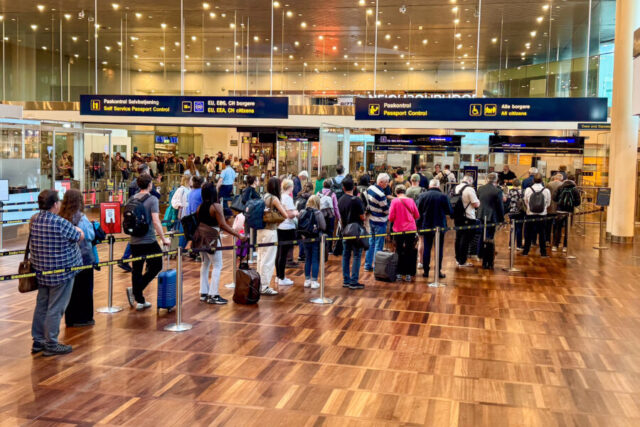
Will you need to deal with this for your 2026 trip? It depends on where you’re going:
If you’re heading to the United Kingdom, then yes: The Electronic Travel Authorisation (ETA) is already required.
If you’re heading to most of the rest of Europe (the Schengen Area — that’s most of the Continent, the Republic of Ireland, and Iceland), you have nothing to worry about for the first three-quarters of the year. However, keep an eye on the news for fall and winter travels: No earlier than October of 2026 (and possibly well into 2027), we’ll see the advent of the European Travel Information and Authorization System (ETIAS).
In anticipation of the ETIAS protocol, the Schengen Area is rolling out their new, mostly automated entry/exit procedure (EES). For the traveler, you’ll barely notice the difference… except that manual passport stamps are being phased out in lieu of facial-recognition “e-gates.”
Europe has gotten more expensive.
Like the rest of the world, Europe’s prices have gone way, way up. Our team of guidebook researchers have noted steep increases across Europe, driven largely by the same post-pandemic inflation we’ve experienced on our side of the Atlantic.
At the same time, the US dollar is also dropping against European currencies, thanks to the policies of a president who brags how much he likes a weak dollar. Since Inauguration Day 2025, Americans are paying about a 10-12 percent “surcharge” on everything we buy in Europe.
Yes, Europe is expensive. But it remains a wonderful value for the rich cultural experience it provides. If you’re on a tight (or even moderate) budget, it’s more important than ever to take money-saving tips into careful consideration. (Fortunately, this is a major feature of our Rick Steves guidebooks.)
Heat waves and other extreme weather are here to stay.
Recently, in a small town on Germany’s Mosel River, I was starting my day in the hotel breakfast cellar. Refilling my coffee, my host pointed to a faint line on the wall: “One week ago, if you sat right here, you’d be underwater.” Later that day, on the flooded embankments of Cochem, a riverboat ticket clerk told me they were just about to resume their sightseeing cruises — having just missed a very lucrative holiday weekend due to flooding.
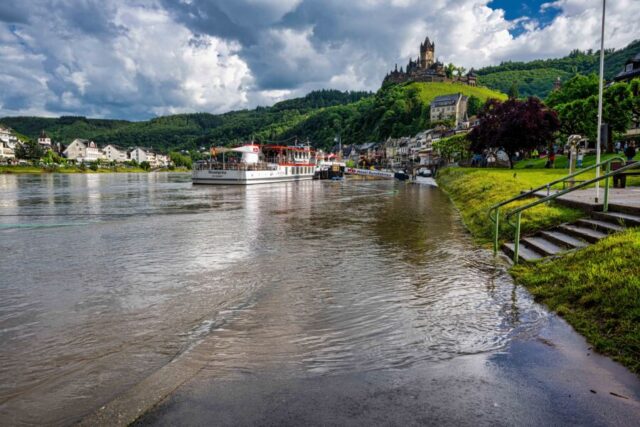
Our planet is getting hotter, which is causing extreme weather in all forms. Most travelers experience this as heat waves. Each summer, records get shattered in one corner of Europe or another, and formerly cool, now sweltering, corners of the continent are scrambling to retrofit their hotels with AC.
But our warming oceans also cause windstorms, deluges, hurricanes, and floods of biblical magnitudes. It seems like every week, a new corner of Europe is suffering some unprecedented weather disaster or another.
Addressing the root causes of this global crisis is a huge and complex challenge — one that Europe is rising to, inspiring visitors with their conscientious and pragmatic solutions. But in the short term, the best advice for travelers is simply to remain flexible: Assume that, at some point in your travels, you will encounter extreme weather… and be mentally prepared to change plans on a dime.
“Overtourism” remains a big concern in popular destinations.
In 2024 and 2025, you may have heard about “anti-tourism” protests. We’ll likely see more of these in 2026 — perhaps making you feel unwelcome in Europe.
The reality is more complex. These protests aren’t “anti-tourist” — they are anti-overtourism. Their focus is not you and me, but their own governments: demanding that local authorities do more to proactively cultivate a sustainable form of tourism. Protesters’ goals include doing a better job of regulating cruise ships (which dump thousands of visitors to clog up their town’s streets for several hours…then leave without spending a penny) and short-term rentals like Airbnb (which are transforming formerly local, affordable neighborhoods into overpriced, touristy hotspots).
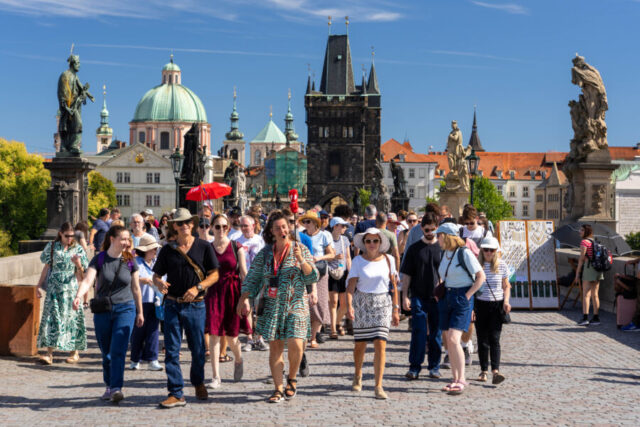
I regularly ask locals in the most notoriously “overtouristed” destinations (such as Venice, Barcelona, Amsterdam, and Italy’s Cinque Terre): Do you want us to stop recommending your town in our guidebooks? The answer is always the same: “No! We love Rick Steves travelers.”
Savvy locals recognize that tourism supports their local economy. And they distinguish between the “right kind” of travelers and the “wrong kind” of travelers. If you’re respectful, considerate, and conscientious not to contribute to the worst elements of overtourism, you’re still very welcome.
So, how can you avoid those “worst elements of overtourism”? Glad you asked…
“Balanced” tourism is a smart strategy to avoid crowds, high prices, and soaring temperatures.
OK, so we’ve just covered three big challenges facing 2026 travelers: high prices, high temperatures, and crowds. Fortunately, there’s a simple strategy that can help you grapple with all three in one fell swoop: Think carefully about where you go and/or when you go.
Some tourist industry insiders, uncomfortable with the term “overtourism,” prefer to talk about “unbalanced tourism”: too many visitors who insist on going to the same places at the same time and engaging in the same activities. (And then they come home… and complain about the crowds.) Of course, this spike in demand also drives up prices. And those “peak times” often coincide with the hottest weather. It’s a vicious cycle.
To break out of that rut, try a two-pronged approach to “rebalance” tourism: Go to less popular places… at less popular times.
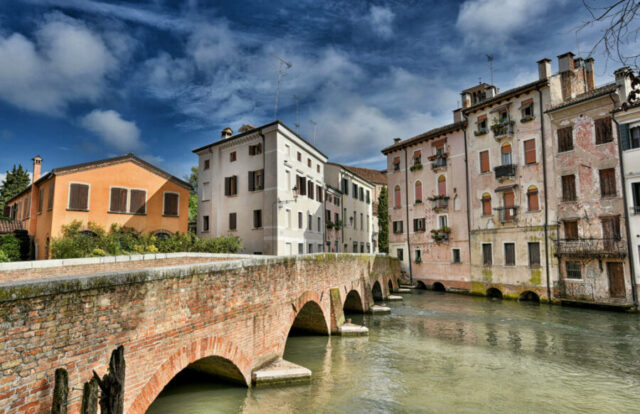
For every marquee European destination, there’s a charming, untrampled alternative just down the road. Venice is a delight… but you’ll find fewer crowds and lower prices in Padua or Treviso. From Amsterdam, a train zips you in 20 minutes to Haarlem, 30 minutes to Leiden, or 45 minutes to Delft.
Among the Greek islands, Santorini and Mykonos are stunning… and stunningly crowded and expensive. That’s why we recently added the quieter alternatives of Naxos and Folegandros to our Greece guidebook.
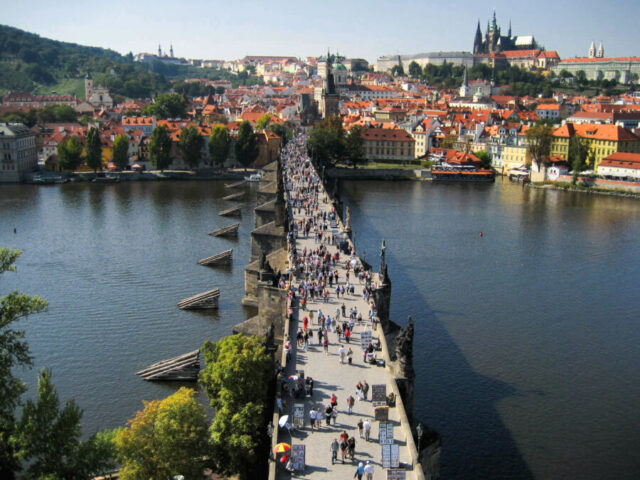
On a recent trip to the Czech Republic, I ventured beyond Prague to fantastically charming towns that rarely see an American tourist: Mikulov, Olomouc, Třeboň… the list goes on.
And there’s a whole slew of “second cities” offering a fraction the crowds and prices of the capitals: Porto (instead of Lisbon); Glasgow (instead of Edinburgh); Antwerp (instead of Brussels or Bruges); and so on.
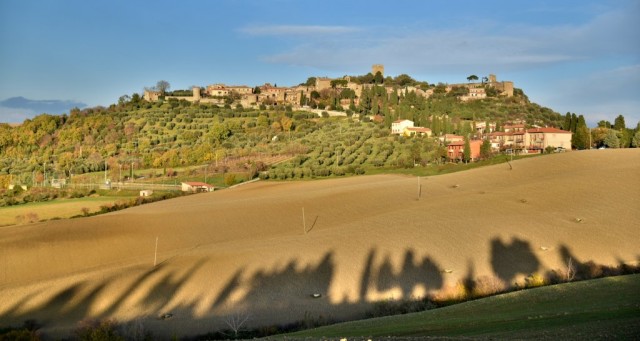
For similar reasons, shoulder-season and off-season travel are becoming more popular. Tuscany in November or March is an entirely different story than Tuscany in June or September. Both have their pros and cons — and, yes, going off-season requires a few sacrifices (cooler weather, shorter hours of daylight, seasonal closures). But it also helps you sidestep the peak crowds, prices, and temperatures of peak season. And it helps you contribute to a more “balanced” approach to travel.
AI can be useful for travel planning… but proceed with caution.
Across our society, we’re being told how AI is a game-changer — a miracle tool that can improve any process you can think of (and many you can’t). Curious but skeptical, I’ve made a point to use various AI models (Google’s Gemini, Open AI’s ChatGPT, Anthropic’s Claude, and so on) for a variety of trip-planning tasks.
My assessment: AI is, indeed, impressive at many things — at least, superficially. And yet, at this stage in its development, AI remains deeply flawed. The key to using it smartly is understanding what it’s good at… and what it isn’t. The problem is that AI itself doesn’t distinguish this well, and consequently tends to overpromise while underdelivering. This is compounded by its tendency to misunderstand the information it gathers online, and its propensity to hallucinate false “facts.”
The list of AI misses — both examples from my own use, and culled from reporting about AI misfires — goes on and on. These can be a simple mistake, such as giving the correct Metro stop for your destination, but on the wrong Metro line; or recommending that you catch a train from a station that does not exist. Or they can be more serious, such as the time AI created an itinerary for watching the sunset from a mountaintop… only to miss the fact that the cable car stopped running after dark, requiring a dangerous and exhausting hike back down.
Our full report on using AI for trip planning, which I worked on with Travis Parker, can be found in our Updates & Insights blog. Our bottom line: Sure, play around with using AI for low-stakes tasks that can enhance your trip — but be wary of using it for tasks that could potentially ruin it. And when it comes to critical information, always double-check with a primary source, such as an authoritative website or a human-produced guidebook.
Accept that travel is a political act.
Whatever your personal allegiances, it’s clear that we’re living in a time of extreme political division — both within our country, and between countries. Understandably, there are people who — when going on vacation — would prefer to leave all that behind and just enjoy themselves. There have been times of relative harmony when that was a realistic goal (and if you’re heading to a theme park or a weekend in Vegas, it still is). But now more than ever, when you cross borders — like it or not — travel becomes a political act. While the “Stick to travel!” crowd wants to convince themselves that we can still travel fancy-free these days, they’re deluding themselves.
This doesn’t mean that the Europeans you meet will be aggressive, angry, or unwelcoming. (In fact, quite the contrary — see the next point.) But they may well have questions to ask… and opinions to share. You can generally sidestep these conversations gracefully. But if you really want to travel as a political act, it’s so much more interesting and educational to lean into them.
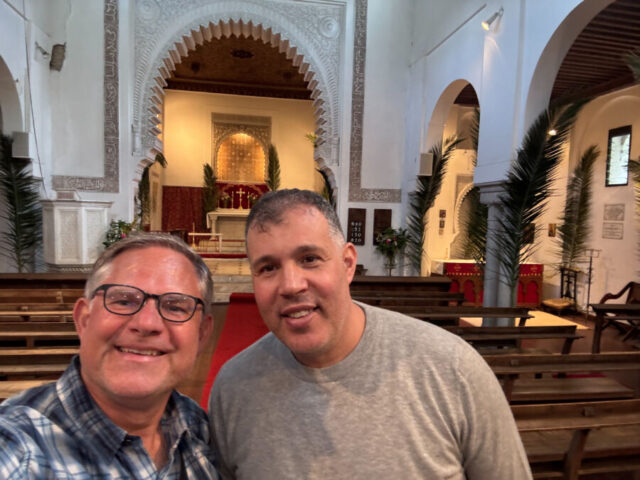
On every trip, I look forward to “talking politics” with the people I meet on the far side of the globe. Sometimes these conversations affirm my existing beliefs, maybe offering a fresh perspective on a tired old topic. But just as often, they challenge some of my most deeply held assumptions — even changing my mind 180 degrees about something I’d always taken for granted. And I always come home a smarter, more nuanced thinker and a better citizen of our world.
There may be a few truly “apolitical” pastimes still out there. (Knitting, maybe? Oops… never mind. OK, then — hockey? Um, nope.) International travel… not so much.
And that’s because…
Europeans are deeply concerned about the American president — but American travelers remain very welcome.
A year ago, many travelers began to ask: Are Americans still welcome in Europe, in the age of Trump?
The short answer: Absolutely! In about a hundred days of international travel in 2025, all across Europe and beyond, I never once felt that I was treated poorly (or even differently) because of the policies and rhetoric of the US president.
This may seem counter-intuitive. Trump’s “America First” approach unmistakably positions the world not as a collaborative endeavor but as a zero-sum game… with Europe as the loser. And Trump’s policies have had real impacts on Europe: Soaring tariffs make life difficult for small European producers of olive oil, wine, handicrafts, and other products (many of whom we know personally and recommend in our guidebooks). Flagging US support for the war effort in Ukraine — a conflict that’s geographically, politically, and emotionally close to many Europeans — is dispiriting and frightening. And repeated threats to take Greenland from Danish control “whether they like it or not” hasn’t won Trump many European friends. In fact, while Trump’s approval ratings at home are at a record low, among Europeans they are even lower… in some countries, in the single digits.
(Who cares? Well, if you’re planning to be a guest in another country… my goodness, shouldn’t you care?)
Two things can be true at the same time: Even if the American president is deeply unpopular in Europe, individual Europeans still respect and accept individual American visitors as just that — individuals.
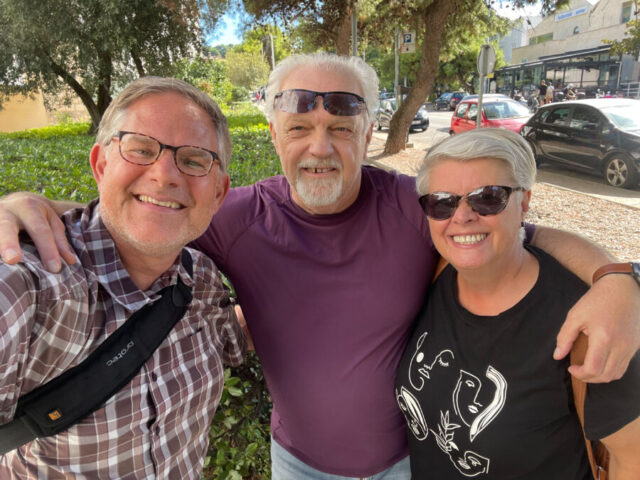
I find it humbling, and quite touching, to observe how Europeans instinctively distinguish people from the actions of their leaders. Maybe it’s because the various European lands have had (or currently have) their own leaders who behave in questionable ways… or worse. Travel is all about people-to-people connections, and Europeans don’t let knee-jerk politics get in the way of forging those connections.
Just a couple of weeks ago, I stood on a stage before 150 European tour guides, whom we’d flown into Edmonds, Washington, for a week of meetings. I asked them, point-blank, the question that’s on many American minds: “Are Americans sill welcome in Europe?”
The unhesitating, unanimous answer — from people representing virtually every corner of Europe — was a roaring and resounding: “YES!”
Travel builds bridges, not walls.
As we move through these troubled times, my mission (and the mission of Rick Steves’ Europe) has never been more clear: International travel allows us to build bridges, not walls.
Think about this in terms of your European sightseeing: In Europe, most walls you see are historic — a vestige of a long-fallen empire, and a souvenir of a more dangerous time for humanity. Walls from our modern age universally ugly — whether it’s the electrified fences of concentration camp memorials; fragments of the now-toppled Berlin Wall; or the “Peace Wall” separating sectarian communities in East Belfast. These walls embody division, misunderstanding, anger, hate. In short, a wall represents a diplomatic failure.

Contrast the archaic ugliness of walls to the beauty of bridges.
As a practical matter, a bridge connects people and places; it allows the flow of both goods and ideas; it strengthens a city, a country, even an empire. So many great cities are represented by an iconic bridge.
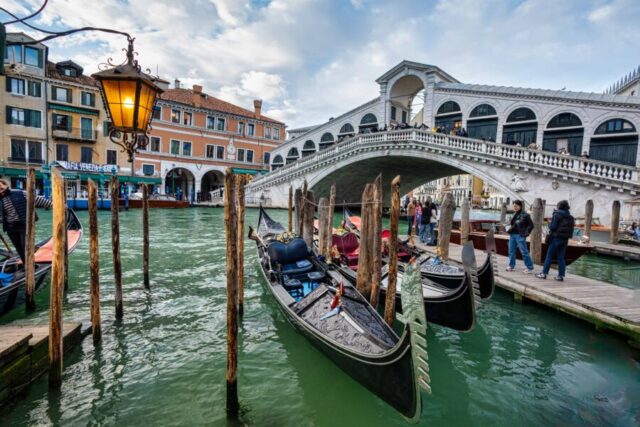
The symbolism of bridges is so powerful that it’s integral to the design of Europe’s common currency. Europe chose the bridge — not the church, not the city hall, and certainly not the wall — as its dominant symbol. That’s why every single euro banknote features an image of a bridge, each representing a different architectural era.

And what’s on the other side of each banknote? A doorway — that’s right… a passage through a wall.
At Rick Steves’ Europe, we are encouraging Americans to travel boldly into an increasingly uncertain world in 2026. Travel is, in part, a practical matter: How to avoid crowds, high prices and heat waves; getting comfortable with new red tape and AI trip planners. But if you’re doing it right, travel can be much more. It can be transformative — both for the traveler, and for the planet they inhabit and explore.
When we travel, we have an opportunity to forge people-to-people connections that cross borders and span oceans. Going to Europe provides us with a priceless opportunity to build bridges.
Now more than ever, travel is not just a privilege — it’s a responsibility. When you hit the road in 2026, enjoy yourself! But also strive to be a good ambassador for the USA. Because our country needs good ambassadors now like never before.
This post is based on my recent “State of Travel 2026” talk for our Travel Festival — which you can watch, for free, in its entirety.
I’m heading out in a few weeks for the first of three European trips. On my list for 2026: Berlin, Munich, and Vienna; Greece’s Crete and the Peloponnese; an alpine road trip, from Germany’s Bavaria to Austria’s Tirol to Italy’s Dolomites to Slovenia’s Julian Alps; and a return to some of my old favorites: Croatia, Slovenia, and Bosnia-Herzegovina. If you’d like to hop in my rucksack and join in my travels, be sure to follow me on Facebook and Instagram.
Most of those trips are in service of updating our series Rick Steves guidebooks — the best possible all-around tool for planning your trip.
My well-traveled colleague Travis Parker keeps up to date on topics just like these on our Updates and Insights blog — an essential resource for tracking what’s new in Europe right now.
Wherever you’re headed, happy travels in 2026!
This essay should be required reading for everyone. Thanks, Rick.
Agreed!
Thank you for this clear-headed conversation about the realities of travel in a time of heightened (and ridiculous) tensions. As always, I appreciate what Rick Steves and his team do, both for tourists and for everyone comforted by the rational and reasonable.
I had zero problems after my recent trip to Europe. I had more trouble with the airline attendants and 1-5 traffic thru Seattle. I would say that the migrant crisis particularly in Spain and Portugal have contributed to the overcrowding particularly in the urban centers. I was not prepared by the crime/murder rate in Stockholm of all places. Many of the negatives are expressed and exaggerated by critics trying to make a political point. Rick has made a few overtures as to his political bend but American travelers should not get caught up with the noise. I am far more afraid in Mexico, San Francisco, Seattle, Portland, Chicago, Philadelphia than any European country and I mean any. As one who has traveled extensively the best advice is to go, see for yourself and leave the GD politics at home. Happy trails.
I’ve lived in Philadelphia my whole life, and have no idea what you’re talking about! Do we have high rates of poverty? Yes. And now we will only have more given the cuts in social services.Clearly, you just don’t like liberal cities based on your list of places that you wouldn’t travel to. Just wanted you to know that we’re happy that you’re not going to travel to Philadelphia.
Me too and I live in the US. You nailed it.
We’re still traveling ay 81 and 80. 6 weeks on our own (with Rick Steves help) in Europe.
I appreciate your honest and forthright coverage of the effects of our political issues in America, both on us as travelers and on the people of the countries we visit.
A year ago we spent six weeks traveling (Portugal, Spain, Belgium), and we worried about how we would be received. We travel on our own — not with groups — so we figured we might be less sheltered from any issues. In fact, we had contemplated how to let people in countries we would visit know that we did not support what our president has done.
Our experience mirrored your description. We never felt any personal animosity at all in the places we visited. None. Zero. Zip.
On the other hand, on several occasions we had interesting discussions with Europeans about our country’s situation, and their attitude might be characterized as some combination of bafflement and disappointment, perhaps tinged by a bit of sympathy.
Your letter struck me because I, too, just finished a lengthy trip of two months, travelling alone through the former East Germany, Poland, and Romania. I was quite apprehensive before my trip about receiving a cold welcome, which was ridiculous, because this was my 24th trip to Europe and only once did someone ever give me a hard time (from a Tunisian guy, during the Iraq war). People were very kind to me, as always, and I also had several interesting discussions about the current state of our political affairs. I love your word “bafflement” to describe general reactions to the re-election of Trump, and the unfortunate consequences. “Sympathy” is also accurate, although outright pity was a fairly common reaction, not unusual considering the former political systems of the countries I was visiting. To those who are protesting the mention of politics in Cameron’s article, we are surrounded by and constantly affected by the politics in the places where we live, and everywhere we travel. It is an inescapable part of our modern interconnected, interdependent world.
The reaction that you received was the exact same that we experienced in the Netherlands and Provence last Fall. It was wonderful!
Thank you for your comments on travel being a political act. We ave traveled Europe many times since 1981, and tried not to be the renown Ugly American. This summer we will redouble our efforts to be as diplomatic and amenable as possible.
Spot on, Eduardo and Irene. Ugly Americans are just that because of loutish behavior, not because we’re somehow blamed for the rather deplorable state of our country. Have a welcoming demeanor, not loud cackling and rule breaking.
Going to Munich for the second time in a year in June 2026. I love this city. I was very respectful to everyone and conducted myself as an adult who is visiting their city because I want to learn about their culture, enjoy their food, and experience their automobile expertise.
Everyone speaks perfect English, and I didn’t experience any prejudice at all. My German is terrible and only can speak a few common words, and I think the German people appreciated that I at least tried. Once they knew I spoke English, they immediately spoke immaculate English and were warm and friendly. I must admit, I thought about putting a Canadian flag on my luggage, just to be “ safe”, but decided against it. (I love Canada as a destination, too!) I used Google Maps to walk around the city easily, and found everyone to be happy I was there. I did have one encounter with someone who was from Israel, and when he found out I was American, he asked me a ton of questions. He was actually pro the current president, and I am not, but we had a very respectful conversation and I would consider him a friend. He opened my eyes to certain things and I hope that i did the same for him. I had such a great time in Munich in 2025 that I am going back there in June, and I hope to continue to see and enjoy the city and its people.
Thanks for this great article, Cameron. So many people I know ask me about how Americans will be received in Europe and I always basically say the same thing you said – however, your expansion on the topic of travel as a political act has provided a more capacious viewpoint and it is much appreciated. I enjoy your articles and learn something each time. A few years ago you wrote about the contactless culture which motivated me to learn how to use my phone ‘wallet’. this is one of the best things Ive ever done!
I learn do much from Cameron’s articles. He embodies what Rick Steve’s travels are all about. He covers all aspects of being a good traveller not just a tourist. Travel is the greatest educator in our lives.
Thank you…
I agree wholeheartedly with your comments about Americans still being welcome in Europe, but it helps to be prepared for some tough questions occasionally. I was working with European colleagues during the Iraq war period, and they really wanted to know if all Americans supported it. In 2019, it was an encounter with fellow tourists from Germany at a B&B in southern France – what do you think of Trump? Last year, it was sitting down for tea with two Brits after a castle tour – the tentative sounding out, the discussion of how divisive politics were in our country. I told them it seemed much like the comments a co-worker from the UK made about the effect of Brexit on his family. They were a little surprised I was familiar with the disruption, but it was common ground for us to discuss how current events affected our views of our own countries. It can be the start of some memorable discussions, if you are ready for some hard questions.
I agree wholeheartedly with your comments about Americans still being welcome in Europe, but it helps to be prepared for some tough questions occasionally. I was working with European colleagues during the Iraq war period, and they really wanted to know if all Americans supported it. In 2019, it was an encounter with fellow tourists from Germany at a B&B in southern France – what do you think of Trump? Last year, it was sitting down for tea with two Brits after a castle tour – the tentative sounding out, the discussion of how divisive politics were in our country. I told them it seemed much like the comments a co-worker from the UK made about the effect of Brexit on his family. They were a little surprised I was familiar with the disruption, but it was common ground for us to discuss how current events affected our views of our own countries. It can be the start of some memorable discussions, if you are ready for some hard questions.
I will begin this reply on a positive note regarding some of the information ie up coming visas and the timing of travel and places to visit. As I continued to read I became uncomfortable about the political tone of this article. This feeling began with the highlighted sentence ” a president who brags how much he likes a weak dollar”. That sentence set the tone for the rest of the article. Like athletic events I do not need to hear someone’s personal views of the world and politics. I want information relevant to my destination and let me form my own views regarding culture and the people I meet while traveling. I felt like I was reading a professors lecture.
If you notice there’s a live link to “ a president who brags how much he likes a weak dollar”. That’s because the genius from the Wharton School of Economics said it; Trump – who insists tariffs are not a regressive sales tax on us, which they are. Your “listening” or reading is colored by something in your past.
It’s a fact that the US dollar has lost value over the last year, which makes travel more expensive for Americans. It’s also a fact that Trump has welcomed this economic development. Why do you say that mentioning these facts equals “someone’s personal views of the world and politics”? Also, when you are reading someone’s personal blog, why are you surprised that he shares his personal views? Help me understand your reaction.
Janice, it’s simply a statement of fact that President Trump strongly advocates for a weak dollar — and sure enough, the dollar has dropped substantially against European currencies throughout his second term. Everyone is entitled to their own opinion, and some would say that a weak dollar is, on balance, a good thing for US business interests. What’s not an “opinion” is that everything in Europe costs an additional 10-12% because of these policies. And, as noted later in the piece, international travel inherently ventures into ground that some consider “political’; it’s unrealistic to expect otherwise. Happy travels!
Then you can quit reading! The policies of the current president make it clear he opposes the idea of building bridges between countries, cultures, and people. Traveling advances those ideas and leads to an appreciation and understanding of others lifestyles and values. If that makes you uncomfortable you might be better off focusing your travel to Branson Missouri .
From 1987-88, I was an exchange student in Germany, experiencing what it’s like to be raised German.
I was surprised by how vivid the memories and the shame of the second world war was. How students were educated deeply and repeatedly about their shameful history, so that they would know the dangers. Like so many Germans, my host parents traveled extensively. I asked them how they were received elsewhere in Europe. They told me that they didn’t hide that they were German (no Canadian flags on the backpack for them!), but understood that they were representing their country, and made the best attempts at being courteous and respectful. They understood that time alone does not erase these wounds, and that locals approached them as fellow humans, with the same hopes and dreams.
As a teenager I felt pretty lucky that I didn’t carry that historical baggage while traveling (although it was towards the end of the Reagan era which had other connotations). It is with sadness that I now carry shame with me as an American, although I learned early on that each of us can represent the best of our country, bring curiosity, and yes, build bridges. It can provide a deeper understanding of the world.
Your business is not the place to advise us all on your political views.I understand Europeans follow our politics and you have to mention it is a possibility that we may be asked about are views. I think as adults we can handle their questions. I have not seen or noticed you writing about your religious views, climate change the state of our roads etc.
Please leave politics out of your wonderful updates and business.
Please don’t use your business advertising as your political platform.
Regards
It’s disheartening to see your inaccuracies. The USD $ is just fine and the nominee for new Fed Chair is big advocate for a strong USD. As for Ukraine the USA has supported them substantially despite being an ocean and a continent away. Our dollars to defend Europe since WWI has been outstanding. Your attitude seems to be “thanks, but what have you done lately”. I could go on but suffice it to say I wasn’t looking for a political discussion when reading a travel advice site. It’s a shame. RS has a great service and business. Why potentially alienate half the audience? Bad marketing.
The US dollar is down almost 5% over the last 12 months. The only one with inaccuracies is you. Discussing the cost of travel is not a political discussion. Neither is warning travelers about topics and issuesthat Europeans are likely to ask them about.
https://www.marketwatch.com/investing/index/dxy
Actually, the dollar is not “just fine” — especially in relation to currencies of interest to European travelers. According to just one of many sources (link below):
“In broad trade‑weighted terms, the U.S. dollar fell roughly 8% in 2025, with a more notable ~10% decline against the majors (Chart 1).”
Chart 1 shows the greatest decline in value against the euro — more than 14% in 2025. Against GBP, the decline was about 9%.
As for the outlook for 2026:
“We are not expecting a repeat of 2025 but do see scope for a further USD modest depreciation on the order of 3% in the year ahead. U.S. growth is likely to be a relatively neutral factor on the dollar, as the U.S. continues to outperform most other developed market currencies. However, the rate-differential story will likely translate into some downdraft in the greenback against the euro, CAD, and GBP. ”
https://economics.td.com/us-the-united-states-dollar-in-2025#:~:text=In%20broad%20trade%E2%80%91weighted%20terms,since%20the%20end%20of%202023.
Cameron, I just want to say how much I appreciate your blog and your appearances on Monday Night Travel. Because of our work, my wife and I always traveled during the winter holidays and loved it (anyplace in Europe is warmer than it is where I live). Now that we are retired we still love the convenience of off season. We linger more now that we are older and so people approach us to talk. We have always been welcome. Recently in France we have been treated very well even though we too often meet people who are right wing. We met a man in Montparnasse who was disappointed that we agreed with little that he said so he asked, “do you like American Westerns?” I do. We had a wonderful discussion. A man in Rouen approached us in a cafe. Again he was disappointed in our lack of agreement. His solution? He invited us to his bar for drinks the next day.
As always, a sensitive, and informative piece from you, Cameron. Thank you. As a frequent traveler to both Germany and the UK, I agree wholeheartedly with your comments from peak travel to peak experiences. Thanks for always being a voice of reason.
Cameron, thanks for the great article. When we travel in Europe, we always take 5 or 6 T-shirts with us. Just the ones you can buy anywhere with images of our State (Colorado) or our city (Denver). As we meet people who are especially nice or helpful in our travels, we tell them about our “T-shirt Diplomacy Program” and give them a gift. Wow! The reactions we get are amazing. Hugs, handshakes, and well wishes from our new friends! It’s a great way to build bridges and open doors. Their view of Americans will last forever and so will our feelings toward them.
I always look forward to reading your columns Cameron. Right now I’m in the Cotswolds in England and so agree with your suggestion to travel in the off season. The weather has been beautiful and there are no crowds.
This morning I was visiting with the owner of the cottage where we’re staying. When she found out we were from Minneapolis she immediately knew what we’ve been going through that’s past few months with ICE. It felt so good to receive her care and support. The world is truly a wonderful place and we are so lucky to be able to travel. Thank you Rick Steves for giving us the tools to do this.
As I read this wonderfully informative article I began to sense that the author’s political views and positions were part of the information about visiting Europe. At first I thought it was me making something out of nothing.
Oh no. When I read the comments from other readers I noticed I wasn’t the only one to notice the political commentary woven into the travel information. That’s unfortunate.
As consumer of Rick’s wonderful travel guides and PBS videos, I have enjoyed how they are ONLY about the travel. Please leave personal political views out of travel information. Don’t ruin a truly good thing that Rick has created.
We travel to Europe every summer, we are currently 75 and 72. Last year we travelled throughout Switzerland and visited Lyon, Toulouse and ended up in Paris. We stayed at very affordable Airbnb properties. We left thank you cards at every location, telling our hosts how much we loved their cities and properties. They were all delighted and thanked us for our kindness. We’re going back this year, Austria, Germany NE France. Side trips to Prague, Bratislava, Budapest and hope to repeat the experience. Great conversations with Europeans, always polite and welcoming. You get back what you give. Smiles, thank yous, letting people know you love their city, culture, food. Being good guests.
Cameron is exactly right about Americans being taken as individuals and not judged for their politics. We found the same when we last traveled to France and Italy. I did, however make sure to teach myself how to say, “We are sorry for the bad, orange man“ in both French and Italian. Needless to say, it was a big hit and the Italians and French we met loved it. It also went over well with a couple of Canadians.
Oh, Mary Carla, how do you say it in Italian? It may come in handy when we go in April. Thank you.
Loved “the bad orange man!!!”
My son and I were in Italy for 10 days this past August (2025). Not a single political question came up. Lots of conversations, but nothing “political” whatsoever. And that includes hours spent with individuals, not just in passing. Go have fun. Smile. Say please and thank you. You don’t need a PhD in political science as a prerequisite to go. Nor do you have to have “the” answer for every question.
Rick wrote a book Travel as a Political Act, for goodness sake! The company is a strong supporter of trying to properly deal with climate change. Cameron always provides fantastic, useful and timely information, and the state of our country is of great concern to Europeans. 70 years of alliance and relative peace have been severed, by us. It’s pretty clear here who supports the “chaos” in, and coming from, our country, and who does not.
I have traveled many times to Europe and have never been treated badly for answering a political question ” the wrong way “. I’m looking forward to my next RS tour, coming up shortly. But I would definitely be happier and better off not having to listening to political diatribes such as Cameron’s. Whew ! How do you Really Feel ??
Michael, “diatribes” seems a strong word. The dollar is currently weak against the dollar. Europeans are concerned about Trump’s policies, but will treat us as individuals. It’s important to be open-minded while traveling and to build bridges between cultures. These are not controversial statements, and all pertain directly to European travel in 2026. And you don’t “have to” listen to anything… just click away. Happy travels!
Cameron, thanks for your comments. I am always open-minded when I travel to Europe. Never have I been treated rudely or unfairly because of political questions that have arisen from time to time. There are times for walls and times for bridges. Using a travel site as a forum for political promotion is not fair to apolitical travelers. Just click away ? OK…
Looking forward to my upcoming RS Tour – Happy Travels to all !
Keep the political opinions to yourself, please. “Politics” as a general topic will be encountered and should be left up to those participating in the discussions. As I’ve traveled extensively (mostly driving) many times in many parts of Europe, and we get farther from the tourist and urban areas, just like in America, we find the residents in these more remote areas are much more conservative. I just spent 5 weeks in Norway, almost everyone wanted to thank Trump for finally stepping up to do things Europe had let fester for too long. We expected to be addressed with liberal talking points. It was mostly the opposite. The liberal comments came more from other tourists, not Scandinavians. So, if you feel like you have to apologize for your own country, maybe you shouldn’t talk at all…
Yes, we actually found that many Dutch and German folks we talked to last year were grateful to see a “stronger” U.S. president coming back. We carefully and subtly would approach the subject as Trump supporters, not being forward or tactless, but open and gracious and soon many a dam broke making us feel more comfortable to speak freely of our conservative political views. And while we often would couch our comments that his rhetoric didn’t always sit well with us, most of his actions we felt were good for the country and world. Many felt Trump was a much better leader than Biden who almost all saw as “way too old” and weak to be President–even though Trump is not much younger at all. They felt it was important that the U.S. be seen as a strong force for good around the world again, that it is exactly what had brought peace and prosperity to Europe after WWII and that it was good to see America being seen as strong again. We were really surprised, but most people we talked to were not as anti-Trump as we expected. It is just not good assume any political views until you start a respectful dialog, the results may surprise you.
Always appreciate Cameron’s blog posts with insightful, practical information and tips. Traveling soon on a tour, looking forward to learning about new places.
Thank you, Cameron, for the segment about Americans being welcomed in Europe these days – a frequent topic in FB travel pages. Good to know they are just as concerned about our country as we sane Americans are!
Any discussion of the strength of the dollar to the Euro or British pound needs to take a greater historical perspective than simply the 14 months since Trump became president. When we first visited Rome in December 2010 the exchange rate was about $1.32, significantly weaker than it is today at $1.16. Yes, that was during the presidency of Barack Obama. It is also worth noting that the exchange rate remained above $1.16 for the first six years of his presidency, peaking at $1.48 and spending several years above $1.30. Compared to the Obama years travel during both Trump administrations has been a relative bargain. Many factors affect currency exchange rates besides the president’s agenda.
Like others commenting here I am a great admirer of Rick Steves. I have probably 20 of his guidebooks on my bookshelves. However I grow weary of his and Cameron’s political diatribes. My wife and I have taken a few trips with Overseas Adventure Travel, which has a strict NO US POLITICS discussion policy on their small group tours. Our groups have included people from many backgrounds and life styles, but in every case the group has grown close with each other because we talk about everything but politics. It has been eye opening to us. Tone down the political commentary or at least make your commentaries less partisan. I don’t recall any negative comments from Rick or Cameron during the Biden administration. That should give pause.
Thanks for the reminder to look beyond the headlines—especially when it comes to travel info. It’s easy to get caught up in sensationalized stories, but your point about the Sagrada Família and the Louvre pricing really highlights why digging deeper is so important. I’ll definitely keep that in mind as I plan my trip next year.