What are the best museums and sights in Europe? Or, more specifically, what are the best types of sights?
I’m wrapping up guidebook research after spending 10 weeks on the road, split over three trips in Spain, Morocco, England, Denmark, the Czech Republic, Slovakia, and Hungary. Looking back, I realize that most of my favorite sightseeing experiences fall into a few categories that go beyond the predictable churches, castles, monuments, and big-name art museums. And so, I brainstormed this admittedly subjective list: not just a roundup of my personal favorite sightseeing in 2025, but also a broad-strokes look at five categories of sights that I find especially rewarding.
Whether you’re planning a trip to these destinations, or looking for inspiration for a trip anywhere, I hope these “types of sights” encourage you to consider some attractions that might, at first glance, be easy to overlook — but that merit some of your limited time.
1. The Endearing Local History Museum
In the sweet town of Keswick, deep in England’s bucolic Lake District, there are two options for a rainy day: Hike and get wet… or find something indoors. I opted for the latter and visited the Keswick Museum, which fills a historic Arts and Crafts-style hall in a lush park. I was unexpectedly charmed by how this place harnesses a chipper community spirit to make the story of this small town surprisingly engaging.
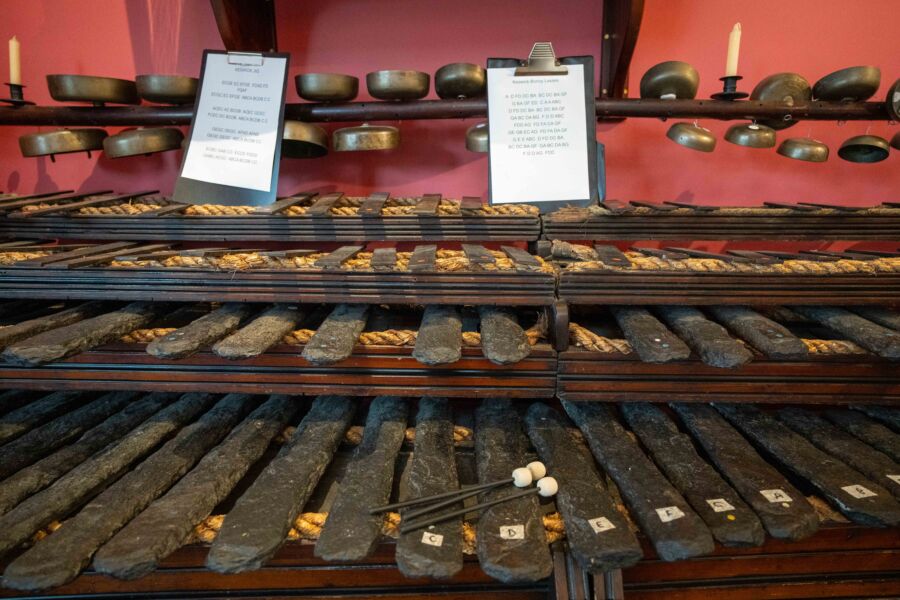
While modest, the Keswick Museum is more than the sum of its parts. It features a well-curated assortment of local artifacts, from a surveyor’s gigantic 1825 relief map of the Lake District (suspended on the wall) to a variety of items relating to the flourishing of Keswick as a tourist destination (including the earliest known guidebook to the town, from the early 1910s). The highlight? “Musical stones”: naturally resonant chunks of slate that someone has whittled down to the perfect tone, then set up as a xylophone for playing tunes. There’s also a gallery where museum volunteers take turns researching and installing their own temporary exhibits. How delightful!
Sure, they ain’t the Louvre or the Prado. But wonderful local history museums around Europe, when done well, can really bring a place vividly to life. Some, like Keswick, are in small towns or even villages. One of my favorites is the Herring Era Museum in Seyðisfjörður, Iceland, which explains how that little fish revolutionized not only the local economy, but made Iceland a financially viable independent nation. I’ve also enjoyed the one in Zermatt, Switzerland; the scrappy hilltop museum on the isle of Folegandros, Greece; and the Appenzell regional museums in the towns of Appenzell, Stein, and Urnäsch, Switzerland.
Others are in big cities, designed to help visitors get their heads around the local identity and the role that place played in the story of Europe. Excellent ones are in Zagreb, Croatia; Lausanne, Switzerland; Liverpool and Bristol, England; the Bryggen Museum in Bergen, Norway; the Musée Basque in Bayonne; and the Riverside Museum in Glasgow, Scotland.
2. The Single-Artist Museum
While wide-ranging art museums can be delightful, I find myself especially drawn to a museum devoted entirely to one artist, often displayed in the home in which they actually lived. In England’s Lake District, William Wordsworth’s Dove Cottage and Beatrix Potter’s Hill Top Farm both had me imagining the writer hunched over a desk, creating their masterpieces.
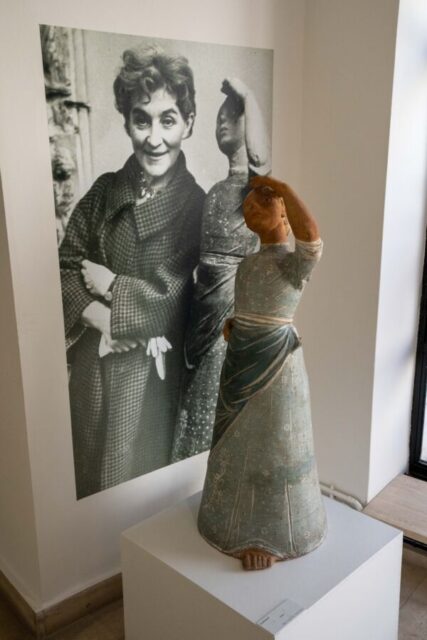
In Hungary’s Szentendre — just up the Danube from Budapest — I enjoyed getting to know the expressive, poignant sculptures of Margit Kovács.
In Córdoba and Ronda, Spain, I marveled at the works of two talented artists I’d never heard of before: Julio Romero de Torres and Joaquín Peinado, respectively.
On past trips to France, Albi’s Toulouse-Lautrec Museum deepened my appreciation of the works of an artist I only thought I was familiar with. And the former home of Claude Monet in Giverny, France, is a pilgrimage for lovers of his works, who stroll through the lily-padded gardens that inspired him.
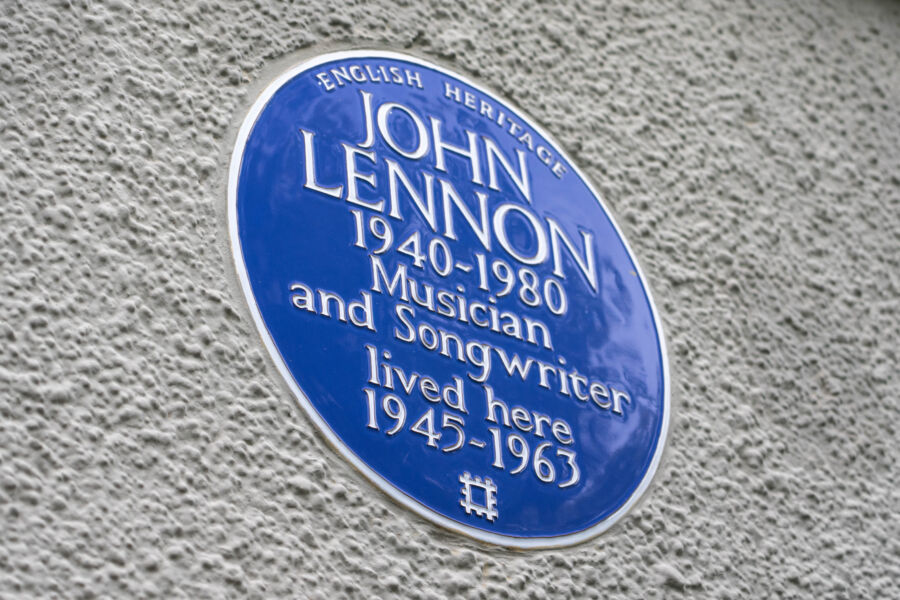
The best example I visited in 2025 (and one of the best anywhere) is the National Trust’s tours of the childhood homes of John Lennon and Paul McCartney. After meeting at a suburban Liverpool train station, your small group hops on a minibus for the short drive to each house, where you’re welcomed by an impressively well-versed docent who does an insightful intro chat, then sets you free to roam the same halls, kitchens, bedrooms, and loos where two of history’s greatest songwriters spent their formative years. Not really a Beatles fan? The homes also provide wonderful social-historical insights into the everyday lives of working-class Liverpudlians in the 1950s. This remarkable experience combines being in proximity to tangible details — the pinups over John’s boyhood bed, the well-worn piano in Paul’s living room — with gaining a strikingly intimate understanding of two boys, becoming young men, who would change the world. For example, I learned that both Paul and John had lost their mothers at a very young age — perhaps providing them with an unspoken kinship that sustained their fruitful, fitful collaboration.
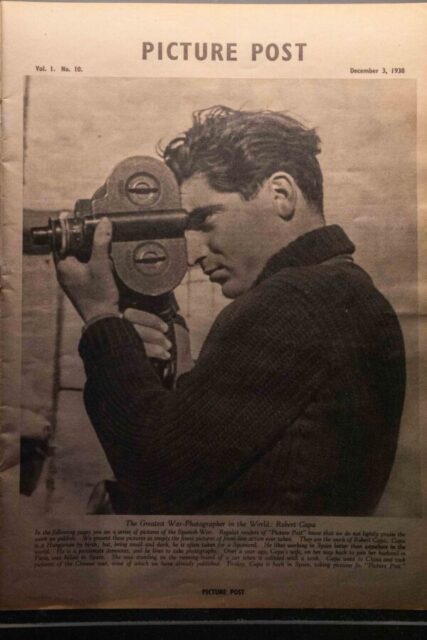
Another mind-blowing “one artist” museum I visited this year was the Robert Capa Center in Budapest, Hungary. I knew little about the Budapest-born photographer, but after spending an hour and a half here, I am a fan. Like a mid-20th-century Forrest Gump, Robert Capa traveled the world during one of its most tumultuous eras — documenting the Spanish Civil War, the First Sino-Japanese War, the Allied campaigns in North Africa and Sicily, the D-Day landings at Omaha Beach, the liberation of France, the creation of Israel, and the early days of postwar communism in Hungary and the USSR. He also snapped intimate slice-of-life portraits of Picasso, Matisse, Hemingway, Ingmar Bergman, and many others. The museum displays Capa’s most iconic images and tells the improbable life story of this eyewitness to history.
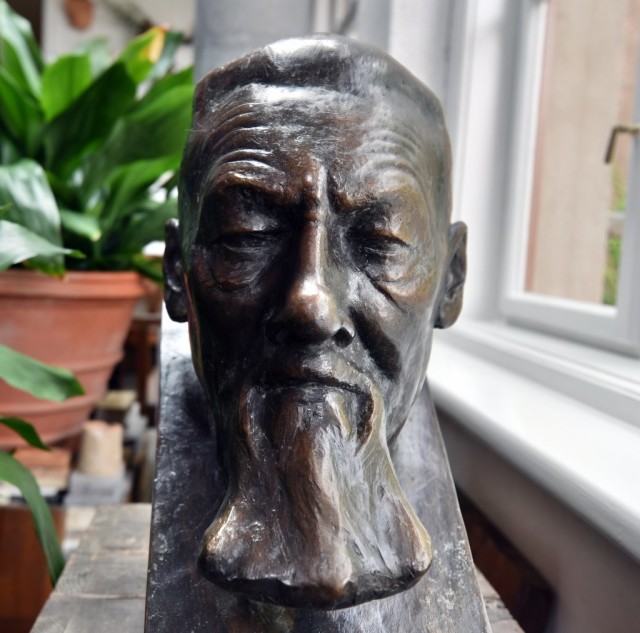
My all-time-favorite “one artist” home is devoted to an architect that many have never heard of: Jože Plečnik, who reshaped the Slovenian capital (and his hometown), Ljubljana, and also carried out major works in Prague, Vienna, and other cities. Still furnished with unique, Plečnik-designed furniture, one-of-a-kind inventions, and favorite souvenirs from his travels, the Jože Plečnik House paints an indelible and unusually intimate portrait of an artist.
Yet more “one artist” museums to consider around Europe: the Seidel Photo Studio Museum, in the Czech town of Český Krumlov; the Rodin Museum in Paris; the Salvador Dalí sights outside of Barcelona (Cadaqués and Figueres); the Ivan Meštrović Museum in Split, Croatia; the Charles Rennie Mackintosh House at Glasgow University in Scotland; the Rembrandt House Museums in both Amsterdam and Leiden, Netherlands; the Hans Christian Andersen House in Odense, Denmark; the Mozart sights in Salzburg, Austria; the Albrecht Dürer homes in Nürnberg and Wittenberg, Germany; Edvard Grieg’s Troldhaugen, just outside of Bergen, Norway; and The Secession in Vienna, with its Gustav Klimt paintings and distinctive “golden cabbage” dome.
3. The Single-Topic “Deep Dive” Museum
Some museums are a mile wide and an inch deep — trying to cover too much territory and doing none of it well. Many of my favorites take precisely the opposite approach: going all-in on a single, extremely narrow topic, probing the depths of all its fascinating details. (Of course, you could put most of the “single artist” museums, above, into this category as well.)
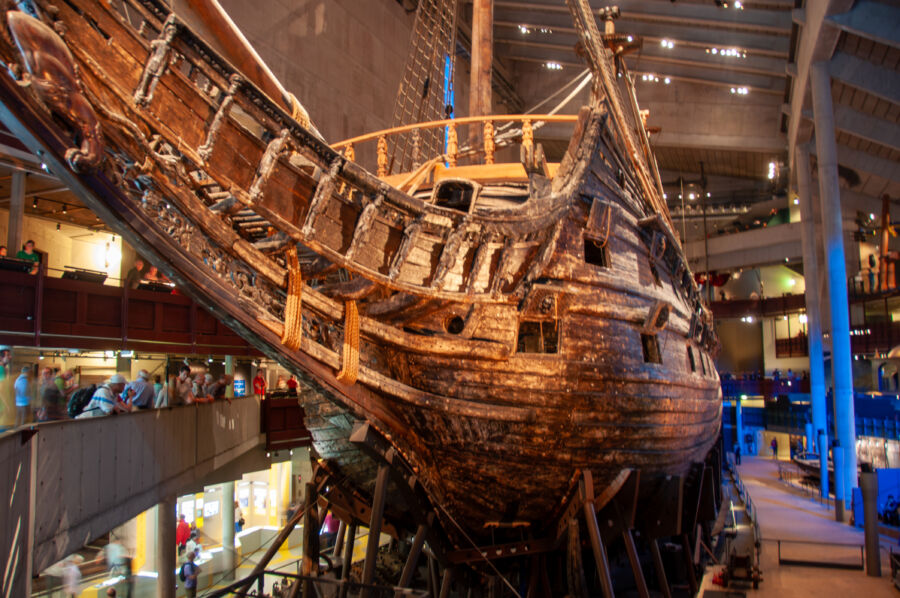
One of the best in this vein is the magnificent Vasa Museum in Stockholm, Sweden. The entire museum is literally and thematically built around a single item: the massive warship Vasa, which sunk to the bottom of Stockholm Harbor 40 minutes into her 1628 maiden voyage. More than three centuries later, the ship was rediscovered, raised from the deep, refurbished, and became the centerpiece of a state-of-the-art museum that tells the whole story and gets you prow-to-prow with the Vasa herself.
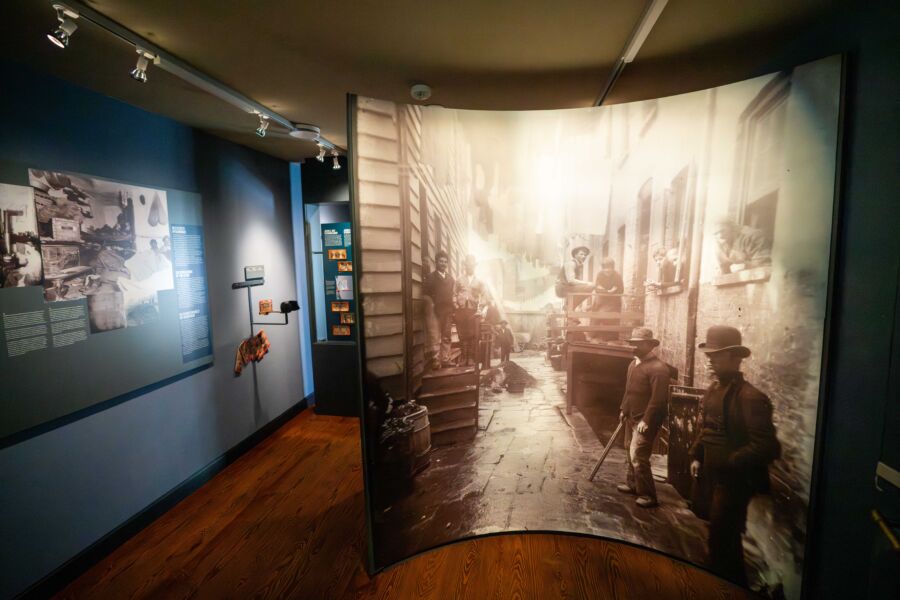
This summer, in charming Ribe, Denmark, I stumbled upon a museum devoted to hometown boy Jacob Riis (1849-1914). Despite the ticket-seller’s assertion that Riis was the most important Danish-American of all time, I was embarrassed to admit that I knew nothing about him. The exhibit set me straight, eloquently telling the tale of this Danish émigré who documented the plight of the desperately poor — mostly immigrants — who lived in the squalor of New York City’s tenements (and eventually published a seminal exposé, How the Other Half Lives). It was inspiring to learn how, by harnessing and pioneering the rapidly evolving medium of photojournalism, Riis brought about reforms that improved the wretched lives of the people he documented. Riis also became close friends with President Theodore Roosevelt, who called him both “the most useful citizen of New York” and “the ideal American.”
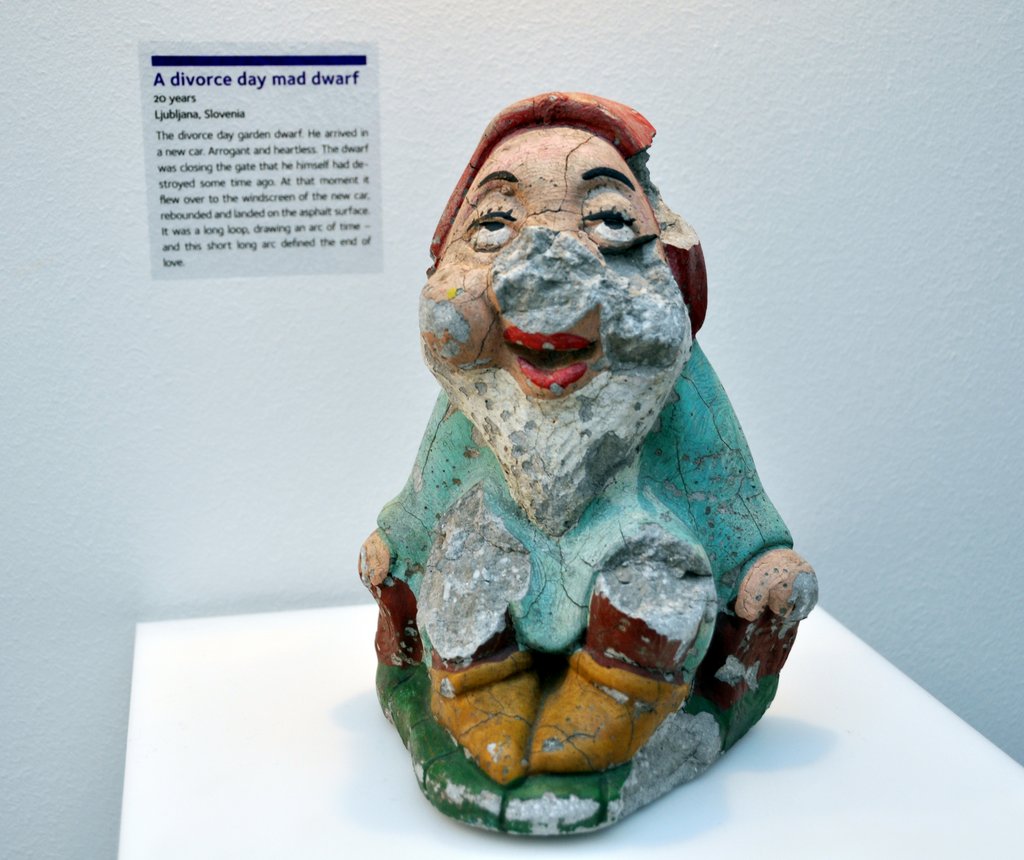
Sometimes that “single topic” is unexpected, even startling. The Museum of Broken Relationships, in the Croatian capital of Zagreb, displays a variety of items that each come with a complicated story of a now-defunct relationship — from a love-at-first-sight romance that burned out, to the loss of a dear friend or parent, to becoming disillusioned with a favorite politician. Touching, witty, and incredibly human, this museum is a good reminder to take a chance on sights that may seem quirky at first blush.
Thinking back on other examples of the “deep dive” style of museum, I realize the Netherlands is particularly adept at this approach: In Amsterdam, you have the famous Anne Frank House, of course, but also a Pipe Museum, a Houseboat Museum, and a Museum of Canals, while nearby Leiden has the Pilgrim Museum. Ireland also has a knack for these, from the Irish Wake Museum in Waterford to the Irish National Famine Museum in Strokestown to 14 Henrietta Street in Dublin; the Titanic Belfast Museum straddles this category and the next one. Others to watch for: the Paris Sewer Museum; the Viking ship museums in both Oslo, Norway, and Roskilde, Denmark (plus Oslo’s Kon-Tiki Museum); the Musical Instruments Museum in Brussels; the Olympics Museum in Lausanne, Switzerland; and some that are just plain bizarre, including the Phallological (Penis) Museum in Reykjavík and the Currywurst Museum in Berlin.
4. The High-Tech History Museum
Increasingly, history museums employ clever, high-tech innovations — location-sensing audioguides, sound and lighting effects, wrap-around films, interactive features — to bring to life a complicated or murky bit of history. Frankly, I’m on the fence about this trend: All too often, the whiz-bang gizmos act as a crutch, distracting from the thinness of the actual information. But when combined with impressive artifacts, compelling storytelling, and a clear point of view, these high-tech history museums can be mind-blowing.
Case in point: This summer I toured the stunning Moesgård Museum, just outside of Aarhus, Denmark. The museum was long famous as the home of the Grauballe Man, a remarkably well-preserved Iron Age corpse that was discovered in a nearby peat bog. In 2014, the Moesgård opened a gigantic new purpose-built building with a mission as grandiose as its architecture: combining astonishing artifacts — from prehistoric stone tools and mysterious barrows, to the Grauballe Man, to a perfectly preserved Viking boat — with evocative storytelling and high-tech methodology to create a powerful experience that kindles an appreciation not only for the story of prehistoric peoples in Jutland, but for human evolution in broad strokes. There are also two sprawling galleries hosting temporary exhibits that are at least as good as the permanent one. It instantly became one of my favorite museums, anywhere.
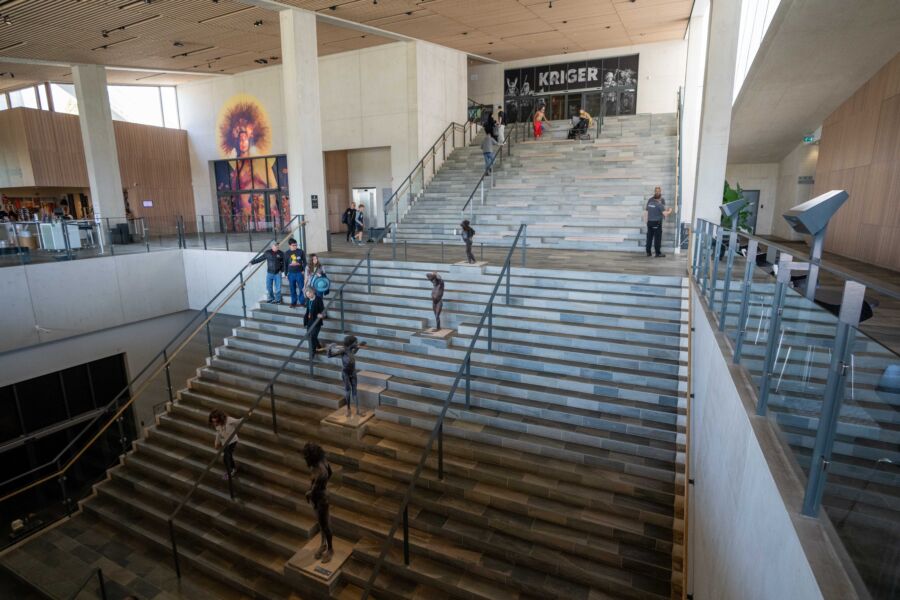
Another favorite is the Museum of the History of Polish Jews (POLIN), in Warsaw, Poland. Built on the site of the onetime Jewish quarter, POLIN is architecturally striking in itself. Inside, it employs a combination of thoughtful storytelling and state-of-the-art presentation to make the absolute most of the scant few artifacts that survive from what was once a flourishing culture. While so many Jewish-themed sights around Europe focus narrowly on the Holocaust, POLIN takes an expansive and enlightening approach to the entire Jewish experience in Poland.
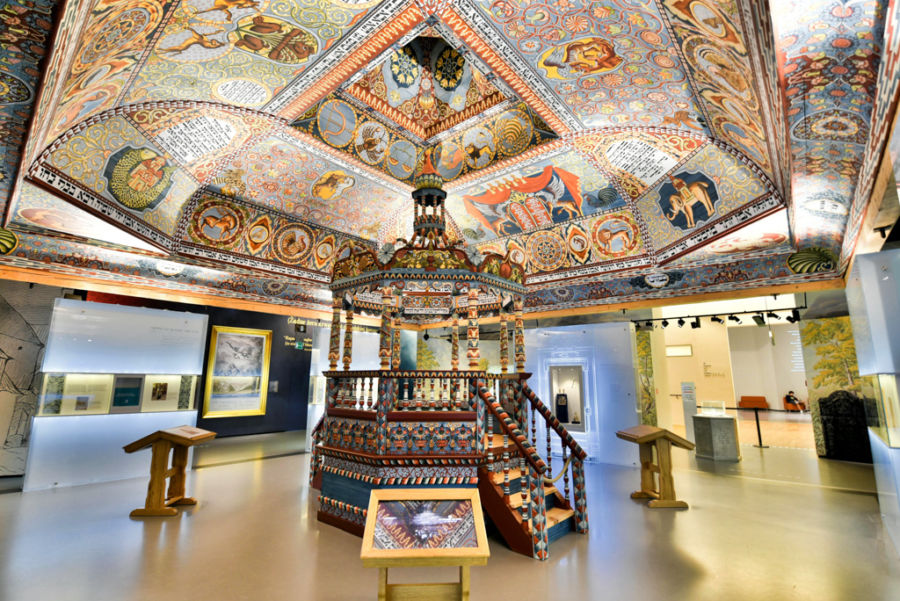
Many of these high-tech history museums focus on one historical era — often World War II, including the Caen Memorial Museum in Normandy, France; the Museum of the Second World War in Gdańsk, Poland; and the Uprising Museum in Warsaw. The museum at the Culloden Battlefield, just outside of Inverness, Scotland, is one of the best of this type. Others are broader in their focus, including the German History Museum in Berlin and the Landesmuseum (Swiss National Museum) in Zürich. And some of the museums described earlier (including the Vasa Museum) could slip into this category, as well.
Artifacts; storytelling; high-tech exhibits: A museum that does all three equally well is rare. But when they hit — they really hit.
5. The Cross-Cultural Structure
Europe’s epic history is the story of successive civilizations layering one upon the other. Often, while a few artifacts survive from centuries past, most of what you see today dates from one or two discrete historical periods. But a few sights manage to capture a broader swath of history in stone, by simultaneously embodying starkly different civilizations in one cohesive structure.
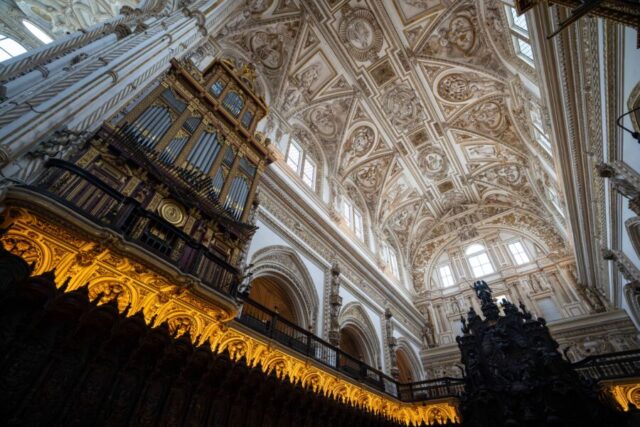
The prime example of this is one of my favorite sights in all of Europe: the Mezquita in Córdoba, Spain. This gigantic structure — a massive box, 400 feet by 600 feet — began as a low-lying Moorish-style mosque, built around 785. Strolling through seemingly endless rows of 800 columns (spanned by graceful double arches), you feel you’ve stepped back to the age of Al-Andalus, when Córdoba was the capital of a sprawling Muslim realm.
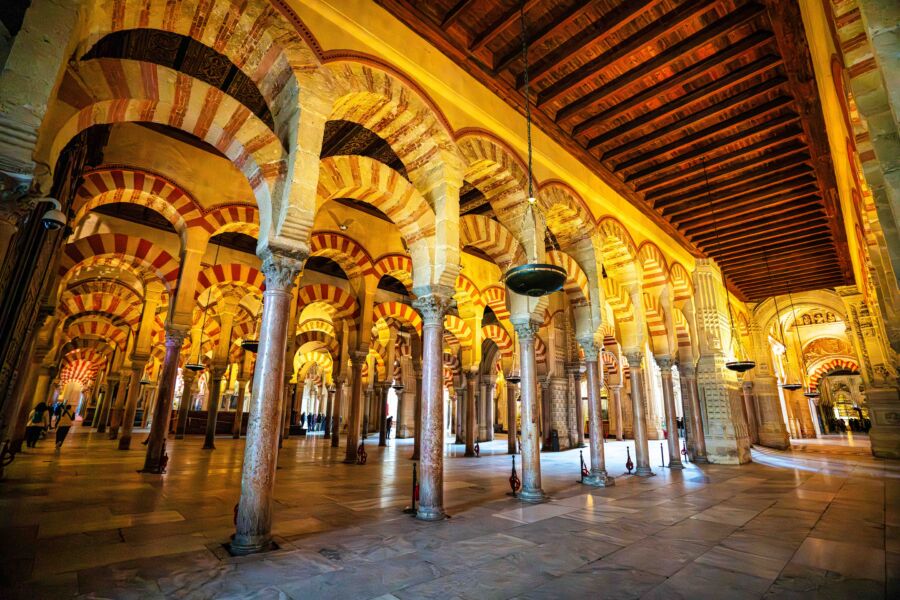
But then you turn a corner and — bam! — you’re transported into an entirely different time and place: a towering 16th-century Catholic Baroque cathedral, stretching 130 feet into the air, that was built within that original mosque.
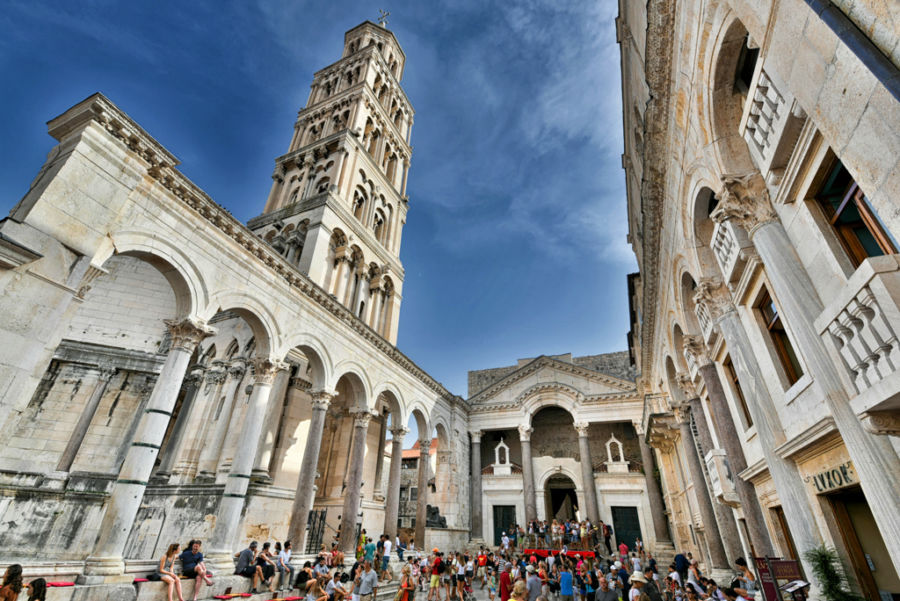
In Split, Croatia, the entire town center (filling the former halls of a Roman palace) gives you this same sensation of “layers of history” — especially the cathedral that sits upon Peristyle Square. The hulking, octagonal hall that forms the core of this building was originally the mausoleum for the Roman Emperor Diocletian, who was born nearby, retired right here, and notoriously tortured many Christians. But the frilly Venetian-style bell tower — and the rich golden decor inside — make it clear that those pagan Romans were soon supplanted by the Catholic Venetians, and later Croatians, who retrofitted Split to their own specifications.
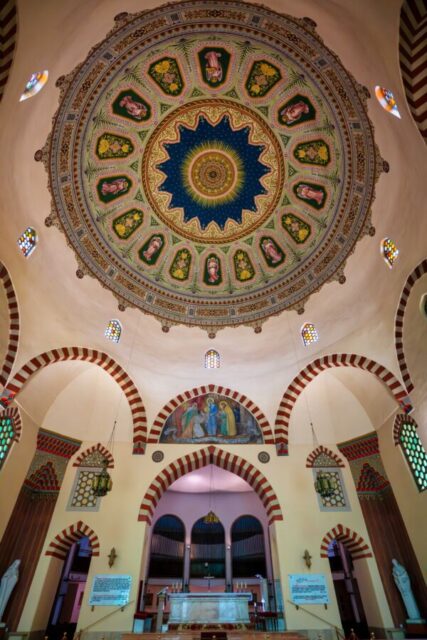
In Pécs, Hungary, the main square is topped by another such structure. The Gazi Kasim Pasha Mosque — originally built during a period of Ottoman control in the 1540s — was later turned into a Catholic parish church (the Church of the Blessed Virgin). Today, its classic mosque architecture is still evident, and upon stepping inside, you observe a hybrid of Muslim and Catholic symbols and styles: striped arches over windows; a large prayer niche (mihrab) with a crucifixion above it; colorful Islamic-style stalactite decorations; and dome paintings that combine Christian angels with the geometric designs of Islam. On the wall is a verse from the Quran, translated into Hungarian and used for Christian worship — a reminder that, as fellow “people of the book,” Muslims and Christians share many of the same foundational principles.
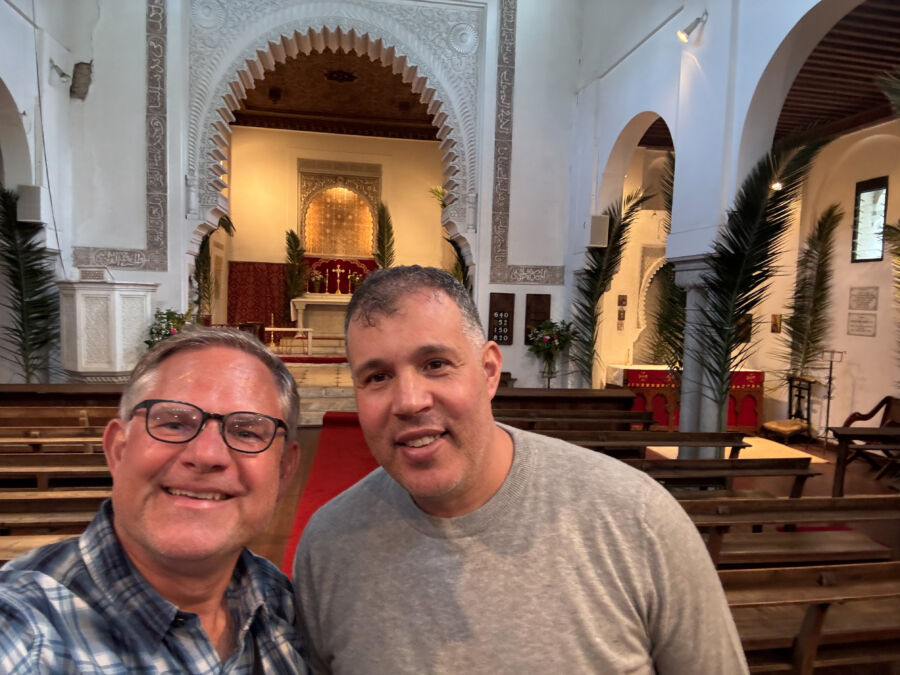
Tangier — Morocco’s closest point to Europe — is another prime spot for these “cultural hybrid” sights. Just off the main square, you escape from the bustle of rumbling delivery vans and buzzing motor scooters into the tranquil garden courtyard surrounding St. Andrew’s Anglican Church — built on land that the sultan offered as a gift to Queen Victoria. There you’re greeted by gregarious Yassin, who wishes “peace be upon you” as he explains how, while the church’s architecture is mostly Islamic, it’s Christian in spirit: The Lord’s Prayer rings the arch in Arabic, as verses of the Quran would in a mosque.
Sometimes it’s not a building but a location. In the heart of old Sarajevo, at the precise point where Sarači street becomes Ferhadija street, you can look in one direction and swear you were in Istanbul, with its cobbles and market stalls; looking the other way, you could easily be in Vienna, with broad pedestrian boulevards and grand Austrian-style architecture.
And speaking of Istanbul, the ultimate example of a “cross-cultural” sight surely must be the Hagia Sophia: an early Christian church, later turned into a mosque, so influential that it became a template for many other mosques across the Ottoman Empire (including the one in today’s Pécs).
All of these sights are a reminder of the full complexity of Europe’s story — and of how few of those layers we actually see in our everyday travels… until we go looking for them.
What are some of your favorite museums in these categories? Or do you have favorite “categories” of sightseeing that I’m overlooking? Share your thoughts in the Comments.
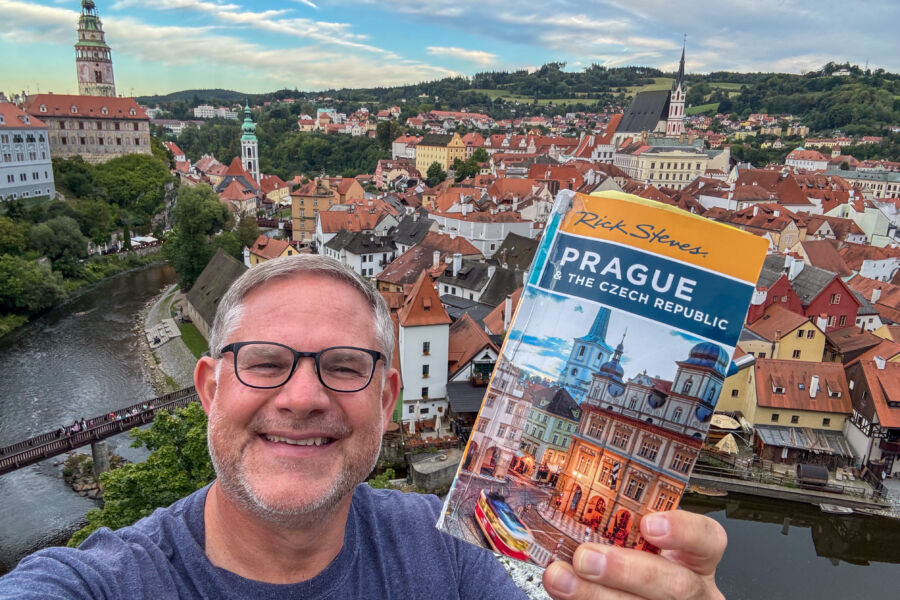
Of course, all of the sights mentioned here — and so many more — are described in detail in our Rick Steves guidebooks.
If you’d like to hear more about my 2025 travels, join me on Zoom Monday, November 10 at 6 p.m. Pacific Time (that’s 9 p.m. Eastern) when I’ll be doing a virtual “Trip Report” for Monday Night Travel. It’s free, as long as you sign up in advance.
I really appreciate how you highlighted the charm of smaller, local museums like the one in Keswick. It’s so true that these places often reveal the heart of a community in ways the big national institutions can’t. I’ve found that visiting these kinds of spots often leads to the most memorable, unexpected travel moments.
I was intrigued to read about the Robert Capa Center in Budapest. Before joining our Rick Steves Sicily tour last October we had the pleasure of visiting the Museo della fotografia di Robert Capa in the cute Sicilian Village of Troina. This little hilltop town was the site of a major multi-day battle between the U.S. & German Armies in WWII. On display in this museum are Capa’s many excellent photos taken of the people and U.S. soldiers in this village during the battle as he was embedded in the U.S. Army. It’s a worthwhile stop if you’re visiting Sicily.
Surprised you didn’t have more to say, or more emphasis, on western Turkey as a cross-cultural backdrop for contemporary travelers. There are so many ways to look at Byzantine and Anatolian Turkey, not all are hackneyed touristic cul de sacs. I wrote an engineering presentation once on the intricacies and liabilities of water infrastructure in cities where different cultures built over, but also selectively reused ancient aqueducts, pipes, basilicas and conflated them with modern water supply systems. So now, modern civil engineers have an interesting and challenging task to sort out all the ancient and mostly unknown connections between modern and ancient water distribution and reservoir systems. And the inevitable unknown cross connections between modern sewers and ancient, but still functioning, water supply causeways and pipes. And so much more.
Maybe you do not see western Turkey as a part of Modern Europe?
A favorite of mine is the Boschi di Stefano Museum in Milan. Near Porta Venezia in the city center, it’s the legacy of two extraordinary art patrons and collectors who left their marital collection — and the flat in which it is housed — to the city. There are thousands of pieces (paintings, sculptures, decorative pieces, and furniture) in the collection, which covers the first six decades of the 20th century, although only a few hundred are on display at any time. Best of all, it’s free!
More info on the donors and the house museum at https://fondazioneboschidistefano.it/en/the-museum-home/
We have always enjoyed the city museums of large cities. Never crowded, they give a historical perspective on the city. Our favorite is the museum in Paris, the “Carnavelet” museum..endless fascinating information about Paris. One amusing room is Proust’s reconstructed bedroom fully lined with cork to help with his frail health. The London Museum is in the same genre; also Rome.
This is a great point. The Museum of the City of New York does meticulously curated exhibits; ten years ago I went to see their exhibition on the creation of Manhattan’s street grid & it still lives rent-free in my head.
But smaller cities can also shine here. Avignon’s city museum, a short walk from the main sights, holds an eclectic mix of pieces, including works by obscure but talented artists from the first half of the 20th century. Besançon’s horological museum is well done, and even the museum in tiny Kropa, Slovenia (on a steep hillside a short drive south of Lake Bled) does a good job explaining the town’s former fame as a center of iron smelting and metalworking. We were the only visitors there and the lone curator was more than happy to fire up some of the miniature mechanical displays.
We really enjoyed the contemporary Water Museum in Marrakech, Morocco. Good general science and fascinating history of this crucial resource in Morocco.
FYI, there is a Jacob Riis Park in Chicago, honoring his contributions. Spent several happy summers in day camp there!
There is also a Riis Park in Brooklyn. It’s a beach where my mother took us many times as we were growing up.
While visiting Cesky Krumlov on a RS tour, I discovered the Egon Schiele museum. With my love of both history and art, I will enter any building with a museum sign!
Some of my favorite museums are of the “single artist” type. The first that springs to mind is the Alphonse Mucha museum in Prague. I learned about it from a Rick Steves episode. I just loved it! I paired it with a visit to the Municipal House and the adjacent café, and had a beautiful Art Nouveau day.
The Gustave Moreau museum in Paris is another lesser-known museum that gives me a thrill. The spiral staircase in what was once his studio is spectacular, as well as evocative.
And for another single-artist museum in Paris that you are sure to have to yourself, try the J J Henner museum, up near the Parc Monceau. I was totally unfamiliar with his work, which made visiting this museum a voyage of discovery.
Thank you, Cameron, for yet another thought-provoking post!
Another category of a museum I would add is a place that its location makes unique. The Tyrell Dinosaur Museum in Drumheller Alberta Canada is an example of this. It’s an outstanding interactive collection of dinosaur and evolution related exhibits, sitting right in the world scale collecting area: visually dramatic and scientifically relevant.
There’s a Friets Museum in Brugge/Bruges. Who’d have thought?
However, the flavor the Belgians and Dutch get out of their “French” fries is spectacular, and probably worthy of a museum.
Did not see the Sorolla Museum in Madrid mentioned.
This museum is the home and studio of painter Joaquín Sorolla. Most of his works are here at his home. Definitely worth the time to find it.
Oh I was going to add that as well! I loved visiting the beautiful house and restful garden, and so many of his works are here. It is a respite from a busy city to spend an afternoon here admiring his lush paintings. Amongst the very many museums I visited on my trip, that one often fondly comes to mind.
The Ethnographic Museum of Aquilonia – Museo Etnografico di Aquilonia, 2 hours by car due east of Naples, is exquisite! It covers, in beautiful detail, rustic Italian life through the physical culture collected contemporaneously. Everything from the different paddle shapes used to stir milk to make different types of cheese, to the variety of sacred objects used in different local folk religions, is on display and well organized and labeled in Italian and English. The museum tells a rich story of pre-industrial life there. There’s also a small but excellent local prehistory section of the Museum. www.museomeda.it/
Closer to Naples is the Municipal Museum of Avellino, and of course the exceptional Archeological Museum in Naples itself.
We spent a pleasant hour in Zurich searching for Albert Einstein’s locker at the ETH (then Polytechnicum). Finding the location is a feat in itself but, in doing so, discovered a nice campus atmosphere. The locker itself is small and underwhelming, although with a number of nice artefacts.
We love outdoor history museums that group together historic buildings from different eras in a country’s history, along with presentations on folk history by costumed staff. Great examples are the Danish old town in Aarhus, the Estonian historical park near Tallinn, and the Welsh history museum outside Cardiff. You can walk through these parks and briefly feel what it was like to live there during different times in history. One very somber but similar museum is the memorial to Oradour-sur-Glane in France; an entire village destroyed by SS soldiers during World War II but preserved as a memorial.
We went to the Nationale Museo di Cinema (Mole Antonionnino?) in Turin. It was fantastic. Italian movie/artist/photography emphasis, of course, but several American movies as well. The building itself and elevator ride to the outdoor viewing level are exceptional. Highly recommend (and get tickets online ahead of time).
The Musée Marmottan in Paris, in the 18th arondissement, should be added to any visit to Monet’s home at Giverny. The paintings here are the ones Claude Monet could not bring himself to sell. The setting is a lovely mansion, uncrowded when I visited it. Nearby is the Bois de Boulogne, to round out the day with a stroll in Parisians’ equivalent of Central Park.
This may be your best blog yet, or maybe it’s because I love museums. My first experience with a high-tech museum was the Earthquake Museum in Lisbon. By it’s description I expected it to be a tacky tourist trap, but it was well done and told the story of the transformation of Lisbon after the earthquake and Tsunami to be the starting point for modern architecture and urban planning.
My go-to museums are local history and while not a small city, the Museum of London was/is excellent. I’m surprised it doesn’t get more love in the RS guides. I’m looking forward to it’s reopening next year.
Single topic museums I’ve enjoyed recently include the Tulip Museum in Amsterdam, the Mary Rose Museum in Portsmouth and the Fishbourne Palace in Chichester.
We were on a Rick Steve’s “My Way” 13 day tour of Italy (which was great, by the way!) and were introduced to the South Tyrol Archeological Museum in Bolzano. First of all, it was a city that we would not have selected had we been planning this trip all on our own and we really enjoyed the city. The museum is a deep dive into the discovery of Otzi the Iceman with many side stories, his clothing and equipment. Otzi was discovered in 1991 after being preserved in ice for more than 5300 years.
I’ll put in a plug for military museums. If you visit the Vasa you have to see the Mary Rose in Portsmouth. The rest of the naval museum of Portsmouth is awesome, including the Victory. Another niche naval museum is in Wilhelmshaven in northern Germany, with several decommissioned ships and a submarine to explore. The small DDay museum at Omaha Beach near the memorial has the best collection of artifacts from the Normandy Campaign, well presented.
If you love military museums, there are many, many options. As an example, pertaining to WWI: In Vienna, see Franz Ferdinand’s blood-stained uniform and the actual car that he rode in when assassinated, triggering the start of WWI. Or go to Ypres, Belgium or Verdun, France to get immersed – and see how WWI is still alive in peoples’ minds today.
I would also put in a plug for Madrid’s naval museum. I approached the building from the wrong direction for the museum entrance and saw the sign for Quartier General de la Armada Espanola (Spanish Naval HQ). I saw some fascinating artifacts and being a map buff and lifelong resident of California took a photo of the wall with the map of the Spanish voyages of exploration, focusing my camera on the part covering the West Coast. Well worth the price of admission.
Also in Oslo is the Fram Museum dedicated to the incredible arctic voyages of, not only the Fram, but other Norse adventurers. And don’t forget Ötzi, the five thousand year old iceman on display at the South Tyrol Archaeological Museum in Bolzano, Italy. One of our favorite museum visits ever.
We stumbled across the Einar Jonsson Museum’s beautiful, free-to-enter outdoor sculpture garden while strolling the neighborhood around our lodging in Reykjavik one late afternoon. What striking and dramatic artworks from an artist we had never heard of! We became instant fans and resolved to visit the museum itself later. Well worth the time to appreciate this unique artist in Reykjavik.
Being a Salvador Dali fan, the Dalí Theater-Museum in Figueres was one of my favorites. I confess that after spending a couple of hours at most of the other “big name” museums, it’s time to go. But this one was worth exploring and I spent most of the day here. The other museum off the beaten path is the Schweine Museum in Stuttgart. If you’ve ever been curious about pigs, this is your home. It has over 50,000 exhibits from around the world covering the pig’s role in history. And yes, even Miss Piggy is here.
Two other museums to see are Fundacio Joan Miro in Barcelona, and in The Hague, Netherlands, Escher in the Palace.
Small city museum: the one in Fussen, Germany. Deep dive: the Museum of London when it reopens although it will lack the view of the old city wall that it had in its previous location.
Another single-artist museum is the Salvador Dail museum in Barcelona. I was there long enough ago that I am not sure if it has been discovered. At the time, there were a few other tourists enjoying it. My favorite part was the etchings of great inventions. I’m probably one of only a few people who are both interested in art and knowledgeable enough about chemical engineering/oil refining to immediately understand what the catalytic cracker is.
We look for local and/or quirky exhibits of local pride when we travel. There are so many, like the Icelandic Sea Monster Museum in Bildudalur, Iceland or the sod and mud traditional houses on the north part of Iceland’s Ring Road. The Charlie Chaplin Museum in Corsier-sur-Vevey, Switzerland is very well done as is the Chateau du Clos Luce in Amboise, France (Leonardo da Vinci’s last home). The Museo Egizio in Turin is hands-down the most interesting Egyptian museum we’ve seen and the Archaeological Museum in Rhodes has fascinating exhibits on the early Knights Templar.
A great single-artist museum is ‘Maisons Satie’ which is based in the actual house where he was born in Honfleur in Normandy. Like the man himself it is surreal and unique and companied by a soundtrack of his music as you travel through the rooms which describe his life and work alongside his whimsical collections of suits, drawings, umbrellas etc.