I recently returned from a five-week guidebook research trip in England and Italy. And now that I’m home, everyone’s asking the same question: What’s it like traveling right now, as Europe emerges from the pandemic? By sheer coincidence, I wound up visiting perhaps the least restrictive part of Europe (England), then the most restrictive (Italy) — offering a taste of the full spectrum you might encounter, if you’re hitting the road anytime soon. This trip really was a tale of two COVIDs.
When it comes to traveling during COVID, the only thing that’s constant is change. So I’ll stress that this information is accurate as of my recent visit, from late February through late March. (In fact, Italy partially relaxed its restrictions just a few days ago, even since I got home.) If you’re hitting the road anytime in 2022, check local restrictions closer to your departure date.
London Is Over COVID (Even if COVID Isn’t Over)
Around the time I took off for London, the Queen contracted COVID. Also around that same time, Prime Minster Boris Johnson declared that all remaining pandemic restrictions would be lifted. On February 24 — a few days after my arrival — England celebrated what some cheekily called “Freedom Day”…even as their sovereign still had the sniffles. (Tellingly, this was already the second “Freedom Day” in as many years.)
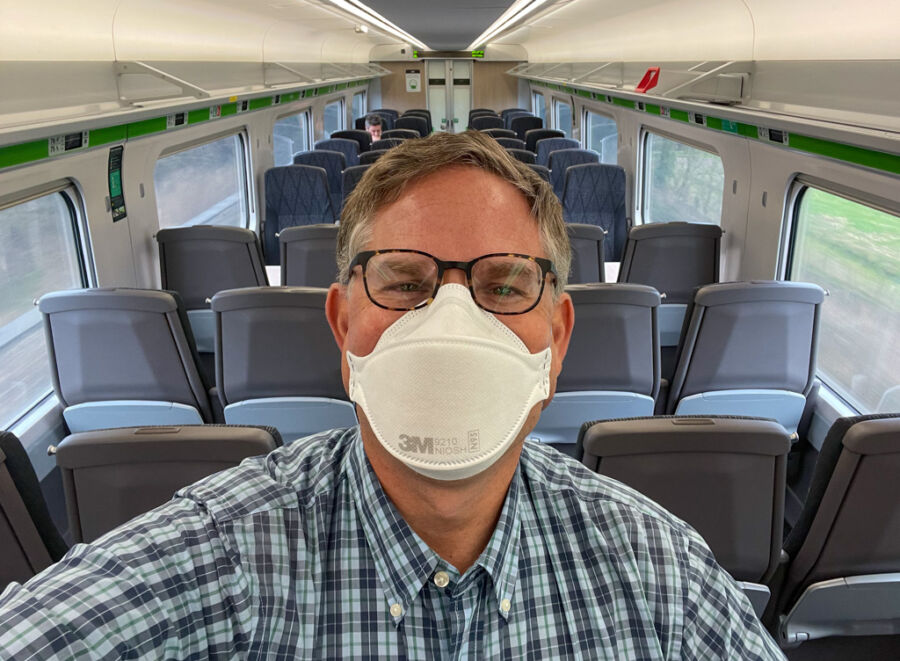
Coming from cautious Seattle, where indoor masking was still required, I was shocked by how few masks I saw on arrival in London. “Masks are mandatory” signs, still posted everywhere, were flagrantly disregarded by Londoners who knew that the rules had changed. In many indoor situations — for example, waiting in line at a café to order a takeaway latte — I was the only person who wore a mask.
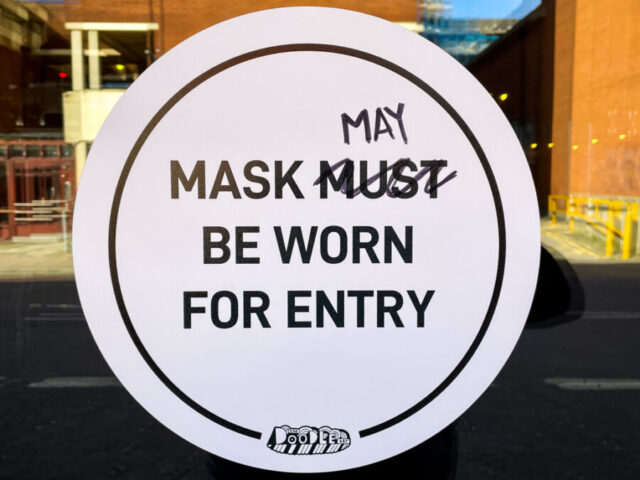
On the Tube and on public buses, I’d estimate that one-quarter to one-third of passengers wore masks. This figure seemed to go up and down depending on which part of town I was in (perhaps the highest ratio was on a day trip to Cambridge). One Londoner I talked to, who lives in an outlying bedroom community, told me the majority of people on his Tube ride into central London were masked, but once downtown, that number would plummet. (I was too busy updating guidebooks to conduct a reliable sociological survey…but the results would have been fascinating.)
It was an exciting, slightly scary time to be in London. On the one hand, I enjoyed feeling the momentum of a society that is finally restarting. Museums and restaurants were open (though in a few cases, hours were still somewhat reduced). People were out and about, walking the streets, riding the Tube, and mixing and mingling just like old times. It felt good to feel so normal.
On the other hand, I was just starting out on a five-week trip — 5,000 miles from home, and with piles of work to do. I did not want to contract COVID, if only because the editorial team back at the home office was patiently waiting for my guidebook files to kick-start our 2022 season. So while the people around me were celebrating “Freedom,” I was still dutifully wearing my mask and rubbing sanitizer on my hands.
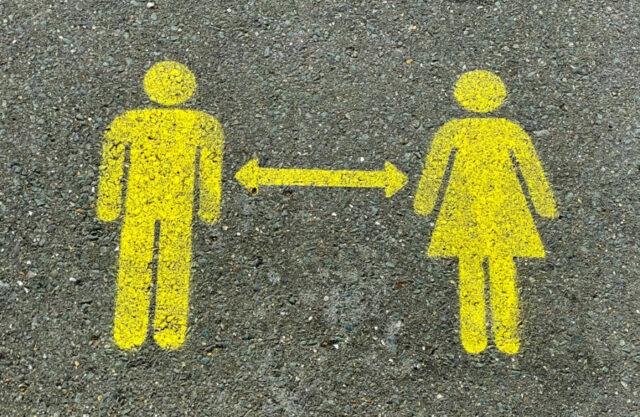
During this strange transition period, I’ve been trying to be what I think of as a “non-judgmental masker.” I choose to wear a mask in most indoor situations, simply because my understanding of the science leads me to believe that wearing a mask is safer both for me and for those I come into contact with. (And I will say, trying to be careful for my own sake brought me a lot of empathy for immunocompromised people — who must feel terribly alienated from society right now.)
That said, I’ve overcome my instinct to criticize or shame someone near me who chooses not to wear a mask, if it’s in accordance with local regulations. That’s your choice; this is mine. One caveat: If you’re actively sneezing, coughing, and wheezing, well then…yes, I am going to get up and move elsewhere. And I will try not to shoot you a dirty look. (But I’m only human.)
Being cautious was not easy, I’ll admit. It was chilly in London, so every time I strapped on a mask to step into a hotel lobby and quiz the receptionist on their latest details for our book, my glasses became opaque with dense fog. (Stupidly, it took me well over a week to buy some spray-on defogger, which worked wonders.)
I also skipped one of my absolute favorite London activities: eating in its many amazing restaurants. I just love the food scene here, and normally I spend each evening in a trendy new hotspot in Soho or Shoreditch, to “try it out for the book.” But given my current risk-aversion, I mostly skipped indoor dining (especially when a place was crowded — which the best places always are). London’s many outdoor (or semi-outdoor) street markets, such as the wonderful Borough Market, offered high cuisine in a safer environment.
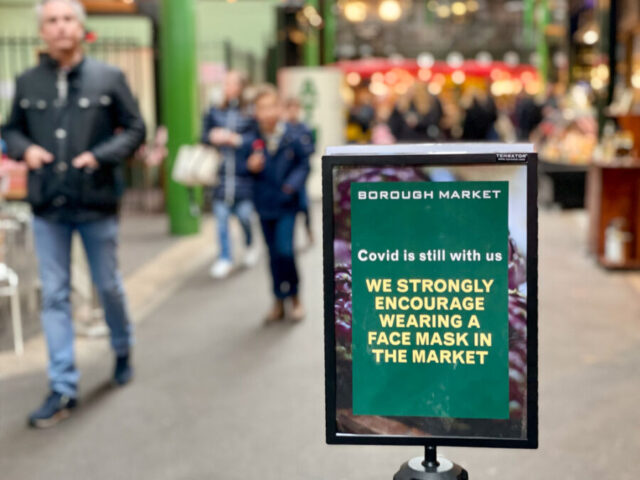
Even though I was being cautious, having a good N95 mask bought me peace of mind. For instance, I did not want to miss another one of my favorite London experiences, watching a play at Shakespeare’s Globe (specifically, their wonderful indoor venue, the Sam Wanamaker Playhouse). Wearing a medical-grade mask gave me peace of mind, even if about half of my fellow theater-goers were unmasked.
I believe my caution paid off. Other than indoor dining, I still did everything I would have done in pre-pandemic times, but with a good mask on. I still toured every museum, inspected every hotel, reconnected with old friends, and interacted with dozens of people each day. And after five very busy weeks of traveling in Europe, I never had any symptoms, and I never tested positive for COVID.
In Italy, COVID Remains a Part of Life: Vaccines, Boosters, and Masking
Imagine the culture shock of flying from England to Italy, which occupies the opposite end of the COVID precautions spectrum. Italians remain as vigilant and strict as London is loose. This began the moment I arrived in Naples, when I had to go through a time-consuming airport screening to ensure that my paperwork (vaccine card and passenger locator form) was fully up to snuff.

In two weeks in London, not a soul asked to see my proof of vaccination (except when I checked in for my flight in Seattle). But on my first day in Italy, I was repeatedly asked to show it — to enter restaurants, museums, and so on. It’s worth talking about the specifics here, because this will come up if you’re traveling in a country that still requires proof of vaccination.
In Europe, fully vaccinated means boosted as well. Italians (adorably) refer to this as “super-vaccinated.” Italians prove their vaccination status with a “super green pass,” a QR code on their phone that gets scanned when they enter a building.
For American visitors, you only need to show them your printed vaccination card from the CDC (or a photocopy — I kept my original safe in my money belt). However — crucially — your vaccination card needs to list all three shots, including the booster. (I was surprised how many times they actually counted — Uno, due, tre! Ees O.K.!) In my case, for reasons I will never understand, each of my three shots was issued on a separate card. Fortunately, I had contacted my HMO a few weeks before my trip, and they sent me a new card that listed all three. That turned out to save me a lot of hassle — I hate to imagine trying to explain the three-card system, in Italian, several times each day.
(One important side note: On April 1 — just a few days after I flew home — Italy relaxed some of its regulations for showing proof of vaccination. You no longer need to show your CDC card to enter a museum or public transit, but you still do in order to dine indoors…at least, through the end of April. Again, wherever you are traveling to, do some homework so you know what to expect as of the time of your visit.)
Italy also had remarkably high, virtually 100 percent masking compliance. I almost never found myself in an indoor space — museum, church, restaurant, bus, train — where I saw a single unmasked person. Even outdoors — where masks are not required — I’d estimate about 20 to 30 percent of pedestrians were masked anyway (a higher ratio than what I typically saw indoors in London).
When dining indoors, Italians diligently masked up any time they weren’t sitting and actively eating. Even in huge, cavernous churches, this is taken seriously. Inside Pisa’s Duomo, which was nearly empty of visitors, I spotted two elderly tourists who apparently forgot to don their masks. No sooner had I noticed this than an attendant went rushing over to remind them. I got so used to this, I didn’t even notice that I was wearing my mask. And St. Peter’s is just as spectacular when you’re masked.

Keep in mind that in Italy, a mask must be medical grade. They call this “FFP2,” but it’s equivalent to N95, KN95, and KF94 masks widely available in the US. It must be worn over the nose and mouth, and cloth masks are not acceptable substitutes.
By the way, Italians don’t wear masks because they enjoy it. I promise you — as much as you hate wearing masks, Italians hate it more. Italians are deeply social creatures, keenly tapped into nonverbal cues. For them, removing half of the face is a massive hardship; you might as well cut off their tongue or poke out their ears. But they do it anyway, with pride, for the greater good.
This was the case even in my first stop in Italy, Naples. Naples! A city synonymous with chaos and disorder. This is a place where flagrant disregard for rules is a hobby passionately pursued, and where any authority is viewed with deep suspicion. And yet, there I was, walking down the Spaccanapoli, surrounded by carefully masked Neapolitans.
Wearing my anthropologist’s hat, I asked around as to why Italians were taking this stuff so seriously. One hotelier — who is clearly a bit fed up with all of this — described the Brits as coraggiosi (courageous) for simply moving on with life. Others reminded me that northern Italy was devastated by the very first wave of COVID, back in February of 2020. Night after night, Italians watched news of the rising death count. They still feel the personal pain from that loss — and all of the losses since — and are not yet willing to give up on making small, reasonable changes to their behavior if it means saving a few more lives.
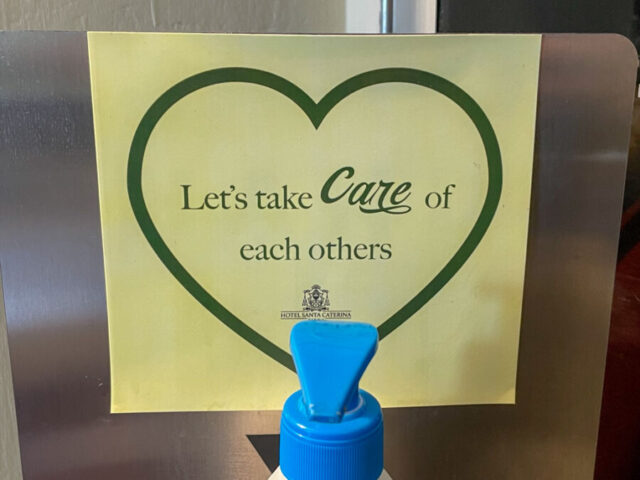
Anecdotally, I was told that masking compliance and vaccination rates were both higher in the South, and diminished as you moved toward the North. Based purely on my Naples-to-Florence itinerary, there may be a speck of truth to this; or it may simply be another salvo in the age-old North-South rivalry.
Testing
As yet another indication of how fast things are changing, a couple of weeks before my flight to London, I believed I would be required to show a negative test before getting on the plane. But the UK waived this requirement just days before my departure. And then, for my trip from London to Naples, Italy also changed the rule just days before I flew. In the end, I wasn’t required to get a single COVID test until the day before I flew home.
Speaking of which: Right now, you are still required to get a negative COVID test the day before you re-enter the United States. This sounds troublesome and time-consuming. But fortunately, they accept a rapid antigen test (which only takes about 15 minutes), as long as it’s administered by an official provider. And testing is affordable and widely available in most of Europe, making it less of a hassle than you might think.

In my case, I was flying home very early from Florence. The day before that, I rode the train from Lucca to Florence. And the evening before that, I was hanging out in Lucca, wondering where I should get my COVID test. I did a quick search on my phone and found a pharmacy right on the main square that administered the test. I dropped by, and they penciled me in for an appointment the next morning.
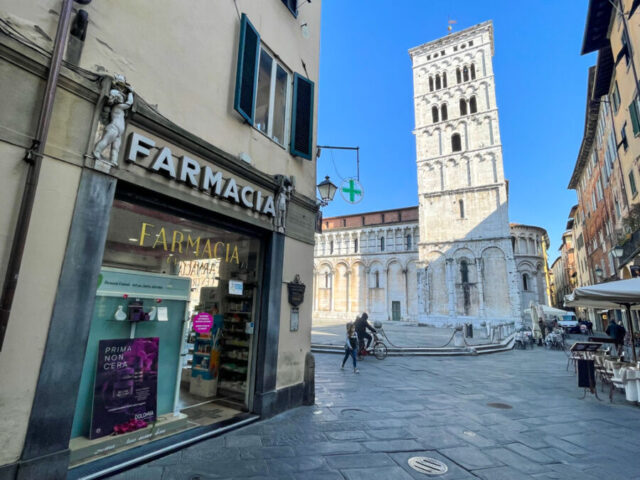
When I woke up, I packed my bag, checked out of my B&B, and headed through lovely Lucca to the train station — making a slight detour to the main square for my appointment. They instructed me to drop my bags in the corner, swabbed my nose, and asked me to wait outside for 15 minutes. It was actually an enjoyable experience to stand in front of that pharmacy, listening to the church bells clang, watching small-town Tuscany wake up. After what felt like just a few moments, they called me in, handed me an official-looking paper with my test results, charged me €15, and sent me on my way. I made it to the train station with 20 minutes to spare. I can only hope red tape is always so delightful.

What Else Is New?
In the coming weeks, I’ll be sharing lots more observations about my return to Europe. (If you haven’t yet, be sure to follow my Facebook page to get all the latest updates.) But here’s a quick rundown of what else is new in Europe for 2022:
I was struck by how rapidly new technology has been adopted through COVID. For instance, London has gone practically cashless. Every purchase now uses “contactless” technology: a credit card, smartphone, or watch that you tap against a pay pad. (You probably already have a “contactless” credit card, even if you don’t realize it — check your card for four curved lines — or you can easily set this up on your phone.) The same technology is now common throughout Europe, though in Italy, I found cash was still more widely used.
Another change: Most museums have “temporarily” done away with audioguides, for obvious reasons. (Who wants to spend two hours pressing your face against a device that was just pressing against someone else’s face?) But now that they’re gone, I have a suspicion audioguides may not be back. Instead, museums encourage visitors to download apps so they can follow the tour on their own device. (Better yet, download the Rick Steves Audio Europe app, with heaps of entirely free, self-guided museum tours and city walks.)
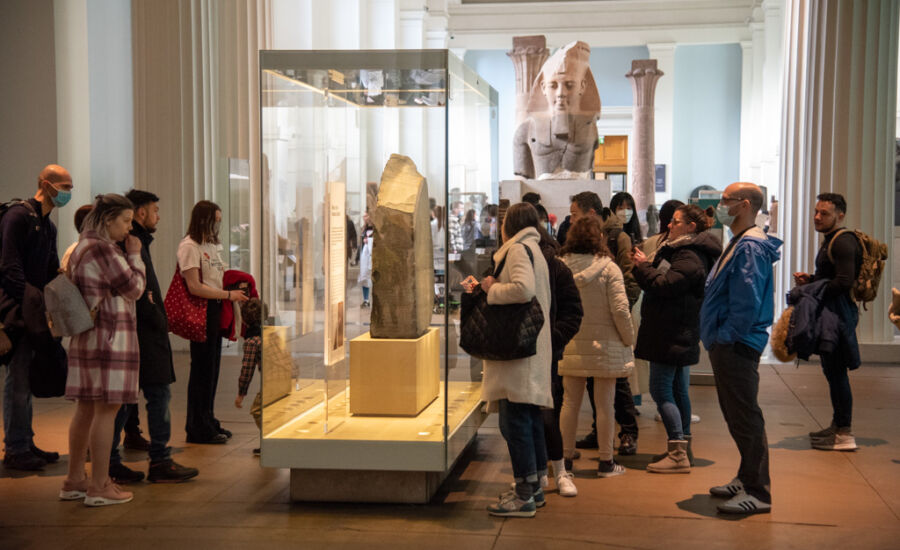
For the major sights, it’s more important than ever to do your homework and reserve ahead. Many museums — even minor ones — have introduced online reservation systems. Initially this was a crowd-control measure due to COVID restrictions. But now that they’re in place, these reservations systems will probably stick around.
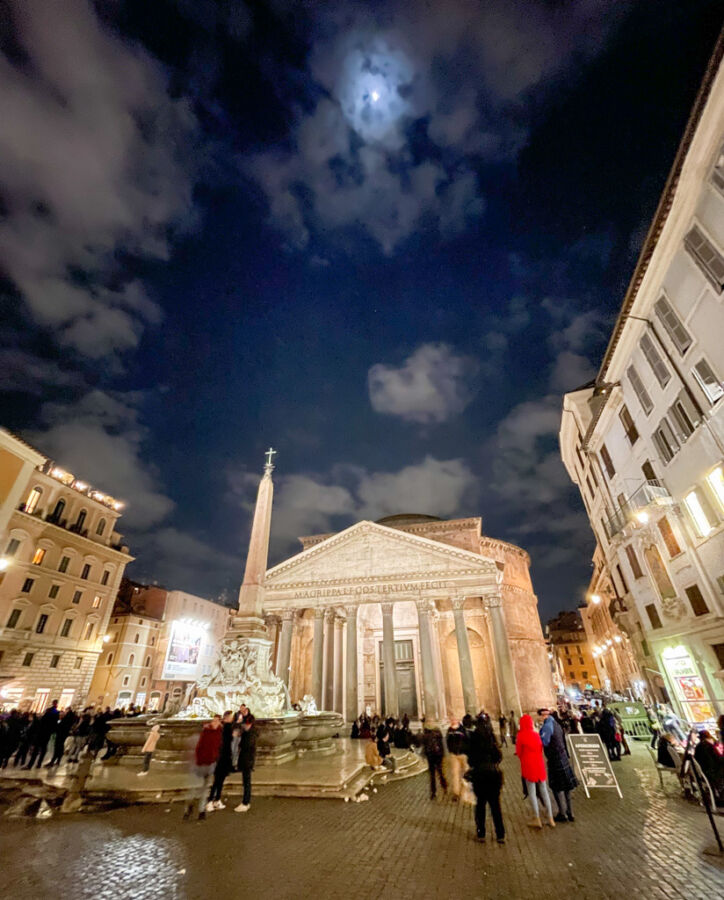
And some major sights (including Rome’s Colosseum) now require reservations, instead of just recommending them (as previously). If you want to visit the Colosseum, you must prebook a time slot online. This is serious. On my visit, they didn’t even have any in-person ticket windows open at all; if you just show up, you’ll wind up standing around outside the turnstiles, booking a ticket on your smartphone. Also in Rome, the Pantheon had a long line out front of people waiting to get in. On weekends, they now require reservations to enter; on weekdays, you don’t need a reservation; and either way, you’ll stand in the same line. If you’re going to any major sight, spend a few minutes reviewing their website a few weeks before your trip to figure out the latest.
The other major issue on this visit, of course, was Russia’s invasion of Ukraine. Chatting with Londoners and Italians, it was clear that this was weighing very heavily on many hearts. Personally, I don’t consider the war a “safety issue” for travel (including in Poland, where I’ll be in just a few weeks). However, it has certainly dampened spirits at a time when many were just getting excited for the “return to normal.” When I’d ask people, “How have you been?”, Ukraine was often the very first thing they wanted to talk about.
It’s simply unnerving and tragic for Europeans — many of whom are quite pacifistic — knowing that a terrible war is raging, and so many people are suffering, on their own continent. Everywhere I went, I saw vigils, flags, and signs demonstrating in solidarity with Ukraine.

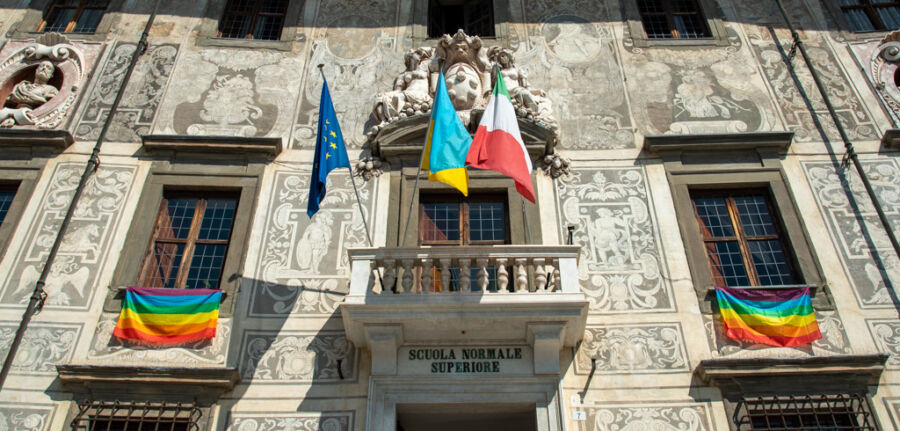
In Pisa, one of the main civic buildings flew three flags: the European Union, Italy, and — not Pisa — but Ukraine. Nearby flew two rainbow flags, an Italian symbol for PACE (“peace”).
Anecdotally, I learned that the one-two punch of Omicron and the Ukraine invasion has led many travelers to book trips more last-minute than before. A hotelier in Rome explained, “Usually we see people booking many months ahead. This year, it feels like people are taking a more ‘wait-and-see’ approach, and are booking only a few weeks ahead.” If you wait too long to book, you may find that you’re trying to jump into a pool jammed with others doing the same…and miss out.
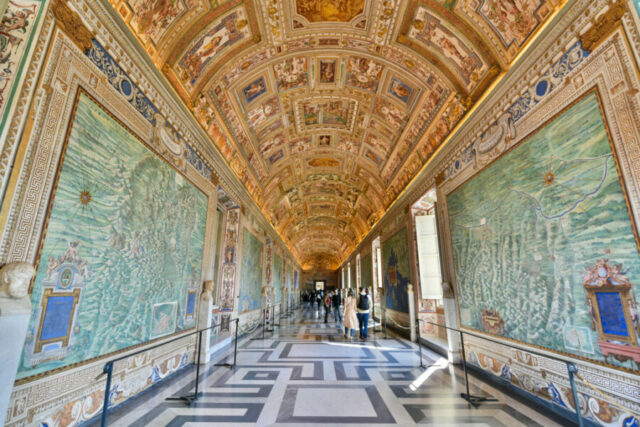
What about crowds? It’s very early in the season, but even so, in London and Rome, things were not nearly up to their overwhelming 2019 numbers. Things are definitely returning to normal; lines were forming in front of major sights like the British Museum, National Gallery, Pantheon, and St. Peter’s. And yet, in the Vatican Museums, the Map Gallery was as empty as I’ve ever seen it.
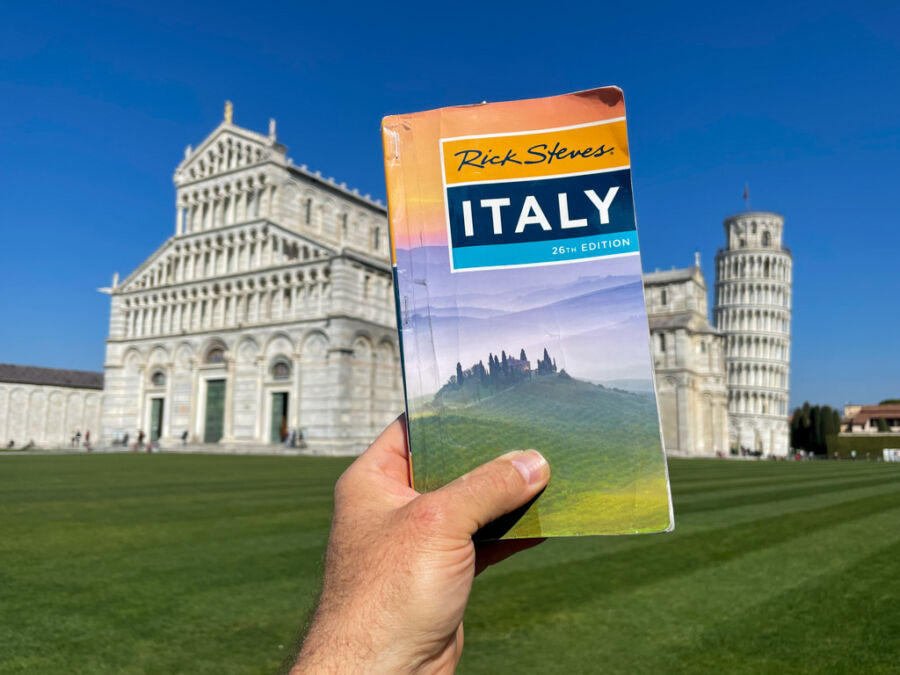
I found smaller cities much quieter. Cambridge, Pisa, Siena, Lucca — these places felt borderline-deserted. I’ve never seen Pisa’s Field of Miracles so empty, and my Lucca B&B told me that I was the only person staying there for those three nights. (On the other hand, on Friday and Saturday night, all of the best Siena restaurants were fully booked.) Of course, smaller towns and cities like these will ramp up and become busy again — but it may take longer than in the big cities.
As for those guidebooks: I’ve already turned in my updated files and maps for the Rick Steves London and Rome books, and other researchers (including Rick) are currently updating every corner of Europe. Our guidebook department is working at a heroically accelerated pace this year to churn out new, post-COVID editions as quickly as possible. The first new books (including London and Rome) will hit bookshelves as early as August, so if you’re heading to Europe this fall, keep an eye out for the latest.
In the meantime, while much has changed, I found our guidebooks fundamentally sound. The best sightseeing advice, the self-guided museum tours and walks, the lists of our favorite restaurants and hotels…while each of these has been slightly adjusted, the current edition is still as up-to-date as anything you’ll find in print for assembling a dream return trip to Europe.
The Final (?) Word
I’ll stress again that this is a very small sample size: one traveler, two countries, five weeks. And it represents just a snapshot in time; this blog post will go stale remarkably fast. But I hope it offers some insight and encouragement about wading back into international travel at this moment.
What’s the situation in France, or Germany, or Spain, or Prague, or Greece? Honestly…I have no idea. But I imagine it’s somewhere between the two extremes of London and Italy. And if anyone out there wants to give us their own trip report here in the Comments, we’d all appreciate it.
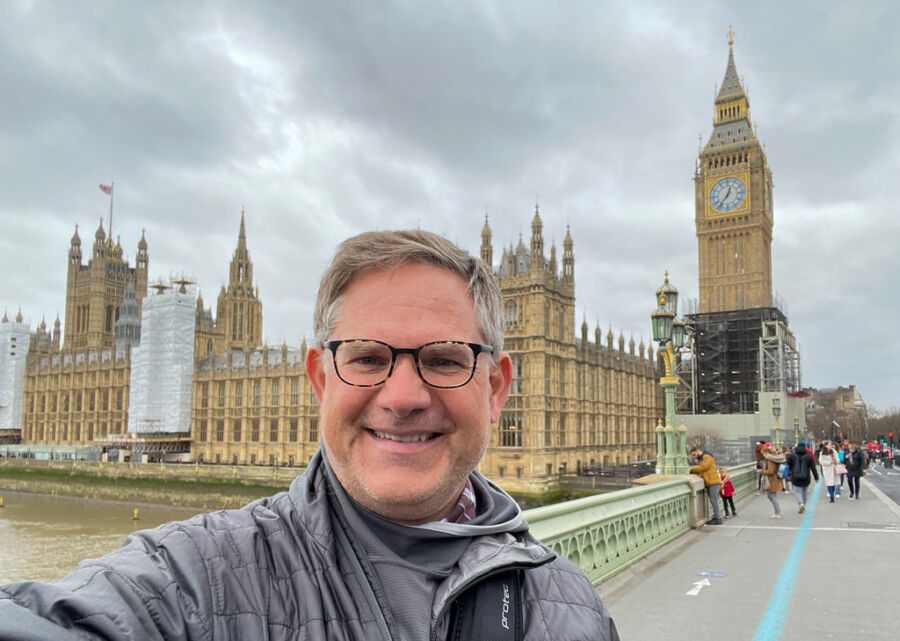
In the end, this was one of my favorite, most successful trips in years. It felt wonderful simply being back; the weather was unseasonably pleasant; and I must admit, I didn’t miss the crowds. Most of all, I came away with a confidence that you can have a safe and enjoyable trip in 2022, even as COVID sputters on. Just be prepared: Before you hit the road, think carefully about how much risk you’re willing to take on, then adapt as needed — even if that means skipping indoor dining or wearing an N95 mask for that performance you’ve been dreaming of. Be aware that each place you visit may have their own restrictions, and be conscientious about following them. Check back frequently to understand any red tape you might need to sort through. But most of all, simply enjoy being back in Europe.
 During the pandemic, I took some time off to write a travel memoir, The Temporary European: Lessons and Confessions of a Professional Traveler. It’s a collection of my favorite travel tales from my 20-plus years working with Rick Steves, plus inside looks at what it’s like to write guidebooks, make travel TV, and guide tours. You can order it from your favorite local bookseller; get it at the Rick Steves’ Europe Travel Store; or buy a copy at Amazon.com (paperback or Kindle edition).
We traveled in Italy last fall and found it much as you described, except crowds were decently high even in smaller towns – albeit not as high as before. I dutifully checked websites and regulations, which made for smooth sailing!
We are planning a trip for August to Scandinavia, and so far in my research of hotels I’ve found several that seem to have closed or changed names (or ownership maybe?). I’m wondering if that part of Europe was hit harder but by lack of travel. Not sure when the RS team will be there, but I think the 2021 book will still be decent to use on the whole.
Pal is a great guide..we loved our RS Scandinavia tour…he is updating RS Spain book now but you can hire him or take the RS tour.
Wonderful information. Thank you for your insights and suggestions. Haven’t been to Europe since 1979. I traveled extensively both in 1975 and 1979. Now that I am retired and covid better controlled, I hope to get back there with my husband.
I agree. My husband and I wanted to travel back to Cornwall (landing in London for a couple of days) after a long time since we loved being there. But, with COVID, we have put it off until 2023 and want to add Ireland and Scotland. Perhaps Switzerland. So the information from Scot has been great and I liked YOUR message as well. Oh, we have the first name, too!
Your article brought back our years and travels of living abroad and I enjoyed it so much. Now in my 80’s with walking problems this is my mode of travel. Thank you so much for sharing.
We were in Budapest and Austria in November of ‘21. There were very few travelers; seemed strange but rather nice not to be ploughing through hordes of people. Everyone was masked. In Budapest, there were the most people at the Synagogue because it just had reopened. We had to show negative Covid tests within 72 hours for Hungary before we boarded our plane in SFO. Most everyone in both countries were masked. In Vienna and Salzburg, we had to show our vac cards before entering any building and fill out a contact card. All considered, it was a small price to pay to be able to enjoy some of our favorite cities again. The baths in Budapest were full (mostly local) and the goulash soup was as good as ever. We will be in Varenna and Switzerland in June and expect things to be somewhat loosened up by then.
I enjoyed your post, Cameron, as usual.
I was just in Europe from mid-February 2022 until March 2022 as a solo traveler. Revisited wonderful Vienna but also explored Bavaria for the first time (have now visited 9 of the German states). Noticed the Hauptbahnhof in Munich was crowded with military reservists heading off with bags to their duty stations on the day after NATO implemented their defense plan. Then I went off to explore new places: Bratislava, Budapest, and Krakow.
Truly enjoyed my visits to Slovakia and Hungary. As the war in Ukraine ground on, I encountered many Ukrainian refugees in Budapest, in the train stations and on the trains. Donated all my unspent Hungarian forints to the refugee relief team at the train station as I left Budapest on schedule. Worried that tourists like me would get in the way of refugee aid operations in Poland, I cancelled my hotel stay in Krakow (paid for my booked 7 days but urged the hotel to give my room to any refugees that needed it). I decided to head towards the Mediterranean to avoid taking up a needed train seat on the refugee routes through Poland.
From Vienna I booked a direct flight to Malta, totally unplanned. Enjoyed a wonderful week there, surprised at how much I enjoyed it. A daytrip to Gozo Island just was a breath of fresh air and scenic beauty in every direction. It was great to walk around in shirtsleeves without a heavy coat.
From Malta I flew to Rome, met up with a hometown friend and we really walked all over the city. From there I flew to Los Angeles via Amsterdam.
Rick’s descriptions of Rome and the Covid precautions there are accurate. I found people in Germany and Austria to also be very compliant with public health requirements. Slovakia was less so and Hungary seemed to barely be aware of Covid measures except for the need to wear masks on public transport.
All in all, I enjoyed my February-March off season trip. I hope to fly to the UK and Ireland in June, a family wedding in Tuscany, and then head from there to the Nordic countries and Iceland this summer. Staying with local friends in Ireland, England, Italy, and Finland. One of the benefits of a long cruise two years ago (UK to Australia) was forming new friendships with fellow passengers, and responding to their invitations to come visit them at home.
I just returned from Spain, including Madrid, Pamplona, and part of the Camino De Santiago. This description of Italy matches what I experienced in Spain. As of the moment indoor masking was still required and taken fairly seriously, though N95 grade wasn’t expected. Also mandatory hand sanitizer use on arrival into a shop, etc. Very few tourists, though I saw plenty of American exchange students, I believe, in Madrid. All restaurants open. The Camino between Pamplona and Legroño was very quiet. On arrival to Spain I had to either show proof of completed vaccination or a recent negative test. To return to the US I did a virtual proctored antigen test which O had brought with me. All I needed was 15 minutes and a WiFi connection along with ID to do the test myself in my hotel room. Got official results in 10 more minutes. Worked great.
Thanks for the update, Kenneth. Very helpful. Interesting idea to donate your overnight stay in Poland to refugees…very thoughtful of you. I am heading to Poland myself in a few weeks and am very aware of the importance of being conscientious that they are facing a challenge right now. On the one hand, I don’t want to over-burden resources, as a casual tourist. On the other hand, Poland’s tourism sector is still hurting after two years of pandemic, and I feel that patronizing businesses there can do some good. My goal is to travel in a way that minimizes my footprint/doesn’t interfere with the needs of refugees and those aiding them, while also supporting the local economy and helping those who work in tourism and travel get “back to normal.” We’ll see how it goes.
Cameron. I am also going to Poland soon. For a wedding. I have reduced my tourist travel time there as I think moving around will be more difficult given refugees may need to travel out of Poland. I do hope to see a lot of Warsaw and then Krakow on my way to Prague. I admire your take on travel in Poland right now and wish you a lovely journey. .
Thanks for your beautifully written, encompassing message. A great boost to me!!
I am going to France and then Malta in May. I am very stressed about getting the PCR Covid tests as needed to fly from place to place. Hewitt implies they are readily available in pharmacies And the like. Is that what you experienced? Where did you get your test before flying back to the States?? Thanks
Thanks, Cameron. I just returned from 8 days in Sicily and I saw the same attention to mask wearing and vaccine card checking. I did the Covid test at the FCO airport in Rome. It was quick with a straight forward process for 20 euros.
Just got back from 10 days in France. Everything was open and masks were only required on public transit. Vaccine cards were required for some indoor spaces the first few days but that ended mid-trip (around March 14 I think). I would say very few people had masks on. More in Paris than in Normandy or the Loire Valley. Many museums in Paris limited the number of entries so even with the museum pass you needed a timed ticket (which was pretty easy to obtain). No Covid test was required to get into France if you are vaccinated but we needed tests to come home. They were quick and we had our negative Covid tests via email within 10 minutes.
Thanks for the info will be in Paris, London and Amsterdam in June!
Headed to Paris soon. Did you get your Covid test to fly home to USA at pharmacy in Paris? Or somewhere else? Cost?
Just returned from a month in Spain…2 weeks planned, a second two weeks unplanned, courtesy of a positive Covid test the night before our flight home. Barcelona felt busy, crowded in a good way (not up to past levels). Mask usage varied…on the streets, I’d say 70/30 unmasked to masked. Universal masks requirements to get in restaurants, but once inside, no masks. Servers in most but not all restaurants were masked. All outdoor cafes were filled with unmasked patrons. Masks required in museums, train, airport. It felt very cheerful and noisy everywhere. We were in Barcelona, with side trips to Cadaques and Girona.
The pre-flight test required to fly home threw a total wrench into all plans. Cancelled flights, scrambled for hotel arrangements, and started waiting it out with no real idea of when we could return. My husband’s symptoms were uncomfortable but mild, requiring only help from items we could get at a pharmacy. However, a week later I tested positive and we ended up staying a full two weeks longer than planned. He ran out of his prescription meds, even with the plenty of extra he always carries. Found an English doctor who was able to see him and prescribe a refill. We were fortunate to have a hotel we could keep extending our stay at, fortunate to have a relative in the city to help with logistics, and mostly fortunate that the extra stay didn’t bankrupt us. But the uncertainty of trying to wait out the virus and not knowing when we’d be in a position to leave, was really stressful. We self-tested several times (home tests readily available and cheap at pharmacies). We finally got negative tests one afternoon, then crammed to find flights for the next day, and made it home 24 hours later. I am a pretty intrepid traveler, but I know now I won’t travel internationally again until the US drops the test-to-fly requirement. We had an Italy & Spain trip booked for June, and I cancelled that today. Getting stuck with a positive test is not an extension on your vacation or travel budget that I ever want to go through again. And yes, we have pretty hefty travel insurance but now it will be a case of filing a claim and fighting for reimbursement.
Thank you for sharing your experience, Cindy. Curious about your statement ‘but I know I won’t travel internationally again until the US drops the test-to-fly requirement.’ Your husband tested positive. Without the pre-flight test, he would have exposed fellow plane travelers to Covid. I am sorry about your extended stay, illness, and challenges. Grateful your fellow travelers were not exposed on the original flight.
Julia, I had the same reaction.
Agree!!
Completely agree with you Cindy. As far as all those that are “oh, my you would expose everyone to covid, look at the science (and not political science), Airpane filtration systems are amazing and screen out virtually everything. Folks need to get over COVID and get on with life. If you want to wear your mask, fine but stop imposing yourself on everyone else.
Rick, not sure I entirely agree with you here. It’s true that airplanes filter air at a remarkable rate–many people don’t realize how effective that is in keeping people safe. On the other hand, there are many situations where you simply can’t avoid contact with people who may be contagious: on the jetway; in waiting areas; even on the plane, which doesn’t filter air at the same high rate while it’s parked at the gate. There’s nothing “political” about that…it’s simply science-based risk assessment.
And even in flight, air filtration is not not a 100% safeguard (which is why we wear masks on board). On my 9-hour flight home from Frankfurt, the guy across the aisle (whose nose was poking out of his mask most of the time) kept coughing loudly. I was glad the air was well filtered, sure; I was even more glad we were both wearing masks (even if his was improperly); and it bought me great peace of mind to think that he had tested within the last day, making it more likely this was allergies or a simple cold instead of COVID.
I agree it’s time to “get on with life,” but unless we want more surges and lockdowns, that also means making small, reasonable changes to our behavior to protect ourselves and others. That includes, for instance, continuing to mask and test on airplanes. Given the recent surge in Europe (which is now starting to show up in some big eastern cities of the US), it’s not unreasonable public health policy to continue to require tests for the time being.
It’s obviously a massive headache if you “draw the short straw” and test positive before coming home from Europe. I’m fortunate that I haven’t had that experience (or maybe it’s because I’m very cautious…or, probably, both). With each trip I am well aware that such a thing could happen, and I am willing to deal with it, if it does. If that eventuality is a deal-breaker, then sure, hold off on traveling for the time being.
The one thing that makes this, perhaps, a bit more tolerable is that even in recent weeks, several countries have reduced the amount of time you need to isolate after a positive test; many have gone from 10 days to 5 days, for instance, and others simply require a negative test. While that would still be a hassle, if someone is worried about this, they can check the current regulations in the country they’re visiting to really understand what the consequences of a positive test might be.
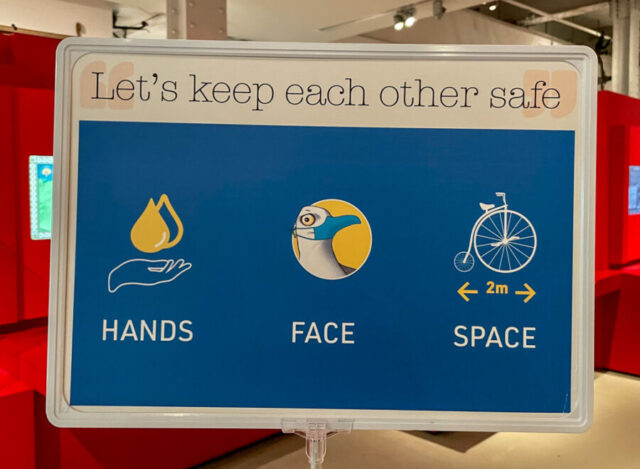
Agree. Wearing a mask, is the science, and a small inconvenience to be able to travel and also keep others around you safe. Love the sign, “Let’s take care of each other(s).” To a responsible traveler, this should not be a problem.
Cameron – I applaud you, Rick and your entire team for all you have done to keep your readers/followers/travelers entertained during the pandemic. Whether by blog, Facebook or even re-reading old Ricks Steves travel books. This has really helped some many as they felt isolated in the early days of the pandemic.
My husband and I traveled to France this past November (2021) and it was similar to you experience in London. The indoor mask restrictions were still in place but I could see that most Parisians were over the masking. Crowds were less and that was nice. We were able to visit the Palace of Varsailles. We arrived when they opened and there were no crowds at all. We had the Hall of Mirors to ourselves. But, the metro train ride there was pretty crowded and that was a little hard to be in such close quarters with others as Omicron had just made its way to France.
It was good to travel again after staying home for two years. This is our new normal for the time being and it’s time to get back to enjoying life and traveling. I think masking is a very small price to pay to keep others and yourself safe during these times. More than anything…it’s about being good humans.
Our next trip is Scotland and I cannot wait.
THANK YOU AGAIN FOR ALL THE WONDERFUL INFORMATION YOU SHARE TO KEEP TRAVELERS INFORMED.
Well said. I totally agree.
Thank you, your experience is the reason we have not returned to travel yet. I appreciate your sharing the details.
Oh wow Cindy! This is what I am scared of. Unplanned stay due to Covid but my gosh Americans travel to Europe courageously as if everything is normal! I am from Australia and we are too far if something like this happens to us! We would love to fly now but being immunocompromised is always there. So jealous of people like you who are courageous!
So much good information here- THANK YOU!!
Cindy Yoshimura – thank you very much for posting about your experience and glad you are ok. Good luck with your claim.
Just a note: Cameron talks about London and England, and he literally means that and not “the UK”: I’ve just flown from Exeter (in England) to Edinburgh (in Scotland), and there is a dramatic difference: Scotland is much closer to his Italy experience when it come to facemasks. I suspect Wales is somewhere between the two, and I can’t speak for Northern Ireland.
Thanks for the clarification. Yes, I was only in London and a few other towns in England. My understanding is that Scotland is still more cautious. (I will be there in June, and will be interested to compare.)
Anyone have any info about Ireland? Thanks
Greetings from Ireland, Sally!
I live here and all restrictions have been lifted, which is amazing considering how very strict they were for so long. Masks are optional everywhere, and I’d say about 30% of people I see are wearing them. A massive wave of the second omicron variant is starting to slowly fade. My husband and I both caught it right after our St Patty’s day out but have both recovered.
Thank you Ellen!! I appreciate the information-
Take care and I will be there next month which is hard to believe.
Hmm. Checking for 3 vaccinations won’t work for all of us in Italy. If we got the J&J vaccine and have a booster there are only 2 listed on our CDC cards. We are in our 40s so getting a 2nd booster right now isn’t possible. Where might we find information about that?
So glad you had a great trip Cameron!
Hi, Jodi. I got the J&J vaccine earlier last year. I was in Italy in the fall and returned in January 2022. As Cameron described, Italians scrutinized the CVC card. But I pointed out that the one vaccine was J&J. They all seemed to understand that it’s a one-dose vaccine so were okay with it, as long as I had proof of a booster as well. It’s the booster that they seem to be most concerned about. Thought there are inconsistencies about the checks, in general I found north of Rome, especially the Veneto region, to be more diligent.
Karen, thanks for the firsthand report. That’s what I was assuming: They will look at the card and may notice it’s just two shots, but if you can explain to them that the first shot was J&J it should (should!) still be OK. Interesting that you found it more strict in the North, as people in the South told me the opposite!
If you got J&J + a J&J booster, you are eligible for a 3rd dose: https://www.cdc.gov/coronavirus/2019-ncov/vaccines/booster-shot.html
I second Cindy’s experience in Spain. We are seasoned travelers and covid restrictions are formidable. My friend and travel partner contracted covid either on the plane to Lisbon, Portugal from USA or after arrival in Lisbon, March 10, 2022. She had mild cold symptoms, tested positive on home test, and went into 10 day quarantine at our Evora, Portugal hotel. The rest of the tour group tested negative and continued onward. The day before flying home, we all tested again at official lab in Toledo, Spain…everyone else negative and flew home. I tested positive and went into 5 day quarantine at our Toledo hotel, feeling fine. Home test showed negative day 4 of quarantine, confirmed negative on day 5 test at official lab and flew home on day 6. Travel partner came out of 10 day quarantine, hired driver to take her back to Lisbon, found a local clinic with a doctor who would write a letter saying she was recovered from covid and was able to fly home the day before I flew. Hopefully, some of her expenses will be reimbursed by insurance but she missed out on the whole trip. Bottom line, covid is real and has serious consequences even if you feel fine. Spain is opening up, masks are optional most places as of March 28 and quarantine is now 5 days instead of 10 days. You still need an official negative test within 24 hours to fly home. Mine cost $44 with results back in an hour. Travel thoughtfully and carefully.
We just returned from two weeks in the UK. A few observations:
– Covid precautions are minimal which does add a layer of stress when you have to test negative to return to the US.
– If using the BinaxNow test, take extra tests with you. Two of the four tests we took did not have all the needed components.
– We visited London, Dorset, Dartmoor, and Cornwall. Aside from one other American couple in Cornwall, we did not see any other tourists outside of London.
Thanks for this info Angela. We have an almost identical itinerary beginning April 25th and are most nervous for the test to return home. But, living in Texas, we’re used to being the rare maskers in a space.
I visited France (Lyon & Nice) and Monaco in December. Monaco had the most strict masking requirement when I was there for a day. They were required at all times (even outside), except when eating and drinking. When waiting for the changing of the guard the police came up to people to ask them to put on a mask.
I’ll be going to Budapest, Kraków, Prague, and Amsterdam in July, so it will be interesting to see how things are then.
I agree with Kathy D. I really appreciate Cindy Y sharing her recent European travel experience, which is the reason I haven’t returned to travel yet.
We are Americans who live part-time in Nice, France. We just returned from Venice and found your writings on-point, Cameron. The Italians are very serious when it comes to wearing the FFP2/N95 masks indoors (surgical and cloth masks are unacceptable) and you WILL be asked to leave a restaurant if you can’t show proof you are fully vaccinated (3 vaccines). They won’t serve you outside, either. Be prepared for a temperature check to visit St. Mark’s Basilica. One suggestion: visit the “super-tourist” cities during the week. Venice was lovely and crowd-free on weekdays, but Italians flooded in on the weekend. Still nothing compared to the pre-pandemic cruise-ship crowds, but certain areas were uncomfortably crowded just the same.
Can you recommend some outdoor places to eat in London? Thank you!
On my visit, most outdoor seating at restaurants was not in use (though lots of places have it–it should be opening soon, as weather improves). Instead, I really enjoyed the many great indoor/outdoor markets in London, especially the Borough Market on the South Bank. It’s largely covered but airy enough that I felt perfectly safe (especially in a mask). And there is some good, well-ventilated, covered-but-outdoor seating as well.
For those interested in the South of France: we are currently living in Nice and France recently began to give 4th vaccines to older populations. However, no proof of vaccination is required for any activity. Masks are only required on public transport and in hospitals/retirement homes in France. In Nice, only about 5% of people on the street wear masks—most rip them off as soon as they get off the bus or tram! The incident rate here is very high and in the last two weeks we’ve had 3 friends (all unrelated, French and American) catch Covid. So, regardless of what others are doing, we keep our FFP2 masks readily available to put on when we encounter crowds on the street (buses emptying, restaurant lines, shoppers, etc.) and along the Promenade des Anglais. We aren’t eating inside restaurants, and are avoiding bars, indoor concerts, movie theaters, etc. We can still enjoy the uncrowded museums and the spectacular beauty of the Côte d’Azur, though. So far, so good!
Thanks for the information, Cameron. It’s very helpful especially since we are planning to visit Italy this fall. My wife and I visited Ireland last November and we encountered much the same when it came to Covid restrictions. We spoke with the owner of The Dingle Pub one rainy afternoon and he was very concerned about another surge (which of course came about with omicron). Mask wearing was required to enter restaurants, museums, and any indoor activity. Checking vaccination cards was universal. In spite of this we had a wonderful time.
My wife, adult daughter, and I returned last Saturday after a 22-day Italian exploration that included Florence, Perugia, Assisi, Padova, Vicenza, Venice, Siena, and Rome. I concur with Cameron’s observations about conditions there. We needed to be masked indoors, have our vaccine cards handy, and with reservations made for many attractions. Crowds were mostly small outside Venice and Rome. It felt as though we had Assisi to ourselves. I waited until the night before to reserve our 15-minute slot in Padova’s Scrovegni Chapel. The limit for the time periods is 25. We were three of only four folks enjoying the experience. We were by ourselves in Rome’s Domus Aurea where a slick presentation of how the “grotesque” decorations of Nero’s walls and ceilings were picked up by Raphael and other artists of the Renaissance (and others since) and applied on surfaces at many of the attractions we’d already seen during our tour. However, I waited to long to book three slots for Venice’s Ducal Palace Secret Itineraries Tour and my daughter snagged the only available slot for the next three days. We also had limited options for the Vatican Museum and I can only say that my photos in the Gallery of Maps shows a distinctly different human-to-map ratio! We felt like we landed for our trip at just the right moment: before the post-Covid or post-variant crowds return, while there was still a focus on safety, with ideal weather (perfectly clear, blue skies until a few light showers our last three days), a relatively strong dollar, and at a point in time when our various hosts for lodging, restaurants, museums and other attractions, and shopkeepers were enthusiastically happy to welcome us.
Cameron, what resource did you use to find/schedule a “qualified” test for the return flight home to the US?
We are in London now and traveling home to the US on April 18 if all goes well. We brought BinaxNow kits (purchased from United airline link before we left US) and they were pricey — only available in a set of six. We brought four with us for two travelers. I hope that process goes smoothly and the kits have everything we need (they must be taken with online monitor).
Rapid tests are plentiful here in London, but wondering how one would be able to have assurance that the results would be accepted by US airline. Unnerving to feel that a test used might be rejected while trying to check-in at airport. It feels like a complicated prospect.
Hi Jo
Our family (2 parents, 5 teenagers between 14yrs-21yrs) traveled to Disneyland Paris and then Switzerland for 3 weeks over Christmas and NewYrs, and used those same United Airlines BinexNow 6 pack tests the night before we were to fly home. At $150/6 tests, they were only $25 each and the process couldn’t have gone smoother – the test kits were simple to use and complete, the wifi connection proctor was easy and simple (even with 7 people back-to-back testing!) and we’d do that option again in a heartbeat for the convenience of not having to find a testing location in a foreign country and figuring out how to upload it to our US-based airlines.
We were meticulous about wearing our basic surgical-grade masks (mom is an RN and dad is an MD!) in all public places, however we did remove them to eat indoors at several poorly-ventilated places including on the Glacier Express Train to Zermatt where we’re certain we were exposed! The younger teens ended up testing positive the night before we were to fly home (only symptoms were a horse voice for 24hrs in the 14 y/o boy that we thought was teenaged-male hormonal voice changes and the 17 y/o being tired on New Years day after being out until 2am!) so mom stayed behind to quarantine with them until we got negative tests 7 days later while dad flew out with the older teens who all tested negative. Everyone remained asymptomatic during quarantine, so our advice is do NOT unmask to eat indoors and have a plan for where&how to quarantine if you test positive for the flight home!
Even with having this experience, we’re all ready booking to go back to France+Scotland this summer…
My family and I just returned from Greece in mid March. It’s been a long few years and to have the privilege to be able to travel to Europe again and it was extremely emotional. We felt blessed to be there and had no problems wearing our masks and showing our vaccination cards at every site, museum, and restaurant. Most people followed the rules, there were a few noses out, but for the most part everyone was keeping themselves and each other safe. Greece was much more cautious than here in the Midwest and honestly it was refreshing to see people really care for each other and follow the science.
The people of Greece are just as friendly as ever and happy to see life finally returning back to something more normal. We can travel, we can connect in person again, and we can keep each other safe by caring about each other. It is really that simple. Happy Travels all and be well.
Thank you for your helpful update. I just ordered the Zeiss antifog spray. I am not concerned about the red tape. I am concerned about getting Covid. England’s lax attitude is concerning. Iwill continue to wear a mask. I am booked on a RS England trip in June.
SPAIN We just flew home from 2 weeks in Spain on April 10th. We spent most of the time in Andalusian area. Entry required either vaccination card or Covid test (we had the vaccination card), and filling out the Spain health form 48 hours before leaving home (Very easy to do. You do need your seat number for flights, so I had to wait until 24 hours before boarding when I could check in. Acceptance of the form was done in a matter of minutes) You needed a medical mask on the Lufthansa flights. They would give you one if you had cloth. Once there, masks are required indoors. Cloth masks were OK. Everyone wore them and it was enforced if you forgot. (As I sometimes did) We spent one day in the UK at Gibraltar. The man at passport control told my husband “you don’t have to wear that mask sir”. They were all obviously happy to be done with it and we saw very few masks. During the trip, we were never asked to see our vaccination cards to enter sites or eat anywhere. Masks outdoors were optional but many people still chose to wear them. Coming home: We got our Covid test at Democratest on Gran Via in Toledo. (You enter from the back on Flor Baja street-clearly marked “medico”.) It was very well organized. It took 15 minutes to get results on the phone and cost 25 euros. We got it the day before leaving, and the location in the heart of Madrid meant we were only steps from all the attractions. It barely affected our day of sightseeing. We had our attestation statement and test results ready to show to check in to airport. Somehow they already had all the information about vax and test results. No one anywhere was interested in my attestation. I felt like a student who worked hard on all my homework, only to have the teacher not even look at it! Crowds: It always seemed like there were plenty of people. However, we know tourism was down because of reading the RS 2019 book. For example, “get your tickets to Alhambra months in advance”. This was a last minute trip. I booked us 2 weeks before leaving and every day had entries available. In Toldeo: “There will be a long line to enter the church but it is worth it” We walked right up to the ticket booth. Last thought: We saw very few Americans until we came back up north to Toledo and Madrid.
This is all very helpful and interesting to read. We are doing our first traveling in the pandemic-era to Portugal next month (May). Anyone have any Covid information/experiences to share from there recently?
Just came back from a 12 day Italy trip. Rome, Florence, Lucca, Cinque Terre and the Umbria region. We flew home March 25 and the precautions were still all in place. With the vaccine cards we had multiple people not only check for all three vaccinations but they also counted back to make sure the booster was within 6 months. Something to think about and check before you go…as boosters are going to be hitting a 6 month mark soon. With all the restrictions we still had the most amazing trip. Our only glitch was not booking colosseum tickets. We thought we could walk up to a window since it was the off season. There are no ticket windows now. We hopped into a group tour that was just taking off and it was fine. Overall an absolutely amazing adventure.
We arrived in Spain March 31 and plan to fly to Lisbon April 15. We leave Lisbon for Seattle April 21. We are traveling as a couple and not with a group. We have taken public transport, including trains. We are vigilant about wearing kn95 masks. Our experience in Madrid, Toledo, Arcos de La Frontera and Seville has been positive. Masks are not required outdoors, but I am observing about 50/50 mask wearing outdoors. Masks were required in Wanda Stadium when we went to an Athletico Madrid football game, though not everyone kept on masks when seated. Another exception is the Semana Santa celebrations, most observers are unmasked. Indoor masking is required, except while eating, and people are very compliant. The weather is warming up and there are many outdoor eating options. I did a self administered antigen test today (negative) and will do a proctored test tomorrow to meet requirements to enter Portugal. Portugal is not currently accepting US. Vaccine cards. Therefore we need a negative antigen test before we board our TAP Portugal flight. We will complete another COvid test before leaving Lisbon. We are fully vaccinated, do self administered tests about every three days, planned as best we could to stay healthy and will be flexible if have to accommodate COVID. We got caught in the British Air IT meltdown during our transit flight through LHR. It was one of those unexpected experiences that we just had to cope with and move past to experience a fabulous trip.
I’m flying to Portugal today on KLM, and have not been asked/told to get a test. Per TAP website it says USA vaccine documentation is accepted. https://www.flytap.com/en-us/alerts-and-informations?accordionid=f09bb288-5a14-40a1-85dd-9b4baec90209
I’m anxious about it all though, and might do a proctored test before going anyway!
Great information, Rick. Thanks! My wife and I will be in London in June with a couple of side trips (family visits and Edinburgh). We were in France over Christmas (Strasbourg, day trip to Colmar, and Paris). The crowds were large everywhere, especially the Christmas market at the Louvre in Paris and Versailles, perhaps because France was one of the few places allowing US citizens to travel at the time. A “Pass Sanitaire” obtained at a local pharmacy upon arrival got you entry to all places, and it was checked religiously. Masks were required everywhere outside your home at the time, and it was strictly enforced, even on the streets by roving police patrols. Restaurants were busy and reservations almost required to get a seat. Fortunately, my wife speaks enough French to get us a table. Since everyone either had to be vaccinated or test negative to get the pass, and were masked, we felt pretty safe during our time there, and tested negative to return. Looking forward to some less strict travel this summer. Be safe!
Portugal: Does anyone else have information about travel into Portugal? I can find limited info. on line. We are travelling from Canada to Lisbon via Morocco and it looks like Portugal not accepting Canada’s vaccine certificate so we have to do a COVID test. Is that a rapid antigen or PCR? If we’re positive in Morocco prior to leaving for Lisbon, how long do we have to quarantine? Or is it just until we can get a certificate of recovery? Does anyone have any idea why many countries in Europe are not accepting Canadian or US vaccine certificates?
I traveled to Egypt in January 2022 and returned home via Germany. Since I had an overnight in Germany I had to retest before flying to the US and tested positive for Covid. I was required to stay in my hotel room for 7 days only being allowed out to test (they deactivated my key card so they would know if I left). A friend in Germany familiar with the protocols told me to get a PCR test, which I could get for free since I tested positive on an antigen test. The PCR test came back negative so I was allowed to leave before 7 days were up. At the time I was there Germany hotels were implementing the 2G+ protocol which meant if I was not boosted I would need to test every day to stay at the hotel. Unfortunately since I had the J&J shot and a booster, I was considered fully vaccinated, but not boosted. They count the number of shots and don’t accept the J&J single shot as fully vaccinated.
We had an AWESOME time in September for 17 days driving all over Croatia, Slovenia, Kotor, Montenegro and Bosni- Herzegovina. Did the Video Covid test the night before leaving LAX (Only required to transit through London at that time). Checked in at LAX and they checked us through to Zagreb via JFK and Heathrow. Did have some issues transiting through JFK as the had us leave the terminal and recheck through the whole process again (kinda tight on a 90 minute layover). Then had to do it all over again at Heathrow. No problems with any of our paperwork.
Lake Bled was busy. Croatia was somewhat busy but not overly crowded. Kotor pretty busy. Border crossing were 20 minutes max. Covered 1500 miles, 8 or 9 Border crossings.
All the National Parks were pretty open and fully operational. Leaving Zagreb to return to US was easy, just did the video Covid test the night before from our Zagreb Airport hotel (Again required transitting London and re-entry to US). Overall weather was amazing, warm if not kinda hot some days. Only one day of rain in Bosnia.
Leaving in 9 days for 25 days of Greece Island Hopping (Crete, Santorini, Athens, Patmos, Kos) and a driving trip through SW Turkey (Bodrum, Fethiye, Side-Antalya, Cappidocia, Pamukale, Didim, Ephuses). All testing requirments are gone except Re-Entry to US. Will simply do the video thing night before in our Izmir Airport Hotel.