2019 Discovery: Gdańsk, Poland

Crowds got you down? This post is part of a series of 10 European Discoveries for 2019 — off-the-beaten-path gems where you can escape the tourist rut and find a corner of Europe all your own.

For years, Gdańsk has had my vote for Europe’s best-kept secret. But its time has arrived — and I’m determined to let the cat out of the bag.

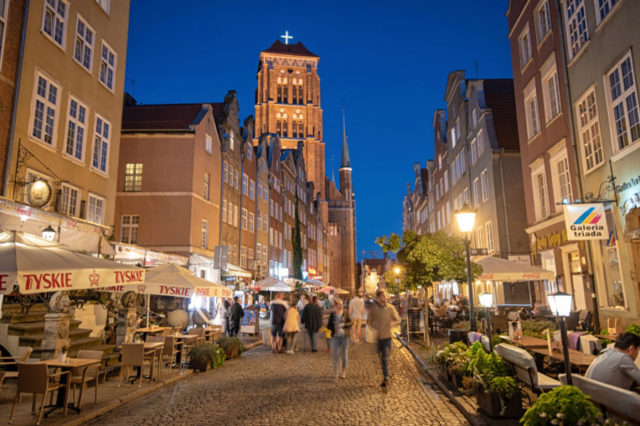
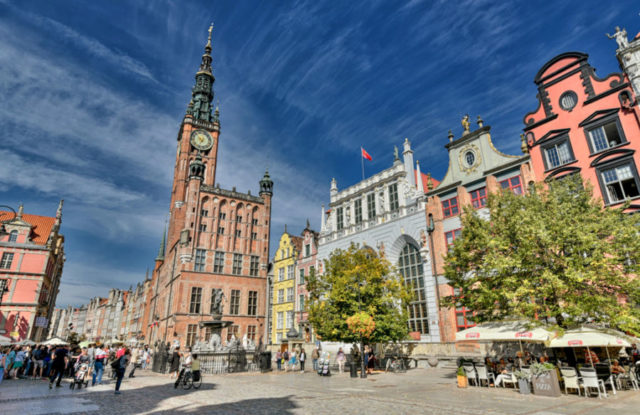
Gdańsk has always been a historic diamond-in-the-rough. But now it’s also stunning and fun. Glittering gables have been scrubbed clean, the exuberantly colorful streets bustle with hip microbreweries and third-wave coffee shops, and Oslo-style high rises and sleek embankments are sprouting all along the long-deserted, WWII-scarred Granary Island — creating a brand-new waterfront people zone in the heart of the city.

Museum-goers find plenty to do here, from lavish old-time interiors to cutting-edge museums on the Solidarity movement that toppled Soviet rule (which began right here), the Polish experience in World War II (which also began right here), and — in nearby Gdynia — Poland’s definitive Emigration Museum (honoring those soon-to-be Polish Americans whose journey to the New World began right here).

While you’ll rarely spot American visitors in Gdańsk, Scandinavians have discovered the city as an affordable yet rewarding getaway. (And when Scandinavians begin to take notice, you know you’re onto something good.) Today’s Gdańsk is hitting that perfect sweet spot: fascinating and entertaining, but without all of the crowds of more famous places like Kraków and Prague. In short, Gdańsk embodies everything I love about travel.

Want to explore more? Halfway between Kraków and Gdańsk, you’ll find the historic, red-brick town of Toruń. I wrote about both stops in this roundup of my favorite unheralded gems in Central and Eastern Europe. And for nine more suggestions on where to get away from the crowds across Europe, check out my 10 European Discoveries for 2019.

Poland’s New World War II Museum — Who Gets to Tell the Story?

I spend a lot of my time in Europe checking out museums, to evaluate and describe them for our Rick Steves guidebooks. But on my latest trip to Poland, I had the most thought-provoking museum tour of my career, at the new, high-tech, and highly controversial Museum of the Second World War, in Gdańsk. My review of the museum is mixed…for political reasons. That’s because the museum I saw is not the one that was originally intended. Instead of leaving the exhibits to historians, Poland’s government decided to make some… “adjustments.”

Poland took a hard right turn when the Law and Justice Party came to power in 2015. Regardless of my personal politics, I have no problem with Poland having a right-wing government. There’s a natural and healthy pendulum swing to Polish politics, which I’ve observed up close over the 20 or so years that I’ve been traveling here regularly. And regardless, Poland has always been far to the conservative end of the European spectrum.

But the Law and Justice party is something different. Like Viktor Orbán’s Fidesz government in nearby Hungary, or Donald Trump’s presidency stateside, the Law and Justice party has made bold moves that feel outside of the “normal” bounds of a democratically elected government. All of the specifics — including aggressive changes to the judiciary, the military, and the media, all while flouting EU censure — are beyond the scope of this post, but this video by Vox provides a helpful primer.

From my perspective as a guidebook author, the Museum of the Second World War provides a fascinating case study in how the politics of a place you visit can have an impact on your sightseeing.

The original director of the Museum of the Second World War, Paweł Machcewicz, pursued a bold vision to present an ambitiously global, yet personal, perspective on the war that began right here in Gdańsk in 1939. When I first heard about this plan, many years ago, I couldn’t wait to see it.

It should be noted that Poland does museums exceptionally well. In the Gdańsk area alone, recent years have seen the opening of new, state-of-the-art museums about Lech Wałęsa and the Solidarity strikes of 1980, and about Polish emigration to the New World. Both are among the best historical museums in Europe. And the Museum of the History of Polish Jews, which opened in 2014 in Warsaw, is simply breathtaking — ambitious in scope, intimate in detail, and masterful in telling its story.

The bar was set high. But it seemed that the new World War II museum might just be able to clear it. Unfortunately, after the Museum of the Second World War was completed — but before it had opened to the public — Law and Justice government officials deemed it too pacifistic and “not Polish enough,” demanding changes to make it more singularly patriotic. Machcewicz was replaced as the director, and the other historians and curators who had designed the exhibit were also fired or left. By the time the museum opened in March of 2017, several exhibits had been altered.

It was through this lens that I visited the museum for the first time, just a few weeks ago. I was curious whether I’d be able to tell what had been altered. And — from my perspective as a travel writer who has evaluated literally thousands of museums across Europe — I also wondered, simply, was this version of the museum any good?

The purpose-built museum complex — steered by a committee that included Polish American architect Daniel Libeskind — is striking. Surrounding the building is a flat, neatly landscaped plaza — representing the present. Above it rises a jagged, glass-and-rusted-steel tower — representing the future. And the exhibit occupies more than 50,000 square feet, entirely underground — representing the past, or perhaps something like a tomb.

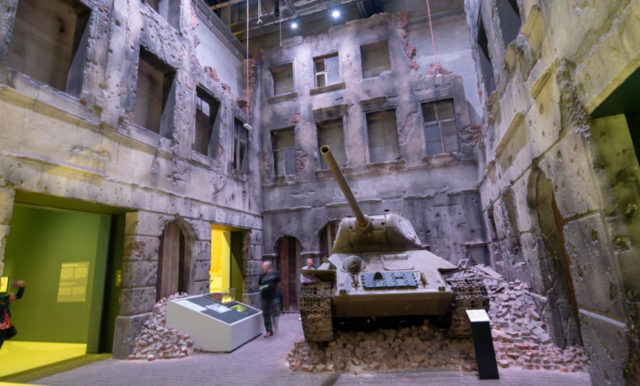
Once inside, the permanent exhibit curls through a central corridor, telling the story of World War II beginning with the fragile peace that ended the First World War. The museum is blessed with remarkable artifacts, which it weaves together with modern effects, touchscreens, and some elaborate dioramas (such as a walk-through Polish city street, before and after the war).

Touring the exhibit leaves you with powerful impressions: A boxcar that was used to transport Jews to concentration camps. A wooden wheelchair from a psychiatric hospital near Gdańsk, all of whose patients were executed by the Nazis. An actual Enigma machine, with an exhibit explaining how it was Polish mathematicians who originally broke the German code…before sharing that information with Alan Turing and Bletchley Park. A film by American correspondent Julien Bryan, who was in Warsaw during the invasion and bore witness to the Nazis bombing a church during Mass, an attack on a maternity ward, and a village of peasants strafed by Luftwaffe gunfire while digging up potatoes.

Museum of the Second World War

I went in looking for examples of what might have been changed by the new director. Some were obvious: In the middle of a powerful exhibit about the Holocaust — awkwardly plastered to a wall that felt like it was supposed to have been left empty — was a display explaining how the Polish people stood up to save their Jewish neighbors from the Nazis, at great personal risk. While this certainly took place (and such people are rightly honored by Israel as “Righteous Among the Nations”), many Poles also looked the other way — or collaborated. This is an important — and somewhat controversial — topic that is handled evenhandedly in Warsaw’s Museum of the History of the Polish Jews, among other places. But this museum, supposedly the definitive statement on World War II in Poland, makes no mention of any Poles who aided the Holocaust. Rather than posing questions, it provides a definitive (yet incomplete) answer.

Another notable change was playing up the role of Poles as victims and martyrs. Posters were added throughout the exhibit profiling everyday Poles (often clergy) who were persecuted during the war. This struck me as odd; in other cultures where nationalism takes root, the tendency is to downplay victims and elevate heroes. Later, a Polish friend reminded me that much of the Polish national identity is tied up in its spectacular failures. Victimhood is not weakness; it’s the foundation of strength. And here again, the exhibit was working hard to pluck the Polish heartstrings.

And I sensed a tone, throughout, of simplistically painting Nazi Germany and the USSR with the broadest of brushes. I’ve toured many museums — less mired in politics than this one — that relate the events of history with honesty, intelligence, and nuance, which is devastatingly effective in documenting just how coldly ruthless World War II’s authoritarian regimes were. Those museums trust their audience to draw the appropriate, reasonable conclusions. But this museum self-consciously strives to make everything as overt as possible: “Boy, those Nazis were bad hombres, amirite?” And in doing that, paradoxically, it weakens its message.

One exhibit explicitly condemns “nationalism” on the part of the Nazis and the Soviets — which struck me with some irony, since the Law and Justice party itself is often labeled as nationalistic. I suppose nationalism looks bad when someone else is wearing it.

After visiting, I talked with a tour-guide friend of mine who’s based in Gdańsk. She confirmed my hunches about what had been changed. And she would know, since she had been fully trained and licensed to lead tours through the original exhibition. With the change in management, however, all of the tour guides were given a document to sign, agreeing that they would offer only the authorized narrative to visitors, without any supplementary information or personal insights. Approximately two-thirds of the guides — including my friend — had refused to sign, and the museum scrambled to train new ones who would march in lockstep with their version of history.

Still chewing over this near-miss of a great museum, several weeks later, I keep returning to one key question: What is the purpose of a museum? To educate about facts…or to manipulate emotion?

To be fair, I suppose most (good) museums strive for a balance between these two goals. That’s the artistry of museum curation: If you tell the story properly — and objectively — it creates powerful emotions.

A spokesperson for the museum has said that because the Polish taxpayers financed it, they deserve a museum that pushes a Polish narrative. But of course, the original version of the museum also gave voice to the Poles; perhaps the difference was that it stopped short of telling them exactly how to feel about all of this.

Great art — and a great museum — tells its story thoughtfully, and the emotions occur organically. And, yes, it makes the viewer work a little harder on their own. But that’s what makes the experience more powerful. It’s the difference between an art film and a telenovela.

On the other hand, walking through exhibits with a nationalistic bent, I tried to put down my hackles and see the place through Polish eyes. If ever there’s a time to give strong voice to a specifically Polish point of view, is it not in a Polish history museum? Can it not be said that the Jewish museum in Warsaw is “skewed” to the Jewish point of view, or that the Museum of African American History in Washington DC is “one-sided” in presenting the experience of Black Americans?

And yet, the Museum of the Second World War fails where the Polish Jews and African American museums soar. That’s because there’s a precipitously fine line between presenting a perspective and forcing an agenda. And for me, Poland’s re-envisioned World War II museum crosses that line. It’s a museum that makes me mistrust what it’s telling me. Because I know that it’s politicians, not historians, who are presenting this story. And once a museum — or a teacher — has lost the respect of its students, how can it effectively teach?

More than anything, it’s the museum’s final exhibit that rankles me. After 18 intense rooms of exhibits — feeling like you’ve been put through an emotional wringer — you arrive in the final hall, with a literal Iron Curtain cutting through the middle of the room, and photographs of bombed-out Polish cities on the walls. Overhead plays a brief film called “The Unconquered,” bursting with cherry-picked historical details, generalizations, and exaggerations. The movie is charged with an intense, unmistakable message of national pride and military might. With cheaply produced CGI effects, an urgent voiceover, and bombastic music, it feels like a trailer for a first-person shooter video game. (You can watch it here.) Sadly, this is the taste that the museum leaves in your mouth.

My tour-guide friend said that the final film had originally concluded the exhibit on a more thought-provoking note, accompanied by wistful folk music and challenging questions. Later I read an interview with the original director, Paweł Machcewicz, who said, “Through this film, we had wanted to show that the war wasn’t a closed chapter, it wasn’t the past. Violence, the suffering of civilians, is still going on around us. The propensity to violence is inside us; it is part of the human condition. It served as a warning and emphasized the universal meaning of the exhibition.” I sure would like to see that film.

And by the way, Warsaw’s magnificent Museum of the History of Polish Jews — in contrast — is not afraid to ask tough questions on its way out the door. In that museum, the final room pointedly asks: Is there any future for Jewish people in Poland, a place where they were very nearly wiped from existence? Conflicting viewpoints are presented — from contemporary Jewish communities in Poland, and from Polish Jews in Israel — but it doesn’t instruct you how to feel. It trusts you enough to wrestle with tough questions without slipping you the answers.

At the end of the day, the Museum of the Second World War is still an impressive accomplishment. It succeeds at providing important, mostly well-rounded insight on an extremely significant event, from the perspective of the country that was perhaps more grievously impacted by that event than any other. I will recommend it in the new 10th edition of my Eastern Europe guidebook— but with a caveat.

Good as the museum is, I can’t stop thinking about how much better still it could have been. Full disclosure: I am one-quarter Polish, and I wear my Polish ancestry with great pride. It saddens me, as a Pole at heart, that my grandfather’s homeland has been denied the world-class World War II museum it deserves.

What do you think? Who gets to tell the story of a nation? Am I wrong to wish that it be historians, rather than politicians?

Crowds Got You Down? Go Someplace You’ve Never Heard Of

Europe is more crowded than ever. And yet, on a recent trip to Europe, I found that very often, I was the only traveler around. Why? Because I was off the beaten path, in lesser-known corners of Poland and Hungary.

It’s clear that popular places like Salzburg, Amsterdam, Prague, and basically all of mainland Italy are reaching a saturation point. Famous landmarks and piazzas are a 24-7 human traffic jam. Major sights are impossible to visit without reserving well ahead and, once inside, are so congested you wish you’d skipped them. Increasingly, traveling to Europe’s too-famous-for-their-own-good biggies is becoming more trying than fun.

Of course, you can still go to he popular places, equipped with smart crowd-beating strategies. But here’s a different, elegantly simple solution: Break out of that tourist rut and travel somewhere new. Go to a city you’ve never heard of…or, at least, couldn’t place on a map. The destinations I’m talking about are far less crowded and, typically, far less expensive. Even better, they feel more like real travel…a welcome throwback to a time when travel was about the pure joy of discovery, rather than a sheep-in-a-turnstile bucket list.

While you can find these unheralded gems all over Europe, my favorites are in Central and Eastern Europe. A decade or two ago, you could have made a case that these countries still had rough edges to keep travelers away. But these days, places like Poland and Hungary are definitively ready for prime time…yet still refreshingly untrampled.

Kraków is, deservedly, Poland’s most popular destination. With a spectacular square and an excellent food scene, it’s well worth visiting. But on this trip, I found that even Kraków is becoming noticeably more crowded. Don’t miss Kraków — but after you see it, continue deeper into Poland, to explore its equally appealing, completely undiscovered destinations farther north. Go to a city with a name you can’t pronounce.

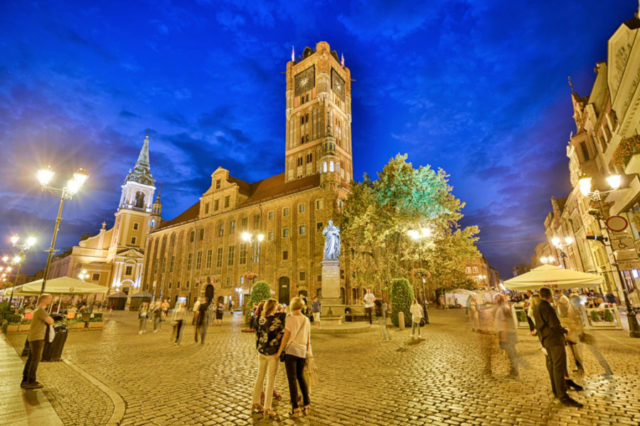
Toruń is a historic, red-brick town deep in the heart of Poland. The hometown of Copernicus (ahem, Mikołaj Kopernik) and famous for its gingerbread (which scents its streets with a heavenly aroma), it’s an utter delight.

On a balmy Friday night, in the heart of prime tourist season, I was hanging out on Toruń’s main square…and spotted zero American tourists. The floodlit, generously pedestrian-friendly streets had just the right number of people, and most of them were Polish (with a smattering of German travelers, visiting a place that used to be in Germany). Buying a big bag of gingerbread cookies (intended to last me a week…but gone by the end of the night), I strolled between Gothic brick towers, nursed a drink at an al fresco café on a cobbled square, and simply enjoyed the sensation of being the only Yankee in town.
A short train ride took me to majestic Malbork Castle — the former headquarters of the Teutonic Knights, and the largest brick castle on earth. It’s the most important, most impressive European castle that you’ve never heard of. When I asked the ticket-seller if he had any crowd-beating tips for my book, he stared at me blankly for a few seconds, then said, “Well, I guess on summer weekends you might have to wait, like, 10 minutes. Maybe.”

Once inside, I enjoyed going from room to room, squeezing through tiny brick doorways, ogling delicate fan vaulting — in a haze of medieval castle fantasies — and never once got stuck behind a tour guide with a numbered paddle and 50 pooped tourists in tow. The gigantic castle is a bit exhausting to tour…but not because of crowds.

Just 30 minutes farther north is perhaps the best example anywhere of an underrated city that simply blows away anyone willing to give it a chance. You may know it by its old German name, Danzig — but to locals, it’s Gdańsk.

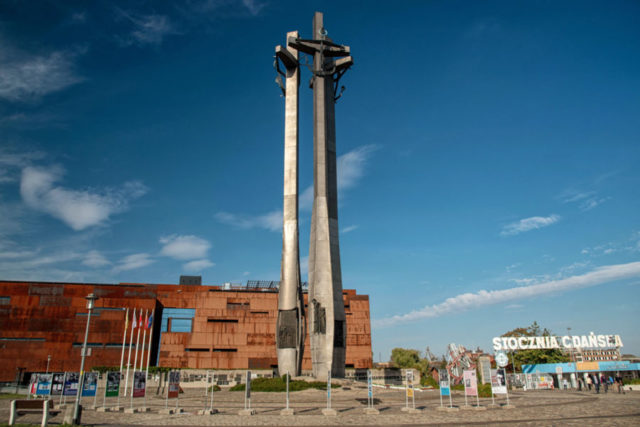
Gdańsk is intrinsically fascinating. Located on Poland’s Baltic coast, at the mouth of its main river, Gdańsk has been the primary crossroads of Polish history. There’s a spot in Gdańsk where you can look in one direction, and see Westerplatte — the exact location where World War II began (when Hitler invaded in 1939). And then, with a swivel of the head, from that same place you can see the shipyards where Lech Wałęsa staged his Solidarity protests in 1980 — sparking the beginning of the end of Soviet domination and the Cold War. The city is literally bookended by 20th-century history.

If history’s not your thing, then what about gorgeous old towns? If there’s a more stunning main drag in any city in Europe, I can’t think of it. I find myself fabricating excuses just to walk up and down Gdańsk’s “Wide Street” as frequently as possible. And behind those skinny, pastel, ornately gabled facades are endearing, unexpectedly fascinating little museums that bring to life the golden age of this maritime burg.

For sightseers, the Gdańsk area also has several new, cutting-edge museums that are among the very best I’ve seen in Europe. There’s one commemorating Lech Wałęsa and those Solidarity strikes (in the actual shipyards where the strikes took place); one telling the story of Polish emigration to the New World (in the neighboring port city of Gdynia); and the state-of-the-art Museum of the Second World War, with an exceptional exhibit that, unfortunately, has been compromised by political meddling.
Exploring Gdańsk for the first time in a few years, I was floored by how drastically the place is upgrading. I’ve loved Gdańsk since my first visit in 2004 — when it was, I’ll admit, something of a diamond in the rough. But today it’s simply breathtaking…without qualifications or reservations.

Granary Island, in the middle of the river that cuts through the middle of Gdańsk, was historically filled with handsome red-brick granaries. Bombed flat in World War II, it was left in ruins for generations. Like an ugly scar ripped through the heart of the city, the island was an off-limits eyesore. With each visit to Gdańsk, I was assured that the island would soon be renovated and re-integrated into the fabric of the city. I never quite believed it.

But on this visit, I literally did a double-take when I spotted the sea of construction cranes, turning this prime real estate into a futuristic new housing, dining, and entertainment district. Glassy, modern buildings — with rooflines echoing those historic granaries — will soon face the city’s classic old riverfront strip. Suddenly, humble Gdańsk looks like Oslo.

And the best thing about Gdańsk may be how undiscovered it feels. There are just the right numbers of tourists…but most of them are Polish, German, or Scandinavian. Norwegians and Danes flock here on cheap flights for cheap food and drink, ensconced in a dazzling historic city. Waiting for my flight at the brand-new Lech Wałęsa Airport, I noticed the names flicking across the departure boards: Trondheim. Oslo. Copenhagen. Stavanger. Helsinki. Stockholm. When Scandinavians are on board, you know you’re on to something good.

There is one big risk with going to Gdańsk, and it is this: You’ll come home evangelizing about the place with such fervor, your friends might start to think you’re a little unbalanced. (But then, one day, they’ll finally go there…and you’ll get a text that says, “OK, I GET IT NOW.”)

Poland alone has at least a half-dozen other cities where being able to pronounce the name is not a prerequisite for enjoyment: Poznań, Wrocław, Zamość — and even the capital. My recent visit to Warsaw was a revelation. It was amazing to see how fully realized a destination that city has become. It’s an absolute delight that goes toe-to-toe with more “known” capitals like Prague or Berlin.

But Poland is just one example of a country that’s easy and rewarding to travel in, but gets overlooked by whistle-stop tourists. My latest trip also took me to Hungary, where I reacquainted myself with Pécs (pronounced “paych”) — a small city at the southern edge of the country, close to nothing, but packed with more than its share of top-notch museums.

Pécs’ strollable core is congested not with tourists, but with local students. And the whole thing is slathered in bright, colorful Zsolnay porcelain — decorative tilework (invented right here) that’s a defining feature of Hungarian architecture.

I happened to be in Pécs on the evening of their wine harvest festival. A grandstand was set up on the main square, which was filled with locals grazing at a dozen different food stalls and sipping wine from another dozen little kiosks showing off local vintners’ products. Since it’s close to Croatia, Pécs menus come with Balkan accents. Settling into a bench with my paper plate of grilled meat and spicy ajvar sauce, listening to Britney Spears and Katy Perry hits thundering out of the loudspeakers, watching local kids play while their parents chatted and sipped new wine, I felt not like a gawking tourist — but like an invited guest at the banquet.

Up in the north of Hungary, I settled in for a couple of nights in my sentimental-favorite Hungarian small town, Eger. I got to know Eger over many years of tour guiding, bringing our Rick Steves Best of Eastern Europe groups here.  And every time I step into its tranquil main square, under the spires of a gorgeous Baroque church, I savor the small-town authenticity of the place.

Eger has sumptuous architecture, fine wine, a historic castle, and some endearing little museums just right for enjoyably killing a few hours. It had been years since I’d been to Eger’s thermal bath complex, a 10-minute riverside stroll from the main square, so I went for a soak an hour before closing time. A few days before, I had visited Széchenyi Baths — my favorite thermal spa in Budapest — and found it, for the first time ever, uncomfortably crowded. Until very recently, Széchenyi was mostly locals, with a few curious tourists. But on this visit, it was packed with little clumps of borderline-obnoxious international travelers, with a few irritated Hungarians mixed in.

However, Eger’s thermal bath complex was all mine. It was enjoyably bustling, with small-town Hungarians. Floating in the hundred-degree water, I heard not one word of English. And it was a delight to explore the freshly renovated complex, from its tranquil, old-fashioned Turkish bath under a stately dome, to its giddy indoor-outdoor whirlpool. On a trip where I took a dip in no fewer than five different thermal baths (I am an aficionado)…Eger’s small-town spa was the surprise favorite. And that was mostly because I had it all to myself.

Serendipity is more poignant off the beaten path, and when I returned to Eger one evening after a side-trip to some different thermal baths in the countryside, I found that a hot-air balloon had just set down right in the middle of the square. Watching the wranglers pull on sturdy ropes to expertly maneuver the bulging bag of hot gas as they slowly drained it of air, then gently tipped it over, I felt like a giddy backpacker on my first trip.

Hiking up to Eger’s stout castle, gazing out over its sweet square and skyline prickly with fanciful church towers, I thought for the umpteenth time on this trip how satisfying it is to travel to places like this one.

Eger, Pécs, Gdańsk, Toruń, and so many other gems are just now hitting that perfect “sweet spot” for travelers: Easy and accessible for anyone, but still largely undiscovered and crowd-free.

I love our Rick Steves Best of Eastern Europe in 15 Days Tour itinerary, which efficiently visits the “greatest hits” of this region: Prague, Kraków, Budapest, Rovinj, Lake Bled, and more. Returning from this trip, I was inspired to brainstorm a (totally hypothetical) “sequel tour” to that itinerary. What if you could link up the lesser-known gems of Central and Eastern Europe? Warsaw, Bratislava, Pécs, Zagreb, Slovenia’s coast and Karst, Sarajevo, Montenegro. You’d wind up with a tour every bit as rewarding as the original…but with a tiny fraction of the crowds.

When planning your next trip, consider skipping the predictable biggies. Instead, take a leap of faith and go to places like these…and let yourself be enchanted.

What’s your favorite uncrowded, undiscovered gem in Europe?


I was traveling in these places to update our Rick Steves Eastern Europe and Rick Steves Budapest guidebooks — which are available now. In these books, you’ll find all of the practical details for everything mentioned here. (In fact, these are probably the most lovingly updated but least used chapters in any Rick Steves guidebook.)

Europe’s off-the-beaten-path gems are a theme on my blog. For example, while mainland Italy is spectacular, Sicily has a few more rough edges…and far fewer crowds.

Slovenia is Europe’s ultimate undiscovered destination. I could write a book about the charms of Slovenia. (Oh, wait…I did.) Whether you’re exploring high-mountain pastures, sampling the local budget foodie scene, or browsing through wonderful Ljubljana, Slovenia earns a place in any itinerary seeking something new and uncrowded.

That said, even in super-popular places, you can (with a little effort) find your way to untrampled corners. For example, in Iceland, bust out of the “Reykjavik and Day Trips” rut and drive the entire Ring Road around the island. Linger at Lake Mývatn, a geothermal wonderland that still feels yours alone.

Believe It: 8 Reasons You’ll Love Warsaw

I’m back in Warsaw, Poland’s capital, updating the upcoming 10th edition of our Rick Steves Eastern Europe guidebook. And I’ve gotta say — this city is just great. No, really.

I realize that Warsaw has a blemished reputation. Those who think of it at all, don’t think much of it. It’s synonymous with an agreement among an Evil Empire of nations who joined together to hate our living guts. And historians know that the city was brutally devastated in World War II. Even Europe completists think of Warsaw like taking their medicine: Well, I guess we have to go there…eventually.

But I’m here to tell you: Warsaw is fantastic. Yes, it lacks the romance of Prague or Kraków. But as a thriving, modern European capital — more on the order of Berlin or Athens or Budapest — it’s hard to beat. Just about any traveler can find something rewarding here. I think of Warsaw as Europe’s great “stealth destination”: It’s not on anyone’s radar. And then, even once you’re there, its charms sneak up on you when you’re not paying attention…until WHAM! — you realize you’re having a blast.

Here are my top eight reasons why Warsaw deserves to make the cut on your next itinerary.

It has an amazing food scene. 

On my last trip to Warsaw, I enjoyed the best food tour I’ve ever taken. It was a revelation to see (and taste) the city’s explosion of creative culinary energy. Warsaw is one of Europe’s most unexpectedly interesting foodie cities, period.

On this trip, I decided to go all-in and booked a table at Atelier Amaro, which owns one of Poland’s two Michelin stars. Filling an unassuming little brick building at the corner of Łazienki Park, the restaurant has impeccable service and delectable cuisine.

The best restaurants are rooted to a place, and Atelier Amaro’s tasting menu of nine courses (ahem, nine “moments”) was a journey through Polish forests and farms. Earthy notes; foraged greens; ample but not overwhelming hits of dill and beet and berry; and innovative, New Nordic-inspired plating.

One dish, served in a tiny lidded bowl, appeared to contain only a blanket of clover. But punching through that layer of wood sorrel, my spoon found tiny wild strawberries marinated in bison grass oil, tomato seeds, and horseradish.

The wild duck was aged in hay, and smoked, and seared — but rather than tasting overworked, its flavors were perfectly balanced. And the best dish may have been a minuscule ice-cream cone with pungent chive ice cream.

The entire experience, including drinks and tip, came to $120 — a bargain for a meal of this caliber. Ten years ago, I would have laughed in your face if you told me I’d spend more than $100 for a dinner in Poland. Today, I’d do it again in a heartbeat.

Chopin is everywhere.

While I appreciate music, I’m not an enthusiast…except when I’m in Warsaw. There’s something about the music of Fryderyk Chopin that perfectly suits his hometown. While often thought of as being French, Chopin had a Polish mother, was born just outside Warsaw, and said that the music he composed sounded like the wind blowing through the willow trees of his native Poland.

On my first visit to Warsaw, my local friend Kasia insisted that we attend a performance in the concert hall at the Chopin Museum. Watching the pianist moved with profound emotion as he pulled out those notes, and seeing the dewy eyes of the otherwise-steely Varsovians all around me, I realized how large Chopin looms in the Polish cultural legacy.

Ever since, I’ve made a point to attend concerts each time I’ve come to Warsaw, including the summer-only Sunday Chopin concerts in Łazienki Park — performed in the shadow of a giant monument to the great composer. Varsovians show up in droves to pack around the fountain and feel their patriotic souls stirred.

On this visit, I enjoyed a salon concert at my B&B (more on that later). When the pianist entered, before taking her seat, she carefully adjusted the light that had been aimed at the keyboard — raising it to illuminate the portrait of Chopin on the wall behind her. I’ve come to learn that Poles revere the Black Madonna of Częstochowa, Jesus Christ, and Fryderyk Chopin…in that order.

The people-watching is mesmerizing.

Sitting on any Warsaw bench, watching the world go by, you observe a perfect cross-section of Polish society. Grannies in track suits and tennis shoes, clutching humble flower bouquets, rushing to catch the tram. Tattooed hipsters with clean-shaven heads and long beards down to their perfectly sculpted pecs. Old-timers with Lech Wałęsa moustaches and faux-leather vests that are older than their adult children. Perfectly coiffed businesspeople, from all over Europe, deep in English conversation. Nuns and priests chatting on their cell phones. The Polish national weightlifting squad, out for an intimidating sneer. Husky brides and huskier grooms on a photo shoot at all the big landmarks. It just never gets old.

It’s infused with a surprising elegance…at budget prices.

Between the World Wars, Warsaw was one of Europe’s leading cities — cosmopolitan and genteel. While this was battered out of them in World War II, then through the slow burn of communism, Warsaw always retained a certain refinement in its DNA. Now that the city has rebounded, and has the freedom and wherewithal to pursue its true identity,  Warsaw is putting on the dog once again. For example, the top-of-the-top Hotel Bristol, along the Royal Way thoroughfare, comes with a variety of exquisitely decorated bars and cafés (like the sumptuous Column Bar, pictured above) — as elegant as any grand hotel in Europe. If you want class, you’ll find it in Warsaw.

And yet, the city is remarkably affordable. While Poland’s economy is strong, it remains reasonably priced on a European scale. That Hotel Bristol? In most European capitals, I’d expect to pay $400 or $500 for a room there. On this trip, they quoted me closer to $200. A comfortable, midrange hotel is comfortably under $100. Yes, that fancy dinner I mentioned is pricey by any standard — but remember, it’s the most prestigious restaurant in the entire country. A delicious, memorable, foodie meal at an upmarket restaurant can run $15-20…half what you’d pay in London or Paris. As its economy improves, Poland is hitting the sweet spot of affordable elegance.

The museums are world-class.

If you think of Warsaw as the Washington DC of a nation of 40 million people (including their field-trip-crazy kids), it just makes sense that the city would have top-quality museums. And it does, in abundance. Poland does museums particularly well, and you could spend days in Warsaw’s — most of which have been upgraded over the last few years. On this visit, I made a point to walk through all of the big museums in town — and was blown away, again and again, by the quality, which goes toe-to-toe with any great city in Europe.

If you like Polish art (or think you might), hit the National Museum — with Matjekos, Malczewskis, and Boznańskas that’ll knock your socks off. If you’re into music, tour the Chopin Museum. History buffs hit up the Warsaw Uprising Museum, or the newly re-opened Museum of Warsaw. Palace aficionados are wowed by the Royal Castle. Parents with kids in tow head down to the Copernicus Science Center, with two floors of hands-on, interactive, educational exhibits. And my favorite museum in Poland — and perhaps Europe — is the exquisite Museum of the History of Polish Jews, which opened in 2013. This immersive, thoughtful museum delves deeply into the full breadth and depth of the Polish Jewish experience, in a way that’s illuminating to experts and novices alike.

It’s perfectly on-trend.

While most visitors stick to Warsaw’s staid, stuffy “Royal Way” spine — leading between the main boulevard and the rebuilt Old Town — there are countless outer districts of the city that are young and vibrant and exciting and amazingly trendy. Śródmieście (“Downtown”), just a 10-minute tram or Uber ride south of the tourist zone, is where Varsovian yuppies and hipsters mingle at colorful, creative cafés tucked under hulking Soviet-era arcades. The square called plac Zbawiciela  — shaped like a Trivial Pursuit pie, with tram tracks running through the middle — offers a glimpse of this scene, with wine bars and posh coffee houses and Thai street food and hipster dives, all spilling out onto the square.

Just a few blocks away is my favorite discovery from this trip, the Hala Koszyki. This trendy food hall, which opened in 2016 in a renovated brick 1906 market hall, is your handiest one-stop shop for sampling Warsaw’s current dining scene. Outside — sandwiched between the two brick entrances — is a sprawling zone of al fresco tables tucked among trees strewn with twinkle lights.

Inside you’ll find a dozen and a half entirely different eateries, covering all of the culinary bases: Spanish tapas, sushi, Indian, Latin American, Italian, Thai, hummus bar, beer hall, tea salon, gourmet chocolates, gelateria, and, of course, Polish. It’s anchored by the big bar in the middle, surrounded by communal seating. And tucked down a little side hall is the Bazar Koszyki — a tight row of nine different international street foods (udon, hot dogs, flammkuchen, pierogi, pho). The upper level, ringed by design studios, has quieter seating. They also have live performances (concerts for kids on Sunday afternoons, Polish stand-up on Wednesday nights) — check www.koszyki.com for details.

It’s simply enjoyable.

If you want corroborating evidence for your dated impressions of Warsaw — that it’s nothing but dreary concrete apartment blocks — you can find it. But the city also has verdant gardens, inviting squares, kid-friendly pedestrian zones, and parks you want to get lost in. For example, after years of turning its back on the Vistula River, Warsaw is now embracing it — with freshly landscaped riverside parks, manicured trails, and lively beach bars.

Whether you want to stick to the pretty-as-a-postcard Old Town, or bust out of the tourist rut and go hang out with the Varsovians in an overlooked corner of their city, there are plenty of ways to enjoy yourself in the Polish capital. And, like any vibrant, forward-looking, youthful city, Warsaw comes with surprises. Graffiti murals laugh down on commuters, playful fountains beckon to kids, and otherwise dreary buildings hide colorful cafés, artisan workshops, and boutiques in their cellars. If you sit on a bench and notice a button, press it…and you’ll hear Chopin music playing.

Creative entrepreneurs more than compensate for the rough edges.

When I was first writing my Warsaw guidebook chapter in 2003, I struggled to find hotels and restaurants I felt good about recommending to our Rick Steves readers. Varsovians — still recovering from the brutal communist experience — were, as a rule, gruff. But since then, a new breed of entrepreneur has hustled to overcome that image.

One of my favorite success stories is Jarek Chołodecki, who contacted me when he opened a small B&B many years ago. At the time, this concept was a novelty in a city of high-end business hotels and dreary old communist holdovers. But Jarek parlayed a stubborn pride for his city, and an understanding of what makes it special and what his guests want, into a big success.

His Chopin Boutique B&B has grown over the years (he just told me he’s up to 30 rooms, having now taken over the entire building). But he doesn’t just accommodate his guests — he takes pride in helping them fully experience all that Warsaw has to offer.

I always used to lament to Jarek that there were relatively few Chopin concerts in town; other guests did, too. So he started hosting nightly chamber concerts of Chopin piano performances in his B&B lounge.

On this visit, as I checked in after an overnight connection from Seattle, Jarek said, “Our concert starts in 10 minutes, if you’d like to join.” Jetlagged as I was, I dragged myself down to his little salon and enjoyed a delightful 50 minutes of music that put me in the perfect spirit to enjoy the next 10 days in Poland. He told me this was concert number 1,844 — that’s more than five years of nightly Chopin. And I imagine that thousands of Rick Steves guidebook readers have gathered at Jarek’s breakfast table over the years — all of them feeling lucky to have such a welcoming home-away-from-home in an intimidating city.

And that’s why I do what I do. Through our guidebooks, we strive to put our readers in touch with Europeans who will help them make magnificent memories. Jarek is just one of many smart, capable, visionary, and proud Varsovians who have transformed their city from a gloomy punchline into one of Europe’s best-kept secrets.


For all my best tips on Warsaw, check out our Rick Steves Eastern Europe guidebook; the updated 10th edition will be available in early summer 2019.

“What about Kraków?” you might be asking. Well, Kraków is great, too…and has amazing food of its own. (And stay tuned for my upcoming posts on Gdańsk and northern Poland.)

Rick enjoyed a trip to Poland a few years back. You can watch short videos he took at Kraków’s Rynek Underground Museum, Sanctuary of St. John Paul II, and Schindler’s Factory Museum; at a farmers’ market and milk bar in Kraków; in Warsaw’s Piłsudski Square; at Malbork Castle; and in Gdańsk.


See You at the Air Show: A Not-So-Glamorous Day in the Life of a Travel Writer

My wife’s Great-Great-Aunt Mildred traveled far and wide, long before such a thing was fashionable. Late in life, Aunt Mildred wrote a memoir about her experiences. The title: Jams Are Fun. It turns out that, after seeing so much of the world, Aunt Mildred realized that it’s not always the big museums, the fancy dinners, or the castles and cathedrals that stick with you most. It’s those serendipitous moments when things go awry. And so, in the spirit of Aunt Mildred, this part of my “Jams Are Fun” series about when good trips turn bad, and the journey is better for it, takes place in the Middle-of-Nowhere, Czech Republic.

As a travel writer, I pride myself on coming up with creative solutions to vexing itinerary challenges. It’s a fun problem-solving exercise. But sometimes, things just don’t pan out.

On a recent guidebook-research trip through Eastern Europe, I wanted to drive my rental car from Prague to Kraków, with some countryside stops along the way. However, the international drop-off fees for going between the Czech Republic and Poland were prohibitively high. I was mightily pleased with myself to come up with a clever plan: I’d drop my car at an obscure little airport on the outskirts of the small city of Ostrava, just a 30-minute drive from the Polish border. And then, for the second part (and masterstroke) of my plan, my Polish driver friend, Andrew, would come pick me and bring me the rest of the way to Kraków, with some sightseeing stops en route. Brilliant! What could go wrong?

Excitedly, I emailed Andrew to set up the plan. He was totally game. By the way, Andrew Durman is a prince of a guy and one of my favorite Polish people. I’ve recommended him in our Rick Steves Eastern Europe guidebook for years, and he’s provided hundreds — maybe thousands — of our readers with a warm welcome and a worry-free side-trips to outlying sights, or even scouring the Polish countryside in search of their family roots. When I brought my Chicago-area Dabrowski cousins to Kraków several years ago, it was Andrew who piled us into his van, drove us deep into pig-farming country, and translated our conversations with our newly discovered, long-lost Polish cousins. I always think of Andrew as my honorary Polish uncle.

The day of our big meetup arrived. And as I left the charming little Moravian village of Štramberk en route to the airport, I was feeling pretty smug about how well this was going to go. I love it when a plan comes together! Strangely, my GPS was showing the drive to the airport at more than double the 20 minutes I had expected. Hm. Must be a glitch.

Except…it was no glitch. After a few minutes, I ran into a long column of backed-up traffic, inexplicably jamming the remote country road. I bailed out and went looking for an alternate route. But that one was backed up, too. And the next one. And the next one.

And that’s when I heard the jet engines.

A fighter jet went screaming overhead. And then another one. And it slowly dawned on me that this was no random traffic jam. I crawled past a billboard and slowly deciphered its Czech message: “Air…Force Days…Saturday…September 20.” Wait, that’s…that’s…well, that’s today.

According to its website, the NATO Days in Ostrava and the Czech Air Force Days are “the biggest security show in all of Europe.” And I’m quoting here: “The main program, taking place at Ostrava Leoš Janáček Airport, consists of presentation of heavy military hardware, police and rescue equipment, dynamic displays of special forces’ training, flying displays, and presentations of armaments, equipment, and gear of individual units…the most-visited two-day family event in the Czech Republic.”

And so, I had scheduled a rendezvous at what I imagined to be a deserted regional airport on the very day it was hosting 200,000 visitors from all over Europe.

I called Andrew, who had figured out what was going on right around the time I did. “Hello Cameron! I have been sitting still in traffic for 20 minutes. What do you want to do?”

I had to drop off this car at this airport, before crossing into Poland. I had no choice (other than, perhaps, driving myself three hours to Kraków, then driving back three hours tomorrow to return the car, then finding a ride for the three hours back to Kraków). By hook or by crook, Andrew and I had to figure out some way to meet up…and leave this car behind.

Andrew and I — coming from opposite directions — inched toward each other and the airport, periodically calling each other to track progress. I called the rental car office and said, “I’m trying to get to the airport to drop off my car.” Nonplussed, the bored agent replied, “Oh. You know, there’s an air show today.”

As I got closer to the airport, Andrew called me to say he’d parked his car, and was walking back to direct me to the terminal. I pulled over to the side of the road and went looking for him. By this time, the air show was in full swing, with military jets doing their eardrum-piercing loop-de-loops overhead. We might as well have been on the deck of an aircraft carrier on family visit day. Employing a kind of surreal doppler radar, Andrew and I followed the deafening sound of jet engines through each other’s cell phones to triangulate our way closer and closer to each other. Finally, Andrew came into view, far down the road, and we greeted each other with a big, fraternal, Polish bear hug.

Andrew hopped in my car and said, “I told the cops up there what’s going on. He said you can just ignore all of the ‘no entry’ signs and drive up to the terminal anyway.” Gingerly, I navigated my car between throngs of aviation enthusiasts, and — with Andrew’s encouragement — drove the wrong way down a one-way service road. Approaching the police checkpoint, Andrew looked a little concerned. “Hm. That guy I talked to earlier isn’t here.” He hopped out of the car and, after a very animated conversation, told me it was OK to proceed. And so, by some miracle, we got the car back to the rental office.

We hiked a half-mile back to Andrew’s car, occasionally peering up to see the warplanes swirl overhead. By the time we reached the car, traffic had cleared out, and we zipped across the border and headed for Kraków. By the time we pulled up to my hotel — hours later than planned — Andrew and I were already laughing about our impromptu visit to Europe’s biggest air show.


If you savor the Schadenfreude of hearing about good trips gone bad, check out the other posts in my “Jams Are Fun” series.

How about that time I was stuck on a cruise ship during a massive storm in the North Sea?

Or that time I got pulled over by keystone kops in a remote corner of Bosnia?

Or, really, the entire experience of driving in Sicily.

Aunt Mildred was right: Jams are fun, indeed. What’s your favorite travel jam?