My Favorite Food Tour: Teaching History and Culture Through Cuisine in Trendy Warsaw

I consider myself a foodie. But my definition of “foodie” isn’t just about hedonism. It’s about using a country’s cuisine to unlock a greater understanding of its culture and its history. If you can zoom out to the bird’s-eye view, it’s clear that food is culture, and so much of a nation’s identity is wrapped up in its culinary reality.

I make a point to take food tours all over Europe as a way to indulge my curiosity about how food influences culture…and to indulge my palate. And the best one I’ve ever experienced was in an unlikely place: the Polish capital, Warsaw — which has, over the last few years, quietly transformed itself into Europe’s budget foodie mecca.

In Warsaw, I spent a fascinating (and delicious) half-day with Eat Polska, in the company of an excellent guide named Michaś. Now, Poland is one of my favorite countries. My grandfather was Polish, I’ve written guidebooks about Poland, and I’ve traveled to Poland more than 20 times for both work and pleasure. I thought I had a pretty good handle on this place. But Michaś opened my eyes to how the country’s epic history, hardships, victories, and persistent personality flavor every bite of every dish. Whether you’re going to the land of borscht, pierogi, and vodka — or a place better known for pasta or foie gras — a great guide can turn a food tour into a food tour de force.

After we met on a busy urban street corner, Michaś brought me to a traditional restaurant to build a foundation for the rest of the tour. We sat down to a table laden with bread smothered in lard, pickles, a bowl of bright-red borscht, and a shot of vodka. Just as I was about to dig in, he said, “Wait! Before you eat, look at this table. Only two items here are not fermented. Which ones?” After several wrong guesses, he gave me the answer: the salt and the vodka. Even the beets are fermented (for days, weeks, or even months) before they go into the borscht.

Michaś explained the importance of fermentation in Polish cuisine: Historically, Poland has been a poor land of hardscrabble peasants. Nourishment is a perennial challenge. And in a place with harsh winters, fermentation preserves nutrition — and, in some cases, actually increases the levels of important vitamins. (All that fermentation is why Polish cooking has such abundant umami flavors.)

When it was time for the vodka, Michaś explained the procedure: First, you eat a bite of bread with lard. Then the shot. And finally, the pickle. This routine is rooted in science more than superstition: The fat in the lard coats the digestive tract; the acidity and mineral salt of the pickle replace those killed by the alcohol; and both bites mask the burn of the vodka.

Strolling through a park to our next stop, we talked about the importance of thick, hearty soups in a peasant culture. These allow poor people to nourish their families, even if they lack protein. Most Polish soups are thickened with flour, cream, or chunks of vegetables — replacing the substantial-ness that would normally be provided by meat. “You could say that Poles were vegetarians — not by choice, but by circumstance,” Michaś said.

In olden times, meat was a major status symbol in Poland. That’s why Poles still sprinkle little fried chunks of bacon fat on just about every dish. Rather than hide it inside the dish, they perch their paltry protein on top for all to see.

Our next stop was a trendy foodie restaurant that takes some of the traditional recipes we’d just tasted, and modernizes them. Speaking of fermentation, they have an entire wall with jars of fermented produce, which looks a demented chef’s chemistry experiment.

The server brought out a plate of individually labeled sausages and cheeses. Now, there’s “Polish sausage”…and then there’s Polish sausage. And this sausage was delicious. Michaś gave me a guided tour through the subtle flavor differences of each one, as if sampling wines: Lightly smoked. Garlic. Marjoram. Peppercorns. Juniper. He explained why Poles smoke their ham hocks, rather than air-curing them, as in Mediterranean lands: It’s simply too wet here.

And he explained how the best sausage actually came about during the lean communist times. Back then, people had to raise their own livestock to supplement the paltry, poor-quality, government-rationed foodstuffs. (Most of the official production of Polish pork was exported. “The only things you’d find in a grocery store,” Michaś half-joked, “was shelves and vinegar. And sometimes mustard.”) Raising your own pig became a cottage industry…“farm to table” in the most literal sense.

In the spirit of “let them eat cake,” Michaś pointed out what really brought down the USSR: For most of the front-line protesters here in Poland, it wasn’t about political philosophy, or economic -isms, or craving democracy and freedom. At the end of the day, it was about feeding your family. If the communist system had succeeded in providing for all of its people, it may well still be the law of the land.

Since the end of communism, people can buy sausage in supermarkets rather than raising and butchering their own pigs. And so, traditional, organic, locally rooted farming has given way to modernized factory farms. These days, pigs are grown as big as possible, and pork is pumped with brine before it hits the supermarket. Poles may not be nostalgic for much from communism — but they do miss the delicious kielbasa from that age.

Our next stop was Bibenda, a hip bar with clever fusion food. The chefs pride themselves on deconstructing Polish classics, then reinventing them by pulling in elements from comparable dishes in other cultures. Digging into our dish — a reinvention of the Polish cabbage roll (gołąbki), but wrapped in a grape leaf — Michaś pointed out the subtle and surprising Turkish connection to Polish cuisine.

In the 17th century, when much of Eastern Europe feared the Ottomans, Poland maintained relatively good diplomatic relations with the sultan. (Even during the Partitions — when the state of Poland was divided among its neighbors, formally ceasing to exist — the Ottomans continued to recognize the Polish ambassador.) And to this day, Polish cooking retains a few surprising echoes of that history: Cinnamon. Raisins. Apricots. And what is the classic Polish cabbage roll, but a supersized version of the Turkish dolma (stuffed grape leaves) with a more locally sourced wrapper?

One of the themes in Polish history is that this vast, flat land — smack in between powerful neighbors Germany and Russia — has always been a crossroads of mighty civilizations. And you can taste that cultural mingling in the food. For example, Polish cooking uses more celery and cauliflower than its surrounding nations. That’s because, in the 16th century, King Sigismund the Old had a young Italian bride, who imported this Mediterranean produce to her new homeland.

And what about that quintessential Polish staple, pierogi? They’re so similar to Asian dumplings. (Think about it: The main difference between gyoza and pierogi is the seasoning.) Maybe that’s because pierogi arrived in Poland in the 13th century — exactly when the Tatars rode from Asia, all the way across the steppes of Russia, to ransack the Polish countryside.

Enjoying the last few bites of our meal, Michaś grows philosophical. “Of course, many cultures respect bread. Especially poor countries, where bread is the staple that keeps you alive. But here in Poland — so historically poor, and so very Catholic — it’s actually revered. Remember, bread is considered the body of Christ. Fifty years ago, people would remove their hats in the presence of bread. And they’d make the sign of the cross over a loaf of bread before cutting into it. Even to this day, if you drop a piece of bread on the floor, many traditional Poles kiss it before throwing it away.”

“In French, they have a style called à la polonaise — “Polish-style” — with buttered bread crumbs. That’s because Poles are determined to use the very last little bits of bread to its fullest. It’s not because Poles are cheap, but because we’ve had to make do with less, at many points in our history. There’s a local saying: Zastaw się, a postaw się…roughly, ‘Go in debt, but provide.’ Being poor is no excuse for not feeding your family.”

Many Poles still bake their own sourdough bread, using bacteria cultures more than a century old. In this modern age, there are online message boards to arrange for someone to “feed” your sourdough starter when you’re on vacation.

I asked Michaś about my favorite polish dish, bigos. Sometimes translated as “hunters’ stew,” this is a thick, rich, and incredibly flavorful mix of sauerkraut, mushrooms, sausage, and any kind of meat available. “It’s like American chili,” Michaś said. “There’s no one recipe; everyone makes it their own way. Even the ingredients can change — whatever protein you have available, you can put in the pot.” Also like chili, bigos tastes better the next day…or the day after that. Traditionally, you’d make a pot of bigos to use up any leftovers after your Christmas feast. After a long simmer, you’d put the pot outside to freeze overnight, then bring it in again to thaw. Sometimes you’d do this for many days — freeze, thaw, freeze, thaw — each time rupturing the cells of the plant matter inside, breaking down and marrying all the flavors. By the time it’s done, it’s incredibly delicious.

Nearing the end of our tour, I asked Michaś about the state of Polish cuisine today. “Many of the things we’re discussing today — the importance of bread; fermentation; hearty soups; and so on — are beginning to fade away to some degree, as modern life is changing our eating habits. On the other hand, artisanal, traditional foods are on the upswing. Many thirtysometings and fortysomethings — who came to the cities for work in the years after communism — are giving up on the rat race, moving to the countryside, and dedicating themselves to reviving these old customs. So I do have hope for the future of Polish cuisine.”

I heartily concur. After a few hours with Michaś in Warsaw, now when I bite into a Polish dish, I can practically taste Tatars and Turks shaping Poland; I can taste hardworking peasants cultivating a barren countryside; and I can taste a deep, soulful national pride that goes beyond salt and pepper.


For more tips on what makes a great food tour, check out my blog post on the topic. And if you love Polish food (like I do), join me on a visit to my favorite milk bar.

If you’re inspired by the idea of using food as a way to better appreciate a place’s history and culture, you might enjoy my “Europe for Foodies” talk. I’ll be presenting this class next Saturday, March 3, at our Travel Center in Edmonds, WA (free for anyone in the Seattle area). If you can’t make it, check out my class handout. (Later this spring, we’ll be adding a video version of this talk to our Travel Talks page…stay tuned! In the meantime, you can watch Rick’s travel talk about eating in Europe.)

And, of course, the best food tours we discover — in Poland, or anywhere in Europe — go straight into our Rick Steves guidebook series.
Milk Bar Heaven in Kraków

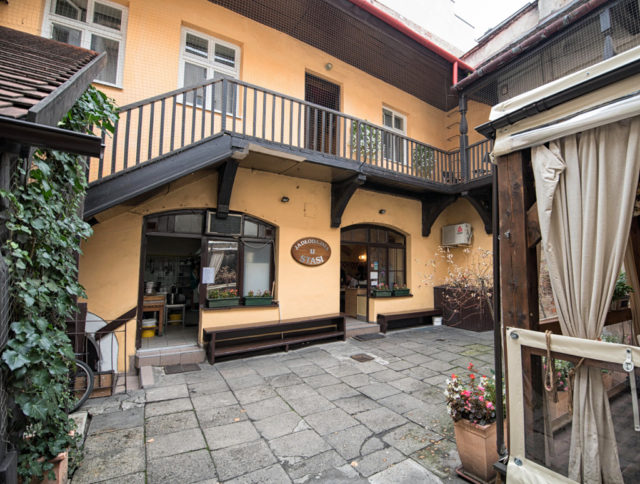
I can’t believe I never noticed this place before. I mean, it literally shares a courtyard with my favorite Kraków pizzeria. And yet, there it sits: Two open doors — one the humble kitchen, the other the tiny dining room. This is Jadłodajnia U Stasi. One of the best meals I’ve had in over 20 visits to Poland — and, by far, one of the cheapest.

CH16SepKrakow_230

I’m always pumping my local guides for privileged information — the latest restaurant leads for my Rick Steves Eastern Europe guidebook. Earlier today, over a coffee, I practically challenged Tomasz to impress me. He rattled off all of the touristy standbys. Yawn. C’mon — it’s time to really show me something.

“Well,” he said, glancing around conspiratorially, then breaking out into the uncontainable grin of someone who’s about to give up the goods. “There is this one place…”

Jadłodajnia U Stasi is a milk bar — that uniquely Polish phenomenon of a government-subsidized canteen, originally dating from the communist period to allow the workers to enjoy a meal out. Communism is a distant memory, but the milk bar concept has stuck around. Throughout Poland, you can get a filling meal of authentic traditional specialties for suspiciously low prices. It’s an option designed for locals, but open to visitors as well.

I’m something of a milk bar connoisseur. But I’d never heard of Jadłodajnia U Stasi. “It’s a place where all of the locals go for lunch,” Tomasz explained. “Homeless people, artists, businesspeople, politicians — everyone sits together at shared tables and eats well.” Even the name — jadłodajnia basically means “place for eating” — is old-fashioned. Straightforward. Unpretentious. A weekday-lunch-only place with a loyal local following. It’s clear: I have to try it.

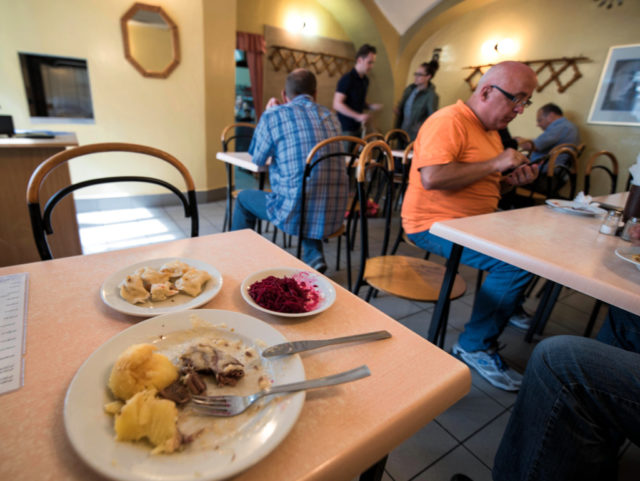
Reaching the dead end of the courtyard — a block from Kraków’s glorious (and supremely touristy) Main Market Square — I step across the threshold into the humble space. With basic tile walls, basic coat racks, basic tables, and no “decor” to speak of, it feels entirely practical…almost clinical. The cashier — a tired-looking salt-and-pepper-haired man in a striped polo shirt and jean shorts — looks mildly surprised to see me. But then, as Tomasz has instructed, I tell him, “Angielski, po proszę.” He ruffles through the stack of photocopied menus, pulling the English one from the bottom of the pile and handing it to me. He makes a sweeping gesture across the tiny room. Sit anywhere.

I find a seat in the corner and get situated. Reaching for the ersatz tissue-paper napkins, I take a small stack of about six of seven — approximating one real napkin. Within moments, a kindly aproned woman suddenly appears tableside, cocking her head at me with a wordless smile: Ready to order? I beg for a few more minutes to consider my options.

The menu — a short but tempting list of Polish classics — is in three languages: German, French, and English. The dishes sound much better in French. Who can resist the viande de pot-au-feu? So that’s what I order: boiled beef, plus a plate of “Russian-style” pierogi. The server disappears behind a tattered red-and-white-checkered curtain into the kitchen. Well-worn pots simmer on a workhorse of a stove, tended by matronly, blue-smocked chefs.

CH16SepKrakow_220

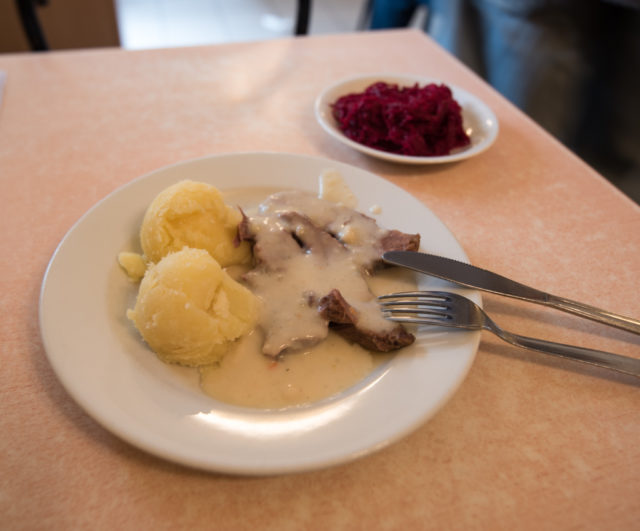
Literally seconds later, the plate hits my table. I take a bite. And the rich flavors flood my taste buds. It’s “boiled beef,” yes, but that undersells it. (So does viande de pot-au-feu, for that matter.) It’s slow-roasted to fork-tender perfection, smothered in a perfectly balanced horseradish cream sauce, with a side of potatoes halfway between roasted and mashed. There’s also a plate of beetroot salad: grated strips of perfectly tender, vivid-purple beets, mixed in with explosive shards of horseradish. Fantastic.

CH16SepKrakow_225

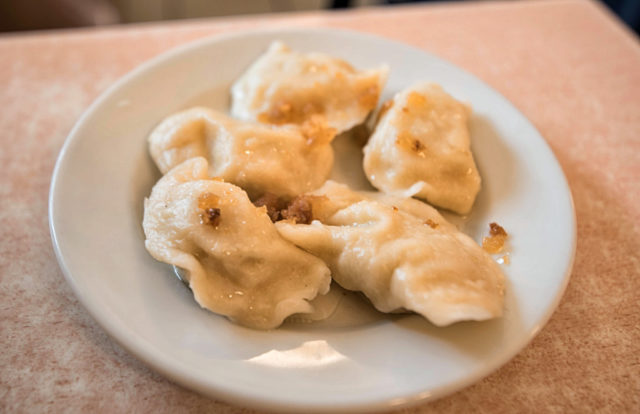
A minute later, my plate of pierogi appears. The boiled-dough casing is ideally al dente. The filling — potato, cheese, and caramelized onion — is generously peppered. Flecks of pork cracklings add a punch of meaty flavor and fatty texture (and make the traces of water draining to the bottom of the plate glisten like gossamer). I’ve had a lot of pierogi around Poland, and most have been pretty flavorless. But these pierogi?  These pierogi are perfect.

Savoring my meal, glancing around the room, I notice the steady flow of customers in and out. One thing’s for sure: I’m the only tourist taking photos of my food. Mindful of the fact that this is the kind of place that locals hesitate to tell tourists about — for exactly this reason — I stow my camera and munch discreetly. Everyone shares tables: Young people. Old people. Rich people. Poor people. And everyone focuses on the food in front of them — classic Polish dishes, executed just right.

Not many people get excited about Polish food. And that’s a shame, because it’s delicious. Polish cuisine is hearty comfort food, done exceptionally well — high cuisine for hardworking peasants. In this agriculturally oriented country — where virtually every square mile is rippled with undulating farms — you can taste the land in the food. Poles have mastered umami — that mysterious “fifth taste,” sometimes described as earthy or savory. Beetroot. Potatoes. Braised beef and pork. Cabbage. Smoke. Mushrooms. Dense rye bread. Rich, fatty proteins. Fermented vegetables. Field greens. Slow-simmering broths. All of these are Polish staples, and all are quintessentially umami. (After a few days here, I crave a meal of sharp, spicy food…just to give my palate some umami detox.) At the same time, Polish chefs are also playful with punchy herbs and spices: Cutting through that smothering blanket of earthiness are bright bursts of dill and peppercorn and marjoram and caraway.  And, of course, plenty of garlic.

CH16SepKrakow_228

A well-dressed, bespectacled, professorial gentleman asks to share my table. We sit together in silence — sharing only the common language of satisfied “mmmms” — as I savor my last few bites. I notice a few splashes of purple beet juice on my shirt, which I decide to think of as prized, indelible souvenirs of a meal richly enjoyed.

Wishing my companion a hearty “Smacznego!” (“Enjoy your meal”), I bus my dishes to the little stainless-steel window where, periodically, a hand reaches out to collect them. On my way out the door, I pay my bill: 20 Polish zloty, or about $5.

Five bucks. For a meal so filling, I won’t need dinner. Two nights ago, I treated myself to a fancy Polish feast at a prime restaurant on the Main Market Square. Ordering high on the menu, I burned through $50 for a (frankly) mediocre dinner. At Jadłodajnia U Stasi, for literally cents on the dollar, I had a dramatically more satisfying meal — and a much more authentic Polish experience, to boot. If you’re headed to Kraków and want to do the same, just duck down the courtyard at Mikołajska 16. Don’t bother telling them that Cameron sent you…they don’t care. They’re too busy cranking out amazing food at ridiculous prices.

Kraków’s Magnetic Main Square

I’m back in Europe. First up on my autumn research swing: Poland, where I’m updating my Rick Steves Eastern Europe guidebook.

That first day in Europe is always a weary slog. After checking into my hotel and showering, I fight the urge to sleep for the first time in 20 hours. Instead, I go wandering around Kraków. I’m seeking that elusive “Hey, I’m in Europe!” epiphany…that moment that makes the long journey worthwhile.

I quickly discover that, today, the entire city is one big “Hey, I’m in Europe!” On this hot, sunny, early-September weekend, everybody is out enjoying the last hurrah of summer.

CH16SepKrakow_050

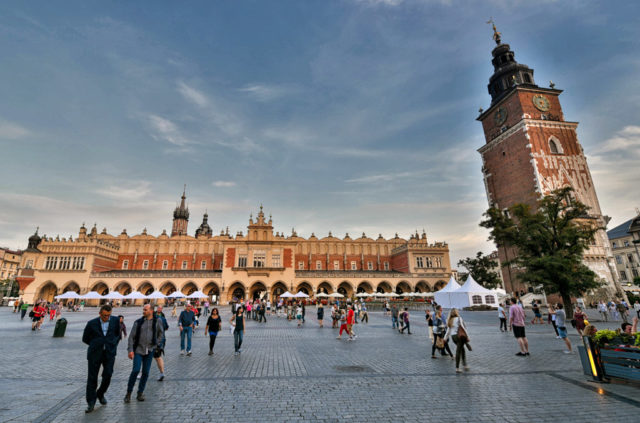
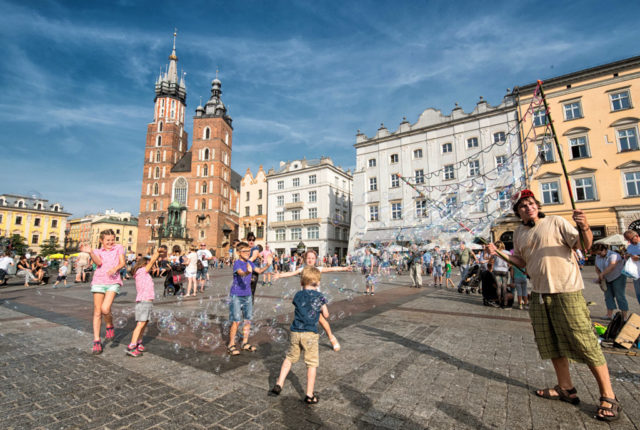
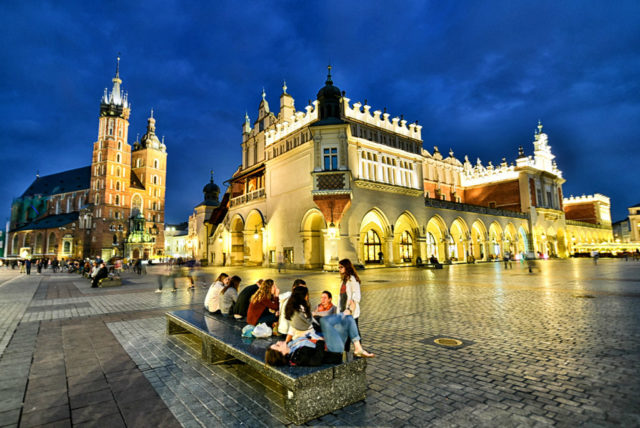
Bleary-eyed, I stumble a few blocks over to the Main Market Square — my vote for the best square in Europe. It’s always full of life, but today the bustle is cranked up to 11.

CH16SepKrakow_088

The twin towers of St. Mary’s Church seem to be smiling in the sunshine. One of the windows at the top of the crowned, taller tower opens, and the sun glints off the shiny brass bell of a bugle. The trumpeter begins to play a tune called the hejnał that, if you’ve been to Kraków, you’re probably humming right now.

This song is played at the top of each hour to commemorate the town watchman who, back in the 13th century, sounded the alarm when he spotted Tatar invaders approaching town. (According to legend, before he could finish, an arrow pierced his throat — which is why, even today, the hejnał stops subito partway through.) Like the iconic clanging of London’s Big Ben, this tune is synonymous with its city — and makes it unmistakably clear where I’ve arrived.

The hejnał stops with a jolt, and life on the square goes on. The flower vendors are particularly busy, with couples and kids buying bouquets for their loved ones. The outdoor café tables are jammed. And little kids are having the time of their lives chasing gigantic gossamer soap bubbles.

CH16SepKrakow_007

The Main Market Square is a magnet. I just can’t resist its pull. I keep trying to veer off — heading up this or that side street to check details for my book. But the siren call of the square (and the hejnał) keeps luring me back.

CH16SepKrakow_346

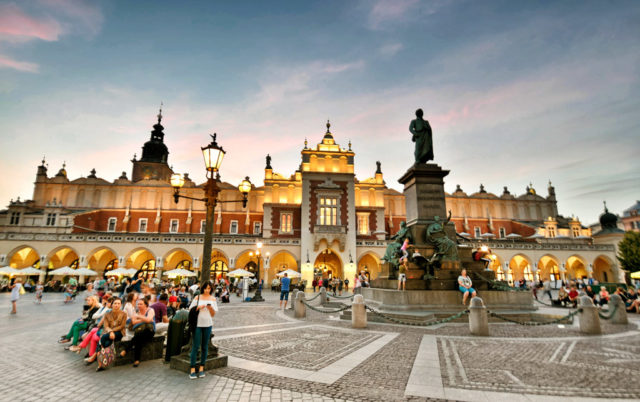
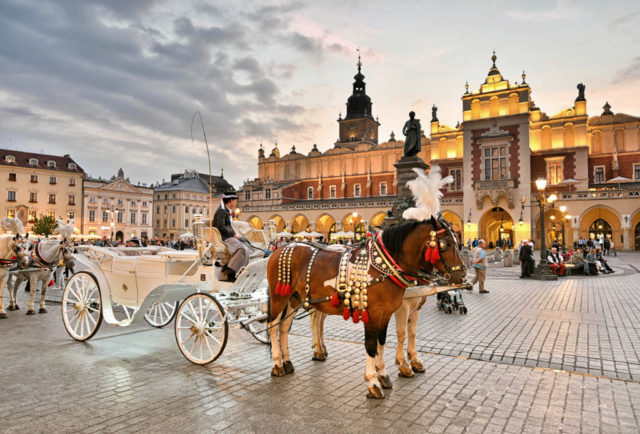
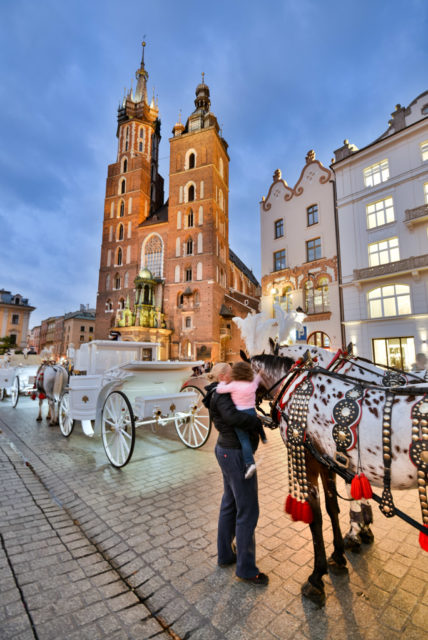
I return in the cool of the evening, under a hazy pink-and-purple sky. It’s romantic twilight, and pristine white Cinderella horse carriages line up in front of St. Mary’s Church. Bright lights under their running boards flicker on — attracting customers like a bug zapper. A young mom brings her curious toddler over to pet the horse.

CH16SepKrakow_370

Doing a few more laps around the square, I spot all of my favorite landmarks. The old, green hand pumps, still used by the flower vendors under their yellow tents. The big donation box. The little old ladies who sit behind their blue, aquarium-like stands, filled with fresh-baked dough rings called obwarzanki. And of course, travelers having the time of their lives — treating Europe’s grandest square as their own, very spacious living room.

CH16SepKrakow_394

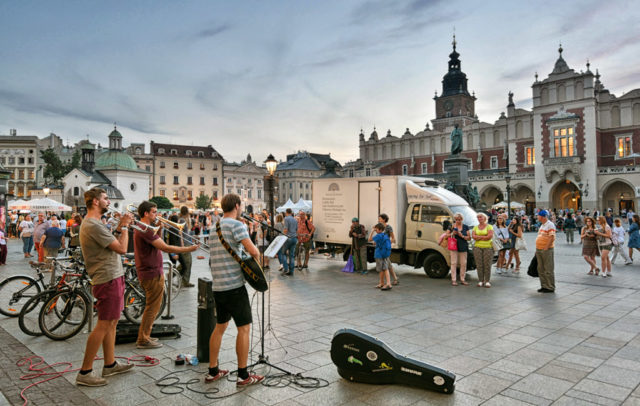
As usual, there’s plenty of live music. A ragtag and unlikely trio — guitar, trumpet, trombone — entertains passersby.

CH16SepKrakow_078

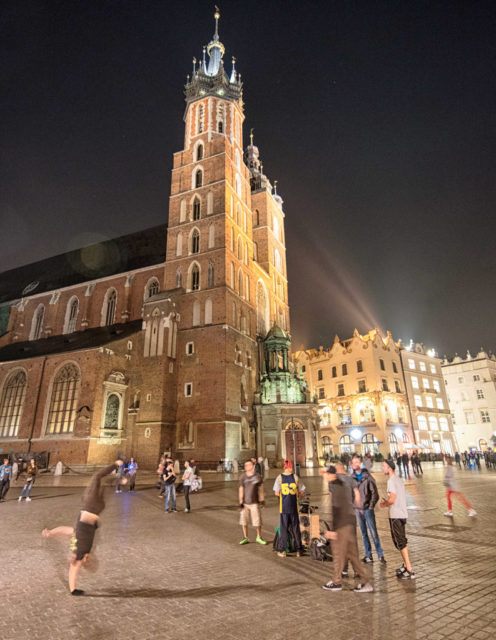
But one thing’s missing. One time on an early visit to this square, back in the early 2000s, I heard clapping to the beat of a tinny boombox. Following the sound, I spotted a half-dozen pre-teens breakdancing on a big piece of cardboard. I mean, full-on, 1984, Electric Boogaloo breakdancing. They could barely hold a handstand for more than a second…but they were determined. There was something so hopelessly unhip, so disarmingly corny about it all. They charmed me so much that I even mentioned them in my guidebook.

With each visit, at some point I’d pass those breakdancers, busking for tips. They became a Kraków fixture, right up there with St. Mary’s and the hejnał. But on this trip, making my final pass through the square, I’m feeling nostalgic and thinking that surely those guys have moved on by now. They must have real jobs, families, obligations…and happy memories of breakdancing on the Main Market Square.

But then, from across the square, I hear Gloria Estefan’s “Conga” start to play. A crowd is gathering. Could it be? Making my way over, double time, I see — sure enough — those same kids, all growed up, executing flawless windmills and hand glides and headspins under St. Mary’s towers. Their sound system is better. They don’t need the cardboard. They’re now ripped, bearded, and balding. But it’s definitely them. They’ve persevered after all…in spite of the odds, they created their own niche, and filled it. (Millennials…)

CH16SepKrakow_426

Tossing a few coins into the hat, I smile and head back to my hotel. It’s been a long day — or two, actually — since I got on that plane in Seattle. But I’ve made it back to Europe. And here in historic Kraków, some things never change.