What are the best museums and sights in Europe? Or, more specifically, what are the best types of sights?
I’m wrapping up guidebook research after spending 10 weeks on the road, split over three trips in Spain, Morocco, England, Denmark, the Czech Republic, Slovakia, and Hungary. Looking back, I realize that most of my favorite sightseeing experiences fall into a few categories that go beyond the predictable churches, castles, monuments, and big-name art museums. And so, I brainstormed this admittedly subjective list: not just a roundup of my personal favorite sightseeing in 2025, but also a broad-strokes look at five categories of sights that I find especially rewarding.
Whether you’re planning a trip to these destinations, or looking for inspiration for a trip anywhere, I hope these “types of sights” encourage you to consider some attractions that might, at first glance, be easy to overlook — but that merit some of your limited time.
1. The Endearing Local History Museum
In the sweet town of Keswick, deep in England’s bucolic Lake District, there are two options for a rainy day: Hike and get wet… or find something indoors. I opted for the latter and visited the Keswick Museum, which fills a historic Arts and Crafts-style hall in a lush park. I was unexpectedly charmed by how this place harnesses a chipper community spirit to make the story of this small town surprisingly engaging.
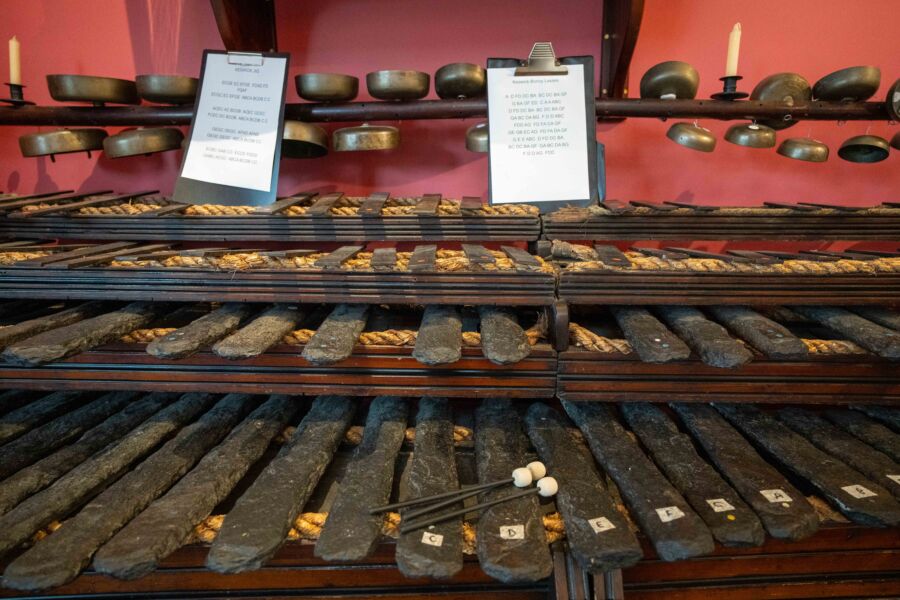
While modest, the Keswick Museum is more than the sum of its parts. It features a well-curated assortment of local artifacts, from a surveyor’s gigantic 1825 relief map of the Lake District (suspended on the wall) to a variety of items relating to the flourishing of Keswick as a tourist destination (including the earliest known guidebook to the town, from the early 1910s). The highlight? “Musical stones”: naturally resonant chunks of slate that someone has whittled down to the perfect tone, then set up as a xylophone for playing tunes. There’s also a gallery where museum volunteers take turns researching and installing their own temporary exhibits. How delightful!
Sure, they ain’t the Louvre or the Prado. But wonderful local history museums around Europe, when done well, can really bring a place vividly to life. Some, like Keswick, are in small towns or even villages. One of my favorites is the Herring Era Museum in Seyðisfjörður, Iceland, which explains how that little fish revolutionized not only the local economy, but made Iceland a financially viable independent nation. I’ve also enjoyed the one in Zermatt, Switzerland; the scrappy hilltop museum on the isle of Folegandros, Greece; and the Appenzell regional museums in the towns of Appenzell, Stein, and Urnäsch, Switzerland.
Others are in big cities, designed to help visitors get their heads around the local identity and the role that place played in the story of Europe. Excellent ones are in Zagreb, Croatia; Lausanne, Switzerland; Liverpool and Bristol, England; the Bryggen Museum in Bergen, Norway; the Musée Basque in Bayonne; and the Riverside Museum in Glasgow, Scotland.
2. The Single-Artist Museum
While wide-ranging art museums can be delightful, I find myself especially drawn to a museum devoted entirely to one artist, often displayed in the home in which they actually lived. In England’s Lake District, William Wordsworth’s Dove Cottage and Beatrix Potter’s Hill Top Farm both had me imagining the writer hunched over a desk, creating their masterpieces.
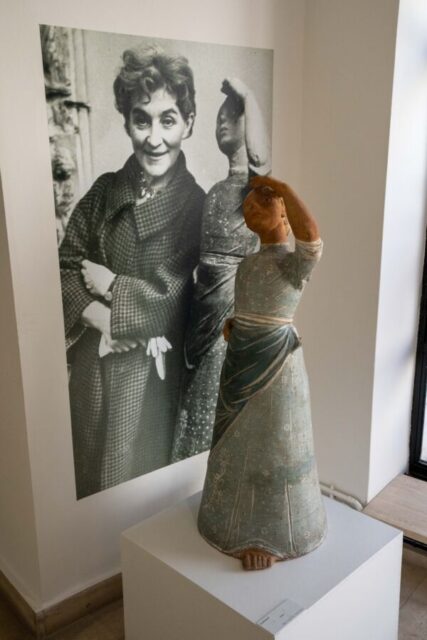
In Hungary’s Szentendre — just up the Danube from Budapest — I enjoyed getting to know the expressive, poignant sculptures of Margit Kovács.
In Córdoba and Ronda, Spain, I marveled at the works of two talented artists I’d never heard of before: Julio Romero de Torres and Joaquín Peinado, respectively.
On past trips to France, Albi’s Toulouse-Lautrec Museum deepened my appreciation of the works of an artist I only thought I was familiar with. And the former home of Claude Monet in Giverny, France, is a pilgrimage for lovers of his works, who stroll through the lily-padded gardens that inspired him.
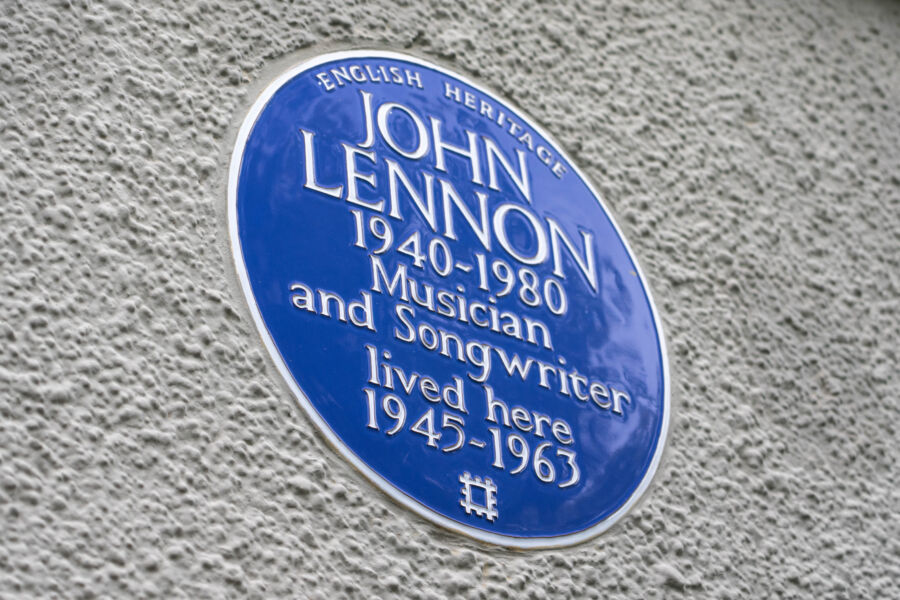
The best example I visited in 2025 (and one of the best anywhere) is the National Trust’s tours of the childhood homes of John Lennon and Paul McCartney. After meeting at a suburban Liverpool train station, your small group hops on a minibus for the short drive to each house, where you’re welcomed by an impressively well-versed docent who does an insightful intro chat, then sets you free to roam the same halls, kitchens, bedrooms, and loos where two of history’s greatest songwriters spent their formative years. Not really a Beatles fan? The homes also provide wonderful social-historical insights into the everyday lives of working-class Liverpudlians in the 1950s. This remarkable experience combines being in proximity to tangible details — the pinups over John’s boyhood bed, the well-worn piano in Paul’s living room — with gaining a strikingly intimate understanding of two boys, becoming young men, who would change the world. For example, I learned that both Paul and John had lost their mothers at a very young age — perhaps providing them with an unspoken kinship that sustained their fruitful, fitful collaboration.
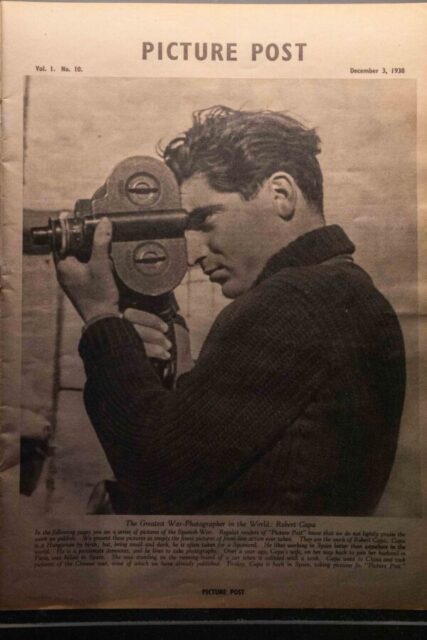
Another mind-blowing “one artist” museum I visited this year was the Robert Capa Centerin Budapest, Hungary. I knew little about the Budapest-born photographer, but after spending an hour and a half here, I am a fan. Like a mid-20th-century Forrest Gump, Robert Capa traveled the world during one of its most tumultuous eras — documenting the Spanish Civil War, the First Sino-Japanese War, the Allied campaigns in North Africa and Sicily, the D-Day landings at Omaha Beach, the liberation of France, the creation of Israel, and the early days of postwar communism in Hungary and the USSR. He also snapped intimate slice-of-life portraits of Picasso, Matisse, Hemingway, Ingmar Bergman, and many others. The museum displays Capa’s most iconic images and tells the improbable life story of this eyewitness to history.
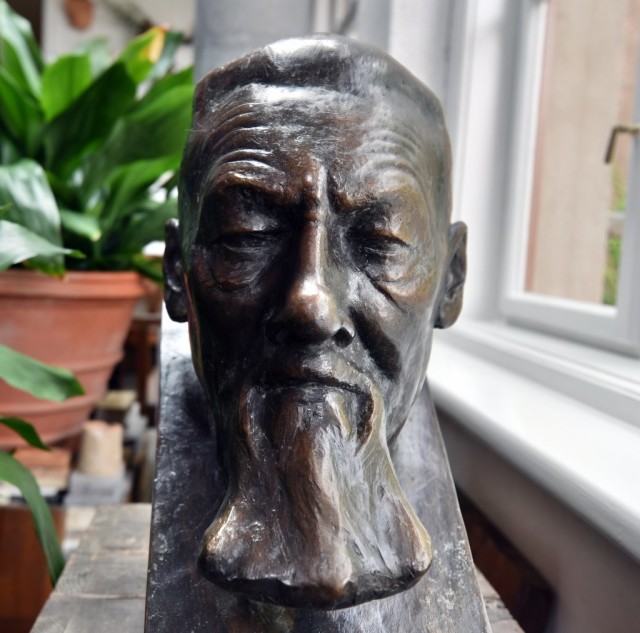
My all-time-favorite “one artist” home is devoted to an architect that many have never heard of: Jože Plečnik, who reshaped the Slovenian capital (and his hometown), Ljubljana, and also carried out major works in Prague, Vienna, and other cities. Still furnished with unique, Plečnik-designed furniture, one-of-a-kind inventions, and favorite souvenirs from his travels, the Jože Plečnik House paints an indelible and unusually intimate portrait of an artist.
Yet more “one artist” museums to consider around Europe: the Seidel Photo Studio Museum, in the Czech town of Český Krumlov; the Rodin Museum in Paris; the Salvador Dalí sights outside of Barcelona (Cadaqués and Figueres); the Ivan Meštrović Museum in Split, Croatia; the Charles Rennie Mackintosh House at Glasgow University in Scotland; the Rembrandt House Museums in both Amsterdam and Leiden, Netherlands; the Hans Christian Andersen House in Odense, Denmark; the Mozart sights in Salzburg, Austria; the Albrecht Dürer homes in Nürnberg and Wittenberg, Germany; Edvard Grieg’s Troldhaugen, just outside of Bergen, Norway; and The Secession in Vienna, with its Gustav Klimt paintings and distinctive “golden cabbage” dome.
3. The Single-Topic “Deep Dive” Museum
Some museums are a mile wide and an inch deep — trying to cover too much territory and doing none of it well. Many of my favorites take precisely the opposite approach: going all-in on a single, extremely narrow topic, probing the depths of all its fascinating details. (Of course, you could put most of the “single artist” museums, above, into this category as well.)
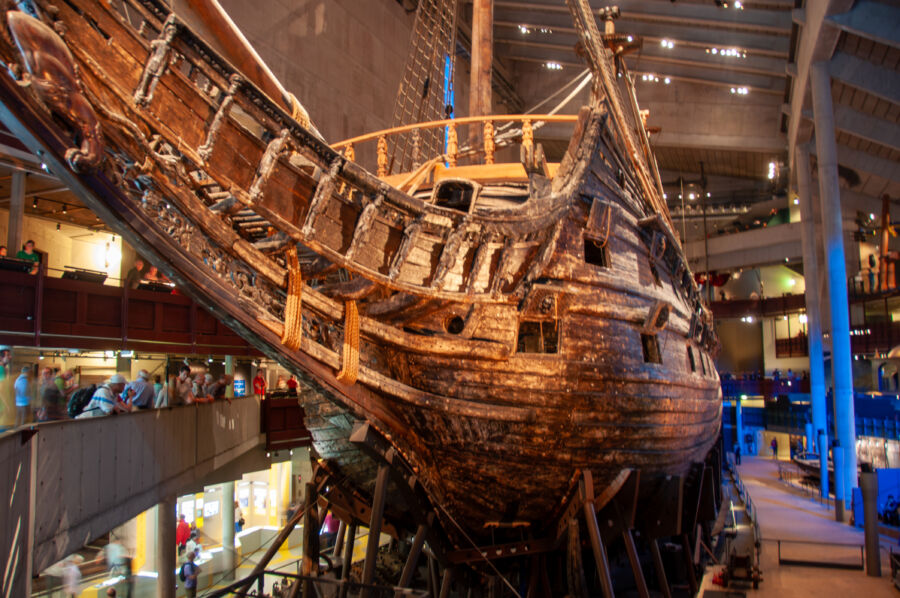
One of the best in this vein is the magnificent Vasa Museum in Stockholm, Sweden. The entire museum is literally and thematically built around a single item: the massive warship Vasa, which sunk to the bottom of Stockholm Harbor 40 minutes into her 1628 maiden voyage. More than three centuries later, the ship was rediscovered, raised from the deep, refurbished, and became the centerpiece of a state-of-the-art museum that tells the whole story and gets you prow-to-prow with the Vasa herself.
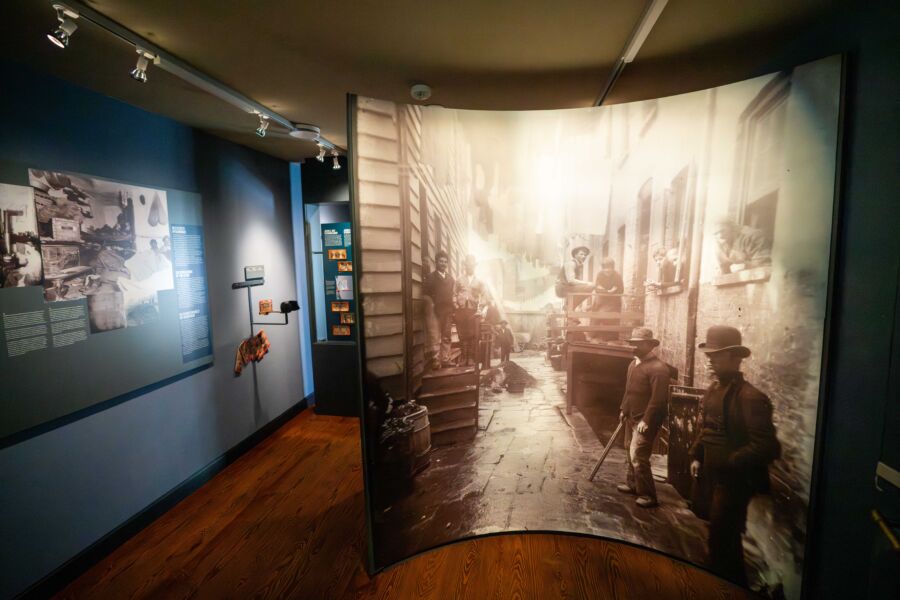
This summer, in charming Ribe, Denmark, I stumbled upon a museum devoted to hometown boyJacob Riis (1849-1914). Despite the ticket-seller’s assertion that Riis was the most important Danish-American of all time, I was embarrassed to admit that I knew nothing about him. The exhibit set me straight, eloquently telling the tale of this Danish émigré who documented the plight of the desperately poor — mostly immigrants — who lived in the squalor of New York City’s tenements (and eventually published a seminal exposé, How the Other Half Lives). It was inspiring to learn how, by harnessing and pioneering the rapidly evolving medium of photojournalism, Riis brought about reforms that improved the wretched lives of the people he documented. Riis also became close friends with President Theodore Roosevelt, who called him both “the most useful citizen of New York” and “the ideal American.”
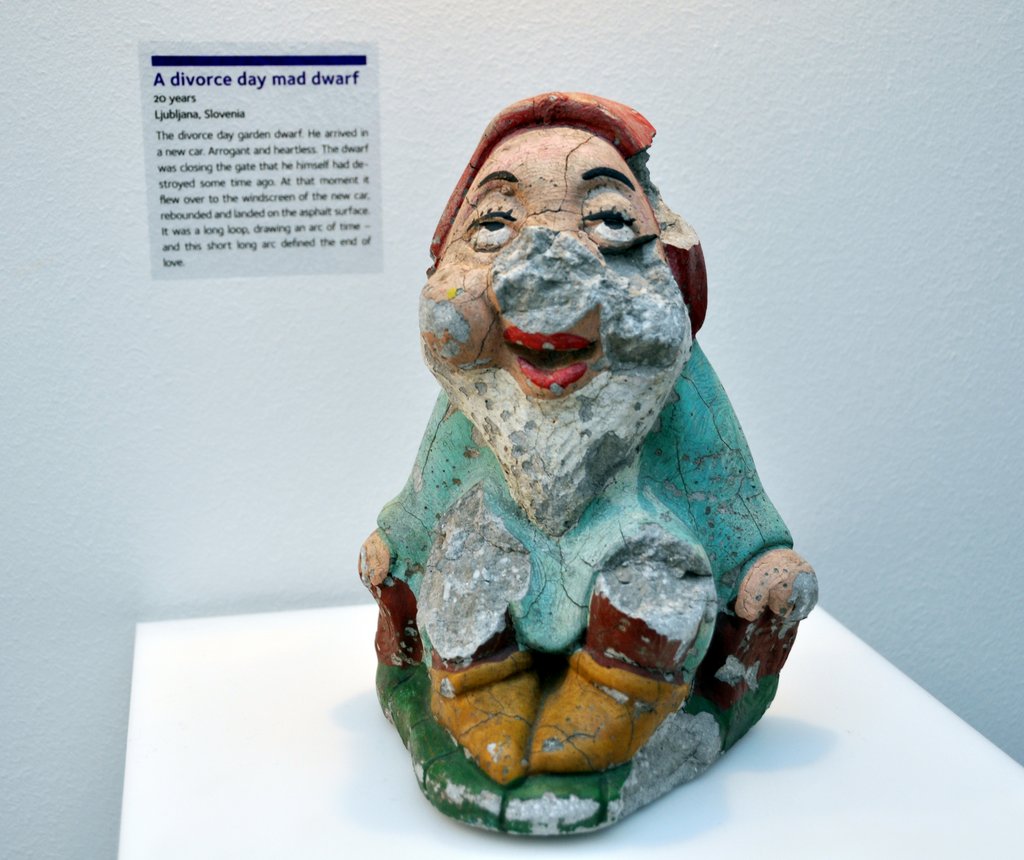
Sometimes that “single topic” is unexpected, even startling. The Museum of Broken Relationships, in the Croatian capital of Zagreb, displays a variety of items that each come with a complicated story of a now-defunct relationship — from a love-at-first-sight romance that burned out, to the loss of a dear friend or parent, to becoming disillusioned with a favorite politician. Touching, witty, and incredibly human, this museum is a good reminder to take a chance on sights that may seem quirky at first blush.
Thinking back on other examples of the “deep dive” style of museum, I realize the Netherlands is particularly adept at this approach: In Amsterdam, you have the famous Anne Frank House, of course, but also a Pipe Museum, a Houseboat Museum, and a Museum of Canals, while nearby Leiden has the Pilgrim Museum. Ireland also has a knack for these, from the Irish Wake Museum in Waterford to the Irish National Famine Museum in Strokestown to 14 Henrietta Street in Dublin; the Titanic Belfast Museum straddles this category and the next one. Others to watch for: the Paris Sewer Museum; the Viking ship museums in both Oslo, Norway, and Roskilde, Denmark (plus Oslo’s Kon-Tiki Museum); the Musical Instruments Museum in Brussels; the Olympics Museum in Lausanne, Switzerland; and some that are just plain bizarre, including the Phallological (Penis) Museum in Reykjavík and the Currywurst Museum in Berlin.
4. The High-Tech History Museum
Increasingly, history museums employ clever, high-tech innovations — location-sensing audioguides, sound and lighting effects, wrap-around films, interactive features — to bring to life a complicated or murky bit of history. Frankly, I’m on the fence about this trend: All too often, the whiz-bang gizmos act as a crutch, distracting from the thinness of the actual information. But when combined with impressive artifacts, compelling storytelling, and a clear point of view, these high-tech history museums can be mind-blowing.
Case in point: This summer I toured the stunning Moesgård Museum, just outside of Aarhus, Denmark. The museum was long famous as the home of the Grauballe Man, a remarkably well-preserved Iron Age corpse that was discovered in a nearby peat bog. In 2014, the Moesgård opened a gigantic new purpose-built building with a mission as grandiose as its architecture: combining astonishing artifacts — from prehistoric stone tools and mysterious barrows, to the Grauballe Man, to a perfectly preserved Viking boat — with evocative storytelling and high-tech methodology to create a powerful experience that kindles an appreciation not only for the story of prehistoric peoples in Jutland, but for human evolution in broad strokes. There are also two sprawling galleries hosting temporary exhibits that are at least as good as the permanent one. It instantly became one of my favorite museums, anywhere.
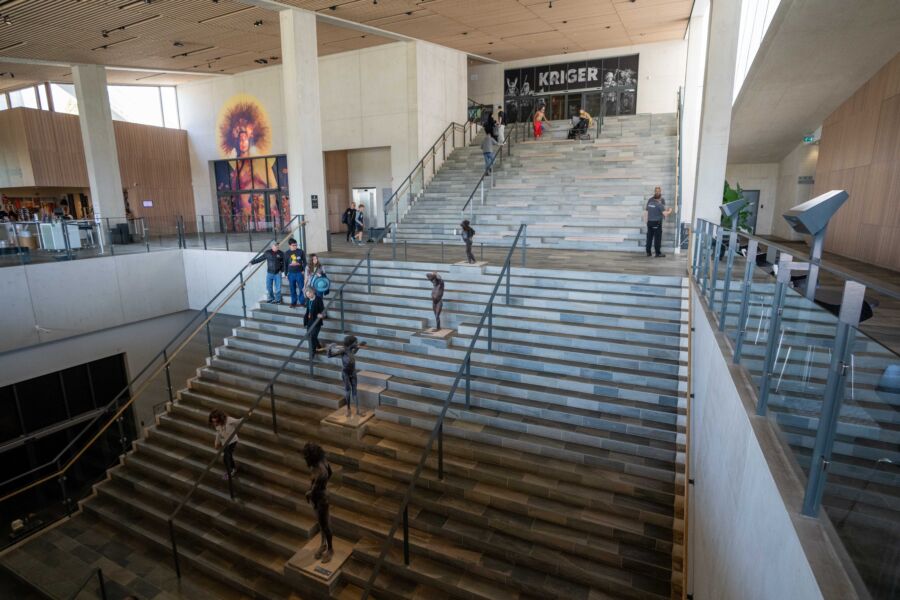
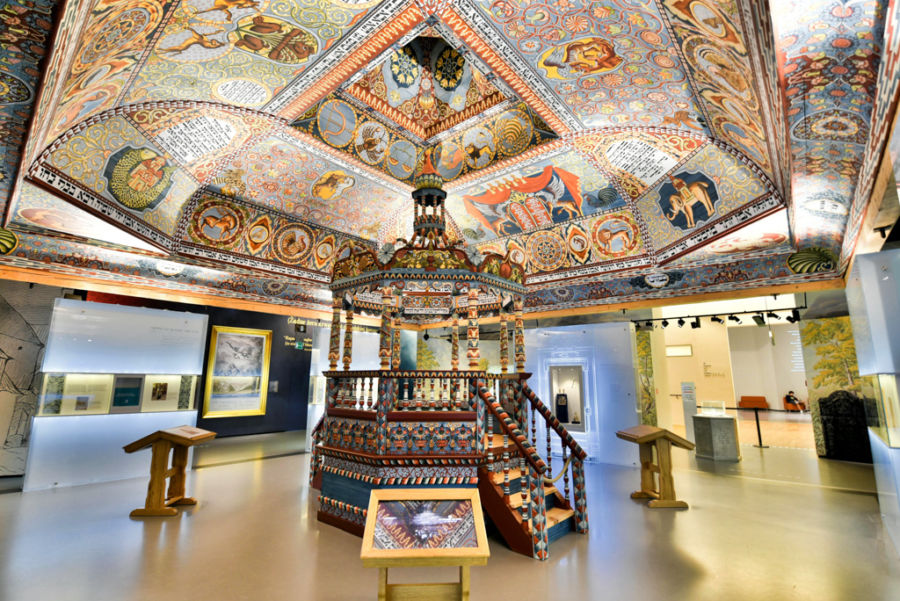
Another favorite is the Museum of the History of Polish Jews (POLIN), in Warsaw, Poland. Built on the site of the onetime Jewish quarter, POLIN is architecturally striking in itself. Inside, it employs a combination of thoughtful storytelling and state-of-the-art presentation to make the absolute most of the scant few artifacts that survive from what was once a flourishing culture. While so many Jewish-themed sights around Europe focus narrowly on the Holocaust, POLIN takes an expansive and enlightening approach to the entire Jewish experience in Poland.
Many of these high-tech history museums focus on one historical era — often World War II, including the Caen Memorial Museum in Normandy, France; the Museum of the Second World War in Gdańsk, Poland; and the Uprising Museum in Warsaw. The museum at the Culloden Battlefield, just outside of Inverness, Scotland, is one of the best of this type. Others are broader in their focus, including the German History Museum in Berlin and the Landesmuseum (Swiss National Museum) in Zürich. And some of the museums described earlier (including the Vasa Museum) could slip into this category, as well.
Artifacts; storytelling; high-tech exhibits: A museum that does all three equally well is rare. But when they hit — they really hit.
5. The Cross-Cultural Structure
Europe’s epic history is the story of successive civilizations layering one upon the other. Often, while a few artifacts survive from centuries past, most of what you see today dates from one or two discrete historical periods. But a few sights manage to capture a broader swath of history in stone, by simultaneously embodying starkly different civilizations in one cohesive structure.
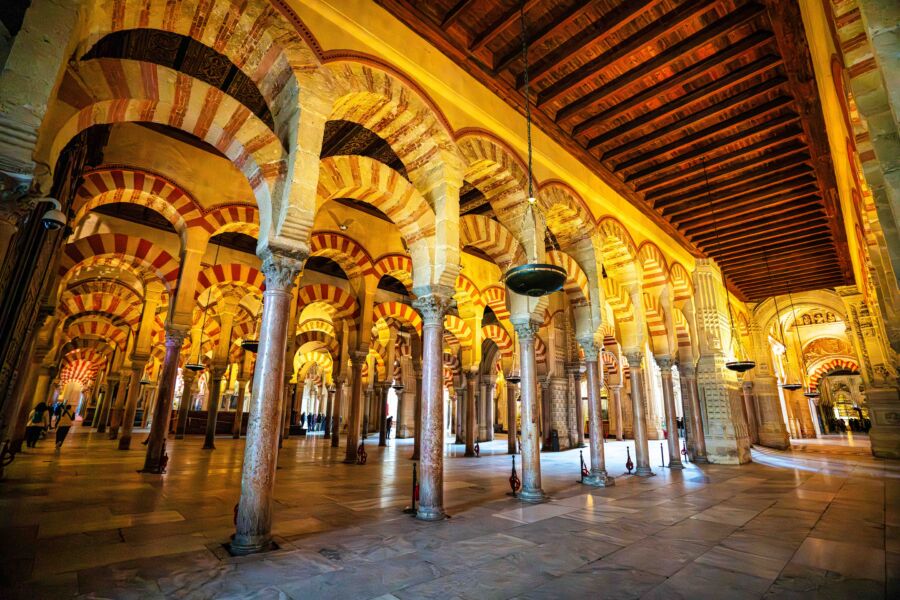
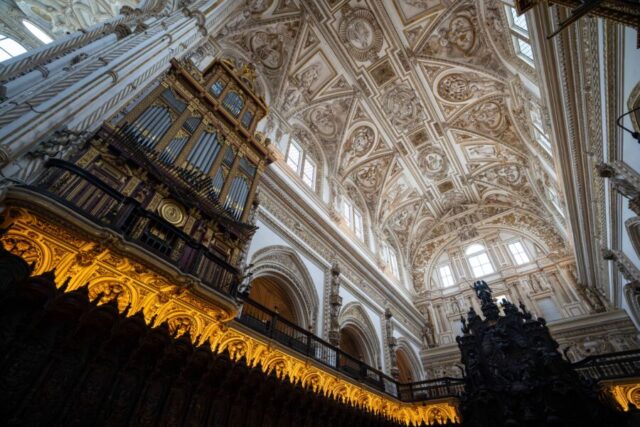
The prime example of this is one of my favorite sights in all of Europe: the Mezquita in Córdoba, Spain. This gigantic structure — a massive box, 400 feet by 600 feet — began as a low-lying Moorish-style mosque, built around 785. Strolling through seemingly endless rows of 800 columns (spanned by graceful double arches), you feel you’ve stepped back to the age of Al-Andalus, when Córdoba was the capital of a sprawling Muslim realm.
But then you turn a corner and — bam! — you’re transported into an entirely different time and place: a towering 16th-century Catholic Baroque cathedral, stretching 130 feet into the air, that was built within that original mosque.
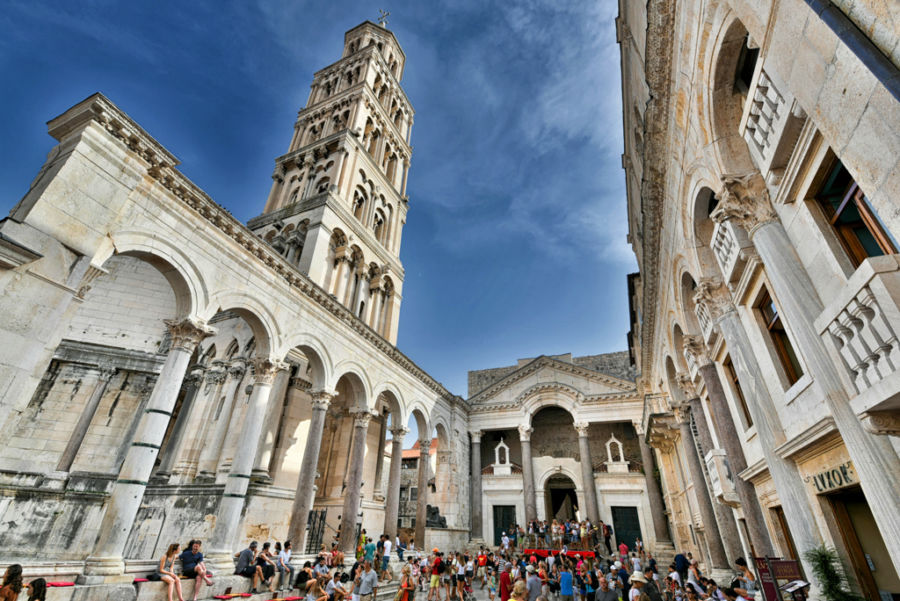
In Split, Croatia, the entire town center (filling the former halls of a Roman palace) gives you this same sensation of “layers of history” — especially the cathedral that sits upon Peristyle Square. The hulking, octagonal hall that forms the core of this building was originally the mausoleum for the Roman Emperor Diocletian, who was born nearby, retired right here, and notoriously tortured many Christians. But the frilly Venetian-style bell tower — and the rich golden decor inside — make it clear that those pagan Romans were soon supplanted by the Catholic Venetians, and later Croatians, who retrofitted Split to their own specifications.
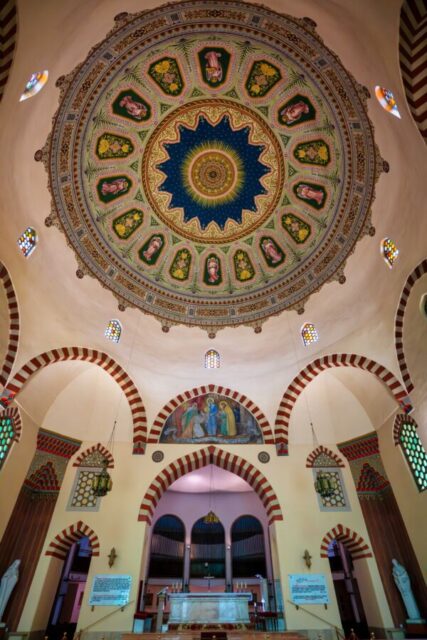
In Pécs, Hungary, the main square is topped by another such structure. The Gazi Kasim Pasha Mosque — originally built during a period of Ottoman control in the 1540s — was later turned into a Catholic parish church (the Church of the Blessed Virgin). Today, its classic mosque architecture is still evident, and upon stepping inside, you observe a hybrid of Muslim and Catholic symbols and styles: striped arches over windows; a large prayer niche (mihrab) with a crucifixion above it; colorful Islamic-style stalactite decorations; and dome paintings that combine Christian angels with the geometric designs of Islam. On the wall is a verse from the Quran, translated into Hungarian and used for Christian worship — a reminder that, as fellow “people of the book,” Muslims and Christians share many of the same foundational principles.
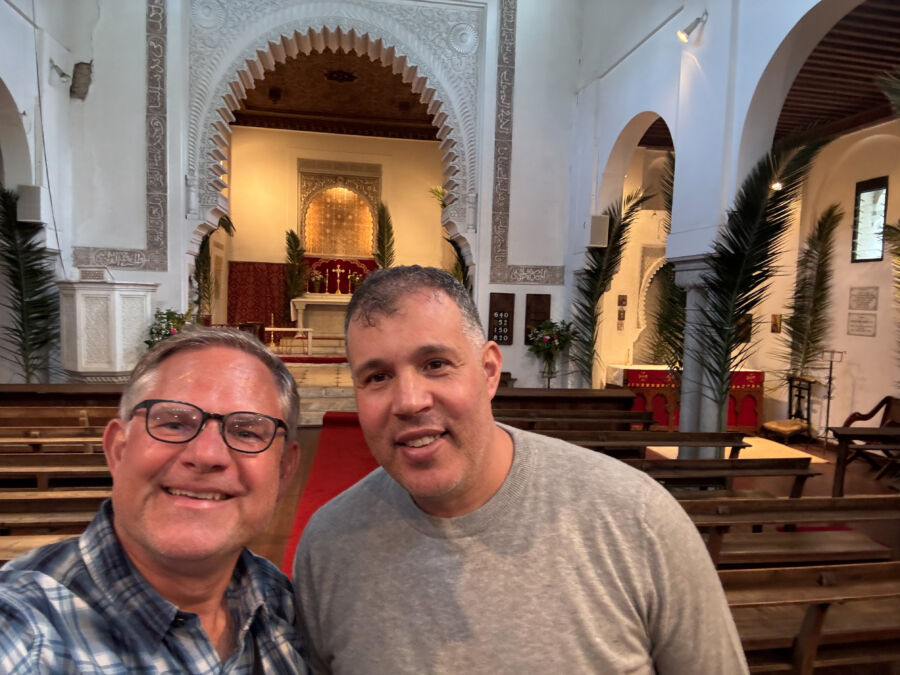
Tangier — Morocco’s closest point to Europe — is another prime spot for these “cultural hybrid” sights. Just off the main square, you escape from the bustle of rumbling delivery vans and buzzing motor scooters into the tranquil garden courtyard surrounding St. Andrew’s Anglican Church — built on land that the sultan offered as a gift to Queen Victoria. There you’re greeted by gregarious Yassin, who wishes “peace be upon you” as he explains how, while the church’s architecture is mostly Islamic, it’s Christian in spirit: The Lord’s Prayer rings the arch in Arabic, as verses of the Quran would in a mosque.
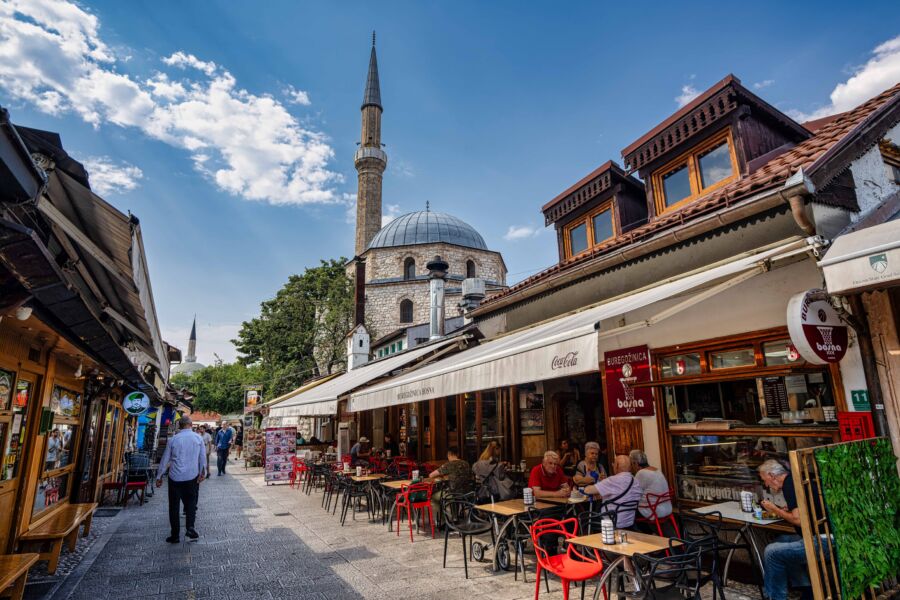
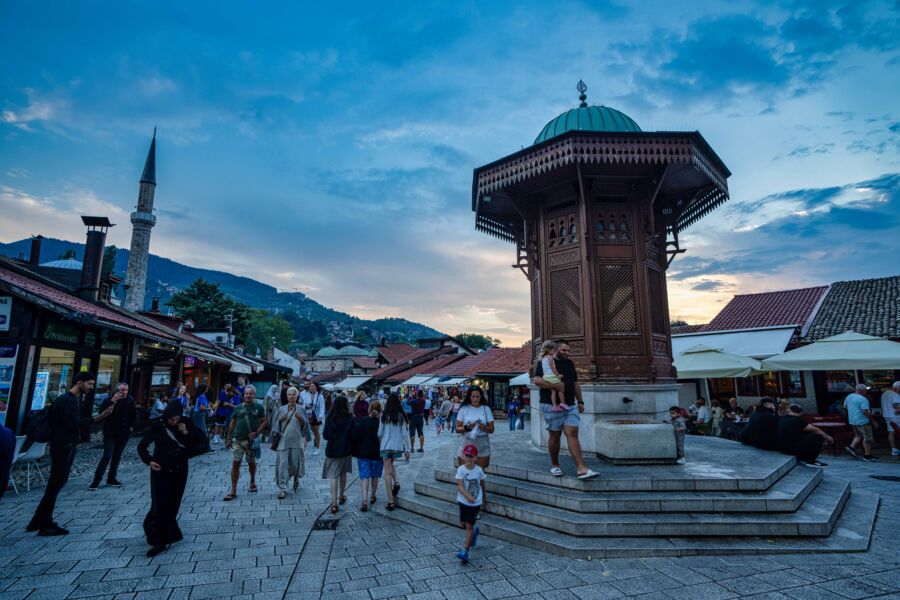
Sometimes it’s not a building but a location. In the heart of old Sarajevo, at the precise point where Sarači street becomes Ferhadija street, you can look in one direction and swear you were in Istanbul, with its cobbles and market stalls; looking the other way, you could easily be in Vienna, with broad pedestrian boulevards and grand Austrian-style architecture.
And speaking of Istanbul, the ultimate example of a “cross-cultural” sight surely must be the Hagia Sophia: an early Christian church, later turned into a mosque, so influential that it became a template for many other mosques across the Ottoman Empire (including the one in today’s Pécs).
All of these sights are a reminder of the full complexity of Europe’s story — and of how few of those layers we actually see in our everyday travels… until we go looking for them.
What are some of your favorite museums in these categories? Or do you have favorite “categories” of sightseeing that I’m overlooking? Share your thoughts in the Comments.
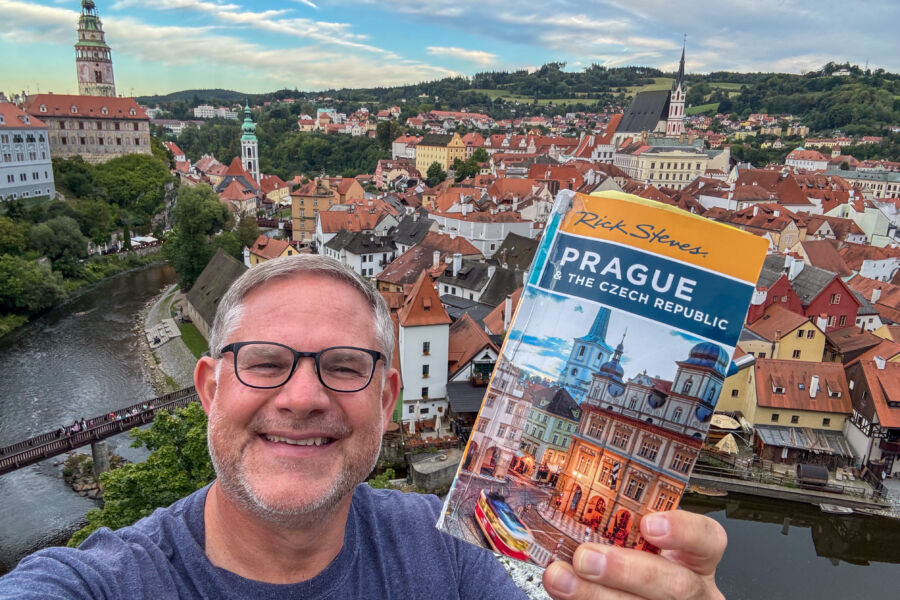
Of course, all of the sights mentioned here — and so many more — are described in detail in our Rick Steves guidebooks.
If you’d like to hear more about my 2025 travels, join me on Zoom Monday, November 10 at 6 p.m. Pacific Time (that’s 9 p.m. Eastern) when I’ll be doing a virtual “Trip Report” for Monday Night Travel. It’s free, as long as you sign up in advance.
Are you thinking of traveling to the Balkans? I have some tips for you!
Last September, I set out on a trip to fulfill a lifelong travel dream: To explore the Balkans, from top to bottom, weaving together eight European capitals overland. My “Balkan Odyssey” — from the Alps to the Aegean, and from Lake Bled in Slovenia to Lake Ohrid in North Macedonia — was the trip of a lifetime.
Now that I’m back, I recently presented a Monday Night Travel report about that unforgettable journey. You can watch it here.
Putting this talk together was a complete delight. It reminded me of how the Balkans is a fascinating, gorgeous, friendly, and wonderfully undiscovered and affordable corner of Europe. But the relatively few American visitors translates to a lack of solid travel information. I’ve prepared this post as a complement to my presentation, to share my itinerary guidance, favorite local resources, and other tips for traveling in the Balkans.
General Tips and Logistics
In our age of “overtourism” and soaring prices, the Balkans may just be Europe’s best-kept secret. However, you can’t paint the entire region with a single, broad brush. Croatia and Slovenia are in a category all their own: With their famous beaches and mountains — and being well-established in the EU, Schengen open-borders zone, and Eurozone (both countries use the euro currency) — they are far more “mainstream,” crowded, and expensive. My recent trip, and my Monday Night Travel talk, focus on the other six countries, which are less known, less crowded, and less expensive: Bosnia-Herzegovina, Serbia, Montenegro, Kosovo, North Macedonia, and Albania.
Here are a few general tips for traveling in the Balkans:
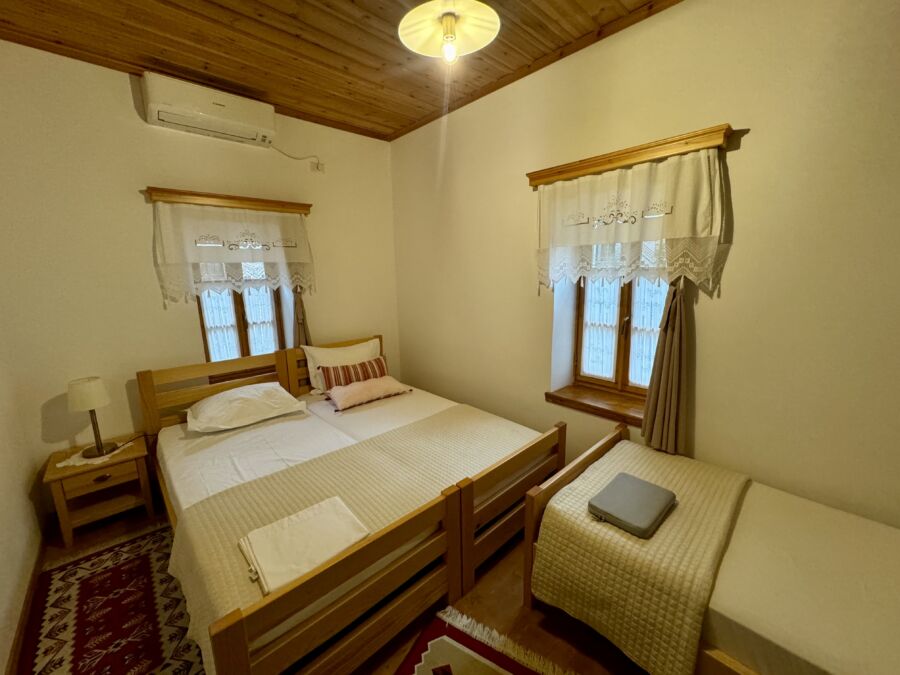
Sleeping: I used a wide variety of lodgings, ranging from simple, traditional guesthouses; to big, roomy, multi-room apartments (via Airbnb); to high-end boutique hotels. I rarely spent more than $100 a night, and often closer to $50. (Croatia, Slovenia, and coastal Montenegro, prices are at least double, and often much more at the famous coastal resorts.)
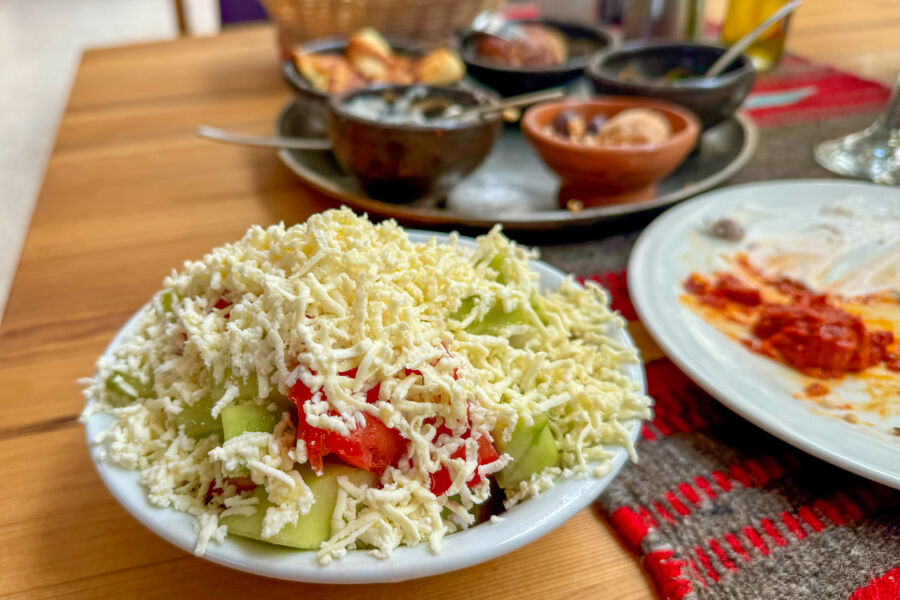
Eating: The Balkans may be Europe’s very best “budget foodie” destination. The local cuisine is rustic but utterly delicious. While each country has its own specialties, the Balkan region has similar elements, which may feel similar to what you think of as “Turkish” or “Greek” cuisine (since most of these areas spent centuries under Ottoman control). The handiest street food is burek, a savory phyllo-dough pastry typically filled with meat, cheese, or spinach. I begin each meal with ašopska salata — chopped cucumbers and tomatoes with a soft, salty cheese grated on top. Grilled meats are hugely popular, including minced-meat ćevapi (small link-like shape), pljeskavica (patty shape), and ćufte (meatball). These are often served with raw onions, the spreadable cheese called kajmak, and a flatbread called lepinje. The fanciest meal you can have is meat, potatoes, and other veggies slow-roasted under a metal baking lid called a peka or a sač. The region has many flavorful spreads, including ajvar (roasted red pepper and eggplant) and others that are similar to hummus or garlicky tzatziki. And every meal ends with a honey-drenched phyllo dough dessert — from baklava to kadaifi, and many more. The Balkans have a taste for unfiltered coffee (which you might think of as “Turkish coffee”), as well as variations on the firewater raki. Prices are low: A quick bite on the go rarely tops $5, and a sit-down meal might be $15-20 per person, including drinks. (As with other prices, double it — or more — in Slovenia, Croatia, and coastal Montenegro.)
Transportation: This is a real challenge, when planning a multi-country itinerary. Generally there are very good public-transit options within a country, but things become more complicated when you cross a border between two different, independent transit systems. Buses and trains are cheap but can be slow, with gaps in the schedule.
Driving: Renting a car is a tempting option, and gives you maximum flexibility, but two factors deserve careful consideration: First, while driving in places like Slovenia, Croatia, and much of Bosnia is roughly on par, difficulty-wise, with most of Europe (slick highways, well-marked roads, reasonable traffic), things get more challenging as you travel south. Albania, in particular, can be daunting for timid drivers. Country roads generally have light traffic, but there are lots of speed bumps; even small towns can come with loads of congestion (due to a lack of bypass roads); and fellow drivers can be, shall we say, erratic. And in towns and cities, all bets are off: Traffic laws are widely ignored, and lanes in historic town centers can be astonishingly narrow. In general, you’ll need to be a confident and capable driver, and make a point to drive defensively. Keep your head on a swivel and go with the flow.
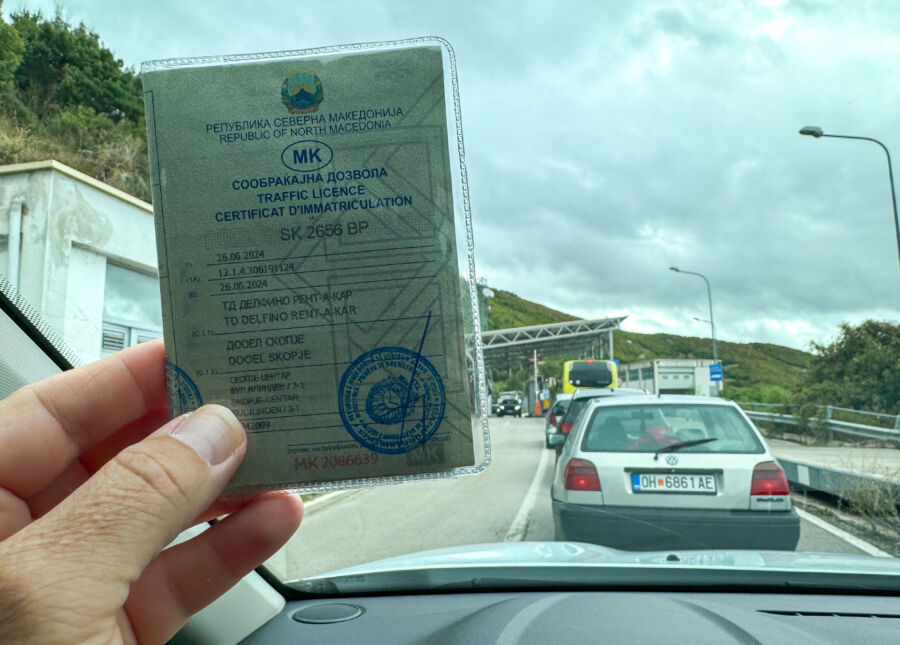
International Driving: The other consideration for renting a car is the headache of trying to link up a multi-country itinerary. An “open-jaw” rental (picking up in one country, and dropping off in another) is convenient but often not possible, and always expensive. (I paid an extra $400 fee — about one-third the cost of my entire rental — to pick up in Skopje and drop off in Athens.) Returning to your starting point to drop off your car saves this fee, but between the mountainous landscape and roads of variable quality in this region, the miles don’t always come easy. Confirm with your rental agency that you’re allowed to drive in each and every country on your itinerary, which may come with a small extra cost (I paid an additional $10/day). You will need to have the “green card” (proof of insurance — essentially the car’s “passport”) and paperwork from the rental company that you’re allowed to cross. (Of the four borders I drove my car through, I was asked for this once.)
Hire a Driver: To fill the gaps — or even, potentially, for the entire trip — consider splurging on a private driver offering door-to-door service. While this can be expensive (figure at least $200/day, likely more), it makes things much easier, and it’s especially convenient if you’d like to stop to do some sightseeing along the way. I did this twice — between Sarajevo and Belgrade, with a stop at Srebrenica; and on the very long journey from Kotor, Montenegro, to Skopje, North Macedonia, to pick up my rental car — and I found it worth the expense to make the rest of my trip possible.
Borders: While crossing a border can be time-consuming, depending on traffic, it’s actually quite straightforward: Just wait in line, hand over your passport for a few seconds, and then often proceed to the next checkpoint to repeat the routine…and you’re on your way. Of the approximately 10 borders I crossed on this trip, I waited anywhere from 10 minutes to an hour or so. (Avoid very busy borders if you can, such as the one on the coastal road between Montenegro and Albania; in-the-know locals take the inland route instead, especially during peak vacation months.) Be sure to have your passport handy, along with your car’s “green card” (see above). Personally, I never felt in any way pressured to pay a bribe; given that the biggest delay was the line of cars in front of me, this wouldn’t have helped anyway.
Safety: I can only speak to this as a hardy male traveler. But my experience is that I feel at least as safe in any and all of these countries as I do anywhere in Europe. (You could make a very strong case that, from a personal safety standpoint, you’re much safer in Prishtinë or Belgrade than in Paris or Barcelona.) As anywhere, petty crime (from pickpockets to car theft) can be an issue, so keep your wits about you and secure your belongings. The US State Department has issued some advisories about a few of these countries (see the current list here). While worth knowing about and understanding, personally I take these advisories with a grain of salt. In recent months, Albania and North Macedonia have popped up on this list… as have Belgium, Denmark, and Spain. If there’s any heightened “risk” in these countries, it’s a history of political instability, which has the potential of flaring up from time to time; simply follow the news and be prepared to adapt your plans, in the unlikely event that troublesome protests or isolated scuffles pop up along your route.
Itinerary Ideas
With so many places to visit, and a wide variety of ways to connect them all together, there’s no one perfect Balkan itinerary. First, narrow down which countries you want to see. Then lace them together, with a sober reality check on how hard it might be to connect the dots (see the transportation quirks, above).
If you’re focusing on the more known, “mainstream” parts of the Balkans — Slovenia, Croatia, and a taste of Bosnia and Montenegro — consider this recommended itinerary. (This is very similar to our Best of the Adriatic in 14 Days Tour — a perfect way to see these popular destinations without having to do the planning yourself.)
However, the focus of my trip (and my Monday Night Travel talk) is getting off the beaten path. Specifically, my goal was visiting the eight Western Balkans capitals overland, with some interesting small-town and nature stops in between. For inspiration purposes, here’s how I connected those dots, in about three weeks.
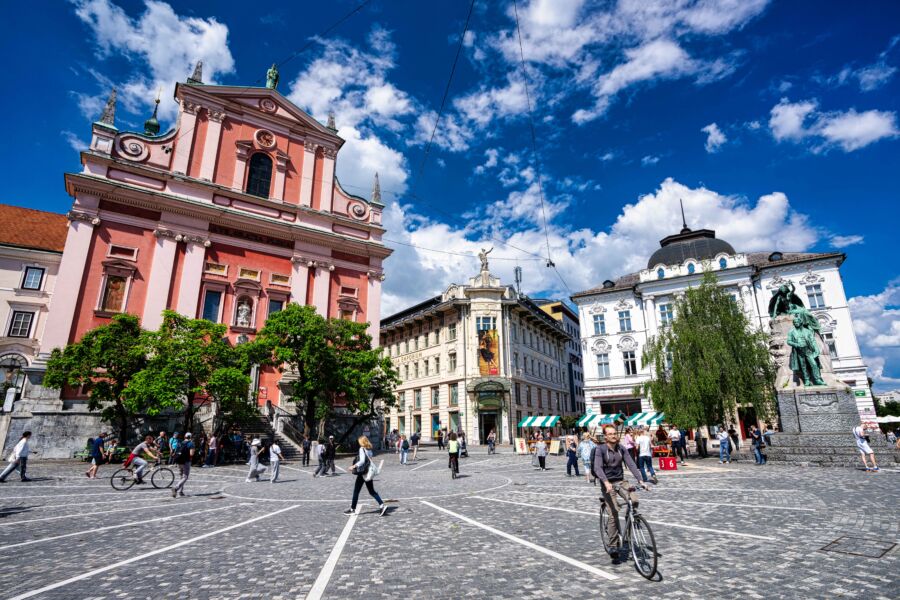
I started my journey in Ljubljana, which wins my vote for the most charming, livable, and purely enjoyable small city in Europe. (With more time, you can side-trip to just about anything in Slovenia — from Lake Bled to the Julian Alps to the caves of the Karst).
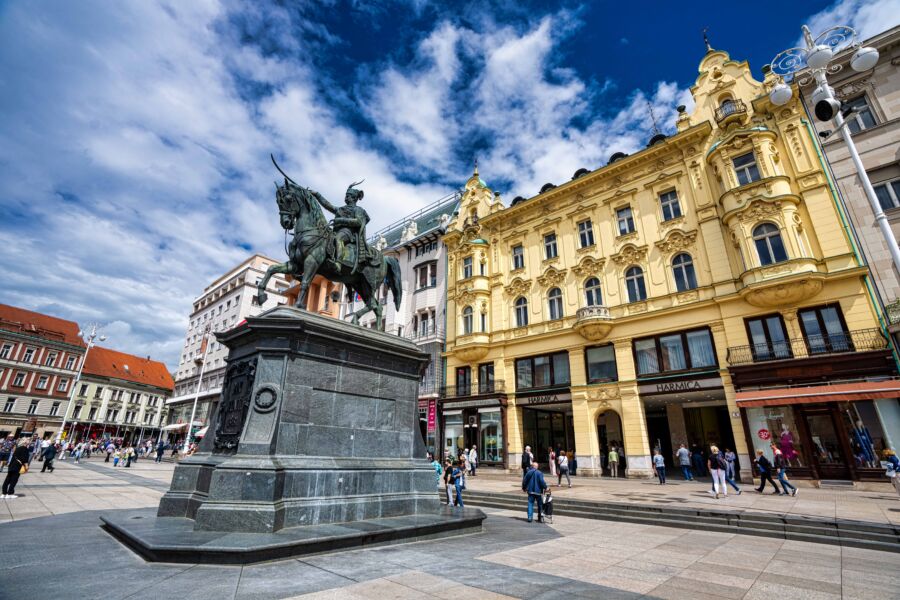
From Ljubljana, it’s an easy train or bus trip to the Croatian capital of Zagreb. While Croatia’s coastline gets most of the tourist attention, Zagreb is a very enjoyable city, with lush parks, a charming old town, and excellent museums. You could linger in Croatia (see the suggested itinerary above). But in my case, I was eager to carry on deeper into the Balkans — so the capital was my only Croatian stop.
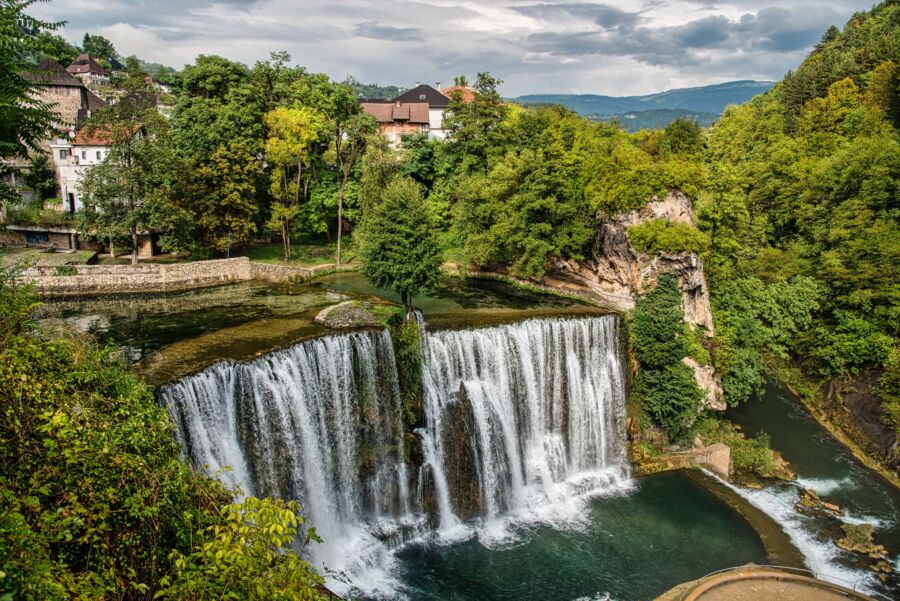
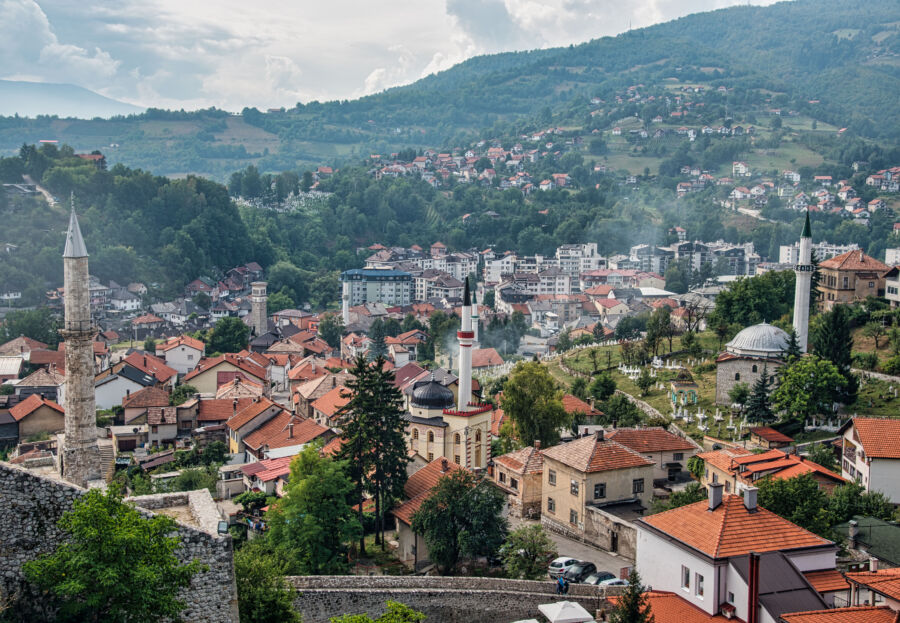
It’s a long day’s drive (or a fun and fascinating couple day’s road trip) from Zagreb through Bosnia-Herzegovina to Sarajevo. Worthwhile stops along the way include Banja Luka, Bosnia’s leading Serb city; the historic and extremely scenic town of Jajce, built upon waterfalls; and the fortified burg of Travnik.
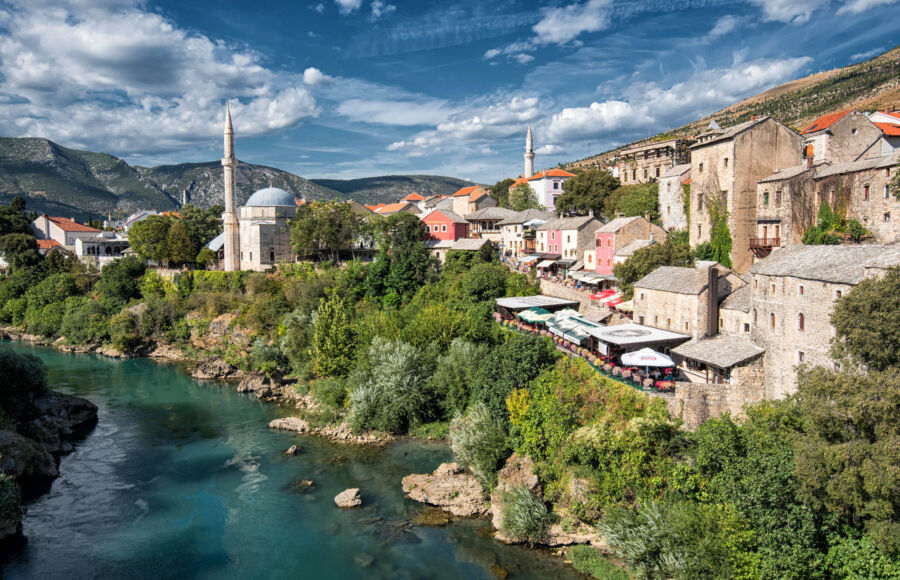
Enjoy Sarajevo — really dig into what may be the Balkans’ single most beautiful, historic, interesting, moving, and purely enjoyable city. Consider side-tripping to the smaller town of Mostar (with its famous Old Bridge) and/or the poignant and powerful Yugoslav Wars genocide memorial at Srebrenica.
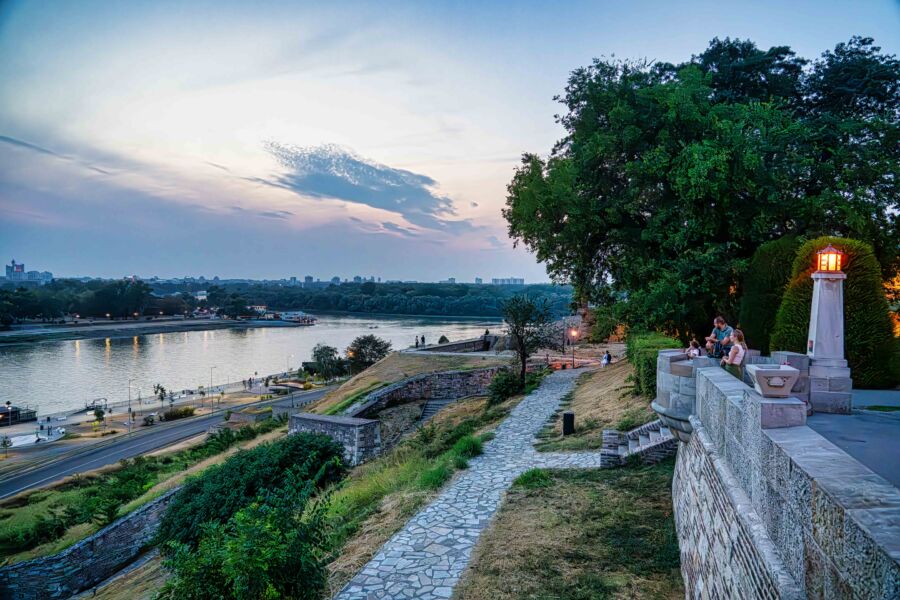
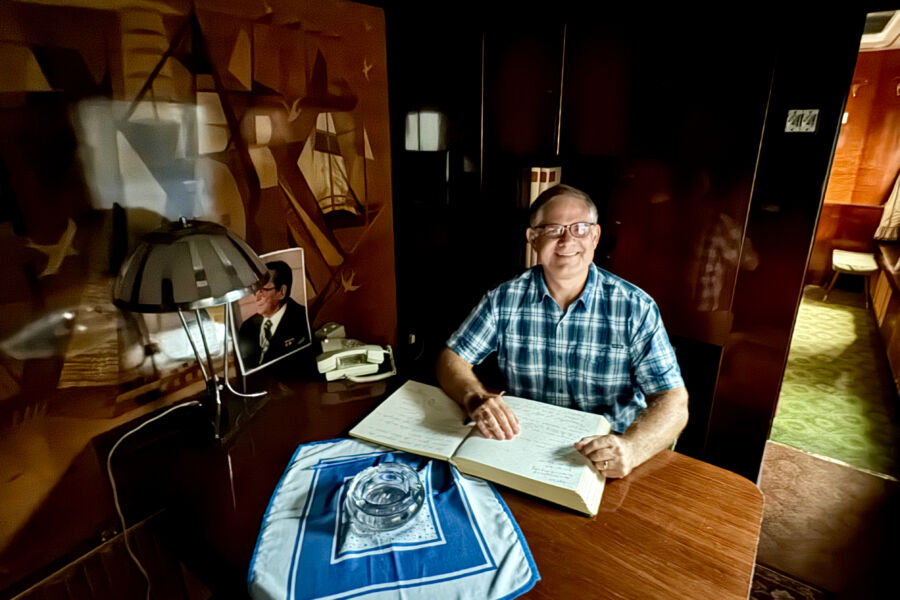
From there, it’s on to the Serbian capital, Belgrade, to dig into that bulky and fascinating metropolis. This is a great place to wander the people-jammed promenade to Kalemegdan (the park overlooking the confluence of the Sava and the Danube); visit the stunning interior of Sveti Sava; soak in some Yugo-history at the Museum of Yugoslavia, with Tito’s tomb; and try to finagle a visit to Tito’s famous Blue Train.
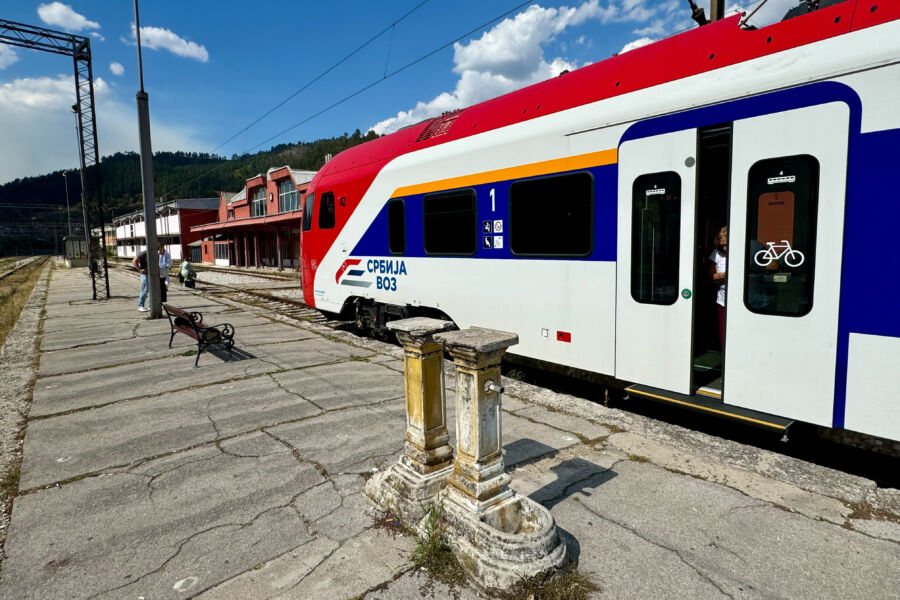
Speaking of trains: To head south, I opted to hop on the 10-hour scenic train through Serbia, then winding down through soaring Montenegrin mountains to Podgorica. (The train continues another 2 hours, all the way to Bar on the coast; for the full details on this very scenic train line, see this excellent article from the Man in Seat 61.)
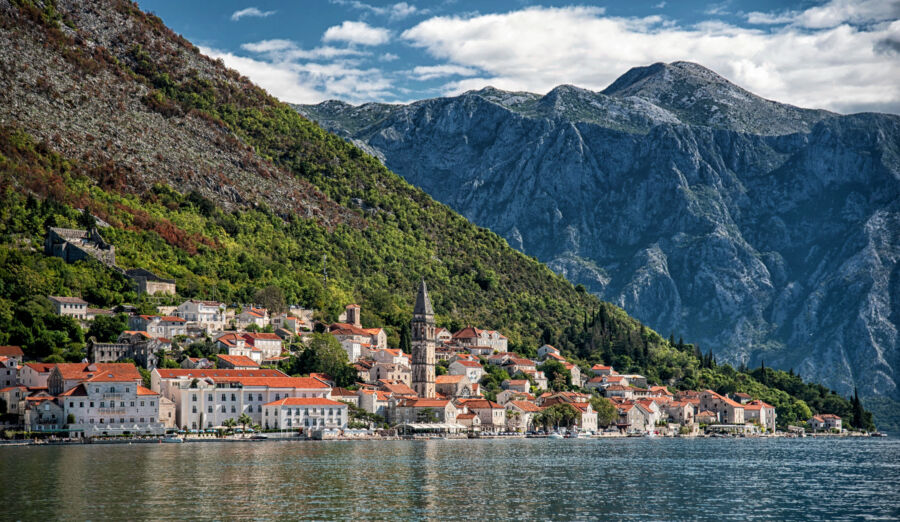
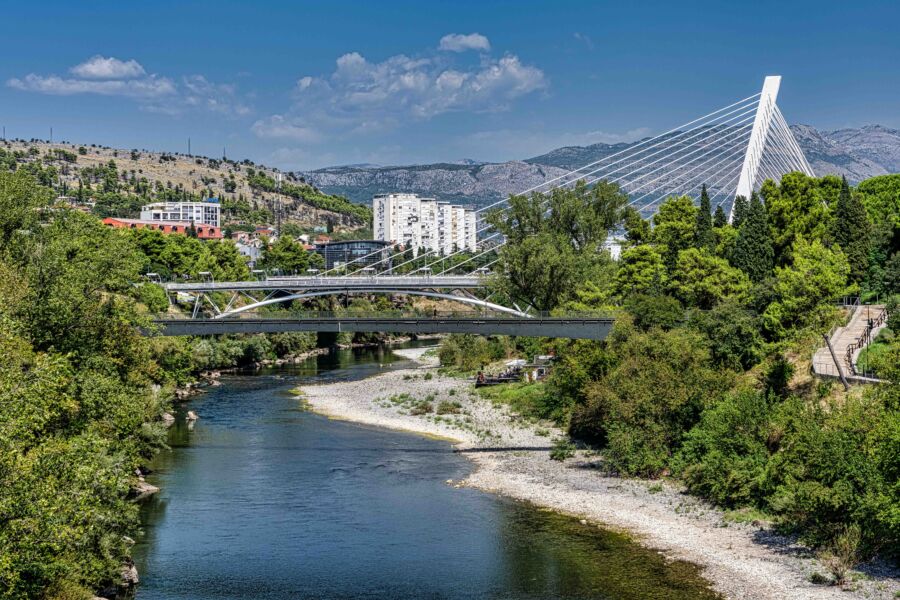
Podgorica (formerly “Titograd”), Montenegro’s capital, has lots of Brutalist architecture; a tidy grid of planned streets, parks, and wide sidewalks; and the stunning Christ’s Resurrection church. From here, it’s a short drive to the Bay of Kotor, with its stunning wall of mountains enclosing a fjord and the fortified town of Kotor.
The next link in this itinerary — onward to Kosovo, via Albania — was the toughest part for me to figure out; I opted to hire a driver to make things easier.
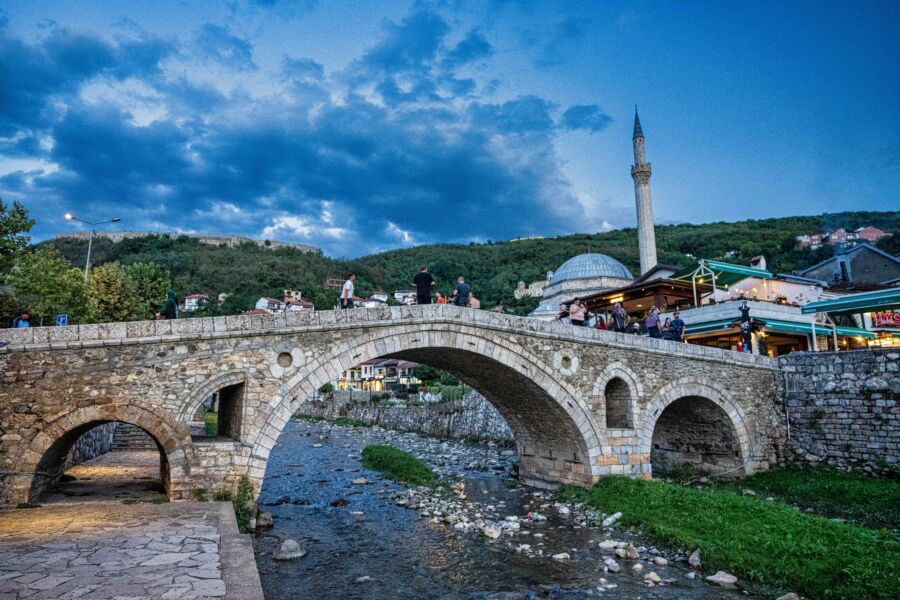
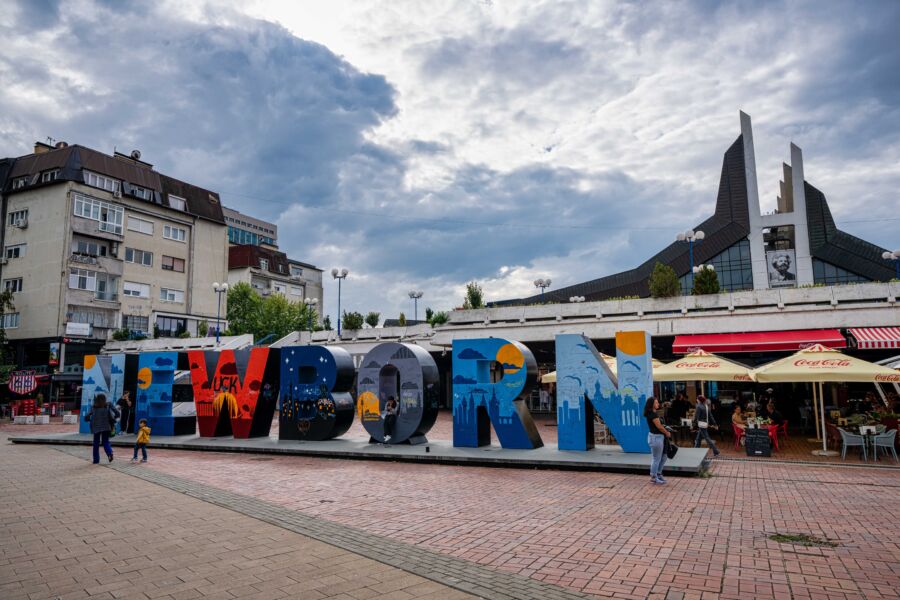
Once in Kosovo, I enjoyed the capital of Prishtinë (with its “Newborn” monument, more Brutalist masterpieces, and delightful urban buzz); the historic Ottoman town of Prizren (with mosques, a hilltop fortress, and a classic stone bridge); and the rugged Accursed Mountains, which ruffle across three countries.
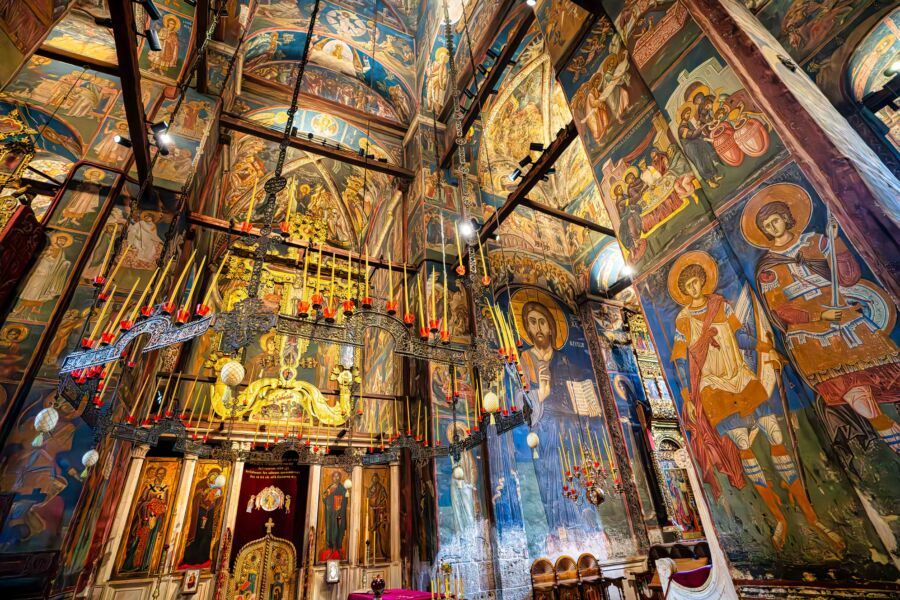
Also in Kosovo, I made a point to visit some of the important Serb landmarks within Kosovo, including three historic monasteries (Gračanica, Peć, and Visoki Dečani) and Gazimestan, the tower overlooking the historically charged battlefield of Kosovo Polje.
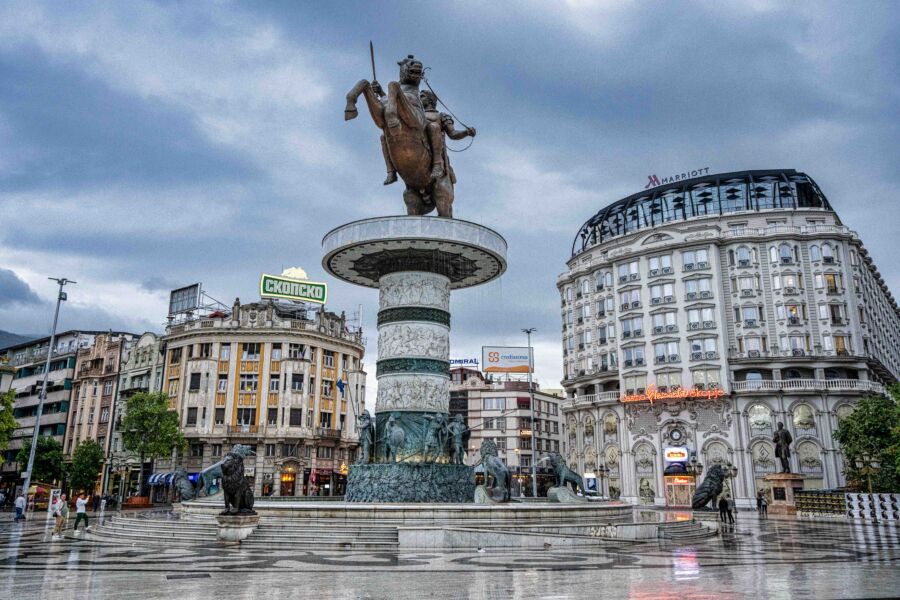
From Kosovo, it’s a quick drive south into North Macedonia and its capital, Skopje, with its mind-bending variety of “kitsch” from the Skopje 2014 initiative: grandiose buildings, countless statues and monuments, and broad squares… all of which are already falling into disrepair. Personally, I was more charmed by the bustling bazaar, across the river, which is one of the best in the Balkans.
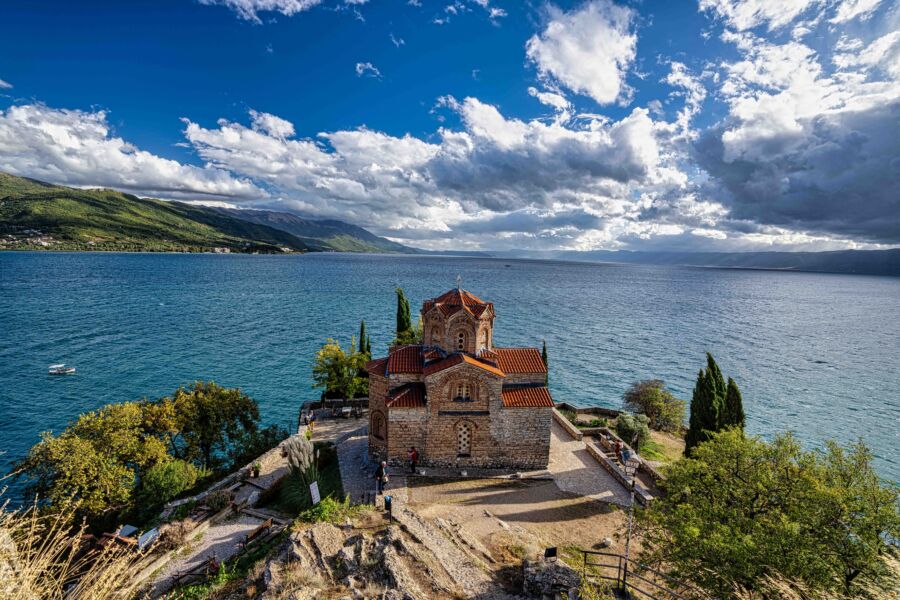
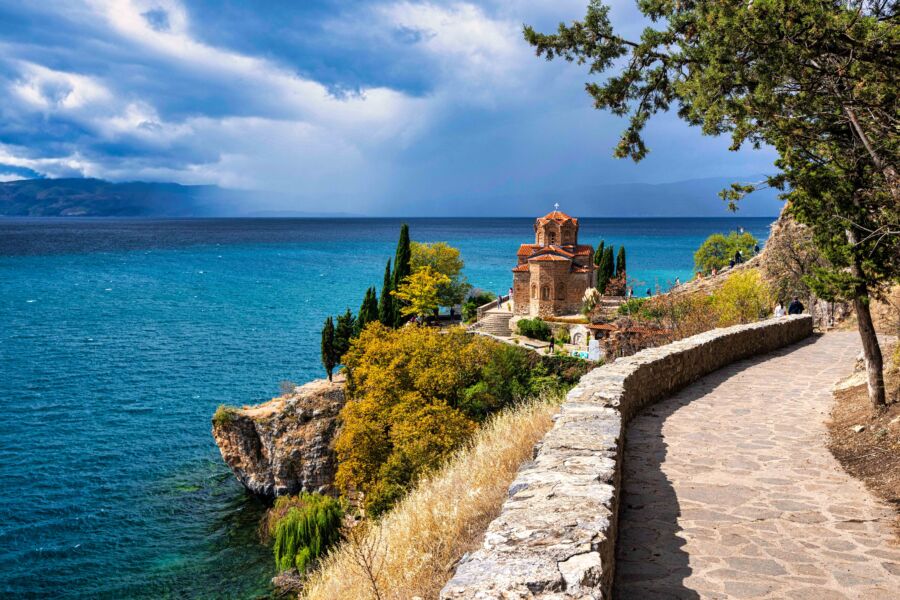
After a quick stop in Tetovo to see the stunning Colorful Mosque, I lingered at Lake Ohrid — one of the world’s oldest and deepest lakes, along the border between North Macedonia and Albania. Its moody waters, historic churches (including the famous St. Jovan Kaneo), and pleasant resort-town bustle were a nice break between cities.
Then it was onward to Albania, which has recently been on the rise as a “budget beach break” destination.
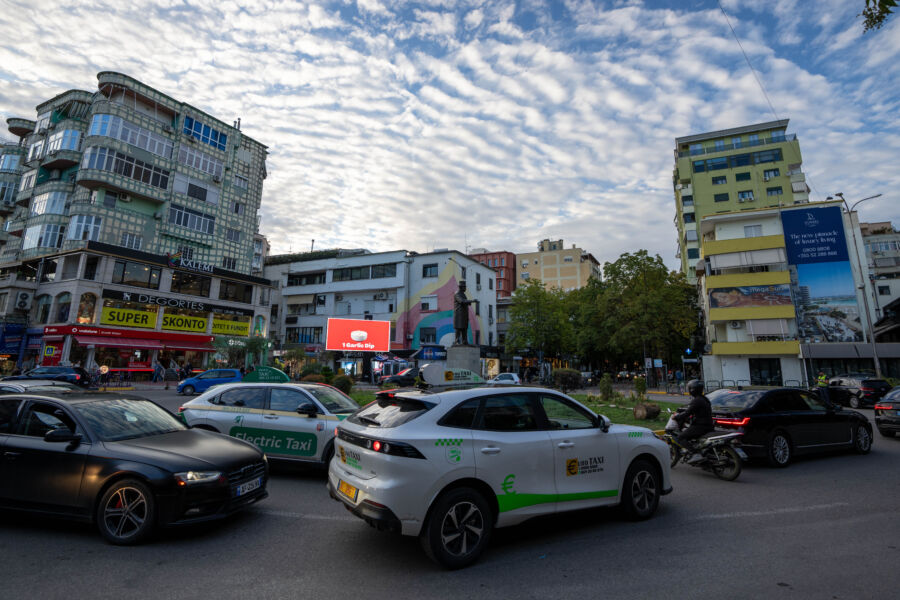
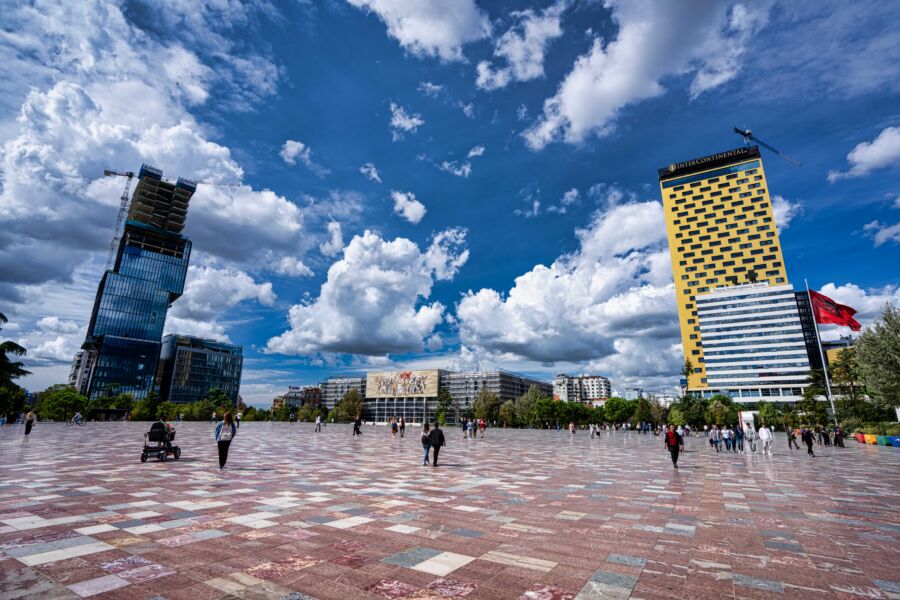
I began in the capital city, Tiranë, which I found surprisingly cheerful and fresh-feeling, with enjoyable parks, generous squares, towering skyscrapers, and interesting museums (especially ones interrogating the legacy of the brutal communist dictator, Enver Hoxha).
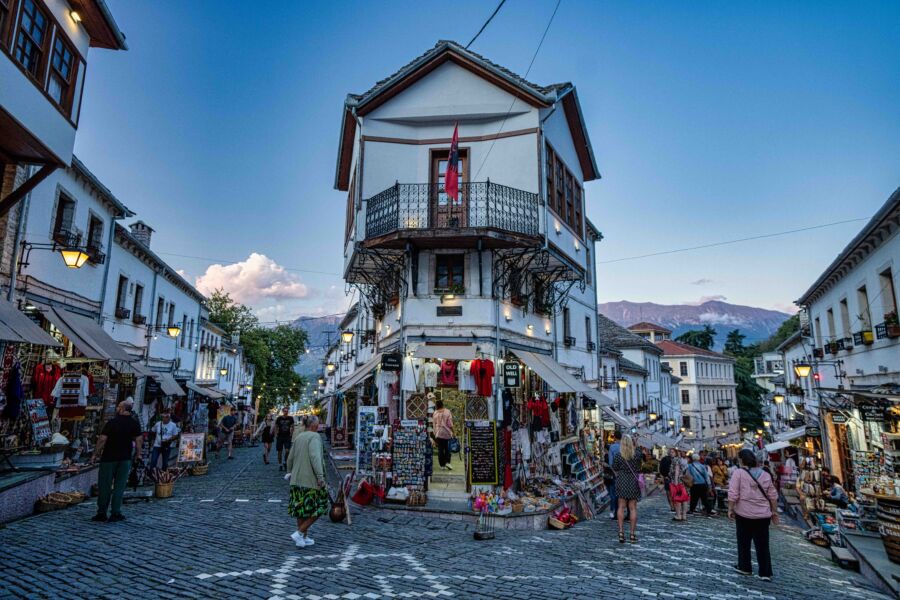
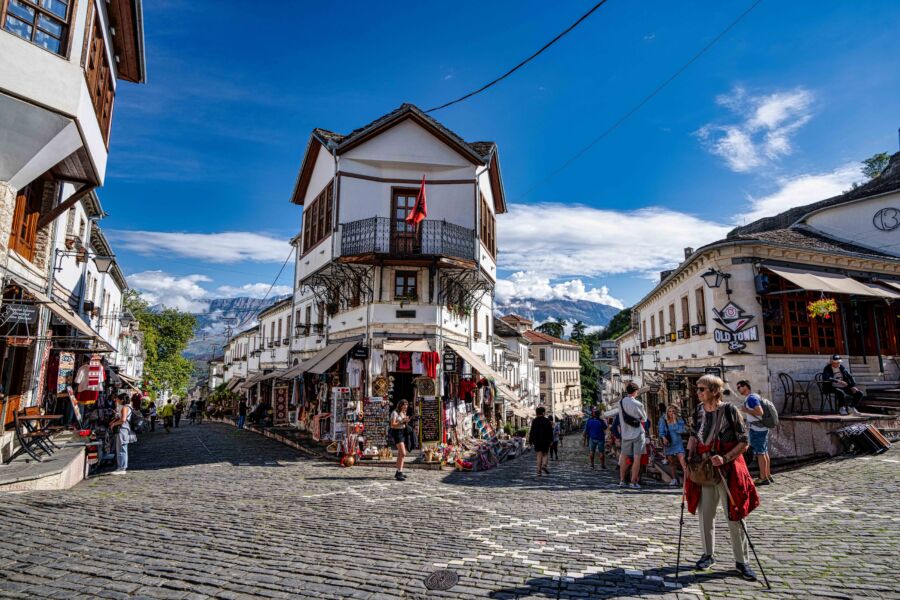
Then I headed to the country’s fine mountain towns, each a warren of narrow, cobbled lanes huddled below a mighty fortress. Berat, the “city of a thousand windows,” was charming, but the real star is Gjirokastër, with its twisty and steep lanes weaving through its historic bazaar, and stunning views to the surrounding mountains.
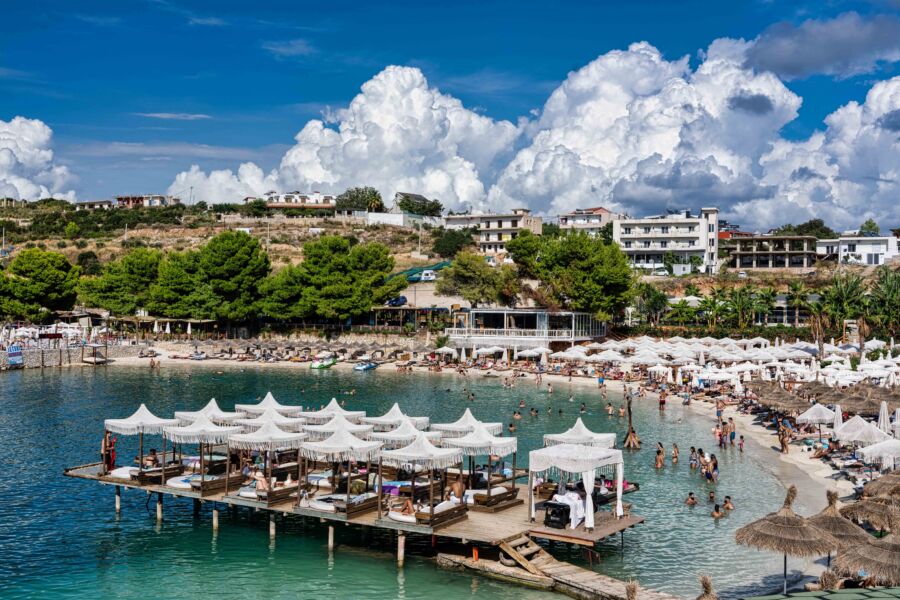
From here, I side-tripped to a couple of those newly famous, up-and-coming beach resorts (about an hour’s drive away): Big, sprawling, concrete Sarandë; and smaller, dreamier Ksamil. Both had nice sandy beaches that were inviting on a sunny day. But the very crowded beaches, variable standard of accommodations, and noticeably lagging infrastructure made it clear that Albania’s tourism industry is still a work in progress. (Sadly, greedy hoteliers raised prices dramatically in anticipation of a busy 2024, which kept budget-minded travelers away and badly hampered the burgeoning tourism industry.) Nearby are the ancient ruins of Butrint.
Especially if you’re determined to really settle in and linger on the beach, you could flip this plan — sleep in Ksamil or Sarandë, and side-trip to Gjirokastër — but given the speedy nature of my trip, I was glad to circle back to settle in for another night at Gjirokastër, to soak in its charming atmosphere.
From here, I crossed the Greek border, and headed on to Meteora and Athens, to drop off my rental car and carry on to the islands. But if you had ample time — another week or two — you could make your trip a loop and take the coastal route home: Back up along the Albanian coast, around Montenegro’s Bay of Kotor, then island-hop up Croatia’s Dalmatian Coast to Slovenia, where you began. Phew!
I’ll stress again that this is an ambitious, fast-paced plan, designed to briefly touch down in as many places as possible. But this spine may inspire to you select which part(s) of the Balkans most intrigue you, and do a deeper dive. Consider splitting it up over several trips.
If carrying on through the other six countries, top-quality print information is limited. I found Lonely Planet’s Western Balkans guidebook somewhat useful as a starting point for trip planning, but their on-the-ground coverage is sparse and, for my taste, their opinions are too generic and muddled to be useful in prioritizing stops.
For a deeper dive into each country, Bradt has the most generous coverage of these lands, with dedicated guidebooks on Kosovo; North Macedonia; and Albania. While insightful and useful at times, personally I found these a little too dense and dry for my once-over-lightly trip.
Much better than guidebooks, to really get local insight on these places, I recommend investing in hiring local guides. In most of these cities, you can spend a few hours with a great local guide for around $50 (again, double that — or more — for Croatia, Slovenia, and Montenegro). I found guides in a variety of ways, whether through personal recommendations from my friends in the region or by scouring online reviews until I found a guide or company that matched my travel philosophy. While I had a couple of duds, most of the guides I used were top-quality; I’ve noted some favorites below.
The single best resource I found for this trip was the Sarajevo-based tour company called Funky Tours. Thoughtfully run by Ema, they offer a variety of tools for Balkans-bound travelers, ranging from day trips out of Sarajevo (including an outstanding visit to Srebrenica); to multi-day package tours; to a consulting service for helping you sort out the details of your independent trip; to fully custom study tours, where you tell them what you’re looking for, and they take care of the rest. Based on the exceptional quality of their advice and contacts, I recommend them most highly if you’re looking to invest in some expert help in putting together your dream Balkans trip — especially if you’re heading to the southern part of this region, where clear resources are harder to come by.
And finally, below I’ve listed a country-by-country grab-bag of the resources and other leads I personally found most useful in each place. This is just the tip of the iceberg; my sense is that there are wonderful guides, tour operators, hotels, and contacts all over the Balkans, but it can be challenging to find just the right ones for your trip. (Note: While some of the local guides have email addresses or even websites, many of them communicate primarily through messaging on WhatsApp; in these cases, I’ve given their phone numbers below.) Use this list as a starting point, and if you have any personal favorites in this area, let me know in the Comments, below.
Bosnia-Herzegovina: Our Rick Steves Croatia and Slovenia guidebook covers this area, as well, but I’ll call out a couple of favorite guides: In Sarajevo, Funky Tours (noted above) offer excellent side-trips, including a well-designed side-trip to Srebrenica. Amir Telibećirović is a local guide who’s been partnering with us in Sarajevo for years (teleamir@gmail.com). In Mostar, Alma Elezović is a great guide (aelezovic@gmail.com), and her husband Ermin is a driver for trips around Bosnia (elezovicermin@gmail.com). By the way, if visiting Srebrenica — or even if you’re just curious about that harrowing chapter of the Yugoslav Wars — watching the Oscar-winning 2020 film Quo Vadis, Aida? is a must.
Serbia: On my previous visit to Belgrade, I enjoyed a tour from Srdjan Ristić from Explore Belgrade. On this trip, Serbian Adventure Factory arranged an excellent city historical tour for me with Marija, as well as a visit to Tito’s Blue Train. For a splurge-by-local-standards dinner of upmarket “New Balkan” cuisine, I enjoyed dining at the restaurant called Iva. And the best gelato I have had in the Balkans (outside of Ljubljana) is Crna Ovca, with locations around Belgrade.
Montenegro: The highlights of this country are also covered in our Rick Steves Croatia and Slovenia guidebook. Our longtime trusted partner in the area is Stefan Đukanović of Miro and Sons; they do a variety of trips around the country. On this trip, in addition to a fun and insightful scenic joyride with Stefan, I enjoyed an insightful tour of Podgorica with his guide Rajan. Also in Podgorica, I had a wonderful dinner at Konoba Lanterna, with generous portions of delicious traditional food.
Kosovo: I enjoyed staying at the Hotel Gračanica, just outside Prishtinë, near a historic Serb monastery; the reception staff is exceptionally helpful, and the in-house restaurant served one of the best meals I had in the Balkans. In Prishtinë, local guide Ilir gave me a great tour of his “Newborn” city (+383 49 407 769). Prishtinë had so many tempting cafés and restaurants, it was hard to pick; on my brief visit, I enjoyed coffee and cake at Newborn Brew, and had a fun, trendy dinner at the bookstore-themed Soma Book Station. In Prizren, I enjoyed a delicious, traditional dinner along the river near the classic old bridge at Shpija e Kalter. And the Accursed Mountains — at the intersection of Kosovo, Montenegro, and Albania — is emerging as a popular hiking destination.
North Macedonia: In Skopje, I wandered about 15 minutes from the main square to the trendy area called Debar Maalo, with several traditional restaurants featuring nice outdoor seating (including a few interchangeable places on Gjorgji Peshkov street). A little closer to the center, the big, traditional Old City House Restaurant felt very touristy, but the food was good. I learned much about Lake Ohrid — and North Macedonia in general — from local guide Džino Patel (dzingispatel@gmail.com). In the town of Ohrid, I had a great meal at Kaj Kanevche — quite touristy but friendly and with good traditional food right on the water just below the famous Church of St. Jovan Kaneo. In town, Bro’s Burger Station offered a fun and tasty change of pace from traditional food, serving American-style burgers with a Balkan spin.
Albania: In Tiranë, I was grateful for the help of local guides Eni (+355 68 900 9560) and Gazi (+355 69 631 5858). The city’s main square surprised me with one of the best bookstores (including lots of English books) in the Balkans, Adrion. In Berat, I enjoyed a tour from Erilda Krasi of 1001 Albanian Adventures (+355 69 883 1536). In Gjirokastër, I loved my stay at Tatiana’s guesthouse, Argyropolis Boutique Hotel (you can find her on Booking.com). Also in Gjirokastër, I enjoyed a great dinner at the traditional restaurant called Odaja, with a tiny balcony overlooking the busy bazaar.
Other Video Resources
My “Balkan Odyssey” Monday Night Travel focuses on those lesser-traveled southern Balkan destinations. If you’re craving more focus on the more popular northern countries — especially Croatia and Slovenia — we’ve archived lots of great content on those.
Start by checking out my team-up with my Slovenian friend and fellow tour guide, Tina Hiti, when we co-hosted a Monday Night Travel-style rundown of Croatia, Slovenia, and neighboring lands (from our 2023 Festival of Travel).
I hope this rundown of tips, itinerary ideas, and resources whets your appetite for planning a Balkan Odyssey of your own. While it’s a little more complicated to plan a trip here than to the (overrun, overpriced) biggies in other parts of Europe, your effort is more than rewarded with a wonderful travel experience. If you have any guidance from your own travels to add, please suggest them below in the Comments.
As the new year dawns, it’s time to plan new travels. Each year around this time, I share 10 “Discoveries” — lesser-known, underappreciated corners of Europe that might deserve a look as your travel dreaming turns to travel planning. And this year, my Discoveries come with a special focus: the Balkans.
Wait… the Balkans? Those Balkans? Absolutely, yes. A few months ago, I set out on an epic road trip from the Julian Alps to the shores of the Aegean, from sunny coastlines to frigid mountaintops, and from Lake Bled to Lake Ohrid… hopscotching through the Catholic, Muslim, and Eastern Orthodox worlds while linking up seven different capitals. This year’s Discoveries showcase 10 locations in 10 countries, combining new-to-me finds and classic favorites.
But the Balkan focus isn’t just because of my recent travels. If there’s a prevailing travel theme for 2025, it’s big prices and bigger crowds. In addition to its astonishing cultural diversity, its stunning landscapes, and its thriving cities, the Balkans’ great appeal is its undiscovered-ness. (In many places, I never saw another American.) And, while inflation is affecting every place to varying degrees, these destinations remain strikingly affordable.
There’s a good chance you’ve never heard of some of these places. But that doesn’t mean they’re not worth a visit. Join me on a spin through the Balkans… and discover something new.
Gjirokastër, Albania
On my Balkan road trip, nothing tested my mettle behind the wheel like driving to my traditional guesthouse near the top of Gjirokastër — the most appealing of Albania’s many historic mountain towns, huddled on steep slopes below a protective citadel.
From the broad valley below, I twirled up through Gjirokastër’s labyrinthine old town, inhaling deeply as I squeezed up lanes barely as wide as my car. (I had booked a subcompact. They gave me an SUV.) Summiting town, I was greeted by cheerful Tatiana — my very own temporary Albanian auntie — who made me feel instantly at home in her cozy, traditional, spotless B&B.
Like so much of Albania (and the Balkans), the historic core of Gjirokastër feels Turkish: cobbled streets, stony slate-roofed homes, soaring minarets, and a thriving bazaar. From the main intersection, with lanes spiraling off in every direction, you have exactly two choices: uphill or downhill.
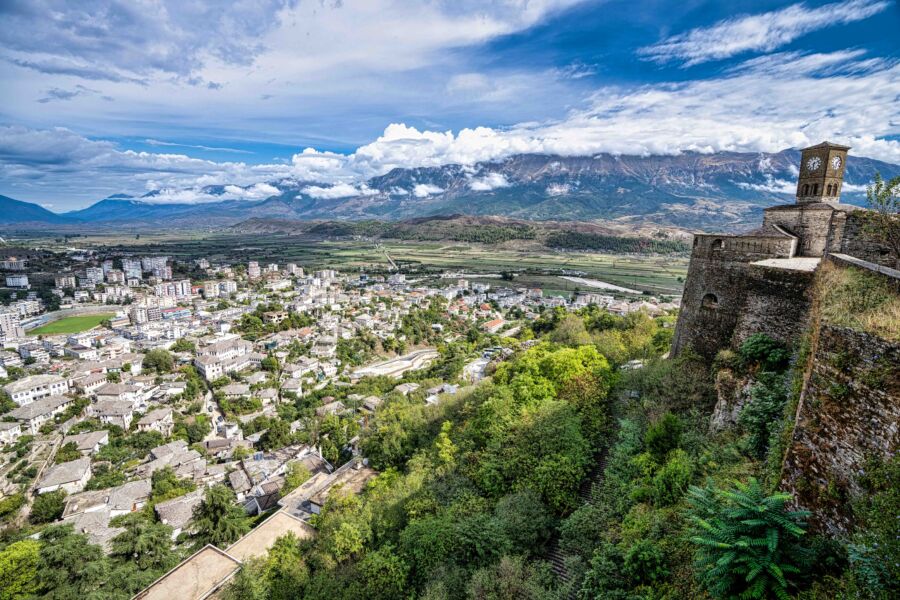
Conquering Gjirokastër’s castle — racking up a day’s worth of steps in a 20-minute vertical climb — I looked down over the city’s rooftops, lined up against a jagged, cloud-catching ridge of peaks across the way.
Later that night, I found the perfect traditional eatery, which had just one tiny table on a miniature porch cantilevered over the bazaar’s busy main drag. Digging into an affordable feast of rice balls, meatballs in yogurt, and an intensely sweet, honey-soaked orange cake, I observed the touristic hubbub just below me. Gjirokastër is gradually becoming known, thanks to its cultural heritage, stunning setting, and proximity to Albania’s increasingly famous Adriatic beaches.
And yet, the place still has an uncorrupted, authentic soul. After dinner, in a needless rush, I hustled past a humble bar with tables facing the bazaar’s main intersection. The bar’s owner slowed me with a generous smile as he all but insisted I take a seat. After charging me less than a buck for an open-your-own-bottle beer, he joined some friends at the next table and savored that priceless twilight view right along with me. It seemed he was less concerned about making money than he was ensuring that this serene view wouldn’t go to waste.
Prishtinë, Kosovo
“I’ll meet you at the Newborn Monument.”
So pinged a text from my local guide, Mentor, as I drove through swiftly developing outskirts toward the center of Europe’s newest capital city. At the monument consisting of the word NEWBORN, Mentor eagerly greeted me, ready to show off his burgeoning hometown.
Prishtinë embraces its newness. Repeatedly, I heard the brag that Kosovo — Europe’s youngest country (independent since 2008, and still not universally recognized) — also has one of its youngest populations, with about two-thirds of its citizens under 30 years old.
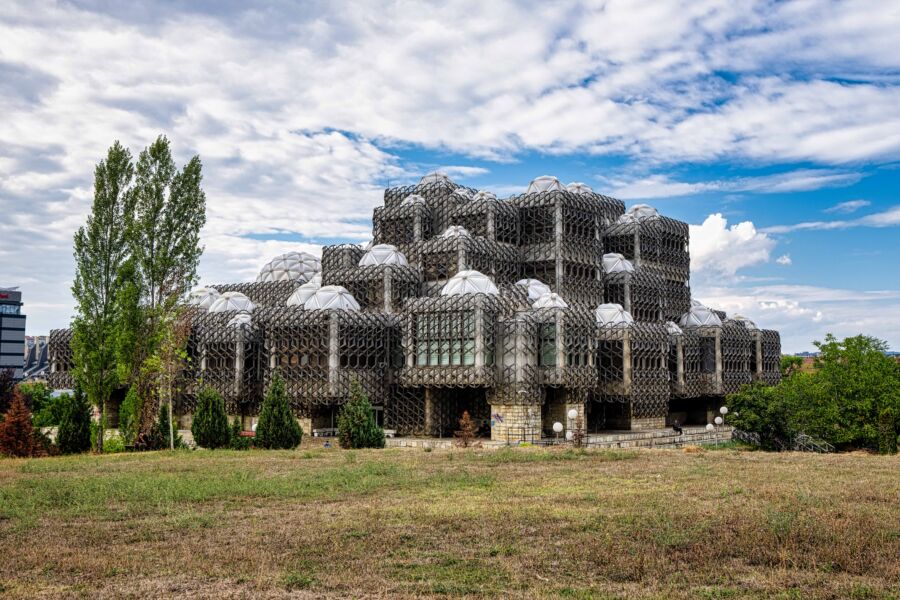
As I explored Prishtinë, I immediately appreciated its appealing urbanity, optimism, and sense of forward momentum. The main drag, recently closed to cars, is a delightful pedestrian mall lined with plywood food sheds and picnic tables. Even its “old” buildings — such as the wonderfully weird, wildly eye-catching National Library, opened in 1982 — feel fresh and innovative: a Brutalist masterpiece with bulbous domes, all wrapped in metallic netting.
At the same time, I also sensed a deep devotion to the past. The ethnic Albanians who make up more than 90 percent of Kosovo’s population are, it’s believed, descended from among the earliest known peoples to reside in Europe: the Illyrians, bewilderingly ancient even to the ancients. And Prishtinë, despite its apparent “newness,” has a very old soul.
As if to demonstrate this, Mentor led me away from the thriving downtown and up to the very top of the main drag (passing the shiny office-tower parliament) to reach the old Ottoman quarter. Passing a duo of soaring minarets — each one marking a lavishly decorated mosque full of locals taking part in evening prayer — we carried on through old Prishtinë’s meandering bazaar streets to a fabulously well-preserved old Turkish house. Mentor lovingly explained each centuries-old item, as if tenderly flipping through the yellowed pages of a precious chronicle.
This parallel devotion to both old and new struck me throughout Kosovo, where visitors divide their attention between the slick new development of a fledgling country, and evocatively antique Orthodox monasteries and Ottoman-era towns (like Prizren). It’s one of the reasons Kosovo, and Prishtinë in particular, got under my skin… much to my (pleasant) surprise.
Logarska Dolina and the Northern Valleys, Slovenia
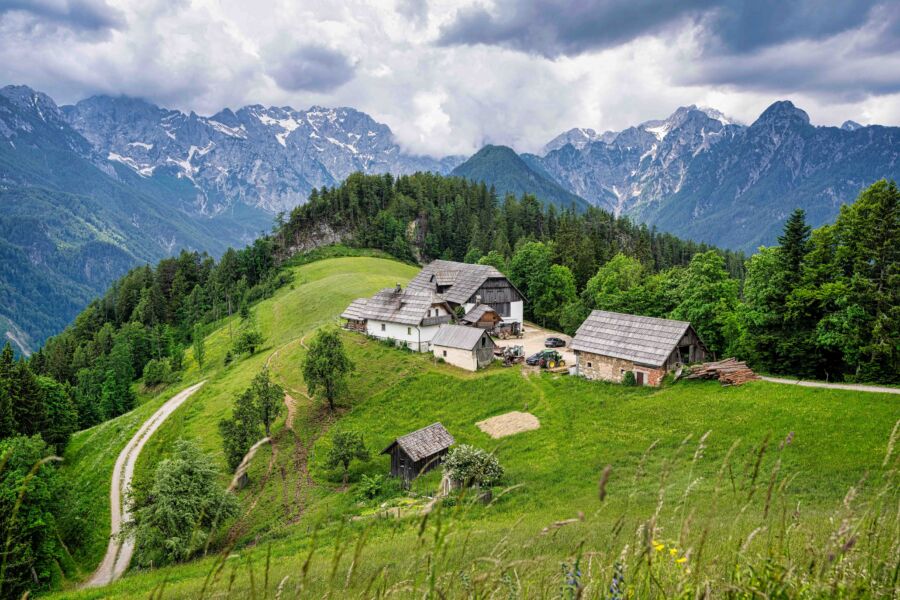
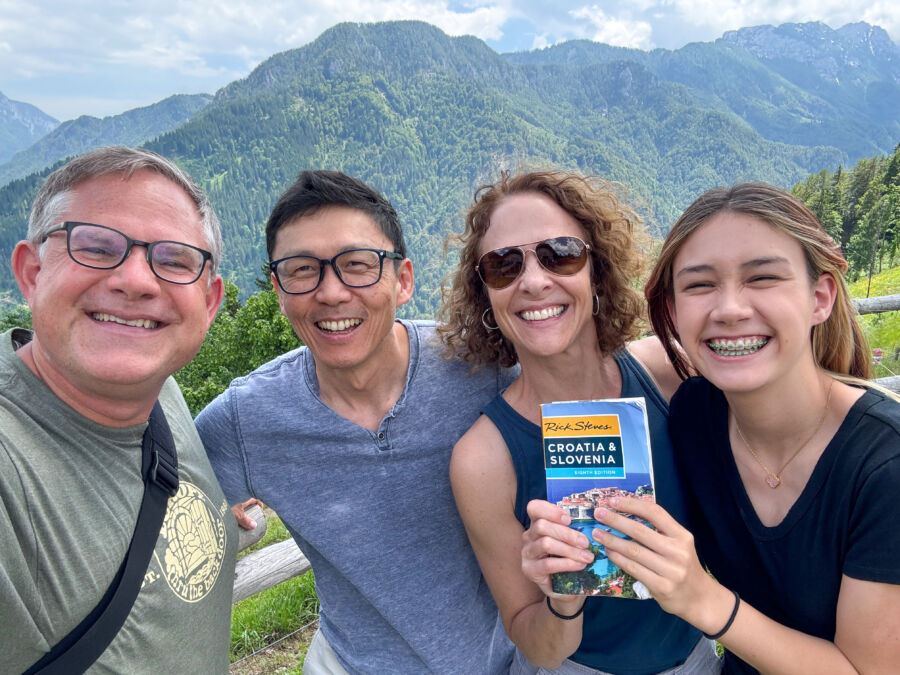
Curling along a ridgetop road at what felt like the attic of the Alps — immersed in 360 degrees of spectacular green hills, yawning valleys, and cut-glass peaks, just a few minutes’ drive from Austria — I pulled up the gravel driveway of a simple farmhouse. Inside the screened-in porch, I met a family of three from Canada: mom, dad, and teenage daughter, all digging into plates of hearty food.
The farmer who owned the place appeared and agreed to bring me a plate, too. As we all chowed down on oversized, pork-filled dumplings, my lunchmates explained that their guidebook had directed them up into these rugged mountains, at the remote northern fringe of one of Europe’s most underrated countries… where they were having the time of their lives. The experience left both my belly and my soul full — making me happy that my work is having an impact on at least a few vacations.
Just down the road, a local tip detoured me up a side valley to another tourist farm, this one specializing in artisanal goat’s-milk ice cream infused with local Slovenian ingredients: anise and honey, tarragon, dried pears, fresh-curd strudel. As a gelato aficionado, I had very high hopes. They were exceeded. (Another discovery for that guidebook!)
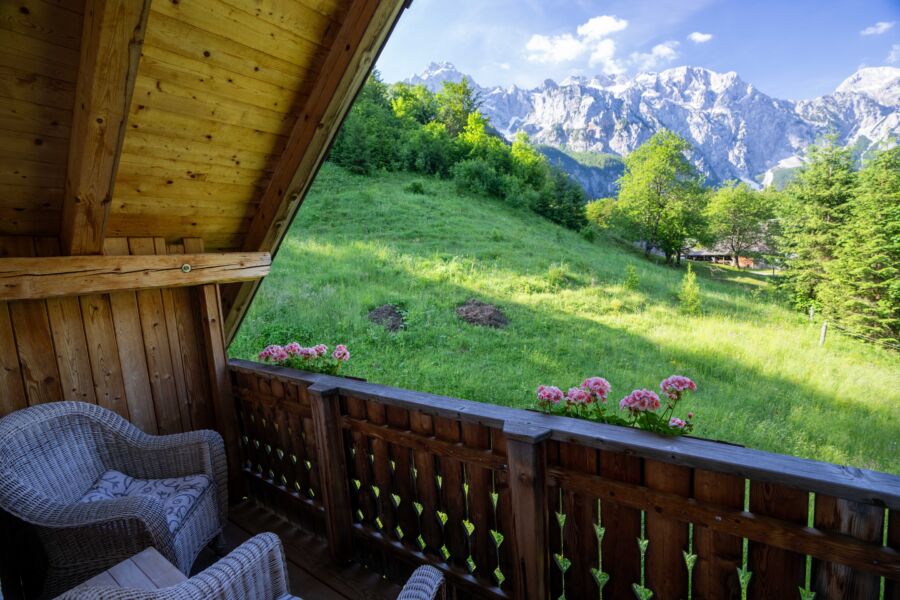
After a long day of heavenly views and earthy flavors, I made my way back to yet another rustic farmhouse, where I was spending the night. The Lenar clan (Urša and her parents) set me up with a woody room where I could step out onto a silent balcony to bask in sweeping views across the valley. Each morning, I savored the traditional folk-art decor of the breakfast room, along with farm-fresh eggs, home-baked pastries, and Urša’s gentle, thoughtful lessons about this region’s distinct farming and forestry methods.
Logarska Dolina specializes in spectacular scenery, in rustic lives that revolve around traditions, and in a refreshing lack of fellow tourists (other than in-the-know Slovenes…and a few wayward Canadians). As Slovenia’s more famous mountain resorts — Lake Bled, Lake Bohinj, the Soča Valley — are becoming, to varying degrees, more crowded, Logarska Dolina is a reminder that even a small country is never exhausted of its beckoning hideaways.
Belgrade, Serbia
Creeping closer and closer in rush-hour gridlock, I observed how the Serbian capital fills its long ridge with gray, uninspiring concrete. Traffic here is as heavy as it is unforgiving. Lush parks, genteel boulevards, and ornate facades are in short supply. The sidewalks are narrow and shabby and forever dribbled by air-conditioning units grafted onto ramshackle apartment blocks that stretch high into the sky, blotting out the sun.
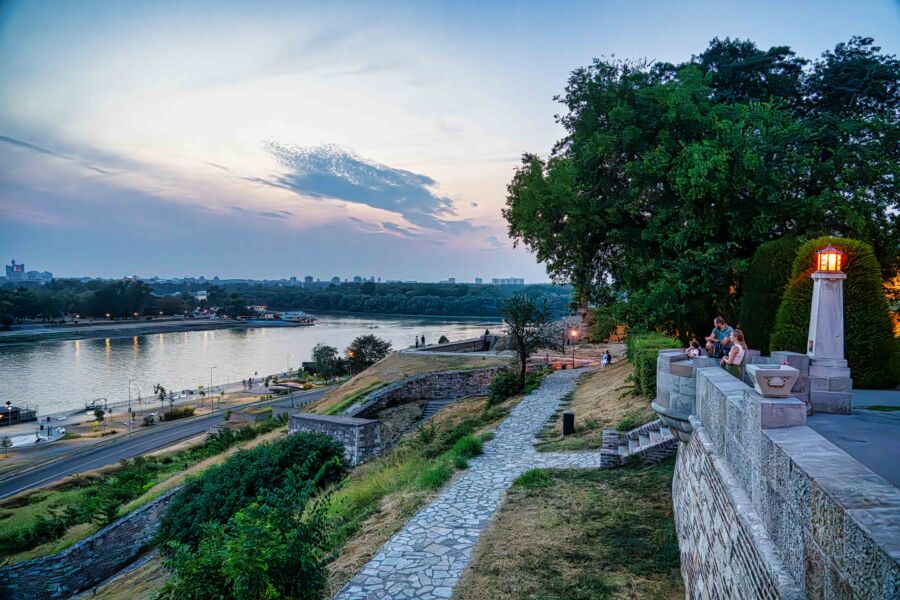
Finally reaching my lodgings, dropping off my bag, and heading out to explore, I joined the people-parade on the main walking street, Knez Mihalova. And suddenly I remembered: Once you’re immersed in the urban jungle of Belgrade, the city abounds with charming details, intriguing detours, and an exuberant humanity. On this balmy evening, the entire city was out promenading… slowly making their way toward Kalemegdan Park, which fills a point surrounding Belgrade Fortress overlooking the confluence of the Danube and the Sava.
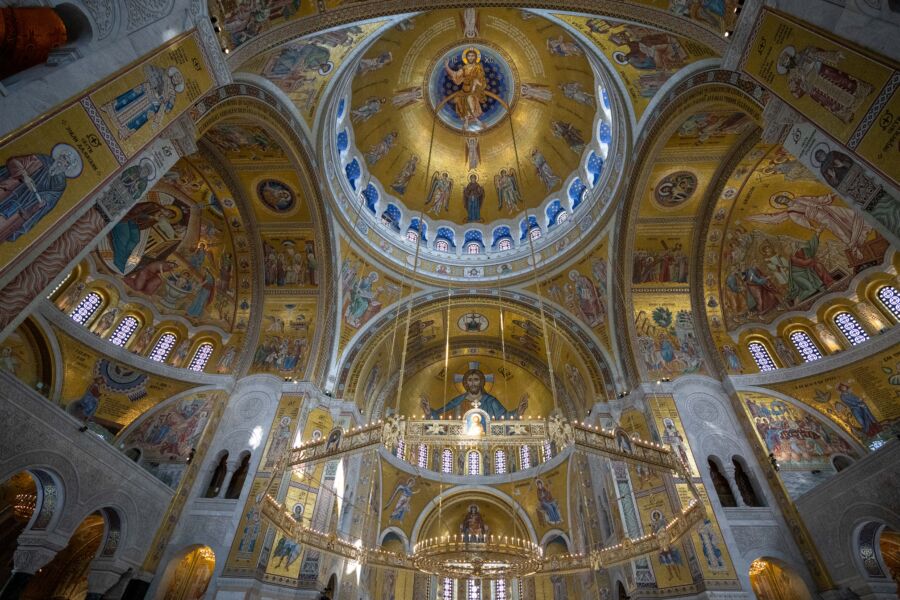
Sightseers find plenty to do here. Sveti Sava, one of the largest Orthodox churches in Christendom, is gobsmackingly stunning inside — shimmering with gilded icons and glittering chandeliers. Just up the street is the former home of inventor Nikola Tesla, now a museum. The Yugo-nostalgic can pay their respects at Marshal Tito’s grave and tour the fascinating, adjacent museum of Yugoslavia. Or simply prowl the cobbles of the traditional quarter, Skadarlija, buzzing with dueling Balkan folk troupes and interchangeable menus of delicious “Serbian national cuisine.”
Departing Belgrade, observing its blight shrink behind me, I thought about how few places provide a starker contrast between that first, distant impression… and the slow, satisfying revelation of experiencing it from within.
Istrian Interior, Croatia
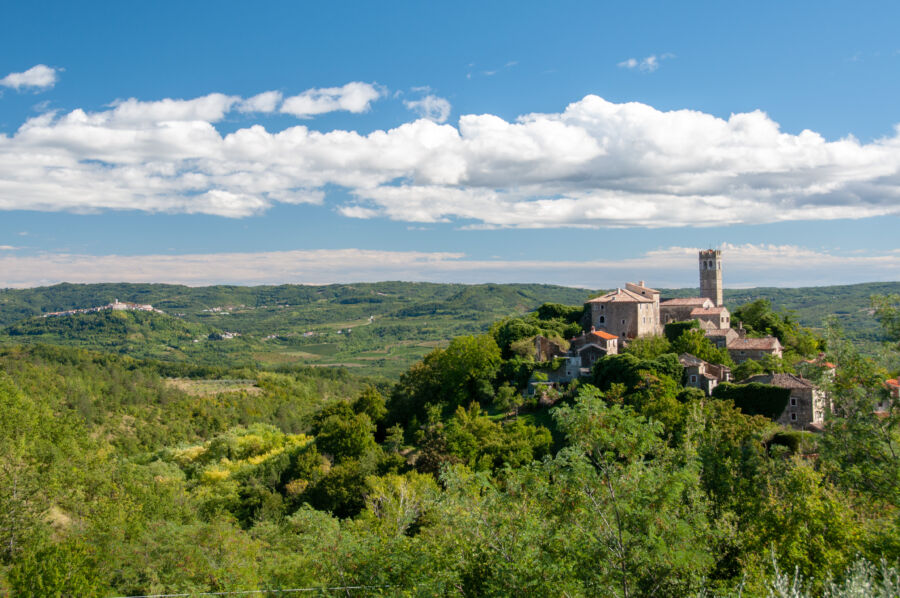
Many years ago, when we were first brainstorming the itinerary for our Rick Steves Best of the Adriatic tour, we knew we needed a couple of nights in Istria — the wedge-shaped peninsula dangling from the northwest corner of Croatia, next to Italy. Initially I figured that stop must be in Rovinj, arguably Croatia’s prettiest coastal town. But then someone suggested that, instead, we should sleep deep in the Istrian interior. Why not settle into an atmospheric hill town with bucolic views and world-class restaurants, still just a short drive from Istria’s coastal delights?
It was one of those Eureka! moments that, instantly, just made sense. And it still does.
While Croatia is, deservedly, famous for its coastline, I always find myself looking forward to my time in the Istrian interior. There’s nothing like hitting the road for a giddy loop through this stunning, user-friendly region, with its cypress-lined country lanes, stony hill towns capping vineyard-draped hills, trendy boutique wineries and other foodie finds, and dark oak forests embedded with precious truffles. It feels like joyriding through a schlocky painting of Tuscany — but real!
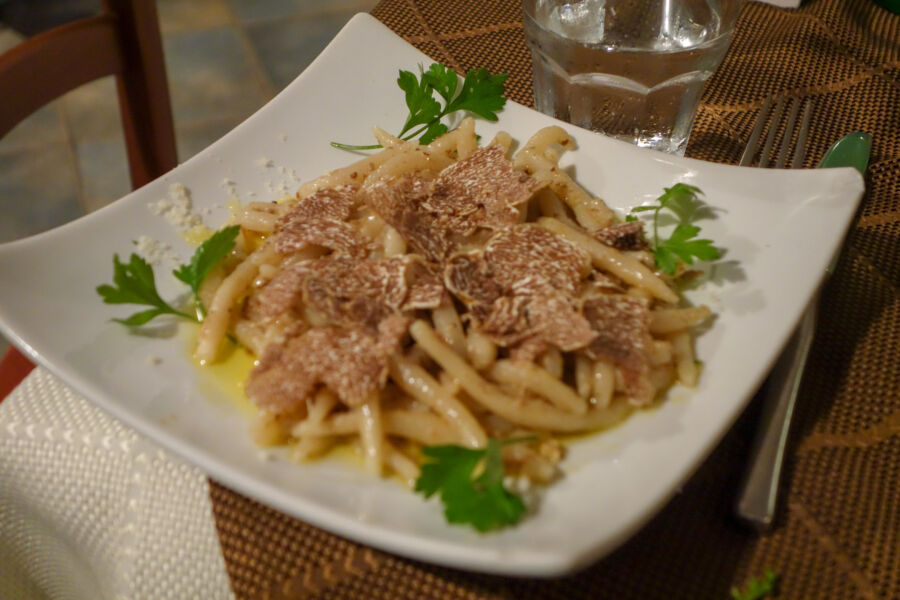
And then, of course, there’s the food: Istria is one of Europe’s most abundant producers of truffles. These pungent tubers are grated like parmesan over noodles or steak. And you’ll also find them in cheese, salami, olive oil, tapenade, pâté, frittata, soufflé, and even ice cream.
Settling into one of my favorite Croatian eateries, in the hill town of Motovun, I perused the menu and made my selection. But then, the owner appeared tableside and turned the page. “Ah, but did you see the white truffle menu? We have some of the first white truffles of the season.”
Well, in that case… don’t mind if I do!
Sibiu, Transylvania, Romania
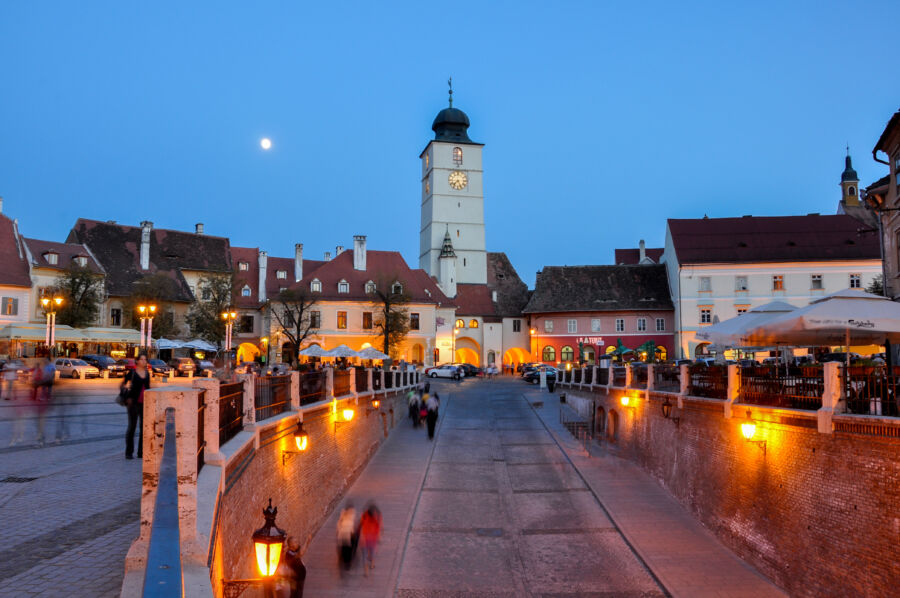
On the night of my first visit to Sibiu, several years ago, the town was throwing its first-ever Oktoberfest party. The main square was alive with festivities: carnival rides, little booths slinging traditional food, and a gigantic beer tent, rollicking with happy Romanians hoisting frothy mugs while swaying in time to the imported German oompah band.
Cultural cross-pollination is a hallmark of the Balkans, and essential to truly understanding the region. But it’s not always easy. Just trying to explain the various cultures that have called Romania home — Roman legionnaires, Germanic (“Saxon”) traders, two different factions of Hungarians, and, oh yes, the Romanians — can glaze over the eyes even of the most curious history student.
That’s why I appreciate places like Sibiu, which embodies those complexities in an easy-to-appreciate package. It’s one of many historically Germanic towns in Transylvania, Romania’s thickly forested heartland. Those rolling foothills and cut-glass Carpathian peaks on the horizon are easy to mistake for the Alps.
After communism, like so many other Romanian communities, Sibiu was in a shambles. But it was rebuilt and brightly polished, thanks largely to a visionary mayor, Klaus Iohannis — the first ethnically German mayor anywhere in Romania since World War II. (The city’s transformation and prosperity vaulted Iohannis to national prominence; he was elected president in 2014, and still holds that office.)
Today, among Romanian towns, Sibiu feels classy, stable, and sure of itself. Exploring Sibiu’s cobbles — wandering between its three grand, interlocking squares, enlivened by stately municipal buildings, café tables, and giant, looming churches, then wandering down its main pedestrian drag to a tranquil park that marks the former moat — I kept catching myself thinking I was in Germany. And in a country that’s still struggling to get back on its feet, emulating one that’s already affluent, well-established, and tidy is a shrewd start.
Lake Ohrid, North Macedonia
For my stay at Lake Ohrid, I “splurged” (by Balkan standards) on an apartment with a deck overlooking the lake. Each time I slid open that giant glass door, subconsciously expecting to catch a whiff of the sea, I was surprised instead to smell the unmistakable dank of freshwater.
Nearly a thousand feet deep, and among the world’s oldest lakes, Ohrid feels primordial… elemental. Looking out over the sea-like deep, you notice how this vast, moody, dramatic lake is big enough to create its own weather system. From miles away, you can see brief, intense squalls ripping across the water’s surface toward you, alternating with shimmering sunbeams, bright blue skies, and cotton-candy clouds.
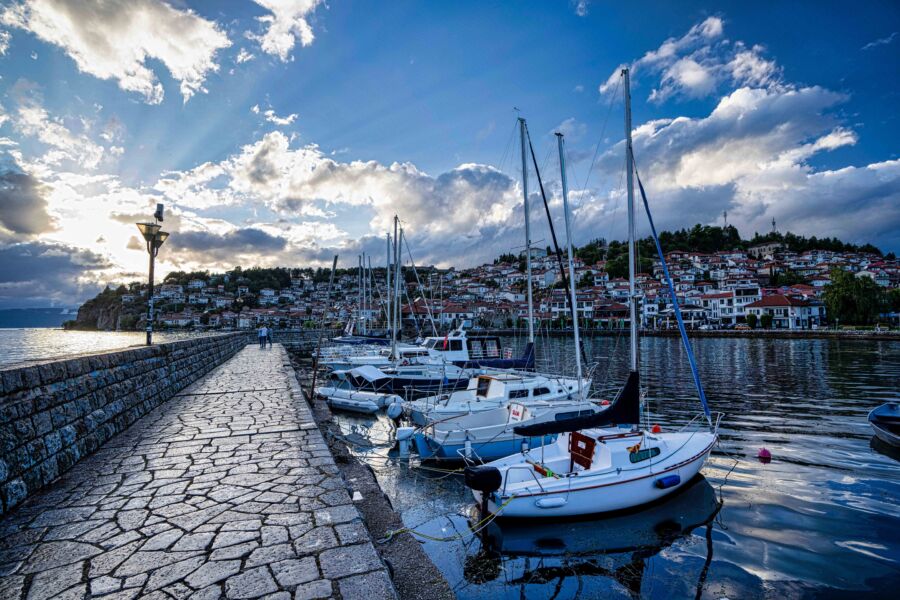
Ohrid floods a gorge between wooded mountains along the border between North Macedonia and Albania. The lake, and the historic town of the same name, are a popular resort for visitors from around the Balkans. Holiday-makers promenade along the wide path that runs along its shore, venturing out onto crumbling piers to be immersed in lakefront splendor. Or they hike just around the bluff above town to reach the iconic, Byzantine-style Orthodox church of St. Jovan Kaneo, clinging to its own little niche just over the water. From here, a steep and winding path leads up to a partially ruined fortress, along its crenellated wall, then to yet more beautiful Byzantine-style churches and twisting lanes that, eventually, meander back down to the lakefront.
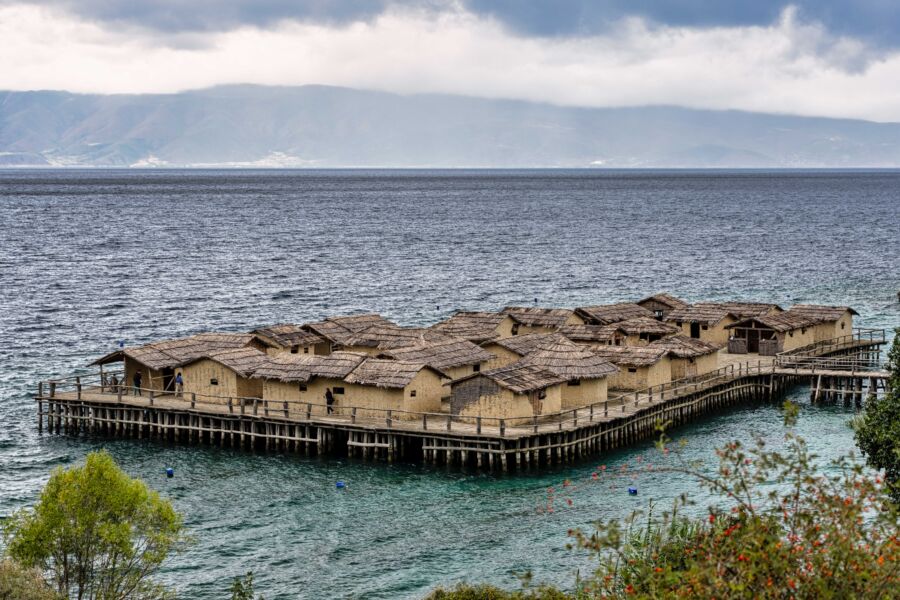
All of those churches are also a reminder that Ohrid is not just for vacationers; it’s one of those places that feels infused with an almost mystical aura, which has attracted settlers and visitors for eons. Following the shoreline highway, you can pull over to explore the rebuilt stilt houses suspended over the Bay of Bones, or to visit yet another historic church, honoring one of the Byzantine missionaries (St. Naum) who converted the Slavs and created the Cyrillic alphabet.
Yes, “primordial” is a strange way to describe a destination. But that’s the word that kept coming to mind on the shores of this bewilderingly old, mysterious, and tranquil lake.
Veliko Tarnovo and Shipka Pass, Bulgaria
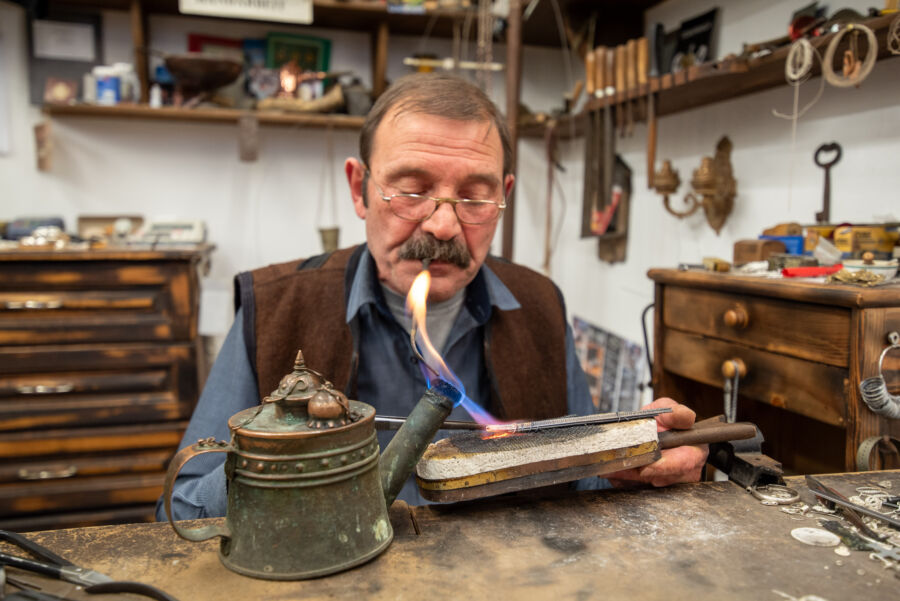
There’s an atmospheric lane in the heart of Veliko Tarnovo that’s lined with smiling craftspeople, eager to show off their traditional art. Silversmith Todor creates intricate filigree jewelry. Nina and her son create pottery with patterns dating back centuries. Miglena operates an old-fashioned loom. Rumi carves wooden items. And Rashko painstakingly paints icons. Folk art, still being executed with pride and precision by modern people, is a hallmark of the Balkans. And this “Craftspeople’s Street” is one of the most user-friendly places to experience it.
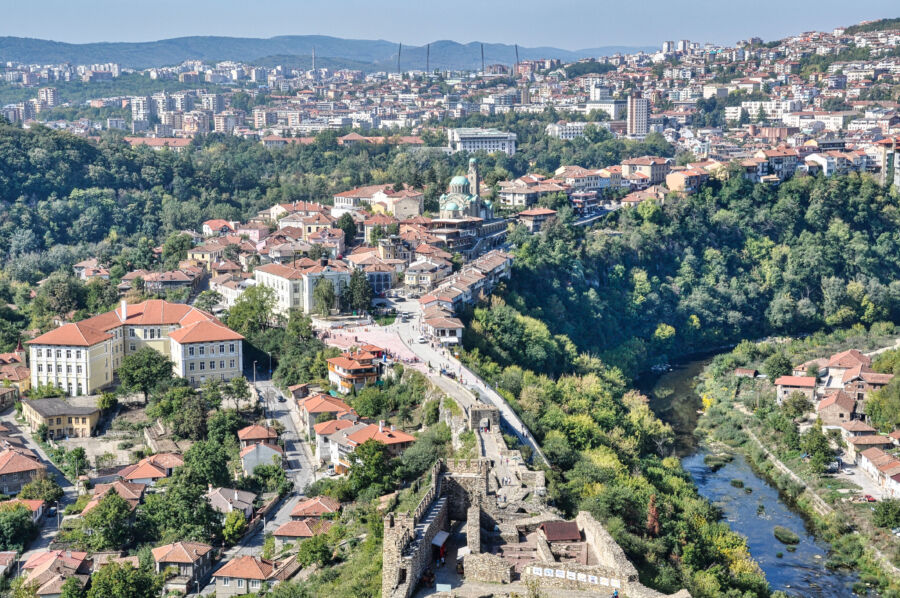
Artisanal handicrafts aside, Veliko Tarnovo — appropriately meaning “Great City of Land and Water” — is among the most dramatically situated settlements anywhere. The city’s homes cling to the steep slopes of a gorge carved by the meandering Yantra River. At one particularly scenic riverbend, a gigantic sword thrusts up into the sky, boldly proclaiming a centuries-old dynasty that still fills locals with pride. And the cliff-topping fortress, Tsarevets, rewards hikers with sweeping views over the city… and the opportunity for kids-at-heart to nock imaginary arrows while defending the substantial bastions.
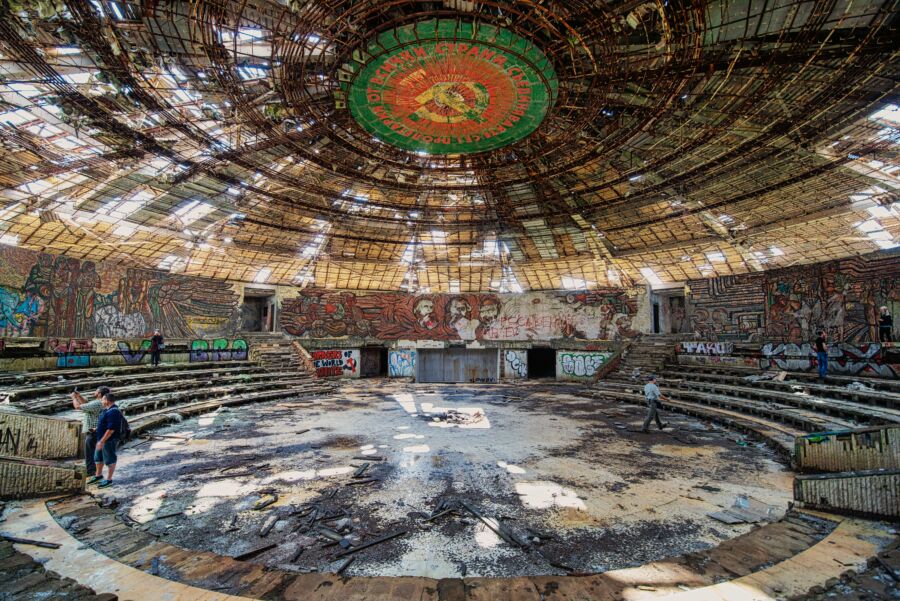
Connecting Veliko Tarnovo to the rest of the country is perhaps Bulgaria’s most entertaining drive, over the Shipka Pass. Along here, you’ll pass through Tryavna, a touristy village that abounds with traditional Bulgarian National Revival-style homes; a lavish Orthodox church celebrating the 1877 battle that forced the Ottomans out of this region; and a rotting-from-the-inside-out communist conference hall that looks like a UFO crash-landed on a mountainside, called Buzludzha.
If Bulgaria is one of Europe’s most pleasantly surprising destinations, then Veliko Tarnovo is one of its very best surprises — and a highlight of perhaps our most underrated tour, the Best of Bulgaria.
Podgorica, Montenegro
“You are probably wondering why you came to Podgorica, widely regarded as the ugliest capital city in Europe.”
These were the first words my guide, Rajan, said when we met. I admired his candor about his hometown; it was refreshing, if a little startling. And it opened my mind to what he said next.
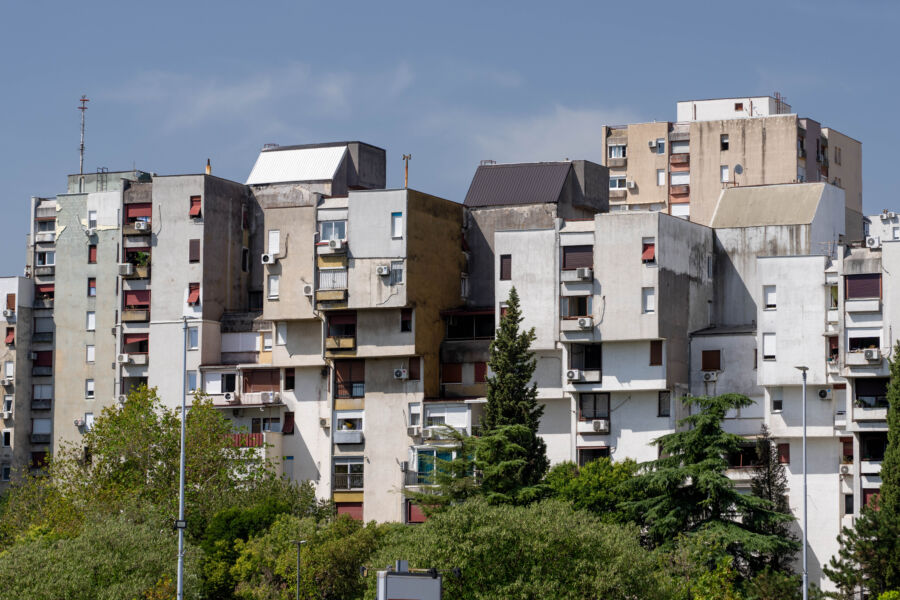
It’s true: Travelers who come to Podgorica (pronounced POD-goh-reet-suh) are not here for beauty. After World War II, the city — then called “Titograd,” after the Yugoslav leader — was built essentially from scratch around the modest footprint of an old Ottoman town at the meeting point of rivers, near the base of a towering mountain range. Titograd was a showcase of Brutalism, the heavy-handed, concrete-happy, form-follows-function style that prevailed in Yugoslavia’s postwar boom.
Brutalism is about as pretty as it sounds…and it hasn’t aged well. The night before I met Rajan, at the end of a 10-hour journey from Belgrade, my train pulled into the Podgorica station just after sunset. The walk to my hotel took me through a neighborhood of towering, bare-concrete apartment blocks, on crumbling sidewalks, past seas of bare dirt and green weeds that crowded out sparse tufts of parched-yellow grass. As a first impression, it was, in a word, brutal.
And yet, as Rajan showed me around by the light of day, I found myself entertaining a thought experiment: What if Podgorica’s burly Brutalism and stark “Ex-Yugo” aesthetic is not a bug…but a feature?
While lacking the graceful arches, stately pillars, and fanciful flourishes that tourists associate with Europe, Brutalism is the essence of functionality. Those Yugoslav nation-builders, like today’s urban planners, faced a desperate shortage of affordable housing. In fact, these days Brutalism is in vogue among young architecture students. Seeing Rajan’s city through his eyes, I found myself appreciating the tidy, grid-planned streets; the broad boulevards with wide, tree-lined sidewalks that encourage strolling; and the strategic juxtaposition of important buildings: parliament, president’s office, ministries, embassies, municipal offices, all efficiently lined up in tidy rows.
Psychologists talk about “radical acceptance.” Rajan, quite radically, accepts that his city is no Prague or Paris. But what it is, is beautiful in its own way. By the end of our time together, we were brainstorming a “Titograd Time Warp Tour” — to really lean into what’s special about Podgorica.
As travelers, we often make snap judgments based on an unflattering first impression…especially in places with a hard history, like the Balkans. Podgorica taught me to keep an open mind and appreciate each place on its own terms.
Talk about radical.
Anywhere, Bosnia-Herzegovina
There’s no doubt that Bosnia-Herzegovina is a “must” on any Balkan list. But where in Bosnia, exactly?
I have already featured the wonderful capital, Sarajevo, on a past Discoveries list. Should I mention Mostar, the convenient-if-touristy “Bosnia with training wheels” city that’s close to Croatia’s Dalmatian Coast? Jajce, the historic town scenically built literally upon a waterfall, where Yugoslavia was born during World War II? Srebrenica, with its wrenching memorial to innocent lives lost in the Yugoslav Wars? Perhaps some remote but charming smaller towns or cities, or amazing foodie finds, or the Bosnian people themselves — some of the kindest, most interesting, most welcoming anywhere?
On the other hand…why choose? If you’re thinking of going to Bosnia, anywhere in Bosnia, you can’t go wrong. In many ways, Bosnia is the quintessence of the Balkans: a ruggedly mountainous, verdant landscape carved by rivers and mountain streams; an epic history, with more than its share of highs and (especially) lows; deeply flavorful comfort food at bargain prices; a complex mix of Muslims, Catholics, and Orthodox, which has left each townscape a jumble of minarets, steeples, and domes; and remarkably affordable prices — making this arguably Europe’s single best destination in terms of cost-to-quality ratio.
Best of all, especially outside of Sarajevo and Mostar, Bosnia has an unmistakable “undiscovered” quality. I’ve been traveling here for two decades; in that time, those showcase cities have become firmly planted on the tourist trail — but those tourists come mainly from the Muslim world, attracted by the promise of an accessible taste of Europe that’s also culturally familiar. (Sharing Bosnia with these fellow travelers is, in itself, a fascinating experience for a non-Muslim visitor from America.) And yet, if you get beyond Sarajevo and Mostar, you’ll likely discover you’re just about the only tourist, from anywhere.
Croatia and Slovenia are certainly the most accessible (and well-known) slice of the Balkans for first-time visitors. But If I had to nominate just one place to get a taste of this region — accessibly, affordably, unforgettably — it would have to be Bosnia-Herzegovina… anywhere.
I realize that some of these Balkan Discoveries might be a hard sell for someone seeking a more, shall we say, “conventional” itinerary. I had great trips in 2024, as well, to Venice, Amsterdam, Germany’s heartland, and the Greek Islands — all still marvelous choices. But as crowds and prices rise to unsustainable peaks in those mainline destinations, off-the-beaten-path alternatives seem more appealing than ever. And you won’t find much that’s more “off the beaten path” than the Balkans.
The Balkans are a big place. What tourists there are, are concentrated in a few very small areas. Whether it’s a remote alpine valley, a giant moody lake, a thriving-if-ramshackle capital city, a historic town that’s improbably built upon an unforgiving landscape, or a Discovery all your own, this region warrants exploration.
Be sure to share your own Discoveries in the Comments.
You can also look back at my Discoveries from 2024, 2023, 2021, 2020, 2019, and 2018… all still great choices.
If you’d like to hear more about my recent “Balkan Odyssey” — and more stories and photos from all of the above places, and more — join me on February 17 on Monday Night Travel (at 6 pm Pacific, or 9 pm Eastern). It’s entirely free — just sign up ahead, when the class is officially announced in a few weeks.
If you’d like to travel along with me in 2025, be sure to follow me on Facebook and Instagram.
I spent much of 2022 traveling all over Europe, tracking the many changes as I updated our guidebooks. Some of the biggest came in Croatia — in fact, starting today!
Croatia joined the European Union back in 2013. Europe wonks (my people) know that EU membership is a multi-phased proposition…which is why some countries, who’ve been in the EU for nearly 20 years, still don’t use the euro.
A decade after becoming an EU member, Croatia just hit two huge benchmarks at the same time: As of January 1, 2023, Croatia no longer uses its traditional currency, the kuna. And it has joined the Schengen open-borders zone — meaning no more stopping as you drive between Croatia and Slovenia or Hungary.
Goodbye, Kuna…Hello, Euro!
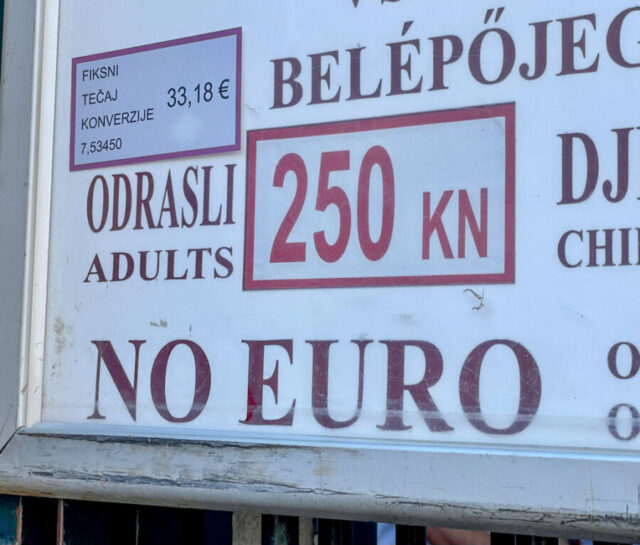
The arrival of the euro is a particularly big deal for the day-to-day lives of the Croatians (and their visitors). Traveling in Croatia just a few weeks ago, I sensed that many Croatians were still in denial about the new currency. For years, they’ve stubbornly stuck with their kuna against a rising tide of international tourism. It’s become a defiant, knee-jerk, almost patriotic sentiment: Euros are, adamantly, not the legal tender. Even in October, I still saw “No Euro, Only Kuna!” signs taped to cash registers.
When I’d ask Croatians about the upcoming change, the answer seemed to be unanimous: “We’re worried.” Over the last few years, they’ve already seen prices rise dramatically — not just for “tourist things,” but also for everyday groceries, fuel, and so on. Some of this has simply a byproduct of greater societal affluence. And maybe just a bit of it is tourist price-gouging that’s gotten out of hand, and blown back on locals.
Not to mention, there’s a huge amount of anxiety about winter heating expenses throughout Europe, where many places are reliant upon Russian fuel. “Standing up to Putin” and his invasion of Ukraine — which most agree is the correct course of action — comes at a very high cost, literally, in the form of very expensive energy prices.
On top of all that, Croatia now also faces the switch to a new currency. And when other countries have adopted to the euro — going all the way back to when it first appeared, in 2002 — it has often come with a big jump in prices.
Italians love to relive the drama of January 1, 2002. I’ve heard this story told perhaps a dozen times in the two decades since, all over Italy: “An espresso used to cost 1,000 lire. That should be about 50 euro cents. But when the euro came, it jumped all the way on one whole euro! Overnight, EVERYTHING COST DOUBLE!” (And it’s at this point that my Italian interlocutor, red-faced, always begins waving their arms.)
The “EVERYTHING COST DOUBLE!” espresso example is, obviously, drastically overstated. But it contains a kernel of truth, which is that if there’s ever a time to goose prices, it’s when you’re switching currencies…so people are less likely to notice. (Or, in some cases, will very much notice, and then still be complaining about it a quarter-century later.)
To combat this fear, there’s been much talk in Croatia about the “ethical transition” to the euro; authorities strongly recommend (but do not enforce) keeping prices equal. At a minimum, for the first year, companies are required to list their prices in both euros and kunas. That will not prevent price hikes, but it will make them more transparent.
One of my Croatian friends uses an informal “ice cream barometer” to track the dual impact of inflation and the euro. She explains that, before the COVID pandemic, most ice cream shops charged 8 kunas (€1.06) per scoop, or maybe 10 kunas (€1.32) for “premium” flavors. By 2022 — post-COVID, and with inflation booming — that 12 kuna price point had become standard even at the most basic places, with fancier shops charging closer to 15 kunas (€1.98). Many Croatians gravely speculate that €2 will simply become the default per-scoop price after the euro transition, with fancier places pushing the €2.50 or even €3 barrier. This may not seem like such a high price, but when compared to 2019, that would represent an 89 percent increase for a standard cone…in less than four years.
Selfishly, all of the unknowns about the euro transition really complicated my guidebook-updating work. I collected my information in Croatia back in October; we’re just about to send those files off to our publisher for printing, a little too late for a comprehensive double-check on the new prices. My only option was to get the updated prices in kunas for 2022…then immediately have to estimate what it should be in euros for 2023. (Legally, businesses were supposed to list the euro price next to the kuna price, using the official exchange rate: one euro equals, and will always equal, 7.53450 kunas. However, this is one of the most-ignored rules in all of Croatia.)
So, when updating my book, let’s say I was quoted the price of 55 kunas for an intercity bus ticket. Officially, that’s exactly €7.29975. So I guess they’ll round that up to €7.30?
Actually…almost certainly not. More likely, it’ll round up to €7.50 next year. Or — who knows? — €8. Or maybe they’ll get greedy and make the jump to €10.
Only time will tell what this change does to Croatian prices. For my part, I’m rounding up fairly aggressively as a “best guess” for our 2023 edition. I’ve already started double-checking some key prices for 2023 in euros (where they’re available), and sure enough, most places are not doing a one-to-one conversion; things are going up 10, 15, even 20 percent.
While this is stressful, I find that older Croatians — who have lived through more change in their lives than we Americans could possibly imagine — are taking it all in stride. “Meh, it’s hardly the first time I changed currencies,” one local said to me, referring to the Yugoslav dinar, then the Croatian dinar.
One thing I won’t miss about the demise of the kuna: the whacko exchange rate. After two decades of dividing every price by seven in my head, I’ll be relieved for my next visit to Croatia to require less arithmetic.
Rating Croatia’s Euro Coins
Another consequence of this change is that Croatia will be minting a fresh new batch of euro coins, with proudly Croatian designs on one side. This is big news for coin collectors, or for anyone who enjoys checking their change anytime they’re in Europe to see if any Estonias, Greeces, or Slovakias have slipped in among the Italys and Germanys.
Here’s my critique (as a “Croatia insider”) of where they landed with those new coin designs, which are rolling out today. Keep in mind that in Croatia, things tend to get complicated…and there’s often more to the story than what’s on the surface.
Two-Euro Coin: Croatia
The two-euro coin is sharp and logical: It’s simply a map of the country, with its checkerboard flag and the name in the local language: HRVATSKA. It’s a bit rare to have a map on a euro coin (Estonia is the only one I can think of), but I imagine the Croatians see this as an opportunity to do a little educating within the European community. Also, it’s hard to deny that Croatia’s swooping, angular boomerang, with all those little islands scattered offshore, is one of the most bitchin’ European shapes.
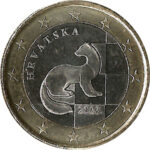
One-Euro Coin: The Kuna
I was hoping we wouldn’t entirely lose the “kuna” theme with this change. So I was relieved to see that the one-euro coin features the kuna prominently.
Croatia has one of the most interesting “origin stories” for its former national currency, which is both cute…and a bit sinister. A kuna is a marten — a foxlike animal whose pelts were a valuable trade commodity in olden times. (It also honors Croatia’s respect for the natural world.) And the stylized kuna design they’ve chosen for their euros is particularly adorable.
But there’s a dark underbelly to the kuna: During World War II, Croatia was a Nazi puppet state ruled by a local fascist movement called the Ustaše. This was the first time since about the 11th century that Croatia was ostensibly “independent” — and it was the Ustaše who first designed the kuna as their currency. A half-century later, when Croatia declared its independence from Yugoslavia, they harkened back to some of those earlier symbols of “independence” (read: Ustaše times)…including the kuna. This was a provocative act to the many Serbs living in breakaway Croatia, whose ancestors were victims of the Ustaše.
My sense is that most of this is water under the bridge. Over the last three decades, the kuna has been rehabilitated as a symbol of present-day, truly independent, democratic, (mostly) non-fascist Croatia. It’s understandable that they would want to preserve that symbol of their modern nation. Still, for those who know its full history, it’s just a smidge problematic. (Ah, but who can resist that cutie-pie kuna?)
10, 20, and 50 Cents: Nikola Tesla
It’s with these coins that Croatia’s choice is far more provocative than the casual tourist might realize.
There’s no argument whether the great scientist Nikola Tesla (1856-1943) was a brilliant mind. There is, however, some disagreement as to whether he was “Croatian.”
Tesla was born in the village of Simljan, which at the time was part of the Austrian Empire, and today is part of Croatia. And, in fact, Tesla was a Serb. A “Croatian Serb”…but a Serb. His parents were ethnic Serbs. His father was an Orthodox priest. His Wikipedia page describes him as a “Serbian-American inventor.” And if you go to Belgrade, you’ll see that the Serbs are very proud of, ahem, their great inventor.
You could make a case that Austria has as much right to put Tesla on their coins as Croatia does — since when he was born, his birthplace was part of Austria. But that would be a little preposterous, right?
I appreciate the impulse to honor Tesla. But make no mistake: by choosing to “honor” Tesla on its euros, Croatia is also trying to stake claim to his legacy…at the expense of the Serbs. And what better propaganda for convincing Europe Tesla is “Croatian” than putting his image, with the word HRVATSKA, on coins that will be jangling in hundreds of millions of pockets from Tallinn to Lisbon, and from Palermo to Dublin?
Hmmm…
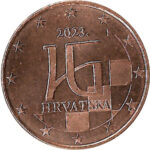
1, 2, and 5 Cents: Glagolitic Alphabet
Finally we come to the little “coppers.” Here Croatia has opted for characters from the Glagolitic alphabet — specifically H and R, for “Hrvatska.” I love this choice, because it’s exactly what a wonky Croatia geek would go with.
What is the Glagolitic alphabet? OK, this is pretty dense stuff, so before your eyes glaze over, I’ll just give a quick, oversimplified recap: Way back in the ninth century (no, seriously! stick with me!), the Byzantine missionaries Cyril and Method came to the realm of the Slavs to convert the people to Christianity. They invented an alphabet, Glagolitic, to translate the Bible into the local Slavic language. Glagolitic eventually mingled with the Roman (our) and Greek alphabets to become the Cyrillic alphabet, which is still used throughout Eastern Europe — Bulgaria, Serbia, Ukraine, Russia, and so on.
The original Glagolitic alphabet gradually disappeared, except in some corners of Croatia. And when Croatia declared its independence from Yugoslavia in 1991, they reached back to this chapter of their history and revived interest in Glagolitic as, in a sense, Croatia’s “own” alphabet. (In those heady days, there was even a very short-lived movement to adopt Glagolitic as the official alphabet of modern Croatian. Fortunately for all but the most ardent historians, this never went anywhere.)
So, while — like virtually all of their other coins — the use of Glagolitic characters evokes (to those who know the full history) Croatia’s separation from Serbia in the 1990s, I think it’s a fitting, and undeniably educational, choice for the little euro coins.
Looking back at all of these choices, I’m impressed by how much complex symbolism has gone into these selections. Some of them are a tinge nationalistic for my tastes. Of course, many countries have opted for national symbols on their coins, from Dante and Leonardo’s Vitruvian Man for Italy; to Germany’s stoic, angular eagle; to Slovenia’s beloved Mount Triglav. Most are not quite so packed with provocative subtext…or maybe they are, and I just don’t realize it. But in the end, this is Croatia’s choice, and this is what they’ve chosen.
What do you think of Croatia’s euros?
Open Borders and a New Bridge
The other big news as of January 1, 2023, is Croatia’s membership in the Schengen open-borders zone. For travelers, this means you won’t need to stop when crossing a border between Croatia and its fellow Schengen countries, such as Slovenia and Hungary. (And, for those who spend a LOT of time in Europe — like some of my colleagues — it also means that you can’t take a little vacation in Croatia to “reset” your clock of 90 days out of every 180 that you’re allowed visa-free in the Schengen zone.)
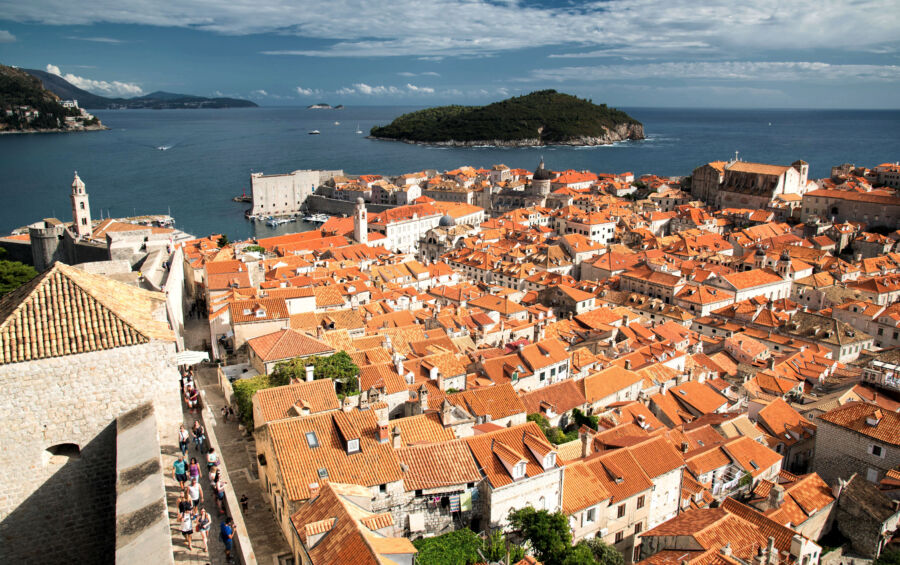
However, you’ll still have to stop and show your passport at borders with non-Schengen countries, including Bosnia-Herzegovina and Montenegro (which are both popular side-trips from the Dalmatian Coast). There was already a potential for long lines at some of these borders, as people day-tripping from Dubrovnik to Mostar or the Bay of Kotor all tend to show up there around the same time each morning…and then again each afternoon, on the way home.
This will, potentially, be even more of an issue in 2023, especially early on, as those borders are also now the outer borders of Schengen.
When I asked locals about this, I got a variety of answers. Some pointed out that Croatia has already been essentially Schengen-compliant for years now, to earn the right to join — so this may not be such a big change. (Not to mention, there’s a lot of money flowing over those borders, which neither country wants to hamper.) Others say that, given how bureaucratic Croatia tends to be, they’re not so convinced it will be seamless. On average, the answer to the question of “How will Croatia joining Schengen affect its border crossings?” is the favorite Croatian response to any and every question: ¯\_(ツ)_/¯
There is one piece of optimistic news, for those who don’t like waiting at borders. In July of 2022, Croatia circumvented a centuries-long loophole that gave neighboring Bosnia-Herzegovina control over a short five-and-a-half-mile stretch of coastline just north of Dubrovnik. For years, traffic on the main intercity highway through Dalmatia would get clogged up as each vehicle had to enter, then exit, the Bosnian town of Neum.
After decades of lofty promises, deliberations, and false starts, in 2019 the European Union provided funding to build a new bridge connecting the base of the Pelješac Peninsula to the coastline north of Neum — allowing the main road to entirely bypass Bosnia. The 1.5-mile-long Pelješac Bridge cost $500 million, 85 percent of which came from the EU. It was built mostly during the COVID-19 pandemic by a Chinese construction company, which imported workers from China to complete the project on budget and ahead of schedule.
When the first cars rolled across the Pelješac Bridge in July of 2022, it was seen as a victory for Croatian unity. But questions linger. The Bosnians who eke out a living around Neum are understandably less enthusiastic about the bridge, which turned their little resort into a veritable ghost town. Environmentalists worry about the impact the bridge may have on the delicate ecosystem of the Bay of Mali Ston, where lucrative shellfish farms depend upon just-right conditions to thrive. Ston, Mali Ston, and wineries in the Ponikve area — once off the beaten path — are seeing a surge of new visitors. But the main change is something you’ll notice only if you traveled here in pre-bridge days: It’s simply much faster now to get from Dubrovnik and Pelješac to anywhere else in Croatia.
That’s a lot of changes for one day, in one little country. But if you’re headed to Croatia in 2023, these are all great to know about.
It’s hard to imagine a more eventful year for travel than 2022. Reflecting on the last 12 months, I’m astonished at how much has happened in the world of travel — and in my own travels. It was a year of returning to the road despite COVID, yes…but also the invasion of Ukraine, the death of the Queen, and so very much more. I’m not usually in the habit of quoting communist despots, but this saying from Vladimir Lenin suits our kitchen-sink times: “There are decades where nothing happens, and there are weeks where decades happen.”
And so, here’s a recap of my 2022 travels. I hope it serves as a snapshot of the “state of travel in 2022” — one of the wildest, fastest-changing years I can remember. If you’ve been to Europe this year, you may find some of this relatable. If you haven’t, it may be illuminating. And mixed in are some personal travel stories I hope you can enjoy vicariously.
Fair warning: This recap is long. (I’m trying to tell you — a lot happened in 2022!) Bear with me and feel free to skim. If you’d like more information on any of these topics, I’ve linked to posts on my blog or on my Facebook page, where I was very busy this year, tracking my travels. (If you aren’t on Facebook, you may not be able to read some of those posts.) I plan to continue my frequent, real-time travel updates as I hit the road again in 2023. If you’d like to follow along, be sure to subscribe to my blog and follow me on Facebook.
Late 2021: Omicron Rising
One year ago, in the mellow days after Thanksgiving 2021, news broke of a scary new COVID variant that was spreading rapidly around the globe. For a brief moment, Omicron was, frankly, terrifying; some hardy travelers (including both Rick and I) had made tentative first forays back to Europe in 2021, and we were looking forward to “post-COVID” European trips in 2022. Our bus tours were nearly sold out, and we’d already started booking some guidebook-research trips. Omicron tapped the brakes on all those travel dreams. But gradually, it became clear that the new variant was more virulent, but less deadly that the original; rather than being a harbinger of more lockdowns in 2022, it marked a pivot toward travelers learning to live with COVID as we got on with our lives.
We pride ourselves on updating our Rick Steves guidebooks in person, typically every two years. But the global pandemic interrupted that routine, and we wound up taking an extra two-year hiatus on all of our titles. Rick, our managing editor Jennifer Davis, our publisher Avalon, and the rest of us at Rick Steves’ Europe knew it would be a massive project to get those books fully up to date, post-COVID. To get as many books out as possible by the end of 2022, we’d have to hit the ground running, do more research than we’d ever done in a single year, and compress our production timeline to do it faster than ever, to boot. Jennifer moved mountains to come up with a smart plan, and we spent most of the winter making research assignments and booking trips.
We were ready to hit the road.
Early 2022: Back to Europe!
When I took off for London in mid-February of 2022, I was the first one out — leading the vanguard of a team of 20 co-authors and researchers who would fan out across Europe to whip those books into shape. (Rick followed just a few weeks behind, hitting 10 cities on a 40-day research trip of his own.)
As a sign of the times, three things happened during my first week in London: A few days before I took off, Buckingham Palace announced that Queen Elizabeth had contracted COVID. Around the time I landed, Boris Johnson announced the end of all COVID restrictions for the UK. (Both would be gone, in very different ways, by year’s end.) And a couple of days into my trip, Russia invaded Ukraine. (More on that later.)
For more than 20 years, I’ve spent three months of each year in Europe, mainly updating our guidebooks. At first, the forced break of COVID was, frankly, welcome: I’d been getting burned out, even jaded, and I didn’t mind having a rest. But after two long years, I was champing at the bit to get back to guidebook work. I was excited, and nervous.
That first morning, I woke up and surveyed my list: I had about 12 days to update our 600-page Rick Steves London guidebook. I had to start somewhere. So why not Westminster Abbey? I rode the bus to England’s top church and, before stepping inside, I snapped a photo to commemorate the occasion and posted it on Facebook.
One hour later, I came back outside with loads of handwritten updates scrawled into the margins of that book. One section down; hundreds more to go. By the way, that Facebook photo wound up being by far my biggest ever — more than 11,000 people “liked” it. It was clear that I wasn’t the only traveler excited to be tiptoeing back to normal after such a long delay.
I worked hard in London — visiting, as I always do, virtually every single hotel, restaurant, museum, shop, and so on to personally check in with each business owner and to update their listing. I was very happy to confirm that the vast majority of our favorite small businesses — the mom-and-pop hotels and restaurants that are the cornerstone of our guidebooks, and of our style of travel — had survived the pandemic. I did notice another trend, however: Life changes. There were more divorces, retirements, and ownership changes than ever before. Some people call the COVID era “The Great Reshuffle.” Anecdotally, it’s clear to me that anyone who was contemplating a lifestyle change took a hint from the pandemic.
I also made a point to slow down and enjoy being back on the road — a pledge I’d made to myself during those many, many long months without travel. After many trips to London, I’d never actually been to Abbey Road. My Beatles fandom recently re-ignited thanks to Peter Jackson’s Get Back documentary, I decided it was time to change that — and made a point to add a 30-minute detour to that famous crosswalk at the end of a busy day of research.
On my day off, I headed to Kew Gardens to update our guidebook listing. And then I realized I was just a short bus ride from Richmond, the setting of Ted Lasso (a TV show which, like many people, I’d found much solace in during those dark pandemic nights). I managed to find Ted’s “local” and his apartment, and sat on a bench on Richmond Green watching dogs chase tennis balls for 30 minutes — which, strangely enough, may be my favorite travel memory for all of 2022.
From London, I flew to Rome, where I had another 10 days to update another 600-page guidebook. Whereas in London, it had struck me that most people were “over” COVID (with very few precautions and little masking), Italy was still behaving very cautiously: You still had to show your up-to-date vaccination card to enter a museum or restaurant, and masking was near-universal.
In Rome, too, I made a point to linger and enjoy. At one of my favorite sights in the Eternal City — the Protestant Cemetery — I enjoyed getting to know the local cats who hang out at the nearby cat hospice. But there was plenty of hard work to be done; on one gloomy day, I hit the pavement in the streets surrounding Termini train station, and updated 47 hotels in a single day.
While that was grueling, it was a treat simply checking out with our many hoteliers and restauranteurs, who take such good care of our readers (and, often, also our tour groups) that they feel like part of the extended “Rick Steves family.” Everyone was ramping up for what they hoped would be a busy year, but expressed concern that customers weren’t bouncing back as quickly as expected. In those early months of 2022, the one-two punch of Omicron and the Ukraine invasion had scared off many travelers. Roman hoteliers told me that they’d seen a flurry of cancellations.
In both cities, I noticed a big trend: During the pandemic, technology had been adopted in a big way. This makes sense: Before COVID, how many of us had ordered groceries through an app, or connected with friends and coworkers via video chat? In Europe, more and more museums allowed (or even required) prebooking tickets online, and many did away with borrowable audioguides in favor of apps you download to your own device.
One of the biggest changes was the rapid adoption of “contactless” or “tap” payment — by credit card, smartphone, or smartwatch. Upon boarding a public bus, instead of rummaging around in your pocket for loose change, you can now simply tap your card or phone against the pay pad. I love this system, which makes paying for everything so much easier.
While still on the road, I submitted both London and Rome — the full guidebook text files, plus dozens upon dozens of virtually marked-up maps. Back in the home office, our amazing editorial and cartographic team began the heroic effort of tidying up and finalizing those chapters to send to our publisher. I wrapped up with more research in Naples and Tuscany (Siena, Pisa, Lucca) before heading home.
Home Interlude: The Temporary European
I was back home for just a few weeks before returning to Europe on a second trip. This quick interlude was a blur, but it coincided with the promotion of my new travel memoir. Back in 2020, when it became clear I’d be grounded for a while, I took a sabbatical from my office work to collect many years’ worth of blog posts and turn them into a cohesive book. It turned out to be a beautiful opportunity to reflect on my two decades of traveling and working with Rick Steves. As I refined and filled in gaps, it became clear that all of those stories had the same theme: traveling as a temporary European.
The Temporary European: Lessons and Confessions of a Professional Travelercame out in early 2022. It’s a collection of my favorite travel tales, plus behind-the-scenes chapters about what it’s like to work with Rick Steves, write guidebooks, lead bus tours, and make travel television. It also gave me a chance to introduce the world to my wife’s well-traveled Great-Great Aunt Mildred, whose personal travel motto I’ve appropriated as my own: Jams are fun!
Early 2022 was a strange time to come out with a book. Bookstores weren’t really doing in-person author appearances, and virtual ones were already kind of passé. So, while the book was well-received, I didn’t quite get the “book tour” of my wildest dreams. That said, my publisher, Travelers Tales, set up several book readings over the late spring and summer where I had the chance to connect with my fellow travelers in person. It’s been just wonderful meeting many of you at cool independent bookstores — from Seattle to San Francisco to Columbus, Ohio — and hearing about your travels.
(Gratuitous plug: If you enjoy my approach to travel — or know someone who might, and need a stocking stuffer — you can get The Temporary European for 30% off through the end of the year on Ricksteves.com, as part of our Holiday Sale. And Amazon.com has the Kindle edition priced at an incredibly low $1.99 through December 4. Get yours now!)
Before long, it was time to head back to Europe. Next up: Poland!
The Ukraine Invasion…and Touring Poland
Back in 2020, we were all ready to run the inaugural departure of a brand-new Best of Poland in 10 Days tour, which I’d helped design (with the multitalented Robyn Stencil from our Tour Operations team). In fact, I was going to come out of “tour guide retirement” after many years of focusing on guidebook research to lead that tour myself — with a team of talented, mostly newly hired Polish tour guides.
Like so many other travel dreams, that got scrapped…but only temporarily. And in early May, I flew to Gdańsk — on Poland’s Baltic Coast — to meet Robyn, those four Polish guides, and our intrepid group to begin the tour.
It was a tall order: Not only had I not led a tour in many years, but it was a brand-new tour, and I’d be mentoring some talented guides who — fantastic though they were — had mostly not been on a full Rick Steves tour before. Plus, we had some complicated COVID restrictions to carefully implement: Testing all the guides and tour members before the tour, checking vaccination cards at the first night’s meeting, and ensuring that everyone remained safely masked on the bus.
All of that would have been complicated enough. But we were also leading a tour in a country whose neighbor, Ukraine, had recently been invaded by a hostile empire.
Russia’s February invasion of Ukraine is one of the most impactful geopolitical events in Europe in recent memory. I was fortunate enough to travel in Ukraine back in the fall of 2018; I learned a lot about the complicated historical “brotherhood” between Ukraine and Russia, and about the military standoff that was already happening in the country’s east. With this in mind, as Putin’s threats escalated over the winter, I had a very bad feeling that he was not bluffing.
The war in Ukraine — which has already cost somewhere on the order of 100,000 Ukrainian lives, and 100,000 Russian ones — has been somehow both shocking and utterly predictable.
Throughout Europe, I’ve seen Ukrainian flags and demonstrations of solidarity everywhere. While we in North America have (mostly) been cheering on President Volodymyr Zelenskyy and his ragtag resistance form afar, Europeans understand that the stakes are very high. For one thing, many Europeans are fundamentally pacifistic — a painfully hard-learned lesson from two devastating world wars. My sense is that they’re simply horrified at the thought of such atrocities happening anywhere on European soil.
On a more pragmatic basis, Europe still gets much of its oil from Russia. They want to stand up to Putin, which means boycotting (as much as possible) Russian oil exports. And that means scrambling for alternatives (whether it’s keeping open nuclear power plants that were slated to be decommissioned, as in Germany, or doubling down on coal, as in Greece). It also means that energy prices this winter will be extremely high, causing great anxiety and leaving Europeans scrambling to cut heating costs. (On a recent visit to a heated outdoor pool in Switzerland, a sign politely informed swimmers that they’d lowered the temperature by one degree Celsius. Every little bit helps!)
Of course, in Poland — as Ukraine’s neighbor, and a place with a history of unpleasant relations with Russia — the stakes are higher still. Something like two million Ukrainian refugees had crossed into Poland by the time our tour began in early May. I think many of us visitors were expecting to see tent cities and shantytowns filled with refugees…but we were surprised, and impressed, at how constructively Poland has absorbed all of these new arrivals into their society.
One day, I was having lunch with our Polish guides in the red-brick downtown of Gdańsk, and one of them pointed out a handsome old building across the street. “That was an underutilized dorm and activity center for Scouts,” one of them told me. “That sign with the Ukrainian flag by the door explains that now it’s housing refugees.”
In the context of all of this, our new Poland tour seems incredibly insignificant. But it was a fascinating case study in how the situation in Ukraine has (or hasn’t) affected travel. A few of our tour members told us they’d considered cancelling the tour after the war broke out, but decided to stick with it.
As soon as our tour members arrived in Poland and took a walk, they realized that it was a perfectly safe and stable place to be. It helps that Poland is in NATO; Putin understands that messing with Poland would have extreme consequences (which we saw recently, when a couple of missiles — apparently accidentally — crossed that border, and briefly put the world on high alert).
Long story short: The tour was a huge success. The itinerary came off without a hitch, even though it was the first time we’d done it. (Our biggest “problem” was that we kept arriving at the next town faster than our conservative estimates.) Those new guides were wonderful, and each of them has gone on to lead the tour on their own, to great acclaim. And our tour members — about half of whom, like me, have Polish ancestry — were thrilled they’d joined us.
It was a special treat for me to share some of my favorite places and experiences with the group. Particularly memorable was the chance to attend an outdoor Chopin concert in Warsaw’s huge Łazienki Park. This important custom, which dates back more than six decades, was suspended for three years due to COVID. It was a very special treat that we happened to be there for the first concert of the season. The park was filled with Varsovians who were thrilled just to be together again, appreciating the music of their beloved composer.
If anything, what was happening in Ukraine enhanced the educational value of the tour, allowing our tour members to better understand all of the complexities of what was going on next door.
One of our favorite moments came on a night when we’d planned a fairly conventional dinner for the group. Our hotelier, Jarek — a longtime friend to Rick Steves travelers who use our guidebooks — mentioned that he’d hired several Ukrainians to work in his restaurant. We had a brainstorm: Rather than cooking Polish dishes, as they normally do, how would those Ukrainian chefs like to cook us a traditional Ukrainian meal, to celebrate their home culture? They jumped at the chance and served us a delicious and unforgettable menu of their favorite flavors from back home. And Jarek invited a musician to serenade us on the traditional Ukrainian stringed instrument called a bandura, to boot.
If that’s not great travel…I don’t know what is.
Summer in Europe: Travel Gains Momentum
From Poland, I flew to Amsterdam, where I did more guidebook research in the Netherlands (updating five cities in five days), then Belgium (where Antwerp bucked the trend of small businesses surviving the pandemic — I had to scramble to replace nearly half of our listings). And then it was on to Scotland.
Things everywhere had already changed dramatically even since the spring. Most COVID restrictions had gone by the wayside. Masking had become rare. And the crowds — who, back in March, had seemed to be tentatively dipping a toe in the water — were full-on diving back into Europe.
In June, I spent three weeks traveling all over Scotland, updating a guidebook whose first edition I’d pioneered back in 2015. In the intervening years, other researchers had passed through to put their touches on it. Discovering all the wonderful fixes and additions that happen to a guidebook over time is one of my favorite things about my work.
I enjoyed being in sunny Edinburgh during the Queen’s Platinum Jubilee, then rented a car and did a two-week road trip through the Highlands. This was a good old-fashioned European road trip, with loads of castles, moody glens, and delightful encounters. I watched a thrilling sheepdog demonstration in the cold drizzle, listened to some top-notch traditional music in an Inverness pub, and set sail to the Isle of Iona. I was thrilled to pull over for a perfect roadside encounter with a “hairy coo” (shaggy Highland cattle). And then, following up on one of the many great leads my fellow travelers suggested on my Facebook page, I discovered a wonderful up-close-and-personal hairy coo experience at a remote ranch. I didn’t even mind when I got drenched with rain for three days on Skye. (Well…maybe a little.)
Even just since my previous visit, Outlander has come to play a huge role in driving Scottish tourism. While it’d be easy to be cynical about the Outlander-ization of Scotland, I’m on board for two reasons: First, the novels and TV show are meticulously researched and — despite being a time-travel fantasy — do a great job of actually educating people about Scotland. And second, I saw firsthand that many people may come “for” Outlander, but once here, they wind up excited about Scotland in its own right. If a TV show, or a movie, or a book, gets people to a place that deserves to be on itineraries on its own merits…then I’m all for it.
Another big theme in Scotland this summer — likely driven, at least in part, by all those Outlander fans — was that the whole country was stuffed to bursting. Especially in smaller communities (such as the Isle of Skye), staffing levels remained inconsistent, and there simply weren’t enough B&B beds or restaurant tables to go around. I had trouble booking rooms for my June trip, even though I started looking way back in February; many of our top-rated B&Bs told me that even in January, they were sold out through the entire summer. And restaurants were booked out days, weeks, even months in advance. If you didn’t reserve well ahead in certain places, you’d wind up dining on groceries or takeout fish-and-chips. If you’re heading to Scotland anytime near summer, book as far ahead as you can.
Nessiegate
I was on a travel high one morning as I left Inverness and headed across the middle of Scotland to the Isle of Skye. My route took me right past the touristy north shore of Loch Ness, so I pulled over at the heavily hyped tourist zone along the lakeshore to check some details for our book.
And then…something inside me just snapped.
Immersed in one of the tackiest tourist traps in Europe, surrounded by greedy and crass roadside attractions, I felt an almost physical revulsion. I found myself feeling very sorry for all those unwitting travelers who’d come to this place, at a great investment of time and money, to stare out over an empty loch, then buy some overpriced trinkets.
On the rest of my journey to Skye, I occupied myself by mentally composing a Roger Ebert-type takedown of Loch Ness. That night, settled into my B&B, I had an absolute hoot writing up my little Nessie rant. It was a critique of the crassness of the Loch Ness tourist machine, yes. But more than that, it was intended as practical advice for the travelers who look to me for advice: Skip Loch Ness, because your limited time is better spent elsewhere. (You can read the complete rant here. Much fun as I hope this is to read, the Comments are even more entertaining.)
I chuckled myself to sleep and woke up to a predominantly positive response from my followers, on the order of “Thanks for the warning!” To be honest, I forgot all about Loch Ness.
But then, a Glasgow-based tabloid newspaper saw my post and published an article about it. (With everything going on in the world these days, I can’t fathom why a reporter would spend time scouring my paltry social media presence for material. But I digress.)
The story got picked up by another tabloid. Then another. Then another. I knew things had gotten a bit out of hand when I received a message from BBC Scotland, asking if I’d like to appear on their primetime news broadcast to “elaborate” on my thoughts about Loch Ness.
It was fascinating to have a firsthand experience with a British tabloid news cycle. For a very short while, I was the bane of the Highlands. One Inverness paper even posted a “person on the street” video of several people telling me, one after another, how wrong I was:
All of that I could take in stride. But I also heard from Scottish individuals — some of whom lived along the shores of Loch Ness — who were, understandably, hurt and offended that I’d be so dismissive. It was an important lesson: My intended audience was North American travelers planning a Scottish itinerary. But when something “crosses over” to an unintended audience — in this case, the Scottish public — it just hits different.
I couldn’t blame these people for being offended. I actually corresponded with some of them, most notably Toby from Loch Ness Living, who made some great points — including that it’s not really fair to judge a place based on such a quick visit. The general sentiment was this: If you’d spent a day or two here, had gotten off the beaten path, really explored and settled in, you’d come to appreciate the full beauty of Loch Ness. And on that point, I cannot disagree.
(Others were more succinct. One private message I received on Facebook read simply: “You boring yank twat.”)
In the end, I feel a lot of empathy for people who work in the Loch Ness tourist industry. But I’m not the only one who let them down. The fact is, to a traveler, “Loch Ness” is that insanely tacky and touristy strip that I drove along that day. The local tourist industry is designed to steer passersby to that version of Loch Ness, and only that version of Loch Ness.
As all of this played out over the next few days, I had plenty of time to consider what, exactly, had triggered me so grievously to begin with. In a funny way, my Loch Ness takedown was a direct result of the pandemic. During those two long years of not being able to travel — and especially when I was writing my memoir — I gave a lot of thought to why I travel to begin with, and how I could travel better going forward. It helped me better draw the line between my idea of “good travel” and “bad travel.” And I pledged to rededicate myself to “good travel” when I was able to hit the road again.
Literally everything else I did in Scotland ticked the box for “good travel.” But then I came to Loch Ness. And it was the antithesis of everything I love about travel: It’s designed to exploit an entirely fabricated legend about an imaginary sea monster. It was a slap in the face. This is what I — what all of us — have waited two years for? Have we learned nothing?
Here’s what gets my goat about the Loch Ness Monster: It tells you absolutely nothing real or authentic or insightful about Scotland. Scotland has more than its share of clichés, which it aggressively exploits to stoke tourism: kilts, bagpipes, golf, whisky, haggis, castles, hairy coos, Outlander, and the list goes on. But the crucial difference between all those things and Nessie is this: All of those things have something real to teach you about Scotland.
The people who work in tourism at Loch Ness deserve better. Scotland deserves better. If they’re angry with me, perhaps they should redirect their anger at a tourism machine that spends all of its resources promoting a fake monster, and very little celebrating the natural and cultural wonders of Loch Ness.
Coming Down with COVID: To Fly or Not to Fly?
Surely “Nessigate” was more than enough drama for one trip to Scotland. But no! Scotland was not through with me. (Call it “Nessie’s Revenge.”)
At the end of my seven-week trip (which began all the way back in Poland), I was pretty wiped out and ready to head home for the summer. On my last day of research, in Glasgow, I felt run-down. I chalked that up to simply working too hard. But as I drifted off to sleep that last night, I felt a tickle in my throat.
I woke up feeling rotten, and as I finished packing for my afternoon flight home, I weighed my decision. Two weeks earlier, the US government had waived the COVID testing requirement to enter the country. I could very well have just gone to the airport and hopped on my plane, shedding virus all the way. But if I had COVID, I didn’t want to expose my fellow passengers on the nine-hour flight home.
I had a few hours before my flight, so I called my wife (who’d just gone to sleep back home) and talked through my options. I decided to stay in Scotland.
There were two main reasons: First, I was feeling worse by the minute, and I wasn’t up for taking such a long flight in this condition. And second, throughout the pandemic I’ve been preaching the importance of looking out for each other. I believe that one of the main lessons of COVID should be that if everyone does their part — getting vaccinated, wearing masks, avoiding contact when you’re sick — we all get through. This was an unwanted opportunity to live my values.
So, I rebooked my flight and spent several extra days in Glasgow, recuperating in my little but cozy hotel room.
That makes it sound simple. But these things are complicated — even when you’re “sure” you’ve made the right choice. At one point, I realized that if I hustled, I could still make it to my original flight in time. But then I asked myself: Would I want to be sitting next to me on a plane right now? Would I want my parents to be sitting next to that person?
That first night — at exactly the time I’d have been boarding my nine-hour flight — my fever peaked. I was glad to be in bed and not strapped into a seat. Fortunately, I was fully vaccinated and boosted, so I had a full and swift recovery; my fever lasted about a day, and the rest of the time felt like I was just recovering from a mild cold. When I finally made it to Seattle, I was grateful to be home — but also satisfied that I’d made the right choice, both for my fellow travelers and for myself.
September in Switzerland and Italy: No Matterhorn? No Matter!
In September, after a restful summer back home, I flew to Switzerland for more guidebook updates. (As an indication of how quickly our guidebook team was cranking out titles this year, the London and Rome books I’d updated in the spring had already hit my desk by the time I took off in September.)
On my previous visit to Zermatt — way back 15 years ago — the weather was so bad, I never even got to see the Matterhorn. But this time, I was determined to hang on to my post-pandemic optimism — to count my blessings at being able to travel at all. That first morning, I rode gondolas and cable cars up to the highest lift station in Europe, at a place called Klein Matterhorn. The weather was glorious, with deep-blue skies. You could see almost everything, in every direction…with one small exception: The Matterhorn itself was socked in. I just shrugged and said, “No Matterhorn? No matter! I’m still on a Swiss mountaintop.” (And I’m happy to report I did see the Matterhorn, several times, later in the trip.)
One afternoon, hiking high in the mountains with a Matterhorn view, feeling far from civilization, someone called my name: fans of Monday Night Travel who were using the same guidebook I was updating. Because much of my work at Rick Steves’ Europe is behind the scenes, I rarely get recognized when I’m in Europe. But throughout my travels this year, I bumped into more and more fans of “MNT” (as we call it).
Rick and a team of moderators (Gabe, Julianne, Lisa, and Ben) started doing Monday Night Travel during the pandemic, to offer a little “armchair travel” and a weekly pep talk from Rick. (I’ve appeared as a guest or co-host six times so far, most recently to talk about Romania.) Our hunch was that frustrated travelers appreciated having a weekly outlet for their wanderlust.
But now that we’re back traveling again, people are still watching — and I’ve bumped into many of them in Europe. From Edinburgh to Scotland, and throughout Croatia, MNT fans told me how much those weekly Zooms helped keep them going. In fact, every one of them used the same word: it was a “lifeline” while they were unable to travel. (If you haven’t checked out MNT, you should! You can see the schedule and sign up on the Monday Night Travel website — and it’s always free. My next MNT appearance will be some Poland talk in March…stay tuned.)
While most of my travels this year were return visits to old favorites, one of my post-pandemic resolutions is to keep on exploring — there are always new places to be discovered. In September 2021, on my first trip back to Europe, I made a point to check out Italy’s Emilia-Romagna region (staying in wonderful Modena) and the town of Treviso; in both cases, I was very glad that I’d sampled something new. That trip inspired me to keep going down my list of “new-to-me” Italian destinations. So, upon wrapping up my work in Switzerland, my wife and I took a few days off to explore the Piedmont region in northern Italy. And then, after she flew home, I stopped off briefly in Trieste on my way to Croatia.
Especially for a traveler who sometimes feel like I’ve “seen it all,” there’s a special joy in exploring something new. In Piedmont, we stayed at B&B in the Langue region just south of Alba and did some side-trips to the bustling city of Cuneo, the famous wine villages of Barolo and Barbaresco, and plenty of bucolic joyrides. Part of the adventure here was renting an EV (electric vehicle) — and being extremely steep on the learning curve when it comes to using an electric car for a European road trip. I suspect this is the wave of the future; if you’d like to learn from my mistakes, rather than your own, check out my post on EVs in Europe.
In Trieste — an utterly fascinating port city at the northeastern tip of Italy, completely surrounded by Slovenia — I was so captivated by the history that I broke my personal rule to not do any sightseeing on a day off. As an aficionado of Central Europe, it was thrilling to be in the primary Mediterranean port for the sprawling Habsburg Empire — facing the sunny Adriatic, but filled with grand buildings that would seem more at home in Vienna or Budapest. And as a James Joyce fan, I appreciated the modest museum about his time in Trieste, when he wandered the city as he wrote his masterwork Ulysses.
Trieste also reminded me that it pays to do your homework. For years, I’ve heard raves from fellow history buffs for Jan Morris’ book Trieste and the Meaning of Nowhere. I read it over the summer in anticipation of my visit, and practically used it as a guidebook once in town to track down fascinating little details. I would have enjoyed Trieste without it — but it definitely enhanced my time there. (What book have you read that transformed your appreciation of a place?)
October in Croatia: Changes Are Coming and the Saltshakers Are Empty
From Trieste, it was a short journey to this year’s final assignment: Updating our Rick Steves Croatia & Slovenia guidebook (which also includes highlights in Bosnia-Herzegovina and Montenegro). As the co-author of this book, and a tour guide emeritus on our Adriatic tours, I’ve been to these places more times than I can count. But for most of them, it had been five long years — so this trip was all about reconnecting with wonderful old friends, and reacquainting myself with favorite places.
No matter how many times you return somewhere, there’s always something new to discover. For example, just this summer Croatia opened its new Pelješac Bridge, which means that traffic on the main road between Dubrovnik and the rest of the country no longer has to pass through a tiny stretch of Bosnian coastline (which used to require two border checkpoints). It was interesting hearing from locals all the ways — both expected and unexpected — about how this bridge was transforming travel.
Avoiding those borders is more important now than ever, because in just a few weeks — on January 1, 2023 — Croatia joins the Schengen open-borders zone. On the same day, they’ll retire their traditional currency, the kuna, and adopt the euro. It was fun to learn about the new Croatian euro coins, but I must admit that this complicates my work: Between the staggering inflation across Europe (and especially in Croatia), and this new currency conversion, it’s nearly impossible to predict exactly what things will cost for my book next year. If a museum charged 55 kunas in 2022, the official exchange will be €7.30. Of course, it’s more likely that they’ll round it up to €7.50 or even €8 in 2023. Or — as many Croatians fear — they may just take this chance to make the jump to €10.
If you think you’re exhausted from reading this recap, just imagine how wiped out people must be who work in the tourist industry. As September turned to October, I heard the same thing again and again from my Croatian friends: We love travelers. We are thrilled they’re back. But, frankly, we’re exhausted. I began to notice that many saltshakers were empty; the season was winding down and they weren’t being refiled. It stuck me that the Croatian people were in a similar situation: all too ready for a winter replenishment.
Grand Finale: A Slovenian Youth Hockey Match
I wrapped up these many months of travel back “home” in Slovenia — my favorite country, and the place in all of Europe where I feel the most comfortable. I never tire of this wonderful place.
I said earlier that my favorite travel moment of 2022 was sitting on a bench on a sunny Saturday on Richmond Green, just outside London. I realize now that was my second-favorite. My favorite was going to a youth hockey game in Ljubljana.
My good friend and fellow tour guide, Tina Hiti, was in town between tours when I was in Ljubljana. She was busy, trying to pack in several family obligations, and it was tricky to find time to meet up. “Unless…” she said. “You wouldn’t want to come to Anže’s hockey game, would you?”
Until that moment, I never would’ve imagined how much it would appeal to me to attend a kids’ hockey match. But hearing it now, I practically jumped to my feet. “YES!!!” I said. “Just tell me when and where.”
I have a special relationship with Tina’s family (whom I write about in The Temporary European). She and I are close friends, having started out as tour guides together more than 20 years ago, and I’ve watched her two sons grow up. Her dad, Gorazd, is also a tour guide, who takes visiting travelers on day-trips around the stunning Slovenian landscape. Only once they’re well into their day does Gorazd sheepishly tell them that he used to be a hockey player. In fact, he was a star of the Yugoslav Olympic hockey team, and is one of the most respected hockey coaches in Slovenia. And, of course, he coaches his grandsons’ teams.
Tina picked me up and drove me a half-hour out into the outskirts of Ljubljana, where we pulled into the parking lot of a nondescript arena. Going inside, Tina greeted all the other parents and we took our positions on the bench. We spent the next two delightful hours catching up between cheers for her son, the defender, and her dad, the coach. They were squaring off against a team that had beaten them soundly the previous year. Expectations were low, and Tina explained that her dad’s coaching style wasn’t about winning or losing — it was about teaching the skills, and more important, the values that go into being a great athlete. Win or lose, it’s an opportunity to learn.
As we watched the game, Tina told me about the various players, pointed out their parents, discussed their relative strengths and weaknesses on the ice. As expected, the team fell behind early. And then, in the third period, they began to catch up. Ever so gradually, Tina and the other parents nudged toward the edge of their seats. Winning may not matter…but in this case, it sure would be a nice boost for the kids. I found myself getting caught up in the action, too. While I’m not a huge hockey fan, I’ve been to a few games. But I’ve never been as invested in one like this.
“Our” team managed to catch up in the final minutes…and the game went into overtime. By this point, the air was electric as we watched these 10- and 12-year-olds zipping around the ice, playing their hearts out. And then — goooooal! Victory!
After the match, we headed downstairs to the little café under the stands. There was much beaming, laughing, and congratulatory back-slapping. Even Gorazd’s gentle smile came with a special twinkle in his eye.
Sitting there, nursing a hot cup of tea in a grubby ice rink café, celebrating with Tina and Gorazd, I remembered once again — for the hundredth, maybe thousandth time this year — what it really means to be a Temporary European.
I saw some incredible sights in 2022. Westminster Abbey, the Tower of London, the British Museum. St. Peter’s Basilica, the Sistine Chapel, the Colosseum. The Madonna of Częstochowa, the Ghent Altarpiece, Edinburgh Castle. The hill towns of Tuscany, the canals of Amsterdam, the Scottish Highlands, the Matterhorn in the Swiss Alps. All of those are great sights, yes, and very memorable. But none of them will stick with me quite like that Saturday in the park just outside Ted Lasso’s apartment, that first Chopin concert of the summer in Łazienki Park, or that youth hockey game in Ljubljana.
For me, that’s the overarching theme of 2022. And I hope it’s also the theme of 2023, 2024, and all the years to come: Let us never forget what a privilege it is to be able to travel. Let’s make sure to savor it — to count our blessings, to live every moment to the fullest, and to always be present in our explorations of this beautiful planet. Our mission, as travelers, is to watch for those opportunities where we can stow our cameras and our guidebooks, and just melt into Europe…even if just for a few precious moments.
Thanks for sticking with me through this long recap of an incredible year of travels. I’d love it if you want to join in the conversation in the Comments — what were your most vivid memories and lessons of 2022? What’s on your agenda for 2023?
If you’d like to get your hands on those freshly updated guidebooks, about 20 titles are already out, with the rest rolling out in the coming weeks and months. All of our books — including all those new editions — are part of that 30% off Holiday Sale right now.
And if you’re intrigued by our Poland tour — or any other tour — consider taking advantage of our Seasons Givings event, going on through the end of 2022. Every tour is $100 off, and for each seat booked, we’ll also donate $100 to your choice of four major charities.