Looking for something a little different in 2024?
Each year around this time, I brainstorm a list of my favorite European Discoveries. And after another very busy year of traveling to update guidebooks and make TV shows — in Ireland, Norway, Iceland, Hungary, and Poland — as usual, the places that stand out most vividly are not the big, marquee sights; they’re the lesser-known places, with fewer crowds and a more authentic vibe. (You could say they have a high charm-to-tourists ratio.)
As always, I’m not suggesting these are any “better” than the biggies. If you’re tight on time, I won’t blame you for visiting Kraków rather than Warsaw, or Dingle rather than Derry. Rather, when planning your 2024 travels, think of these as intriguing palate-cleansers.
Think about it: When you look back on past trips, aren’t many of your fondest memories of places where you least expected them? Feel free to share your own Discoveries in the Comments.
Lausanne and Lake Geneva, Switzerland
If a big part of Switzerland’s appeal is its cultural and linguistic diversity, then Lausanne is one of its most rewarding cities. This genteel-feeling city speaks, and feels, French…but with a Swiss accent.
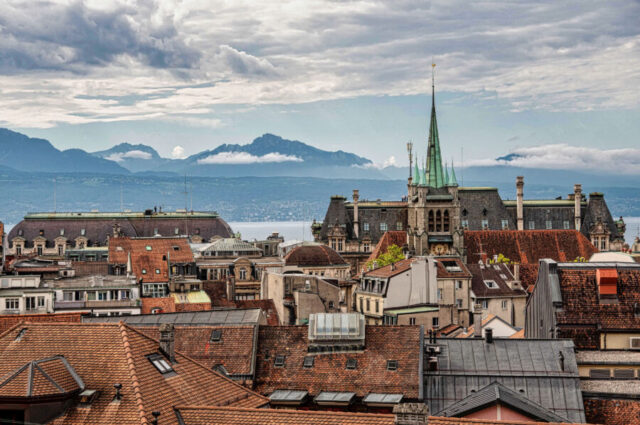
From the vineyard-draped shores of Lake Geneva, the city climbs vertically up the slopes; elevators, a funicular-like métro, and steeply uphill hikes are required simply to traverse a few blocks. Updating our guidebook, I went looking for a hotel just up the block…and quickly learned that it was “up” indeed. It felt like climbing a mountain.
But Lausanne is worth the effort. Visitors enjoy Swiss-French fusion meals in classy brasseries; a historic old quarter oozing with endearing medieval details; a hazy waterfront promenade leading to an excellent Olympics museum; and one of Europe’s most compelling, thought-provoking museums: the Collection de l’Art Brut, which showcases poignant works created by artists marginalized by society, often dismissed or even institutionalized as “insane.”
Lausanne is also a prime jumping-off-point for Lake Geneva sightseeing. A quick train ride or ridiculously scenic boat ride (preferably on a historic paddleboat steamer) takes you to Château de Chillon, a stony fortress jabbing out into the lake.

You can also hike or bike through lakefront vineyards; stop off in Montreux for its stylish waterfront; or take a scenic side-trip (on the “Chocolate Train”) up to the lovely cheesemaking village of Gruyères and a Swiss chocolate factory.
Lausanne and Lake Geneva is one of those places that might not “make the cut” on a tight itinerary. But if you go…you’ll want to give it plenty of time.
Derry, Northern Ireland

On my six-week odyssey to update our Ireland guidebook — scouring the island from tip to toe — something about Derry grabbed me. It has a hard-fought history, both old and recent. Its stout city walls — now enjoyable for a stroll — hint at centuries-ago sieges. And the emotionally charged murals of the Bogside neighborhood testify to the city’s pivotal role in the Troubles, Northern Ireland’s sectarian strife that grabbed headlines from the 1960s through the 1990s.
But I also found Derry unexpectedly delightful, history aside. The sitcom Derry Girls — which tells the story of local teenagers and their parents during the final years of the Troubles — has become a global hit on Netflix. Locals embrace the show, which captures the world-weary wit that the people of Derry have learned to apply to the highs and lows of life. And, as an outside observer, it seemed to me that Derry Girls is also helping this plucky city turn the page from a hard history to a brighter future: In a sign of the times, the new Derry Girls mural — rather than the important but tragedy-tinged murals of the Bogside — has become the city’s most-photographed.

I sensed a new day in Derry. On a sunny summer afternoon, the Peace Bridge linking the Nationalist and Unionist sides of the river was jammed with people. Across that bridge, the former British military barracks is being converted into a new entertainment and commercial complex, with a big hotel and fine gastro-brewpub, and a state-of-the-art city museum slated to open in a few years.
Not to mention, Derry is a prime home base for side-tripping (in less than an hour) to the Antrim Coast, with Old Bushmills Distillery, Carrick-a-Rede rope bridge, and the breathtaking Giant’s Causeway. As Derry Girl Michelle put it: “Foreigners f—kin’ love the Giant’s Causeway!”

Warsaw, Poland

The sprawling Polish capital often gets overlooked by travelers. Kraków is more historic and accessible. Gdańsk is more beautiful. (Shhh…don’t tell Krakow!) And Toruń is more charming.
But ever so slowly, over 20 years of visits, I’ve watched Warsaw transform from a gloomy, battle-battered, postcommunist eyesore into a place that’s fascinating, engaging, and — yes, really! — actually fun.
When we filmed new public television episodes in Poland this summer, the crew was impressed by today’s Warsaw. It has state-of-the-art museums covering everything from Jewish heritage to Marie Curie, and from Polish history to hands-on science exhibits for kids. It’s a capital of culture and music: We filmed two entirely different Chopin concerts, one in a sprawling park and the other in a cozy drawing room, and couldn’t decide which we liked better. It has an outstanding food scene, including one of the best meals our crew says they’ve ever filmed (at Bibenda). It has a thrilling variety of architecture from every era: rebuilt medieval townhomes; imposing communist concrete; graceful Baroque churches; slick, sleek skyscrapers. And it has a history as epic as anyplace in Europe.
Most of all, Warsaw is simply enjoyable. On a balmy Friday night, we did a loop through the city’s up-and-coming entertainment districts. We began at a “post-industrial” entertainment complex (which are all the rage across Poland) — a former brick power plant now refurbished with trendy eateries, bars, and shops.

Outside along their inviting riverfront park, Varsovians from every walk of life were having the time of their lives: promenading along the Vistula; filling giant cocktail-party barges; splashing in playful fountains; relaxing and socializing on park benches. And we enjoyed the heck out of Warsaw, right along with them.
Porto, Portugal

Portugal’s second city is actually several cities in one — and all of them are delightful.
Down along the banks of the Douro River, under the soaring girders of oversized bridges, the colorfully seedy Ribeira district faces a row of port-wine lodges.
From there, stair-like lanes twist steeply up to the modern city center, a mix of drab urban streets and pockets of architectural refinement: Pretty churches with spiraling stone towers, clad in finely handpainted blue tiles. The Lello & Irmão Bookstore, with its twisting wood-grain fantasyland of literature. The soaring Clérigos tower, reaching up to heaven between rattling trolleys. São Bento Train Station, with more of those gorgeous blue tiles. The Palácio da Bolsa, a former stock exchange palace that maxes out on neo-historical styles. And, yes, even one of the finest McDonalds on the planet.
And maybe the most impressive bit of engineering you’ll find in Porto is its famous sandwich, the francesinha: pork cutlets, sliced sausages, and Swiss cheese wedged between two slices of dense bread, then grilled and smothered with more melted cheese, a fried egg, and spicy sauce. This delicious gut-bomb (you won’t need to eat for a week) is just one example of Porto’s outstanding food scene, ranging from memorable splurges to rustic market stalls.

While it may lack the cachet and grandeur of Lisbon, Porto is every bit as enjoyable…and maybe more so.
Fjordside Villages of Iceland and Norway
One of my personal travel themes in 2023 was dropping in on a wide variety of tiny towns on giant fjords, all over both Iceland and Norway.

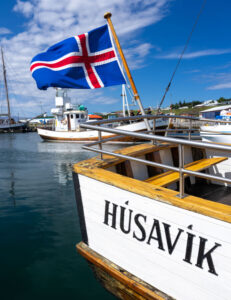
Looping around Iceland’s Ring Road — the 800-mile ultimate road trip that circles the perimeter of the island — three favorite villages stand out: Húsavík, with its colorful harbor and whale-watching boats; Siglufjörður, an important herring fishery a century ago, which loves to tell the story of the “Herring Girls” in its exceptional museum; and Seyðisfjörður, with a hip, funky, and artistic vibe in a remote and dramatic setting — about as far as you get from Reykjavík while still being in Iceland.
A few weeks later, in Norway, I settled in to a couple more fjordside hamlets. Balestrand, conveniently located along the express boat route between Bergen and Flåm, commands a grand view over the mighty Sognefjord. Its harborfront grand hotel (with its elaborate smorgasbord dinner) and charming Ciderhuset cidery (offering tours, tastings, and pairings with delicious Turkish-accented fare) provided two of my favorite meals of the year. Deeper in the fjord is my favorite fjordside village of all: Tidy, tranquil Solvorn, a cozy burg with historic landmark hotel (Norway’s oldest), multicolored wooden boat sheds lining the shore, and a ferry that putters across the fjord once an hour to one of Norway’s finest stave churches.

Iceland and Norway are both best for their natural wonders. And, frankly, many settlements (especially in Iceland) are more functional than charming. But these five towns tempt the just-passing-through traveler to downshift…settle in…and enjoy.
Siracusa and Noto, Sicily
A year ago, the second season of HBO’s The White Lotus put Sicily on many travelers’ wish lists. After doing a guidebook-research road trip around the country a few years back, I really enjoyed seeing many of those places pop up on the show.
The White Lotus was set in the mega-touristy, off-puttingly upscale tourist town of Taormina. Personally, despite its grand location facing Mount Etna, Taormina left me cold. The place that really sticks out is a couple hours’ drive south: Siracusa, the modern city at the site of ancient Syracuse.

Siracusa feels less “discovered” than many Sicilian towns. I could do endless laps around its old town, the islet of Ortigia, which evokes both the ancient days of Archimedes and the lavish blossoming of Baroque. Ortigia has some of the finest squares and prettiest churches in Sicily. And if you need more substantial sightseeing, you can tour the archaeological museums and ancient sites farther inland. Or just take a dip at the rocky beach.
And while you’re in the area, make time for a day-trip to Noto, tucked in the countryside less than an hour’s drive to the southwest. Among Sicilians, Noto is known for two things: its lavish Baroque architecture and its top-quality gelato shops. If I’m being honest, I’m not sure which I enjoyed more.

Antwerp, Belgium
On Belgian itineraries, Antwerp gets overlooked. Maybe that’s understandable. Bruges is cute, cobbled, and canaled. Brussels is the bustling capital, with the very grand-indeed Grand Place. Ghent mixes charm with urbanity, and boasts an exquisite Van Eyck altarpiece.
Antwerp — lonely Antwerp! — plays fourth fiddle. But those who visit Belgium’s second-biggest city find it to be engaging and rewarding, if lovably gritty.
On arrival, you find yourself standing in one of Europe’s most impressive train stations — a temple to travel that rivals any in Europe.

From there, a grand city spreads out before you. Famous for its funky design heritage and its Art Nouveau architecture, as well as for its diamond industry, Antwerp itself is something of a diamond in the rough. But increasingly, it’s being polished to a high shine. On my last visit, I stepped into the stunning Handelsbeurs — the former stock exchange, with Neo-Gothic flourishes, that evokes the city’s glory days as a trading power.

On Antwerp’s picturesque main market square — as pleasant as any in the Low Countries — I found plenty of good eateries. But, on a mission to update our Belgium guidebook, I scouted even better ones tucked into characteristic neighborhoods all over the city, especially in t’Zuid, a quick tram ride to the south. There I found, among other great places, Elsie’s — a great opportunity to sample Ethiopian and Etrurian cuisine in this multiethnic city.
Antwerp is that kind of city: One that rewards exploration and curiosity. It makes you work a bit to unearth those gems…but it’s worth the effort.
Dublin’s Stoneybatter Neighborhood, Ireland
I’m always on the lookout for fun and funky neighborhoods in great European cities. And while updating our guidebook in Dublin this summer, several leads led me to Stoneybatter.
This low-key neighborhood is effectively one street at the edge of the city center (a longish walk or quick bus, tram, or taxi ride from downtown). Stoneybatter’s main drag is lined with narrow storefronts, colorful cottages, indie bookstores and boutiques, lively street art, more than its share of stay-awhile cafés, a variety of global food eateries, and some fine dining options.

I ate very well at Grano, an Italian-owned trattoria with a short but tempting menu of authentic choices — the kind of place where, I imagine, each and every dish would be delicious. But walking to and from dinner, I kept wishing I had more time to eat at a half-dozen other places.
Part of Stoneybatter’s charm is its tucked-away-ness. It’s a short walk from the big, slick Smithfield Square, with its giant distillery, industrial-strength youth hostel, and lineup of predictable chain eateries. From there, you can walk just a few minutes northwest, passing The Cobblestone — Dublin’s most respected pub for live traditional music. Stoneybatter, just around the corner feels quirky, locally owned, and fun to explore. It’s the kind of place where I could happily imagine settling in for a week or two at a cozy Airbnb, sampling a different trendy brunch spot each morning.
Slovenia
If you know me at all, you can be sure Slovenia will wind up on any “Best of” list I write. This year, I mulled over which part of Slovenia merits a “Discoveries” mention for 2024:
The beautiful, charming, user-friendly capital, Ljubljana, with its stay-a-while ambience and outstanding food scene?
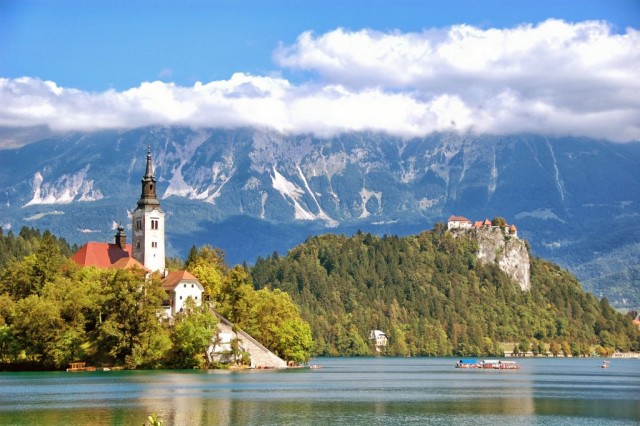
Dreamy Lake Bled, with its castle-capped cliff and church-crowned island? Or maybe head higher into the mountains — to the stunning Julian Alps, with some of the most breathtaking cut-glass peaks in Europe?
Perhaps head to the seaside, specifically the charming port town of Piran, with its sleek, marbled square, atmospheric back lanes, delectable seafood restaurants, and all of the charm of small Croatian coastal towns, but tidier and friendlier?

Or maybe we should do a little spelunking? When choosing between some of the most spectacular karstic caves on the planet, should we opt for the hauntingly grand caverns of the Škocjan Caves, or the more accessible formations of nearby Postojna?
Or does heading off the beaten path appeal? Should we explore the outstanding wineries of Goriška Brda, sharing a border with Italy’s famous Friuli wine region, or the arid limestone beauty of the Vípava Valley?
Heading to Europe at Mardi Gras time? Might I suggest paying a visit to Ptuj, with its unforgettable Kurentovanje costumed-beasts processions?
Or — hey, wait a minute! — why not…all of it?
Wherever You’ve Been Dreaming of Going
One of the lasting lessons of the pandemic is a new awareness that we can’t take anything for granted. Time may be shorter than you think. That’s why a popular theme has been “revenge travel” — finally getting to those items you’ve always dreamed of.
Maybe you’ve wished you could hike the Tour de Mont Blanc, around Europe’s tallest mountain. That was on Rick’s list — and it was one of his first trips back after COVID.
In my case, I can think of several boxes I’ve ticked recently. This past June, I realized a lifelong dream of being in Dublin to celebrate Bloomsday — a celebration of James Joyce’s Ulysses. On the date that Joyce’s masterpiece novel is set, his hometown’s streets are full of lit nerds wearing straw boater hats and Edwardian costumes, reading passages from Ulysses, and greeting each other with, “Heigho! Happy Bloomsday!” Totally worth it.

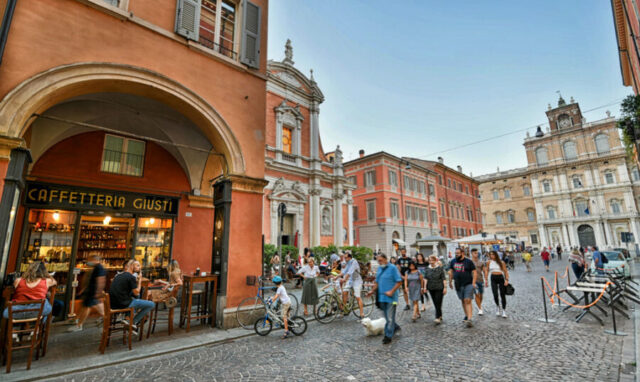
Other items on my lifelong wish list I’ve recently ticked: Exploring some new parts of Italy, from the fascinating, multicultural, coastal city of Trieste; to the culinary heartland of Emilia-Romagna; to the wine and food mecca of Piedmont.
Or ascending Lovćen, a mountaintop mausoleum overlooking virtually the entire country of Montenegro, and hiking up countless steps to a dramatic monument carved by the great sculptor Ivan Meštrović.

Some of these may seem a little obscure…because they are! I’m certainly not advising you to visit Dublin on Bloomsday, or to sample every stuffed pasta in Modena or Parma, or to huff up to the summit of Lovćen. I doubt you’d enjoy those as much as I would. (Well, maybe the pasta.) But I’m sure you have something on your personal wish list that you’d enjoy just as much I loved those experiences.
So…get to it! You have about 365 days to make it happen in 2024.
Be sure to share your own Discoveries in the Comments!
You can also look back at my Discoveries from 2023, 2021, 2020, 2019, and 2018…all still great choices.
If you’d like to follow along with me on my 2024 travels, be sure to follow me on Facebook and on Instagram.
And consider checking out my travel memoir, The Temporary European: Lessons and Confessions from a Professional Traveler.
I really appreciate these end-of-the year discovery posts. This fall, my wife and I spent a month in Austria, Slovakia, Slovenia, Croatia and Italy, and your previous posts really helped us. This time we visited the Sea Organ in Zadar (from on of your Facebook posts), Trieste during the wildness of the Barcolona 55, Torino and Ferrara (instead of Modena). More and more, we’re finding that staying the lesser-known towns, and then day-tripping from there to even more untouristed places, like Aquileia, near Trieste, is a very satisfying way to travel, even in these times of over-tourism.
I am suprised you have not discovered the High Tatras in Slovakia and Poland.
You still have a lifelong wish list? I thought you’d been EVERYWHERE!
Happy Travels!
The Tatras are indeed worth checking out; I haven’t been there in 40 years, but it was beautiful, and there was plenty for non-skiers to do.
We spent time in Porto this past fall, after our RSE Heart of Portugal tour, and just loved it. We spent about 4 days after the tour, and could easily have enjoyed another week. We never did try the Francesinha, but the food we did have was wonderful.
Our last RSE Best of Sicily tour spent part of a day in Noto, and we of course wished our stay had been longer. And Ortigia in Syracusa is everybody’s favorite.
Thanks for these ideas, Cameron.
My day trip o Antwerp from Rotterdam was wonderful. A one hour train ride. Such an easy walk into the old town. Rubens 5 paintings in the medieval cathedral was my draw. The cathedral itself was stunning with 12 century art saved from the War. emigrant museum can’t be missed. City of huge diversity. My dad was an American soldier here and almost lost his life in a bombed theater. He helped open labor camps in surrounding areas.
Also I loved Rotterdam! It is a tour of modern architecture.
Hello Steve,
I’m one of your fans, watching your shows on PBS, traveling with your company, and reading your books.
But one of my favorite sites in Barcelona did not get a mention in your booklet about Barcelona: Hospital de la Santa Creu i Sant Pau, a UNESCO Heritage Site. If you have not seen it, make it a point to stop by. Happy travels, Gisela
Thank you for the illuminating description of the offerings on each tour.
Just drove through Lutherland in Germany, saw castles, awesome Christian history, museums, little villages, ate amazing food and saw delightful Christmas markets full of crafts and yummy food. Had your travel book for the trip. Thank you!
Steve,
We already did Emilia-Romanga for you!
Start in Milan
Use Trentitalia to go to
Parma (Ham and Cheese tour with Parmalook.com)
Modena(Vinegar tour…Marisia Barbari’s is inside the city and easily accessible by bus)
Bologna
Ravenna
Cinque Terra
In 13 days we did:
10 cities
190,000 steps
65 miles of walking
Took numerous trains and buses…and only 1 taxi
Best food in Italy hands down!
I am sure that this is a fine “blog” for the right kind of tourist; it’s well-written and nicely illustrated, and no doubt provides useful information for those who formerly knew zilch about Europe. However, astonished as I was to find such well-known destinations as Porto, Geneva, the Norwegian fjords, or even Warsaw being presented as “discoveries,” or even “obscure,” I’m afraid this is not the blog for me, or for other similarly well-informed and independent travellers.
Happy travels!