In 2022, as travel resumed, I made it back to lots of famous places: London, Rome, Amsterdam, Dubrovnik. The Matterhorn, the Scottish Highlands, the hill towns of Tuscany. But, as usual, many of my favorite experiences came in lesser-known corners of Europe — underappreciated places that exceed expectations when it comes to creating beautiful memories.
As a refresher: My annual “Discoveries” list is one traveler’s arbitrary rundown of places I’ve been to recently (mainly in 2022) that may not already appear on many itineraries. These are just ten of the hundreds of such places, all over Europe — meant not as any sort of definitive “best of” list, but simply to inspire you to go beyond the Londons, Parises, and Romes when planning your 2023 travels. In fact, I’d love it if you shared your own favorite finds in the comments.
And if you’d like to see previous years’ lists, here are the Discoveries for 2018, 2019, 2020, and 2021 — all still great choices. (I skipped the Discoveries in 2022…not wanting to jinx what, a year ago, felt like a tenuous time to travel.)
Sarajevo, Bosnia-Herzegovina
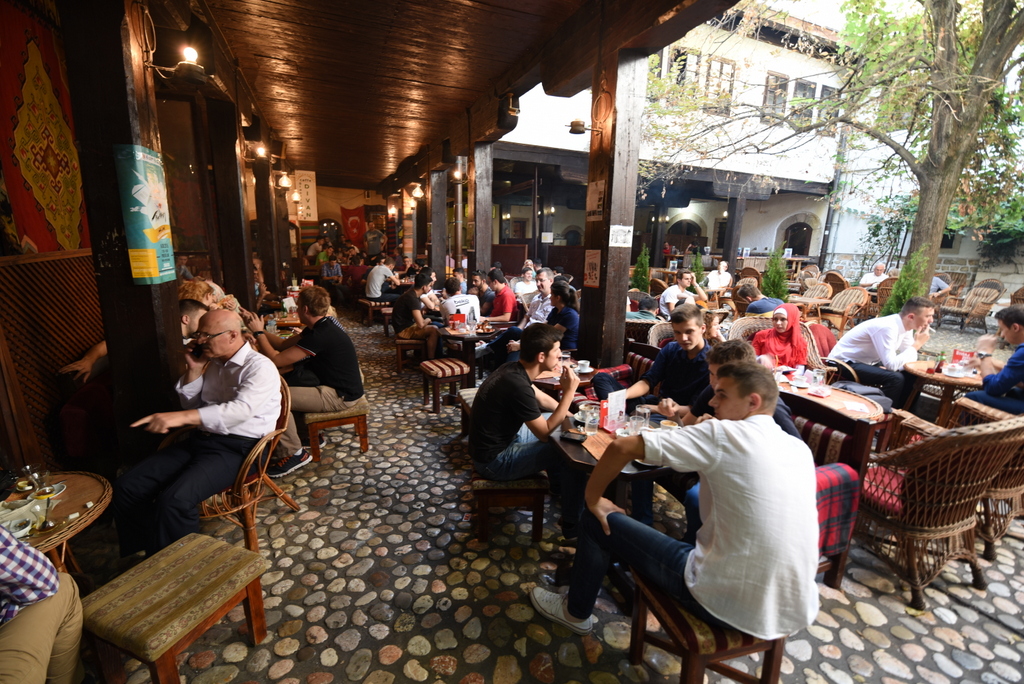
Imagine a bustling city in a stunning setting — tucked in the deep valley of a gurgling river, surrounded by green hills. It has a dynamic history as a crossroads of civilizations, where you can visit a Catholic church, an Eastern Orthodox church, a mosque, and a synagogue, all within a couple of blocks. One part of town feels like a Turkish bazaar, with riverstone cobbles underfoot, the sound of tapping coppersmith hammers, the smell of sweet hookah smoke, and the haze of grilling meat hanging heavy in the air. And then, just a few steps away, you enter a tidy Habsburg street plan with proud turn-of-the-century architecture, parks, and boulevards.
This city also has a delicious culinary tradition of delectably seasoned meats, decadently spreadable cheeses, and crispy savory pastries cooked under a metal baking lid covered with hot coals…not to mention unfiltered coffee and honey-soaked treats (think baklava). Oh, and the locals are incredibly welcoming, easygoing, and quick to befriend visitors, and they have fascinating life stories to share.
Now imagine that this place has next to no American tourists.
This is not a fantasy; it’s Sarajevo. With each return visit, I simply can’t fathom why so few travelers have discovered what may well be the most underrated capital city in Europe.
Returning this fall, I discovered a new hole-in-the-wall shop on the main drag that specializes in just one perfect dish: First, they pull a puffy lepinje flatbread pocket straight out of the oven. Then they slather it with the soft cheese kajmak, which begins to melt and fill in all the little grooves. You can pay a bit extra to stuff it with flavorful smoked beef…a delicious mobile feast. Walking down the street, munching one of my favorite meals of the trip (if not the year), it occurred to me that, on top of everything else, Sarajevo might be one of the best “street foodie” destinations in Europe.
Sarajevo has a new fancy hotel downtown, and it recently opened a cable car that trundles visitors to the mountaintop high above town for sweeping views. Those are nice upgrades, but they’re just gilding the lily of what’s already one of travel’s great cities. Someday Sarajevo will start to get the attention it deserves. But in the meantime, it’s cheap, uncrowded, and endlessly rewarding.
Richmond, London, England

During the dark days of the pandemic, like a lot of people, I took solace in binge-watching TV. One of the shows I found most uplifting was Ted Lasso, the story of an insistently upbeat American football coach transplanted to the UK to manage a soccer squad. Richmond may not be a real team, but it absolutely is a real place — a sleepy bedroom community just outside London. And on a sunny weekend in February, I went to Richmond on a lark, just to see if I recognized anything from the show. Sure enough, I found myself standing on that adorable, perfectly British square, with a pair of red telephone boxes; a classic half-timbered pub with sturdy picnic tables out front; narrow, shop-lined alleys leading every which way; and facing an expansive green packed with people out for a stroll. During the pandemic, when I closed my eyes and dreamt of being back in Britain…this was the place I imagined.
It was a small thrill to find the door to “Ted’s apartment,” and to step into his local pub. But if I’m being honest, I quickly forgot all about that fictional world…and enjoyed exploring the real one. One of my all-time favorite moments of 2022 was simply sitting on a bench at Richmond Green, watching dogs chase tennis balls.
For me, Richmond illustrates two things: First, Britain has hundreds of charming little communities that are worth poking around for an hour or two. This one just happens to star on a TV show. And second, I just love it when I go someplace for some random reason — in this case, because I saw it onscreen — and wind up loving it for its own sake. So on your next trip, make a point to find “your” Richmond… whether or not it’s actually Richmond.
Upper Engadine and Nearby Scenic Rail Lines, Switzerland

To be clear: I’m not saying that the Upper Engadine is somehow better than, say, the Berner Oberland, or Zermatt and the Matterhorn. But this remote, rugged corner of Graubünden, in the southeast corner of Switzerland, was perhaps the biggest (and nicest) surprise of my late-summer guidebook research trip. The most famous place here is the glitzy, soulless, skippable resort of St. Moritz. Instead, stay in nearby Pontresina and have a grand ol’ time riding lifts to lofty panoramic perches (Piz Nair, Muottas Muragl, Alp Languard) and exploring stony traditional villages (like Samedan).
The Upper Engadine’s other claim to fame is its position at the intersection of two world-famous scenic rail journeys, the Glacier Express and the Bernina Express. I did both of those trips, too. And if I’m being honest, eight-plus hours — even a super-scenic train — is a lot. Here’s a pro tip: Based in Pontresina, you could do only the very best bits of both journeys, a couple of hours in each direction, then come right back home. This efficient approach lets you conquer two of the most astonishing high-alpine rail lines in the world, each a feat of late-19th-century engineering: the Bernina Pass (to the south, toward Italy) or the Albula Pass (north, toward Chur). With stone bridges that soar hundreds of feet above yawning valleys, ingenious circular viaducts that loop 360 degrees to dispense with the need for cogwheels, and peek-a-boo views of snowcapped, 14,000-foot peaks and receding glaciers, Pontresina gives you easy access to what may be the most stunning train trips in Europe, mile per mile.
As a bonus, for those on a tight budget, most Upper Engadine accommodations provide a sightseeing card that covers all local transport — including those thrilling (but pricey) mountain lifts. This basically doubles the value of what you pay for your lodgings (but make sure they include it before you book). Maybe this is yet another reason why most of my fellow hikers were active Swiss retirees rather than the Insta-glam jet set.
The Jordaan, Amsterdam, The Netherlands

In the middle of an intense, seven-week trip of tour guiding and guidebook research, I had a three-day weekend to relax and recover. The place I chose was Amsterdam — and specifically, the Jordaan, a residential neighborhood of tidy grid-planned blocks, traditional skinny houses, funky shops, and local restaurants. I found the perfect apartment, in the attic of a family home — with crooked, creaking funhouse floors and dramatically angled rafters. To reach my room, I had to climb two staircases so steep they were practically ladders. And when I opened the window and saw a pair of bikes brrrring-brrrring-ing past on the idyllic street scene below, I knew I’d found the perfect getaway.
One morning, I woke up to discover an utterly delightful weekend street market (two of them, actually) sprawling through the lanes and squares near my apartment. Another time I rode a tram to Vondelpark and rented a bike to pedal with the Amsterdammers in a lush, green oasis. On several occasions, I window-shopped the delightful nearby restaurant streets (with the even-more-delightful names Eerste Anjeliersdwarsstraat and Tweede Anjeliersdwarsstraat) and took my pick from the incredible variety of places to eat.
One thing I did not do, a single time, on this visit to Amsterdam? Complain about the touristy crowds. Because the Jordaan let me avoid them entirely.
Trieste, Italy

The Italian port city of Trieste has an identity crisis like no place else. Today it’s part of Italy — but just barely, connected by an umbilical cord of land just wide enough for a railroad and a highway. It’s almost entirely surrounded by Slovenia, whose parched karstic cliffs rise up like a stone curtain just behind the city. Complicating matters, most of today’s Trieste was built not by Italians or Slovenes, but by Austrians and Hungarians, who transformed this humble settlement into their primary trade port and shipbuilding center…with grandiose buildings that would feel more at home on Vienna’s Ringstrasse or Budapest’s Andrássy út, rather than a few steps from Adriatic embankments. This is the kind of place where you need a conspiracy-type diagram, with red yarn crisscrossing thumbtacked photos and maps, just to figure out who controlled it, and who lived here, and when, and why.
And yet, all of that complexity melts away when you actually set foot here. Trieste is hard to characterize, but the main thing is that it’s simply lovely: a grand, imperial-feeling city with a sunny seafront embankment, shot through with faded elegance (from fin-de-siècle coffee houses to aristocratic villas), and with more than its share of fascinating history. Choosing between Austrian pork cutlets, Italian pastas, and Slovenian jota (turnip stew) and potica nut-roll cakes on the same menu, you know you’re at a nexus of history. As someone with a passion for Habsburg history, for Slovenia, and for Italy, I knew I’d find Trieste interesting. But I wasn’t prepared to enjoy it as much as I did.
Side-note: I’m not entirely sure whether I went to Trieste because I read Jan Morris’ riveting Trieste and the Meaning of Nowhere, or if I read her book because I was going to Trieste — but either way, it reminded me how “bringing along” a great author or historian with you, on any trip, immeasurably deepens your appreciation of a place. And Trieste is a twofer, since James Joyce lived here while writing most of Ulysses (as documented in a lovable local museum). This is fitting, when you consider how a cacophony of languages and cultures fills the streets of Trieste — just like in the pages of that masterpiece.
Glasgow, Scotland

Every time I go back to Glasgow, I like it even better. And this summer, I had plenty of time to think about why…when I got stuck there for several extra days after contracting COVID. But actually, I can think of few better places to just sit around and recover.
I owe this — and my general good feelings about the city — to the Glaswegians. They’re kind and generally good-natured, but also wicked-smart and fiendishly funny. They have a penchant for knocking important city leaders down a peg by crowning their statues with orange traffic cones. The city has some of the most beautiful, most wildly creative, most satirically incisive street art I’ve seen anywhere.

As an indication of how endearingly salt-of-the-earth Glasgow is, its single best museum (in a city with lots of great ones) may just be the old tenement house whose resident moved out in 1975 after not having changed a thing in five decades — and they’ve left it perfectly preserved to this day, a fascinating time warp of midcentury, middle-class lifestyles.
Sure, the city center lacks the Old World romance of Edinburgh. (It reminds me of Cincinnati or Indianapolis, with fewer high-rises, more interesting architecture, and an infinitely more entertaining accent.) But I’m drawn to the West End, the posh yet hip residential district that’s a short bus, subway, or taxi ride away. Surrounding the U. of Glasgow campus are green parklands, lively traditional music pubs, and cozy streets lined with endlessly browsable restaurants and shops. On this visit, stepping off the subway, I bumped into a fascinating mural celebrating the many different people who call this corner of Scotland home. Mesmerized, I couldn’t pull myself away for about 15 minutes.
The next time I wind up getting stuck in Europe…I hope it’s in a place as nice, and as engaging, as Glasgow.
Pelješac Wine Country, Dalmatian Coast, Croatia

The Pelješac (PELL-yeh-shawts) Peninsula is a long, skinny spit of land poking out into the Adriatic Sea just north of Dubrovnik, on Croatia’s Dalmatian Coast. It’s always been an off-the-beaten-path destination for wine lovers who’ve done their homework. But in 2022, Pelješac came closer to the mainstream overnight, when they finally opened a brand-new bridge that routes most traffic right along its base.
In October, I spent a fun and fascinating day with a local wine expert (Sasha Lušić, who runs the D’Vino Wine Bar in Dubrovnik) to get my guidebook coverage up to snuff for the coming onslaught of visitors. We visited Ston to ogle its beefy fortifications and vast salt pans; we pulled over along a sleepy bay to slurp fresh oysters, pulled straight from the Adriatic, and washed down with a local sparkling white wine; and, best of all, we dropped in on a half-dozen different wineries, lovingly handpicked by Sasha.
I was especially charmed by Anto Grgurević, who holds advanced degrees in viniculture. Anto is determined to combine academic research with hands-on sweat equity to advance the art of Croatian winemaking. He has reintroduced some classic traditional vines — once used extensively here, but long since forgotten — even as he experiments with doing old things in new ways. (He’s the first in the region to make an amber wine, using a naturally occurring “albino” grape.)
After our tasting, Anto said “Follow me,” hopped in his car, and drove us deep into the peninsula’s interior to his family’s vineyard. Donning a comically large sombrero to shield himself from the glaring sun (good for the grapes, less so for the eyes), he walked us through the vines, pointing out the different types of grapes here and there, each matched perfectly to the precise microclimate of that patch of land.

Looking out over the hillsides where his ancestors toiled, Anto grew philosophical. “I’ve only got about 25 vintages in my life,” he said. “That really only gives me a few years to experiment and figure out how to make the best possible wine. Then I’ll spend the rest of my life cranking it out.”
Then he said, with a wink: “The best vines, you plant for your kids and your grandkids.”
Oh, and the wines? The wines are sensational.
Toruń, Poland

This gorgeous, red-brick town — cute as a fairy tale, and famous for its gingerbread and for native son Nicholas Copernicus — has always been a personal favorite. But I’ve always suspected my affinity for Toruń was somehow idiosyncratic, because I almost never see (non-Polish) travelers here.
Then, this May, I headed up a team of Polish guides to lead the first-ever departure of our new Rick Steves Best of Poland tour…and I’ll be darned if every single person in our group didn’t utterly fall in love with Toruń, too. The next morning, as we were pulling out from our one-night stay, there was practically a mutiny on the bus to call off the rest of our itinerary and just stick around Toruń.
Toruń has no world-class sights. There aren’t many, if any, museums or churches worth entering. But I’ve rarely been to a place that’s more delightfully strollable. It has cozy red-brick buildings, grand interlocking squares, broad traffic-free promenades, stately churches with prickly spires…and the whole city smells like gingerbread.
After our hands-on gingerbread-making demonstration, we oriented our group for their free evening. Our best advice: “Just walk down this street until you run out of pretty things to look at. Then come back.” A couple of hours later, I followed my own advice and went for a twilight stroll. Reaching the far end of the Old Town, I heard a raucous echo through an otherwise empty square…and followed that noise to an outdoor restaurant where about half of our tour group was having their favorite meal of the trip.
And that’s the kind of place Toruń is: Not much to see. Not much to do. But a wonderful place to simply be.
Modena and Emilia-Romagna, Italy
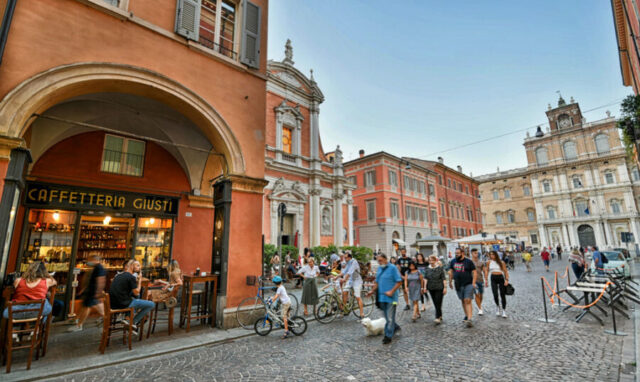
Italian food is, of course, delicious. But what if I told you there was a place in Italy that Italians — from the scalps of the Alps to the toe of the “boot” — unanimously agree has the best food anywhere?
Back in 2021, I spent much of the year putting together an ambitious project: a brand-new, full-color, region-by-region handbook to Italian cuisine called Rick Steves Italy for Food Lovers (which just hit bookshelves everywhere). One of the hazards of that project was that our co-author, renowned Italian food expert Fred Plotkin, makes foodies like me desperately want to visit every corner of Italy.
In particular, I got caught up in Fred’s enthusiasm for the region of Emilia-Romagna. This is where you find some of the most quintessentially delicious Italian foods: luxurious pastas, especially filled ones; some of Italy’s top salumi, from mortadella to prosciutto di Parma; and, of course aceto balsamico tradizionale and Parmigiano-Reggiano cheese — don’t you dare call them “balsamic vinegar” or “parmesan.”
After months of salivating at my desk, I just had to see this place for myself. So when my wife and I finally returned to Europe in the fall of 2021, we included a couple of days in Emilia-Romagna. We had world-class meals in Bologna, Parma, and Ferrara, and we spent two nights in Modena. The food was, if possible, even better than promised. The tortellini in brodo at that sidewalk café in Parma immediately shot to the top of our “best pastas ever” list, even as it redefined what pasta could be.
But we also adored the livable cities, which combined a certain elegance with a user-friendly unfussiness. And Modena in particular got under our skin, as the perfect home base. There are no important sights in town; to be honest, I never set foot in a museum or church. But we never tired of exploring its streets and squares.
And, of course, Modena also provided many memorable meals. One Sunday evening, I kept striking out when my first through fifth choices for dinner were closed. My “last resort” — a desperation play — wound up providing me with one of my best meals of the trip.
That’s Modena…and Emilia-Romanga. It’s no wonder that Tuscans, Romans, Lombards, and Sicilians all love to eat here.
Stopping to Listen to the Church Bells…Anywhere
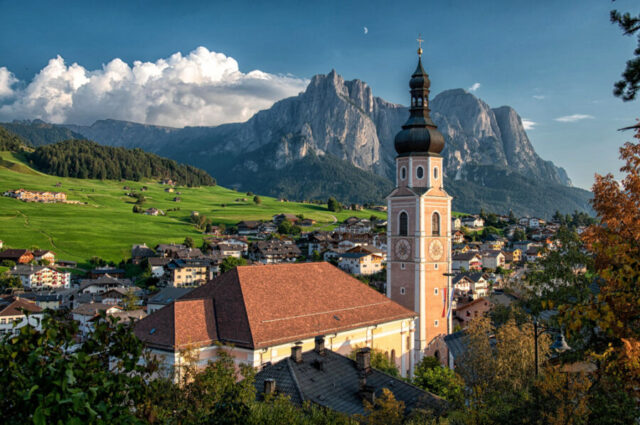
Looking back on 2022, this was a year when I simply enjoyed being back in Europe — anywhere, doing anything, often doing nothing at all. During those two long years stuck at home, I had plenty of time to reflect on what I love best about travel — especially as I was assembling my travel memoir, The Temporary European. In that book, I explain the conclusion I reached: The best experiences in Europe are, so often, not the big sights and famous attractions. Rather, they are those precious moments in between that stick with you long after you’ve returned home.
I present this in terms of “stopping to listen to the church bells” — no matter how busy you are. But it can take many other forms. Maybe it’s sitting on a park bench on Richmond Green, watching people and their dogs enjoy a sunny day. Chatting with a Croatian vintner about his ancestral responsibility and his contemporary passion. Doing a little “street grazing” in Sarajevo. Getting lost in the heavenly gingerbread allure of Toruń. Browsing an Amsterdam street market.
Where are you going in 2023? It doesn’t matter. Go where you like. But when you get there, don’t spend your time racing from place to place, adhering to an ambitious itinerary. Make a point to stop — literally stand still — and, even if for just a moment, take it all in. Notice the little details of everyday life you’ve always missed. Eavesdrop on conversations…and if you have something to add, interject. Imagine what it might be like to actually live in that place. And if you hear the church bells chime…listen.
Where are you headed in 2023? Any favorite discoveries from 2022 you’d like to share?
If you enjoyed this list, and would like to browse some others, check out my Discoveries for 2018, 2019, 2020, and 2021.
Most of my travels in 2022 were to update our Rick Steves guidebooks. Many of those new, fully-updated-post-COVID editions (including Italy, London, Scotland, and many more) are now available at our Rick Steves Travel Store; the rest are coming soon in 2023.
If you enjoy these stories, check out my travel memoir, The Temporary European: Lessons and Confessions of a Professional Traveler. You can find it at your favorite local bookstore, online at the Rick Steves Travel Store, or as an e-book (such as the Kindle edition).
I have been several times to the Tatras nd both Slovakia ads Poland. This region is becoming visited by many Europeans for both winter and summer activities, but not Americans. There is vvery nice scenery, and inexpensive to compared to Switzerland.
I used to love going to Zakopane with my parents back in the 70s; I’m curious to see what it’s like now.
Completely agree with your choices of the Upper Engadine and of Glasgow — and I am intrigued by your other choices. Adding to my list! Let’s see – my favorite off the beaten track cities or areas in Europe would be (just off the top of my head) lovely Brienz, Switzerland; the whole far-north of the Scottish Highlands, from Wick in the east to Caoe Wrath in the west; similarly, the Applecross/Torridon area of the Highlands (SO spectacular); the Burren and really all of County Clare in Ireland, particularly little towns like Ennis and Kilfenora, and the beautiful beach at Fanore; in Germany, the whole beautiful city of Wuerzburg, and also the town of Dinkelsbuehl and the area around it, which has all the charms of Rothenburg ob der Tauber but isn’t as overrun with tourists.
Hi Rowana,
We’re planning a driving trip in northern Scotland this June and I was intrigued by the two places you mentioned as unforgettable. Could you elaborate, especially the Applecross area. We’re probably arriving in Aberdeen after being in the north of Norway for several weeks. Been to Edinburg, Glasgow, and Oban. But, would like to explore the north of Scotland for a week. Thanks.
Much of eastern Switzerland is off the beaten path and doesn’t have the tourist crowds that other parts of the country have. The mountains may not be quite as spectacular as the Matterhorn, Eiger, Munch, and Jungfrau but the scenery is still beautiful and the hiking just as good.
Also, while in eastern Switzerland, consider hopping over the border to little Liechtenstein for a day and seeing one of Europe’s smallest countries. You can buy Liechtenstein postcards and have fun mailing them to folks back home, most of whom probably have no idea where or what Liechtenstein is!
Like the idea of Torun…not much to see or do, just a great place to be.
I like Winchester the ancestral cathedral of England and if you have a car Hereford/ Gloucestershire which has mysterious churches tweakesbury being the best church in the world but yes Glasgow
Is nice
I love Aarhus, Denmark for a midsize city without a lot of tourists. It has beautiful architecture, top-notch museums, a walkable town center with a pretty river and a seaside promenade. More than any of that, though, Aarhus showcases the Danes’ mastery of livable urban spaces. Another unsung favorite of mine is the Gower area in South Wales. Beautiful hiking, classic pubs, surprisingly warm water and long sandy beaches. . . . but no tourists.
We have never done the scenic train rides in the Upper Engadine, but we have driven them. I would even say there are advantages to driving them. The drive between St Moritz over the Albula Pass is stunning. This last year we drove from Lake Como to Austria. The section south of the St. Moritz was absolutely divine. We love to hike, but touring by car can also be a scenic wonder!
I noticed you don’t have any trips descriptions of New Zealand do you ever tour through there I would like information if you have a tour group that would go I’d like to go in 2024
Not sure what kind of tour of New Zealand you are looking for, but we went there with Active Adventures. We did the Kiwi tour of the South Island. Our guide drove us to different trails and we hiked every day. She also cooked us 2/3 meals every day, and we ate in restaurants for the third meal. It was incredible. They have other tours that include biking and overnight hikes. I highly recommend checking them out if you are interested in an active vacation.
A company to check into for New Zealand is First Light.
A company to check into for New Zealand is First Light.
Rick Steves doesn’t do tours to New Zealand. But I adore it. (In fact, I’ll be there again next month!) Rick Steves Scotland tour guide Colin Mairs, who moved to Auckland, has a company of his own that does great tours: https://mondumo.com
We also love the less traveled areas such as the Ardache and Camue sections of Provence in France. We traveled there last May, the weather was unusually hot and there was much talk of drought and the impact of climate change on the wine crop.
We’d like your take on traveling this spring to Portugal and the Azores. Can you give us some tips about places to stay and ground transport? We love your Monday night travel shows and hope to catch some of the European Festival presentations. Thanks!
I second Sarajevo and would add Mostar to that list. I clearly remember the war in both cities and there are plenty of reminders of it in and around both cities, but they’re both fantastic with as Cameron says, very few Americans (We were there in October of 2019…)
I was booked for the first Poland tour but cancelled because I was going on the RS Scandinavia tour just 3 days after the Poland tour. My friends on the Scandinavia tour were concerned I might get Covid and be prevented from meeting them in Stockholm so I was convinced to cancel. Back in May getting Covid was unpredictable and because we had to test negative before joining a RS tour, I cancelled.
I’m glad to hear how wonderful Toruń was and the first tour, I hope I can take it in 2024. Why wait until 2024? Because I’m booked for two RS tours- South England and My Way Alpine Europe in 2023. So much traveling to do, so little time.
A second to Sarajevo. We especially appreciated the walking tours we took with Insider Tours. Not many Americans. Go!
I completely agree with you about developing an appreciation for lesser known places. You really should check out Lithuania, especially Vilnius and Kaunas. I noticed that CNN has named Vilnius as one of their travel spots for 2023.
I agree Jeanette and would add the countries of Latvia and Estonia to a visit to Lithuania. These countries are small, close together and steeped in history with fabulous architecture and great food. I enjoyed these Baltic countries very much and encountered very few Americans when I visited.
One of the great relatively unknown French cities we uncovered was Annecy in the Haute-Savoie region in the foothills of the alps. With an antique “Old Town” that turns into. a tremendous Sunday street market, borders a large lake with beaches in the summer, we enjoyed walking around and partook of great restaurants in this unsurpassed French immersion experience. Check it out. Off summer season is best. Day trips to Chamonix’s Aiguille Du Midi, etc, convenient.
Just stop and listen to the church bells ring—wherever you are! Indeed, the best suggestion of all Mr Hewitt. 2022 allowed us to begin exploring again and oh, how we missed it. Thank you for reminding us to slow down and truly enjoy every morsel with an attitude of gratitude.
Cheers to a new year of health, kindness and adventure as you and the whole team work hard to enrich our lives.
My grandfather was born in Trieste, circa 1910, and immigrated to the US shortly after WWI. He considered himself Italian-American, but it’s definitely an area where identities are complex.
I was able to visit Trieste for just a single day about a decade ago, and it’s a fascinating place, as Morris’s book does such a great job describing. I’m hoping to return soon for a longer visit, and maybe do a bit of digging into family history. I think Piazza Unità d’Italia is one of the best places in Europe to relax with a coffee (Illy, of course).
Cameron,
I was delighted to read your previous years’ top destinations as we have also discovered many of them. We have used RSteves tours for years as a starting point for interesting corners to explore. Some of our favorite places are Aosta in the Savoie corner of Italy (within an hour or two drive from Matterhorn, Grand St Bernard Pass, Mt Blanc), lots of small towns specializing in cheeses or sausages or wine and fantastic Italian/French cuisine. Another favorite is Appenzell just north of your Engadine spot – very traditional, rural Switzerland with a darling little train that runs along the valley to great hiking areas. Another is the Val di Fassa northeast of Bolzano. This is a popular ski area in the winter and the lifts run in summer for hiking or drinks at the summit. Just explore- anywhere in the Dolomites is fantastic!
Merano, Italy is an undiscovered gem, at least for Americans. A popular spa town after Empress Elizabeth (Sissi) started visiting it, it has wonderful hiking trails, Trauttmansdorff Castle and gardens, as well as spa hotels. Located in the Sudtirol region, just south of the Austrian border and the Brenner Pass, it can get surprisingly hot in the summer — think 90+ degrees in July (and no AC in our hotel). A wonderful place to unwind and savor a slower pace of life.
And as previously mentioned, Trieste is another gem in Europe’s crown. Explore the Roman ruins, take a ferry ride to the Italian port town of Muggia (on the Istrian peninsula near the Slovenian border), or just relax with an aperitivo on Piazza Unita.
I would like to mention Romania, particularly the areas of Bucovina and Maramures. I encountered no Americans when I was there 11 years ago. Things might have changed but if you want to visit a place that puts you back in time in a very nice way, with great food, beautiful scenery and tons of historic venues, Romania is your place. you notice I did not mention Bucharest but that is the place you should spend one or two days and then get out of town. The Carpathians are gorgeous and the entire country is worth a visit. My favorite area was Bucovina, in the Northeast corner of the country near Ukraine – Visiting the painted monasteries fulfilled one of my life dreams.
Cameron,
We are planning a three week trip to Switzerland this September 2023 and planning to stay in Pontresina via the Bernini express from Lugano (bus to Tirana and the train up to Pontresina). Reading your blog you say;
“Here’s a pro tip: Based in Pontresina, you could do only the very best bits of both journeys, a couple of hours in each direction, then come right back home. This efficient approach lets you conquer two of the most astonishing high-alpine rail lines in the world, each a feat of late-19th-century engineering: the Bernina Pass (to the south, toward Italy) or the Albula Pass (north, toward Chur).”
Can you give us more details? Do you pay full price for both trains and only ride a few stops and ride back?
Great question. The hotel-issued free transit pass covers you only so far–partway on each journey. What I’d do is, first, establish how far you’re going each way.
I’d suggest this: On Bernina Express, go as far as Alp Grüm if you’re just interested in the scenery, or all the way to Poschiavo if you’d like to explore a town en route. On Glacier Express, maybe go as far north as about Tiefencastel. (Those are just a couple of possibilities. Depending on how much time you have an what your interests are, you could pick other points.)
Once you’ve settled on that route, you’ll need to do some homework: First, figuring out both an outward and a return connection that doesn’t strand you for too long at your “turn-around point” (use the official Swiss Rail website: https://www.sbb.ch/en).
And then, go to the train station and buy train tickets only for the portions not covered by your hotel-issued sightseeing pass (and, potentially, also seat reservations if you’d like premium seats in the “panoramic” carriages).
We have a whole chapter in the Rick Steves Switzerland guidebook all about these and other scenic rail journeys, with stop-by-stop advice on all the great scenery. (The brand-new edition should be out in April–definitely pick that up when it arrives! Look for the 11th edition.)
Hope this helps!
Cameron, In 2010 we spent 3 months living in Dubrovnik. RIT (Rochester Institute of Technology) has a branch there where my husband taught. We spent most evenings at D’Vino wine bar where we got to know Sasha. He took us plus my sister and her husband on a winery tour on the Peljesac peninsula. It really is a not to be missed stop on any trip to Croatia. The wine is wonderful with Plavac Mali our favorite. We also enjoyed the fabulous oysters in Mali Ston and walking the wall to Ston. Spending 3 months in an apartment overlooking old town Dubrovnik was a joy. I too highly recommend Sasha’s wine tours!
So glad you enjoyed Modena! We visited there after a Rick Steves tour a few years ago and I fell in love with the city. Great food. Wonderful downtown area. But you didn’t go to the Ferrari Museum while you were there? A stunning testament to beautiful cars, and a must stop even for those of us who can only dream of ever owning such a car.
Totally agree on Sarajevo. Our family visited Sarajevo several years ago (along with Mostar, Montenegro, and the Bay of Kotor) and thoroughly enjoyed it. Beautiful city, friendly locals, and tons of history (and good food). We were there during Ramadan, which made the trip all the more memorable. One night we dined above the city and watching the minarets light up at sunset was very special. Only drawback was going with a cheap car rental company and we had a choice of air conditioning or working brakes.
Amen to Glasgow and the West End! Little town in Scotland we love is Aberdour: castle, beaches, golf, lively arts festival in the summer, lots to love there.
In Germany, Munich is a must, but Garmisch-Partenkirchen always seems to call us, and yes, there are church bells. Once lived in a small town, Wertheim am Main, haven’t been back in years, but it was such a great place to experience German life.
Our new favorite destination, though, Keswick in the Lake District, England. Friendliest people, gorgeous scenery, and OH SO MANY SPRINGER SPANIELS! You cannot go wrong if there are springers around, they just enjoy life fully. #BeMoreSpaniel
I was in touristy but beautiful Bruges last April on a Rick Steves tour when, late in the afternoon of Easter Day, I had a pancreatic attack. My wife helped me back to the hotel where I spent the next two hours in bed, writhing in pain. It had been a sunny, unseasonably warm day, so our bedroom windows were open. Around dusk, every church bell in the city begin to ring in celebration of Easter. My pain literally melted away as bells continued for what seemed like a very long time. I slept well that night and felt great the next day. The church bells were beyond magical, they were therapeutic.
Hey Cam, late to the party. As with everything in Italy, where the best thing is is a hotly debated topic, from best sports car to fresco artist to ham. It’s part of being Italian to debate these things. Emilia-Romagna decidedly has a claim to the belt of best food in Italy. But Piemonte is the other entrant. Tuscany lays claim to the best wine, but Piemonte is in the discussion. Parma’s ham is internationally famous, but the country is torn between love of Parma’s and love of San Daniele. There is no definitive answer to any Best of Italy question, but it’s nice to see Rick’s company embrace what Fred has to offer, as Fred is my go to when I need to cover what I consider a weak spot in the Rick/Gene way of determining the Best of Europe: Gastronomy.
Seriously waiting for Alba to make one of your lists. I have rarely eaten better than my 2017 trip to the region. That was the 10th anniversary of our honeymoon, taken two years after our marriage due to circumstance. Of course, E-R is in the plan for 2025, for our 20th anniversary… Open in Tuscany, conclude in Bologna, with time split between Parma, Modena, and Reggio Emilia as the bulk of the trip. Then, I can be the impartial arbiter of many debates on the Best of. Until then, I think I’m a Piemonte partisan, but I’m willing to get the best of Emilia to tell me otherwise.
Cameron, I agree with Rick’s philosophy of not trying to cover all places. However, there are a few things I would like for him to add. (1) A chapter on Luxembourg (Luxembourg City and the Cemetery) in his Belgium book. (2) Add Meteora, Thessaloniki, Corinth, and Philippi. (3) A page or two about Andorra in the Spain book. Thanks for listening.
Since Russia invaded Ukraine, I have been to Poland 3 times to be part of the Polish efforts to help the refugees and have spent most of my time in Wroclaw, a truly enchanting city that Americans don’t know about. I had often used the Warsaw airport as a trip connection but now it is my destination for a great train ride to Wroclaw. I am spreading the word about this great destination.
Have you travelled in Albania? I’m hoping to be able to do Tirana, Ohrid (in N Macedonia), Berat, Vlore and Durres using local transit rather than a tour guide but finding it challenging to find any real information. Don’t want to drive and rent a car unless absolutely necessary as blogs I’ve read make that sound incredibly daunting. Any suggestions or ideas?