When you’re on the road in Europe, sometimes it’s the little differences that resonate the most: pragmatic, clever solutions to everyday problems that inspire you to do better back home.
I was reminded of this recently while updating our Rick Steves guidebook in Amsterdam. On a sunny day, I was enjoying a stroll through Vondelpark when I spotted an unusual garbage can, which appeared to have a built-in beverage caddy.
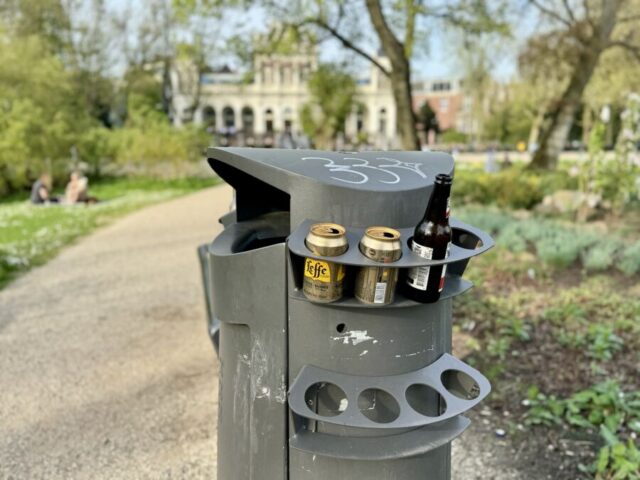
Suddenly I realized the purpose: In the Netherlands, to encourage recycling, they charge a €0.15 deposit when you buy any drink in a bottle or can; then, when you return the container, you recoup the deposit.
Of course, many places have a similar deposit system, and have for a long time. (Who could forget the classic Seinfeld where Kramer hatched a scheme to take a mail truck full of pop cans to Michigan to claim the 10¢-per-can deposit?) What struck me was the simple wisdom of making it easy to leave unwanted containers so that they’re easier to collect by someone else — presumably, someone who could use the money.
This little eureka thrilled me. As someone who tries to be a conscientious traveler, I often feel conflicted when finishing a bottle of fizzy water or Coke Zero. The recycler in me hates to stick in the garbage; the efficient traveler in me hates to carry it around (since I typically don’t carry a day bag, it has to jab awkwardly out of my pocket); and the humanitarian in me wishes I could hand it off to someone who’d appreciate the deposit. These “donation rings” (doneerringen) — really just a few pieces of well-designed metal — are a simple, pragmatic, effective solution.
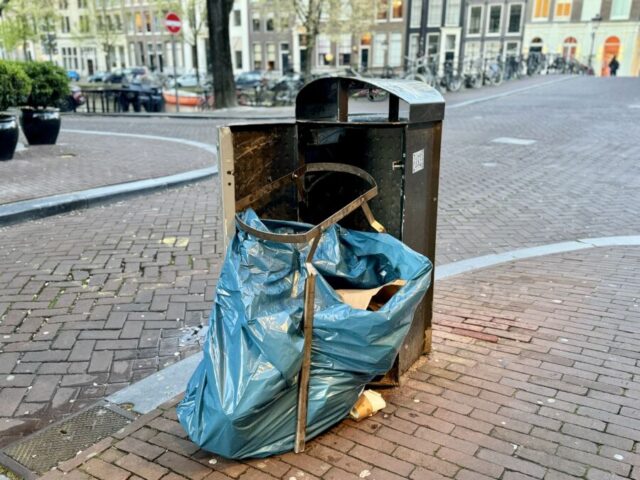
It solves other problems, too: Elsewhere in Amsterdam, I saw garbage cans (not yet equipped with donation rings) that had been rifled through, with trash strewn across the sidewalk. Clearly someone had gone looking for deposit containers in a way that was degrading to them, while also created a mess. So even if all you care about is a tidy city, donation rings are a no-brainer.
I snapped a photo of the donation rings, spent a few minutes tapping out a post about this little observation, and put it up on Facebook and Instagram, where I like to share these little epiphanies and insights as I travel. The initial response was enthusiastic — similar to my, “Wow, cool idea!”
Then a surprising thing happened. A few days later, in the middle of the night, the post went viral. It’s now been seen by more than 10 million people and “liked” by more than 150,000 — which are ludicrous numbers for someone with my modest following. That photo of a garbage can, and a few short, hurriedly composed paragraphs of text, may be the most-read thing I’ll ever write. (One colleague teased me, “This trash can will clearly be your legacy.”)
The responses were fun to sift through. Several people (in Portland, Canada, Germany, Denmark, Australia, and elsewhere) wanted credit for having a similar system on their garbage cans. (Noted!) Others pointed out that it would be even better for society to provide a proper safety net, so that people didn’t have to resort to collecting deposit containers. (Agreed! This is a band-aid, albeit a clever one.)
But the consensus was simply this: Great idea! Wish we had that here. Several commenters even CCed their local authorities. If this little post winds up inspiring a few communities to look into donation rings…I consider that a very good day’s work.
This whole episode — along with threatening to brand me “the donation rings trash can guy” for the rest of my career — reinforced my sense that when we travel thoughtfully, attentively, and with our mind and our eyes open, we notice little differences in the way societies operate. Some of these ways, we may find impractical or annoying. But many times, they can be an inspiration…even an epiphany.
§ § §
In my recent travels, I’ve been making a point to tune into these different ways…and, where possible, to share them with others. Here are just a few examples.
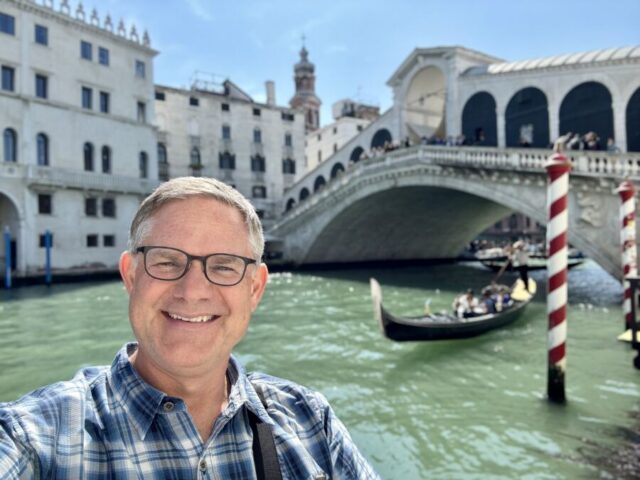
Just a few days before flying to Amsterdam, I was waiting for my boat in Venice when I cracked open a much-needed bottle of ice-cold sparkling water. No matter how hard I turned the bottle cap, one little plastic filament stubbornly kept the cap attached to the plastic ring around the neck of the bottle. In that moment, I realized I’d been running into this same hiccup throughout my time in Italy, and that I’d even noticed it the previous fall in other parts of Europe. At first, I chalked it up to faulty design…a defect. But it was so consistent, it must be intentional.
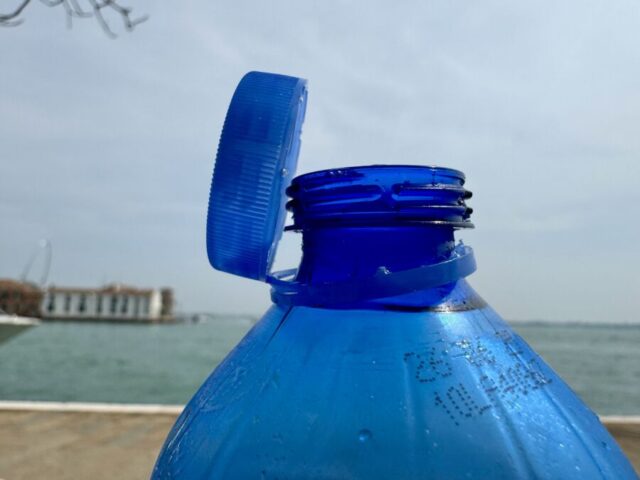
A little Googling turned up the answer: As of 2024, the European Union requires these “tethered caps” on all single-use plastic bottles. It’s intended to keep the entire bottle intact, as one unit, for easier disposal and recycling. Yes, it takes some getting used to. But when you imagine all of those little plastic bottle caps rolling around the cobbles, piazzas, and gutters of Europe — not to mention, getting lodged in the esophagi of untold numbers of woodland critters and sea life — tethered caps seem a very smart solution.
Also in Italy, I was reminded of the tiered pricing system at cafés: You’ll pay more (in some cases, much more) to sit out on the piazza, rather than if you stand at the counter inside. In fact, even at the grandest of grand cafés in Italy, you can always get a simple espresso (un caffè) at the counter inside for just over €1.
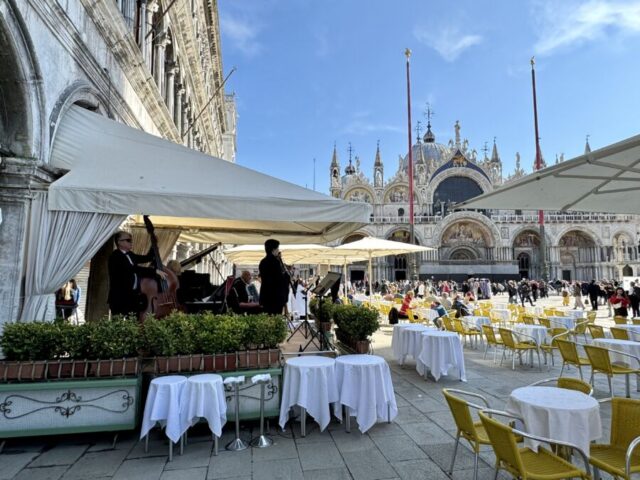
Testing this rule of thumb, I waltzed past the dueling orchestras on St. Mark’s Square — some of the most expensive real estate in all of Italy — and into a venerable café. Inside at the counter, I ordered a caffè macchiato, then stood in the opulent interior as I sipped it. My bill came to €1.50.
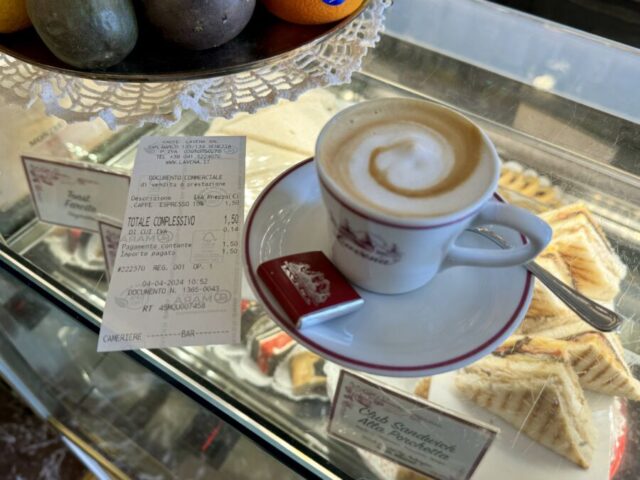
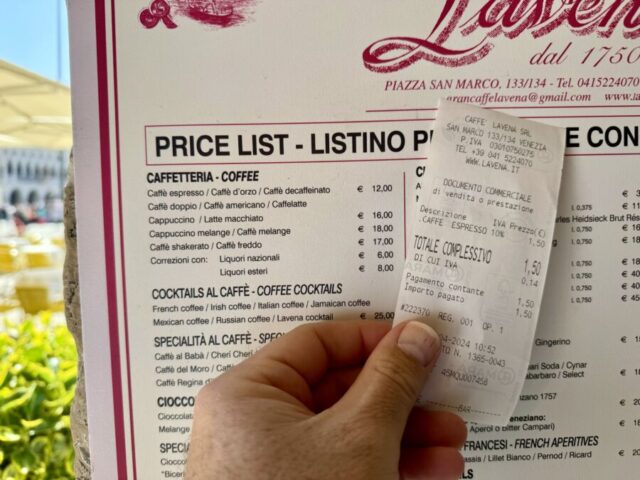
As I left, I checked the price for the very same drink at the outdoor tables: €12, plus a €6 cover charge. If you’re lingering over the amazing views and the music, this is a worthwhile investment. If you just want a quick coffee, those prices are absurd. This “progressive taxation” approach to pricing drinks has a certain pragmatic beauty; you pay based on your experience. (And it’s also a great tip for budget travelers.)
Some of these smart solutions are Europe-wide. The EU has a draconian “Air Passenger Rights” policy that protects travelers from having their valuable time wasted by airlines. Strict guidelines mandate what an airline is required to provide to a passenger whose flight has been delayed or cancelled. If I ran an airline in Europe, this would make me pull my hair out. As a frequent air passenger in Europe…I absolutely adore it.
And I have directly benefitted from it. Last year, my wife and I were flying from Seattle to Norway by way of Amsterdam, with a tight connection. The good news: Our first flight was a few minutes early. The bad news: Our connecting flight had already been cancelled due to a technical problem, with no further flights scheduled until the next day. We got nervous, imagining being stranded for hours — maybe overnight — at Schiphol Airport, missing out on reservations we had waiting for us in Norway.
But the Europeans in the waiting area with us seemed unconcerned. One of them pulled out her phone and called up a page with the details of the EU policy. “No worries,” she said reassuringly to her husband, and to all of us antsy eavesdroppers. “If they delay us for more than three hours, they have to pay each of us €250. They won’t let that happen.”

Sure enough, within minutes, they allocated a different plane to take us to our destination, and boarding commenced almost immediately. Soon we were loaded on a bus and zipping across the Schiphol tarmac to our plane. And we wound up arriving in Norway just 45 minutes after our scheduled arrival time — even with the equipment change. Without the financial accountability mandated by that policy, I’m certain we’d have been cooling our jets for much longer.

Let’s head back to the Netherlands, which seems to be one of Europe’s top incubators for these everyday innovations. The Dutch are pragmatic, solution-focused, and early adopters, to the degree that they sometimes leap before they look. When I’m updating our Rick Steves Amsterdam guidebook — as I was on this trip — frankly, it can get exhausting. There’s always some cutting-edge new technology that’s been rolled out. And, often, by the time we come back a couple of years later to do our next round of updates, that Hot New Thing has already been abandoned and replaced with the next trend.
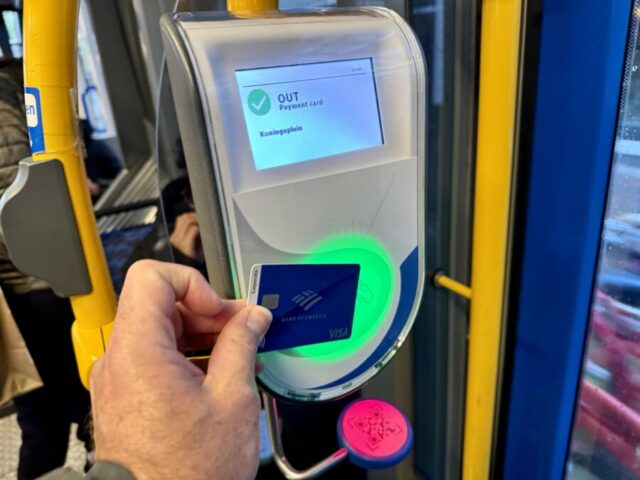
For example: Contactless or “tap-to-pay” credit card and smartphone payments on public transit are widely used throughout Europe and around the world. But the Netherlands, as far as I know, is the first and only European country where you can pay for every single ride on public transit (whether in-city trams, buses, and Metro, or intercity trains and buses) simply by tapping your existing credit card. Using this system (called OVpay), you never have to buy a ticket.
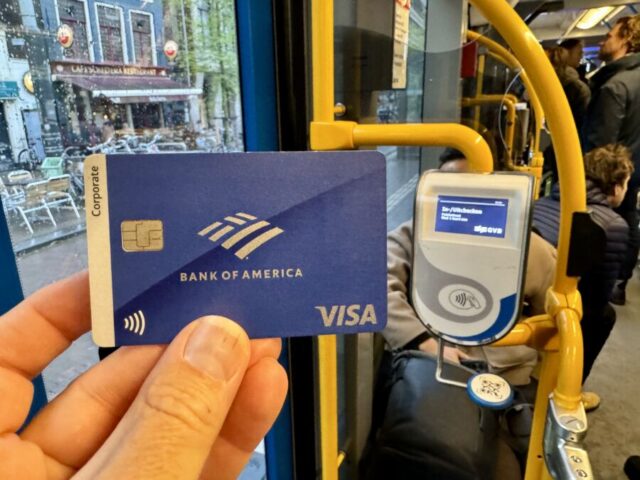
Of course, I needed to try this out. And it worked well. Starting at the airport, where I wanted to take the bus into town, I was able to skip the tiresome chore of looking for a ticket machine. Instead, when the bus pulled up, I just hopped on and tapped my credit card against the scanner to “check in.” And then, when I got to my destination, I tapped my card again to “check out.” The cost of the ride was automatically charged to my card.
I tried this everywhere I went: on trams, the Metro, even the intercity train to the airport. And it worked brilliantly…another example of Dutch problem-solving making life easier. I can imagine a time, a few years from now, when the very idea of “tickets” for transportation are a thing of the past. You just tap in, tap out, and you’re done.
However…
When working on our guidebooks, it’s also my job to think through potential pitfalls. And even this ingeniously simple system has some serious caveats: A couple traveling together needs two separate payment cards. Fair enough. But what if you’re a family of four or five? Yes, that means that each family member needs their own credit card, smartphone payment app, etc.
On a particularly busy afternoon, a French family of five was waiting for the tram next to me. I knew this was going to be a big headache for them. Sure enough, the father wound up having to download a payment app, load up his credit card, use the app to buy five tickets, then scan each one individually. By the time he was done with this agonizing procedure, the family had almost missed their stop.
Another pitfall: Because the Dutch are all-in on this system, they are largely doing away with other ways of paying. Out in front of Centraal Station, where arriving travelers hop onto a tram to their hotel, there used to be abundant ticket machines. Now these have mostly gone away, with just a few hiding out in the Metro station downstairs. And you can no longer buy tickets once you’re on board, unless you download and set up that app that the French father was fumbling with. If you’re in the very slim majority of people who, for whatever reason, don’t want to or can’t pay by tapping your card…your life just got harder.
Here’s my point: It’s fun to notice these clever solutions when you travel. But it’s also important to avoid a “grass is always greener” naivete. Every system is flawed, and a few flaws don’t make it worthless. That’s just another problem to solve.
Smart people, around the world, come up with smart solutions. And if we all put our heads together, notice what works and what doesn’t, and commit ourselves to improving our societies, there are already a lot of great ideas out there, ripe for the picking. We just need to find them, do our due diligence to think through the pros and the cons, adapt them to be even better, and make them our own.
§ § §
One final thought occurs to me, in this very heated election year: Effectively all of the solutions I’ve described are spearheaded by some level of government, from federal all the way down to municipal. Observing Europe’s willingness to attempt creative solutions, I’m reminded that it’s largely possible because Europeans, by and large, both trust and expect their government to be proactive and effective in crafting a better society. (And if they aren’t, they face consequences at the ballot box.)
I wonder if Europe is more innovative partly because ambitious solutions like the donation rings, or the tethered caps, or nationwide tap-to-pay must be coordinated by the state? They’re always some naysayer who goes on a crusade against even the best idea — especially in America, where rugged individualism is prized, contrarianism is practically a religion, and many are terrified of the mythical boogeyman of “Big Government.”
Anytime I share observations about Europe’s clever solutions and high-functioning societies (as I did last summer, when I marveled at the slick, well-coordinated infrastructure in Norway), some critics respond that such idealism has no place in America. “Yes, it would be great. But come on! We’d never be able to do that here.”
My response: Why not? We are our government — federal, state, local. If your leaders won’t take action to seek creative and effective solutions, if they’d rather shout and scold and scapegoat and obfuscate about complicated problems rather than trying to solve them…well, then, vote for someone else.
In this election year, support candidates and parties who are inspired by fresh ideas that help everyday people, and who are willing to implement them. (If you liked the sound of that EU “Air Passenger Rights” policy — and, frankly, any travelers should — it’s worth noting that former Secretary of Transportation, Pete Buttigieg, rolled out a similar policy Stateside… only to have a key provision of that plan later repealed by the Trump administration.)
Europeans solve problems because they have the will to work together toward those solutions. From all of these specific examples, that may be the biggest takeaway: We can do better. We just have to want it.
What are some of your favorite “slice-of-life” little ways that Europe does things differently? Which ones might you like to try out back home?
If you enjoy observations like these, be sure to Follow me on Facebook and/or Instagram. I’m heading to Europe again soon, and will be sharing lots more.
Allowing public drinking seems to work in Europe. Being able to drink a beer without wrapping it in a paper bag is much more enjoyable and civilized. I’m sure it gets abused at times, but as a citizen, I believe I should be able to moderately enjoy an alcoholic beverage in a public place—sitting by a river, walking down a street, and even on a bus at the end of a tough workday. As an American I always relish this aspect of my European trips.
Sounds like you need to visit New Orleans. :)
Pedestrian zones,
Cameron—I’m reading your book for the second time and enjoying it just as much as the first time. Your descriptive writing is fabulous and allows us readers to enjoy some wonderful “vicarious” travel adventures. Happy travels—and keep up the good work!
Informative article. As a 6 time Rick Steve’s traveler, I hung on every word. In London last fall we never even exchanged money for pounds. It was tap plastic even for small purchases. The pandemic changed everything – a touchless world.
Loved reading this article and getting prepared for changes we’ll likely encounter in Italy next October.
Sad that in this country we resist learning from others. Our health-care system for example.
Agreed.
I will also put our adversarial legal system to the test. Most U.S. prosecutors and defense lawyers only care about the outcome; justice, fairness, compassion, and truth are meaningless; winning is paramount. Winning leads to promotion, higher fees and reputation.
Compare that to the French legal system: Only very serious crimes are tried by jury, lesser infractions are adjucated by a much simpler process. Check it out on the wiki site! (And, no, I am NOT European. Nor a lawyer!)
Jaye
Thanks for your great articles!
An idea that makes traveling by black cabs in London so worthwhile, is that they can use the bus lanes. Only the licensed black cabs can do this. It makes getting across the city with luggage to catch a train etc much faster. We should do this in American cities!
Cameron. My wife and I spent a week last October in London. The Tube payment system is so sophisticated that I can tap my smartwatch to pay and never have to take my credit card out of my money belt. No that’s innovation.
One not a small thing is free studies in every level . You don’t have to pay to get a proper education. If the U.S. had the same system, the world would be a better place to live. Just think all the talent that is wasted because there is no change to go to university or gollege.
Two thoughts:
1- The education is not free. Someone(s) pays for it somehow and since governments don’t have their own money, it is from the people.
2- Folks typically don’t value what they don’t pay or work for to some extent. You need to have “skin in the game” to make the most of any opportunity.
Great information Cameron! And, I appreciate your perspective. I always learn something from you. Thank you.
Vancouver BC has similar tap-to-pay on public transit. While it’s more cost-effective, if you live here, to buy a $6 Compass Card, a visitor who only wants to use transit a few times can tap to pay on buses, and Skytrain with a contactless credit card (or debit card, but I suspect that’s only the debit card of a Canadian bank or credit union). The tap is at full adult fare, so I don’t think you’d get any applicable discounts related to transfers within the system. You can also use your mobile wallet on your smartphone, so Apple watch etc. might work, too. (I don’t have one, myself…)
Have you ever heard of a “verjaardag” calendar? It translates from Dutch to birthday. So, it’s a perpetual calendar- you can use the same one for decades if you like it that much. Ok, so lots of people have these – on the wall, in a book (probably tucked way far in the back of a drawer where you never see it, at least not in time to remember to send Tante Wilhelmina a card. The difference is: in the Netherlands, this calendar hangs open on the wall – in the bathroom! EVERYONE goes in the bathroom every day so there’s no excuse for not remembering Beppa or cousin Cora on their special day!
Pete B. wants the airlines to reimburse passengers for delays related to weather. Imagine that. As if anyone can control the weather. That will work for sure and at the same time skyrocket ticket prices for the customer. But if you like Pete, knock yourself out. If you are going to write an article about travel, you could at least try to be bipartisan. Travel is wonderful and if nothing is, it’s bipartisan in and of itself.
In all of the articles I have seen weather delays are excluded from the passenger compensation rules. Can you cite the source for your claim?
Yes, weather delays are excluded, and I never claimed they were not. My delay was due to a technical problem with the plane, which is indeed covered. Here are the complete EU rules: https://europa.eu/youreurope/citizens/travel/passenger-rights/air/index_en.htm#ex-circumstances-delayed-1
Travel is wonderful because it exposes you to different ways of handling challenges. If you think there’s something “partisan” about suggesting smart, commonsense solutions to these issues…then maybe you should reconsider who you’re voting for.
So many great observations and tips, Cameron! Couldn’t agree with you more about the role of government. Thank you!
Most hotels provide plastic cups, bars of soap, and packets of shampoo in each room. Generally, these items are used for a very limited period, are not used up, and what remains are thrown away. When I travel I ALWAYS take a small plastic cup, a plastic bottle of liquid soap, and shampoo, and use these instead of what is provided by the hotel. I leave such items that are provided by the hotel in their place, untouched. When I check in, I ask that no room service be provided–no new towels or wash cloths to be provided, and no making up of beds. I am careful to turn the lights off when I leave the room. I do these things to help the environment in small ways and don’t feel any inconvenience whatsoever as a result. Hotel staff are so accustomed to cleaning each room each day that they sometimes do it anyway even when I have asked them not to. So, to reinforce matters, I hang the “Do Not Disturb” sign on the door when I leave the room.
I totally agree — especially about the no new towels and sheets. I don’t know anyone who changes their towels and sheets daily back home. Why do we expect it in a hotel?
I was just in the cinque terre , Italy for 8 nights. I had my sign up “ do not disturb” and they still came in twice. They are not used to people not having their rooms cleaned. They think something is wrong. My family owns over a dozen hotels in the states and during Covid if we visited them, our rooms were cleaned last or not at all due to staff shortage. I got used to not having people coming into my room to clean so I prefer it now. Plastic cups issue. Same trip. Only plastic cups or coffee paper cuts in room. Problem is I like to drink wine out of a glass cup/wine glass. Also the plastic cups are So flimsy that they are hard to hold. I actually dropped a glass of water at an Establishment due to its flimsiness. Need to have more structure in my opinion.
“Pulp Fiction” reference in the title?
Ha! Good eye. It’s funny…that was not intentional, but now that you mention it, I have a feeling it might have been at some level. The subconscious is a fascinating thing!
European toilets have 2 types of “flush” to save water. Why hasn’t this been implemented in the US where water is scarce in many areas?
Toilets with dual flush are available in the U.S.
Ah Cameron, were it only so. We flew on Delta/KLM Business Class from Atlanta to Amsterdam via Frankfurt in July 2022 for a river cruise. A storm delayed our arrival in Frankfurt, and gate attendant assured us seats on the next flight to Amsterdam and gave us what I assumed were boarding passes on that flight. However, when we got to the gate the boarding agent refused us boarding and said he could not find us in his system. Come back in an hour or so for the next flight. We finally got on that flight and sat on the tarmac for hours awaiting a full crew. The upshot was that we arrived in Amsterdam very late, they lost our luggage, and had to find our own way to our hotel. We didn’t get our luggage back until after we returned home. KLM eventually reimbursed us for clothes and other essentials we bought in Amsterdam, as well as other items and jewelry that were stolen or we didn’t know we would ever see. Delta stopped responding to our many documented pleas for recompense for our misery.
I was having lunch in Utrecht, Netherlands, last fall. My first full day in the country. Lunch was fish and chips and a bottle of Pepsi. And I noticed the same thing you did: the tethered bottle cap wouldn’t come off! And I thought, “What a great idea!”
Hi Cameron,
Love your writing! :) Greetings from the Basque Country!
The tap per ride is used here in Donostia / San Sebastián in the D-Bus city transit system as well (at least for the year and a half I’ve been living here). I don’t know about the rest of Spain, but the Netherlands is not alone in this respect. One caveat is that it’s more expensive than using a bus card. But it’s the same price as paying in cash, and it’s very practical for a visitor who’s using the service only a handful of times.
About passenger-rights policies, France has one for trains with a 30-minute delay (I don’t know if it applies to all trains, and surely there are exclusions). They send you an email when this happens, but you have to claim it within a certain period —which of course expires before your decompress from your trip and take the time to translate said email from French!
Lastly, I’ll have to disagree with your colleague: for me your legacy will be the Nessie-gate from last year!! Haha! ;)
Greetings from Kamloops, Canada. Always enjoy your posts and especially this one because like you we always look for unique ideas we run into while travelling and try to promote them when we can. We find EU politicians are out in front when it comes to creating a fair society with rules to benefit or protect all its citizens and should be looked at as a model for some of their better policies. Keep up the good work. Look forward to reading your views again.
Cameron,
Loved this post. Your comment that “Europeans, by and large, both trust and expect their government to be proactive and effective in crafting a better society. (And if they aren’t, they face consequences at the ballot box.)” is so true, and it is so sad that this is not the case in the U.S.
I just returned from a month in Italy. Tap to pay was used everywhere. Tethered caps were the norm. Wait staff were paid a decent living wage so that they didn’t have to rely on tips. I flew on European airlines and when a connecting flight was cancelled my entire itinerary was immediately re-booked for me, with better times and connections, and with a competitor airline!
We can hope……someday…