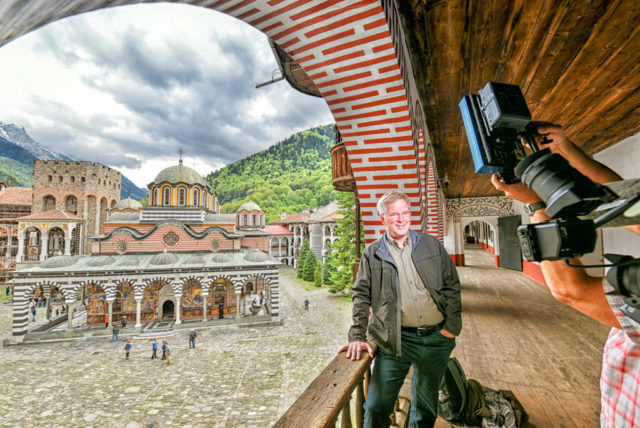
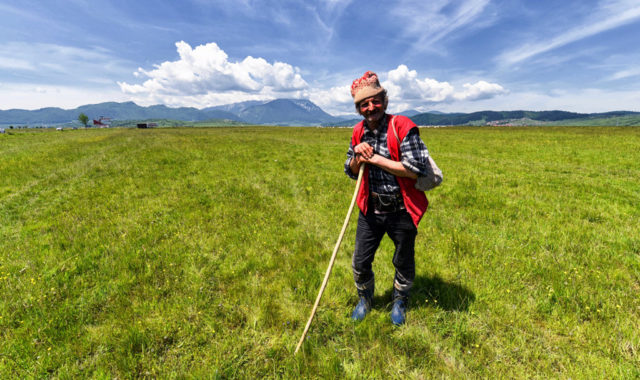
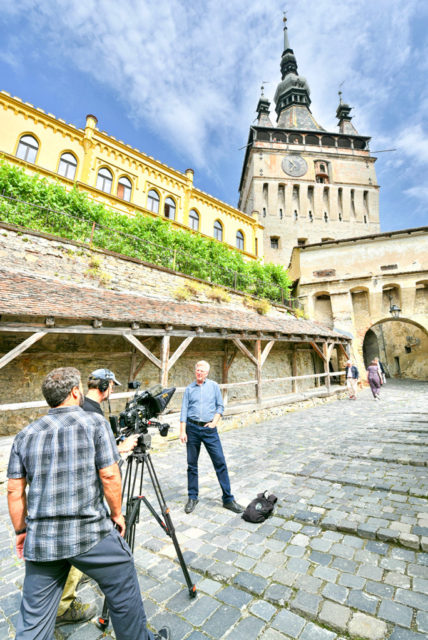
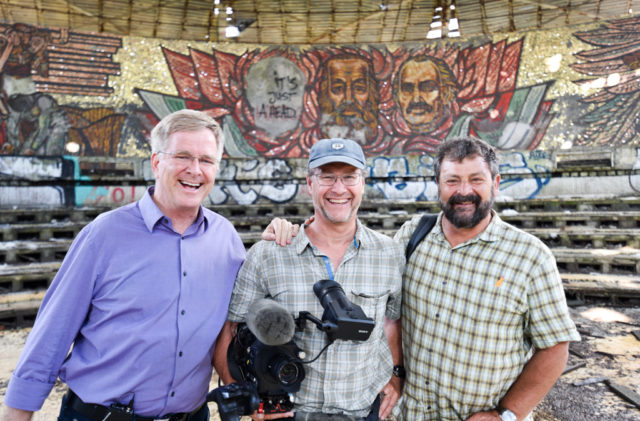
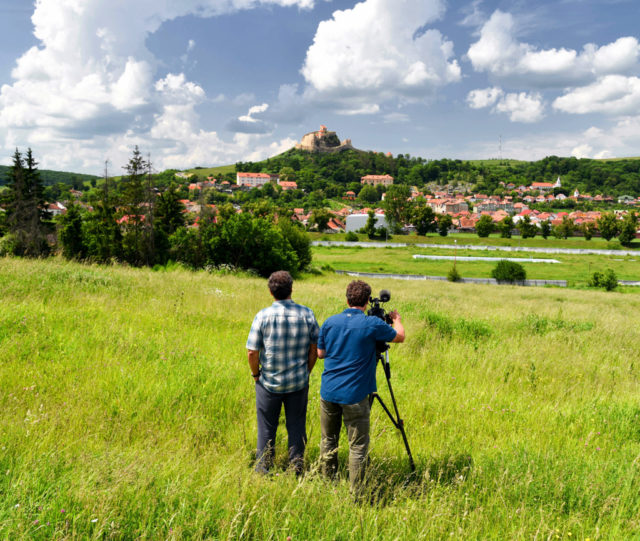
Europe is more crowded than ever. And yet, on a recent trip to Europe, I found that very often, I was the only traveler around. Why? Because I was off the beaten path, in lesser-known corners of Poland and Hungary.
It’s clear that popular places like Salzburg, Amsterdam, Prague, and basically all of mainland Italy are reaching a saturation point. Famous landmarks and piazzas are a 24-7 human traffic jam. Major sights are impossible to visit without reserving well ahead and, once inside, are so congested you wish you’d skipped them. Increasingly, traveling to Europe’s too-famous-for-their-own-good biggies is becoming more trying than fun.
Of course, you can still go to he popular places, equipped with smart crowd-beating strategies. But here’s a different, elegantly simple solution: Break out of that tourist rut and travel somewhere new. Go to a city you’ve never heard of…or, at least, couldn’t place on a map. The destinations I’m talking about are far less crowded and, typically, far less expensive. Even better, they feel more like real travel…a welcome throwback to a time when travel was about the pure joy of discovery, rather than a sheep-in-a-turnstile bucket list.

While you can find these unheralded gems all over Europe, my favorites are in Central and Eastern Europe. A decade or two ago, you could have made a case that these countries still had rough edges to keep travelers away. But these days, places like Poland and Hungary are definitively ready for prime time…yet still refreshingly untrampled.
Kraków is, deservedly, Poland’s most popular destination. With a spectacular square and an excellent food scene, it’s well worth visiting. But on this trip, I found that even Kraków is becoming noticeably more crowded. Don’t miss Kraków — but after you see it, continue deeper into Poland, to explore its equally appealing, completely undiscovered destinations farther north. Go to a city with a name you can’t pronounce.
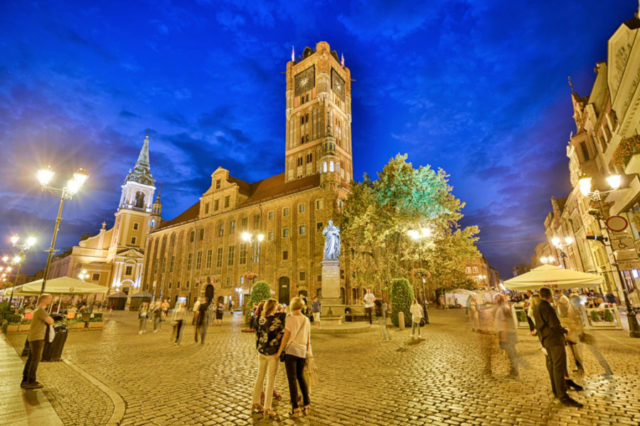
Toruń is a historic, red-brick town deep in the heart of Poland. The hometown of Copernicus (ahem, Mikołaj Kopernik) and famous for its gingerbread (which scents its streets with a heavenly aroma), it’s an utter delight.

On a balmy Friday night, in the heart of prime tourist season, I was hanging out on Toruń’s main square…and spotted zero American tourists. The floodlit, generously pedestrian-friendly streets had just the right number of people, and most of them were Polish (with a smattering of German travelers, visiting a place that used to be in Germany). Buying a big bag of gingerbread cookies (intended to last me a week…but gone by the end of the night), I strolled between Gothic brick towers, nursed a drink at an al fresco café on a cobbled square, and simply enjoyed the sensation of being the only Yankee in town.
A short train ride took me to majestic Malbork Castle — the former headquarters of the Teutonic Knights, and the largest brick castle on earth. It’s the most important, most impressive European castle that you’ve never heard of. When I asked the ticket-seller if he had any crowd-beating tips for my book, he stared at me blankly for a few seconds, then said, “Well, I guess on summer weekends you might have to wait, like, 10 minutes. Maybe.”

Once inside, I enjoyed going from room to room, squeezing through tiny brick doorways, ogling delicate fan vaulting — in a haze of medieval castle fantasies — and never once got stuck behind a tour guide with a numbered paddle and 50 pooped tourists in tow. The gigantic castle is a bit exhausting to tour…but not because of crowds.

Just 30 minutes farther north is perhaps the best example anywhere of an underrated city that simply blows away anyone willing to give it a chance. You may know it by its old German name, Danzig — but to locals, it’s Gdańsk.

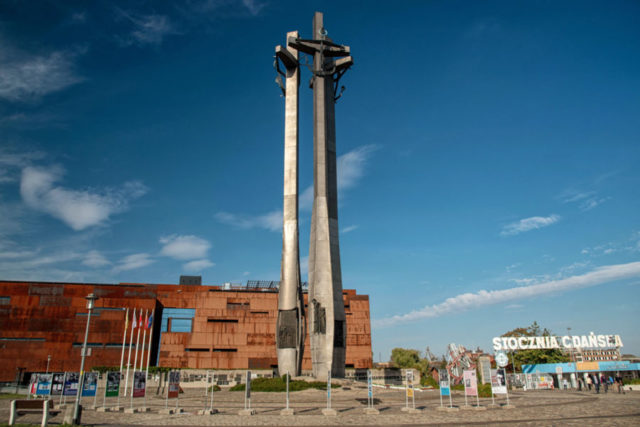
Gdańsk is intrinsically fascinating. Located on Poland’s Baltic coast, at the mouth of its main river, Gdańsk has been the primary crossroads of Polish history. There’s a spot in Gdańsk where you can look in one direction, and see Westerplatte — the exact location where World War II began (when Hitler invaded in 1939). And then, with a swivel of the head, from that same place you can see the shipyards where Lech Wałęsa staged his Solidarity protests in 1980 — sparking the beginning of the end of Soviet domination and the Cold War. The city is literally bookended by 20th-century history.

If history’s not your thing, then what about gorgeous old towns? If there’s a more stunning main drag in any city in Europe, I can’t think of it. I find myself fabricating excuses just to walk up and down Gdańsk’s “Wide Street” as frequently as possible. And behind those skinny, pastel, ornately gabled facades are endearing, unexpectedly fascinating little museums that bring to life the golden age of this maritime burg.
For sightseers, the Gdańsk area also has several new, cutting-edge museums that are among the very best I’ve seen in Europe. There’s one commemorating Lech Wałęsa and those Solidarity strikes (in the actual shipyards where the strikes took place); one telling the story of Polish emigration to the New World (in the neighboring port city of Gdynia); and the state-of-the-art Museum of the Second World War, with an exceptional exhibit that, unfortunately, has been compromised by political meddling.
Exploring Gdańsk for the first time in a few years, I was floored by how drastically the place is upgrading. I’ve loved Gdańsk since my first visit in 2004 — when it was, I’ll admit, something of a diamond in the rough. But today it’s simply breathtaking…without qualifications or reservations.
Granary Island, in the middle of the river that cuts through the middle of Gdańsk, was historically filled with handsome red-brick granaries. Bombed flat in World War II, it was left in ruins for generations. Like an ugly scar ripped through the heart of the city, the island was an off-limits eyesore. With each visit to Gdańsk, I was assured that the island would soon be renovated and re-integrated into the fabric of the city. I never quite believed it.

But on this visit, I literally did a double-take when I spotted the sea of construction cranes, turning this prime real estate into a futuristic new housing, dining, and entertainment district. Glassy, modern buildings — with rooflines echoing those historic granaries — will soon face the city’s classic old riverfront strip. Suddenly, humble Gdańsk looks like Oslo.
And the best thing about Gdańsk may be how undiscovered it feels. There are just the right numbers of tourists…but most of them are Polish, German, or Scandinavian. Norwegians and Danes flock here on cheap flights for cheap food and drink, ensconced in a dazzling historic city. Waiting for my flight at the brand-new Lech Wałęsa Airport, I noticed the names flicking across the departure boards: Trondheim. Oslo. Copenhagen. Stavanger. Helsinki. Stockholm. When Scandinavians are on board, you know you’re on to something good.

There is one big risk with going to Gdańsk, and it is this: You’ll come home evangelizing about the place with such fervor, your friends might start to think you’re a little unbalanced. (But then, one day, they’ll finally go there…and you’ll get a text that says, “OK, I GET IT NOW.”)
Poland alone has at least a half-dozen other cities where being able to pronounce the name is not a prerequisite for enjoyment: Poznań, Wrocław, Zamość — and even the capital. My recent visit to Warsaw was a revelation. It was amazing to see how fully realized a destination that city has become. It’s an absolute delight that goes toe-to-toe with more “known” capitals like Prague or Berlin.
But Poland is just one example of a country that’s easy and rewarding to travel in, but gets overlooked by whistle-stop tourists. My latest trip also took me to Hungary, where I reacquainted myself with Pécs (pronounced “paych”) — a small city at the southern edge of the country, close to nothing, but packed with more than its share of top-notch museums.

Pécs’ strollable core is congested not with tourists, but with local students. And the whole thing is slathered in bright, colorful Zsolnay porcelain — decorative tilework (invented right here) that’s a defining feature of Hungarian architecture.

I happened to be in Pécs on the evening of their wine harvest festival. A grandstand was set up on the main square, which was filled with locals grazing at a dozen different food stalls and sipping wine from another dozen little kiosks showing off local vintners’ products. Since it’s close to Croatia, Pécs menus come with Balkan accents. Settling into a bench with my paper plate of grilled meat and spicy ajvar sauce, listening to Britney Spears and Katy Perry hits thundering out of the loudspeakers, watching local kids play while their parents chatted and sipped new wine, I felt not like a gawking tourist — but like an invited guest at the banquet.

Up in the north of Hungary, I settled in for a couple of nights in my sentimental-favorite Hungarian small town, Eger. I got to know Eger over many years of tour guiding, bringing our Rick Steves Best of Eastern Europe groups here. And every time I step into its tranquil main square, under the spires of a gorgeous Baroque church, I savor the small-town authenticity of the place.

Eger has sumptuous architecture, fine wine, a historic castle, and some endearing little museums just right for enjoyably killing a few hours. It had been years since I’d been to Eger’s thermal bath complex, a 10-minute riverside stroll from the main square, so I went for a soak an hour before closing time. A few days before, I had visited Széchenyi Baths — my favorite thermal spa in Budapest — and found it, for the first time ever, uncomfortably crowded. Until very recently, Széchenyi was mostly locals, with a few curious tourists. But on this visit, it was packed with little clumps of borderline-obnoxious international travelers, with a few irritated Hungarians mixed in.
However, Eger’s thermal bath complex was all mine. It was enjoyably bustling, with small-town Hungarians. Floating in the hundred-degree water, I heard not one word of English. And it was a delight to explore the freshly renovated complex, from its tranquil, old-fashioned Turkish bath under a stately dome, to its giddy indoor-outdoor whirlpool. On a trip where I took a dip in no fewer than five different thermal baths (I am an aficionado)…Eger’s small-town spa was the surprise favorite. And that was mostly because I had it all to myself.
Serendipity is more poignant off the beaten path, and when I returned to Eger one evening after a side-trip to some different thermal baths in the countryside, I found that a hot-air balloon had just set down right in the middle of the square. Watching the wranglers pull on sturdy ropes to expertly maneuver the bulging bag of hot gas as they slowly drained it of air, then gently tipped it over, I felt like a giddy backpacker on my first trip.

Hiking up to Eger’s stout castle, gazing out over its sweet square and skyline prickly with fanciful church towers, I thought for the umpteenth time on this trip how satisfying it is to travel to places like this one.
Eger, Pécs, Gdańsk, Toruń, and so many other gems are just now hitting that perfect “sweet spot” for travelers: Easy and accessible for anyone, but still largely undiscovered and crowd-free.
I love our Rick Steves Best of Eastern Europe in 15 Days Tour itinerary, which efficiently visits the “greatest hits” of this region: Prague, Kraków, Budapest, Rovinj, Lake Bled, and more. Returning from this trip, I was inspired to brainstorm a (totally hypothetical) “sequel tour” to that itinerary. What if you could link up the lesser-known gems of Central and Eastern Europe? Warsaw, Bratislava, Pécs, Zagreb, Slovenia’s coast and Karst, Sarajevo, Montenegro. You’d wind up with a tour every bit as rewarding as the original…but with a tiny fraction of the crowds.
When planning your next trip, consider skipping the predictable biggies. Instead, take a leap of faith and go to places like these…and let yourself be enchanted.

What’s your favorite uncrowded, undiscovered gem in Europe?
I was traveling in these places to update our Rick Steves Eastern Europe and Rick Steves Budapest guidebooks — which are available now. In these books, you’ll find all of the practical details for everything mentioned here. (In fact, these are probably the most lovingly updated but least used chapters in any Rick Steves guidebook.)
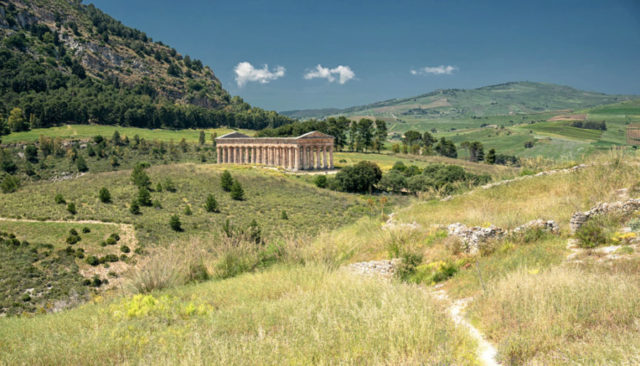
Europe’s off-the-beaten-path gems are a theme on my blog. For example, while mainland Italy is spectacular, Sicily has a few more rough edges…and far fewer crowds.
Slovenia is Europe’s ultimate undiscovered destination. I could write a book about the charms of Slovenia. (Oh, wait…I did.) Whether you’re exploring high-mountain pastures, sampling the local budget foodie scene, or browsing through wonderful Ljubljana, Slovenia earns a place in any itinerary seeking something new and uncrowded.
That said, even in super-popular places, you can (with a little effort) find your way to untrampled corners. For example, in Iceland, bust out of the “Reykjavik and Day Trips” rut and drive the entire Ring Road around the island. Linger at Lake Mývatn, a geothermal wonderland that still feels yours alone.