One of the joys of researching Rick Steves guidebooks is how, every day, I stumble upon fascinating little insights that tell me a lot about the place I’m visiting — and sometimes, about human nature. As I spend my summer wrapping up the work I did on this spring’s research trips, I keep rediscovering delightful nuggets scrawled into my little black notebooks. Here are a couple dozen of my favorites, ranging from historical tidbits to everyday cultural insights (like where the Swiss buy their groceries, what the Spaniards fight bulls on, and why Germans — but not Italians — like to open the window)… to things that just made me chuckle. As a kid, I loved paging through yellowed paperbacks of Ripley’s Believe It or Not! Reviewing this list, I’m realizing this is my very own European version.
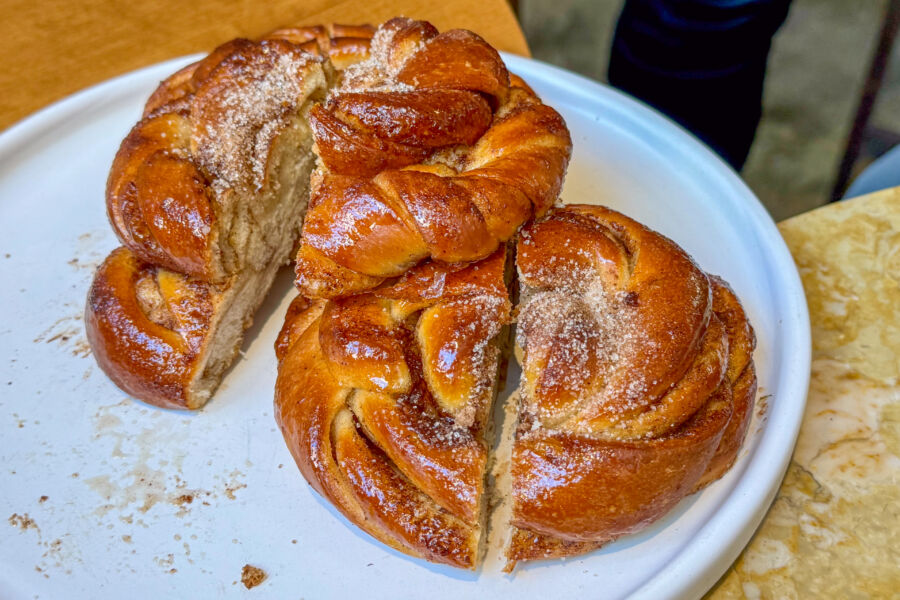
While we use the word “danish” to describe a sweet pastry, in Denmark it’s wienerbrød (“Vienna bread,” from the French viennoiserie) — named for the Viennese bakers who brought the art of pastry-making to Denmark, where the Danes perfected it. Ironically, in Vienna, they call the same thing “Copenhagen” or “Danish” bread.
For centuries, each community kept its own local time, based on the sunrise and sunset in that precise location — which often differed by a few minutes from town to town. But by the late 19th century, faster and faster trains made standardized timekeeping essential. Imagine: You’d show up for your 10:00 train to London, only to discover that, in London, it was already 10:10 — and, therefore, you’d just missed your train. In 1884, the prime meridian (through Greenwich) was established as a starting point for calculating world time zones; over the next few decades, Greenwich Mean Time was gradually adopted across Europe and around the world, ensuring that everyone shares the same clock.
Siglufjörður, a remote fishing village at the northern tip of Iceland, was once a herring boom town, nicknamed the “Atlantic Klondike.” From 1903 to the 1960s, salted herring (which was highly nutritious and traveled well, making it particularly valuable during the world wars) represented fully one-half of Iceland’s total export income. The hard work of cutting and salting the fish was done by “herring girls,” who lived in dorms through the season — hanging out and listening to records while waiting for the boats to come in, when they’d rush down to the docks and work 20- or even 30-hour shifts. These “herring girls” were the muscle behind Iceland’s economy during a critical time, arguably empowering it to become fully independent from Denmark.

Italians think very deeply about digestion. It’s why their food is so delicious. And it also explains several cultural quirks that travelers scratch their heads about: a reluctance to serve cappuccino (or anything with lots of milk) after lunchtime; a taboo against mixing seafood and cheese; their insistence on serving your salad after the pasta, not before; and their bad attitude about tap water. (They’re not trying to upsell you. They’re just worried about your digestion — and there’s a water for that.)
The albero sand used for Spanish bullfights is special: The vivid-yellow color is the perfect complement to the flamboyant matador outfits and deep red blood, and the sand is just coarse enough to provide traction, minimize dust, and allow drainage. The premium sand favored in Andalucía, quarried at Los Alcores near Sevilla, is so precious that bullrings rent it for use only during bullfights; after the spectacle, it’s shoveled into trucks and taken to the next town.

One of Europe’s many north/south divides has to do with the circulation of fresh air indoors. Many Germans adhere religiously to the practice of Lüften (“ventilation”): At least twice each day, especially in the winter, they throw open all the windows to blast out stale air — as a matter of hygiene and good health. (Some people in the Low Countries and Scandinavia have a similar custom.) In Italy, quite to the contrary, many people have a deep fear of catching a draft; they believe a colpo d’aria (“hit of air”) can cause all manner of health problems, from headaches to diarrhea. A similar belief is persistent in many parts of the Balkans, especially Serbia (where it’s called promaja).
John Lennon and Paul McCartney had something very specific in common — aside from growing up near each other in Liverpool and becoming two of the greatest songwriters of all time. Both of them lost their mothers at a young age, perhaps forging an unspoken bond that facilitated their historic collaboration.
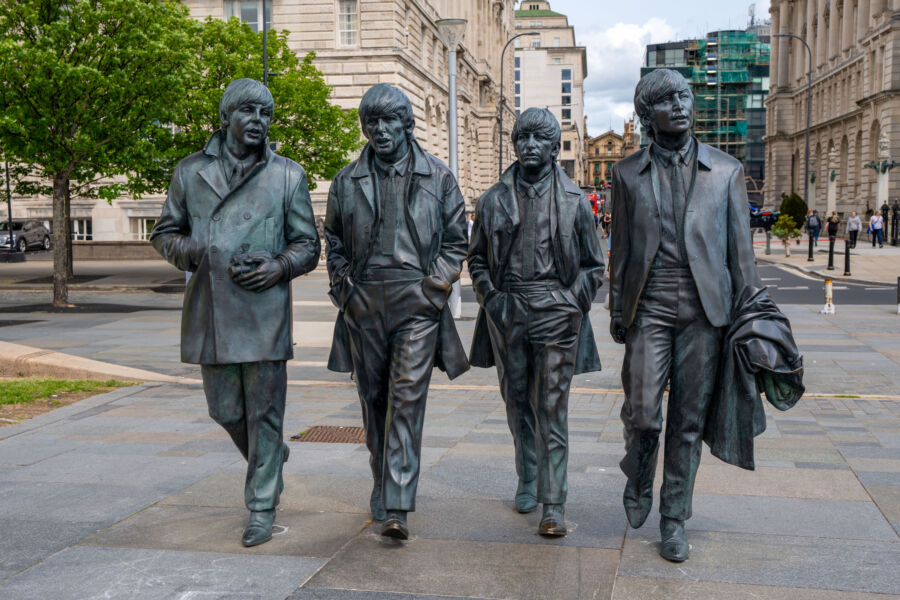
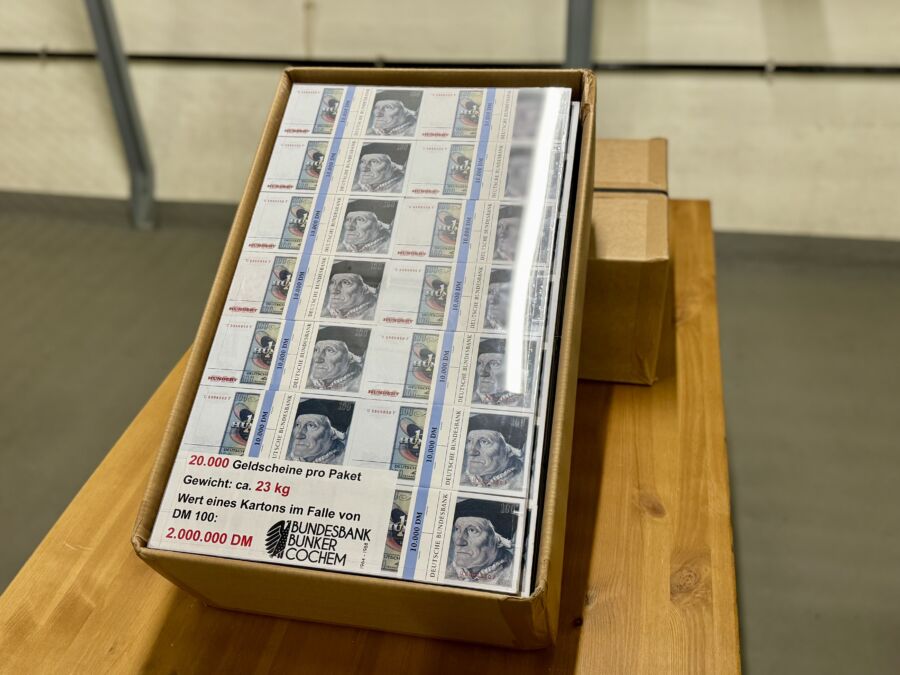
During the Cold War, West German authorities secretly stored 15 billion Deutschmarks (roughly €7.5 billion) in a hidden bunker, tucked in an unassuming neighborhood in Cochem on the Mosel River — neatly stacked floor-to-ceiling in cardboard boxes (now open to visitors). The currency was held in reserve in case of nuclear war, and to protect it from being devalued through nefarious means; the Bundesbank even created alternate designs for their banknotes — and printed billions — in the event that the Deutschmark needed to be replaced wholesale in a hurry.
In many European cities, you’ll find the same sculpture: an anonymous unhoused person, sleeping under a blanket on a bench. Only upon closer inspection do you notice the wounds in the feet that identify this person as Jesus. Homeless Jesus, by Canadian sculptor Timothy Schmalz, challenges the viewer to see the divine worthiness of each fellow human being — no matter their social stature. Since the original version was erected in 2013 at a Toronto theological school, more than 50 copies have appeared all around the world (I’ve seen them in Dublin, Glasgow, and Amsterdam).

Switzerland has two dominant grocery store chains: Coop and Migros — and either you’re a Coop family, or you’re a Migros family. Migros focuses on in-store brands and prides itself on having a conscience: They don’t sell alcohol or cigarettes, they were the first Swiss supermarket to stop giving out free plastic bags, and they donate one percent of their sales to charity. Meanwhile, Coop has a wider variety of brands and higher prices, focusing on organic and sustainable products; it’s considered a bit more posh. Very broadly speaking, Migros is like Trader Joe’s, while Coop is more like Whole Foods.
Bluetooth technology — which wirelessly connect devices — was named for Harald Bluetooth, a tenth-century Scandinavian king who “connected” the Danish and Norwegian peoples. Even the symbol for Bluetooth comes from Viking runes: It’s the letters H and B, combined.

In Sicily — and in many other cultures — it’s considered very important for children to know about their deceased ancestors. On special occasions, they may even receive a present from a departed great-aunt or grandpa. (When you think about it, this is no less “creepy” — and certainly more touching — than gifts from the Easter Bunny or Tooth Fairy.)
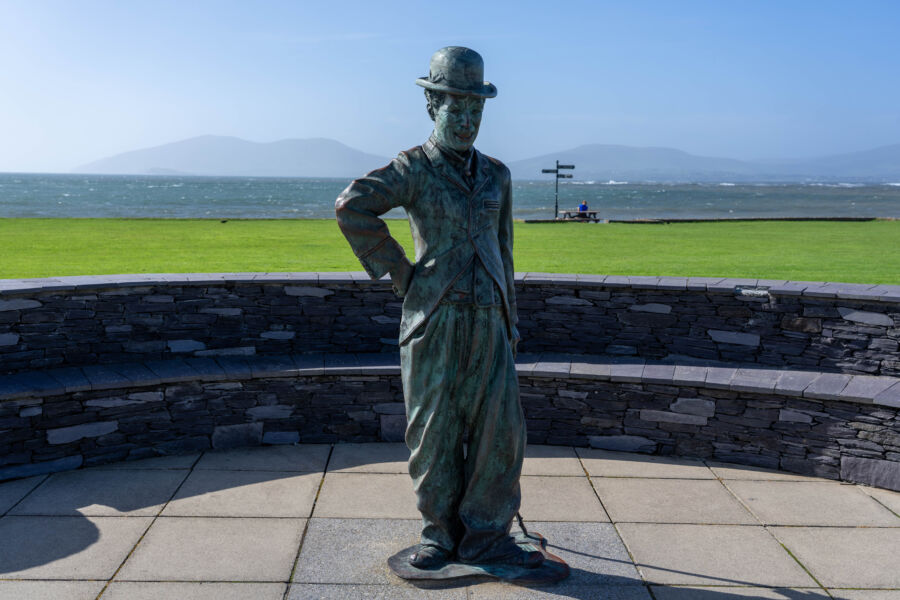
All over Europe, you stumble upon seemingly random statues… and they always come with a story. In Waterville, a castaway beach town on Ireland’s Ring of Kerry, stands a statue of Charlie Chaplin — who enjoyed the time he spent living the good life here. In central Budapest, you’ll find Peter Falk (the Columbo actor had Hungarian roots) as well as Ronald Reagan and George H. W. Bush (whose Cold War policies helped topple Hungary’s communist regime). You’ll find statues of the great Irish writer James Joyce in both Pula, Croatia, and Trieste, Italy — he lived in each city while writing his masterpiece Ulysses. And a park in Ronda, Spain, features busts of Orson Welles and Ernest Hemingway — two early-20th-century American greats who both fell in love with Spanish culture.
At Spain’s prestigious University of Salamanca, Fray Luis de León (1527-1591) challenged the Church’s control over the word of God by translating part of the Bible into Castilian. The Inquisition arrested, jailed, and tortured him for five years. Upon being released, he returned to the university and began his first lecture with, “As we were saying…” Today, he remains a symbol of the intellectual independence of academia in the face of changing political mores.
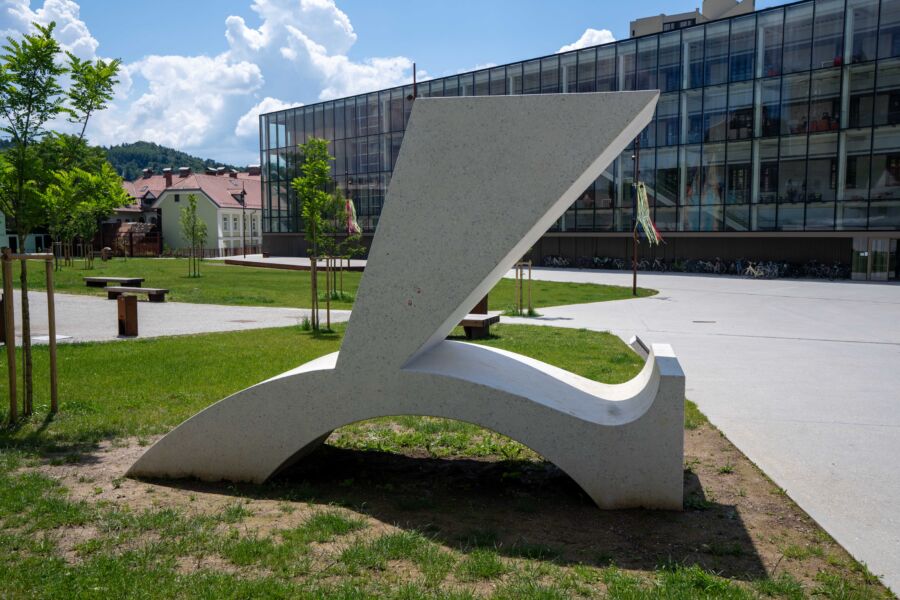
In the Slovenian capital of Ljubljana, you’ll find a strange monument, shaped like the top half of a letter Ć buried in the ground. When Slovenia declared independence in 1991, its population included tens of thousands of people from other parts of Yugoslavia. While most Yugoslav languages have two versions of this letter — Ć and Č — Slovene uses only Č. And so, eager to distance itself from Yugoslavia, Slovenia standardized spellings by replacing Ć with Č. Think of the many names ending in -ić — which now had to be spelled, instead, with -ič. Slovenia had 25,671 “Ć people” (including more than 5,000 children) who were “erased” by the breakup of Yugoslavia — stateless, stripped of governmental services, unable to travel, living in fear of expulsion… not because they moved, but because the borders did. Over time, as Slovenia matured as a nation and the Yugoslav Wars found resolution, the vast majority of these people gained their citizenship — and reclaimed their rightful Ć.
It’s remarkable when a particular place, at a particular moment, becomes a magnet for hugely influential people. If you walked into a coffee house in Vienna in early 1913, there’s a possibility you’d run into Sigmund Freud, Marshal Tito, Adolf Hitler, Josef Stalin, and Leon Trotsky. Also notable: the Golden Age of ancient Athens; Florence circa 1500; Philadelphia in the 1770s; Victorian Age London; Paris and Harlem in the 1920s; and Silicon Valley at the turn of the 21st century.
Many German parking garages have specially designated parking spots for women, called Frauenparkplätze — generally in well-lit areas close to the entrance. While intended to make women feel safer in a big, dark garage, they are often criticized by German feminists, who consider them condescending (especially because they’re often wider than standard parking places, perhaps based on a stereotype that women are inferior drivers; and because they are typically located next to disabled spaces).
It’s often said that the uprisings that ended communism in Eastern Europe — which culminated in the autumn of 1989 — moved at starkly different paces: In Poland, it took 10 years; in Hungary, 10 moths; in East Germany, 10 weeks; and in Czechoslovakia, 10 days. Whie this requires a bit of fudging, it’s mostly accurate: The 1980 Solidarity protests in Gdańsk, led by Lech Wałesa, kicked off nearly a decade of slow reforms; throughout the summer of 1989, Hungary opened its borders little by little; by early that fall, protests began to sweep across East German cities; and the Velvet Revolution of Czechoslovakia played out over about a week and half, with increasingly large peaceful protests.
To this list, you could add “10 hours” for East Berlin. When the Berlin Wall came down, it happened overnight, as the result of a miscommunication. On November 9, 1989 — in response to those “10 weeks” of protests — the East German politburo issued a statement about their intention to gradually ease border controls, then left town for the weekend. Upon reading the ambiguously worded new policy in front of TV cameras, a flustered spokesman gave the impression that these changes were to happen “immediately.” East Berliners began to show up at border checkpoints in droves. At about 11:30 p.m., an overwhelmed guard threw open the gates. And once open, the Berlin Wall never closed again.
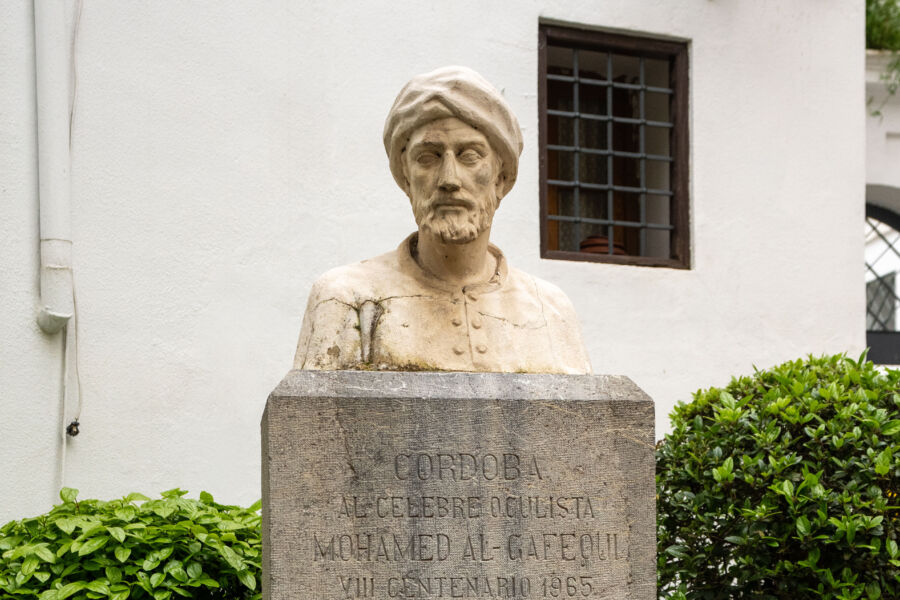
Around the year 1000, Moorish scientist Abu al-Zahrawi wrote a surgical encyclopedia, called Al-Tasrif, that was used throughout Europe for 700 years. He was one of many Muslim doctors and surgeons who advanced the practice of medicine in Al-Andalus (today Andalucía) — at a time when so much of Europe was suffering through its “Dark Ages.” Another example: Muhammad al-Gafeghi, today honored by a statue in Córdoba, was an ophthalmologist who performed successful cataract surgeries in the first half of the 12th century.
Europeans have many stereotypes about Americans: We wear tennis shoes, logo T-shirts, and baseball caps. We talk too loud. And… we drink too much water? Yes, among our many other foibles, Europeans perceive Americans as being bizarrely obsessed with (over-) hydrating. This may be based partly on American visitors requesting — and expecting — big glasses of tap water in restaurants. But it appears to be rooted in reality: Polling suggests that American adults drink, on average, 70 percent more than their European and British counterparts (1.7 liters per day vs. about 1 liter per day). And authorities in the USA and the EU have very different “recommended daily amounts” of water consumption: In the US, it’s 3.7 liters for men and 2.7 liters for women; in Europe, it’s about one-third less: 2.5 liters for men and 2 liters for women.
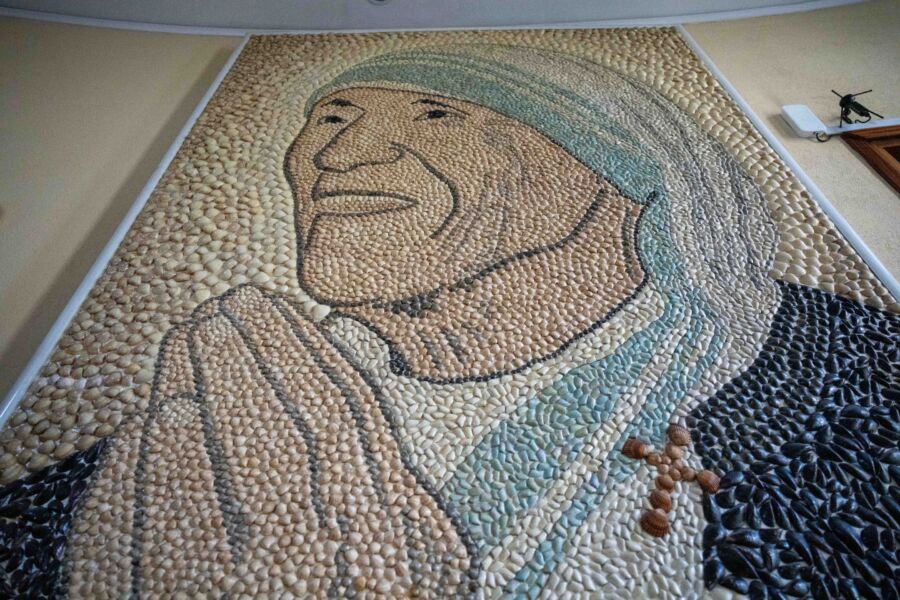
Two starkly different women are celebrated throughout the Albanian world — from Tirana to Prishtinë — honored by murals, statues, and street names: Mother Theresa, who was born Anjezë Gonxhe Bojaxhiu in Skopje (today’s Macedonia)… and pop star Dua Lipa, a Londoner with Kosovo Albanian heritage.
The early people of Denmark were entranced by bogs. At the dawn of the Iron Age, bogs were the source of ore that could be used to create all manner of tools and weapons. This mysterious and sacred liminal space, existing somewhere between land and water, was believed to be where the gods resided. Precious items (including vast collections of weapons plundered from defeated enemies), animals (up to and including horses), and even human beings were sacrificed to the thick peat of the bogs. Fortunately for present-day archaeologists, this preserved these artifacts perfectly.
Believe it… or not!
Do you have any favorite European factoids to share?
If you enjoy these sorts of insights, you should know that most of these appear, in some form or another, in our Rick Steves guidebooks. Any source can list names and dates; we always strive to provide real insight to help you get your arms around the place you’re visiting, in a more intimate way.
Loved the insight about wienerbrød — it’s fascinating how culinary names can crisscross borders and end up meaning something totally different. It reminds me of how in the UK, ‘pudding’ can mean dessert in general, while in the US it’s a specific creamy treat. These little cultural quirks are what make travel (and reading posts like this) so rewarding!
In England, “pudding” also meant “sausage”.
While the German obsession with airing out a room is rooted in the fact that their homes are typically built to be airtight, the Germans are equally obsessed with not being in a draft of fresh air. What we Americans consider to be a welcome breeze through an open window is viewed by Germans to be quite unwelcome. Most Germans will keep the windows closed even when it’s uncomfortably warm in the room. Go figure.
Most German homes are heated with radiators so there is no air circulation unless you open the window. Without air circulation, mold would form on the walls. American homes typically have forced air heating and cooling which has the added benefit of circulating air and eliminating smells and humidity without having to open the windows.
What a wonderfully researched piece! Thank you for such varied and profound information from across the globe. Well done!
The Broadway musical, “Auntie Mame”: “Life is a feast and most poor bastards are starving to death.”
We only live once, see all the world and its peoples that you can to live a full life before you die. Escape cages and traps.
Thank you for opening doors and windows as well as worlds.
A great collection!
There is a copy of Homeless Jesus in Trastevere district of Rome (a few blocks east of Santa Marie in Trastevere) and a larger, also evocative piece by the sculptor in Vatican Square (south side of the oval forecourt).
Another Homeless Jesus lies outside the First Lutheran Church on Broadway in downtown Fargo, ND.
In my time spent in Europe, I have observed and been amused by many of these same factoids, and I loved seeing them pointed out here! Thank you! I teach English to people from around the world, and you can imagine the issues we have with opening the classroom windows. Interestingly, fear of moving air can also be found much further East; in South Korea, you will even find a fear of “fan death.” In Bratislava, Slovakia, there are some wonderful whimsical statues of everyday people, and I was surprised to come across a statue on Ronald Reagan sitting on a park bench in Tblisi, Georgia.
Things like this are what make travel fun! I’m always on the lookout for something that is similar to what I’m used to, but just a bit different. Here in the States it’s a shopping cart or basket, in the UK it’s a trolley, but in New Zealand it’s a trundler!
Dear Cameron,
I’d be interested to know what evidence you have for Josip Broz’s patronage of Viennese coffee houses in 1913.
As far as I know, the future Marshal Tito was a conscript in the Austro-Hungarian army at the time. I suppose he could have been stationed in Vienna, but doubtful he would’ve been hobnobbing with the intelligentsia in fashionable establishments.
Best regards,
Tom
I thought one of the RickSteves’ philosophies was ‘no grumps.’
I notice you don’t present any evidence against it…
There’s a statue of Louis Armstrong in Vilkija, Lithuania, along with a monument that plays his music.
And then there was the literary magnet of Concord Massachusetts in the 1800s. In the center of town you might meet Louisa May Alcott, Ralph Waldo Emerson, Nathaniel Hawthorne, and/or Henry David Thoreau (although Henry would probably be lying low at Walden). Add the sculptor Daniel Chester French (Lincoln Memorial). Was there something in the water? Were we Americans drinking profusely even in the 1800s?
My husband and I had the opportunity to view a copy of Schmalz’s Homeless Jesus at the Almudena Cathedral in Madrid. Very few sculptures have had the impact on us that this one did.
In the city center of Oviedo, Spain is a statue of Woody Allen,
in honor of his receipt of the Prince of Asturias award.
Factoids are my jam!
In Torino, on a grassy area amongst the traffic near the Porta Susa train station, is a large sculpture of a black sphere placed on a black half-sphere, simple and dramatic.
The sculpture is historically titled “Sintesi 59”, created by the sculptor Armando Testa in 1959.
In the late 1800’s a fresh take on the traditional Torino vermouth was created when one part vermouth was combined with a half-part amaro (bitters) and Punt e Mes (dialect for something like “point and a half”) was born and is a product to this day, taste-wise a sort of combination of vermouth and Campari.
Some time after the sculpture was created, it’s shape was used in a very successful advertising campaign for Punt e Mes, a visual presentation of, as the bottle label states, “un punto di vermouth e mezzo di amaro.”
The sculpture’s shape, with a bit of separation between the upper sphere and lower half-sphere, appears on both the front and back label of the Punt e Mes bottle in my liquor cabinet.
Created independently, the sculpture became the visual representation of the product.
I like bitter tastes, and learned from a friend the “Punt e Mes Negroni”, one part gin, one part Campari, and one part Punt e Mes, on ice with an orange slice.
This is a fun read…thank you!
Americans tend to eat wonderful Italian bread with their pasta.
While having lunch in a small cafe in Florence, I was told that I should drop the bread with pasta routine – real Italians don’t eat both together!
Loved this collection of facts. Thanks Cameron!
There’s a Frank Zappa statue in a park in Riga, and a full life size statue of Bill Clinton in Pristina Kosovo.
I had forgot there was such a lag between the opening of the Berlin wall in 1989 and the dissolution of the Soviet Union on Dec. 26, 1991. Thanks for making me look it up.
Most traditional Irish homes have pictures of the Pope, JFK and to a lesser extent Bill Clinton (for his role in stopping the confict re Northern Ireland).