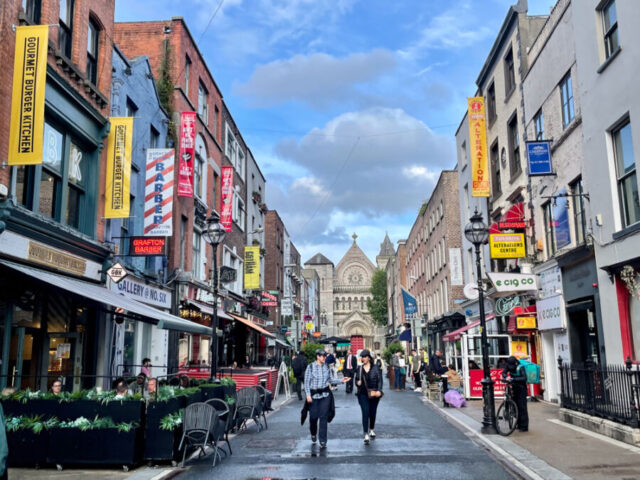
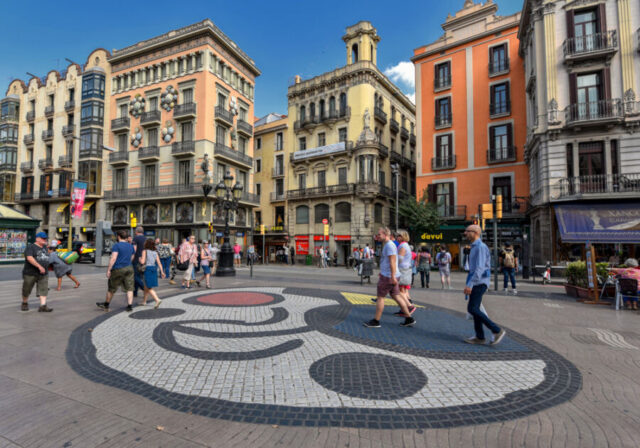
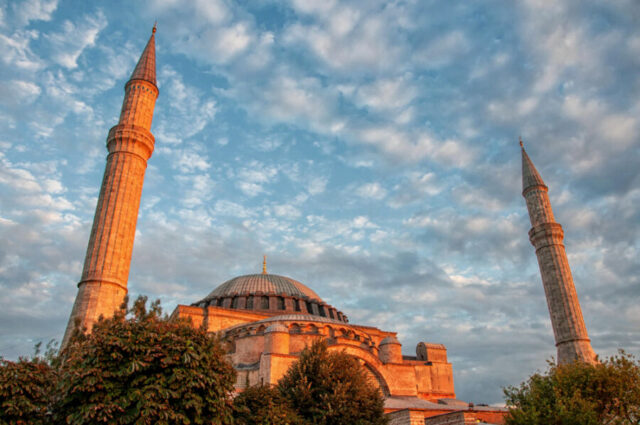
10 European Discoveries for 2026

Looking for something a little different in your 2026 travels?

As Europe continues to struggle with “overtourism,” the best advice for avoiding crowds… is to visit places that don’t have them. That’s the spirit behind my European Discoveries (which I’ve been sharing each January, dating back to 2018). You could also call them “Alternatives” to some of Europe’s biggest-name destinations: towns, cities, and neighborhoods to help you discover a more authentic slice of Europe.

To be clear: These are not “trendy” or “hot” destinations for 2026. Quite the contrary! These are wonderful places that are (for now, at least) flying under most travelers’ radar. As more and more visitors are heading to the same predictable places, these 10 Discoveries (and so many more) are a reminder that there’s always more to experience in Europe.


Kinsale, Ireland
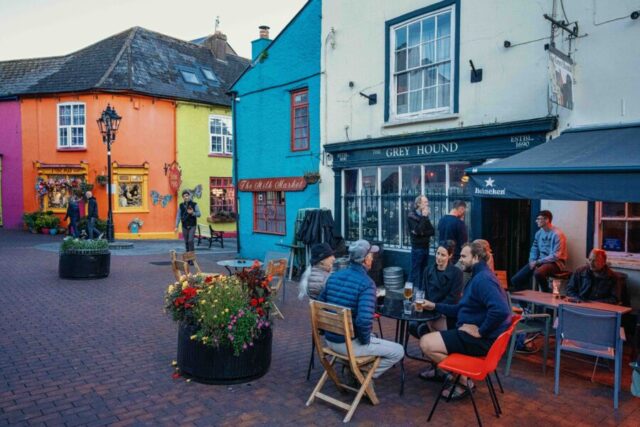
Ireland specializes in tidy towns. (In fact, they have a contest!) And perhaps the tidiest is colorful Kinsale, tucked on the southern coast, overshadowed by big, busy Cork.

Overlooking its charming harbor, Kinsale remains mellow and sweet. It’s just the right size: manageable and village-like, but with enough great restaurants, trendy boutiques, and Guinness-and-trad-music-fueled pubs to keep you plenty busy. Scattered around Kinsale are benches situated just so, perfectly positioned to savor the small-town charm.

Kinsale is so low-key and unassuming, it’s easy to miss its epic history: The Lusitania was famously torpedoed just offshore in 1915; the Titanic set sail from Cobh, just around the headland; and the town is still protected by a vast and imposing 17th-century fortress with ramparts and turrets you’re welcome to prowl. With so much history, thank goodness Kinsale also comes with a wonderful daily town walk (offered by tour guide Barry Moloney) to pull it all together.

Visitors often zip right past on their way to trendy (and touristy) Dingle. But that’s a shame; for small-town Irish charm, Kinsale is hard to beat.

Cádiz, Spain
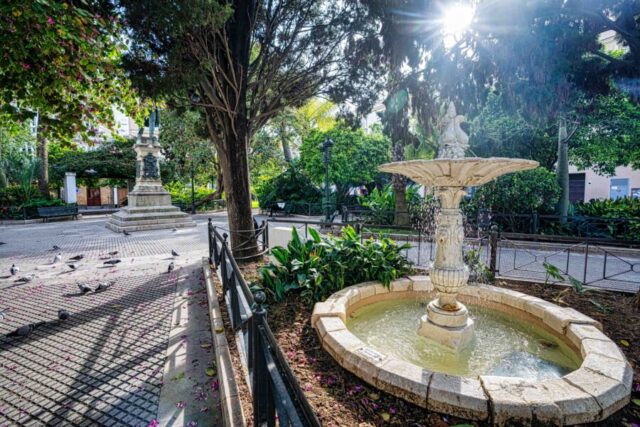
Deeply lost in Cádiz’s claustrophobic lanes of towering townhouses, where neighbors stand on doorsteps to chat and joke, I kept having deja vu for Naples — with its similarly convivial warren of lived-in lanes.

Among Spaniards, Cádiz is known for having its own strong personality; for its impenetrable local accent; and for producing more than its share of comedians. Among travelers, it’s mostly known as a cruise port — a place to leave on excursions into Andalucía. The city is overshadowed by its historic rivals — Sevilla, Granada, Córdoba — and by the beaches of the Costa del Sol.

All of this makes Cádiz a particularly wonderful discovery: This city plays “second fiddle” to nobody; it’s simply its own wonderful place.

Originally founded by the Phoenicians, Cádiz is often billed as the oldest continuously inhabited city in Western Europe. Its historic quarters are layered with artifacts, from a recently uncovered Roman amphitheater, to its crumbling cathedral (built at a time when Cádiz was Spain’s primary trade port and tether to the New World), to Napoleonic cannons seized after a failed siege and used as curb protectors. Cádiz gives historians goosebumps.

It’s also purely enjoyable. Endless paseo-and-shopping streets — lined by genteel captains’ mansions — burrow through the historic center. Flamenco clubs and sherry pubs invite you in for a spell, as do lush parks and colorful seafront promenades. Long, languid beaches stretch for miles along the causeway that tethers Cádiz to the rest of Spain.

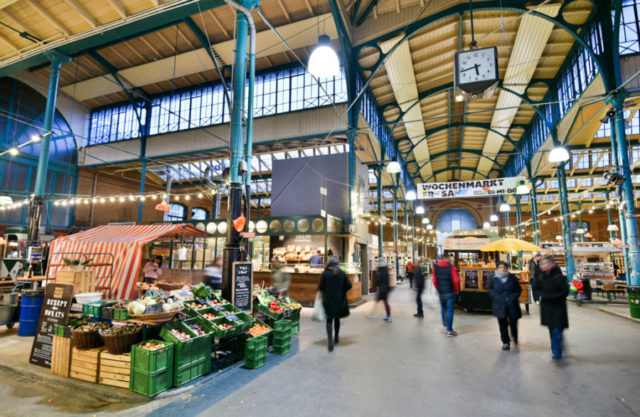
But where you really feel the heart and soul of Cádiz is its central fish market. Ringed by a variety of enticing food stalls, the main hall — like a temple to the sea — is filled with the day’s catch. On one table are the little shells that the Phoenicians used to create a distinctive red-purple dye, still associated with royalty. On another are oysters, just like the ones whose compressed shells created an “oyster stone” that much of the city is built of. And all around you bustle the Gaditanos — doing their shopping, socializing in their distinctive dialect, and enjoying their special city.

Ålesund, Norway
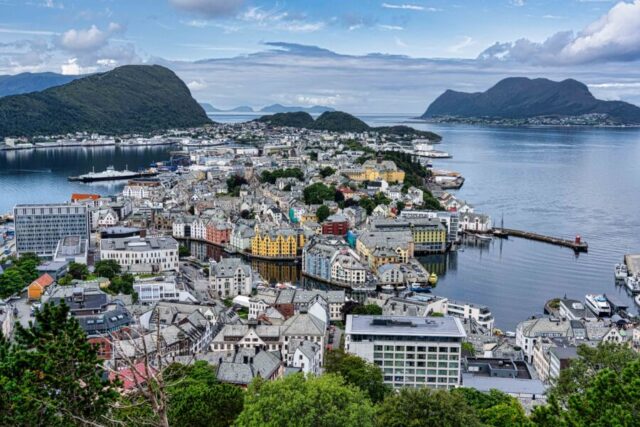
Imagine a Technicolor townscape, draped over countless islands, islets, and rocks, hemmed in by towering mountains, with the North Sea on the horizon. As you summit a stony hill that rockets up from the main shopping street, this city opens up like something out of a fantasy novel… a mirage of serene Norwegian beauty.

Ålesund (OH-leh-soont) is no mirage. The brick-and-stone city perches on the rugged west coast of Norway, just north of most tourists’ itineraries. Burned to the ground in 1904, Ålesund was rebuilt in eye-pleasing Art Nouveau — giving it a wonderful architectural cohesiveness, fitting for its idyllic setting.

A stroll around the harbor passes both grand turn-of-the-century warehouses (now fancy hotels and restaurants) and hardworking shiplap sheds, and around each bend, that eye-popping setting takes your breath away.

Beyond its own charms, Ålesund is the natural jumping-off-point for world-class scenic wonders. Within a couple of hours’ drive, you can conquer the famously twisty Trollstigen road or make your way to a rustic cabin on the tranquil shores of the grand and unspoiled Geirangerfjord.
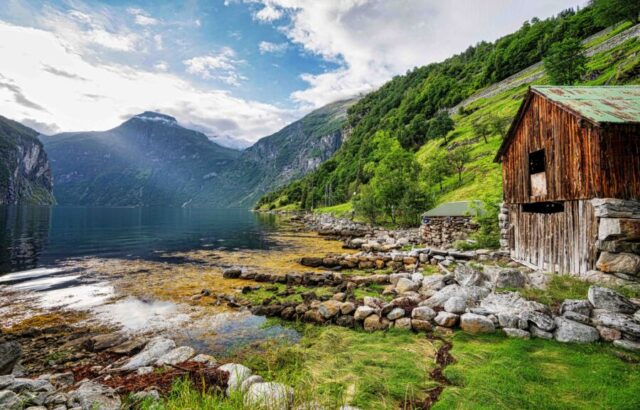
Sitting in my Ålesund hotel room, overlooking the fjord, I kept hearing the Splash! [giggle] … Splash! [giggle]… Splash! [giggle] of people running from the sauna to leap direct into those icy-cold-in-August waters. Few places have a more harmonious melding of nature and urbanity.

Palace District, Budapest, Hungary
When you have the joy of visiting the same city again and again, over a long period of time, it’s rewarding to watch a neighborhood gradually blossom and come into its own. And before returning to Budapest in 2025, several of my Hungarian friends reminded me to check out the up-and-coming Palace District.

The streets surrounding the Hungarian National Museum are home to many aristocratic palaces — and, increasingly, creative restaurants, bars, and shops (including Tasting Table, a well-curated wine shop).

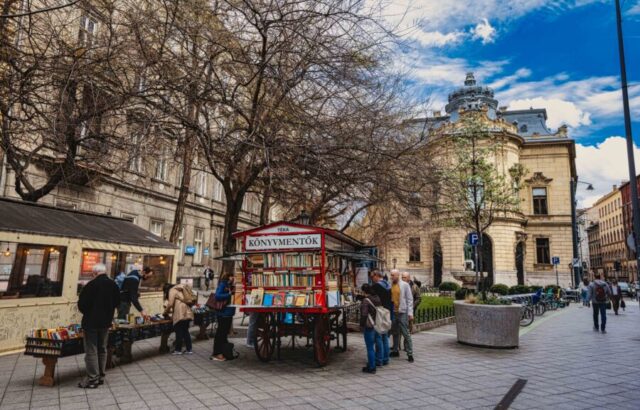
Going for a stroll, I found my way to the atmospheric, ivy-covered courtyard of the Chamber of Hungarian Architects, enlivened by an open-air tapas bar. A half-block father, I popped out into Szabó Ervin Square — with an oh-so-European bookseller kiosk, lively café tables, and a distinctly Parisian ambience.

Facing that square is the Palace District’s (and, perhaps, Budapest’s) most delightful discovery: The flatiron-style Ervin Szabó Library bustles with students and other locals; you’d never know that, for a modest entry fee, you can ride the elevator to the fourth floor to discover a stunning series of opulent Neo-Baroque rooms where students huddle over their laptops. (Shhhh!) Once the lavish apartments of a wealthy family, today the former ballroom, dining room, boudoir, and smoking lounge are retrofitted with long study tables. Massive chandeliers, gilded curlicues, and frilly old stoves retain a golden age elegance. Highlights are the glittering hall-of-mirrors ballroom, which could host parties for up to 500 guests; and the homey smoking lounge, with its wood paneling and double spiral staircases.
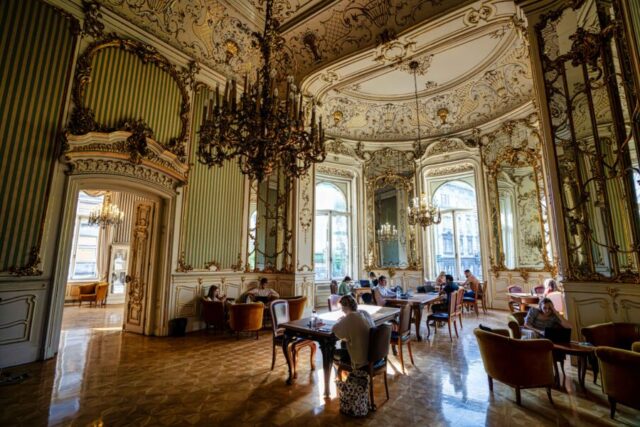
Hidden gems like this library abound in Budapest — a magnificent city that’s uniquely adept at melding the past and the present. And the Palace District is a prime example of an untouristy corner of a great city that rewards exploration.

Padua, Italy
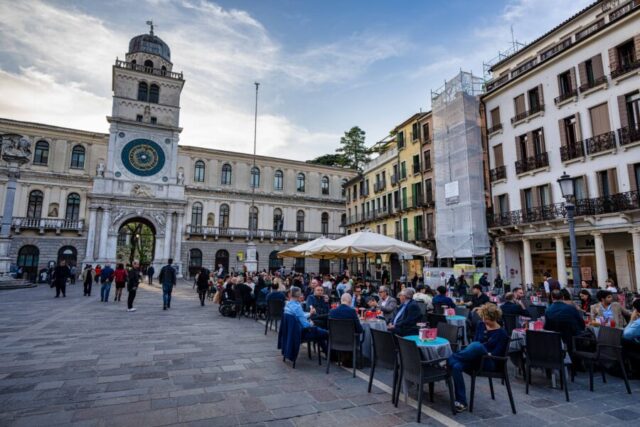
Yes, Italy is crowded. But it also has a remarkably deep bench; it’s easy to find rewarding, relatively untrampled alternatives just as good as the biggies. And Padua (or Padova, as locals call it) is exhibit A.

Just a 15-minute express train ride from the throngs of Venice, Padua is famous for its historic university; for its rebellious spirit (as a crucible of what became the Risorgimento); for its artistic treasures (the lavishly Giotto-illustrated Scrovegni Chapel); for its religious importance (as the adopted hometown of St. Anthony, now honored by a massive basilica); and for its thriving food scene, including perhaps the grandest market hall in Italy.

While there’s plenty of rewarding sightseeing, perhaps Padua’s greatest draw is simply its take-your-time ambience: just-right piazzas packed with chattering students, whiling away their evenings at al fresco cafés, nursing budget drinks. In a town full of young locals eager to practice their English, it’s exceptionally easy to connect.

One evening, just as the sky was turning pink, I came to the main square — facing that grand market hall — and lined up at La Folperia, a ramshackle stand selling plates of chopped-up squid, octopus, and other sea creatures, all smothered in a delicious garlic-and-olive-oil sauce… plus some rustic bread for sopping up the juices. That, along with an aperitivo from the neighboring Bar dei Osei, bought me an unforgettable meal in a magnificent setting for budget prices.

Freiburg, Germany
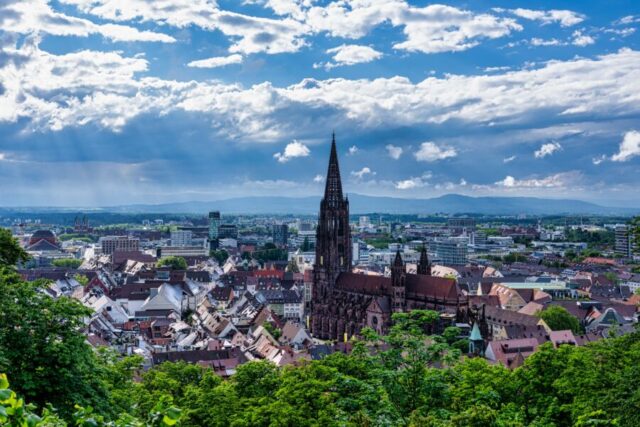
Germany abounds with beautiful, interesting small cities, each with its own personality and claims to fame. My sentimental favorite is Freiburg, tucked in the Black Forest at the country’s southwest corner. I have a soft spot for Freiburg: One of the professors who taught me German came from here (so I probably have a slight Freiburger accent), and it was also the first place I ever set foot in Germany (on a side-trip from nearby Basel, Switzerland).

Returning recently after many years, I found Freiburg even more delightful than I’d remembered — and not just because of sentimentality. This pristine mid-sized university city abounds with half-timbered charm and an outstanding food and nightlife scene (including far more than its share of Michelin stars). It’s cuddled up cozily against forested hills, easily conquered on a gentle hike (or quick ride on an elevator or lift) to an outrageously scenic beer garden. The city spins around the massive, pointy, soaring tower of its centerpiece red-sandstone Münster (cathedral).
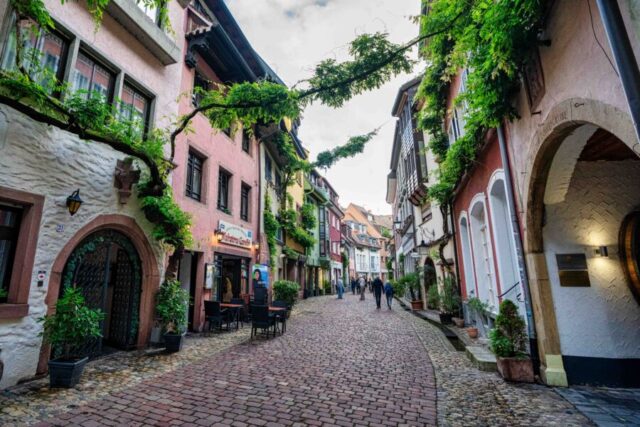
My favorite Freiburg feature? It has to be those little gurgling canals called Bächle, which flank every street through the pedestrian-friendly town center. These open-air drainage ditches once carried unthinkable muck; now, like Freiburg, they’re simply pristine, tidy, and flowing with clarity, character, and charm.

Folegandros, Greece

When I set out to “discover” some new islands for our Rick Steves Greece guidebook, I had something very specific in mind: a small, out-of-the-way island, just “mainstream” enough to be easy and comfortable for visitors without being overrun by crowds, that might offer our readers an untrampled and idyllic Cycladic experience. This mythical place, I figured, probably did not exist.

In fact, it does exist. And it’s called Folegandros.
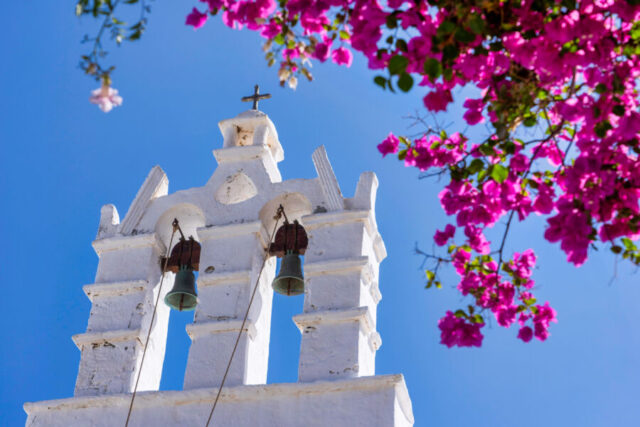
Although it’s right on the boat line between Santorini and Milos, teensy Folegandros gets overlooked. While truly “untouristy” Greek Islands are elusive, Folegandros hits the sweet spot: It’s popular not with cruise ships or fashion-forward partiers, but with British and Northern European visitors who want to settle in for a week or four, slow down, eat well, enjoy village ambience, and melt into the stony islandscape. In short, Folegandros attracts the “right kind” of visitors.

On my first stroll, I was instantly smitten with the main town’s stage-set historic core. Each little square had more character (and enticing restaurant tables) than the next: melting-marshmallow churches; bright-pink pops of bougainvillea; tidy blue trim around each window to match the striking clarity of the giant Greek sky; snoozing cats on rickety wicker chairs; and a “slow down and savor the ouzo” ambience.

There’s not much to “do” in Folegandros. In fact, that’s the point. Buses fan out to humble beaches; the rocky, desolate interior attracts a few hardy hikers; and most vacationers arrange their day entirely around their next breakfast, lunch, and/or dinner.

To burn some of those calories, a serpentine stone staircase twists up, up, up to the summit above town, where a giant white church hogs the best views. Hiking up late in the day (with, it seems, everyone else on Folegandros) rewards you with views over the entire tiny island… and a spectacular sunset.
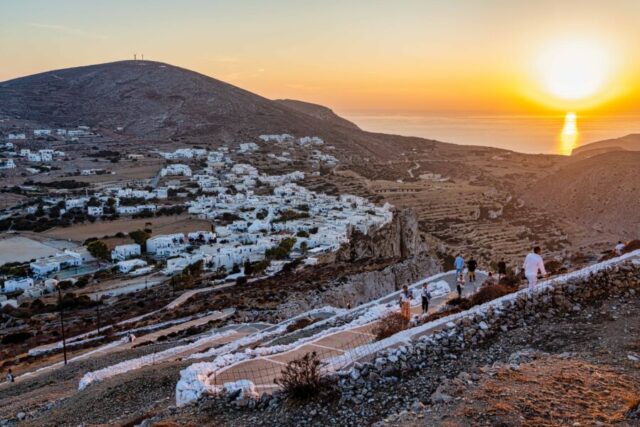
Taking a moment to give my eyes a break from the deep-red sun — and to scribble a few notes in my little black book — I just couldn’t wait to share this discovery with our guidebook readers… and now, with you.

Liverpool, England
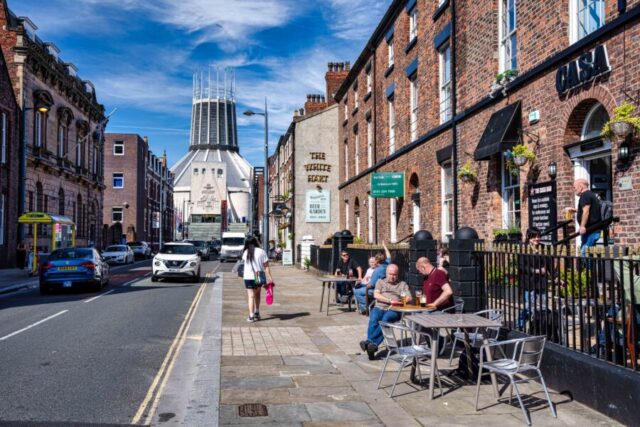
Liverpool, as a tourist destination, used to be all about the Beatles. And even if all you wanted from Liverpool was Fab Four lore… that would be enough.

However, over the 15 or so years since my last visit, Liverpool has really come into its own; returning recently, I saw how it’s been transformed from a diamond in the rough to a polished gem.

Once Britain’s main industrial port, Liverpool was walloped by the Blitz in World War II (when it was the base of British naval operations). John, Paul, George, and Ringo grew up in a hollowed-out shell of a city; only in the last generation or so has Liverpool been rejuvenated with a skyline that’s half industrial-red-brick, half sleek glass-and-steel.

For the sightseer, Liverpool has a wonderful art collection (locals brag, second only to London’s National Gallery); excellent history museums; and not one, but two gigantic cathedrals: one Anglican, the other Catholic, both architecturally arresting… and connected by a street called Hope.

Home to three different universities, Liverpool is noticeably youthful, with one of the UK’s most appealing food scenes and music clubs pumping tunes from live bands out into the street. Chatting with the witty, endearing Liverpudlians — even if it’s about nothing at all — is the undisputed highlight of any visit.

For Beatles fans like me, Liverpool is simply thrilling — with multiple museums, bus tours, music bars, and the opportunity to tour the childhood homes of John Lennon and Paul McCartney. But even if you don’t know Ringo Starr from Pete Best, Liverpool is a delight… arguably the UK’s best big-city destination outside of London.

Mikulov Wine Region, Czech Republic

So many travelers insist on going to the most touristy places in Europe, at the most touristy times, and then come home complaining about all the tourists. When I hear this, one word jumps to mind: Mikulov.
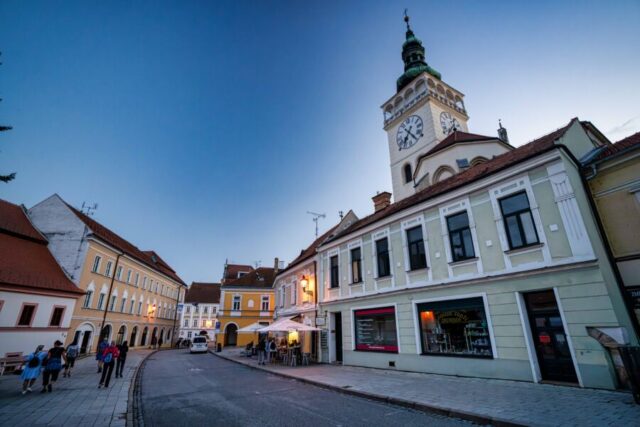
This small Moravian town — and the surrounding landscape of castles and vineyards — is the antidote to overtourism. If I had to come up with just one “poster child” for a wonderful European destination that’s shockingly undiscovered by American visitors, it might have to be Mikulov.

The town is huddled around the base of a mighty château; the panoramas late in the day are enchanting… almost Tuscan. In the cobbled streets, cozy enotecas and high-end yet affordable restaurants abound. While onion-domed churches predominate, the town also features a gorgeously restored 16th-century synagogue.

The landscape surrounding Mikulov is ruffled with limestone hills and striped with vineyards. A short drive — no more than 15 or 20 minutes on pleasant rural roads — takes you to a variety of fine towns and memorable sights.

Two châteaux vie for your attention: Valtice Castle, guarded by two giants, houses the Czech national wine salon — a seemingly infinite cellar where you can sample your choice of well over 100 vintages (handpicked and lovingly described by wine experts).

And Lednice Castle is simply a stunner, rebuilt in meticulous English Neo-Gothic style. Its jaw-dropping interior includes a lacy-delicate spiral staircase made out of a single oak tree with no nails. And beyond the château are sprawling gardens with a giant greenhouse, a minaret, and endless trails for walking and biking.
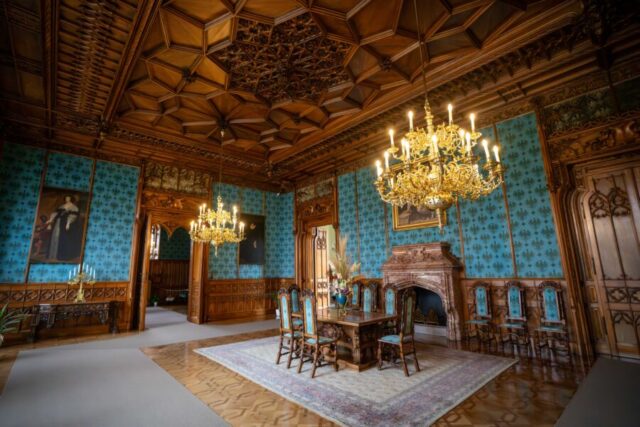
Beautiful… tasty… affordable… uncrowded… accessible… largely undiscovered. That’s Mikulov. The problem: Its existence robs you of the ability to go to yet another crowded “bucket list” town only to complain about the crowds.

Jutland, Denmark

What was the most purely enjoyable 36-hour stretch in my 100 days of travel last year? I never would have guessed it — but I think it was Denmark’s Jutland.

Jutland, three hours’ journey west of Copenhagen, is anchored by Denmark’s second city, Aarhus — a center of students, business, and industry with a cutting-edge food scene and outstanding sightseeing, including the remarkable ARoS Museum (where the architecture upstages the art) and one of the best open-air folk museums anywhere.

Heading out of town, I stopped off at the Moesgård Museum, which combines astonishing artifacts — including the Grauballe Man (found perfectly preserved in a bog 2,000 years after his death) — with beautiful storytelling and high-tech exhibits to create a powerful experience.

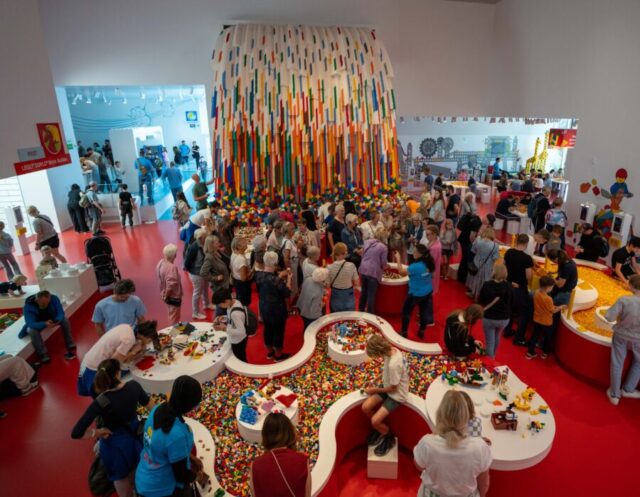
An hour down the road took me to Jelling, where I ogled Harald Bluetooth’s thousand-year-old rune stones (often called “Denmark’s birth certificate”). Then to Billund, the birthplace of Lego. While my afternoon enjoying thrill rides at the original Legoland amusement park was a hoot, even better was my visit the next morning to the Lego House: a state-of-the-art space with hands-on displays, endless Lego creations to scrutinize, and literally millions of bricks to build with.
But my day wasn’t over. From Billund, I hopped in my car for a glimpse of the sand dunes (and haunting Nazi-era bunkers) of Denmark’s west coast, winding up in the quaint medieval town of Ribe — oozing with medieval half-timbered charm. Ribe’s towering Romanesque cathedral happened to be hosting a community choir concert; slipping out a few minutes early, I joined the free, entertaining, and informative night watchman’s tour.
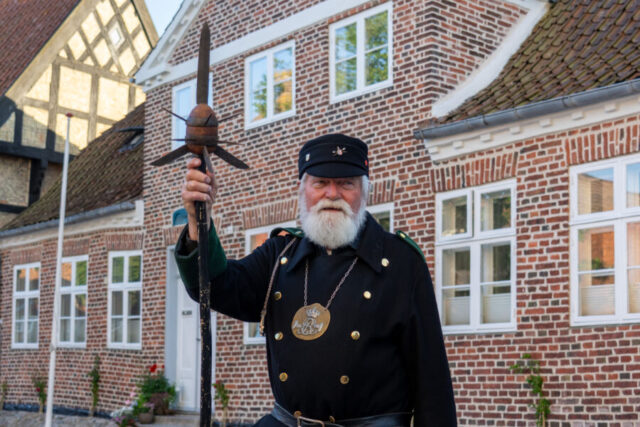
Heading back to my car (with the sun still low in the sky at 10 pm), I thought to myself: Was it really just yesterday morning that I left Aarhus?

How many of these Discoveries have you visited? (Or plan to visit in 2026?) And what Discoveries am I missing? Add your favorites in the Comments.


All 10 of these Discoveries are covered in the applicable Rick Steves guidebooks. And several of these stops — including Kinsale, Cádiz, Budapest, and Padua — appear on various Rick Steves tour itineraries.

You can also look back at my Discoveries from 2025, 2024, 2023,  2021, 2020, 2019, and 2018… all still great choices.

For more inspiration — and practical tips — for your 2026 travels, join me on Wednesday, January 14 for a free session of our virtual 2026 Travel Festival. In this “State of European Travel 2026” talk, I’ll be covering updates, insights, trends, and tips for this year’s travels. Designed to be the most useful hour possible for anyone heading to Europe this year, it’s free to attend — just sign up in advance.

If you’d like to travel along with me in 2026, be sure to follow me on Facebook and Instagram.

Finally, consider checking out my travel memoir, The Temporary European: Lessons and Confessions from a Professional Traveler.

Honest History Matters

Looking back on my recent travels, I’ve been thinking about what makes a country great. “Greatness” can mean strength and power. Or it can signify wisdom, maturity, respect, and an honest reckoning with the past.

In my travels, I observe a disparity in how various lands think about their history: Some societies acknowledge the more challenging elements of their past, while others only embrace the most flattering version of themselves.

As fractured as we are these days, I genuinely believe that good, caring, intelligent people can agree to disagree on a broad range of issues. Should the government take a heavy hand, or a light one, in collecting taxes, regulating guns or abortion, and guiding the trajectory of a society? What role should the USA play on the world stage? How much immigration is “too much,” and how should we treat those immigrants? You have your opinions; I have mine; sometimes they don’t align. That’s life in a healthy democracy. That’s what elections are for.

However, one thing that I believe is not a partisan issue — or, at least, shouldn’t be — is the fundamental truth of history. Facts matter. What happened, happened. And whether those events were good or bad, the only way for a society to evolve is to be honest about its past, warts and all. That’s why, when those who seek or hold political power begin to selectively reinterpret the past — dispensing with inconvenient truths — I find it alarming, not as a Democrat or a progressive, but as a patriotic American.

This is not a distinctly American challenge. Every country’s story is filled with both moments of virtue, and moments that are regrettable, even “evil.” As I travel from place to place, I’m struck by how each society makes intentional choices about how to reckon with their history. And over time, I’ve also seen how this can vary depending on the swing of the political pendulum.

And so, to provide some international context for the debates we’re having in 2024 USA, join me on a trip to a few case studies of how other societies have gotten this right…and, in my view, ones that have gotten it wrong.

Poland:  The Museum of the Second World War

In Gdańsk — the northern Polish city where World War II began — museum curators designed what was to be Europe’s definitive museum of the Second World War. It told the complicated story of wartime Poland, yes; but expanded its view to encompass a global perspective on the war, and how it affected various lands and peoples.

However, shortly before the museum’s scheduled opening in 2017, the ruling Law and Justice government — which felt the exhibit “wasn’t Polish enough” — intervened. They replaced the director with a political appointee, and installed a new mission to stir the patriotic souls of Polish taxpayers. New exhibits, mainly profiling Polish heroes and victims, were hastily squeezed into any available space. The intentionally ambiguous, thought-provoking final room was re-envisioned and now shows a rabble-rousing film (called “The Unconquered”) espousing a naively, almost offensively pro-Polish point of view.

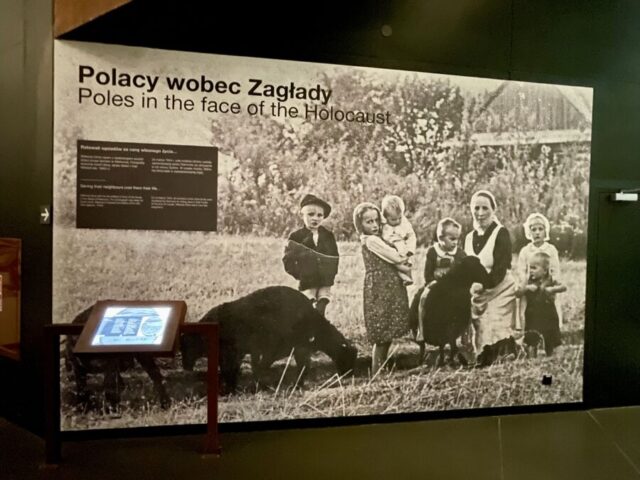
Revisiting the museum not long ago, I stumbled upon one exhibit that I suspect was added by the politicized director. At the entrance to a room filled with portraits of Jews who were murdered by the Nazis in Polish territory stands a wall labeled “Poles in the face of the Holocaust.” Posted information and touchscreens explained how Poles saved the lives of Jews, despite the fact that Poland was the only Nazi-occupied land where such assistance could be punished by death.

This is an inspiring story, to be sure. And there were many righteous Poles who came to the assistance of their Jewish neighbors. But there were also many Poles who colluded with the Nazis, and many more who turned a blind eye to their atrocities. Is it expecting too much for these facts to be acknowledged in the museum, as well?

Soon after, in 2018, the Law and Justice party made it illegal to state that the “Polish nation” was in any way responsible for the atrocities of the Holocaust, under punishment of prison. Under diplomatic pressure from the US Department of State, the law was later softened to remove the criminal component. However, a civil court can still prosecute “whoever claims, publicly and contrary to the facts, that the Polish Nation or the Republic of Poland is responsible or co-responsible for Nazi crimes committed by the Third Reach.” And so, an important part of Poland’s World War II story goes untold.

(It’s worth noting that Poland’s Law and Justice party was defeated in late 2023 by a centrist coalition; as new, more moderate leadership reshapes Poland, it will be fascinating to see if those changes ripple down to the displays of this museum.)

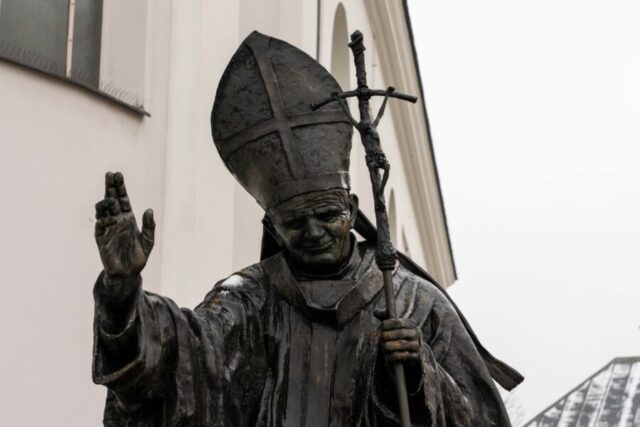
A few days earlier — at the opposite end of Poland, in the town of Wadowice — I toured the museum at the birth house of St. John Paul II. The slickly produced, inspiring, touching museum did a beautiful job of telling the life story of Karol Woytyła, who lost his parents at a young age, entered the priesthood, and eventually became the spiritual leader of one billion Catholics and a critical figure in the final ideological battles of the Cold War.

The museum tells this story so well, in fact, that I didn’t realize until after I’d left that it had omitted some important topics — specifically, the child molestation scandals within the Catholic Church that were covered up under Pope John Paul II’s watch.

Chatting with some Polish friends about this, I was reminded that these things aren’t as black-and-white as they may first seem. Yes, the Pope should have done more. However, John Paul II recognized that he was in a unique historical position as a high-profile crusader against Soviet oppression, and that he played a critical  inspirational role in the democratization of his homeland, Poland. Perhaps there were pragmatic reasons for him to avoid publicly addressing a scandal that would have undermined so much of what he was trying to accomplish.

I’m not entirely persuaded by this reasoning. But it certainly got me thinking more deeply about the full complexity of that chapter in Polish (and Catholic Church) history. I don’t believe “canceling” John Paul II is the answer. Rather, his legacy deserves a complete and nuanced discussion. And I regret that this museum is so reluctant to have that conversation.

History is made by “great” people who, like all people, are flawed. Even the greatest among us have blind spots and vulnerabilities; arguably, it’s a person’s ability to navigate complicated realities and make impossible choices that propels them to greatness.So then, why are we so afraid to be honest about those flaws?

Germany: Documentation Centers and Holocaust Memorials

Let’s cross the border, to a country that dispenses with the kid gloves when handling its own history. In my travels, I have encountered few societies that more conscientiously grapple with their checkered past than Germany. Yes, Germany.

Even to this day, when many people think of Germany, one of their first associations is along these lines: backed a lunatic dictator; tried to take over the world; murdered millions through genocide and conquest; destroyed much of Europe.

Resenting Germany for their crimes in World War II and the Holocaust is understandable, even deserved. But in my 25 years of traveling around Germany, I’ve been impressed by their willingness to be open, candid, and contrite about their history. They even have a term for it: Vergangenheitsbewältigung, “coming to terms with the past.”

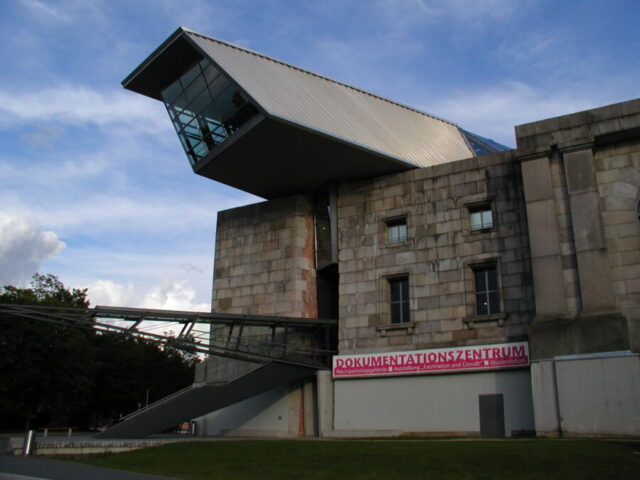
Throughout Germany, I’ve visited perhaps a dozen different “Nazi documentation centers.” That’s a buzzword for a museum that offers a thoughtful, entirely transparent, and no-holds-barred assessment of Germany’s culpability in its crimes of the 20th century. It’s a fascinating exercise in the defendant presenting an ironclad case on behalf of the prosecution. Germany’s documentation centers confront visitors — both German and foreign — with abundant, meticulously collected evidence, always compelling and often gruesome, of their own crimes. No excuses are offered, and there isn’t a whiff of defensiveness — just a matter-of-fact mea very, very culpa.

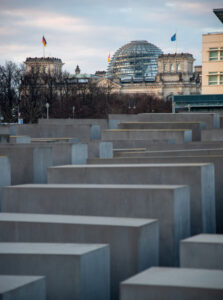
In the German capital of Berlin, immediately adjacent to the landmark Brandenburg Gate and just down the street from the Reichstag stands a sprawling monument consisting of 2,711 stony slabs. The Memorial to the Murdered Jews of Europe, occupying this privileged position in the very heart of Germany’s leading city, is just one of countless memorials, large and small, all across the country, that constantly remind Germans of their historical crimes.

It’s hard to imagine that a country could ever “do enough” to make up for such heinous acts. But as a frequent visitor here, I’m impressed. Even younger Germans — now generations removed from these atrocities — may grow a little weary of these constant reminders. And yet, they recognize that this is their legacy.

The Netherlands: Dutch Resistance and Colonialism

Next door is a country that was occupied by Nazi Germany: the Netherlands. And on a recent visit to Amsterdam, I was struck both by how the Dutch are honestly reckoning with their role in history…and how they still have a ways to go.

The recently re-envisioned Dutch Resistance Museum traces the story of the Netherlands under Nazi occupation. It’s an exercise in stirring the Dutch patriotic soul with tales of both suffering and valiant resistance — much like the World War II museum in Poland. But, to its credit, the Dutch museum also owns up to aspects of that story that some might prefer to dismiss.

Early on, the exhibit takes pains to introduce us to Anton Mussert, who led the NSB, the local version of the Nazis. And it unflinchingly explains that 25,000 young Dutchmen volunteered to join the Waffen-SS, accepting Hitler’s invitation to stand with him in “Germanic Brotherhood.” After the war, at least 120,000 Dutch collaborators were arrested.

Of course, questionable Dutch deeds extend much farther back than the 20th century. As one of Europe’s great colonial powers, the Netherlands was fabulously wealthy in the 17th and 18th centuries. Amsterdam’s ornate city center — with its concentric canals, stately townhouses, grand museums and palaces, and gilded carillons — was financed primarily through plundered resources, the exploitation of human labor at the far ends of the globe, and Dutch participation in the transatlantic trade of enslaved human beings.

This is an aspect of Dutch history that many visitors (and, until recently, even many Dutch people)  gloss over. But that is now changing. In 2023, the former Tropenmuseum (“Tropics Museum,” built nearly a century ago to show off colonial riches to Dutch citizens) was re-envisioned as the “World Museum.” Many of those same artifacts from former Dutch holdings — as far afield as Indonesia (the “East Indies”) and the Caribbean (the “West Indies”) — are still on display. But now they are given proper context, explaining the lives of the people exploited by the Dutch, from their own perspectives.

On the one hand, it’s impressive to see the Netherlands making these strides: For example, then-Prime Minister Mark Rutte (in 2022) and King Willem-Alexander (in 2023) have both formally apologized for the Dutch role in the slave trade. On the other hand, like any society, not everyone is comfortable with the changing times. The Dutch sidekick to Santa Claus, Zwarte Piet (“Black Pete”), is still usually performed by a white man in Blackface — and in a recent poll, more than half of Dutch respondents continue to support Zwarte Piet’s traditional appearance. And in November of 2023, an anti-immigrant party took the highest total of seats in the Dutch parliament.

Progress sometimes comes in fits and starts…but it’s progress.

New Zealand/Aotearoa: Waitangi Treaty Grounds

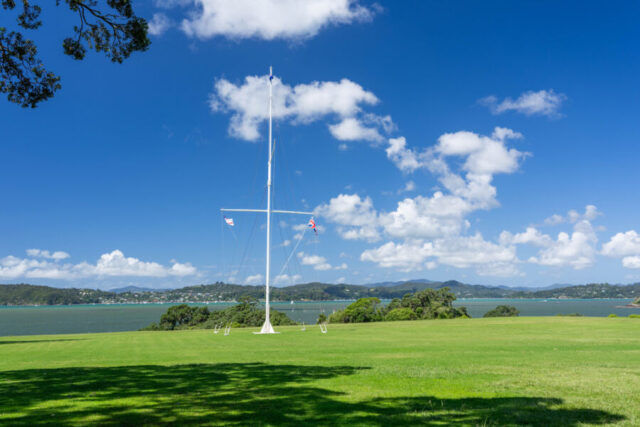
On a recent trip to New Zealand/Aotearoa, I visited the Waitangi Treaty Grounds on the Bay of Islands. This is essentially the birthplace of the modern nation of New Zealand, where local Māori tribal leaders signed a treaty with emissaries of the British crown to establish formal colonies on the island. Today you can walk across the grassy field where the treaty was signed, but only after you’ve toured a powerful, beautifully curated museum.

The museum is the best implementation I’ve seen of a “dual narrative” approach — equally weighting the perspectives of both the Māori and the English to tell a complete story. In fact, for most of the exhibit, you see the Māori point of view on one wall, and the English point of view on the opposing wall. It’s fascinating to experience the history of this island through the eyes of its two dominant groups, simultaneously — a parallax view that is both informative and moving.

In the darkened hall that displays the actual treaty, exhibits detail how the document was translated misleadingly into the Māori language. Key concepts like “sovereignty” were phrased in such a way to give Māori leaders the impression that they, and not the Queen of England, were still essentially in control of their island.

I was impressed and inspired to see a society that — rather than try to spin past events in a way that would present the European settlers in a flattering light — plainly acknowledged their misdeeds: We misled the people who were here first. And we were wrong.

New Zealand inspires me. It’s perhaps the planet’s most forward-thinking nation when it comes to the rights of its indigenous population. This national conversation began in earnest in the 1970s — on the one hundredth anniversary of the Treaty of Waitangi — and much progress has been made. While “reparations” is an abstract and hard-to-sell idea when it comes to the descendants of enslaved Black people in the USA, in New Zealand, it’s a reality: Vast tracts of the country’s land has been formally returned to Māori control. While there’s certainly more to do, New Zealand is making real strides in owning up to its historical crimes.

And this trickles down to everyday life, as well. Increasingly, Kiwis from both Māori and European backgrounds are embracing the indigenous name for their archipelago: Aotearoa. Kiwis, regardless of their background, greet each other with a cheery “Kia ora!” — evoking the Māori origins of the land upon which they all reside together today. As an American, this inspires me to do better — so much better. (And if we need a role model closer to home, we need only look to our northern neighbor —  Canada has made impressive gains in better acknowledging the rights of its First Nations peoples.)

Hungary: Slide from Democracy

Now let’s cross hemispheres again, to a place that may be one of the worst-case scenarios for a society retconning its own narrative: Hungary.

Since first taking power in 2010, Prime Minister Viktor Orbán and his party, Fidesz, have aggressively revised history to suit their nativist political agenda. An exhaustive list of examples could fill volumes. But even just as a traveler who drops into the country every year or two, I’ve seen the effects firsthand: streets and squares renamed for obscure historical footnotes;  the vast plaza surrounding the Parliament building completely transformed with new monuments and memorials; and, perhaps most alarmingly, a wholesale revision of the national school curriculum to ensure that the version of history taught to every Hungarian student is perfectly in line with the Fidesz agenda.

And what is that version of history? Essentially, it’s the most flattering possible view of Hungary. Fidesz history presents the country either as a heroic warrior, or a tragically maligned victim of foreign aggression, full stop. Orbán’s story of Hungary is designed to instill unquestioned pride and patriotism: We have always been in the right, just as we are today.

Here are just three examples:

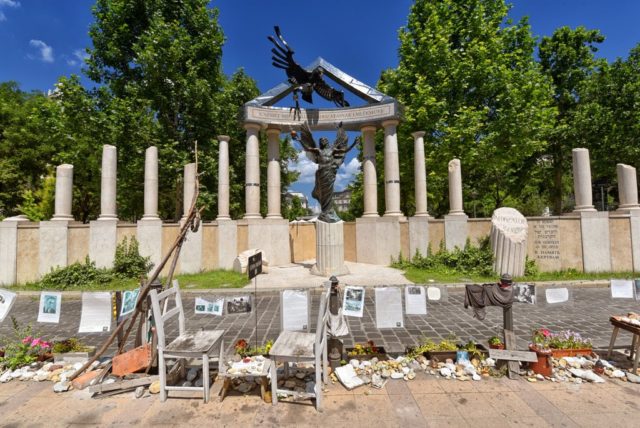
On Liberty Square, Fidesz erected a melodramatic monument to the “victims of fascism.” It’s overloaded with symbolism suggesting that Hungary was a peace-loving land, minding its own business, until Hitler invaded in 1944. In front of the monument, locals have assembled their own makeshift counter-monument — documenting how, in fact, Jews were terribly mistreated by Hungarian authorities, and tens of thousands were deported to certain execution by Hungary’s pre-Nazi leadership.

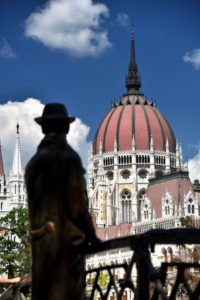
A couple of blocks away once stood a beloved statue of the communist reformer Imre Nagy, casting his judgmental gaze over the Parliament. However,  there was a problem: Nagy may have led the 1956 Uprising against the USSR (and was later sham-tried and executed). But he was also a communist himself, who sought reform from within. The Fidesz worldview simply can’t tolerate such nuance. Nagy was a communist; all communists are bad; therefore, we must remove Nagy’s statue from this favored location. Under cover of darkness and without any warning, one night in the waning days of 2018, it was relocated far from the Parliament.

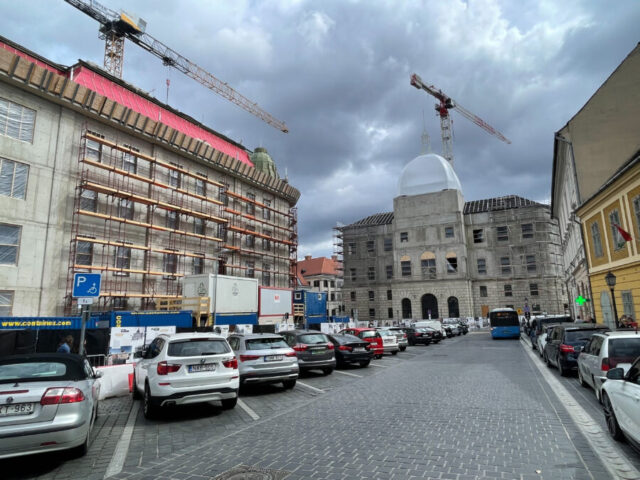
Up at Buda Castle, Orbán has moved his office into the former National Dance Theater and is busily redeveloping the castle quarter, transforming it into his new seat of government. Old buildings — destroyed in World War II and never rebuilt — are being re-created from scratch, with little rhyme or reason. It’s a hodgepodge that randomly juxtaposes buildings from this and that era, based on how pretty or grand or imposing they look rather than their actual role in history — an almost too on-the-nose embodiment of this cherry-picking approach to Hungarian history.

Orbán has become a darling of certain corners of the American right.  Perhaps those Orbán supporters should travel to Budapest, talk to Hungarians on the street, and observe how his approach has eroded two decades of fragile progress in recovering from totalitarianism…including the distorted, oversimplified way that Hungarians are encouraged to view their own complicated history.

Bristol: The Empty Plinth

A couple of years ago, on a dreary late-winter morning, I wandered around Bristol, England, piecing together the story of Edward Colston. This fabulously successful Bristolian grew the wealth and reputation of his home city, largely through his participation in the slave trade.

Colston is one of many historical figures who became a flashpoint during the global Black Lives Matter protests in the spring and summer of 2020. You may recall how a giant statue of Colston was toppled by protesters, dragged down the hill, and dumped into the harbor. (Later, the statue was dredged out of the harbor and displayed in a local museum.)

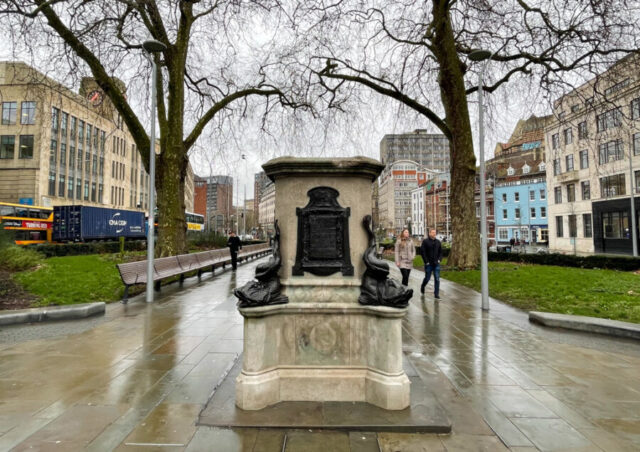
On my visit to Bristol, about two years after this event, I found myself following breadcrumbs of Colston’s legacy around the city. The plinth that once held Colston’s statue — and boldly declared him “one of the most virtuous and wise sons of [the] city” — stood empty. In a parish church, stained-glass windows honoring Colston had been removed; a nearby information panel explained this decision. And in a city history museum, Colston sneered out from a composite painting of prominent Bristolians. His image was identified completely, and accurately: “Slave trader; merchant and philanthropist.”

Back home, we’ve had debates about whether and how we should remove statues honoring problematic historical figures, whether they be Confederate generals or slave-owning Founding Fathers. You may believe that tearing down these statues is just as bad as what Poland or Hungary is doing. But observing Bristol’s approach demonstrates that it’s possible, even responsible, to remember these figures — completely and honestly, in all of the ways they both aided and harmed others — without honoring them. The challenge — one that Bristol rose to — is to find a constructive way to preserve history without remaining beholden to it.

Should we replace those statues with carefully worded plaques, offering a more complete and nuanced explanation of their role in history than simply “virtuous and wise”?  Should the statues be collected into an open-air museum (as Budapest did with its communist statues, in Memento Park), so those generals can preach their racist ideology to each other, removed from polite society, without needlessly confronting passersby? Should we create a Museum of American Racism — a series of Slavery Documentation Centers — that detail the shameful crimes of our past, as a reminder and a warning to Americans in the present and the future?

Again, Bristol inspires me to do better.

Back Home: The United States of America

After hopscotching around our globe, we return home to the United States of America. With the benefit of comparing notes with other societies, how does the USA measure up?

When we’re at our best,  we make strides toward reckoning honestly with our past sins. The Museum of African American History in Washington, DC, for example, does a beautiful, complete, and even-handed job of telling the story of Black Americans and their ancestors.

Juneteenth — a celebration that originated in the Black community to commemorate the abolition of slavery — is now a federal holiday, and more and more organizations (including Rick Steves’ Europe) show their respect by closing their offices for the day.

And even in my own lifetime, I have observed the USA doing a more honest job of acknowledging our genocide against Native American tribes — though nowhere near to the righteous degree of New Zealand/Aotearoa or Canada.

However, in recent years — as the political pendulum swings to dizzying extremes — I fear that we are facing a rising tide of people who would prefer to simply edit out the most uncomfortable details in our national narrative.

In some states, textbooks are being rewritten to downplay our heritage of slavery and racism. These days, ambiguity and intentional omission trump clarity and specificity in explaining to our children exactly how certain people have been treated by our country, and still are, and why.

Critical Race Theory (CRT), paired with the deathly curse of “woke” — both concepts that originated in the Black community — have been appropriated and cruelly weaponized. Terms like these have become an excuse for (mainly) white Americans to shut down any healthy conversation about our shared national narrative that makes them uncomfortable.

Look: I’m not interested in wading into the “woke culture wars.” In fact, I’m sticking to my guns: The importance of history can and should be a nonpartisan issue. History matters, to everyone, even if they don’t realize it. And an honest and frank acknowledgement of the facts of history, by any society, is always a good thing. History tells us where we’ve been, and it helps us figure out where we’re going.

I believe this even more strongly having traveled to places where people grapple constructively with their history, and to places where people would rather hide from it. And I’m here to tell you: Societies in the first group are stronger, healthier, smarter, more successful, and more respected on the world stage than places in the second group. Honesty can be painful, but it’s how we grow and become better.

If you believe that contemporary Germans owe it to the world — and the six million Jews their ancestors murdered in gas chambers — to continue to reckon with their past crimes; if you think that child molestation scandals deserve to be acknowledged in a retelling of the life of John Paul II; if you respect the Dutch for including the stories of collaborators along with stories of victims and uprisers in their Resistance Museum; if you admire the Kiwis for acknowledging that their island was deceptively taken from people who’d been on Aotearoa for centuries earlier; if you think it’s a shame that Viktor Orbán removed the statue of a great communist reformer just because he was also, technically, a communist; if you appreciate Bristol’s nuanced approach of remembering Edward Colston without honoring him — then you should also be willing to face the discomfort of teaching our children about America’s shameful heritage of slavery and racism, and so many other topics that deserve open and frank conversation.

When you brush aside inconvenient realities, they don’t simply go away. They just fester, impacted and infected. They wait there, only getting uglier and worse, slowly beginning to stink, until they’re eventually kicked up again by some future generation — and have become an even worse problem to deal with.

It’s very easy to see blemishes when looking at other cultures, from afar. It’s much harder to see them when we look in the mirror. But we owe it to ourselves, and to future generations, to avoid the temptation to slide into denial. So the next time someone tries to dodge a conversation about less-than-noble elements of our past, consider asking them: Why does it make you so uncomfortable to reckon honestly with our nation’s history? Because that’s what healthy, functioning societies do.

In fact, it’s what makes a country great.

Europe’s Best Neighborhoods: Where Should I Stay in ___?

You’re heading to Europe. You’ve chosen your destinations. And now you’re starting to daydream about your chance to be a temporary Londoner, a temporary Parisian, or a temporary Roman. The next question: Where should you stay?

As the 2023 travel season winds down, early birds are already starting to make plans for 2024. Most people get serious about this in January or so. But if you want to get a jump on the “competition” — and have your pick of places to stay — it’s smart to get started now. (And it’s a fun, constructive way to distract yourself as the days get shorter and colder.)

I have some friends who are dong just that: dreaming of a trip with their two teenagers next June in Rome and Athens. They asked me where I’d suggest staying in those great cities. And I thought to myself: That’s an excellent question! But first, I need a little more information: What kind of neighborhood are you looking for?

Inspired by that question, I’ve brainstormed my suggested home-base neighborhoods for 10 of Europe’s most popular cities. This intel is hard-earned, from years of scouring these cities for accommodations to recommend in our Rick Steves guidebooks.

Those lists are below. For each city, I’ve broken my choices down into three categories:

Central and Touristy. This is where you’d stay to have the top sightseeing right outside your door. However, that also means these neighborhoods are touristy, often a bit tacky, very expensive, crowded, and not particularly “authentic” or “local-feeling.” But sometimes having everything close at hand is worth making those sacrifices, especially on a quick, targeted trip.

Hip and Foodie. Every city worth its salt has an edgy, “emerging” restaurant and nightlife zone. These can be either central or more remote; either way, they’re typically less polished and more characteristic, and they tend to skew more youthful. If you’re in town primarily to check out all the “destination” foodie restaurants, rather than to sightsee until you drop, and if you’d like to settle in to the local version of Williamsburg, Los Feliz, or Wicker Park…then these neighborhoods are for you. (If you don’t know what those names mean, then these neighborhoods are probably not for you.)

Charming and Residential. If you don’t mind commuting to the main sightseeing and trendiest eateries, it can be worthwhile to stay a little farther from the city center. More sedate and charming than the central districts, these neighborhoods feel “older-local” as opposed to “younger-local.” Because they’re less central and less touristy, lodgings are often more affordable (though certain high-end suburbs can be surprisingly pricey). If the “Hip and Foodie” places are for hipsters, then the “Charming and Residential” places are for yuppies and retirees. Just be prepared for a longish metro, bus, or tram ride to achieve most of your bucket list.

Use the suggestions below as a starting point when searching for accommodations — whether hotels, B&Bs, or short-term apartment rentals (like Airbnb). Many room-booking search engines allow you to enter specific neighborhoods to narrow down your options, or you can search via the map. Read reviews carefully, within these areas, to make sure the lodgings you’re considering match your expectations. And here’s a pro tip: Before booking, go for a little “virtual stroll” of the surrounding area on Google Maps Street View to make sure it looks like a place you’d like to settle in.

London

Touristy/Central: Soho and Covent Garden can’t be beat for access to many of the top sights, the West End theater scene, and some of London’s best restaurants to boot.

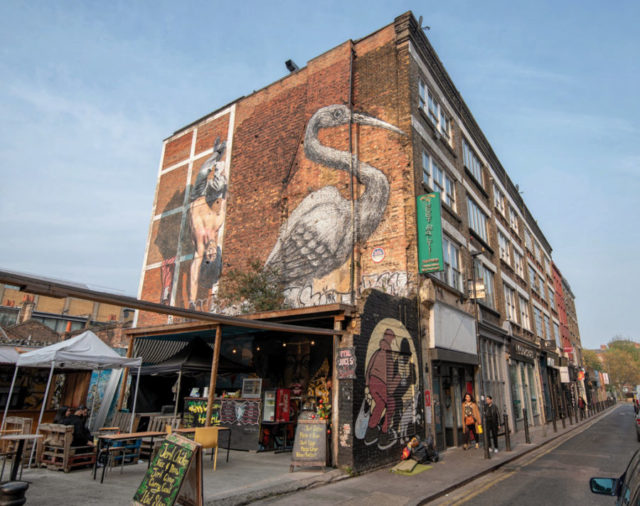
Hip/Foodie: The East End, specifically Shoreditch and nearby, is where hipsters feel at home, with exuberant street art and many of the city’s most interesting restaurants. (Many top London restaurants began with a humble location in Shoreditch before opening a fancy one in Soho.)

Charming/Residential: Try neighborhoods just to the west, surrounding Hyde Park and Kensington Gardens (South Kensington, Notting Hill, Earl’s Court); or to the north, near the British Museum (Marylebone, Fitzrovia). In this vast city, there are countless other choices, depending on how far out you’re willing to travel; Dulwich, to the south, and Ted Lasso’s Richmond, to the west, are each a 30-minute commuter train ride out of the center.

Paris

Touristy/Central: It’s hard to resist staying near the Eiffel Tower (ideally with a view from your window); either there, or in the Latin Quarter (near the Île de la Cité/Notre-Dame and Île St. Louis) puts you very close to the sights…and the crowds.

Hip/Foodie: For something that’s still quite central, but more funky, consider the Marais, or some of the neighborhoods just beyond it: Try Oberkampf and Canal-St-Martin, just to the north, and the Rue du Faubourg Saint-Antoine, just beyond Bastille to the east. The famous Montmartre is a strange combination of obnoxiously touristy and achingly bohemian…just as it was a century ago.

Charming/Residential: It’s hard to resist Rue Cler. This quintessentially Parisian, very central market street is that strange “unicorn” of neighborhoods that ticks only the best bits of both the “Touristy/Central” and “Charming/Residential” boxes. Another good option, slightly less characteristic but still handy, is Luxembourg Gardens.

Rome

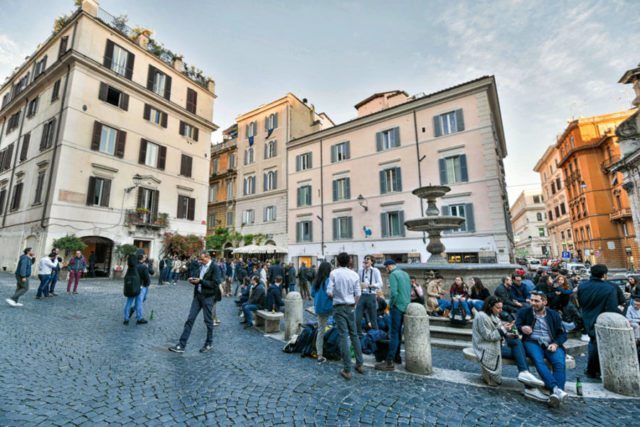
Touristy/Central: It’s a thrill to stay as close to the Pantheon as possible, putting you right in the magical and romantic heart of Rome. For fewer tourists, look in the sleepier, more appealing streets that run from Piazza Navona west, toward the river and Vatican City.

Hip/Foodie: I just love the Monti district, tucked in narrow residential lanes basically across the street from the Roman Forum. Testaccio, farther out, surrounds Rome’s most engaging market hall and offers close proximity to restaurants filled with foodies who’ve done their homework.

Charming/Residential: Trastevere, which could arguably fit in any of these categories, is extremely atmospheric, slightly less touristy than the most central parts of Rome, and still within a long but very engaging walk to many of the top sights. The small, quiet zone just behind the Colosseum (to the east) feels a world apart from the touristy chaos.

Berlin

Touristy/Central: The city’s spine, Unter den Linden, has several big hotels but lacks personality. That’s why I enjoy the area around Hackescher Markt, just north of Museum Island, which has a little more character and enjoys about as convenient a location as you’ll find in this sprawling city.

Hip/Foodie: Not only the best neighborhood in Berlin, but one of my favorite hipster neighborhoods anywhere, Prenzlauer Berg has oodles of funky Berlin character, outstanding restaurants, a true neighborhood feel, and easy transportation connections around the city. For a deeper dive, consider Neuköln, Kreuzberg, or any number of other cool Kieze (neighborhoods) that Berlin specializes in.

Charming/Residential: The former West Berlin (now called City West) was once a Time Square-like “city center” hub; now it’s a sleepy, sedate, upscale, and charming suburb with relatively easy connections to the big sights. Savignyplatz is the centerpiece of this area, and the surrounding Charlottenburg district has a similar feel.

Athens

Touristy/Central: The Plaka, tucked at the base of the Acropolis (between the Monastiraki transit hub and the busy Syntagma Square), is super-central and super-touristy.

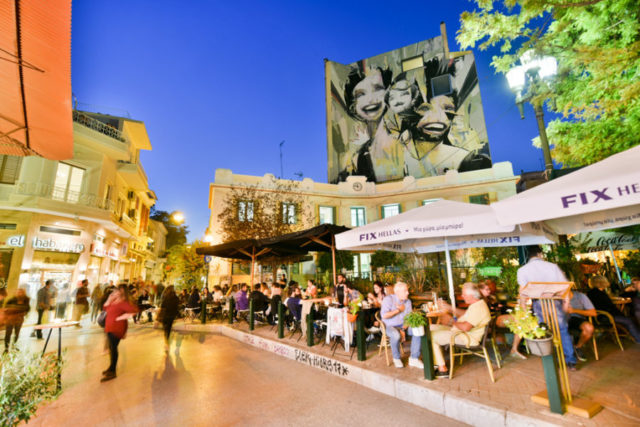
Hip/Foodie: Just across the street from Monastiraki, Pysrri is funky, youthful, and foodie, with an appreciation for wild street art and delicious street food, and close proximity to the thriving Central Market without being too far from the central sightseeing zone.

Charming/Residential: The sleepier streets of Makrigianni and Koukaki, on the “far side” of the Acropolis (to the south), make for a comfortable and relatively mellow home base.

Amsterdam

Touristy/Central: If you’d like to have very easy access to the sights (and to endless tulips-and-wooden-shoes souvenir shops), stay somewhere along Damrak or in the nearby streets of the Red Light District.

Hip/Foodie: The Jordaan, a short stroll along postcard canals west of the central spine, is one of my favorite neighborhoods in Europe, period. It’s an ideal combination of two categories: Both hip and residential, charming and foodie, it’s a clear winner.

Charming/Residential: If looking beyond the Jordaan, the quiet streets of Southwest Amsterdam, around Museumsplein, tick this box — though the proximity to the Rijks and Van Gogh museums can make it feel quite touristy in places.

Budapest

Touristy/Central: Pest’s Town Center (District V), with the Váci Utca pedestrian drag as its spine, is as central and as touristy as you can get. I prefer the area around the Opera House, along the most interesting stretch of Andrássy Út — just a little farther out, but very well-served by public transit, chockablock with great restaurants, and very close to the Seventh District fun (see next).

Hip/Foodie: The Seventh District, which overlaps with the Jewish Quarter just across the Small Boulevard from Pest’s Town Center, is one of Europe’s most engaging hipster neighborhoods. It comes with many of the city’s best restaurants (from street food to Michelin-starred) and the fun and fascinating “ruin pub” scene.

Charming/Residential: Buda, across the river from the modern city center, is sleepier, greener, and more sedate. It takes longer to reach much of Pest…but the views across the river are worth the commute. To stay on the Pest side, consider the streets flanking Andrássy Út once you get beyond the Oktagon, in the diplomatic quarter that heads out toward City Park.

Dublin

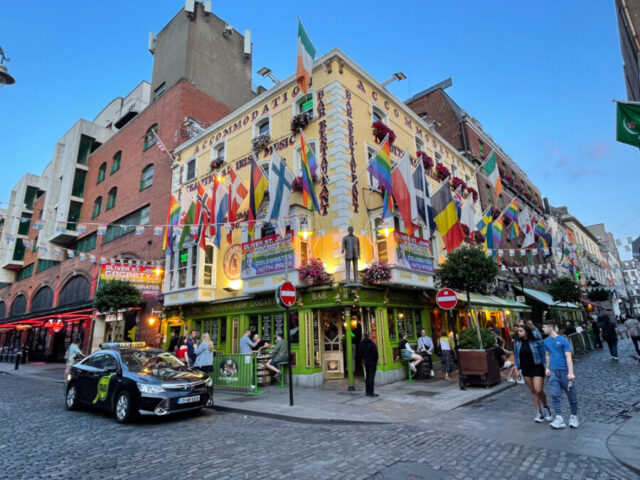
Touristy/Central: Look no farther than Temple Bar and the nearby streets close to Trinity College, on the south bank of the River Liffey. (As a light sleeper, I’ll suggest checking reviews carefully for noise complaints if sleeping anywhere near Temple Bar.)

Hip/Foodie: Earlier this year, I discovered the charming yet hip “village in the city” of Stoneybatter, tucked away beyond Smithfield Square to the northwest. While a bit farther from the center, it has some of the city’s hippest restaurants (especially for brunch) and an “I could live here” vibe.

Charming/Residential: South of St. Stephen’s Green, you encounter fewer tourists and a more local feel. I particularly enjoy the area along the southern canal belt; if you’d like a hipper stretch of this area, try to get close to happening Camden Street and the Portobello area.

Barcelona

Touristy/Central: There’s a good reason many tourists enjoy staying in the city center: near Plaça de Catalunya, in the Barri Gòtic, and along the Ramblas. This is Barcelona at its most vivid, touristy, crowded, chaotic, and fun.

Hip/Foodie: To escape some of the crowds of the Old City, head to El Born — an easy walk just east of the Barri Gòtic. This area, with the Picasso Museum and Santa Caterina Market, has a more bohemian feel, including great restaurants.

Charming/Residential: The carefully planned Eixample district, which surrounds the Old City on all sides, has an ritzy “uptown” vibe. This is the place to stay if you’d like to pretend you’re a Catalan urbanite for a few days. Or consider the tight, old-school Barceloneta fishermen’s quarter near the water.

Istanbul

Touristy/Central: For such a sprawling city, Istanbul has as surprisingly compact sightseeing core: Sultanahmet, loaded with hotels for tourists who want proximity to the great sights; just downhill, Sirkeci is similar.

Hip/Foodie: Kadıköy, across the Bosphorus on the Asian side, is both hip and residential. Back on the European side, consider Beşiktaş, along the Golden Horn below the New District.

Charming/Residential: The New District, across the Golden Horn from the old city center, is still quite urban and intense in places. But you’ll also find some pleasant back streets where you can settle in to a local neighborhood.

So…what did I miss? Any favorites to add? I’d love to hear your suggestions in the Comments.


I’ve gotten to know all these great European cities through updating our Rick Steves guidebooks — where you’ll find out a lot more about all of these places, including extensive lists of our handpicked hotels and B&Bs in each area.

Are Classic B&Bs an Endangered Species?

One of the great joys of traveling in Great Britain and Ireland is its wonderful, “homely,” friendly B&Bs. And, while several of these are still thriving, I’m sorry to report that the classic B&B experience is becoming increasingly rare.

Even just a few years ago, every town or city in the British Isles had at least one tidy little cluster of well-run B&Bs, eager to host travelers for a fraction the price of a big hotel. My favorite thing about updating our Rick Steves’ Europe guidebooks was checking in with each one to re-inspect their rooms and update their information…which, more often than not, turned into a spirited chat.

Things have changed rapidly. The rise of Airbnb has made it harder for a full-service B&B to remain both profitable and competitively priced. And then came COVID. These days, those classic B&Bs are becoming an endangered species.

Fortunately, quite a few gems survive. For example, Susan and Paul at Barony House in Edinburgh — pictured below — give me hope for the future: The next generation that’s keeping at least some great B&Bs going strong…still with a personal greeting and an excellent cooked breakfast. (Susan is a great cook.)

Unfortunately, this kind of place, once the norm, is becoming rarer. Anecdotally, quite a few B&B proprietors have told me that they took the pandemic as a sign to close up shop. Many of them were already getting on in years (as running a B&B is something of a lost art), and they were beginning to think about retirement. The loss of so many guests simply became too much of a financial pinch, and B&B owners weren’t up for the constant changes to how they did things.

Updating our Rick Steves guidebooks around Scotland last summer, and Ireland this summer, I’m struck by how many of our old favorites have closed down.

In the Scottish village of Glencoe, I was reminiscing about my visit there in the late Aughts, when B&B signs dotted the main street. But on this trip, I didn’t see a single one.

Driving to a guest house perched on a hill above town, I wound up chatting with the proprietor. She confirmed that, when they took over their place about a decade ago, a dozen local B&Bs were registered with the local tourist board. Now they’re down to just four — and not a single one is along the main street. So this one wee village has lost fully two-thirds of its accommodations.
And I’m seeing a similar trend this summer in Ireland. There are entire towns we describe in the book (for example, Dun Laoghaire and Howth) specifically because they once had an abundance of “cheap and cheery” B&Bs that were a budget-friendly alternative to a big Dublin hotel, just a quick train ride away. But the list of B&Bs in each place has depleted to nearly zero; deleting a couple more on this visit, and realizing there are virtually none left, I’m wondering if it even makes sense to keep those towns in the book anymore. (Don’t fret; I think each of these places still has a lot to offer. Just not cheap sleeps.)

At one of those B&Bs, the kind proprietor answered my doorbell and politely explained that, while she’s enjoyed many years of great guests through Rick Steves, she’s winding down her business and doesn’t want to be listed in future editions. She’s favoring one-week, “self-catering” guests these days — rather than the whistle-stop one- or two-nighters seeking a quick dose of charm and a cooked breakfast. I thanked her for her partnership in looking after our readers, wished her well, and — regretfully — crossed out her listing.

Over the last few years, I’ve had a version of this conversation more times than I like to recall. Each time I hit “Delete” on one of those listings, while I’m happy for B&B owners downshifting into a well-deserved retirement, it hurts a little bit.

Everything we do at Rick Steves Europe is informed by an ethos of connecting people to people. My job, ultimately, is matchmaking: putting American travelers in touch with Europeans who will look after them kindly, and appreciate their business. If our readers are happy, and our European partner is happy, we’re happy. It’s a win-win-win. When one of those Europeans closes up shop, without an equivalent replacement to be found, it’s a big loss.

Of the places that have stayed open, quite a few have cut back or made changes: Self-check-in rather than a friendly, personal greeting; and big changes to how they do breakfast. At one B&B, I was given a “breakfast hamper” to enjoy in my room, rather than taking advantage of the beautiful breakfast room. While most places aren’t offering something this elaborate, the “continental breakfast in room” (or “find your own breakfast”) practice is becoming the norm.
I don’t blame proprietors one bit for making these changes. They had to survive; this way is, frankly, easier than the old way; and it also reflects the self-sufficient preferences of travelers who are now accustomed to Airbnbs. But it means the B&B experience isn’t quite what it once was. If you want a big breakfast, you can’t just assume you’ll get one — you have to be careful to choose a place that still does it.

In another small town in Scotland, a B&B owner explained the basic economics of how COVID scrambled his business: He used to rent 20 rooms. He’s reopened, but with only about half of his original rooms. He no longer offers any breakfast whatsoever, and self-check-in is the norm, unless he happens to be around. And when you factor in the extra staff (and salary) he once required to keep a bigger operation going, he’s making more money today.

“Frankly, I’m tired of working so hard,” he explained, unapologetically. “And why would I work even harder to make less money? This way, I can keep things open and be semi-retired. I’m not up at 6 every morning, cooking breakfasts to order, and if it’s a nice day, I can go for a hike instead of waiting around to check people in. If I had to go back to 20 rooms, I think I’d just close the place down…sell it. If anyone would want it.”

(I say, good for him! But selfishly, the move to self-check-in has complicated the work of updating our guidebooks. It used to be, if I stopped by a B&B mid-morning or late-afternoon, there was nearly always someone around to answer my questions. These days, there’s rarely anyone at home — even if I circle back a few times, each doorbell goes unanswered.)

It’s not just an experience that’s being lost; for thrifty travelers, this shift also has serious budgetary consequences. As B&Bs and guest houses close down, we’re losing the middle and lower ends of the accommodations market — between a hostel and a big hotel. I noticed a painfully consistent trend this summer in Dublin: It’s essentially impossible to find a sleepable double room for less than €200, unless perhaps you’re staying in the distant suburbs.

Yes, this is partly because most of the affordable, old-school guest houses and B&Bs have closed down. But it’s also because the ones that have survived realize that there’s very little competition. Therefore, they’re pricing themselves shockingly close to the big hotels. On a single street in Dublin, I stopped into update a 50-room, family-run, classic guest house with a creaky staircase, few amenities, and humble rooms. If you’d ask me what this place should be charging, I’d ballpark a double at no more than €150. When the clerk quoted me €220, my jaw hit the floor.

Then I walked a few doors down the street and happened to pass a stylish, four-star, modern hotel with 150 comfortable rooms, air-conditioning, an elevator, and all the other plush extras you’d hope for. The price? The same: €220 for a double.

What’s the solution here? As travelers, we can lean into the idea that when we choose to stay at these traditional guest houses, we’re supporting independently operated small businesses who deserve our patronage. If B&Bs are truly an endangered species, then they deserve a little extra care and preservation.

On the other hand, as an advocate for travelers, it’s hard for me to argue with the cost-effectiveness of getting so much more for your money — either at a big hotel, or by finding a good-value Airbnb. That’s just plain capitalism; accommodations aren’t charities.

(This is a topic for a different post, but I should note that I realize the role Airbnb plays in this is complicated. Personally, I feel OK about staying at one-off Airbnbs that are owned and managed by locals — essentially, the “next generation” of people who might have, 10 or 20 years ago, run a B&B — which, I like to think, at least keeps money in the community. I try to avoid Airbnbs rented by a big agency with lots of properties, which tend to be less personal and further enrichen the already wealthy. But with my front-row seat at this shifting landscape, I’m more and more aware of how Airbnb operates in an ethical gray area.)

What I really wish is that we could step into a time machine and go back a decade or two, to an age when small, reasonably priced, family-run B&Bs were the norm in Britain and Ireland.

Fortunately, near the end of my time in Ireland, I did just that. The big hotel in town was booked up, so instead, I got a room at a charming, four-room B&B a short drive into the countryside. I’m getting softer in my “old age,” and after having just spent a week in predictable, modern, cookie-cutter hotels in Dublin, I was concerned that my very traditional B&B would feel like a downgrade.

Instead, it was an utter delight. I was greeted warmly by the proprietor, who instantly treated me as if we’d known each other for years. She showed me to my very cozy, doily-covered room. Unpacking my bag, I found myself getting very nostalgic for the many years of travels when this kind of place was my nightly norm. It really did feel like I’d stepped back in time. The carpet, wallpaper, furniture, and decor might be at home in a museum.

To take a shower, I had to pull a dangling cord to turn on the power, then spin a dial on a plastic box to get the water flowing. Over the years, I got very used to these single-unit water heaters, to the point where a standard faucet seemed weird. These were the “classic small B&B norm.” But these days, as those B&Bs go out of business (or upgrade their rooms), I haven’t seen one in good long time. Turning that dial to get the shower felt like adjusting the instruments on a time machine.


Yes, the place was a bit “quirky.” But here’s the thing about quirks: Once you get used to them, they’re utterly lovable. I’ll certainly remember this B&B far more vividly than anywhere else I’ve stayed on this trip.

Best of all, every time I came and went, I enjoyed a lovely conversation with the owner. She told me about her son, who lives in Australia; filled me in on all the local gossip; described the time she first met Rick and our guidebook co-author, Pat O’Connor, 20 years ago; and tipped me off about the best restaurants in town.

And her prices? She’s still at €50 per person — that’s €100 for a double. The big hotel in town costs at least twice that much. And on Saturday night, as I was strolling through town, I noticed that hotel was hosting a boisterous wedding, with thumping music…and was even more glad I was sleeping at my sweet little B&B.

Even this traditional place has made some changes, post-COVID. Like so many others, she’s stopped doing a cooked breakfast — instead, there’s as much fresh fruit as you’d like, plus granola bars and individually wrapped pastries in a little basket in your room. She explained that things became too complicated during COVID. And she’s glad, too, for a break from getting up at the crack of dawn — every. single. morning. — to fry up eggs.

When I asked if she planned to keep going — whether to keep her in next year’s book — she said, “Oh, yes, I think so. For now, anyway.”

I hope she does keep at it. Places like hers are rare these days, and I’m not sure how many will survive much longer. But in the meantime, I intend to seek them out, and enjoy them.

For now, anyway.

Bristol’s Empty Plinth: Why Black History Matters

As our nation celebrates Juneteenth today, I’m thinking about how I, as a white travel writer from the USA, can do better when it comes to representation in my work. On a dreary March day last year, in the unlikeliest of places, I stumbled upon the most vivid lesson so far about the importance of learning about and amplifying underrepresented voices. 

In the center of Bristol — an hour and half by train west of London, where the River Avon meets the sea — stands an empty plinth. It’s in the middle of the city’s inviting main promenade, which is lined with statues, benches, big shops, and glitzy theaters. There’s so much going on here that if the plinth weren’t pointed out to you, you’d never notice it.

But when you scrutinize it, the plinth tells a fascinating story. On the base, a panel explains that, in 1895, its missing statue was “erected by citizens of Bristol as a memorial of one of the most virtuous and wise sons of their city.”

Around the sides of the plinth are more panels. The one on the right shows a strange constellation of mer-beasts: a mermaid, a merman, and some sort of mer-horse, with Pegasus-like fin-wings. The panel behind the plinth illustrates a tale of a large fish (or maybe a dolphin) who got its head stuck in the porthole of a ship.

And the panel on the left side shows this “virtuous and wise” person addressing a crowd of enslaved Africans. One of the people holds their hand open, as if asking for something; Mr. Virtuous reaches back, as if granting them precisely what they require.

The statue that once topped the plinth was of Edward Colston (1636-1721), a fabulously wealthy Bristolian who was known for his success in financial matters, and for his generous philanthropy to the city that made him. Colston amassed much of his wealth by enslaving human beings from the continent of Africa and shipping them to the Americas, where they were sold to other human beings — dooming them to generations of suffering and disadvantage. (In other words, the panel showing the “grateful” enslaved Africans is as much a myth as the mer-creatures on the opposite side of the plinth.)

Colston was a big success at business, and a generous benefactor of the city. And he was also, in our modern parlance, an utter piece of shit. His legacy is complicated, and certainly not as clear-cut as “virtuous and wise.” So what’s a city to do?

Bristolians came up with one solution, back in the summer of 2020. In the global protests following the murder by police of George Floyd, Bristolians pulled Colston off his plinth, dragged him a few blocks down to the Floating Harbour, and pushed him over the railing into the mucky water.

If you walk about 10 minutes downhill from the empty plinth — first along the promenade, then on a covered, waterfront walkway called the Watershed — you come to a modern footbridge. Here again, if you weren’t looking for it, you might miss a small plaque on a railing that explains what happened on June 7, 2020: “At this spot, during worldwide anti-racism protests, a statue celebrating the 17th century slave-trader Edward Colston was thrown into the harbour by the people of Bristol. Various campaigns to have the statue removed through official channels had been frustrated.”

Was this vandalism? Or a courageous act of civil disobedience? I’m sure you have your opinion. Or maybe you’re torn. At the time, watching this on the news from Seattle, a large part of me cheered the action, while another part thought, “But surely there must be another way?”

And yet, I must admit: Standing there on the Bristol harborfront, I felt a visceral sense of relief that the statue is gone. Whether a symbol is removed through fully legal means, or otherwise, seeing that plinth and that plaque forced me to unpack the ugly business of how we can constructively and honestly grapple with historical figures who aren’t just virtuous or just evil. Which, if you dig deeply enough, is essentially all of them.

Throughout Bristol, I kept encountering echoes of this same struggle — differing approaches to wrestling with the legacy of Colston.

Close to Bristol Meads train station, the parish church of St. Mary Radcliffe is filled with monuments and memorials to great Bristolians. For example, they love to tell the story of John Cabot, who sailed to and named Newfoundland soon after Christopher Columbus’ journey. Cabot (with his ship, The Matthew) is even the subject of his very own stained-glass window.

Just across the nave from Cabot is another wall of stained glass. But the bottom panels of this section are missing — they’re simply blank frosted panes. A nearby information board thoughtfully explains that these panes, too, once honored Edward Colston, and were removed by the church around the time that his statue toppled into the harbor. They acknowledge this is a prickly issue and have not yet decided what to do with those windows. But they want people looking for them to know the full history.

This seemed to me a reasonable solution: Colston is still being acknowledged, and his full story is being told, even as the windows celebrating him are in purgatory (at least, for now).

If you disagree with toppling statues and removing stained-glass windows, I’m guessing your argument is (ostensibly) that this constitutes a “loss of history.” But is that really what we’re seeing here? The windows aren’t gone without a trace; they have been replaced with a more complete retelling of the history.

My visit to Bristol made it clear that these worries about “erasing history” miss a critical nuance: We can remember Colston without honoring him.

The best illustration of this came in Bristol’s city history museum, called the M-Shed (for the old maritime warehouse that it occupies). Here I found a painting from the 1930s entitled “Some Who Have Made Bristol Famous.” It’s a giant composite that throws together a couple dozen historic Bristolians — who lived in massively different eras — onto a single canvas, as if they’re mingling at some afterlife cocktail party. Among those in attendance is Colston, who looks, frankly, pretty nondescript for all the agony he caused during his lifetime. Just another bewigged dead white guy. He rubs his chin as if pondering regrets. Or maybe just wondering if his profit model will support a price increase.

Next to the painting, a key identifies each figure and explains what they did. For Colston, that identification says simply this: “Slave trader; merchant and philanthropist.”

This solution feels, to me, perhaps the most reasonable way to handle these complex figures: To remember them honestly, completely, and accurately — their bad deeds and their good deeds. Colston did many great things for Bristol; Colston’s actions lead to the disruption of countless lives, and the suffering and deaths of many. He was a philanthropist. He was a slave trader.

To tell the story of Colston, we don’t necessarily have to celebrate him as “virtuous.” We can surround him with context. For example, in that same M-Shed history museum, almost within sight of Colston’s portrait, is a thoughtful exhibit explaining the transatlantic slave trade. It pointedly tells that story from the perspective of the Africans whom Colston enslaved to enrichen himself and his community. This delicate balance of multiple narratives — including ones that have for too long been overlooked — seems the only reasonable way to begin a constructive dialogue.

Bristol has admirably embarked on the painful process of reckoning with their tarnished past. (This isn’t surprising; the city has a reputation within England as being progressive and protest-minded.) The city’s solutions are varied, and each one is imperfect. But at least they’re doing something, rather than just making excuses. And being here made me wish more American cities would attempt to honestly grapple with the full complexity of their own history.

Another lesson I learned that day in Bristol is why this matters. As I stood there in the cold drizzle, pondering the empty plinth, Bristolians buzzed around me. They were busy, going places. Talking on their phones, listening to music or podcasts, walking the dog, rushing to a meeting, out strolling at lunchtime. And I was suddenly keenly aware that several of the Bristolians walking past me were people of color.

It’s so easy for a subject (like controversial statues) to become so politicized that it unmoors from common sense and humanity. I find that when I’m traveling — forcibly pulled from the comfort of my news bubble and inserted into a different cultural context — I’m more open to epiphanies. And on this day, my epiphany was this:

Why should a person of color who lives in Bristol have to walk past, every day, a statue celebrating a man who enslaved their ancestors for personal profit? And, in particular, why should they be confronted, every day, with the message that this person was “virtuous”?

Intellectually, this was something I already understood. But standing on that Bristol boulevard, I felt it. The fact that it took me a 5,000-mile journey to have this epiphany is an indication of my privilege… and a reminder of the value of travel.

When you’re on the road — if you’re doing it right — you are more open to ideas. Curious. Empathetic. To a white person, someone like Colston is easy to see simply as a part of our founding narrative — a man who helped build our city or nation. To a person of color, that same figure is a symbol of hatred, racism, and trauma. But all too often, the way Colston and others like him are treated in our parks, squares, museums, and history books reflects only one of those perspectives.

And yet, the uncomfortable presence of humanity has a way of making “complicated” things simple. You can argue, in the abstract, that the way this particular statue was removed was not appropriate. But even if the means were questionable, on this day it was clear to me that the end was correct: The statue’s removal was the only way for a civilized and compassionate society to move forward. The only tragedy here is that it took yet another Black life snuffed out, halfway around the world, for Bristol finally to take this step.

Visiting these sights of Bristol, it was clear to me: Colson is not erased; history has not been lost. Colson has been properly contextualized, and a more complete and honest story is being told. The statue is gone; the plinth remains, not as a monument to Colston, but as a commemoration of the long, hard fight to counter racism in our society.  In a world wracked by furious disagreement, consensus is elusive. But I suspect that something resembling consensus might exist somewhere among the solutions I observed in Bristol.

There’s a lot of talk in American society today about whether the story of Black Americans deserves to be included in the story of the USA. Most of the rationale behind removing these uncomfortable details from our textbooks, as I understand it, is that “we don’t want our young people to feel bad about our history.” There are two obvious problems with this thinking: First, there is no society on earth that does not feel at least a little bad about their history (though we have more to atone for than most). And second, what about “our young people” whose stories are being removed from our curricula, and whose life experiences are not allowed to be discussed by our teachers?

In the end, I think those who wish to sanitize American history are fundamentally terrified of holding our ancestors accountable for their crimes. I wish I could share with those people the experience of going to a faraway place and having an exhilarating epiphany like the one I had in Bristol: suddenly seeing what we wanted to believe was “the whole story” through new eyes…and finding that it’s far more nuanced than we imagined. 

Standing there in Bristol, looking at that empty plinth, I was filled with a clarity about the righteousness of shining a light on the inconvenient stories that have been brushed aside by history. It’s liberating. It’s just. And it feels good.