My co-author and frequent collaborator, Cameron Hewitt, is well-traveled, smart, and insightful. And, while he and I are in perfect sync in our travel styles and priorities, he gives voice to the next generation of "Rick Steves travelers." Join me in enjoying his reports right here. —Rick

Crowds Got You Down? Go Someplace You’ve Never Heard Of

Europe is more crowded than ever. And yet, on a recent trip to Europe, I found that very often, I was the only traveler around. Why? Because I was off the beaten path, in lesser-known corners of Poland and Hungary.

It’s clear that popular places like Salzburg, Amsterdam, Prague, and basically all of mainland Italy are reaching a saturation point. Famous landmarks and piazzas are a 24-7 human traffic jam. Major sights are impossible to visit without reserving well ahead and, once inside, are so congested you wish you’d skipped them. Increasingly, traveling to Europe’s too-famous-for-their-own-good biggies is becoming more trying than fun.

Of course, you can still go to he popular places, equipped with smart crowd-beating strategies. But here’s a different, elegantly simple solution: Break out of that tourist rut and travel somewhere new. Go to a city you’ve never heard of…or, at least, couldn’t place on a map. The destinations I’m talking about are far less crowded and, typically, far less expensive. Even better, they feel more like real travel…a welcome throwback to a time when travel was about the pure joy of discovery, rather than a sheep-in-a-turnstile bucket list.

While you can find these unheralded gems all over Europe, my favorites are in Central and Eastern Europe. A decade or two ago, you could have made a case that these countries still had rough edges to keep travelers away. But these days, places like Poland and Hungary are definitively ready for prime time…yet still refreshingly untrampled.

Kraków is, deservedly, Poland’s most popular destination. With a spectacular square and an excellent food scene, it’s well worth visiting. But on this trip, I found that even Kraków is becoming noticeably more crowded. Don’t miss Kraków — but after you see it, continue deeper into Poland, to explore its equally appealing, completely undiscovered destinations farther north. Go to a city with a name you can’t pronounce.

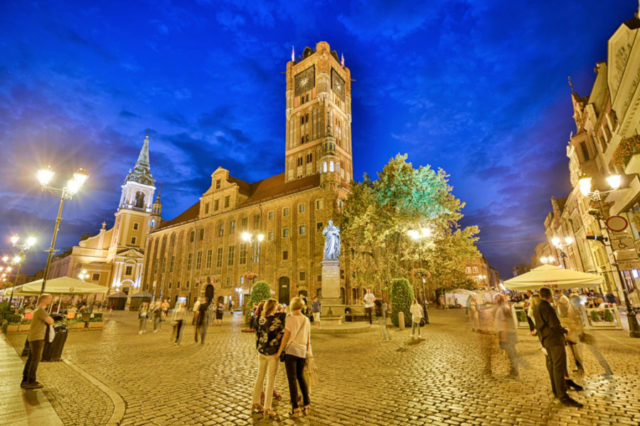
Toruń is a historic, red-brick town deep in the heart of Poland. The hometown of Copernicus (ahem, Mikołaj Kopernik) and famous for its gingerbread (which scents its streets with a heavenly aroma), it’s an utter delight.

On a balmy Friday night, in the heart of prime tourist season, I was hanging out on Toruń’s main square…and spotted zero American tourists. The floodlit, generously pedestrian-friendly streets had just the right number of people, and most of them were Polish (with a smattering of German travelers, visiting a place that used to be in Germany). Buying a big bag of gingerbread cookies (intended to last me a week…but gone by the end of the night), I strolled between Gothic brick towers, nursed a drink at an al fresco café on a cobbled square, and simply enjoyed the sensation of being the only Yankee in town.
A short train ride took me to majestic Malbork Castle — the former headquarters of the Teutonic Knights, and the largest brick castle on earth. It’s the most important, most impressive European castle that you’ve never heard of. When I asked the ticket-seller if he had any crowd-beating tips for my book, he stared at me blankly for a few seconds, then said, “Well, I guess on summer weekends you might have to wait, like, 10 minutes. Maybe.”

Once inside, I enjoyed going from room to room, squeezing through tiny brick doorways, ogling delicate fan vaulting — in a haze of medieval castle fantasies — and never once got stuck behind a tour guide with a numbered paddle and 50 pooped tourists in tow. The gigantic castle is a bit exhausting to tour…but not because of crowds.

Just 30 minutes farther north is perhaps the best example anywhere of an underrated city that simply blows away anyone willing to give it a chance. You may know it by its old German name, Danzig — but to locals, it’s Gdańsk.

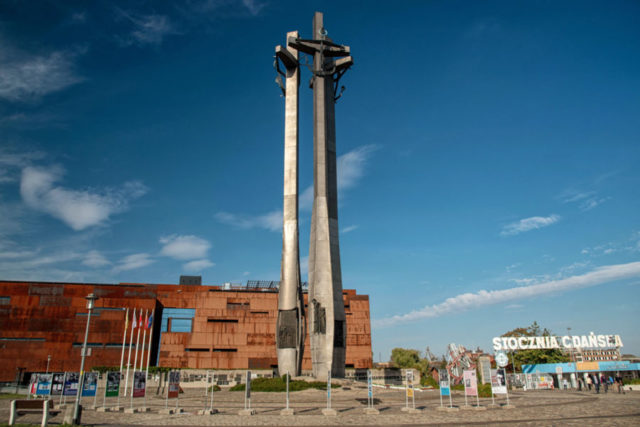
Gdańsk is intrinsically fascinating. Located on Poland’s Baltic coast, at the mouth of its main river, Gdańsk has been the primary crossroads of Polish history. There’s a spot in Gdańsk where you can look in one direction, and see Westerplatte — the exact location where World War II began (when Hitler invaded in 1939). And then, with a swivel of the head, from that same place you can see the shipyards where Lech Wałęsa staged his Solidarity protests in 1980 — sparking the beginning of the end of Soviet domination and the Cold War. The city is literally bookended by 20th-century history.

If history’s not your thing, then what about gorgeous old towns? If there’s a more stunning main drag in any city in Europe, I can’t think of it. I find myself fabricating excuses just to walk up and down Gdańsk’s “Wide Street” as frequently as possible. And behind those skinny, pastel, ornately gabled facades are endearing, unexpectedly fascinating little museums that bring to life the golden age of this maritime burg.

For sightseers, the Gdańsk area also has several new, cutting-edge museums that are among the very best I’ve seen in Europe. There’s one commemorating Lech Wałęsa and those Solidarity strikes (in the actual shipyards where the strikes took place); one telling the story of Polish emigration to the New World (in the neighboring port city of Gdynia); and the state-of-the-art Museum of the Second World War, with an exceptional exhibit that, unfortunately, has been compromised by political meddling.
Exploring Gdańsk for the first time in a few years, I was floored by how drastically the place is upgrading. I’ve loved Gdańsk since my first visit in 2004 — when it was, I’ll admit, something of a diamond in the rough. But today it’s simply breathtaking…without qualifications or reservations.

Granary Island, in the middle of the river that cuts through the middle of Gdańsk, was historically filled with handsome red-brick granaries. Bombed flat in World War II, it was left in ruins for generations. Like an ugly scar ripped through the heart of the city, the island was an off-limits eyesore. With each visit to Gdańsk, I was assured that the island would soon be renovated and re-integrated into the fabric of the city. I never quite believed it.

But on this visit, I literally did a double-take when I spotted the sea of construction cranes, turning this prime real estate into a futuristic new housing, dining, and entertainment district. Glassy, modern buildings — with rooflines echoing those historic granaries — will soon face the city’s classic old riverfront strip. Suddenly, humble Gdańsk looks like Oslo.

And the best thing about Gdańsk may be how undiscovered it feels. There are just the right numbers of tourists…but most of them are Polish, German, or Scandinavian. Norwegians and Danes flock here on cheap flights for cheap food and drink, ensconced in a dazzling historic city. Waiting for my flight at the brand-new Lech Wałęsa Airport, I noticed the names flicking across the departure boards: Trondheim. Oslo. Copenhagen. Stavanger. Helsinki. Stockholm. When Scandinavians are on board, you know you’re on to something good.

There is one big risk with going to Gdańsk, and it is this: You’ll come home evangelizing about the place with such fervor, your friends might start to think you’re a little unbalanced. (But then, one day, they’ll finally go there…and you’ll get a text that says, “OK, I GET IT NOW.”)

Poland alone has at least a half-dozen other cities where being able to pronounce the name is not a prerequisite for enjoyment: Poznań, Wrocław, Zamość — and even the capital. My recent visit to Warsaw was a revelation. It was amazing to see how fully realized a destination that city has become. It’s an absolute delight that goes toe-to-toe with more “known” capitals like Prague or Berlin.

But Poland is just one example of a country that’s easy and rewarding to travel in, but gets overlooked by whistle-stop tourists. My latest trip also took me to Hungary, where I reacquainted myself with Pécs (pronounced “paych”) — a small city at the southern edge of the country, close to nothing, but packed with more than its share of top-notch museums.

Pécs’ strollable core is congested not with tourists, but with local students. And the whole thing is slathered in bright, colorful Zsolnay porcelain — decorative tilework (invented right here) that’s a defining feature of Hungarian architecture.

I happened to be in Pécs on the evening of their wine harvest festival. A grandstand was set up on the main square, which was filled with locals grazing at a dozen different food stalls and sipping wine from another dozen little kiosks showing off local vintners’ products. Since it’s close to Croatia, Pécs menus come with Balkan accents. Settling into a bench with my paper plate of grilled meat and spicy ajvar sauce, listening to Britney Spears and Katy Perry hits thundering out of the loudspeakers, watching local kids play while their parents chatted and sipped new wine, I felt not like a gawking tourist — but like an invited guest at the banquet.

Up in the north of Hungary, I settled in for a couple of nights in my sentimental-favorite Hungarian small town, Eger. I got to know Eger over many years of tour guiding, bringing our Rick Steves Best of Eastern Europe groups here.  And every time I step into its tranquil main square, under the spires of a gorgeous Baroque church, I savor the small-town authenticity of the place.

Eger has sumptuous architecture, fine wine, a historic castle, and some endearing little museums just right for enjoyably killing a few hours. It had been years since I’d been to Eger’s thermal bath complex, a 10-minute riverside stroll from the main square, so I went for a soak an hour before closing time. A few days before, I had visited Széchenyi Baths — my favorite thermal spa in Budapest — and found it, for the first time ever, uncomfortably crowded. Until very recently, Széchenyi was mostly locals, with a few curious tourists. But on this visit, it was packed with little clumps of borderline-obnoxious international travelers, with a few irritated Hungarians mixed in.

However, Eger’s thermal bath complex was all mine. It was enjoyably bustling, with small-town Hungarians. Floating in the hundred-degree water, I heard not one word of English. And it was a delight to explore the freshly renovated complex, from its tranquil, old-fashioned Turkish bath under a stately dome, to its giddy indoor-outdoor whirlpool. On a trip where I took a dip in no fewer than five different thermal baths (I am an aficionado)…Eger’s small-town spa was the surprise favorite. And that was mostly because I had it all to myself.

Serendipity is more poignant off the beaten path, and when I returned to Eger one evening after a side-trip to some different thermal baths in the countryside, I found that a hot-air balloon had just set down right in the middle of the square. Watching the wranglers pull on sturdy ropes to expertly maneuver the bulging bag of hot gas as they slowly drained it of air, then gently tipped it over, I felt like a giddy backpacker on my first trip.

Hiking up to Eger’s stout castle, gazing out over its sweet square and skyline prickly with fanciful church towers, I thought for the umpteenth time on this trip how satisfying it is to travel to places like this one.

Eger, Pécs, Gdańsk, Toruń, and so many other gems are just now hitting that perfect “sweet spot” for travelers: Easy and accessible for anyone, but still largely undiscovered and crowd-free.

I love our Rick Steves Best of Eastern Europe in 15 Days Tour itinerary, which efficiently visits the “greatest hits” of this region: Prague, Kraków, Budapest, Rovinj, Lake Bled, and more. Returning from this trip, I was inspired to brainstorm a (totally hypothetical) “sequel tour” to that itinerary. What if you could link up the lesser-known gems of Central and Eastern Europe? Warsaw, Bratislava, Pécs, Zagreb, Slovenia’s coast and Karst, Sarajevo, Montenegro. You’d wind up with a tour every bit as rewarding as the original…but with a tiny fraction of the crowds.

When planning your next trip, consider skipping the predictable biggies. Instead, take a leap of faith and go to places like these…and let yourself be enchanted.

What’s your favorite uncrowded, undiscovered gem in Europe?


I was traveling in these places to update our Rick Steves Eastern Europe and Rick Steves Budapest guidebooks — which are available now. In these books, you’ll find all of the practical details for everything mentioned here. (In fact, these are probably the most lovingly updated but least used chapters in any Rick Steves guidebook.)

Europe’s off-the-beaten-path gems are a theme on my blog. For example, while mainland Italy is spectacular, Sicily has a few more rough edges…and far fewer crowds.

Slovenia is Europe’s ultimate undiscovered destination. I could write a book about the charms of Slovenia. (Oh, wait…I did.) Whether you’re exploring high-mountain pastures, sampling the local budget foodie scene, or browsing through wonderful Ljubljana, Slovenia earns a place in any itinerary seeking something new and uncrowded.

That said, even in super-popular places, you can (with a little effort) find your way to untrampled corners. For example, in Iceland, bust out of the “Reykjavik and Day Trips” rut and drive the entire Ring Road around the island. Linger at Lake Mývatn, a geothermal wonderland that still feels yours alone.
Rick Steves’ Europe Behind the Scenes: How to Make a Travel TV Show

This fall, we’re excited to be premiering Season 10 of Rick Steves’ Europe on public television stations across the USA. The new season includes episodes on Scotland, Portugal, Sicily, Greece, England, and more.

I just love it when a new season of shows comes out. It’s like Christmas morning. Like a lot of travelers, I first got to know the Rick Steves’ Europe travel philosophy in the late 1990s, through his TV show (on WOSU-34 in Columbus, Ohio — what was your station?). And that same spirit still inspires and informs so many traveling Americans today.

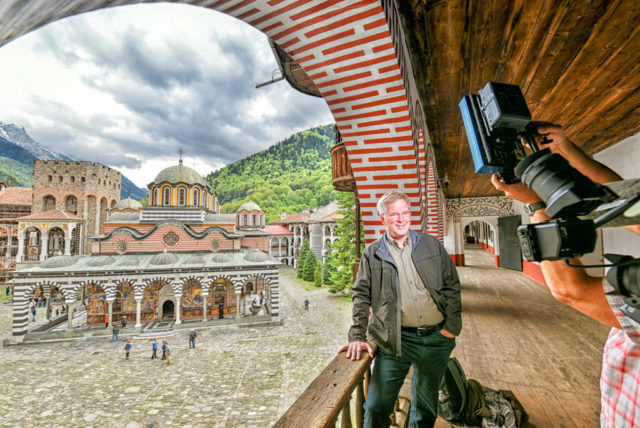
Previewing some of these new episodes has got me nostalgic, and a little jealous…because making travel TV is a lot of fun (and, yes, a lot of hard work). Not long ago, I scouted, wrote, and field-produced two episodes (Bulgaria and Romania) of Rick Steves’ Europe Season 9. It’s fascinating to be a fly on the wall of TV production. Here’s a behind-the-scenes peek into the process — from that first idea to your TV screen — with links to my in-depth blog series, which features lots more detail about each step.

Step 1: Pre-Production

Every show starts with a destination. But it’s not as simple as saying, “Let’s do a show on Romania!” You have to collect enough vivid experiences to fill 30 minutes of television. And then you have to whittle down that inspiration to fit just right into a 3,200-word script.

Over three decades of TV production, Rick has developed a keen sixth sense for what makes great TV. Anytime he says he’s “researching his guidebooks,” that’s also code for his process of sorting out whether and how a destination can best be captured on TV: Which local guides, experiences, and nuggets of history and culture will make the cut? He comes home from every trip with lots of ideas lashed to his budding script.

Occasionally we decide to film a show where we don’t have guidebook coverage — such as Romania and Bulgaria. That’s why, a couple of years ago, I headed to each of those countries on a whirlwind scouting trip, scouring the countryside and kissing lots of frogs to figure out what would make great TV.

Once the first-draft “shooting script” is finalized, it’s time to schedule the shoot. Our producer, Simon Griffith, arranges guides, hotels, transportation, and — most important — permission to film what we need to film. This usually involves working with the national tourist board, which might need to pull some strings to make sure we’re legal once we show up at a museum, church, or other landmark with our camera. All of this happens before a single frame of film is shot.

Step 2: On Location

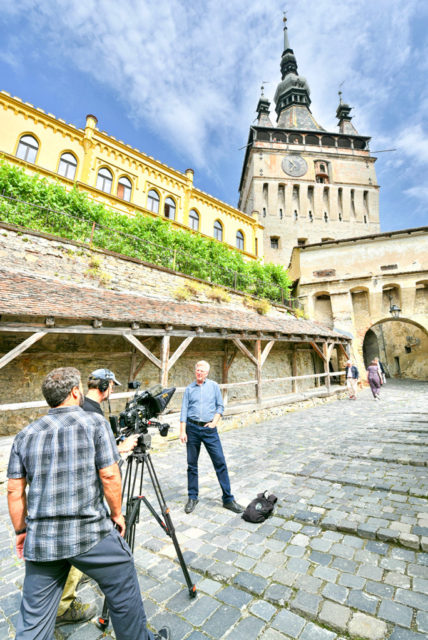
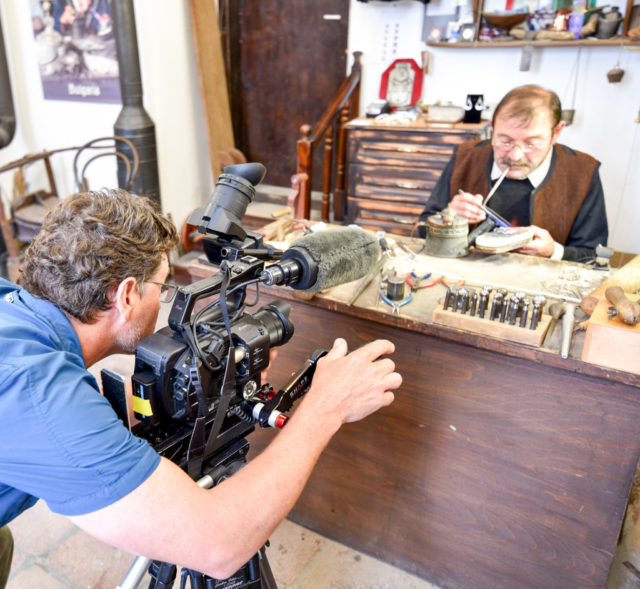
A TV shoot is a whirlwind of “covering the script” (making sure everything that’s mentioned is supported by footage). That includes three main components: “on-cameras” (where Rick explains difficult-to-cover topics by talking straight into the camera), “walk-and-talks” (where a local guide gives Rick an on-screen tour of a sight), and — most of all — “b-roll,” which is all that beautiful footage that can be artfully stitched together to convey a sense of place, and to illustrate points that are mentioned in the script.

Of course, everything is complicated by the need to constantly chase down good weather. Color-correction — the last step in the process — can do wonders to compensate for a cloudy day…but sunny is still better.

It takes about six days of intense travel to shoot a 30-minute episode. While that one-day-per-five-minutes ratio seems like it should be easy, people who work in TV field production are astonished that Rick Steves’ Europe can produce broadcast-quality shows at such a breakneck pace.

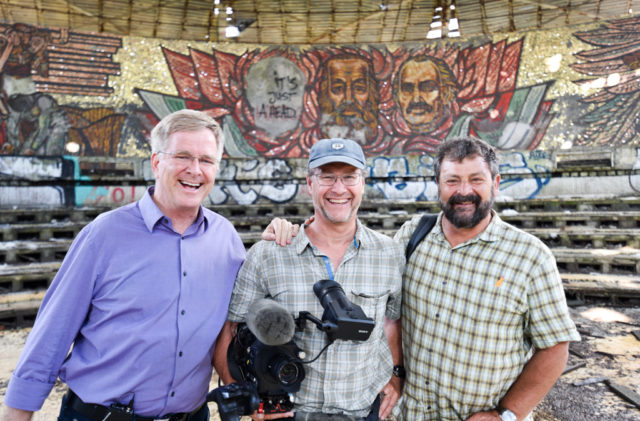
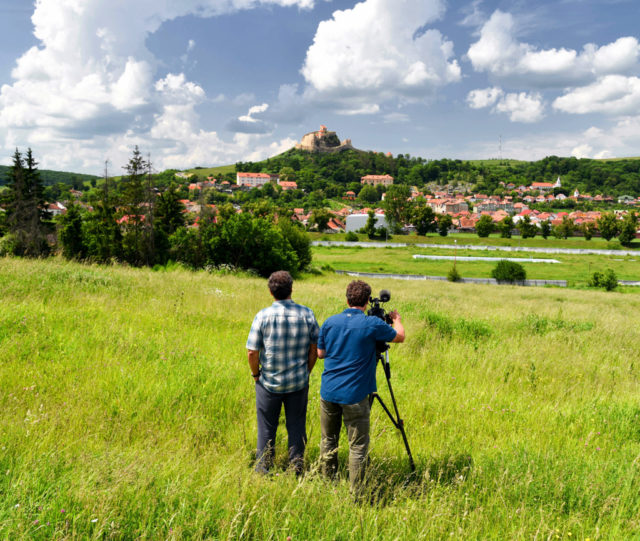
That’s thanks largely to Rick’s supremely talented “crew of two”: producer/director/fixer/gaffer Simon Griffith (the jovial, bearded Kiwi you see Rick dining with all over Europe); and a talented camera operator, who’s equal parts athlete and artist. I’ve worked with Karel Bauer, but other “shooters” have also worked with Rick and Simon.

That’s right: Except for rare occasions when an associate producer is dragging them down (ahem, ahem), most of the episodes of Rick Steves’ Europe you see were filmed with just that skeleton crew, occasionally assisted by a local guide…another detail that befuddles most TV production crews.

With more than 10 seasons of TV under their belt and an astonishing work ethic, Rick, Simon, and Karel are able to be unimaginably efficient. Simon usually hauls the tripod and other heavy gear, Karel also wears the hat of sound engineer (listening to the audio as he shoots the footage, to make sure it’s clean), and Rick…well, Rick’s an Energizer Bunny who — between writing, re-writing, and filming on-cameras, and polishing his guidebooks, blogging, and running his business on the side — still manages to leave everyone else in his dust.

Step 3: Deal with Serendipities, Good and Bad

While the “shooting script” provides a blueprint for filming, the crew has to be ready to flex with whatever comes up. Rick is constantly rewriting to accommodate changing conditions, bursts of inspiration, happy accidents, unhappy accidents, and whatever might find its way into Karel’s viewfinder. The rewriting process — called “scrubbing the script” — is also collaborative, as Rick debates each and every word with his weary crew…often late into the evening, after the gear is stowed, or on long road trips.

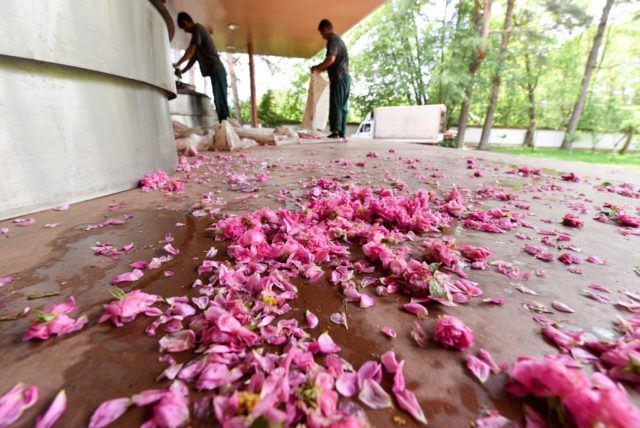
On the Bulgaria and Romania shoot, we enjoyed lots of serendipities — both good and bad. Bulgaria, a wonderful and underrated little country, provided us with vivid and surprising moments. For example, one morning we woke up in a remote town to find it was the day of their annual parade celebrating Slavic culture. And our visit coincided perfectly with the early-summer rose harvest, on the outskirts of that same town.

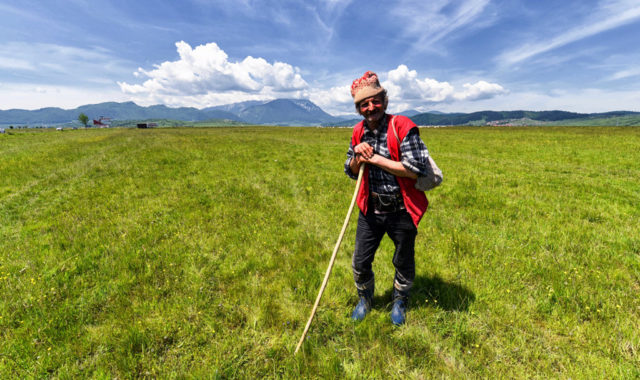
Romania — while a stunning and fascinating land — treated us to more bad serendipities than good ones. Even so, we found Romania so dense with great travel that we wound up having to cut it to the bone to reach our 30-minute runtime — losing one of my favorite (and most challenging-to-film) segments, at a remote shepherd’s settlement high in the Carpathian Mountains.

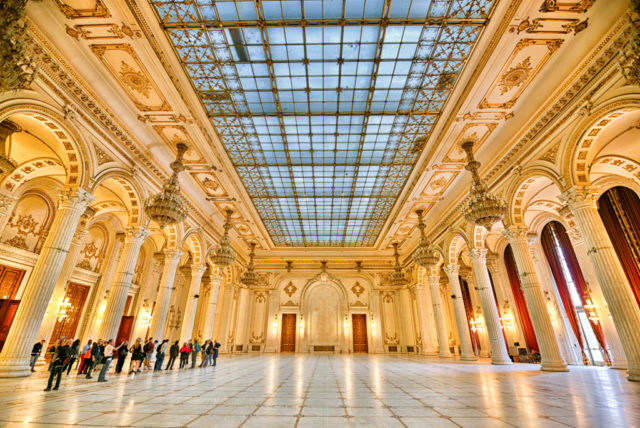
Romania also presented us with one of the most bizarre experiences the crew had ever had, when — after months upon months of assurances we’d have access to film the interior of the over-the-top Palace of Parliament — at the last minute, Karel was forced to sneak in his camera with a pack of tourists…only to be unceremoniously kicked out. Then, a couple of hours later, we got a phone call that permission had come through after all. Returning to the parliament, we were greeted with a literal red carpet and complete VIP access. (I was told this insane experience was far from typical…which, come to think of it, would be an appropriate tourism slogan for Romania.)

Step 4: Post-Production

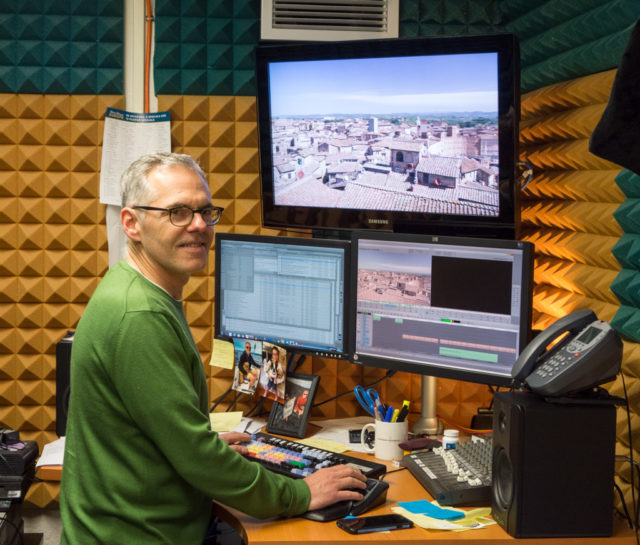
After all that work in the field, we still don’t come home with a TV show — just with a polished script and a bunch of raw footage. That’s when our master editor, Steve Cammarano, takes over. Steve has edited every single one of the more than 100 episodes of Rick Steves’ Europe (plus all of our specials). And he has the process down to a science.

First, once Rick is satisfied with the final script, he records a rough “scratch track” that Steve can cut to. Then, Rick and Simon watch Steve’s rough cut to make final changes, with the help of script consultant (and RSE Special Projects Manager) Risa Laib. (They often come up with some clutch last-minute fixes.)

The final soundtrack is recorded, and the show is color- and sound-corrected to even out inconsistencies between cameras and filming environments. Our graphics team comes up with the maps used on-screen to orient the viewers. And finally, the show is complete and delivered to public television.

Step 5: You Sit Back and Watch

That’s where you come in. Whether you’re tuning in on your local public television station, streaming, or watching on DVD, it’s a privilege for us to bring Europe into your living room.

In case you didn’t realize it, every single episode of our TV series is available to stream, completely free and ad-free, in its entirety, on our website, YouTubeFacebook, and Hulu — including those shows on Bulgaria and Romania. The twelve brand-new episodes of Season 10 will air nationwide on public television beginning in early October, and soon after each episode is on TV, you’ll be able to find it on our website. And, if you’re still into Blu-ray or DVDs, you can get them in that format, too. (We’re preparing a new Blu-ray/DVD anthology that will include all 10 seasons, plus all of our specials, which will be available in time for the holidays.)

Phew! That’s a whirlwind account of the tedious but immensely rewarding process of travel TV production. At the end of the day, it’s all more than worth it — for the joy of sharing Europe with our American viewers. Thanks for watching.

What are your favorite episodes of Rick Steves’ Europe? Any places you wish we’d film?


For more on Rick Steves’ Europe Season 10, check out our TV page.

For all of my full-length “Behind the Scenes” posts, with lots more photos and anecdotes, you can find the complete lineup here.

If you’d like to watch a video version of this post, check out the wonderful “Making Of” episode of Rick Steves’ Europe from a few years ago — so you can see Rick, Simon, and Karel in action.

Believe It: 8 Reasons You’ll Love Warsaw

I’m back in Warsaw, Poland’s capital, updating the upcoming 10th edition of our Rick Steves Eastern Europe guidebook. And I’ve gotta say — this city is just great. No, really.

I realize that Warsaw has a blemished reputation. Those who think of it at all, don’t think much of it. It’s synonymous with an agreement among an Evil Empire of nations who joined together to hate our living guts. And historians know that the city was brutally devastated in World War II. Even Europe completists think of Warsaw like taking their medicine: Well, I guess we have to go there…eventually.

But I’m here to tell you: Warsaw is fantastic. Yes, it lacks the romance of Prague or Kraków. But as a thriving, modern European capital — more on the order of Berlin or Athens or Budapest — it’s hard to beat. Just about any traveler can find something rewarding here. I think of Warsaw as Europe’s great “stealth destination”: It’s not on anyone’s radar. And then, even once you’re there, its charms sneak up on you when you’re not paying attention…until WHAM! — you realize you’re having a blast.

Here are my top eight reasons why Warsaw deserves to make the cut on your next itinerary.

It has an amazing food scene. 

On my last trip to Warsaw, I enjoyed the best food tour I’ve ever taken. It was a revelation to see (and taste) the city’s explosion of creative culinary energy. Warsaw is one of Europe’s most unexpectedly interesting foodie cities, period.

On this trip, I decided to go all-in and booked a table at Atelier Amaro, which owns one of Poland’s two Michelin stars. Filling an unassuming little brick building at the corner of Łazienki Park, the restaurant has impeccable service and delectable cuisine.

The best restaurants are rooted to a place, and Atelier Amaro’s tasting menu of nine courses (ahem, nine “moments”) was a journey through Polish forests and farms. Earthy notes; foraged greens; ample but not overwhelming hits of dill and beet and berry; and innovative, New Nordic-inspired plating.

One dish, served in a tiny lidded bowl, appeared to contain only a blanket of clover. But punching through that layer of wood sorrel, my spoon found tiny wild strawberries marinated in bison grass oil, tomato seeds, and horseradish.

The wild duck was aged in hay, and smoked, and seared — but rather than tasting overworked, its flavors were perfectly balanced. And the best dish may have been a minuscule ice-cream cone with pungent chive ice cream.

The entire experience, including drinks and tip, came to $120 — a bargain for a meal of this caliber. Ten years ago, I would have laughed in your face if you told me I’d spend more than $100 for a dinner in Poland. Today, I’d do it again in a heartbeat.

Chopin is everywhere.

While I appreciate music, I’m not an enthusiast…except when I’m in Warsaw. There’s something about the music of Fryderyk Chopin that perfectly suits his hometown. While often thought of as being French, Chopin had a Polish mother, was born just outside Warsaw, and said that the music he composed sounded like the wind blowing through the willow trees of his native Poland.

On my first visit to Warsaw, my local friend Kasia insisted that we attend a performance in the concert hall at the Chopin Museum. Watching the pianist moved with profound emotion as he pulled out those notes, and seeing the dewy eyes of the otherwise-steely Varsovians all around me, I realized how large Chopin looms in the Polish cultural legacy.

Ever since, I’ve made a point to attend concerts each time I’ve come to Warsaw, including the summer-only Sunday Chopin concerts in Łazienki Park — performed in the shadow of a giant monument to the great composer. Varsovians show up in droves to pack around the fountain and feel their patriotic souls stirred.

On this visit, I enjoyed a salon concert at my B&B (more on that later). When the pianist entered, before taking her seat, she carefully adjusted the light that had been aimed at the keyboard — raising it to illuminate the portrait of Chopin on the wall behind her. I’ve come to learn that Poles revere the Black Madonna of Częstochowa, Jesus Christ, and Fryderyk Chopin…in that order.

The people-watching is mesmerizing.

Sitting on any Warsaw bench, watching the world go by, you observe a perfect cross-section of Polish society. Grannies in track suits and tennis shoes, clutching humble flower bouquets, rushing to catch the tram. Tattooed hipsters with clean-shaven heads and long beards down to their perfectly sculpted pecs. Old-timers with Lech Wałęsa moustaches and faux-leather vests that are older than their adult children. Perfectly coiffed businesspeople, from all over Europe, deep in English conversation. Nuns and priests chatting on their cell phones. The Polish national weightlifting squad, out for an intimidating sneer. Husky brides and huskier grooms on a photo shoot at all the big landmarks. It just never gets old.

It’s infused with a surprising elegance…at budget prices.

Between the World Wars, Warsaw was one of Europe’s leading cities — cosmopolitan and genteel. While this was battered out of them in World War II, then through the slow burn of communism, Warsaw always retained a certain refinement in its DNA. Now that the city has rebounded, and has the freedom and wherewithal to pursue its true identity,  Warsaw is putting on the dog once again. For example, the top-of-the-top Hotel Bristol, along the Royal Way thoroughfare, comes with a variety of exquisitely decorated bars and cafés (like the sumptuous Column Bar, pictured above) — as elegant as any grand hotel in Europe. If you want class, you’ll find it in Warsaw.

And yet, the city is remarkably affordable. While Poland’s economy is strong, it remains reasonably priced on a European scale. That Hotel Bristol? In most European capitals, I’d expect to pay $400 or $500 for a room there. On this trip, they quoted me closer to $200. A comfortable, midrange hotel is comfortably under $100. Yes, that fancy dinner I mentioned is pricey by any standard — but remember, it’s the most prestigious restaurant in the entire country. A delicious, memorable, foodie meal at an upmarket restaurant can run $15-20…half what you’d pay in London or Paris. As its economy improves, Poland is hitting the sweet spot of affordable elegance.

The museums are world-class.

If you think of Warsaw as the Washington DC of a nation of 40 million people (including their field-trip-crazy kids), it just makes sense that the city would have top-quality museums. And it does, in abundance. Poland does museums particularly well, and you could spend days in Warsaw’s — most of which have been upgraded over the last few years. On this visit, I made a point to walk through all of the big museums in town — and was blown away, again and again, by the quality, which goes toe-to-toe with any great city in Europe.

If you like Polish art (or think you might), hit the National Museum — with Matjekos, Malczewskis, and Boznańskas that’ll knock your socks off. If you’re into music, tour the Chopin Museum. History buffs hit up the Warsaw Uprising Museum, or the newly re-opened Museum of Warsaw. Palace aficionados are wowed by the Royal Castle. Parents with kids in tow head down to the Copernicus Science Center, with two floors of hands-on, interactive, educational exhibits. And my favorite museum in Poland — and perhaps Europe — is the exquisite Museum of the History of Polish Jews, which opened in 2013. This immersive, thoughtful museum delves deeply into the full breadth and depth of the Polish Jewish experience, in a way that’s illuminating to experts and novices alike.

It’s perfectly on-trend.

While most visitors stick to Warsaw’s staid, stuffy “Royal Way” spine — leading between the main boulevard and the rebuilt Old Town — there are countless outer districts of the city that are young and vibrant and exciting and amazingly trendy. Śródmieście (“Downtown”), just a 10-minute tram or Uber ride south of the tourist zone, is where Varsovian yuppies and hipsters mingle at colorful, creative cafés tucked under hulking Soviet-era arcades. The square called plac Zbawiciela  — shaped like a Trivial Pursuit pie, with tram tracks running through the middle — offers a glimpse of this scene, with wine bars and posh coffee houses and Thai street food and hipster dives, all spilling out onto the square.

Just a few blocks away is my favorite discovery from this trip, the Hala Koszyki. This trendy food hall, which opened in 2016 in a renovated brick 1906 market hall, is your handiest one-stop shop for sampling Warsaw’s current dining scene. Outside — sandwiched between the two brick entrances — is a sprawling zone of al fresco tables tucked among trees strewn with twinkle lights.

Inside you’ll find a dozen and a half entirely different eateries, covering all of the culinary bases: Spanish tapas, sushi, Indian, Latin American, Italian, Thai, hummus bar, beer hall, tea salon, gourmet chocolates, gelateria, and, of course, Polish. It’s anchored by the big bar in the middle, surrounded by communal seating. And tucked down a little side hall is the Bazar Koszyki — a tight row of nine different international street foods (udon, hot dogs, flammkuchen, pierogi, pho). The upper level, ringed by design studios, has quieter seating. They also have live performances (concerts for kids on Sunday afternoons, Polish stand-up on Wednesday nights) — check www.koszyki.com for details.

It’s simply enjoyable.

If you want corroborating evidence for your dated impressions of Warsaw — that it’s nothing but dreary concrete apartment blocks — you can find it. But the city also has verdant gardens, inviting squares, kid-friendly pedestrian zones, and parks you want to get lost in. For example, after years of turning its back on the Vistula River, Warsaw is now embracing it — with freshly landscaped riverside parks, manicured trails, and lively beach bars.

Whether you want to stick to the pretty-as-a-postcard Old Town, or bust out of the tourist rut and go hang out with the Varsovians in an overlooked corner of their city, there are plenty of ways to enjoy yourself in the Polish capital. And, like any vibrant, forward-looking, youthful city, Warsaw comes with surprises. Graffiti murals laugh down on commuters, playful fountains beckon to kids, and otherwise dreary buildings hide colorful cafés, artisan workshops, and boutiques in their cellars. If you sit on a bench and notice a button, press it…and you’ll hear Chopin music playing.

Creative entrepreneurs more than compensate for the rough edges.

When I was first writing my Warsaw guidebook chapter in 2003, I struggled to find hotels and restaurants I felt good about recommending to our Rick Steves readers. Varsovians — still recovering from the brutal communist experience — were, as a rule, gruff. But since then, a new breed of entrepreneur has hustled to overcome that image.

One of my favorite success stories is Jarek Chołodecki, who contacted me when he opened a small B&B many years ago. At the time, this concept was a novelty in a city of high-end business hotels and dreary old communist holdovers. But Jarek parlayed a stubborn pride for his city, and an understanding of what makes it special and what his guests want, into a big success.

His Chopin Boutique B&B has grown over the years (he just told me he’s up to 30 rooms, having now taken over the entire building). But he doesn’t just accommodate his guests — he takes pride in helping them fully experience all that Warsaw has to offer.

I always used to lament to Jarek that there were relatively few Chopin concerts in town; other guests did, too. So he started hosting nightly chamber concerts of Chopin piano performances in his B&B lounge.

On this visit, as I checked in after an overnight connection from Seattle, Jarek said, “Our concert starts in 10 minutes, if you’d like to join.” Jetlagged as I was, I dragged myself down to his little salon and enjoyed a delightful 50 minutes of music that put me in the perfect spirit to enjoy the next 10 days in Poland. He told me this was concert number 1,844 — that’s more than five years of nightly Chopin. And I imagine that thousands of Rick Steves guidebook readers have gathered at Jarek’s breakfast table over the years — all of them feeling lucky to have such a welcoming home-away-from-home in an intimidating city.

And that’s why I do what I do. Through our guidebooks, we strive to put our readers in touch with Europeans who will help them make magnificent memories. Jarek is just one of many smart, capable, visionary, and proud Varsovians who have transformed their city from a gloomy punchline into one of Europe’s best-kept secrets.


For all my best tips on Warsaw, check out our Rick Steves Eastern Europe guidebook; the updated 10th edition will be available in early summer 2019.

“What about Kraków?” you might be asking. Well, Kraków is great, too…and has amazing food of its own. (And stay tuned for my upcoming posts on Gdańsk and northern Poland.)

Rick enjoyed a trip to Poland a few years back. You can watch short videos he took at Kraków’s Rynek Underground Museum, Sanctuary of St. John Paul II, and Schindler’s Factory Museum; at a farmers’ market and milk bar in Kraków; in Warsaw’s Piłsudski Square; at Malbork Castle; and in Gdańsk.


Sicily’s Ultimate Road Trip

Sicily is one of Europe’s most enticing “fringe” destinations — still largely undiscovered, but well worth the journey. For Italy aficionados, Sicily is a fascinating “continuing education” in a place that’s somehow even more intense than the mainland (with all the highs and lows that entails). For first-timers, it’s a collection of delightful surprises and an exhilarating introduction to Italy. And for people who find mainland Italy a bit too much…could I perhaps interest you in Germany?

Our brand-new Rick Steves Sicily guidebook, published in April 2019, has been a real team effort: co-author Sarah Murdoch, contributing author Alfio di Mauro, contributions from Rick and from me, and the usual talented work by our editors, mapmakers, and graphics people. We’re thrilled with how the book turned out. Its publication has inspired me to share a few more of my favorite Sicilian photos and memories that haven’t seen the light of day yet.

These photos loosely follow the route I drove around Sicily to research the new book, starting and ending in Palermo and circling the island counterclockwise. It’s also the route of our recommended two-week itinerary by car from our Sicily book. Enjoy!

Stop #1: Palermo

Palermo’s main intersection — called the Quattro Canti (“Four Corners”) — features four fancy facades facing each other. Trying to capture this lovely space on film, I made full use of my fisheye lens. In addition to being a fascinating study in the theatricality of Baroque architecture — as the day goes on, the sun moves across female statues embodying spring (young maiden), summer, fall, and winter (elderly woman) — this intersection is the navigational center of town. I found myself passing through here again and again…and was always glad I did.

Stop #2: Segesta

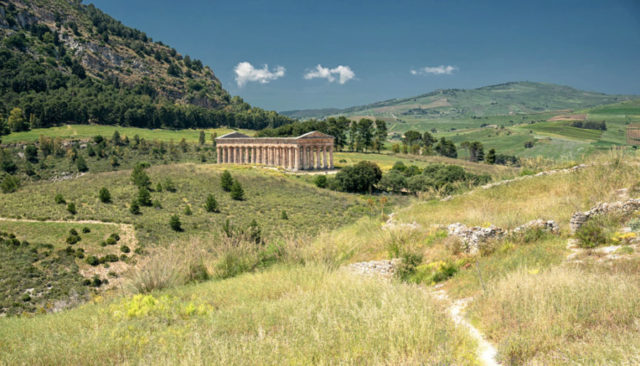
Sicily — which was known as Magna Graecia (“Greater Greece”) back when the ancient Greeks outgrew their little islands and followed their own westward expansion — is the best place outside of Greece to see ancient ruins: Segesta (pictured here), Selinunte, and Agrigento (described later) are the “big three,” but seemingly every town has an old temple ruin or a theater carved into the hillside.

Stop #3: Trapani and the West Coast

Sicily’s often-overlooked west coast is a fine spot to settle in for a day or two of side-tripping. From the workaday but endearing port town of Trapani, you can head up to the hill town of Erice (this photo is taken from its castle), take a thirsty stroll through medieval salt pans, ride a boat to the isle of Mozia to see scant remains of the ancient Carthaginian civilization, sample some wines in a Marsala cantina, and set sail for the Egadi Islands. (Favignana has a surprisingly fascinating museum dedicated to the tuna fishing and canning industry that put this area on the map.) While not the most spectacular corner of Sicily, Trapani and the west coast are a fine kick-off for an island loop.

Stop #4: Agrigento

Sicily’s top sight from antiquity is the Valley of the Temples, in Agrigento. Slightly misnamed, it’s a half-mile-long ridge lined with temples (in various states of repair) from Greek times. Like the Roman Forum or Ephesus in Turkey, it’s one of those places that stokes your imagination for ancient times…you can’t help but mentally don a toga and picture when this was a thriving community.

While Agrigento is famous for its Valley of the Temples, its overlooked town center — which also lines up along a promontory —  is worth exploring. I stayed in an agriturismo in the nearby countryside, but I was glad I ventured into Agrigento one evening for a stroll up its main drag and a good dinner. Forking off Agrigento’s spine is the colorful “stairs of the winds” — a popular canvas for local street artists.

Stop #5: Villa Romana del Casale

While many of the great ancient sites in Sicily are from Greek times, it also has some of the best-preserved ancient Roman mosaics anywhere. Villa Romana del Casale, strategically located in the middle of nowhere, has elaborate floors decorated with painstakingly crafted murals that depict exotic animal hunts, cherubs on a fishing trip, and mighty female athletes who have acquired the unfortunate, persistent nickname “the bikini girls.”

Stop #6: Ragusa and Southeastern Sicily

Looking back on my Sicily trip, my favorite stop may have been mellow Ragusa, burrowed deep into the island’s southeastern hills. With houses blanketing two adjacent hills, Ragusa hits that perfect travel sweet spot: It’s big and bustling enough to be interesting and to serve its visitors well, but small and out-of-the-way enough not to be overrun by tourists. I saw quite a few out-of-towners here, but it seemed that almost all of them were Italians…a good sign.

I happened to be in Ragusa during an endearing little festival honoring the local Ragusano cheese. I expected the place to be mobbed. Instead, I strolled through a floodlit town where local people, and a handful of Italian tourists, were out enjoying their beautiful piazzas. The streets and squares of Ragusa are designed with a Baroque sense of theatricality and drama…church domes seem to be positioned just so.

Another reason to like Ragusa is that it’s an ideal home base for side-tripping to a delightful variety of low-impact, lovely towns dotting southeastern Sicily. Chocolate-crazy Modica (pictured here), valley-filling Scicli, and the Baroque beauty Noto are all within a short drive. This area was severely rattled by an earthquake in 1693 — and the reconstruction coincided perfectly with the high point of Sicilian Baroque. The entire region was rebuilt in this same style, using the luscious local sandstone, giving it an unusual harmony — especially in Noto. I found this to be the prettiest part of Sicily.

Stop #7: Siracusa

Siracusa may be Sicily’s most all-around entertaining destination. The mainland is dreary sprawl, but the historic center — filling a little island called Ortigia, surrounded by a nearly 360-degree bay — is magic: ancient Greek and Roman ruins, quality restaurants, characteristic back lanes, creative artisan boutiques, colorful puppet shows, hipster cafés, pebbly beaches, and my favorite square in Sicily — facing the town cathedral, which, like Siracusa and Sicily itself, is built upon layers of history. Ancient Doric columns still line the nave.

Stop #8: In the Shadow of Mount Etna

Catania — Sicily’s second city — gets a bum rap. It’s big, gritty, intimidating, and hard to navigate. While I wouldn’t put it at the top of my “must-visit” list, I was glad to spend the night here. Its old center is made of black lava rock from Mount Etna, which smolders on the horizon. Its center has been slowly rejuvenated — leaving the old core far more elegant than Palermo’s (which wears its charm with a patina of scruffiness).

Sicily’s glamorous poster child is Taormina, dramatically clinging to the edge of a cliff, with grand views to smoldering Mount Etna. Capping things off are the well-preserved ruins of a Greek and Roman Theater — built by the ancient Greeks, but later “upgraded” by the Romans. It’s hard to imagine a more scenic backdrop for a theatrical production. While I love the theater and the setting, I have to admit I was left pretty cold by Taormina. It’s a posh resort that — like most posh resorts — feels soulless, its authentic character plastered over in favor of amenities to please deep-pocketed tourists. (To be fair, I was primed not to like Taormina by many Sicilians and Sicily aficionados who had gravely warned me it was not “the real Sicily”…one of them used a perfect Italian phrase to describe it: “All smoke and no meat.”) Yes, you’ve gotta see Taormina. But you may find that other places stick with you longer.

We’re spoiled in the USA — with our long, broad, sandy beaches in California, Florida, and Hawaii. In Europe, a “beach” is rarely sandy — and more often, rocky and pebbly. Sicily is a great beach destination, but only for those who understand this crucial difference. The most memorable beach I saw here was Isola Bella, tucked just below the cliff-clinging center of Taormina (and accessible by a quick and scenic gondola). In the 19th century, an English noblewoman bought this island — tethered to the mainland only by a slushy pebble causeway just a few feet wide — and built a villa here. I went down to check out the villa…but the beach was the real star. It was packed with holiday-makers, basking in the hot Sicilian sun, splashing in the stunningly clear water (a fair trade-off for the lack of sand), and struggling to get comfortable on the rocks.

Mount Etna — the still-active volcano that gave rise to Sicily — is famous for its steaming profile. But what really blew me away was its stunning, fun-to-explore wine region. My favorite stretch was along its northern slope, between the villages of Linguaglossa and Randazzo. Regardless of whether you enjoy the wine, the scenery and dreamy countryside culture are divine.

Stop #9: Cefalù

My favorite beach town in Sicily is Cefalù…not for its fine beaches (though it does have those), but because it has the soul of an old fishing village — you still see fishermen pulling their boats up onto the beach, between the sunbathers. Its centerpiece is an insistently likeable Norman fortress-church, decorated inside with glittering golden mosaics. Cefalù is simply a fun place to be on vacation — it reminded me of my favorite island getaways on Croatia’s Dalmatian Coast.

The most satisfying hike in Cefalù is up to the top of “La Rocca” — the Gibraltar-like giant rock that rockets up above town. It’s a steep and rugged climb, but at the top you’re rewarded with stunning views over the town’s rooftops and hulking church.

On the day I summited La Rocca, with a sense of achievement and curiosity, I checked my Health app: 21,000 steps and the equivalent of 105 floors (plus another 105 on the way down). That’s like taking the stairs to the observation deck of Chicago’s Willis Tower. Yeah, I think I earned my gelato.

Stop #10: Back to Palermo

You know a city has gotten under your skin when you’re conspiring to get back there before you’ve even left the country. I started my trip in Palermo, then circled Sicily. As the end of my loop neared, I realized I really wanted one more crack at the island’s main city — partly for my guidebook work, but also just because I enjoyed it. I gave up a day off I’d planned in Taormina and added one more day in Palermo. I loved having another shot at the city, with the benefit of all I’d learned in the rest of the country. This strategy worked well for me in Iceland, too — where I had a few days in Reykjavík both at the start and the end of my trip. I like this approach so much, I’m going to start doing it on purpose.


Our new Sicily guidebook — with all of the details about everything mentioned here — is available now.

This itinerary works great by car. Sicily is a little crazy to drive in — but once you get used to it, it’s not so bad.

For my best advice on traveling in Sicily, check out my Top 10 Sicily Travel Tips.

And if you’re a foodie like I am, you’ll definitely want to sample Palermo’s street food.

We also have a wealth of free Sicily content on our website, including a recommended itinerary, links to two new episodes of Rick’s public television series about Sicily, several interviews from Rick’s public radio show about Sicily, more gorgeous photographs, recommended books and movies about Sicily, and much more.

And if you’d like to visit Sicily — but would love it if someone else did all the driving, took care of the hotels and half of the meals, and explained it all to you — well, then, we have a great 11-day tour for you.


Dining at Europe’s Foodie Splurge Restaurants: A Practical Guide

These days, more and more travelers are investing serious time and money in top-end fine-dining experiences across Europe. And on a few special occasions, I’ve jumped on this bandwagon — spending more on a meal than my hotel room cost.

I proudly consider myself a foodie. But I define “foodie” broadly: I’m simply someone who considers food an integral part of any culture — and any travel experience. On the other hand, I’m also thrifty, so splurging on a fancy meal doesn’t come naturally to me. I strongly believe that “foodie” doesn’t have to mean “expensive.” Some of my favorite culinary experiences in Europe have come with the lowest price tags, from grazing on street food in Palermo to my €25 day in Ljubljana.

And yet, a fine-dining extravaganza certainly deserves a place on the spectrum of foodie experiences. Here’s one traveler’s take on what it’s actually like to dine at a world-rated restaurant — designed to help you decide whether that experience deserves your time and money.

Finding, Booking, and Dining at High-End Splurges

Part of the fun of fine dining is doing your homework — figuring out which place deserves your splurge budget. I’m a devotee of Netflix’s exquisite food documentary series Chef’s Table — and after every episode, I’m ready to book a plane ticket. (Documentary Now! — also streaming on Netflix — did a genius parody of this type of foodie tourism.) And the Restaurant Magazine 50 Best Restaurants list has — among a younger generation of foodies — eclipsed Michelin stars as an indicator of the world’s best (or, at least, buzziest) eateries. Learning about a restaurant through these sources can make booking and anticipating a reservation a highlight of your trip preparation.

But that’s the first trick: Getting a table. Restaurants that are really hot book up many months in advance. If you have a place in mind, as soon as your dates firm up, check their website for the reservation policy. Many release blocks of reservations two to three months in advance  — and once they’re gone, they’re gone. It’s not unusual for foodies to set an alarm for midnight Copenhagen time, three months to the day before their visit, to try to book that elusive table.

So, your table is booked, and you’re ready to drop $200 per person on (what had better be) a life-altering culinary experience. If you’re like me, you may need to spend a little time rationalizing that high price tag. I’m not going to pretend I’m some sort of a bumpkin, but I must admit, until a few years ago, I was skeptical about fine dining. For a long time, I believed that once you reach a certain cost threshold for an upper-midrange restaurant (say, $40 or $50 a person), how could it really get that much better? At a certain point, you’re just throwing good money after bad. But a few recent dining experiences have changed my thinking.

On a trip to the Basque Country in northern Spain, my wife and I booked a table at what was, at the time, the “16th top-rated restaurant in the world,” Azurmendi. Driving through the verdant Basque hills to our midday reservation, we were debating whether lunch for two could really be worth a total tab of over $300 and several hours of our precious Spanish vacation.

But when we walked in the door, we began to understand that when you go to a world-rated restaurant, it’s not just a meal — it’s an experience. If you conceptualize this meal as part of your “food budget,” it’s outlandish. But if you think of it as an “experience”…well, that may be justifiable. We’ve spent $300 on other experiences in our travels, and felt it was a good value: prime tickets for a hit musical on Broadway or the West End, or a home playoff game for my beloved Denver Broncos, or a live concert of a huge-name musical act, or a sightseeing flight through Slovenia’s Julian Alps. And in an age where chefs are attaining celebrity at a level on par with rock stars and athletes…well, that’s what splurging is for.

As we arrived for our reservation at Azurmendi, we were invited into the leafy conservatory and given a little picnic basket filled with creative amuses-bouche.

Then, in the greenhouse, they showed us where some of the herbs and produce were grown; more amuses-bouche were creatively tucked among the plantings.

Then they took us into the busy kitchen, where an army of chefs and cooks — outnumbering the diners — were scurrying around with great precision, directed by the confident chef, Eneko Atxa. Observing this controlled hubbub, we were offered yet another amuse-bouche.

About 30 minutes and a light meal after we’d arrived, we were finally shown to our table. The rest of the meal was a fine experience, and taken together, that’s just what it was: an experience. I’ll admit it’s not The Best Meal I’ve Ever Eaten, but it was certainly one of the most interesting and entertaining.

Chef Atxa elevates Basque cuisine to an astonishing degree. Each dish was an adventure…an experiment in intensely focused flavor. Cauliflower, fried eggs, and truffle, composed like a surrealist painting. Natural spider crab, emulsion, and infusion — a super-concentrated taste of the sea that left my mouth tingling for several courses. Slightly spicy fried suckling pig and three Basque cheeses in three textures, which was…exactly as described.

Leaving the restaurant, we agreed that — assuming travel is worthy of the occasional splurge — it was $150 per person well-spent. And we certainly remember it more vividly than any other meal on that trip.

My favorite fine-dining experience took place in the remote Slovenian countryside, at Hiša Franko, owned by 2017’s highest-rated female chef in the world, Ana Roš. Ana was profiled on Chef’s Table, which we watched not once but twice before eating there. Imagine our delight when we walked in the door for our reservation, and there stood Ana herself at the maître d’ station. She took our coats, showed us to our table, and brought us bread, while we stuttered our greetings, star-struck and tongue-tied.

But that was just the beginning of a marvelous dining experience. Ana Roš lacks the theatricality of Azurmendi…but she doesn’t need it. It sounds like a cliché from a cooking-competition TV show, but over the course of her degustation menu, she achieved what every great chef aspires to: Through her food, she told a story about herself, and about the place she comes from. The progression of dishes felt like journeying through the pastures, rivers, and mountains of the Slovenian countryside all around us. Her food tasted like Slovenia. Her food could only be rooted in that place, and could only have been made by her. It was a culinary revelation the likes of which I have never had before, or since. And that’s why — for me, at least — it’s worth it.

Fine Dining for Dummies

I’m still new enough to this fine-dining scene to find its customs quirky and fascinating. If you haven’t experienced a fine-dining restaurant, let me walk through what to expect — tongue planted firmly in cheek.

On arrival, you’ll be greeted warmly and seated. Your purse even gets its own little stool. Everything operates with exacting precision, yet the pacing and atmosphere are insistently relaxed.

You’ll be handed a menu, but normally that’s something of a ruse. The choice is simple: Do you want the smaller tasting menu, the bigger tasting menu, or — at the finest places — the gargantuan tasting menu? I’ve never ordered anything but the smallest option, and I’ve never waddled out of a fine-dining restaurant anything short of full-to-bursting. I imagine the full-blown option would require serious consideration of the “boot and rally” strategy.

In addition to your food, you can choose whether to add the wine pairings. And if you’re going to commit to a top-end meal, just go ahead and do the wine pairings. A good, mid- to upper-mid-range restaurant stocks a nice variety of local wines, and the server can help you narrow down a glass or bottle to your taste. Well all know the rules of thumb: red wine for beef, white wine for fish. But a fine-dining restaurant takes things to an entirely different level. Your sommelier is a master at meticulously pairing wines to the nuances of each course, in a way that’s mutually beneficial to both wine and food. When properly paired, it’s nothing short of astonishing to take a sip of wine, then take a bite of food, then take another sip of wine — and see how much both flavors have changed.

The meal begins with a tiny appetizer called an amuse-bouche, which loosely translates as “palate stimulator.” (The plural is — and yes, I looked this up — amuses-bouche, which may be the most perfectly pretentious word I have ever come across.) The amuse-bouche is a sort of culinary overture — the chef is firing a warning shot across your taste buds about what’s to come. It’s a clever way for a talented chef to show off, while sneakily doubling the number of courses. While low-end high-end restaurants greet you with one amuse-bouche, the fanciest ones trot out a progression of a half-dozen or more.

By the time you make it through all of the amuses-bouche, you’re pretty much full. And then it’s time for the first course. Don’t worry — these meals usually span over three hours, sometimes four, so by the time the main courses arrive you’ll already have digested most of your amuses-bouche. Still…pace yourself, come hungry, and wear your roomy “Thanksgiving pants.”

Speaking of pacing yourself, let’s talk about the bread: Don’t fill up by gobbling the bread the moment it hits the table. This seems painfully obvious. However, it’s far more difficult than it sounds, because at a great restaurant, the bread is fiendishly delicious — spongy and warm inside, crusty and slightly charred outside. It is not an exaggeration to say that at more than one of the high-end meals I’ve had, the bread was one of the best dishes to hit the table. So we’re in agreement: Go ahead and eat some of the bread. Just…pace yourself, OK?

There will be a progression of courses. Sometimes you’ll have a list to follow along; other times, you’ll just take it as it comes. With each course, your server has prepared a brief lecture, explaining the ingredients, provenance, and technique represented. Cloches will be lifted with great ceremony, billowing rich-smelling smoke, and little teapots of broth will be poured over the dish at the last moment. Wait patiently until you’re sure it’s done. Then, only after she walks away, it’s safe to dig in.

A word about your server: You’re spending a lot of time together. And, without realizing it, you’ll slowly grow to be very fond of your server. He’s not just bringing you food, and scraping your crumbs off the table, and changing out your silverware from a little tray before each course, and deftly picking up your napkin with two forks held like chopsticks. He is your partner, your guide, your sherpa in this culinary adventure. He is your wingman.

You will like some of the courses. You will not love some of the courses. That’s OK. These chefs are in the business of pleasing, surprising, and sometimes challenging their diners. Barring real allergies or vegetarianism, I have an ethic of going along with whatever’s on the menu. In the hands of Ana Roš, even a raviolo filled with goat brain puree is unexpectedly delicious. Personally, I am not a fan of foie gras or sea urchin. (Yes, I realize this admission is severely damaging to my foodie street cred. What can I say? The taste buds want what the taste buds want.) But if a great chef wants to prepare it for me, I will try it.  And I will usually love it…usually.

As an aside, a phrase that I don’t hear nearly enough in everyday life is: “And now, we have an intermezzo before the final main course.”

Again, pace yourself. Thanksgiving pants. And, by the way, where does one buy one of those little crumb combs for the tablecloth?

At some point, probably late in the meal, the chef will appear from the kitchen and begin circulating among tables of star-struck foodies. This is like getting a backstage pass for a Springsteen concert. If you are familiar with the chef, be prepared to get flustered and say something stupid…or to stammer dumbly, saying nothing at all. If you have been dragged to this meal by a foodie spouse or relative, you will have no idea why this is such a big deal.

No matter how good the meal is, there is a moment of relief and accomplishment when you realize that you have finished the final main course. You made it! It’s all downhill from here. You always have room for dessert. (I have a relative who insists that, no matter how full she is from dinner, she has a separate “dessert stomach” that is always empty. You will need it.)

Another phrase I don’t hear nearly enough in everyday life is: “And this is a little pre-dessert…”

There is probably not one dessert, by the way. There are probably two, or three, or four.

And then, when you think you’re really finished, here comes yet more desserts: a tray of little sweets, sometimes accompanying coffee. They call these “petits-fours,” which is misleading, because there are usually more like six or seven.

So, if you’re keeping track — and if you count all of the little amuses-bouche and petits-fours and intermezzi, and, of course, that heavenly bread — a “five- or six-course meal” can be more like 20 or 25 different dishes. That’s worth some consideration in the big-picture analysis of whether it’s a good value.

When it’s all over, you’ll manage to disguise your shock when you glance at the bill, then pay it happily. That server that you have forged a bond with over the last three hours?  She’ll be getting an American-sized tip, if not a weepy goodbye hug. Then you’ll head out the door, somewhere between a waddle and a teeter (depending on whether you did the wine pairings).

So… Is It Worth It?

At the end of the day, that’s the real question, isn’t it? Can any meal really be worth such a huge investment?

My short answer: Yes. The longer answer: It depends…on the restaurant, and on the diner.

If you are a person who prioritizes food, in your life and especially in your travels…it’s probably worth it. If you can name more than five celebrity chefs (Guy Fieri doesn’t count)…it’s probably worth it. If you can conceptualize your meal as a “travel experience” rather than “food” (in the same wedge of the imaginary budget pie as scenic picnics and ice-cream cones)…well, then, it’s probably worth it.

If none of these applies to you, then maybe you should skip it. But don’t rule it out. Remember that ultimate foodie meal I enjoyed at Ana Roš’ Hiša Franko in Slovenia? My wife and I dragged my in-laws to that one. They were skeptical, but game to give it a try. And by the end of the meal, they were raving about the experience even more than we were. They even liked the goat brain puree.

If, on the other hand, you simply can’t afford it, that’s OK. Remember that there are reasonably priced alternatives. Again, “foodie” does not have to mean “expensive.”

Or….you could just stay in hostels, and let your taste buds travel first class.