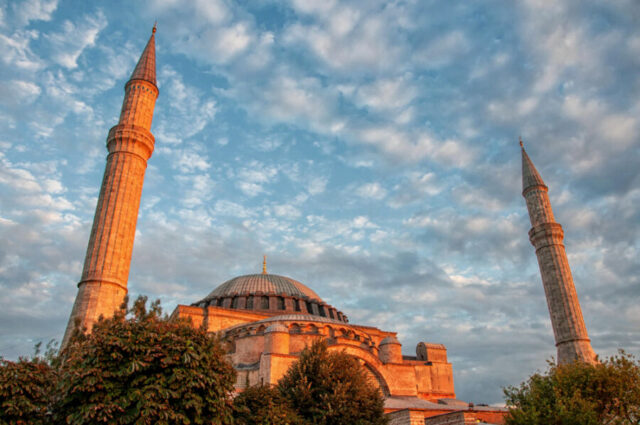
Looking back on my recent travels, I’ve been thinking about what makes a country great. “Greatness” can mean strength and power. Or it can signify wisdom, maturity, respect, and an honest reckoning with the past.
In my travels, I observe a disparity in how various lands think about their history: Some societies acknowledge the more challenging elements of their past, while others only embrace the most flattering version of themselves.
As fractured as we are these days, I genuinely believe that good, caring, intelligent people can agree to disagree on a broad range of issues. Should the government take a heavy hand, or a light one, in collecting taxes, regulating guns or abortion, and guiding the trajectory of a society? What role should the USA play on the world stage? How much immigration is “too much,” and how should we treat those immigrants? You have your opinions; I have mine; sometimes they don’t align. That’s life in a healthy democracy. That’s what elections are for.
However, one thing that I believe is not a partisan issue — or, at least, shouldn’t be — is the fundamental truth of history. Facts matter. What happened, happened. And whether those events were good or bad, the only way for a society to evolve is to be honest about its past, warts and all. That’s why, when those who seek or hold political power begin to selectively reinterpret the past — dispensing with inconvenient truths — I find it alarming, not as a Democrat or a progressive, but as a patriotic American.
This is not a distinctly American challenge. Every country’s story is filled with both moments of virtue, and moments that are regrettable, even “evil.” As I travel from place to place, I’m struck by how each society makes intentional choices about how to reckon with their history. And over time, I’ve also seen how this can vary depending on the swing of the political pendulum.
And so, to provide some international context for the debates we’re having in 2024 USA, join me on a trip to a few case studies of how other societies have gotten this right…and, in my view, ones that have gotten it wrong.
Poland: The Museum of the Second World War

In Gdańsk — the northern Polish city where World War II began — museum curators designed what was to be Europe’s definitive museum of the Second World War. It told the complicated story of wartime Poland, yes; but expanded its view to encompass a global perspective on the war, and how it affected various lands and peoples.
However, shortly before the museum’s scheduled opening in 2017, the ruling Law and Justice government — which felt the exhibit “wasn’t Polish enough” — intervened. They replaced the director with a political appointee, and installed a new mission to stir the patriotic souls of Polish taxpayers. New exhibits, mainly profiling Polish heroes and victims, were hastily squeezed into any available space. The intentionally ambiguous, thought-provoking final room was re-envisioned and now shows a rabble-rousing film (called “The Unconquered”) espousing a naively, almost offensively pro-Polish point of view.
Revisiting the museum not long ago, I stumbled upon one exhibit that I suspect was added by the politicized director. At the entrance to a room filled with portraits of Jews who were murdered by the Nazis in Polish territory stands a wall labeled “Poles in the face of the Holocaust.” Posted information and touchscreens explained how Poles saved the lives of Jews, despite the fact that Poland was the only Nazi-occupied land where such assistance could be punished by death.
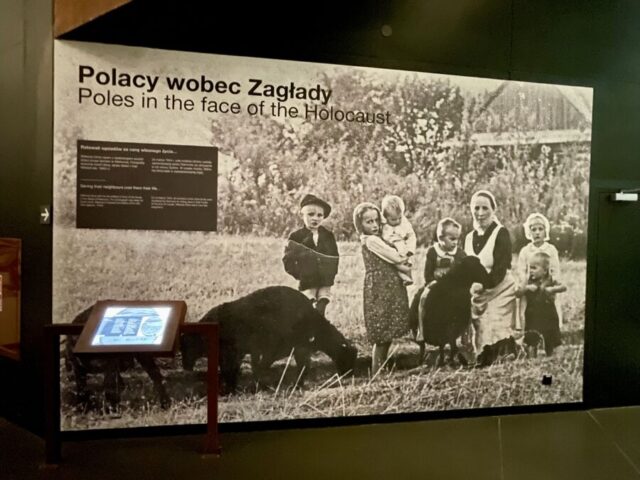
This is an inspiring story, to be sure. And there were many righteous Poles who came to the assistance of their Jewish neighbors. But there were also many Poles who colluded with the Nazis, and many more who turned a blind eye to their atrocities. Is it expecting too much for these facts to be acknowledged in the museum, as well?
Soon after, in 2018, the Law and Justice party made it illegal to state that the “Polish nation” was in any way responsible for the atrocities of the Holocaust, under punishment of prison. Under diplomatic pressure from the US Department of State, the law was later softened to remove the criminal component. However, a civil court can still prosecute “whoever claims, publicly and contrary to the facts, that the Polish Nation or the Republic of Poland is responsible or co-responsible for Nazi crimes committed by the Third Reach.” And so, an important part of Poland’s World War II story goes untold.
(It’s worth noting that Poland’s Law and Justice party was defeated in late 2023 by a centrist coalition; as new, more moderate leadership reshapes Poland, it will be fascinating to see if those changes ripple down to the displays of this museum.)
A few days earlier — at the opposite end of Poland, in the town of Wadowice — I toured the museum at the birth house of St. John Paul II. The slickly produced, inspiring, touching museum did a beautiful job of telling the life story of Karol Woytyła, who lost his parents at a young age, entered the priesthood, and eventually became the spiritual leader of one billion Catholics and a critical figure in the final ideological battles of the Cold War.
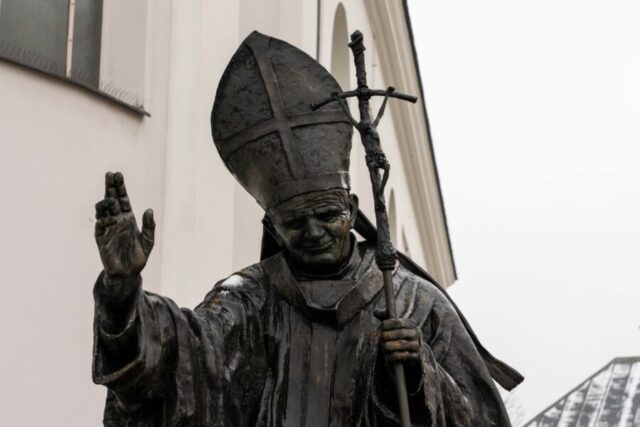
The museum tells this story so well, in fact, that I didn’t realize until after I’d left that it had omitted some important topics — specifically, the child molestation scandals within the Catholic Church that were covered up under Pope John Paul II’s watch.
Chatting with some Polish friends about this, I was reminded that these things aren’t as black-and-white as they may first seem. Yes, the Pope should have done more. However, John Paul II recognized that he was in a unique historical position as a high-profile crusader against Soviet oppression, and that he played a critical inspirational role in the democratization of his homeland, Poland. Perhaps there were pragmatic reasons for him to avoid publicly addressing a scandal that would have undermined so much of what he was trying to accomplish.
I’m not entirely persuaded by this reasoning. But it certainly got me thinking more deeply about the full complexity of that chapter in Polish (and Catholic Church) history. I don’t believe “canceling” John Paul II is the answer. Rather, his legacy deserves a complete and nuanced discussion. And I regret that this museum is so reluctant to have that conversation.
History is made by “great” people who, like all people, are flawed. Even the greatest among us have blind spots and vulnerabilities; arguably, it’s a person’s ability to navigate complicated realities and make impossible choices that propels them to greatness.So then, why are we so afraid to be honest about those flaws?
Germany: Documentation Centers and Holocaust Memorials
Let’s cross the border, to a country that dispenses with the kid gloves when handling its own history. In my travels, I have encountered few societies that more conscientiously grapple with their checkered past than Germany. Yes, Germany.
Even to this day, when many people think of Germany, one of their first associations is along these lines: backed a lunatic dictator; tried to take over the world; murdered millions through genocide and conquest; destroyed much of Europe.
Resenting Germany for their crimes in World War II and the Holocaust is understandable, even deserved. But in my 25 years of traveling around Germany, I’ve been impressed by their willingness to be open, candid, and contrite about their history. They even have a term for it: Vergangenheitsbewältigung, “coming to terms with the past.”
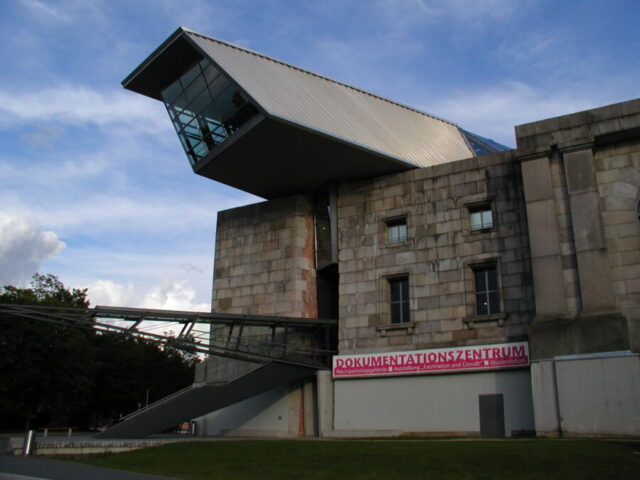
Throughout Germany, I’ve visited perhaps a dozen different “Nazi documentation centers.” That’s a buzzword for a museum that offers a thoughtful, entirely transparent, and no-holds-barred assessment of Germany’s culpability in its crimes of the 20th century. It’s a fascinating exercise in the defendant presenting an ironclad case on behalf of the prosecution. Germany’s documentation centers confront visitors — both German and foreign — with abundant, meticulously collected evidence, always compelling and often gruesome, of their own crimes. No excuses are offered, and there isn’t a whiff of defensiveness — just a matter-of-fact mea very, very culpa.
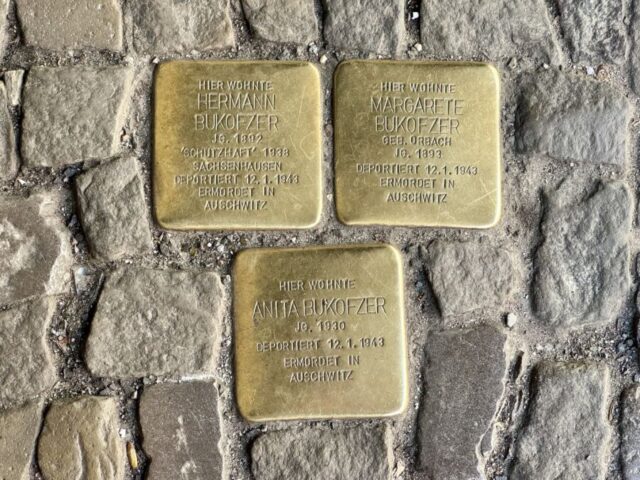
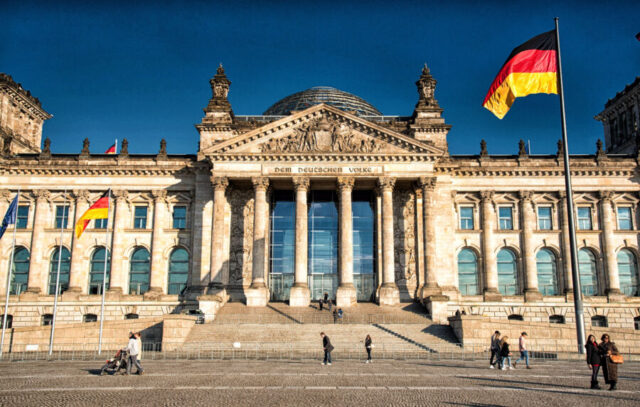
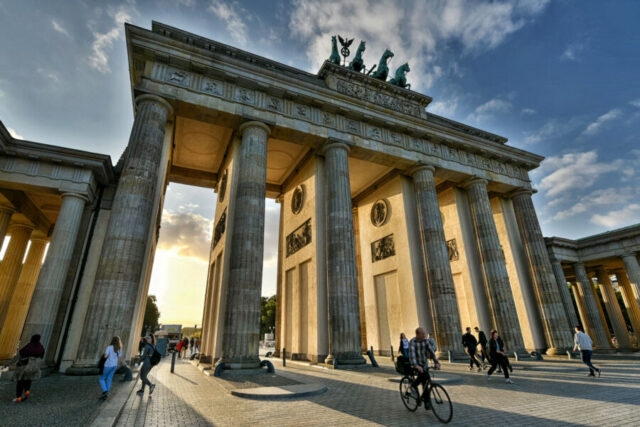
In the German capital of Berlin, immediately adjacent to the landmark Brandenburg Gate and just down the street from the Reichstag stands a sprawling monument consisting of 2,711 stony slabs. The Memorial to the Murdered Jews of Europe, occupying this privileged position in the very heart of Germany’s leading city, is just one of countless memorials, large and small, all across the country, that constantly remind Germans of their historical crimes.
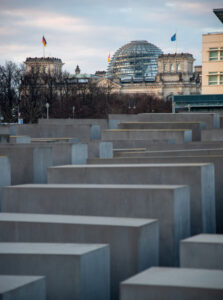
It’s hard to imagine that a country could ever “do enough” to make up for such heinous acts. But as a frequent visitor here, I’m impressed. Even younger Germans — now generations removed from these atrocities — may grow a little weary of these constant reminders. And yet, they recognize that this is their legacy.
The Netherlands: Dutch Resistance and Colonialism
Next door is a country that was occupied by Nazi Germany: the Netherlands. And on a recent visit to Amsterdam, I was struck both by how the Dutch are honestly reckoning with their role in history…and how they still have a ways to go.
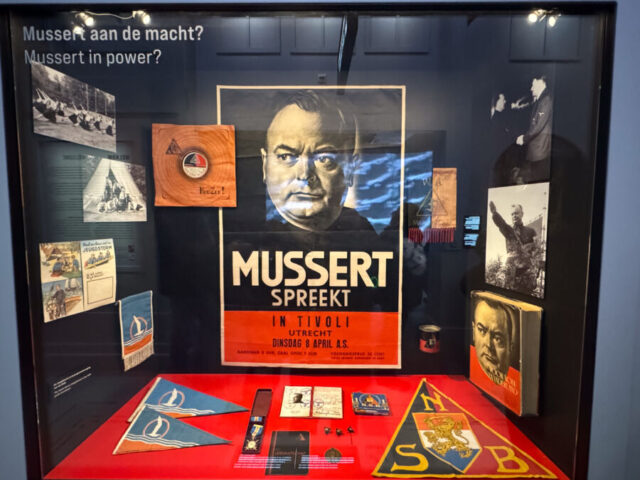
The recently re-envisioned Dutch Resistance Museum traces the story of the Netherlands under Nazi occupation. It’s an exercise in stirring the Dutch patriotic soul with tales of both suffering and valiant resistance — much like the World War II museum in Poland. But, to its credit, the Dutch museum also owns up to aspects of that story that some might prefer to dismiss.
Early on, the exhibit takes pains to introduce us to Anton Mussert, who led the NSB, the local version of the Nazis. And it unflinchingly explains that 25,000 young Dutchmen volunteered to join the Waffen-SS, accepting Hitler’s invitation to stand with him in “Germanic Brotherhood.” After the war, at least 120,000 Dutch collaborators were arrested.
Of course, questionable Dutch deeds extend much farther back than the 20th century. As one of Europe’s great colonial powers, the Netherlands was fabulously wealthy in the 17th and 18th centuries. Amsterdam’s ornate city center — with its concentric canals, stately townhouses, grand museums and palaces, and gilded carillons — was financed primarily through plundered resources, the exploitation of human labor at the far ends of the globe, and Dutch participation in the transatlantic trade of enslaved human beings.
This is an aspect of Dutch history that many visitors (and, until recently, even many Dutch people) gloss over. But that is now changing. In 2023, the former Tropenmuseum (“Tropics Museum,” built nearly a century ago to show off colonial riches to Dutch citizens) was re-envisioned as the “World Museum.” Many of those same artifacts from former Dutch holdings — as far afield as Indonesia (the “East Indies”) and the Caribbean (the “West Indies”) — are still on display. But now they are given proper context, explaining the lives of the people exploited by the Dutch, from their own perspectives.
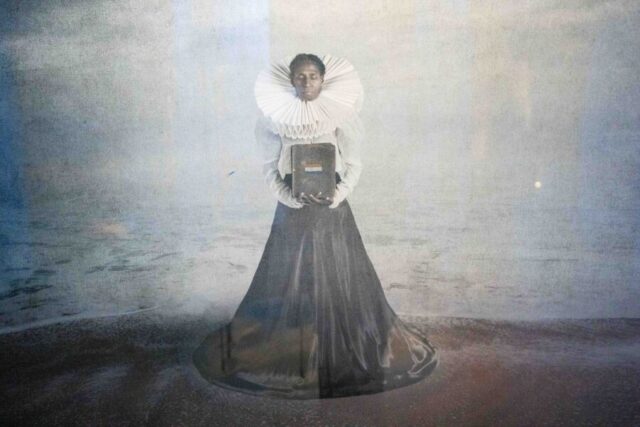
On the one hand, it’s impressive to see the Netherlands making these strides: For example, then-Prime Minister Mark Rutte (in 2022) and King Willem-Alexander (in 2023) have both formally apologized for the Dutch role in the slave trade. On the other hand, like any society, not everyone is comfortable with the changing times. The Dutch sidekick to Santa Claus, Zwarte Piet (“Black Pete”), is still usually performed by a white man in Blackface — and in a recent poll, more than half of Dutch respondents continue to support Zwarte Piet’s traditional appearance. And in November of 2023, an anti-immigrant party took the highest total of seats in the Dutch parliament.
Progress sometimes comes in fits and starts…but it’s progress.
New Zealand/Aotearoa: Waitangi Treaty Grounds

On a recent trip to New Zealand/Aotearoa, I visited the Waitangi Treaty Grounds on the Bay of Islands. This is essentially the birthplace of the modern nation of New Zealand, where local Māori tribal leaders signed a treaty with emissaries of the British crown to establish formal colonies on the island. Today you can walk across the grassy field where the treaty was signed, but only after you’ve toured a powerful, beautifully curated museum.
The museum is the best implementation I’ve seen of a “dual narrative” approach — equally weighting the perspectives of both the Māori and the English to tell a complete story. In fact, for most of the exhibit, you see the Māori point of view on one wall, and the English point of view on the opposing wall. It’s fascinating to experience the history of this island through the eyes of its two dominant groups, simultaneously — a parallax view that is both informative and moving.
In the darkened hall that displays the actual treaty, exhibits detail how the document was translated misleadingly into the Māori language. Key concepts like “sovereignty” were phrased in such a way to give Māori leaders the impression that they, and not the Queen of England, were still essentially in control of their island.
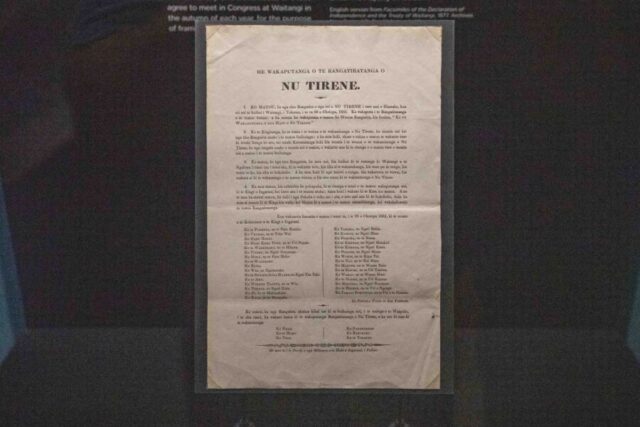
I was impressed and inspired to see a society that — rather than try to spin past events in a way that would present the European settlers in a flattering light — plainly acknowledged their misdeeds: We misled the people who were here first. And we were wrong.
New Zealand inspires me. It’s perhaps the planet’s most forward-thinking nation when it comes to the rights of its indigenous population. This national conversation began in earnest in the 1970s — on the one hundredth anniversary of the Treaty of Waitangi — and much progress has been made. While “reparations” is an abstract and hard-to-sell idea when it comes to the descendants of enslaved Black people in the USA, in New Zealand, it’s a reality: Vast tracts of the country’s land has been formally returned to Māori control. While there’s certainly more to do, New Zealand is making real strides in owning up to its historical crimes.
And this trickles down to everyday life, as well. Increasingly, Kiwis from both Māori and European backgrounds are embracing the indigenous name for their archipelago: Aotearoa. Kiwis, regardless of their background, greet each other with a cheery “Kia ora!” — evoking the Māori origins of the land upon which they all reside together today. As an American, this inspires me to do better — so much better. (And if we need a role model closer to home, we need only look to our northern neighbor — Canada has made impressive gains in better acknowledging the rights of its First Nations peoples.)
Hungary: Slide from Democracy
Now let’s cross hemispheres again, to a place that may be one of the worst-case scenarios for a society retconning its own narrative: Hungary.
Since first taking power in 2010, Prime Minister Viktor Orbán and his party, Fidesz, have aggressively revised history to suit their nativist political agenda. An exhaustive list of examples could fill volumes. But even just as a traveler who drops into the country every year or two, I’ve seen the effects firsthand: streets and squares renamed for obscure historical footnotes; the vast plaza surrounding the Parliament building completely transformed with new monuments and memorials; and, perhaps most alarmingly, a wholesale revision of the national school curriculum to ensure that the version of history taught to every Hungarian student is perfectly in line with the Fidesz agenda.
And what is that version of history? Essentially, it’s the most flattering possible view of Hungary. Fidesz history presents the country either as a heroic warrior, or a tragically maligned victim of foreign aggression, full stop. Orbán’s story of Hungary is designed to instill unquestioned pride and patriotism: We have always been in the right, just as we are today.
Here are just three examples:
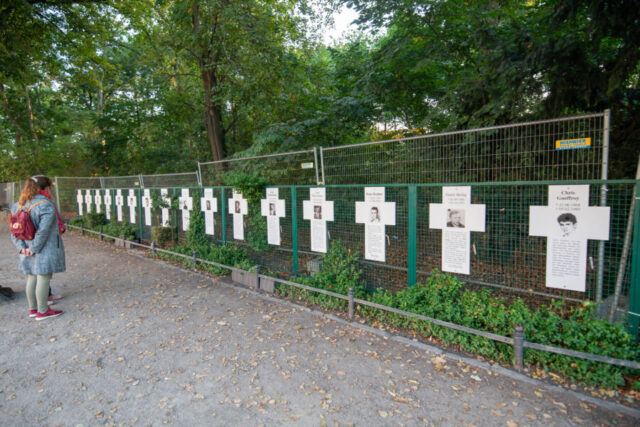
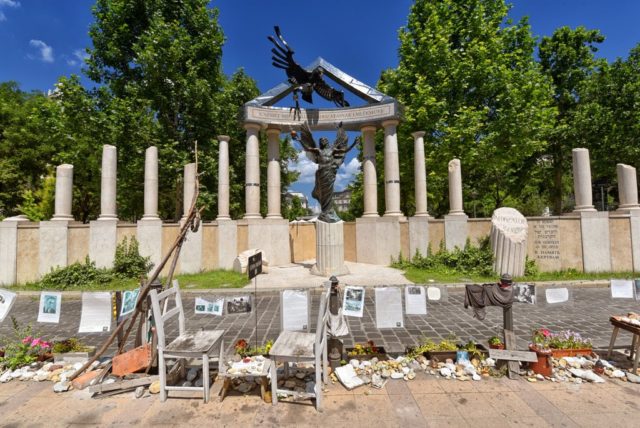
On Liberty Square, Fidesz erected a melodramatic monument to the “victims of fascism.” It’s overloaded with symbolism suggesting that Hungary was a peace-loving land, minding its own business, until Hitler invaded in 1944. In front of the monument, locals have assembled their own makeshift counter-monument — documenting how, in fact, Jews were terribly mistreated by Hungarian authorities, and tens of thousands were deported to certain execution by Hungary’s pre-Nazi leadership.
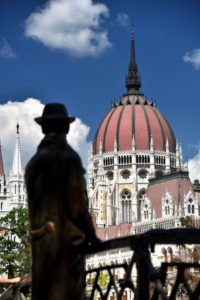
A couple of blocks away once stood a beloved statue of the communist reformer Imre Nagy, casting his judgmental gaze over the Parliament. However, there was a problem: Nagy may have led the 1956 Uprising against the USSR (and was later sham-tried and executed). But he was also a communist himself, who sought reform from within. The Fidesz worldview simply can’t tolerate such nuance. Nagy was a communist; all communists are bad; therefore, we must remove Nagy’s statue from this favored location. Under cover of darkness and without any warning, one night in the waning days of 2018, it was relocated far from the Parliament.
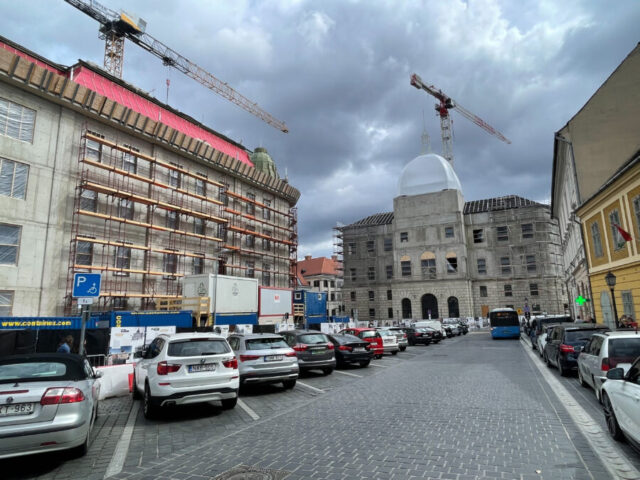
Up at Buda Castle, Orbán has moved his office into the former National Dance Theater and is busily redeveloping the castle quarter, transforming it into his new seat of government. Old buildings — destroyed in World War II and never rebuilt — are being re-created from scratch, with little rhyme or reason. It’s a hodgepodge that randomly juxtaposes buildings from this and that era, based on how pretty or grand or imposing they look rather than their actual role in history — an almost too on-the-nose embodiment of this cherry-picking approach to Hungarian history.
Orbán has become a darling of certain corners of the American right. Perhaps those Orbán supporters should travel to Budapest, talk to Hungarians on the street, and observe how his approach has eroded two decades of fragile progress in recovering from totalitarianism…including the distorted, oversimplified way that Hungarians are encouraged to view their own complicated history.
Bristol: The Empty Plinth
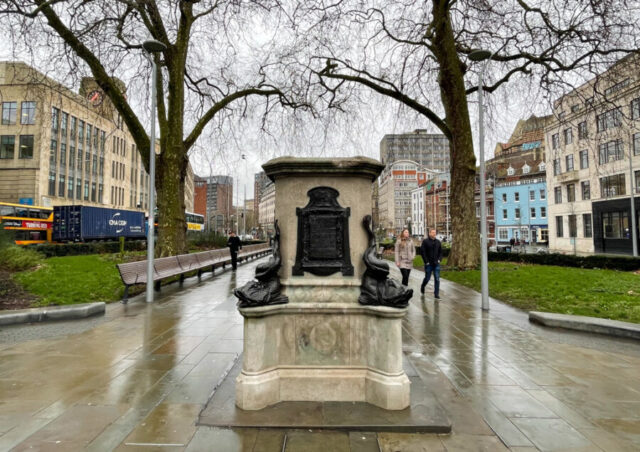
A couple of years ago, on a dreary late-winter morning, I wandered around Bristol, England, piecing together the story of Edward Colston. This fabulously successful Bristolian grew the wealth and reputation of his home city, largely through his participation in the slave trade.
Colston is one of many historical figures who became a flashpoint during the global Black Lives Matter protests in the spring and summer of 2020. You may recall how a giant statue of Colston was toppled by protesters, dragged down the hill, and dumped into the harbor. (Later, the statue was dredged out of the harbor and displayed in a local museum.)
On my visit to Bristol, about two years after this event, I found myself following breadcrumbs of Colston’s legacy around the city. The plinth that once held Colston’s statue — and boldly declared him “one of the most virtuous and wise sons of [the] city” — stood empty. In a parish church, stained-glass windows honoring Colston had been removed; a nearby information panel explained this decision. And in a city history museum, Colston sneered out from a composite painting of prominent Bristolians. His image was identified completely, and accurately: “Slave trader; merchant and philanthropist.”
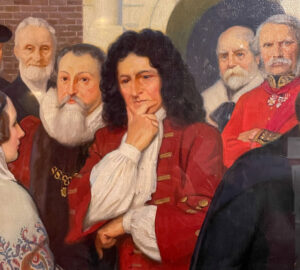
Back home, we’ve had debates about whether and how we should remove statues honoring problematic historical figures, whether they be Confederate generals or slave-owning Founding Fathers. You may believe that tearing down these statues is just as bad as what Poland or Hungary is doing. But observing Bristol’s approach demonstrates that it’s possible, even responsible, to remember these figures — completely and honestly, in all of the ways they both aided and harmed others — without honoring them. The challenge — one that Bristol rose to — is to find a constructive way to preserve history without remaining beholden to it.
Should we replace those statues with carefully worded plaques, offering a more complete and nuanced explanation of their role in history than simply “virtuous and wise”? Should the statues be collected into an open-air museum (as Budapest did with its communist statues, in Memento Park), so those generals can preach their racist ideology to each other, removed from polite society, without needlessly confronting passersby? Should we create a Museum of American Racism — a series of Slavery Documentation Centers — that detail the shameful crimes of our past, as a reminder and a warning to Americans in the present and the future?
Again, Bristol inspires me to do better.
Back Home: The United States of America
After hopscotching around our globe, we return home to the United States of America. With the benefit of comparing notes with other societies, how does the USA measure up?
When we’re at our best, we make strides toward reckoning honestly with our past sins. The Museum of African American History in Washington, DC, for example, does a beautiful, complete, and even-handed job of telling the story of Black Americans and their ancestors.
Juneteenth — a celebration that originated in the Black community to commemorate the abolition of slavery — is now a federal holiday, and more and more organizations (including Rick Steves’ Europe) show their respect by closing their offices for the day.
And even in my own lifetime, I have observed the USA doing a more honest job of acknowledging our genocide against Native American tribes — though nowhere near to the righteous degree of New Zealand/Aotearoa or Canada.
However, in recent years — as the political pendulum swings to dizzying extremes — I fear that we are facing a rising tide of people who would prefer to simply edit out the most uncomfortable details in our national narrative.
In some states, textbooks are being rewritten to downplay our heritage of slavery and racism. These days, ambiguity and intentional omission trump clarity and specificity in explaining to our children exactly how certain people have been treated by our country, and still are, and why.
Critical Race Theory (CRT), paired with the deathly curse of “woke” — both concepts that originated in the Black community — have been appropriated and cruelly weaponized. Terms like these have become an excuse for (mainly) white Americans to shut down any healthy conversation about our shared national narrative that makes them uncomfortable.
Look: I’m not interested in wading into the “woke culture wars.” In fact, I’m sticking to my guns: The importance of history can and should be a nonpartisan issue. History matters, to everyone, even if they don’t realize it. And an honest and frank acknowledgement of the facts of history, by any society, is always a good thing. History tells us where we’ve been, and it helps us figure out where we’re going.
I believe this even more strongly having traveled to places where people grapple constructively with their history, and to places where people would rather hide from it. And I’m here to tell you: Societies in the first group are stronger, healthier, smarter, more successful, and more respected on the world stage than places in the second group. Honesty can be painful, but it’s how we grow and become better.
If you believe that contemporary Germans owe it to the world — and the six million Jews their ancestors murdered in gas chambers — to continue to reckon with their past crimes; if you think that child molestation scandals deserve to be acknowledged in a retelling of the life of John Paul II; if you respect the Dutch for including the stories of collaborators along with stories of victims and uprisers in their Resistance Museum; if you admire the Kiwis for acknowledging that their island was deceptively taken from people who’d been on Aotearoa for centuries earlier; if you think it’s a shame that Viktor Orbán removed the statue of a great communist reformer just because he was also, technically, a communist; if you appreciate Bristol’s nuanced approach of remembering Edward Colston without honoring him — then you should also be willing to face the discomfort of teaching our children about America’s shameful heritage of slavery and racism, and so many other topics that deserve open and frank conversation.
When you brush aside inconvenient realities, they don’t simply go away. They just fester, impacted and infected. They wait there, only getting uglier and worse, slowly beginning to stink, until they’re eventually kicked up again by some future generation — and have become an even worse problem to deal with.
It’s very easy to see blemishes when looking at other cultures, from afar. It’s much harder to see them when we look in the mirror. But we owe it to ourselves, and to future generations, to avoid the temptation to slide into denial. So the next time someone tries to dodge a conversation about less-than-noble elements of our past, consider asking them: Why does it make you so uncomfortable to reckon honestly with our nation’s history? Because that’s what healthy, functioning societies do.
In fact, it’s what makes a country great.