Milk Bar Heaven in Kraków

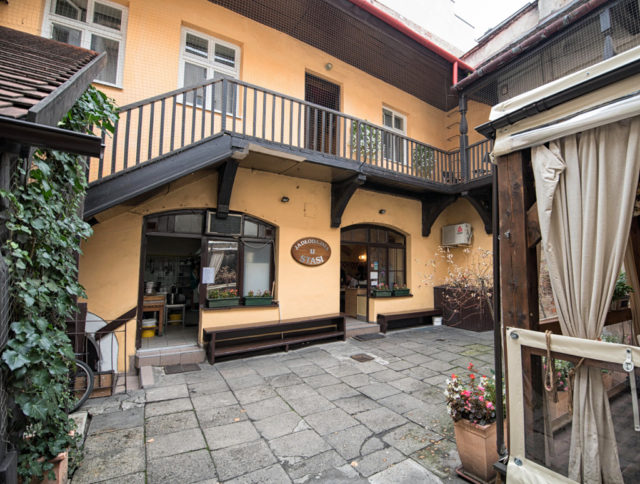
I can’t believe I never noticed this place before. I mean, it literally shares a courtyard with my favorite Kraków pizzeria. And yet, there it sits: Two open doors — one the humble kitchen, the other the tiny dining room. This is Jadłodajnia U Stasi. One of the best meals I’ve had in over 20 visits to Poland — and, by far, one of the cheapest.
CH16SepKrakow_230

I’m always pumping my local guides for privileged information — the latest restaurant leads for my Rick Steves Eastern Europe guidebook. Earlier today, over a coffee, I practically challenged Tomasz to impress me. He rattled off all of the touristy standbys. Yawn. C’mon — it’s time to really show me something.

“Well,” he said, glancing around conspiratorially, then breaking out into the uncontainable grin of someone who’s about to give up the goods. “There is this one place…”

Jadłodajnia U Stasi is a milk bar — that uniquely Polish phenomenon of a government-subsidized canteen, originally dating from the communist period to allow the workers to enjoy a meal out. Communism is a distant memory, but the milk bar concept has stuck around. Throughout Poland, you can get a filling meal of authentic traditional specialties for suspiciously low prices. It’s an option designed for locals, but open to visitors as well.

I’m something of a milk bar connoisseur. But I’d never heard of Jadłodajnia U Stasi. “It’s a place where all of the locals go for lunch,” Tomasz explained. “Homeless people, artists, businesspeople, politicians — everyone sits together at shared tables and eats well.” Even the name — jadłodajnia basically means “place for eating” — is old-fashioned. Straightforward. Unpretentious. A weekday-lunch-only place with a loyal local following. It’s clear: I have to try it.

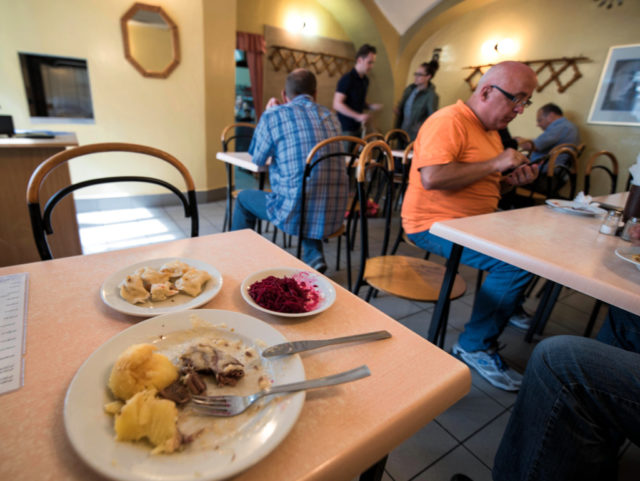
Reaching the dead end of the courtyard — a block from Kraków’s glorious (and supremely touristy) Main Market Square — I step across the threshold into the humble space. With basic tile walls, basic coat racks, basic tables, and no “decor” to speak of, it feels entirely practical…almost clinical. The cashier — a tired-looking salt-and-pepper-haired man in a striped polo shirt and jean shorts — looks mildly surprised to see me. But then, as Tomasz has instructed, I tell him, “Angielski, po proszę.” He ruffles through the stack of photocopied menus, pulling the English one from the bottom of the pile and handing it to me. He makes a sweeping gesture across the tiny room. Sit anywhere.

I find a seat in the corner and get situated. Reaching for the ersatz tissue-paper napkins, I take a small stack of about six of seven — approximating one real napkin. Within moments, a kindly aproned woman suddenly appears tableside, cocking her head at me with a wordless smile: Ready to order? I beg for a few more minutes to consider my options.

The menu — a short but tempting list of Polish classics — is in three languages: German, French, and English. The dishes sound much better in French. Who can resist the viande de pot-au-feu? So that’s what I order: boiled beef, plus a plate of “Russian-style” pierogi. The server disappears behind a tattered red-and-white-checkered curtain into the kitchen. Well-worn pots simmer on a workhorse of a stove, tended by matronly, blue-smocked chefs.
CH16SepKrakow_220

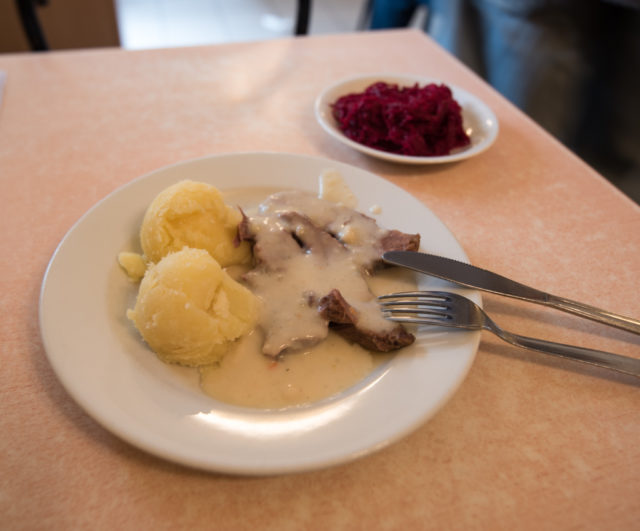
Literally seconds later, the plate hits my table. I take a bite. And the rich flavors flood my taste buds. It’s “boiled beef,” yes, but that undersells it. (So does viande de pot-au-feu, for that matter.) It’s slow-roasted to fork-tender perfection, smothered in a perfectly balanced horseradish cream sauce, with a side of potatoes halfway between roasted and mashed. There’s also a plate of beetroot salad: grated strips of perfectly tender, vivid-purple beets, mixed in with explosive shards of horseradish. Fantastic.
CH16SepKrakow_225

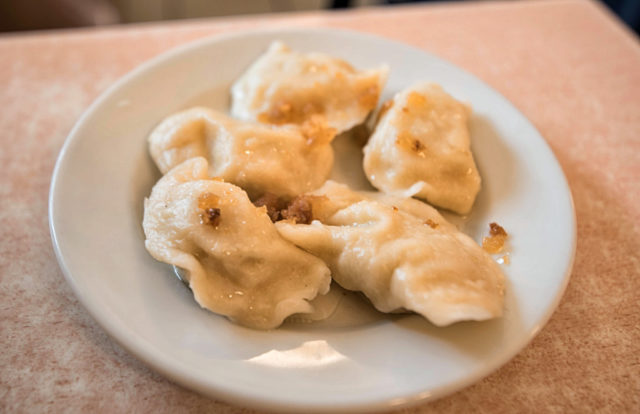
A minute later, my plate of pierogi appears. The boiled-dough casing is ideally al dente. The filling — potato, cheese, and caramelized onion — is generously peppered. Flecks of pork cracklings add a punch of meaty flavor and fatty texture (and make the traces of water draining to the bottom of the plate glisten like gossamer). I’ve had a lot of pierogi around Poland, and most have been pretty flavorless. But these pierogi?  These pierogi are perfect.

Savoring my meal, glancing around the room, I notice the steady flow of customers in and out. One thing’s for sure: I’m the only tourist taking photos of my food. Mindful of the fact that this is the kind of place that locals hesitate to tell tourists about — for exactly this reason — I stow my camera and munch discreetly. Everyone shares tables: Young people. Old people. Rich people. Poor people. And everyone focuses on the food in front of them — classic Polish dishes, executed just right.

Not many people get excited about Polish food. And that’s a shame, because it’s delicious. Polish cuisine is hearty comfort food, done exceptionally well — high cuisine for hardworking peasants. In this agriculturally oriented country — where virtually every square mile is rippled with undulating farms — you can taste the land in the food. Poles have mastered umami — that mysterious “fifth taste,” sometimes described as earthy or savory. Beetroot. Potatoes. Braised beef and pork. Cabbage. Smoke. Mushrooms. Dense rye bread. Rich, fatty proteins. Fermented vegetables. Field greens. Slow-simmering broths. All of these are Polish staples, and all are quintessentially umami. (After a few days here, I crave a meal of sharp, spicy food…just to give my palate some umami detox.) At the same time, Polish chefs are also playful with punchy herbs and spices: Cutting through that smothering blanket of earthiness are bright bursts of dill and peppercorn and marjoram and caraway.  And, of course, plenty of garlic.
CH16SepKrakow_228

A well-dressed, bespectacled, professorial gentleman asks to share my table. We sit together in silence — sharing only the common language of satisfied “mmmms” — as I savor my last few bites. I notice a few splashes of purple beet juice on my shirt, which I decide to think of as prized, indelible souvenirs of a meal richly enjoyed.

Wishing my companion a hearty “Smacznego!” (“Enjoy your meal”), I bus my dishes to the little stainless-steel window where, periodically, a hand reaches out to collect them. On my way out the door, I pay my bill: 20 Polish zloty, or about $5.

Five bucks. For a meal so filling, I won’t need dinner. Two nights ago, I treated myself to a fancy Polish feast at a prime restaurant on the Main Market Square. Ordering high on the menu, I burned through $50 for a (frankly) mediocre dinner. At Jadłodajnia U Stasi, for literally cents on the dollar, I had a dramatically more satisfying meal — and a much more authentic Polish experience, to boot. If you’re headed to Kraków and want to do the same, just duck down the courtyard at Mikołajska 16. Don’t bother telling them that Cameron sent you…they don’t care. They’re too busy cranking out amazing food at ridiculous prices.

Foodie Budapest

Tucked away on a back street deep in the guts of a seedy Budapest neighborhood, the building’s facade is old and weathered. Battered by history. Practically bomb-damaged. Is this really the place? Confirming the address, I step across cracked cobbles through the grimy passage and pop out into a lively courtyard.

cameron-hungary-budapest-foodie-mazel-tov

The distressed brick walls have been expertly spiffed up, with garlands and twinkle lights hung just so. Behind a long counter, chefs scramble to keep up with the orders that just keep pouring in. The tables are packed with eaters. And here at the entrance, packs of hungry foodies wait patiently for their turn.

cameron-hungary-budapest-foodie-mazel-tov-int

This is Mazel Tov, one of Budapest’s trendiest new restaurants. It’s all the rage today — hard to get a table. But soon the novelty will fade, and Mazel Tov will quietly join the ranks of reliable standbys…a list that gets longer and longer every year. That’s the life cycle of a restaurant in a foodie city.

And make no mistake: Budapest is definitely a foodie city. In my last post, I raved about traditional Hungarian food…but I also warned that it’s hard to come by in the capital. “Hungarian restaurants” in Budapest are, almost without exception, looking to exploit a touristy clientele. They line up along the main shopping street, Váci utca, where hawkers out front try to lure in suckers willing to pay too much for a miserable meal and worse service.

OLYMPUS DIGITAL CAMERA

That’s why I don’t even bother looking for traditional Hungarian food in Budapest. Why would I? If you really care about good food, you don’t go to New York City for barbecue on Times Square…you go for trendy foodie haunts in Tribeca or Williamsburg. And in Budapest, the cutting-edge, experimental culinary scene is far from the obvious tourist zones.

A decade and a half ago, when I was just getting to know Budapest and writing the first edition of our Rick Steves Eastern Europe guidebook, I had to scrape the bottom of the barrel to recommend any restaurants. But then something happened. Leafy, mellow Franz Liszt Square became trendy. And wedged between the tourist-oriented theme joints and the drinks-only cocktail bars, a fresh new restaurant opened its doors. Menza (the word for a dreary communist canteen) boldly ventured into Modern Hungarian cooking: traditional ingredients and recipes, but with a fresh spin to please the modern palate. I can still remember my first dinner at Menza: They took the greasy, heavy lángos fry bread (one bite sits in your stomach for a week), lightened it up, and wrapped it around a delicious paprika-dusted entrée. This definitely wasn’t your Grandpa’s goulash. And the decor was a tongue-in-cheek update of commie cafeteria orange. It felt fresh. Bold. Postmodern.

cameron-hungary-budapest-foodie-menza

Menza — still respected, but considered an almost quaint throwback — became a blueprint for the 21st-century Budapest restaurant. Imitators sprung up all over town. And some of those imitators went a step or two beyond — putting their own twists and turns on Hungarian cooking. These days, I can barely keep up. In the year or two between my visits, whole new restaurant districts flourish and whither. It’s all I can do to keep track of the latest buzz. And I spend much of my Budapest research time simply scouting everything that’s new…and re-evaluating the old standbys. Here’s the latest scoop:

cameron-hungary-budapest-nightlife-ruin-pub-zone-1

The Seventh District is red-hot. It’s home to most of the city’s top “ruin pubs” (which I’ll explain in my next post). And now it’s emerging as a culinary destination, as well. In a nod to the district’s heritage as the former Jewish Quarter, Jewish-themed restaurants are popular here. Macesz Bistro is a Grandma’s-dining-room-cozy corner restaurant serving traditional Jewish recipes. And the new Mazel Tov — which I described at the start of the article — takes a different tack, serving Modern Israeli small plates like kebabs, shwarma, falafel, tabouleh, and shakshuka. While the atmosphere is wonderful, the food’s a bit hit-or-miss…not quite living up to the outsize buzz it’s currently enjoying. (But, then, how could it? Once the trendy accolades fade, Mazel Tov will be just fine.) Just around the corner is the inviting little KönyvBár & Restaurant (könyv means “book”), with a literary-themed menu and a dining room that feels like a sleek, minimalist library.

cameron-hungary-budapest-foodie-istvan-ter

St. István Square — in front of the towering facade of St. István’s Basilica, in the once-sleepy government and banking district — has really taken off as a food and wine lovers’ mecca. The cross-street called Sas utca has been a culinary hotbed in recent years. While flashy, style-over-substance places have come and gone along Sas, the reliable standby — with an engaging menu, reasonable prices, and a cozy dining room — remains Café Kör. Closer to St. István Square itself, a pair of wine-focused eateries have earned adoring fans. The classy Borkonyha (“Winekitchen”), which earned its first Michelin star in 2014, takes pride in pairing top-quality Hungarian wines with a nose-to-tail aesthetic and creative reinterpretations of classic cooking. (“Hungarian dishes,” the owner explained to me, “but less paprika, less fat.”) This place is popular and understandably jammed (I recently saw a selfie of Tom Hanks mugging with the staff)…so reserve ahead. For something more casual, try the nearby DiVino wine bar, which lists 130 bottles of Hungarian wines on its chalkboard (most glasses for under $5…did I mention Budapest is remarkably affordable?). They pair the wine with small plates, and have wonderful seating out on the square.

cameron-hungary-budapest-foodie-liszt-ter

I have plenty of other reliable favorites, scattered around the city. If you care about food and want a solid meal in Budapest, check out these options: Mák Bistro — pricey but unpretentious, hidden down a forgotten side-street — feels like a well-kept secret, with a lively brasserie ambience and a short, carefully selected seasonal menu. Bock Bisztró, run by a revered Hungarian vintner from Villány, offers 60 wines by the glass and traditional Hungarian staples presented with modern flourish (just shy of “deconstructed”). And Borssó Bistro, with a cozy two-story dining room near University Square, offers small portions of delicately assembled modern French cuisine with a bit of Hungarian flair.

Another big Budapest food trend is the renaissance of mangalica. That’s a uniquely Hungarian breed of wooly pig — basically a domesticated boar. The mangalica was out of fashion for years. But in this age of foodies who revere the almighty pig, the mangalica‘s high levels of unsaturated fat, distinctive flavor, and catchy backstory have made it newly trendy. These days, you’ll see it on every menu… and, in the case of the mangalica-themed Pesti Disznó restaurant, it’s literally in every item on the menu.

cameron-hungary-budapest-foodie-alexandra-cafe

Budapest has long had an elegant café culture (like its neighbor up the Danube, Vienna). While many cafés serve food, their forté is combining opulent surroundings with a take-your-time approach to coffee. The budget option hides upstairs in the Alexandra bookstore, along the main boulevard, Andrássy út. When the bookstore chain renovated this fine old turn-of-the-century department store, they spared no expense in restoring the sumptuous Lotz Hall. Now they fill this genteel space with a grand café and occasional live piano music. And, remarkably, they’ve kept the prices within reach: You can get a latte and slice of cake here for about the same price as at your hometown Starbucks.

cameron-hungary-budapest-foodie-new-york-cafe

That’s not the case at Budapest’s showiest coffee house, the New York Café. Originally built in 1894 as part of the “New York Palace” — and it really is palatial — this fanciful, over-the-top explosion of Neo-Baroque and Neo-Renaissance epitomizes the “mix and match, but plenty of everything” Historicist style of the day. In the early 20th century, artists, writers, and musicians came here to escape their dreary apartments and be inspired by its opulence. Now restored, the café sells the most expensive cup of coffee in Hungary, along with mediocre food. But you know what? It really may be worth the $7 investment in a caffe latte, just to sit here for an hour.

All of this is just scratching the surface. (If your interest is piqued, pick up my Rick Steves Budapest guidebook.) Foodies are in heaven in Budapest. It’s worth adding an extra night or two to your itinerary, just to eat well. And even those who don’t know sous-vide from deep-fried find plenty to enjoy in the Hungarian capital.

Plenty of Paprika: Why I Love Hungarian Cuisine

Hungary is one of my favorite places to eat in Europe — ranking just a notch below Italy or France. When planning an itinerary here, I have to carve out a little extra time just to dine well.

This may come as a surprise, if you subscribe to the conventional wisdom about “Eastern European” cuisine: a dreary, stick-to-your-ribs diet of pork, kraut, and potatoes. And to be fair, in most of Eastern Europe, there’s a kernel of truth to that stereotype. Most national cuisines withered on the vine under communism, when quality ingredients (and sometimes any ingredients) grew scarce. And today, even as a foodie wave sweeps Europe, the eastern part of the continent sometimes feels stuck in a rut. While Slavic cooking is — no doubt — satisfying comfort food, it’s not exactly high cuisine.

But right here in the middle of Eastern Europe, Hungary bucks that trend. The Hungarian culinary tradition is a fine balancing act between nourishing peasant food and delicate haute cuisine. (Hungary is one of Europe’s largest producers of both lard and foie gras.) And chefs here simply know what they’re doing. They are technically skilled, have a respect for ingredients, and are unafraid of flavor — no matter what they’re cooking. Some of my all-time favorite Indian, French, and Italian meals have been prepared by Hungarian chefs.

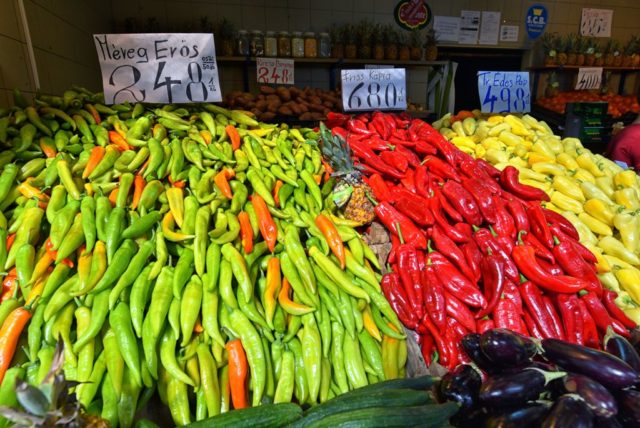
cameron-hungary-cuisine-peppers

The defining Hungarian ingredient is paprika, which infuses every dish with a rich and smoky tingle. Hungarians recognize two broad categories of paprika: sweet (used liberally in the kitchen) and hot (applied to each diner’s taste at the table). Most Europeans have a timid palate. They seem terrified of spice. But I’m a five-stars guy — the kind of person who eats ghost pepper hot sauce on a dare. By the time I reach Hungary, I’m craving some heat. And Hungary is all too happy to provide it.

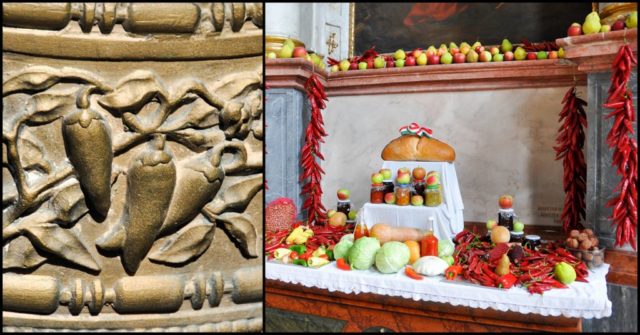
cameron-hungary-cuisine-paprika-church

Once, in the steamy southern plain of the country — where paprika grows like weeds — I visited a little church that reveres the red pepper. Carved columns were embossed with ripe peppers hanging on the vine. And piles of peppers were laid at the altar, as if a sacrifice to Saints Scoville and Capsicum.

cameron-hungary-cuisine-dishes

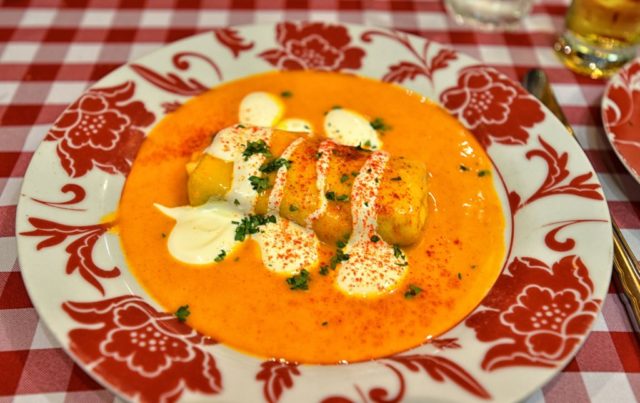
The quintessential Hungarian dish is csirkepaprikás: chicken (or veal, borjúpaprikás) slow-simmered in a rich paprika stew, served over egg-drop noodles. (After years of experimenting, I’ve mastered the art of cooking chicken paprikash in my own kitchen. It’s a quarterly ritual that tides me over until my next visit to Hungary.) Hortobágyi palacsinta — named for the wild steppes of southern Hungary — are savory crêpes wrapped around a meaty filling, smothered in a creamy paprika sauce. Pörkölt is a hearty stew of braised meat and vegetables, flavored with — who knew? — paprika. And the peppers themselves can be stuffed with various fillings to create töltött paprika.

If your meal isn’t spicy enough for you, ask your server to bring you a jar of Erős Pista — a vivid-red paste of mashed peppers. A spoonful of Erős Pista (which means, loosely, “Spicy Steve”) introduces a rich, salty paprika flavor and a wallop of heat. If you appreciate the flavor more than the heat, opt for Édes Anna (“Sweet Anna”) — as hardy yet demure as the babushka-draped peasant girl on the label.

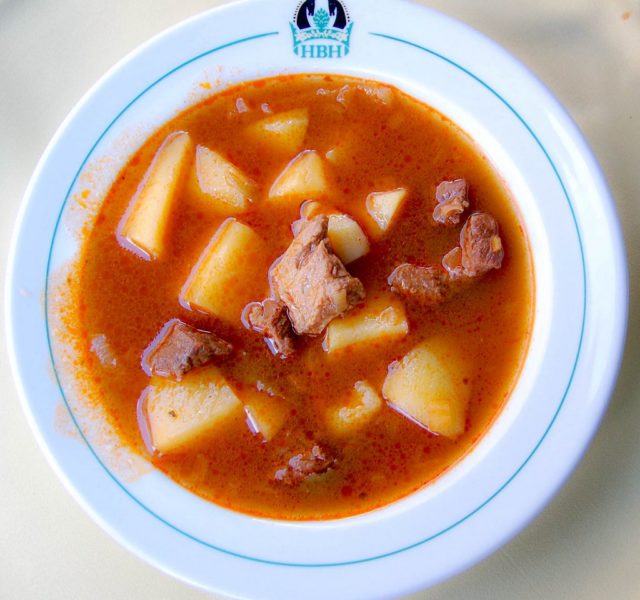
cameron-hungary-cuisine-goulash

And then, of course, there’s the ultimate Hungarian dish: goulash. Except that what you’re picturing as “goulash” isn’t Hungarian. It’s the German, or Czech, or American interpretation of a classic Hungarian peasant soup: a thick, meaty stew, stacked with vegetables and timidly flavored with a pinch of paprika. But in Hungary, it’s gulyás leves — a “shepherds’ soup” that was born on the Great Hungarian Plain, where shepherds simmered simple ingredients in a rustic kettle. True Hungarian goulash is a broth deeply reddened with robust paprika, its flavor rounded out by onions, garlic, and crushed caraway seeds. Big chunks of meat and potatoes — and maybe a few carrots — make it hearty. When it’s simmered long enough, it reduces to a thick (but not thickened) consistency. It’s not brown — it’s bright-red. And each spoonful is supremely flavorful. (If you prefer fish, try halászlé — goulash that swaps out the meat for carp.)

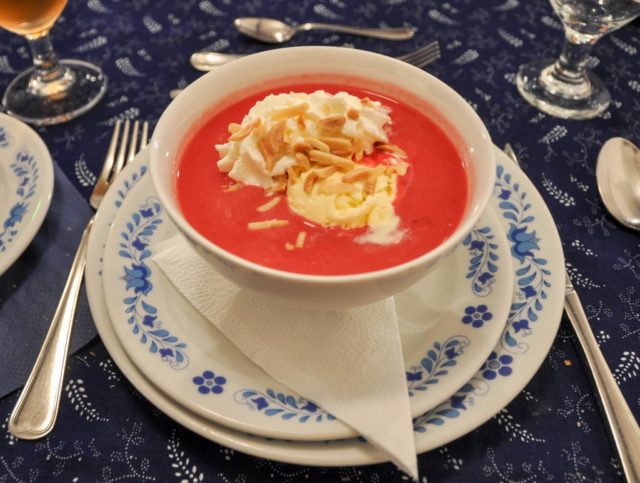
cameron-hungary-cuisine-cold-fruit-soup

One Hungarian dish that doesn’t involve paprika is hideg gyümölcs leves — cold fruit soup. It’s a creamy, fruity, sweet dish eaten as an appetizer. When done right, cold fruit soup feels like cheating…a bowl of melted ice cream before the meal. Just watch out for pits in the sour cherries.

cameron-hungary-cuisine-kurtoskalacs

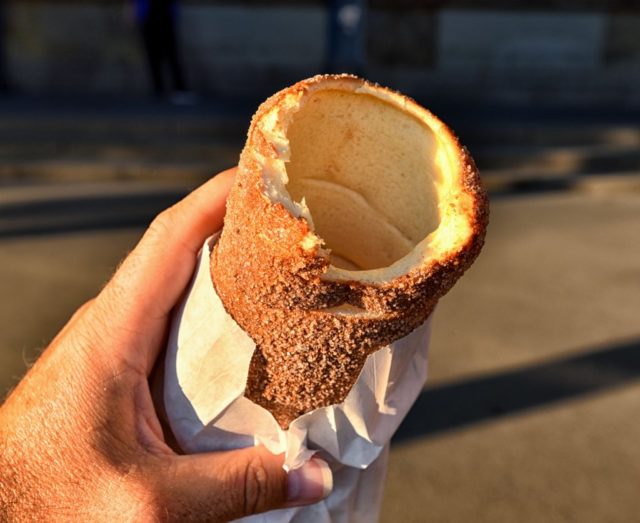
For a real dessert — or just a sweet snack — keep an eye out for my favorite Hungarian street food, kürtőskalács. To make this “chimney cake,” dough is wrapped around a wooden spindle and sprinkled with sugar, then slowly spins on a rotisserie over coals. When the sugar begins to crystallize into a golden brown crust, the kürtőskalács is taken off the fire, rolled in flavorings (cinnamon sugar, coconut, or nuts), then slid off its spindle and into a paper sleeve…hot, fresh, and ready to eat. You’ll see kürtőskalács stands on busy street corners, parks, and anywhere people are out having fun. If they hand you a cold one, insist on waiting for a hot one…it makes a difference.

Most of my favorite traditional Hungarian meals have been outside of the capital. If you’re doing a tour around Hungary, stop in at HBH Restaurant in Eger, Jégverem Fogadó n Sopron, Kecskeméti Csárda in Kecskemét, or the blowout buffet restaurant at the Saliris Resort at the Egerszalók spa — a Hungarian smorgasbord.

In Budapest, on the other hand, it’s always been a challenge to find authentic, traditional Hungarian food to recommend in my Rick Steves Budapest guidebook. As in any cosmopolitan capital, most restaurants here cater to forward-looking young urbanites who want upscale international cuisine with flashes of Hungarian influence. This target audience would never go out for old-school Hungarian food. That’s what Grandma cooks them on Sundays.

A few overpriced, overblown specialty restaurants in Budapest work too hard to dress up Hungarian classics, throw in some “Gypsy” music and stuffy service, and charge top dollar. But I’ve always sought a moderately priced hole-in-the-wall that was all about the food. And on this trip, I finally found it. Hungarikum Bisztró, tucked down a nondescript side-street surrounded by governmental ministries, has a deep respect for tradition, but with a modern sensibility. The simple, no-frills interior — with red-and-white-checkered tablecloths and discreet woodwork — is filled with the aroma of braising meat.

“Budapest is a foodie city,” István — one of the co-owners — explained. “And the chefs are so creative and so modern, they can’t help themselves but to play with traditional recipes to update them somehow. It’s tasty, but it’s not real Hungarian food. Here, we strictly follow our grandmas’ recipes, down to the last detail…even if it has ingredients or techniques that aren’t commonly used in modern cooking. That way, we know that you are tasting the same food we tasted growing up.”

cameron-hungary-cuisine-hungarikum

Enough talk. Starving, I ordered two of my favorite dishes: gulyás leves (that’s real Hungarian goulash) and Hortobágyi palacsinta (paprika-smothered filled crêpe). And when the food came, it delivered on István’s promise. The goulash was slow-simmered, producing a rich broth and tender meat and potatoes. And the Hortobágy pancake was perfect: a firm crêpe containing a delicious filling, swimming in a luxurious pool of creamy paprika sauce. What’s not to like?

But the ingredient that really caught my attention was the paprika that was dusted over the dish. Paprika loses its flavor quickly…so quickly, most people probably don’t know what paprika actually tastes like. That little paprika jar that came with your spice rack? That’s not paprika. It’s a soulless red powder that only hints at paprika flavor. Even those little cloth bags of paprika you buy at Budapest’s Great Market Hall are, all too often, past their prime. István’s paprika, however, was explosively flavorful. You could taste the sun-drenched pepper growing on the vine, and you could taste the heavy wood smoke used to dry it.

I quizzed István, who grinned proudly. “Yes, we get all of our paprika fresh and direct from Kalocsa,” he said, naming the city deep in the hot south of Hungary, famous for its top-quality peppers. Paprika from Kalocsa is like key limes from Florida or maple syrup from Vermont. Like any good restaurant, István recognizes that his food will only be as good as his ingredients. And his ingredients are very, very good.

The Gelato Wars of Corniglia

My wife’s Great-Great-Aunt Mildred traveled far and wide, long before such a thing was fashionable. Late in life, Aunt Mildred wrote a memoir about her experiences. The title: Jams Are Fun. It turns out that, after seeing so much of the world, Aunt Mildred realized that it’s not always the big museums, the fancy dinners, or the castles and cathedrals that stick with you most. It’s those serendipitous moments when things go awry. And so, in the spirit of Aunt Mildred, this part of my “Jams Are Fun” series — about when good trips turn bad, and the journey is better for it — takes place in a tiny hill town on Italy’s Cinque Terre.

The Cinque Terre — five charming, traffic-free villages on the Italian Riviera — is a delightful place to be on vacation. But when it comes to updating the Cinque Terre chapter in our Rick Steves Italy guidebook…meh, not so much. Anytime a researcher is dispatched to the Cinque Terre, they return with tales of woe. It turns out this lovely strip of coastline is a minefield of allegiances and grudges that can only exist in a tiny town. And the most intense conflict I’ve stumbled into anywhere involves — of all things — gelato.

cameron-italy-corniglia

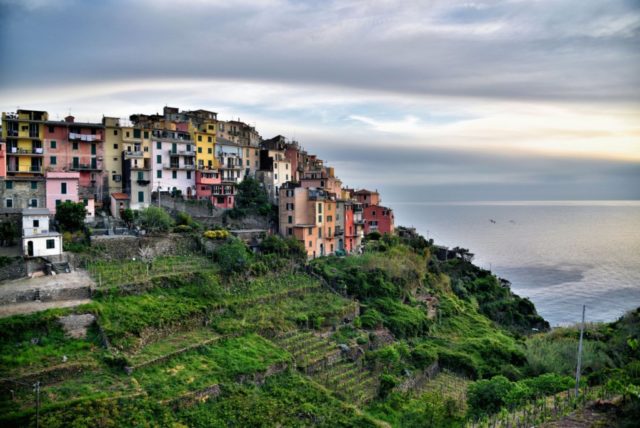
A few years ago, I hiked from Vernazza over the bluff to Corniglia — the Cinque Terre’s resident hill town, perched on a ridge overlooking the Mediterranean. On the outskirts of town, I stopped off at a hotel I needed to update for our book. As I was leaving, the owner stopped me. “Listen,” he said, conspiratorially. “If you want some gelato, I strongly recommend the first gelato place on the main street.” He made severe eye contact with me. “Not the second one! The first one. You understand? This is important.”

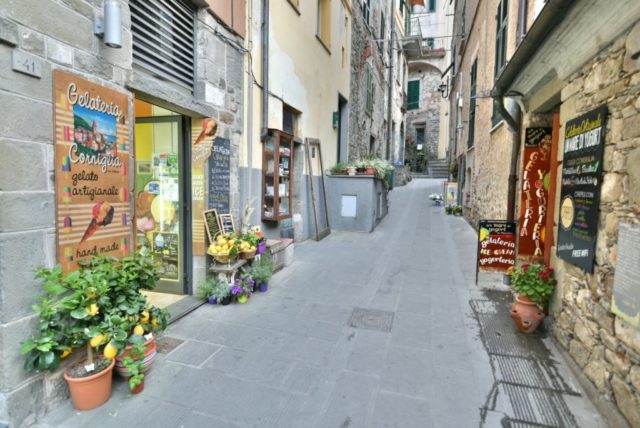
A bit puzzled, I left with a noncommittal “grazie for the tip” and headed into Corniglia. Sure enough, on the main street through the old center of town, two rival gelaterie stood next to each other. I thought nothing of it, and proceeded to update our listings with several hoteliers and restauranteurs. Strangely, as I made my rounds, a few other locals also weighed in — completely unsolicited — on which gelateria was the better one.

Curious — and ready for a snack — I dropped in at the gelateria that we recommend in the book. I was warmly greeted by Alberto, who couldn’t be more excited by my visit. He showed me a photo of himself with Rick, and a cover shot of our book that he likes to put in the front window. He forced several samples on me, and dished up a tipsy cone piled comically high with scoops of different flavors. He even pulled out a little plastic container and offered to load it up with even more gelato for later. (Facing a long, hot train ride back to the next town, I politely declined. He almost forced it on me anyway.)

cameron-italy-corniglia-gelato-guidebook

As I was leaving, Alberto pulled me in close. “Before you go,” he said, “can you do me a very big favor? That gelateria next door…” He practically spat on the floor as he said it. “They put up a picture of your book. But they are not recommended! They are lying! You must do something about this. This must be illegal! You have a responsibility to stop them.”

I walked past the other shop’s window. No Rick Steves sign. Oh, well. But Alberto chased after me. “Aha! They take it down because they know you are here. Please go in and tell them to stop!”

“Look,” I said, “if they don’t have the sign up when I’m here, then what can I do?” (In fact, there’s nothing I can do in any case. We’ve seen this from time to time: Once a place recognizes the touristic currency of a Rick Steves endorsement — whether they are actually recommended or not — there’s basically nothing we can do to police them. We just hope that our readers are actually using our book’s tips, rather than trusting random signs.)

Clearly, the gelato situation in Corniglia is a Big Deal. Somehow, all of this little town’s frustrations, conflicts, and grudges, dating back many generations, have boiled down to these two little neighboring shops. And I had been enlisted to play Solomon. I managed to escape that trip without any more conflict…but I could never forget the gelato controversy that raged in little Corniglia.

Flash forward a few years. I’m back in the Cinque Terre, and back in Corniglia, updating our book. This time, I’m prepared. I arrive in town with my shields up. I will not be drawn into Gelatogate. I will do my work and leave…as quickly as possible.

The day goes well. I make my rounds and am ready to head out. I’ve saved the gelato for last — partly to forestall further conflict, and partly to treat myself before the train ride home. But just before that, I’m updating one last restaurant. The restauranteur is warm and gregarious. We talk about his menu, and his enthusiasm and pride lull me into a sense of normalcy.

But then, when I have one foot out the door, like a coiled cobra — he strikes.

“Say…did you see the new gelateria at the start of town?” he asks me, conversationally…but a little too eagerly. Uh-oh. I know where this is going.

“It’s a very good one. You should see it.” His tone shifts from casual to severe, as his laser-beam eyes pierce mine. “You must see it.” The next few moments are a blur, as somehow I find myself following him down the street, to where he physically plants me inside this new gelateria.

cameron-italy-corniglia-gelato-wars

Aren’t two gelaterie more than enough for this tiny town? Do they really need a third? This is what I’m wondering as I get the hard sell.

I ask a few probing questions. And finally they ‘fess up that this is, in fact, a second outpost of one of the original gelaterie — the one that’s NOT in the book. I admire the bold gambit. Now there are two clone gelaterie, across the street from each other, before you even get to Alberto’s. (It also means that Alberto’s is, technically, no longer the “second one.”)

Scanning the flavors in this new interloper, the many skirmishes of the gelato wars become clear. Alberto’s shop has a delicious honey flavor, which we recommend in the book. This shop, too, has a honey flavor. Alberto is very proud of his basil flavor — new for this year. This shop, too, now has a basil flavor. Like JFK and Khrushchev, these two gelato makers are keeping pace with each other as they slowly…slowly…escalate the gelato wars.

Case made, the restauranteur tries to close the deal. “So…you will put this gelateria in your book?”

I hedge. “Uh, I’ll think about it.”

“Think about it!?” the restauranteur demands. In an instant, the tone of our conversation has turned sour and confrontational. “What’s to think about? It’s the best one. The best one!” (Mind you, he is — as far as I know — not the owner, nor in any way professionally involved in this gelateria. He’s just a very, very, very concerned citizen.)

I try to explain myself. But he won’t let me finish. “The last time Rick Steves was here, I took him to this gelateria. And it’s still not in the book. That was nearly two years ago! What is taking so long?”

I bail out of the shop, as politely as possible, and try to ignore the now-furious restauranteur as he hangs his head, Charlie Brown-style, and theatrically sulks back to his own restaurant — stomping his feet like a frustrated toddler.

It’s awkward, sure. But at least I get to leave town. For these poor villagers, this is just the latest salvo in the gelato wars of Corniglia.

I’m sure you’re wondering: Which one is best? Easy: Alberto’s. How do I know? Because on both trips, I tasted both. And Alberto’s wins the taste test, hands down. So if any Corniglia gelato warriors are reading this, now you know: If you want in the book…make better gelato.


To find quality ice cream on your own — whether you’re in a tiny town or a huge city — check out my tips on how to find Italy’s best gelato.

There are plenty more mishaps in my “Jams Are Fun” series. Such as the time I was stuck on a cruise ship in a North Sea storm. Or the time I ran out of gas on Scotland’s remote north coast.

And you can also read more posts about the Cinque Terre from this trip.

This happened to me while updating the Cinque Terre chapter in our Rick Steves Italy guidebook. We also have a more concise and focused, full-color Rick Steves Pocket Cinque Terre book.

High in the Mountains with Tina’s Dad

High in the Slovenian Alps, through a driving rain, Gorazd grips the steering wheel. He follows an unpaved road up, up, up above the tree line. We disappear into clouds. Gorazd’s tires grind against the gravel. But I’m not worried. I know I’m in good hands. After all — this is Tina’s dad we’re talking about.

Tina Hiti, who lives near Slovenia’s Lake Bled, became a Rick Steves tour guide about the same time I did. We sort of “grew up” together as guides, and quickly discovered that we have compatible travel philosophies. Tina loves our tour members, and they love her. With an easy and generous warmth, she’s the kind of person who makes you instantly feel like you’re part of the family.

Ten years ago, I was in Slovenia researching and writing the first edition of our Rick Steves Croatia & Slovenia guidebook. Tina was planning to take me to a remote mountain valley called Logarska Dolina. But she came down with a terrible cold. So the night before our trip, Tina called me apologetically and told me she was out. “But you will go with my Dad. It will be great. He speaks English, more than he lets on, and he knows the mountains better than I ever will.”

Admittedly disappointed, the next morning I met Gorazd — a stocky but fit, soft-spoken gentleman in a track suit. His warm smile reassured me that we’d have a fun and productive day. And we did.

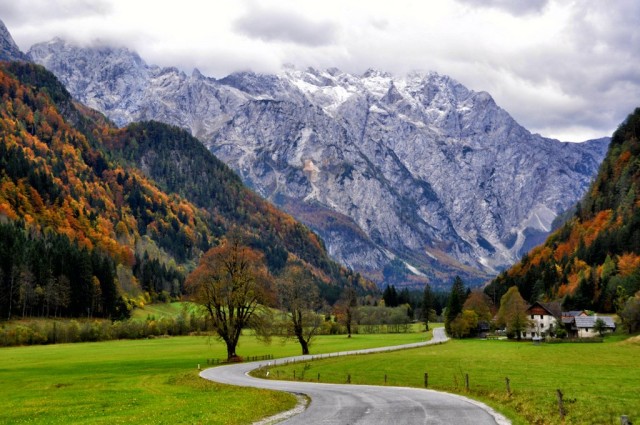
We drove through Slovenia’s stunning mountainscape from Lake Bled to Logarska Dolina. In his halting English, Gorazd explained that he wanted to experiment by taking me on a near-vertical detour through Austria, using an impossibly remote border crossing that might be closed. (This was back when there were actually borders.) We were relieved to pull up to the humble checkpoint and see a couple of bored guards…pleasantly surprised that we were giving them something to do today.

cameron-slovenia-logarska-dolina-1

Two hours of cut-glass peaks later, we arrived at Logarska Dolina — roughly meaning “Woodsmen’s Valley.” Gorazd took me around to the scenic viewpoints, rural rest stops, and picturesque tourist farms that I needed to check out for my book. And, as Tina had said, Gorazd knew the area like nobody else. Observing the steeply angled green pastures that huddle around the peaks, he joked, “They say cows here have shorter front legs than back legs. That way, they can stay upright while they graze.” Another local joke: “Dogs have to hold onto the grass with their teeth and bark through their rear ends.”

cameron-slovenia-logarska-dolina-3

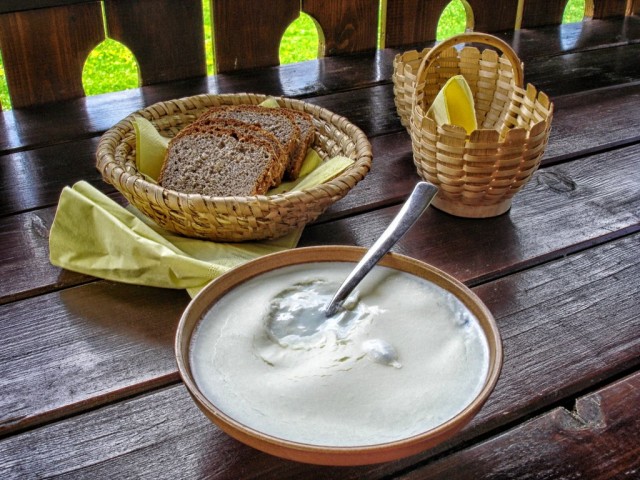
Corkscrewing up yet another gravel road — aptly nicknamed “The Panoramic Road” — Gorazd brought me to a tourist farm perched on a rocky shelf with stunning views over the entire region. He grew visibly excited when he saw a sign that said kislo mleko. “Ah, yes, this is the specialty here,” he said. “It’s like yogurt. You must try it.” He ordered two rustic crocks filled with the stuff — “like yogurt,” yes, but with a yellowish-brown film on top. My spoon broke through the firm outer layer and carried a cross-section of the contents to my mouth. Two flavors dominated: sour and what I can only describe as “barnyard.”

cameron-slovenia-kislo-mleko

Choking down the pungent mouthful with a swig of water, I pressed Gorazd for more information. “Kislo mleko means ‘soured milk,'” he explained. “They make a light, unpasteurized yogurt. Then they put it in the barn for a few days to naturally sour.” Scraping the final globs out of his crock, Gorazd declared, “Delicious!” I went back for more, hoping to acquire a taste for this mountain specialty — in keeping with my philosophy that every dish is worth trying…once. (Tina tells me that finishing my bowl earned me Gorazd’s undying respect. Apparently he still talks about it.)

Tina had modestly told me her dad was a good hockey player, so, on the way back to Lake Bled, I asked him about it. It turns out Gorazd and his brother were both Olympians in the 1980s, when the core of the Yugoslav national hockey team came from a tiny mountain hamlet called “Chicken Village” (Gorazd’s hometown). While his playing days are behind him, Gorazd has coached for decades — in Slovenia, in Italy, and around the world. His brother owns a popular local bar inside Lake Bled’s hockey arena, where a giant photograph hangs of the two brothers in their prime.

cameron-slovenia-gorazd-hockey

Over the years since Tina’s dad drove me to Logarska Dolina, with each visit, I’ve enjoyed getting to know the rest of her family: Her partner Sašo, who assisted me on the first-ever Rick Steves Best of the Adriatic Tour, and quickly became an ace lead guide in his own right. Her sister, who makes handmade jewelry. And her sons, who — at an age where many kids are still mastering walking — were already zipping around the hockey rink like future all-pros.

On one misty fall day, I had dinner plans with Tina’s family. But then she called me in a panic: Her Dad was out foraging for mushrooms when he slipped on wet leaves and tumbled into a ravine. Worst of all, Slovenian mushroom hunters have an ethic of never, under any circumstances, revealing to anyone their favorite places to forage. So Gorazd knew that nobody had a clue where he was. He was all on his own to crawl out of the ravine, regain his footing, and make his way back to civilization. Fortunately, he made it — only a little the worse for wear.

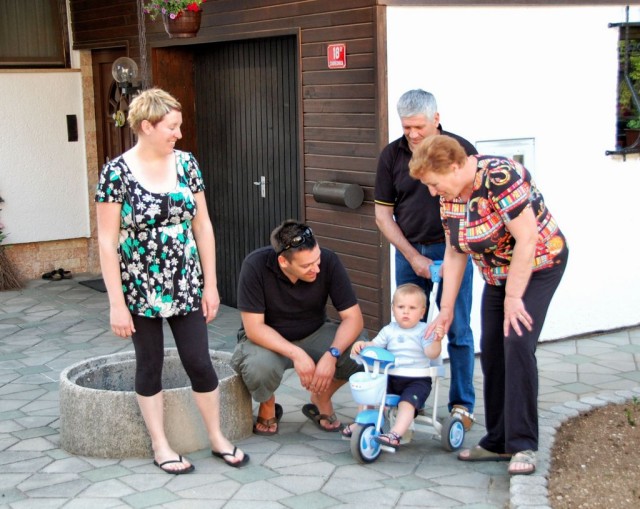
I’ve enjoyed visiting Tina and her partner Sašo in their home, which fills the attic above her parents’ house. Europeans lack the social stigma around several generations living under one roof. And because of the difficulties in getting a mortgage in Slovenia, people make full use of any family property. And so, Tina and Sašo converted her parents’ attic into a fun and functional multi-room apartment. At well over six feet tall, Sašo has to crouch under low beams. But it’s a perfectly cozy family home.

Visiting Tina and Sašo’s home is one of those travel experiences that rattled my worldview: Why is it that in the US, kids can’t wait to move out? Why do my wife and I, and each of our parents, all have houses with multiple spare rooms? Isn’t the European approach both more cost-effective, and better for “family values”? Tina and Sašo have their privacy and their own space — but Grandma and Grandpa are just steps away, ready to babysit.

cameron-slovenia-tina-family

When it came time to film our TV show on Slovenia, Rick agreed that it would be interesting to our American viewers to see this multigenerational household. So we filmed at Tina and Sašo’s house, and had dinner with the whole clan. Rick even got to ask Gorazd his thoughts on Tito. (You can watch the segment here.)

It’s always nice to see someone embark on an unexpected “second act” late in life. And in the 10 years since I met him, as Gorazd has cut back on his hockey coaching, he’s blossomed into a wonderful mountain tour guide. With my encouragement, Tina added Gorazd to her local guiding business. So now, people from across North America hire Gorazd for a drive into the mountains — and everyone loves it.

cameron-slovenia-gorazd

For years, Tina’s been telling me, “One of these visits, you have to make some extra time so my dad can take you up to Velika Planina, a pasture high in the mountains. It’s amazing. He knows you would really love it.” And on this visit, I finally made that time.

When Gorazd picks me up, we both have a pang of deja vu. Setting off in the driving rain, we lament that our excursion has rotten timing. Just a few days ago, it was sunny and clear. But it’s late September, and the weather just turned cold and wet…summer to winter, virtually overnight.

As we drive, Gorazd explains why he so desperately wants to show me Velika Planina. “It’s a super-traditional part of the country — probably the most traditional. It is a farming settlement at the very top of the mountain, above the tree line.” To get there, you can ride up a cable car, then hike. Or — if you have a local friend like Gorazd — you can turn off a mountain highway, then twist along a confusing maze of gravel service roads until you can’t drive anymore. Then you get out and walk.

cameron-slovenia-velika-planina-2

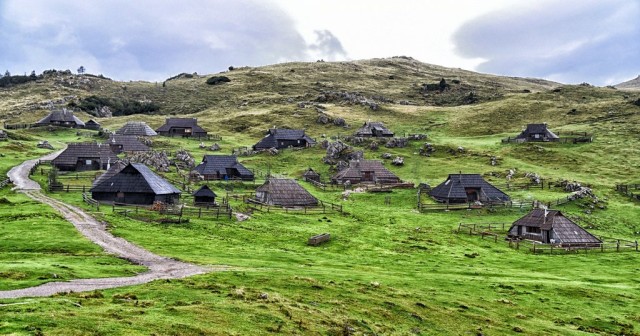
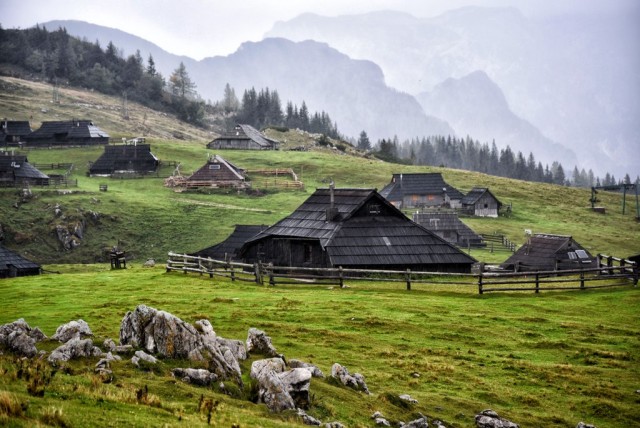
Summiting into a mile-high plain, the dense fog clears and I begin to see little hobbit huts scattered around the scrubby pasture. We park and hike, shielded by umbrellas, as Gorazd shows me the unique cottages they build up here: Low, heavy-shingled roofs are perennially hunkered down against the elements. People live in a claustrophobic little space at the very center of the house, ringed on all sides by stables. That way, the farmers can keep an eye on their cows, and the cows can help heat the house.

Today, there are no cows at Velika Planina. They just went back down the mountain two days ago. “These cottages belong to people who live all over the valleys below — those villages and settlements we passed on the way up,” Gorazd explains. “They bring their cows up here in the summer, to graze and to make cheese. But it’s a hard life. You have to stay up here all the time, to milk the cows. The only electricity is from solar panels. The old generation is worried that many young people don’t want this life. They’d rather live in Ljubljana.” He gestures through the mist, suggesting that on a clear day, you can actually see Slovenia’s thriving capital from here.

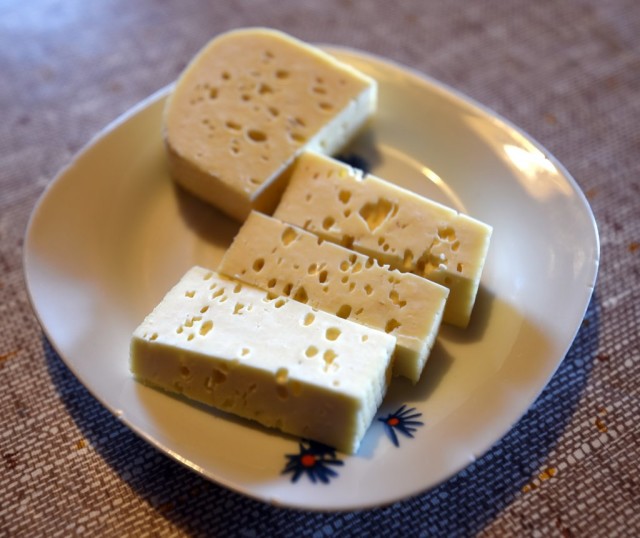
Walking from hut to hut, we find one that’s still occupied. Gorazd asks the woman if she still has any cheese. She invites us in to her humble dining room table and cuts us off a slice of the lone product up here: a pear-shaped cheese called trnič. It reminds me of a very young, mild-semi-crumbly Swiss cheese. Gorazd asks a hopeful question, but our host shakes her head no. “Hm,” he says with a wink. “I ask if they have kislo mleko. No luck. Too bad.”

cameron-slovenia-velika-planina-cheese

Not quite ready to leave the mountains and return to civilization, Gorazd and I huff up through the driving rain to the rustic, wooden Chapel of St. Mary of Snows. But, like everything else in the village, it’s already locked up tight for the winter. Gorazd explains that a priest still comes up each Sunday throughout the summer to say Mass for this tiny community. Just then, a soggy gale turns his umbrella inside out. Stuffing it into a garbage can, Gorazd says, with his dry wit, “I think maybe now is the time to head home.” And off we go, back down the mountain.

cameron-slovenia-velika-planina-1

Exploring Slovenia’s mountains, sampling strange dairy products, and learning about this gentle but impressive people is always a memorable experience…but especially when Tina’s dad is behind the wheel.