Siniša Saves Hvar: Zero-Kilometer Boar Burgers

I usually do my Croatia guidebook updating rounds in shoulder season — May, June, and September — which works great, since that’s when most of our readers are traveling. July and August tend to have the hottest temperatures and the worst crowds (mostly Europeans enjoying their summer vacations). But this year, due to some scheduling peculiarities, I did my Dalmatian swing the last week of August. And boy, did I see a difference.

The island of Hvar — an easy one-hour boat ride from Split — used to be a sleepy fishing village. But over the last decade, it’s been discovered by affluent jet-setters looking to party under the Mediterranean sun. Celebrities have started showing up on their yachts, making the circuit of posh nightclubs. Comparisons to Ibiza or Mykonos used to feel like a stretch. But on this visit, I could really see it. The place is changing…and, for my tastes, not for the better. Late one evening, walking along the cocktail bar-lined harbor of the main town, dodging drunk and rowdy American bros, I came this close to just giving up on the place and taking it out of my book. But then Siniša saved the day.

Siniša runs Secret Hvar, which specializes in off-road tours to the untouristed corners of Hvar. A few years back, he took me on a fascinating loop around the island, greatly enhancing my appreciation of Hvar beyond its showcase town.

On this visit, I met up with Siniša late one afternoon. We groused at each other for a few minutes, a pair of budding curmudgeons: “Would you believe they’ve had to put up big signs that prohibit picnicking on the main square?” he ranted. “People were getting a takeout pizza and a three-liter bottle of the cheapest beer they could find, and then just lying around all night, getting drunk in front of the cathedral!” “I KNOW!” I agreed vigorously, shaking my head. “Kids today! I just dunno…”

With that out of our system, Siniša gently reminded me that there’s more to Hvar than the few crowded blocks around its main square. To prove his point, he drove me deep into the countryside, past rustic stone igloos, scrubby lavender bushes, and distant sea views over hardscrabble vineyards.

As we drove, Siniša — who’s extremely politically active, having held public office here — filled me in on the struggles of an emerging destination that’s becoming too successful for its own good. There’s a tug-of-war going on between Hvarins who are just trying to grab whatever passing tourist dollars they can, and a vocal minority (Siniša among them) who preach sustainable tourism.

For example, the plucky new mayor of Dubrovnik — just down the coast — recently introduced a no-tolerance ban on loud music late at night. If authorities hear even a peep after midnight, they pull your permit for outdoor tables. And virtually overnight, the Old Town was tamed. Of course, this irritates bar owners, and scares away people who are there only to party, which hurts a bit in the short term. But the status quo was scaring off a more thoughtful (and, frankly, wealthier) breed of traveler, which may be worse in the long term.

Another controversial strategy is to extend the tourist season. Currently the town shuts up tight in mid-October, going into hibernation until mid-May. But winters here can be balmy. And Siniša has unearthed some old postcards, from many decades ago, written by tourists enjoying Hvar well into the winter months. So, how can Hvar balance its residents’ need for a break against the prospect of more income and the benefits of spreading the intensity of the crowds over a longer period of time?

Hvar is at an interesting crossroads. Once a place reaches a certain threshold of success, it can actively decide what kind of destination its going to become. What policies can Hvar pursue today that will shape its reputation — and its long-term viability — tomorrow?

Finally Siniša turned down a rustic driveway barely wider than his car. We stepped out into the cool twilight air and felt a gentle sea breeze — a world away from the intense, glaring heat of Hvar’s marbled main square. Walking down a gravel path to a rustic restaurant, we heard only crickets.

This was Knoboa Kokot, in the village of Dol. “You know about ‘zero-kilometer’ and ‘locally sourced,’ and all that foodie stuff?” Siniša said. “Well, this is as locally sourced as it gets. But that’s just how they’ve always done it…they have no idea they’re perfectly on-trend.”

Konoba Kokot is run by the Pavičić clan, who source virtually everything they serve right on the premises: They raise lambs, have a prolific produce garden, cure their own prosciutto, make and age sheep’s-milk cheeses, and hunt wild boar in the surrounding countryside. The short and remarkably inexpensive menu include the classic peka meal — that’s slow-roasted veal and potatoes, prepared under a copper baking lid covered with glowing coals.  But they also have something unique.

“Do you like wild boar?” Siniša asked. “Don’t laugh, but the specialty here is what they call ‘boar burgers.'” We passed the grilling time with some farm-made prosciutto and an array of pungent sheep’s-milk cheeses. And before long, a big platter hit our table, piled high with grilled vegetables, fries, and steaming patties of perfectly seasoned boar meat.

Biting into the most flavorful chunk of meat I’ve ever been lucky enough to enjoy, I pictured all the travelers jammed into the crowded, steamy town center, eating overpriced and overcooked pasta, not even aware that this alternative exists. And I thought to myself how Siniša — and people like him, who respect and care for the delicate traditions of their home turf, and want to share it responsibly and engagingly with visitors — give me hope for the future of Hvar. I think this little island is going to be OK.

…but just in case, from now on, I’m going to stay away in July and August.

4 Tips for Finding Europe’s Best Food Tours

One of my tour-guide friends is planning to start offering food tours in Slovenia. That got me thinking about what makes for a really good food tour — and what stands in the way of sub-par ones.

Over the last couple of years, I’ve prioritized taking food tours just about everywhere I go in Europe. For someone who appreciates food, having a local foodie personally take you to their favorite market vendors, snack stands, and restaurants — assembling an enticing little buffet of their best dishes just for you — can be a trip highlight.

In San Sebastián, I went on a “tapas crawl” with a local guide who made the jostling-elbows-and-monolingual-menus confusion of the Basque tapas scene much more accessible. In Rome, I was guided around the Testaccio neighborhood — the former slaughterhouse zone — sampling Italian treats. In Lisbon, I started my day at La Ribeira Market (combining a traditional market hall with an upscale food court), and then wandered through the city, nibbling sardines and pastel de nata. And in Warsaw, I restaurant-hopped between eateries both traditional and trendy, gaining a full appreciation for the Polish capital’s surprisingly robust “budget foodie” scene.

Some of these tours were amazing. Others were missing something. Here are four key features that really elevate a food tour to something special.

1. Begin with good food. This seems obvious, but it’s less automatic than you might guess. Not every restaurant appreciates having a dozen curious foodies wander in and take up space, nibbling at small plates during the lunch rush. The best food tours cultivate partnerships with the best restaurants — even if it means making compromises. In Rome, we peeked in the window of a cramped pastry shop as we nibbled our treats on the sidewalk…and we were happy to do it. Lazy food tours settle for mediocre restaurants that substitute “gourmet” for “group-friendly.”

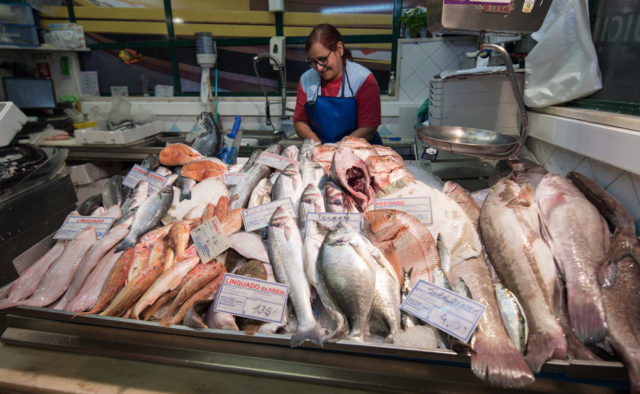
2. Appreciate local ingredients. Logically, many food tours include a trip to the market hall. My Lisbon tour kicked off with a browse through La Ribeira Market — where we sniffed explosively sweet bunches of cilantro; talked with a butcher who’d disassembled and displayed every piece of a pig, from snout to trotter to tail; ogled a pile of exotic tropical fruits (a reminder that Portugal has an appetite for passion fruit and guava from its tropical outposts, Madeira and the Azores); and perused an abundant fish stand that taught me more about Atlantic sea life than a visit to the aquarium.

Local ingredients are the building blocks of local cuisine; seeing them — and tasting them — in their natural state trains your palate to pick out subtle flavors in any dish. After that market tour, I can’t think of Portuguese cooking without sensing a phantom taste of cilantro.

3. Teach people how to eat on their own. The tapas crawl in San Sebastián wasn’t only great food — it decoded the mystifying local tapas culture, like a strategy session for how to eat well in the Basque Country. Any night of the week, the streets of San Sebastián are clogged with patrons spilling out of lively bars. In the Basque style, the counter up front is stacked with a few featured tapas, perched on slices of baguette — all lined up and easy to grab at will.

But our guide helped us understand that only tourists zero in on the ready-made stuff. For fresher (and often better) dishes, take some time to understand the written menu. Some items come standard in every bar, but locals know who does it best — so when gathering tips, ask locals not only about their favorite bars, but also their favorite dishes.

At one busy place, our guide led us past the mob to a quiet little eddy in the back corner, where a bored grill cook sat next to a row of raw meat and produce — happy to fire it up fresh. Noticing a plate of jalapeño-like green peppers, our guide ordered the pimientos de Padrón. They went into the deep fryer, got a generous sprinkle of coarse sea salt, and were piping hot and ready to eat in minutes.

“The trick with these peppers,” she explained, “is that, because different peppers get different amounts of sunlight, a few of them will be much hotter than the others.” The first two had a rich (but not spicy) pepper flavor; the third hit my tongue with a bang. But thanks to my guide, I was ready for it.

4. Above all, illustrate how the food connects to the culture. This is where, I’m sorry to say, many food tours fall flat. Feeding people great food for a few hours is considered “enough” by many tour companies — and by many tourists. For some, additional information might even be a distraction. But I believe that food is an opportunity to better understand culture, and the top food tours work hard to make those connections.

The best food tour I’ve ever taken was in Warsaw, of all places. Through Eat Polska, I spent an illuminating half-day with Michaś exploring the Polish capital. The food was delicious. But the information was even better. Michaś explained why Poles ferment everything; why Turkish ingredients — like raisins, cinnamon, and apricots — often show up in traditional Polish cooking; why Polish dishes always seem to have a few greasy fried bits of pork sprinkled on top; who traditional Poles insist on kissing a stale scrap of bread before they throw it out; and why it may not be a coincidence that Polish pierogi look like Chinese dumplings. By the end of the tour, Michaś had drastically deepened my understanding not only of Poland’s cuisine, but also of its history and culture. (I’ll share more tidbits from my Warsaw food tour in an upcoming post.)

That’s my challenge to my friend in Slovenia, or to anyone who wants to design a good food tour: Start with good food. But always put it into context: Why these ingredients, this recipe, this place? What can the food tell us about the national character, the landscape, the history? It’s not easy to create a context for the cuisine. But it’s essential.

Meanwhile, if you’re a traveler looking for a food tour, consider these four factors when you evaluate your options. These days, many cities have multiple competing food-tour companies. Some are flash-in-the-pan, hedonistic flings. And for casual eaters, that fills the bill just fine. But if you’d like to dig a little deeper — and come away knowing more not just about the cuisine, but about the culture it represents — do a little homework to find one that ticks these four boxes. Check online reviews — not just the ratings, but read between the lines of how customers describe them. Pretty soon you’ll get a sense of which food tours will only fill you up…and which ones will also fill you in.

Europe for Foodies: The Handout

Here at the Rick Steves’ Europe home office in Edmonds, Washington, I regularly present slideshow lectures on various travel topics. And recently, we filmed one of my favorites: “Europe for Foodies”–which is  now available to watch on  Ricksteves.com, or on YouTube. Below is my class handout, for those following along at home. Enjoy!

Europe for Foodies

By Cameron Hewitt

“Foodie-ism” 101

  • The Foodie Revolution & Celebrity Chefs. From Britain to USA, Ramsay, Oliver, Lagasse, Bourdain have given rise to “foodie culture.”
  • European Food Pioneers. Ferran Adrià (elBulli, deconstructivist / molecular), René Redzepi (Noma, New Nordic; influenced Blaine Wetzel).
  • Terroir. Ingredients are shaped by the very specific conditions in which they grow. “Locally sourced” is nothing new in Europe (“zero-kilometer meal”).
  • Eat with the Seasons. Don’t look for French onion soup or white truffles in the summer. Europeans insist on eating seasonally. In Italy, frozen ingredients must be noted on the menu.
  • Cuisine and Culture Are Interchangeable. Each one speaks volumes about the other. Examples: Swiss “cow culture,” Bulgarian wedding feast, Spanish taps culture (paseo).
  • Local Specialties. Get beyond (or learn more about) the clichés. Appreciate the subtle varieties of Spanish jamón, French cheeses, Italian pastas.
  • Be willing to try anything… once. Nose-to-tail classics (haggis in Scotland, tripe sandwiches in Florence) are newly trendy.
  • Understand the Reason for the Cuisine. Italian (simple, ingredient-driven) vs. French (artistry; complex sauces and technique to make the most of limited/low-quality ingredients: coq au vin, escargots, duck confit).
  • Budget Foodie Options. “Foodie” doesn’t have to mean “expensive.” Fried goodies on the street in Naples, street food in Ljubljana.

Choosing a Restaurant

  • Challenge Yourself to Find Something Better. Don’t just settle for the glitziest place with a neon sign that says “We speak English and Accept Credit Cards.” Best choices are often mom-and-pop traditional places, or creative young foodie joints.
  • Get off the main drag. Often, just a block or two away, prices drop and food/service improves.
  • Look for a short, handwritten menu in one language. It’s short because the owner wants to do fewer things and do them well. It’s handwritten because it’s based on what’s fresh today. And it’s in one language because it’s catering to locals—not one-time tourist traffic.
  • Find a nice setting. Sometimes the view trumps food/tourists/price concerns. Better yet, just get a scenic before- or after-dinner drink.
  • Do your homework. Makes the difference between a functional meal and a memorable one.
  • Guidebooks can be helpful. But be sure the author’s philosophy aligns with yours.
  • Crowdsourcing Sites Have Pros and Cons. Wide range of opinions is helpful—but consider the source. TripAdvisor skews to touristy restaurants (e.g., Seattle rankings). Yelp is more local, but unfortunately less active in Europe.
  • Newspapers/Websites. New York Times “36 Hours in…” series is top-notch, well-researched, engaging videos. The Guardian (London) also has excellent food writing (Britain and beyond).
  • Local Food Blogs. Search for “foodie blog” plus your destination; often excellent food writing and photography with a local scoop. Example: Katie Parla in Rome (great apps). Also check out my blog: blog.ricksteves.com/cameron

Practicalities

  • Menu la Carte. Throughout Europe, a menu is a fixed-price meal; to dine à la carte, ask for the “card” (carte/carta/Karte).
  • Menus (Fixed-Price Meals). Can be a good chance to sample local specialties—or a tourist trap. “Tourist menus” are handy but not high cuisine; pay a few euros more for better choices.
  • Courses. In Italy, a full-blown meal has four courses: antipasti (appetizers); primi (“first” course, pasta or soup); secondi (“second” course, meat or fish); and dolci (dessert).
  • Sharing. This is generally OK, but don’t cheap out on the overall bill. In Italy, 2 people can split any 4 courses (e.g., one antipasto, one pasta, one main dish, and one dessert). In general, sharing is an excellent way to sample more dishes, especially in cultures where it’s common (Spanish tapas, Greek mezes). Tip: In Italy, some restaurants will do bis (two half-portions of pasta)
  • Language Barrier. Use a phrase book (with menu decoder) or an online translator (Google Translate uses your camera). But don’t get too hung up on every word—take a leap of faith.
  • Service and Tipping. European service is unhurried (“slow” to Americans). They won’t bring your bill until you ask. Europeans typically tip far less than Americans (many don’t tip at all; others up to 10-12%). In most countries, just round up to the nearest round number, typically 5-10%. Insisting on tipping “American-style” is culturally insensitive, even if well-intentioned.
  • Vegetarianism. Most of Europe tries to be accommodating. Be explicit—in some places, “vegetarian” means “no red meat” or “not much meat.”
  • Gluten-Free. Not as common in Europe. Consider: 1% of the population has Celiac Disease, but 20% eat gluten-free. Hmm…
  • Cheating? If you are inclined to “cheat” on your vegetarian/gluten-free diet, do it in Europe.
  • Food Allergies. Get the list translated so you can show it to servers—especially if dangerous.

Cheap Eats

  • Street Food. Each country has its own; can be some of the best (and cheapest) food in town. In cities look for creative food markets (e.g., London Ropewalk).
  • “Ethnic” Food. It’s OK to take a break from the culinary rut (pork/kraut in Germany, pub grub in Britain, pasta in Italy, etc.). Kebabs (or döner kebabs) are everywhere. And each country has their own “secondary cuisine”: Indian in Britain, Georgian in Russia, etc.
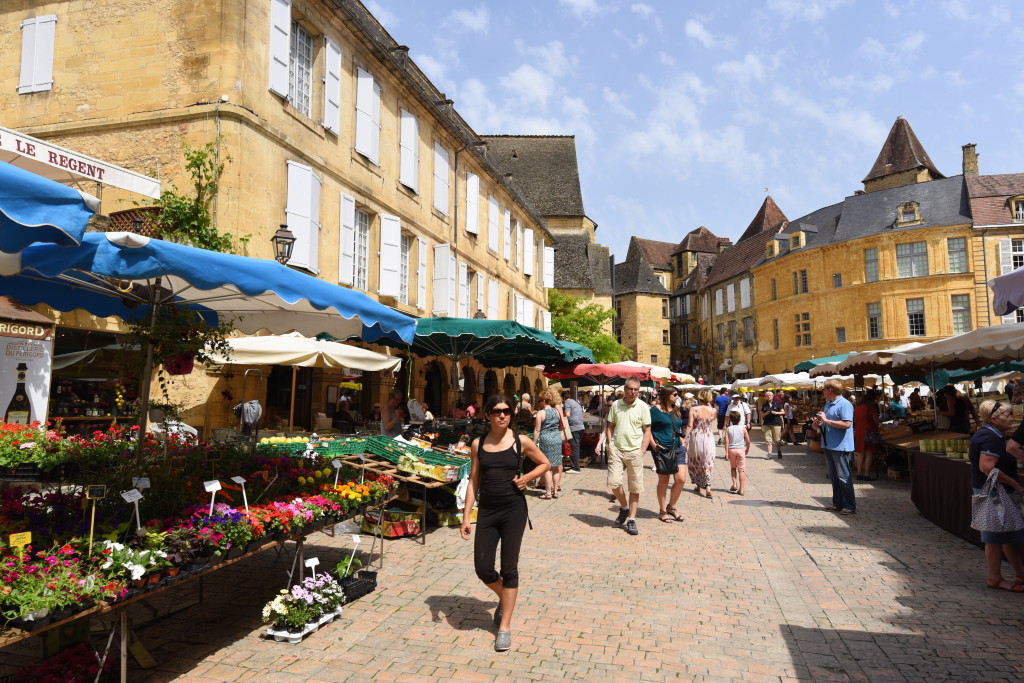
  • Markets. A delight to browse (Budapest’s Great Market Hall, London’s Borough Market). Look for pop-up street markets and outdoor produce markets. Small towns in France designate a weekly “market day”—plan for it (e.g., Sarlat).
  • Other Cheap Eats. Market cafés, worker/student cafeterias (“mensa”), gathering a meal at variety of artisanal shops (bakery, cheese, meats).
  • Picnic. Simply means “non-restaurant meal.” All of the above are ways to assemble a memorable picnic—find a scenic spot for yours.

Drinking

  • Wine. Know what qualities you like—the vintner wants to help you narrow down your options. Wine bars/enoteche pair with good food, wine shops offer variety, and winery visits are more in-depth. Italy, France, and Spain have top wines, but don’t overlook lesser-known wine countries (Hungary, Croatia, Slovenia).
  • Beer. German Biergarten culture, self-service, big liter steins called Mass (deposit). Czech Republic has best (and cheapest) pilsners (named for Plzeň). Belgian beers are refined, higher alcohol, each one served in a very specific glass to highlight the taste. Britain prefers its ales room-temperature, pulled up from cellar using “pulls,” after-work hangout in front of pubs. Craft beers trendy everywhere (especially Italy).
  • Spirits. Splurge on a scenic cocktail. Europeans love both aperitif (before dinner) and digestif (after dinner, aids digestion). National specialties: whisky in Scotland/Ireland (distillery tours), vodka in Poland, limoncello in southern Italy, ouzo in Greece/Turkey, Unicum in Hungary, Becherovka in Czech Rep. Hospitality = homemade firewater.
  • Soft Drinks. Discover the “local Coke”: Rivella in Switzerland (made with milk serum, tastes like vitamins), Irn-Bru in Scotland (bright orange), Cockta in Slovenia.
  • Café Culture. Espresso with different amounts of milk (Italians don’t drink milk after lunch, for digestive reasons). You may pay more to sit than to stand—check price list. Genteel Coffee houses in Budapest, Vienna. Afternoon tea in Britain. Turkish coffee in Turkey/Bosnia/ Balkans comes with culture of slowing down.

Sweets

  • Chocolates. Best in Belgium, Britain, Switzerland. Also consider other candies (British sweets, Scandinavian salted licorice).
  • Pastries. In addition to predictable choices, try alternatives: kürtőskalács in Hungary/Eastern Europe; churros in Spain. Cultural divide: SE Europe sweetens with honey rather than sugar.
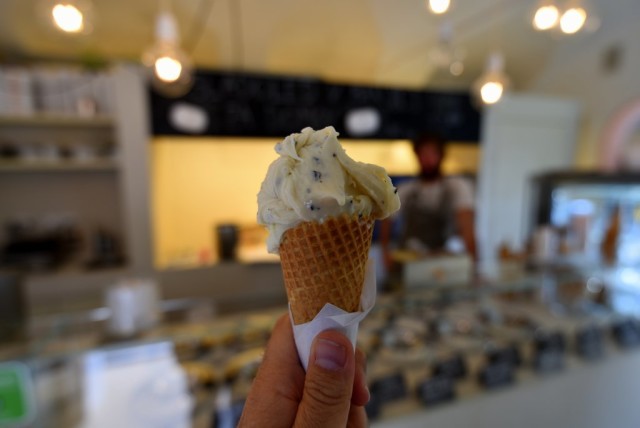
  • Ice Cream/Gelato. Look for “artisanal”/artigianale or “homemade.” Pistachio is best barometer of quality. Flavors that pair/marry well. Avoid big piles of bright colors (for attracting children).

Foodie Experiences

  • Cooking Classes. Have fun, learn a skill (and understand the culture behind it), and bring home recipes. Trendy; look online or ask your hotel.
  • Food Tours. Get to know a (typically less-touristy) neighborhood, learn about local food culture, and identify great restaurants (e.g., Eat Polska food tours in Warsaw and Krakow).
  • Learn Where Your Food Comes From. Agriturismi/ tourist farm (Italy), cheesemakers, beehive (Slovenia), truffle hunt, making kanafeh (Bulgaria).

Happy Travels…and Happy Eating!


You can watch the full-length, 1.25-hour “Europe for Foodies” talk at Ricksteves.com, or on YouTube.

If you don’t have time for the full class, you can check out some of these shorter excerpts:

Europe for Foodies 101 (23 min)

Restaurant-Finding Tips (14 min)

Eating Tips and Tricks (9 min)

Cheap Eats (9 min)

Drinks and Sweets (16 min)

Foodie Experiences (7 min)


And if you enjoy this talk, check out some of the others I’ve done:

European Travel Skills

Iceland

Czech Republic/Poland/Hungary

Slovenia/Croatia

European Cruising 101

Mediterranean Cruise Ports

Northern European Cruise Ports

Coffee and Ćejf: Learning from Muslims in Bosnia

This post was written in February of 2017, immediately after President Trump imposed a travel ban on seven predominantly Muslim countries.

The past week has made it clear that there’s still a lot of fear and mistrust when it comes to Muslims in America. As a patriot and a humanitarian, this makes me sad. And as a traveler, it perplexes me. In several visits to the Muslim world, I’ve had nothing but positive experiences.

I’m not naive. I realize that some Muslims do terrible things. But judging an entire faith based on the actions of a tiny fanatic fringe is insulting at best, and dangerous at worst. When you travel, you realize that the vision of Islam presented by Donald Trump and Steve Bannon is highly selective. Meeting Muslims face to face comes with rich opportunities to connect with a different slice of humanity, and to learn.

The Muslim country I’ve spent the most time in is Bosnia. On my last visit to Sarajevo, my local friend Amir invited me out for coffee. Not just coffee — Bosnian coffee.

“Here in Bosnia, coffee is not just a drink,” Amir explained. “It’s almost a way of life.” Unfiltered, potent Bosnian coffee (which you probably think of as “Turkish coffee”) is the linchpin of a complex social ritual that captures this culture’s deliberate, stop-and-smell-the-tulips approach to life.

Cameron-Bosnia-Sarajevo-Coffee

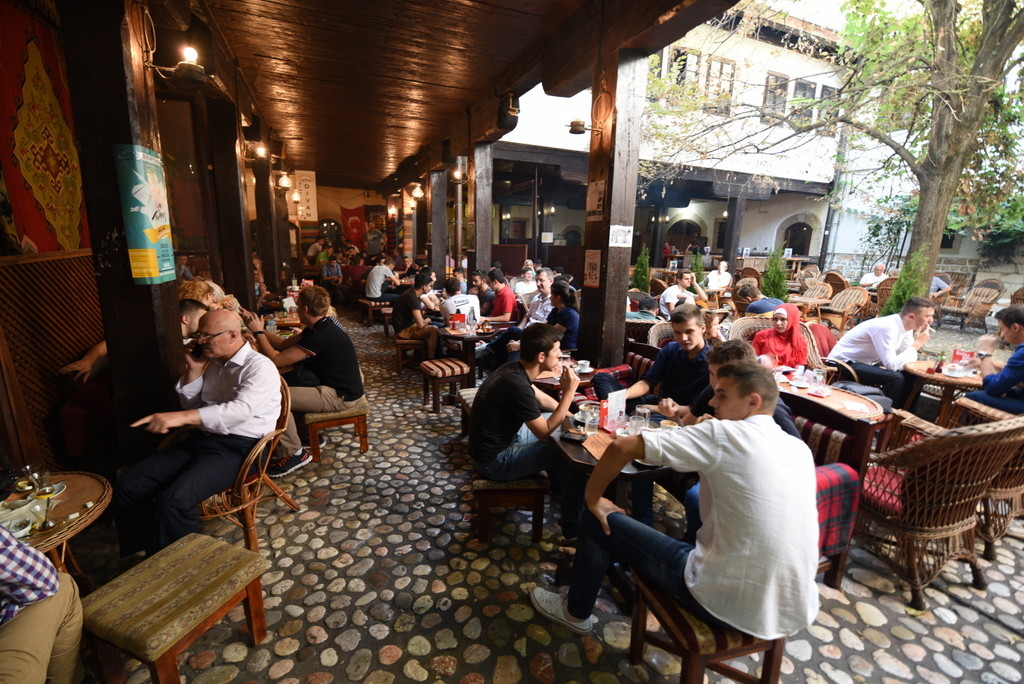
We settled into a rickety table in a cozy, cobbled caravansary courtyard. When the coffee arrived, I was ready to slam it down. But Amir reminded me that Bosnian coffee punishes those in a hurry…with a mouthful of gritty grounds.

He patiently talked me through the procedure — and, more important, the philosophy — of Bosnian coffee. “There’s no correct or incorrect way to drink Bosnian coffee. People spend lifetimes perfecting their own personal ritual. But one thing everyone agrees on is that coffee isn’t just about getting caffeinated. It’s about relaxing. It’s about being with people you enjoy. Talk to your friends. Listen to what they have to say. Learn about their lives. Then take a sip. If your coffee isn’t strong enough, gently swirl your cup to agitate the grounds. If it’s too strong, just wait. Let it settle. It gives you more time to talk anyway.”

Cameron-Bosnia-Mostar-Coffee

Reaching the bottom of my cup, I remarked that the grounds had left no residue at all. “When it’s done properly,” Amir said, “you’ll never taste the grounds. If you find a layer of ‘mud’ in the bottom of your cup, it means that someone — either you or the person who made the coffee — was in too much of a hurry.” (So I guess that technically, there is an incorrect way to drink Bosnian coffee.)

Looking around the courtyard, Amir said, “This is a good examples of merak. Merak is one of those words that you cannot directly translate into English. It’s more of a concept. It means, basically, enjoyment. This relaxed atmosphere among friends. It’s when you’re nursing a cup of coffee with nowhere in particular to go — savoring the simple act of passing the time of day.”

Amir explained that the Bosnian language is rife with these non-translatable words. Another example: raja.  “Raja means a sense of being one with a community,” Amir said. “But it also means frowning on anyone who thinks they’re a big shot. It’s everyone knowing their place, and respecting it.” In American terms,  Raja is what prevents you from being the jerk who shows up in a convertible and a tux to your high school reunion.

Cameron-Bosnia-Sarajevo-Coffe 1

But my favorite Bosnian word of all is ćejf (pronounced “chayf”).

Ćejf is that annoying habit or ritual you have. It’s the unique little quirk that drives your loved ones batty. And yet, it gives you pleasure. No, not just pleasure: deep satisfaction. In traditional Bosnian culture, ćejf is the idiosyncratic way someone spins his worry beads, the way he packs and smokes his pipe, or the very particular procedure she has for preparing and drinking a cup of Bosnian coffee.

In American culture, we have ćejf, too. We just don’t have a word for it. Maybe you have an exacting Starbucks order that mystifies your friends, but tastes just right. (“Skinny one-pump vanilla split-shot latte, extra hot.”) Or every weekend, you feel compelled to wash and detail your car, or mow your lawn, or prune your hedges…just so. Or maybe it’s the way you keep your desk organized, according to a special logic that only you fully appreciate. My own ćejf is probably the way I tinker with my fantasy football lineup. (Should I start Jordan Howard or Latavius Murray this week?) Or the way I chew gum when I’m stressed out: Exrta Polar Ice flavor, always two sticks…never just one.

In our culture, people call this behavior “fussy,” or “O.C.D.”…or, simply, “annoying.” We’re expected to check our ćejf at the door. But in Bosnia, they just shake their head and say, “What are you gonna do? That’s his ćejf.” You don’t have to like someone’s ćejf. But — as long as it’s not hurting anyone — you do have to accept it. Because everyone has one. What’s your ćejf?

Another Muslim moment that sticks with me came in Morocco. I had just sailed over from Spain to Tangier, setting foot in Africa for the first time. My tour guide, Aziz, brought me to a restaurant where we sat down to a hearty lunch. I’m self-conscious about the very clumsy, very American way I use my knife and fork: Grip the knife in my right hand to cut, then drop it and pick up the fork to eat. I’m jealous of my suave European friends, who deftly use their left-handed fork and right-handed knife, in concert, to eat like pros.

But here in Morocco, Aziz watched me very closely as I ate, a smile slowly spreading across his face. Finally, he blurted out, “I love the way you eat! So respectful.” In Aziz’s culture, the left hand is considered dirty — traditionally used for cleaning yourself — while the right hand is used for eating. By transferring my fork to my right hand, I was — unknowingly — being a very good Muslim.

Traveling in the Muslim world has changed me. And not just by opening my eyes to a beautiful faith — in little ways, too. Thanks to Islam, I force myself to slow down a bit when I get coffee with friends. I’m more forgiving of my loved ones’ little quirks. And I unapologetically grab my fork with my right hand.

When you travel, you figure out where your minuses become pluses, and vice-versa. You pick up new ideas and discover that you fit better into a larger world. With the stroke of a pen, President Trump just made connecting with Muslims much more difficult. Let these stories be a gentle reminder that the world can be an immeasurably rich place…but only if we’re open to it.

God bless America. And may peace be upon us.

The Unkindest Cut: Shepherds, Mud, Dogs that Bite, and Cheesy Polenta

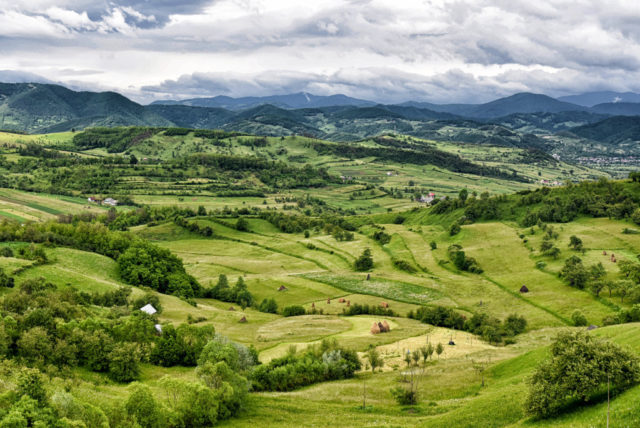
Stepping out of our car into the mist, Karel and I begin to organize our filming gear. Our guide, Teo, has driven us up a twisty road high into the Budeşti Mountains of Maramureş, in Romania. He’s brought us here to visit a very traditional shepherd settlement, where people still make rustic cheese as they have for centuries. It should make for great TV.

CH16MayMaramures_063

Gathering up the heavy tripod and the industrial-strength golf umbrella, I hear a pack of mangy, mud-stained, mismatched dogs bark furiously as they gallop across the soggy fields to greet us. They are very protective of their settlement — even though, to our eyes, there’s little worth protecting. “Don’t worry,” Teo says, with his wry smile. “Their bark is worse than their bite.” Over the chorus of yelps and growls, the shepherd yells something to Teo in Romanian. A flash of concern crosses his face. Translating, Teo points to one of the dogs. “Careful,” he says. “That one bites.”

We trudge through the muddy settlement, scouting what we’re about to film. Near the road is a paddock. A hundred yards uphill is a little roofed shed, a small hut, and a picnic table under a tarp. Everything is soaking wet. And everywhere we step, our feet squish.

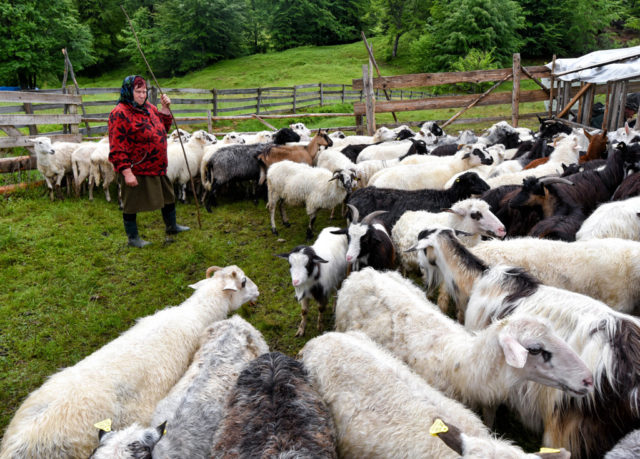
Teo introduces us to the settlement’s owners, a Mutt and Jeff duo: one built like an aging linebacker, the other an emaciated beanpole. These shepherds live up here through the summer, tending their flock of goats and sheep, milking them three times a day, and making cheese. This is a far cry from the log-cabin-cutesy, government-subsidized cheesemaking huts high in the Swiss Alps — with flower boxes, antique cowbells hanging from the eaves, and lederhosen-clad, apple-cheeked farmhands straight out of Central Casting. No, this is a much more authentic scene: a patch of mud with just enough pasture to graze a flock, and buildings so basic they barely qualify as “buildings.” Nevertheless, the shepherds take pride in their work, and do it with precision.

CH16MayMaramures_039

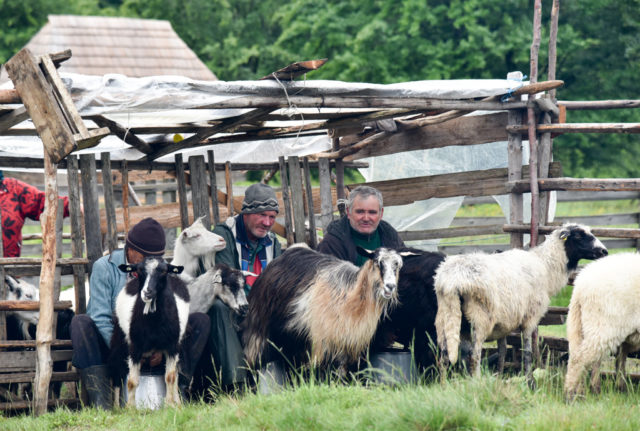
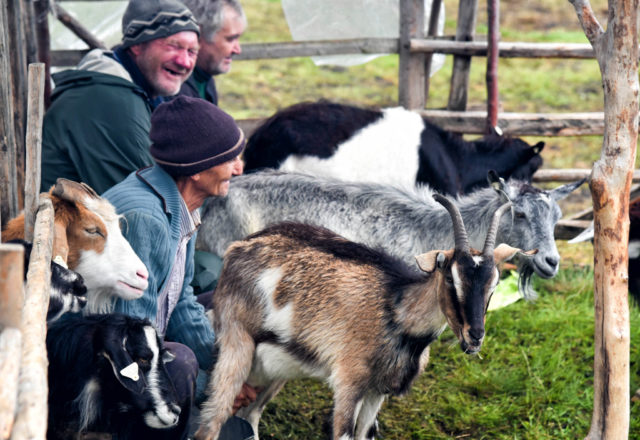
It’s time to milk. The motley mix of goats and sheep huddle up at a rickety wooden turnstile separating the two halves of the paddock. Another stout shepherd — more linebacker than beanpole — plants herself in the middle of the paddock, gently prodding the livestock toward three shepherds who hunch on little stools, evenly spaced under a plastic tarp.

CH16MayMaramures_032

They grab each animal as it passes through, and milk it into a stainless-steel bucket. Teo explains that every goat and sheep is different, so the shepherds gradually figure out the preferred technique for each one.

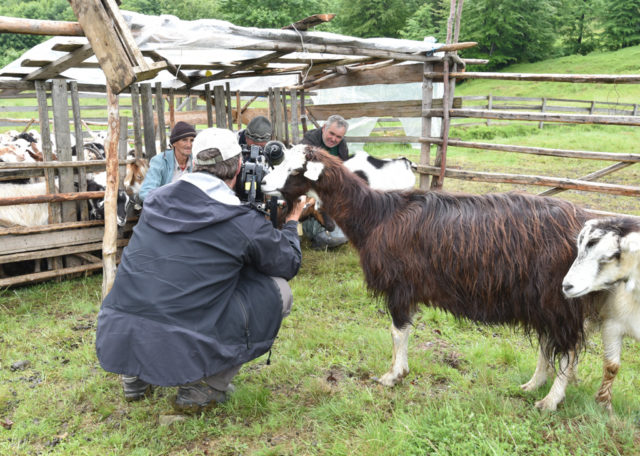
Karel gets to work, detaching his camera from the tripod for a shoulder-held shot. A few minutes later, Teo and I watch helplessly, in slow motion, as a curious goat sniffs the tripod until it tips over. Its delicately machined head lands with a damp thump in a goat patty. I spend the next ten minutes fruitlessly trying to polish it with a few tattered tissues I find in my pocket.

Meanwhile, Karel is lost in his viewfinder, squatting a few inches above the muck. A nosy goat waddles up and tickles Karel’s ear with his goatee. But Karel holds the camera steady…he knows he’s shooting gold.

CH16MayMaramures_038

The chorus of barks crescendos again, and we look up to see another shepherd coming over the horizon. He brings his own ragtag herd of sheepdogs, who quickly engage the local pack in a delicate do-si-do for dominance. It’s a commotion of fur and teeth, barking and growling and posturing — until, finally, one of the guest dogs goes too far and starts biting. The shepherds exchange angry words until the neighbor retreats to his own settlement with his pack — all of their tails tucked between their legs.

CH16MayMaramures_044

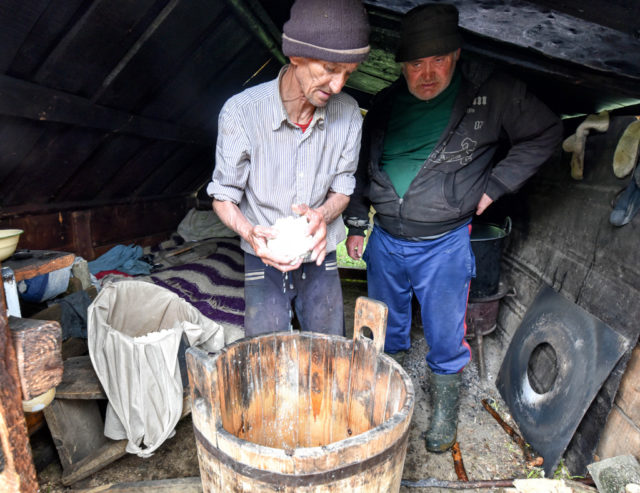
After about 45 minutes, the entire flock has been milked, and we follow the shepherds as they lug the buckets up to their little house. Pulling back the curtain at the door of their dirt-floor cabin, they reveal an impossibly spartan lifestyle: a cot covered with heavy blankets, a simple basin on a shelf, and a little potbellied stove. Standing in the doorway, they pour all the milk into a wooden bucket, then sprinkle in a powdered enzyme.

CH16MayMaramures_058

After 15 minutes, the shepherds dip in a cheesecloth to skim out the curds. Then the skinny one carefully hand-shapes them in a slow, rhythmic, squeezing motion, resulting in a tight little clump of cheese. Karel stands in the doorway, filming, while I hold the golf umbrella to keep his gear dry. Feeling the several inches of liquid mud and dung finally crest the cuffs of my shoes, I don’t even mind.

CH16MayMaramures_047

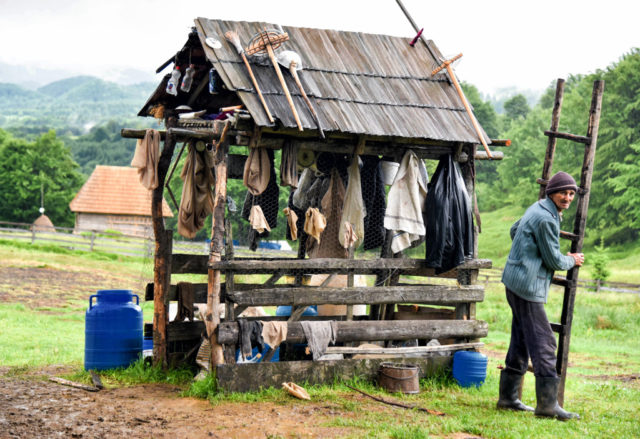
Having wrung out as much moisture from his newly formed clump as possible, the spindly shepherd pulls out a spindly ladder and climbs up to place the new cheese in the little attic above their supply shack. It seems that this is the only dry place in the entire compound: Its sharply angled roof protects food, jackets, towels, and damp laundry. On the roof rest tools that look like the spoils of a folklore museum heist.

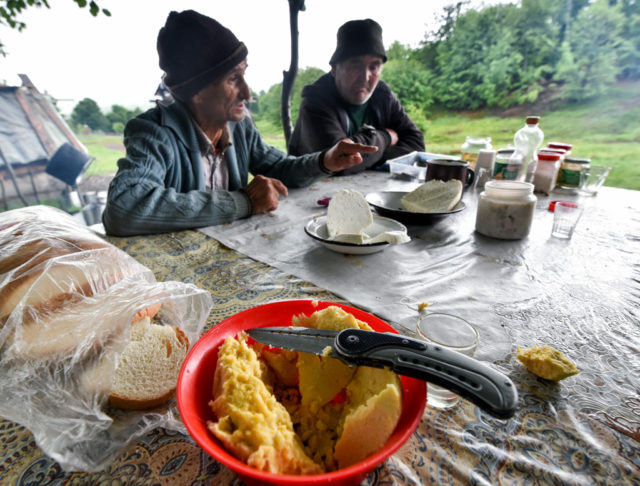
Finally, it’s time for a break. We retreat to a heavy wooden picnic table under a jerry-rigged tarp, and break bread over the plastic paisley tablecloth. With gratitude, we nibble on little samples of their very young, semi-flavorless cheese.

CH16MayMaramures_054

Then they bring out a red plastic bowl with a special treat: polenta mixed with cheese. One of the shepherds pulls out a wicked pocketknife, wipes it on his sleeve, carves off a little chunk, and hands it to me. Popping it into my mouth, I bite into a decadent, creamy texture — halfway between cheese and polenta — and taste the pungent kick of goat cheese. Fantastic.

In our travels around Romania, we’ve learned time and again about the importance of polenta. It’s such an important staple here that, in this part of Europe, Romanians are nicknamed “polenta-eaters.”

To finish the meal — and cut through the chilling wind — the shepherds pull out bottles of homemade firewater, along with a fascinating concoction: a dense, sweet syrup made of pine needles. Taking a sip, it’s sweet, but not too sweet, and mildly piney…unexpectedly delicious.

We bid farewell and head back to Teo’s car, where he winds us back down the mountain to the dry, warm comfort of our hotel. Karel and I are well aware that our Romania show will be too long. But we don’t yet know that the cheesemaking segment we just filmed will wind up on the cutting-room floor.

Trimming an overstuffed show to fit its 30-minute window requires some difficult calls, and — in the context of the entire show — this was the right call. But thinking back on the magic we captured, it feels like a particularly unkind cut. Maybe someday, somehow that footage will see the light of day. But even if it never does, my rainy afternoon on a Maramureş mountaintop was well worth it: I came away with a vivid travel memory.