Scots Sweets at Lickety Splits

I love visiting a shop that takes something humdrum and — because the shopkeeper is so passionate and knowledgeable — elevates it to fascinating new heights. Edinburgh has some fine kiltmakers and great whiskey shops, but my favorite store in town sold candy — or “sweets,” as they say here.

Sweets ShelvesNaomi runs Lickety Splits — just a few doors off the Royal Mile — as a nostalgic throwback to Scottish childhood. Stepping inside, you’re greeted by a wall of glass jars filled with brightly colored treats. But if you take a few minutes to chat with Naomi, you’ll learn that each one has its own unique — and often fascinating — backstory. While England may be the land of Cadbury and Willy Wonka, the Scots seems to have a special knack for sweets.

Take Chelsea Whoppers. These little strips of chewy fudge dusted with cocoa powder were originally manufactured in Helensburgh, Scotland. Naomi loves to explain how, through a scandalous and still-grating series of events, it morphed into the Tootsie Roll in the US. Today, Scots who grew up on Chelsea Whoppers come to specialty stores like this one to track down the originals.

Another fascinating sweet is the Lucky Tattie, a flat, super-sweet disc dusted in cinnamon (resembling a potato — hence the name). Naomi explained that these are so packed with calories that long-distance runners eat one to get an extra boost. When you eat one, it’s like chugging an energy drink.

Sweets JarThe list goes on and on. I love unusual flavors, and Naomi introduced me to several: Hard candies (called “rock”) that taste like clove, ginger, or rhubarb. (She has to keep the rhubarb jar closed, because otherwise it makes her whole shop smell like marijuana.) Little orange-and-blue-streaked candies that taste like Irn-Bru, the soft drink that’s unaccountably beloved throughout Scotland (and nowhere else). Saltire rock, a blue hard candy with a white Scottish flag. And “Edinburgh rock,” a more crumbly candy (like after-dinner mints) with its own wildly creative array of flavors.

And speaking of Willy Wonka, Scottish sweets makers really know how to name their treats: Parma Violets. Acid Drops. Humbugs. Soor Plooms. Fizzy Fangs. It makes “Milky Way” and “Twizzlers” seem dull in comparison.

Naomi is also a fascinating person — she clearly has her finger on the pulse of the neighborhood, and filled me in on the inside scoop behind touristy Edinburgh. For example, it’s well-documented that J.K. Rowling worked on her earliest Harry Potter books at The Elephant House, a café a few blocks south of the Royal Mile.  But knowing the neighborhood, Naomi can see where she drew lots of inspiration from that little corner of Edinburgh. In the Greyfriars Cemetery a block away (made famous by the “Greyfriars Bobby” tale of a loyal dog) are headstones with the names McGonagall and Tom Riddell. The posh George Heriot’s School, a Gothic-turreted showcase just over the cemetery’s fence, was clearly an inspiration for Hogwarts. And a couple of blocks away is a street called…Potterrow. (Cue Harry Potter theme music.)
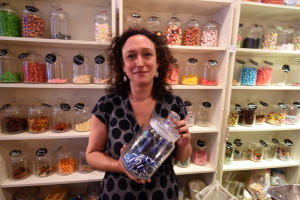
Sweets NaomiLickety Splits also has a small art gallery. In the back room, Naomi makes broaches, pendants, and other jewelry from maps. Through her work with maps, she’s gotten to know places very well. When I told her I grew up in Central Ohio, she could visualize the state.

Leaving Naomi’s sweets shop with a bag of Scottish goodies, I realize I’ve done my favorite type of shopping: Affordable. Culturally broadening. And delicious. For the rest of my trip, each time I pop a clove hard candy or a sour ball into my mouth, I’ll remember Lickety Splits — and know I’m in Scotland.
Duck Duck Goose: Dining in the Dordogne

Here in France’s Dordogne River Valley, every menu begins and ends with waterfowl: duck, duck, goose.

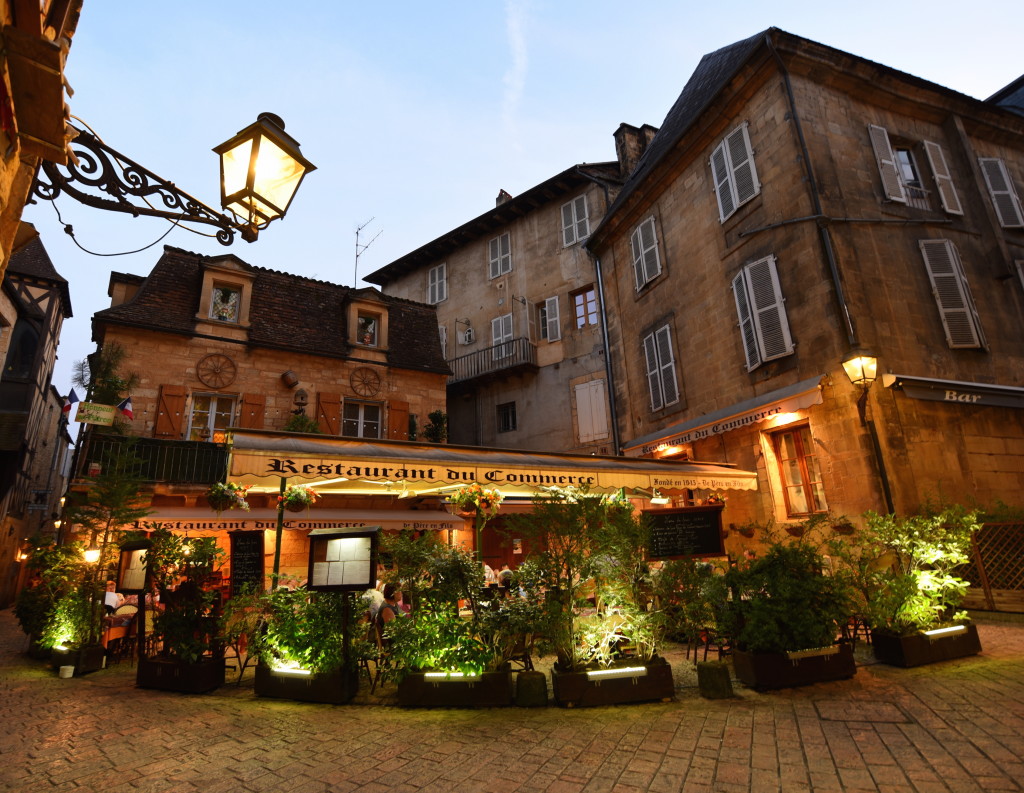
Sarlat RestaurantThe most prized poultry product are the livers of force-fed geese who fill the farms around the Dordogne — better known as foie gras. Duck meat is very popular, too. Ordering the basic €20 three-course menu at restaurants in Dordogne, the first course is invariably a choice between foie gras or duck gizzard salad.

I’m not a huge fan of foie gras — more on that later — so on my first night in Sarlat, I went with the latter. Now, my Grandma, raised in the Great Depression, always eagerly snatched up the gizzards that came with our Thanksgiving turkey. I’ve never had the nerve to eat a gizzard. But tonight, I figured, what the hey? If I like gizzards anywhere, it’ll be in Sarlat.

The salad came: a nice bed of lettuce, lightly dressed, with slices of flavorful smoked duck breast and some still-sizzling gizzards. My first bite of gizzard came with that metallic pang of organ meat. Not my favorite (I’m not that hardcore of a foodie). But not entirely objectionable, either. Mixing the different parts of the salad — greens, smoked duck breast, and gizzards — gave each forkful a more palatable balance, and by the time I was a third of the way through my salad, I had forgotten that this was a new culinary frontier. Will I order the gizzard salad the next time I go to a French bistro in Seattle? Eh, no. But I’m glad I tried it.

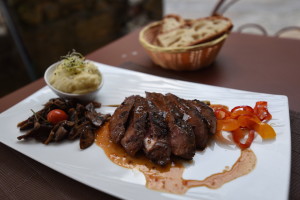
Then came the main course: sautéed duck breast, very flavorful, served on a bed of stewed “coriander” (cilantro) with a side of wok vegetables, giving it an Asian spin. Delicieux!Duck Dinner

But perhaps the best part of the meal was the side of pommes de terre sarladaises — “Sarlat-style potatoes.” Thin slices of potatoes are fried up in duck fat, and loaded up with an abundance of garlic and salt. Now that’s something I could eat every day.

As for that foie gras: Here in the Dordogne, it’s only a matter of time before you have some. I’ve tried it several times, prepared many different ways. And even though I realize this will cost me my foodie cred, I have to be honest: I’m just not that into it. No matter how good it is, it always has that distinctive liver taste that hits my palate wrong.

I have a theory that, just like people either love or hate the taste of cilantro, there’s a “liver gene” that some of us have, and others don’t. Guiding our Rick Steves tours in Eastern Europe, I especially enjoy taking our groups to a family-style dinner on our first night in Hungary (Europe’s most underrated culinary destination…but that’s a topic for another time). Our tour members dig into a huge spread of Hungarian specialties, and without exception, they declare it the best meal of the trip.

Confit de canard is one of those French foods that sound bizarre, but taste delicious. It's literally a duck in a can: processed and preserved in its own fat, and later cooked in that same fat. I had one of the best confit de canard I've ever had at a humdrum rest stop in the Dordogne.
Confit de canard is one of those French foods that sound bizarre, but taste delicious. It’s literally a duck in a can: processed and preserved in its own fat, and later cooked in that same fat. On this trip, I enjoyed one of the best confit de canard I’ve ever had, at a humdrum rest stop in the Dordogne.

But something interesting always happens: As the plate of goose liver circles the table, people either cringe and pass it on, or dig in for seconds and thirds. It’s clear to me that liver is a rare food that is not an acquirable taste: Either you love it or you hate it. And since I hate it, that means it’s wasted on me…so I’m happy to let someone else have my portion, while I stick to the duck.

The one silver lining in my distaste for foie gras is that I get to sidestep the brouhaha. Foodies get self-righteous about eating foie gras, animal-rights activists get self-righteous about condemning it, and everyone comes away with hurt feelings. Rick’s take on this resonates with me: If you hate factory farming and are opposed to the way animals are mistreated to provide human beings with food, you’re perfectly justified to rail against foie gras. But if you’re fine eating scrambled eggs or drinking milk, protesting foie gras is a wee bit hypocritical. People eat animals. If you’re OK with that, you’re OK with foie gras; if not, foie gras falls somewhere on the list of abuses of humans against animals.

It’s Market Day in Sarlat

Twice a week, the normally traffic-free lanes of Sarlat are clogged with a human traffic jam of shoppers. Wednesday and Saturday are the town’s market days. And in all my travels, I’ve rarely seen a market better than Sarlat’s.

Sarlat Market OV1

As the day dawns, Sarlat’s sun-baked streets are jammed with tables, each one a cornucopia overflowing with Dordogne Valley products. Produce is delicately arranged on a rickety wooden table — little more than a rough plank resting on sawhorses, groaning under the weight of lettuce, artichokes, leeks, potatoes, garlic, onions, carrots, tomatoes, eggplant, cucumbers, and radishes.

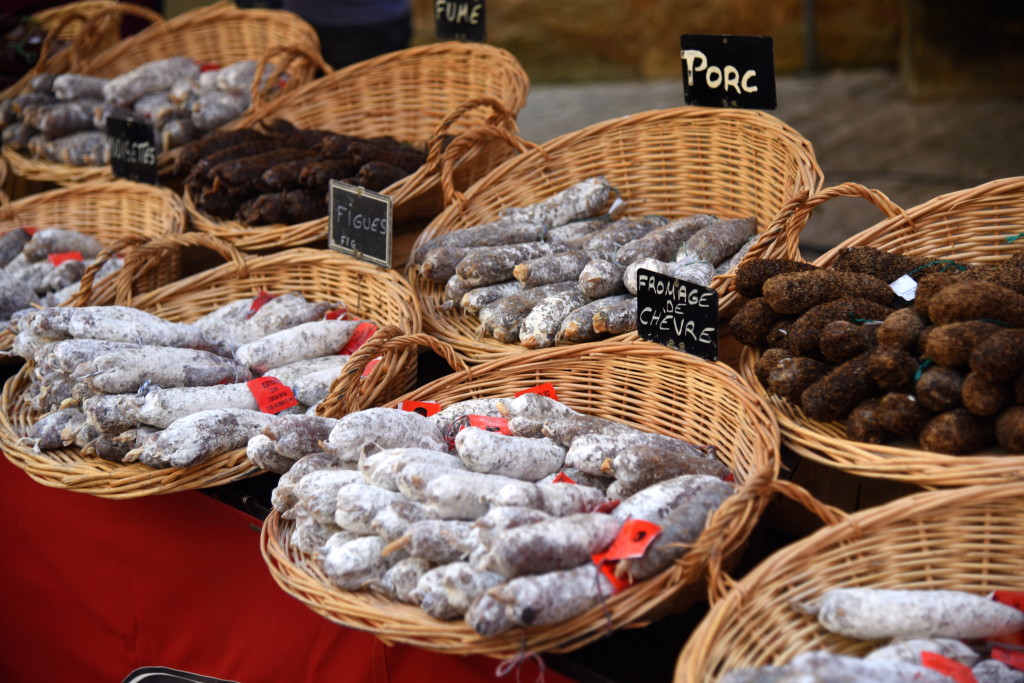
Plunging deeper, I’m immersed in a vibrant world of sights, smells, and sounds: Baskets neatly filled with oddly shaped sausages. Mountains of olives. Carefully sealed bags of dried mushrooms. Loaves of rustic breads. Refrigerated trucks displaying meats, fish, and tiny wheels and pyramids of goat cheese. A vivid festival of flowers. Tree stump-sized wheels of mountain cheese. Kitchen tools, from newfangled walnut crackers to a huckster demonstrating the sharpness of his kitchen knives. Snail shells already pre-filled with garlicky-green butter, ready for escargot. Mammoth hunks of nougat the size of car tires. Tidy rows of jams, jellies, preserves, and walnut oil. A young, dreadlocked farmer selling more different varieties of onions than I realized even existed. Bowls of colorful, intensely flavored tapenades. Giant slabs of fruitcakes — nut, orange, fig — waiting to be sliced up and sold by the weight. A rainbow of colorful little beanies used to cover your fruit or bread basket. And, of course, cans of artisanal foie gras and other duck and goose products. (Confit de canard may be the most delicious thing you’ll ever eat from a can.)

Sarlat Olives 1

Sarlat Sausages

Sarlat Cheese

CH15MaySarlat_130

Sarlat Covers

The longest line is at the strawberry stand — a good sign. You smell the strawberries before you see them. I try to stake my claim in the queue, but quickly learn that no-nonsense French grannies are shameless about butting in line. Elbows up! I trudge patiently to the front and am given a choice: charlotte or gariguette? I splurge on the pricier, rounder, more pungent charlotte style, at €3.50 a basket, instead of the cheaper, torpedo-shaped gariguette style, at €2.50.

It’s a good thing I got my shopping in early. Shortly after the noon bell tolls, everyone starts packing up. Shoppers disperse — instantly filling up the town’s many al fresco café tables — while merchants crate up unsold goods for tomorrow’s market in Domme. They’ll all be back in Sarlat on Saturday — just like they have been, twice a week, for decades. By then, I’ll be in Normandy, halfway across the country. But I’ll still be tasting those strawberries.

Pizza and Fried Goodies in Naples

Even though Naples is a huge city (Italy’s third-largest), it’s still a small town. The community is close-knit, and “networking” operates on a more primal level than LinkedIn and business lunches. On arrival at Napoli Centrale train station, I hopped into a taxi. The driver asked where I was from. When I said, “Seattle,” he said, “Oh, my friend moved to Seattle many years ago. He opened a pizzeria there — Via Tribunali. I helped him import all of his equipment. Brick pizza oven, everything, it comes from here. I put it on the ship myself.” Five minutes in Naples, and already I’d met the close friend of a guy whose pizza I’ve eaten back home.

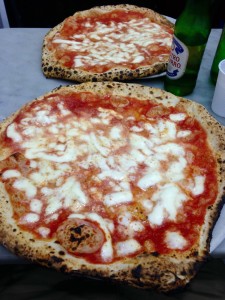
I’m not surprised that the common denominator between Seattle and Naples is pizza. The best pizza I’ve eaten anywhere is in Naples — as well it should be, since pizza was invented here.Da Michele Pizza

On this trip, I ate at Antica Pizzeria da Michele, which pizza purists insist is the best in town. You have just one choice: marinara or Margherita? And that’s it. Like In-N-Out Burger back home, Michele understands that when you achieve perfection, you keep things simple.

When the pizza arrived at our table, my Neapolitan friend Virgilio was in ecstasy. “Aha! You taste that? The perfect crust. Thin, soft, a leetle sour. You don’t even need to chew it. You just put it in your mouth and…” He pantomimed a delicious glob of pizza sliding down his esophagus, ending with a big smile.

Watching me gingerly nibble at my slices, Virgilio said, “This is the correct way to eat a pizza.” He cut out a wedge, rolled it up into a bundle, sawed off a lengthwise chunk, and jammed it into his mouth. I tried it. And in one perfect bite, I got the gooey middle, the singed crust, and a squirt of tomato sauce — all in just the right proportions.

Strangely, my favorite pizzeria experience on this trip had nothing to do with pizza. One day, I naively showed up at lunchtime on Via dei Tribunali — the namesake of that Seattle pizzeria, it’s a street buried deep in the historical center, lined with several of the planet’s best pizzerias. A mosh pit of hungry pizza patrons crowded around the Pizzeria da Matteo. Occasionally they’d spill out into the cobbled street just long enough for a delivery truck to beep them back up against the wall.

Some of the patrons were elbowing their way up to a window, where a busy vendor was tossing deep-fried snacks the size of tennis balls into takeaway bags. I joined the mob and worked my way to the front, where I ordered a couple of fried UFOs.

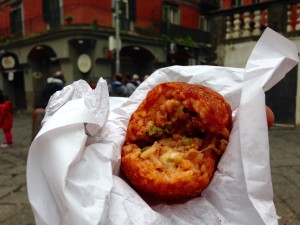
AracninoRetreating to a park bench on a seedy square, I peeked into the bag at the two items I’d randomly requested. One was an arancino, a deep-fried ball of rice that really did resemble the “little orange” it’s named for. I’d eaten arancini before, and they were dry, crumbly, and forgettable. But this one was heavenly. When I bit in, the filling — rice mixed with tomatoes, ragú (meat sauce), and a few peas — melted into my mouth as soon as my teeth broke through the fried skin. It was moist, piping hot, and delicious…instantly setting an impossibly high bar for all of the arancini I’ll ever eat.

Then I turned my attention to the other item in my bag, a frittatina. I’d never heard of this before, but it was oblong and had irregular edges. Taking my first bite, it was clear I’d discovered the perfect food: macaroni and cheese, with a bit of meat sauce mixed in, rolled into a ball, dropped into a fryer, and served steaming hot.

I love it when cultural cliches live up to the fuss, and Neapolitan pizza certainly does. But you have to go beyond the cliches, too.


Dining in Amalfi: Two Dinners, €25, No Contest

The last two nights, I’ve had starkly different dinners in the town of Amalfi. Each one cost about €25. One of them I’ll remember for years. The other I’d already forgotten while I was still eating it.

Travelers have choices, and the best options are rarely the easiest ones. And this is never so true as when you’re restaurant-hunting. After a few days in Italy, I feel like I’ve seen the same menu dozens of times. Pasta with clams. Seafood risotto. Lasagna. Spaghetti Bolognese. Because this is the Amalfi Coast, they often throw some lemon in there somewhere. Only the restaurant’s name changes.

Last night, moments after arriving in town, I went looking for restaurants. On a relaxed little neighborhood piazza just a few steps from the main drag, I zeroed in on a promising-looking place. I grabbed a table, ordered a pasta, salad, and dessert, and — while the food was pretty good — the experience barely made an impact.

Tonight I got more ambitious. I had asked a local guide, who leads food tours in a neighboring town, where she eats when she’s in Amalfi. Her answer: Taverna degli Apostoli, tucked around the side of the cathedral’s grand staircase. And sure enough, it was the best meal of the trip so far. Here’s the play-by-play.

Service: Last night, I sat outside, a few feet from where the owner was trying to drum up business. His running banter with random passersby was comically desperate. “Hey! Where you from? You want a good meal? Very cheap ’cause we’re not on the main square. Come on! I promise you like it!” Entertaining as it was to watch him set his hook in a family of four from Vancouver, then expertly reel them inside, it distracted — and detracted — from my dining experience. Tonight at Apostoli, my soundtrack was mellow jazz rather than aggressive sales pitches, and the service was astute and warm. When I asked if the broccolini was particularly bitter, she gracefully acknowledged it was, and nudged me toward something else. When the table in front of me opened up, she suggested I scoot up for a better view.

Interior: Last night, it was the predicable red-and-white-checker-tablecloth-with-melting-candles atmosphere. You couldn’t tell if you were in Italy, or in Little Italy. Tonight at Apostoli, I peeked inside. It was a former art gallery, they explained, and they chose to keep that decor intact in the cozy upstairs dining room. And, while my experience outside was perfect for a hazy late-April evening near the sea, I could imagine very happily lingering over a meal inside, too.

Menu: Last night, it was a list of completely predictable standards. Tonight at Apostoli, the menu was thoughtful, intriguing, even educational…to borrow a trendy phrase, it felt curated. Things like pasta with anchovies and walnuts. (I didn’t have the guts to order that one, but now I wish I had.) I had the sense that these were all dishes I’d never heard of before, even though people here have no doubt been eating them for centuries. I couldn’t choose…and, I imagine, I couldn’t choose wrong.

Food: For me, the most important part of any dining experience is the food itself. Last night, the pasta was actually quite good: noodles that were clearly handmade, with stewed tomatoes, melt-in-your-mouth roasted eggplant, and gooey mozzarella. But the “mixed salad” consisted of greens on the verge of wilting, flavorless tomatoes, and a few kernels of corn from a can. I sprinkled more and more salt and balsamico onto the salad trying to tease out some flavor. I failed. Oh, and there were about five tasteless olives. At one point the owner peered into my salad bowl and said, “You’d better eat those olives! I paid for them!” Finally, the desert (delizia di limone, a lemony sponge cake) tasted store-bought. Tonight at Apostoli, the salad was a revelation: ripe cherry tomatoes, shaved fennel, hand-torn basil, and — that extra-mile finishing touch that distinguishes a great chef from a merely competent one — a few little flecks of raw garlic to pull everything together and make the flavors pop. The pasta was hand-cut ziti with a sauce I’d never heard of, genovese neopolitana: slow-simmered onions and celery, giving each bite a savory, rich, caramelized sweetness.

Decision: Apostoli, in a walk. You can guess which restaurant is going in the next edition of the Rick Steves’ Italy guidebook.

What’s to be learned form this? First, if you care about food, expect more from your meals. Don’t settle for the same old trattoria on the same old piazza. Seek out that special place that dares to upend the clichés. A very fine line separates restaurants that deeply care about food from restaurants that care primarily about making money. Fine-tune your radar to detect that difference.

And finally, don’t get stuck in the TripAdvisor rut. I find that restaurant ratings on TripAdvisor skew heavily toward crowd-pleasing tourist traps. Last night’s restaurant ranked in the mid-twenties on TripAdvisor; Apostoli is buried about 10 places lower. Based on my personal experience the last two nights, you can follow the herd — or you can challenge yourself to find something better.

My dinner at Taverna degli Apostoli, in Amalfi, looked like an artistic tableau. And it tasted good, too.