10 Images of Slovenian Splendor

Slovenia is simply stunning. It’s far more beautiful than you’d expect for a country that many people have never heard of (or, at least, might have trouble placing on a map). In a recent post, I shared 10 photos of Lake Bled in all seasons. Yes, Lake Bled is gorgeous, and it deserves all of the attention that it receives. But the beauty of this little country (about the size of New Jersey) goes well beyond that one lake. Here are some photos of my other favorite Slovenian destinations. Enjoy!

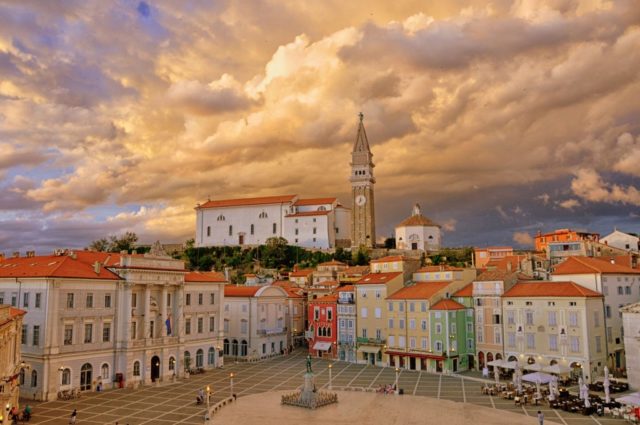
Let’s kick things off with a dramatic sunset I enjoyed from the rooftop terrace of my hotel over the pristine main square of Piran, on Slovenia’s 29 miles of Adriatic coastline:

cameron-slovenia-piran

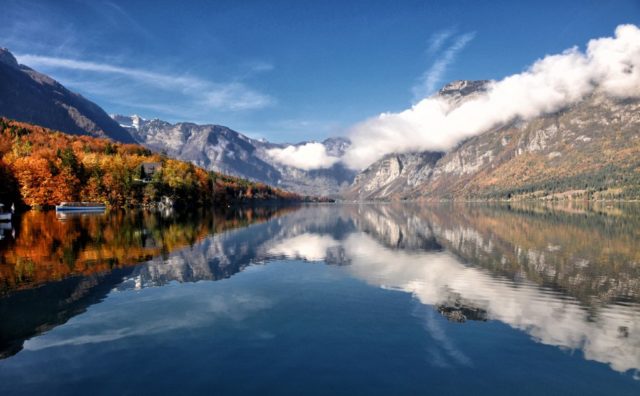
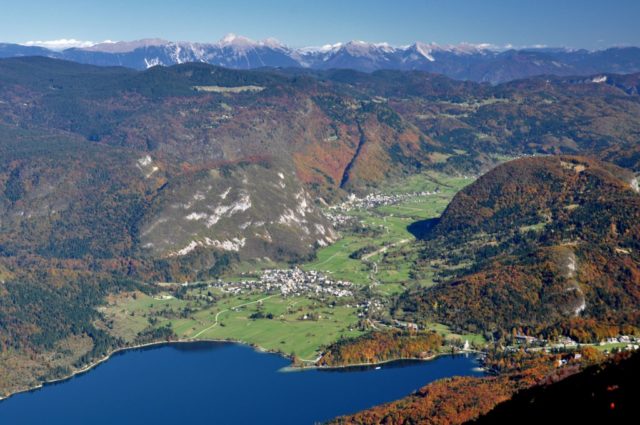
For mountain scenery, just a half-hour’s drive from Lake Bled is the more remote and rustic Lake Bohinj:

cameron-slovenia-bohinj-2

cameron-slovenia-bohinj-1

And just up the road from Lake Bled is the stunning Vintgar Gorge:

cameron-slovenia-vintgar-gorge

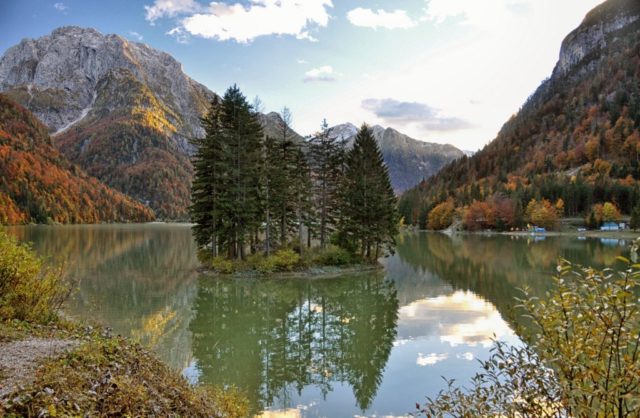
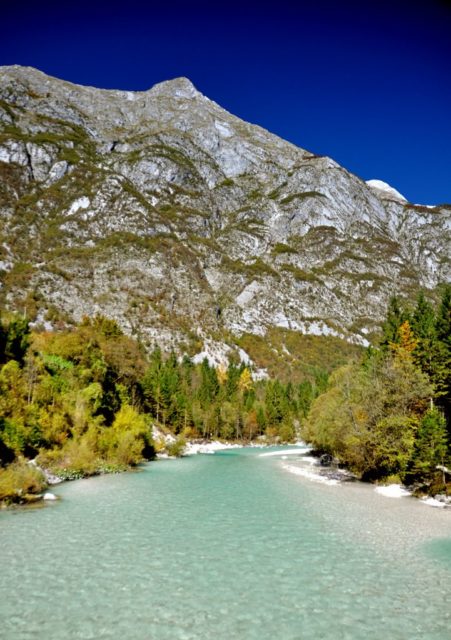
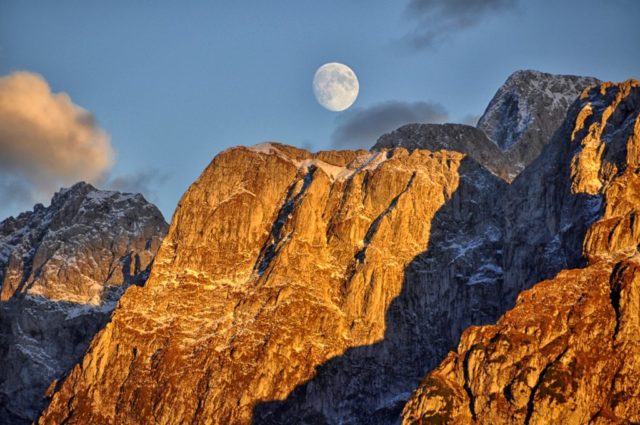
But my favorite scenery in Slovenia is deep in the Julian Alps, which butt up against Austria and Italy. The best route is the one-day drive over the Vršič Pass, then back down along the Soča River Valley. (We designed our Best of the Adriatic Tour to include a day for this journey.) For my money, this is (in good weather) the most spectacular drive in Europe, with scenery like this:

cameron-slovenia-julian-alps-1

cameron-slovenia-julian-alps-7

cameron-slovenia-julian-alps-3

cameron-slovenia-julian-alps-5

cameron-slovenia-julian-alps-6

I know I said “10 images,” but what the heck? Here’s an 11th, for good measure:

cameron-slovenia-julian-alps-4

I’m determined to convince more Americans to visit Slovenia — one of Europe’s most beautiful countries, and certainly its most underrated. I hope these pictures stoke your interest in a place you’ll never forget.  (Of course, all of these places are covered in our Rick Steves Croatia & Slovenia guidebook.)

And if you’ve enjoyed these, don’t miss 10 more photos of Slovenia’s showcase mountain resort, Lake Bled.

High in the Mountains with Tina’s Dad

High in the Slovenian Alps, through a driving rain, Gorazd grips the steering wheel. He follows an unpaved road up, up, up above the tree line. We disappear into clouds. Gorazd’s tires grind against the gravel. But I’m not worried. I know I’m in good hands. After all — this is Tina’s dad we’re talking about.

Tina Hiti, who lives near Slovenia’s Lake Bled, became a Rick Steves tour guide about the same time I did. We sort of “grew up” together as guides, and quickly discovered that we have compatible travel philosophies. Tina loves our tour members, and they love her. With an easy and generous warmth, she’s the kind of person who makes you instantly feel like you’re part of the family.

Ten years ago, I was in Slovenia researching and writing the first edition of our Rick Steves Croatia & Slovenia guidebook. Tina was planning to take me to a remote mountain valley called Logarska Dolina. But she came down with a terrible cold. So the night before our trip, Tina called me apologetically and told me she was out. “But you will go with my Dad. It will be great. He speaks English, more than he lets on, and he knows the mountains better than I ever will.”

Admittedly disappointed, the next morning I met Gorazd — a stocky but fit, soft-spoken gentleman in a track suit. His warm smile reassured me that we’d have a fun and productive day. And we did.

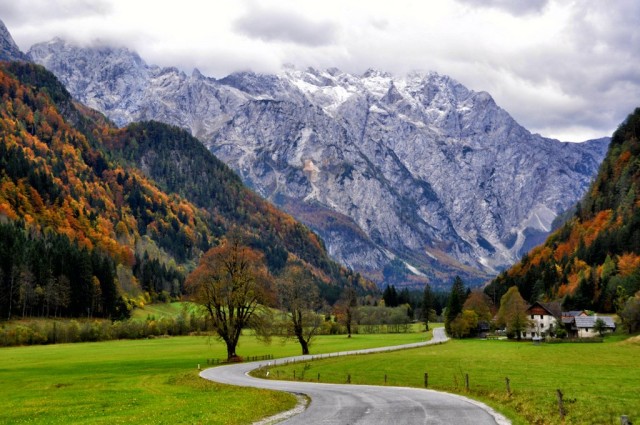
We drove through Slovenia’s stunning mountainscape from Lake Bled to Logarska Dolina. In his halting English, Gorazd explained that he wanted to experiment by taking me on a near-vertical detour through Austria, using an impossibly remote border crossing that might be closed. (This was back when there were actually borders.) We were relieved to pull up to the humble checkpoint and see a couple of bored guards…pleasantly surprised that we were giving them something to do today.
cameron-slovenia-logarska-dolina-1

Two hours of cut-glass peaks later, we arrived at Logarska Dolina — roughly meaning “Woodsmen’s Valley.” Gorazd took me around to the scenic viewpoints, rural rest stops, and picturesque tourist farms that I needed to check out for my book. And, as Tina had said, Gorazd knew the area like nobody else. Observing the steeply angled green pastures that huddle around the peaks, he joked, “They say cows here have shorter front legs than back legs. That way, they can stay upright while they graze.” Another local joke: “Dogs have to hold onto the grass with their teeth and bark through their rear ends.”

cameron-slovenia-logarska-dolina-3

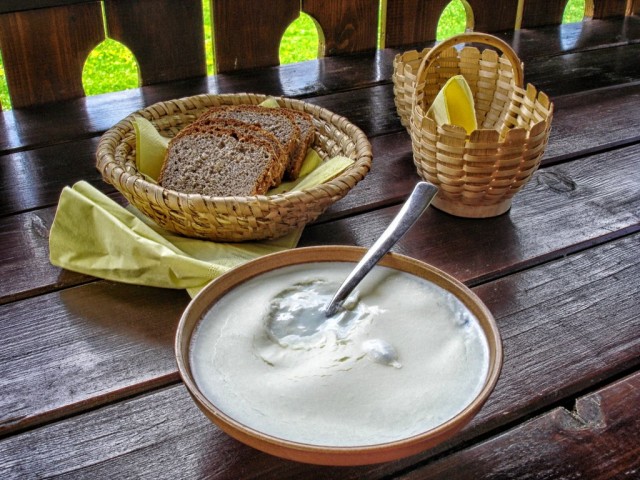
Corkscrewing up yet another gravel road — aptly nicknamed “The Panoramic Road” — Gorazd brought me to a tourist farm perched on a rocky shelf with stunning views over the entire region. He grew visibly excited when he saw a sign that said kislo mleko. “Ah, yes, this is the specialty here,” he said. “It’s like yogurt. You must try it.” He ordered two rustic crocks filled with the stuff — “like yogurt,” yes, but with a yellowish-brown film on top. My spoon broke through the firm outer layer and carried a cross-section of the contents to my mouth. Two flavors dominated: sour and what I can only describe as “barnyard.”
cameron-slovenia-kislo-mleko

Choking down the pungent mouthful with a swig of water, I pressed Gorazd for more information. “Kislo mleko means ‘soured milk,'” he explained. “They make a light, unpasteurized yogurt. Then they put it in the barn for a few days to naturally sour.” Scraping the final globs out of his crock, Gorazd declared, “Delicious!” I went back for more, hoping to acquire a taste for this mountain specialty — in keeping with my philosophy that every dish is worth trying…once. (Tina tells me that finishing my bowl earned me Gorazd’s undying respect. Apparently he still talks about it.)

Tina had modestly told me her dad was a good hockey player, so, on the way back to Lake Bled, I asked him about it. It turns out Gorazd and his brother were both Olympians in the 1980s, when the core of the Yugoslav national hockey team came from a tiny mountain hamlet called “Chicken Village” (Gorazd’s hometown). While his playing days are behind him, Gorazd has coached for decades — in Slovenia, in Italy, and around the world. His brother owns a popular local bar inside Lake Bled’s hockey arena, where a giant photograph hangs of the two brothers in their prime.

cameron-slovenia-gorazd-hockey

Over the years since Tina’s dad drove me to Logarska Dolina, with each visit, I’ve enjoyed getting to know the rest of her family: Her partner Sašo, who assisted me on the first-ever Rick Steves Best of the Adriatic Tour, and quickly became an ace lead guide in his own right. Her sister, who makes handmade jewelry. And her sons, who — at an age where many kids are still mastering walking — were already zipping around the hockey rink like future all-pros.

On one misty fall day, I had dinner plans with Tina’s family. But then she called me in a panic: Her Dad was out foraging for mushrooms when he slipped on wet leaves and tumbled into a ravine. Worst of all, Slovenian mushroom hunters have an ethic of never, under any circumstances, revealing to anyone their favorite places to forage. So Gorazd knew that nobody had a clue where he was. He was all on his own to crawl out of the ravine, regain his footing, and make his way back to civilization. Fortunately, he made it — only a little the worse for wear.

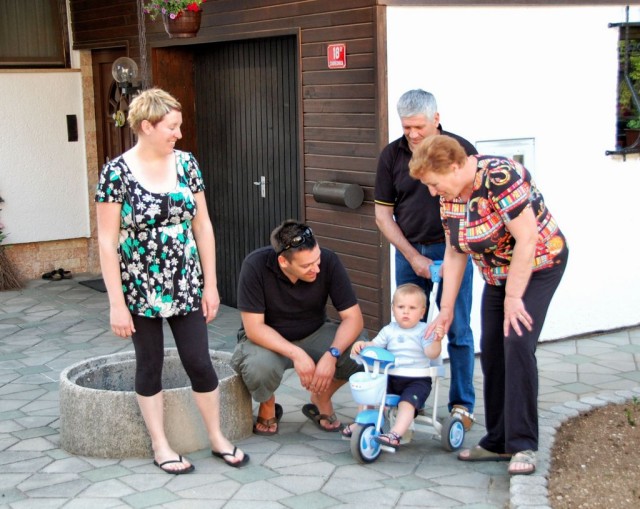
I’ve enjoyed visiting Tina and her partner Sašo in their home, which fills the attic above her parents’ house. Europeans lack the social stigma around several generations living under one roof. And because of the difficulties in getting a mortgage in Slovenia, people make full use of any family property. And so, Tina and Sašo converted her parents’ attic into a fun and functional multi-room apartment. At well over six feet tall, Sašo has to crouch under low beams. But it’s a perfectly cozy family home.

Visiting Tina and Sašo’s home is one of those travel experiences that rattled my worldview: Why is it that in the US, kids can’t wait to move out? Why do my wife and I, and each of our parents, all have houses with multiple spare rooms? Isn’t the European approach both more cost-effective, and better for “family values”? Tina and Sašo have their privacy and their own space — but Grandma and Grandpa are just steps away, ready to babysit.
cameron-slovenia-tina-family

When it came time to film our TV show on Slovenia, Rick agreed that it would be interesting to our American viewers to see this multigenerational household. So we filmed at Tina and Sašo’s house, and had dinner with the whole clan. Rick even got to ask Gorazd his thoughts on Tito. (You can watch the segment here.)

It’s always nice to see someone embark on an unexpected “second act” late in life. And in the 10 years since I met him, as Gorazd has cut back on his hockey coaching, he’s blossomed into a wonderful mountain tour guide. With my encouragement, Tina added Gorazd to her local guiding business. So now, people from across North America hire Gorazd for a drive into the mountains — and everyone loves it.

cameron-slovenia-gorazd

For years, Tina’s been telling me, “One of these visits, you have to make some extra time so my dad can take you up to Velika Planina, a pasture high in the mountains. It’s amazing. He knows you would really love it.” And on this visit, I finally made that time.

When Gorazd picks me up, we both have a pang of deja vu. Setting off in the driving rain, we lament that our excursion has rotten timing. Just a few days ago, it was sunny and clear. But it’s late September, and the weather just turned cold and wet…summer to winter, virtually overnight.

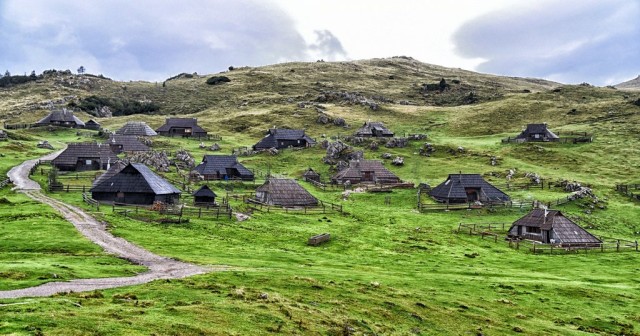
As we drive, Gorazd explains why he so desperately wants to show me Velika Planina. “It’s a super-traditional part of the country — probably the most traditional. It is a farming settlement at the very top of the mountain, above the tree line.” To get there, you can ride up a cable car, then hike. Or — if you have a local friend like Gorazd — you can turn off a mountain highway, then twist along a confusing maze of gravel service roads until you can’t drive anymore. Then you get out and walk.
cameron-slovenia-velika-planina-2

Summiting into a mile-high plain, the dense fog clears and I begin to see little hobbit huts scattered around the scrubby pasture. We park and hike, shielded by umbrellas, as Gorazd shows me the unique cottages they build up here: Low, heavy-shingled roofs are perennially hunkered down against the elements. People live in a claustrophobic little space at the very center of the house, ringed on all sides by stables. That way, the farmers can keep an eye on their cows, and the cows can help heat the house.

Today, there are no cows at Velika Planina. They just went back down the mountain two days ago. “These cottages belong to people who live all over the valleys below — those villages and settlements we passed on the way up,” Gorazd explains. “They bring their cows up here in the summer, to graze and to make cheese. But it’s a hard life. You have to stay up here all the time, to milk the cows. The only electricity is from solar panels. The old generation is worried that many young people don’t want this life. They’d rather live in Ljubljana.” He gestures through the mist, suggesting that on a clear day, you can actually see Slovenia’s thriving capital from here.

Walking from hut to hut, we find one that’s still occupied. Gorazd asks the woman if she still has any cheese. She invites us in to her humble dining room table and cuts us off a slice of the lone product up here: a pear-shaped cheese called trnič. It reminds me of a very young, mild-semi-crumbly Swiss cheese. Gorazd asks a hopeful question, but our host shakes her head no. “Hm,” he says with a wink. “I ask if they have kislo mleko. No luck. Too bad.”
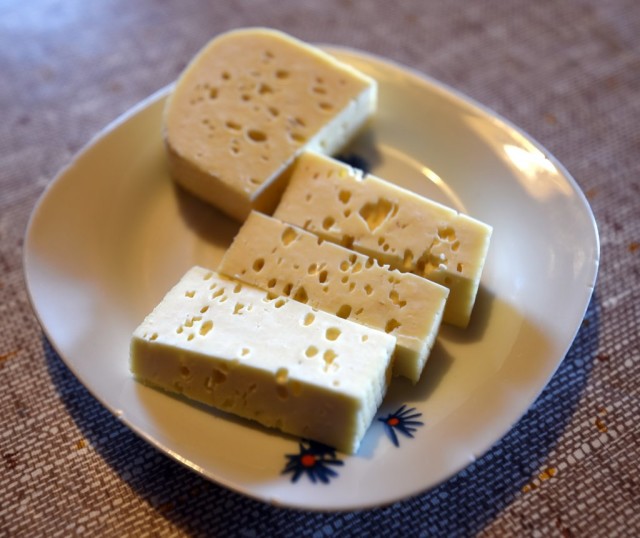
cameron-slovenia-velika-planina-cheese

Not quite ready to leave the mountains and return to civilization, Gorazd and I huff up through the driving rain to the rustic, wooden Chapel of St. Mary of Snows. But, like everything else in the village, it’s already locked up tight for the winter. Gorazd explains that a priest still comes up each Sunday throughout the summer to say Mass for this tiny community. Just then, a soggy gale turns his umbrella inside out. Stuffing it into a garbage can, Gorazd says, with his dry wit, “I think maybe now is the time to head home.” And off we go, back down the mountain.
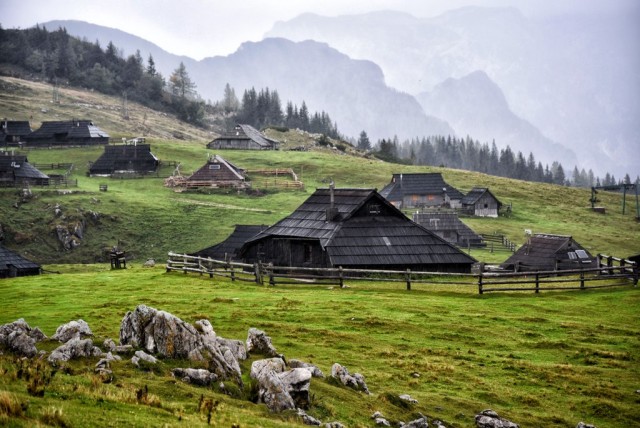
cameron-slovenia-velika-planina-1

Exploring Slovenia’s mountains, sampling strange dairy products, and learning about this gentle but impressive people is always a memorable experience…but especially when Tina’s dad is behind the wheel.
Lake Bled in All Seasons

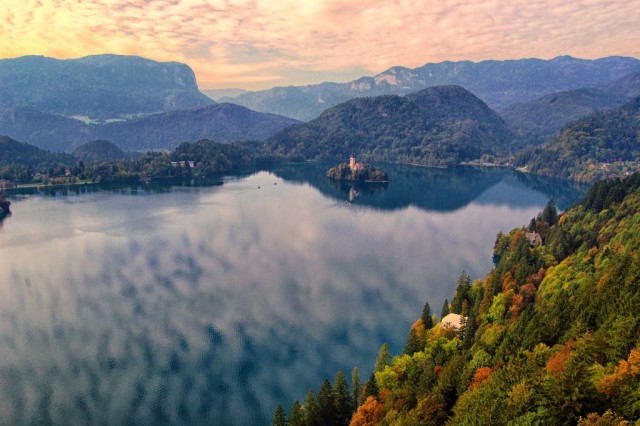
Thanks to my work writing guidebooks and leading tours for Rick Steves, I’ve been to Slovenia’s Lake Bled maybe 20, 25 times. (I know, I’m spoiled.) And each time, it’s a treat.

cameron-slovenia-bled-13

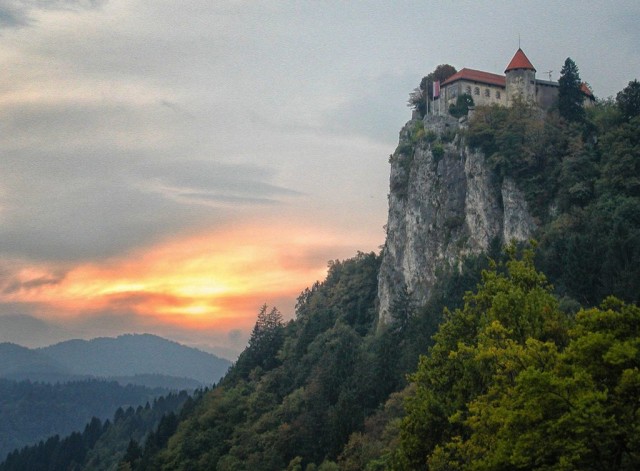
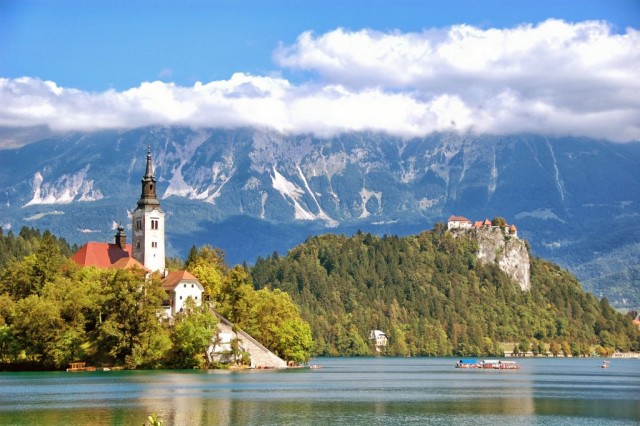
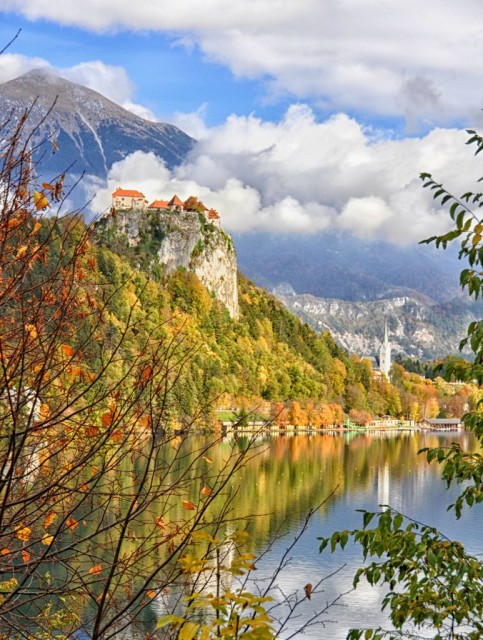
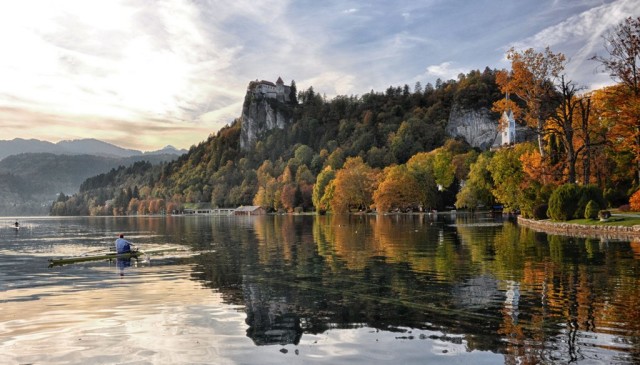
Tucked in alpine foothills, Lake Bled is a magical spot.  You can walk around it in about an hour and a half…or double it, if you’re a shutterbug. On one side of the lake, limestone cliffs rocket up from the water — the perfect perch for a castle.

cameron-slovenia-bled-10

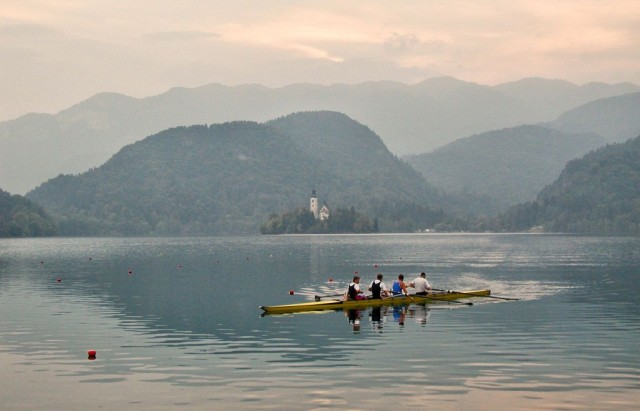
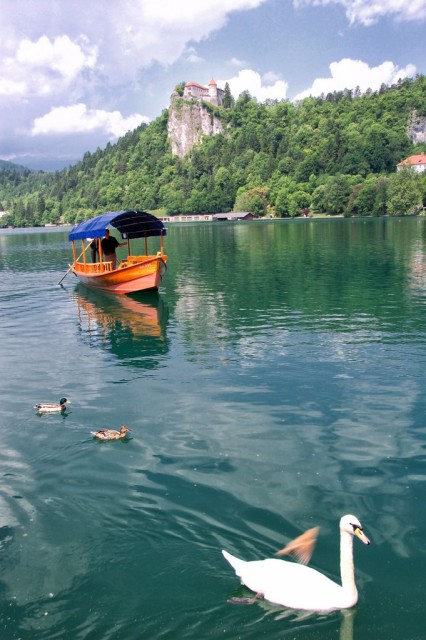
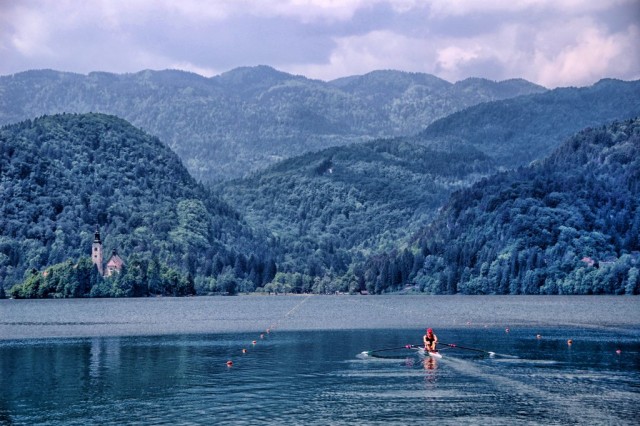
Across the lake, a forested hill is topped by a high-speed luge ride. No motorized engines are allowed on the lake — just rowboats…and Slovenia’s Olympic crew team.

OLYMPUS DIGITAL CAMERA

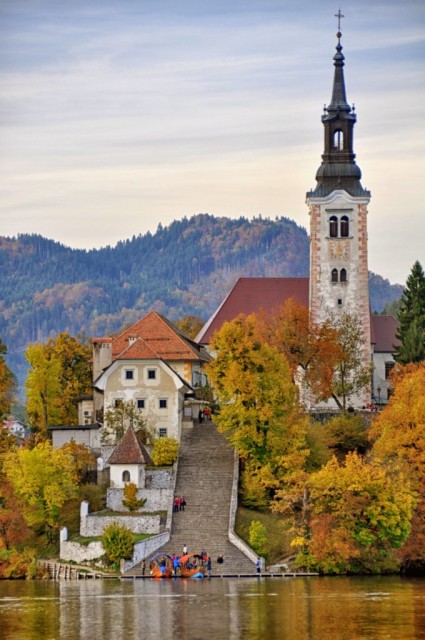
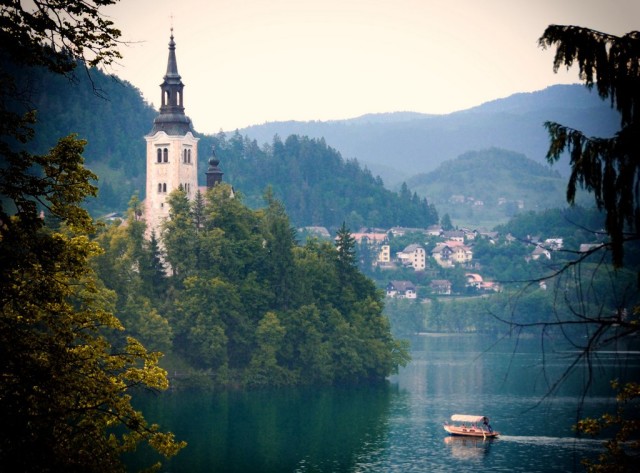
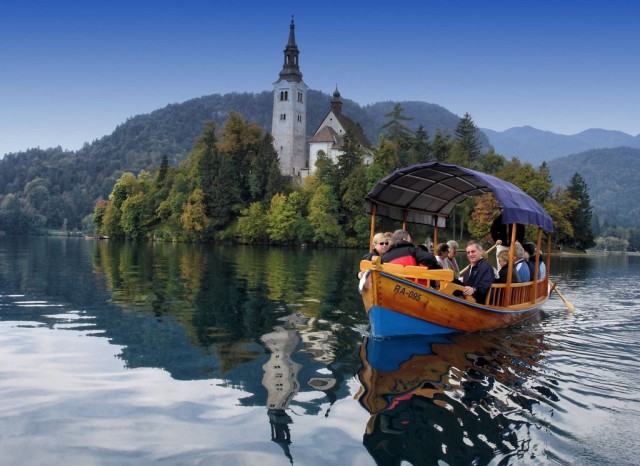
And in the middle of the lake is “Slovenia’s only island,” with a picturesque chapel. To reach it, you have to hire a local pletna boat to row you out, and then hike up a stony staircase. The local custom is for newlyweds to come out to the island so the groom can carry — or try to carry — his bride up all 99 steps…thereby proving himself “fit for marriage.”
cameron-slovenia-bled-28

In just a few weeks, I’ll be in the Austrian Alps and the Italian Dolomites.  And frankly, I’m a little worried about the weather. I’ll be there in early May, when thick, dark clouds and persistent rain can make you wonder why you bothered to make the trip. More than once, I’ve taken a cable car up to a mountain summit…and found myself inside a cloud. No fun.

But somehow, Lake Bled is magical in all seasons and in all weather. I’ve been there in brilliant sunshine, in overcast gloom, and in torrential rain (so heavy that I watched a gutter back up and flow through the sliding glass doors of my hotel). And no matter what, Lake Bled never disappoints.

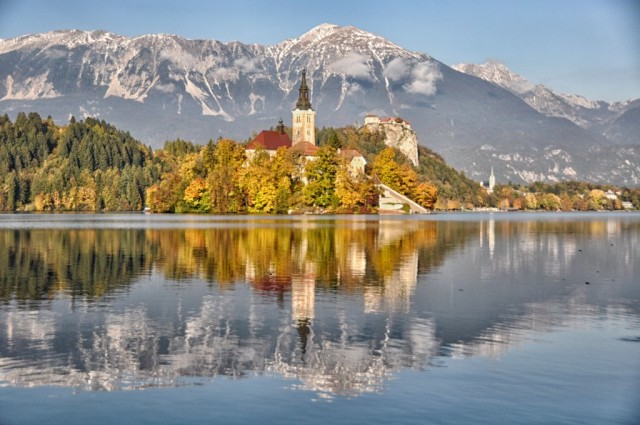
Here’s a quick photo essay of some of my favorite visits to Lake Bled over the years. As you’ll see, the scenery is never quite the same twice — but it’s always majestic.

cameron-slovenia-bled-1


cameron-slovenia-bled-9

cameron-slovenia-bled-26

cameron-slovenia-bled-8

cameron-slovenia-bled-7

cameron-slovenia-bled-6

cameron-slovenia-bled-18

cameron-slovenia-bled-4

10 Things to Do in Scotland

Recently, I spent a month traveling all over Scotland to research our Rick Steves Scotland guidebook. And I had a blast. There’s something ruggedly beautiful and culturally stimulating about this lonely, lovely land, which bristles atop the isle of Britain like a great, thistly crown. From its hauntingly beautiful glens and sea lochs, to its scintillating cities, to joining the fun of a small-town Highland Games, to the challenge of getting beyond the “kilts, bagpipes, and haggis” clichés — and really understanding the deep cultural underpinnings of those traditions — Scotland is a delight. (As for the weather? Well, I’ll just diplomatically paraphrase Mark Twain: The coldest winter I ever spent was July in Scotland. But it was wonderful nevertheless.)

Here’s a list of my 10 favorite Scottish memories…and ways that you can incorporate them into your own travels.

1. Linger in Edinburgh

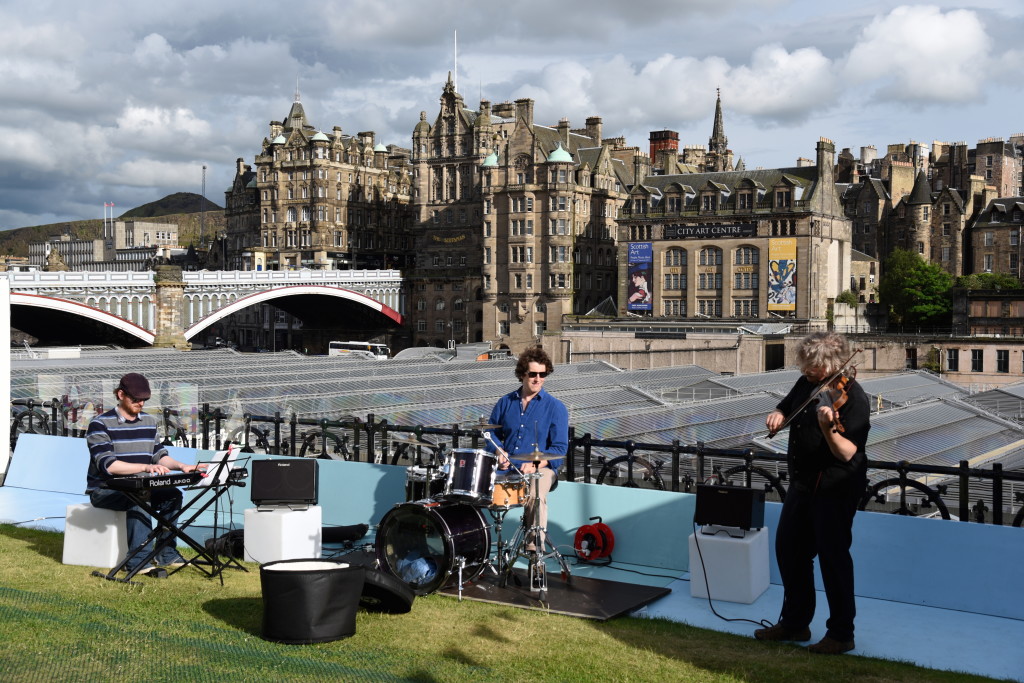
New Town Concert

From the famous Royal Mile — with its great landmarks and quirky shops — to the underrated New Town, Edinburgh entertains. One day gives you just enough time to see the castle and ramble down the Royal Mile. A second day lets you slow down and explore. And a third day (or more) really lets you settle into one of Britain’s finest cities.

2. …But Don’t Miss Glasgow

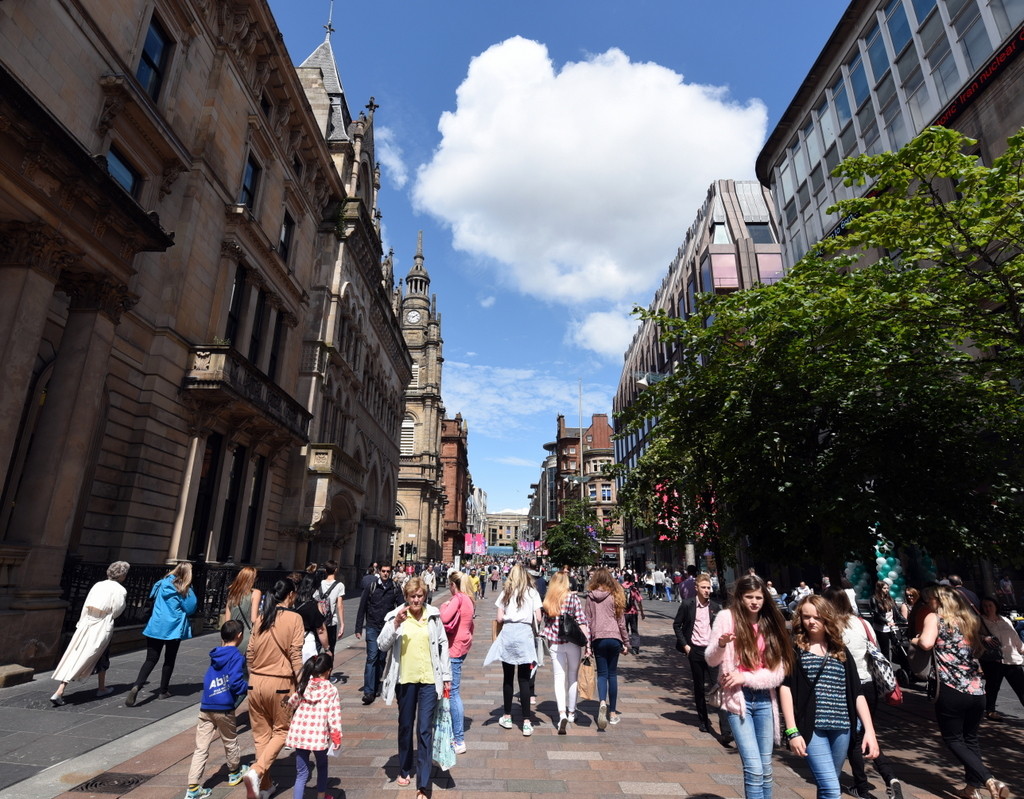
Cameron Scotland Glasgow Buchanan Street

Scotland’s biggest city is also its most underrated. The working-class yin to Edinburgh’s upper-crust yang, Glasgow has the most engaging foodie and nightlife scene I found in Scotland. It also has some of Scotland’s best 20th-century architecture, a rejuvenated downtown core, and an impressive collection of museums.

3. Toss a Caber at a Highland Games

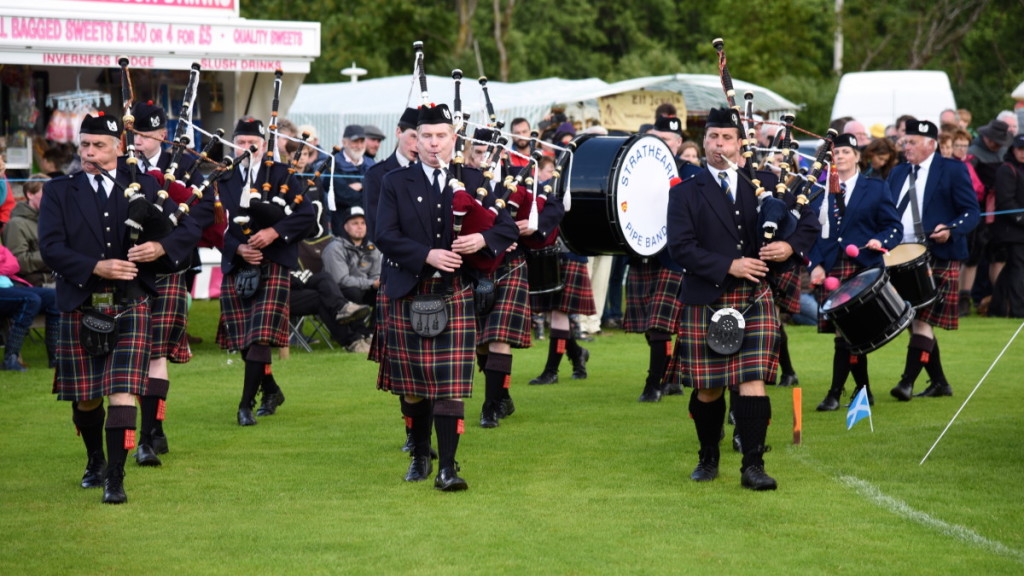
Piper Lap 2

These celebrations of traditional Scottish culture fill the summer calendar. A Highland Games (or “Gathering”) is like a county fair, dance competition, and track meet all rolled into one. Ranging from glitzy to endearingly small-town, it’s the one day a year when an entire town turns out to socialize, gorge on junk food, and cheer on the strongmen, footracers, and graceful dancers. If you’ll be in Scotland in the summer, check the Highland Games schedule before nailing down your itinerary.

4. Enjoy the Clichés…but Dig Deeper

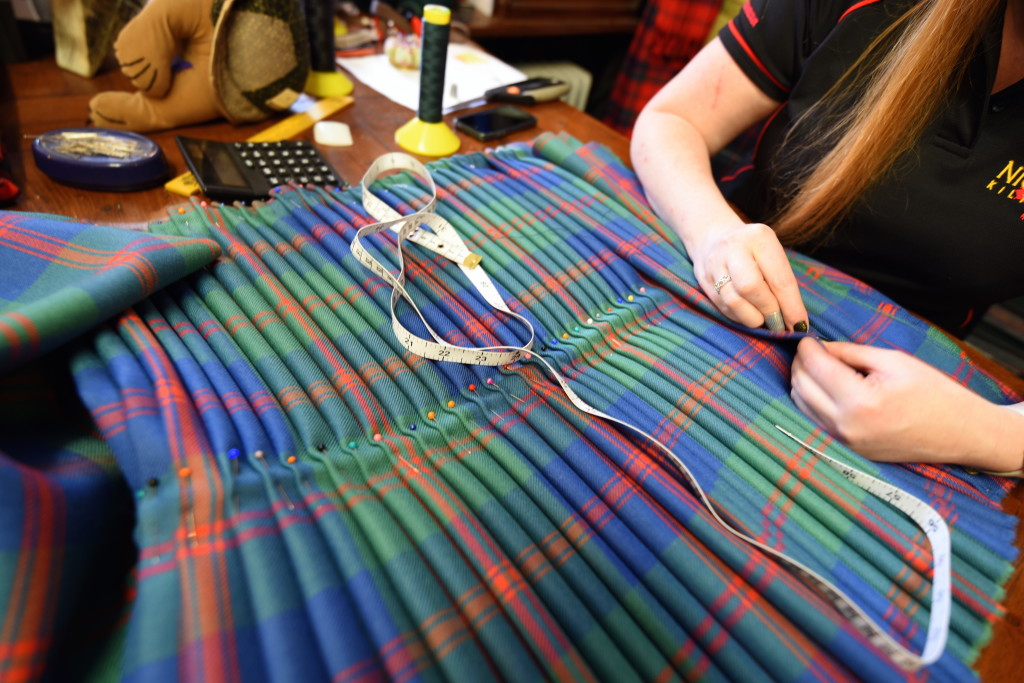
x

Kilts, bagpipes, whisky, haggis…for such a wee land, Scotland has so many claims to fame. Be warned: Cliché-hunting can cheapen a trip, and Scotland is only too happy to indulge tourists looking to buy knock-off kilts. But each cliché also comes with an authentic — and often fascinating — backstory. Visiting a kiltmaker on Edinburgh’s Royal Mile, you learn the difference between top-quality tweed and tacky “tartan tat.” Touring a whisky distillery — or several — cultivates an appreciation for the subtle (and sometimes not-so-subtle) variations in bouquet, flavor, and peatiness. And trying your hand at playing the bagpipes instills respect for musicians who’ve devoted their lives to the instrument.

5. Hunt for Ghosts

I enjoyed a ghost walk led by a surprise skeptic in the historic town of Stirling. And that’s just the tip of the iceberg of ghost-themed experiences in Scotland — where each city has its haunted tours, each castle its apparitions, and each B&B room its mysterious creaks. (As for whether all of the above have scientific explanations…that’s for you to decide.)

6. Go to the Movies

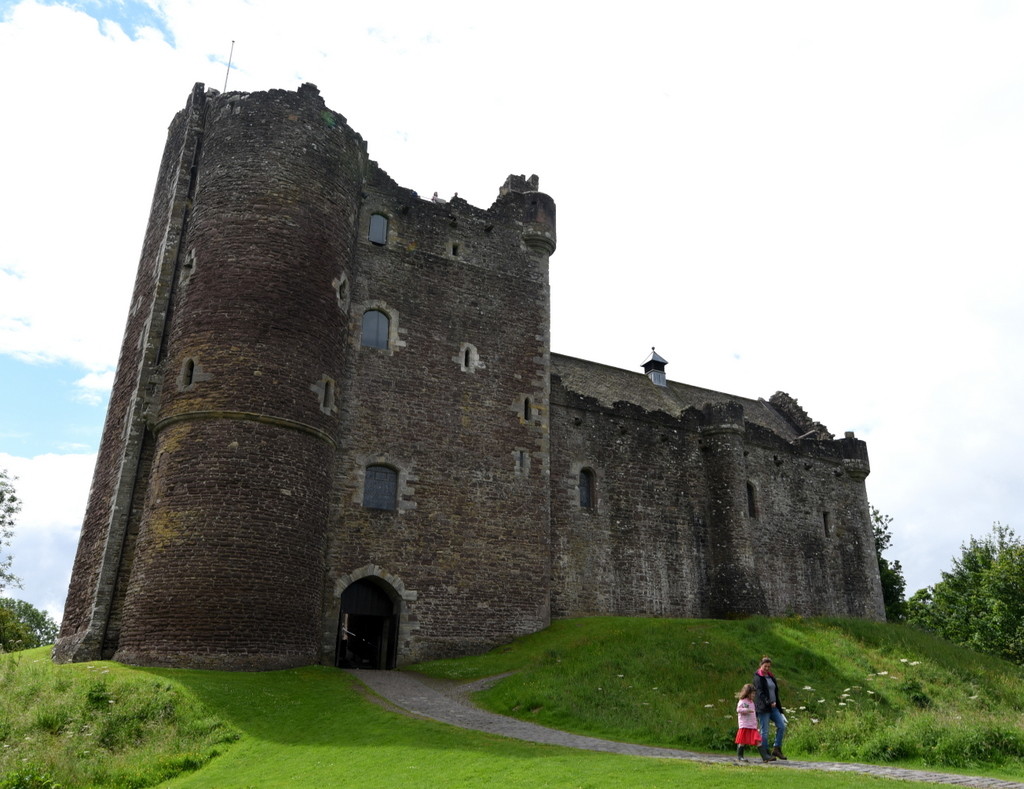
CH15JulDoune_022

The hit TV show Outlander thrust Scotland back into the limelight, like countless pop culture moments before it — from Monty Python and the Holy Grail to Braveheart, and from The Da Vinci Code to Harry Potter. Watching these movies and TV shows — before, during, and after your trip — can enhance your enjoyment and appreciation for Scotland. Serious fans can geek out on visiting actual filming locations (our Rick Steves Scotland book includes an Outlander sidebar for just that purpose). And cynics enjoy debunking half-truths (whether in Braveheart or in The Da Vinci Code), which also buys you street cred with the locals…who are weary of explaining that William Wallace was never called “Braveheart” until Mel Gibson came along.

7. Take a Hike…and Bring Good Shoes

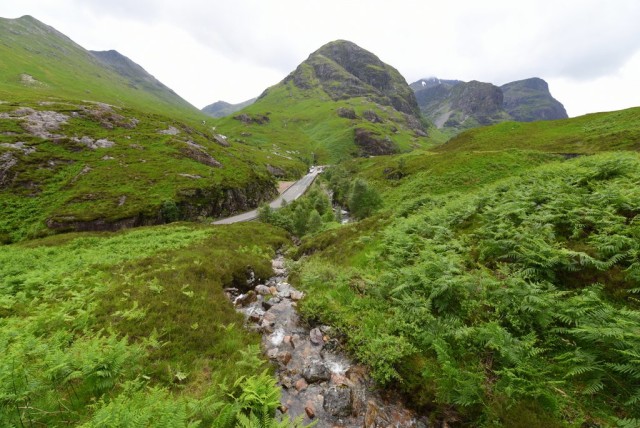
cameron-scotland-glencoe-hike

Tromping through drizzle, watching my feet settle onto bright-green turf only to disappear under a torrent of brown water, I wished I’d brought my waterproof boots. But before long, I just ignored my soaked socks to fully appreciate the symphony of achingly gorgeous glen scenery all around me. This was in the valley called Glencoe, but hiking opportunities abound throughout Scotland.

8. Go Island-Hopping

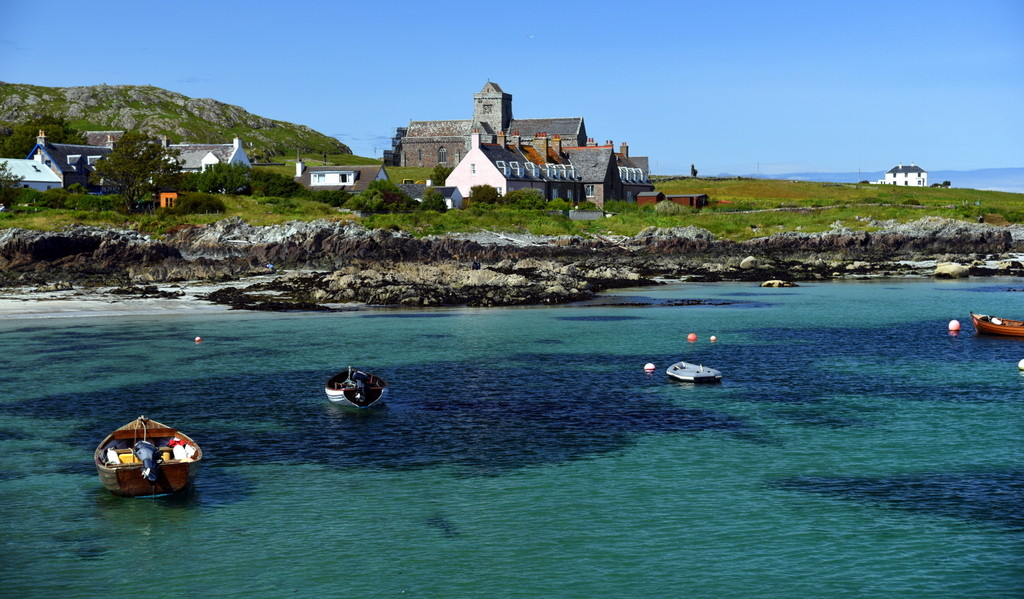
Cameron Scotland Island Hopping Iona

Scotland — with a West Coast slashed by receding glaciers — has nearly 800 islands. But on a short visit, visiting just a few will do the trick. The Isle of Skye, with pretty pastel harbor towns, jaw-dropping scenery, and a vivid heritage of folk tales and clan battles, can easily fill a couple of days. Or, for a strategic strike, base yourself in the small West Coast town of Oban and spend a day side-tripping to a trio of worthwhile Hebrides: Big and desolate Mull, spiritual Iona, and otherworldly Staffa — an uninhabited bulb of rock where puffins greet arriving boats, and the “other end” of Ireland’s famous Giant’s Causeway disappears into a mysterious cave.

9. Go North to Get Off the Beaten Path

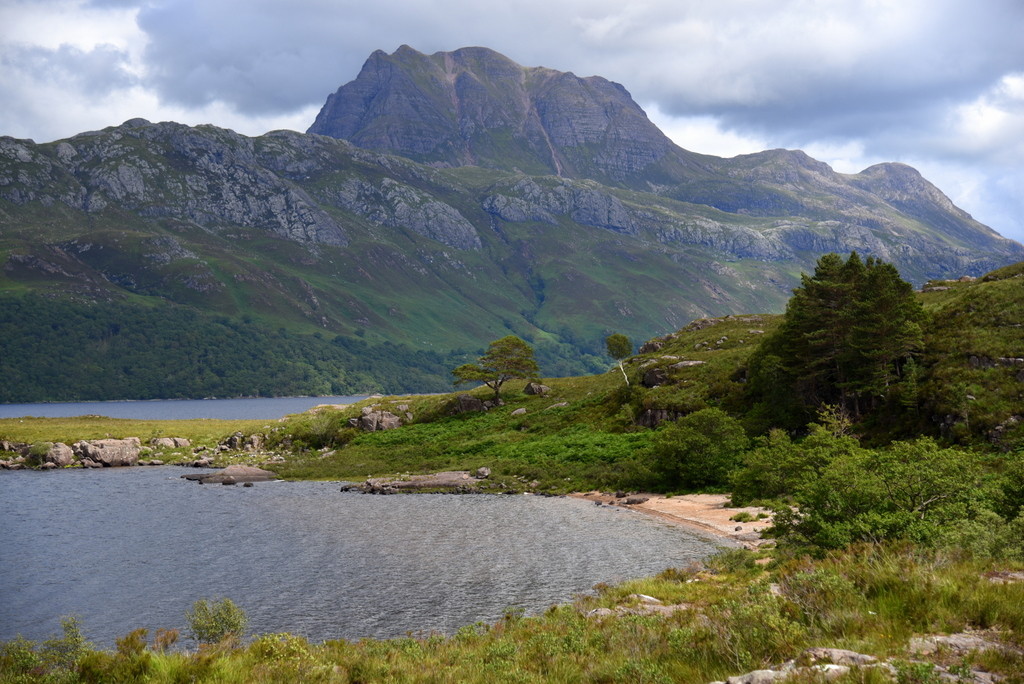
Cameron-Scotland-North2

Most tourists in Scotland get stuck in a predictable rut: Edinburgh-Stirling-Glasgow-Fort William-Inverness-back to Edinburgh. And, while there’s plenty to see on that loop, with more time it’s rewarding to break free and strike out for the far north. If rugged scenery tickles your fancy, drive up Scotland’s scenic west coast — called Wester Ross — then along its north coast to John O’Groats. (Just don’t run out of gas.) And if you’re really adventurous, catch the ferry to the Orkney Islands — a world apart, with prehistoric treasures and evocative World War II history.

10. Seek Out and Celebrate What Makes Scotland Unique

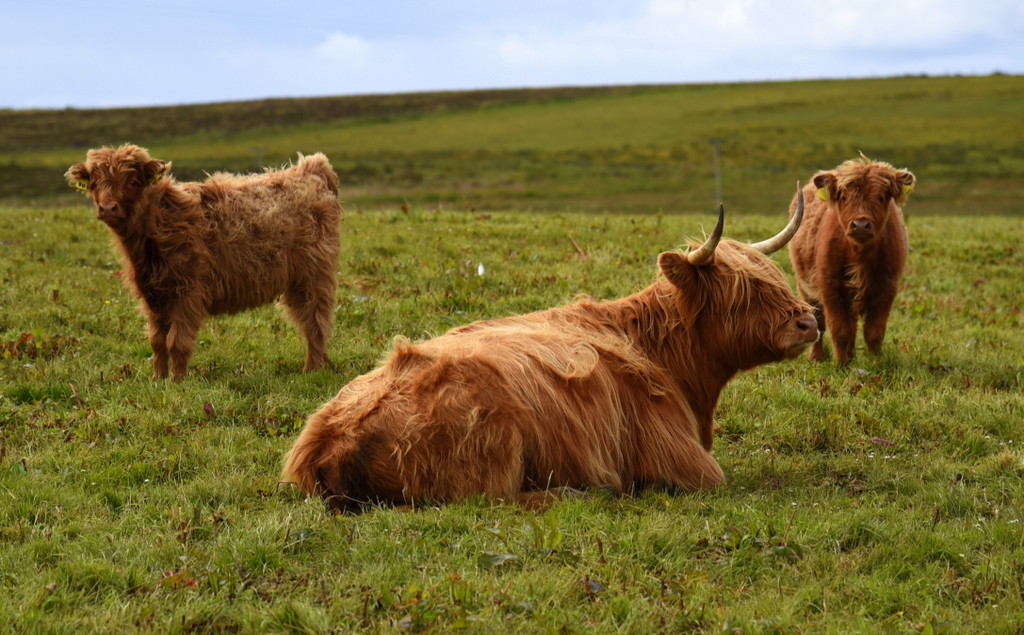
Cameron-Scotland-Highlands-Hairy Coo 3

While it’s still part of the United Kingdom — ahem, for the time being —  Scotland is so much more than just England’s northern annex. In this age of “devolution” (Scotland gaining more autonomy from London) and of a contentious Brexit (which most Scots disagree with), ask locals what they think about current issues. (At least Scotland and England still share a knack for witty signs.) Even if you’re a closet royalist, check your sympathies at the door and really try to understand what makes Scots Scots. And then…celebrate it.

What are your favorite Scottish discoveries?

Turas math dhut! (Happy travels!)


It goes without saying, but all of this — and much more — is covered in our Rick Steves Scotland guidebook. And our Best of Scotland in 10 Days tour is one of our most popular itineraries.

A Celebration of Brussels

I’ve always had a soft spot for Brussels. On my first-ever guidebook research trip for Rick Steves, back in 2001, Belgium was the last stop of a hectic two months spent very steep on the learning curve. After all that hard work, Brussels was the cherry on top of the sundae…or, maybe, the waffle.

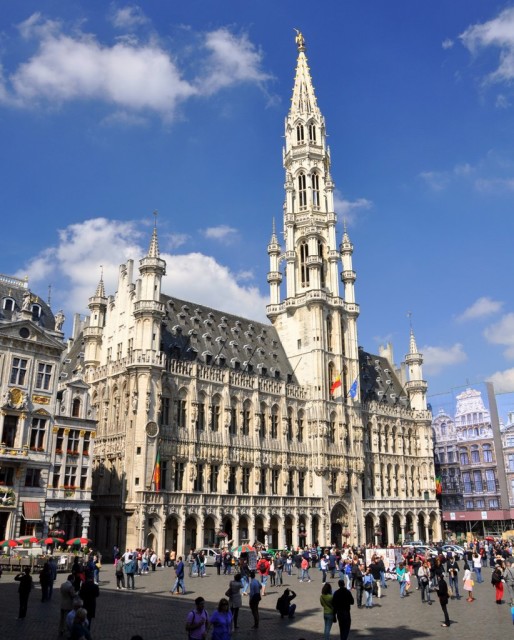
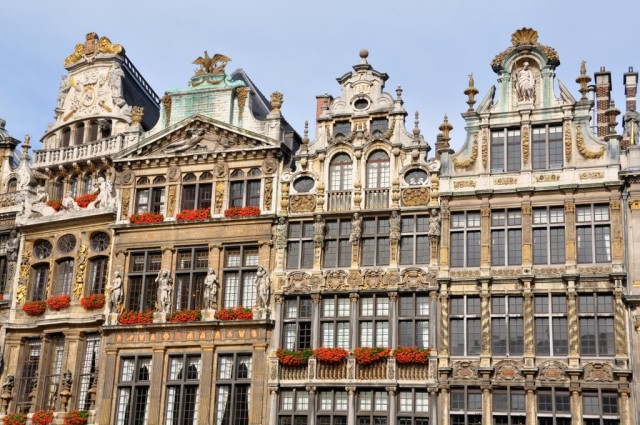
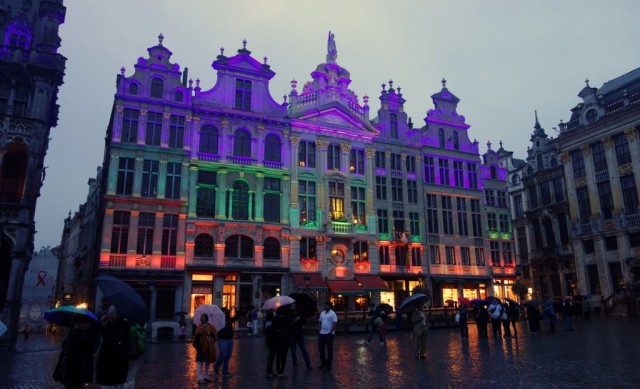
On that first trip, Brussels’ Grand Place — its aptly named main square — left me speechless. And it still gets my vote for most fanciful square in Europe. Whimsical gables with gilded spires joust along the top fringe of the square. The bold Gothic tower of the City Hall rockets toward the sky. Statues seem to have a dialogue over the heads of Eurocrats and tourists nursing overpriced beers.

cameron-belgium-brussels-grand-place

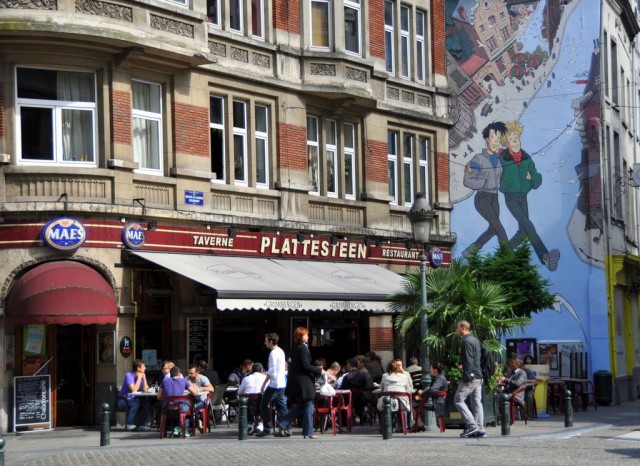
A wonderfully eclectic mix contributes to Brussels’ identity. The birthplace of Tintin, it’s home to Belgium’s deeply respected comic book industry. Giant comic panels adorn buildings all over town. (If you ask a Belgian twentysomething what they want to do for a living, and they say, “Comics”…nobody laughs.) It’s the capital of a refined beer culture, where the best brews aren’t on draft — the really special ones are in bottles. Along Brussels’ “restaurant row,” Rue des Bouchers, buzzing red-neon signs invite tourists to pull up a tipsy sidewalk table and dig into a bucket of mussels. And, of course, Brussels’ top icons are a gigantic atom (The Atomium, the Belgian answer to the Space Needle, left over from a World’s Fair) and a statue of a little boy relieving himself: the (in)famous Manneken-Pis. Sure, these are all clichés. But in Brussels, at least they are delightful clichés.

cameron-belgium-brussels-grand-place-facades

Beyond the tourism, Brussels is a complex tapestry of Europe, and of the world. They say that Brussels’ most-spoken language is not French or Flemish, but English — the lingua franca of the many international diplomats, businesspeople, and immigrants who call the city home.

On that first visit, back in 2001, my B&B host put the fear of God into me about his hometown. A mild-mannered, soft-spoken Belgian gentleman, he checked me into my ramshackle room, spread out a map of the city, and started drawing X’s over whole neighborhoods. “Don’t go here. Don’t go here. Don’t go here. And when you leave the building, it’s fine to turn left, toward the Grand Place. But whatever you do, don’t turn right.” Pressed for details, he said — as kindly as such a thing can be said — that it was all those African and Middle Eastern immigrants who were ruining the city. It seemed to me he was an artifact of an earlier time — trapped in amber as the world changed around him. A year later, he (wisely) retired.

On later visits, I shed that initial fear and ventured deeper and deeper into Brussels — coming to understand that most locals don’t share that paranoia. In fact, most Bruxellois seem to view the city’s diversity as an asset. They get a kick out of living in such a melting pot. One of them joked, “The South Train Station is in a Muslim immigrant neighborhood. The North Train Station is near a red light district. So as you walk from one end of town to the other, you go from seeing women entirely covered to women entirely uncovered.”

On my most recent trip to Brussels, I checked out the up-and-coming Matongé neighborhood, wedged between the European Parliament and the Royal Palace. One out of every ten Brussels residents claims African ancestry, and Matongé was an early center of “Belg-ican” culture. But in recent years, Matongé’s fine old Art Nouveau buildings and proximity to the EU HQ have spurred gentrification. High rents are forcing out many original residents; today, Congolese hair salons share the block with Pakistani restaurants and native-Belgian hipsters and yuppies.

I found Matongé to be the most diverse — and, not coincidentally, most appealing — neighborhood I’ve seen in Brussels. A cheery “Smile! You are in Mantongé” sign marks the entrance to the produce market, where you can buy cassava and plantain. African-food-for-European-palates restaurants and trendy Belgian brasseries made it hard to pick a place for dinner. And on that balmy summer evening, everyone just seemed to be hanging out and having a wonderful time. Unlike my B&B host from all those years ago, I didn’t feel fearful. I felt alive.

cameron-belgium-brussels-street

One of the European Union’s core values is an idealistic commitment to diversity — and nowhere more so than in Brussels. Diversity isn’t always easy. But it’s worth the effort. Europe’s xenophobic politicians and ISIS suicide bombers don’t agree on much. But they both seem to get very uncomfortable anytime different cultures mingle too closely — as is the case in Brussels.

By the way, I’m preparing for a trip to Europe. I take off in less than a month. Am I still going? You’d better believe it. Maybe I’m naive and idealistic. Blame the Europeans who have taught me that that’s a much more enjoyable way to view the world than through a lens of anger and cynicism. Tragedies come and go. But once the terrorists have been captured and the city has had the chance to mourn, Europe always remains Europe.

cameron-belgium-brussels-grand-place-rainbow