A Stroll Through Ljubljana — My Favorite City in Europe

Ljubljana — the capital of Slovenia — is my favorite city in Europe.

There, I said it.

Yes, I know how ridiculous that sounds. And yes, I really do mean that I like it better than Paris, Amsterdam, Barcelona, or Rome. Not that it’s objectively “better” than any of those places — just that I like it better.  (For the record, London, Budapest, and Sarajevo are also on my personal “favorite cities” list.)

One of Europe’s smallest capitals, Ljubljana feels even cozier than its population of 280,000. Everyone here knows each other. I have a handful of friends here, and I usually bump into them before I have a chance to look them up.

In town to update my Rick Steves’ Croatia & Slovenia guidebook, I’m finished with the day’s work and ready to meet up with my friend Marijan. I’m standing by the vivid-pink church that crowns the cozy main square, scrolling through my phone’s contacts to find Marijan’s number. Just then, I feel a bicycle pull to a stop next to me. Sure enough, it’s Marijan. “Dobrodošli!” Marijan says. “Welcome back to Ljubljana.”

We begin strolling together through the cobbled streets. Marijan — who leads tours all over Europe for Rick Steves — knows more than anybody about Ljubljana, and Slovenia, and the Balkans, and Europe…and, basically, everything. When I’m working on a guidebook, I can barely scribble fast enough to capture all of the insights that tumble out of Marijan’s mouth. But this afternoon I’m taking a break from all that, and just enjoying Ljubljana.

Wandering through the mellow hubbub of Prešeren Square, I comment on how serene this space has become. I remember — just a few years ago — watching motorcycles rip through the middle of the square. But today, students lounge, loiter, and flirt furiously at the base of the statue of national poet France Prešeren. Street performers blow big bubbles, gyrating the vivid colors: the fluorescent-pink church, the green treetops, and the deep-blue sky. Even the commuters don’t seem in a hurry. “Yes, so much of the center is traffic-free now,” Marijan says. “Mayor Janković has really remade the whole city.”

Zoran Janković, a former supermarket magnate, has been mayor of Ljubljana since 2006. Picture starting with the most people-friendly city you can imagine…and then aggressively pursuing an agenda to make it even better. In his decade in office, Janković has pedestrianized much of the urban core, realized long-delayed urban beautification plans, and connected formerly dilapidated exurbs into the city’s grid, all while keeping the budget under control.

“Yes,” I say. “As an outsider who drops in every year or two, I see so many improvements under Janković, and basically zero downside. But he must have his critics. ”

“Sure, a few,” Marijan says. “For example, some older folks who live in the city center became upset because the pedestrian zones made it impossible to drive to their homes. So Janković created a free shuttle system.” Just then, a bright-green golf cart, like a clown car packed with senior citizens, silently rolls past us. “Anyone can just call and tell them where you are, and where you want to go, and in a few minutes one of those carts pulls up.”
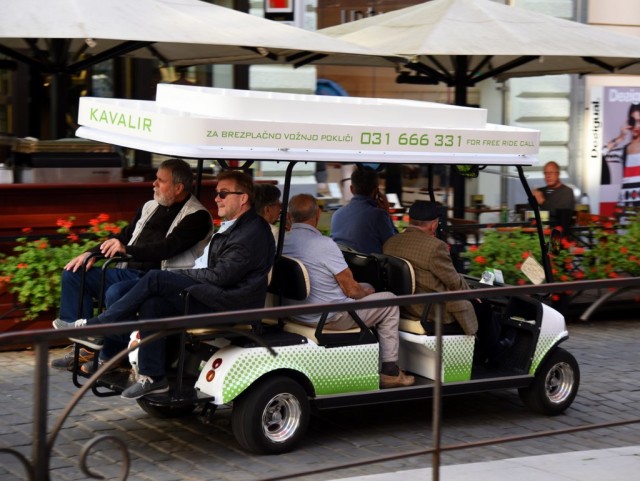
cameron-slovenia-ljubljana-kavalir

Despite his over 80% approval rating as mayor, Janković was narrowly edged out when he ran for prime minister a few years back. So he returned to his niche, winning a landslide re-election as mayor. And today, he just keeps on making his improvements to the city.
OLYMPUS DIGITAL CAMERA

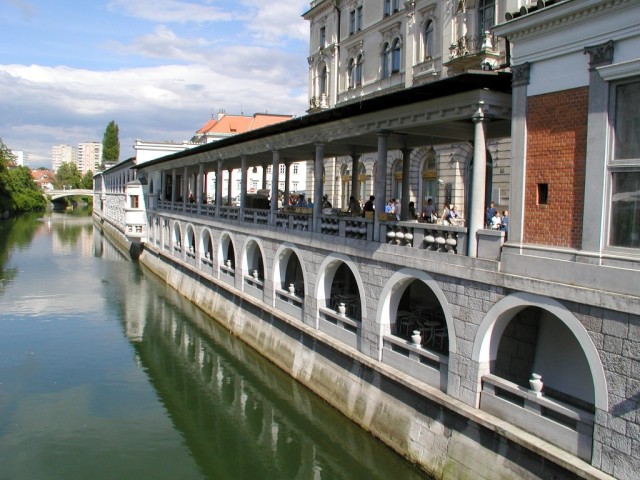
We cross the river on the Triple Bridge, hang a left, and walk along the colonnaded embankment to the outdoor market. The bridge, the embankment, the market, and much of Ljubljana were designed in the early 20th century by Jože Plečnik. This prodigiously talented architect-slash-urban planner is as revered by his fellow Slovenes as he is unknown to everyone else. When you ask locals why Plečnik is so important to them, tears appear in the corners of their eyes as they struggle to find the words.

After a successful career in Vienna, Prague, and Belgrade, Plečnik returned to his hometown. He lived at one end of Ljubljana, and worked at the other, so every day he strolled along this very riverbank. If anyone knew how to make this city more inviting and pedestrian-friendly, it was Plečnik — and that’s exactly what he did.
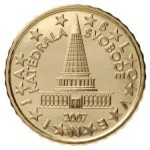
slovenia 10 euro centAt the edge of the market, Marijan points out an eight-foot-tall, cone-shaped monument. “This commemorates Plečnik’s unrealized vision for a Slovenian acropolis. He wanted to build a cone-shaped parliament on top of the hill, where the castle is now. But his plan was just too ambitious. Do you have a €0.10 coin, minted in Slovenia?” Digging in my pocket, I find one. “See, there,” he says, flipping to the back of the coin. “That’s Plečnik’s never-built parliament.”

“I just love this place,” I say, to nobody in particular. “What other country puts an imaginary building on their money?”

cameron-slovenia-ljuibljana-market-stalls

Deeper in the open-air market, rustic stands tidily display today’s produce. Marijan points out that a few of the stands are actually carts, with wheels. “Some garden patches are well within the city center,” he says. “People pick their veggies, pile them into the cart, and hand-push them directly to the market.”
cameron-slovenia-ljubljana-mlekomat

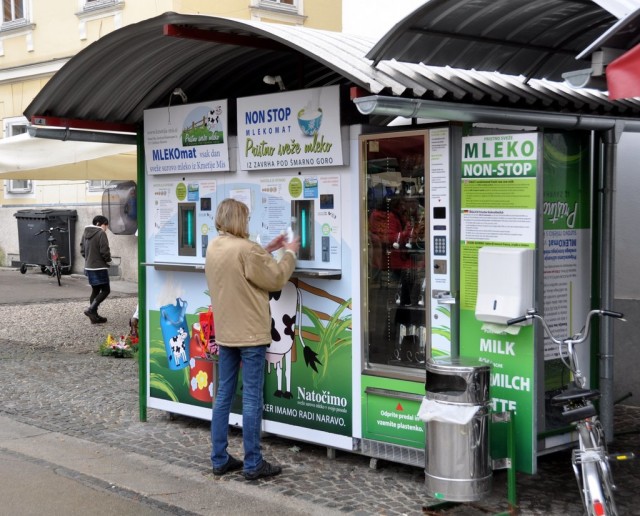
By the meat hall, we pass the “Mlekomat” — a vending machine with a big cartoon of a cow. Just drop in a couple of coins, and the machine fills and seals a glass bottle of farm-fresh, organic milk.

Pausing in the middle of the market, Marijan points in one direction, to the funicular that trundles up the hill to the castle, and then in the opposite direction, to a modern footbridge. “Two more projects that Mayor Janković finally brought about.” I remember hearing about both ideas, many years ago. Each time I visited, people swore the funicular would be up and running by next year…and it never was. But once Janković took over, it actually happened.

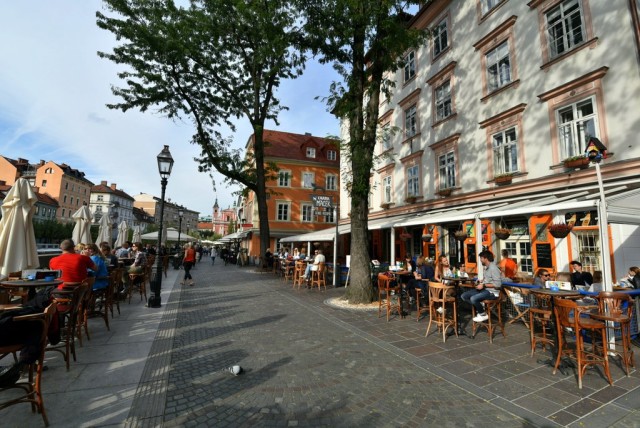
Done with our shopping, Marijan and I walk along another once-traffic-clogged, newly pedestrianized street to a row of riverbank cafés. Shaded by wispy willows and pointy poplars, crammed with tipsy high tables, and populated by easy-to-get-to-know Slovenes, this is my favorite spot in Europe…and maybe on earth. I’ve never quite put my finger on why I love this embankment so much. Maybe it’s because when I travel, I tend to get caught up in my “to do” list. These café tables demand that I slow down for a few minutes and take it all in.
cameron-slovenia-ljubljana-cafes-1

Marijan and I grab a table at my preferred hangout and order two bela kavas (“white coffee,” as they call lattes here). The pastel colors of Ljubljana’s townhouses pop against the hazy blue-and-white sky. The tables around us are filled with students turning a cheap cup of coffee into an opportunity to master the art of conversation. Flowing past us is a steady stream of young families, tourists, and urbanites commuting by foot.

cameron-slovenia-ljubljana-cafes-2

Marijan’s wife Barbara arrives. She tells me about the Rick Steves tour that she just finished guiding (she arrived home from Dubrovnik just last night). And they catch me up on their progress renovating the house Marijan inherited from his grandmother — a years-long project that has been continually delayed by red tape and corrupt contractors. (Apparently Mayor Janković can’t fix everything.)

cameron-slovenia-ljubljana-marijan-barbara

It’s dinnertime. “Do you like burgers?” they ask me. Next thing I know, we pile into their car and drive to Hood Burger, one of my favorite budget-foodie finds of this trip. On our way back to my apartment, Marijan turns off onto a side-street that he thinks is a shortcut, only to find it’s been made one-way in the opposite direction. “Mayor Janković again,” they tell me. “He’s been re-routing streets to improve traffic flow. It can be…difficult to keep track of.” It’s the first time I’ve ever heard either of them breathe a less-than-enthusiastic word about their mayor. Barbara shakes her fist in mock fury. “Curse you, Janković!”

From Marijan and Barbara, to Jože Plečnik and, yes, Mayor Janković, Ljubljana is a city of people whose life’s mission is making their own little corner of the world a better place. This is a city where a two-buck coffee comes with a million-dollar view. Where imaginary buildings and farm-fresh milk are at your fingertips. Where golf carts shuttle old timers to wherever they’re going, and where most people seem to be going nowhere in particular…and loving every minute of it. That’s why I’ll be coming back to this underrated, wonderful little city for the rest of my life.


For more on this fine little city, check out my post about a €25 “budget foodie” day in Ljubljana. I also included Ljubljana’s wonderful Open Market street food event on my list of 10 European Discoveries for 2020.

And there’s much more to Slovenia, including some stunning scenery at Lake Bled and high in the Julian Alps.

We’ve got full coverage of Ljubljana in our Rick Steves Croatia & Slovenia guidebook. It’s also the first stop on our Best of the Adriatic in 14 Days Tour.

“Foodie” Doesn’t Have to Mean Expensive: My €25 Day in Ljubljana

“Foodie-ism” comes with a generation gap — just like the Charleston or the Beatles. And when I mention Foodie-ism to Baby Boomers, many seem to think “foodie” means “expensive.” But it doesn’t have to: It’s about the quality of the ingredients, the care of the preparation, and a knack for merging innovation with a healthy respect for tradition.

Slovenia — for my money, the most underrated country in Europe — embraces tradition and lives close to nature, but also has an un-snooty sense of style and sophistication. That’s an ideal mix for foodies on a budget. On my September trip to the Slovenian capital, Ljubljana, I had one of my best “eating days” of the year. I’d categorize each place I went as “foodie.” And I spent a grand total of €25.

cameron-slovenia-ljubljana-town-hall-2

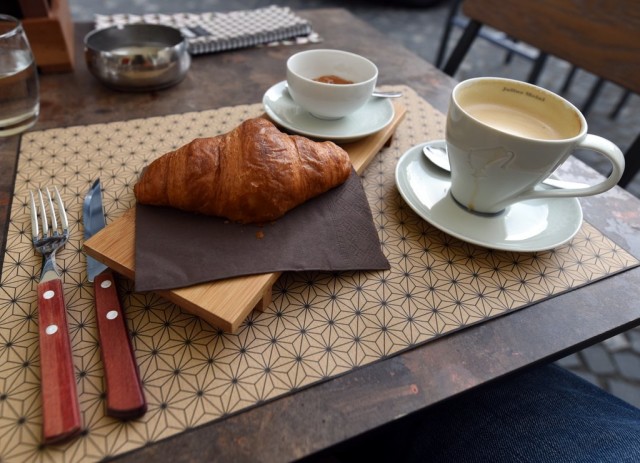
I was staying at a perfectly located rental apartment (Meščanka, overlooking the most colorful stretch of Ljubljana’s riverfront), so I was on my own for breakfast. They steered me to a fine little café in the mellow pedestrian zone under the town hall’s bell tower. I ordered a bela kava (like a latte), a glass of fresh-squeezed orange juice, and a crispy croissant. Total cost for breakfast: €6.

cameron-slovenia-ljubljana-breakfast

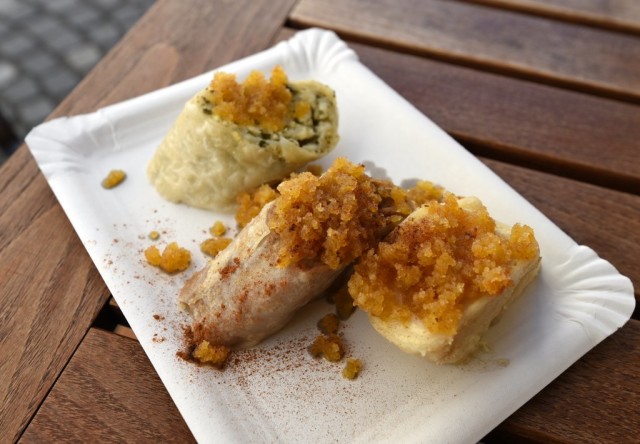
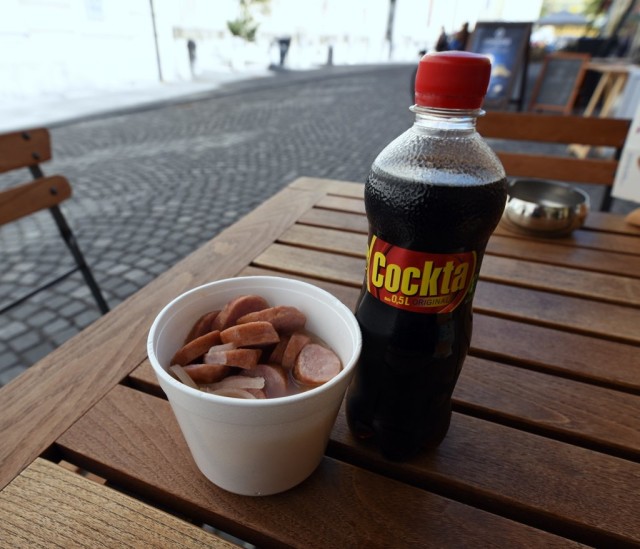
For lunch, I stopped by a hole-in-the-wall called Klobasarna. They specialize in doing one thing, and doing it very well: rustic sausages from the region of Cariniola. I got mine cut up into a bowl of jota — a traditional Slovenian soup made with marinated turnip. (Last summer, I got some heat on my blog for saying “cassoulet” must be French for “bowl of farts.” My hunch is that jota carries the same meaning in Slovene.) Klobasarna recently added one more traditional Slovenian item to the menu: štruklji, boiled dumplings stuffed with various fillings. One had tarragon, another had cottage cheese, and the last one — essentially a dessert — had walnuts and cinnamon. Sprinkled with coarse, buttery, sauteed breadcrumbs to complement the smoothness of the dough, they were both flavorful and a textural treat.

cameron-slovenia-ljubljana-struklji

I washed the meal down with Cockta, one of those soft drinks that’s fiercely beloved in its homeland but utterly unknown everywhere else. (Cockta comes with its own epic origin story — how it was originally called “Cockta-Cockta,” and designed as an ersatz Coca-Cola during the austere Yugoslav period — but you’ll have to pick up my Rick Steves’ Croatia & Slovenia guidebook for that.) I took my order out to a tipsy table on the cobblestones, in the heart of one of Ljubljana’s most delightful pedestrian zones. Watching the tour groups follow their guides and the bikes whiz past, I had a delicious and filling meal. Grand total for sausages, jota, štruklji, and Cockta: €8.

cameron-slovenia-ljubljana-sausage

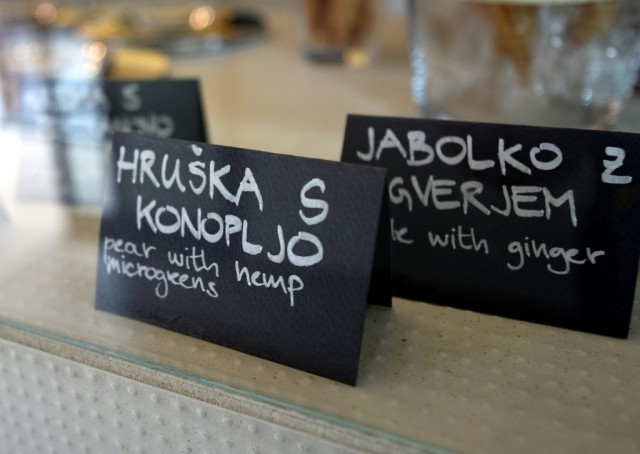
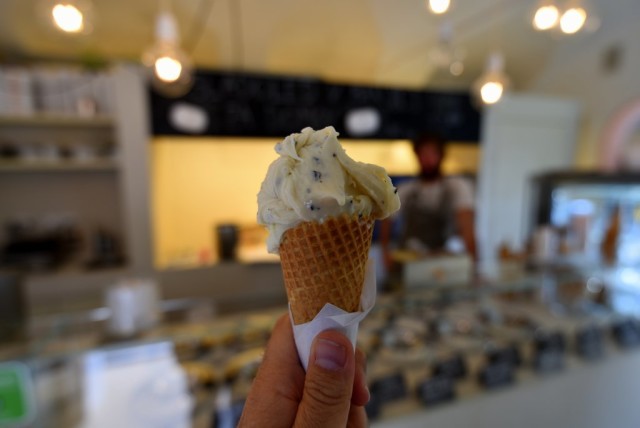
For a midafternoon snack, I stopped by a buzzy new gelateria called Romantica. Behind the glass counter, tidy silver-lidded containers held an array of deliriously creative flavors: chocolate-rosemary, pear with hemp microgreens, melon-arugula, line-basil, and so on. They also had some distinctly Slovenian flavors: pumpkin oil (a local favorite for salad dressings) and the national dessert, potica — a hearty nut layer cake with cinnamon and a drizzle of chocolate. Because Romantica doesn’t use artificial colors, everything’s white (except the chocolate). The clerk told me that he was in the middle of making that afternoon’s batch. He showed me a tub of fresh nectarines, just sliced and ready to toss into the blender. He was also preparing their chocolate and chili flavor, and explained that they’ve been experimenting to find just the right kind of chili powder to finish a pop of chocolate with that satisfying back-of-throat tingle. Total for ice cream: €2.

cameron-slovenia-ljubljana-ice-cream-2

cameron-slovenia-ljubljana-ice-cream-1

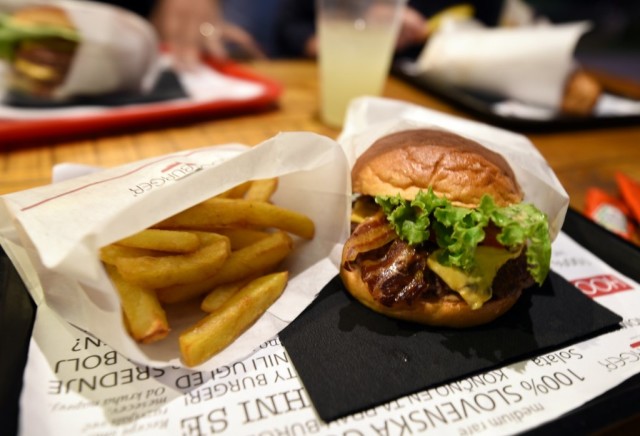
For dinner, some local friends took me to one of the hot new places in town, which prides itself on putting substance over style: Hood Burger. Taking “unpretentious” to extremes, it’s a glassed-in kiosk on the grassy fringe of the parking lot of the Interspar supermarket.

cameron-slovenia-ljubljana-hood-burger-kiosk

I’m skeptical of burgers in Europe, where they usually taste…off. The wrong mix of meat. The wrong spices. But the owners of Hood Burger, Til Pleterski and Klemen Ptičak, did their homework. Every bit up to speed with the hipster foodies in Portland or Brooklyn, Til and Klemen pride themselves on using locally sourced ingredients (“100% Slovenian beef!”), and cultivate a personal relationship with their producers. And the results speak for themselves: the best burger I’ve had in Europe. Hood Burger also has three house microbrews on tap. And on each table is a bottle of Čili Pipp sauce, the award-winning local answer to Tabasco started by a Slovene who simply enjoyed planting chilies in his backyard. Total cost for burger, fries, and mint lemonade: €9.

cameron-slovenia-ljubljana-hood-burger

Slovenia — and Ljubljana in particular — is an ideal place for an affordable foodie experience. Sure, you could splurge on an upscale feast here. But sometimes the best meals are eaten outside, with plastic utensils.

8 Things to Do in Tuscany in 2016

I’ve just wrapped up a blog series on my Tuscan Thanksgiving. In case you missed something, here are 8 great ideas for your upcoming visit to Tuscany.

cameron-italy-tuscany-laura-cooking-family

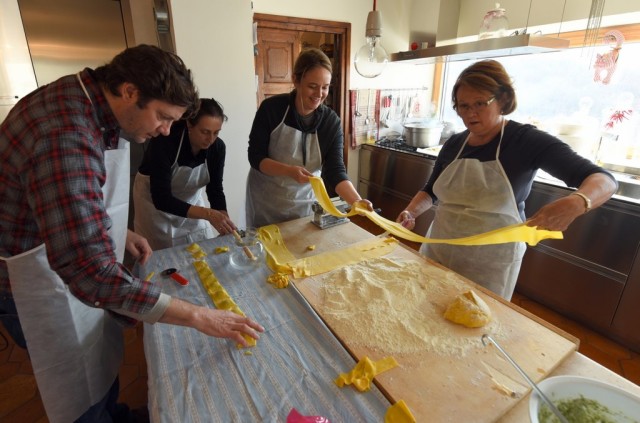
1. Take a cooking class — whether a rustic one in a family home, or a fancier one at a Michelin-star restaurant. If you’re a foodie (or think you might be a foodie), a cooking class is a wonderful way to dig a little deeper into the culinary culture. I’ll never get tired of watching an Italian chef transform a mound of flour and a few eggs into a fresh plate of pasta. One of the best souvenirs from any trip is a recipe you’ll use again and again.

cameron-italy-tuscany-cretaiole-021

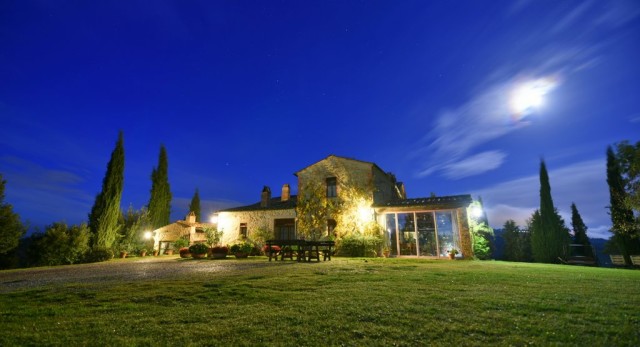
2. Stay at an agriturismo. The Italian government subsidizes these family farms to also provide accommodations, meals, and tourist experiences. The best are a perfect mix of authentic agricultural lifestyles, modern amenities, and culturally enlightening activities. My favorite is Agriturismo Cretaiole, just outside of Pienza, but there are many excellent choices throughout Italy. (And speaking of cooking classes, Isabella at Cretaiole teaches guests how to make handmade pici pasta every Thursday night.)

cameron-italy-tuscany-montepulicano-cesare-copper

3. Visit the craftspeople of Montepulciano (or any town). If “artisanal” is cool, then Tuscany is Miles Davis. Italy has a knack for carrying on its traditional, exacting methods for simply doing things the right way. In Montepulciano, you can stroll down the main drag, dropping in on a winemaker, a coppersmith, and a steakhouse — each one focusing on doing just one thing, and doing it just right. In Volterra, step into an alabaster workshop, where the shiny dome of the busy carver glistens through the cloud of white powder he’s chipping away from an emerging masterpiece. In Florence, hardworking leatherworkers invite you into their workshop to see their well-worn tools.

cameron-italy-tuscany-Truffles-019

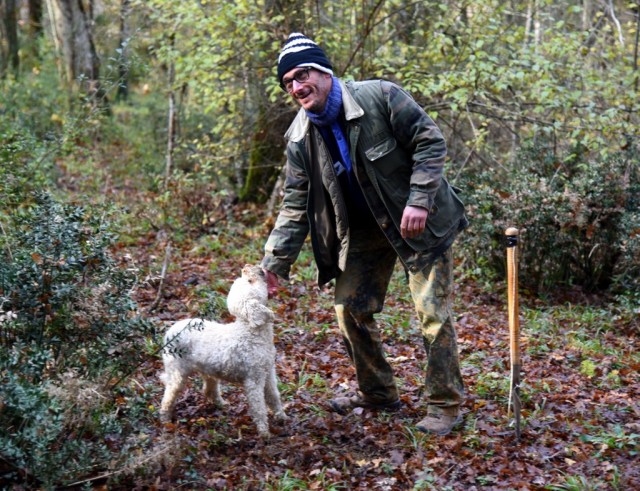
4. Go on a truffle hunt. Dog lovers and food lovers are equally charmed by this experience: Scampering through a wooded valley, following an excited pup who’s hot on the trail of precious tubers embedded just below the topsoil.

cameron-tuscany-montepulciano-christmas

5. Visit off-season. For cooler weather and fewer crowds, consider a wintertime Tuscan retreat. It’s not exactly tropical — so you’ll need to pack layers — and the days are short. But you’ll enjoy scenery that’s arguably just as stunning as in the sun-parched summer months, with a fraction of the crowds that trample Italy in peak season. Spending part of the holiday season in Tuscany is a treat; our Italian-American-hybrid Thanksgiving dinner came with turkey…and sweet potato gnocchi. The holiday lights — while subdued compared to stateside displays — are tasteful and festive. And Black Friday shopping in Tuscan hill towns sure beats the doorbusters-and-strip-malls mayhem back home.

cameron-italy-tuscany-luciano-farm

6. Connect with the Tuscans. Remember: Museums and scenic drives are worthwhile, but the real local people you meet are the characters who populate your fondest travel memories. Agriturismos are designed to accomplish exactly this. But challenge yourself to make those experiences happen wherever you go. In Italy, it’s easy to do. Share your bag of snacks with fellow passengers on the train. Ask the winemaker what makes her wines different from all the others. Stop someone to ask directions, even if you know where you’re going.

cameron-italy-tuscany-bagno vignoni

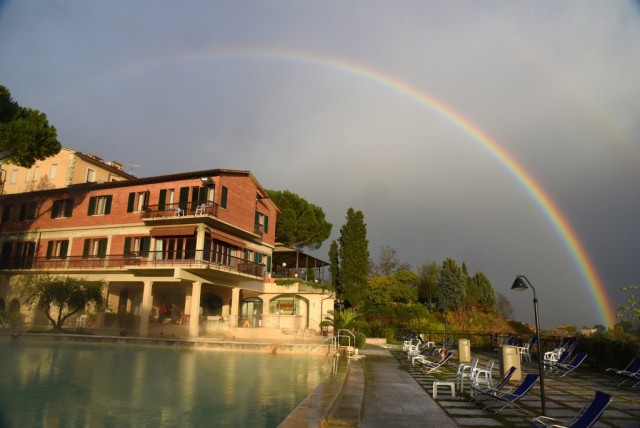
7. Soak in a thermal bath. For all its claims to fame, Tuscany isn’t known for its thermal waters. But, thanks to the unique geology that shaped its rolling hills, it has some exceptional spa towns. My favorite, Bagno Vignoni, has a main square that doubles as a medieval thermal bath, bubbling up at 125 degrees. Everyone from Catherine of Siena to Lorenzo the Magnificent have soaked in these medicinal waters. Today, nearby hotels offer a more refined soaking experience, with jets, massages, and little red bathing caps.

cameron-italy-tuscany-Scenery-024

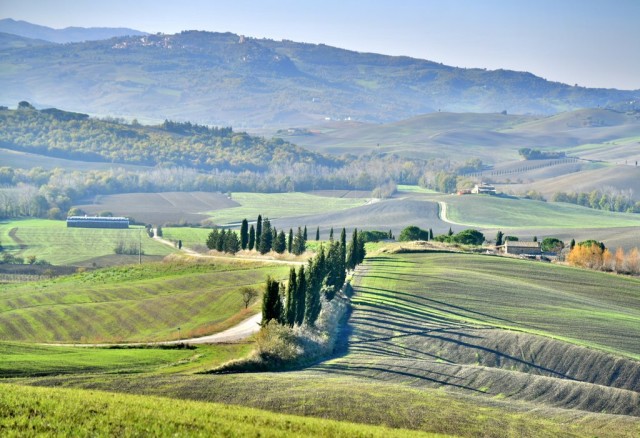
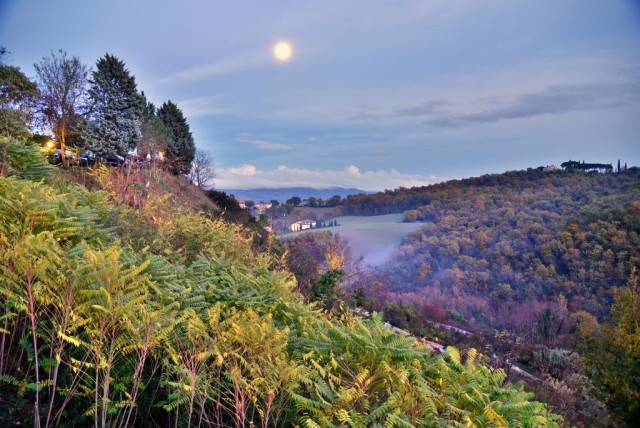
8. Go for a drive to nowhere, just to enjoy the views. At any time of year, driving the twisty, cypress-lined lanes of the Tuscan countryside is like spinning a postcard rack. Tuscany is huge, but here’s an insider tip: For the highest concentration of scenery, head for the mercifully compact Val d’Orcia (“val DOR-chah”) region — the valley of the Orcia River. The 40-minute drive from Montepulciano to Pienza to Montalcino is stunning and sumptuous. Along this spine — or just a 10-minute detour off of it — are most of the “Tuscan All-Stars” that fill gauzy calendars and coffee-table books. There’s a reason why we titled our chapter on this area in the Rick Steves Florence & Tuscany guidebook (now available in its new 2016 edition) “The Heart of Tuscany.”

cameron-tuscany-tree-shadows

cameron-tuscan-fields

cameron-tuscany-la-foce

cameron-tuscany-rondo


Happy Travels!

Pasta-Making Night at the Agriturismo

At Agriturismo Cretaiole, Thursday night is pasta night. Guests return from a busy day of tooling around Tuscan hill towns and wineries to make pasta — specifically, the local hand-rolled noodles, called pici.

cameron-italy-tuscany-cooking-class-cretaiole-009

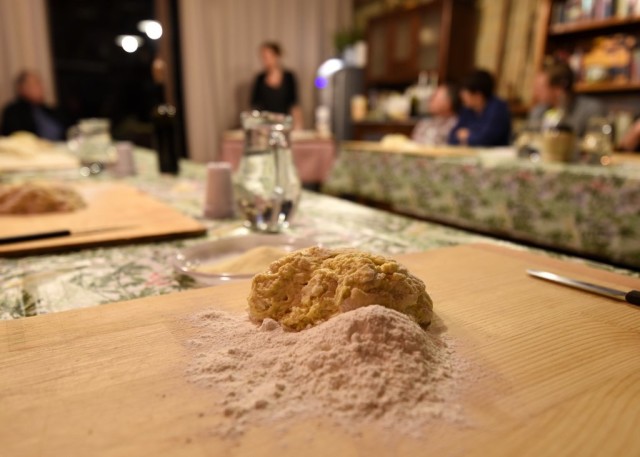
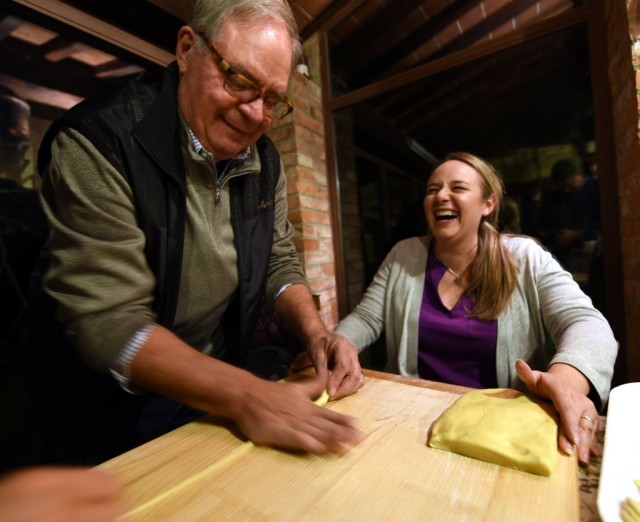
After a lively week of group bonding, all of the guests pack into the glassed-in veranda. They squeeze behind rustic tables with a hubbub of anticipation. In front of each small group is an oversized, rough-wood board with just the right texture for rolling noodles.

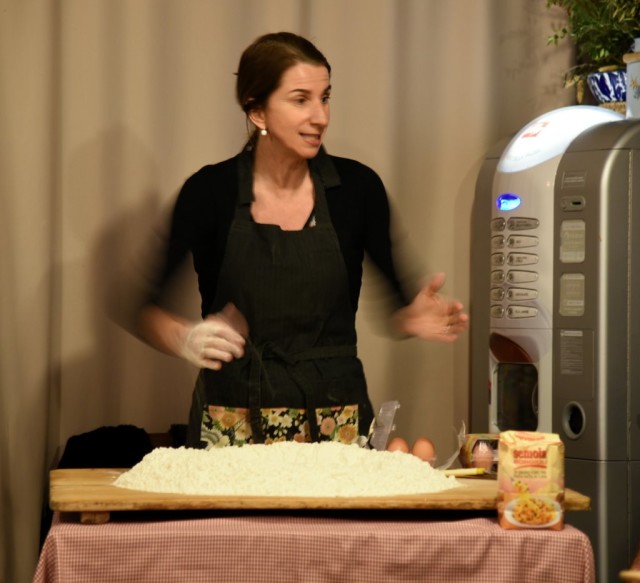
In one corner of the room, our agriturismo host, Isabella, stands at a small table and addresses the group. The board in front of her is piled high with a 10-pound mountain of flour. She explains — with the seasoned confidence of someone who’s taught hundreds, maybe thousands, of travelers how to make perfect pasta — the precise procedure.

cameron-italy-tuscany-cooking-class-cretaiole-003

First, she dredges out a crater in the top of her flour mountain, turning it into a volcano. Into this precarious container she cracks eight eggs. She gingerly beats the eggs with a fork, gradually sprinkling in water — a few drops at time — as she pulls in more and more flour from the lip of the crater. With each stir, the sea of eggy goo threatens to breach the fragile walls. But gradually, liquid turns to solid. And with one last vigorous stir, it becomes a mound of sticky dough.

cameron-italy-tuscany-cooking-class-cretaiole-006

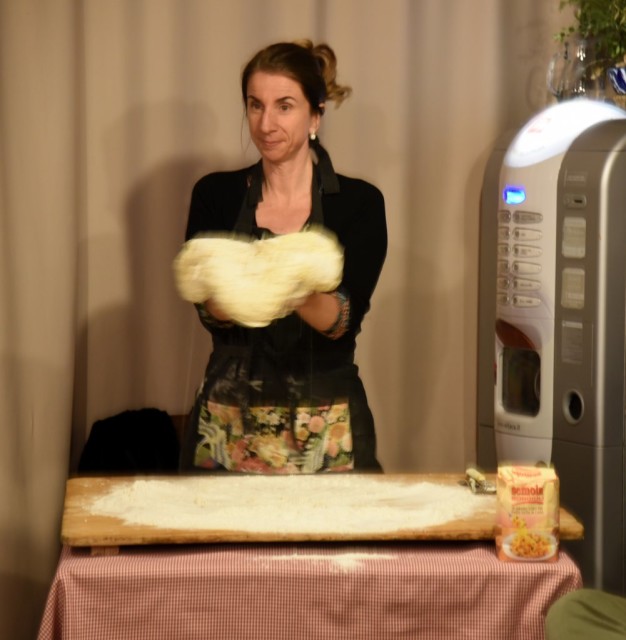
It’s time to knead. Isabella carefully explains the importance of keeping the “cut” — or, in more pleasant terms, the “smile” — facing you at all times. After each knead, you rotate the dough a quarter-turn, then repeat. It’s a steady rhythmic, motion — like waves crashing on a beach: Pull, push, push, rotate. Pull, push, push, rotate.

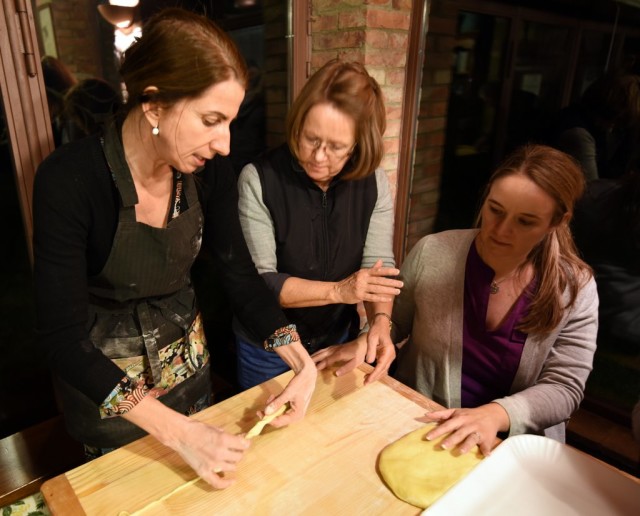
Each family huddles around their communal wad, taking turns. Isabella circulates through the room, gently correcting our awkward technique. “Done?” someone asks her. She sticks an accusing finger deep into the center of the seemingly finished ball of dough, and withdraws a sticky fingertip. “Not done yet,” she says. “Keep going.”

Finally, the dough is ready, and it’s time to make the pasta. Pici (pronounced “pee-chee”) are peasant noodles. Pici are hand-rolled — not neatly extruded from a metal tube. But it’s deceptively tricky to master.

cameron-italy-tuscany-cooking-class-cretaiole-041

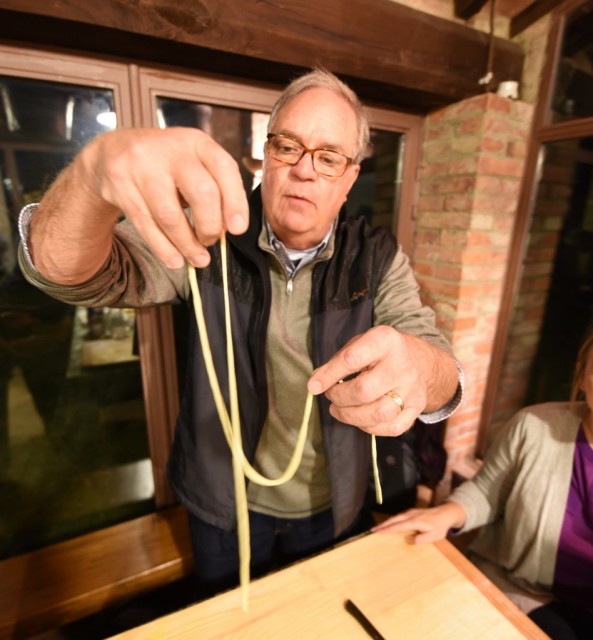
Here’s the technique: Cut off a hunk of dough, hold it in your left hand, and roll it with your right.  Continually massage the dough with the heel of your hand against the cutting board, always gently tugging on the dough clump to tease out a strand. It’s harder than it sounds. Too little pressure, and you get thick, inedible ropes. Too much pressure, and it breaks into bits. But if you do it right, you get pasta shaped like a four-foot-long earthworm. This is where those special boards come in: They offer just enough texture to provide friction for rolling the pici, but not so much that it sticks.

cameron-italy-tuscany-cooking-class-cretaiole-029

Families take turns rolling their pici, offering each other tips and encouragement. Some people go fast. Others go slow. Some pick up the technique immediately, churning out long strands of perfectly uniform noodle. Others can’t quite get the hang of it, and spend most of their time pinching together broken strands…while nervously eyeing Isabella across the room, hoping she doesn’t notice.

cameron-italy-tuscany-cooking-class-cretaiole-036

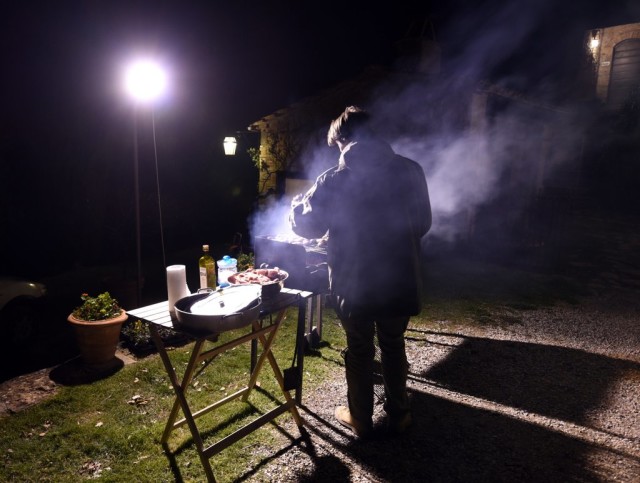
I take a break to head outside, where I find Isabella’s husband Carlo at the grill. His roaring fire has died down, and he’s repositioning his glowing coals. Carlo gently nestles his pork sausage and ribs onto the hissing grill.

cameron-italy-tuscany-cooking-class-cretaiole-057

In the little garden shed nearby, Isabella has brought a 20-gallon pot of water to a rolling boil. To season the noodles, Isabella pours three generous handfuls of coarse salt into the water. It tastes as salty as soup. Then she drops in the handfuls of pici, which squirm around the bubbles like miniature eels.

In just five minutes — when the water starts to foam up — it’s done. Isabella tosses the pici with some meat ragù she’s been simmering all day long, then takes the giant, overflowing, stainless-steel bowl back to the veranda.

At Cretaiole, pasta night is also potluck night. Each guest brings down a salad, side dish, or dessert they’ve prepared in their apartment. Some use it as an opportunity to try out recipes they’ve picked up at cooking classes this week: a radicchio salad with pecorino and fennel, or a lightly sweetened, simple ricortta. Others import favorites from back home — my mother-in-law’s apple crisp (made with Tuscan apples) is a hit.

cameron-italy-tuscany-cooking-class-cretaiole-058

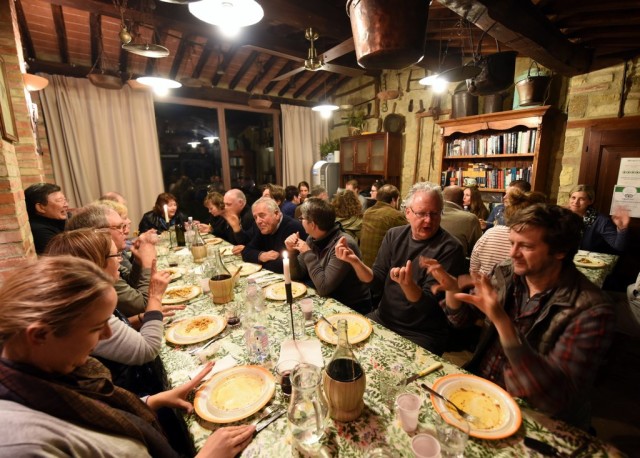
Settling in to a delicious (and hard-earned) dinner, the Cretaiole guests chatter and drink and eat and laugh. Old Man Luciano shows up, clutching bottles of Vin Santo and grappa that he’ll be sharing later in the evening. Once-strangers, now-friends animatedly discuss all they’ve experienced this week. That great art museum in Siena. That stunning scenery from the drive to Monticchiello. Adorable Milli, our canine companion who sniffed out truffles during our hike through a wooded valley. People swap the Italian words they’ve learned and the Italian gestures they’ve mastered.

Digging into my pici, I screw my index finger deep into my cheek, then wave my hand alongside my head: Delizioso! The noodles we made are firm but tender. Each noodle clings to just the right amount of flavorful ragù, exactly as it was designed to do. As time stands still around this convivial dinner table — so far from home, yet so familiar — it’s clear why here in Tuscany, the traditional ways are still the very best ways.

Off-Season Italy

For my work, I tend to be in Europe for a few weeks each in spring and fall: April and May, then September and October, year after year. Our Tuscan Thanksgiving gave me the chance to be in Italy off-season. And it was a delight.

Traveling off-season — like traveling at any time — has its pros and cons. The weather is unpredictable: Two weeks before Thanksgiving, highs were in the 60s. But just as we arrived, the forecast plunged 20 or 30 degrees, forcing us into ski caps, long underwear, and wool socks. But at least it was mostly sunny, aside from a couple of rainy afternoons (and a few snowflakes and hail pellets). Our agriturismo came complete with a fireplace and an unlimited supply of firewood…and the resident cats enjoyed keeping an eye on the woodpile.

cameron-tuscany-woodpile-cat

We took drizzle as an excuse to visit the hot springs in Bagno Vignoni, an ancient spa town a half-hour’s drive from our agritirusmo. Having a huge, steamy pool of spring-fed thermal waters almost to ourselves, and being able to book massages on the fly, made us feel pretty smart for coming here off-season.

cameron-tuscany-bagno-vignoni

The days are short in the winter…deceptively short. Despite its sunny reputation, Tuscany is at the same latitude as Toronto. Nightfall drew the shades on our sightseeing around 4:30 — leaving us with several dark hours to kill, scenery-free, before dinner. (The limited daylight also made getting over jet lag a bear, in both directions.) But at least the setting sun cast evocative, long shadows over the winter landscape.

cameron-tuscany-tree-shadows

Because we were there so far off-season, a few things were unexpectedly closed. For example, my favorite gelateria in Pienza was closed (I checked…three times). But in most cases, it was easy to avoid disappointment by calling ahead.

All in all, late November was a wonderful time to be in Tuscany. The most pleasant surprise was the vivid colors. We enjoyed the final, fleeting yellows and oranges of autumn leaves. Spindly branches hung heavy with bright-orange persimmons. And because winter crops had gone in a few weeks prior, several of the rolling hillsides were fuzzy with the vibrant green of winter wheat. Most days, we enjoyed blue skies (albeit briefly). We found that, from a landscape-scenery perspective, late November was much better than a previous trip in early October (after the harvest, and when trees and lawns had been singed by the hot summer sun).

cameron-italy-tuscany-Scenery-024

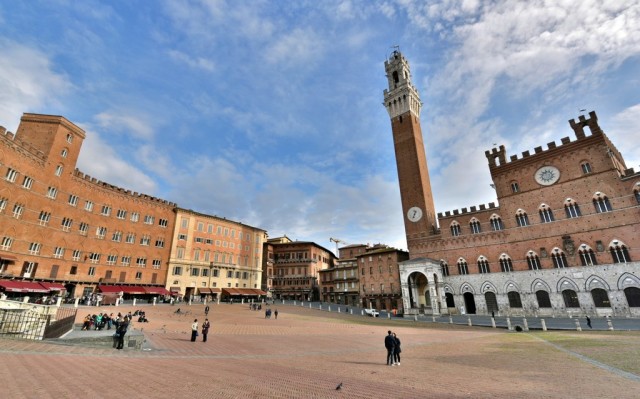
The lack of crowds was another huge plus. Being able to park anywhere, go anywhere, and show up at any restaurant without consideration for crowds, it’s easy to get spoiled. It was nice to be in popular places — like Il Campo in Siena — and have them basically to ourselves. Enjoying the empty cobbles, I had flashbacks of being in these same place during the peak spring months — parking my car at distant satellite lots and hiking into town, only to find my first through fifth choices for dinner completely booked up.

cameron-tuscany-siena-winter

Late November is also a festive time to be in Tuscany. Holiday decorations were not yet in full swing, but throughout we week we saw people putting up garlands and lights — further dressing up already gorgeous towns like Pienza and Montalcino. Each town set up a Christmas tree on the main square. The most impressive was Montepulciano, which hosts a weekend Christmas market starting in mid-November. That town’s already adorable main square was filled with lights, stalls, and a Christmas tree.

cameron-tuscany-montepulciano-christmas

Italy is obsessed with seasonal foods. You might think that would leave few options in winter, but dining in the late autumn was a pleasure. Chestnuts worked their way into many dishes, and fennel salads were everywhere.

Winter is also the season for the precious white truffle — which is both delicious and fun to find. In the summer, truffle hunts are popular…but pointless. Tuscany’s worst-kept secret is that truffle hunters usually have to pre-hide a truffle for the dog to “find,” so as not to disappoint tourists. But November is legitimately truffle season, and our dog found four — including one surprise truffle in a park where we weren’t even looking.

cameron-tuscany-truffle-dog

All in all, assuming you pack layers, plan to bundle up, and call ahead to steer clear of unexpected closures, there’s no reason not to visit Italy off-season. You may even find you prefer it.

cameron-tuscany-sunset