My co-author and frequent collaborator, Cameron Hewitt, is well-traveled, smart, and insightful. And, while he and I are in perfect sync in our travel styles and priorities, he gives voice to the next generation of "Rick Steves travelers." Join me in enjoying his reports right here. —Rick

In Europe, It’s the Little Differences

When you’re on the road in Europe, sometimes it’s the little differences that resonate the most: pragmatic, clever solutions to everyday problems that inspire you to do better back home.

I was reminded of this recently while updating our Rick Steves guidebook in Amsterdam. On a sunny day, I was enjoying a stroll through Vondelpark when I spotted an unusual garbage can, which appeared to have a built-in beverage caddy.
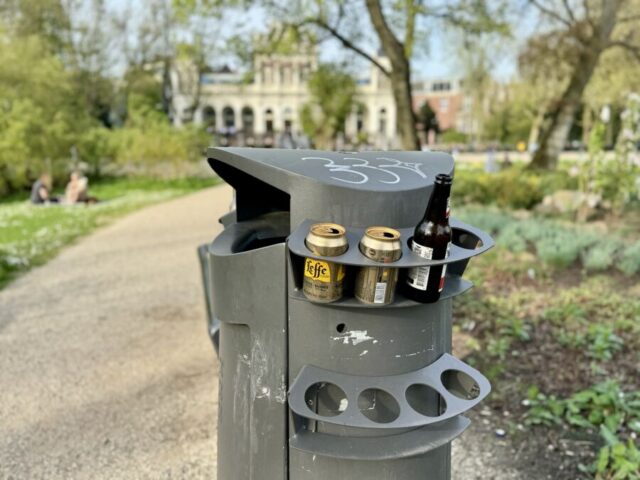
Suddenly I realized the purpose: In the Netherlands, to encourage recycling, they charge a €0.15 deposit when you buy any drink in a bottle or can; then, when you return the container, you recoup the deposit.

Of course, many places have a similar deposit system, and have for a long time. (Who could forget the classic Seinfeld where Kramer hatched a scheme to take a mail truck full of pop cans to Michigan to claim the 10¢-per-can deposit?) What struck me was the simple wisdom of making it easy to leave unwanted containers so that they’re easier to collect by someone else — presumably, someone who could use the money.

This little eureka thrilled me. As someone who tries to be a conscientious traveler, I often feel conflicted when finishing a bottle of fizzy water or Coke Zero. The recycler in me hates to stick in the garbage; the efficient traveler in me hates to carry it around (since I typically don’t carry a day bag, it has to jab awkwardly out of my pocket); and the humanitarian in me wishes I could hand it off to someone who’d appreciate the deposit. These “donation rings” (doneerringen)  — really just a few pieces of well-designed metal — are a simple, pragmatic, effective solution.

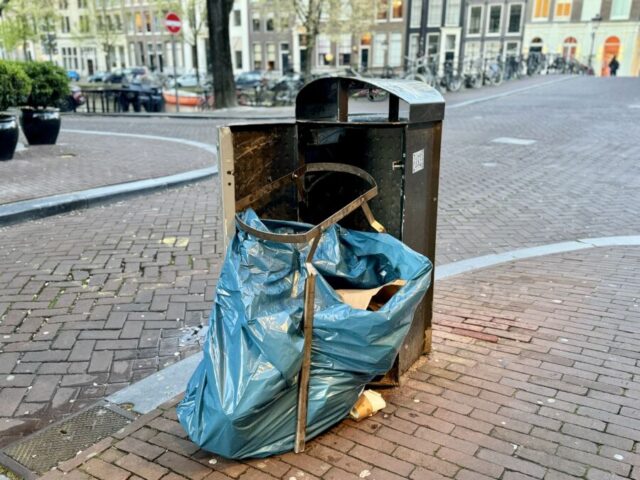
It solves other problems, too: Elsewhere in Amsterdam, I saw garbage cans (not yet equipped with donation rings) that had been rifled through, with trash strewn across the sidewalk. Clearly someone had gone looking for deposit containers in a way that was degrading to them, while also created a mess. So even if all you care about is a tidy city, donation rings are a no-brainer.
I snapped a photo of the donation rings, spent a few minutes tapping out a post about this little observation, and put it up on Facebook and Instagram, where I like to share these little epiphanies and insights as I travel. The initial response was enthusiastic — similar to my, “Wow, cool idea!”

Then a surprising thing happened. A few days later, in the middle of the night, the post went viral. It’s now been seen by more than 10 million people and “liked” by more than 150,000 — which are ludicrous numbers for someone with my modest following. That photo of a garbage can, and a few short, hurriedly composed paragraphs of text, may be the most-read thing I’ll ever write. (One colleague teased me, “This trash can will clearly be your legacy.”)

The responses were fun to sift through. Several people (in Portland, Canada, Germany, Denmark, Australia, and elsewhere) wanted credit for having a similar system on their garbage cans. (Noted!) Others pointed out that it would be even better for society to provide a proper safety net, so that people didn’t have to resort to collecting deposit containers. (Agreed! This is a band-aid, albeit a clever one.)

But the consensus was simply this: Great idea! Wish we had that here. Several commenters even CCed their local authorities. If this little post winds up inspiring a few communities to look into donation rings…I consider that a very good day’s work.

This whole episode — along with threatening to brand me “the donation rings trash can guy” for the rest of my career — reinforced my sense that when we travel thoughtfully, attentively, and with our mind and our eyes open, we notice little differences in the way societies operate. Some of these ways, we may find impractical or annoying. But many times, they can be an inspiration…even an epiphany.

§     §     §

In my recent travels, I’ve been making a point to tune into these different ways…and, where possible, to share them with others. Here are just a few examples.
Just a few days before flying to Amsterdam, I was waiting for my boat in Venice when I cracked open a much-needed bottle of ice-cold sparkling water. No matter how hard I turned the bottle cap, one little plastic filament stubbornly kept the cap attached to the plastic ring around the neck of the bottle. In that moment, I realized I’d been running into this same hiccup throughout my time in Italy, and that I’d even noticed it the previous fall in other parts of Europe. At first, I chalked it up to faulty design…a defect. But it was so consistent, it must be intentional.
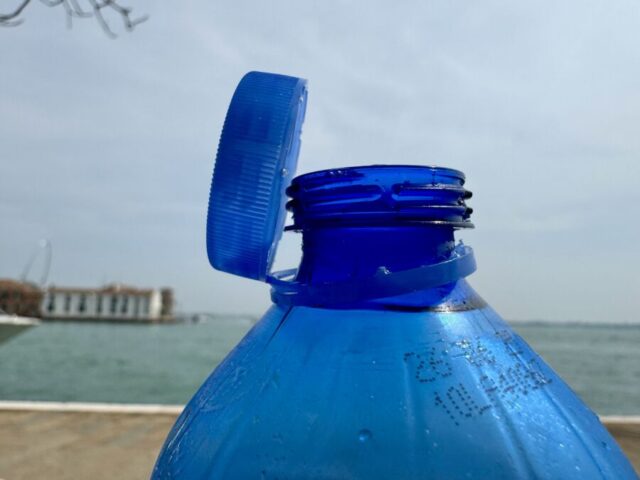
A little Googling turned up the answer: As of 2024, the European Union requires these “tethered caps” on all single-use plastic bottles. It’s intended to keep the entire bottle intact, as one unit, for easier disposal and recycling. Yes, it takes some getting used to. But when you imagine all of those little plastic bottle caps rolling around the cobbles, piazzas, and gutters of Europe — not to mention, getting lodged in the esophagi of untold numbers of woodland critters and sea life — tethered caps seem a very smart solution.

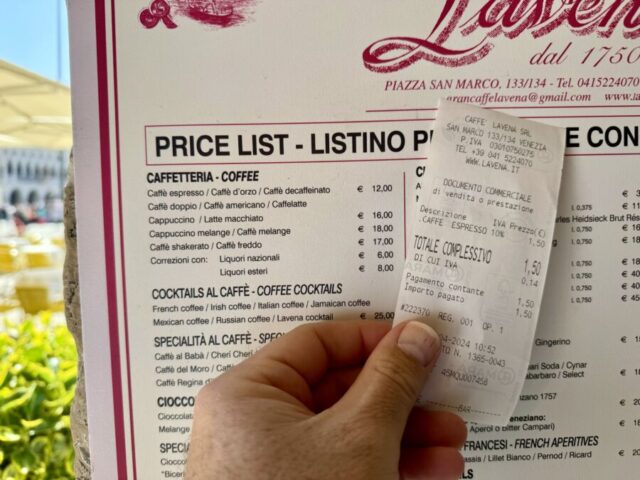
Also in Italy, I was reminded of the tiered pricing system at cafés: You’ll pay more (in some cases, much more) to sit out on the piazza, rather than if you stand at the counter inside. In fact, even at the grandest of grand cafés in Italy, you can always get a simple espresso (un caffè) at the counter inside for just over €1.
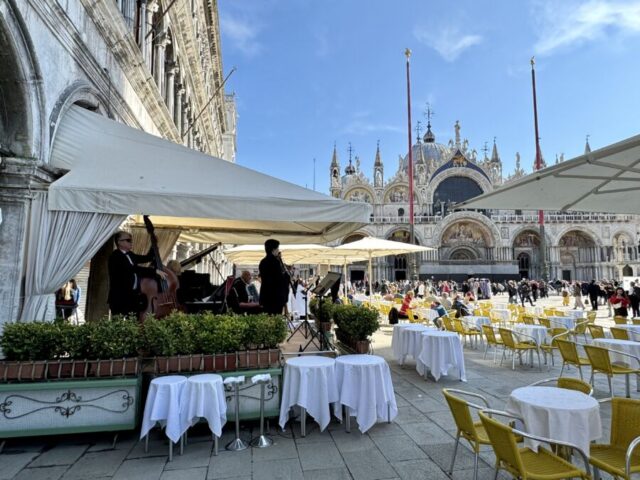
Testing this rule of thumb, I waltzed past the dueling orchestras on St. Mark’s Square — some of the most expensive real estate in all of Italy — and into a venerable café. Inside at the counter, I ordered a caffè macchiato, then stood in the opulent interior as I sipped it. My bill came to €1.50.
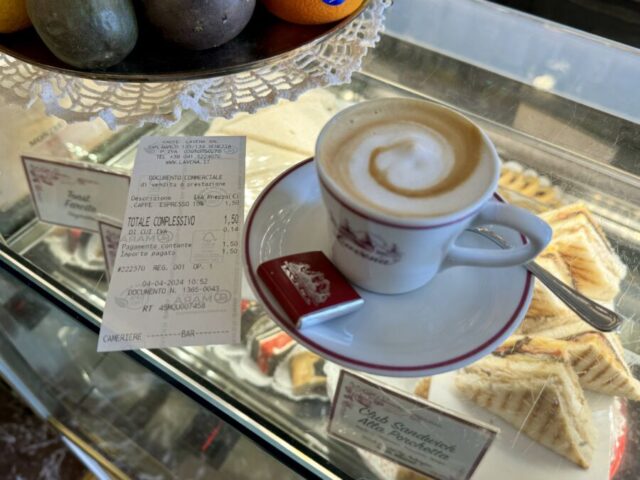
As I left, I checked the price for the very same drink at the outdoor tables: €12, plus a €6 cover charge. If you’re lingering over the amazing views and the music, this is a worthwhile investment. If you just want a quick coffee, those prices are absurd. This “progressive taxation” approach to pricing drinks has a certain pragmatic beauty; you pay based on your experience. (And it’s also a great tip for budget travelers.)
Some of these smart solutions are Europe-wide. The EU has a draconian “Air Passenger Rights” policy that protects travelers from having their valuable time wasted by airlines. Strict guidelines mandate what an airline is required to provide to a passenger whose flight has been delayed or cancelled. If I ran an airline in Europe, this would make me pull my hair out. As a frequent air passenger in Europe…I absolutely adore it.

And I have directly benefitted from it. Last year, my wife and I were flying from Seattle to Norway by way of Amsterdam, with a tight connection. The good news: Our first flight was a few minutes early. The bad news: Our connecting flight had already been cancelled due to a technical problem, with no further flights scheduled until the next day. We got nervous, imagining being stranded for hours — maybe overnight — at Schiphol Airport, missing out on reservations we had waiting for us in Norway.

But the Europeans in the waiting area with us seemed unconcerned. One of them pulled out her phone and called up a page with the details of the EU policy. “No worries,” she said reassuringly to her husband, and to all of us antsy eavesdroppers. “If they delay us for more than three hours, they have to pay each of us €250. They won’t let that happen.”

Sure enough, within minutes, they allocated a different plane to take us to our destination, and boarding commenced almost immediately. Soon we were loaded on a bus and zipping across the Schiphol tarmac to our plane. And we wound up arriving in Norway just 45 minutes after our scheduled arrival time — even with the equipment change. Without the financial accountability mandated by that policy, I’m certain we’d have been cooling our jets for much longer.

Let’s head back to the Netherlands, which seems to be one of Europe’s top incubators for these everyday innovations. The Dutch are pragmatic, solution-focused, and early adopters, to the degree that they sometimes leap before they look. When I’m updating our Rick Steves Amsterdam guidebook — as I was on this trip — frankly, it can get exhausting. There’s always some cutting-edge new technology that’s been rolled out. And, often, by the time we come back a couple of years later to do our next round of updates, that Hot New Thing has already been abandoned and replaced with the next trend.

For example: Contactless or “tap-to-pay” credit card and smartphone payments on public transit are widely used throughout Europe and around the world. But the Netherlands, as far as I know, is the first and only European country where you can pay for every single ride on public transit (whether in-city trams, buses, and Metro, or intercity trains and buses) simply by tapping your existing credit card. Using this system (called OVpay), you never have to buy a ticket.
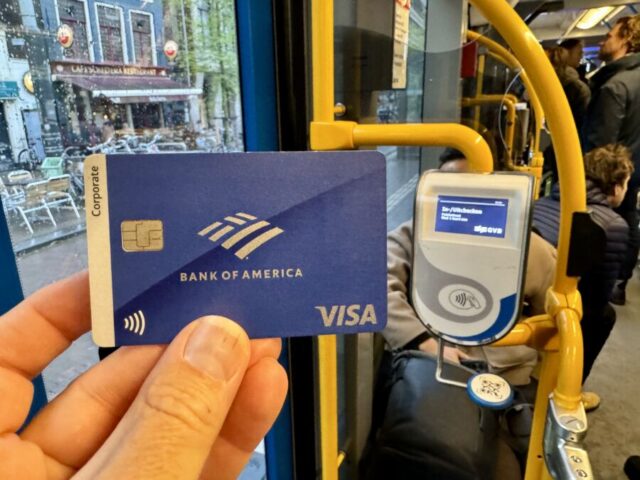
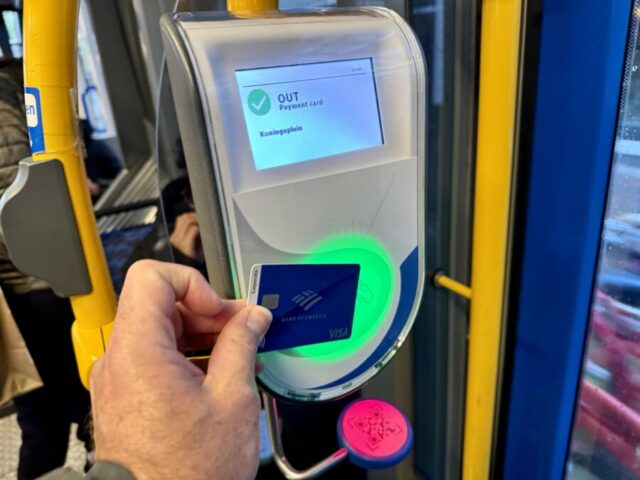
Of course, I needed to try this out. And it worked well. Starting at the airport, where I wanted to take the bus into town, I was able to skip the tiresome chore of looking for a ticket machine. Instead, when the bus pulled up, I just hopped on and tapped my credit card against the scanner to “check in.” And then, when I got to my destination, I tapped my card again to “check out.” The cost of the ride was automatically charged to my card.

I tried this everywhere I went: on trams, the Metro, even the intercity train to the airport. And it worked brilliantly…another example of Dutch problem-solving making life easier. I can imagine a time, a few years from now, when the very idea of “tickets” for transportation are a thing of the past. You just tap in, tap out, and you’re done.
However…

When working on our guidebooks, it’s also my job to think through potential pitfalls. And even this ingeniously simple system has some serious caveats: A couple traveling together needs two separate payment cards. Fair enough. But what if you’re a family of four or five? Yes, that means that each family member needs their own credit card, smartphone payment app, etc.

On a particularly busy afternoon, a French family of five was waiting for the tram next to me. I knew this was going to be a big headache for them. Sure enough, the father wound up having to download a payment app, load up his credit card, use the app to buy five tickets, then scan each one individually. By the time he was done with this agonizing procedure, the family had almost missed their stop.

Another pitfall: Because the Dutch are all-in on this system, they are largely doing away with other ways of paying. Out in front of Centraal Station, where arriving travelers hop onto a tram to their hotel, there used to be abundant ticket machines. Now these have mostly gone away, with just a few hiding out in the Metro station downstairs. And you can no longer buy tickets once you’re on board, unless you download and set up that app that the French father was fumbling with. If you’re in the very slim majority of people who, for whatever reason, don’t want to or can’t pay by tapping your card…your life just got harder.

Here’s my point: It’s fun to notice these clever solutions when you travel. But it’s also important to avoid a “grass is always greener” naivete. Every system is flawed, and a few flaws don’t make it worthless. That’s just another problem to solve.

Smart people, around the world, come up with smart solutions. And if we all put our heads together, notice what works and what doesn’t, and commit ourselves to improving our societies, there are already a lot of great ideas out there, ripe for the picking. We just need to find them, do our due diligence to think through the pros and the cons, adapt them to be even better, and make them our own.

§     §     §

One final thought occurs to me, in this very heated election year: Effectively all of the solutions I’ve described are spearheaded by some level of government, from federal all the way down to municipal. Observing Europe’s willingness to attempt creative solutions, I’m reminded that it’s largely possible because Europeans, by and large, both trust and expect their government to be proactive and effective  in crafting a better society. (And if they aren’t, they face consequences at the ballot box.)

I wonder if Europe is more innovative partly because ambitious solutions like the donation rings, or the tethered caps, or nationwide tap-to-pay must be coordinated by the state? They’re always some naysayer who goes on a crusade against even the best idea — especially in America, where rugged individualism is prized, contrarianism is practically a religion, and many are terrified of the mythical boogeyman of “Big Government.”

Anytime I share observations about Europe’s clever solutions and high-functioning societies (as I did last summer, when I marveled at the slick, well-coordinated infrastructure in Norway), some critics respond that such idealism has no place in America. “Yes, it would be great. But come on! We’d never be able to do that here.”

My response: Why not? We are our government — federal, state, local. If your leaders won’t take action to seek creative and effective solutions, if they’d rather shout and scold and scapegoat and obfuscate about complicated problems rather than trying to solve them…well, then, vote for someone else.

In this election year, support candidates and parties who are inspired by fresh ideas that help everyday people, and who are willing to implement them. (If you liked the sound of that EU “Air Passenger Rights” policy — and, frankly, any travelers should — it’s worth noting that former Secretary of Transportation, Pete Buttigieg, rolled out a similar policy Stateside… only to have  a key provision of that plan later repealed by the Trump administration.)

Europeans solve problems because they have the will to work together toward those solutions. From all of these specific examples, that may be the biggest takeaway: We can do better. We just have to want it.

What are some of your favorite “slice-of-life” little ways that Europe does things differently? Which ones might you like to try out back home?


If you enjoy observations like these, be sure to Follow me on Facebook and/or Instagram. I’m heading to Europe again soon, and will be sharing lots more.
10 European Discoveries for 2024

Looking for something a little different in 2024?

Each year around this time, I brainstorm a list of my favorite European Discoveries. And after another very busy year of traveling to update guidebooks and make TV shows — in Ireland, Norway, Iceland, Hungary, and Poland — as usual, the places that stand out most vividly are not the big, marquee sights; they’re the lesser-known places, with fewer crowds and a more authentic vibe. (You could say they have a high charm-to-tourists ratio.)

As always, I’m not suggesting these are any “better” than the biggies. If you’re tight on time, I won’t blame you for visiting Kraków rather than Warsaw, or Dingle rather than Derry. Rather, when planning your 2024 travels, think of these as intriguing palate-cleansers.

Think about it: When you look back on past trips, aren’t many of your fondest memories of places where you least expected them? Feel free to share your own Discoveries in the Comments.

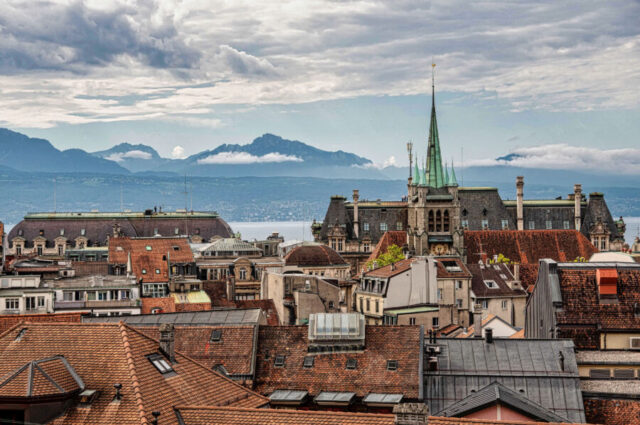
Lausanne and Lake Geneva, Switzerland

If a big part of Switzerland’s appeal is its cultural and linguistic diversity, then Lausanne is one of its most rewarding cities. This genteel-feeling city speaks, and feels, French…but with a Swiss accent.

From the vineyard-draped shores of Lake Geneva, the city climbs vertically up the slopes; elevators, a funicular-like métro, and steeply uphill hikes are required simply to traverse a few blocks. Updating our guidebook, I went looking for a hotel just up the block…and quickly learned that it was “up” indeed. It felt like climbing a mountain.

But Lausanne is worth the effort. Visitors enjoy Swiss-French fusion meals in classy brasseries; a historic old quarter oozing with endearing medieval details; a hazy waterfront promenade leading to an excellent Olympics museum; and one of Europe’s most compelling, thought-provoking museums: the Collection de l’Art Brut, which showcases poignant works created by artists marginalized by society, often dismissed or even institutionalized as “insane.”

Lausanne is also a prime jumping-off-point for Lake Geneva sightseeing. A quick train ride or ridiculously scenic boat ride (preferably on a historic paddleboat steamer) takes you to Château de Chillon, a stony fortress jabbing out into the lake.

You can also hike or bike through lakefront vineyards; stop off in Montreux for its stylish waterfront; or take a scenic side-trip (on the “Chocolate Train”) up to the lovely cheesemaking village of Gruyères and a Swiss chocolate factory.

Lausanne and Lake Geneva is one of those places that might not “make the cut” on a tight itinerary. But if you go…you’ll want to give it plenty of time.

Derry, Northern Ireland

On my six-week odyssey to update our Ireland guidebook — scouring the island from tip to toe — something about Derry grabbed me. It has a hard-fought history, both old and recent. Its stout city walls — now enjoyable for a stroll — hint at centuries-ago sieges. And the emotionally charged murals of the Bogside neighborhood testify to the city’s pivotal role in the Troubles, Northern Ireland’s sectarian strife that grabbed headlines from the 1960s through the 1990s.

But I also found Derry unexpectedly delightful, history aside. The sitcom Derry Girls — which tells the story of local teenagers and their parents during the final years of the Troubles — has become a global hit on Netflix. Locals embrace the show, which captures the world-weary wit that the people of Derry have learned to apply to the highs and lows of life. And, as an outside observer, it seemed to me that Derry Girls is also helping this plucky city turn the page from a hard history to a brighter future: In a sign of the times, the new Derry Girls mural — rather than the important but tragedy-tinged murals of the Bogside — has become the city’s most-photographed.

I sensed a new day in Derry. On a sunny summer afternoon, the Peace Bridge linking the Nationalist and Unionist sides of the river was jammed with people. Across that bridge, the former British military barracks is being converted into a new entertainment and commercial complex, with a big hotel and fine gastro-brewpub, and a state-of-the-art city museum slated to open in a few years.

Not to mention, Derry is a prime home base for side-tripping (in less than an hour) to the Antrim Coast, with Old Bushmills Distillery, Carrick-a-Rede rope bridge, and the breathtaking Giant’s Causeway. As Derry Girl Michelle put it: “Foreigners f—kin’ love the Giant’s Causeway!”

Warsaw, Poland

The sprawling Polish capital often gets overlooked by travelers. Kraków is more historic and accessible. Gdańsk is more beautiful. (Shhh…don’t tell Krakow!) And Toruń is more charming.

But ever so slowly, over 20 years of visits, I’ve watched Warsaw transform from a gloomy, battle-battered, postcommunist eyesore into a place that’s fascinating, engaging, and — yes, really! — actually fun.

When we filmed new public television episodes in Poland this summer, the crew was impressed by today’s Warsaw. It has state-of-the-art museums covering everything from Jewish heritage to Marie Curie, and from Polish history to hands-on science exhibits for kids. It’s a capital of culture and music: We filmed two entirely different Chopin concerts, one in a sprawling park and the other in a cozy drawing room, and couldn’t decide which we liked better. It has an outstanding food scene, including one of the best meals our crew says they’ve ever filmed (at Bibenda). It has a thrilling variety of architecture from every era: rebuilt medieval townhomes; imposing communist concrete; graceful Baroque churches; slick, sleek skyscrapers. And it has a history as epic as anyplace in Europe.

Most of all, Warsaw is simply enjoyable. On a balmy Friday night, we did a loop through the city’s up-and-coming entertainment districts. We began at a “post-industrial” entertainment complex (which are all the rage across Poland) — a former brick power plant now refurbished with trendy eateries, bars, and shops.

Outside along their inviting riverfront park, Varsovians from every walk of life were having the time of their lives: promenading along the Vistula; filling giant cocktail-party barges; splashing in playful fountains; relaxing and socializing on park benches. And we enjoyed the heck out of Warsaw, right along with them.

Porto, Portugal

Portugal’s second city is actually several cities in one — and all of them are delightful.

Down along the banks of the Douro River, under the soaring girders of oversized bridges, the colorfully seedy Ribeira district faces a row of port-wine lodges.

From there, stair-like lanes twist steeply up to the modern city center, a mix of drab urban streets and pockets of architectural refinement: Pretty churches with spiraling stone towers, clad in finely handpainted blue tiles. The Lello & Irmão Bookstore, with its twisting wood-grain fantasyland of literature. The soaring Clérigos tower, reaching up to heaven between rattling trolleys. São Bento Train Station, with more of those gorgeous blue tiles. The Palácio da Bolsa, a former stock exchange palace that maxes out on neo-historical styles. And, yes, even one of the finest McDonalds on the planet.

And maybe the most impressive bit of engineering you’ll find in Porto is its famous sandwich, the francesinha: pork cutlets, sliced sausages, and Swiss cheese wedged between two slices of dense bread, then grilled and smothered with more melted cheese, a fried egg, and spicy sauce. This delicious gut-bomb (you won’t need to eat for a week) is just one example of Porto’s outstanding food scene, ranging from memorable splurges to rustic market stalls.

While it may lack the cachet and grandeur of Lisbon, Porto is every bit as enjoyable…and maybe more so.

Fjordside Villages of Iceland and Norway

One of my personal travel themes in 2023 was dropping in on a wide variety of tiny towns on giant fjords, all over both Iceland and Norway.

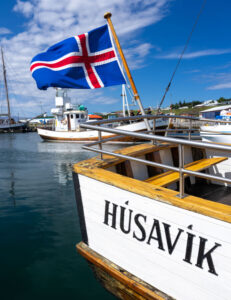
Looping around Iceland’s Ring Road — the 800-mile ultimate road trip that circles the perimeter of the island — three favorite villages stand out:  Húsavík, with its colorful harbor and whale-watching boats; Siglufjörður, an important herring fishery a century ago, which loves to tell the story of the “Herring Girls” in its exceptional museum; and Seyðisfjörður, with a hip, funky, and artistic vibe in a remote and dramatic setting — about as far as you get from Reykjavík while still being in Iceland.

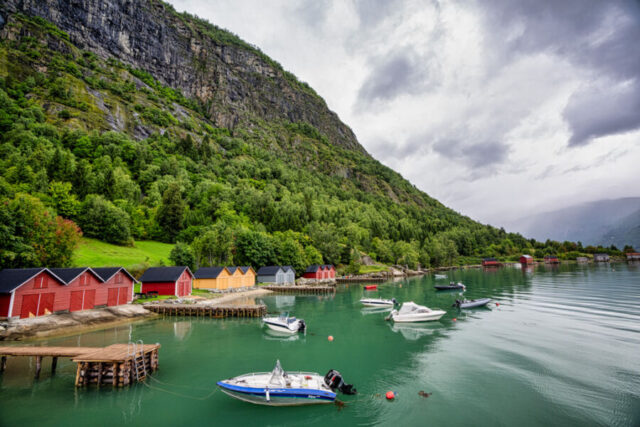
A few weeks later, in Norway, I settled in to a couple more fjordside hamlets. Balestrand, conveniently located along the express boat route between Bergen and Flåm, commands a grand view over the mighty Sognefjord. Its harborfront grand hotel (with its elaborate smorgasbord dinner) and charming Ciderhuset cidery (offering tours, tastings, and pairings with delicious Turkish-accented fare) provided two of my favorite meals of the year. Deeper in the fjord is my favorite fjordside village of all: Tidy, tranquil Solvorn, a cozy burg with historic landmark hotel (Norway’s oldest), multicolored wooden boat sheds lining the shore, and a ferry that putters across the fjord once an hour to one of Norway’s finest stave churches.

Iceland and Norway are both best for their natural wonders. And, frankly, many settlements (especially in Iceland) are more functional than charming. But these five towns tempt the just-passing-through traveler to downshift…settle in…and enjoy.

Siracusa and Noto, Sicily

A year ago, the second season of HBO’s The White Lotus put Sicily on many travelers’ wish lists. After doing  a guidebook-research road trip around the country a few years back, I really enjoyed seeing many of those places pop up on the show.

The White Lotus was set in the mega-touristy, off-puttingly upscale tourist town of Taormina. Personally, despite its grand location facing Mount Etna, Taormina left me cold. The place that really sticks out is a couple hours’ drive south: Siracusa, the modern city at the site of ancient Syracuse.

Siracusa feels less “discovered” than many Sicilian towns. I could do endless laps around its old town, the islet of Ortigia, which evokes both the ancient days of Archimedes and the lavish blossoming of Baroque. Ortigia has some of the finest squares and prettiest churches in Sicily. And if you need more substantial sightseeing, you can tour the archaeological museums and ancient sites farther inland. Or just take a dip at the rocky beach.

And while you’re in the area, make time for a day-trip to Noto, tucked in the countryside less than an hour’s drive to the southwest. Among Sicilians, Noto is known for two things: its lavish Baroque architecture and its top-quality gelato shops. If I’m being honest, I’m not sure which I enjoyed more.
Antwerp, Belgium

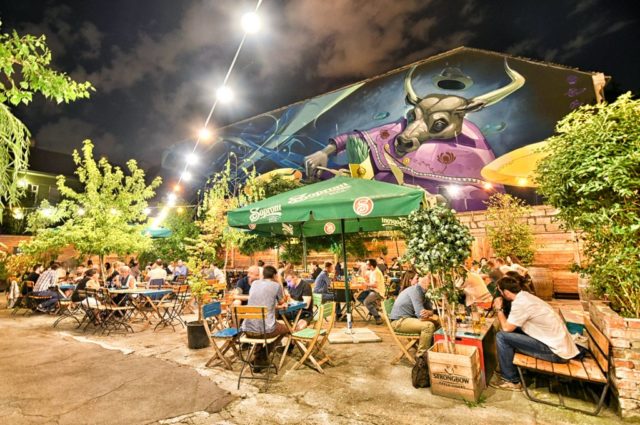
On Belgian itineraries, Antwerp gets overlooked. Maybe that’s understandable. Bruges is cute, cobbled, and canaled. Brussels is the bustling capital, with the very grand-indeed Grand Place. Ghent mixes charm with urbanity, and boasts an exquisite Van Eyck altarpiece.

Antwerp — lonely Antwerp! — plays fourth fiddle. But those who visit Belgium’s second-biggest city find it to be engaging and rewarding, if lovably gritty.

On arrival, you find yourself standing in one of Europe’s most impressive train stations — a temple to travel that rivals any in Europe.

From there, a grand city spreads out before you. Famous for its funky design heritage and its Art Nouveau architecture, as well as for its diamond industry, Antwerp itself is something of a diamond in the rough. But increasingly, it’s being polished to a high shine. On my last visit, I stepped into the stunning Handelsbeurs — the former stock exchange, with Neo-Gothic flourishes, that evokes the city’s glory days as a trading power.

On Antwerp’s picturesque main market square — as pleasant as any in the Low Countries — I found plenty of good eateries. But, on a mission to update our Belgium guidebook, I scouted even better ones tucked into characteristic neighborhoods all over the city, especially in t’Zuid, a quick tram ride to the south. There I found, among other great places, Elsie’s — a great opportunity to sample Ethiopian and Etrurian cuisine in this multiethnic city.

Antwerp is that kind of city: One that rewards exploration and curiosity. It makes you work a bit to unearth those gems…but it’s worth the effort.

Dublin’s Stoneybatter Neighborhood, Ireland

I’m always on the lookout for fun and funky neighborhoods in great European cities. And while updating our guidebook in Dublin this summer, several leads led me to Stoneybatter.

This low-key neighborhood is effectively one street at the edge of the city center (a longish walk or quick bus, tram, or taxi ride from downtown). Stoneybatter’s main drag is lined with narrow storefronts, colorful cottages, indie bookstores and boutiques, lively street art, more than its share of stay-awhile cafés, a variety of global food eateries, and some fine dining options.

I ate very well at Grano, an Italian-owned trattoria with a short but tempting menu of authentic choices — the kind of place where, I imagine, each and every dish would be delicious. But walking to and from dinner, I kept wishing I had more time to eat at a half-dozen other places.

Part of Stoneybatter’s charm is its tucked-away-ness. It’s a short walk from the big, slick Smithfield Square, with its giant distillery, industrial-strength youth hostel, and lineup of predictable chain eateries. From there, you can walk just a few minutes northwest, passing The Cobblestone — Dublin’s most respected pub for live traditional music. Stoneybatter, just around the corner feels quirky, locally owned, and fun to explore. It’s the kind of place where I could happily imagine settling in for a week or two at a cozy Airbnb, sampling a different trendy brunch spot each morning.
Slovenia

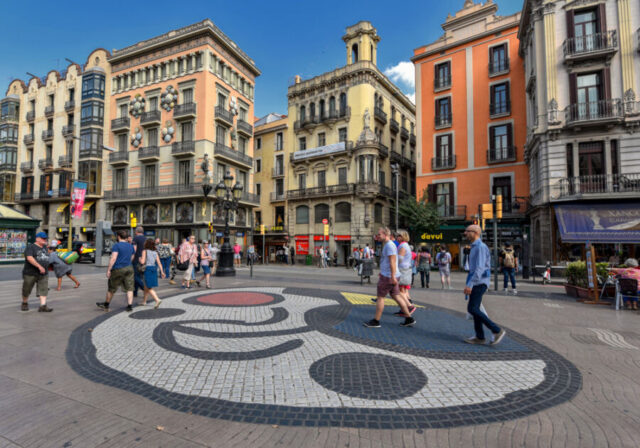
If you know me at all, you can be sure Slovenia will wind up on any “Best of” list I write. This year, I mulled over which part of Slovenia merits a “Discoveries” mention for 2024:

The beautiful, charming, user-friendly capital, Ljubljana, with its stay-a-while ambience and outstanding food scene?

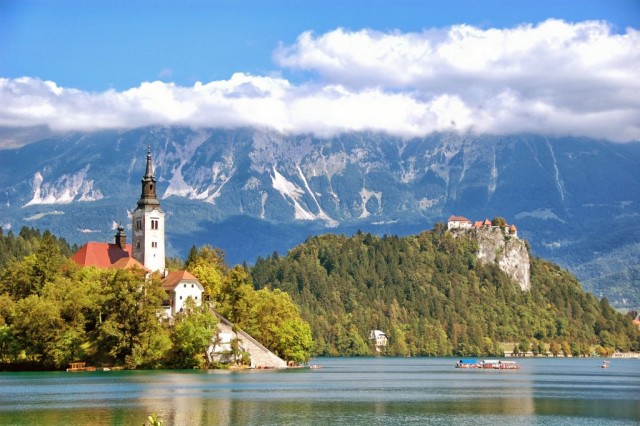
Dreamy Lake Bled, with its castle-capped cliff and church-crowned island? Or maybe head higher into the mountains — to the stunning Julian Alps, with some of the most breathtaking cut-glass peaks in Europe?

Perhaps head to the seaside, specifically the charming port town of Piran, with its sleek, marbled square, atmospheric back lanes, delectable seafood restaurants, and all of the charm of small Croatian coastal towns, but tidier and friendlier?

Or maybe we should do a little spelunking? When choosing between some of the most spectacular karstic caves on the planet, should we opt for the hauntingly grand caverns of the Škocjan Caves, or the more accessible formations of nearby Postojna?

Or does heading off the beaten path appeal? Should we explore the outstanding wineries of Goriška Brda, sharing a border with Italy’s famous Friuli wine region, or the arid limestone beauty of the Vípava Valley?

Heading to Europe at Mardi Gras time? Might I suggest paying a visit to Ptuj, with its unforgettable Kurentovanje costumed-beasts processions?

Or — hey, wait a minute! — why not…all of it?

Wherever You’ve Been Dreaming of Going

One of the lasting lessons of the pandemic is a new awareness that we can’t take anything for granted. Time may be shorter than you think. That’s why a popular theme has been “revenge travel” — finally getting to those items you’ve always dreamed of.

Maybe you’ve wished you could hike the Tour de Mont Blanc, around Europe’s tallest mountain. That was on Rick’s list — and it was one of his first trips back after COVID.

In my case, I can think of several boxes I’ve ticked recently. This past June, I realized a lifelong dream of being in Dublin to celebrate Bloomsday — a celebration of James Joyce’s Ulysses. On the date that Joyce’s masterpiece novel is set, his hometown’s streets are full of lit nerds wearing straw boater hats and Edwardian costumes, reading passages from Ulysses, and greeting each other with, “Heigho! Happy Bloomsday!” Totally worth it.

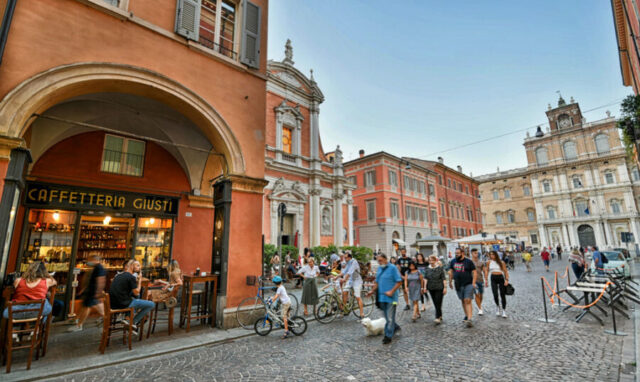
Other items on my lifelong wish list I’ve recently ticked: Exploring some new parts of Italy, from the fascinating, multicultural, coastal city of Trieste; to the culinary heartland of Emilia-Romagna; to the wine and food mecca of Piedmont.

Or ascending Lovćen, a mountaintop mausoleum overlooking virtually the entire country of Montenegro, and hiking up countless steps to a dramatic monument carved by the great sculptor Ivan Meštrović.

Some of these may seem a little obscure…because they are! I’m certainly not advising you to visit Dublin on Bloomsday, or to sample every stuffed pasta in Modena or Parma, or to huff up to the summit of Lovćen. I doubt you’d enjoy those as much as I would. (Well, maybe the pasta.) But I’m sure you have something on your personal wish list that you’d enjoy just as much I loved those experiences.

So…get to it! You have about 365 days to make it happen in 2024.


Be sure to share your own Discoveries in the Comments!

You can also look back at my Discoveries from 2023, 2021, 2020, 2019, and 2018…all still great choices.

If you’d like to follow along with me on my 2024 travels, be sure to follow me on Facebook and on Instagram.

And consider checking out my travel memoir, The Temporary European: Lessons and Confessions from a Professional Traveler.

Europe’s Best Neighborhoods: Where Should I Stay in ___?

You’re heading to Europe. You’ve chosen your destinations. And now you’re starting to daydream about your chance to be a temporary Londoner, a temporary Parisian, or a temporary Roman. The next question: Where should you stay?

As the 2023 travel season winds down, early birds are already starting to make plans for 2024. Most people get serious about this in January or so. But if you want to get a jump on the “competition” — and have your pick of places to stay — it’s smart to get started now. (And it’s a fun, constructive way to distract yourself as the days get shorter and colder.)

I have some friends who are dong just that: dreaming of a trip with their two teenagers next June in Rome and Athens. They asked me where I’d suggest staying in those great cities. And I thought to myself: That’s an excellent question! But first, I need a little more information: What kind of neighborhood are you looking for?

Inspired by that question, I’ve brainstormed my suggested home-base neighborhoods for 10 of Europe’s most popular cities. This intel is hard-earned, from years of scouring these cities for accommodations to recommend in our Rick Steves guidebooks.

Those lists are below. For each city, I’ve broken my choices down into three categories:

Central and Touristy. This is where you’d stay to have the top sightseeing right outside your door. However, that also means these neighborhoods are touristy, often a bit tacky, very expensive, crowded, and not particularly “authentic” or “local-feeling.” But sometimes having everything close at hand is worth making those sacrifices, especially on a quick, targeted trip.

Hip and Foodie. Every city worth its salt has an edgy, “emerging” restaurant and nightlife zone. These can be either central or more remote; either way, they’re typically less polished and more characteristic, and they tend to skew more youthful. If you’re in town primarily to check out all the “destination” foodie restaurants, rather than to sightsee until you drop, and if you’d like to settle in to the local version of Williamsburg, Los Feliz, or Wicker Park…then these neighborhoods are for you. (If you don’t know what those names mean, then these neighborhoods are probably not for you.)

Charming and Residential. If you don’t mind commuting to the main sightseeing and trendiest eateries, it can be worthwhile to stay a little farther from the city center. More sedate and charming than the central districts, these neighborhoods feel “older-local” as opposed to “younger-local.” Because they’re less central and less touristy, lodgings are often more affordable (though certain high-end suburbs can be surprisingly pricey). If the “Hip and Foodie” places are for hipsters, then the “Charming and Residential” places are for yuppies and retirees. Just be prepared for a longish metro, bus, or tram ride to achieve most of your bucket list.

Use the suggestions below as a starting point when searching for accommodations — whether hotels, B&Bs, or short-term apartment rentals (like Airbnb). Many room-booking search engines allow you to enter specific neighborhoods to narrow down your options, or you can search via the map. Read reviews carefully, within these areas, to make sure the lodgings you’re considering match your expectations. And here’s a pro tip: Before booking, go for a little “virtual stroll” of the surrounding area on Google Maps Street View to make sure it looks like a place you’d like to settle in.

London

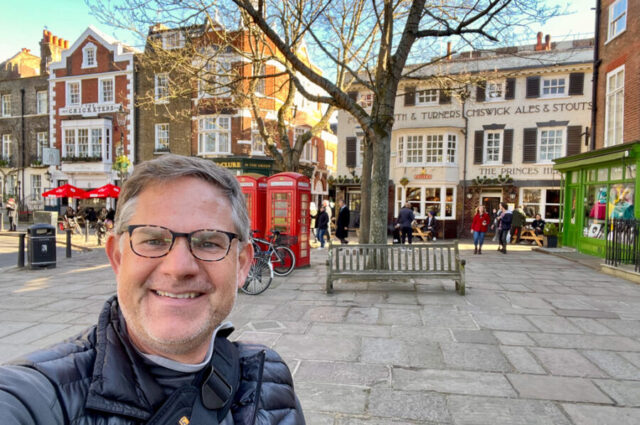
Touristy/Central: Soho and Covent Garden can’t be beat for access to many of the top sights, the West End theater scene, and some of London’s best restaurants to boot.

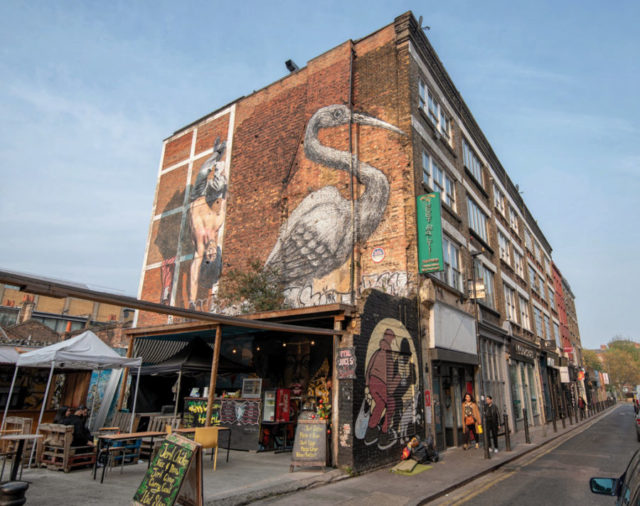
Hip/Foodie: The East End, specifically Shoreditch and nearby, is where hipsters feel at home, with exuberant street art and many of the city’s most interesting restaurants. (Many top London restaurants began with a humble location in Shoreditch before opening a fancy one in Soho.)

Charming/Residential: Try neighborhoods just to the west, surrounding Hyde Park and Kensington Gardens (South Kensington, Notting Hill, Earl’s Court); or to the north, near the British Museum (Marylebone, Fitzrovia). In this vast city, there are countless other choices, depending on how far out you’re willing to travel; Dulwich, to the south, and Ted Lasso’s Richmond, to the west, are each a 30-minute commuter train ride out of the center.

Paris

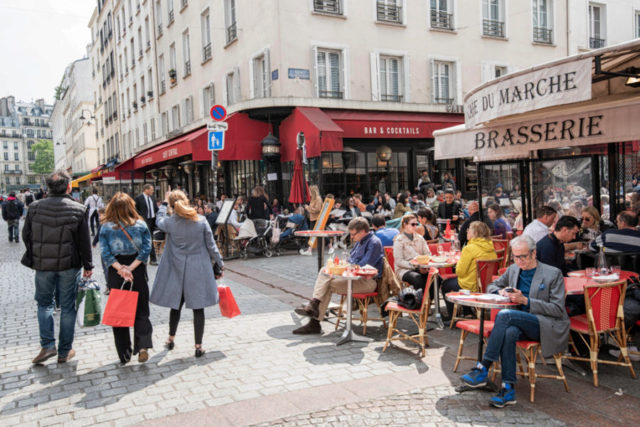
Touristy/Central: It’s hard to resist staying near the Eiffel Tower (ideally with a view from your window); either there, or in the Latin Quarter (near the Île de la Cité/Notre-Dame and Île St. Louis) puts you very close to the sights…and the crowds.

Hip/Foodie: For something that’s still quite central, but more funky, consider the Marais, or some of the neighborhoods just beyond it: Try Oberkampf and Canal-St-Martin, just to the north, and the Rue du Faubourg Saint-Antoine, just beyond Bastille to the east. The famous Montmartre is a strange combination of obnoxiously touristy and achingly bohemian…just as it was a century ago.

Charming/Residential: It’s hard to resist Rue Cler. This quintessentially Parisian, very central market street is that strange “unicorn” of neighborhoods that ticks only the best bits of both the “Touristy/Central” and “Charming/Residential” boxes. Another good option, slightly less characteristic but still handy, is Luxembourg Gardens.

Rome

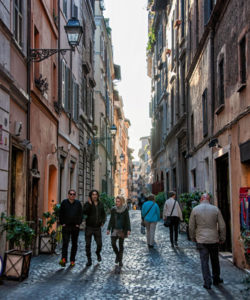
Touristy/Central: It’s a thrill to stay as close to the Pantheon as possible, putting you right in the magical and romantic heart of Rome. For fewer tourists, look in the sleepier, more appealing streets that run from Piazza Navona west, toward the river and Vatican City.

Hip/Foodie: I just love the Monti district, tucked in narrow residential lanes basically across the street from the Roman Forum. Testaccio, farther out, surrounds Rome’s most engaging market hall and offers close proximity to restaurants filled with foodies who’ve done their homework.

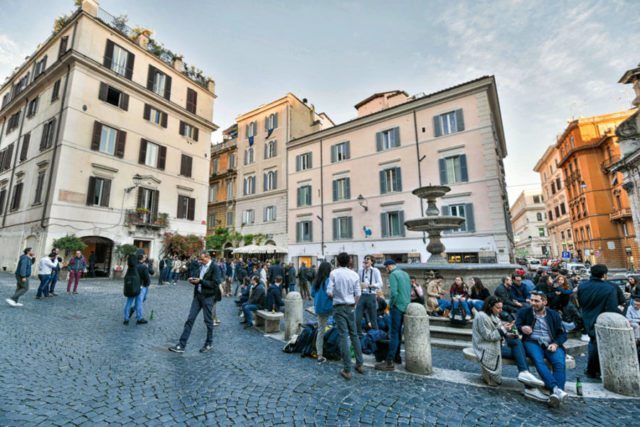
Charming/Residential: Trastevere, which could arguably fit in any of these categories, is extremely atmospheric, slightly less touristy than the most central parts of Rome, and still within a long but very engaging walk to many of the top sights. The small, quiet zone just behind the Colosseum (to the east) feels a world apart from the touristy chaos.

Berlin

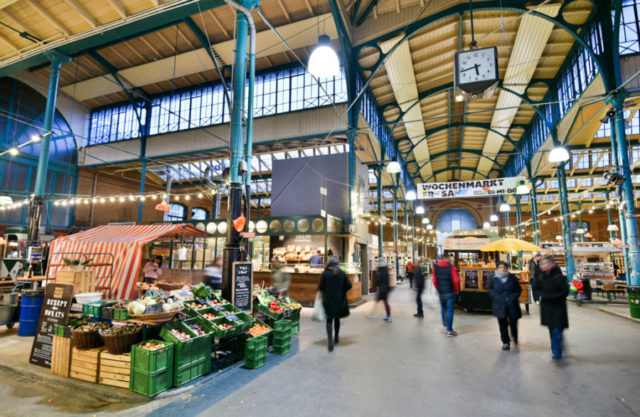
Touristy/Central: The city’s spine, Unter den Linden, has several big hotels but lacks personality. That’s why I enjoy the area around Hackescher Markt, just north of Museum Island, which has a little more character and enjoys about as convenient a location as you’ll find in this sprawling city.

Hip/Foodie: Not only the best neighborhood in Berlin, but one of my favorite hipster neighborhoods anywhere, Prenzlauer Berg has oodles of funky Berlin character, outstanding restaurants, a true neighborhood feel, and easy transportation connections around the city. For a deeper dive, consider Neuköln, Kreuzberg, or any number of other cool Kieze (neighborhoods) that Berlin specializes in.

Charming/Residential: The former West Berlin (now called City West) was once a Time Square-like “city center” hub; now it’s a sleepy, sedate, upscale, and charming suburb with relatively easy connections to the big sights. Savignyplatz is the centerpiece of this area, and the surrounding Charlottenburg district has a similar feel.

Athens

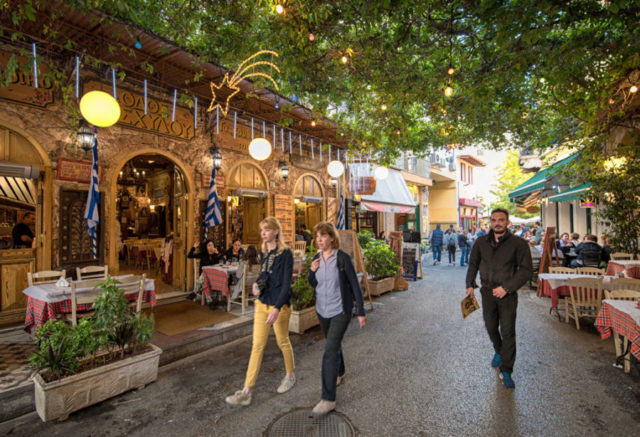
Touristy/Central: The Plaka, tucked at the base of the Acropolis (between the Monastiraki transit hub and the busy Syntagma Square), is super-central and super-touristy.

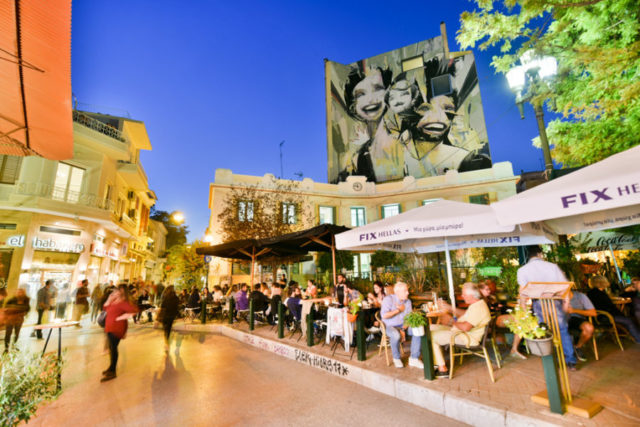
Hip/Foodie: Just across the street from Monastiraki, Pysrri is funky, youthful, and foodie, with an appreciation for wild street art and delicious street food, and close proximity to the thriving Central Market without being too far from the central sightseeing zone.

Charming/Residential: The sleepier streets of Makrigianni and Koukaki, on the “far side” of the Acropolis (to the south), make for a comfortable and relatively mellow home base.

Amsterdam

Touristy/Central: If you’d like to have very easy access to the sights (and to endless tulips-and-wooden-shoes souvenir shops), stay somewhere along Damrak or in the nearby streets of the Red Light District.

Hip/Foodie: The Jordaan, a short stroll along postcard canals west of the central spine, is one of my favorite neighborhoods in Europe, period. It’s an ideal combination of two categories: Both hip and residential, charming and foodie, it’s a clear winner.

Charming/Residential: If looking beyond the Jordaan, the quiet streets of Southwest Amsterdam, around Museumsplein, tick this box — though the proximity to the Rijks and Van Gogh museums can make it feel quite touristy in places.

Budapest

Touristy/Central: Pest’s Town Center (District V), with the Váci Utca pedestrian drag as its spine, is as central and as touristy as you can get. I prefer the area around the Opera House, along the most interesting stretch of Andrássy Út — just a little farther out, but very well-served by public transit, chockablock with great restaurants, and very close to the Seventh District fun (see next).

Hip/Foodie: The Seventh District, which overlaps with the Jewish Quarter just across the Small Boulevard from Pest’s Town Center, is one of Europe’s most engaging hipster neighborhoods. It comes with many of the city’s best restaurants (from street food to Michelin-starred) and the fun and fascinating “ruin pub” scene.

Charming/Residential: Buda, across the river from the modern city center, is sleepier, greener, and more sedate. It takes longer to reach much of Pest…but the views across the river are worth the commute. To stay on the Pest side, consider the streets flanking Andrássy Út once you get beyond the Oktagon, in the diplomatic quarter that heads out toward City Park.

Dublin

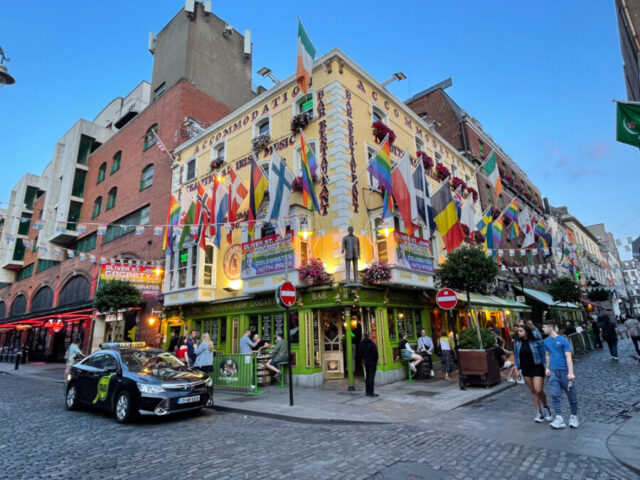
Touristy/Central: Look no farther than Temple Bar and the nearby streets close to Trinity College, on the south bank of the River Liffey. (As a light sleeper, I’ll suggest checking reviews carefully for noise complaints if sleeping anywhere near Temple Bar.)

Hip/Foodie: Earlier this year, I discovered the charming yet hip “village in the city” of Stoneybatter, tucked away beyond Smithfield Square to the northwest. While a bit farther from the center, it has some of the city’s hippest restaurants (especially for brunch) and an “I could live here” vibe.

Charming/Residential: South of St. Stephen’s Green, you encounter fewer tourists and a more local feel. I particularly enjoy the area along the southern canal belt; if you’d like a hipper stretch of this area, try to get close to happening Camden Street and the Portobello area.

Barcelona

Touristy/Central: There’s a good reason many tourists enjoy staying in the city center: near Plaça de Catalunya, in the Barri Gòtic, and along the Ramblas. This is Barcelona at its most vivid, touristy, crowded, chaotic, and fun.

Hip/Foodie: To escape some of the crowds of the Old City, head to El Born — an easy walk just east of the Barri Gòtic. This area, with the Picasso Museum and Santa Caterina Market, has a more bohemian feel, including great restaurants.

Charming/Residential: The carefully planned Eixample district, which surrounds the Old City on all sides, has an ritzy “uptown” vibe. This is the place to stay if you’d like to pretend you’re a Catalan urbanite for a few days. Or consider the tight, old-school Barceloneta fishermen’s quarter near the water.

Istanbul

Touristy/Central: For such a sprawling city, Istanbul has as surprisingly compact sightseeing core: Sultanahmet, loaded with hotels for tourists who want proximity to the great sights; just downhill, Sirkeci is similar.

Hip/Foodie: Kadıköy, across the Bosphorus on the Asian side, is both hip and residential. Back on the European side, consider Beşiktaş, along the Golden Horn below the New District.

Charming/Residential: The New District, across the Golden Horn from the old city center, is still quite urban and intense in places. But you’ll also find some pleasant back streets where you can settle in to a local neighborhood.

So…what did I miss? Any favorites to add? I’d love to hear your suggestions in the Comments.


I’ve gotten to know all these great European cities through updating our Rick Steves guidebooks — where you’ll find out a lot more about all of these places, including extensive lists of our handpicked hotels and B&Bs in each area.

In Celtic Lands, the Digression Is the Point

Having conversations with strangers — dozens of times each day — is the most interesting part of my guidebook-updating duties. And over the last couple of years, I’ve spent many weeks doing just that in Scotland and Ireland. Usually I’m on the hunt for specific information: prices, hours, new exhibits, planned closures. But the real joy of traveling in the Celtic lands is simply chatting…about something, about nothing, about everything.

Last summer, I came to appreciate how the Scots are master digressers. They’re smart, they’re funny, they’re sharp observers of the world, they always have interesting takes on this and that, and their accent is a delight to listen to. “Meander” sounds like it could be a town in Scotland, and it’s certainly a state of mind there.
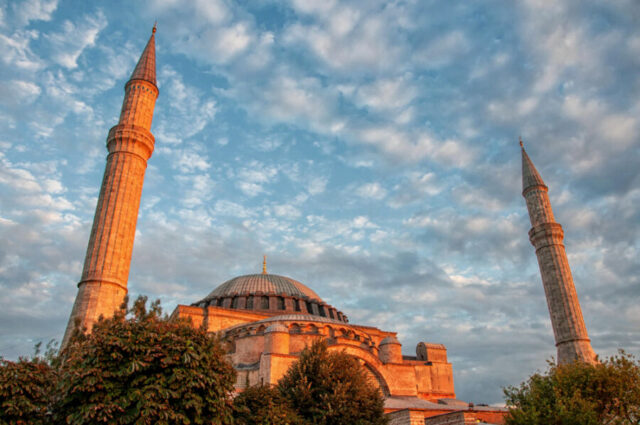
After a busy day of updating Stirling Castle — the gateway to the Scottish Highlands — I wandered downhill through town, ticking off more items on my list. I’d just closed down the tourist information office and the Old Jail, when I crossed the street to drop in on Alan, who runs Stirling Bagpipes.

Alan completely, and wonderfully, shattered my momentum. He’s been making and repairing bagpipes for nearly 30 years. Alan loves to talk about bagpipes. And I love to listen to Alan talk about bagpipes.

Alan has bagpipes that go back, literally, centuries. A whole rack of priceless antique practice chanters were stacked in one cluttered corner. He proudly showed me the bags that he’s taught his 15-year-old daughter to hand-sew…to make a little money of her own.

Alan also showed me an amazing work of art that he created several years back. Working with a local historian in the city archives, he found proclamations from centuries past, in which communities like Stirling would establish “burgh pipers” — an official city bagpiper, paid for by civic funds, like today’s garbage collectors or EMTs. He worked with a local artist to create a limited-edition print with the text from those old proclamations, surrounded by illustrations of historical bagpipers. He proudly explained that this print appears in the homes of many of Scotland’s top bagpipers, and music lovers worldwide. And he keeps track of where each print winds up, which he uses to quiz his daughter on world geography.
And then, somehow, we got to chatting about the differences between rugby and American football. I explained some of the rules of my favorite sport, and between us we figured out that “scrimmage” and “scrummage” must be closely related.

(“It’s interesting how people shorten words, innit?” Alan said. “The real word is ‘scrummage,’ but most people say ‘scrum’ for short. Did you know what ‘pram’ is short for, like a baby carriage? ‘Parambulator.’” He sounded it out syllable-by-syllable, swaddling each one in his baby-blanket-soft accent.)

At one point, a couple from Hull, England, wandered into the shop. They spoke with a thick Yorkie accent of their own, which I almost couldn’t understand…it made Alan’s gentle burr sound like the King’s English. A lively conversation ensued about bagpipes and regimental dress, as Alan showed them his kilts and beret-style bonnets. I can’t tell you how much I enjoyed simply being a fly on the wall for that conversation.

(This reminded me of a different time, on a trip years earlier, when I was updating our details at a hotel’s front desk in Glasgow. The receptionist had one of the thickest Glaswegian accents I’ve heard. After I’d collected all my required information, I kept asking him more questions… just to hear him talk. And then another bloke walked in, from Liverpool. He had an incredibly thick Scouse accent of his own. Imagine, if you will, Billy Connolly and Paul McCartney engaged in an animated tête-à-tête. And so I stood there, captivated, as the Glaswegian and the Liverpudlian parried back and forth with two of the most distinctive and pleasurable-to-the-ears accents in the English language.)

I could go on and on about this wonderful bagpipe conversation with Alan. Suffice it to say, at a certain point I realized that I still had a lot of work to do — and that my rental car, which I’d parked up at the castle, was going to get locked in overnight if I didn’t run up and claim it soon. And I’d kept Alan open a half-hour later than the closing time posted on his door.

But he didn’t seem to mind. He told me how much he enjoys all the visitors who pass through his shop. He said he did a tally once, and he estimates that something like 150 times a day, tourists wandering by Stirling Bagpipes pause to take a photo through the window. (“I doubt there’s another shop anywhere that gets so many photos taken.” I said, “Maybe the café in Edinburgh where J. K. Rowling wrote Harry Potter?” “Yeah, it’d ha’ to be somethin’ like that,” Alan agreed.)

Speaking of visitors, Alan has noticed that, for reasons passing understanding, visitors from the same place tend to come in clusters. One week, he seems to get a bunch of people from Southern California. Another week, North and South Carolina. Just last week, he said, he sold practice chanters to two entirely unrelated people from Utah, on different days.

But I digress. And so does Alan. And what I’m getting at is this: The digression is the point.

§ § §

Across the Irish Sea, things are much the same. Having spent over a month this year updating guidebooks on the Emerald Isle, I’ve come to dearly appreciate the Irish, even if they can sometimes be…let’s say “evasive”…when it comes down to brass tacks. A straightforward yes-or-no question — for example, “Is this restaurant open on Mondays?” — might be met with, “Well, sometimes ’tis and sometimes ’tisn’t, if ya know what I mean.”

In one town, I asked the woman at the tourist information office, “How soon do you think the new museum will open?” She chuckled and raised an eyebrow. “How long is a piece of string?”

On Inishmore, I asked an Aran Islander exactly how to get to a hard-to-find landmark. He gazed off to the horizon for a moment, stroked his chin, and said, “Well, see, first ya have to go down that lane over there. You go to the eighth gate on the lane. Ya have to count ’em, ya know: One, two tree… And then, when you get to that eighth gate — you’ll know it’s the one, because it’s got a big ‘no trespassing’ sign on it — well, then, ya hop over that gate and walk across an unmarked field. Then ya just sort of, ya know, look for it.”

Most of the time, I manage to get the answers I need…eventually. And very often, I get a lot more besides. Just like last summer in Scotland, this fall in Ireland, I keep finding myself sucked into countless utterly delightful conversational vortexes, which deposit me far from where I began. The Irish, of course, have a special word for this: craic — lively, pleasurable, smoothly flowing conversation.

In Kilkenny, I joined Sharon on a walking tour along that city’s deeply historic “Medieval Mile.” And while I learned plenty of Anglo-Norman history, some of the most memorable moments were Sharon’s insightful digressions.

We paused at the former Smithwick brewery, famous for its red ale. “A lot of Americans, they’re used to lighter lagers and pilsners,” Sharon said. “And our beers can be a bit much. But here are a few tips. First, a Guinness comes out with that thick head, and visitors think you’re supposed to slurp it from the top, like a milkshake. But the head is bitter, and the beer beneath it is sweet. That’s why you drink past the head — even if you wind up with a ‘moustache.’ You can tell someone’s enjoyed their Guinness, properly, if all that’s left in the bottom of the glass is that head.”

“Of course,” Sharon continued, “Smithwick’s famous red ale is a bit more challenging… even more of an acquired taste. Here’s a tip: For your first Smithwick, ask the bartender to add a dash of strawberry lemonade. This cuts the bitterness and makes it easier to get used to. For Guinness, sometimes they add a dash of blackcurrant syrup. Kind of like training wheels for your beer.”

A few days later, I stopped off at the Blennerville Windmill outside of Tralee — one of many roadside attractions on my list that day.

It seems every sight in Ireland, no matter how minor or remote, comes with two things: First, a 10- to 15-minute film (which the Irish insist on calling an “audiovisual”): either an extremely dense and dry history lesson, or an eye-candy scenic slideshow set to music. And second, a 45-minute guided tour that makes an otherwise dull sight spring to vivid life. (These tours are, almost without exception, billed as 45 minutes — as if the Irish association of museum curators has conducted extensive empirical research to arrive at that optimal duration. Any yet, anytime I confirm that length-of-tour at the front desk, the ticket seller winks knowingly and says, “Well, it usually goes more like 50 minutes, probably more, if ya know what I mean.”)

In the case of the Blennerville Windmill, I did not have particularly high hopes that it would be a blockbuster sight. But as is so often the case, the tour guide, Donal, made it captivating.

Gracefully and conversationally — as if catching up on the latest town gossip — Donal wove together the American Revolution and the Great Famine, which sent a million Irish people across the Atlantic to our shores, escaping starvation.

With the loss of its American colonies in the late 18th century, Donal explained, Britain turned to Ireland as a much closer and more convenient colony to exploit. Hundreds of wind- and watermills were built around Ireland, primarily for the purpose of grinding and supplying grain to England — which was also concerned by the rise of Napoleon and the need to feed its troops. At that point, it was no burden on Ireland — which had been made robust by the success of the potato — to be a breadbasket for Britain. But when circumstances changed with the Great Famine, the Irish continued to fulfill their obligation to ship what could have been life-saving grain from windmills like this one across the Irish Sea to England. While England ate Irish grain to power its Industrial Revolution, the Irish farmers who grew that grain starved.

Without skipping a beat, Donal was on to the next topic: “Have ya ever heard of a dust explosion? Flour is flammable, so with all that powder floating around in the air, the miller had to be extremely careful. That’s why windmills have windows: because they need light, and it was too dangerous to use candles in here. But the windows don’t open, because of course, that would just kick up more dust. And if ya notice, you’ll never find metal touching metal in the gears and levers of a windmill. They alternate between wood and metal. That way…no sparks.”

And then Donal dropped several commonplace phrases that have their origins in windmills: “Run of the mill” and “daily grind” are obvious. But who’d have guessed windmills were behind “four sheets to the wind” and even “damsel in distress”? A damsel, in this case, refers to a broad chute that poured grain evenly into the grinding element. In heavy winds, the damsel might begin to jump around and make a chattering noise. Hearing a damsel in distress, the miller knew to make some adjustments.

The fact that millers called this chattery piece of equipment a “damsel” — in other words, named it after a motormouthed, unmarried maiden — suggests both their unabashed chauvinism, and also their utter lack of self-awareness. In this culture, where people of all genders, ages, and walks of life seem to talk until they’ve run out of things to say, then just keep talking, it’s a bit rich to call out young women as flibbertigibbets. This is, after all, the land of flibbertigibbets.

Again, I digress. Actually, Donal digresses. And there again — that’s the point. If ya know what I mean.

§ § §

Later that same night, deep in County Clare, I made my way to a pub for some traditional music. The talented trio — accordion, guitar, banjo — provided a soundtrack as happy craic filled the bar.

At one point, an elderly gentleman with one leg crutched his way up to the musicians’ table and joined the band to belt out some tunes.

The lyrics were tales of lost loves that might have been; the girl whose father never took a liking to her young suitor; and a troubled locomotive that left Ennis and plodded its way across the county, making slower and slower progress, casting doubt on whether it would ever reach its destination. (“Do ya think that you’ll be home before it’s light?”)

Listening to these songs, I realized that one of the most beautiful aspects of traveling in these Celtic lands — the traditional music — is also rooted in an embrace of digression. Traditional folk songs have no “point,” per se. They are simply tall tales, witty observations, and mournful laments, set to music, to pass the evening hours enjoyably, with good company and good drink. Craic set to music.

The singer returned to the bar, and the trio continued churning through their tunes. Even without lyrics, I could now hear that sense of digression in each note.

Traditional Celtic music just keeps surging forward, always much the same, always a little different, looping back again and again to where it started. And then, just when you think it’s wrapping up, it launches into another giddy lap.

The music, like the craic, is all digression. It’s propulsive, circuitous but not repetitive, and never boring. It’s about the journey, not the destination.

And, just as with conversation, not every note struck pleases every listener. Sitting through a trad session, rather than enjoying one number, and disliking the next, I find moments in each round that thrill me and sections that bore me. Trad music is like Irish weather is like Celtic conversation: If you’re not enjoying it…just wait a few minutes.

That’s the beauty of the flow. Within their planned framework, the jamming musicians discover those digressions…and follow them to see where they go. Because they understand, intuitively, that the digression is the point.

§ § §

Back home, it feels like our society has little patience for digression. A pandemic-born culture of video calls and work-from-home killed the art of the water-cooler conversation. Cursory text messages have derailed the custom of longform letters, emails, and phone calls. We get our news in bulleted headlines and scrolling chyrons, and our entertainment in crisp little reels on social media. A person “talking too much” ranks somewhere between a severe character flaw and a mild mental illness, and saying that someone “likes the sound of their own voice” is a withering insult. Our economy prizes productivity above all else: We encourage concision, precision, and an utter lack of personality. To do anything else is a shameful waste of time.

Similarly, as a writer, I’ve trained myself to weed out digressions — before clicking “Publish,” I go through each piece with a fine-toothed comb to ruthlessly excise all the little asides and parentheticals that clutter up otherwise “clean” copy. At the bottom of each piece, I have a scrap pile labeled “JESTAM” where I’ve discarded some of my personal favorite little side-observations.

But I’m inspired by the conversationalists that I encounter in the Celtic lands. So for this blog post, I’ve decided to keep in more of those tangents. (A keen-eyed editor would quickly snip out my little digression about the Glaswegian and the Liverpudlian having a beautifully lyrical conversation. Admittedly, it’s probably a “you hadda be there” moment. And yet, it’s truly one of my all-time favorite travel memories…and I’ve never written about it before.) Just this once, in the spirit of my Irish and Scottish interlocutors, I’ve decided not to pluck those flyaway hairs.

So then, perhaps all of this explains some of the appeal that we Yanks find in traveling to places like Ireland and Scotland. In Celtic lands with the gift of gab, where craic is a lifestyle and “meander” is a way of being, people still practice the lost art of rambling aimlessly, in vast, swooping, circuitous conversations — like a bird swirling through choppy air, or a carefree child spinning through a field of wildflowers, or a sheepdog corralling her flock in a rocky landscape — that wrap themselves up like a tidy little bow at the last second.

Places, in other words, where the digression is the point.

The Charm-to-Tourists Ratio (CTR)

Recently, I made it back to my favorite spot in Norway: the tiny, fjordside, huggable village of Solvorn, perched between burly gray cliffs and the shore of the Lustrafjord.

One evening, I sat on a bench out at the little pier — where a pint-sized ferry chugs across the fjord once and hour to the oldest stave church in Norway — and found myself simply basking in fjordland splendor. When I’m working on guidebooks, I normally don’t have much time for “basking.” (And even in this moment, I had my laptop on my knees, furiously typing up a new “visual spin-tour” of this town for the next edition.) But a place like Solvorn stops even the busiest traveler in their tracks.

Looking left, I visually traced the shoreline past a diving tower at the public beach, then out along a rocky promontory, where a series of yellow and red boat sheds huddled at the base of the cliff.

Looking right, I panned over the rooftops of the tiny, shiplap town center — which boomed here in 1860, when a road tethered it to the fertile farming uplands just behind me, and regular steamboat service commenced to Bergen. More boat sheds sat out along — and, in many cases, over — the shoreline, and behind that, a gravel path led between yet more sheds and pristine white wooden homes, each one pretty as a postcard.

And immediately behind me sat Norway’s oldest continuously operated hotel, the Walaker Hotel (now in the hands of the ninth generation). With its yellow and red wooden buildings, giant fjordside garden, and generous porches with comfy chairs, the Walaker may be the best place in Norway to simply relax.

On the distant horizon, a very small cruise ship slowly trundled past. And I realized with a start it was the first one I’d seen in a couple of days. I had just driven in from the Geirangerfjord, whose main town is about the same size as Solvorn — roughly 250 people. But Geiranger, unlike Solvorn, plays host to one or two gigantic cruise ships nearly every day through the summer — each one injecting more than ten times that many tourists into what was, until that moment, a sleepy little community.

When I quizzed the hotel’s receptionist about lunch options, she was almost apologetic about Solvorn’s near-complete lack of choices: For lunch, I’d have to drive 20 minutes to a bigger town. But she needn’t worry — Solvorn’s sleepiness is exactly what causes travelers like me to fall in love with it.

Yes, cruise ships haven’t discovered Solvorn; and in the 1950s, when the automobile became the dominant mode of transportation, the main highway 55 also bypassed this little burg. (It runs just inland from here, up a very twisty mini-mountain pass.) As is often the case, becoming a forgotten “backwater” from a transportation point of view isn’t ideal for a fledgling local economy…but in the long run, it’s ideal for creating a wonderful travel destination.

Panning around and marveling yet again at the miracle of modern sightseeing that is Solvorn, I got to thinking about other special places that give me this same feeling. Lucca, Italy. Salema, Portugal. Toruń, Poland. Sarlat, France. Gimmelwald, Switzerland. Folegandros, Greece. Delft, the Netherlands. Ljubljana, Slovenia. Modena, Italy. Collioure, France. Erfurt, Germany. Salamanca, Spain.

Some of these are little places, like Solvorn; other are big cities. And yet, they all have an intangible specialness. They’re the places I find myself dreaming about, all winter long, after the hustle and bustle of a year’s travel fades into memory.

So I started to wonder: Why? What’s so special about these places? And that’s when I came up with a very arbitrary, but telling, metric: the Charm-to-Tourists Ratio (CTR).

In essence, these special places are far less crowded than their ample charms merit. There’s lots of ways of talking about this: For decades, Rick called them “Back Doors.” Each December, I brainstorm my list of “Discoveries” — suggestions for underappreciated gems to explore in the coming year. (You can see my 2026 list here.) You could call these places “untouristy” — but no, that’s not quite right, because they do have some tourism…just not too much.

The Charm-to-Tourists Ratio is, admittedly, a subjective, intuitive, and completely arbitrary metric — and I’m as far as it gets from a data scientist. But just for grins, let’s unpack CTR and see what it might tell us:

First, the “charm.” This concept, so vague as to be a lazy cliche, actually does mean something specific, I think. To me, “charm” means an intangibly authentic European quality. It’s unique and not easy to come by, and it can’t be manufactured or faked (much as Epcot tries). Red-and-white Norwegian boat sheds on long piers over dreamy fjords: charm. Picturesque Italian hill towns, perched at the top of a chunk of rock, with a labyrinth of homes clustered around a grand piazza: charm. Higgledy-piggledy half-timbered houses: charm.

Next up: the “tourists.” Here again, this gets tricky to define, because of course all of these places have some measure of tourism. Some of the high-CTR places are actually quite crowded with tourists — but they’re domestic tourists…Norwegians or Italians or Poles who’ve discovered this wonderful little time capsule of their own past.

So perhaps it’s helpful to lean on another cliché: that old distinction between “travelers” and “tourists.” Basically, a “tourist” is casual and quick — less curious, less thoughtful, less considerate. More interested in collecting selfies and souvenirs than in learning and connecting.

Mass tourism — especially, say, cruise ships — tend to attract fewer travelers and more tourists; consequently, places with lots of cruise ships and/or big-bus tours tend to have a lower CTR.

A traveler, meanwhile, lingers and learns. (If I could sum up the ethos of our Rick Steves Tours in a nutshell, it might be simply that we are using a mode favored by “tourists” — bus tours — but approaching the experience as travelers.)

So, then: The Charm-to-Tourists Ratio takes the overall charm of a place, then divides it by the number of tourists. And here’s where you get into some interesting case studies.

A high-CTR place is one like Solvorn or Lucca or Toruń: It hits the sweet spot of being extremely charming, and relatively untouristy. On paper, Solvorn should be the most overrun town in Norway. Instead, thanks to the limited accommodations options (one expensive hotel, one guesthouse with shared bathrooms, and one youth hostel) — and the fact that, by fluke of fate, it somehow hasn’t broken through into the “bucket list” of the 21st-century traveler. It’s still sleepy…almost mysteriously so.

Lucca, which is off-the-charts-high on CTR, is perhaps Tuscany’s most delightful small city. Astonishingly, it’s just a half-hour away from the famous Leaning Tower of Pisa, and the mobbed beaches and trails of the Cinque Terre. On a recent visit, it occurred to me that those super-popular destinations so close by act as a distraction…pulling away tourists who might otherwise discover Lucca. It’s like putting out a little dab of honey at your picnic to attract the ants, so you can focus on the good stuff.

High-CTR places aren’t always small towns; even big cities can score admirably on this measure. Ljubljana, one of my favorite places in earth, is a national capital of about a quarter-million people. It’s extraordinarily charming, especially for a city. But, on a per-capita basis, it has relatively little tourism. Here again, most whistle-stop tourists in Slovenia head for Lake Bled, which is beautiful…but, increasingly, very crowded, with a CTR that drops lower with each passing year. I suspect Lake Bled is distracting lots of tourists away from Ljubljana…leaving it to us travelers.

In northern Poland, I love both the red-brick town of Toruń and the bustling Hanseatic port city of Gdańsk. Both are extremely charming. But Toruń is even just a bit more charming, and even less touristy…which, per the CTR metric, ranks it high on my list of favorite places in Europe.

A low-CTR place is one whose touristic reputation is exaggerated relative to what it has to offer. Geiranger and Flåm — the two most popular small-town cruise ports in Norway — are fine little places, with gorgeous fjordside scenery. But they are inundated by so much tourism (cruise passengers and, in the case of Flåm, “Norway in a Nutshell” day-trippers) that they can’t possibly compete on CTR. They have both lower charm and astronomically higher tourism than sweet little Solvorn.

In Greece, Santorini and Mykonos — while quite different — both perform extremely high on charm. One is perched on the lip of a crumbling volcano caldera; the other is the quintessence of a whitewashed Greek island village. Even so, both are absolutely heaving with crowds — not just from cruise ships, but also luxury jet-setters from around the globe.

Much as I’ve enjoyed my time on these two islands, they are way too small to effectively handle so many visitors…and consequently, they’re some of the most unpleasantly crowded and grotesquely expensive places on the Mediterranean. So they flop when it comes to CTR. (For the opposite — an island that ranks perhaps slightly lower on charm, but drastically lower on tourists — consider the high-CTR isle of Hydra, an often-overlooked chunk of land off the Peloponnesian Peninsula. Also high on CTR: Folegandros, a short express boat trip from Santorini; or Naxos, which you can actually see from Mykonos. Heck, on a calm day, you could probably swim it.)

Here’s another example of a low-CTR destination: Scotland’s Loch Ness. Last summer, I got into quite a bit of trouble when I proposed that Loch Ness is nowhere near as worthwhile as the vast crowds who flock there seem to think it is. Driving along Loch Ness, my heart broke as I saw the vast numbers of tourists who’d gone to considerable effort and expense to come here, only to gaze out over a not-terribly-scenic loch in search of an imaginary beast. The lakeshore of Loch Ness is a glut of tacky tourist shops and gimmicky come-ons…and it works! The place is packed. Now I realize that what bothered me so much at Loch Ness is that it has an exceedingly low CTR. I said back then, and I’ll say again: There are far, far better (high-CTR) options within an hour’s drive of Loch Ness.

And then there are those interesting case studies: Amsterdam, Venice, Prague, Barcelona, Dubrovnik. These places are incredibly, off-the charts charming. They are also extraordinarily crowded. However, the charm is so high that even the high level of tourism causes them to perform respectably on CTR…winding up comfortably in the black. In other words, some places are still well worth a visit, even if they’re touristy.

Meanwhile, there are some very big cities where the CTR is essentially meaningless. London, Paris, Rome, Istanbul, Berlin — it’s difficult to classify any of these on “charm” per se, and they’re so gigantic that tourism is diluted, having less of an impact than on, say, Flåm or Loch Ness. This is, admittedly, where CTR becomes less helpful.

You may disagree with my implementation here. But try the Charm-to-Tourists Ratio out on your own favorite places, and see how they stack up. In the Comments, I’d love to hear about your favorite places that hit it out of the park on the CTR statistic — and why?