My co-author and frequent collaborator, Cameron Hewitt, is well-traveled, smart, and insightful. And, while he and I are in perfect sync in our travel styles and priorities, he gives voice to the next generation of "Rick Steves travelers." Join me in enjoying his reports right here. —Rick

Wartime Orkney: Sunken Ships, Churchill Barriers, and a POW-Built Chapel

Aside from its Old Norse heritage and its prehistoric sites, Orkney is known for its role in 20th-century military history. The islands of Orkney create a natural harbor, called Scapa Flow, that was the base for the British Royal Navy during both World Wars.


Cameron Scotland Orkney Wartime Shipwrecks

During World War I, to more completely seal off the harbor, the navy requisitioned and intentionally sank hundreds of ships in the narrow straits between islets. A century later, you can still see their rusting hulls poking up above the surf.


Cameron Scotland Orkney Wartime Barriers

In the early days of World War II, a Nazi submarine discovered a gap in the sunken-ship barriers, and managed to enter Scapa Flow and sink the HMS Royal Oak. First Lord of the Admiralty Winston Churchill (just weeks before becoming prime minister) hatched a plan to build sturdy barriers between the islets. These were finally completed just a few days after V-E Day, and today tourists use them to link the WWII sights.


Cameron Scotland Orkney Italian Chapel Exterior

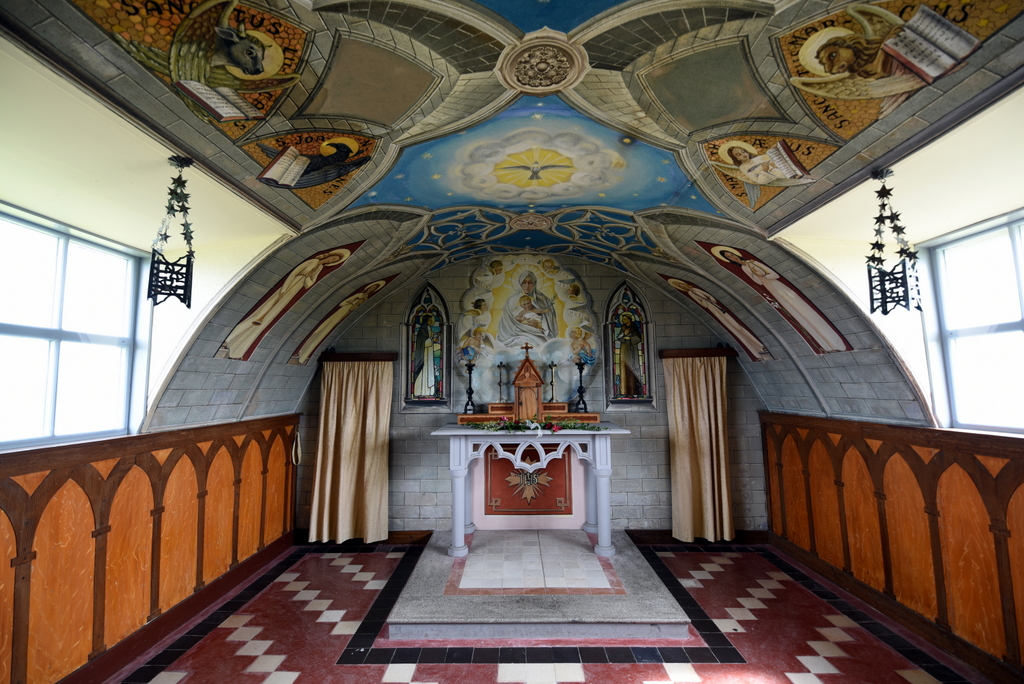
The most fascinating World War II site on Orkney — and in my mind, one of the best wartime sites in all of Europe — is the Italian Chapel. The Italian POWs who built the Churchill Barriers were granted permission to create a chapel of their own. While it looks like a pretty church from the outside, circling around back you see that it’s actually two prefab Nissen huts (similar to Quonset huts) stacked end-to-end.


Cameron Scotland Orkney Wartime Italian Chapel Interior

The POWs decorated the chapel in their free time, using whatever materials they could scavenge. The ethereal Madonna e Bambino over the main altar is based on a small votive one prisoner had brought with him to war. They used scrap metal from sunken WWI ships to create the gate and chandeliers.


Cameron Scotland Orkney Wartime Font

This elegant baptismal font’s corkscrew base is actually a suspension spring coated in concrete. Lovingly crafted details like these are a hope-filled symbol of the gentility and grace that can blossom even during brutal wartime.

Seeing the many sights on Orkney is doable on your own, but much more satisfying with a good local guide. I was treated to a great guide named Kinlay, whose company Orkney Uncovered runs tours that efficiently tie together both the prehistoric and the World War sights on this eclectic island. Thanks, Kinlay!

Orkney’s Prehistoric Wonderland

Orkney boasts an astonishing concentration of 5,000-year-old Neolithic monuments — some of the best in Great Britain (and that’s really saying something).

Five thousand years ago — before the Picts and Celts, before the ancient Greeks or Romans, before the Great Pyramids, and even centuries before Stonehenge — Orkney had a bustling settlement with some 30,000 people. These prehistoric Orcadians left behind structures from every walk of life: humble residential settlements (Skara Brae, Barnhouse Village), mysterious stone circles (Ring of Brodgar, Stenness Stones), more than 100 tombs (Maeshowe, Tomb of the Eagles), and a sprawling ensemble of spiritual buildings (the Ness of Brodgar). And of course, this being the Stone Age, all of this was accomplished using tools made not of metal, but of stone and bone.


Cameron Scotland Orkney Ring of Brodgar

Of Orkney’s many stone circles, the Ring of Brodgar is the biggest. Of the original 60 to 80 stones — creating a circle as wide as a football field — 27 still survive. The ring, which sits amidst a marshy moor, was surrounded by a henge (moat) that was 30 feet wide and 20 feet deep.


Cameron Scotland Orkney Ring of Brodgar Graffiti

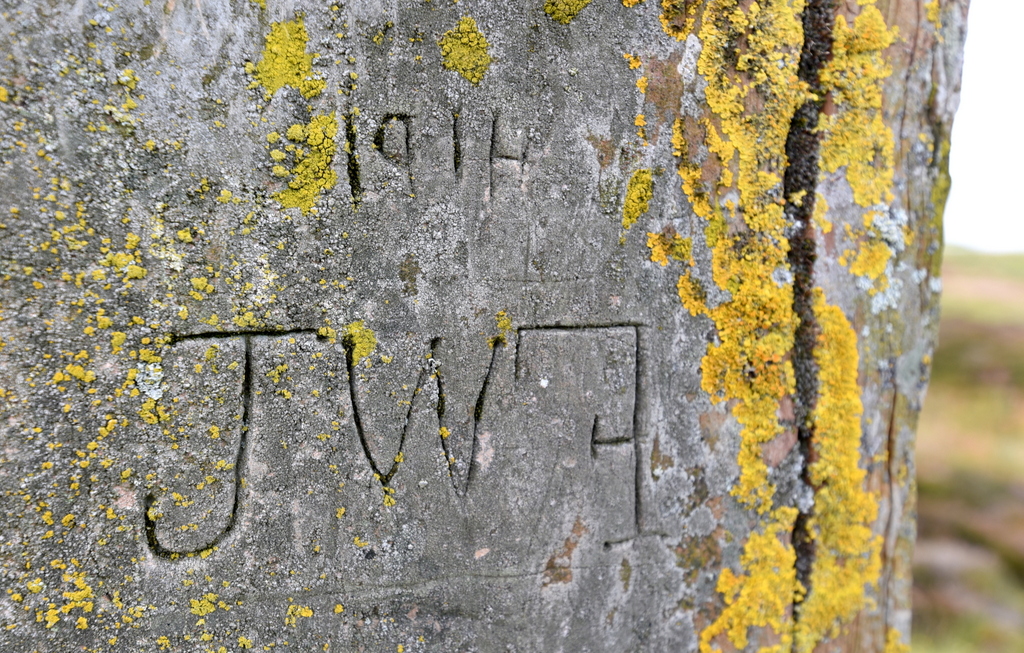
Some of the ring’s stones are carved with “graffiti” — names of late-19th-century tourists. There’s even some faint Norse runes carved by a Viking named Bjorn around A.D. 1150.


Cameron Scotland Orkney Ness of Brodgar

Orkney offers a unique opportunity to see an actual archaeological dig in progress, at the Ness of Brodgar. Discovered only in 2003, the site is carefully covered ten months out of the year — but in July and August, anyone is welcome to watch the archaeologists at work.


Cameron Scotland Orkney Skara Brae

At Skara Brae, you can see how some Neolithic people lived like rabbits in warrens — hunkered down in subterranean homes, connected by tunnels and lit only by whale-oil lamps. All of this was covered with turf, with only two or three entrances and exits. Because sandstone is a natural insulator, these spaces — while cramped and dank — would have been warm and cozy during the frequent battering storms. A primitive sewer system, flushed by a re-routed stream, ran beneath all of the homes, functioning not too differently from modern sewers. They even created an ingenious system of giant stone slabs on pivots, allowing them to be opened and closed like modern doors.

Sea Stacks, Evocative Tombs, and American Flags on Orkney

For very seasoned travelers, Orkney — the archipelago that dangles just above the crown of Scotland — has a special allure. When I tell most people I’m going to Scotland, they say, “Oooh! Edinburgh!” or “Pretty! Highlands!” But the extremely well-traveled squint their eyes and ask me, almost conspiratorially: “Will you make it to Orkney?” And when I tell them yes, a flash of jealousy passes their face. “You’ll have to tell me about it.” It’s not a request…it’s an order.

Why is Orkney the holy grail of Scottish travels? For one thing, it’s remote: At best, you’re in for a three-hour drive due north of Inverness, then an hour and a half by ferry. Unless you take the slow route that I did: Two days up the west coast, then across the north coast of Scotland.

Crossing the 10-mile Pentland Firth to Orkney, you feel as if you’ve traveled more like 1,000 miles. Orkney is a world apart. For most of its formative history (875-1468), Orkney was a prized trading outpost of the Norwegian realm. The Vikings left their mark, both literally (runes carved into prehistoric stone monuments) and culturally: Many place names are derived from Old Norse, and the Orkney flag looks like the Norwegian flag with a few yellow accents. Today, while Orkney is technically Scotland, it doesn’t quite feel like Scotland — with no real tradition for clans, tartans, or bagpipes.

Over the next few days, I’ll report on Orkney’s two big claims to fame: its amazing prehistoric sites and its fascinating World War II heritage. But first, let’s get our bearings.


Cameron Scotland Orkney Old Man of Hoy

The Old Man of Hoy, one of Orkney’s main landmarks, is a 450-foot-high sea stack that towers up in front of Britain’s tallest vertical sea cliffs. To see it, you can hike seven miles round-trip…or you can just look out the window on the ferry to Stromness.


Cameron Scotland Orkney Yesnaby

Orkney’s main island is — confusingly — called “Mainland.” It just goes to show: One person’s island is another person’s mainland. (If that’s not an old adage, it should be.) While there are a few dramatic cliffs on its perimeter, most of Mainland is flat and carved into tidy little farm plots.


Cameron Scotland Orkney St Magnus

Orkney’s capital, Kirkwall, is home to St. Magnus Cathedral, built in classic Romanesque style by the same stonemasons who did Durham’s famous cathedral. (In Durham, the style is called “Norman” — but the Normans never made it this far north.)


Cameron Scotland Orkney Rae

St. Magnus is my favorite church to tour in all of Scotland. It’s jammed with quirky and fascinating details, like this tomb of artic explorer John Rae — who seems to be really enjoying his nap.


Cameron Scotland Orkney Tombs

Gravestones line the walls of the nave, each one carved with reminders of mortality: skull and crossbones, coffin, hourglass, and the shovel used by the undertaker. One touching epitaph reads: “She lived regarded and dyed regreted.”


Cameron Scotland Orkney Holland House

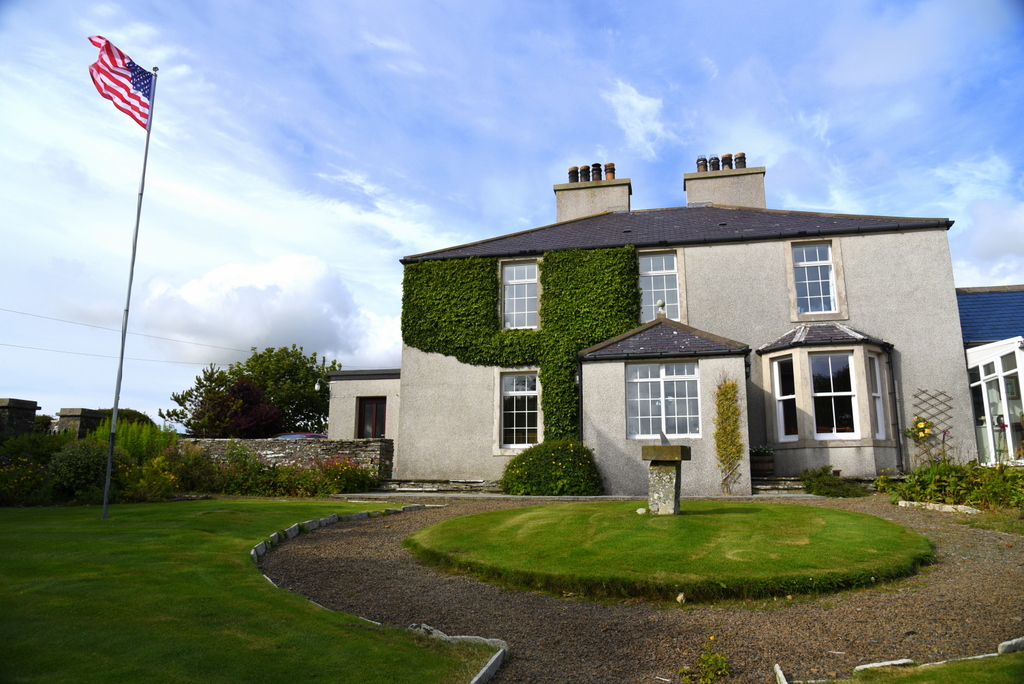
I enjoyed staying in the Orkney countryside, at Holland House. After staying in dozens of B&Bs, I thought I’d seen it all. But this place has a particularly thoughtful custom: The day after I checked in, I noticed they were flying the Stars and Stripes. Apparently they have quite a flag collection, and pride themselves on displaying the flags of their guests.

Out of Gas on Scotland’s North Coast

My wife’s Great-Great-Aunt Mildred traveled far and wide, long before such a thing was fashionable. Late in life, Aunt Mildred wrote a memoir about her experiences. The title: Jams Are Fun. It turns out that, after seeing so much of the world, Aunt Mildred realized that it’s not always the big museums, the fancy dinners, or the castles and cathedrals that stick with you most. It’s those serendipitous moments when things go awry. And so, in the spirit of Aunt Mildred, this part of my “Jams Are Fun” series about when good trips turn bad, and the journey is better for it, takes place along Scotland’s desolate north coast.

Driving along Scotland’s north coast is treacherous. I’m not talking about the twists and turns, or the distracting scenery, or the endless miles that lull you into a trance. No, I’m taking about running low on gas. On a Sunday afternoon.

Driving up through Wester Ross and finally reaching the open Atlantic at the idyllic, beach-cradled town of Durness (where John Lennon vacationed as a boy), I spotted a sketchy-looking “24-hour fuel” place. But I still had a few liters in the tank. Assured by the tourist office that there’d be gas in the village of Tongue, farther east, I continued on my way. I had a long day of driving ahead of me: 90 miles to John O’Groats, Great Britain’s famous northeasternmost point, and the ferry to Orkney.

Cameron Scotland Out of Gas

About 10 miles out of Durness, the “low gas” light flickered on. No problem, I thought. Tongue must be right around the bend. Then I rounded that bend, and a 10-mile-long inlet spread out before me. I’d have to go all the way around it, and then some, to reach Tongue.

Twenty miles later, with the sea loch in my rearview mirror, the gas light started to flash and beep. Now, I’ve always maintained that carmakers have an incentive to dramatically exaggerate your risk of running out of gas. I’m famously stubborn about driving to work and back — twice — with the “low gas” light on. But on this day, I hadn’t seen any signs of civilization for many, many miles. And now I was starting to get nervous.

Finally, I crossed the long, scenic bridge over the Kyle of Tongue, and started to head up the hill into town. Reaching this tiny community’s lone general store/gas depot, my heart sank when I saw the handwritten sign: “No more petrol til 2 p.m. Monday.”

Two local women were chatting in front of the store. “Are they closed?” I asked. “Yes, just closed at 2 o’clock.” My heart sank. It was about 2:15. “Um, well, where’s the next petrol station?” “You heading east or west?” “East.” Oh, that’s in Bettyhill, I suppose, eight miles away.” Phew. “But,” she continued helpfully, “they close at 2 on Sundays, as well. The next one after that would be Thurso. They’ll be open. That’s 45 miles east. Or you could head back to Durness, 35 miles west.”

My dreams of John O’Groats and Orkney by sundown were at risk. But there had to be a solution. “Do you know of anyplace here where I can get petrol?” They exchanged worried glances. “Well, the shop’s owner lives just up the road.” They gestured to where the gravel road ended, at a walled garden surrounding a grand mansion. Apparently running a general store in a small North Coast town pays very well. “Perhaps if he’s home, he’d be willing to sell you some gas.” She looked at me again, with a flicker of concern in her eye. “Perhaps.”

Perhaps would have to do. I thanked them, hopped in the car, and drove the short distance up the manicured driveway to the mansion. I rang the doorbell and waited. No answer. Just as I was about to ring it again, I heard a car’s tires grinding on the gravel behind me. A curmudgeonly, late-middle-aged Scotsman with bushy sideburns stepped out of the car and eyed me suspiciously.

I amped up the politeness and explained my plight: The Durness TI’s promise of gas here. Needing to catch my ferry this afternoon. Having just enough gas to get to Bettyhill, but knowing they’d also be closed, and certainly not having enough for Thurso. Basically: I am aware I screwed up. I am a moron. And now I throw myself upon your mercy.

At first, he was unmoved…and pretty cranky. “I didn’t realize you’d be closed on a Sunday afternoon,” I said, apologetically. “Sunday is supposed to be a day of rest!” he shot back…I’m pretty sure implying that I was sinning against God by running low on gas in north Scotland on the wrong day of the week.

Finally he relented, and agreed to meet me up at the shop. As I slathered on the gratitude, he began to warm up. “Things are a bit different up north,” he explained, with a gently helpful tone. “People take their time and don’t get out as much. Sundays are very quiet.”

He switched on the pumps, and even pumped the gas for me — and refused to take any extra money as thanks.

He headed back into his shop to close up again, and I hopped into my car. Just as I was pulling out, a German motorcyclist pulled off his helmet and started scratching his head at the same “Closed” sign that had stymied me  not long before. I pulled up to him and rolled down my window. “Excuse me,” he said. “Do you know where the nearest gas is?” Now an expert on the topic, I ran through his options. Recognizing the panic on his face, I added, “Well, this guy just closed…but maybe you can talk him into selling you some gas.”

And with that, I took off.

By the way, a couple of hours later, I did make it to John O’Groats:

Cameron Scotland Out of Gas John O'Groats

Go North: Scotland’s Remote Wester Ross

One of the big additions to our new Rick Steves Scotland guidebook is the far north of Scotland. Travelers on a tight timeframe rarely make it north of Inverness or the Isle of Skye…but I just had to check it out for myself (and for the book). From Skye, I took the scenic coastal route through the region called Wester Ross, with a landscape so epic that it inspired George R.R. Martin to steal the name for Game of Thrones’ Westeros.

Cameron-Scotland-North2

Cameron-Scotland-North


Cameron Scotland Wester Ross North

This —and a lot more like it —is what you’ll see up north: Endless miles of jagged lochs, towering bald peaks, moody glens, and secluded silver-sand beaches. The north has some of Scotland’s most dramatic scenery. But, to me, it’s not that much more glorious than Glencoe or the Isle of Skye. What Wester Ross does have a lock on is remoteness. It’s as sparsely inhabited as Siberia. Even on a mostly sunny weekend in the middle of the summer, I didn’t see another car for 20 minutes at a time. And most of the roads are “single track” (one-lane). You can make great time on single-track roads, zipping along at 50 mph — until you reach a blind curve, a flock of wayward lambs, or another motorist. Then you just have to slow down, or pull over, until the obstruction has passed. After two days of this, my shifting leg started cramping up.


Cameron Scotland North Applecross Games

I’d done my homework, and thought that I knew the location of each and every Highland Games for the duration of my trip. But wee Applecross — an end-of-the-road hamlet in one of Scotland’s most famously remote corners — happened to have their (unadvertised) games on the day I drove through. The timing was perfect for a pit stop: I was happy to stretch my legs, eat an overcooked church-fundraiser hamburger, armchair-judge the dog show, and watch the pipe band (who knew John Oliver played bagpipes?)…before hopping in my car and continuing north.


Cameron Scotland North Ullapool

At the end of a very long day following the jagged coastline, I was ready for some rest. I pulled into Ullapool, a humble fishing village dominated by a huge ferry dock…a metropolis by Wester Ross standards.

Cameron Scotland North Ullapool Dinner

Seeking dinner at an Ullapool pub, I couldn’t figure out why, on a fine summer evening, the interior was chockablock while the beachfront tables were deserted. Moments after ordering and sitting down, I got my answer. Anyone who’s been to Scotland in the summer is familiar with midges — those bloodthirsty mini-mosquitoes (like no-see-ums) that terrorize the Highlands. This year’s crop of midges wasn’t bad  farther south, thanks to a cold summer. But they were swarming in Ullapool. It was a scenic, slappy dinner: I’d slap myself, pause just long enough to deliver the fork to my mouth…then slap! again.


Cameron Scotland North Monument Valley

This panorama — just north of Ullapool — reminded me of a mossy Monument Valley.

Is northern Scotland worth the trip? There are no real “sights,” and only a few workaday towns. But if you have a few days to spare, love the feeling of being far from civilization, and believe that a journey is its own reward…then, by all means, go north.