My co-author and frequent collaborator, Cameron Hewitt, is well-traveled, smart, and insightful. And, while he and I are in perfect sync in our travel styles and priorities, he gives voice to the next generation of "Rick Steves travelers." Join me in enjoying his reports right here. —Rick

Game of Thrones Gossip in Dubrovnik

Warning: Potential spoilers, unsubstantiated gossip, and rampant speculation ahead!

The big scandal in Dubrovnik this fall is that Cersei Lannister and Daenerys Targaryen won’t be coming back. After several years of shooting in Croatia, Game of Thrones just dropped the bomb that they’re shooting elsewhere in 2015. According to HBO, the change is “based on story and location needs.” In other words, Croatia, it’s not you — it’s me. My Dubrovnik friends tell me that the mayor’s official statement had the tone of a regretful dumpee. (“If you ever decide to come back, we promise we’ll do whatever it take to make it work!”)

Whether or not it’s truly over, or they’re just on a break, Dubrovnik has really enjoyed its affair with Game of Thrones. For years, locals have been excitedly telling me about their brushes with GoT: Seeing Peter Dinklage, in full Tyrion Lannister regalia, strolling down the main street. Or sitting down for dinner at a neighborhood konoba and spotting Joffrey at the next table. One of my Dubrovnik friends was an extra — dressed as a blink-or-you’ll-miss-him nobleman at a royal wedding.

I’ve only recently caught up on the show. And while I enjoy disentangling the mythology (not to mention the dragons), I’ve gotten a particular kick out of seeing places I know well as the backdrops for mystical lands.

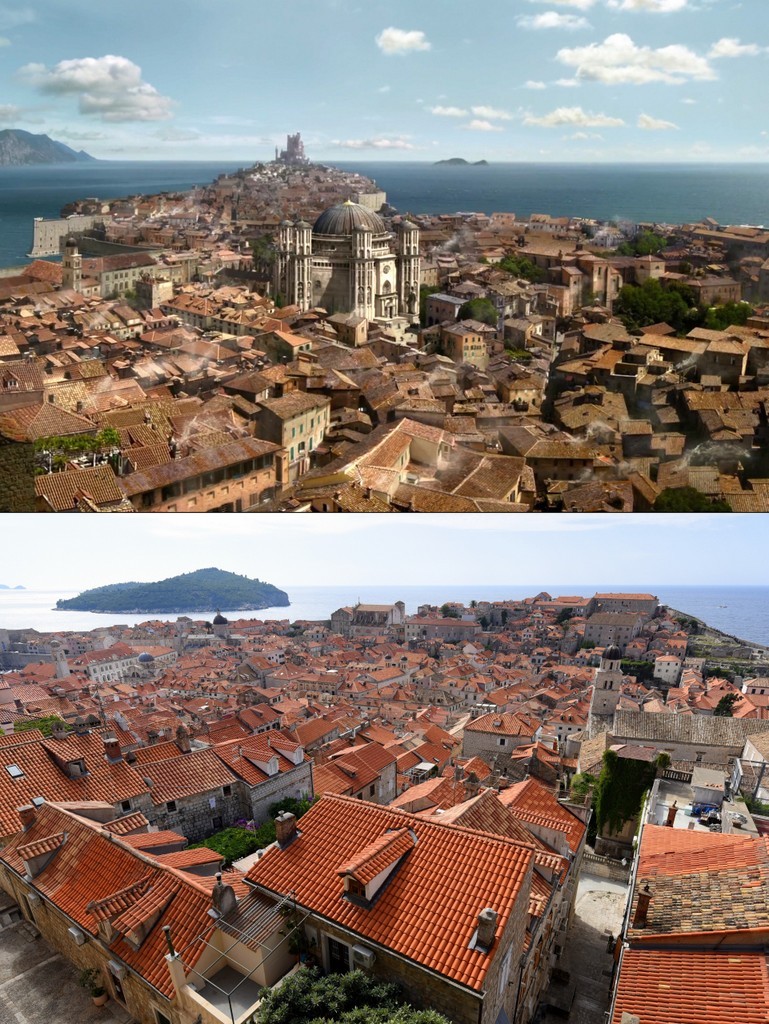
For example, most of “King’s Landing” has been filmed in and around Dubrovnik’s walled Old City.

Cameron-Croatia-Dubrovnik-Game of Thrones 2

The real-life Fort of St. Lawrence looks over a pleasant cove that becomes Blackwater Bay.

Cameron-Croatia-Dubrovnik-Game of Thrones 3

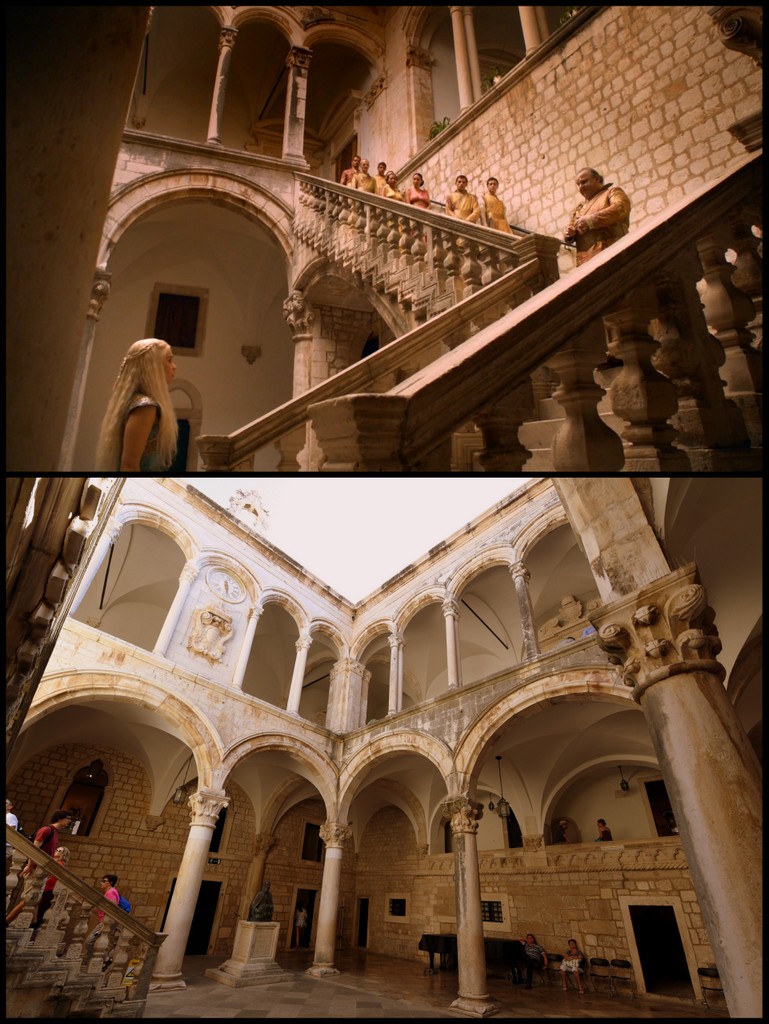
And parts of Dubrovnik, Split, and the countryside and islands in between have been the setting for Daenerys Targaryen’s gradual conquest of the continent of Essos, from idyllic Qarth to the cities of Slaver’s Bay. This is the Rector’s Palace, one of the main sights in Dubrovnik’s Old Town:
Cameron-Croatia-Dubrovnik-Game of Thrones 4

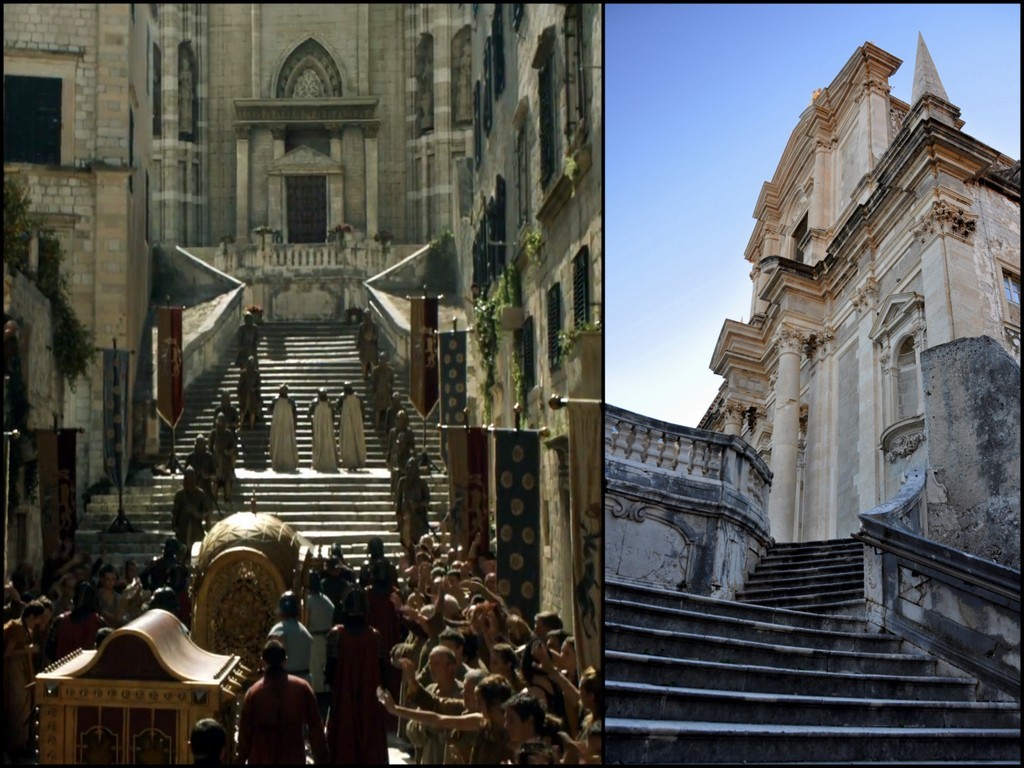
For die-hard GoT geeks, here are more specifics: Trsteno Arboretum is where Sansa Stark had many heart-to-hearts with Olenna and Margaery Tyrell. The eventful royal wedding of Joffrey and Margaery was filmed in Dubrovnik’s Gradac park. The epic duel between Oberyn Martell and The Mountain was filmed at the amphitheater below Hotel Belvedere, facing Dubrovnik’s Old Port. The Qarth garden party was shot on the island of Lokrum, and the tower where Daenerys’ dragons were held captive after that party was Minčeta Tower, the biggest in Dubrovnik’s City Walls. And one character was humiliated by being forced to walk naked through town, beginning at the top of the grand staircase below the Jesuit Church (which I now can’t stop thinking of as the “Steps of Shame! Shame! Shame!”).

Cameron Croatia Dubrovnik Game of Thrones

Speaking of that scene, locals told me that the entire route of that walk (which traversed basically the entire town center of Dubrovnik) was walled off with high privacy fences. And in this vertical town, that meant that locals who were caught unawares might have to circle up a steep stepped lane, then all the way around town, just to cross the street. But one elderly woman, a local fixture famous for her incredibly slow gait, reached the fence and asked very kindly if she might be able to take a shortcut. The crew took pity on her, halted production, opened the gate…and proceeded to hemorrhage money as they watched her take several excruciating minutes to hobble through the middle of their set.

Locals have mixed feelings about all Dubrovnik’s Game of Thrones connection (and resulting tourism bonanza). They worry that the Hollywood magic is overshadowing the real-life majesty of their town, and that it will draw people here for “the wrong reasons.” I guess my philosophy is that if dragons and duels are what it takes to lure people to a gorgeous town like Dubrovnik — which they’ll certainly enjoy in all its glory once they’re here — then where’s the harm in that?

Cameron-Croatia-Dubrovnik-Game of Thrones 5

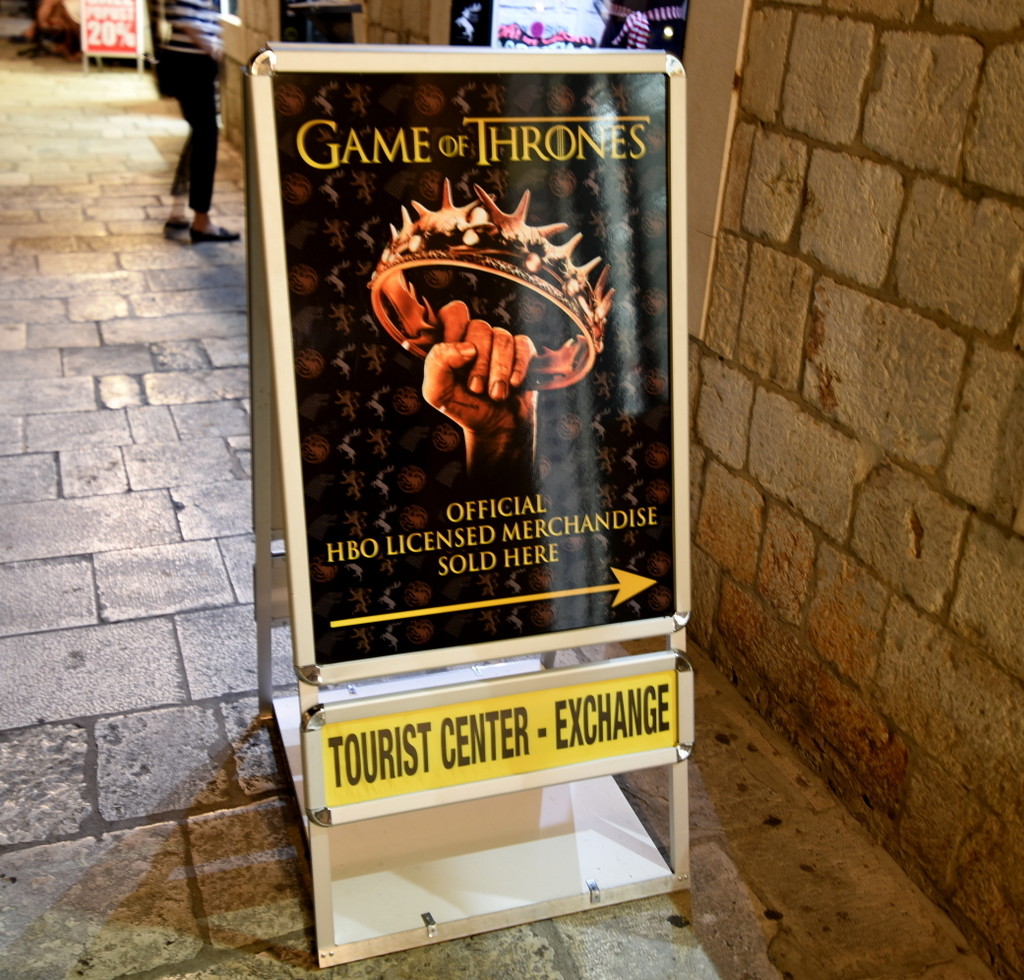
What’s even more painful about the Game of Thrones snub this year is that Dubrovnik has only just started to exploit its Hollywood connection. When I was here a couple of years ago, I wondered why nobody was doing GoT tours. Now there are at least three companies offering daily walking tours of movie locations, and even a GoT sunset cruise that provides you with costumes to dress up as characters on board. These days, every shop in Dubrovnik sells “officially licensed merchandise,” and one has even imported a replica of the Iron Throne. If you buy an overpriced souvenir, you can take a picture of yourself seated as the Lord of the Seven Kingdoms. (The cheapest trinket I saw was a $6 lighter or refrigerator magnet, making that one expensive photo op.)

As Game of Thrones’ fame continues to build, I’m sure, so will Dubrovnik’s GoT cottage industry…whether or not they ever film here again.

Checking in with “Facebook” on Dubrovnik’s Main Drag

I love being back in Dubrovnik. I’m lucky enough to come here regularly, to update my Rick Steves Croatia & Slovenia guidebook. And after twenty-some visits, even as I’ve watched the city has blossomed into a world-famous destination, it’s good to see that its essence has remained intact.

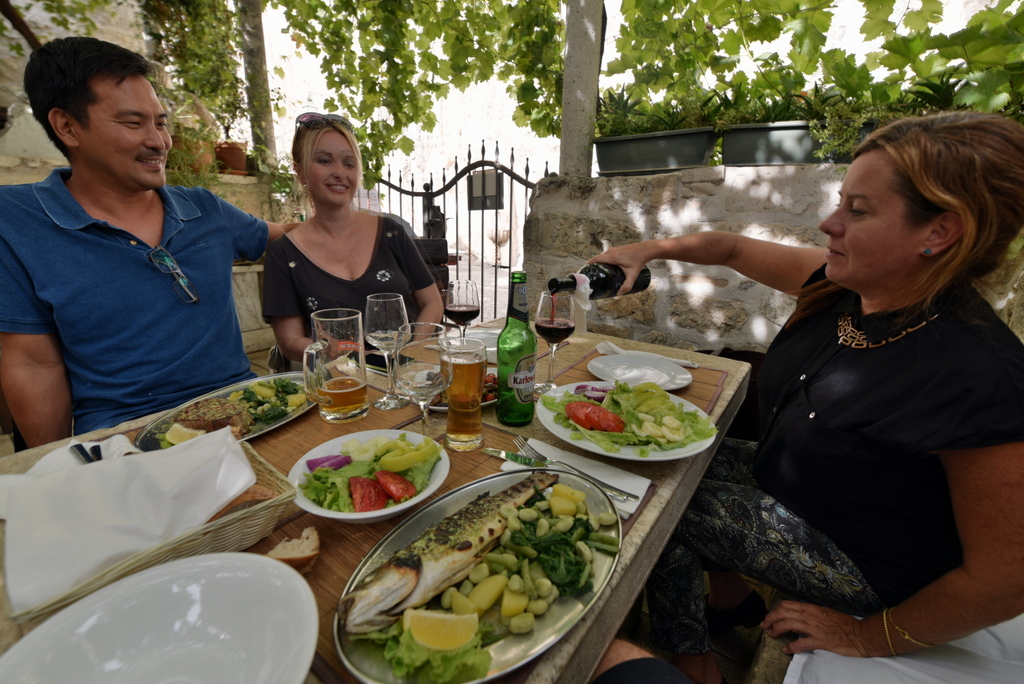
One of my favorite routines is getting a morning coffee at Dubrava Bistro. It sits at the bottom end of the Stradun, Dubrovnik’s main pedestrian drag, just in front of the town bell tower. If I’m in Dubrovnik, you’ll find me here each morning.

Today, jet-lagged and bleary-eyed from the long trip in from Seattle, I roll out of bed and show up a bit late — around 10:15. I’m warmly greeted by two guys named Pero and a couple of their friends, who invite me to pull up a chair and join them. The gang used to call this café — where they catch up each morning — “The Sitting Room.” But a few years back, they rechristened it with an even more fitting nickname: “Facebook.”

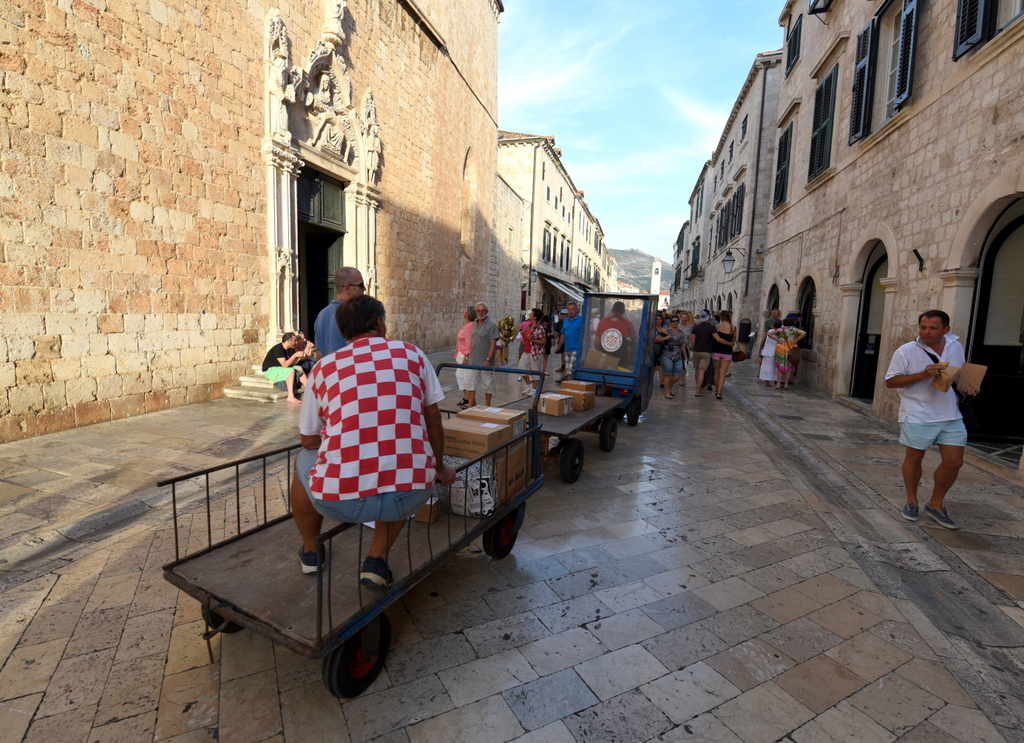
As I sip my bijela kava (“white coffee,” as a latte is poetically called here), we look out at the promenade. The daily onslaught of visitors has not yet fully begun. And when it’s empty, the Stradun’s surface is a mirror — polished to a high gloss by centuries of spice traders and cruise passengers. The yellow of the stone, the green of the window frames, the orange of the roof tiles, the blue of the sky, and the white of the puffy clouds are all reflected in the shiny street.

Cameron-Croatia-Dubrovnik-Facebook-Stradun View

It’s a minor miracle that this Croatian coffee klatsch tradition has survived. Sitting on what may be the best people-watching real estate in Europe, surveying a steady stream of tourists heading out for a day in the sun, here’s a table full of true-blue native-born locals. They grew up playing in Dubrovnik’s skinny streets before the town was famous. They lived through the 1991-1992 siege that devastated Dubrovnik (some of them huddled in the medieval walls for protection, others shooting back from the hillsides above). And in recent years, they’ve stoically weathered their hometown’s transformation into a tourism superstar.

Cameron-Croatia-Dubrovnik-Facebook-Peros

The two Peros both run B&Bs in the steep and narrow lanes that climb up the hill from Dubrovnik’s main drag. I met the first Pero about 10 years ago. I had just co-authored the first edition of the Rick Steves Eastern Europe guidebook. For the second edition, I was determined to sniff out some great family-run B&Bs as an alternative to the characterless communist resort hotels on the outskirts. Back then — in an age before TripAdvisor or Booking.com — these mom-and-pop places were hard to find. It was mostly word-of-mouth: I had to ask around…anybody and everybody. The tourist office isn’t allowed to recommend businesses. But when I described what I was looking for, the guy at the desk sensed my desperation and took pity on me. Glancing around surreptitiously — as if about to sell me pure heroin — he whispered, “I know a guy. I’ll call him.”

When I showed up at Pero’s place that first time, he didn’t know what to make of me. But he kindly showed me around his beautifully restored townhouse, which was exactly what I was looking for: comfortable, affordable, and perfectly located. I put it straight in the book. And by the time I came back the next year, Pero practically jumped through the phone when I called him. He’d gotten a huge boost in business…and I had a friend for life.

Over time, Pero simply couldn’t handle the demand. So one year, he introduced me to his neighbor across the lane: Pero. This new Pero had his own stable of great rooms. So he, too, went in the book. For simplicity, they’ve dubbed themselves “Pero #1” and “Pero #2,” after the order in which they were added to the book. (I call Pero #2 “The Deuce,” but I don’t think he gets it.) There are at least three other Peros in my book. Apparently if you want in the Rick Steves Croatia & Slovenia guidebook, it really helps to be named Pero.

Cameron Croatia Dubrovnik Facebook Stradun Main Drag

This morning at breakfast, the two Peros are recovering from a long, busy, and unusually hot summer. By mid-September, the end is in sight — things should quiet down in a month or so. Their friend Željko — one of the rare Dubrovnik residents who doesn’t work directly in tourism — tells me he just retired after more than 40 years as an air-traffic controller. Sipping his coffee, he jokes, “Now I work with the Peros: publicity and public relations.”

I love the Peros’ “Facebook” tradition. And it’s insightful. In a town so mobbed by tourists that locals become invisible, sitting with the Peros is a good way to feel the pulse of the real community that keeps Dubrovnik pumping. Every few passersby, the Peros nod or give a little wave, revealing a fellow native. Here are a few tips: Men carrying cameras are tourists. Men carrying purses are locals. Men wearing shorts are tourists. Men wearing long pants in the hot sun are locals. Men wearing capri pants are probably Germans.

The “Facebook” café is one of several eateries in Dubrovnik that offers a (semi-secret) 30% discount to local residents, who otherwise might steer clear of the tourist-clogged Old Town entirely. In recent years, I sense a nostalgia in the Peros, who tell me that fewer and fewer locals actually live in the Old Town — most people have converted their former houses into tourist apartments. In one of those petty scandals that rock small towns, parking rates near the Old Town have skyrocketed — even for residents, who now must pay $6 an hour to visit their own hometown. And increasingly, many Dubrovnik natives don’t even bother coming here at all. The “Facebook” crew has gradually shed members, and these days they’re lucky if a quorum shows up for morning coffee.

And yet, I try to see Dubrovnik’s recent popularity as one more fascinating chapter in the story of a small town that opens its doors to the world. Dubrovnik has always been a trading town — a global crossroads. Even if today’s travelers are seeking out Kings Landing landmarks or the hottest discotheque, rather than exotic spices from the Far East, they’re still part of the same tapestry.

Cameron-Croatia-Dubrovnik-Facebook-Stradun End

By the time breakfast is over, the Stradun is getting crowded. As the sun intensifies, the neighboring shop cranks open their awning. I gather my things, head out for a day’s work, and wave goodbye to the Peros. I’ll be back tomorrow. And so will they.

What’s Next for the Refugees?

We’ll head for some fun in the sun in Dubrovnik tomorrow. But first, I want to wrap up my experience with the refugees who are making their way through Europe as we speak.

After meeting several refugees at the Zagreb train station on Saturday afternoon, I went back to the station three times — curious if any more were on their way, and hoping to offer them assistance. But I never encountered any. I think most of them (like the group I saw on Saturday) managed to make it to the Slovenian border. And after camping out there for a few days, late last night they were finally allowed to cross. They’re one step closer to their goal: Austria, Germany, and Scandinavia. (In lieu of helping them in person, I made online donations to the Red Cross and to the United Nation’s Refugee Agency, UNHCR, who are helping to provide basic supplies — and kindness — to the immigrants flowing into Europe.)

Today, I followed the refugees’ route north, toward the Slovenian capital of Ljubljana. Because the trains still aren’t running, I booked a transfer with a shared van service. From Zagreb, we hopped on the expressway, and within a half-hour we were approaching Slovenia. For miles before the border, we saw a long line of trucks — each one waiting to be painstakingly inspected to ensure they weren’t smuggling human cargo.

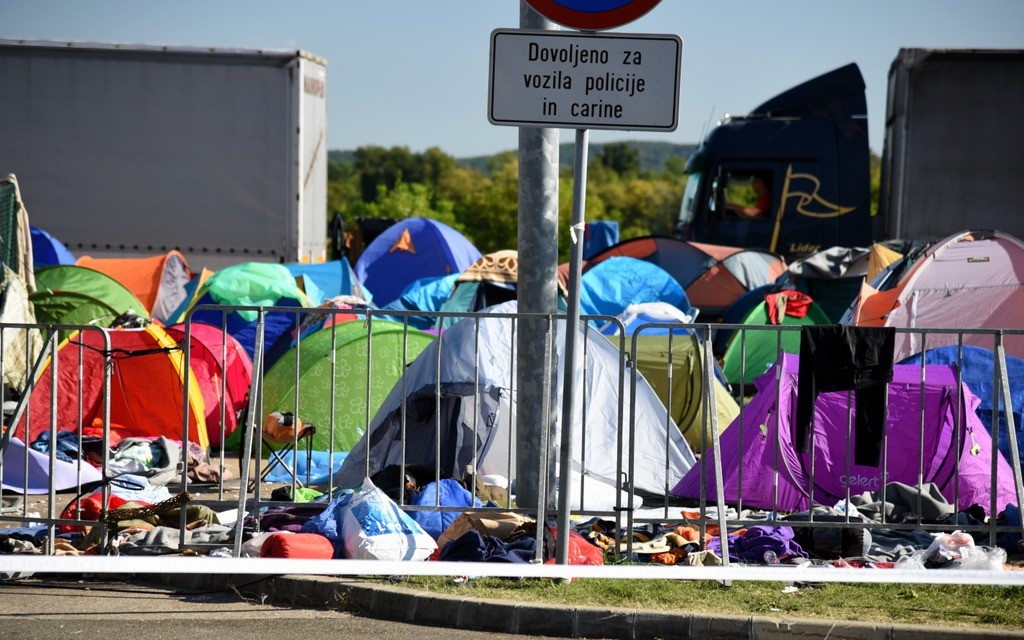
But regular passenger cars, like the one I was in, had no trouble — we drove right up to the checkpoint. In the grassy median strip, just feet away from the border crossing, were dozens and dozens of multicolored tents — left behind by the refugees who crossed over last night.

Cameron Croatia Refugees Tents

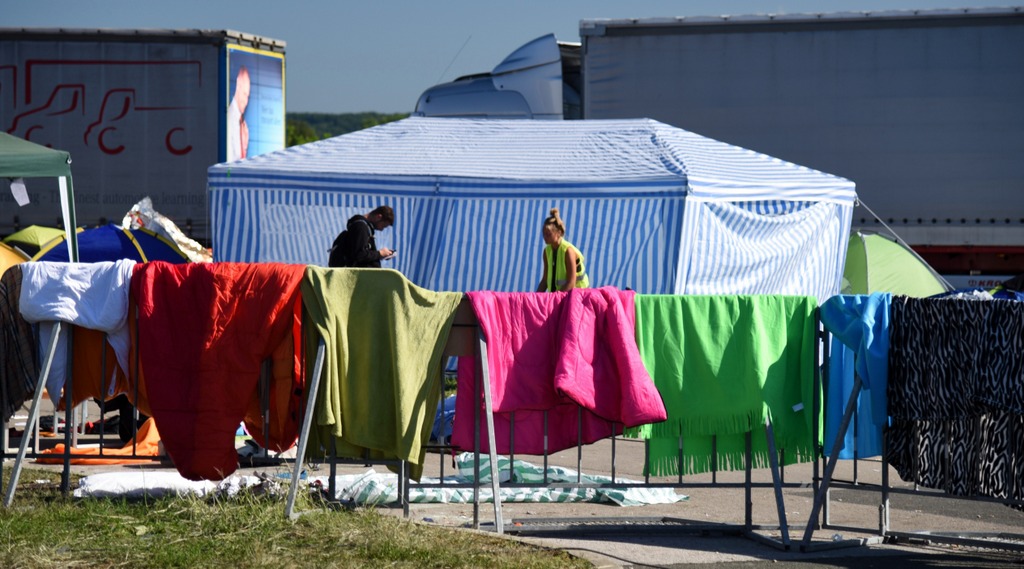
Discarded clothes and blankets littered the grass. Sleeping bags were hanging over the fence. There was a staging area with huge piles of cardboard boxes with water, food, bandages, and other supplies. Reporters were loitering under their switched-off lighting rigs, trying to decide where to go next. A couple of workers wearing reflective vests were cleaning up — and getting ready, I imagine, for the potential of many more refugees to come.

Cameron Croatia Refugees Workers

Our border crossing was a non-event. A flash of a passport, and in five minutes, we were rolling along at 120 kilometers per hour to Ljubljana.

As I’ve been traveling through the middle of all of this, it’s been interesting to gather locals’  impressions. I was touched to see Croatians stepping up and helping those refugees at the station on Saturday — and the many others who were approaching them to offer food and water. But that shouldn’t be a surprise. This is a land that knows something about refugees. In fact, the areas where the refugees have been entering Croatia — along its eastern border with Serbia — were war-torn during the early 1990s, sending many of its residents on the run.

Today in Ljubljana, I bumped into one of my Bosnian friends, from a war-torn village near Mostar. I was telling him how moved I was by meeting those refugees. “Tell me about it!” he said. “Twenty years ago, I was one of them…literally.”

On a lighter note, one of my Croatian friends noted that the refugees were in quite a hurry to move along. While Croatia has offered to take in its fair share, at this point it seems that most of the immigrants are more focused on reaching the bigger, richer countries farther north. She actually seemed a little hurt that more weren’t applying for amnesty in Croatia.

The future of the refugees is uncertain. Apparently many of them have been bussed to camps near the Austrian border, awaiting permission to continue their journey. Yes, that’s right: Europe has borders again. Slovenia joined the open-borders Schengen Agreement a few years back, and its border posts with the EU were decommissioned. On my last trip here, I went for a joyride through the Alps, from Slovenia to Austria to Italy and back to Slovenia again — all in the course of a couple of hours, and without ever having to show my passport. But suddenly, that’s not possible anymore. Europe is replacing borders that once seemed like they’d be gone forever.

And yet, somehow I have confidence in the Europeans (if not always in their leaders). While I realize there’s a wide range of opinion, most Europeans I know are good and compassionate people, like those Croatians I met at the train station. It won’t always be easy, but I have to believe that Europe will find a place for these new immigrants. They have to — like it or not, they’re already here. I believe that most of these refugees are good, hardworking people who want to find employment and contribute to society — whichever society they wind up in.

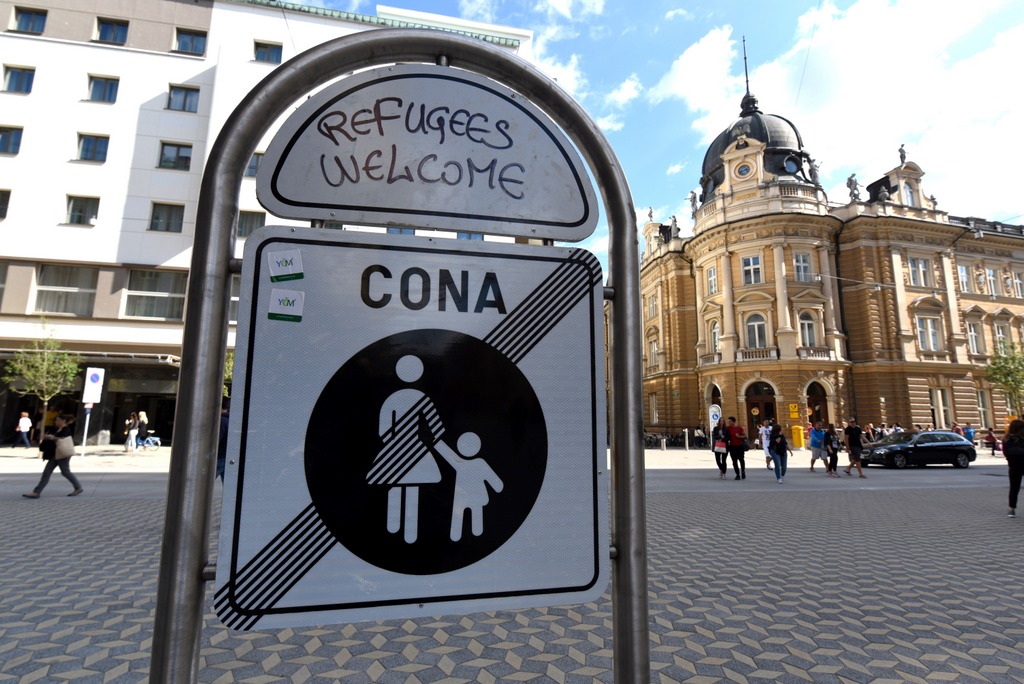
It’s silly to read too much into graffiti, but I must admit my heart was warmed this afternoon when I saw this new message scrawled onto a sign in downtown Ljubljana. My hope is that the refugees currently underway will make it to a better place —and that all of Europe can find a way to keep this sentiment in mind in the weeks and months to come:

Cameron Slovenia Refugees Welcome

Today I Met Some Refugees

Now that I’m heading for the Balkans, one of my goals is to introduce my readers to the fun, lighthearted side of this region that all too often gets overshadowed by weighty issues. And that’s coming soon. But sometimes, reality intervenes.

Today is a sunny, lazy Saturday in the Croatian capital of Zagreb. It’s one of those late-summer days that feels like a bonus. Everyone’s out promenading, the café tables are packed, and three separate outdoor festivals are humming within a block of the main square.

Cameron Zagreb Train Station RefugeesOn a day like today, I do my guidebook-updating chores at about half-speed…not just ticking items off my list, but actually enjoying myself. Zigzagging through town, from hotel to restaurant to museum, I found myself at the main train station. On the big timetable overhead, international departures flashed the word otkazan — “cancelled.” A few days ago, they stopped running trains to Hungary or Slovenia, to keep the flow of refugees from crossing more borders.

I was walking the length of the main platform to be sure the Konzum grocery store is still where I say it is in the book. And that’s when I saw them.

Refugees. About eight or nine people, including two young children. At this particular moment, they weren’t howling in despair, running through wheat fields, or stuffing themselves into the windows of train cars, like on TV. They were just standing there. Waiting. Bored. They were dressed in nice clothes, wearing fanny packs, and looking at their smartphones. The little boy was entertaining himself by tossing his stuffed animal into the air. They reminded me of someone who just learned that the last flight out was grounded — and now they have to figure out another way to get where they want to go. Maybe after all they’ve been through, just hanging out at a train station on a sunny Saturday is a relief.

In the middle of the group was a pair of young Croatians. One was a very smiley, mild-mannered guy who projected an air of peace and normalcy. The other was a sparkplug of an activist with a blonde ponytail. She was simultaneously talking with the ringleader of the group and making calls on her phone. Clearly, she was making things happen.

Passersby, and the many police officers on duty, were keeping their distance — shooting glances of sympathy and suspicion at the group from across the platform. Occasionally someone would come up and offer them food or water. But they already had overflowing shopping bags, as much as they could carry. One woman tried to hand them a shrink-wrapped flat of eight water bottles. “Thank you,” the young man said politely. “We only need two.”

I approached the smiley guy and asked what I could do to help. Did they need groceries? Water? Money? Cigarettes? Anything? Like the others who’d offered, I was told it wasn’t necessary. “We’re just trying to organize a ride to Slovenia for them,” he explained. “The taxi drivers keep trying to rip them off.”

Just yesterday, I toured a wrenching museum in Sarajevo about the 1993 massacre at Srebrenica. I was haunted by the final words of the exhibit, a quote from Edmund Burke: “All that is necessary for the triumph of evil is that good men do nothing.”

I can’t express how helpless I felt today, standing just feet away from these people who had been through so much. I like to think I’m a good man. But there I was, doing nothing. These people don’t need my food, or even my money. They need papers and permissions that I can’t get for them. All I could do was to offer, and to stand by, in case they thought of something I could do for them. They never did.

It’s easy to be jaded about the refugee crisis. As recently as a few days ago, I couldn’t be bothered with it myself. I had a trip to pack for — and I was just hoping the crowded borders wouldn’t derail my itinerary. But when I met that “refugee crisis” face to face, I was furious that I couldn’t do more for the people behind it. Their only crime is fleeing a gruesome war, and their sentence is to be human hot potatoes. It seems to me that the EU leaders are excellent at dithering and finger-pointing — but when it comes to showing basic human decency to people in desperate need, not so much.

After a few minutes, the refugees’ new Croatian friends led them over to the taxi stand, to embark on the next leg of their journey. I watched them slowly pile into a car and drive off. I imagine they’re sleeping tonight in a park in some dreary border town. I’ll probably zip past those same people when my US passport lets me cross, in air-conditioned comfort, into Slovenia in two days. Then, as now, they’ll just be waiting. Waiting for the people who can actually help them to step up.

And it’s about time that they did.


UPDATE: For the rest of the story, find out how I wound up following the trail of the refugees just a couple of days later.

Farewell Scotland, Dobar Dan Balkan-ia

Thanks for joining me on my travels through Scotland. I was there for about a month, gathering material for our upcoming Rick Steves Scotland guidebook; the first edition is currently with our crack squad of editors and cartographers, and — after a winter’s gestation — will hit the shelves in early April of 2016.

If you’ve enjoyed some of my Scotland blogs and want to read more, be sure to check out the ones that appeal to you: I kicked things off in Edinburgh, where I walked the Royal Mile, explored the underrated New Town, learned about traditional kiltmaking and Scottish “sweets” (candy), pondered the tenuous connection between Scotland and England, and scratched my head at the stone-carved corn in Rosslyn Chapel (made famous by The Da Vinci Code).

Heading out of the capital, I had a blast at some village Highland Games, then headed to Stirling, where I conquered the castle, went ghost-hunting, and debunked Braveheart. Near Stirling, I visited some giant horse heads, a Ferris wheel for boats, the Outlander/Monty Python castle, and the charming village of Culross.

Next, I got to know Glasgow, from its artistic and architectural heritage to its trendy West End. (I also embarrassed myself by trying to play the bagpipes.)

From there, I headed into the Highlands, where I did some island-hopping, basked in the scenic splendor of Skye, drove along the rugged Wester Ross, and came thiiis close to running out of gas at the worst possible time.

The grand finale of my trip was Orkney, with a remote allure, prehistoric sites, and amazing World War I and World War II history. And all along the way, I checked in with some wonderful B&B hosts and got a kick out of many witty British signs. Whew!

I returned from Scotland in early August, and have been writing feverishly ever since. A few days ago I handed in the Scotland book, packed my bag again, and hopped another plane back to Europe.

And now for something completely different: For the next month or so, I’ll be touring the Balkans, Europe’s most misunderstood corner — and, for my money, also one of its most beautiful, most engaging, and most fascinating. After digging deep into Scotland, on this trip I’ll be country-hopping, touching down briefly in Croatia, Bosnia, Slovenia, Romania, and Bulgaria. Basically, if it has an -ia at the end…I’m going there. (I’ve taken to calling this area “Balkan-ia” for short.)

While many travelers find the Balkans intimidating, it’s my backyard: As the co-author of the Rick Steves Croatia & Slovenia guidebook, I’ve regularly visited these places for the last 15 years. While Italian meals and Scottish clichés are fun to write about, as a travel writer I particularly enjoy the opportunity to help demystify these underappreciated gems of Europe. Yes, there’s lots of weighty history (not to mention current events —more on that very soon). But there’s also plenty of fun: Dubrovnik’s pebbly beaches; learning about Bosnian coffee — and Bosnian culture — in Sarajevo; taking the pulse of emerging hipster zones in Zagreb, Ljubljana, Cluj-Napoca, and Plovdiv; scaling Slovenia’s cut-glass peaks; ogling colorful folk art and imposing castles in Transylvania; and checking out rusting communist memorials in the Bulgarian mountains.

Are you ready for a jarring change of pace from misty moors and green glens? If so, I have juuust enough room in my rucksack…so hop in. Let’s go!

Cameron Croatia Selfie