We’ll head for some fun in the sun in Dubrovnik tomorrow. But first, I want to wrap up my experience with the refugees who are making their way through Europe as we speak.
After meeting several refugees at the Zagreb train station on Saturday afternoon, I went back to the station three times — curious if any more were on their way, and hoping to offer them assistance. But I never encountered any. I think most of them (like the group I saw on Saturday) managed to make it to the Slovenian border. And after camping out there for a few days, late last night they were finally allowed to cross. They’re one step closer to their goal: Austria, Germany, and Scandinavia. (In lieu of helping them in person, I made online donations to the Red Cross and to the United Nation’s Refugee Agency, UNHCR, who are helping to provide basic supplies — and kindness — to the immigrants flowing into Europe.)
Today, I followed the refugees’ route north, toward the Slovenian capital of Ljubljana. Because the trains still aren’t running, I booked a transfer with a shared van service. From Zagreb, we hopped on the expressway, and within a half-hour we were approaching Slovenia. For miles before the border, we saw a long line of trucks — each one waiting to be painstakingly inspected to ensure they weren’t smuggling human cargo.
But regular passenger cars, like the one I was in, had no trouble — we drove right up to the checkpoint. In the grassy median strip, just feet away from the border crossing, were dozens and dozens of multicolored tents — left behind by the refugees who crossed over last night.
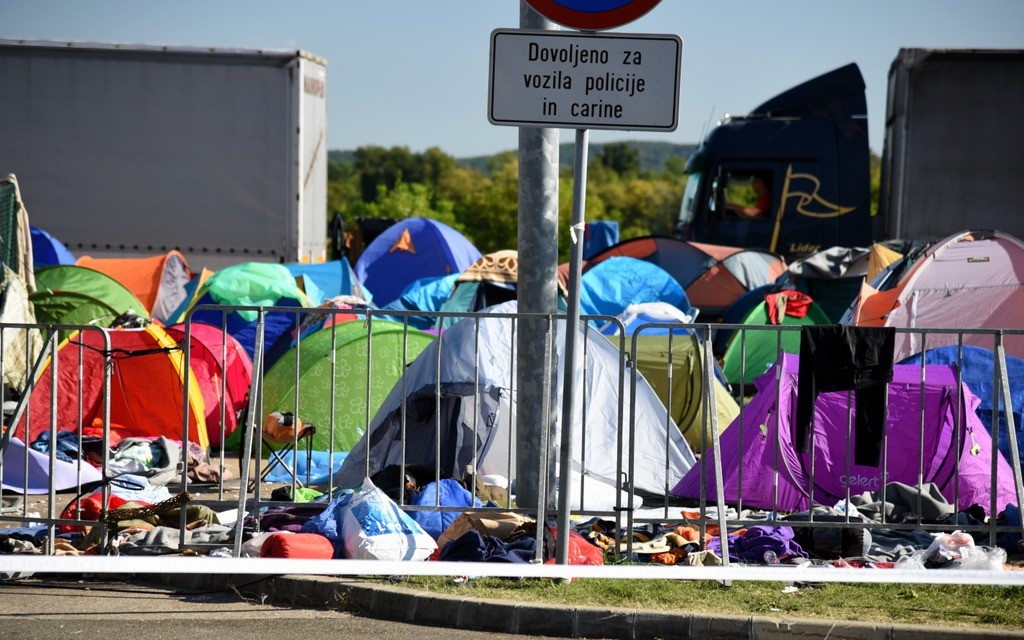
Discarded clothes and blankets littered the grass. Sleeping bags were hanging over the fence. There was a staging area with huge piles of cardboard boxes with water, food, bandages, and other supplies. Reporters were loitering under their switched-off lighting rigs, trying to decide where to go next. A couple of workers wearing reflective vests were cleaning up — and getting ready, I imagine, for the potential of many more refugees to come.
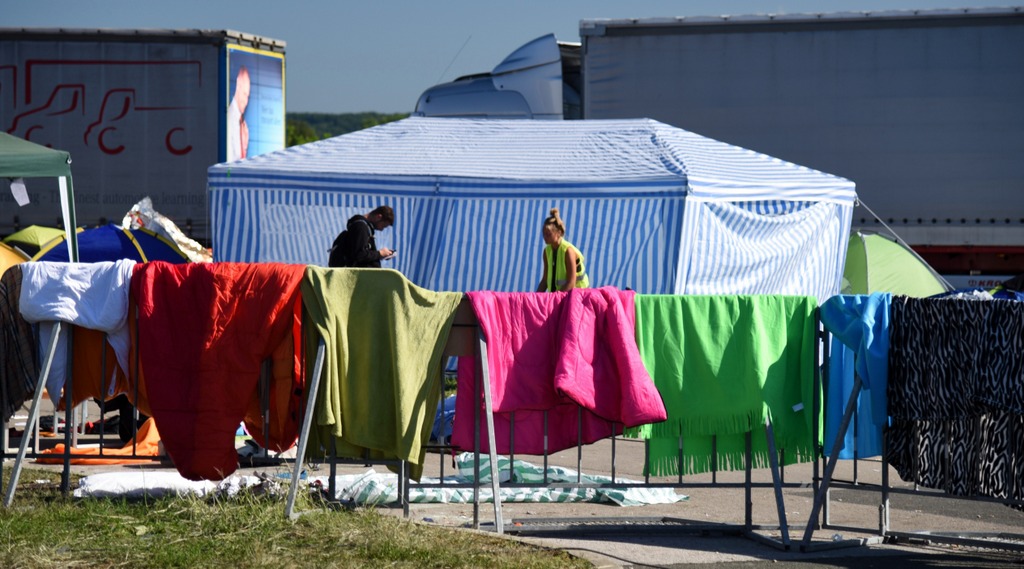
Our border crossing was a non-event. A flash of a passport, and in five minutes, we were rolling along at 120 kilometers per hour to Ljubljana.
As I’ve been traveling through the middle of all of this, it’s been interesting to gather locals’ impressions. I was touched to see Croatians stepping up and helping those refugees at the station on Saturday — and the many others who were approaching them to offer food and water. But that shouldn’t be a surprise. This is a land that knows something about refugees. In fact, the areas where the refugees have been entering Croatia — along its eastern border with Serbia — were war-torn during the early 1990s, sending many of its residents on the run.
Today in Ljubljana, I bumped into one of my Bosnian friends, from a war-torn village near Mostar. I was telling him how moved I was by meeting those refugees. “Tell me about it!” he said. “Twenty years ago, I was one of them…literally.”
On a lighter note, one of my Croatian friends noted that the refugees were in quite a hurry to move along. While Croatia has offered to take in its fair share, at this point it seems that most of the immigrants are more focused on reaching the bigger, richer countries farther north. She actually seemed a little hurt that more weren’t applying for amnesty in Croatia.
The future of the refugees is uncertain. Apparently many of them have been bussed to camps near the Austrian border, awaiting permission to continue their journey. Yes, that’s right: Europe has borders again. Slovenia joined the open-borders Schengen Agreement a few years back, and its border posts with the EU were decommissioned. On my last trip here, I went for a joyride through the Alps, from Slovenia to Austria to Italy and back to Slovenia again — all in the course of a couple of hours, and without ever having to show my passport. But suddenly, that’s not possible anymore. Europe is replacing borders that once seemed like they’d be gone forever.
And yet, somehow I have confidence in the Europeans (if not always in their leaders). While I realize there’s a wide range of opinion, most Europeans I know are good and compassionate people, like those Croatians I met at the train station. It won’t always be easy, but I have to believe that Europe will find a place for these new immigrants. They have to — like it or not, they’re already here. I believe that most of these refugees are good, hardworking people who want to find employment and contribute to society — whichever society they wind up in.
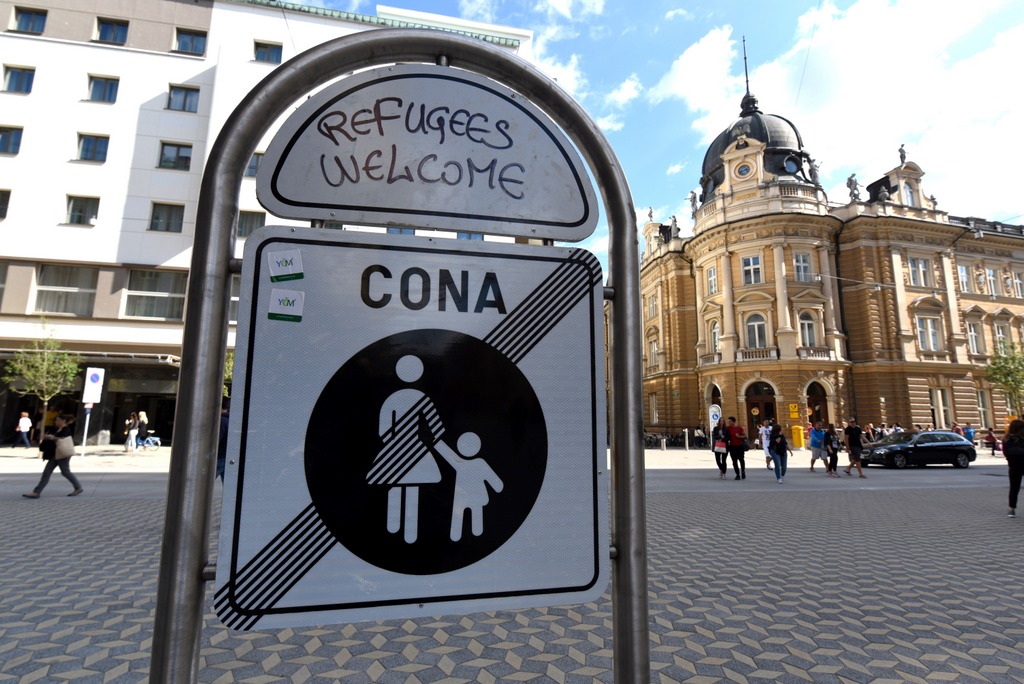
It’s silly to read too much into graffiti, but I must admit my heart was warmed this afternoon when I saw this new message scrawled onto a sign in downtown Ljubljana. My hope is that the refugees currently underway will make it to a better place —and that all of Europe can find a way to keep this sentiment in mind in the weeks and months to come:
Having taken 3 RS tours through the Balkan countries, I agree wholeheartedly with Cameron’s assessment of the countries’ peoples. The Croatians, Slovenes, Bulgarians, Hungarians, Czechs and others that we met on those trips were warm, kind, and sympathetic to the situation in which these war refugees find themselves. The refugees would do well to consider the Balkans as a settlement location.
Thanks, Cameron, for the up close and personal update. I have been wondering…