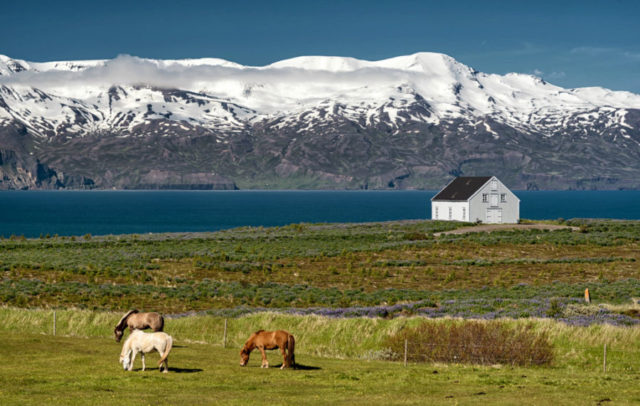
For those of us addicted to international travel, March 18 brought some intriguing news: Iceland opened its borders to people who have been vaccinated against COVID-19. Suddenly, an overseas trip — to a steaming, insanely scenic, puffin-populated, near-Arctic island, no less — is a real possibility. Summer solstice in Reykjavík, anyone?
I love Iceland. Over the past few years, I’ve traveled there several times, researching, writing, and updating our Rick Steves Iceland guidebook (in collaboration with Rick and our co-author, Ian Watson). I’m not vaccinated yet — I’m patiently waiting for my turn — but as soon as that happens, the temptation to head back to Iceland will become difficult to resist. Meanwhile, Continental Europe has hit a speed bump with its vaccine rollout, and they’re still sorting out who will be allowed in, and when. My fingers are crossed for returning to the Continent sometime in the latter half of 2021…but I’m not counting on it.
So, for antsy travelers-in-waiting, should Iceland be our first trip back overseas? Iceland’s tourist season is brief: The weather’s best, the midnight sun is shining, and the puffins are nesting from June through August. That gives us a little time to decide. Here are some considerations.

Is It the “Right Thing” to Do?
For me, the first question is an ethical one: Would I be doing more harm than good by visiting Iceland this summer?
In recent years, with Iceland’s meteoric rise in popularity, tourism has grown to about 40 percent of its revenue and 15 percent of its jobs. Iceland is reopening its borders because, economically, they need tourism to return.
But here’s the critical caveat: Iceland wants the right kind of tourists. That means, first of all, people who can prove they’ve been vaccinated. And more than that, Icelanders want visitors who are conscientious — ones who recognize that they’re invited guests and are willing to do their part to keep Iceland safe.

This winter, my wife and I spent some time in a place similar to Iceland — an isolated locale with relatively low COVID rates, hoping to keep it that way while opening up to visitors. We went there only because we were confident we could adhere to rigorous precautions (masking, social distancing, and so on). We didn’t want to get sick, sure. But even more important, we didn’t want to infect our hosts.
In the end, it went great. The unanimous sense we got from locals was that they genuinely appreciated visitors who buoyed their economy — provided those visitors respected the rules and shared their commitment to keep the community safe.
In short, if you feel a sense of entitlement to do whatever you like on vacation — if a “vacation” means a vacation from masking and social distancing — then stay home. Iceland doesn’t want you. But unselfish rule-followers are more than welcome.
This ties into what I hope will be a trend in post-pandemic travel: Being a thoughtful guest. It’s easy to forget now, but 2019 — the last “normal” year of traveling — was a hard one. “Overtourism” was the big theme; popular places like Amsterdam, Barcelona, Venice, and, yes, Iceland were overwhelmed with bigger (and unrulier) crowds than they could handle. “Instagram” became a dirty word because of the pileup of humanity that clogged a few influencer-endorsed photo op viewpoints, getting in the way of local life.
Talking to people in these “overtouristed” places, the unifying sentiment was clear: They don’t want zero tourists; they want the right number of tourists, and the right kind of tourists — those who are curious, respectful, and fun. As we get “back to normal” over the coming months (whether that begins in Iceland or not), this is something all travelers should keep front-of-mind: Being a good traveler means being a good guest.
Logistics
Iceland is user-friendly. English is widely spoken; the roads are well-maintained, well-marked, and (except during Reykjavík’s rush hour) uncrowded; and people are generally welcoming, if a bit shy, and have an inspiring can-do attitude. The downsides are the cold weather, even in summer (bundle up); and the high expense (but budget-minded visitors find ways to manage their costs).
The biggest logistical hurdle right now is that incoming visitors are required to show proof of vaccination with one of several approved jabs: Pfizer, Moderna, Johnson & Johnson/Janssen, or AstraZeneca. Proof that you’ve recovered from COVID-19 is also accepted. Visitors also must preregister online. Iceland requests that visitors download and activate the national contact-tracing app. And, once there, visitors are expected to adhere to any COVID-related regulations, including masking, gathering, and social distancing policies similar to what you’ll find in more community-minded corners of the USA.
If you’re considering a visit, be certain to keep up-to-date on entry requirements, which could change at any time — the onus is on the traveler to be informed. The Icelandic government’s COVID-19 website is a good resource. (To get your head around all of this, here’s a recent first-person account of visiting Iceland right now.) And keep in mind that, for now, all passengers returning to the United States must have a negative COVID-19 test within 72 hours before their trip (so you’ll need to get a test in Iceland); it remains to be seen whether this requirement might be relaxed for vaccinated travelers.
The CDC is currently discouraging travel, even for the vaccinated. (This advice is being widely ignored, however.) Assuming you’re planning a summertime trip, keep an eye on evolving CDC guidance. Because it’s still not entirely clear whether vaccinated people can carry and spread COVID-19, masking at all times at airports, in flight, and in other indoor or enclosed situations remains the considerate thing to do; regardless, Icelandair (and other airlines serving Iceland) has a masking requirement, and Iceland requires masks in public, unless you’re outside and more than two meters from the nearest person.

To plan your trip, pick up our Rick Steves Iceland guidebook. The second edition was meticulously updated in late 2019; in fact, on my last trip to Europe before the world changed, I invested a week in writing up new chapters on Snæfellsnes and the Westfjords. Unfortunately, by the time that edition was printed, COVID-19 had already shut down travel. That second edition is as up-to-date as anything in print. Still, it’s too early to know how the pandemic might affect the book’s advice…so please be patient.
In general, anyone heading to Iceland (or anywhere) in the next several months should be realistic: You’re a pioneer, and you’ll need to remain flexible. As of this writing, bars, theaters, and swimming pools in Iceland remain closed, and restaurant space is strictly controlled. (For details and updates, see this government site.) Beyond that, things are unpredictable: New variants or problematic spikes could scrap your plans or send you home early. If you’re not up for that, sit tight until the situation is more established.
What to Do, Where to Go?
The 48- or 72-hour “layover” approach has always been popular for a quick Iceland getaway: home-basing in Reykjavík and spending most of your time side-tripping to the Blue Lagoon lava-rock spa, the attraction-studded Golden Circle loop, the dramatic scenery of the South Coast, and/or the off-the-beaten-path Westman Islands. (Here’s my detailed description of one such trip. And here are some more itinerary tips.)

Typically, people do these quickie stopovers because they’re adding Iceland on to a longer European journey. This summer, however, Europe seems likely to remain off-limits, or at least more complicated to visit. So if you’ve ever been tempted to settle in for a longer, stand-alone Icelandic trip — and you should — now may be the time.
Europe’s ultimate road trip is Iceland’s Ring Road: 800 stunning miles on Highway 1, looping around the perimeter of the island. It takes at least a full week at a speedy pace; adding a few more days lets you linger longer and break up a string of one-night stays. My Ring Road blog post outlines the basics of doing the drive on your own, and our Rick Steves Iceland book offers detailed, day-by-day, stop-by-stop instructions for a mind-blowing road trip.

If you have a little less time — or want to spend less of it in the car — you could still visit Reykjavík and environs, then add on a few days elsewhere. The Snæfellsnes peninsula is doable as a long day trip, but works better with at least one overnight. This combines well with a trip to the Westfjords, which gets you feeling very far from civilization, including the chance to visit some stunning waterfalls and one of the world’s best bird cliffs. Or spend a few nights in the Mývatn area (in Iceland’s North); this offers a taste of the Ring Road without committing to the entire loop.

Consider the efficiency of a one-way car rental (which may come with an extra fee): Drive from Reykjavík to a distant and scenic outpost, drop off your car, then zip back to the capital on a cheap, easy, and frequent flight (from Ísafjörður in the Westfjords, or from Akureyri near Mývatn).
Another advantage of this “get out of Reykjavík” approach is that it makes social distancing that much easier. The experience of driving through the Westfjords or hiking amidst steamy craters at Mývatn isn’t that much different today than it was during pre-COVID times; one of the great appeals of Iceland has always been that sensation of being all alone in the grandeur of nature. (The only ailment I’ve ever picked up in Iceland was a wicked case of athlete’s foot from a thermal swimming pool.)
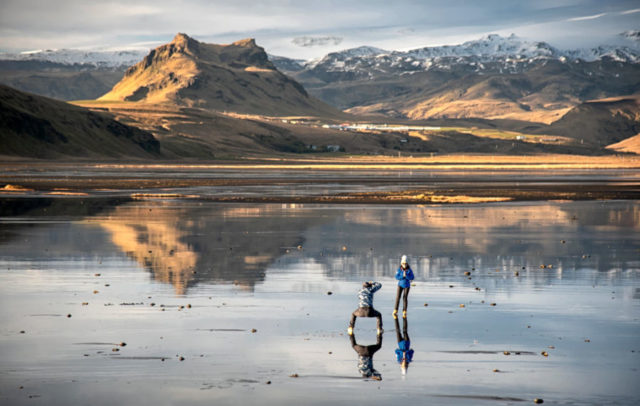
Should you go to Iceland this summer? It would be reasonable to conclude that it’s too early — there’s plenty to see and do closer to home, and Iceland will still be waiting for you later on, when things are closer to “normal.” But if you’re just itching to get overseas, Iceland could be an ideal way to give it a scratch until Continental Europe opens up.
I’m still thinking about it, and keeping an eye on how those first few weeks’ worth of visitors are finding Iceland (and how Iceland is finding them). What about you? Tempted?