The Thistle and the Rose

The more things change…the more they stay the same. Centuries ago, William Wallace and Robert the Bruce fought the English king to ensure Scottish independence. Generations later, the Jacobites struggled agains the crown to put a Scottish monarch back on the throne. And in our own age, the tension between Scotland and England persists. Less than a year ago, Scotland voted to remain part of the United Kingdom…for the time being.

Scotland has a lot in common with England. But, having traveled extensively in both places, I also see stark differences. For starters, look at the national symbols. England’s official flower is the rose: classic, romantic, and idealized. Scotland’s is the thistle: wild, prickly, and beautiful in its ruggedness.

At the bottom of Edinburgh’s Royal Mile, two more symbols of England and Scotland face each other across the street. Touring both to gather information for our new Rick Steves Scotland guidebook, I found the differences striking — and maybe bit too on-the-nose.

The Palace of Holyroodhouse has been a royal residence for centuries. Many monarchs — including the current Queen — have preferred staying here to windblown Edinburgh Castle. Holyroodhouse, a classic sandstone palace, is set back from the road, protected by several layers of stout gateways and wrought-iron fences, and surrounded by meticulously landscaped gardens. The clear message: This is the monarch’s space, and you are merely visiting…should you be so lucky. (When I asked if I could take a look around for free, as is standard operating procedure at most sights for guidebook researchers, they told me, “You’d have to call Buckingham Palace to formally request permission.” I’ve never been told to call Buckingham Palace before. It was fun.)

Queen Gate

Once inside the pristine grounds, you follow a carefully prescribed, one-way route dictated by a buttoned-down audioguide. I didn’t ask, but I imagine the Queen wouldn’t tolerate loiterers or picnickers cluttering up her lawn or rose garden.

Holyroodhouse Courtyard 2

Although the Queen publicly supported the creation of the Scottish Parliament, I imagine it drove her a bit batty when they started building the place across the street. Open since 2004, the building seems like the purpose-built antithesis of Holyroodhouse.

Scottish Parliament

It was designed in boldly contemporary style by Enric Miralles from Catalunya (a nation with separatist sentiments of its own). All signs appear both in English and in Gaelic, the prehistoric Celtic tongue of the Scots.

Parliament Sign

Once through the security checkpoint, access is entirely unfettered — I had the sense you could simply wander the halls to your heart’s content, though helpful attendants are standing by to direct you to the main attraction, the Debating Chambers. Out front is a snazzy, angular plaza, with big pools and fountains, ample seating, and sprawling rugged gardens — filled, of course, with highland grasses and vibrant purple thistles.
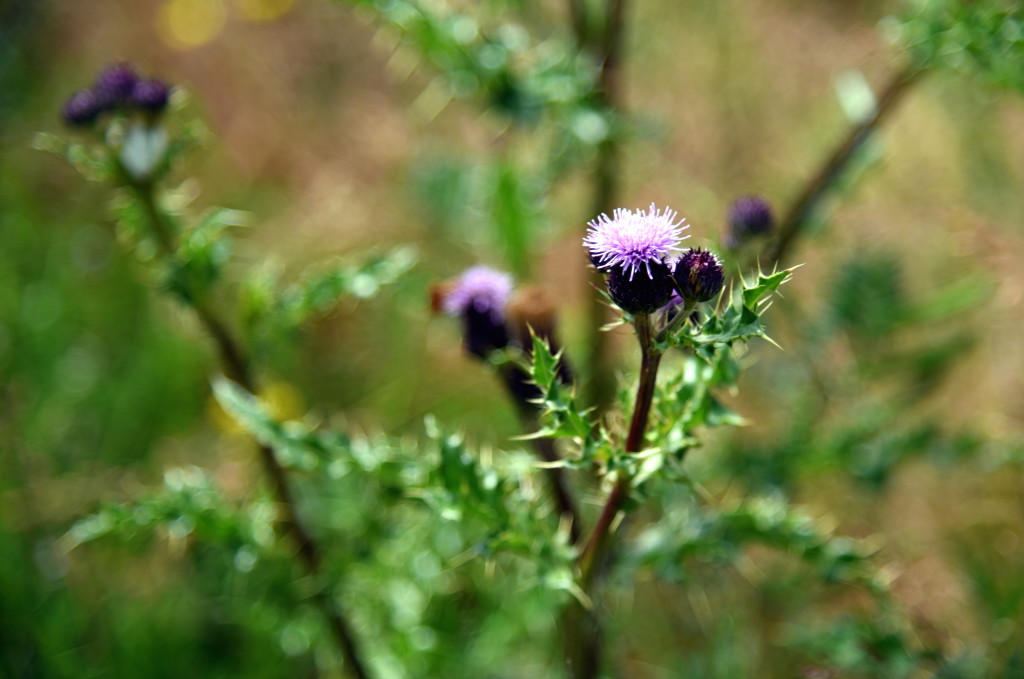
Thistle

It’s a communal place. On a sunny day, people are out enjoying their parliament complex as if it were a public park. I imagine the Queen pulling back her drapes and peering at the riffraff filling her neighbor’s front yard. What’s next, a car up on blocks?
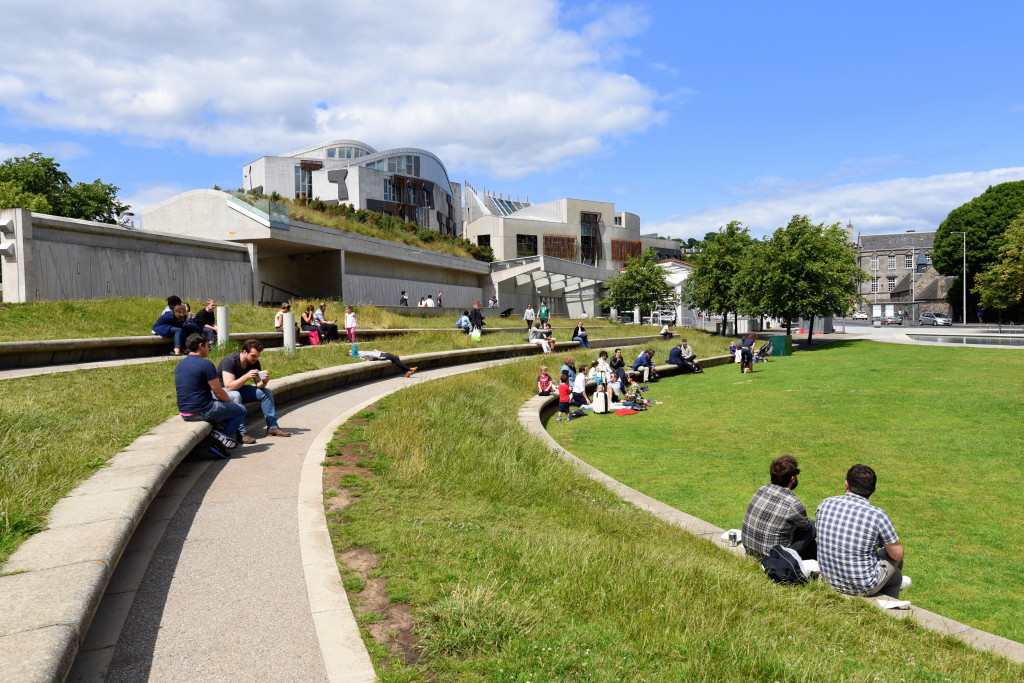
Parliament Park

And yet, to the grand old dame’s eternal credit, she lets it happen. While the differences between these two places are jarring, let’s not forget the even more striking fact that they coexist so peacefully to begin with. Given the history of bloodshed between these two lands, I’m heartened to see the “you do it your way, and we’ll do it our way” spirit embodied in stone and steel at the bottom of the Royal Mile. It gives me hope that nations can evolve, mature, and find ways to fit better into a diverse world. What’s happened between England and Scotland in recent years seems to suggest that the overall trajectory of a nation’s evolution is toward peaceful coexistence.

Will Scotland remain part of the UK? After getting to know this place well, I have a strong feeling about what the answer should be. But isn’t it nice that we can have the conversation with the knowledge that whatever happens, we can be confident that it will be peaceful and respectful?

The Other Side of Edinburgh: The Georgian New Town

Edinburgh’s New Town, across a big valley from the Royal Mile, was purpose-built to allow the city to expand in the 18th century. As if city planners were overcompensating, it’s as rigidly regimented as the Old Town is higgledy-piggledy. Many travelers get Royal Mile tunnel vision and miss the New Town altogether — which is a shame, since this neighborhood offers a glimpse of a very different and (marginally) less touristy side of Edinburgh.


New Town View

The New Town was carefully planned and plotted, right down to the way its main cross-streets coincide with viewpoints that make the city’s landmarks line up — in this case, combining a museum, an old tenement building, and a church tower into one mega-Gotham City vista.


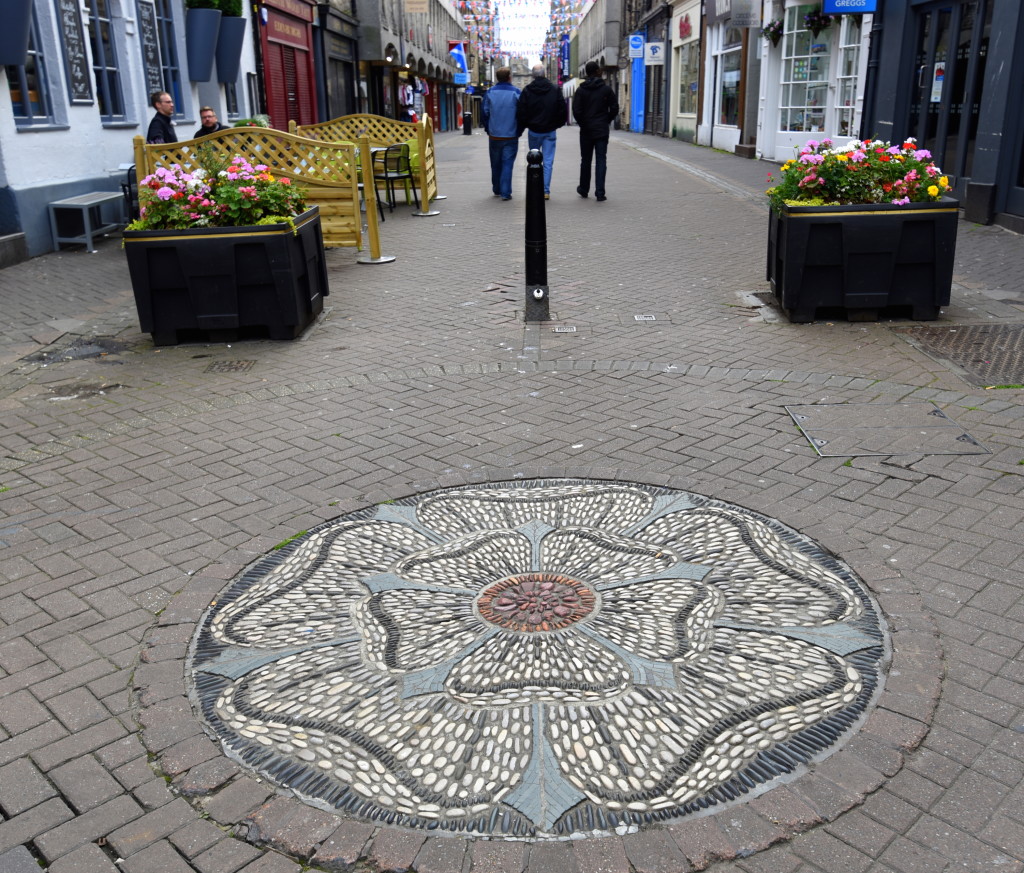
New Town Rose

The New Town plan was designed to suck up to English royalty. (It came about just 20 years after the failed Jacobite rebellions that attempted to topple the English crown and re-install a Scottish monarch.) The main drags are named “George Street” (for the king), “Queen Street,” “Princes Street,” and so forth. Here on Rose Street, the sidewalk is even embedded with a giant Tudor rose — the symbol of the English monarch. Come on, guys, we get it. Enough is enough.


Royal Mile Georgian

The architectural style of the New Town is Georgian. British for “Neoclassical,” the style is named for the kings who ruled during that age. The best museum in the New Town is the Georgian House, where you can go inside one of these elegant town houses and see how the upper crust lived during the 18th century. By the way, as I work on our new Scotland guidebook, I find myself comparing every aristocratic manor house to Downton Abbey. As a travel writer, it’s dangerous to rely too heavily on one comparison point…but that show really does a perfect job of capturing the upstairs, downstairs life behind these genteel facades. (I’m sure that once I get to the Highlands, it’ll be all about Outlander.)


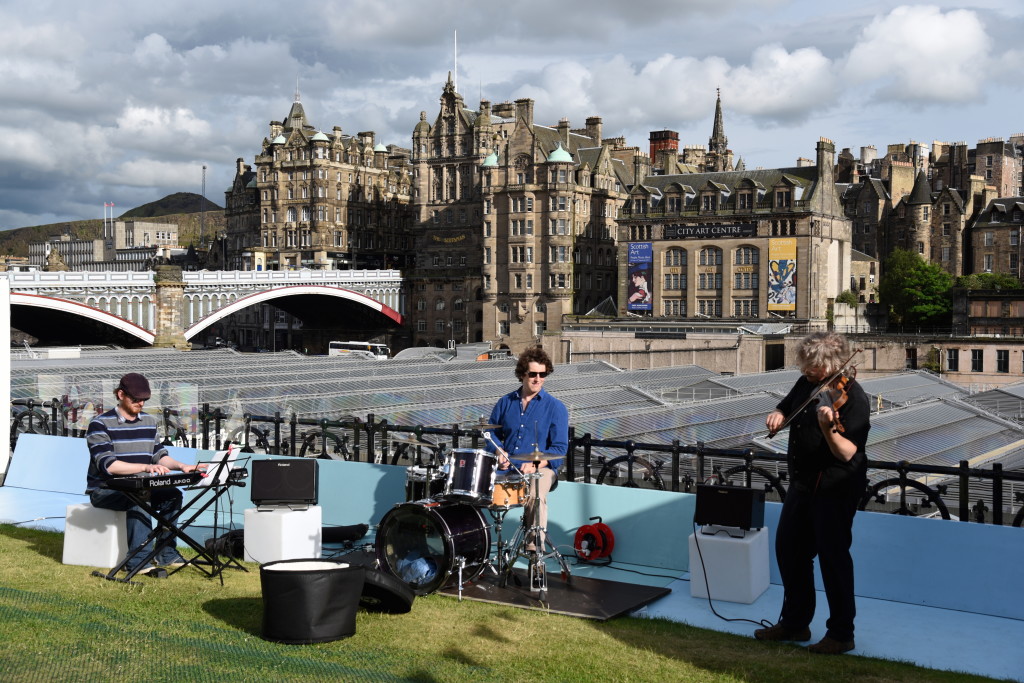
New Town Concert

While back home in Seattle, Pacific Northwesterners are enjoying the warmest summer in a generation, here in Scotland it’s the opposite. I was told that in Scotland, the month of June was the coldest in 43 years. But even in an unseasonably chilly summer, Edinburgh is carrying on with its slate of outdoor activities. Heading from the New Town back toward the Royal Mile, I stumbled upon a row of food trucks, a beer garden, and a casual outdoor stage where a talented trio was playing modern Celtic music with a stunning Edinburgh backdrop…howling winds and dark clouds be damned.

The Offbeat Royal Mile

Edinburgh’s Royal Mile — the steep street leading from the Queen’s Palace of Holyroodhouse up to Edinburgh Castle, capping the bluff at the top of town — mesmerizes tourists. It’s atmospheric, historic, and studded with a mix of great landmarks and “tartan tat” souvenir shops. While researching for our upcoming Rick Steves Scotland guidebook, I enjoyed some of the Royal Mile’s offbeat details.
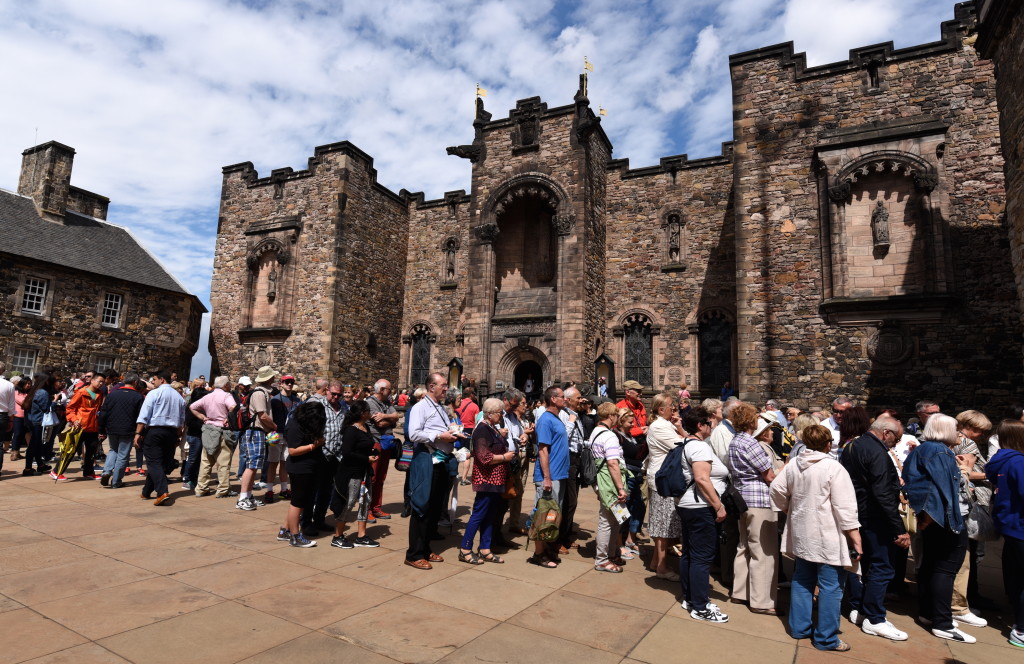
Edinburgh Castle Line

You can’t come to Edinburgh without touring its historic castle. But you’re not the only one. Rushing through the castle to update our guidebook details, my heart sank at the long line of tourists waiting to see Scotland’s crown jewels. I prepared myself for a long wait. Then I remembered that I was using a good guidebook, which told me this: “In summer, there’s a second option that avoids the line: Head to the left as you face the main entrance and find another entry. This route takes you through the Honors of Scotland exhibition — an interesting, Disney-esque series of displays (which often moves at a shuffle) telling the story of the crown jewels and how they survived the harrowing centuries.” Following this tip, within minutes, I was standing in front of the crown, sword, scepter, and Stone of Scone. When training our guidebook researchers, Rick emphasizes that clever line-beating tips are like gold. From a purely practical perspective, it may be the most important thing we can do for travelers.


Royal Mile TrafficStanding at a Royal Mile corner, a local pointed out how aggressively drivers — particularly cabbies — plow through the cross-intersections. Visitors, enjoying the mostly pedestrianized Royal Mile, don’t always notice the traffic lights. And motorists, who can’t get from one part of the city to the other without crossing the Mile, have zero patience for daydreaming tourists. It only makes things worse that traffic comes from the opposite direction than we foreigners are used to. “I’ve actually seen cabbies speed up when they get a careless tourist in their sights,” the local told me. “Every year you hear about many people who get clipped or knocked down by cars here.” Don’t be paranoid… but do wait for the green light.


Royal Mile Owl

At Gladstone’s Land, a fascinating 16th-century “skyscraper”-turned-museum, a live owl was posing for photos out front. A local falconry center solicits donations with their birds of prey here each summer — and it’s a huge hit with Royal Mile-wandering tourists.


Rodney Relax

The dated but endearing People’s Story Museum in Edinburgh works hard to describe the lifestyles of people from various walks of life throughout the city’s history. Dioramas of Dickensian homes offer insight into the congested conditions back when the city was called “Auld Reekie.” Less successful is the museum’s attempt to sum up the city’s punk culture in the 1970s: “Rodney Relax, a 17 year old punk, has recently left school and is unemployed. Like all punks, Rondey enjoys being different and shocking people by his appearance. … His parents do not approve of the way he dresses or that he drinks and takes drugs.” Thanks, Dad. Tell me what you really think. (I can’t wait to see them try to explain hipsters.)


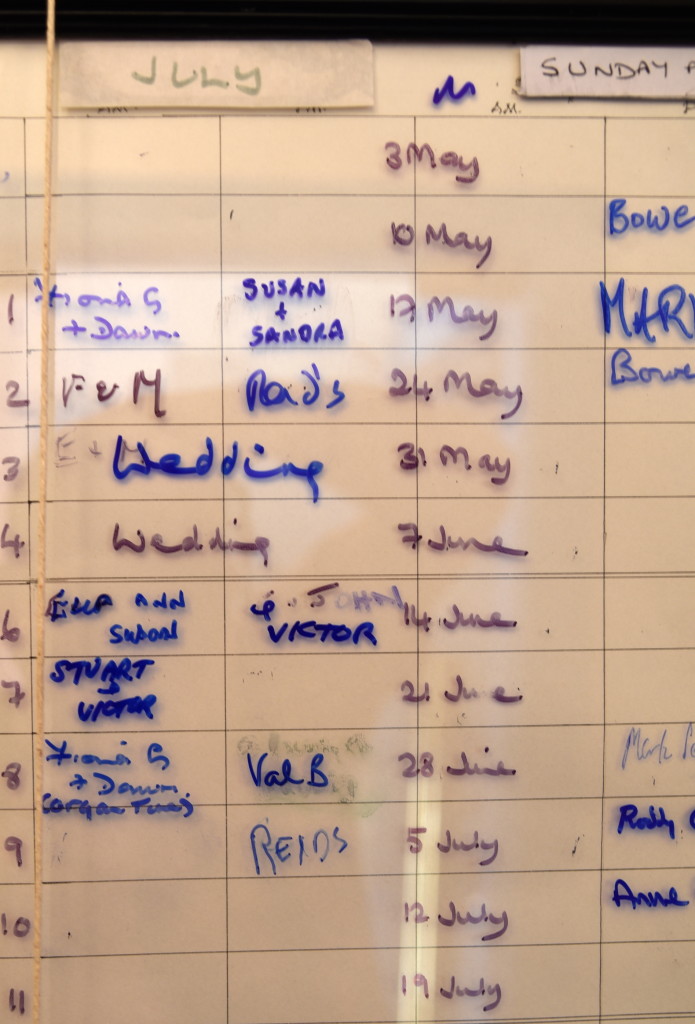
Canongate List

The Canongate Church is where the Queen and her clan attend services whenever they’re in town. Entering the church, I was warmly greeted by a pair of old gents who were really enjoying catching up with each other — and chatting up tourists who happened by. When I tried to confirm the church’s hours for our book, they explained that it’s open whenever volunteers from the congregation sign up. This is their sign-up list. I found it sweetly small-town that even here, in one of the Queen’s home churches, it’s a community affair.


Worlds End

Uh-oh.

Whisky at the Breakfast Buffet and “Tartan Tat”: Welcome to Scotland

Not yet fully awake, and struggling through the “where am I?” haze of just arriving in a new country, I stumbled downstairs to the breakfast table. As I gathered cereal, yogurt, and juice from the buffet, my eyes fell on a bottle of whisky. And with a jolt, I remembered: I’m in Scotland.

Scotland is a wee land, with just five and half million people. (That’s half the size of Hungary.) But its cultural impact on the world stage is massive. Everyone, it seems, understands what it means to be Scottish. But much of what they know are clichés: Whisky. Bagpipes. Kilts and tartans. Haggis. Golf. Like most clichés, these are rooted in reality. But in an attempt to attract tourist income, these cultural icons have been exaggerated, romanticized, and exploited. In Scotland, the traveler’s challenge is tuning into that fine line that separates the real deal from trumped-up tourism.

Take the tartan. Everyone knows that each of Scotland’s clans (families) has its own, specific plaid pattern. And on Edinburgh’s Royal Mile, every other shop specializes in helping you find your family’s tartan…and selling you all manner of souvenirs stamped with it.Royal Mile

It’s a nice story…one that was concocted in the Victorian Age, to appeal to tourists very much like today’s. But, like any tall tale, it does have a kernel of truth. In Edinburgh, I visited Gladstone’s Land, a perfectly preserved 16th-century merchant’s home-turned-museum along the Royal Mile. Britain seems to specialize in chatty museum docents, who love to corner you as you enter a creaky old room and talk your ear off about all of the fascinating little details. And at Gladstone’s Land, the docent in the former cloth merchant’s shop on the ground floor was particularly engaging.

“Here’s the real story behind the tartan,” he said. “Going way back, local dyers throughout the Highlands only had access to natural dyes. And that meant plants that grew in their specific area. They only had so many options for combining those few colors. And, naturally, family members lived in the same area. So it’s true that members of a clan tended to dress in similar colors — very muted colors. But all of these rigidly designed, brightly colorful clan tartans you see at shops around here, they’re only about 150 years old.”

Tartan Tat

As for those stores: I love getting the local gossip in a city like Edinburgh. And during my time here, several people have told me, conspiratorially, that one very wealthy family owns dozens of shops along the Royal Mile. While the shops look different to create an illusion of variety, all of the profits go into the same big pot. The family has been very aggressive about gobbling up as much property as possible along the Mile, and in the process, they’ve made a lot of enemies out of mom-and-pop shop owners.

The term Edinburghers use for these tacky tourist shops is “tartan tat.” These are the shops displaying cheap, knockoff kilts in their windows. Wanting to find some better-quality shops to recommend in our new Rick Steves Scotland guidebook, several people pointed me in the direction of Gordon Nicolson.

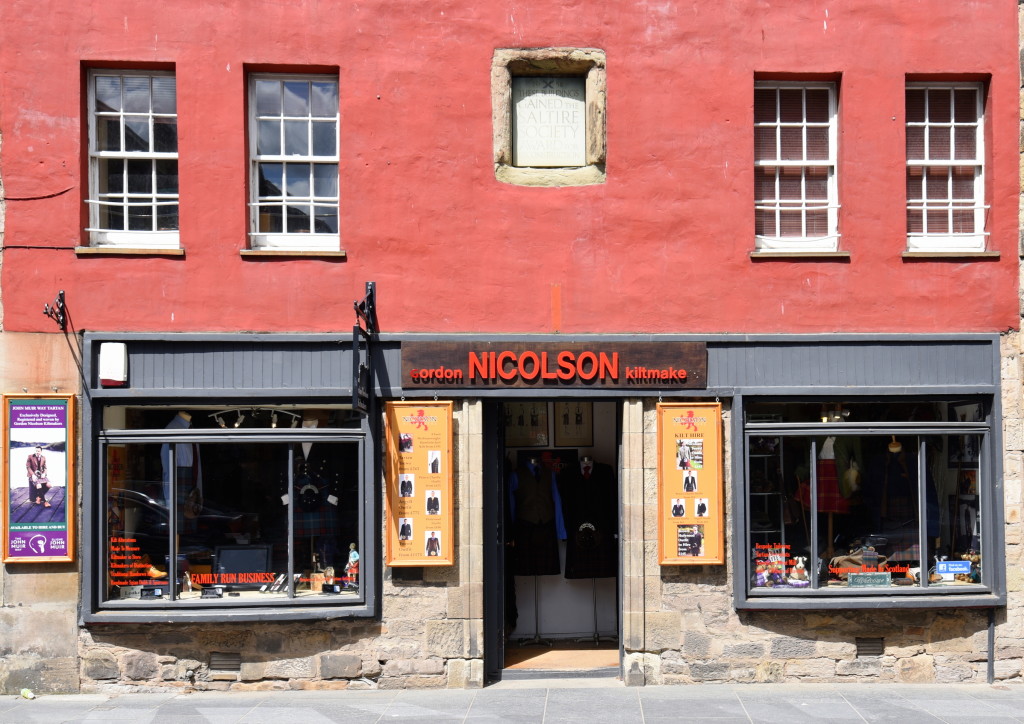
Nicolson

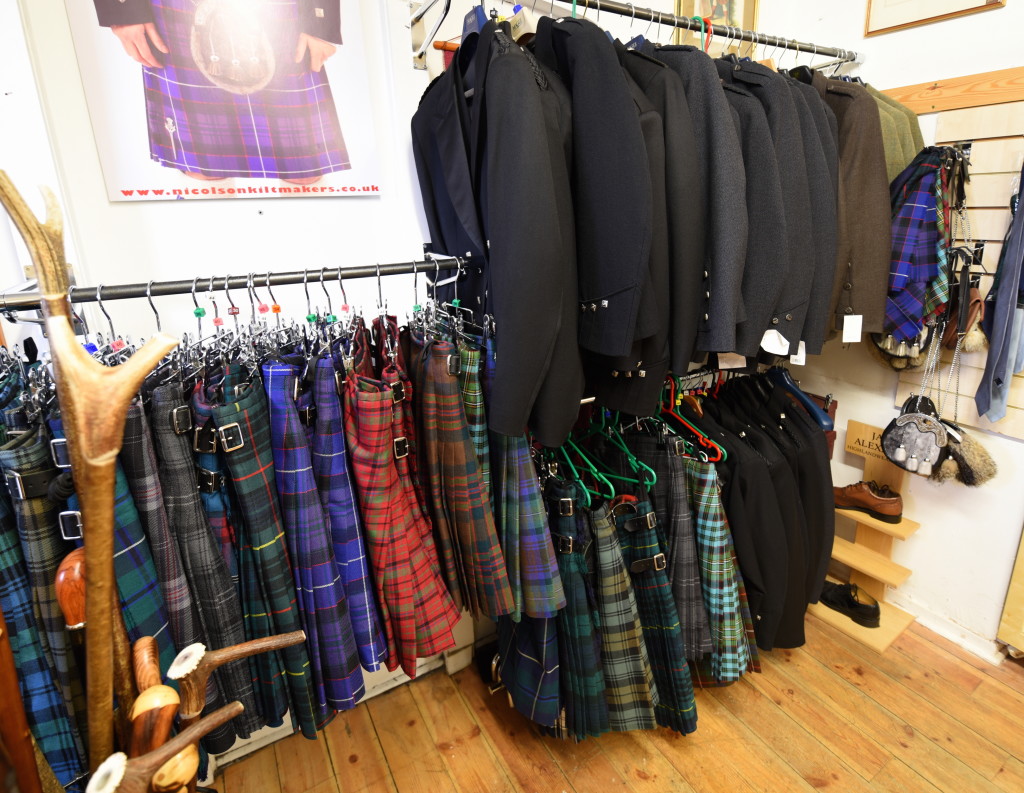
Nicolson Kiltmakers‘ modest shop is tucked along the Royal Mile, just steps away from several “tartan tat” outlets. Gordon himself greeted me as I waked in the door, and shared his passion for kiltmaking. He explained that many kiltmakers have simply given up the old ways — these days, they find a bigger profit margin selling machine-made kilts. But Gordon is on a crusade to keep traditional kilt making alive. He takes particular pride in bringing along the next generation of kiltmakers. “I’ll be honest: The industry is top-heavy these days, age-wise,” he told me. “That’s why I want to show young people that making kilts properly is still a viable business.”

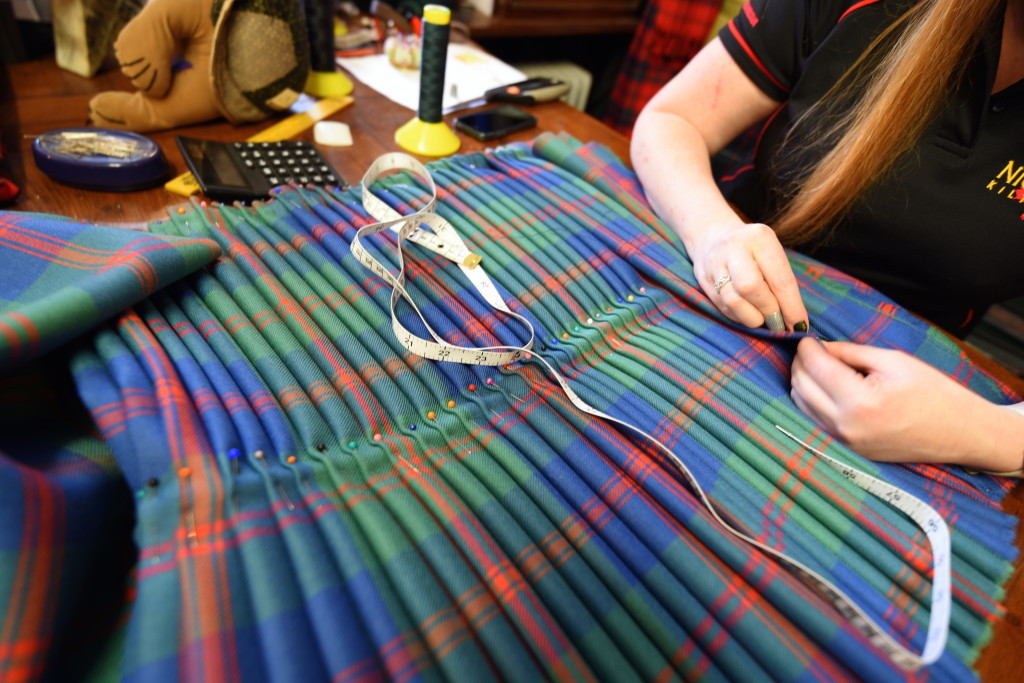
A top-quality kilt will run you about £400-500 — that’s around $620-775. Figure another £500 for the jacket and accessories, and you’re at about £1,000. Most of the expense is in the material of the kilt itself. A proper kilt is made of woven fabric. (The cheap “tartan tat” kilts are printed on.) But there’s a lot of labor required, as well. I watched one of Gordon’s kiltmakers painstakingly pin, then stitch, each precisely measured pleat.

x
x

Gordon took out a leather sporran — the pouch that’s worn around the waist. Opening it up to show me the seams, he explained that this one was hand-stitched by a country gentleman who’s well into his 80s. He then pulled out a couple of particularly fine, hand-carved daggers that are worn around the ankle, called sgian dubh — literally “black knife.”

Gordon also custom-designs tartan patterns. He’s very proud of the one he recently designed to honor the new John Muir Trail — a countryside walking route through Central Scotland that was just inaugurated to honor the Scottish-born American conservationist.

Kilt Shop interior

By the way, while they do carry some kilts in-store, they’re very unlikely to have your tartan in your size, available off the rack. To get a quality kilt, stop by for a measurement — they’ll ship it to you when it’s done.

Across town, in Edinburgh’s New Town, I met another Scot who’s trying to make kilts viable in the modern age. On funky and artistic Thistle Street, Howie Nicolsby runs a shop called 21st Century Kilts. He’s taking things in a very different direction from Gordon — updating the whole notion of the kilt to fit contemporary styles. Virtually everything he does is “bespoke” — fancy Brit-ese for custom-made. He explained that he’s encountered a lot of resistance (from traditionalists like Gordon, I’m guessing), but that he feels strongly that if the kilt is to survive, it needs to keep up with the times. He realizes that he’s filling a small niche, but that works fine for him. Since he does everything himself, he only needs about 400 customers a year to stay in business. Checking out the fun wedding pictures of dapperly kilted grooms, I found myself wishing I were Scottish, engaged, and rich enough to hire Howie to outfit my groomsmen. (My wife’s maiden name is “Scott.” Does that count?)

Gordon and Howie are taking things in different directions, but deep down their priorities are perfectly in synch: Kilts are a cliché, but they are also a very real and vivid part of Scottish culture. It’s a culture that has weathered many challenges across the centuries, but it has always persevered. And talking with people like Gordon and Howie, it’s clear to me that it always will.