He Who Holds Stirling, Holds Scotland

For years, we’ve had great coverage of Scotland included in our Great Britain guidebook. But as I research our new, stand-alone Rick Steves Scotland guidebook, my priority is finding sights or towns that we’ve not had the space to fully develop until now. One of the most important additions is Stirling. This patriotic heart of Scotland is like Bunker Hill, Gettysburg, and the Alamo, all rolled into one.

Stirling perches on a volcanic crag overlooking Scotland’s most history-drenched plain: a flat expanse, cut through by the twisting River Forth and the meandering stream called Bannockburn, that divides the Lowlands from the Highlands. Many of the great Scottish victories (William Wallace at Stirling Bridge, Robert the Bruce at Bannockburn) — and defeats (William Wallace at Falkirk) — took place just outside of Stirling. And capping the ridge is Stirling’s formidable castle, the seat of the final kings of Scotland.


CH15JulStirling_026

It’s said that “he who holds Stirling, holds Scotland.” And visiting Stirling Castle, you can literally see the layers of history. This castle was built up by a series of Stuart monarchs: Mary, Queen of Scots, and a gaggle of Jameses (for whom the “Jacobites” are named). Centuries later, the British Army further fortified the castle to defend against a Jacobite siege. On this gate, you can still (faintly) see the cannonball pockmarks from the time when Bonnie Prince Charlie — the Stuart heir — attacked his own ancestors’ home.


CH15JulStirling_037

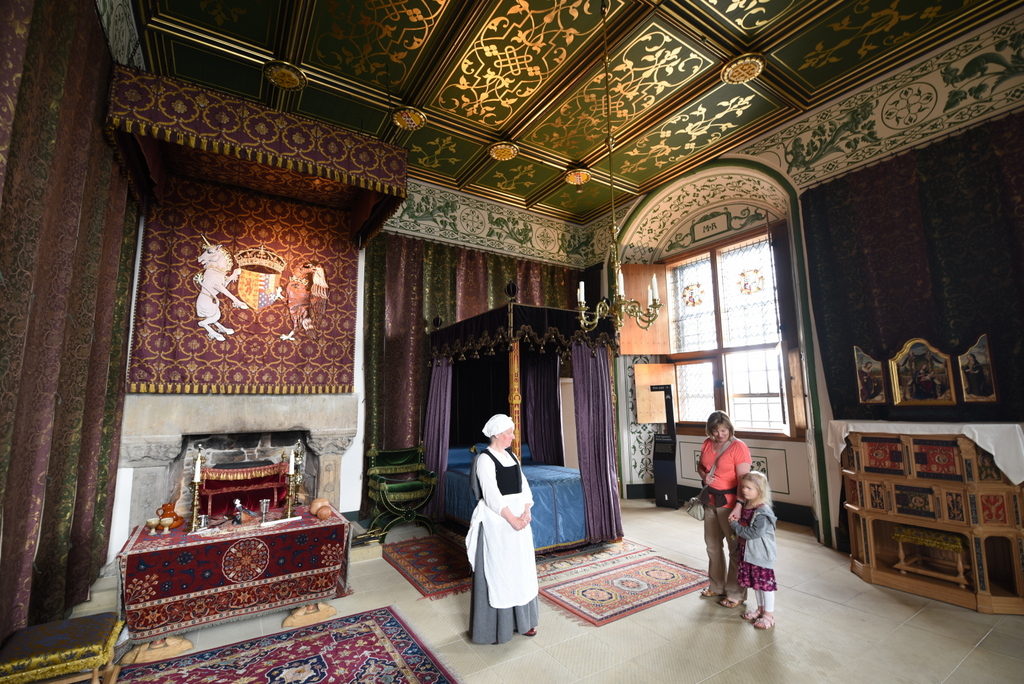
Stirling Castle fell into disrepair for centuries, and was only recently refurbished. Today the structure feels empty and soulless. But a handful of finely decorated rooms (perhaps a bit too perfect and colorful) are brought to life by the chatty docents who greet visitors and tell them more about castle lifestyles.


CH15JulStirling_041

While almost nothing original survives at Stirling Castle, the exception is a highlight: this collection of the elaborately carved and painted portrait medallions that decorated the ceiling of the king’s presence chamber. Today they’re lovingly displayed and described in a modern museum that shows off that fine Renaissance craftsmanship.


CH15JulStirling_006

Beyond its famous castle, Stirling is pretty sleepy. I was there on a summer weekend, and — aside from rowdy crowds inside a couple of industrial-strength chain pubs — the place was dead. Scotland has more engaging towns to spend the night in, but Stirling’s convenience for hitting a variety of great side-trips is second to none.


CH15JulStirling_002

I checked out about a dozen B&Bs in Stirling, and chose my favorite six to recommend in our upcoming Scotland guidebook. With its central location and royal ties, Stirling just feels wealthy and put-together. The tidy residential zone behind the castle, with its postcard-perfect Victorian homes, is fun to simply wander.


CH15JulStirling_058

In Scotland, anywhere there’s tourists, there’s a bagpiper. Yes, I know it’s a cliché, but I can’t resist a good street piper. This one seemed particularly sprightly — he seemed to get a genuine kick out of interacting with tourists (not just posing for them).

The Soggy, Sunny Highland Games of Taynuilt

Pulling off of the humble main street in the Scottish village of Taynuilt, I feel my tires shimmy on the saturated turf. I follow muddy ruts to where a waterlogged attendant stands in front of a little green shack.

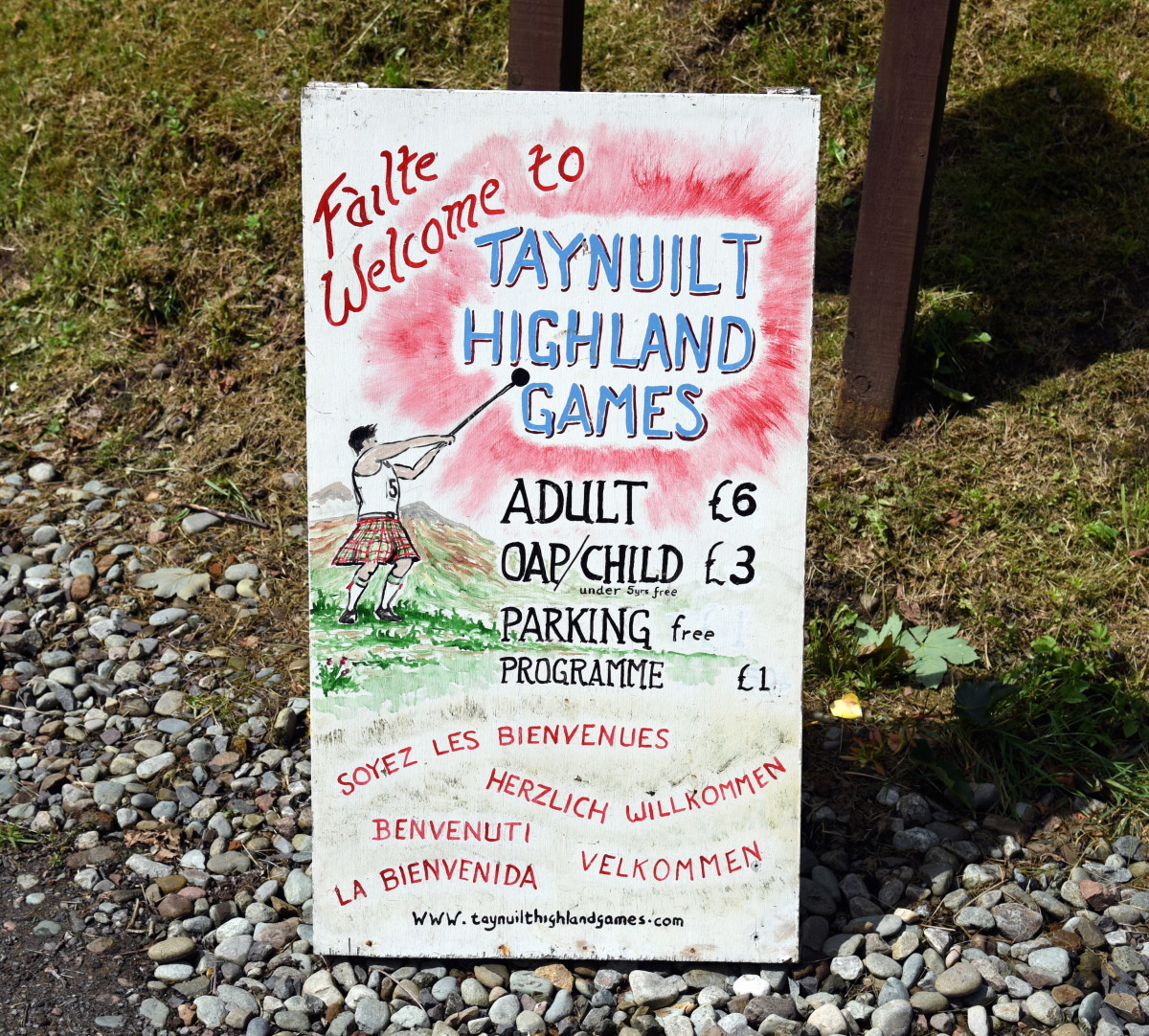
“Is this the parking for the Highland games?” I ask. “Yes,” she says, peering out a narrow slit formed by her rain hood. “Six pounds, please.”
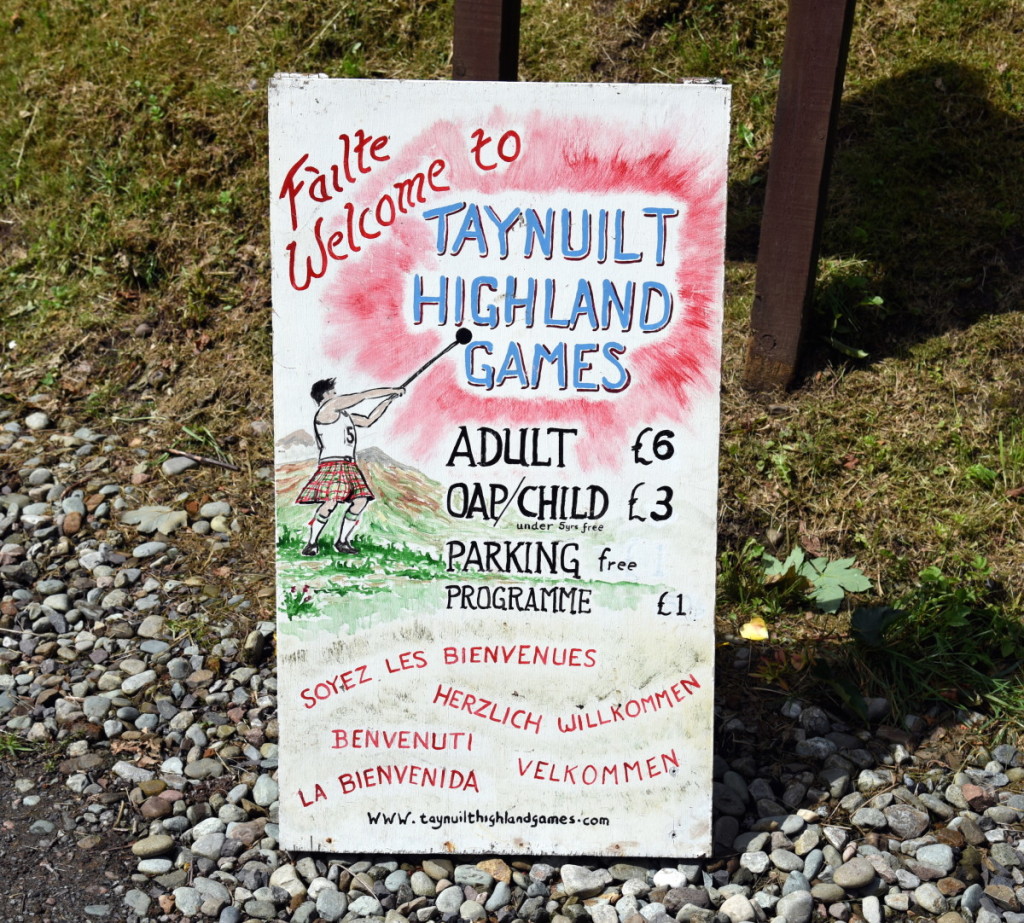
Games Sign

Taynuilt may have picked the wrong date for its annual celebration of Highland culture. Even though it’s July, bone-chilling gusts of North Atlantic air swirl mist across the vibrant-green playing field. I park my car, bundle up, and feel my feet squish through the wet sponge of a lawn — wringing out peaty brown water with each step. I’m considering bailing out and returning to the warmth of my B&B lounge.

But then a delightful scene unfolds before me: Rural Scotland is putting on their show, rain or shine. Everyone’s wearing their Wellies (rain boots). A traditionally clad family piles out of their minivan, and dad helps his young sons adjust their kilts. And then bagpipes begin droning from every corner of the field: The pipe band is tuning up.
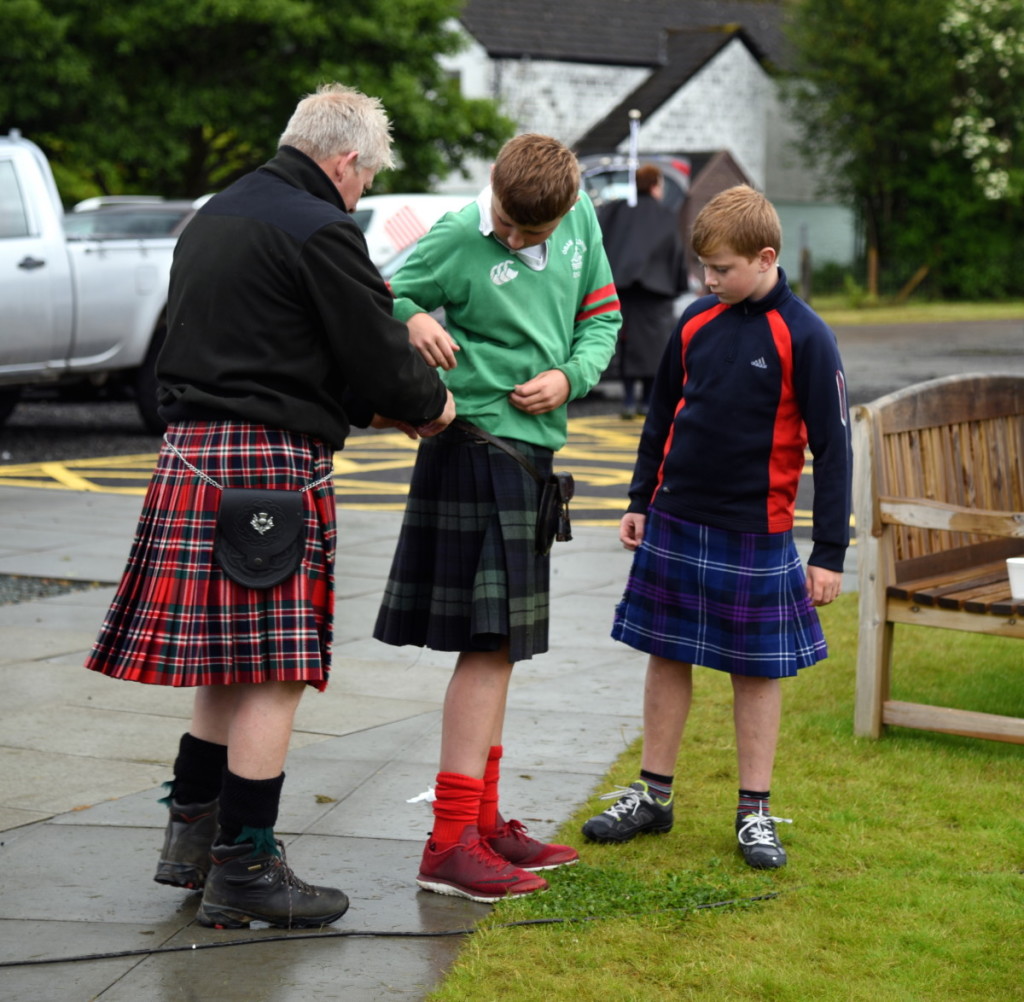
Kilt Adjustment

The loudspeakers crackle to life, and a lilting Scottish accent cuts through the foggy air. “If you’d like to join the pipe band in their parade through the village, you can follow them on up to the Taynuilt Hotel in a few minutes.” She proceeds to list off the day’s events. And she explains the rain plan: There is none (except for the Highland dancing, which has been moved into the village hall).

Noticing the pipe band — about eight bagpipers and a half-dozen drummers — starting up the village’s lone street, I decide to tag along. I ask the bass drummer where they’re from. “Strathearn, in Perthshire. We came a long way for this. And according to the weather map, it’s the only part of the country in rain.”

Passing the village hall, I peel off from the pipers to peek inside. Fiercely focused lassies, done up in their finest Highland finery, are dancing their hearts out. They’re hoping the weather will improve as the day goes on, so they can head outside.
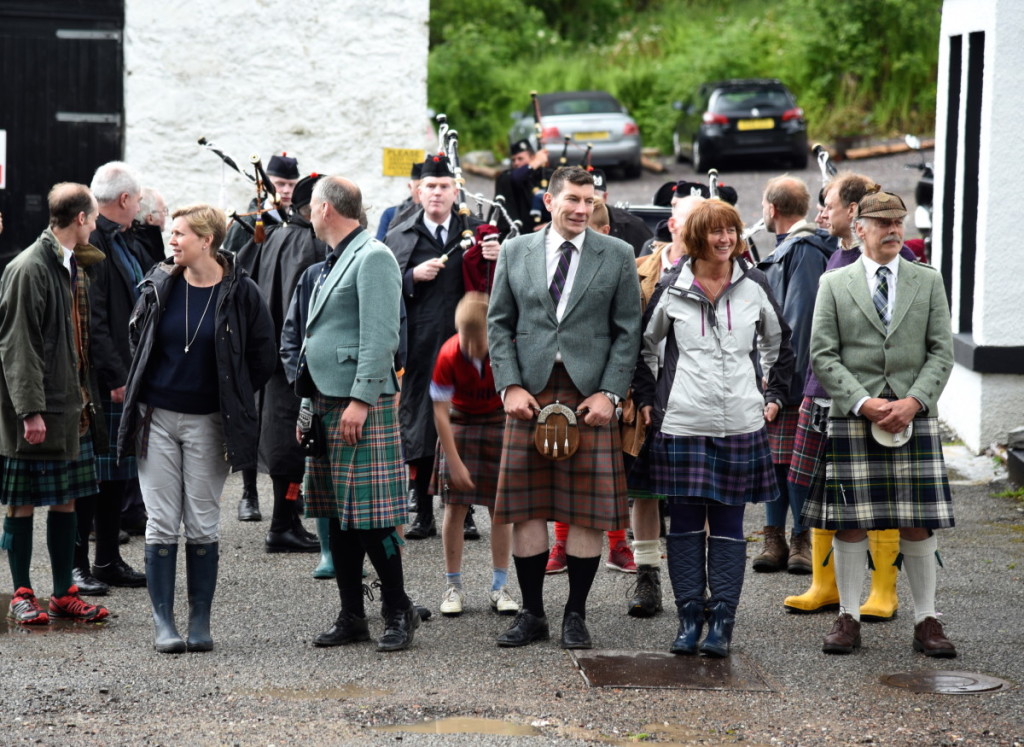
Clan Chief

I catch up with the pipers and drummers, who stand huddled in the alley next to the town’s lone hotel/restaurant. They’re getting in one more round of practice before the big show. A crowd of about thirty people gathers across the street, waiting patiently. Finally, the clan chieftain shows up with this family. Shivering in their kilts, they line up in front of the pipe band.

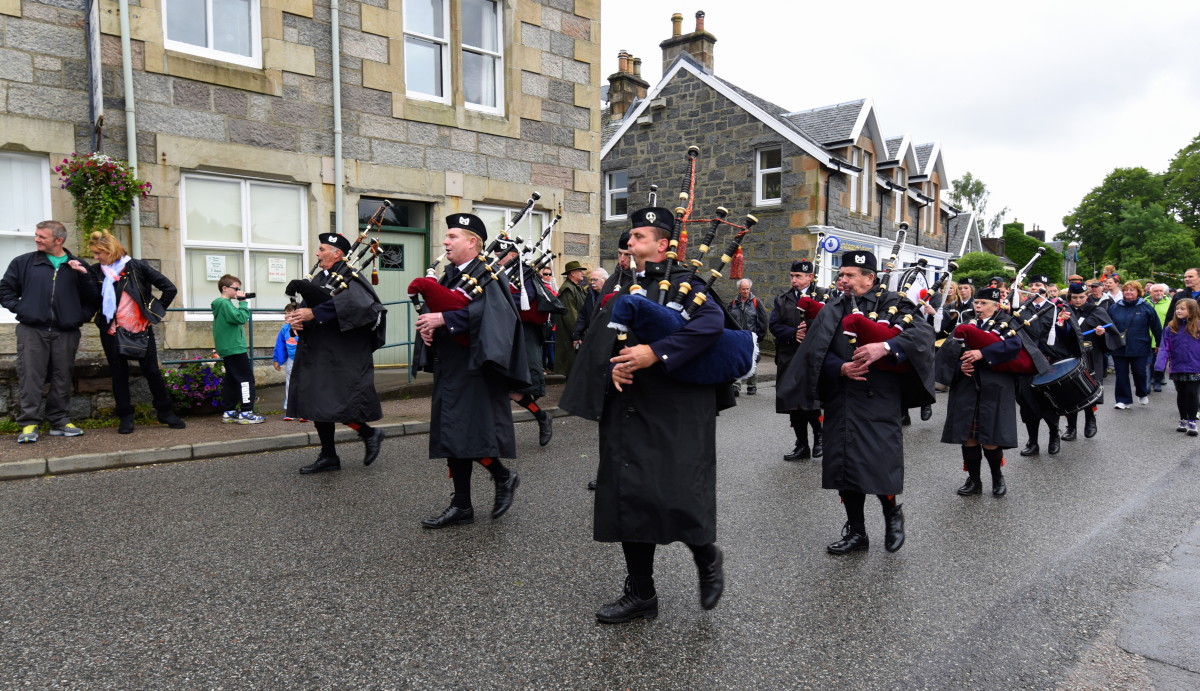
And suddenly, it’s time to begin. The band springs to life, and the ragtag parade marches proudly through the village to the playfield. Ponchoed pipers and drummers play their hearts out, filling the damp air with the drone, whine, and peal of bagpipes. They’re trailed by villagers — and a few visitors from around the world — scurrying around them to snap photos.
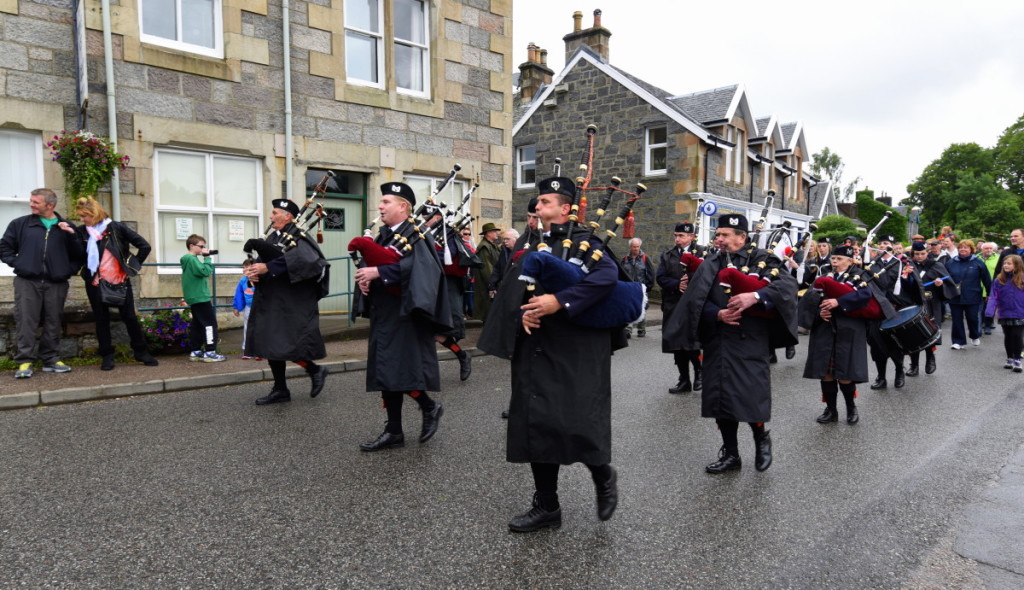
Piper Parade

By the time we arrive back at the park, it’s a different scene. While still cloudy, the worst of the rain has passed, and — like ginger-haired earthworms — the villagers have tentatively emerged to scope out the scene. The clan chieftain’s family and pipe band take a lap around the field before announcing the Taynuilt Highland Games of 2015 officially open.
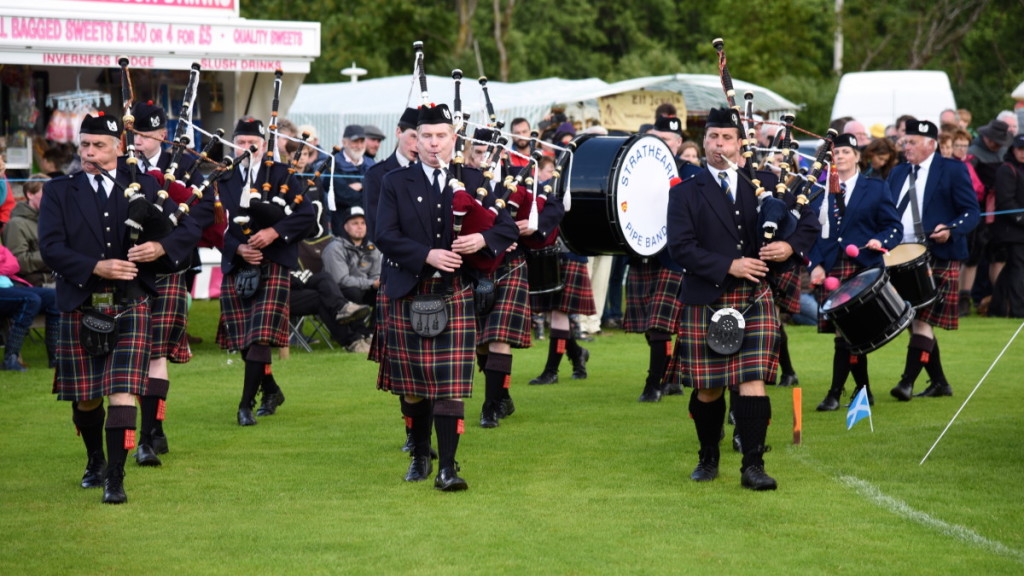
Piper Lap 2

Scottish Highland games are like a track meet and a county fair rolled into one. The infield hosts the kilted, macho feats of strength. Ringing that is a running track for the footraces. And surrounding the whole scene are junk food stands, a few test-your-skill carnival games, and fundraising local charities selling hamburgers, fried sausage sandwiches, baked goods, and bottles of beer and Irn-Bru.
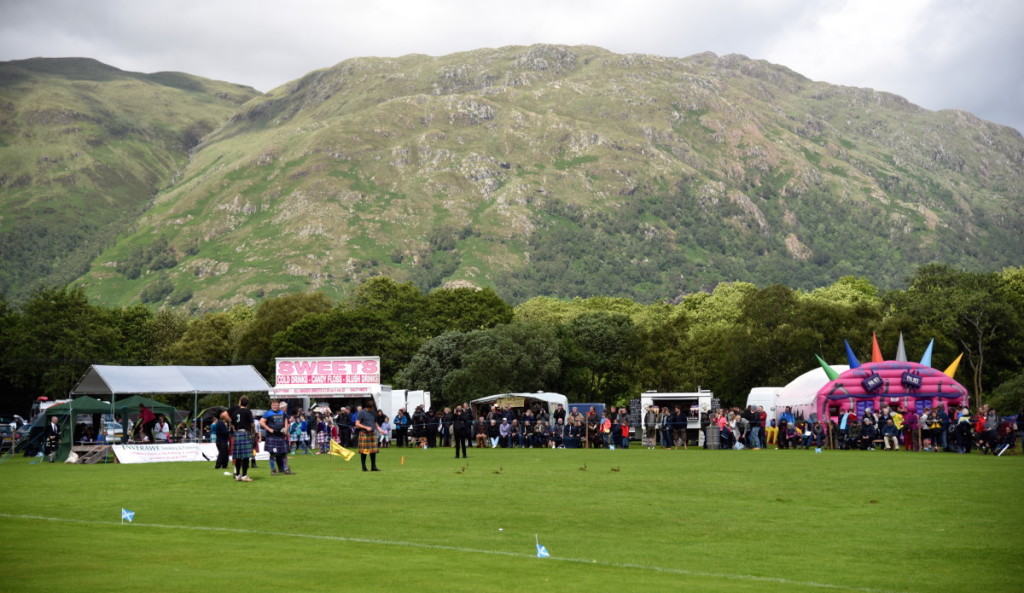
Games grounds

In the center of the field, eight brawny athletes assemble for the feats of Highland strength. They’re all wearing kilts, with track pants underneath and hoodies over top to protect against the howling wind.

The emcee, who has a marvelously dry wit and seems to revel in how folksy it all is, introduces the competitors. “Gary’s wife tells me he’s the most handsome man in Scotland. That’s her over there watching Gary adoringly from the sideline… Stuart is our youngest participant, at just 16 years old. He just started a new job this week, and already he’s getting high marks. They say he can lift anything.” (We have a word for guys like Stuart back in the States: linebacker.)

The events are all variations on the same concept: hurling objects of awkward shape and size as far as possible.
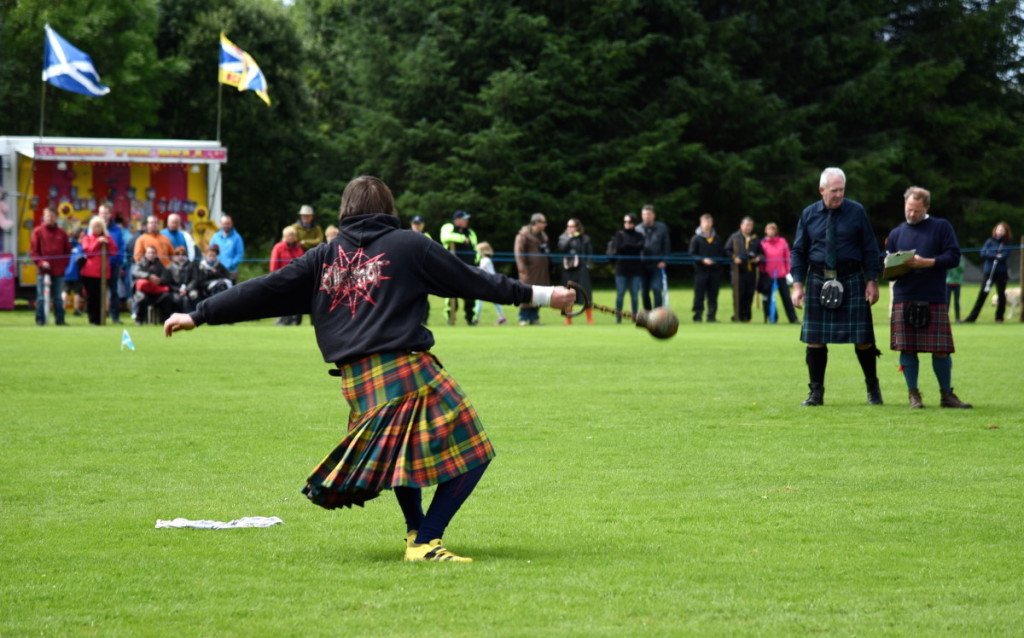
Weight Toss

Things kick off with the weight throw, where the stocky competitors spin like ballerinas before releasing a 28- or 56-pound ball on a chain into the sky. The weight quickly changes course, plummeting decisively to embed itself deep in the wet earth. The hammer throw involves a similar technique with a 26-pound ball on a long stick.
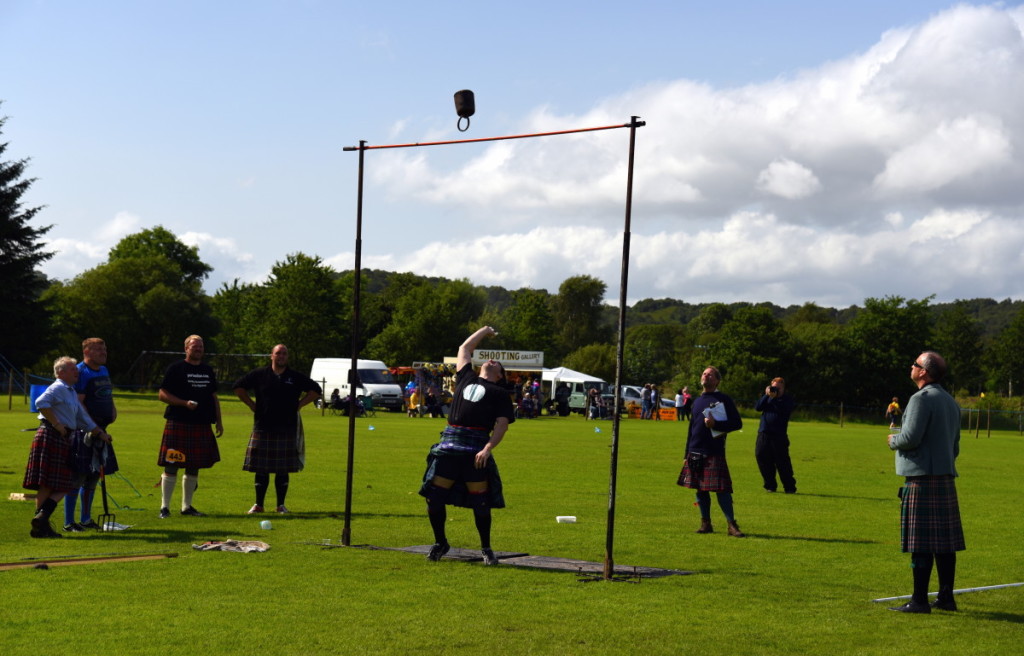
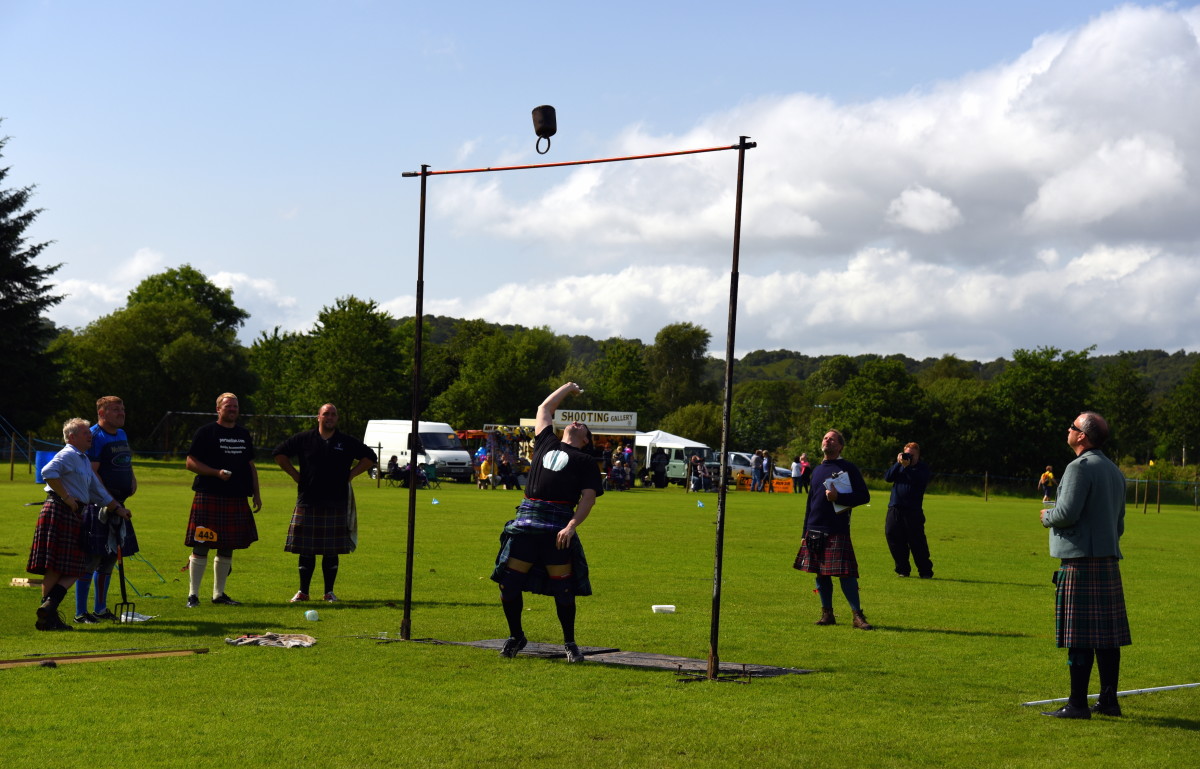
Weight over bar

In the “weight over the bar” event, the Highlanders swing a 56-pound weight over a horizontal bar that begins at 10 feet high, and ends at closer to 12 feet. As our emcee keeps reminding us, “That’s like tossing a five-year-old child over a double-decker bus.”
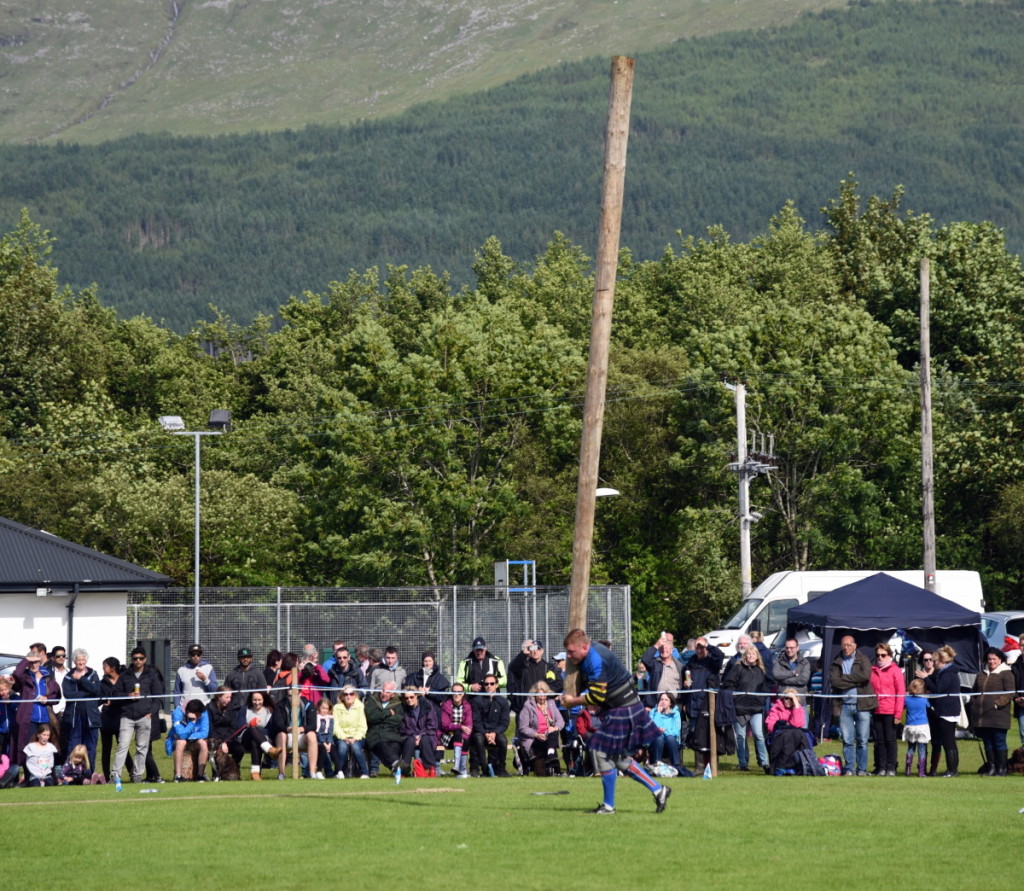
Caber Toss

And, of course, there’s the caber toss: Pick up a giant log, take a running start, and release it in an end-over-end motion with enough force to (ideally) make the caber flip all the way over and land at the 12 o’clock position. (On this day, most of the athletes wind up closer to 6. I doubt I could lift the thing to begin with.)

Meanwhile, the track events are running circles around the musclemen: the 100-yard dash, the 1,500 meters, and so on. Trying to fabricate an exciting narrative out of the tiny turnout for the women’s 400-meter, our emcee dramatically intones, “Currently there are only two runners in this race. They are sisters. And they are competitors.”
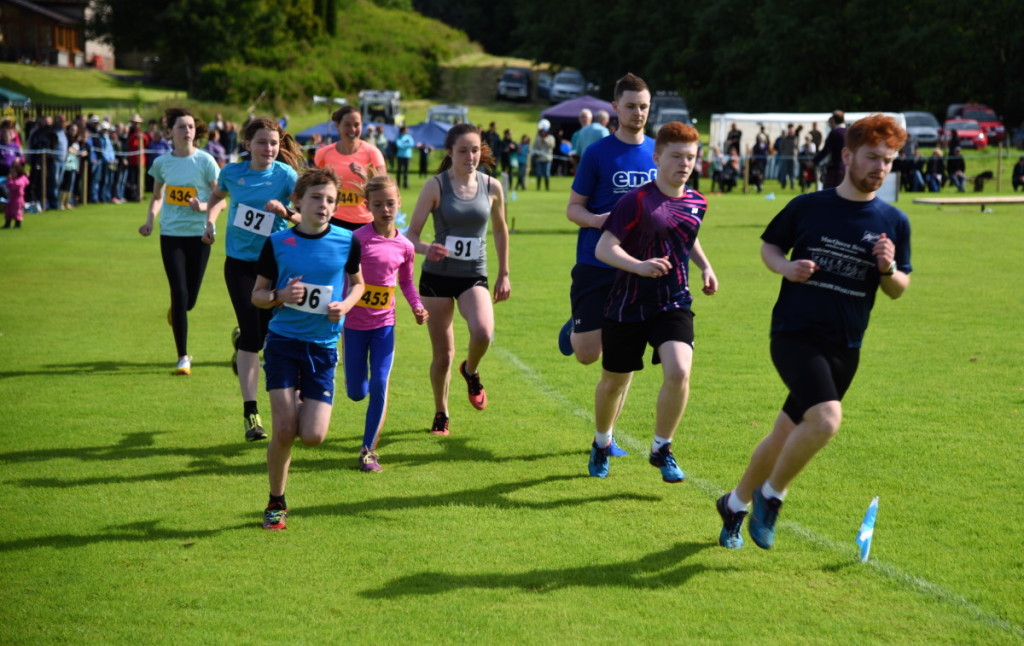
Footraces

The most impressive event is the hill race, which combines a 1,000-foot mountain ascent with a six-mile footrace. The hill racers begin with a lap in the stadium before disappearing for about an hour. After several minutes, you can begin to faintly see their colorful jerseys bobbing up and down a distant peak. By the time they start trickling back into the stadium, they’ve been gone long enough that even the emcee seems to have forgotten about them.

Finally, the sun emerges. People shed their Gore-tex and bask in the hard-earned rays. At one end of the field, the Highland dancers have escaped from the village hall and are dancing on a covered stage. While one set of little girls carefully toe their routines for the judges, others practice on the sidelines. The youngest lassies, with less control over their swinging limbs, work hard but lack grace. But the older dancers are graceful and poised.
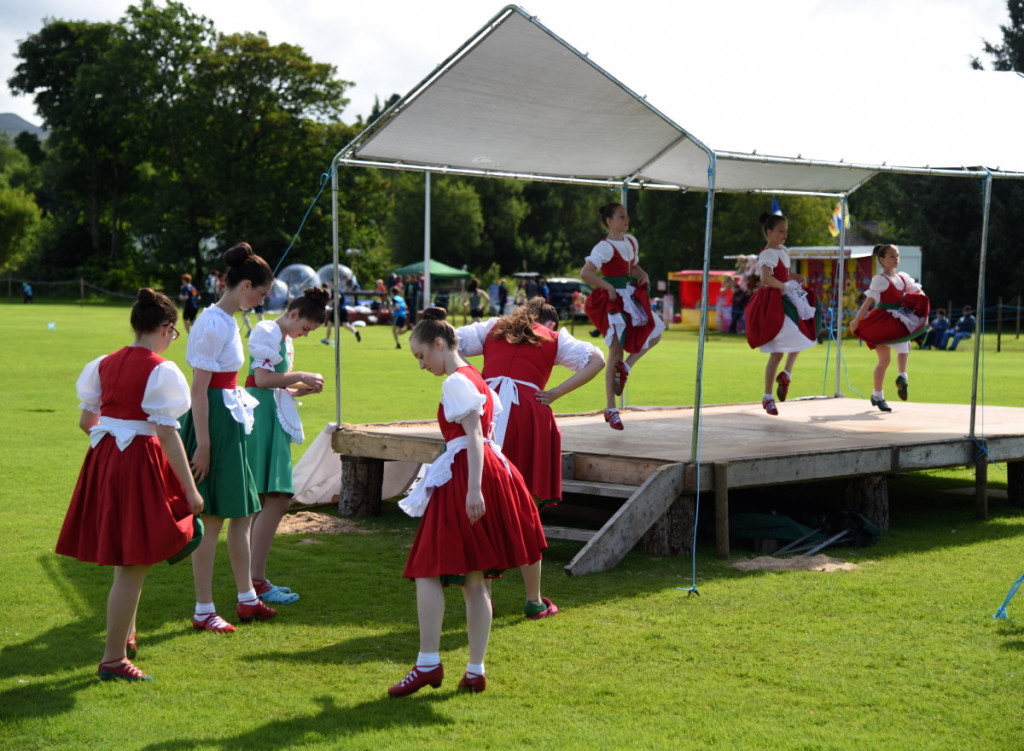
Dancers 2

At one point, crossed swords are set on the stage for the performers to delicately dance over. As an indication that the feats of strength may be more my cup of tea, I keep waiting for the dancers to pick up the swords and start fencing. (They never do.)

By the day’s end, the brief breaks of sun have turned into steady sunshine. Cotton-candy clouds echo the candy floss that kids gobble as they watch the final few events, including the village-wide tug-of-war. A good time is had by all…rain or no rain.

Heading back to my car, I realize this may have been the most satisfying, most culturally enlightening, most affordable, and least touristy experience I’ve had in Scotland so far. Taynuilt puts on a great Highland games. But so do dozens of other villages. If you’re heading to Scotland in the summertime, be sure to check the schedule and, if you can, fit one into your itinerary.

━━
This post was published in 2015.

Rosslyn Chapel: When Great Sights Transcend Pop Culture

For many people, popular culture is an enticing “in” to their travels. When visiting a new city, a strong homing instinct pulls us to the landmarks we’ve seen on TV or in the movies. (On my first visit to New York City, I just had to check out the coffee shop from Seinfeld.) Working on our guidebooks, I could just dismiss the locations attached to famous movies or TV shows. But let’s face it: In Scotland, people are as every bit as interested in seeing the Hogwarts Express viaduct or the Outlander castle as they are in the more “serious” sights.

Of course, pop culture ebbs and flows. Right now, Outlander is on the upswing. Harry Potter has plateaued. And The Da Vinci Code books and DVDs are gathering dust in bargain bins. A decade ago, in the hubbub surrounding Dan Brown’s page-turner, we added a few Da Vinci Code landmarks to our guidebooks. Updating our Edinburgh material on this trip, I came across a listing for the Rosslyn Chapel (where the climax of the novel and the film are set). And, given the declining interest in the Da Vinci Code, I almost took it out of the book without another thought.

But thank goodness I made the trip out to see it. Sitting in the countryside about a half-hour outside of Edinburgh, the Rosslyn Chapel is a riot of carved iconography. It was built in the mid-15th century as the personal burial chapel for the aristocratic St. Clair family. Master stonemasons were brought in to slather the building, inside and out, with a stunning mishmash of Christian, pagan, family, Templar, and other symbolism. While romantics and historians have always been fascinated with Rosslyn, the docent told me that annual visits more than quadrupled after the publication of The Da Vinci Code (funding, among other things, extensive restoration works and a slick new visitors center).

Exploring the carvings, you’ll see everything from the seven deadly sins and the seven acts of mercy to a puffy-cheeked angel playing bagpipes, serenading a skeleton dancing with its human form. The family’s symbol (an “engrailed,” or serrated, cross) is everywhere, as are more than a hundRosslyn Chapelred “green men” — chubby faces with leaves and vines growing out of their orifices. This paradise/Garden of Eden theme is enhanced by a smattering of exotic animals (monkey, elephant, camel, dragon, and a lion fighting a unicorn) and some exotic foliage: aloe vera, trillium, and corn.

Of all the chapel’s fanciful carvings, it’s that last one — the lowly corn — that really captured my imagination. (I wasn’t allowed to take a photo of the corn, but you can find plenty of pictures if you do a Google Images search for “Rosslyn corn.”) These carvings date from the mid-to-late 15th century, certainly well before Columbus sailed the ocean blue, at a time when corn was unknown in Europe. So how did it wind up here? Some claim that the father of the chapel’s builder explored the New World before Columbus. That seems like a stretch. Other theories are more feasible: The St. Clairs were of Norman (Viking) descent, with strong ties to the Orkney Islands (which were part of Norway throughout the Middle Ages). Perhaps some depiction of corn from the Viking explorations of the New World (around A.D. 1000) remained a part of family lore, until it was immortalized in this chapel. The most practical solution: Maybe it’s not corn at all — maybe it’s just stylized stalks of wheat.

Is the Holy Grail, some great Templar treasure, or anything else hidden in a secret underground vault at Rosslyn, as Dan Brown and others have speculated? I don’t know — and don’t care. I just want the skinny on that corn.

Pondering mysteries like this, it’s clear why Rosslyn Chapel still grabs the attention of historians, novelists, and tourists. It also reinforces my feeling that there’s no point being a snob about pop culture, because in many cases, it succeeds in pointing travelers to worthwhile (and otherwise underrated) sights. Just keep in mind that a film or TV appearance is just one more little blip in the centuries-long history of a fascinating place. If you use pop culture as an excuse to travel, that’s wonderful…but let it be a starting point, rather than an end in itself.

The B&B Shuffle

This morning in Edinburgh, I enjoyed one of my favorite research duties: I walked through a neighborhood dense with B&B signs, going door-to-door to update the ones listed in our guidebook. (Every town in Great Britain has a street or a neighborhood like this one.) And after checking in with 14 different B&Bs in about four hours, two things were clear: B&Bs are like apples and oranges. And we’re as lucky to have all of them listed in our guidebook as they are to be listed.

It takes a rare combination of skills to run a good B&B. First, it requires exceptional social skills: You’re opening your home to a motley crew of travelers from around the world. You need to make them feel welcome and comfortable, but still give them some privacy. You must be organized enough to run a complex small business — managing reservations, juggling check-ins and check-outs, and keeping the place spick and span — yet relaxed enough not to stress out when people show up late or make a mess of their rooms. I have a lot of empathy for B&B owners — I’m pretty sure I couldn’t handle that job — but as a guidebook writer, I’m also an advocate for their customers.

Fortunately, the B&B owners in Edinburgh make things easy on me. They “tick all the boxes” (as they like to say here) of what we look for in a good B&B. And yet, each one does it in their own unique way.

One thing that struck me this morning is how the various B&B owners are at different life stages. For example, there’s the young couple, with a toddler and a five-year-old, who’ve taken over and fixed up an old property. The plastic toys scattered around the garden are a bit distracting, but the enthusiasm and hard work the family has put into renovating the place — with welcome splashes of contemporary style, and a younger generation’s take on food, design, and contemporary life — more than compensate.

Then there’s the middle-aged couple who’ve hit their groove. They might have a teenager about to head to university. They’ve got their system down to a science. For example, they set out little slips of paper each evening so every guest can notify them ahead of time exactly what they’ll want for breakfast, and when they’ll be eating.

Edinburgh B&BNext, the empty nesters are slowing down a bit, and the furnishings are getting a bit worn and dated. But they’re such old pros that nobody much minds. They know they’re not the freshest thing on the block, so they price their rooms accordingly, and everybody’s happy.

And finally, every so often you get the aging B&B owner who just isn’t up for it anymore. Sweet but exhausted, these folks don’t have much left in the tank. They still offer fine rooms at a good price, but there are more dust bunnies than there should be. “You can keep me in the book for one more edition,” they’ll say. “But after that, I just don’t know…” Occasionally, I’ll talk with somebody who clearly can’t hack it anymore but doesn’t want to admit it — to themselves, much less to me. And on those rare occasions, I have to make the tough call that it’s time for them to go from the book.

On a lighter note, several B&B owners have their well-rehearsed “when I met Rick” stories: “I still recall the day, 14 years ago. We’d just had all of our rooms check out on the same morning. We were scrambling ’round the ‘ouse, trying to get all the rooms ready. There came a knock at the door. A tall chap was outside and asked to see a room. I had no idea who he was, of course. After I showed him ’round, he explained he was writing a book, and said we’d be in it. I didn’t think much of it at the time. But several months later, suddenly I started getting all of these calls…” These stories often come with the awe and reverence of a born-again story. (And, for many small businesses struggling to survive in Europe’s dog-eat-dog tourist industry, being listed in our books can be the turning point that allows them to flourish.)

As I’m expanding the Scotland material for our new Rick Steves Scotland guidebook, I’m checking out several new accommodations to add to the book. The funny thing is, because Rick’s books aren’t well known in the UK, most people who aren’t already listed in our book haven’t the foggiest idea who Rick is. (I can’t tell you how many times people have said to me, “Oh, right, Rick Stein,” thinking of a British celebrity chef. “Is he doing books now?”)

Since our books are an unknown commodity, the first response of people I visit is quite telling. Most say, “Right! Do come in,” and I’m off on the right foot. Others glance at me nervously and say, “Oooh, sorry, now really isn’t the best time. Can you ring back tomorrow?” Given how tightly I’m scheduled, it’s almost never possible to ring back tomorrow…so those folks just missed their shot at being in an influential guidebook. Years ago, I used to reason with them: “It’ll only take a few minutes. This is a very popular book in the US and Canada…” But in recent years, I’ve gotten a bit more fatalistic: If they don’t answer the door, or don’t want to show me around, then perhaps they’re just not meant to be in the book. It’s not my job to talk them into it. Thanks to the abundance of great accommodations in Britain, it’s easy to take this”plenty of other fish in the sea” attitude…because there really are.

Sometimes B&B owners regard me with suspicion, asking to see some ID. That’s understandable. Apparently there have been a few widely reported scams where people would show up at a B&B claiming to work for a guidebook, but in fact were just casing the house for a later burglary. Far more common are “guidebooks” that inspect a B&B, then ask the proprietor to pay a fee in order to be listed. I’ve been told that this is the way virtually every listing in Britain works. And, of course, B&B owners also pay a very hefty commission to be booked through sites such as Booking.com and TripAdvisor.

Apparently these days, the Rick Steves guidebook is the only source of truly free promotion for B&Bs. Once they’re in the book, even in the age of TripAdvisor, they still tell me it makes a huge impact on their business. The only thing we ask in return is that they treat our readers well. As Rick always says to hoteliers around Europe, “If my readers are happy, I’m happy.”

Scots Sweets at Lickety Splits

I love visiting a shop that takes something humdrum and — because the shopkeeper is so passionate and knowledgeable — elevates it to fascinating new heights. Edinburgh has some fine kiltmakers and great whiskey shops, but my favorite store in town sold candy — or “sweets,” as they say here.

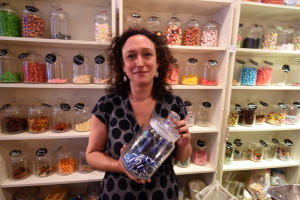
Sweets ShelvesNaomi runs Lickety Splits — just a few doors off the Royal Mile — as a nostalgic throwback to Scottish childhood. Stepping inside, you’re greeted by a wall of glass jars filled with brightly colored treats. But if you take a few minutes to chat with Naomi, you’ll learn that each one has its own unique — and often fascinating — backstory. While England may be the land of Cadbury and Willy Wonka, the Scots seems to have a special knack for sweets.

Take Chelsea Whoppers. These little strips of chewy fudge dusted with cocoa powder were originally manufactured in Helensburgh, Scotland. Naomi loves to explain how, through a scandalous and still-grating series of events, it morphed into the Tootsie Roll in the US. Today, Scots who grew up on Chelsea Whoppers come to specialty stores like this one to track down the originals.

Another fascinating sweet is the Lucky Tattie, a flat, super-sweet disc dusted in cinnamon (resembling a potato — hence the name). Naomi explained that these are so packed with calories that long-distance runners eat one to get an extra boost. When you eat one, it’s like chugging an energy drink.

Sweets JarThe list goes on and on. I love unusual flavors, and Naomi introduced me to several: Hard candies (called “rock”) that taste like clove, ginger, or rhubarb. (She has to keep the rhubarb jar closed, because otherwise it makes her whole shop smell like marijuana.) Little orange-and-blue-streaked candies that taste like Irn-Bru, the soft drink that’s unaccountably beloved throughout Scotland (and nowhere else). Saltire rock, a blue hard candy with a white Scottish flag. And “Edinburgh rock,” a more crumbly candy (like after-dinner mints) with its own wildly creative array of flavors.

And speaking of Willy Wonka, Scottish sweets makers really know how to name their treats: Parma Violets. Acid Drops. Humbugs. Soor Plooms. Fizzy Fangs. It makes “Milky Way” and “Twizzlers” seem dull in comparison.

Naomi is also a fascinating person — she clearly has her finger on the pulse of the neighborhood, and filled me in on the inside scoop behind touristy Edinburgh. For example, it’s well-documented that J.K. Rowling worked on her earliest Harry Potter books at The Elephant House, a café a few blocks south of the Royal Mile.  But knowing the neighborhood, Naomi can see where she drew lots of inspiration from that little corner of Edinburgh. In the Greyfriars Cemetery a block away (made famous by the “Greyfriars Bobby” tale of a loyal dog) are headstones with the names McGonagall and Tom Riddell. The posh George Heriot’s School, a Gothic-turreted showcase just over the cemetery’s fence, was clearly an inspiration for Hogwarts. And a couple of blocks away is a street called…Potterrow. (Cue Harry Potter theme music.)

Sweets NaomiLickety Splits also has a small art gallery. In the back room, Naomi makes broaches, pendants, and other jewelry from maps. Through her work with maps, she’s gotten to know places very well. When I told her I grew up in Central Ohio, she could visualize the state.

Leaving Naomi’s sweets shop with a bag of Scottish goodies, I realize I’ve done my favorite type of shopping: Affordable. Culturally broadening. And delicious. For the rest of my trip, each time I pop a clove hard candy or a sour ball into my mouth, I’ll remember Lickety Splits — and know I’m in Scotland.