The term “foodie” is trendy these days. It sounds pretentious, and a little silly. But I’ve decided to take that word back, for food-lovers everywhere. There’s nothing wrong with being a “foodie.” It simply means that you prioritize food in your life — and in your travels.

Some travelers eat to live. I live to eat. And the more I make food a central focus of my travels, the clearer it becomes that to really appreciate a culture, you need to understand its food. Because in a sense, food is culture.

Finish this phrase: Swiss ___. For all its claims to fame, and the end of the day, Switzerland is synonymous with cheese. It’s part of their international brand and their national identity. And the government invests generous subsidies in keeping this part of Swiss culture alive. To this day, Swiss farmers — now federally funded — still make cheese the old-fashioned way. Each spring, they take their herd of cows up to high-mountain huts, on pastures called “alps,” and hang their decorative cowbells from the eaves. There they stay with their livestock for 100 days, all summer long — milking them at dawn and at dusk, and spending their days making cheese. And then one day in September, when cool weather announces the onset of autumn, the cowhands sling those giant bells around their cows’ necks and walk them back down into the village in the valley below — creating an impromptu parade of flower-bedecked cows, enjoying a victory lap after a productive summer, to a soundtrack of clanging bells and satisfied moos.

What type of food do you associate with Spain? Tapas, of course — small plates. But a deeper understanding of Spanish cuisine tells you volumes about the Spanish culture, climate, and landscape. In arid, blistering Iberia, people take a mid-day siesta to head home, eat a big lunch, and hide out from the heat for a couple of hours. They return to work for a few more hours, and then, just as the sun goes down and temperatures grow tolerable, they go for a paseo — a languid stroll through the city streets, promenading with friends and family, greeting neighbors, and dropping into a variety of cozy bars and cafés. After a day cooped up inside, avoiding the heat, the last thing you want is to settle in for a long, sit-down dinner. So instead, you nibble on little plates of food at the bar — sharing a variety of dishes with friends old and new, sipping drinks, cracking jokes, socializing. Then you head to the next bar, for some new dishes (and some new friends). “Tapas-style” dining isn’t a trend — it’s a social ritual and a way of life, shaped over eons by Spain itself.
What are the two most beloved European cuisines? If you’re like most people, you’re thinking of Italian and French. (If you’re an odd duck like me, Hungarian might have crept into the mix.) Italian and French cuisine are equally enticing, and yet, so fundamentally different.
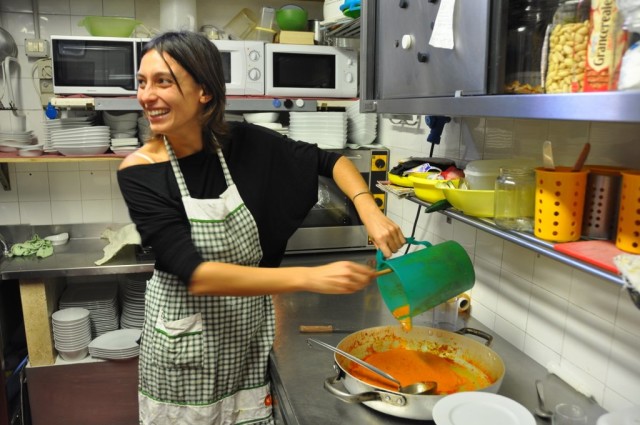
In sun-drenched Italy — the garden patch of Europe — cuisine is all about highlighting quality ingredients. The fewer ingredients, and the less they’re manipulated, the better. I once took a cooking class in Tuscany where Marta taught me how to make the most delicious sauce ever to cross my palate. It has just five ingredients: tomatoes, olive oil, garlic, red pepper flakes, and salt. And it makes everything it touches explosively flavorful. This emphasis on fresh ingredients also makes Italian cuisine highly localized. Why are there so many types of pasta? Because each one is engineered to highlight a particular sauce or topping, usually rooted in a highly specific place and season. (Those pasta places where you “pick your noodles, then pick your sauce” make Italians furious.) Specialties aren’t just regional — they can be specific to a town, or even to a neighborhood. And Italian law forbids restaurants from using frozen ingredients unless they’re noted on the menu.

In French cuisine, the ingredients are less important than what you do with them. I once took a cooking class in Burgundy, where every dish had at least a dozen ingredients — and each recipe involved mastering a precise, delicate technique. French chefs are technicians, who endlessly play and tinker and experiment to create something delicious. Who, but the French, would look at snails crawling across a rain-dampened path and think, “I’ll bet if I cooked those in garlic butter, they’d be delicious”? Beyond escargot, think of the other most famous French dishes: Coq au vin takes the toughest, least palatable type of poultry — rooster — and slow-simmers it in red wine and spices until it’s tender and flavorful. Bœuf bourguignon does the same with tough cuts of beef. And confit de canard is a duck that’s been rendered, preserved in a sealed can of its own congealed fat, then opened up months later and cooked in that same fat. That’s not a recipe — that’s a science experiment. So much of French cooking feels like it was created on a dare. And yet, it’s delicious. And it’s beautiful. French chefs are also elegant artists, who employ their technique to create stunning masterpieces, as pleasing to the eye as to the palate. French salads aren’t just jumbled together — they’re composée…composed.

These are just a few examples of how food can play a much larger role in your travels than simply filling the tank. And that’s the topic of my “Europe for Foodies” class, which we filmed earlier this year and is now available to view on Ricksteves.com and YouTube (and below).
Of all the travel talks I do at Rick Steves’ Europe, “Europe for Foodies” is my favorite. It’s the one that my audiences seem to enjoy the most. And, strangely, it’s also the least-attended.
Maybe people already take it for granted that food is important in travel — or are confident that it isn’t. But the purpose of this talk is to deepen your appreciation for the many vivid travel experiences where food and culture intersect. Like a French chef who makes snails delicious, I’ve engineered this talk to fine-tune your culinary sensibilities, with ample suggestions for incorporating food in your travels. If you’ve enjoyed my many blog posts about food in Europe…this talk is for you.
In the talk, I introduce age-old European culinary concepts that are newly trendy these days, including terroir, zero-kilometer, nose-to-tail, and the importance of eating with the seasons. I also suggest practical tips for finding the best restaurants, and explain some subtleties of dining in Europe that can be confusing. Sometimes this requires psychoanalyzing the way Europeans conceptualize food: You’ll learn why Italians can’t understand how anyone could drink a caffé latte after lunchtime, why they serve your salad after the pasta, and why that stubborn server won’t bring your bill to the table until you’ve asked for it.

I run through some of my favorite cheap eats in Europe (from German Currywurst to Greek souvlaki to Sicilian arancine to Polish zapiekanka) and the best food halls and street markets. And there are sections on drinking (wine, beer, spirits, and café culture) and sweets — from Belgian chocolates to Italian gelato. Finally, I suggest some experiences that allow you to incorporate food into your travels: cooking classes, food tours, visits to local farms, chasing a truffle-sniffing dog through an oak forest, getting to know a Slovenian beekeeper, and so on.
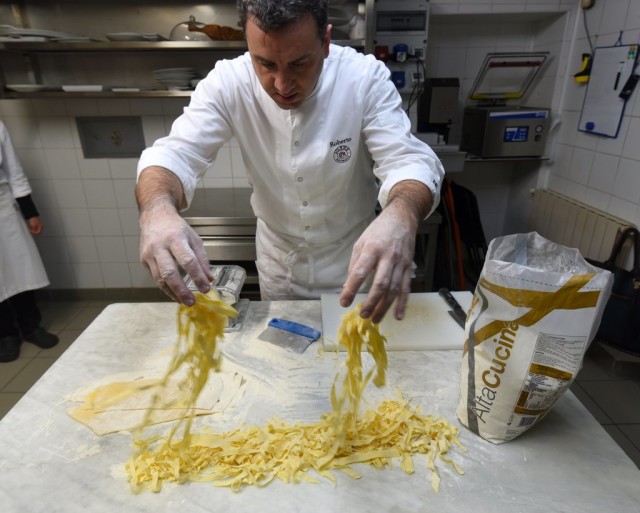
I hope you enjoy my “Europe for Foodies” talk as much as I enjoyed putting it together. And remember: Every meal you have in Europe is an opportunity to have a cultural experience.
If you enjoy reading my blog posts that focus on food, you can find a roundup here.
Check out my full 1.25-hour “Europe for Foodies” talk on Ricksteves.com and YouTube. (You can find the handout for the class here.)
If you’re tight on time, you can also check out shorter chapters separately:
Europe for Foodies 101 (23 min)
Restaurant-Finding Tips (14 min)
Eating Tips and Tricks (9 min)
Cheap Eats (9 min)
Drinks and Sweets (16 min)
Foodie Experiences (7 min)
And if you enjoy this talk, check out some of the others I’ve done:
 Driving around the perimeter of Iceland on the 800-mile Ring Road this summer (working on our
 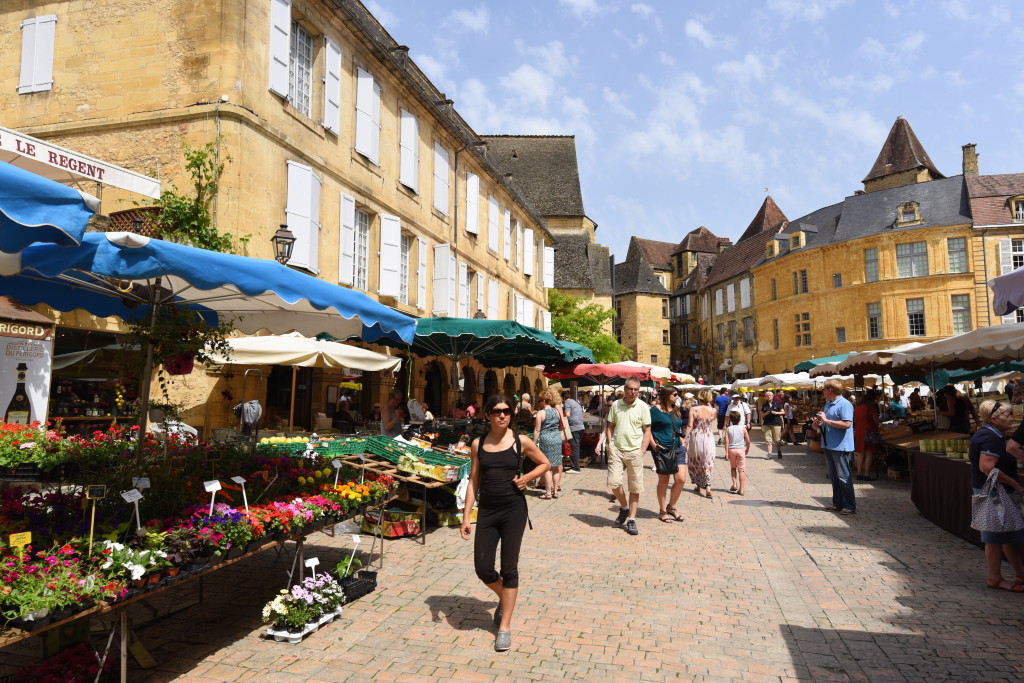 Of all the delightful activities I’ve enjoyed in France, my favorite remains the lazy Saturday morning I spent
 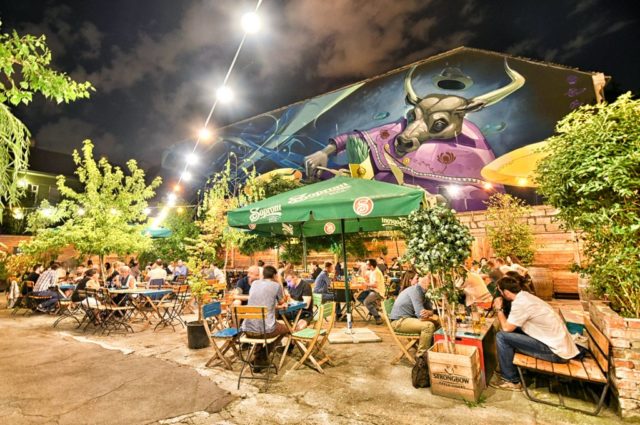 I must admit, I’m not really a “nightlife guy.” But when I’m in Budapest, I budget extra time to simply
  This gorgeous corner of my favorite country has always been high on my personal “must list.” It’s a little slice of heaven: Cut-glass alpine peaks tower over fine little Baroque-steepled towns, all laced together by an eerily turquoise river. While this place should be overrun with crowds, on my latest visit — in late September — I had the place nearly to myself. A few A+ travelers have begun to find their way to the “sunny side of the Alps”: Rafters, kayakers, and adventure sports fanatics are drawn to the sparkling waters of the Soča River. Historians peruse the well-curated array of outdoor museums and cemeteries from World War I’s Isonzo Front, where Ernest Hemingway famously drove an ambulance. Skiers gape up at the 660-foot-tall jump at Planica, home to the world championships of ski flying (for daredevils who consider ski jumping for wimps). And foodies make a pilgrimage to
  My favorite piece of art in Europe isn’t a painting, and it isn’t in a museum. It’s a park — a grassy canvas where a single artist, the early-20th-century sculptor Gustav Vigeland, was given carte blanche to design and decorate as he saw fit. The city of Oslo gave Vigeland a big studio, and turned him loose in the adjoining park for 20 years. He filled that space with a sprawling yet harmonious ensemble of 600 bronze and granite figures, representing every emotion and rite of passage in the human experience, all frozen in silent conversation with each other — and with the steady stream of Oslo urbanites and tourists who flow through Vigeland’s masterpiece. The naked figures (which might provoke giggles among prudish Americans) reinforce the sense of timelessness and universality: They belong not to any one time or place, but to every time and every place — from Adam and Eve to contemporary Norway. Over the last decade and a half, I’ve been to Vigeland Park three times. Each time, I was in a totally different state of mind. And each time, the statues spoke to me like old friends — sometimes with the same old message, and sometimes with new insights. With all due respect to da Vinci, Van Gogh, and Picasso, no single artistic experience in Europe is more meaningful or impactful to me than Vigeland Park.
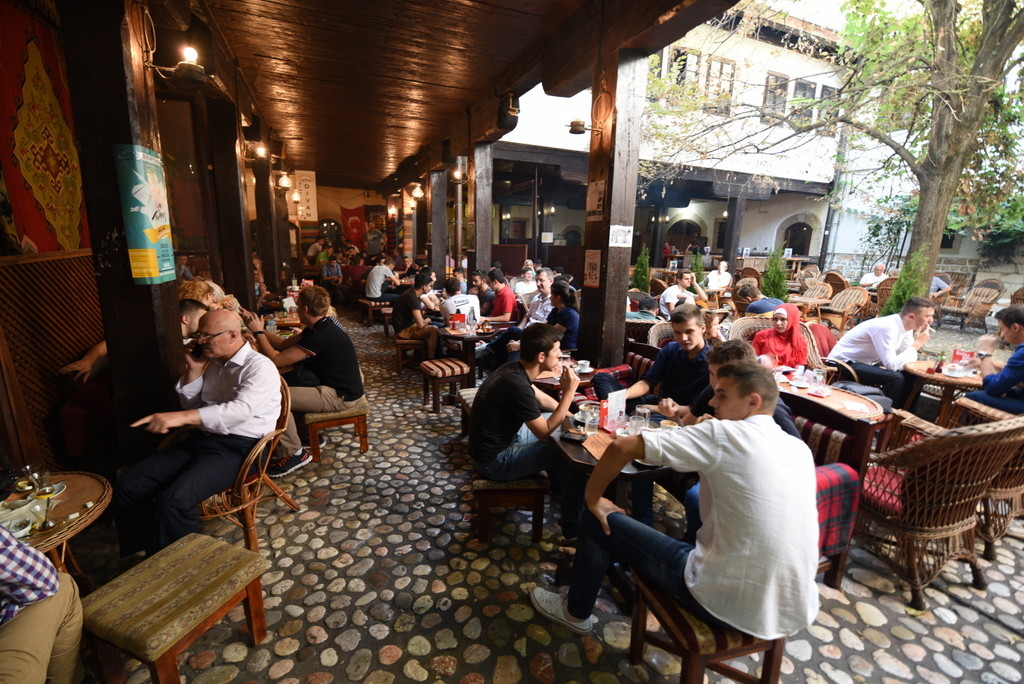 Sarači #16 is the most interesting address in downtown Sarajevo. Facing east — toward the Ottoman-era old town, Baščaršija — you’re transported to medieval Turkey: a bustling bazaar with slate-roofed houses, chunky river-stone cobbles, the tap-tap-tap of coppersmiths’ hammers, and a pungent haze of hookah smoke and grilled meats. Then, turning to the west, you’re peering down Ferhadija, the main thoroughfare of Habsburg Sarajevo. This could be a Vienna suburb, where stern, genteel Baroque facades look down over cafés teeming with urbanites. Within a few short blocks of this spot stand the city’s historic synagogue, its oldest Serbian Orthodox church, its Catholic cathedral, and its showcase mosque. Few places on earth are so layered with history. And then there’s the latest chapter: the poignant story of the Siege of Sarajevo in the mid-1990s, when the town was surrounded by snipers for more than 1,400 days — connected to the outside world only by a muck-filled tunnel and a steep mountain ascent. Proud Sarajevans you’ll meet are often willing, or even eager, to share their stories of living a horrific reality that we experienced only through the Nightly News. And if you’re lucky, they’ll invite you for
  Of all of Tuscany’s appealing corners, the Val d’Orcia (“val dor-chah”) is — for me — the most enchanting. While just a short drive from the tourist throngs in Florence, San Gimignano, Siena, or the Chianti region, the Val d’Orcia — bookended by the charming towns of Montepulciano and Montalcino (both synonymous with fine Tuscan wine) — feels like a peaceful, overlooked eddy of rural life. This strip of land is where most of the iconic “Tuscany scenery” photographs are taken: Winding, cypress-lined driveways; vibrant-green, rolling farm fields that look like a circa-2000 screensaver; and lonely chapels perched on verdant ridges. And it’s the backdrop for famous scenes in everything from The English Patient to Gladiator to Master of None. And yet, the area has no “major sights” — no sculptures by Michelangelo, no paintings by da Vinci, no leaning towers — which, mercifully, keeps it just beyond the itineraries of whistle-stop, bucket-list tourists. I have savored several visits — including
  A few years removed from the depths of its economic crisis, Athens has re-emerged as a red-hot destination. Revisiting the city a few months ago, I was struck by how many tourists I saw — and by how many of them refused to venture beyond the cutesy, crowded Plaka zone that rings the base of the Acropolis. And that’s a shame, because literally across the street from the Plaka’s central square, Monastiraki, is one of Athens’ most colorful and fun-to-explore neighborhoods: Psyrri (“psee-ree”). Not long ago, this was a deserted and dangerous slum. But recently, Psyrri has emerged as a trendy dining and nightlife zone. Its graffiti-slathered apartment blocks now blossom with freshly remodeled Airbnb rentals. This still-gritty area may feel a little foreboding at first, but if you can get past the street art, grime, and motorbikes parked on potholed sidewalks, it’s easy to enjoy the hipster soul of the neighborhood that’s leading many to dub Athens “The New Berlin.” For the upcoming fifth edition of our
  On my last visit to Moscow, in the summer of 2014, Russia was in the news: military action in Crimea and eastern Ukraine, Putin’s brutal crackdown on homosexuality and punk-rock protesters Pussy Riot, and the recently completed Sochi Olympics. Of course, since then, the headlines have changed, but Russia is in the news more than ever. That’s why I consider Moscow to be Europe’s most fascinating — and challenging — destination. People back home shake their heads and wonder: How can these people support Putin, who (to us) is so clearly a demagogue? I take that not as a rhetorical question, but as a genuine one that deserves a real answer. And a thoughtful visit to Moscow — even “just” as a casual tourist — can offer some insights. Designed-to-intimidate Red Square and the Kremlin fill onlookers with awe and respect. The still-standing headstone of Josef Stalin — tucked along the Kremlin Wall, just behind Lenin’s Tomb and its waxy occupant — seems to suggest that the Russian appetite for absolute rulers is nothing new. But mostly, I’m struck by the improvements I see in Moscow with each return visit. On my first trip, in the early 2000s, the famous Gorky Park was a ramshackle, potholed mess, and the Cathedral of Christ the Savior — which had been demolished by communist authorities — was still being rebuilt. But today, Gorky Park is a lush, pristine, manicured people zone, and the sunshine glitters off the cathedral’s rebuilt golden dome. Just up the river, a Shanghai-style forest of futuristic skyscrapers rises up from a onetime industrial wasteland. In short, the Russian capital — which has always been interesting — is now actually a pleasant place to travel. Finding myself really enjoying Moscow, for the first time, makes it easier to imagine how many Russians might be convinced that Putin is Making Russia Great Again.
 I
I