What’s New in Paris: Tips for Summer 2019

I recently returned from a visit to “The Big Three” of European travel: Paris, London, and Rome. This trio of great European capitals is better (and more crowded) than ever. It had been 10 years since my last visit to Paris, and I was struck by how it feels timeless — yet subtly better in so many respects. Here are some of my fresh-from-the-rucksack observations from the City of Light.

Reports of Notre-Dame’s demise have been greatly exaggerated. The fire that engulfed the cathedral’s roof back in April was a grotesque and shocking thing to watch on TV, and priceless works of art have been lost forever. But — visiting soon after the fire — I was heartened to lay eyes on France’s most important church and see that its graceful stone structure is still intact. In fact, from most angles, little fire damage is evident. I don’t mean to diminish the tragedy; France faces a long, expensive, and exhausting rebuilding process to resurrect its Gothic masterpiece. But seeing Notre-Dame’s gargoyles still peering out from its prickly roofline made my heart glad.

That said, the harrowing sight of Notre-Dame in flames reminded me of the fragility of Europe’s cultural treasures. On this visit, I found myself making a point to slow down and savor Paris’ great sights. Just a short walk from Notre-Dame is Paris’ other great church, Sainte-Chapelle, with the most spectacular stained glass anywhere. I visited in a pensive mood — putting myself in the shoes of a medieval pilgrim, wowed by the swirling play of colored light in this majestic space. If you were saddened by the Notre-Dame fire, take it as a challenge to “be present” in the presence of Europe’s great art and architecture. Ignore the crowds and just take it all in. Because you never know when you’ll be back…or if, when you are, that wonderful sight might not be there anymore.

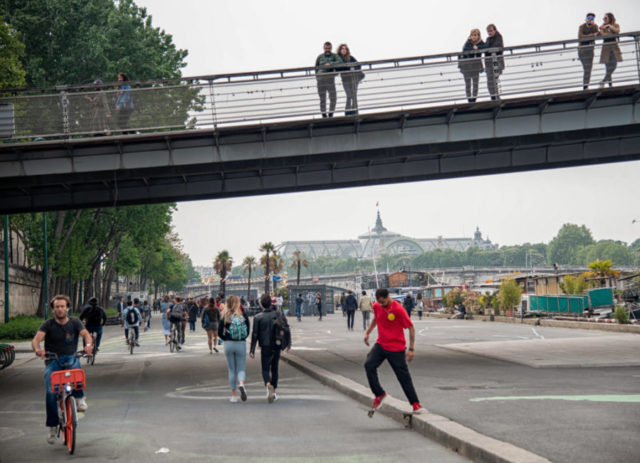
Once a thoroughfare for busy traffic, the Seine riverbanks have been reclaimed by Parisians. The city is converting more and more of its embankments to people-friendly promenades. In this otherwise congested city, I found walking along the Seine a relaxing way to connect my sightseeing. On a nice day, the riverbanks are filled with rollerbladers, skateboarders, cyclists, and people out strolling. A few pop-up bars and cafés have opened along the river, though to be honest, I was hoping for even more — this zone would be made-to-order for a food truck circus. (A Parisian explained to me that the city is heavily regulated and slow to adopt new ideas. I think maybe I’ve been spoiled by London’s food-truck explosion.) A local tipped me off that the stretch between the Eiffel Tower and Notre-Dame is, not surprisingly, quite touristy — but if you carry on farther east, the embankments become almost entirely local (check out the area around the Bibliothèque François Mitterrand).

Bonus tip: If you enjoy traffic-free Paris, be in town for the first Sunday of any month — when the “Paris Breathes” initiative forbids car traffic entirely in huge swathes of the city center, and along the Champs-Elysées.

Part of my assignment for this trip was road-testing the Rick Steves’ Europe Audio Tours for Paris. I used these tours to visit the Orsay, the Rue Cler shopping street, the Château of Versailles, and more — and they significantly enriched my visit. Download the (free) Rick Steves Audio Europe app, then download the (free) audio tours for the destinations you’re visiting. When you arrive, stick your buds in your ears and simply enjoy a thoughtfully curated, fully guided tour of Europe’s top sights. (This may sound like a gratuitous plug, but since we make absolutely no money doing these audio tours, I consider it more of a public service. Seriously…I just love these things.)

Paris is c-r-o-w-d-e-d. Smart line-beating strategies can make things easier. But even so, the major sights can be time-consuming and borderline-unpleasant to visit. So consider going light on the sightseeing, and instead, focus on enjoying Paris as a temporary Parisian. Sit on a bench in a park away from the crowds. For example, tucked just across the street from the Louvre (and a short stroll from the mega-touristy Tuileries Garden) are the free-to-enter courtyards of the Palais Royal. This pristine, manicured park — with gurgling fountains, geometric hedgerows, and stately sculptures — is where Parisian parents bring their kids to escape the urban intensity of the city, and where office workers come to unwind at the end of a busy day. And there’s barely a tourist in sight.

Paris is the birthplace of department stores. And these days, some of its stately old shopping halls are becoming virtual theme parks. At the Galeries Lafayette Paris Haussmann — perhaps Paris’ grandest grand magasin — they’ve built a “Glasswalk” observation platform that extends out into the sumptuous atrium, under the glittering Art Deco dome. At busy times, people wait in line just to step out and snap a photo (free; you’ll find it on the third floor, near the Starbucks). And down below, they recently suspended a bouncy trampoline floor for kids — hanging in the middle of the atrium, high above the perfume counters (this is now closed, but they’re likely to feature similar attractions in the future). Purist Parisian shoppers are put off by the very touristy turn their venerable old stores are taking…but visitors enjoy seeing the department store reach its ultimate expression.

Paris has an excellent public transit network — but it’s important to confirm your transit plans before heading out for the day. I noticed more interruptions on this visit than I ever had before. For example, the Gilets Jaunes (“Yellow Vests”) economic justice movement has been very active this summer — especially on Saturdays. Their M.O. is to disrupt local transit, occasionally closing down key Métro lines and bus routes. (When I was in Paris on May 1 — the “Labor Day” holiday — virtually all city transit came to a standstill.) While a few of these protests have turned violent, they are easy enough to avoid. (They are targeting institutions, not tourists.) But they can create headaches if you’re trying to move around the city. 

Beyond the protests are routine transit interruptions, closures, and changes. For example, Paris recently renumbered several of its bus lines, so a year-old map is no longer accurate. And, as with any big-city transit system, key stops can be closed for construction — for example, the Pont de l’Alma RER stop, handy to the popular Rue Cler neighborhood (and my hotel), was closed when I was in town. Public transport is still the cheapest and most efficient way to get around Paris, but keep an eye on the city transit site for changes and updates: www.ratp.fr/en. And, as always, hoteliers are a great source of up-to-the-minute information about transit closures, whether planned or otherwise. (Bonus tip: When in Paris — or any other city — I use the Google Maps app extensively for both realtime transit routes and walking directions. It rarely steers me wrong.)

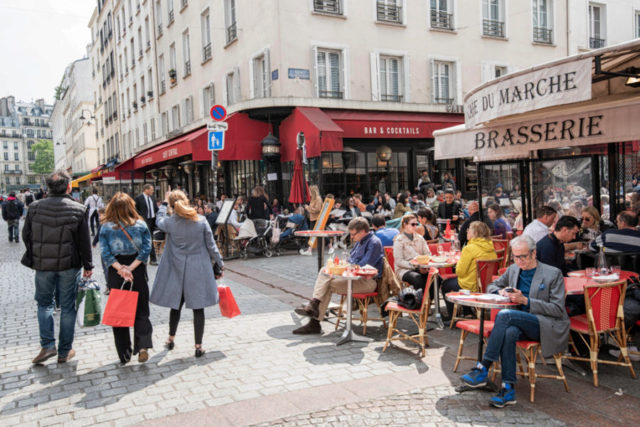
I had many memorable meals in Paris, but some of my favorites were simply at neighborhood cafés, with classic menus of steak-frites and croque-monsieur. While I’m a bit of a snob about seeking out top-quality meals, here in Paris, even a fill-the-tank meal at a local dive would qualify as “high cuisine” in most countries. And the people-watching from al fresco tables is fantastique. I found myself choosing the sidewalk perch I liked best, without regard for the menu. And I always ate well enough.

Even as things change, Paris remains one of Europe’s top destinations. Doing a little homework to know what’s new can help you have a more savvy, more effortlessly enjoyable trip. Bon voyage!


I’ve also blogged recently about how you can beat the crowds at the major sights in Paris (and other European biggies). And last week, I described my favorite Paris hotel.

When I’m in Paris, in addition to those audio tours, my indispensable tool is the Rick Steves Paris guidebook. Rick, along with co-authors Steve Smith and Gene Openshaw, have done a formidable job of making one of Europe’s best and biggest cities engaging, fun, and easy to navigate.

Postcards from Normandy — Remembering D-Day on French Beaches

The 75th anniversary of D-Day has me in a patriotic mood — and nostalgic for a time when America was doing good in the world, rather than alienating allies and burning bridges. This occasion has got me thinking about the place where the USA lived arguably its most stirring moment: in the northern French region of Normandy.

Here are a few “Postcards” from my recent visit to Normandy — starting with the beautiful, low-impact pastoral sights, and building up to the powerful places where the echoes of D-Day still reverberate.

Welcome to Normandy 

While best known as the site of the D-Day landings that turned the tide of World War II, Normandy is a sprawling, multifaceted region that’s a delight to explore. Even an impatient sightseer could spend a week here without getting bored. In addition to thought-provoking cemeteries and beaches still strewn with artifacts from that pivotal invasion, Normandy serves up a pastoral countryside of green rolling hills misted by English Channel storms, charming half-timbered towns, towering churches, landscapes and cityscapes made famous by the Impressionists, and a delicious, apple-flavored cuisine.

Honfleur

Honfleur wins the title for Normandy’s most charming town, with its historic harbor, half-timbered old town (pictured earlier), and a characteristic wooden church that feels like an overturned boat. With its unique “luminosity,” it’s no wonder the Impressionists found inspiration here. Honfleur is also a delightful spot to browse for typically Norman foods, many of which feature apples from the region’s orchards. You can graze on delicious edible souvenirs such as apple-wine vinegar, apple candies and cookies, hard cidre, and Calvados, the powerful local apple brandy.

Mont St-Michel

Normandy’s flagship destination is one of those great European sights that truly lives up to its billing. An island abbey that’s sometimes surrounded on all sides by water, and at other times high and dry in the middle of an expansive mud flat, Mont St-Michel strikes a dramatic pose. A new causeway provides handy shuttle-bus service (in high tide or low) from a park-and-ride on the mainland. Once at the island, you can wander the mud flat (inspecting temporarily beached sailboats), climb up the twisty lanes through town, and tour the historic abbey.

Rouen Cathedral

The city of Rouen, where Joan of Arc was burned at the stake, clusters around the dramatic facade of its exuberantly Gothic Notre-Dame Cathedral. The great Impressionist Claude Monet painted 30 different versions of this facade — depicting the same subject at different times of day, in different weather and different light. As a photographer, I enjoyed circling back past the cathedral facade every few hours to carry out a study of my own.

Omaha Beach

The main thing that attracts most visitors to Normandy — especially Brits, Canadians, and Americans — are the desolate beaches where the Allied forces staged Operation Overlord in the early hours of June 6, 1944. The D-Day invasion provided the Allies with a foothold in Western Europe, while Hitler was distracted fighting Russians on the Eastern Front. Eleven months later, Hitler was dead.

Stepping onto Omaha Beach (the most famous landing site, thanks partly to Saving Private Ryan), you’ll trip over jagged Nazi fortifications that still survive 75 years later. Put yourself in the combat boots of the young grunts tasked with taking the beach, and notice how impossibly far away that scrubby, sandy bluff is. Now add relentless machine-gun fire. Standing here, I dare you not to get goosebumps.

Arromanches

Of course, D-Day was more than just Omaha Beach, and the brave souls fighting on those beaches were not just Americans. Canadians have their own museum and monuments at Juno Beach. And in the town of Arromanches — in the British landing sector — the beach is still littered with gigantic prefab harbor sections. In an astonishing feat of engineering, the Allies prepared for phase two of the invasion by building an entire temporary harbor in England, breaking it into 115 modular pieces (each the size of a football field), and then shipping each one across the English Channel to reassemble here as soon as the beaches were secured. This four-mile breakwater, called “Port Winston,” allowed the Allies to swiftly begin their land invasion before the Nazis could regroup. Arromanches is still stuck with its giant chunks of Port Winston — how could you possibly remove them? — and history buffs love wandering out and getting up close to history.

This is just a reminder that D-Day is a whole series of sights, scattered across a 54-mile stretch of coastline, each one illustrating a different chapter of the invasion: Juno Beach, Utah Beach, Pointe du Hoc, the church at Ste-Mère Eglise, the gun battery at Longues-sur-Mer, cemeteries honoring each nationality who suffered losses here, and on and on. (Our Rick Steves France guidebook outlines a driving route to connect all the major sights, and a long list of local guides you can hire to show you around.) Give the D-Day sights a full day. Better yet, two. Better yet, three.

American Cemetery

For Americans, the ultimate D-Day experience is visiting the American Cemetery overlooking Omaha Beach — vast green fields speckled with 9,387 neatly arranged gravestones honoring troops who lost their lives in Normandy. (This is just one of many such cemeteries throughout Normandy. D-Day alone brought 4,413 Allied deaths — including 2,499 Americans.) Each cross and star of David is etched with the name, place of birth, date of death, and dogtag number of a young American whose sacrifice helped turn the tide of the war.

Walking through these fields, my heart swelled with thoughts of relatives who were ripped from the dairy farms and cornfields of rural Ohio and — at an age when most of us have the privilege of taking a “gap year” or going to frat parties — traveled half a world away to fight someone else’s war and die on an anonymous beach. It’s hard to imagine anyone leaving this site with a dry eye.

Merci

Inside the Utah Beach Landing Museum, next to one of the landing craft that carried so many American troops to a premature death, someone had scratched a simple message into the sand: Merci. While I find French people, as a rule, extremely welcoming to Americans, I have rarely traveled somewhere where the locals were so genuinely appreciative of the part my homeland played in their history, and where I felt so proud to be an American. Throughout Normandy, French people of all ages tear up when talking about what we did for them.

At a moment in our history where America seems less sure about its role in the world than it has in generations, I’m filled with patriotic pride (and, I’ll admit, not a little sadness) as I reflect on a time — and a corner of France — where my country joined with its allies to do the right thing, at great personal sacrifice, and made a history-changing difference to people outside our borders who needed us. Now that’s global leadership. Merci. And God bless America.


I visited Normandy to help update our Rick Steves France guidebook. That book is, if I’m being honest, one of the very best guidebooks in our Rick Steves series  (thanks to a lifetime of expertise and hard work by co-author Steve Smith). There’s no better tool for visiting Normandy on your own; the book includes all the advice you need for visiting Normandy independently, as well as a list of recommended companies and local tour guides offering tours of the various D-Day sites. 

Or, to have someone else handle the details, consider our Paris and the Heart of France tour, which includes a guided visit to Normandy.

Beat the Crowds: How to Avoid Long Lines in Europe

I just returned from an exhilarating visit to “The Big Three” of great European cities: London, Paris, and Rome. And one inescapable trend these days is the spike in tourist crowds. Simply put, these great cities — and their major sights — are jammed. It’s more important than ever to be smart and strategic to avoid long lines. A major purpose of my trip was to confirm the crowd-beating tips in our Rick Steves guidebooks. Sure enough, that advice worked like a charm — and saved me hours in line. No matter where you travel, a few overarching strategies can help you avoid lines and minimize crowds. These five favorite road-tested tips allowed me to spend this spring sightseeing at Westminster Abbey, the Tower of London, Versailles, the Orsay, the Colosseum, the Roman Forum, and many other world-class sights…without wasting precious vacation time.

Why so crowded? For one thing,  more Americans than ever are traveling to Europe. And now, in recent years, they’ve been joined by even more travelers from China, India, and Russia — three populous countries with emerging middle-class families who want to see Europe, too. But the Sistine Chapel, Versailles’ Hall of Mirrors, and Westminster Abbey are the same size as ever — and are now trying to squeeze that many more visitors into the same space.

The one overarching tip for beating crowds is simply this: Do your homework. All of those sad, wretched people you see standing in long, long lines at major sights? Those are the tourists who didn’t bother to prepare one iota before they woke up, had a lazy breakfast, and then — around 10:00, just as lines all over the city were summiting — said, “You know what? Let’s go to the Louvre!” If you plan ahead, you can avoid those lines almost entirely. But if you try to wing it, you can count on spending much of your precious European trip standing around, getting sore feet. The choice is yours.

1. Reserve or prebuy tickets online.

This has been essential advice for years at many of Europe’s top sights. If you don’t reserve ahead for Rome’s Sistine Chapel, Granada’s Alhambra, Paris’ Eiffel Tower, Amsterdam’s Anne Frank House, Milan’s Last Supper, or Auschwitz-Birkenau Concentration Camp Memorial in Poland, and you try to just show up, you will not get in…period.

Find out which sights require (or effectively require) reservations. (You’ll find a complete list on the right side of this page). Then, once you’re confident of your dates, book your visit as far ahead as possible. The procedure varies from sight to sight, but in every case, you can book online, with English instructions, using an American credit card. Typically, you’ll reserve a slot for a specific time window. Just show up at that time, and you’re golden.

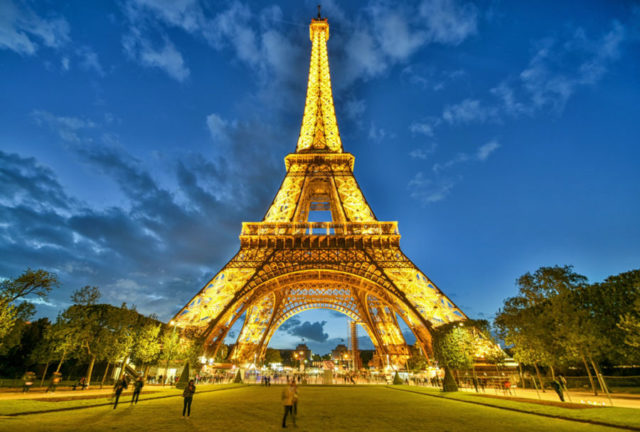
The one big sight in Paris I did not get to visit on this trip — even though I wanted to — was the Eiffel Tower. Why? Because I waited until I arrived in Paris to try to reserve a slot online. And by that time, even several days out, the only time slot available was to enter at 11 p.m. I consoled myself by taking lots and lots of photos of that Parisian icon…from the ground.
In other places, booking ahead is more “optional,” depending on the crowds from day to day. When it’s quiet, reserving is not necessary. But given the unpredictability of crowds, prebooking can still be very smart…just in case.

For example, a big trend in London is that major sights — including  Westminster Abbey, Houses of Parliament, Churchill War Rooms, St. Paul’s Cathedral, Tower of London, London Eye, and Windsor Castle — are encouraging visitors to prebuy tickets online. This usually saves a couple of pounds off your admission cost, and it also lets you skip the ticket line when you arrive at the sight.

One afternoon, I tried to swing by the Churchill War Rooms — the underground warren of offices where the UK engineered its victory in the Battle of Britain. But even late in the day, a couple of hours before closing time, there was a one-hour line to buy tickets. I missed out on that particular sight — and as I stood there, watching people breeze right past the long line because they’d prebooked tickets (at a discount, no less), I wished I’d done the same.

Won’t this cramp your style? Look — I respect spontaneity in travel. But the stakes are very high these days. If you enjoy being spontaneous on vacation, then you can be as spontaneous as you want to be — except when it comes to avoiding exhausting lines at major sights. Think of it this way: If you save an hour in line, that’s an entire hour of priceless serendipity that you can spend however you like.

2. Some combo-tickets and sightseeing passes let you skip the line.

My all-time favorite line-beating tip remains the same: At Rome’s Colosseum, you can join the excruciatingly long ticket line. Or you can walk five minutes up the street, to the ticket office for Palatine Hill (which is included in your Colosseum combo-ticket  — regardless of whether you wind up visiting that sight). You can walk right in, buy your ticket, then head back down to the Colosseum and stroll past the long line and into the world’s greatest ancient amphitheater. Other sights all over Europe have similar combo-tickets.

Another “oldie-but-goodie” tip — which has gotten even better with the increase in crowds — is to buy a Paris Museum Pass. Not only will this save busy sightseers money; it also lets you skip right past the long ticket-buying line at major sights all over the city. I visited most of Paris’ top sights — Versailles, the Orsay, the Arc de Triomphe, Sainte-Chappelle, Rodin Museum, the Orangerie, and more — and rarely waited more than a few minutes at any of them (at the security checkpoint). For example, at the Arc de Triomphe, my Paris Museum Pass let me walk right past the long ticket line in the underpass below the arch. By the time the folks at the end of that underground ticket line had even cleared security, I’d already climbed the 284 steps to the top and back.

However, before buying a sightseeing pass, be aware of which sights let you skip the line — and which ones don’t. For example, in London, Westminster Abbey has some of the longest lines in town. I saw would-be visitors walk up to the security guard, show their London Pass, and be sent back to the end of the line with an apologetic shrug. The London Pass does include “fast track entry” at some sights — but mostly ones with shorter lines to begin with (and not Westminster Abbey).

Also, be aware that even if you can skip the ticket-buying line, you may still have to wait in a security line. For example, at Windsor Castle, I was told that when it’s very busy, even people who prebook may have to wait an hour (or more) to get through security.

That’s why — even if you prebook tickets — it’s always a good idea to…

3. Know exactly when sights are the most (and least) crowded.

At most major sights, crowds peak from just after opening time until around lunchtime, and then crowds gradually taper off until late afternoon.  Early risers show up shortly before the sight opens, so they can be in the first wave of visitors. People like me, who prefer to sleep in, find it’s best to go late in the day.

On principle, I never, ever show up at a major sight mid-morning. Instead, I use that time to visit lesser-known sights, explore lively neighborhoods and parks, or seek out crowd-free experiences.

For example, on this trip, my Rome hotel was a couple of blocks from my favorite sight in town, the Pantheon — the best-preserved temple from the ancient world. I was sorely tempted to visit when I left the hotel in the morning. But I resisted that instinct, knowing I’d be sentencing myself to an unpleasantly crowded experience. Instead, I circled back in the late afternoon — around 3:45 — and was able to walk right in.

Later, I stopped by Rome’s Colosseum at 5 p.m. Even though I could have gotten a ticket with no wait just up the street (see that tip earlier), as an experiment, I joined the quickly shrinking ticket-buying line. In about 25 minutes, I was inside, snapping photos of the place where gladiators fought for gore and glory. When I was done there, I walked across the street and slipped in the gate for the Roman Forum just before they closed it, at 6:15. In the 45 minutes before they kicked me out, I had the Forum almost to myself — strolling amid the ancient ruins, feeling the breeze, and listening to the birdsong.

On the other hand, be careful not to cut it too close. The next evening, I was feeling overconfident at the Vatican. After snapping some photos around St. Peter’s Square, I joined the security line to enter the greatest church in Christendom at about 6:20 p.m. (hoping to squeeze in for a peek before the 7 p.m. closing time). The line moved quickly, but after about five minutes — when I was maybe 10 people away — the security guard slammed the gate shut with a decisive clang! The people ahead of me in line gestured frantically, begging the guard to let them slip in. He simply pointed to his walkie-talkie and shrugged. He’d been told it was time to close the gate — and when you work at the Vatican, you don’t mess with authority. (I imagine he didn’t want to have to answer to his boss’s boss’s boss.)

Sometimes it’s not just the time of day that matters, but the day of the week. Visitors to Paris who do their homework know that the Orsay — with Europe’s greatest collection of Impressionist artwork — is open late on Thursdays. After walking past that museum at other times, and seeing lines out the door, I waited until the time was right to visit. Then I showed up around 6:30 p.m. on a Thursday — and breezed right in.

At Windsor Castle outside of London, the ticket-sellers warned me that on Tuesdays, Thursdays, and Saturdays — when there’s a Changing of the Guard at 11:00 — everybody shows up around 10:30 in the hopes of entering the castle grounds to watch the ceremony. But many of those people are still stuck in the security line when the ceremony begins. If you’re determined to see the Changing of the Guard from inside the castle, arrive plenty early. But also be aware that the guards march up the main drag on their way to the castle. As an alternative, you could arrive outside the castle just before 11:00, watch that parade, then chill out, visit the rest of the town, and have a relaxed lunch. Then enter the palace in the early afternoon — when the lines are almost nonexistent.

4. Take breaks from the crowds — and find alternatives to major sights.

Trying to sprint through three or four big-name sights in one day, back to back to back, is a recipe for exhaustion and frustration. As travelers, all too often our eyes are bigger than our stomachs, sightseeing-wise. Don’t over-program your time in Europe’s big, intense cities. I’d aim for just one or two major, crowded sights per day. Then take a break — check out a bustling local market hall, nurse a coffee at a sidewalk café, go for a walk in a park or along a scenic riverbank, or explore an up-and-coming neighborhood. Or visit a lesser-known sight that’s almost as good, but much less crowded than the biggies.

In Paris, it’s understandable that people want to see the Orsay — the planet’s greatest collection of Impressionist works (and much more). But the Orsay can be jammed. If you’re a fan of Claude Monet, consider heading across the river to the Orangerie, displaying massive canvases of his transcendent Water Lilies, and — in the basement — a concise collection of works by many of the same artists you’ll find in the Orsay. But the Orangerie, too, can be quite busy. Parisians I talked to said that if it’s Monet you want to see, you can skip both the Orsay and the Orangerie and instead visit either the Marmottan Museum or the Musée Maillol — both of which are never crowded.

In Rome, instead of braving the lines to enter the Colosseum, satisfy yourself with snapping photos from the outside. Then walk 15 minutes to the Baths of Caracalla, which — like the Colosseum — beautifully illustrate the majesty of ancient Roman engineering…but are always completely empty. For aficionados of ancient Rome, the baths are arguably even more interesting than the Colosseum. (Rick recently visited the Baths of Caracalla with our Roman friend, tour guide Francesca Caruso.)

In London, I waited in moderate lines to tour both the Tower of London and Windsor Castle. And both were well worth the wait. But I also ventured out to a lesser-known royal residence, Hampton Court Palace — and I found it captivating. The onetime home of King Henry VIII (and his many wives), Hampton Court Palace is perhaps even more impressive, architecturally, than the Tower and Windsor. And, thanks to the excellent, included audioguide, it comes with fascinating historical insights and vivid stories of larger-than-life monarchs. Best of all, I had the place virtually to myself.

It’s hard to convince travelers to not visit those world-famous sights. And if the only way you can be satisfied with your visit to Rome is by standing in the Sistine Chapel, then by all means, do it. But don’t do it just because it’s on someone else’s list of what you’re “supposed” to see. If you know a sight is going to be jam-packed, ask yourself — honestly — how important it is for the success of your trip. Maybe you can settle for some “also-rans.” You may well discover that — when taking the misery of crowds and long lines into the equation — you’ll enjoy those “lesser” sights even more than the biggies.

5. Expect challenging crowds…and be zen about it.

The hard reality is that, these days, even “A+” travelers who do everything just right must simply accept the fact that Europe is at capacity, and some lines are unavoidable. You don’t have to like it, but you will need to pack a little extra patience.

Every savvy traveler in Paris knows to avoid Versailles on a Tuesday — because the palace’s Monday closure, combined with the Tuesday closure of the Louvre, create a perfect storm of demand. Unfortunately, the week I visited, I had to go to Versailles on Tuesday — since Wednesday was a holiday. Visiting one of Europe’s busiest sights on the one day out of three that it’s open is a recipe for frustration.

I did my best to beat the crowds — arriving at the château later in the day, about an hour and fifteen minutes before closing time. My Paris Museum Pass let me skip the ticket-buying line. However, the (obligatory) security line filled the entire grand courtyard — twisting back on itself four times, in a serpentine zigzag, with hundreds of fellow latecomers. I had finally been beat by Europe’s crowds. I hung my head in shame, found the end of the line, and joined the masses.
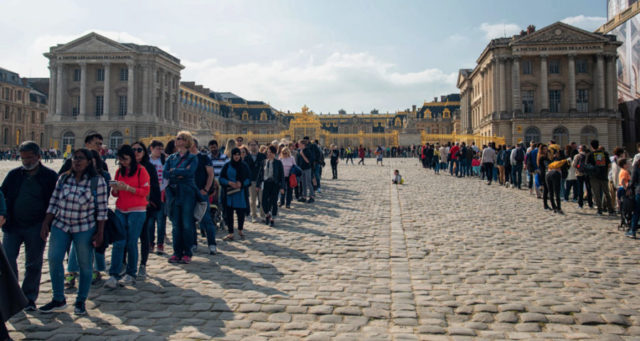
And do you know something? It was just fine. Although the line looked comically long, it moved fast, and I was inside within about a half-hour. That left me just enough time to follow Rick’s Versailles Audio Tour through the château’s highlights — set to double-time, with Rick chattering like a chipmunk in my ear as I walked briskly through the sumptuous halls.

Inside, the crowds were intense. There was no choice but to go with the flow. To pass from room to room, everybody had to be extruded through the same narrow doorways. Competition was fierce for the best vantage point for selfies. I witnessed a few photographers virtually come to blows, jockeying for a clear shot of Louis XIV’s toilet. I was worried someone would get jostled over the flimsy guard rope and go careening into a priceless vase or piece of furniture. It was unpleasant.

But I decided not to let the crowds ruin my enjoyment of Europe’s grandest palace. I just went numb and went with the flow, making a point to ignore the crowds and focus instead on the lavish details. By the time I reached the Hall of Mirrors, the crowds were clearing out, and I was able to linger amid the ghosts of 18th-century courtly life.

I always get a kick out of being one of the last people at a great sight. By the end of my visit, they were flushing out us final stragglers by closing the big shutters — plunging each successive room into darkness, in a not-so-subtle hint that closing time was nigh. After being essentially kicked out of the château, I headed to the gardens — which stay open later than the palace itself — and had a relaxing early evening stroll there before heading back to Paris.

I could have decided to be miserable in that line, and once inside those mosh-pit hallways. But instead, I told myself that’s the price I had to pay to visit the greatest palace on earth. I decided to enjoy it…and I did. (And the people-watching was marvelous.)

The Final Word (tl;dr)

So, in short: Accept that it’s going to be crowded…but do your best to beat the crowds by doing your homework. Know which sights let you reserve tickets ahead, and consider combo-tickets or museum passes that let you skip the line. Be aware when big sights are going to be more and less crowded, and plan your day accordingly (hitting less popular sights at the most crowded times, and vice versa). Take breaks to recover from the mob scenes at Europe’s great sights, and consider replacing some of the “must-sees” on your list with less crowded, more intimate, more purely enjoyable alternatives.

And…don’t forget to have fun and take it all in. I don’t care how crowded it is — if you’re standing in front of a painting that gives you chills, savor it. Take a deep breath and settle in. Stand like a stone in a rushing river of humanity, and commune with the majesty of Monet or Michelangelo. Just check out those brushstrokes.


You’ll find specific, detailed, carefully updated advice for beating the crowds at the big sights in all of our Rick Steves guidebooks: London, Paris, Rome, and many more.

If you’re heading to any of “The Big Three” — London, Paris, Rome — stay tuned to my blog this summer. I’ll be posting frequently about these three classic European destinations. (Or follow me on Facebook.)


Europe’s 10 Best Markets

What traveler doesn’t love a great European market? There are few better windows into local life than rubbing shoulders with shoppers, browsing stands piled high with colorful produce, nibbling on street munchies, and being fully immersed in the sights, sounds, and smells of the local community.

Over half a lifetime of traveling around Europe, I’ve been collecting my favorite market experiences for travelers — where you can glean some insights into local culture and cuisine, and browse for a good, local, quality meal. This is a mix of old-school covered markets, trendier food halls, and sprawling, open-air markets that take over an entire neighborhood or town. I’ve heavily skewed my suggestions to foodie options, where you’ll find dishes that are creative and interesting (rather than just fill-the-tank), while still being affordable. Happy browsing!

10. Mercado de San Miguel, Madrid, Spain

Madrid's Mercado de San Miguel

Just steps from the grand Plaza Mayor, in the heart of Spain’s capital, sits this 1915 erector-set market hall. Fully remodeled in 2009, today it’s a bustling showcase of edible Spain. Squeezing between the crowds, you’ll find only the best jamón ibérico (air-cured ham), Manchego and other artisanal Spanish cheeses, powerfully piquant skewered pickles and olives (banderillas), delectable pastries, little skillets of paella, tinned fish and seafood, brochetas (meat or seafood skewers) grilled to order, smoked salmon, sweet vermouths from around Spain, croquetas with various fillings, Mexican dishes from a Michelin-star chef, and robust Rioja wines. It’s a culinary tour of Spain, under one roof.

9. Östermalms Saluhall, Stockholm, Sweden

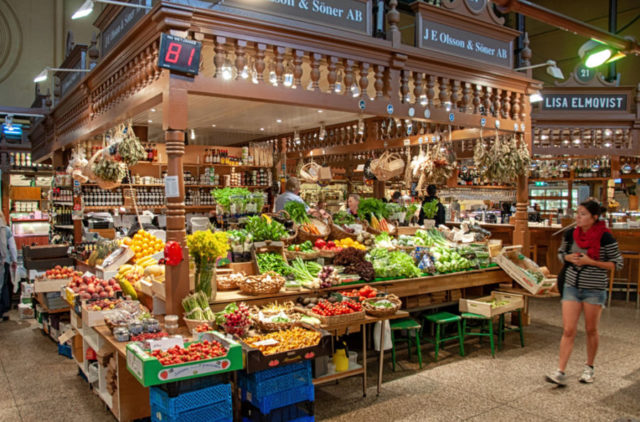
A classic. Anchoring Stockholm’s posh Östermalm neighborhood, this market hall is simply elegant. Handsome, hand-carved wooden stalls display just-so piles of produce, stacked as if posing for a still-life. The wares here feel…curated. Composed. With Scandinavian precision. There aren’t many bargains in this pricey city, but the Östermalms Saluhall is fun to browse for a high-end picnic, or to settle into a market eatery for a quality deli plate, a delicately composed salad, a sticky Scandinavian sweet roll, a splurgy seafood dish, a gourmet smørrebrød (open-face sandwich), a delectable handmade praline, or a selection of Lebanese small plates. Note: The food hall is undergoing a makeover through 2020; in the meantime, the vendors have set up temporary digs nearby.

8. Markthalle Neun, Berlin, Germany

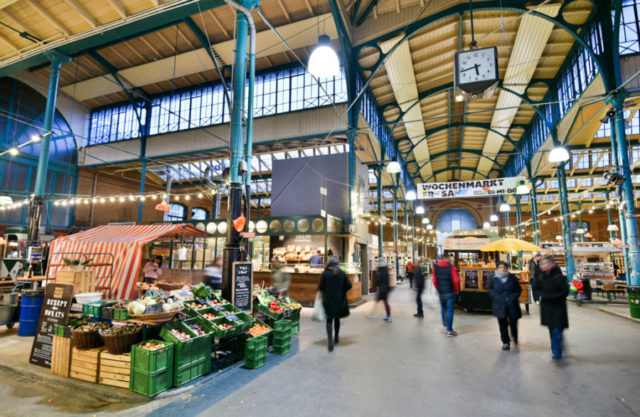
Berlin’s Kreuzberg district is home to its most cutting-edge, engaging culinary scene — and Markhalle Neun is its flagship. Tucked in a workaday neighborhood away from the tourist sights, it fills a beautifully restored 19th-century hall with greengrocers, cheesemongers, butchers, fishmongers, florists, and bakers, all with an appropriately Berlin-hipster vibe. Meanwhile, food stands sell Berlin classics like Buletten (meatballs), Stolle (open-faced sandwiches), Brezel (big doughy pretzels), and Currywurst — but also Italian pastas, French crêpes, Turkish deli meats, Spanish tapas, and even BBQ from the USA. Markhalle Neun scores bonus points for its many special events (listed at www.markthalleneun.de), including its Saturday farmers market and its “Street Food Thursday” — a beloved institution for Berliners seeking a trendy yet affordable dinner.

7. Mercato Centrale, Florence, Italy

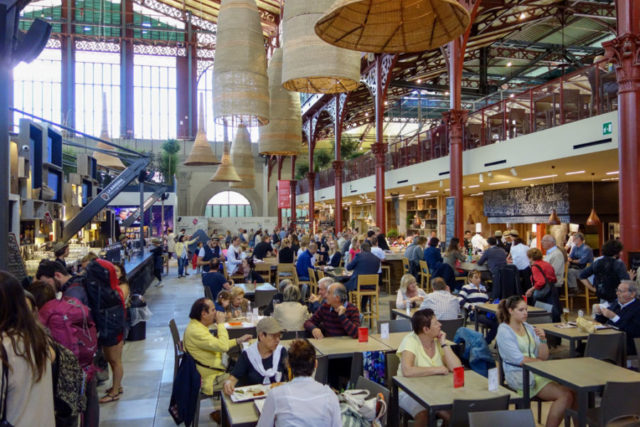
For years, I’d peek tentatively inside this cavernous market hall in the center of Florence, which felt dark and foreboding. With tattered stalls and piles of garbage out front, it felt like it hadn’t changed since the days of Vittorio Emanuele II. Then, in 2014, they converted the top floor into a high-end food circus. Just walk past the still-grubby produce stalls on the main floor, and hike up the stairs to a world of Italian taste treats: hand-rolled pastas, prizewinning prosciutto, massive steaks cooked so rare they still moo, melt-in-your-mouth panini, gourmet burgers made from Tuscany’s prized Chianina beef, rotisserie chicken, big juicy wads of mozzarella di bufala, handheld flatbread sandwiches called trapizzini, big slabs of rustic pizza, tender stewed beef cheeks, truffle-infused oils and pâtés, the rustic Tuscan bread soup called ribollita, deep-fried tasties,  cannoli and other Sicilian sugar bombs, and high-end tripe sandwiches (a Florentine classic!). Travelers smart enough to escape the tourist-gouging restaurants on the main drag retreat to this upper level — like pigeons in the rafters — to take a break from intense Renaissance sightseeing with pretty much any Italian taste treat they can imagine. Tuscany is home to many foodie finds — but this is one of the best.

6. Belvarosi Piac, Budapest, Hungary

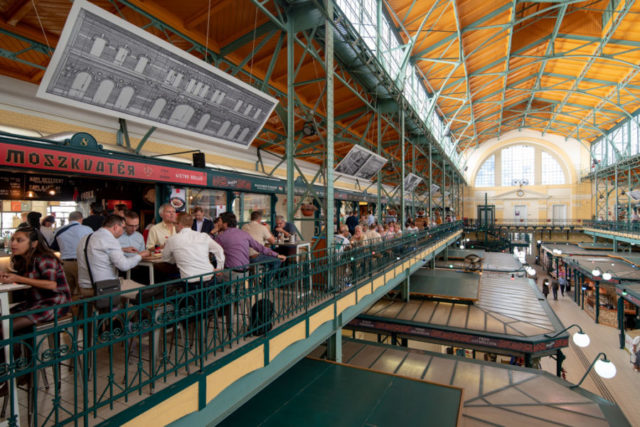
In Budapest, tourists flock to the Great Market Hall, an elegant palace of produce built around the turn of the 20th century. And you really do have to see the Great Market Hall. But don’t eat there — the “local”-seeming food counters upstairs specialize in ripping off naive tourists. Instead, head to a different, smaller, and far more authentic neighborhood market hall, also right in the city center (a couple of minutes’ walk from the Parliament): the Belvarosi Piac on Hold Street. In an atmospheric Industrial Age space that feels like the Great Market Hall’s little sibling, producers occupy the ground floor, while the upstairs is ringed by tempting high end-yet-affordable food stands: massive schnitzels at Buja Diszno(k), gourmet sausage at Lakatos Műhely, Russian grub at Moszkvatér (named for the since-rechristened “Moscow Square”), gourmet burgers at Kandalló, Thai-style khao man gai (poached chicken in garlicky sauce), and updated Hungarian classics at A Séf Utcaja. Anchoring the space, down on the main floor, is Stand 25 Bisztró. Here, celebrity chefs Szabina Szulló and Tamás Széll artfully fuse Hungarian classics with international influences (or is it the other way around?). While not cheap by market hall standards, Stand 25 a bargain for a Michelin-caliber lunch in a memorable setting (lunch only, plus dinner Friday and Saturday, book ahead).

5. Ballarò Market, Palermo

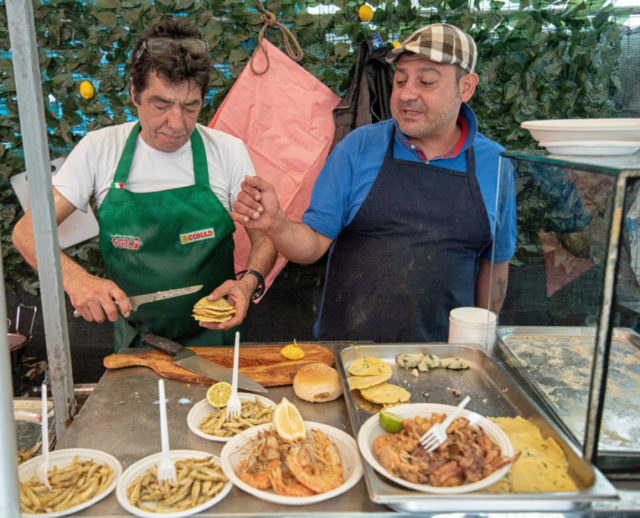
The Sicilian capital has some of the best, most vivid street markets in all of Europe. And the granddaddy of them all is Ballarò — seedy, chaotic, bewildering, and invigorating. Come here to jostle with Sicilians who verbally arm-wrestle for the best deals on the best ingredients. The vendors — continuing a tradition that supposedly dates back to Arab rule — warble their sales pitches with an otherworldly cadence, demanding the attention of passersby. Giant slabs of pink tuna perch on marble counters, like cadavers ready to be dissected. Produce stands overflow with vivid-purple eggplants, long, skinny Sicilian zucchini, and tomatoes that actually taste like tomatoes. Best of all, scattered throughout this multi-block span of barely controlled chaos are a wide variety of tempting street food stands, selling greasy napkins topped with dirt-cheap taste treats for every level of adventurous eaters — from arancine (deep-fried rice balls) and sfincioni (“Sicilian pizza”) to pani ca’ meusa (spleen sandwich) and polpo bollito (tiny boiled octopus, eaten whole). (For a complete rundown, check out my post on Palermo’s street food.) Go ahead, dive in — this is what real travelers live for.

4. Mathallen, Oslo, Norway

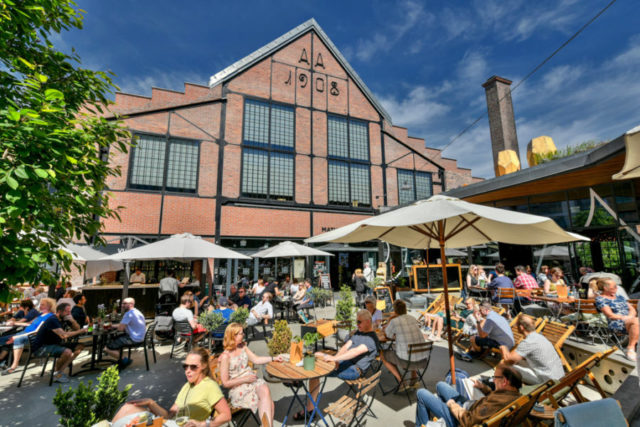
I love Oslo. But I’ve rarely found a memorable meal tucked among the dreary, blocky downtown core along Karl Johans Gate. However, just north of downtown runs the Akers River Valley, where the city has redeveloped a former wasteland of red-brick factories and warehouses into a lively people zone. Its centerpiece is Mathallen (“Food Hall”), filling the scavenged brick skeleton of a 19th-century factory. Norwegians recognize the limitations of their cuisine. And so, in addition to stands selling fresh, whole-grain bread (at Smelt Ostesmørbrød) sweet and savory pies (at Mildrids Kjøkken), and farm-fresh geitost cheese (at Ost & Sånt), you can nibble tapas, pastas, sushi, tacos and tequila, pizza, Asian street food,  gourmet ice cream, and much more. Ringing the outside of the market are a variety of industrial-mod, higher-end eateries. I skipped the fried chicken and “global tapas,” and went a bit more traditional at Vulkanfisk, serving up affordable-for-Oslo, elegantly presented, fresh seafood (the garlic-sautéed scampi were a flavor bomb). Anytime I’m in Oslo at mealtime, I come up with an excuse to head up the Akers River to Mathallen.

3. Maltby Street Market Rope Walk, London

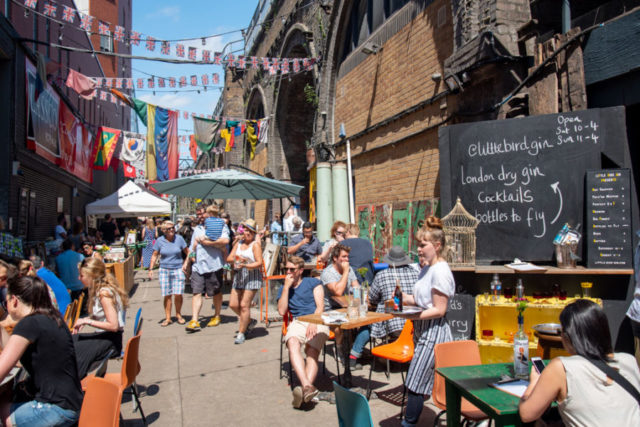
One summer, my wife and I rented an apartment in London for a week and checked out a different market each day. And at the end of the trip, the Maltby Street Rope Walk emerged as our favorite (every Saturday and Sunday). Tucked along a vintage brick railroad trestle, far from any tourist attractions (roughly across the Thames from the Tower of London), it’s an explosion of foodie energy. Beyond the hole-in-the-wall eateries, wine bars, taprooms, and Mozambique-style burger bars squeezed into the arches under the train tracks, the weekend market adds a world of pop-up food stands: grilled sandwiches oozing with tangy English cheese; little slices of rye bread mounted with melt-in-your-mouth Scottish salmon; slabs of grass-fed, dry-aged, rare-grilled hanger steaks; wild variations on Scotch eggs; Middle Eastern flatbreads with savory toppings; German-style sausages; gyoza steamed in wicker baskets; and a mouthwatering array of gooey brownies. For a more traditional “market hall,” it’s hard to beat London’s famous Borough Market. The funky Camden Market sprawls through a yellow-brick wonderland of old industrial buildings. The Portobello Road Market charms Notting Hill fans. And the Broadway Market feels like ground zero for East London’s hipster baby boom. But if I had to pick just one market that incapsulates cutting-edge London…it’s Rope Walk.

2. Mercado da Ribeira/Time Out Market, Lisbon, Portugal

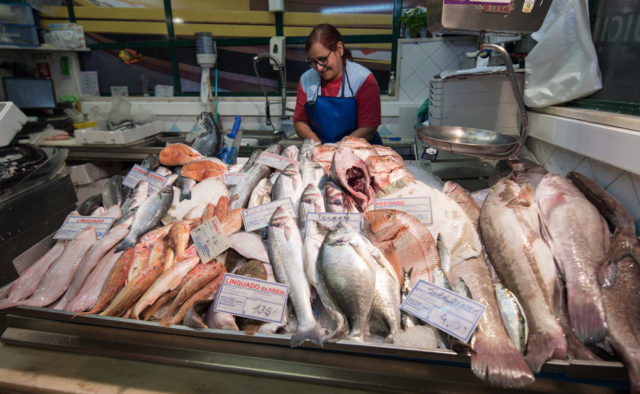
My favorite European market hall has a split personality. One-half of the market is as classic as they come: traditional, rough-and-tumble vendors selling fragrant herbs, plump produce, and an aquarium’s worth of fish. It’s ragtag, ramshackle, and trapped in the 1950s, with rickety wooden stalls, puddles pooling on cracked tile floors, petticoat-clad grannies selling rough bunches of herbs, and Old World scales with dials that spin imprecisely as if digital were never invented. On its own, this market hall is endearing enough to earn an “honorable mention” on this list. But from there, you can step through a door into La Ribera’s other half: a sleek, futuristic, top-of-the-line, Time Out-themed culinary wonderland (opened in 2014). The two dozen eateries here include stands operated by five marquee, Michelin-rated Portuguese celebrity chefs selling affordably price tastes of their favorite dishes. You’ll also find smaller stands bursting with a variety of local and international meals: the beloved Portuguese steak sandwich called prego, croquetes with fillings both traditional and creative, bacalhau (rehydrated salt-dried cod), fresh-baked pasteis de nata and other pastries, Japanese-fusion dishes highlighting the long-forgotten influence of early Portuguese traders, traditional cheeses and charcuterie, catch-of-the-day, quality steaks, gourmet burgers, artful sushi, and crispy pizzas. Rounding out the scene are a well-stocked wine shop, a place to stock up on conserves (tinned fish with colorful wrappers), and a branch of A Vida Portugesa (a classy vendor of Portuguese-themed products, gifts, and keepsakes that tempt even non-shoppers).  Whether for a meal or a one-stop-shop to stock up on all things Portuguese, Mercado da Ribeira is a winner.

1.  Market Day, Sarlat, France

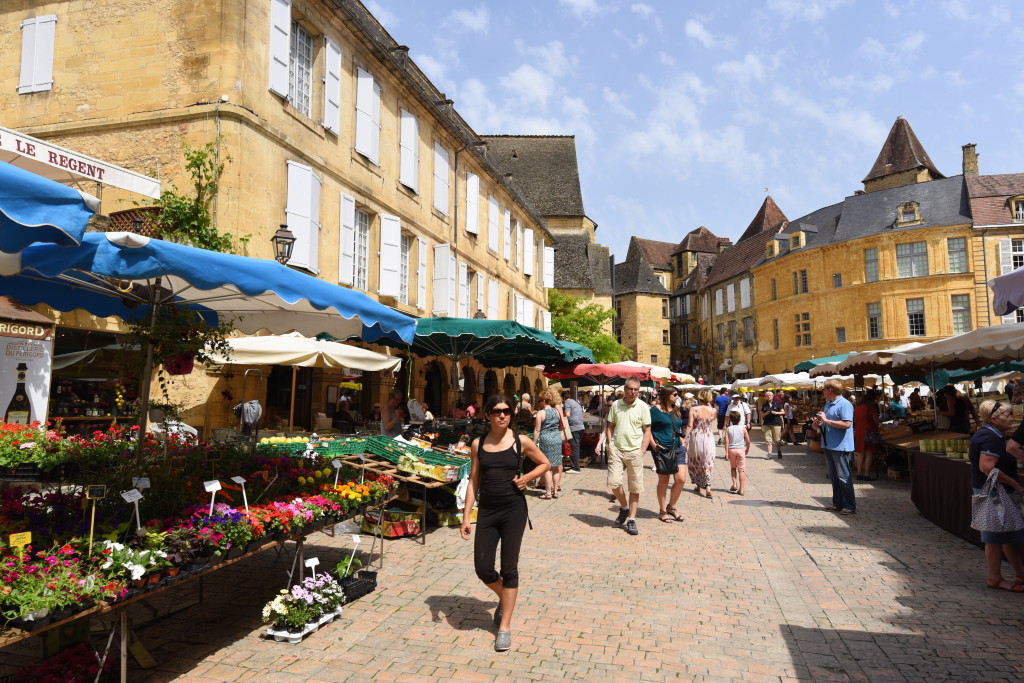
Sarlat’s street market is hard to top. It’s the refined yin to Palermo’s gritty yang. Twice weekly — on Wednesday mornings, and all day Saturdays — the pristine, lemony-sandstone streets of one of France’s finest towns become a big outdoor shopping mall. Locals pour in from the countryside to browse the stalls, reconnect with their favorite vendors, and bump into old friends. You’ll find baked goods, fresh meat, duck-in-a-can (confit de canard), giant wheels of rustic mountain cheese, tiny pyramids of fine gourmet cheese, nuts and dried fruits, explosively flavorful olives, mammoth chunks of nougat, snail shells prefilled for escargot, fruitcake sold by weight, a rainbow of preserves, salamis and sausages of every shape and size, and whatever produce is in season. When the noon bell tolls, the vendors begin packing up, and the shoppers scramble for café tables that catch just the right mélange of sun and shade. This is where the second phase of the Market Day ritual kicks in: taking some time to nurse a cup of coffee with someone you haven’t seen in a while. It’s all so simple…so sophisticated…so smart. If you won’t be in Sarlat, you can enjoy similar market days all over France; every community has its own, but popular ones include Uzès (in Provence), Beaune (in Burgundy), and several in Parisian neighborhoods. But Sarlat is the one that has left me with the warmest memories of an ideal market experience.

What’s your favorite market in Europe?

2019 Discovery: Collioure, France

Crowds got you down? This post is part of a series of 10 European Discoveries for 2019 — off-the-beaten-path gems where you can escape the tourist rut and find a corner of Europe all your own.

My favorite place to hit the beach in Europe is a little French Mediterranean town hemmed in by green hillsides and rocky cliffs, just a stone’s throw from the Spanish border. I “discovered” this postcard-perfect spot thanks to Steve Smith, the co-author of our Rick Steves France guidebook. Steve has a nose for all the best-hidden gems in France, and Collioure was the first place he sent me when we swapped guidebook research chores a few years ago. (I’ve since returned, just for fun and on my own dime — a sure sign that I’ve discovered a new favorite.)

In Collioure, beefy bastions protect five separate beaches, each with its own personality — swimming, sunbathing, windsurfing, kiddie beach, and so on. The historic town center is a Crayola stage set of pastel houses, gnarled plane trees, climbing vines bursting with flowers, and just enough quality restaurants to keep you well-fed on vacation.

There isn’t much in the way of sightseeing, but drivers can easily side-trip to the eye-popping Salvador Dalí sights in neighboring Catalunya: his psychedelic theater-museum in Figueres and his idiosyncratic waterfront residence in Cadaqués are both within a two-hour drive.

On the other hand, once you’ve settled into Collioure’s pebbly beach, looking past the stout watchtower at the shimmering Med, you may just find yourself surrendering to inertia. Throw your itinerary into the bay and just be on vacation. This is the kind of place where in-the-know French sophisticates on a budget — seeking relaxation rather than glitz — head for an unpretentious break.


If you appreciate small-town France, consider joining up with a Rick Steves Best of Eastern France or Loire to the South of France tour…then take a Collioure beach vacation after your tour. And for nine more suggestions on where to get away from the crowds, check out my 10 European Discoveries for 2019.