Split, Croatia: From Gritty Port to Posh Resort

I’m just back from my latest guidebook research trip in Croatia, Slovenia, Bosnia, and Greece. Along the way, I enjoyed island-hopping down Croatia’s Dalmatian Coast, from Split to Dubrovnik —  hopscotching across the islands of Hvar, Korčula, and Mljet, updating my guidebook, reconnecting with old friends, and collecting new insights. This post kicks off a series of posts with my latest impressions from one of my favorite corners of Europe. My first stop: the big, coastal city of Split.

The eastern part of Europe has plenty of contenders for “most improved player.” And here in Croatia, Split easily takes the title. In the few years since my previous visit, Split —  which I’ve long lamented as the most underappreciated destination in Croatia —  has finally started getting the attention it deserves.

I first came to Split, Croatia’s gritty second city, in 2003, while writing the first edition of Rick Steves Eastern Europe guidebook. I had been primed to fall in love with Split’s glitzier little sister, Dubrovnik (and indeed I did). But back then, most travelers viewed Split as a necessary evil —  a gritty transfer point you had to endure in order to catch a boat to the Dalmatian Islands. Imagine my surprise when I found Split utterly enchanting. I liked Split immediately for many of the same reasons that some visitors don’t: It’s a real, hardworking harbor city, with more industry and urban bustle than tourism. Split has substance. To me, it’s a much-needed antidote to the pithy effervescence of Croatia’s many backwater island towns. And as a bonus, Split also owns a gorgeous setting, a fascinating historic core, and a relaxed Mediterranean ambience.

During my first visit, the Croatian Tourist Board put me up in the tallest building downtown: a high-rise hotel that rose abruptly from the harborfront a short walk from the Old Town. It was, and remains, a big black box marring the otherwise idyllic tableau of wooded hillsides, bobbing fishing boats, and terra-cotta roofs. Back then, the Hotel Marjan had tumbled precipitously from its reputation as the city’s top business-class hotel. During the Yugoslav Wars of the mid-1990s, it had housed refugees from Croatia’s war-torn interior; in the intervening decade, only a couple of its many floors had been lightly refurbished and reopened as a hotel. The Marjan had become a white elephant, barely remaining open for business, if only because that was easier than closing it.
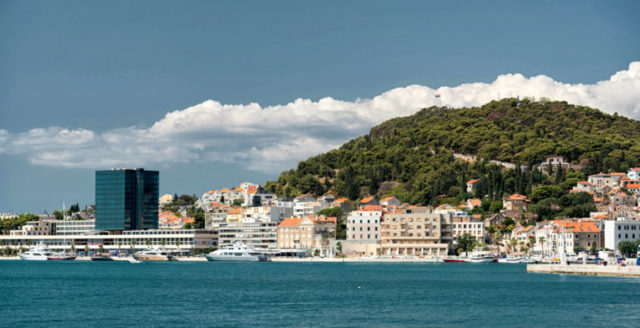
One day I returned to my hotel room to find water dripping down through the bathroom light fixture, running down the wall, and tricking toward the drain in the middle of the floor. I reported it to the front desk, who briefly feigned surprise. “You don’t say?” the receptionist said. “Hm. Sounds like someone should look into that.” She then idly doodled on a notepad until I retreated to my soggy room. I always secretly believed that I may well have been the hotel’s final guest. (The building is still there…and it’s still closed.)

But then, very gradually, the city began to transform itself. A decade or so ago, they tore out and completely resurfaced the Riva — the glorious pedestrian strip that runs between the Old Town and the harbor. It had always been an inviting place to promenade, but now it’s also elegant. Each return visit to update my guidebook unearthed a few more appealing discoveries: boutique hotels, interesting restaurants, and formerly dilapidated areas that had been spiffed up. And every time I was able to delete a mediocre hotel or restaurant from my book (what I think of as the “well, we gotta list something” listings), and replace it with a better alternative, I breathed a sigh of relief.

After this visit, in my mind, it’s official: Split has decisively turned the page. These days, it has some of the nicest, and most expensive, hotels on the Dalmatian Coast. It has an exciting new variety of restaurants that dare to go beyond Dalmatian classics. And it has the cosmopolitan energy of a destination that has fully arrived.

What changed? For one thing, cruise ships started showing up. Several years ago, Dubrovnik began to burst at the seams, so cruise lines went looking for a nearby alternative…and there was Split, a big city with a big harbor right downtown. Spilt has also enjoyed the coattails of a general uptick in Croatian tourism…this country is red-hot, and sales are brisk. On this trip, I found myself eavesdropping on local guides lecturing not about the Emperor Diocletian, but about Daenerys Targaryen and her dragons (who briefly resided in the Roman-built cellars below town). Yes, Game of Thrones tourism — already well entrenched in Dubrovnik — is becoming big business in Split now, too.

On this trip, I did some scouting for the upcoming seventh edition of my Rick Steves Croatia & Slovenia guidebook, and I came up with some gems.

This city, which for years had only one decent hotel (Vila Ana, still a trustworthy budget standby with five rooms a short walk outside the Old Town), is now shot through with luxurious hotels charging some of the highest prices in Croatia. Palača Judita is a high-end B&B with an ideal location — right on the city’s charming, bustling People’s Square — and an attentive staff. Just across the square is Palace Suites, which is a bit simpler, but much less expensive and equally welcoming. And Marmont Hotel  — named not the for chivalrous Ser Jorah from Game of Thrones, but for the nearby pedestrian promenade — is a plush oasis with 21 top-end rooms in a quiet corner of the Old Town.

For dining, my big find this trip was the trendy Bokeria (in the Old Town at Domaldova 8). Its decor, like its name, finds inspiration in the bustling Barcelona covered market: a big, bright, boisterous interior with soaring ceilings, legs of prosciutto dangling over the bar, and a wall of Aperol bottles arranged like an art installation. While I found the service so-so, the setting offers Split’s cuisine scene the refreshing jolt it has desperately needed. The beautifully presented cuisine is a smart melding of Croatian classics with modern Mediterranean dishes, and the wine list is substantial and smartly curated. I dug into a decadent dish of handmade pasta with truffles and prosciutto, which had perfectly balanced flavors and sophisticated presentation.

For more traditional Dalmatian cooking, without the pretense, the latest hotspot is Villa Spiza — serving local dishes from a handwritten menu (hiding deep in the Old Towns’s back streets at Petra Kružića 3). It feels fresh, youthful, and energetic, crammed with foodies who’ve done their homework and don’t mind sharing counter seats under claustrophobic beams. They also have a couple of delightful sidewalk tables, out front on the tight lane. Because they don’t take reservations, everything fills up quickly — arrive early, or be ready to line up .

After a decade and a half of sipping good-enough cups of bijela kava (caffé latte-like “white coffee”), I finally discovered a burgeoning third-wave coffee scene in Split, with artfully crafted drinks up to snuff with coffee houses back home in Seattle. Two competing places, both in the Old Town, are worth seeking out for those who care about good coffee: D16 Specialty Coffee (Dominisova 16) and 4Coffee Soul Food (Hrvojeva 9). (Croatia-bound aficionados note: Dubrovnik and Zagreb both have branches of Cogito Coffee, with the best coffee I’ve had in Croatia.)

Another favorite discovery was the lively (and very local) little hangout zone tucked just a short walk beyond the tourist core, in an area nicknamed “Behind the Theater” (Iza Kazališta). From the waterfront, simply head up the broad promenade called Marmontova, then keep going — jogging left up the little covered lane between the yellow National Theater and the blocky modern church. Stepping through the passage, you leave all but the most savvy tourists behind. Locals swarm at the pastry and ice-cream shop Luka, scooping up cones of homemade gelato with some interesting local flavors, such as lavender or rosemary (Svačićeva 2). Delving deeper — into a scene that feels like one big lowbrow party, with the natives decompressing from a busy day of dealing with tourists — you’ll pass cafés, bars, “pizza cut” windows, and more. To satisfy your sweet tooth, look for Stari Plac (with dessert crêpes); just beyond is Sexy Cow, with a hip white-subway-tile interior and a tempting menu of decadent, top-end burgers (Zrinsko Frankopanska 6).
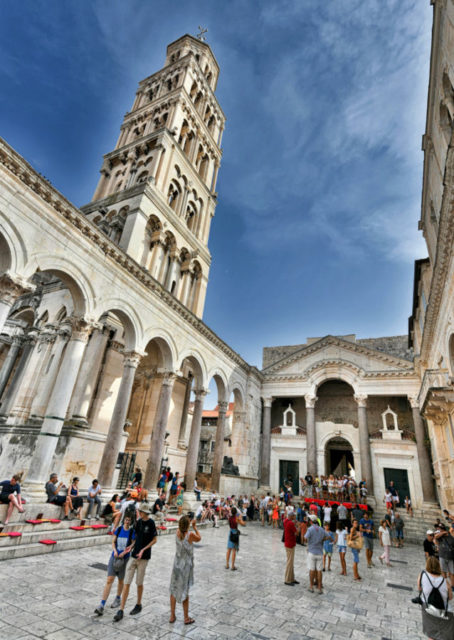
With all that’s new in Split, the city’s big draw card has remained the same for nearly 2,000 years: Its Old Town fills the former retirement palace of the Roman emperor Diocletian. After the fall of Rome, locals scavenged useful bits of stone and metal, and gradually began to graft their rickety homes onto the stout palace walls. And so the hallways of Diocletian’s Palace became the narrow lanes of Split, its main entryway became the town’s main square (the Peristyle), and Diocletian’s mausoleum was transformed into a church — complete with a Venetian-style bell tower. Even after all my travels, I still haven’t found anywhere that plops you in the lap of history as impressively as Split.

After hours, the entire Old Town of Split becomes one big cocktail party. Lose yourself in the skinny black lanes, follow the convivial hubbub and the thumping bass, and find a bar or café that suits your mood. While specific places come and go, the scene as a whole is always thriving. If you can’t have fun after hours in Split, it’s time to retire your passport. Another thing that hasn’t changed is the best nightlife advice in town: Simply show up at the main square (the Peristyle) and plop down on any of the red cushions scattered along the marble stairs, which belong to Luxor Café. Eventually a waiter will show up to take your drink order. Lie back on the steps once trod by Diocletian, luxuriate in the balmy sea air, and listen to crooners belt crowd-pleasing greatest hits under the stars. Enjoy. You’re just the latest in a long line of vagabonds loitering in the halls of this glorious Roman palace.

 

Zagreb for Tourists: The New Changing of the Guard, a Museum of Breakups, Naive Artists, and a Somber Stone Gate

Zagreb is a great city to live, work, or just hang out. But — well aware that they face some serious competition along the Dalmatian Coast — Zagreb’s tourist board is also working hard to please travelers. The city has one of the best-organized tourist information offices in Europe, and many new walking, bike, bus, Segway, and ghost tours are popping up each year.

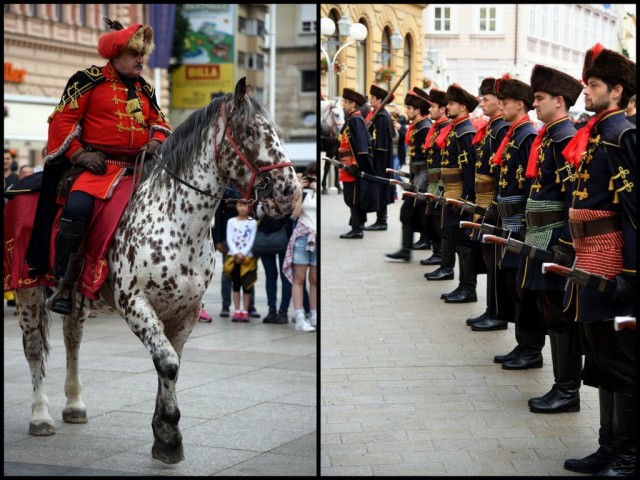
Cameron-Croatia-Zagreb-COTG Collage

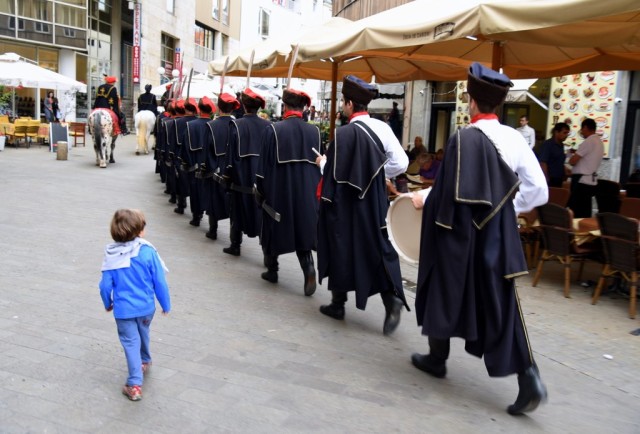
A couple of years ago, for the first time ever, Zagreb created a Changing of the Guard ceremony on weekends. It’s designed to maximize photo ops, strategically passing by all of the big sights.

Cameron-Croatia-Zagreb-Changing Guard Kid

This cute kid got caught up in the Changing of the Guard excitement, stomping his way through the streets alongside the big boys.

Cameron-Croatia-Zagreb-St Marks Church 1

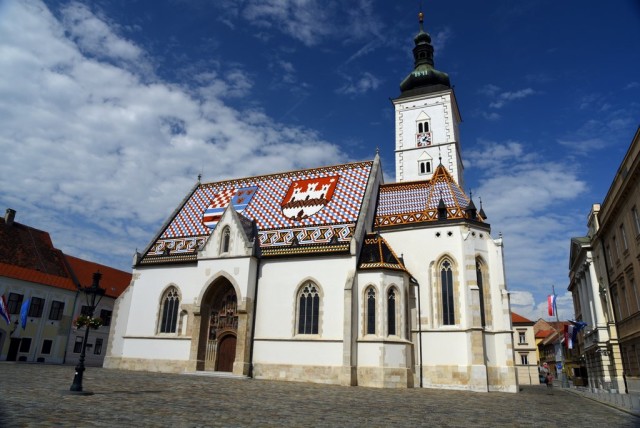
Most of Zagreb’s top tourist attractions are conveniently clustered in a tiny area at the top of its original hill town. This area is anchored by the gorgeous mosaic roof of St. Mark’s Church, which is flanked by the Parliament and the offices of the Croatian President. Just a few steps away are the city’s top museums — and my two favorite museums in all of Croatia.

Kovacic

Rabuzin

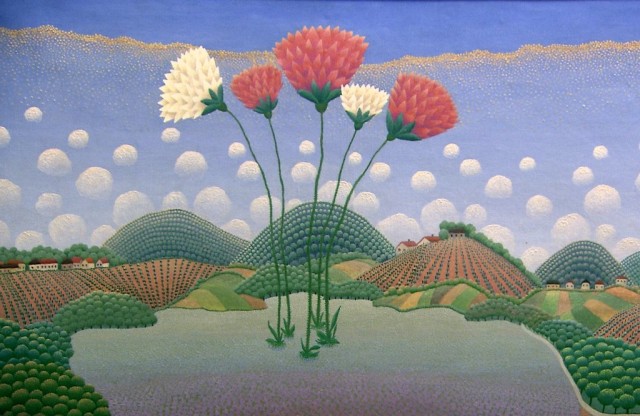
The Croatian Museum of Naive Art celebrates untrained peasant artists of the early 20th century. During this era, art world insiders began to seek out talented outsiders who produced great art. It was part of a broader movement designed to demonstrate that artistic talent was inborn, rather than taught. (This coincided with Picasso’s fascination with African masks, Gaugin’s trip to Tahiti, Béla Bartok’s codification of folk music from the Transylvanian countryside, the Art Brut movement, Grandma Moses, and the elevation of children artists.) I love the Naive Art Museum because it’s one of those places displaying artists — and an entire movement — that most visitors have never heard of. But it grabs you immediately, pulls you in, and wins you over. You’ll leave wondering why you didn’t learn about Ivan Generalić in your college art seminar.

CH11OctZagreb_018.JPG

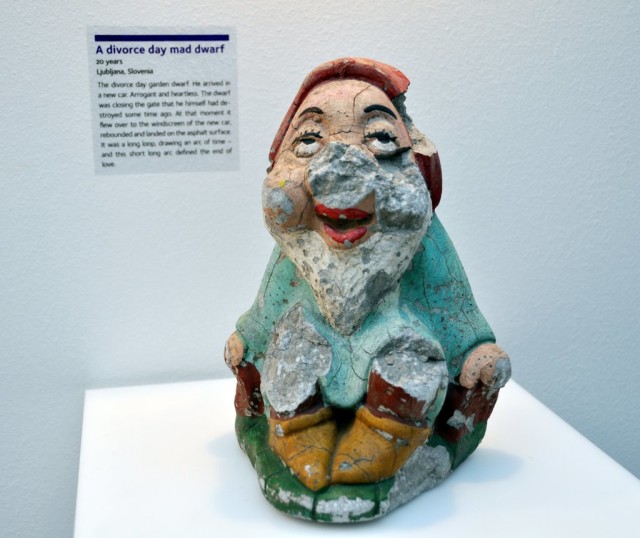
Breakups are ugly. But the Museum of Broken Relationships is a total delight. Opened in 2010 by a couple who had recently split up, this clever museum collects true stories of failed couples from around the world. They provide a succinct, one-sided explanation of what went wrong, which accompanies an item that embodies the relationship: discarded wedding albums, sex toys with stories about unreasonable requests for kinky acts, children’s playthings representing the innocence of young love (and, perhaps, the universality of stuffed animals), and plenty of items broken with vengeful wrath. To me, the Museum of Broken Relationships captures the wry, urbane, and artistic sensibilities of the Croatian capital.

Cameron-Croatia-Zagreb-Stone Gate 1

Cameron-Croatia-Zagreb-Stone Gate 2

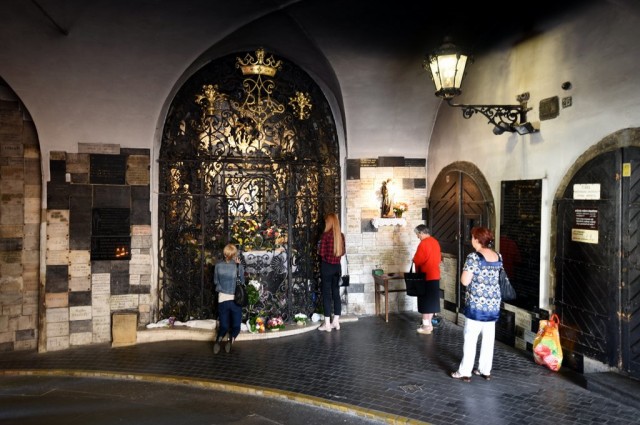
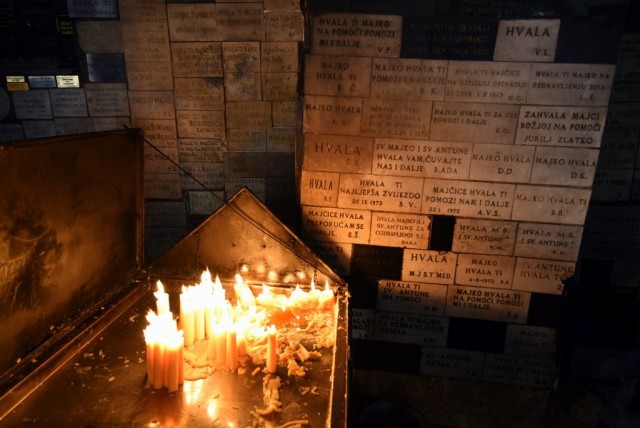
One of the most touching scenes in Zagreb is the Stone Gate, which hides just a few steps below St. Mark’s along a covered passageway between the city’s two old towns. Inside, the chapel’s focal point is a painting of Mary that miraculously survived a major fire in 1731. Zagrebians often pause to light a candle and stay a prayer here, oblivious to the tourists and commuters wandering through. The twinkling candlelight illuminates many plaques with a simple message: Hvala…thank you.

Zagreb: Croatia’s Continental Palate-Cleanser

I love Zagreb. Most people couldn’t imagine loving Croatia’s landlocked capital…or even going there. But trust me: It’s a great city.

On my first trip to Zagreb, I wasn’t sure what to expect…but it certainly wasn’t much. Let’s face it: Even just the name of the city sounds like a wet Slavic belch. But when I first got to know Zagreb, my low expectations were wildly exceeded. “Hey,” I thought. “This is a really cool place!”

Then I brought Rick Steves here. It took some convincing. But as he strolled through the town, gradually succumbing to its charms, he said to me, “Hey, this is a really cool place!”

A couple of years later, Rick and I came back with a film crew to shoot a travel show on Zagreb. Simon, our producer, and Karel, our cameraman, warmed up to the city immediately. They both turned to me and said, “Hey, this is a really cool place!”

Then, just a couple of years ago, I brought my wife here. And you’ll never guess what she said to me…

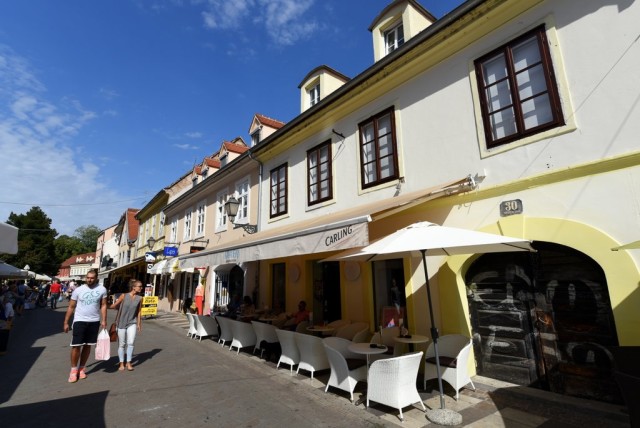
You get the idea. Zagreb is a delight. One out of every six Croatians lives in this hive of commerce, which is closer to Slovenia and Hungary than it is to any beach. As a onetime leading city of the Habsburg Empire, it has a “little Vienna” vibe to it — with Old World elegance, classy Baroque flourishes, and a certain tidiness. Some of its historic streets, like the tongue-twisting café drag Tkalčićeva, have an almost Prague-like charm.

Cameron-Croatia-Zagreb-Tkalci

From a traveler’s perspective, Zagreb also benefits from a contrast effect. Most people visiting Croatia focus on the coast — which, don’t get me wrong, is glorious. But after several days of island-hopping, choosing from the same seafood-and-pizza menu every day, and stubbing your toes on underwater rocks and sea urchins, urbane Zagreb is just the place to recover from your sunburn. In this country so focused on its coastal destinations, Zagreb is a continental palate-cleanser.

Zagreb has always had nice bones. But it’s been a thrill to observe the city fleshing out those bones over the last several years. Today’s Zagreb is flourishing, with an exciting new bustle and vitality: Great restaurants, from artisanal bakeries to foodie splurges. Slick design stores and fashion boutiques that meld Croatian tradition with contemporary style. More great museums than the rest of Croatia combined. And non-stop festivals that enliven the summer.

Cameron-Croatia-Zagreb-Park

Zagreb is a city of magnificent parks. The old town is ringed by forested hills and ravines. And zigzagging through the urban core is a “Green Horseshoe” of thoughtfully manicured parklands, punctuated by genteel historic buildings. During my visit on a sunny September weekend, these parks, and the city’s squares, were packed with revelers…three separate outdoor festivals were going on at the same time.

CH09Spring_635.JPG

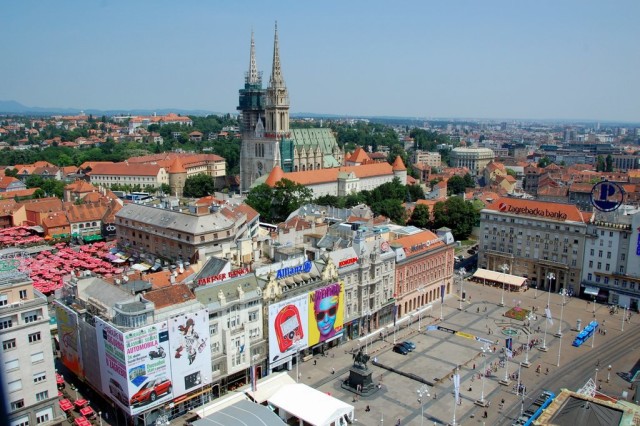
Jelačić Square — Zagreb’s main urban crossroads — is big, angular, and a little imposing. Giant billboards advertise Croatian brands you’ve never heard of, and trams zip through constantly.

Cameron-Croatia-Zagreb-Flowers

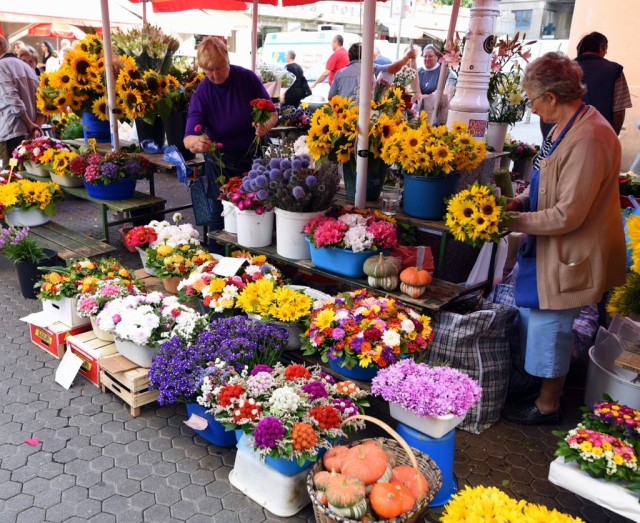
But even here, the hard edges are softened by local life. On weekends, one corner of Jelačić Square is filled with the stalls of a colorful flower market.

RS09Spring_533.JPG

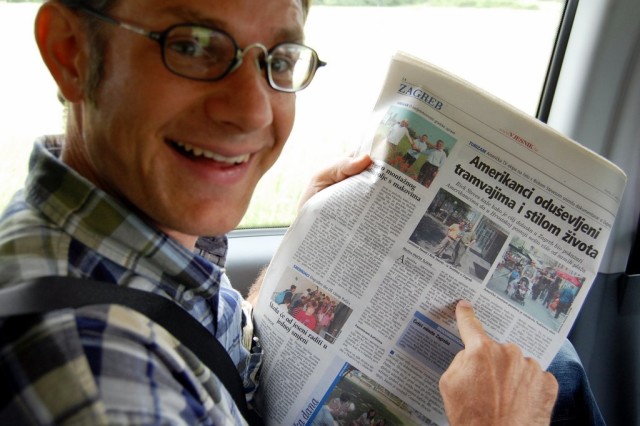
Being back on Jelačić Square, I remember when I was here with Rick in 2009, filming our TV show about Croatia. The tourist board asked us to take an interview with a local newspaper. Trying to convey his excitement about the general bustle and commercial metabolism of the city, Rick mentioned how he enjoyed seeing the trams come and go, with commuters piling on and off. When the paper came out, we bought a copy and got a kick out of seeing — but not reading — the article, which was in Croatian. Later, I showed it to a Croatian friend and asked for a summary. Skimming it, he said, “Hmmm…they say that Rick is really, really excited about the public transportation.”

Cameron-Croatia-Zagreb-Flags

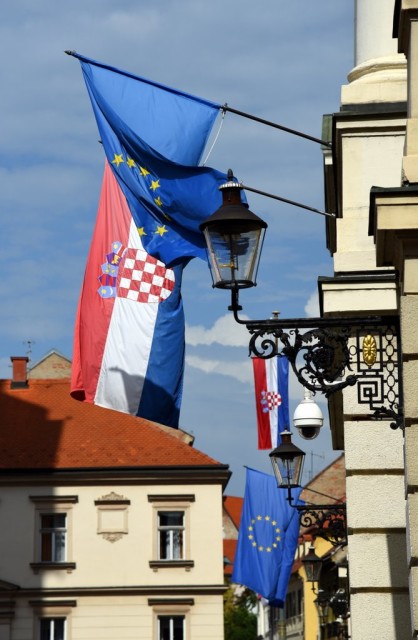
Croatia officially joined the European Union in 2013, and today, civic buildings fly both the red, white, and blue Croatian flag and the yellow stars on a blue field of the EU. Like any country that joins the EU, Croatians expressed a lot of angst leading up to membership. But it seems like most Croatians are already satisfied that, overall, it was the right choice. On the other hand, Croatia — and Zagreb in particular — is facing a trial by fire, as it’s become a highway for refugees from Syria (and other places) making the long journey to a better life in Austria or Germany. I actually met some of those refugees in the Zagreb train station, and later saw their abandoned tents at the border — a very powerful reminder of the human face behind the “refugee crisis.”

I’ll be sharing more photos and insights about Zagreb over the next few days. Stay tuned!

Rick Steves Guidebooks — Making the World Better, One Trip at a Time

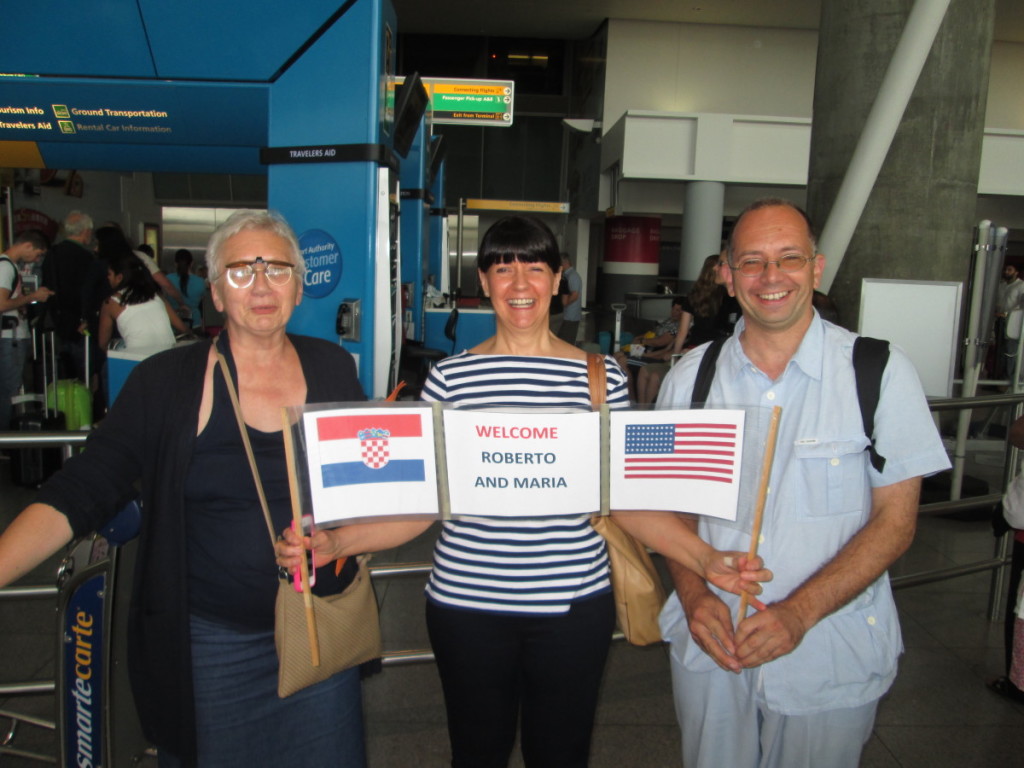
You’ve already met just a few of my favorite people from Dubrovnik — from the Peros to Jadranka, Sasha, and Pepo. But that’s just a small sampling of the hundreds of amazing people I feel lucky to recommend in our Rick Steves Croatia & Slovenia guidebook. As a guidebook writer, I see it as my role to be an intermediary: put good travelers in the hands of great local contacts…then get out of the way. And Roberto de Lorenzo and his mother Marija embody that ideal like nobody else.

Roberto and Marija live in an old palazzo high in Dubrovnik’s Old Town. They’ve converted some of the building into apartments for travelers, including two units that each has access to an entirely private garden. If you’ve been to Dubrovnik, you’ll appreciate how impossibly rare it is to have a garden of any kind — much less a private one — within the City Walls. You can even have the restaurant next door send a waiter over to take your order. Private dining in your own private garden, in the heart of Croatia’s finest town…all this can be yours for around $100 a night.

Cameron-Croatia-Dubrovnik-Roberto

I have every confidence that Roberto and Marija’s place is great, and I know our readers will love it. But it works both ways. When I visited Roberto today, he was bursting with enthusiasm, telling me, “You have no idea how many people’s lives your books improve. Thanks to the Rick Steves book, I took my mother to the United States. And now I have become an ambassador for the USA to all of my friends.”

Roberto explained. Like all good B&B owners, he’s really hit it off with many of his guests. One couple invited Roberto and his mom to visit them in Pennington, New Jersey. For months, he declined what he assumed was a polite, but possibly insincere, invitation. But they were persistent. And finally Roberto — realizing that this may be his mom’s only chance to go stateside — decided to take them up on it.

Roberto Marija USA

On their two-week trip this summer, Roberto and Marija also visited New York City, Washington DC, and Pennsylvania Amish country. And they had a blast. It was a revelation. “Coming from a Mediterranean city, I expected New York to feel busy and impersonal and cold,” Roberto told me. “But quite the contrary: People are so friendly, and there is a real sense of community. It could be a Mediterranean city itself.”

For her part, Marija was especially reluctant to make her first trip to the USA. But it was a life-changing experience for her. Marija told me, “I’m in my 70s, so it’s not easy at this age. But I fell in love…with the States.”

When they first arrived in New York, they stepped out of what Roberto calls “Pennsylvania Station” and saw a pair of real-life NYPD cops. In Croatia, police are often seen as intimidating authority figures. But Roberto was so excited to be there that he couldn’t resist — so he asked one of them if he could take a picture with them. She broke into a big smile and said, “That would make my day.” Roberto showed me the picture on his phone:

Roberto in NYC

Since he’s been back home, Roberto tells me, he’s been showing that picture to anyone and everyone. To him, it sums up the power of travel: You can meet — and snap selfies with — people you’d never dream of. He says that one picture has challenged some of his friends’ assumptions about New York, and the USA in general. And now they’re considering trips of their own.

“What I want you to understand,” he said, slowing down for emphasis, “is that all of this is because of your book. Yes, you put travelers in touch with hotels. But it can be even more than that. If it weren’t for the Rick Steves book, I would never have met those guests. They would never have invited me to the United States. And I would not be telling everyone I know what a wonderful place your country is.”

While this all may seem immodest, it’s a gratifying reminder that the Rick Steves travel philosophy is just that: not just guidebooks, tours, rucksacks, and practical advice — but a worldview that, in ways small and big, can broaden and improve people’s lives. It certainly brightened the day of one New York cop who didn’t quite know what to make of those two effusive Croatians…but loved every minute of it.

Why Dubrovnik Makes Me Happy

Yesterday I got cranky. But today, I want to share some of my favorite aspects of Dubrovnik, in the form of some particularly pretty pictures.

Cameron-Croatia-Dubrovnik-Happy Laundry

Cameron-Croatia-Dubrovnik-Happy Laundry 2

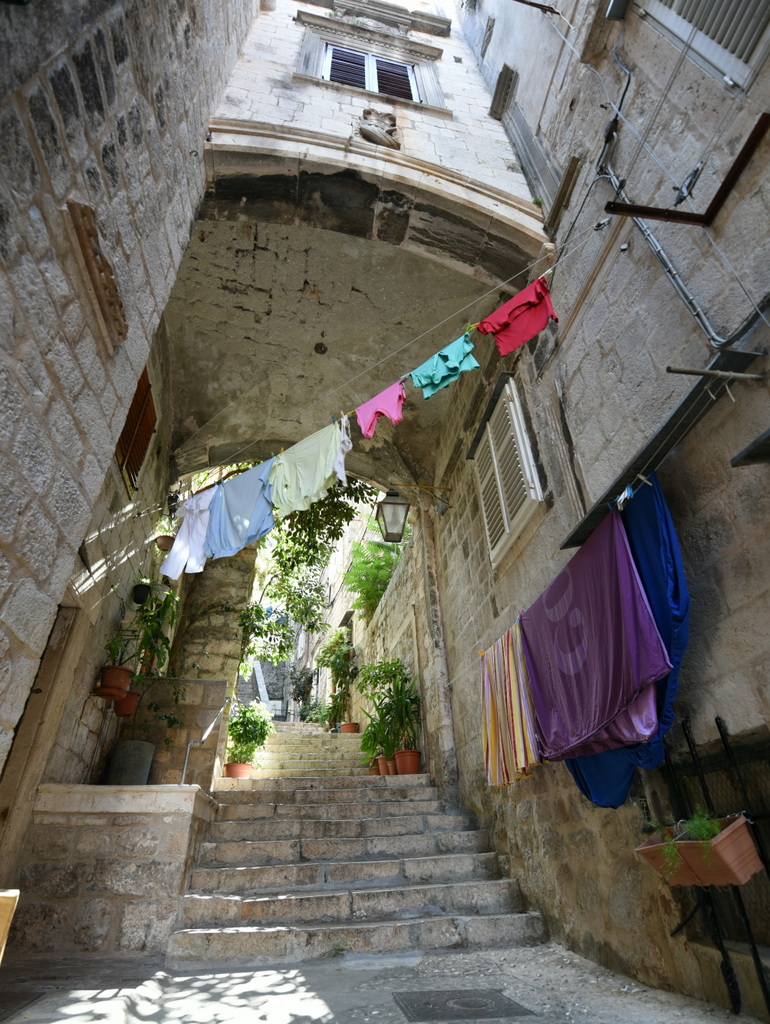
I see laundry drying in the streets as the fluttering flag of the local community — as if to say, “We still live here!”


Cameron-Croatia-Dubrovnik-Happy Lane1

CH15SepDubrovnik_142

In my guidebook’s introduction to the town, I called it a “fun jumble of quiet, cobbled back lanes.” A friend of mine visited and said that Dubrovnik seemed more crowded than that. So on this trip, I made a point to check out whether you really could escape the crowds. Sure enough, yep — quiet back lanes still there. So for the new edition, I’m adding this line: “If you haven’t discovered your own secluded, laundry-draped back lanes all to yourself…then you haven’t looked hard enough.”


Cameron-Croatia-Dubrovnik-Happy Restaurant

Dubrovnik is simply a joy to explore. Around each corner, little surprise lanes hide inviting restaurant tables.