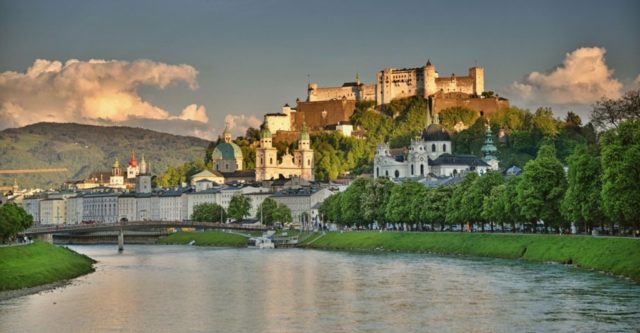
Austrian Odds and Ends: It’s Lumpensammler Time

My parents once lived in Basel, Switzerland. They remember that the last tram of the night — which picked up all manner of drunks, weirdos, and ne’er-do-wells as it passed through town — was nicknamed the Lumpensammler…roughly, “Collector of Dirty Rags.” Sometimes when I leave a country, I have a few leftover bits and pieces that I haven’t yet shared on my blog, but are worth seeing the light of day. And so, here’s my hodgepodge Lumpensammler list for this visit to Austria.

cameron-austria-salzburg-old-town-streets

Salzburg: Defiantly Traffic-Free. Salzburg’s Old Town is beautifully pedestrian-friendly — and that’s because it’s brutally car-unfriendly. The city got fed up with people flouting its traffic restrictions, so they installed a series of ruthless rising bollards that are designed to essentially destroy the car of anyone who dares to slip through behind another vehicle. One day on Mozartplatz, I heard a terrible crunching sound, and looked over just in time to see an unlucky car get totaled: The hydraulic bollard slowly and insistently rose, tearing apart the engine from underneath. Four different types of automotive fluids went running down the street toward the river, and the driver had to stand there and wait, in shame, for the tow truck to come rescue him. Later, I had a revealing conversation about this with a local. Expressing my sympathy for the driver, I was met with steely resolve. “But you don’t understand,” she protested. “We have to keep unauthorized cars out. People were sneaking in.” My pleas for some intermediate solution — one that would be taken seriously without actually damaging violators’ property — got zero traction. So, motorists heading for Salzburg: You have been warned. Salzburgers love their draconian bollards.


cameron-austria-salzburg-dirndl-lederhosen

cameron-austria-salzburg-steckerlfisch

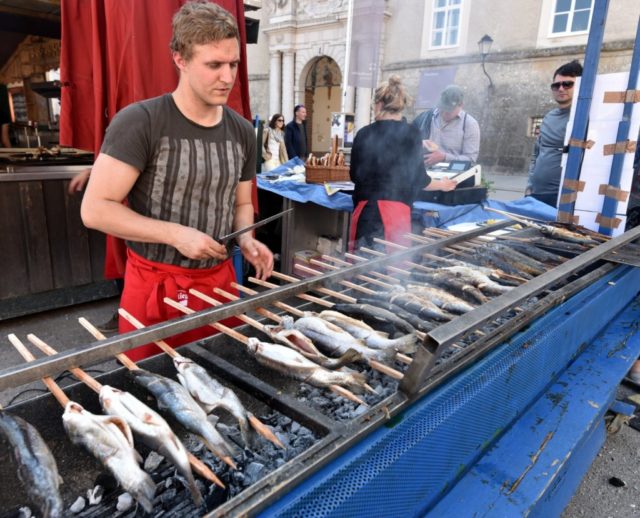
Salzburg Parties with Fish on a Stick. Salzburg is a city that loves to celebrate. There are festivals nearly non-stop. When I was there, one of the main squares was lively with an open-air concert series for several days. My evening routine was strolling past the square to see who was performing, and to grab a little street food. It was fun to see all of the festival-goers in their Drindls and Lederhosen. But one local delicacy I’ve never quite acquired a taste for is Steckerlfisch: grilled mackerel on a stick.

cameron-austria-innsbruck-mcd

cameron-austria-salzburg-mcd

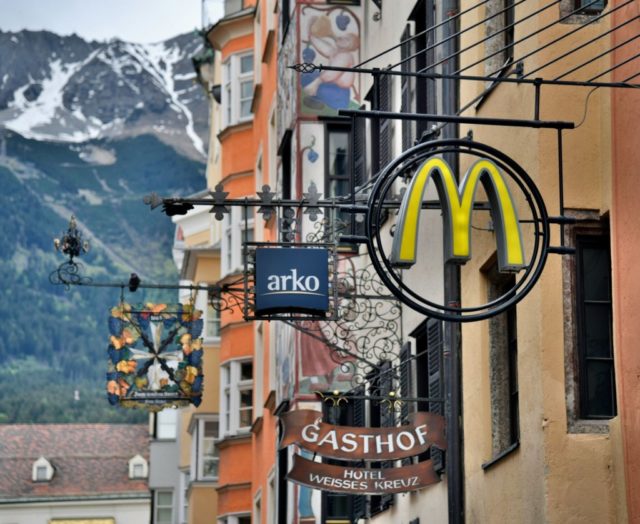
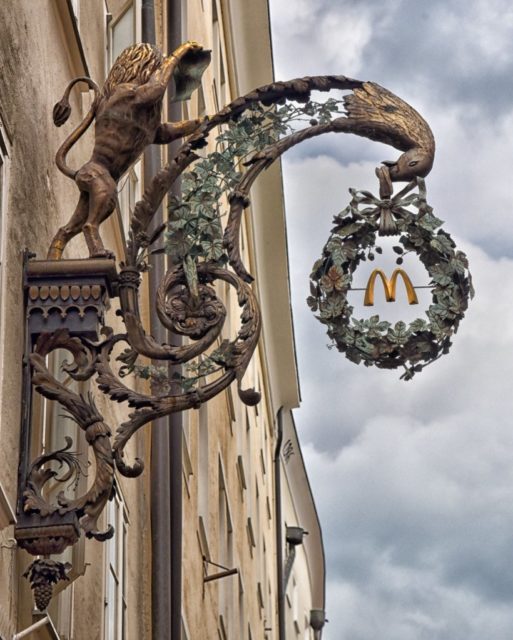
Camouflaged Corporations. Austria has strict regulations for advertising along its historic drags. That means big companies have to get creative about displaying their logos. In Innsbruck and Salzburg, the golden arches fit (more or less) subtly into the historic signs.

cameron-austria-salzburg-hangar-7

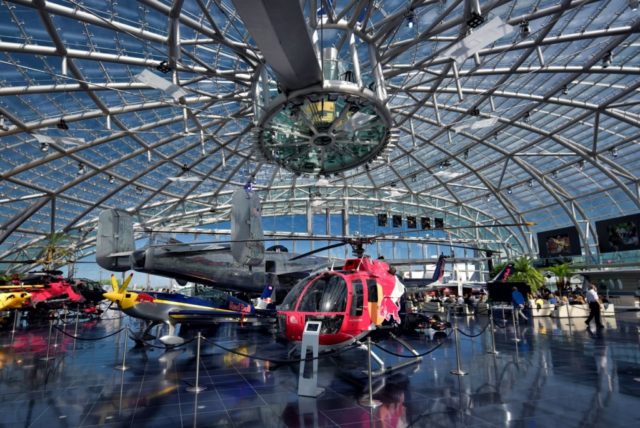
Salzburg: Home of Mozart, The Sound of Music…and Red Bull. In the 1980s, Dietrich Mateschitz founded Red Bull in Salzburg. Today the energy drink magnate is Austria’s richest man (net worth: more than €10 billion) and employs 10,000 people. Mateschitz owns several sports teams (ice hockey, car racing, and multiple soccer teams) and collects airplanes, race cars, and other expensive vehicles. He’s opened his own private hangar (called Hangar-7, across the runway from Salzburg’s airport) to the public. Anyone is invited to come for free and wander through his toys. While most visitors — more interested in the austerity of Fräulein Maria — find this a borderline-grotesque display of wealth, gearheads love it.

Fresh Hallstatt Tips (and Fresh Lake Fish)

I love Hallstatt. And with each visit, I find even more ways to enjoy it. Here are a few tips (which are going into the upcoming edition of our Rick Steves Vienna, Salzburg & Tirol guidebook) that I picked up on my latest trip.

cameron-austria-hallstatt-dinner

I’m a stickler for eating well. (Not necessarily expensively…just well.) I see each meal as an opportunity to create a memory. And in Hallstatt, I enjoyed a twofer: delicious lake fish with grand lake views. This is the little gravel-covered pier at Gasthof Simony’s restaurant — one of a few fine options along the village lakefront. I was in town during an early-summer cold snap. Not every restaurant had their outdoor seating open, but I was perfectly comfortable in my down vest. In these situations, it’s fine to ask politely if you can sit outside. And when it’s this uncrowded, you can pretty much take your pick of tables. This one will do nicely…

cameron-austria-hallstatt-viewpoint-1

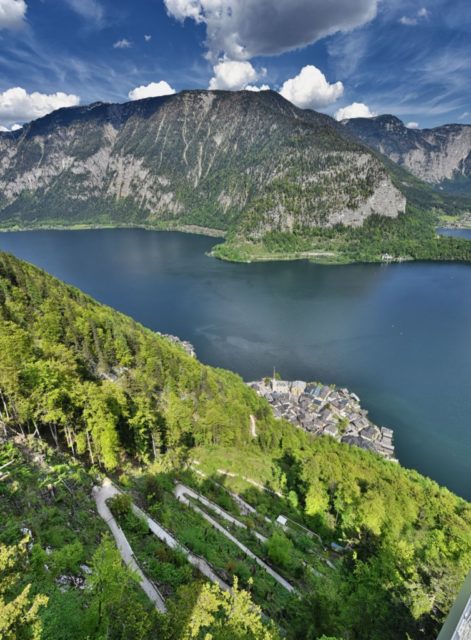
One of my favorite experiences in Hallstatt was riding the funicular up to the mountaintop above town, where they’ve opened a new panoramic viewpoint. You can tiptoe out onto this “Skywalk” and stand high above the village and the glorious Hallstättersee — immersed in 360 degrees of alpine splendor.

cameron-austria-hallstatt-oV

After enjoying the viewpoint (and touring Hallstatt’s newly updated salt mine experience), I hiked all the way back down to town on the loooong, steeply switchbacked trail you see in this photo. It was a knee-challenging, vertigo-inducing 45-minute hike…and worth every step.

cameron-austria-hallstatt-miners

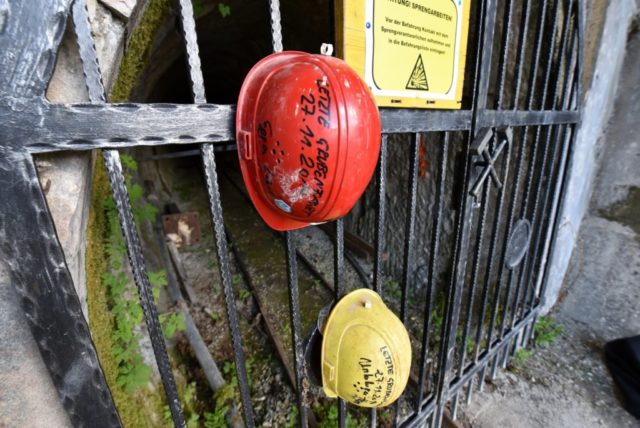
The salt mine that gave rise to Hallstatt 7,000 years ago is still in operation. And partway down the hillside, at the entrance to an abandoned mine shaft, a poignant little monument honors retiring miners — who hang up their hardhats, permanently, on their last day of work. Each one is labeled with a date and the words letzte Grubenfahrt — “last descent into the mine.”

cameron-austria-hallstatt-waterfall

Farther down, the trail passes over a waterfall as it tumbles out of the mountain — offering a unique perspective on Hallstatt’s mostly vertical stream.

cameron-austria-dachstein-ice

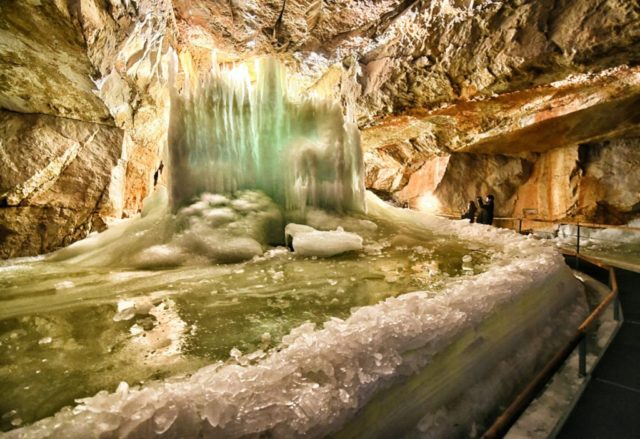
From Hallstatt, I side-tripped to the Dachstein mountain area (about a 10-minute drive away). A cable car whisked me high above the clouds, then I hiked even higher to reach these permanently frozen ice caves. On the frigid but fascinating tour, I clambered through countless caverns and saw many dramatic formations.

cameron-austria-dachstein-peaks

The Dachstein cable car continues even higher, to the rooftop of the Salzkammergut — ringed by other snow-covered peaks.

At the end of the day, I enjoyed the Dachstein experience, but I’m not convinced the side-trip was worth the investment of time and money. Hallstatt’s own little lift (mentioned above) brings you not only to a fine viewpoint, but also to a fun salt-mine tour that’s basically redundant with the ice caves. If you’re tight on time, choose either Hallstatt’s salt mines or the Dachstein ice caves — and for my money, Hallstatt is the better value.

Hallstatt Never Changes…Except When It Does

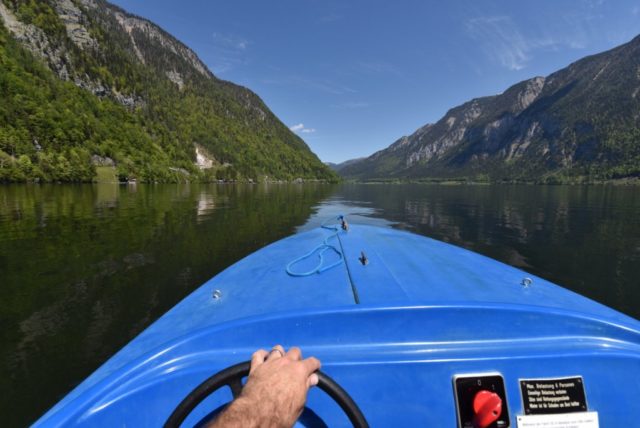
Buzzing along the glassy surface of a glacial lake, feeling the bright summer sun on my face and the wind in my hair, I suddenly realize I’m enjoying my favorite moment of this trip so far.

cameron-austria-hallstatt-water

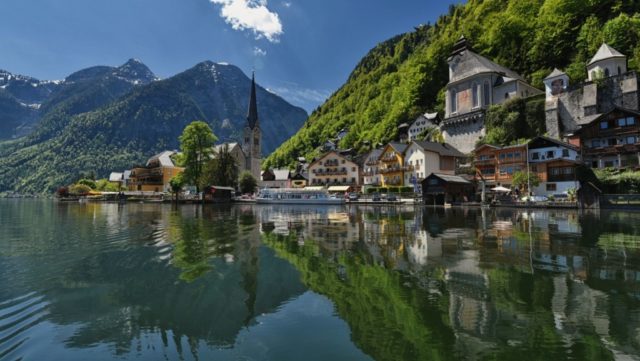
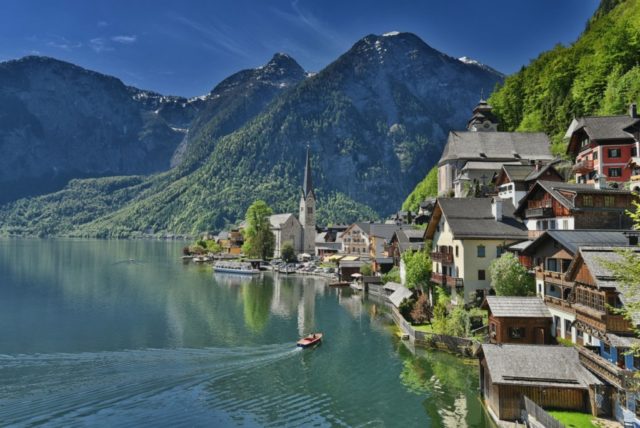
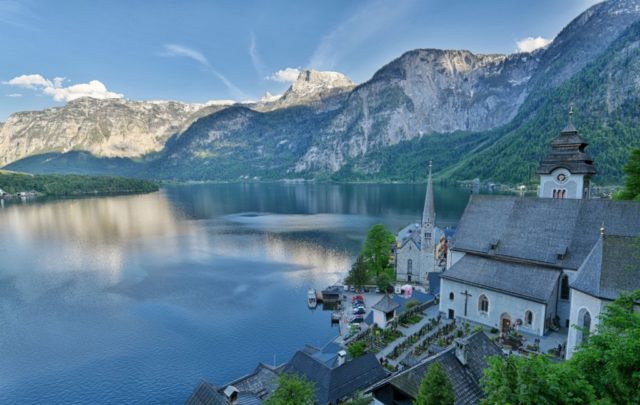
I’m in — or, actually, bobbing in a plastic boat just offshore from — the tiny town of Hallstatt, in Austria’s famed Salzkammergut Lake District. Before me, the pointy Protestant church spire stands like the town flag, proudly staking its claim on the narrow ledge of land that Hallstatt occupies. With sheer cliffs on one side, the deep waters of the Hallstättersee on the other, and a mighty waterfall surging through the heart of town, Hallstatt is one of those improbable settlements that makes you wonder: What possessed someone to build a village here?

The answer is salt. Specifically, the salt deposits deep inside the mountain just above, all rolled up in a chunky granite wrapper by millions of years of tectonic activity. “Hall” comes from an old Celtic word for “salt,” making Hallstatt the “place of salt.”

But today, salt is the farthest thing from my mind. The weather is glorious, and I’ve followed the Rick Steves guidebook‘s advice and rented an electric boat. Motorized watercraft are outlawed on the lake, so rather than worry about dodging speedboats and jetskis, I just need to keep an eye on a few big, plodding paddleboats shaped like the lake’s resident swans.

cameron-austria-hallstatt-boat

My boat has two speeds — “stop” and “go.” It’s an easy way to get out on the water — and, at just €10 for up to four people to take a 30-minute ride (long enough for a scenic loop from one end of town to the other), it’s a screamin’ deal…cheaper than four rides on a Vienna tram. For the next edition of our guidebook, this tip will rocket from “consider” to “a must in good weather.”

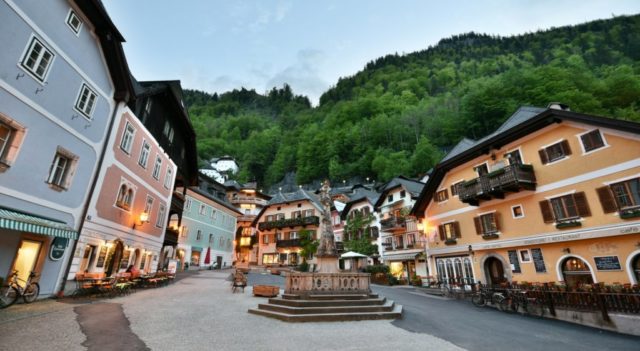
Back on land, I stroll through wee Hallstatt. It’s a 30-second walk from the boat dock to the main square, which feels like a movie set. The gurgling fountain is ringed by an amphitheater of cozy, colorful housefronts.

cameron-austria-hallstatt-square

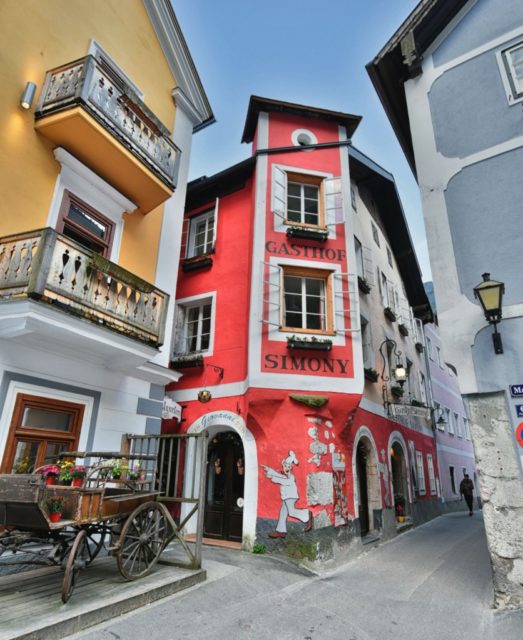
At the bottom corner of the square stands a hot-pink house, peeking between two bigger buildings like an eager kid sister elbowing her way in for the view. This is Gasthof Simony, where I stayed the first time I came to Hallstatt, as a backpacker in 1999.

cameron-austria-hallstatt-simony

Well, that’s not entirely true: At first, I’d booked a room at a cheap pension on the hillside. Back then — traveling with what was one big, sprawling guidebook called Rick Steves’ Germany, Austria, and Switzerland, and Oh By the Way Did We Mention It Also Includes Prague for Some Reason? — my standard procedure was to call the cheapest place in Rick’s book that had a single room. (I slept poorly in hostel dorms, but Rick always listed one or two dirt-cheap, old-school pensions where I could get a single with a shared bath for just a few schillings more.) My strategy worked great — until I hit Hallstatt and checked into my room, which simply wasn’t up to snuff. So I politely bailed out and walked down the hill to knock on Gasthof Simony’s door.

Sweet old Frau Scheutz answered, and warmly offered me a good deal on her budget single. Rick described her as “grandmotherly,” and sure enough, she helped me feel at home partway through a long journey. I still remember reading Rick’s description of the hotel as “stocking-feet-tidy.” I didn’t really know what that meant, but it felt just right…and I remember distinctly enjoying being in stocking feet, once in my room.

Gasthof Simony is still there, with its flashy new paint job. But Frau Scheutz retired several years back. And, based on my inspection, the place is still creaky and traditional, but no longer “grandmotherly” or “stocking-feet tidy.” It’s being run as an afterthought by another hotel in town.

Standing in front of the guesthouse, feeling nostalgic, I’m suddenly recognized by a fellow traveler who’s seen my picture on Rick’s website and books. (Trust me, this does not happen often.) He had his mother are on an epic journey through Eastern Europe — pausing for just a night here on their way between Český Krumlov and Slovenia’s Lake Bled. He tells me that, like me, he stood in this very spot 20 years ago. And he’s stuck at how similar things still are. “Except there used to be cars parked all along this square,” he says.

cameron-austria-hallstatt-square-night

Bidding farewell to my one and only fan, I think a bout how Hallstatt hasn’t changed…and how it has. Yes, on the surface it’s still the same wonderful old place. But overall, I sense a  creeping corporatization of Hallstatt.  Three of the classic old hotels on this square have been purchased and remodeled by big-city investors. Updating the hotels for our guidebook, I grow concerned when I’m told that jolly old Herr Zauner — who always wore lederhosen like pant were never invented — has passed the management of his hotel on to his son. The rooms have been modernized, and the prices raised accordingly. As I probe for more details, the receptionist reassures me: “Oh, don’t worry, Herr Zauner still hangs out here at dinnertime. And he still loves telling all of his old mountaineering stories.”

I’m glad Herr Zauner still makes an occasional appearance. And he’s certainly earned a restful retirement. But the glamification of Hallstatt concerns me. Yes, the town’s rehabbed hotels are able to more efficiently process the tour groups that pour through town. And for some travelers — who appreciate reliable plumbing, speedy Wi-Fi, and room service — that’s a good thing. But for me, it’s at least as much a loss as it is a gain. I worry that Hallstatt is no longer a locally owned town of quirky villagers who run creaky old guest houses on the side. It’s a tourism machine with a veneer of quaint.

Seeking the Hallstatt of yore, I stroll toward the far end of town — and quickly find it. I’m lost in a rustic world of wooden lakefront houses. Hallstatt has a special smell: damp, moss-covered rocks and heavy timbers. Like summer camp.

Lost in an olfactory flashback, I pop out at Hallstatt’s postcard viewpoint: a little gap in the houses with perfect views back on the town and its mammoth mountain backdrop. I snap the same picture I take every time I’m here (but this time, with a better camera).

cameron-austria-hallstatt-view-2

On my way back to town, I detour to the Catholic Church up on the ridge, with its lovingly tended, fresh-flower-bedecked cemetery. This tiny hamlet has only so much space for graves, so traditionally, after a certain period of time the dead were “evicted” and their bones neatly stacked in a chapel. Each skull is lovingly painted with the name of the person who once filled it.

cameron-austria-hallstatt-skulls

Surveying the macabre but strangely touching scene, I notice clusters of shared family names: Steiner. Kierchschlager. Heuschober. Binder. All still together, beyond death. (Hope you like your in-laws.) It’s a poignant — and eerily tangible — chronicle of a tight-knit community that’s changing faster than these people would ever have imagined.

Stepping outside, I see a crew digging a fresh grave at a centuries-old headstone. And as I walk through the tombstones, I notice several death dates in the last few years. I begin to wonder whether some of the people I met back on that first visit might be permanent residents here now. At first, the thought makes me sad. But then, looking at the sweeping views over the church tower, the glassy lake, and the glorious Alps, I realize that if that’s the case, then that’s exactly as it should be.

cameron-austria-hallstatt-cemetery-view
Change though Hallstatt may, old traditions die hard. And — tourists and big-city investors be damned — the people of Hallstatt will always belong to the soil of their hometown, enjoying this gorgeous panorama, for eternity…or, at least, until they’re dug up to make way for the next generation.

D’oh! A Deer: Taking Two “Sound of Music” Tours Back-to-Back

Salzburg’s tour guides are understandably jaded.

“Understandably” to me, anyway, because I’m not really a fan either. I mean, like any red-blooded American, I grew up watching The Sound of Music — or bits and pieces of it — every Easter and Christmas on TV. Some of the songs are catchy. Pretty scenery, and all that. But I never loved it loved it.

The thing is, I only have to deal with the Von Trapp clan twice a year — and at that rate, they’re harmless and quaint. But if you’re a tour guide in Salzburg, you have no choice: The Sound of Music is your entire life.

Sound of Music tours are a huge business in Salzburg. I was told they attract 100,000 Von Trapp pilgrims annually. At around $50 a pop, that makes it cool $5 million-per-year industry. Our Rick Steves guidebook recommends two Salzburg-based Sound of Music tours: one with a big bus, and the other with a minibus. Both get an unusual number of reader complaints. To get to the bottom of things, I devoted a little Salzburg research time to trying each one — to re-evaluate them, to better explain them in the book, and (hopefully) to make sure our readers fully understand what they’re investing fifty bucks and a half-day in.

(You may be wondering why someone who isn’t a fan of the movie would be given this assignment. I would counter that someone who isn’t a fan of the movie may just be the perfect person for this assignment. My steely-eyed analysis isn’t clouded by gauzy memories of whiskers on kittens and schnitzel with noodles. And while we’re on the topic, nobody actually eats schnitzel with noodles. Too many carbs.)

And so, here I am, in a minibus with six North American SoM devotees — the only one not singing along to “Doe, a deer…” My travel companions for the day are two fiftysomething Canadian women whose husbands skipped out on the tour to visit Hitler’s Eagle’s Nest in Berchtesgaden (smart guys) and four American college students. It’s clear that the movie — 50-plus years young and still going strong — exerts a powerful, cross-generational appeal.

Everybody — young and old alike — knows every word to every song. They know when to sing “flibbertigibbet” and when to sing “will-o-the-wisp.” They’re full-on geeking out on each little morsel of information. And everybody “oohs!” and “aahs!” on cue when our guide shows us, for example, the trees where the kids were hanging from the branches in their curtain clothes, or whatever…I wasn’t really paying attention.

cameron-austria-trapp-mansion

We pull up to a mansion on the shore of a beautiful alpine lake. This is not the actual Von Trapp family house. And it’s only one-third of the movie Von Trapp family house. (The back of the house, and the interior, were each filmed elsewhere.) But even so, people gobble up the stories of the youngest Von Trapp falling out the wrong side of the canoe and being rescued by Liesl.

Our guide explains that The Gazebo (where Liesl hooks up with a teenaged Nazi) was built just for the movie, next to the mansion. But then, years later, cinephiles were still showing up in droves, making a racket, singing and waltzing and taking pictures. So they moved The Gazebo across the lake to a biergarten. But the same thing happened: Tourists would make a ruckus, disturbing the biergarten patrons.

Just to be entirely clear on this point: The Sound of Music fans were so rowdy, they were bothering a bunch of Austrian drunks chugging one-liter mugs of beer.

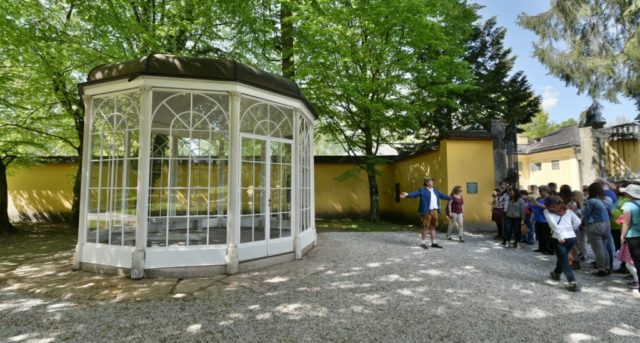
And so, The Gazebo is not anywhere near this lake anymore. They moved it several miles away, to Hellbrunn Palace, where they dumped it outside the wall near the parking lot, between the garbage cans and the toilets. And there, each day, a steady stream of tour buses pull up to let 50 people take turns photographing each other in front of The Gazebo, gazing wistfully into each other’s eyes. Then they use the toilets and get back on the bus. Very handy.
cameron-austria-SOM-gazebo

All of this fuss is about a movie prop from the 1950s. And it’s not even a pretty prop. In my hazy memory of the movie, I pictured some fanciful, lacy, wrought-iron objet d’art with leaded glass that twinkled in the moonlight. But no. In real life, it’s a boxy white frame with clear glass. I’ve seen nicer prefab ones at the Home Depot.

And what about The Meadow — the one where Julie Andrews spun herself silly? Like Hitler’s Bunker in Berlin, its real location is shrouded in mystery: Everyone claims to know where it is, but each one of them will take you to a different place. (Apparently, the actual The Meadow is on private property, and strictly off-limits to the curious public.) But it doesn’t really matter anyway. Guides told me that for their American visitors, any alpine meadow will do — so they just pull over wherever it’s handy. One of them told me, “Local farmers can’t figure out why all of these Americans are always spinning in their fields.”

Our guide, an elderly Austrian gentleman, has a real knack for doling out Julie Andrews trivia at the appropriate rate. (“Did you know that Audrey Hepburn also auditioned for the role of Maria?” he asks. “Yes, in fact, I did know that!” no fewer than three of my fellow SoM aficionados exclaim.)

But there’s a lack of mirth in our guide’s delivery. I don’t sense a deep-in-his-bones love affair with “The Lonely Goatherd.” He seems to get a minor kick out of the story of the Trapp Family Singers…but would he lie down in traffic for Christopher Plummer? As a SoM cynic myself, I can relate. When he asks if we have any questions, I can barely stop myself from asking, “So, how do you solve a problem like Maria?”

cameron-austria-SOM-tour

Day two. The big bus tour has a similar itinerary but more people. Lots and lots more people…49 SoM fanatics on a 50-seat bus. A sneezing Fräulein Maria on the side of the bus (Gesundheit!) seems to guarantee that this will be one heck of a fun day. And our lederhosen-clad guide — even more polished than the minibus guide — recites his tightly crafted spiel with the poise of a seasoned stand-up comic. I imagine he’s been regaling his audience with these same quips, puns, and factoids, twice a day, for many years. The bus offers a comfy ride and a higher vantage point. But loading and unloading at each stop is a chore. And, by the trip’s end, rather than feeling the warm camaraderie of the minibus, I feel a need to escape.
cameron-austria-wolfgangseeOV

All told, each type of tour has its pros and its cons, but both were perfectly fine. So what’s with all of the complaints? After taking both tours, I think I figured it out: The Austrian local guides never can, and never will, equal their customers’ intensity of affection for the movie.

The Sound of Music is an American phenomenon. Yes, the exteriors were filmed in Salzburg. (And after these tours, I’m wondering if there’s a square inch of this city that didn’t wind up somewhere in that movie.) But fundamentally, it’s an American movie, based on an American stage play, by American composers who wrote songs in English that have nothing to do with Austria’s musical tradition. Most Austrians haven’t even seen the movie; those who have, certainly weren’t reared on it. Mozart is in their bones. But Sound of Music is this weird thing that just happened to them.

And so, when our guidebook readers go on one of these tours, then write us a note complaining that the guide was gruff, or the tour felt rushed…I’m not saying these people are wrong to be disappointed. But it’s hard to blame the guide for maybe phoning it in, just a little bit.

OK, look at it this way: Imagine that some obscure-to-you movie was filmed in your hometown. Just for the sake of argument, let’s say it was the 1990 Tom Hanks comedy Joe Versus the Volcano. So, Joe Versus the Volcano was filmed in your hometown. That’s cool. But it’s been decades now, and you’ve moved on. Everybody in your hometown has gone on to bigger and better things. As it should be.

But here’s the thing: People keep showing up, having traveled at great distance and great expense to see everything in your town relating to Joe Versus the Volcano. They want to see the shop where Joe bought his four steamer trunks that he later lashed into a raft. They want all of the tinseltown tales about Meg Ryan’s artistic journey in playing three different roles. They are desperate to see the very pier from which Joe set off on his sailboat trip to Waponi Woo.

Now, these people are willing to pay you a lot of money. Like, every day, a dozen of them will hand you fifty bucks apiece to show them this stuff. There are many other things in your town that you are legitimately passionate about. But these people don’t want to see those things — and six hundred bucks ain’t bad for a half-day’s work, am I right? So you take them to see the vacant lot where Abe Vigoda and Lloyd Bridges had their trailers. Because you’ve got to give the people what they want. But — and this is a big but — that doesn’t mean that you actually enjoy it.

There’s more to Salzburg than just The Sound of Music. But you are really excited about The Sound of Music. And that’s great! Just be prepared for an enthusiasm gap between you and your guide. They’ll take you to the locations. They’ll tell you the stories. And they’ll play you the songs on the bus. And they’ll do it all with a smile (as much as Austrians ever smile). But cut them a little slack…and don’t expect them to sing along.


If you savor the Schadenfreude of hearing about good trips gone bad, check out the other posts in my “Jams Are Fun” series. How about that time I was stuck on a cruise ship during a massive storm in the North Sea? Or the time I ran out of gas on Scotland’s remote north coast? Or that time I got pulled over by keystone kops in a remote corner of Bosnia? Or, really, the entire experience of driving in Sicily

If, on the other hand, you are so excited about the idea of a Sound of Music tour that you can’t wait to learn more…then pick up our Rick Steves Vienna, Salzburg & Tirol guidebook.

And for a taste of Austrian Christmas that isn’t quite so, um, Julie Andrews-y, check out Rick’s classic European Christmas special.

My Best Advice for Salzburg: Get Out of Town

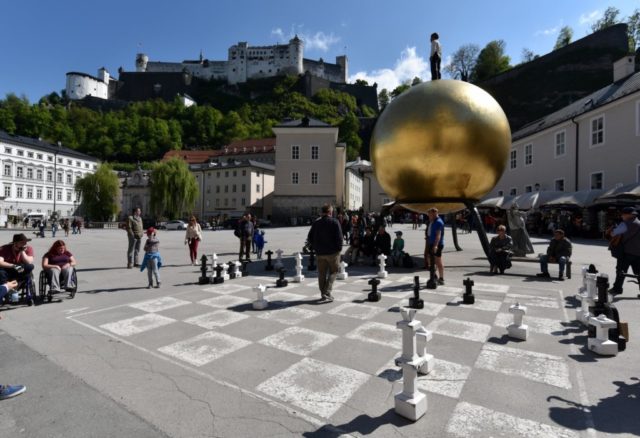
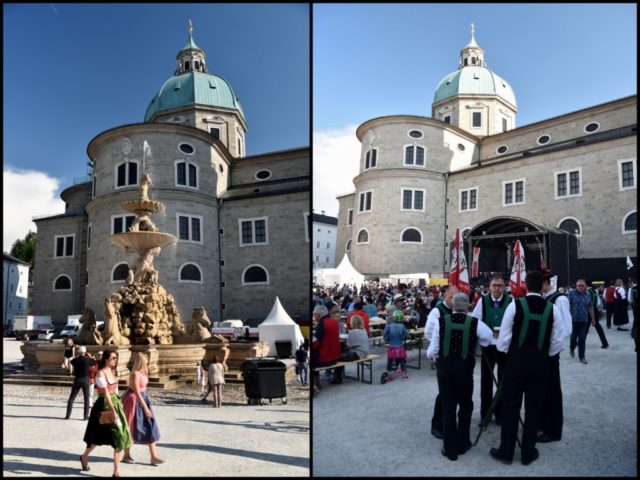
People love Salzburg — the city of Mozart and the Sound of Music. But if I’m being honest, Salzburg has never really done it for me. I find it too sterile — like a sofa covered in plastic so nobody spills anything on it. With perfectly manicured gravel squares between polished Baroque domes, it feels more like a theme park than a city.

cameron-austria-salzburg-old-town

And — especially coming from exuberant Italy — people here just seem unhappy all of the time…as if the pressure of living up to Mozart’s legacy fills them with crushing angst. Or maybe they’re just fed up with all of the tourists. (To be fair, coming from Italy, most countries seem pretty gloomy.)

However, on this visit, I realized part of the problem: On past trips to Salzburg, I usually had lousy weather. When the sun comes out, Salzburg springs to life. And its proximity to the Alps makes Salzburg a city made for good weather. So, if you’re here on a nice day, resist the temptation to do the same tired old laps around the Old Town, poking into old churches and the former homes of dead composers. Instead, make the most of having the Alps at your doorstep.

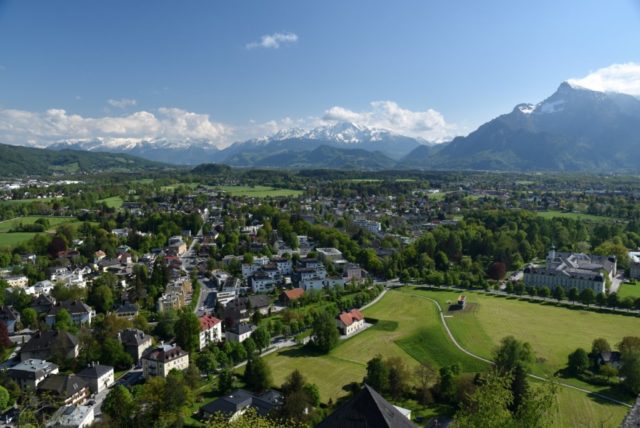
cameron-austria-salzburg-mountain-view

The easiest escape is to ascend the ridge that runs along the top of the Old Town, called Mönchsberg. It’s easy: There’s a funicular at one end (near the castle), an elevator at the other end (near the modern art museum), and mostly level trails all along. Up top, you have stunning views over town in one direction, and to alpine peaks in the other.

cameron-austria-salzburg-towers

You can walk the length of the Mönchsberg in about 30 minutes, with ever-changing views of the gorgeous skyline.

cameron-austria-salzburg-skyline-2

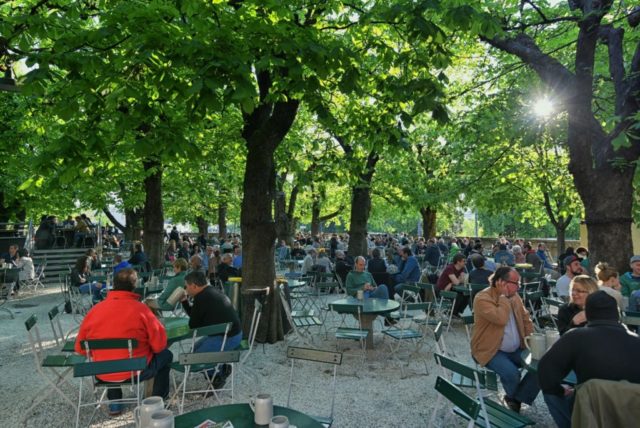
I finished my Mönchsberg hike with a steep descent to the Augustiner Bräu Biergarten. This sprawling beer-industrial complex is a favorite hangout for Salzburgers of all stripes on a nice summer evening. Sure, it has cafeteria-quality food and humdrum beer…but it’s so Austrian.

cameron-austria-salzburg-biergarten

Maybe the best good-weather activity is simply to camp out on the grassy embankments of the Salzach River, with stunning views of the Old Town. Desperate to find some funky hipster zone on the fringe of the city, I asked locals, “Where do all of the college students hang out?” They told me, “They sit on the riverbank.” Sure enough, when the sun comes out, the embankment become Salzburg’s Riviera. For a wonderful experience, rent a bike for an hour and go as far as you like up and down the river on the level, easy, well-marked bike path that follows both of the riverbanks.

cameron-austria-salzburg-river-4

Or, with more time, ride your bike all the way out to Hellbrunn Palace, an easy 30-minute pedal away. There you can tour the palace gardens with their “trick fountains,” where a sadistic guide takes great joy in positioning you in front of geysers and throwing the switch.

cameron-austria-hellbrun

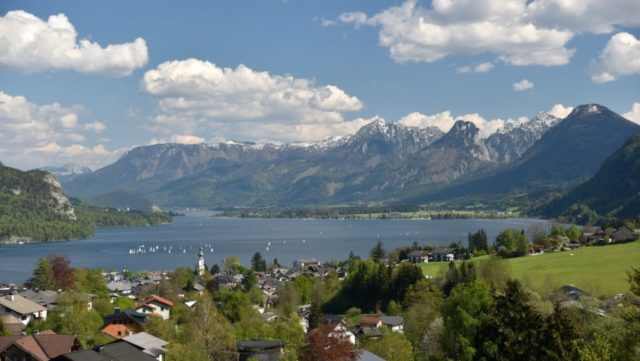
With a car, it’s an easy drive into the Austrian Lake District — the Salzkammergut. In a half-hour, you’re immersed in alpine splendor and cruising the banks of the Wolfgangsee. If you don’t have enough time or interest for the full Sound of Music tour (more on that in an upcoming post), a quick drive through the Salzkammergut is enough to give you that “Hills Are Alive” feeling.

cameron-austria-wolfgangsee

I know Salzburg has its fans, and some people could spend a lifetime here. But for me, a cloudy day in Salzburg feels like a lifetime. In the sun, however…now, that’s a city I could acquire a taste for.

cameron-austria-salzburg-riverview