Alpine Arcades in Bolzano and Innsbruck

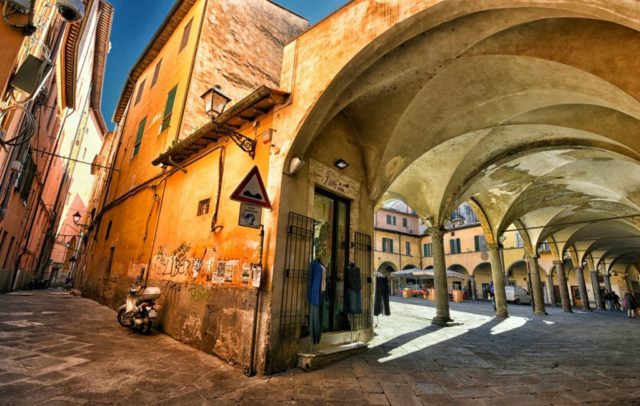
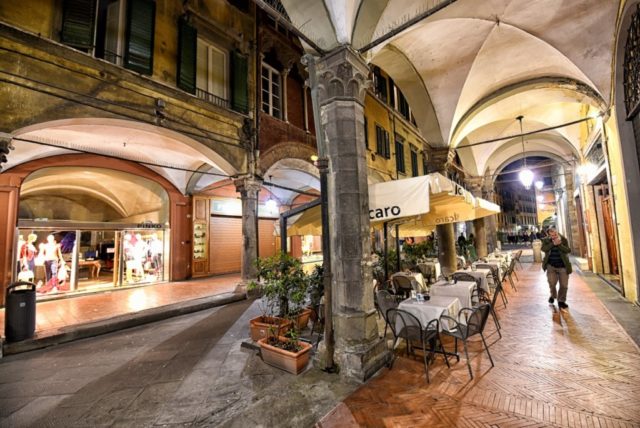
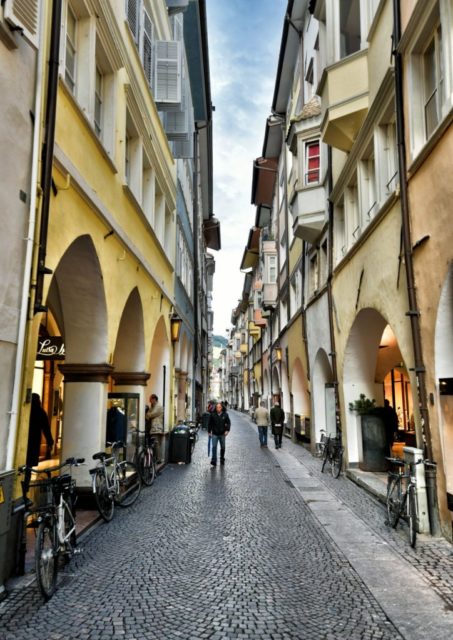
On my latest visit to the borderlands of Italy and Austria, hiking in the Dolomites was — of course — a highlight. But I also enjoyed exploring a pair of engaging and underrated cities: Bolzano, Italy, and Innsbruck, Austria. Separated by an easy drive, these twin cities offer different flavors of the urban Tirolean experience. And both have cozy arcades designed to protect pedestrians from the volatile elements.
cameron-italy-bolzano-arcades-1

Bolzano sits on a linguistic cusp. Historically it was Austria. But after it became part of Italy at the end of World War I, Mussolini worked hard to Italianize the city. Today most people greet you in Italian, but a few stick to the German. Exploring the city, I make a game out of trying to sort out which of these two cultures fits the city best.

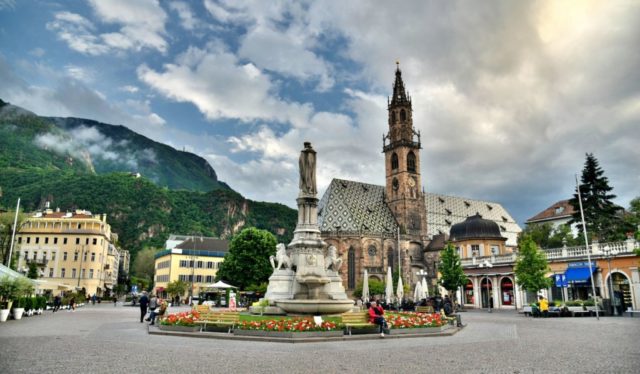
The city’s main square is cozy, tucked against foothills and with a colorfully tiled church. Enjoying this view, I eat the worst strudel I’ve ever had. (Italians may be amazing chefs, but strudel eludes them.)
cameron-italy-bolzano-waltherplatz

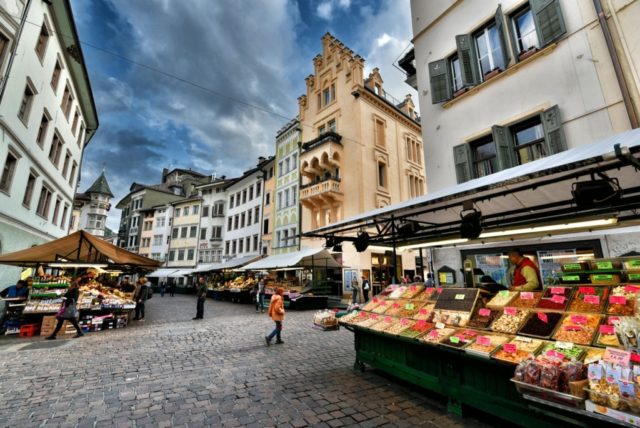
Poking through the shopping arcades, I pop out at a lively market street. The stalls are jammed with flowers, produce, and dozens of different variations on speck (the Dolomite answer to prosciutto).
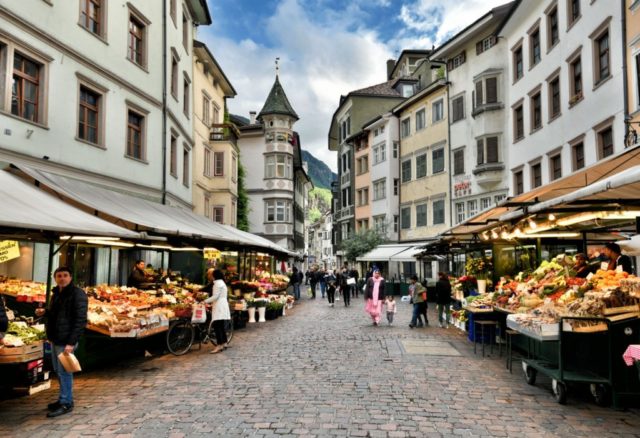
cameron-italy-bolzano-market-1

cameron-italy-bolzano-market-3

When all is said and done, the cityscape may look Germanic, but Bolzano’s vibrant colors, al fresco café culture, and spirited market hubbub are definitely Italian.

Heading out of town, I hop on the freeway. And in just two hours — following the same path as the ancient Via Claudia trade route through the Alps — it’s arrivederci, Italia. I’m in Innsbruck, Austria.

cameorn-austria-innsbruck-street-2

I’ll admit that on past visits, I’ve had a bad attitude about Innsbruck. Among savvy travelers, the city is often written off as an overrated tourist trap. But sometimes when a place gets labeled “overrated” often enough, the bar gets lowered to the point that it starts to exceed expectations. And since my last visit, Innsbruck has gotten much more interesting. (Or maybe I’ve just gotten easier to please.)

I live by the travel rule that if you don’t like a place, you probably just don’t know enough about it. So for this visit, I join a walking tour of the town center. Getting past the touristy gauntlet that runs up the gut of Innsbruck’s old town, the guide introduces me to fascinating little corners of town — from churches slathered with Baroque illusions to artsy, cobbled back lanes.
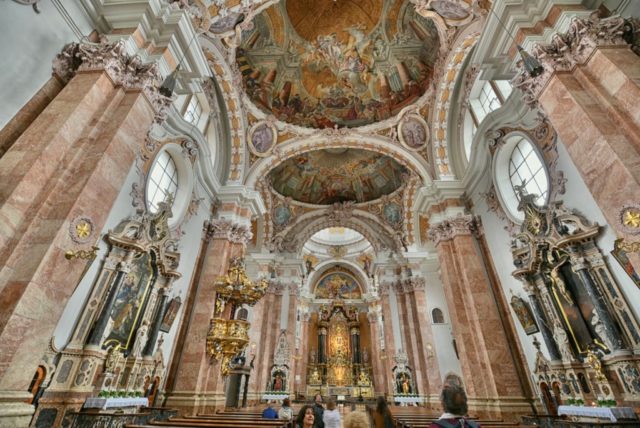
cameron-austria-innsbruck-church

The first, last, and only name to remember here is Maximilian I — the Habsburg emperor who invested mightily in his favorite city (back when Innsbruck, rather than Vienna, was the capital of the Holy Roman Empire). In 1494, Maximilian built the Golden Roof, a protected perch glittering with 2,657 gilded copper tiles. It overlooks a posh shopping street lined with arcades…just like the ones in Bolzano. The roof glitters like the Swarovski crystal that’s made just up the valley. (Who knew? I always assumed it was Russian.)
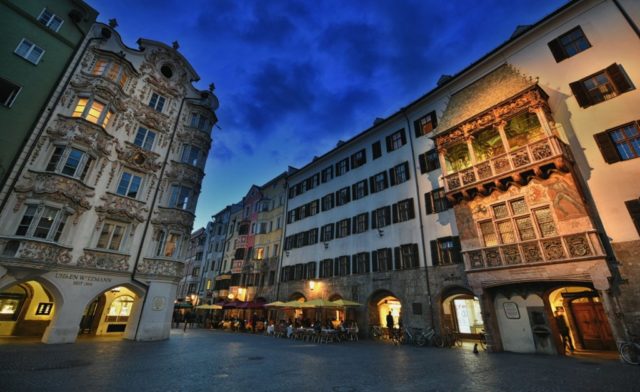
cameron-austria-innsbruck-golden-roof

Another travel tip put to good use here: Crowded towns get sleepy after dark. And sure enough, as the sun drops behind the mountains and the sky turns a deep purple, I have Innsbruck’s floodlit cobbles all to myself. I wind up enjoying the best meal I’ve had in quite some time, at a hipster gastropub (Die Wilderin) that’s jam-packed with regulars despite its location, just a few steps from the postcard racks and tourist traps.

cameron-austria-innsbruck-arcades

In this part of Europe, the cutesy alpine villages get all of the attention. But sometimes it’s the hardworking regional capitals — like Bolzano and Innsbruck — that leave you with fond memories of urban charms. And unlike in the high-mountain pastures, if the weather turns bad, your trip isn’t ruined…you can just duck under those cozy arcades.
Hiking the Italian Alps with the Eisheiligen

I’m still in Italy — but only technically. In my mind, I’ve already crossed into Austria.

At Italy’s mountainous northern reaches is the region called Alto Adige — or, to many people who live here, Südtirol. That’s the southern part of the Tirol, a once-mighty alpine region now divided between Austria and Italy.

Traveling here, you’re constantly aware that you’re straddling a cultural and linguistic divide. Driving on the highway between Bolzano and Innsbruck, I pass alternating crops of grapes and hops. One town has fantastic pasta and rotten strudel, and the next town vice-versa.

The region is officially bilingual. In the big cities in the valley, most locals speak Italian first. But up in the mountains, people speak German in their homes and in their bones. As someone who speaks a bit of both languages, I find the place hopelessly confusing. It crosses my linguistic wires. I try to ask a restaurant, in German, which days of the week they’re open…and half the words come out in Italian. Montag, Dienstag, mercoledì, giovedì, Freitag, and the Wochenende. Sonntag aperto?

cameron-italy-castelrotto-square

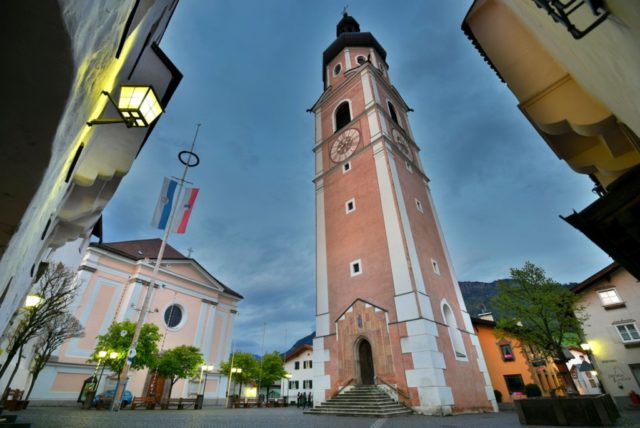
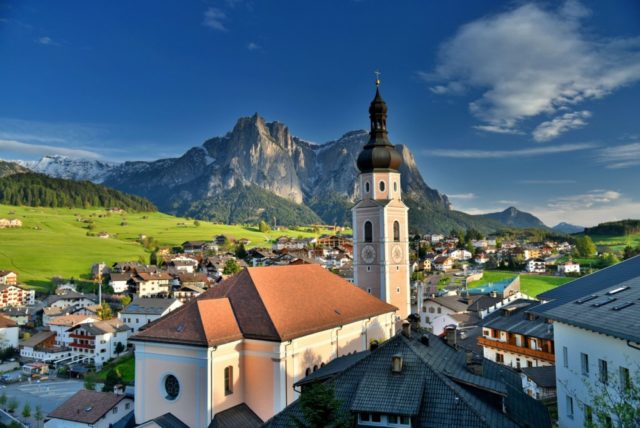
My home base is in the pretty alpine village of Castelrotto — a.k.a. Kastelruth — with a gigantic bell tower that dwarfs everything around it. When I planned this trip, I knew that my timing was close to the very start of the season. And sure enough, to reach Castelrotto I have to drive through a frigid drizzle.

As I check into my hotel, the hotelier notices me shiver. “You’re here for the Eisheiligen,” she says sympathetically, using an unfamiliar German word that means, roughly, “The Ice Saints.” I ask her to explain. “We get nice, summery weather in late April, early May. But then, in mid-May, another jolt of winter hits for about a week. We call it the Eisheiligen. These are the feast days of some early Christian martyrs — and they bring along frigid weather.” She leans in close with a local gardening tip: “And you never put your flower boxes out until after the Eisheiligen. If you’re careless, the ‘Cold Sophie’ will kill them with her frost on May 15.”

I ask her how long this cold snap will last, and, with pinpoint precision, she promises that summer will return in two days. Sure enough, two days later, I wake up to glorious sunshine. (Even in our age of dual doppler radar and 15-day forecasts, sometimes the old folk wisdom is still the best way to predict the weather.)

cameron-italy-castelrotto-view

Greeting my only sunny day in the Dolomites, I make a beeline for the gondola up to the Alpe di Siusi (Seiser Alm in German). The lifts just started running yesterday, which makes me a little nervous. Nobody wants to be on the first gondola of the season. And sure enough, as I soar silently through the air to a high-mountain pasture, I keep hearing a rustling underfoot. Finally I figure out that a stowaway mouse is batting around a little ball of paper in the vents.

cameron-italy-dolomites-signs

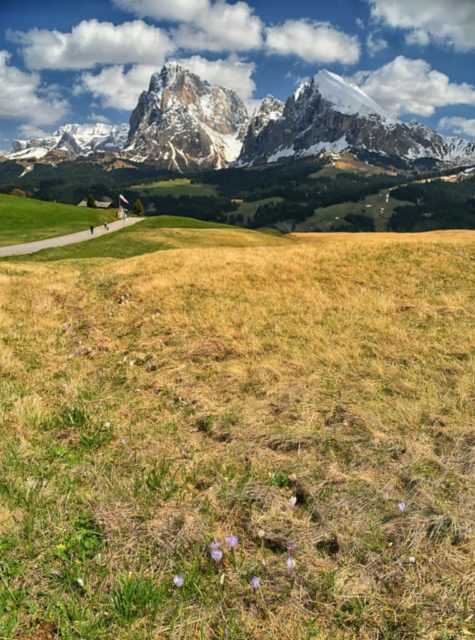
Reaching the Alpe di Siusi, I find it swarming with early-bird hikers getting a head start on the summer. Aside from a few persistent snowbanks in shady gullies, the pasture is coming back to life. A few fields are even fuzzy with the earliest blossoms of miniature wildflowers. A month from now, it’ll be a Crayola wonderland. But today, on the heels of the Eisheiligen, it’s sunny and inviting…I’ll take it.

cameron-italy-dolomites-flowers

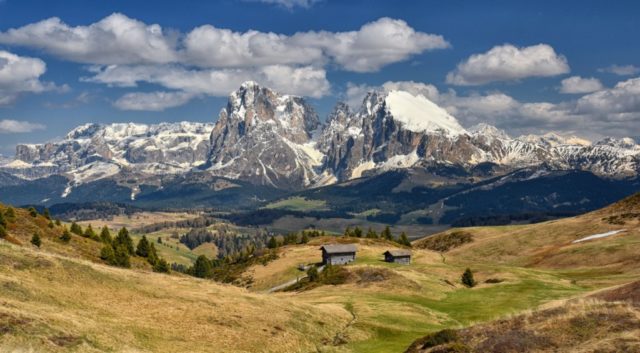
The lifts to the upper trailheads aren’t quite running yet, so I ask around for tips. People suggest that I simply ride the bus to the other end of the pasture. So, in the shadow of the long ridge called the Schlern, I hop the bus and ride 15 minutes to a sweet little mountain hut, the Rauchhütte. A breathtaking panorama of the Alpe di Siusi’s twin peaks — Langkofel and Plattkofel — spreads out before me. It’s an unbelievably picturesque spot for a lunch and Apfelstrudel.

cameron-italy-dolomites-beer

The other tip for hiking on the Alpe di Siusi before the lifts are fully operational is simply to hike up to an upper lift station and follow the trail from there. With a typical European optimism, the tourist office told me it was about a 20-minute hike up to the Puflatsch lift station. Forty minutes of heart-pounding, near-vertical ascent later, I reach the station. Wondering whether it was worth the effort, I begin one of the most stunning hikes of my life — circling the perimeter of the Puflatsch plateau and along the “Witches’ Benches,” with 360 degrees of majestic alpine panoramas.

cameron-italy-dolomites-view

cameron-italy-dolomites-puflatsch-views-2

cameron-italy-dolomites-puflatsch-views-3

So…yeah, it was worth the effort. And it was also worth the damp shoes from having to hike through a few melting snowbanks.

I wouldn’t necessarily advise trying to do summer hiking in the Dolomites before mid-May. The weather is just too iffy. But if you arrive with the Eisheiligen — like I did — you’ll be among the first hikers on the trails…and have this pristine alpine meadow all to yourself.

8 Photos of Backs-Streets Lucca — Tuscany’s Best-Kept Secret

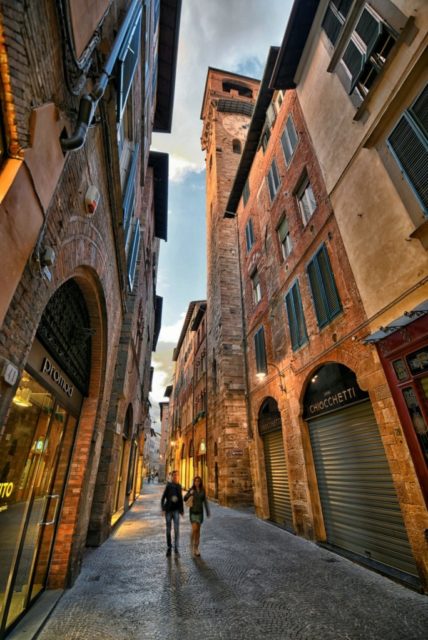
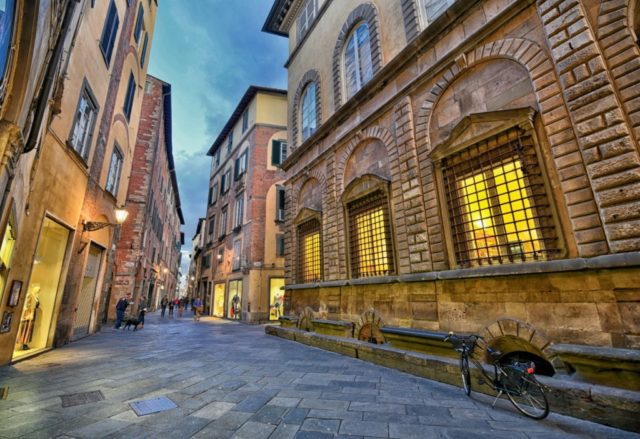
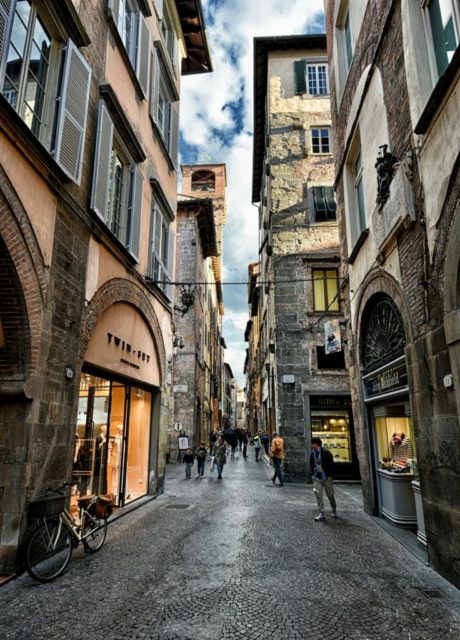
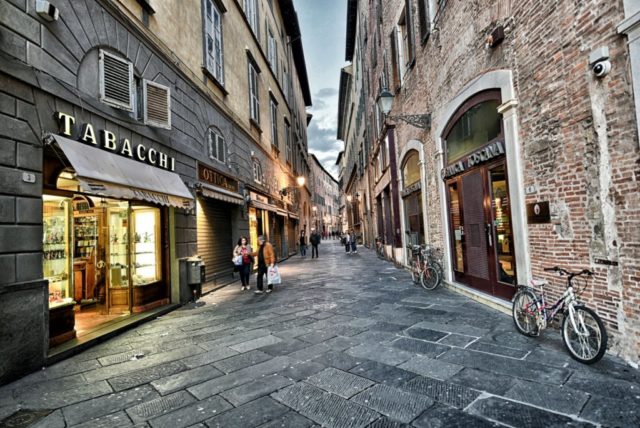
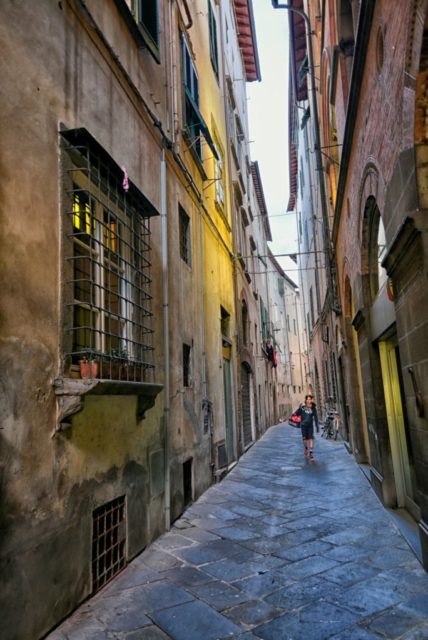
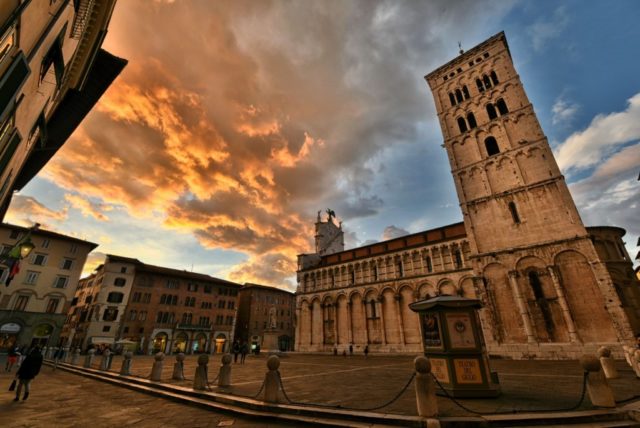
In my last post, I was marveling at the miracle that Lucca isn’t mobbed with tourists. The traffic-free streets are urban canyons crammed with characteristic shops, eye-catching architectural details, and lots of bikes. I had a lot of fun here with my camera. Everywhere I looked, fascinating scenes filled my viewfinder. And to top things off, on my last night in town, I stumbled onto a stunning sunset. Here are 8 reasons why my latest visit to Lucca certainly won’t be my last.

cameron-italy-lucca-street-7

cameron-italy-lucca-street-9

cameron-italy-lucca-street-8

cameron-italy-lucca-street-5

cameron-italy-lucca-street-2

cameron-italy-lucca-street-10

cameron-italy-lucca-cathedral-sunset

cameron-italy-lucca-amphtitheater-sunset-3

Why Isn’t Lucca Mobbed? (Not That I’m Complaining…)

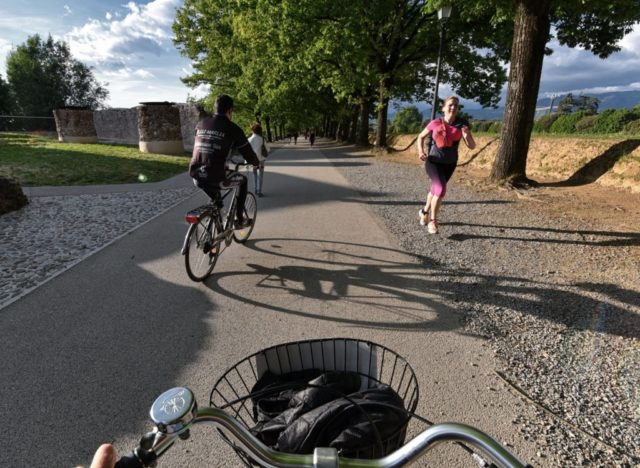
Pedaling around the top of Lucca’s city wall-turned-city park, feeling the wind in my hair and the sun on my face, it occurs to me: This is why you travel.

cameron-italy-lucca-rampart

Another thought occurs to me: Where are all the tourists? Aside from a few well-behaved international families pedaling and strolling along with me, virtually everyone I see up here — and throughout the town — are locals.

cameron-italy-lucca-OV

Lucca is a mid-sized city (of around 90,000 people) on the northwestern edge of Tuscany. It’s about a 30-minute drive or train ride from the tourist droves in Pisa. But somehow, Lucca has escaped everybody’s notice.

It’s not for lack of charm. Lucca is right up there on a list of most charming Tuscan cities. Frankly, great artwork aside, I’d rank it above Florence, and possibly even Siena.

And that’s probably Lucca’s secret: No world-class artwork. If there were a Michelangelo or a Leaning Tower here, Lucca would be an obligatory stop on the tourist circuit. But there isn’t…so it’s not.

cameron-italy-lucca-cathedral

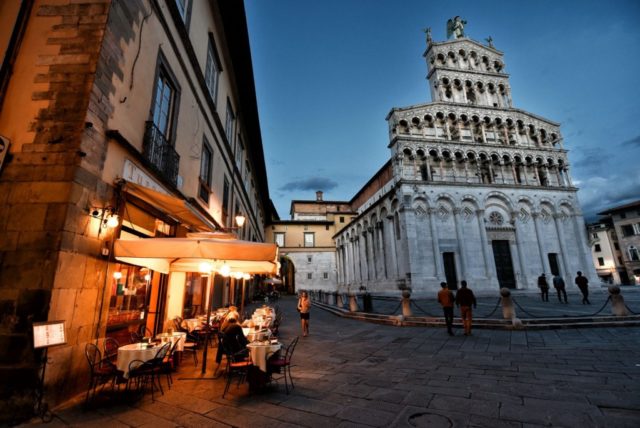
Lucca does have some gorgeous churches, and a few decent museums. But the city’s real draw is its everyday-ness. It’s a place still owned and operated by local people — not the tourist-industrial complex. It’s simply a delight to wander.

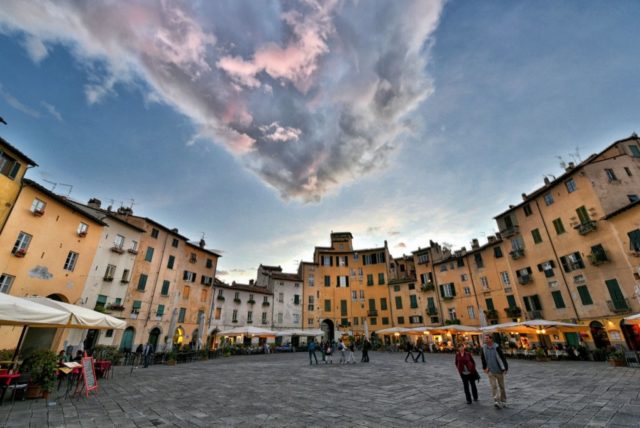
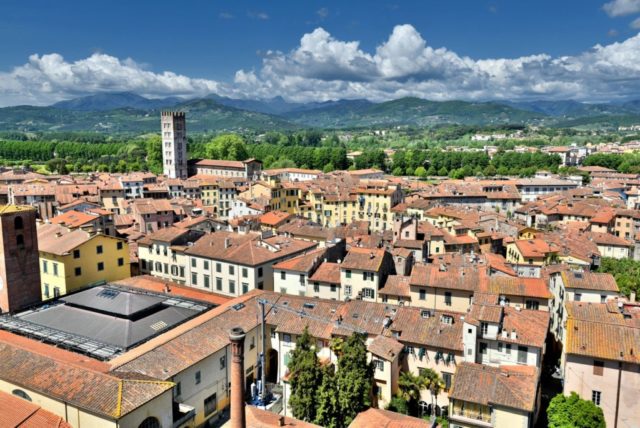
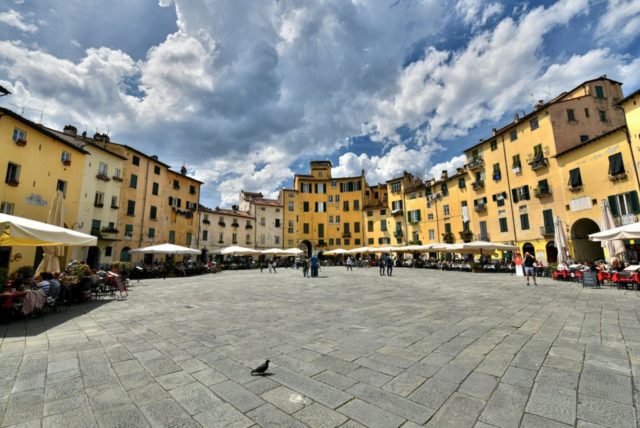
The big landmarks are the rampart park that surrounds the city center (you can bike all the way around in under a half-hour), a couple of piazzas with towering churches, and an oblong square that echoes the footprint of a Colosseum-like arena that once stood here.

cameron-italy-lucca-amphtitheater-1

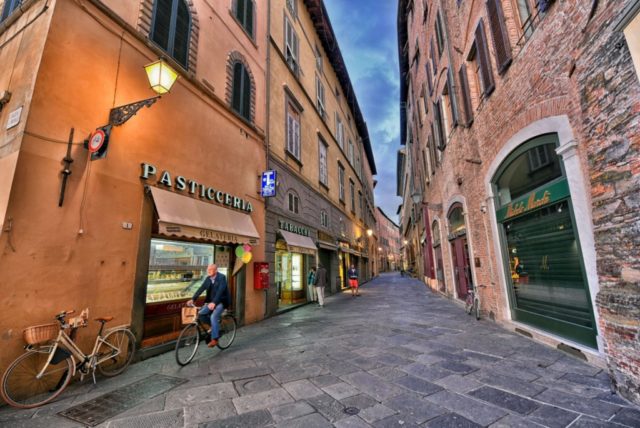
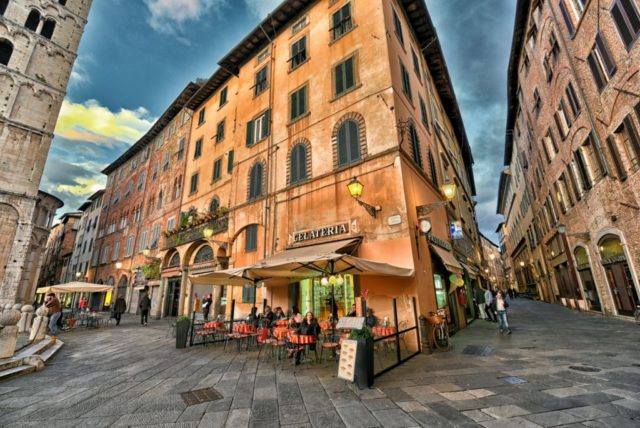
But the real joy of Lucca is simply wandering its streets. Despite its approximately regular grid plan, the city is a maze. I get lost here more than in any town in Italy. But maybe, subconsciously, that’s intentional — few places are more enjoyable to simply be lost.

cameron-italy-lucca-street-6

Every side street you pass is a perfect Tuscan tableau.

cameron-italy-lucca-street-4

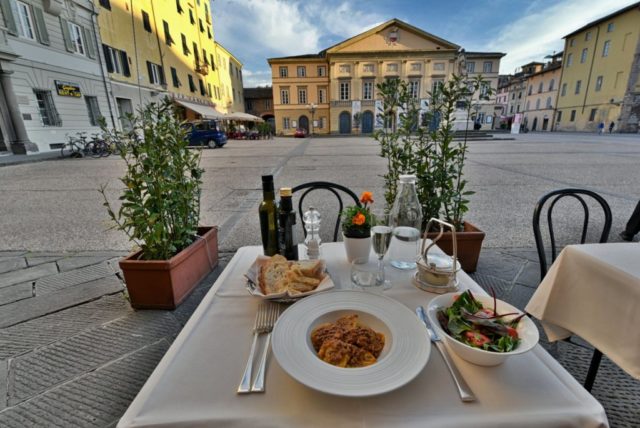
And when you dine out on a square, it’s just you, a tasty dish of Tuscan pasta, and centuries of elegant good living.

cameron-italy-lucca-dinner

The last thing I want is to drive more people to Lucca. But the most obnoxious breed of tourists — the ones who won’t bother with a place unless it has a famous landmark or piece of art they can tick off their list — won’t bother coming here anyway. Everyone says that when they travel, they want to see a “real, untouristy” side of Europe. If you really mean it…then go to Lucca.

Pisa: Beyond Tipsy Towers

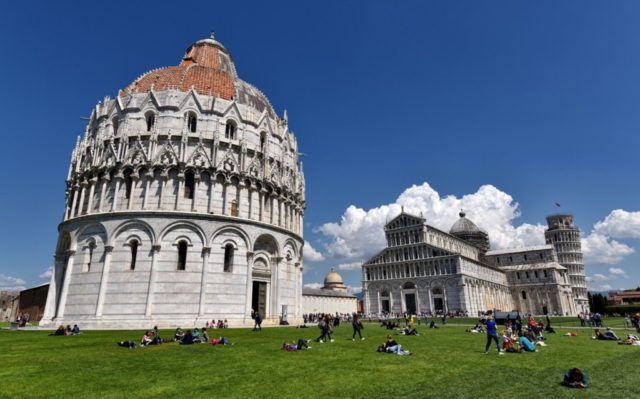
Pisa is one of the most touristy towns in Tuscany, if not in all of Italy. But most people are here only long enough to snap a silly photo “propping up” the Leaning Tower. And that’s a shame. There’s more to Pisa than its famous tower. Much more.

cameron-italy-pisa-field-of-miracles-ov

First off, that tower is just one part of an entire ensemble of buildings — the Field of Miracles — that symbolizes the stages of life: A baptistery, where people were welcomed into the world. A church, where they were married. A bell tower, where they were honored in ceremonies. A hospital, where they were healed. And a cemetery, where they were buried. Yes, you can climb to the top of the Tower. But for half that price, you can enter all of the other buildings at the Field of Miracles — each one more impressive than the last.

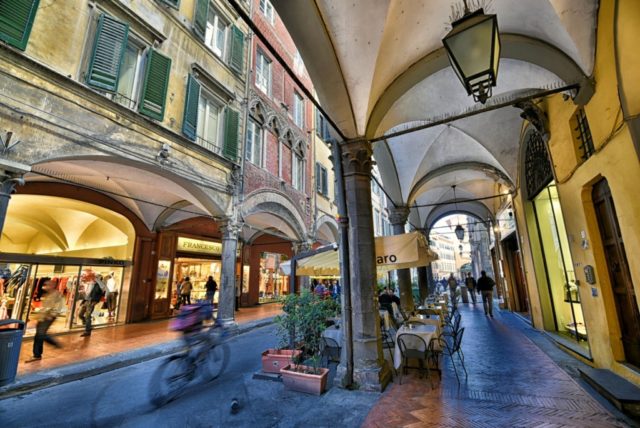
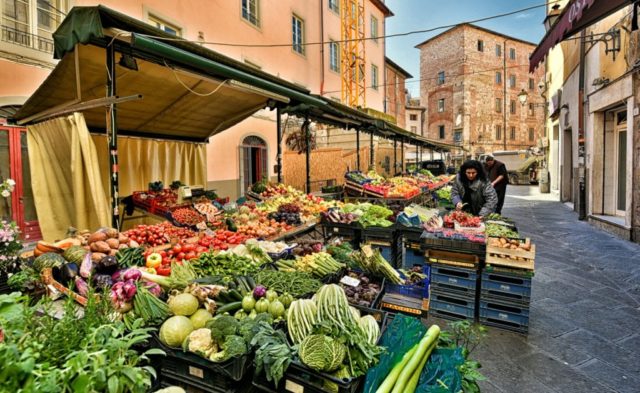
Better yet, bust out of the Field of Miracles entirely. Go for a walk. This is a thriving city that’s remarkably untouristy away from the Tower. It’s a big, bustling, Tuscan university town, with shopping streets, produce markets, and plenty of nightlife.

cameron-italy-pisa-arcades-2

cameron-italy-pisa-produce

cameron-italy-pisa-arcade

cameron-italy-pisa-night

Come to think of it, this is probably good advice for any touristy town. See the big sight, sure. But then…take a walk.