Heading to Rome in 2025? It’s a Jubilee Year

2025 is a Jubilee year — so if your travel plans include Rome, it’s important to know what the Jubilee is all about, and to prepare for increased crowds.

Since the year 1300, the Roman Catholic Church has proclaimed a “Jubilee Year” every 25 years. It’s a time when the pope invites pilgrims from all corners of the globe to leave the conflict and instability of our world and come together in a spirit of peace and hope in Rome. It’s a time when the faithful re-establish their relations with God, with each other, and with creation…a time to promote the dignity of all persons.

Roughly 30 million pilgrims are expected to congest Rome while converging on the Vatican. And while they will likely have a plan — the Church puts on many special events for the Jubilee — casual tourists should be prepared as well.
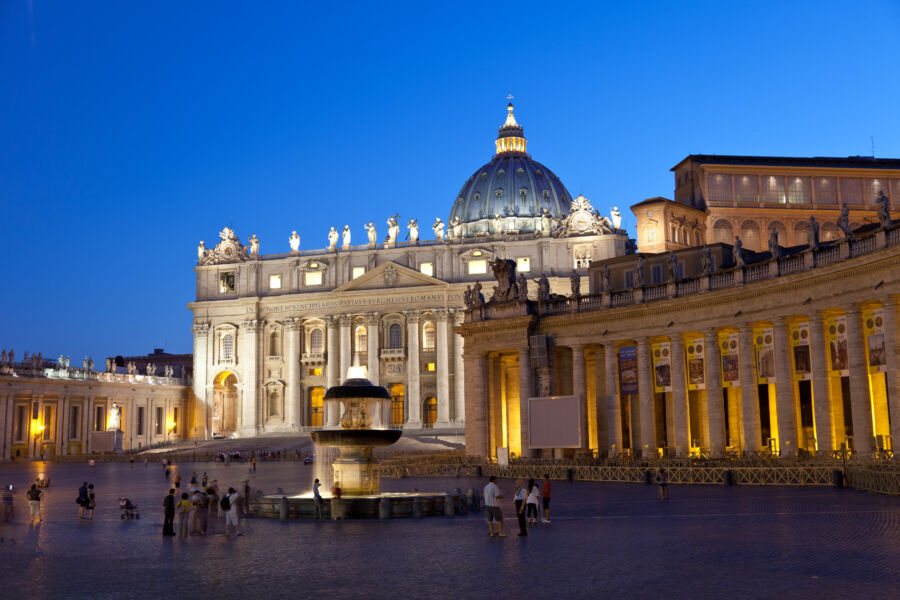
Roughly 30 million pilgrims are expected to congest Rome this year while converging on the Vatican.

First, major sights like the Colosseum, Forum, and Vatican Museums will be beyond slammed — so book your tickets well in advance if these are on your must-see list. The reservation process at many is in flux given the expected increase in travelers: For example, the Vatican Museums (with the famous Sistine Chapel) have already opened up ticket sales through May 2025 — so you’ll need to keep tabs on the changing procedures as your departure date approaches. As soon as you’re able to book a slot, do it.

Alternatively, consider skipping these altogether (or accepting that you’ll have to) and instead focus on lesser-known gems that offer similar thrills without the throngs. Instead of fighting crowds at the Colosseum and jostling through the Forum, visit the nearby (and never-crowded) Baths of Caracalla for an inspiring look at ancient engineering on a grand scale. The National Museum of Rome has a stunning collection of sculptures and mosaics, which are yours to ogle without being bumped by backpacks and selfie snappers. Or leave the city altogether and take an easy train ride out to Ostia Antica, where you’ll be alone with the sprawling, evocative remains of Rome’s early port. (Our Rome guidebook covers the biggies, along with these underappreciated alternatives — including detailed instructions on how to visit each one.)

Or take a break from sightseeing and roam Rome’s many vibrant, relatively untouristy neighborhoods. Swap language lessons with beer-sipping students around a public fountain in Monti; ponder a what-if alternate reality while ogling Fascist architecture in EUR; or head to Testaccio, beloved by Romans for its nose-to-tail market, and graze among the many food stalls, seeing how many different bites you can fit into a couple of hours.

If you’re hoping to take part in official Jubilee events, it’s best to plan ahead. (It’s difficult to just show up and walk through the Holy Door of Saint Peter’s.) Those hoping to participate should sign up for a (free) “Pilgrim’s Card” and then register for individual events. To do this, visit the official Jubilee website (or download the Jubilee mobile app), create an account, and select your event. Registration for everything is open for the entire Jubilee year — through January 5, 2026 — so once you know your travel plans, get your card and secure your spots.

(Note that a regular tourist visit to Saint Peter’s is not considered an official Jubilee event — so you won’t need a Pilgrim’s Card to see Michelangelo’s tender Pietà or Bernini’s brilliant Baroque baldachin. But if you want to visit the Holy Door, you will need one.)

Two people stand in front of the Baths of Caracalla
Marquee sights like the Colosseum will be beyond slammed this year. So if you’re heading to Rome, consider alternatives — like the never-crowded Baths of Caracalla.

While the Jubilee will bring crowds, it will also bring improvements. Tourists and Romans alike will appreciate new parks along the banks of the Tiber, improved bike paths throughout the city, a people-friendly zone surrounding St. Peter’s (replacing a people-unfriendly roadway), and other pleasant surprises as Rome shows off its cultural wonders in good style.

Should you visit Rome in 2025? If you’re a practicing Roman Catholic, it could be a lifelong memory. If you’re flexible, consider a Roman rain check this year, and maybe go elsewhere in Europe.

And if you really are committed to seeing Rome in 2025, do it — but do it smartly. Be realistic about the impact the Jubilee may have on your experience, book your rooms long in advance, get your most essential tickets reserved ASAP, and fill your days with dimensions of the Eternal City that are not eternally crowded.

While you’re there — regardless of your faith — consider embracing the pope’s call to help make our troubled world a little more peaceful with a little more hope. Buon viaggio!


Update: This article was updated on January 2.


We’d like to hear from you! As a member of our merry band of travelers, please weigh in on this article by using the Comments below. Meanwhile, many of these topics will also be covered on Rick Steves’ Europe’s various social media platforms — Facebook, Instagram, X, and TikTok — and we hope you’ll join the conversation there as well.

Traveling to the United Kingdom? You’ll Need an ETA

The United Kingdom has added a new step to its immigration process, which requires an application and a small fee. So if your upcoming travel plans include England, Scotland, Wales, and/or Northern Ireland, this will likely impact you. While this may sound intimidating, it’s simply a straightforward online task. Here’s what you need to know.

All travelers heading to the United Kingdom need an Electronic Travel Authorization, or ETA. Think of this as a digital stamp of approval, which is required to board your flight. Anyone who is not traveling on a visa will need to obtain an ETA — so whether you’re hopping across the pond for business, catching up with friends, or just there to see Big Ben and have a chippy wally, that means you.

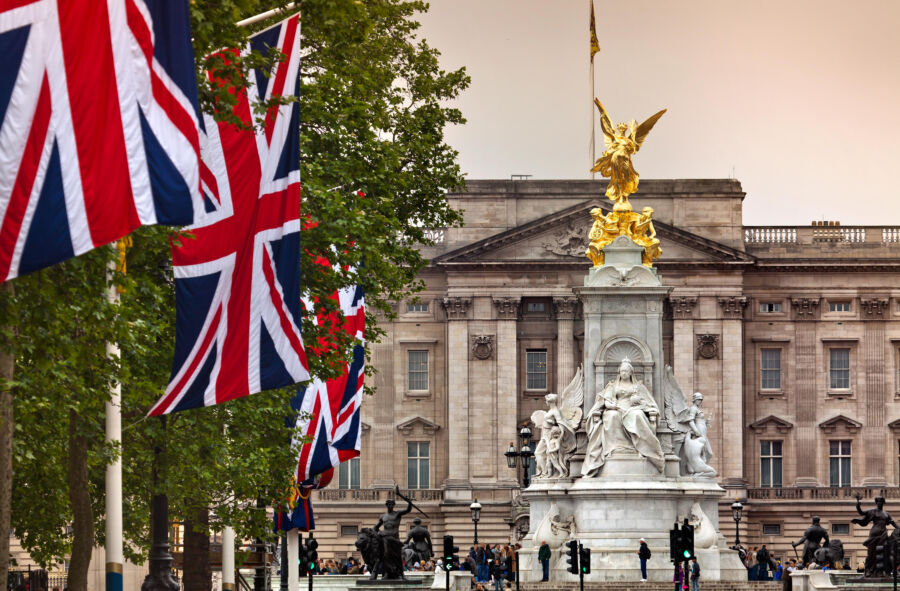
The United Kingdom flag flying in London.
If your upcoming travel plans include the United Kingdom, you’ll need to apply for an ETA.

An ETA costs £16 (about $21) per person, including children. Once you’re approved, it’s valid for any trips to the UK within a two-year period. If your passport expires — or when the two-year period concludes — you must apply for another.

Authorities promise that the application process is short and simple, and should yield quick results. You can apply on the UK’s official ETA website — but the best experience is through the UK ETA app. Be prepared to scan your passport, take a passport-style photo of yourself (have a blank wall nearby), provide contact information, answer a series of background questions, and pay the fee (by credit card). They expect to deliver your approval by email within three business days.

Once approved, your ETA is digitally linked to your passport, meaning you shouldn’t have to show anything else before boarding your flight. (But keep your confirmation handy just in case.) When you arrive in the UK, you’ll still have to go through border control: Your ETA does not grant you admission into the country, just approval to travel to the country.

Transferring is a special case. As of now, if you’re flying to a destination in continental Europe — like France or Germany — and connecting through London Heathrow or Manchester, you likely won’t need an ETA. These large airports act as international hubs, and have airside terminals where passengers can transit without going through immigration. But if you’re transferring at a smaller airport like Glasgow or London Stansted — or if your final destination is Ireland (see below) — there’s a chance you’ll go through UK immigration before your connection, meaning you’ll need an ETA.

Ireland is unique because it’s part of a common travel agreement with Britain and there are no routine passport checks between the two. This means flights from, say, London to Dublin are treated similarly to domestic routes — so if you’re transferring in Heathrow or Manchester, you might go through immigration before making your connection. On top of that, the island of Ireland is shared by the Republic (in the EU) and Northern Ireland (in the UK). If you’re just traveling in Ireland, you won’t need an ETA…but if you cross into the North — even though there are no border checks and things operate on an “honor system” — you technically need one.

If either of the above scenarios applies to you, it’s safest just to get an ETA. There’s no harm done if you don’t use it, and you’ll travel worry-free.

For more detailed information, the UK has created a pair of quick and helpful videos that dive deeper into introducing the ETA and how to apply for an ETA. While the vast majority of applications are accepted, it’s smart to apply before booking your travel — just in case the approval doesn’t come through, and you’re stuck with useless plane tickets.

If you’re just transferring planes in Heathrow or Manchester, you likely won’t need an ETA.

While this might feel “new” to many American travelers — maybe even needlessly complicated and greedy — it’s far from unprecedented. The United Kingdom is emulating the United States, which already has a nearly identical system (the ESTA) for non-visa travelers. Other nations (like Australia and New Zealand) also have similar digital stamps, and the European Union plans to introduce their version, called ETIAS, soon (likely sometime in 2026…stay tuned).

These new systems are all part of a larger effort to streamline immigration processes through digital methods, which already includes advancements like E-Gates at borders and online passport renewals. Soon, getting online preapproval will be commonplace for all Europe-bound travelers.


Update: This article was updated on February 17, 2026.


We’d like to hear from you! As a member of our merry band of travelers, please weigh in on this article by using the Comments below. Meanwhile, many of these topics will also be covered on Rick Steves’ Europe’s various social media platforms — Facebook, Instagram, X, and TikTok — and we hope you’ll join the conversation there as well.

Paris’ Notre-Dame Cathedral Is Reopening: You Should Book Admission

Five years after being devastated by a shocking fire, France’s venerated Notre-Dame Cathedral is finally reopening on December 8. This will come with crowd limits, a new ticketing system, and a smattering of special events — so if your Paris travel plans include the resurrected Gothic masterpiece, here’s what to know.

Notre-Dame Cathedral
Paris’s Notre-Dame Cathedral is set to reopen on December 8.

Physically, Notre-Dame looks pretty much the same as it had pre-fire. Most elements that were damaged have been restored to their previous state, including chapels, statues, and the black-and-white chessboard floor. But a handful of contemporary upgrades have been made as well, and Notre-Dame now boasts a new audiovisual system, slightly comfier seats for those attending mass, and — most notably — a massive (12-foot high) fancy new box to hold the Cathedral’s most prized relic, the Crown of Thorns. Meanwhile, the restoration team has taken the opportunity to give everything a good scrub-down…and Notre-Dame is now looking cleaner and brighter than it has in centuries.

But while the interior is reopening, the towers of Notre-Dame are still closed. They — and their excellent panoramic views of Paris — will reopen to the public down the road, but exactly when is still unknown. For now, Quasimodo needs a bit more time to get his home back to a presentable state.

Visiting Notre-Dame is still free, in keeping with the French Government’s policy of free access to churches and cathedrals. Therefore, beware of schemes to sell tickets: Any site that charges for admission or offers “skip the line” privileges is an immediate red flag.

However, the process to get in will look different from the show-up-and-wait method that was the pre-fire norm. Notre-Dame remains in a state of partial renovation, and is limiting capacity to 3,000 attendees at a time. (Previously, it admitted roughly 7,000.) To mitigate long lines, the Cathedral is releasing timed entry slots through the Notre-Dame website and its new app (available for iPhones and for Android phones — it’s called “Cathédrale Notre-Dame de Paris”). For those hoping to visit, this will be the best method to secure admission.

The booking process is a bit wonky, so give it a trial-run well before you need to reserve tickets to avoid hitting a snag and missing out. As of now, this is what to know:

  • Tickets are released just two days in advance — but the exact time of day is unclear. Currently, authorities say “New visiting times [will be] opened regularly,” and invite those interested to check back frequently. As of now, hopeful attendees are placed in an online queue to reserve slots, but many report no bookings were available even when they reached the end of the queue. This article will be updated if we learn more, but for now we recommend entering the queue 48 hours before the day you’d like to visit to maximize your chance of securing slots.
  • You’re limited to booking six tickets at once — split between adults (18+) and children — so if you’re traveling with a larger group, make sure someone is booking alongside you.
  • The app doubles as a visitation booklet, with information listed under “Visit,” and labeled as “Tours.” (You must download a packet.) Don’t be fooled by the similar wording: If you’re using the app to reserve an entry slot, click “Book Your Visit.”

There will likely be some learning curves as this new process finds its stride, but if you’re heading to Paris, try to understand the ticketing system, be ready to book, and do your best to snag a slot. It’s worth some extra effort to get inside the “new” Notre-Dame — this is a once-in-a-lifetime chance to see the world’s best-known Gothic cathedral in a naked state of recovery, let alone at half its typical capacity. Imagine standing at the foot of painstakingly cleaned columns and letting your eyes follow them up ten stories to where reborn Gothic arches come together like praying hands, as God’s light beams once again through spotless stained-glass windows…without, for once, being jostled by backpacks. C’est magnifique.

Notre-Dame Cathedral with scaffolding.
As restoration efforts continue, scaffolding is likely to remain on parts of Notre-Dame for a couple more years.

If you’re unable to book an entry time, you’ll have two options: wait in a long line…or skip it. Notre-Dame plans to coordinate daily in-person queues for ticketless travelers to wait and hope for no-shows. However, this line will likely be very long. So if you don’t have a slot but visiting the reborn Cathedral is the reason you’re traveling to Paris, go for it…otherwise, go elsewhere. Your time in Paris is precious, and unless you want to spend hours of it inching across cobblestones, simply get a good look at Notre-Dame’s glorious Gothic architecture from the outside, then spend the rest of the day at the City of Light’s other magnificent sites. (Our Paris guidebook is chock-full of excellent alternatives.)

The grand reopening will be a particularly complicated time to visit: Between December 8–15, the Cathedral is planning a series of special events, so hopeful visitors should anticipate irregular hours to accommodate invite-only masses, choir recitals, and visits from VIPs. Then, from December 16 on, Notre-Dame will resume regular visitation hours: 7:45 am to 7 pm Monday–Friday (open until 10 pm on Thursdays), and 8:15 am to 7:30 pm Saturday and Sunday — with a free organ recital every Sunday at 4 pm.

While the Cathedral eagerly awaits reopening its doors to the public, it won’t be 100% restored until 2026. Until then, reduced capacity and reserved entry slots will remain in place — as will some scaffolding. But once the renovations are complete, Notre-Dame will be back as we remember it, with the 2019 fire and painstaking reconstruction just another chapter in the Cathedral’s magnificent 850-year-old story.


This is our first developing article on the Rick Steves’ Europe Travel Updates and Insights Blog — we invite you to check back for frequent, timely updates on topics like this. And for each, we’d like to hear from you! As a member of our merry band of travelers, please weigh in on this article by using the Comments below. Meanwhile, many of these topics will also be covered on Rick Steves’ Europe’s various social media platforms — Facebook, Instagram, X, and TikTok — and we hope you’ll join the conversation there as well.

Welcome to the Rick Steves’ Europe Travel Updates and Insights Blog

While “good travel” is perennial, the specifics of how to travel are always in flux. So what’s a traveler to do?

The Rick Steves’ Europe Travel Updates and Insights blog is here to provide clear, relevant information and advice on major European trends and developments — so you can make the most of your trip, while avoiding roadblocks along the way.

A woman boarding a train.
The way we travel is constantly changing. Keep up-to-date on major European developments here.

More than four decades ago, when Rick Steves’ Europe was just starting out, we zipped an entire trip’s budget (in the form of travelers’ checks) into our money belts, exchanged leftover coins at every border crossing, and collected passport stamps like souvenirs. We showed up to big museums without reservations and prebooked hotels by phone — if we prebooked hotels at all. A paper map was always tucked into our back pocket.

These days, we tap-to-pay on public transit and simply smile for the camera as we zip through border checkpoints. We book reservations online months in advance, ensuring entries to marquee sights and snagging our choice of the limited supply of good-value lodgings. The fear of getting lost has been resolved by the constant comfort of our smartphones. And on the list of travelers’ biggest concerns, overcrowding and extreme weather have replaced language barriers and expensive phone calls home.

And yet, the fundamentals of good travel remain much the same — and Europe is just as alluring as ever. So even though it’s now best to prebook admission to the Sagrada Família, marveling at the colorful, organically twirling genius of Gaudí’s masterpiece still raises goosebumps. The Venice “access fee” is a bureaucratic headache, but once you’ve reached the Grand Canal, it doesn’t reduce any of the “Am I really here?” wonder of floating under Rialto Bridge. And dragging escargots from their shells at a Parisian café still induces an “ooh la la,” even if you now pay for your snails with a tap of your phone instead of by leaving euros (or francs) on the table.

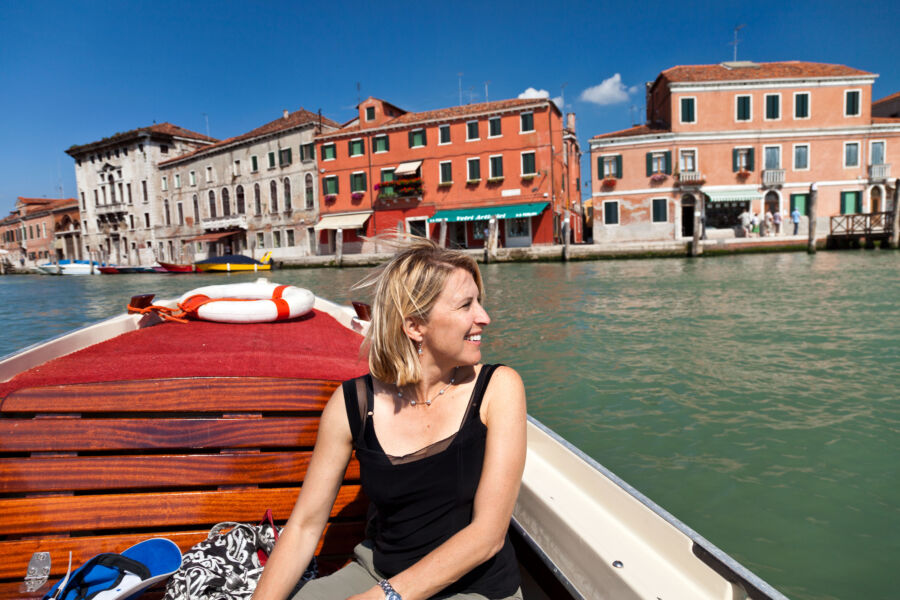
A woman aboard a boat in Venice.
Floating through Venice will always be enchanting, even if you have to pay an “access fee” to get there.

Yes, Europe is always changing. But only some of those changes are truly relevant to travelers — while others are “much ado about nothing.” This has led to an abundance of irrelevant “travel information,” which is more sensationalist rumor than useful advice. Our goal here is to cut through the noise and be a voice of reason, practicality, and fresh-from-the-rucksack guidance on how to navigate Europe today.

Our well-traveled staff, who clock as many days each year in Europe as anyone in the business, are constantly returning with updates, insights, and observations. On this blog, we’ll use that firsthand knowledge to carry on our mission of teaching good travel by helping you understand exactly how new developments will affect your trip…and how they won’t.

What’s the story on the new visa-waiver programs in the United Kingdom (ETA) and the European Union (ETIAS), both due to begin in 2025? When will Notre Dame Cathedral finally reopen after its devastating fire? And exactly how much do you have to pay to enter Venice on certain days next summer? You’ll find clear, practical answers here.

(And for detailed updates to our print guidebooks, don’t miss the guidebook updates for each.)

And we’d like to hear from you! As a member of our merry band of travelers, please weigh in with your own updates and observations by using the Comments for each article. Meanwhile, many of these topics will also be covered on Rick Steves’ Europe’s various social media platforms — Facebook, Instagram, X, and TikTok — and we hope you’ll join the conversation there as well.

Welcome to the Travel Updates and Insights blog! And stay tuned for the latest from Europe.