What’s it like to research a travel guidebook?
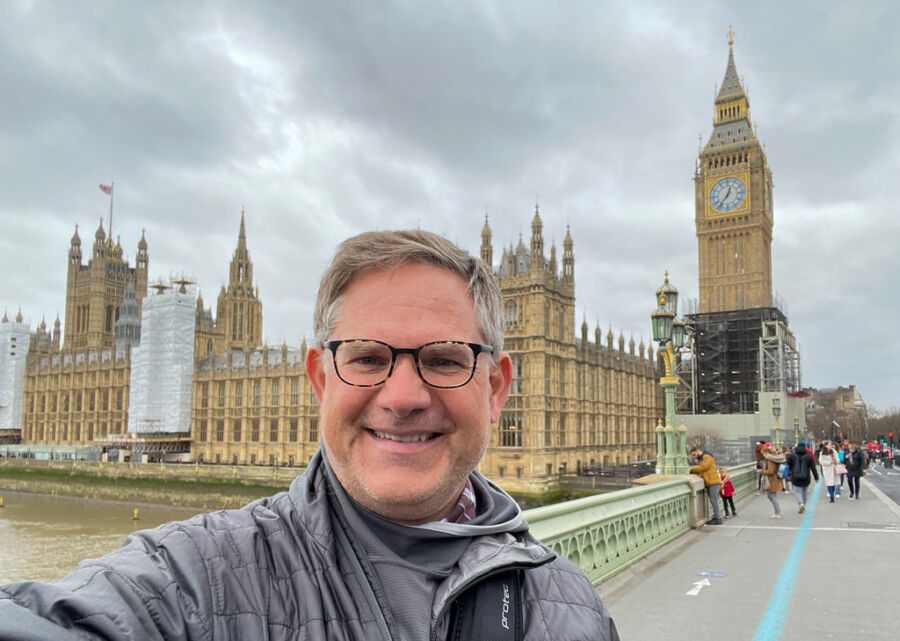
I’ve spent more than two decades doing just that: updating and writing Rick Steves guidebooks in every corner of Europe.
When I bump into fellow travelers on the road, many are fascinated by my work. Very often, they ask if I need an “assistant” or a “replacement.” Or the ever-popular: “Do you need someone to help carry your bags?”
The fact is, if they tagged along with me for even just a few hours, they’d quickly understand that working on guidebooks is no vacation. While I don’t expect one iota of sympathy, my work is far more tedious, and far less glamorous, than it sounds. But for a travel wonk like me, it’s fascinating and rewarding.
So, for those who are curious, here’s an account of what goes into researching, writing, and updating the bestselling guidebooks in North America. This is a (condensed) excerpt from my travel memoir, The Temporary European, a collection of my favorite travel tales from more than 20 years working with Rick Steves. Most of the book is simply vivid travel stories. But this section is more nuts-and-bolts — it explains what I’m doing while all those other stories are taking place.
I’ve been in your hotel room.
While you were out sightseeing, the receptionist let me in. I saw which guidebooks and brochures you had on the desk. I saw that you left the air-conditioning on, full-blast. I saw the mess, or the lack of mess. Some of you arrange your toiletries by size next to the sink and organize your bedside reading into a neat stack. Most of you leave the room looking like a dirty bomb exploded deep inside your suitcase.
I’m not snooping for a perverse thrill. I’m inspecting your hotel to make sure it’s as we describe it in our guidebooks. Is it still “nicely appointed” and “well-maintained”? Is it “a bit dumpy” or can it be upgraded to “sharp”? There’s only one way to find out.
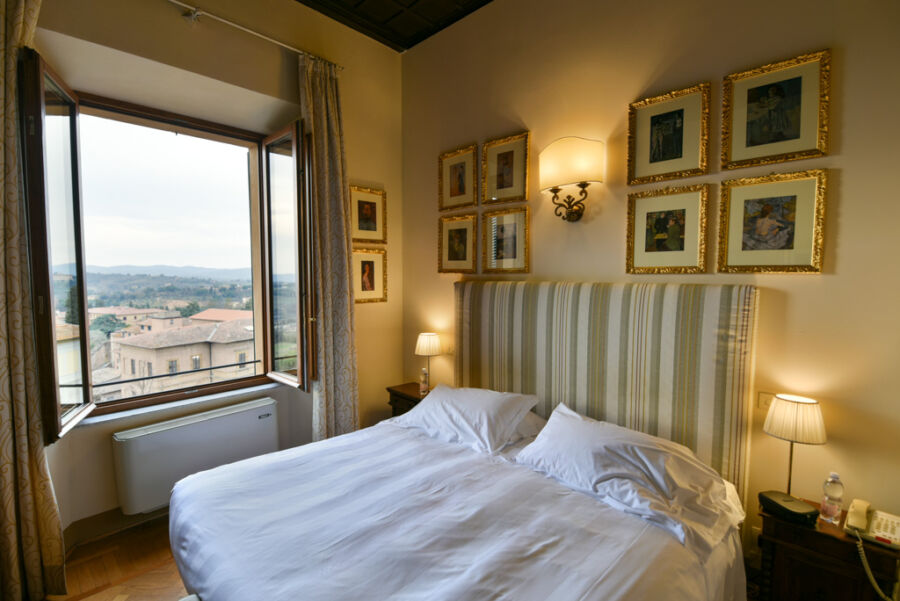
I have seen thousands upon thousands of hotel rooms, all across Europe. Most are freshly cleaned and ready for check-in. Quite a few, I visit during that odiferous window between check-out and cleaning, when bedclothes are strewn about, a nighttime’s worth of garlic breath and stale farts mingle in the humid air, and the toilet bowl is in a state that might cause a veteran housekeeper to retire on the spot. And some rooms are currently occupied, but the occupants have stepped out.
I respect a hotelier who says, “Sorry, we can’t show you a guest’s room.” But, if I’m being honest, I get a kick out of the ones who just don’t care — they walk down the hall, lightly knocking then throwing open each door.
And sometimes, while I’m judging someone’s choice of toothpaste or deodorant, or marveling at how many different surfaces upon which travelers can drape wet laundry to dry, or appreciating how Germans all seem to fold their pajamas neatly on the pillow — surely this must be taught in schools — I think about how surreal it is to write a guidebook. And also, how much less glamorous it is than everyone thinks.
When I’m training new recruits, I tell them that researching a guidebook means asking a million people a million questions. Obviously, this is hyperbole. Still, when you consider that I’ve been doing this work several weeks each year for 20 years, and that each day I visit 50 or 60 businesses, and that each one might involve ten or twelve questions, I probably have asked around one million questions over my career. (And a significant percentage of those questions would be, “Closed Mondays?”)
Sometimes I’m writing up brand-new destinations; other times, I’m updating existing material. Either one requires gathering detailed information about dozens upon dozens of listings, and thinking critically about that information.
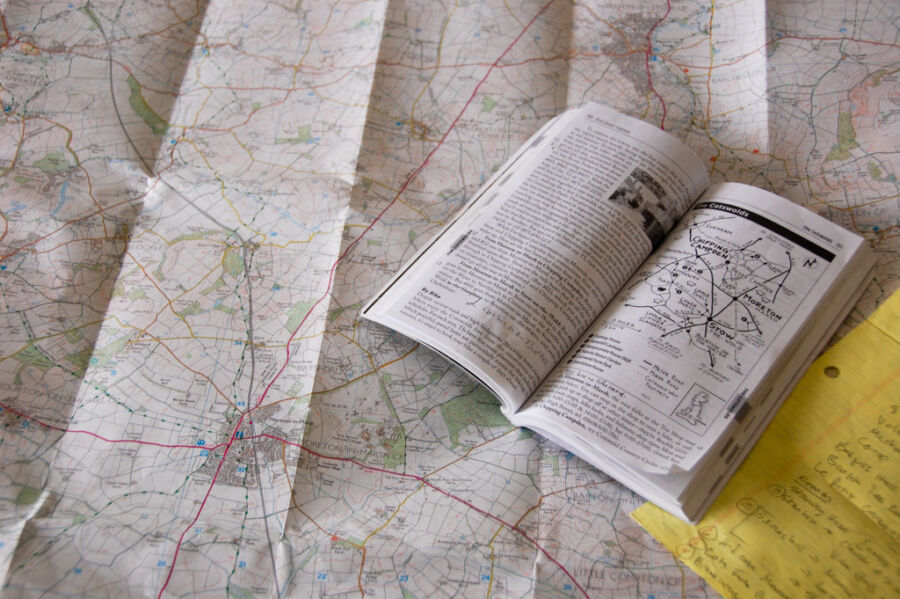
Over breakfast, I get organized, skimming the chapter and drawing an empty box in the margin next to anything that requires my attention. On a separate sheet, I sketch out a list of every item in geographical order, so I can sweep through town systematically and minimize backtracking. As I make my rounds, I scribble changes directly into the narrow margins of my guidebook. If I run out of space, I pull out a small notebook and carry on there. When I’m done with an item, I fill that box with a satisfying checkmark and move on to the next one.
My purpose is twofold: First, to verify “data points” — highly changeable details such as prices, hours, phone numbers, and so on. And second, to engage thoughtfully with the descriptions, weighing whether each one is both accurate and helpful. Does the museum still display the same pieces, in the same order? Does the restaurant still offer the dishes we mention? Even the self-guided walks must be carefully followed: “Turn left at the green building” is unhelpful if they’ve painted it red.

Guidebook researchers are experts who have to think like novices. Even as we infuse our copy with a local savvy, everything needs to be simple and clear to someone who’s just stepped off the plane. They’re standing on a street corner — jet lagged, culture shocked, surrounded by buzzing motorini — and they need advice.
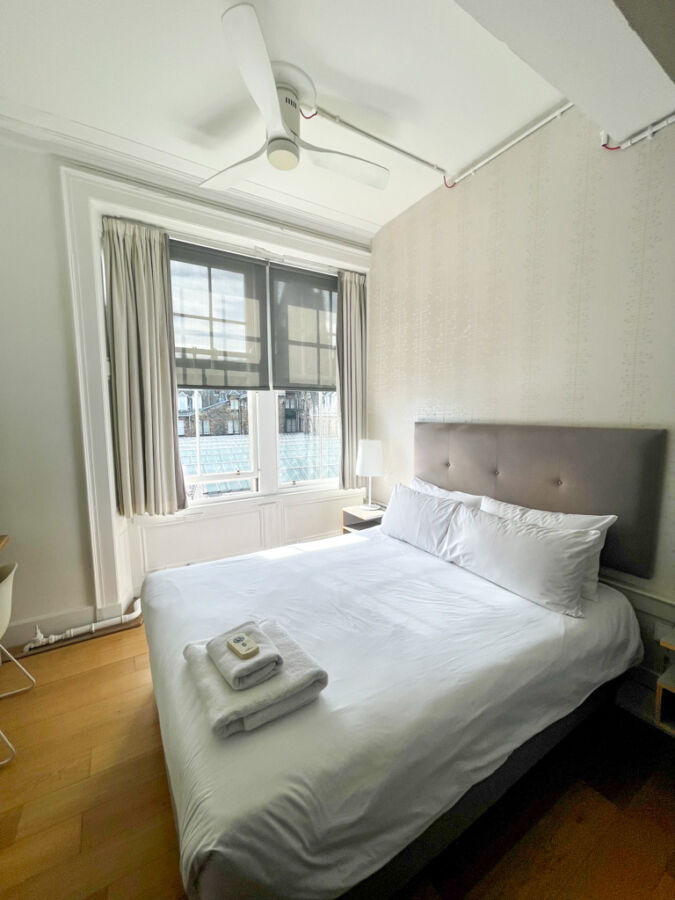
At hotels, I confirm details at the front desk and ask to see a standard double room. I’m usually in and out in about 10 minutes. How could I possibly evaluate a hotel so quickly? Consider this: How much of your overall impression of a hotel room is formed within the first few minutes? We all have our little checking-in rituals: peek into the bathroom and the closet, open the drapes to check out the view, and make a quick — even subconscious — assessment of whether the room meets expectations.
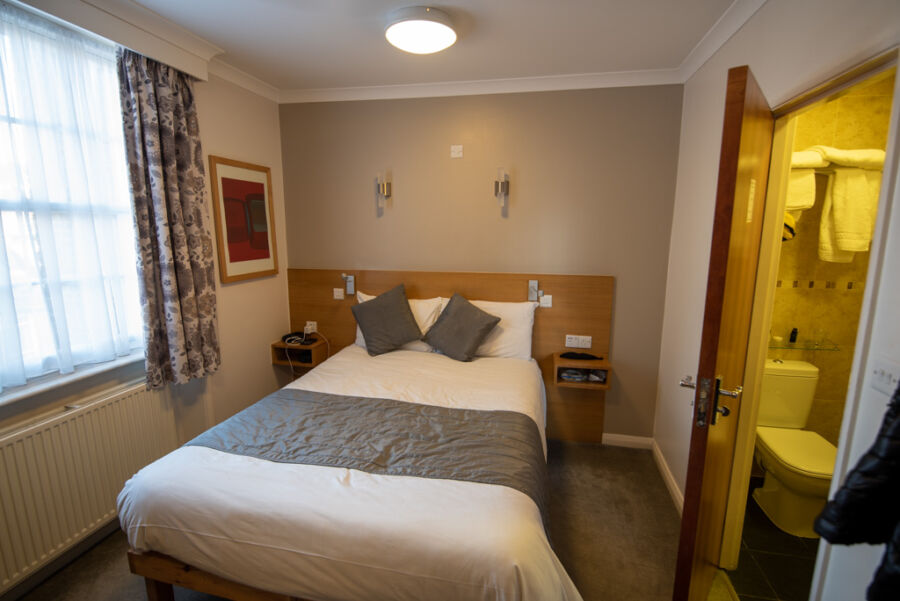
That’s essentially what I do with those precious few minutes in a room. And I know just what to look for: How tidy are hard-to-clean areas, like the bathroom grout or under the furniture? How’s the soundproofing and lightproofing on the windows? Is there heavy wear-and-tear on the carpet, or chipped and scuffed paint on the wall behind the luggage rack? All of these are subtle indicators of whether the management is putting money back into the hotel, or letting it slowly fall apart while using it as a cash cow.
Most important is something Rick taught me years ago: the sniff test. Upon entering a room, I take a big, deep whiff. Does it smell musty? Smoky? Stale? Or — potentially even more dire — overly perfumed, to cover something up? Tracking that faint, vaguely “off” odor to its source, I might discover a thriving colony of mildew on the ceiling above the shower, or that the drapes haven’t been cleaned since Franco died.
Does the hotel know who I am? Sometimes. Other times — especially if we’ve received complaints — I “go incognito”: I walk in off the street, ask to see a room, and only after my inspection do I reveal myself. When Rick taught me this trick, I assumed the receptionists of Europe would be furious. Having done it hundreds of times, however, I’ve almost never received pushback. Many hoteliers even get a kick out of it. (One winked and said, “Aha! Espionage.”)
Following a visit, I consider changes to our description. A few years after a renovation, “fresh” may become “dated.” A “friendly” front desk staff or a claim of “clean” (or even “spotless”) must earn its keep, edition after edition.
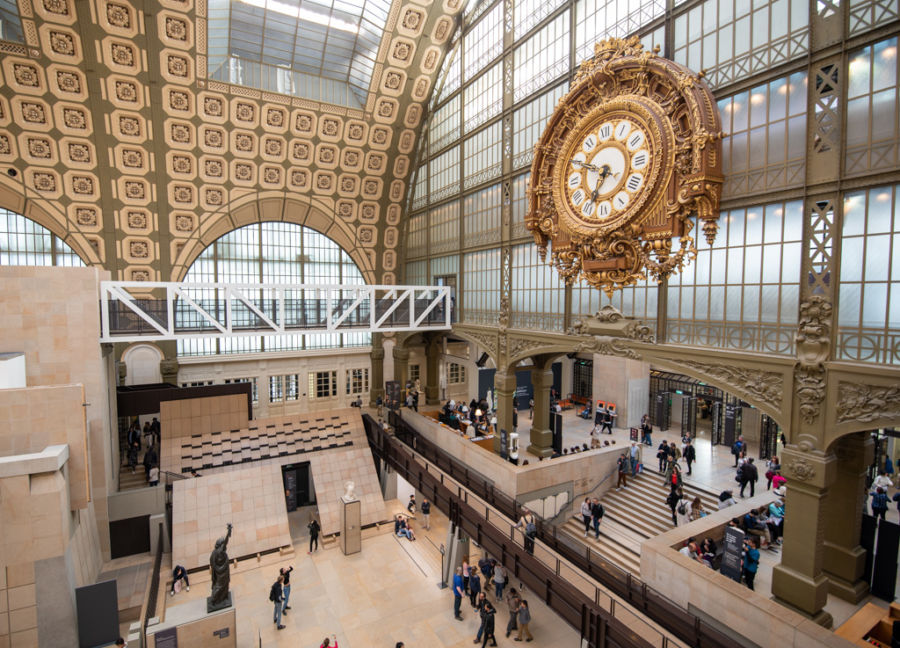
At museums, I update details at the information desk. And then, if I have time, I ask permission to quickly zip through the collection — and I mean quickly. Once I needed to assess an obscure history museum in Zagreb, Croatia, that sprawled through an old mansion with creaky parquet floors. My shoes squeaked as I walked at a cantering pace from room to room to room. The museum attendant — whose job was to follow museum-goers around, turning lights on and off — struggled to keep up. After sprinting through ten rooms in about five minutes (and seeing not much of note), I gave her an apologetic smile to convey, “Sorry if I’ve disrespected your lovely museum by seeing it so quickly.” She returned my smile with a chuckle and said, “Express!”
At a restaurant, first I review the posted menu and hours, then I step inside and snoop. I take in the vibe (what Rick calls the “eating energy”), scope out what’s on the plates, and scan for characteristic details. (“At the Stammtisch in the corner, regulars nurse their beers under droopy fishnets.”) This lasts for however long it takes a server to ask if I need anything. I verify the details and, if they’re not too busy, quiz them about their culinary philosophy. Sometimes they have useful tips to share: “In nice weather, reserve ahead for the sunny patio.”

I’m mindful not to push readers too hard toward anyplace in particular. Rather, my duty is to give them a basis for distinguishing among their options. Some of our readers want a memorable splurge; others want a solid, midrange value without pretense; others are seeking a big personality or a big view. We’re careful to keep superlatives to a minimum. Our guidebooks don’t promote; they inform.
This makes us rare in the world of travel content, which is dominated by breathless raves (often sponsored). Our judgment can afford to be candid because businesses don’t pay to be listed; all of our selections and descriptions are based solely on our researchers’ judgment about what’s best for our readers.
I’m often asked: “Do you have secret, favorite restaurants in each town that you save just for yourself?” While some writers might do this, it strikes me as a deeply selfish act. That would be like a professional football coach, in the playoff hunt, saving a few trick plays for his kid’s pee wee league. My philosophy is to leave it all out on the field — I hold back nothing. Family friends often email to say, “I’m going to Berlin. Any tips?” I’m tempted to write back: Just read the guidebook. It’s all right there.

Visiting so many places and talking to so many people quickly eats up a day. From the moment I step out the door each morning, the imaginary stopwatch over my head ticks down the seconds until that last museum closes. The people I meet on my research rounds must think (and often say outright) that I seem terribly rushed. That’s because I am.
Even when the workday’s over…it’s far from over. Just as the museums close, restaurants are opening for dinner, prime time to evaluate them at their peak. I have the unenviable task of stepping into one fantastic eatery after another — each one more tempting than the last — and then turning around and walking right back out. At some point in the evening, I might give in to the temptation to enjoy a sit-down dinner. More often, I just grab a sandwich, slice of pizza, or döner kebab to inhale as I walk back to my hotel.
Once back in the room, is it finally time to rest? Not hardly. Gathering the information is (often) the “fun” part. Writing it up is the real work. And the best time for that is when the day’s findings are fresh in my mind, in that quiet window between dinnertime and bedtime. I’d love nothing more than to kick back and watch TV. Instead, I get very uncomfortable on the tiny, hard chair in the corner and balance my laptop on the chintzy desk as I squint at my marked-up book, brochures, and business cards. I write until I’m exhausted, and then try to finish up later, whenever I have a spare moment on the train or during a quiet afternoon.

A few fitful hours of sleep later, I’m up and at ’em — on to the next town to do it all over again. And when I’m all done with that book, I submit the files and maps to our editors and head to the next country.
Guidebook writers are perennial beta testers on material that will never be “finished.” A guidebook is a living organism, unique in the publishing world. Most books, once in print, are immortalized forever. But with guidebooks, we know there’s always another printing and another edition on the horizon. We do our best to ensure our books are up to date as of the moment we send them to the printer. But things can change, sometimes major things, and sometimes the day after the book ships. So we fix them as soon as we can.
Risa Laib was Rick’s first guidebook editor. For 20-plus years, she oversaw the prolific expansion of the series, and she taught me most of what I know about editing and updating guidebooks. Risa often said she thought of each book as a palimpsest: an archaic vellum manuscript in which some ancient monk, at some distant outpost, wrote over existing text to make corrections or additions. These manuscripts, upon close examination, reveal many generations of amendments, layered on top of each other.
While the changes aren’t as evident, any guidebook you flip through is just as much a palimpsest. It’s difficult to say who even “wrote” each book. Rick Steves penned the first editions of many early guidebooks, and he still travels constantly to leave his marks. But so do other researchers and co-authors. And our editors make their own revisions.
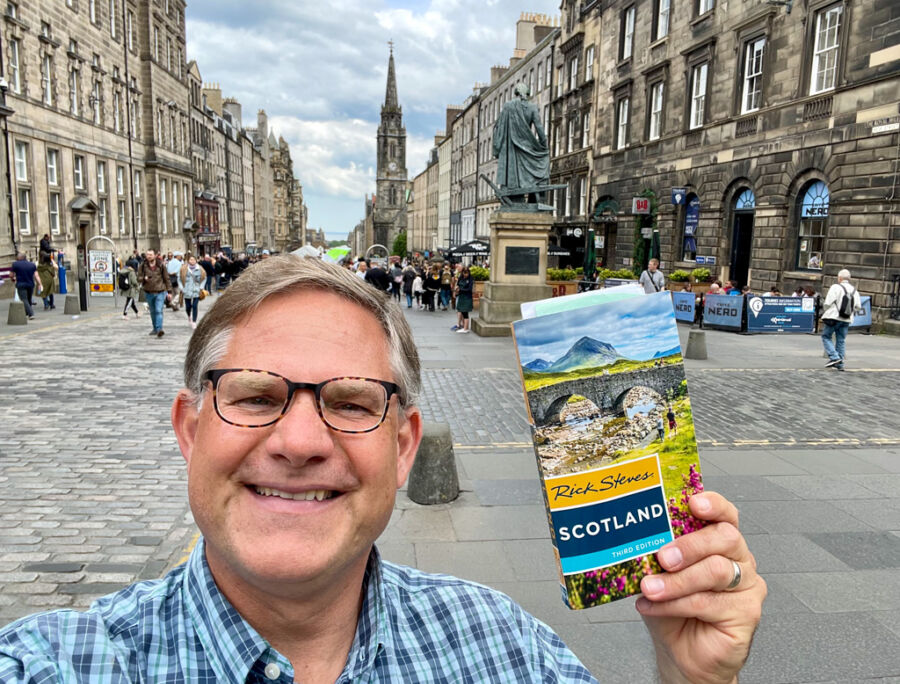
Looking back on a guidebook chapter I worked on many years ago, sometimes I faintly recall which bits and pieces I wrote, and which ones Rick wrote, and which ones Risa or Jennifer or Tom or another one of our editors wrote. Most of the time, all I know for sure is that it’s better than how I left it. Guidebooks are a team effort. If you’ve had a great trip thanks to a solid guidebook, take a moment to skim the list of credits — squeezed in fine print at the back of the book — and imagine how many people worked hard to make your travels better.
Being a guidebook writer isn’t quite what people expect, and it’s certainly not for everyone. But for those of us with a passion for travel, and who are wired to pack as much experience and learning as possible into each day on the road, and who are willing to forego slow dinners, lazy afternoon cocktails, and sleep…it’s the job of our wildest dreams.
 To read the full chapter on updating guidebooks — plus much more about guiding tours, making travel TV, and everything else we do at Rick Steves’ Europe — check out my travel memoir, The Temporary European: Lessons and Confessions of a Professional Traveler. It’s available at your local bookstore, through ricksteves.com, and for e-readers such as Kindle.
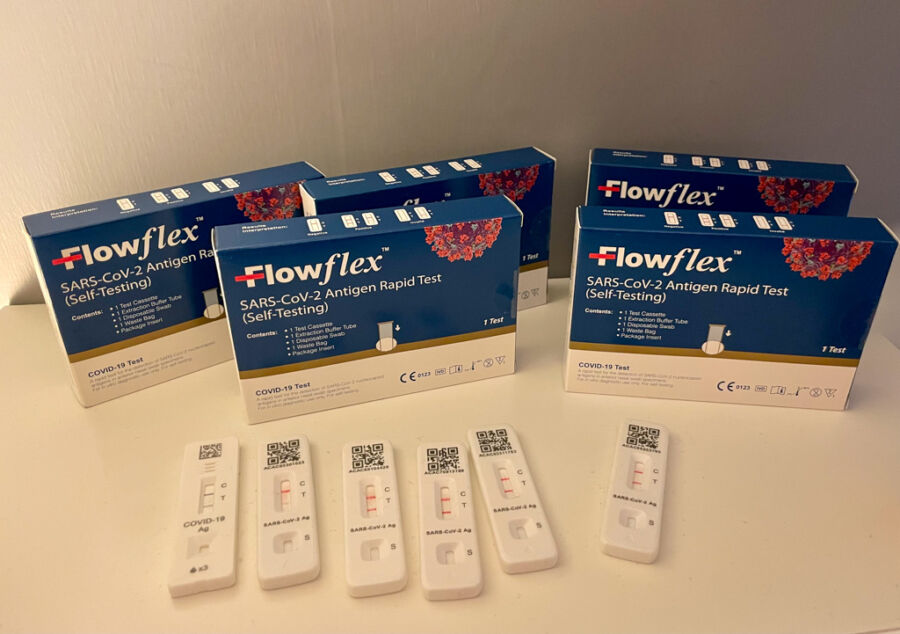
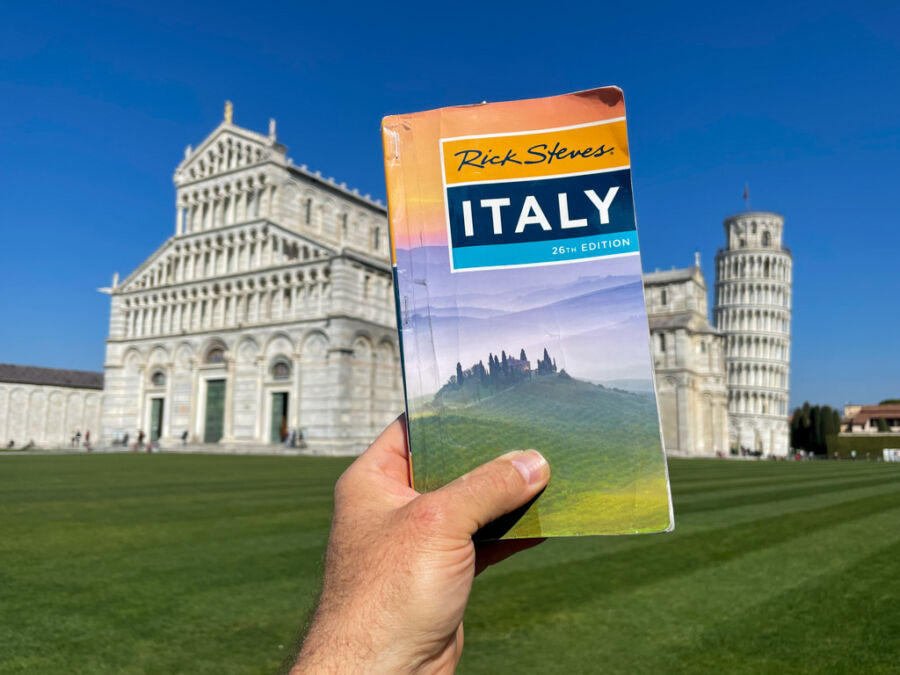
And if you’re traveling to Europe soon, be sure to pick up the newest editions of our Rick Steves guidebooks. Our team of researchers, editors, and mapmakers have been working furiously for two years straight to get all of our books fully up-to-date, post-COVID. So the current editions available now are the most meticulously, lovingly updated travel books you’ll find anywhere. Happy travels!













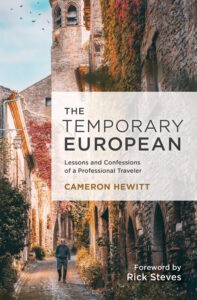 During the pandemic, I took some time off to write a travel memoir, The Temporary European: Lessons and Confessions of a Professional Traveler. It’s a collection of my favorite travel tales from my 20-plus years working with Rick Steves, plus inside looks at what it’s like to write guidebooks, make travel TV, and guide tours. You can order it from your favorite local bookseller; get it at the