One of the great joys of traveling in Great Britain and Ireland is its wonderful, “homely,” friendly B&Bs. And, while several of these are still thriving, I’m sorry to report that the classic B&B experience is becoming increasingly rare.
Even just a few years ago, every town or city in the British Isles had at least one tidy little cluster of well-run B&Bs, eager to host travelers for a fraction the price of a big hotel. My favorite thing about updating our Rick Steves’ Europe guidebooks was checking in with each one to re-inspect their rooms and update their information…which, more often than not, turned into a spirited chat.
Things have changed rapidly. The rise of Airbnb has made it harder for a full-service B&B to remain both profitable and competitively priced. And then came COVID. These days, those classic B&Bs are becoming an endangered species.
Fortunately, quite a few gems survive. For example, Susan and Paul at Barony House in Edinburgh — pictured below — give me hope for the future: The next generation that’s keeping at least some great B&Bs going strong…still with a personal greeting and an excellent cooked breakfast. (Susan is a great cook.)

Unfortunately, this kind of place, once the norm, is becoming rarer. Anecdotally, quite a few B&B proprietors have told me that they took the pandemic as a sign to close up shop. Many of them were already getting on in years (as running a B&B is something of a lost art), and they were beginning to think about retirement. The loss of so many guests simply became too much of a financial pinch, and B&B owners weren’t up for the constant changes to how they did things.
Updating our Rick Steves guidebooks around Scotland last summer, and Ireland this summer, I’m struck by how many of our old favorites have closed down.
In the Scottish village of Glencoe, I was reminiscing about my visit there in the late Aughts, when B&B signs dotted the main street. But on this trip, I didn’t see a single one.
Driving to a guest house perched on a hill above town, I wound up chatting with the proprietor. She confirmed that, when they took over their place about a decade ago, a dozen local B&Bs were registered with the local tourist board. Now they’re down to just four — and not a single one is along the main street. So this one wee village has lost fully two-thirds of its accommodations.
And I’m seeing a similar trend this summer in Ireland. There are entire towns we describe in the book (for example, Dun Laoghaire and Howth) specifically because they once had an abundance of “cheap and cheery” B&Bs that were a budget-friendly alternative to a big Dublin hotel, just a quick train ride away. But the list of B&Bs in each place has depleted to nearly zero; deleting a couple more on this visit, and realizing there are virtually none left, I’m wondering if it even makes sense to keep those towns in the book anymore. (Don’t fret; I think each of these places still has a lot to offer. Just not cheap sleeps.)
At one of those B&Bs, the kind proprietor answered my doorbell and politely explained that, while she’s enjoyed many years of great guests through Rick Steves, she’s winding down her business and doesn’t want to be listed in future editions. She’s favoring one-week, “self-catering” guests these days — rather than the whistle-stop one- or two-nighters seeking a quick dose of charm and a cooked breakfast. I thanked her for her partnership in looking after our readers, wished her well, and — regretfully — crossed out her listing.
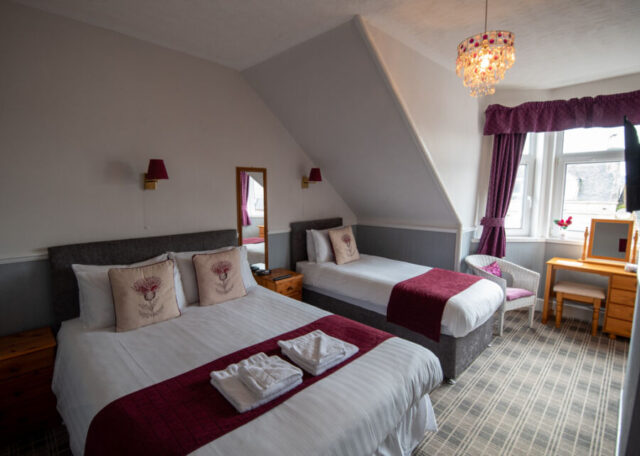
Over the last few years, I’ve had a version of this conversation more times than I like to recall. Each time I hit “Delete” on one of those listings, while I’m happy for B&B owners downshifting into a well-deserved retirement, it hurts a little bit.
Everything we do at Rick Steves Europe is informed by an ethos of connecting people to people. My job, ultimately, is matchmaking: putting American travelers in touch with Europeans who will look after them kindly, and appreciate their business. If our readers are happy, and our European partner is happy, we’re happy. It’s a win-win-win. When one of those Europeans closes up shop, without an equivalent replacement to be found, it’s a big loss.
Of the places that have stayed open, quite a few have cut back or made changes: Self-check-in rather than a friendly, personal greeting; and big changes to how they do breakfast. At one B&B, I was given a “breakfast hamper” to enjoy in my room, rather than taking advantage of the beautiful breakfast room. While most places aren’t offering something this elaborate, the “continental breakfast in room” (or “find your own breakfast”) practice is becoming the norm.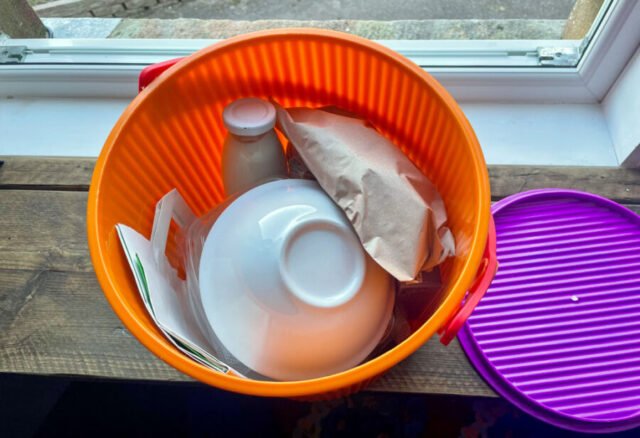
I don’t blame proprietors one bit for making these changes. They had to survive; this way is, frankly, easier than the old way; and it also reflects the self-sufficient preferences of travelers who are now accustomed to Airbnbs. But it means the B&B experience isn’t quite what it once was. If you want a big breakfast, you can’t just assume you’ll get one — you have to be careful to choose a place that still does it.
In another small town in Scotland, a B&B owner explained the basic economics of how COVID scrambled his business: He used to rent 20 rooms. He’s reopened, but with only about half of his original rooms. He no longer offers any breakfast whatsoever, and self-check-in is the norm, unless he happens to be around. And when you factor in the extra staff (and salary) he once required to keep a bigger operation going, he’s making more money today.
“Frankly, I’m tired of working so hard,” he explained, unapologetically. “And why would I work even harder to make less money? This way, I can keep things open and be semi-retired. I’m not up at 6 every morning, cooking breakfasts to order, and if it’s a nice day, I can go for a hike instead of waiting around to check people in. If I had to go back to 20 rooms, I think I’d just close the place down…sell it. If anyone would want it.”
(I say, good for him! But selfishly, the move to self-check-in has complicated the work of updating our guidebooks. It used to be, if I stopped by a B&B mid-morning or late-afternoon, there was nearly always someone around to answer my questions. These days, there’s rarely anyone at home — even if I circle back a few times, each doorbell goes unanswered.)
It’s not just an experience that’s being lost; for thrifty travelers, this shift also has serious budgetary consequences. As B&Bs and guest houses close down, we’re losing the middle and lower ends of the accommodations market — between a hostel and a big hotel. I noticed a painfully consistent trend this summer in Dublin: It’s essentially impossible to find a sleepable double room for less than €200, unless perhaps you’re staying in the distant suburbs.
Yes, this is partly because most of the affordable, old-school guest houses and B&Bs have closed down. But it’s also because the ones that have survived realize that there’s very little competition. Therefore, they’re pricing themselves shockingly close to the big hotels. On a single street in Dublin, I stopped into update a 50-room, family-run, classic guest house with a creaky staircase, few amenities, and humble rooms. If you’d ask me what this place should be charging, I’d ballpark a double at no more than €150. When the clerk quoted me €220, my jaw hit the floor.
Then I walked a few doors down the street and happened to pass a stylish, four-star, modern hotel with 150 comfortable rooms, air-conditioning, an elevator, and all the other plush extras you’d hope for. The price? The same: €220 for a double.
What’s the solution here? As travelers, we can lean into the idea that when we choose to stay at these traditional guest houses, we’re supporting independently operated small businesses who deserve our patronage. If B&Bs are truly an endangered species, then they deserve a little extra care and preservation.

On the other hand, as an advocate for travelers, it’s hard for me to argue with the cost-effectiveness of getting so much more for your money — either at a big hotel, or by finding a good-value Airbnb. That’s just plain capitalism; accommodations aren’t charities.
(This is a topic for a different post, but I should note that I realize the role Airbnb plays in this is complicated. Personally, I feel OK about staying at one-off Airbnbs that are owned and managed by locals — essentially, the “next generation” of people who might have, 10 or 20 years ago, run a B&B — which, I like to think, at least keeps money in the community. I try to avoid Airbnbs rented by a big agency with lots of properties, which tend to be less personal and further enrichen the already wealthy. But with my front-row seat at this shifting landscape, I’m more and more aware of how Airbnb operates in an ethical gray area.)
What I really wish is that we could step into a time machine and go back a decade or two, to an age when small, reasonably priced, family-run B&Bs were the norm in Britain and Ireland.
Fortunately, near the end of my time in Ireland, I did just that. The big hotel in town was booked up, so instead, I got a room at a charming, four-room B&B a short drive into the countryside. I’m getting softer in my “old age,” and after having just spent a week in predictable, modern, cookie-cutter hotels in Dublin, I was concerned that my very traditional B&B would feel like a downgrade.
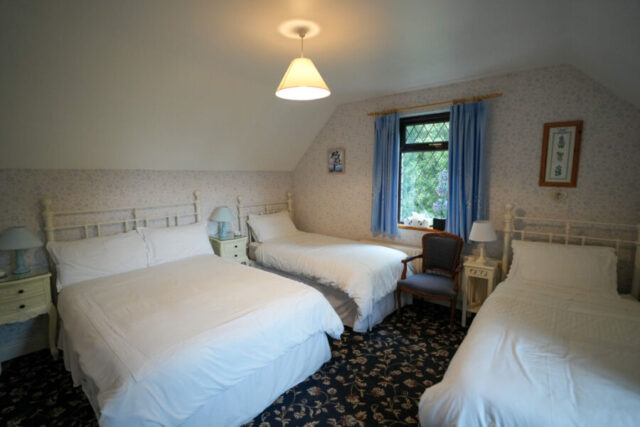
Instead, it was an utter delight. I was greeted warmly by the proprietor, who instantly treated me as if we’d known each other for years. She showed me to my very cozy, doily-covered room. Unpacking my bag, I found myself getting very nostalgic for the many years of travels when this kind of place was my nightly norm. It really did feel like I’d stepped back in time. The carpet, wallpaper, furniture, and decor might be at home in a museum.
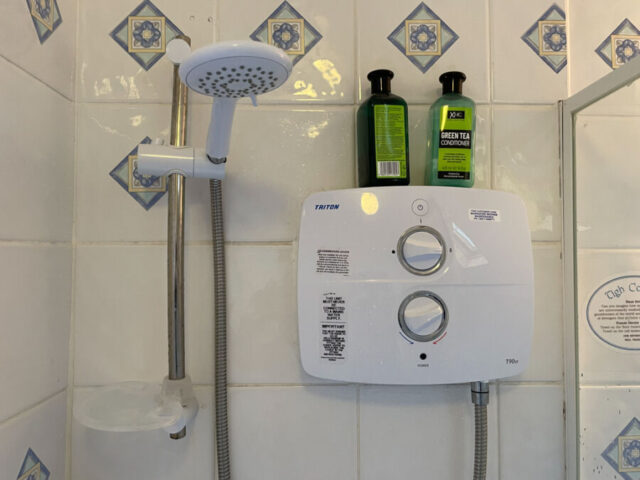
To take a shower, I had to pull a dangling cord to turn on the power, then spin a dial on a plastic box to get the water flowing. Over the years, I got very used to these single-unit water heaters, to the point where a standard faucet seemed weird. These were the “classic small B&B norm.” But these days, as those B&Bs go out of business (or upgrade their rooms), I haven’t seen one in good long time. Turning that dial to get the shower felt like adjusting the instruments on a time machine.
Yes, the place was a bit “quirky.” But here’s the thing about quirks: Once you get used to them, they’re utterly lovable. I’ll certainly remember this B&B far more vividly than anywhere else I’ve stayed on this trip.
Best of all, every time I came and went, I enjoyed a lovely conversation with the owner. She told me about her son, who lives in Australia; filled me in on all the local gossip; described the time she first met Rick and our guidebook co-author, Pat O’Connor, 20 years ago; and tipped me off about the best restaurants in town.
And her prices? She’s still at €50 per person — that’s €100 for a double. The big hotel in town costs at least twice that much. And on Saturday night, as I was strolling through town, I noticed that hotel was hosting a boisterous wedding, with thumping music…and was even more glad I was sleeping at my sweet little B&B.

Even this traditional place has made some changes, post-COVID. Like so many others, she’s stopped doing a cooked breakfast — instead, there’s as much fresh fruit as you’d like, plus granola bars and individually wrapped pastries in a little basket in your room. She explained that things became too complicated during COVID. And she’s glad, too, for a break from getting up at the crack of dawn — every. single. morning. — to fry up eggs.
When I asked if she planned to keep going — whether to keep her in next year’s book — she said, “Oh, yes, I think so. For now, anyway.”
I hope she does keep at it. Places like hers are rare these days, and I’m not sure how many will survive much longer. But in the meantime, I intend to seek them out, and enjoy them.
For now, anyway.