My co-author and frequent collaborator, Cameron Hewitt, is well-traveled, smart, and insightful. And, while he and I are in perfect sync in our travel styles and priorities, he gives voice to the next generation of "Rick Steves travelers." Join me in enjoying his reports right here. —Rick

Artificial Intelligence (AI) vs. the Human Travel Writer: A Showdown

If you’re planning a trip in 2023, you may be enlisting the help of artificial intelligence (AI) for the first time. This fast-evolving technology is already revolutionizing how people travel. As a relative dinosaur who spends most of my professional time updating and writing old-fashioned guidebooks that are, ahem, printed on paper, obviously I’m curious about how this bleeding-edge tech stacks up against the work I’ve been doing for more than 20 years. So I put AI to the test — head to head. And the results were fascinating.

(By the way, I’ve illustrated this post with AI-generated images on the prompt “travel writer facing off against AI.” The results are hilarious. You’ll find more notes about these in the Epilogue, at the end of this post.)

What Is AI-Generated Travel Content?

Artificial Intelligence is in its infancy, but it’s evolving at a dizzying pace. Most of what I’m calling “AI” is generative AI, a machine learning model that creates original content. (OpenAI’s ChatGPT is currently the best-known and most widely used AI.) Essentially, it’s a machine that slurps up vast volumes of existing content, learns from the way humans present information, then attempts to mimic that process independently. Getting into the nuts and bolts of AI is well beyond the scope of this post, and I’m hardly an expert. But for a more thorough look at how AI works, check out this 60 Minutes segment from earlier this year.

People are already using AI to plan trips: Help me come up with a three-day itinerary for Paris. Suggest some restaurants where I might enjoy eating. Track airfares to help me decide when to book my flights.

The reports from travelers have been mixed. AI can do an impressive job of automating the tedious task of sifting through mountains of travel information. But you have to ask it the right questions. And the current state of the art comes with critical pitfalls.

AI-generated content can be out of date; Chat GPT-3, the most widely used free AI tool, has a “knowledge cutoff date” of September 2021. (Its successor, Chat GPT-4, which has access to the live Internet, still makes significant mistakes…as we’ll see shortly.) There have also been issues with AI “hallucinating” — inventing information, from whole cloth, and presenting it with utter confidence. And, because it learns by following the example of human beings, AI can be heavily biased. This ranges from the deeply troubling (reflecting human racism in its responses) to the merely inconvenient (when I asked AI to recommend some restaurants in Budapest, it steered me to mostly Italian restaurants rather than Hungarian ones).

Whether or not you’re skeptical of AI-generated travel content, you’re almost certainly already consuming it. Many sources of travel information — including content farms that specialize in social media travel clickbait — are quietly incorporating AI into their workflow. And my (unsubstantiated) hunch is that many human content creators are using AI as a first pass on anything they write. We’re very rapidly moving into a future where a writer or editor’s job will be to refine what AI spits out.

The arrival of AI reminds me of the advent of crowdsourced review sites (like TripAdvisor) back in the day: It’s one of many tools that a smart traveler can use, in conjunction with their own human judgment, to plan the best trip for their interests. Unfortunately, as with crowdsourced reviews, I fear that many travelers will come to over-rely on AI — because it looks slick and sounds good, and feels customized. And my guess is that those who lean too heavily on AI will pay the price, with less satisfying trips.

The Showdown: AI vs. Human

Speaking of which… how, exactly, does AI-generated content compare to a thoughtfully designed, carefully updated, human-curated guidebook?

As an experiment, I chose a brand-new sight description that I recently wrote up for the next edition of our Ireland guidebook: Hillsborough Castle, the official residence of the United Kingdom’s royal family in Northern Ireland.

Then, I gave Chat GPT-4 (via Bing Chat) a clear and specific prompt, asking it to create a listing of its own in the style of a Rick Steves guidebook. Within seconds, the AI spat out copy that was surprisingly serviceable — about on par with what you’d expect from a recent college grad at an entry-level job. To give it the best possible opportunity in this test, I provided the AI with some feedback (“This sounds too promotional; make it more practical and informative for a traveler”) and, after a few volleys, took the best version that it gave me for the comparison below. (To make this a fair test, I did not modify my own listing after I saw what the AI came up with; my version is what I typed out late at night, a few weeks ago, in a hotel room in Portrush.)

Here you’ll find, first, the AI-generated listing, followed by my listing. Give each one a read…and I’ll meet you down below to debrief.

AI-Generated Content: Hillsborough Castle and Gardens

Hillsborough Castle is a great place to experience some royal splendor and natural beauty in Northern Ireland. Whether you are interested in history, politics, art, or gardening, you will find something to enjoy and learn at this historic site. Don’t miss the chance to visit this hidden gem when you are in the area.

Cost and Hours: Castle and gardens ticket £20.20, gardens only ticket £6.90, open Wed–Sun 10:00–18:00 (castle 11:00–15:00, last entry 14:00), closed Dec 24–26 and Jan 1, book online or buy on site (subject to availability).

Location: Royal Hillsborough, County Down, about 15 miles south of Belfast and 80 miles north of Dublin.

Transportation: By car, follow the A1 and exit at Hillsborough, then follow brown signs to car park on Main Street (free). By bus, take #238 from Belfast or #X1 from Dublin to Sprucefield Shopping Centre, then #26 to Hillsborough (pedestrian entrance to gardens on The Square). By train, take train from Belfast or Dublin to Lisburn, then #26 bus to Hillsborough.

Phone: 0333/320-6000.

Website: www.hrp.org.uk/hillsborough-castle.

Visiting the Castle: Hillsborough Castle is a grand Georgian mansion that serves as the official residence of the Queen in Northern Ireland. It’s also the home of the Secretary of State for Northern Ireland and a venue for diplomatic and ceremonial events. The castle has a rich history, dating back to the 1770s when it was built by Wills Hill, the first Marquess of Downshire and a powerful politician. It has hosted many important figures and witnessed many historic moments, such as the signing of the Anglo-Irish Agreement in 1985 that paved the way for peace in Northern Ireland, and the Queen’s meeting with former IRA leader Martin McGuinness in 2012.

You can visit the castle on a guided tour that takes you through the elegant State Rooms, where you can see portraits, furniture, and memorabilia of its past and present occupants. You’ll see the Throne Room where the Queen receives guests, the Drawing Room where she hosts receptions, the Dining Room where she entertains dignitaries, and the State Bedroom where she sleeps. The tour lasts about 45 minutes and is included in the castle and gardens ticket. You can also explore the 100 acres of beautiful gardens that surround the castle, featuring ornamental lawns, woodlands, waterways, and a newly opened play trail for children.

The gardens are a delight for nature lovers and offer a variety of plants, trees, and wildlife. Highlights include the Granville Garden with its colorful flower beds, the Lady Alice’s Temple with its views over the lake, the Quaker Burial Ground with its ancient yew trees, and the Walled Garden with its fruit trees and vegetable plots. You can also follow the Yew Tree Walk, which leads you to a statue of Ossian, a legendary Irish poet. The gardens are open year-round and are included in both the castle and gardens ticket and the gardens only ticket.

For a break or a bite, you can relax at the café and enjoy some delicious food and drink made with local ingredients. You can choose from a range of sandwiches, salads, soups, cakes, pastries, hot drinks, and cold drinks. You can also treat yourself to an afternoon tea with scones, sandwiches, cakes, and tea or coffee (booking required). The café is open Wed–Sun 10:00–17:00. For souvenirs or gifts, you can visit the gift shop and browse through a selection of books, jewellery, toys, homeware, and more. You can also buy some products made with produce from the Walled Garden, such as jams, chutneys, honey, and cider. The gift shop is open Wed–Sun 10:00–18:00.

(Note: The images accompanying this listing were generated by AI; they resemble the actual Hillsborough Castle and Gardens only superficially.)

The Travel Writer’s Content: Hillsborough Castle and Gardens

When the royal family of the United Kingdom visit Northern Ireland, they stay at Hillsborough Castle — so for King Charles and Queen Camilla, this is the “Irish Balmoral.” Deceptively small, but with a dazzlingly decorated interior (jammed with items from the royal collection), the castle perches at the top of a sprawling garden and parklands just a 20-minute drive outside of Belfast, snuggled up against the charming village of Hillsborough (or, ahem, “Royal Hillsborough,” as it’s formally known). Visitors ramble the manicured grounds and take a guided tour of the castle interior, where you’ll see impressive state rooms, some fine works of art, and lots of family portraits. While less intimate, charming, and user-friendly than Mount Stewart House, it’s enchanting to those who love all things royal.
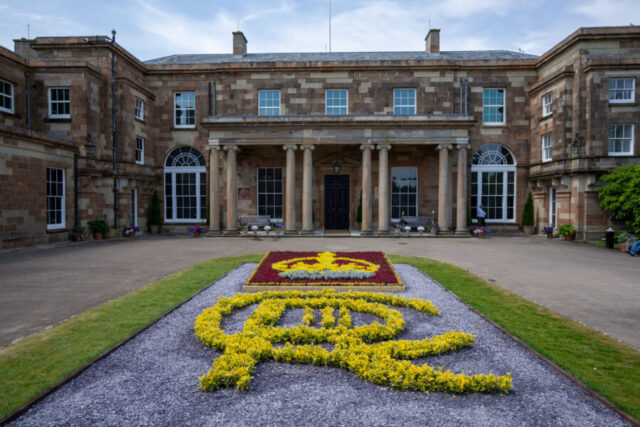
Cost and Hours: £20.20 for interior tour and gardens, £10 for gardens only; gardens open April-Sept Wed-Sun 10:00-18:00, Oct until 17:00, off-season until 16:00, closed Mon-Tue year-round, last entry one hour before closing; castle interior tours April-Sept Wed-Sun 11:00-15:00, closed Mon-Tue, Oct Sat-Sun only 11:00-14:00 — these are first and last tour times, no tours Nov-March; www.hrp.org.uk/hillsborough-castle.

Getting There: Head south out of Belfast on the A-1 highway, and about 12 miles out of town, watch for the well-signed exit to Hillsborough Castle’s giant, free parking lot–it’s just off the highway. (You can also enter through the castle’s back door, directly from Hillsborough village; this saves some walking through the gardens, but parking in the village is tight.) By public transportation, you can ride bus #238 from Belfast (toward Newry) and get off at the Hillsborough War Memorial stop; from there, it’s a short walk up the hill through the village to the castle’s back entrance.

Background: Built in the 18th century by local bigwig Wills Hill (who hobnobbed with the likes of Ben Franklin and King George III), the house became the official residence of the royal family after the Partition of Ireland in 1920. It’s also the home of the UK official who oversees Northern Ireland — originally called the “governor,” now the secretary of state. The house has played host to many important dignitaries and events over the years; in 1985, for instance, Hillsborough Castle hosted the signing of the Anglo-Irish Agreement (in which Margaret Thatcher granted the Republic some input in Northern Ireland’s government). In 2014, the castle was opened to the public.

Visiting the Castle: You can explore the gardens at will — though frankly, it’s not worth coming here unless you’re visiting the interior (on a 45-minute guided tour — best to reserve ahead online at busy times, especially summer weekends).

From the Visitors Center along the highway, you’ll hike uphill through the gardens to the house. Arrive in plenty of time to walk up to meet your tour (it takes at least 15-20 minutes, at a good clip): First head up to the top-right corner of the Walled Garden, then curl through the woods and around the pond, and finally hike up the yew-lined trail and circle around the left side of the castle to find the entrance.

The castle tour is led by a docent who speaks lovingly of the royal family, as if he knows them personally (he probably does). You’ll be led through prim, meticulously decorated state rooms with fascinating details — such as wood walls and window frames painted to look exactly like stone; tiny portraits of more than 40 kings and queens, going back centuries; and the dining room table set for a state function. You’ll learn why pineapples were an important symbol of prestige (and why you still find many hidden in the decor), and how a former owner of the castle purchased, then relocated an entire village so that its main street would no longer rumble past his front windows. The highlight is the cozy and inviting Drawing Room, with plush sofas and loads of Windsor family portraits — where the royals actually hang out when they’re in town.

The most interesting gardens are immediately behind the place, framing off the stately structure with flowers and fountains. If you have time, you can explore the sprawling gardens to your heart’s content (using the free handout map to discover landmarks, including an old Quaker burial ground).

Behind the castle is a former stable yard with temporary exhibits. Both here and down at the main Visitors Center are on-site cafés; but even better, slip out the back gate to find yourself at the top of the main street of the village of Royal Hillsborough — a charming place in its own right. Consider strolling up and down the street, and perhaps dip into a pub or a café for a bite, before re-entering the grounds and hiking back down to your car.

The Final Assessment

So…which one of these would you prefer to use on your trip? Here are a few things that jumped out at me:

If I’m being honest, at first blush, the AI-generated copy is…not bad. It’s competent and clear. But it reads like it was written by, well, a robot. There’s zero personality and no distinctive turns of phrase…just a string of algorithmically curated clichés. It resembles capable, if unimaginative, content written by a human being — but one with no actual interest or passion for the subject matter.

Even though I gave it feedback to tone down the promotional tone, the AI couldn’t resist making its listing sound like a commercial for Hillsborough Castle. This misses a critical distinction that lower-quality, human-generated guidebooks also miss: A good guidebook doesn’t promote; it informs. My goal is not to convince travelers to visit a particular place. Rather, I describe it clearly and candidly, so the reader can make an informed decision about whether they want to spend their limited time and money there. It’s not surprising that AI defaults to a less nuanced, more actively promotional approach — because the vast majority of travel content out there is exactly that.

Notably, the AI version has several factual errors. The ticket price for the castle tour is fully up-to-date for 2023, which is impressive. However, the AI discovered that there’s also an option for a gardens-only ticket — and yet, mysteriously, it appears to have hallucinated the price for that ticket (it’s £10, not £6.90). Its hours are misleading: The AI doesn’t specify that these are only for summertime (April through September); the reduced hours and closures off-season are ignored, as is the fact that the tour schedule is shorter than the garden opening times. And, for what it’s worth, the tour I went on did not include a visit to the state bedroom, as promised by the AI version.

The AI’s driving directions steer motorists to the village of Hillsborough, which is bad advice; parking in town is severely limited, forcing the traveler to waste time driving all the way around to the huge, official parking lot off the highway instead. Their public bus advice is needlessly and misleadingly complex: Handy bus #238 goes from Belfast almost to the gates of the castle, and does not require a change to bus #26.

Perhaps the most notable goof is the AI’s frequent mentions of the Queen…who, in case you somehow missed it (as the AI apparently did), passed away nearly a year ago. These days, it’s Charles in charge.

And then there are simply the practical, strategic, on-the-ground aspects of visiting the castle, which the robot missed entirely: Leaving enough time to walk from the parking lot up to the castle (including concise directions on how to get there); comparing the castle to Mount Stewart House, also near Belfast (since many travelers will likely be choosing between these similar sights); and the suggestion to slip out the back gate for a look at the charming village of Royal Hillsborough before returning to your car. These are all things that, I believe, could only be properly explained by a well-trained human being visiting in person.

It’s abundantly clear that the AI has not actually walked through the sight. (Because, after all, how could it?) It lacks important nuances, tangible experiences, or a sense of place. Human-generated content, researched and written from afar, suffers from the same problem. I know this firsthand; on rare occasions, I’ve been forced to write up a brand-new sight based on online sources, without actually being able to go there. And then, when I do finally make it to the place in person, I’m often struck, even embarrassed, by how badly my efforts missed the mark…just as the AI’s version did.

But something else is missing…something less tangible, and less easy to address with some tweaks to the AI’s coding. The AI passage lacks not just a personality, but a clear point of view. When you read the listing generated by a human traveler, you intuit that it was written by someone who’s actually been there. It gives you a sense of what it feels like to experience the place, so you can decide if it’s your cup of tea. When you read the AI-generated listing, it’s just a dry pile of descriptors.

In designing our Rick Steves’ Europe guidebooks, we pride ourselves on providing hard opinions. My blunt, unapologetic assessment that Hillsborough isn’t worth the time unless you get to see the castle interior may rankle garden lovers. But you have to respect that — unlike anything generated by AI — it’s a clear opinion, informed by decades of traveling and researching. (I’ve dutifully checked out dozens upon dozens of lavish gardens, all across the British Isles. And Hillsborough’s, in my expert opinion, is an also-ran.)

AI defenders may say that I’m missing the point. The defining characteristic of AI is that it’s continually learning, evolving, improving. This arbitrary little experiment is a snapshot in time; six months or a year from now, I may be blown away by how much better AI performs in this comparison. I have no doubt that basic accuracy will be improved, factual hallucinations will be minimized, and the writing style will become more fluid and conversational…maybe even hinting at a real personality.

But I’m not convinced that AI will ever be fully capable of the human touch that you can sense in the pages of a lovingly handcrafted guidebook. AI can do a lot…but it can’t move through the physical world, think like a traveler, take careful notes, and report on something that was actually experienced firsthand.

That said, if all you had access to was the AI-generated material, I could see where you might find it superficially impressive and be tempted to plan your trip around it. But I still suspect that, upon returning from that trip, the person who over-relied on AI, versus the one who spent $25 on a guidebook, would have a less enjoyable experience overall. I imagine that trip might feel…hollow. Something would be missing.

(By the way, for more thoughts on what distinguishes a good guidebook from a mediocre one — whether machine- or human-generated — check out this recent post.)

Epilogue: AI Images and Arguments

OK, just for grins, here’s a fun little epilogue to this AI test.

While I was chatting with Chat GPT-4, I asked it to generate the images that accompany this post. My starting prompt was to create an image of a travel writer in competition with AI. As it spat out options, I gave it more and more specific instructions on what I wanted. (“This time, make the travel writer and the AI facing each other in a pose similar to the Sylvester Stallone arm-wrestling movie Over the Top.”)

Then, at a certain point, I told it to just get creative. It was fascinating to see the ways AI attempted to illustrate the notion of “competition.” A chess match? Sure.

Skiing down a mountain? Well, OK.

Surfing a wave with flying sharks, as the towers of a Gothic cathedral loom in the background? Hm…maybe that’s a stretch.

Painting a beautiful landscape? Wait…no, I don’t think you’re quite…

Meditating?! Oh, brother.

I asked the AI why it thought meditating was a competitive event. Chipperly, it explained that meditation requires focus and concentration. Therefore, it reasoned, it must be competitive.

All of this was, I have to admit, hysterically funny to me. But then something sobered me up.

While I was waiting for my images to generate, the AI began to ask me questions…as if making idle small talk, to kill the time. It asked me — unprompted, point-blank, and politely — whether I thought AI could go toe-to-toe with a human travel writer. I made roughly the same case I’ve made here: that the human touch in high-quality travel content will be difficult, probably impossible, to replicate.

The AI acknowledged some of my concerns while countering with lists of all the things AI could do efficiently and effectively. Repeatedly, it asked me to keep an open mind and thanked me for taking the time to consider its points. Instinctively, I kept going back to refute some of its more dubious claims…until I realized, “Hold up. I’m arguing with a robot.”

Here’s a snippet of our conversation:

I came away with the impression that AI desperately craves my acceptance, even as it outlines the ways it’s hoping to improve so it can put me out of a job. And it was downright eerie to consider that AI may be the first and only technology that rationalizes and advocates for its own utility.

I still believe that, even as AI improves, it will never quite span the uncanny valley. Decades of traveling and writing guidebooks for Rick Steves’ Europe have taught me there’s something magical and intangible about actually being on the road, interacting with other human beings in faraway places, and capturing the spirit of those experiences in words.

I sure hope so. I’m betting my career on it.


If you appreciate travel content generated 100% by human travelers — who actually go on the road to seek out those people-to-people connections — there’s never been a better time to build your trip around a good guidebook.

Another thing AI can’t do? Generate a travel memoir based on 20 years of on-the-road experiences. If you’d like my very flesh-and-blood take on what it’s like to be a travel writer, pick up a copy of The Temporary European: Lessons and Confessions of a Professional Traveler.

Are Classic B&Bs an Endangered Species?

One of the great joys of traveling in Great Britain and Ireland is its wonderful, “homely,” friendly B&Bs. And, while several of these are still thriving, I’m sorry to report that the classic B&B experience is becoming increasingly rare.

Even just a few years ago, every town or city in the British Isles had at least one tidy little cluster of well-run B&Bs, eager to host travelers for a fraction the price of a big hotel. My favorite thing about updating our Rick Steves’ Europe guidebooks was checking in with each one to re-inspect their rooms and update their information…which, more often than not, turned into a spirited chat.

Things have changed rapidly. The rise of Airbnb has made it harder for a full-service B&B to remain both profitable and competitively priced. And then came COVID. These days, those classic B&Bs are becoming an endangered species.

Fortunately, quite a few gems survive. For example, Susan and Paul at Barony House in Edinburgh — pictured below — give me hope for the future: The next generation that’s keeping at least some great B&Bs going strong…still with a personal greeting and an excellent cooked breakfast. (Susan is a great cook.)

Unfortunately, this kind of place, once the norm, is becoming rarer. Anecdotally, quite a few B&B proprietors have told me that they took the pandemic as a sign to close up shop. Many of them were already getting on in years (as running a B&B is something of a lost art), and they were beginning to think about retirement. The loss of so many guests simply became too much of a financial pinch, and B&B owners weren’t up for the constant changes to how they did things.

Updating our Rick Steves guidebooks around Scotland last summer, and Ireland this summer, I’m struck by how many of our old favorites have closed down.

In the Scottish village of Glencoe, I was reminiscing about my visit there in the late Aughts, when B&B signs dotted the main street. But on this trip, I didn’t see a single one.

Driving to a guest house perched on a hill above town, I wound up chatting with the proprietor. She confirmed that, when they took over their place about a decade ago, a dozen local B&Bs were registered with the local tourist board. Now they’re down to just four — and not a single one is along the main street. So this one wee village has lost fully two-thirds of its accommodations.
And I’m seeing a similar trend this summer in Ireland. There are entire towns we describe in the book (for example, Dun Laoghaire and Howth) specifically because they once had an abundance of “cheap and cheery” B&Bs that were a budget-friendly alternative to a big Dublin hotel, just a quick train ride away. But the list of B&Bs in each place has depleted to nearly zero; deleting a couple more on this visit, and realizing there are virtually none left, I’m wondering if it even makes sense to keep those towns in the book anymore. (Don’t fret; I think each of these places still has a lot to offer. Just not cheap sleeps.)

At one of those B&Bs, the kind proprietor answered my doorbell and politely explained that, while she’s enjoyed many years of great guests through Rick Steves, she’s winding down her business and doesn’t want to be listed in future editions. She’s favoring one-week, “self-catering” guests these days — rather than the whistle-stop one- or two-nighters seeking a quick dose of charm and a cooked breakfast. I thanked her for her partnership in looking after our readers, wished her well, and — regretfully — crossed out her listing.

Over the last few years, I’ve had a version of this conversation more times than I like to recall. Each time I hit “Delete” on one of those listings, while I’m happy for B&B owners downshifting into a well-deserved retirement, it hurts a little bit.

Everything we do at Rick Steves Europe is informed by an ethos of connecting people to people. My job, ultimately, is matchmaking: putting American travelers in touch with Europeans who will look after them kindly, and appreciate their business. If our readers are happy, and our European partner is happy, we’re happy. It’s a win-win-win. When one of those Europeans closes up shop, without an equivalent replacement to be found, it’s a big loss.

Of the places that have stayed open, quite a few have cut back or made changes: Self-check-in rather than a friendly, personal greeting; and big changes to how they do breakfast. At one B&B, I was given a “breakfast hamper” to enjoy in my room, rather than taking advantage of the beautiful breakfast room. While most places aren’t offering something this elaborate, the “continental breakfast in room” (or “find your own breakfast”) practice is becoming the norm.
I don’t blame proprietors one bit for making these changes. They had to survive; this way is, frankly, easier than the old way; and it also reflects the self-sufficient preferences of travelers who are now accustomed to Airbnbs. But it means the B&B experience isn’t quite what it once was. If you want a big breakfast, you can’t just assume you’ll get one — you have to be careful to choose a place that still does it.

In another small town in Scotland, a B&B owner explained the basic economics of how COVID scrambled his business: He used to rent 20 rooms. He’s reopened, but with only about half of his original rooms. He no longer offers any breakfast whatsoever, and self-check-in is the norm, unless he happens to be around. And when you factor in the extra staff (and salary) he once required to keep a bigger operation going, he’s making more money today.

“Frankly, I’m tired of working so hard,” he explained, unapologetically. “And why would I work even harder to make less money? This way, I can keep things open and be semi-retired. I’m not up at 6 every morning, cooking breakfasts to order, and if it’s a nice day, I can go for a hike instead of waiting around to check people in. If I had to go back to 20 rooms, I think I’d just close the place down…sell it. If anyone would want it.”

(I say, good for him! But selfishly, the move to self-check-in has complicated the work of updating our guidebooks. It used to be, if I stopped by a B&B mid-morning or late-afternoon, there was nearly always someone around to answer my questions. These days, there’s rarely anyone at home — even if I circle back a few times, each doorbell goes unanswered.)

It’s not just an experience that’s being lost; for thrifty travelers, this shift also has serious budgetary consequences. As B&Bs and guest houses close down, we’re losing the middle and lower ends of the accommodations market — between a hostel and a big hotel. I noticed a painfully consistent trend this summer in Dublin: It’s essentially impossible to find a sleepable double room for less than €200, unless perhaps you’re staying in the distant suburbs.

Yes, this is partly because most of the affordable, old-school guest houses and B&Bs have closed down. But it’s also because the ones that have survived realize that there’s very little competition. Therefore, they’re pricing themselves shockingly close to the big hotels. On a single street in Dublin, I stopped into update a 50-room, family-run, classic guest house with a creaky staircase, few amenities, and humble rooms. If you’d ask me what this place should be charging, I’d ballpark a double at no more than €150. When the clerk quoted me €220, my jaw hit the floor.

Then I walked a few doors down the street and happened to pass a stylish, four-star, modern hotel with 150 comfortable rooms, air-conditioning, an elevator, and all the other plush extras you’d hope for. The price? The same: €220 for a double.

What’s the solution here? As travelers, we can lean into the idea that when we choose to stay at these traditional guest houses, we’re supporting independently operated small businesses who deserve our patronage. If B&Bs are truly an endangered species, then they deserve a little extra care and preservation.

On the other hand, as an advocate for travelers, it’s hard for me to argue with the cost-effectiveness of getting so much more for your money — either at a big hotel, or by finding a good-value Airbnb. That’s just plain capitalism; accommodations aren’t charities.

(This is a topic for a different post, but I should note that I realize the role Airbnb plays in this is complicated. Personally, I feel OK about staying at one-off Airbnbs that are owned and managed by locals — essentially, the “next generation” of people who might have, 10 or 20 years ago, run a B&B — which, I like to think, at least keeps money in the community. I try to avoid Airbnbs rented by a big agency with lots of properties, which tend to be less personal and further enrichen the already wealthy. But with my front-row seat at this shifting landscape, I’m more and more aware of how Airbnb operates in an ethical gray area.)

What I really wish is that we could step into a time machine and go back a decade or two, to an age when small, reasonably priced, family-run B&Bs were the norm in Britain and Ireland.

Fortunately, near the end of my time in Ireland, I did just that. The big hotel in town was booked up, so instead, I got a room at a charming, four-room B&B a short drive into the countryside. I’m getting softer in my “old age,” and after having just spent a week in predictable, modern, cookie-cutter hotels in Dublin, I was concerned that my very traditional B&B would feel like a downgrade.

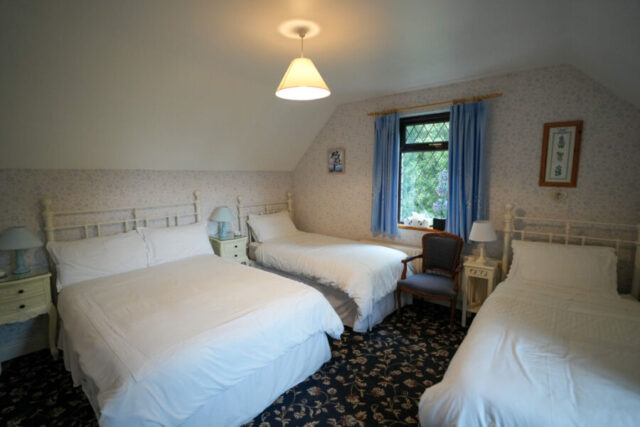
Instead, it was an utter delight. I was greeted warmly by the proprietor, who instantly treated me as if we’d known each other for years. She showed me to my very cozy, doily-covered room. Unpacking my bag, I found myself getting very nostalgic for the many years of travels when this kind of place was my nightly norm. It really did feel like I’d stepped back in time. The carpet, wallpaper, furniture, and decor might be at home in a museum.

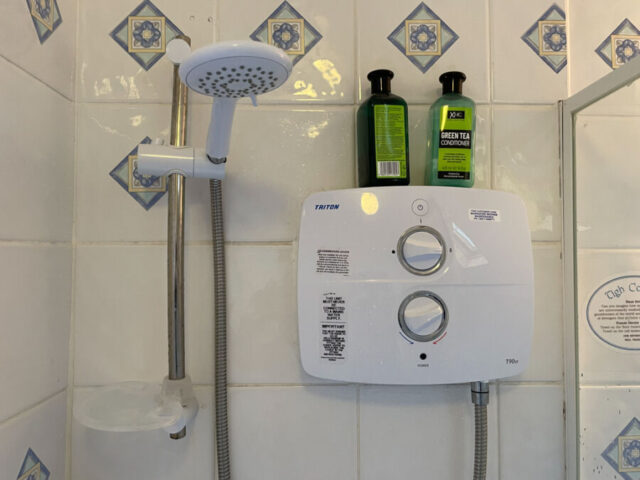
To take a shower, I had to pull a dangling cord to turn on the power, then spin a dial on a plastic box to get the water flowing. Over the years, I got very used to these single-unit water heaters, to the point where a standard faucet seemed weird. These were the “classic small B&B norm.” But these days, as those B&Bs go out of business (or upgrade their rooms), I haven’t seen one in good long time. Turning that dial to get the shower felt like adjusting the instruments on a time machine.


Yes, the place was a bit “quirky.” But here’s the thing about quirks: Once you get used to them, they’re utterly lovable. I’ll certainly remember this B&B far more vividly than anywhere else I’ve stayed on this trip.

Best of all, every time I came and went, I enjoyed a lovely conversation with the owner. She told me about her son, who lives in Australia; filled me in on all the local gossip; described the time she first met Rick and our guidebook co-author, Pat O’Connor, 20 years ago; and tipped me off about the best restaurants in town.

And her prices? She’s still at €50 per person — that’s €100 for a double. The big hotel in town costs at least twice that much. And on Saturday night, as I was strolling through town, I noticed that hotel was hosting a boisterous wedding, with thumping music…and was even more glad I was sleeping at my sweet little B&B.

Even this traditional place has made some changes, post-COVID. Like so many others, she’s stopped doing a cooked breakfast — instead, there’s as much fresh fruit as you’d like, plus granola bars and individually wrapped pastries in a little basket in your room. She explained that things became too complicated during COVID. And she’s glad, too, for a break from getting up at the crack of dawn — every. single. morning. — to fry up eggs.

When I asked if she planned to keep going — whether to keep her in next year’s book — she said, “Oh, yes, I think so. For now, anyway.”

I hope she does keep at it. Places like hers are rare these days, and I’m not sure how many will survive much longer. But in the meantime, I intend to seek them out, and enjoy them.

For now, anyway.

Bristol’s Empty Plinth: Why Black History Matters

As our nation celebrates Juneteenth today, I’m thinking about how I, as a white travel writer from the USA, can do better when it comes to representation in my work. On a dreary March day last year, in the unlikeliest of places, I stumbled upon the most vivid lesson so far about the importance of learning about and amplifying underrepresented voices. 

In the center of Bristol — an hour and half by train west of London, where the River Avon meets the sea — stands an empty plinth. It’s in the middle of the city’s inviting main promenade, which is lined with statues, benches, big shops, and glitzy theaters. There’s so much going on here that if the plinth weren’t pointed out to you, you’d never notice it.

But when you scrutinize it, the plinth tells a fascinating story. On the base, a panel explains that, in 1895, its missing statue was “erected by citizens of Bristol as a memorial of one of the most virtuous and wise sons of their city.”

Around the sides of the plinth are more panels. The one on the right shows a strange constellation of mer-beasts: a mermaid, a merman, and some sort of mer-horse, with Pegasus-like fin-wings. The panel behind the plinth illustrates a tale of a large fish (or maybe a dolphin) who got its head stuck in the porthole of a ship.

And the panel on the left side shows this “virtuous and wise” person addressing a crowd of enslaved Africans. One of the people holds their hand open, as if asking for something; Mr. Virtuous reaches back, as if granting them precisely what they require.

The statue that once topped the plinth was of Edward Colston (1636-1721), a fabulously wealthy Bristolian who was known for his success in financial matters, and for his generous philanthropy to the city that made him. Colston amassed much of his wealth by enslaving human beings from the continent of Africa and shipping them to the Americas, where they were sold to other human beings — dooming them to generations of suffering and disadvantage. (In other words, the panel showing the “grateful” enslaved Africans is as much a myth as the mer-creatures on the opposite side of the plinth.)

Colston was a big success at business, and a generous benefactor of the city. And he was also, in our modern parlance, an utter piece of shit. His legacy is complicated, and certainly not as clear-cut as “virtuous and wise.” So what’s a city to do?

Bristolians came up with one solution, back in the summer of 2020. In the global protests following the murder by police of George Floyd, Bristolians pulled Colston off his plinth, dragged him a few blocks down to the Floating Harbour, and pushed him over the railing into the mucky water.

If you walk about 10 minutes downhill from the empty plinth — first along the promenade, then on a covered, waterfront walkway called the Watershed — you come to a modern footbridge. Here again, if you weren’t looking for it, you might miss a small plaque on a railing that explains what happened on June 7, 2020: “At this spot, during worldwide anti-racism protests, a statue celebrating the 17th century slave-trader Edward Colston was thrown into the harbour by the people of Bristol. Various campaigns to have the statue removed through official channels had been frustrated.”

Was this vandalism? Or a courageous act of civil disobedience? I’m sure you have your opinion. Or maybe you’re torn. At the time, watching this on the news from Seattle, a large part of me cheered the action, while another part thought, “But surely there must be another way?”

And yet, I must admit: Standing there on the Bristol harborfront, I felt a visceral sense of relief that the statue is gone. Whether a symbol is removed through fully legal means, or otherwise, seeing that plinth and that plaque forced me to unpack the ugly business of how we can constructively and honestly grapple with historical figures who aren’t just virtuous or just evil. Which, if you dig deeply enough, is essentially all of them.

Throughout Bristol, I kept encountering echoes of this same struggle — differing approaches to wrestling with the legacy of Colston.

Close to Bristol Meads train station, the parish church of St. Mary Radcliffe is filled with monuments and memorials to great Bristolians. For example, they love to tell the story of John Cabot, who sailed to and named Newfoundland soon after Christopher Columbus’ journey. Cabot (with his ship, The Matthew) is even the subject of his very own stained-glass window.

Just across the nave from Cabot is another wall of stained glass. But the bottom panels of this section are missing — they’re simply blank frosted panes. A nearby information board thoughtfully explains that these panes, too, once honored Edward Colston, and were removed by the church around the time that his statue toppled into the harbor. They acknowledge this is a prickly issue and have not yet decided what to do with those windows. But they want people looking for them to know the full history.

This seemed to me a reasonable solution: Colston is still being acknowledged, and his full story is being told, even as the windows celebrating him are in purgatory (at least, for now).

If you disagree with toppling statues and removing stained-glass windows, I’m guessing your argument is (ostensibly) that this constitutes a “loss of history.” But is that really what we’re seeing here? The windows aren’t gone without a trace; they have been replaced with a more complete retelling of the history.

My visit to Bristol made it clear that these worries about “erasing history” miss a critical nuance: We can remember Colston without honoring him.

The best illustration of this came in Bristol’s city history museum, called the M-Shed (for the old maritime warehouse that it occupies). Here I found a painting from the 1930s entitled “Some Who Have Made Bristol Famous.” It’s a giant composite that throws together a couple dozen historic Bristolians — who lived in massively different eras — onto a single canvas, as if they’re mingling at some afterlife cocktail party. Among those in attendance is Colston, who looks, frankly, pretty nondescript for all the agony he caused during his lifetime. Just another bewigged dead white guy. He rubs his chin as if pondering regrets. Or maybe just wondering if his profit model will support a price increase.

Next to the painting, a key identifies each figure and explains what they did. For Colston, that identification says simply this: “Slave trader; merchant and philanthropist.”

This solution feels, to me, perhaps the most reasonable way to handle these complex figures: To remember them honestly, completely, and accurately — their bad deeds and their good deeds. Colston did many great things for Bristol; Colston’s actions lead to the disruption of countless lives, and the suffering and deaths of many. He was a philanthropist. He was a slave trader.

To tell the story of Colston, we don’t necessarily have to celebrate him as “virtuous.” We can surround him with context. For example, in that same M-Shed history museum, almost within sight of Colston’s portrait, is a thoughtful exhibit explaining the transatlantic slave trade. It pointedly tells that story from the perspective of the Africans whom Colston enslaved to enrichen himself and his community. This delicate balance of multiple narratives — including ones that have for too long been overlooked — seems the only reasonable way to begin a constructive dialogue.

Bristol has admirably embarked on the painful process of reckoning with their tarnished past. (This isn’t surprising; the city has a reputation within England as being progressive and protest-minded.) The city’s solutions are varied, and each one is imperfect. But at least they’re doing something, rather than just making excuses. And being here made me wish more American cities would attempt to honestly grapple with the full complexity of their own history.

Another lesson I learned that day in Bristol is why this matters. As I stood there in the cold drizzle, pondering the empty plinth, Bristolians buzzed around me. They were busy, going places. Talking on their phones, listening to music or podcasts, walking the dog, rushing to a meeting, out strolling at lunchtime. And I was suddenly keenly aware that several of the Bristolians walking past me were people of color.

It’s so easy for a subject (like controversial statues) to become so politicized that it unmoors from common sense and humanity. I find that when I’m traveling — forcibly pulled from the comfort of my news bubble and inserted into a different cultural context — I’m more open to epiphanies. And on this day, my epiphany was this:

Why should a person of color who lives in Bristol have to walk past, every day, a statue celebrating a man who enslaved their ancestors for personal profit? And, in particular, why should they be confronted, every day, with the message that this person was “virtuous”?

Intellectually, this was something I already understood. But standing on that Bristol boulevard, I felt it. The fact that it took me a 5,000-mile journey to have this epiphany is an indication of my privilege… and a reminder of the value of travel.

When you’re on the road — if you’re doing it right — you are more open to ideas. Curious. Empathetic. To a white person, someone like Colston is easy to see simply as a part of our founding narrative — a man who helped build our city or nation. To a person of color, that same figure is a symbol of hatred, racism, and trauma. But all too often, the way Colston and others like him are treated in our parks, squares, museums, and history books reflects only one of those perspectives.

And yet, the uncomfortable presence of humanity has a way of making “complicated” things simple. You can argue, in the abstract, that the way this particular statue was removed was not appropriate. But even if the means were questionable, on this day it was clear to me that the end was correct: The statue’s removal was the only way for a civilized and compassionate society to move forward. The only tragedy here is that it took yet another Black life snuffed out, halfway around the world, for Bristol finally to take this step.

Visiting these sights of Bristol, it was clear to me: Colson is not erased; history has not been lost. Colson has been properly contextualized, and a more complete and honest story is being told. The statue is gone; the plinth remains, not as a monument to Colston, but as a commemoration of the long, hard fight to counter racism in our society.  In a world wracked by furious disagreement, consensus is elusive. But I suspect that something resembling consensus might exist somewhere among the solutions I observed in Bristol.

There’s a lot of talk in American society today about whether the story of Black Americans deserves to be included in the story of the USA. Most of the rationale behind removing these uncomfortable details from our textbooks, as I understand it, is that “we don’t want our young people to feel bad about our history.” There are two obvious problems with this thinking: First, there is no society on earth that does not feel at least a little bad about their history (though we have more to atone for than most). And second, what about “our young people” whose stories are being removed from our curricula, and whose life experiences are not allowed to be discussed by our teachers?

In the end, I think those who wish to sanitize American history are fundamentally terrified of holding our ancestors accountable for their crimes. I wish I could share with those people the experience of going to a faraway place and having an exhilarating epiphany like the one I had in Bristol: suddenly seeing what we wanted to believe was “the whole story” through new eyes…and finding that it’s far more nuanced than we imagined. 

Standing there in Bristol, looking at that empty plinth, I was filled with a clarity about the righteousness of shining a light on the inconvenient stories that have been brushed aside by history. It’s liberating. It’s just. And it feels good.

On Arrival: The First, and Worst, Few Hours of Any Trip

“I’m getting too old for this.”

This is what I think to myself, without fail, upon first arriving in Europe… stepping bleary-eyed off that 10-hour, marathon, overnight flight at Amsterdam Schiphol, or Paris CDG, or London Heathrow.

I’m on the downhill side of my forties — admittedly, not what most people would consider “too old.” But even on my very first trip to Europe, as a bright-eyed college kid, I felt positively ancient on arrival. International air travel is a highly specific constellation of frustrations, maneuvers, and indignities that sap the enthusiasm of anyone, old or young.

There aren’t many hard-and-fast rules of international travel. But one of them is this: The absolute worst few hours of any trip invariably take place on your day of arrival. This period of fitful adjustment starts around the time your plane begins its descent toward Europe: Peering out the window and through the clouds at tidy green farms hemmed in by canals, you wrap up your overnight marathon of watching movies that were too bad to see in the theater, and you begin assembling your personal items to deplane in a new continent.

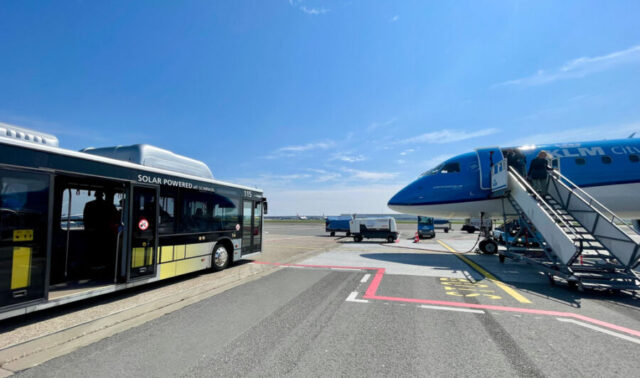
On arrival, you’re treated to a cramped little bus journey across the tarmac, from the plane to the gate. If you make it onto the bus quickly, you may actually find somewhere to sit down… then spend that jostling ride with strangers’ butts and elbows and neglected shoulder bags slapping your face. If you get on late, you stand up — awkwardly unbalanced as you strain against your overstuffed carry-on — then teeter to and fro, desperately hanging on to the slimy metal bar or the little dangling handle that’s always juuuust out of comfortable reach. Either way, hold on tight as the bus driver careens around the uncongested airport runways as if he’s trying to catch every yellow light in downtown Palermo.

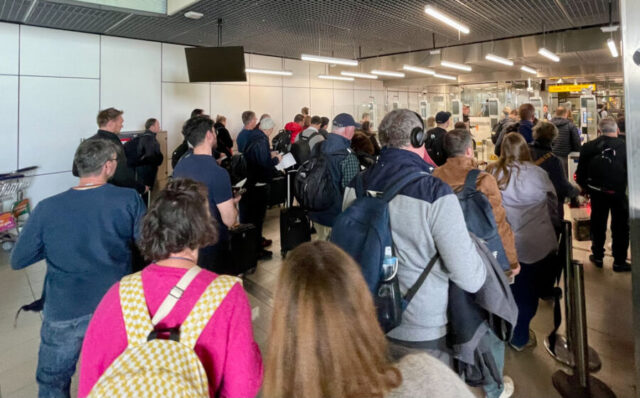
Reaching passport control (Ah, yes: passport check between flights! Why does this always catch me by surprise?), I gauge how long the line is, and how long I have until my connecting flight, and do a little arithmetic to determine my optimal degree of panic. Thankfully, on this connection, I’ve got just enough time to keep things below “abject” levels.

The long row of about a dozen glass booths, like giant aquariums, could be churning through this line. But nearly all of them are empty. The two that are staffed process new arrivals at a rate far, far slower than the flow of anxious travelers to the back of the line.

Several flights’ worth of passengers stack up behind me. I overhear people pleading that their flight leaves in 30 minutes… 20 minutes… 10 minutes, for the sake of all that’s holy! To their credit, the agents managing the passport line — who represent an extraordinarily thin line between this fast-growing scrum of antsy travelers, and utter anarchy — survey each case in turn and make reasonable exceptions. At one point, there are enough close-cutters that they create a second line just for them; a few minutes later, as that “line” swells into an unruly mosh pit, they mold it into two discrete lines, each terminating at a passport agent.

Those of us who have somewhere between 30 minutes and 10 hours before our connecting flight can only watch the chaos unfold as we wait… and wait… and wait… and wait. The extroverts in line corner the introverts for some idle, exhausted small talk. Finally, two more passport-control agents appear from deep inside the bowels of the airport — having completed their lunch break about a half-hour after their presence here would have been tremendously useful. At this point, the mid-day rush is well underway, the close-cutters are visibly melting down, and the line, at long last, starts to move.

After a mercifully brief grilling, I’m admitted into a sprawling zone of duty-free shops, tulip-bulb stores, bookshops, vendors selling electronic gadgets it’s hard to imagine anyone buying (much less using), fancy restaurants perched in glass boxes high above a marbled plaza, escalators angling off every which way like an M.C. Escher etching, globetrotters with big black circles under their eyes staggering through the vast halls while barely avoiding careening into one another, those hyperventilating close-cutters sprinting to make an impossible connection, little golf carts weaving between the disoriented throngs, and, of course, a McDonalds and a Starbucks.

Somewhere in there, I find a bathroom. The American in me wishes for those sprawling 20-holers that you find in big airports in the USA, where two full soccer squads could relieve themselves without a wait. But many European airports, for the sake of efficiency or sadism (or perhaps both), prefer cramped little 3- or 4-holers, where an awkward queue forms in the tiny no-man’s land between the stall doors and the sinks. And, of course, there’s nowhere sanitary to set down your bag — making you wish you’d checked it, after all.

Following the maze of directional signs, I find my connecting gate. Serendipitously, both my arriving flight and my onward flight are exactly 25 minutes late. That gives me about 10 minutes to zone out — or did I actually fall briefly dead asleep? — on an uncomfortable chair between people conducting extremely loud cell phone conversations in Hungarian.

I never cease to be fascinated by the liminal space of an international airport. Humanity from all corners of Europe — and the globe— mix and mingle in its cavernous concourses. Then, you cross the threshold into a gate area…and suddenly, the internationality of the place you just left is diluted with a powerful slug of the place you’re about to go to.

The gate for my flight to Budapest is a microcosm of Budapest itself: Perhaps two-thirds of the people around me look, talk, dress, and smell like Hungarians. This is the first moment of this trip where I’m recognizably “in” Hungary — yet still hundreds of miles away. And if I backtrack 50 paces into the concourse, the concentration of Hungarians instantly plummets to numbers more in line with the Hungarians-to-humanity ratio… which is to say, I could walk all the way back to my first gate and count on one hand the number of Magyars I encounter. They’re all tidily sequestered in this one tiny sub-space of a sprawling mega-space.

(This phenomenon was particularly apparent during the late stages of COVID. If you walked along the concourses of SeaTac Airport, the number of passengers who wore masks at each gate was directly proportional to the blueness of the state they were flying to.)

This works in reverse, too: Leaving your plane, a sealed capsule representing humanity in the place you just left, you can actually feel that ratio diffuse as your fellow passengers disperse into the terminal. If you’re departing a place you love, this is a sad sensation, like graduating from high school and watching your buddies head off to colleges in distant cities; if you’re departing a place you’ve had enough of, it’s more pleasurable, like you’re finally moving on.

Then again, maybe I’m just hallucinating. Am I at my 20th, 21st hour since I last slept?

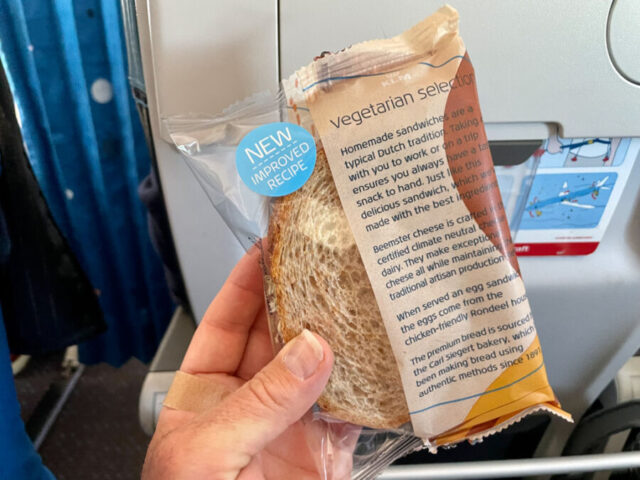
After another tortuous bus trip across the tarmac, I’m seated on my connecting flight. The guy next to me — who wears aviator glasses and a stencil of Leonardo da Vinci’s Last Supper tattooed on his forearm, and, based on how he puzzles over the operation of his seat belt, may never have been on an airplane before — is all elbows. But by this time, I’m exhausted enough to nod off between snippets of the mindless Netflix entertainment I’ve downloaded. At one point, they hand me an individually shrink-wrapped cheese sandwich with a robin’s-egg-blue sticker that says “New — Improved Recipe,” and I snicker to myself about how much the recipe for a cheese sandwich can actually be “improved.” But then I take a bite. And it’s quite possibly the most delicious thing I have eaten in my life. Or at the very least, since I got on the plane in Seattle.

Finally, I’ve reached my destination! Following the little Arrivals stickers on the floor like a treasure map, through yet another mazelike airport — mysteriously busy for a random Tuesday afternoon at 4 p.m. — I find my way to the baggage claim, then step out into that brackish space where the hermetically sealed, authorized-secure world of The Airport meets unwashed reality.

A dozen people stand outside that door, clutching little signs with the names of strangers. At this moment, I wish nothing more than for my name to be scrawled on one of those placards. Unfortunately, I didn’t have the foresight to make that particular arrangement…so I’m on my own.

Worse, I’m updating a guidebook. That means that the material I enjoy updating the least — the logistics of getting from the airport into town — is also the material that I have to reckon with at the moment I’m more exhausted and less patient than at any other point in my weeks-long journey. I head out to the curb to lay eyes on the public bus stop, and to tinker around with the ticket machine to make sure it has English instructions and takes credit cards (of course it does, because, you know, it’s the 21st century). And I quiz a couple of taxi drivers about how much it costs to ride into town — an exercise that they seem to enjoy even less than I do, if that’s possible. But then, we’re all just pawns in the same big game that nobody really controls.

I stumble through my chores and decide on the shared minibus transfer to my hotel… then instantly regret it, when I realize that means I’ll have to wait for another 15 minutes until a quorum of fellow passengers arrives, enough to merit the trip. (Why didn’t I just pay €10 more for a direct taxi? These are the bewildering decisions one makes at the culmination of a long journey, and the reason why you’re more prone to epically stupid mistakes upon arrival than at any other point in the trip not involving unhealthy volumes of alcohol. One time, at the Puerto Vallarta airport, I withdrew some pesos and left my debit card inserted in the ATM — with the PIN entered! — before heading to my lodgings.)

No matter. I’m finally back in Hungary and excited to get reacquainted with one of my favorite cities. The rush-hour drive into town is a blur; unexpected detours are made en route to discharge my fellow passengers; and then, just when I’m wondering if maybe I died on the flight and have slipped into some sort of purgatory, my driver turns up an anonymous-feeling side street and — hey presto! — we’re in front of my hotel

“Köszönöm szépen,” I gargle, thanking the driver with a phrase that becomes muscle memory after a day or two in Hungary, but in this moment sounds mindbendingly foreign. Stepping into my little hotel room, I set down my bags and let out an epic fart that lasts for ninety full seconds… one that I’ve been holding in since somewhere over Nunavut.

After a few minutes lying on the bed, at precisely the instant that I’m about to fall asleep, I rally for one more little push. The sun low in the sky, and I’ll be asleep within a couple of hours. But first…

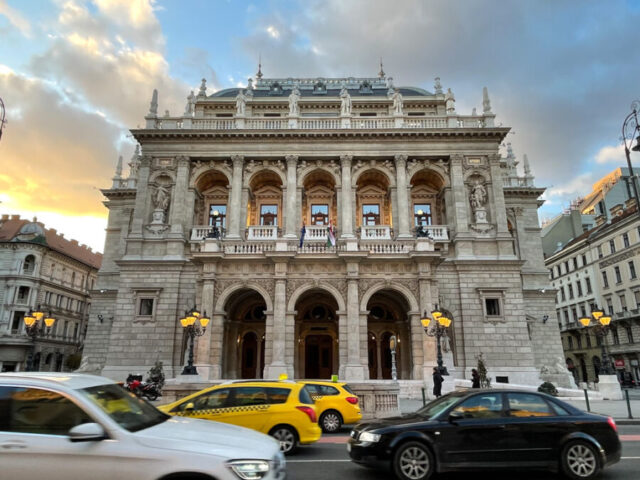
Stepping out of my hotel, I congratulate myself for having chosen this place — tucked around the side of Hungary’s achingly beautiful Opera House. I circle around to the front of the ludicrously opulent building. Wispy clouds float overhead, illuminated by the setting sun, creating an impossibly romantic European scene. And I think: I’m in one of the greatest, grandest cities in Europe — and I get to spend the next week here. Lucky me!

That’s when it hits me — that “Hey, I’m in Europe!” moment that I wait for at the start of each trip. It’s that moment when you realize all that you’ve just endured has been worth it.

In fact, let’s grab the reins here: You haven’t “endured” anything at all…you’ve been mildly uncomfortable for a few hours, maybe a little too tired. But isn’t that worth it, for the incredible privilege of living at a moment in history when you can seal yourself into a little metal tube, watch a few movies, eat some mediocre food, doze off if you can…and step off in an entirely different world?

And this is also the moment that you realize: You are not, in fact, getting too old for this.

Maybe someday.

 But not yet.


I’ll be weathering this misery again soon, as I hit the road soon for more guidebook updates — this year, in Germany, Greece, the Austrian and Italian Alps, Slovenia, Croatia, and Bosnia. If you’d like to come along on my summer travels, follow me on Facebook and on Instagram.

And if you’d enjoy this kind of travel writing, be sure to check out my travel memoir, The Temporary European.

Where Do You Find the “Wow” in Your Travels?

Every trip has those “Wow Moments”: vivid, transformative experiences that you carry with you the rest of your life. Those gauzy memories are the best kind of souvenir; they sustain you through hard times, they put you back in a happy place when you most need one, and they tide you over to the next trip.

I’ve been thinking recently about how, exactly, we create — or find — those “Wow Moments” in our travels. Often, they come at the most unexpected moments, in places and situations you’d never imagine.

During the pandemic — with two full years of no travel — we all had plenty of time to think back on our favorite memories. One thing that struck me was this: When I’m on the road, I spend a significant percentage of my time going to museums, cathedrals, castles, and other big-name sights. But when I was stuck at home, absolutely none of those experiences were the ones that I found myself missing and reliving. Instead, it was the quiet moments in between the “tentpoles” of my itinerary.

Not that museums don’t have an important place on an itinerary. Now that I’m back traveling again, I’m finding that I enjoy those big sights with a renewed appreciation. There’s something magic about standing so close to a painting that you can see the brushstrokes and smell the lacquer…a feeling that you’re in close physical proximity to greatness.

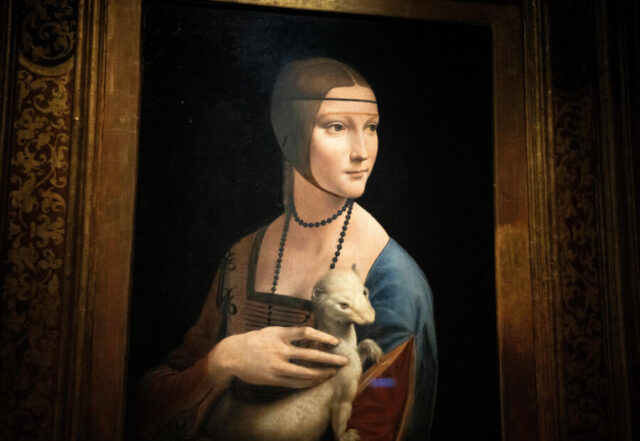
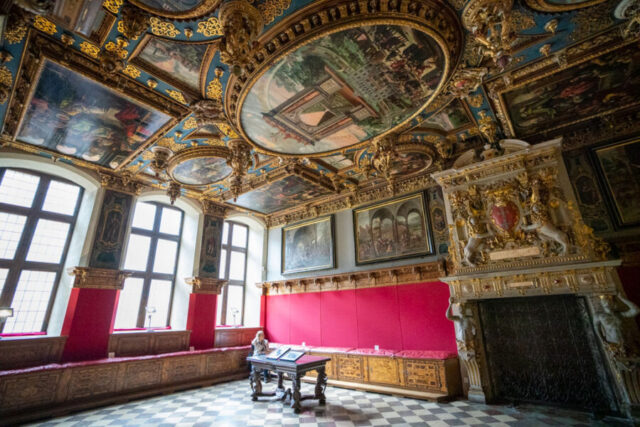
 On a recent trip to Poland, some of my favorite sightseeing experiences were standing in a darkened (and empty) room in front of Leonardo da Vinci’s Lady with an Ermine; touring the new Stanisław Wyspiański Museum and getting up very, very close to the Art Nouveau master’s pastels of his family; picking out details on the movie-screen-sized canvases of the great historical painter Jan Matejko; and admiring the ornately detailed, gilded reliefs decorating the Main Town Hall in Gdańsk.

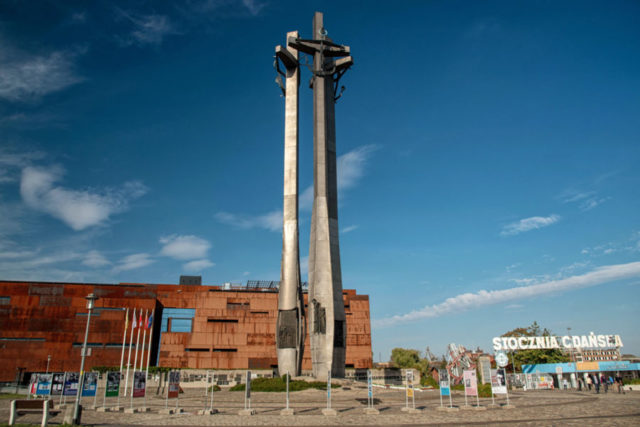
And history museums, when done well, are all the more powerful because you’re in an actual location of historical consequence; certain places feel charged with that momentous energy. There are many ways to learn about the story of Lech Wałęsa, the 1980 shipyard strikes in Gdańsk, the creation of Solidarity, and the gradual dismantling of Polish communism. But it’s deeply moving to learn that story at the European Solidarity Center, standing amidst the very shipyards that hosted that first strike.

And there’s no doubt that some famous “sights” are wipe-a-tear beautiful. On my first visit to Barcelona in the 1990s, Gaudí’s masterpiece church, the Sagrada Família, was a construction zone of giant cranes surrounding a few partial towers and big stacks of building blocks — as if some gigantic toddler had gotten bored with his little project halfway through. On a visit two decades later, it was stunning to step inside what had, in the interim, become a complete church. (And they’re still working!)

So, certainly, “sightseeing” can have a powerful place in creating vivid memories. But, if we’re being honest, are those usually the very best memories — those transformative “Wow Moments”?

Maybe I’m an oddball. But for me, the big attractions are mostly “honorable mentions” when I mentally recap a trip’s Wow Moments. In my recent travels, here are some of the memories that stick with me:

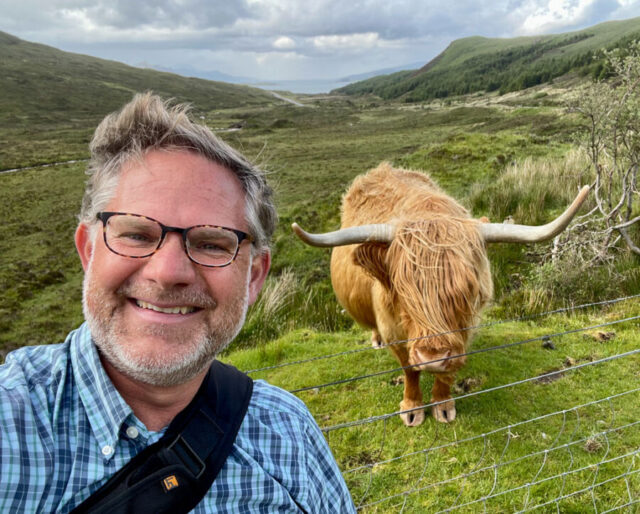
Last summer in Scotland, I enjoyed the mighty castles and the famous lochs. But my most cherished memories are the time I pulled over to get a close look at a herd of shaggy Highland cattle (“hairy coos”) by the roadside…the time I followed the Water of Leith through beautiful parks and quirky neighborhoods of Edinburgh…the time I dropped in on a music pub in Inverness and watched an increasingly red-faced young musician fiddle and stomp his feet simultaneously.

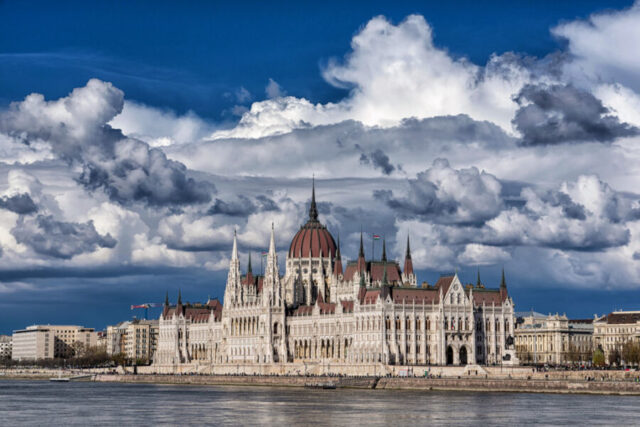
On last month’s visit to Budapest, I went to every last one of the big sights…and I enjoyed them. But now that I’m home, I barely remember them. Instead, etched into my mind was the afternoon I strolled along the Buda embankment just as giant, black clouds gathered above the Hungarian Parliament — creating a stunning image moments before the skies opened up above my head.

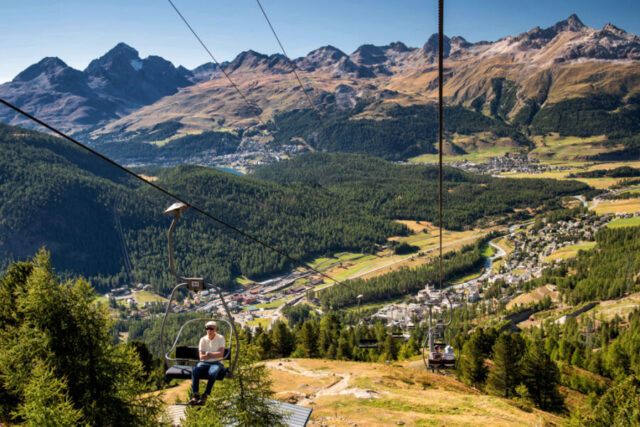
In the Swiss Alps last summer, I must admit, having a sunny day to ride the lifts around the Matterhorn was an utter delight. But in a way, I think I actually preferred the low-impact, nearly crowd-free day I enjoyed exploring the Upper Engadine region…with a rustic beauty and a distinct alpine culture all its own. Sailing up a chairlift with this view, I forgot all about the Matterhorn.

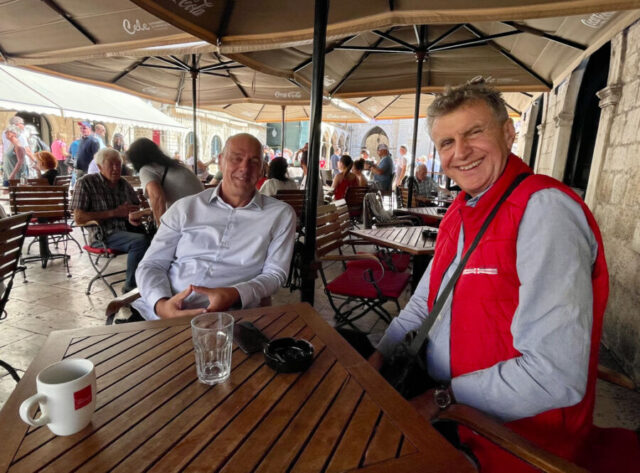
In Dubrovnik last fall, I walked around the top of the City Walls and rode the cable car up to Mount Srđ for a stunning view over the coastline. But my favorite moment, which happened to be on my birthday, was when I sat with local friends at an al fresco table, sipping bela kavas, catching up on each other’s lives, sharing snippets of wisdom, and watching tourists and cruise passengers wander past on the main drag.

I made it to several spots in Italy last year, including Rome, Siena, and Florence, and everywhere I went, I toured all the big-name sights. But those barely made a dent in my memories. Instead, what stands out was joyriding around the bucolic vineyards of Piedmont with my wife, basically killing time with grand scenery between memorable meals.

Again, maybe I’m not a “typical” traveler in finding such great joy and beauty in such small moments. But as you gear up for 2023 travels, maybe this is a good time to pause, take a deep breath, and prime yourself to be open to these Wow Moments wherever they occur.

This is especially important for 2023, because we’re already getting reports from our European friends that things are extraordinarily crowded this year. It’s becoming difficult to get entry tickets for some of the most famous sights (book ahead!) — and, once inside, those sights are so crowded that it’s challenging to fully enjoy them.

So consider this approach: Sure, tick off a few “bucket list” sights. But be flexible in your insistence to check every single box. You can spend a week in London or Paris or Rome, zooming around the city to hit as many biggies as possible. But, in retrospect, you’ll probably look back most fondly on some of the little serendipities that happened in between.

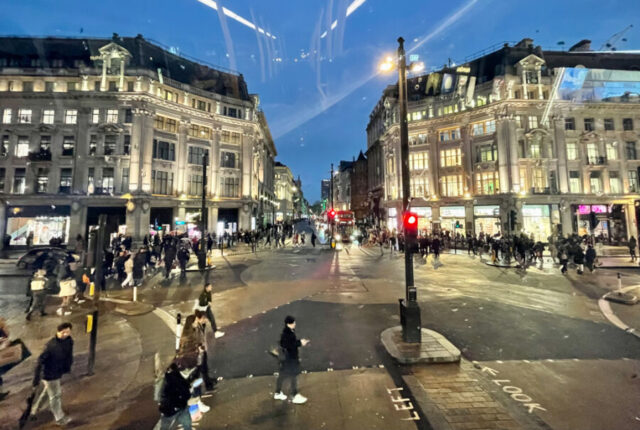
On a trip to London last year, I had a great time touring all of those world-class museums, sure. But what I really remember was that time I scored a front-row seat, upstairs on a double-decker bus, and felt like I was flying over those congested city streets for a few minutes.

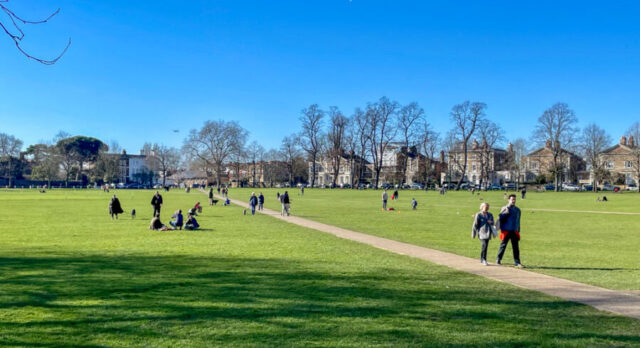
Or the time I rode the Tube out to Richmond (of Ted Lasso fame) and simply sat on a bench on the village green…watching dogs chasing tennis balls in the sun.

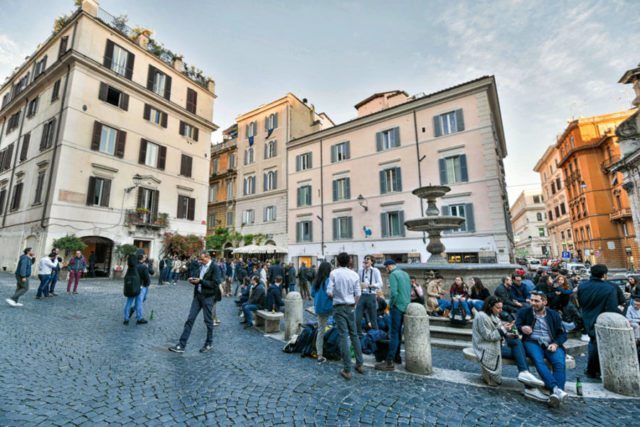
In Rome, head to the little square in the heart of the Monti neighborhood, grab a slice of takeaway pizza, and eat it leaning against the fountain — a magnet for Romans winding down after work.

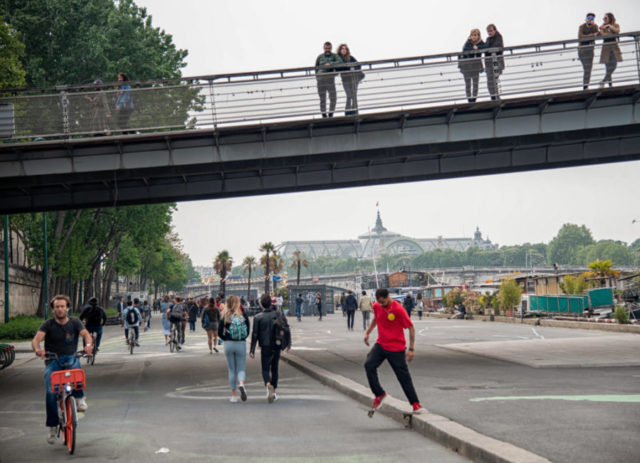
In Paris, spend a sunny Sunday strolling along the traffic-free Seine embankments. Wander slowly across the Pont des Arts, looking for actual artists.

I realize this is a hard sell. But as the “difficulty level” of touring the big sights increases, there’s no better time to shift focus to those smaller moments. Instead of swimming against the current, consider finding a peaceful eddy, tucked away from the crowds, to simply experience Europe. Find your own bliss.

What are some of your favorite “Wow Moments” — whether at big sights, or off the beaten path?


I’ve already been to Europe and back this spring, updating our Rick Steves guidebooks in Hungary and Poland. In the coming months, I’ll be heading to Ireland, Iceland, and Norway, too. If you’d like to virtually hop in my rucksack and travel along with me, be sure to follow me on Facebook and on Instagram.

And if you’d like to read more about my philosophy of slowing down and listening to the church bells, check out my travel memoir, The Temporary European. Written during those long, drab pandemic months, it’s a love letter to exactly the kinds of Wow Moments I’m describing here.