My co-author and frequent collaborator, Cameron Hewitt, is well-traveled, smart, and insightful. And, while he and I are in perfect sync in our travel styles and priorities, he gives voice to the next generation of "Rick Steves travelers." Join me in enjoying his reports right here. —Rick

Settling in at the Agriturismo: Cretaiole’s Cast of Characters

In 15 years of researching guidebooks for Rick Steves, I’ve checked out hundreds — or probably thousands — of accommodations. But I’ve never seen one quite like Agriturismo Cretaiole. A place has to be pretty special for me to suggest bringing my in-laws there for Thanksgiving week. And Cretaiole exceeded even our lofty expectations.

cameron-italy-tuscany-cretaiole-054

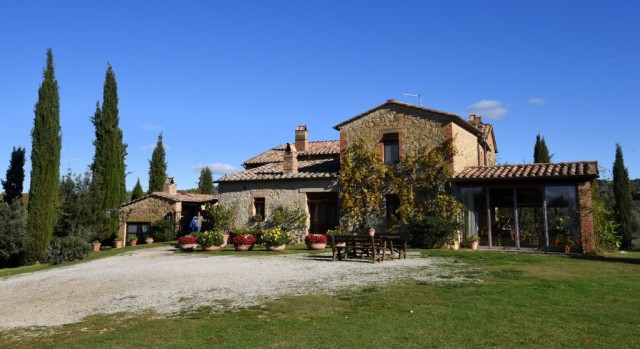
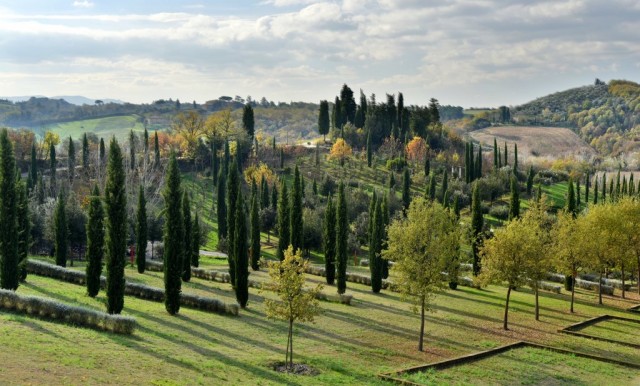
This stone farmhouse sits like a mirage, poking up from an olive grove at the top of a ridge that overlooks the gently rolling, cypress-fringed hills just outside of Pienza. Yes, the setting is idyllic. But what really sets Cretaiole apart are the remarkable people who run it.

Two decades ago, Isabella was an upwardly mobile city slicker from Milan — just getting into her career, and already feeling burned out. During a break one winter, she escaped the rat race for a week, checking in to a rustic farmhouse B&B in the remote Tuscan hills. That’s where she met the farmer’s son, Carlo.

Isabella and Carlo fell in love. And, after a long-distance romance, they finally got hitched…and Isabella moved down to the farm. In a kind of contemporary Italian Green Acres, Isabella and the Moricciani clan clashed a bit as she found her niche in this traditional world. But it rapidly became clear: This city mouse/country mouse combination was perfect for the Italian concept of agriturismo.
cameron-italy-tuscany-cretaiole-008

In 1985, the Italian government began providing tax breaks for struggling family farms that opened their doors to travelers. To legally qualify as an agriturismo, a place must balance its tourist activities with actual farm production. (Many Americans love the idea of an agriturismo — but when they’re plunged into all of those authentic farm smells, they realize what they really wanted was a rustic country inn.)

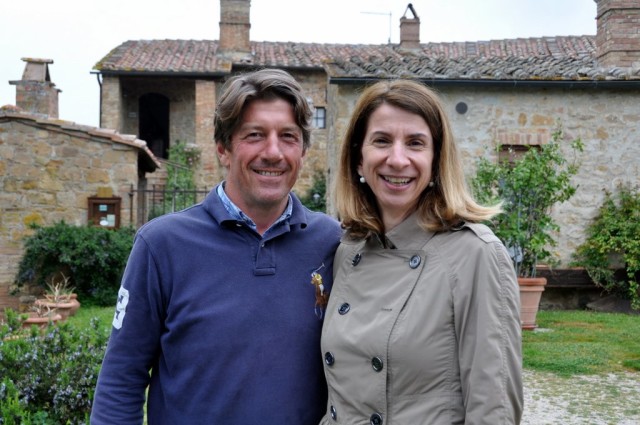
An ideal agriturismo, Cretaiole represents the perfect marriage of a real, hardworking farm and an accessible, well-designed travel experience. Carlo and his dad, Luciano, produce olive oil, wine, cured meats, eggs, produce, and more. Meanwhile, Isabella handles the turismo end of things, applying business savvy, a remarkable attention to detail, and a rare intuition for what her guests want before they know they want it.

The rural setting and traditional-yet-cozy lodgings at Cretaiole are a find. But Isabella also orchestrates an array of special activities that provide precisely the experience her guests are seeking — always hitting the perfect balance of rustic authenticity and comfort. (Our truffle hunt was one great example.)
cameron-italy-tuscany-cretiaole-isabella-carlo

Isabella embodies a bridge between her guests and her in-laws’ farms. As a relative outsider herself, she observes the same little quirks that fascinate the rest of us — and demystifies them for her guests.

Carlo is a farm boy. But, as evidence by his marriage to a brilliant businesswoman, he’s also smart and cultured. He can get dirty mucking around with the pigs, but he’s also a licensed olive oil taster — with a palate so refined, he has the papers to prove it. Still, Carlo is more at home on a tractor or trekking through the fields than in front of a group of Americans. (During our first morning’s orientation meeting, Carlo fidgeted and glanced nervously at the encroaching clouds. Finally he asked Isabella if he could be excused to go on his morning constitutional.)
cameron-italy-tuscany-cretaiole-046

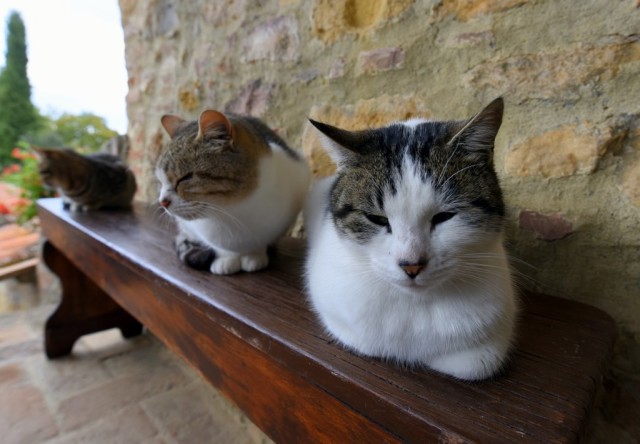
Tickled by the chorus line of cats that showed up at our doorstep each morning to beg for burned toast, I asked Carlo what their names were. “They don’t have names,” he said, slightly perplexed. “They’re farm animals.” Watching Carlo affectionately play with the feline companions he refuses to christen, I came a little closer to understanding what it really means to be a farmer.
cameron-italy-tuscany-cretaiole-065

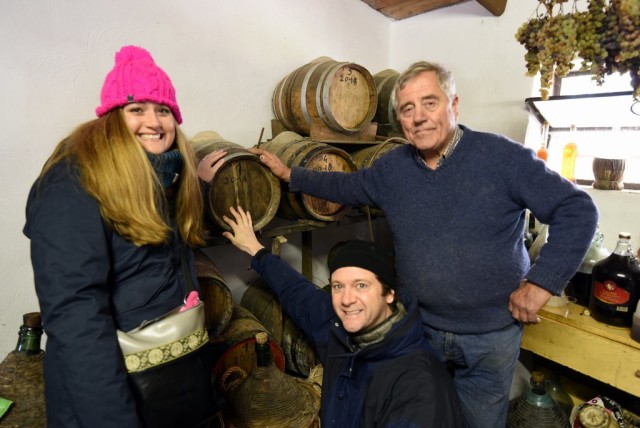
Luciano is the paterfamilias, who still thinks he runs the show even as he surrounds himself with strong women. He’s careful to project the image of a grizzled curmudgeon. But deep down, he’s touched by the fact that people come from all around the world to settle in for a week at the farmhouse where he grew up. When we toured his farm, he insisted on posing for pictures with his guests in front of the casks where he ages his prized Vin Santo.

Liliana, Luciano’s wife, is rarely seen and never heard. While the rest of the clan attends to business, she looks after the kids and keeps the home fires burning. As Isabella puts it, Liliana is the glue that holds the whole operation together.
cameron-italy-tuscany-cretaiole-034

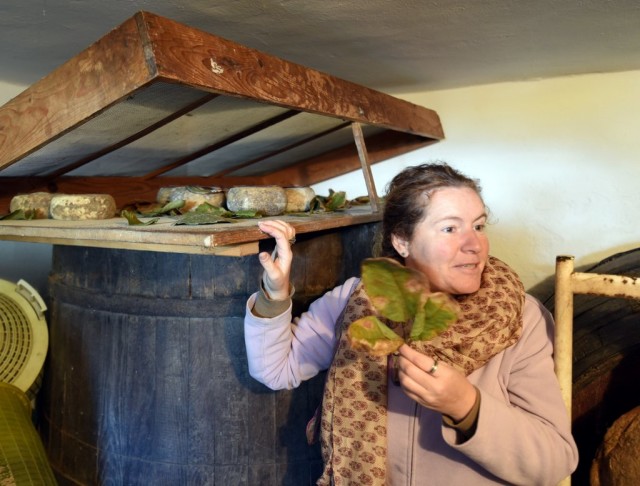
Carlotta, Isabella’s right hand, is the newest member of the bunch. But she instantly fit right in. She heroically translates for other family members, tirelessly answers questions, and decodes local customs for her curious guests. (Here, she explains that the local pecorino cheese is set on walnut leaves to age.)  Carlotta may not be related…but there’s no doubt she’s family.

And rounding out the cast of characters are the guests — many of whom are on their second, third, or sixth visit. Cretaiole, which usually requires a one-week minimum stay, attracts a rare breed of traveler who understands that slowing down can create the best kind of travel experience. In a week in Italy, you can get fleeting glimpses of Venice, Florence, and Rome. Or you can settle into an agriturismo for a week — waking up each day to a stunning view that changes with the weather, really getting to know a place and the people (and cats) who live there, and feeling so deeply rooted in the Tuscan soil that the 45-minute drive to Siena feels like a big adventure. There’s no doubt that our fellow guests made our Thanksgiving week experience even more memorable.
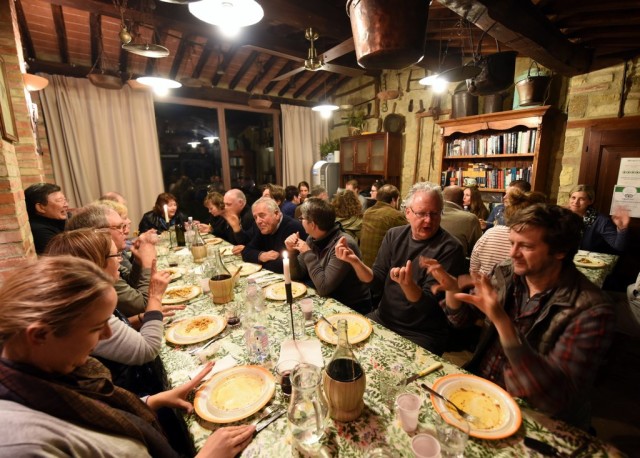
cameron-italy-tuscany-cooking-class-cretaiole-058

If people-to-people connections are the stuff of great travels, then Cretaiole is an embarrassment of riches.
Sniffing Out Truffles with Milli

On a crisp, late-November morning, we gather on a ridge-top gravel road deep in the heart of Tuscany. On one side stretches a postcard panorama of rolling hills, pointy cypresses, and distant ridges. On the other is a thick forest, labeled with Italian signs:  “Keep out! Private truffle-hunting property!”

cameron-italy-tuscany-Truffles-051

We meet our guide for the morning: Paolo the truffle hunter. Paolo explains how he bought this property for a song because he had a hunch it’d be great for truffles. Now his main occupation is tending the forest and seeking out those elusive deposits.

Paolo explains that you can’t plant a truffle, and you can’t predict exactly where they’ll grow. They tend to appear near the roots of trees, under a few inches of soil and a gentle layer of fallen leaves. He works hard clearing the forest, creating an ideal habitat. Then he grinds up the season’s unsold truffles and scatters their spores. And then he waits…and hopes. White truffle season — when the pungent odor of the most precious type of truffle is released — has just begun. It’s time to harvest.

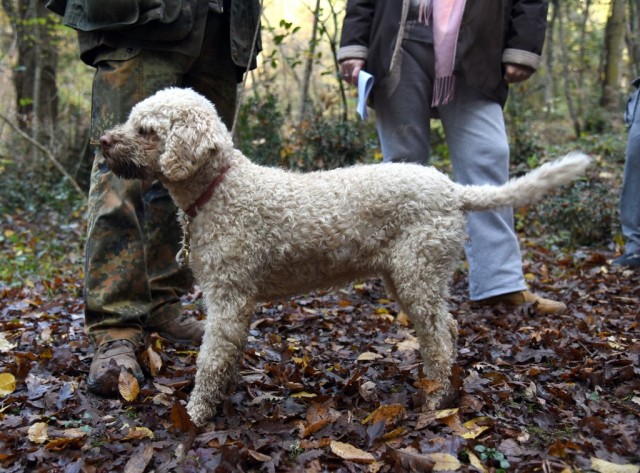
Because truffles grow entirely underground, the only way to find them is by scent. And human noses just aren’t sophisticated enough for the job. So Paolo introduces us to “la protagonista”: Milli.

cameron-italy-tuscany-Truffles-012

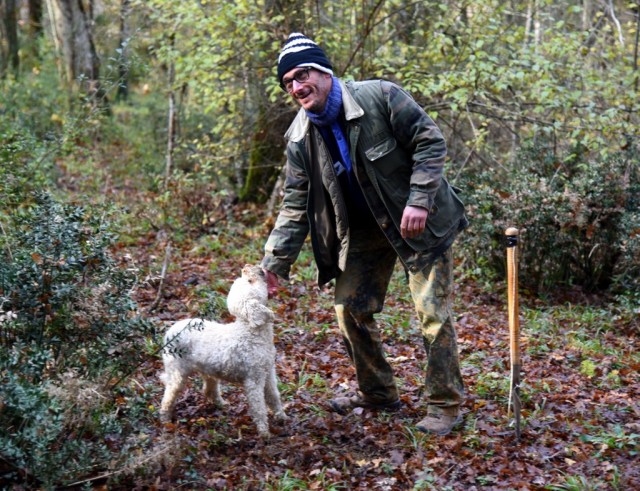
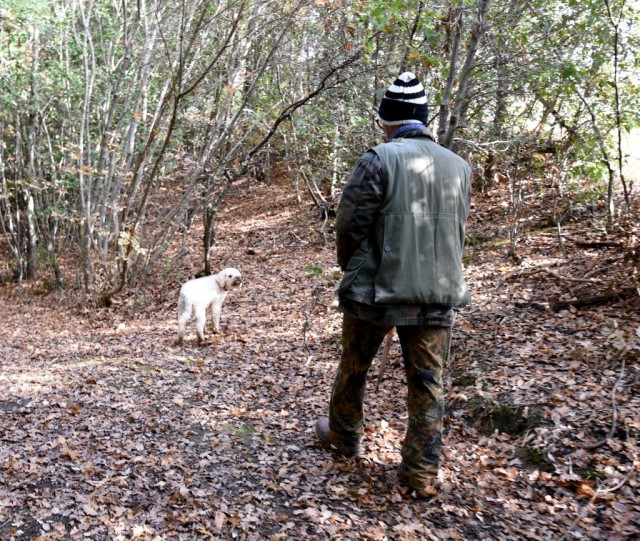
Milli is a lovable, exuberant pup with a short, thick, curly coat and laser-beam, beady eyes that are always trained on Paolo. He tells us she’s a breed called lagotto romagnolo…but she looks like a miniature golden doodle to me.

When Milli was just ten days old, they began training her to find truffles. The first part is easy: You give them a taste for truffles by feeding them little bits. Before long, they can sniff them out anywhere. The hard part, Paolo explains, is to train them to stop eating truffles.

Andiamo! It’s time to hunt. Paolo and Milli lead us down a steep trail into a wooded ravine. Light twinkles through half-bare trees as we wade through a thick carpet of leaves. “What goes up, must come down,” everyone chuckles as we descend. At one point, Milli pauses and begins rummaging and scratching around in the middle of the path. Paolo diffuses everyone’s excitement by explaining that she’s found a “dog truffle” — with a similar pungent odor, but not palatable to humans. Milli enjoys this little truffle treat before continuing on her way.

Reaching the bottom of the ravine, Paolo says the magic word: “Dov’è?” (Where is it?)… and Milli is off like a shot. She scurries from tree to tree — sniffing, sniffing, sniffing — then off to the next tree. The suspense builds as twenty bundled-up Americans form a chain behind her haphazard search.

cameron-italy-tuscany-Truffles-019

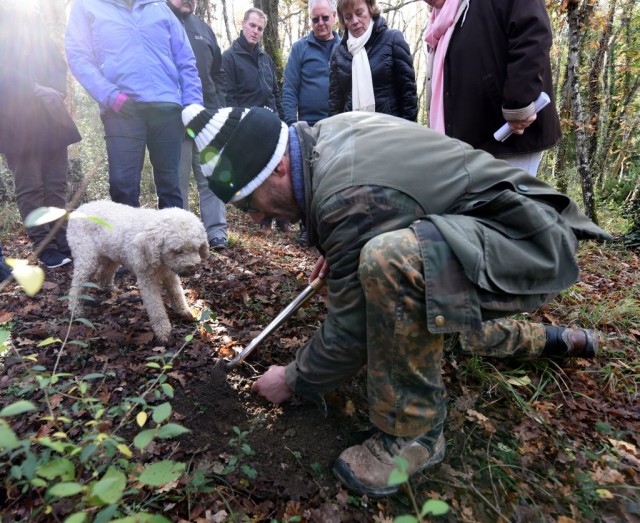
Milli bolts off, racing through the woods after unseen truffles. Paolo runs after her. We lose sight of both of them. And then: Success! We emerge into a little clearing where Paolo stands, holding Milli back. She’s clawed through the damp earth to reveal the corner of a little gray chunk.

cameron-italy-tuscany-Truffles-033

Keeping one hand on Milli, Paolo uses his special skinny shovel to unearth the truffle with a surgeon’s precision.

cameron-italy-tuscany-Truffles-030

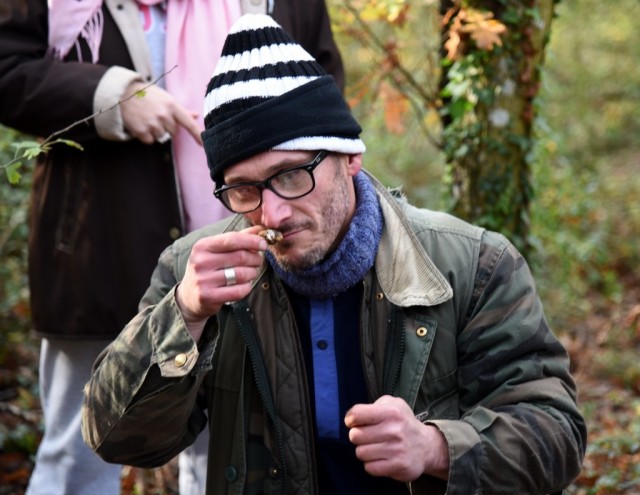
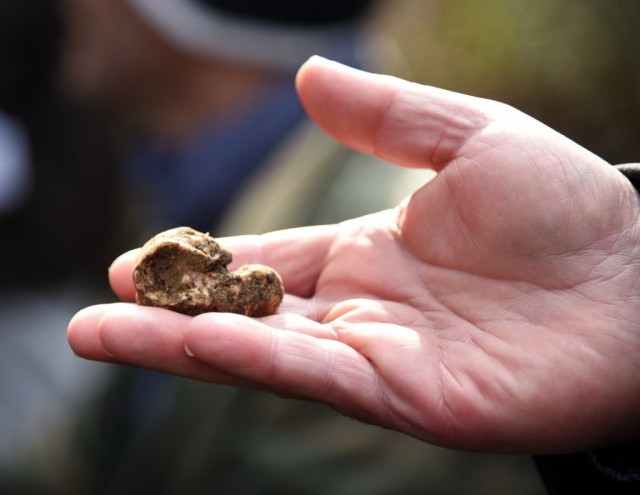
Holding it to his nose and inhaling deeply, he gives a “so-so” gesture. It’s not a top-quality truffle…but it’ll be profitable.

cameron-italy-tuscany-truffles-milli

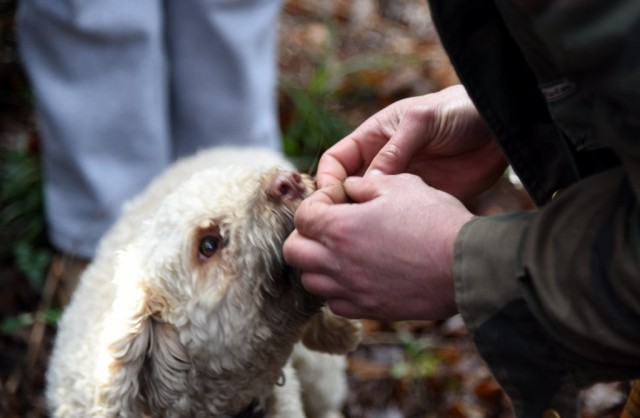
While his audience passes around the truffle for a sniff, Paolo rewards Milli with dog biscuit after dog biscuit. He keeps saying, “Solo un’altro” (just one more) — then gives her several more treats. Could you resist?

cameron-italy-tuscany-truffles-truffle

After just an hour or so, Milli has found two more truffles. Not a bad morning’s work.

Watching Paolo and Milli at work, it’s clear that if you enjoy wandering through the woods with your best friend at your side, there are few more rewarding careers than being a Tuscan truffle hunter.

cameron-italy-tuscany-Truffles-042

A Tuscan Thanksgiving

Sorry I’ve been silent on my blog these last couple of weeks. I have a good excuse: Like a lot of people, I was celebrating Thanksgiving with family. But this year, for a change of pace, we gave our thanks at a Tuscan farmhouse.

My wife and I grew up in Central Ohio. Today her family is scattered across the country: We live in Seattle, her folks are in Ohio, and her sister and her husband are in Boston. (If you consider the Great Lakes a coast, you could call our family “tricoastal.”)

We all look forward to the holidays as an excuse to head back home, share some family time, and reconnect with our hometown and old friends. But this year, we wanted to go someplace else. Where could we meet in the middle? Arizona, maybe? Snowshoeing in the Rockies? A Very Vegas Thanksgiving?

Just as we were deliberating, my inbox dinged with an email from Isabella, who runs my favorite agriturismo in Tuscany. “We have put together a spectacular Thanksgiving Week with wonderful activities to enjoy,” she wrote. I skimmed the list: wine-tasting, farm tour, truffle hunt, olive harvest, pasta-making class, day trip to Siena…wow.

cameron-italy-tuscany-cooking-class-il-silene-022

The email went on: “Late fall is a beautiful time to come to Tuscany — particularly for food! It is the time of special seasonal delicacies such as white truffles, saffron, chestnuts, and new olive oil. Days are comfortable, evenings are cool and crisp — perfect for enjoying the pleasures of the season such as thermal hot spring soaks in nature, colorful foliage, and a fire in your fireplace or in the new fire pit in the garden.”

I was sold. And, after a remarkably brief email exchange with our family, we were all in for a Tuscan Thanksgiving.

I realize another big holiday is looming, and Thanksgiving feels like old news. But join me the next several days for reports on our Tuscan Thanksgiving. What are the pros and cons of winter travel in Italy? What’s it like to spend a major holiday abroad…and what do you to on Black Friday in a place where it’s just another Friday? What’s the proper way to hand-make ravioli or tagliatelle? And how do dogs sniff out those white truffles, anyway?

Andiamo! Let’s head to Tuscany.

cameron-italy-tuscany-Scenery-017

(P.S. If you’ve been enjoying my Balkan reports, no worries — I still plan to blog about my fall travels to Slovenia, Romania, and Bulgaria in the New Year.)

Zagreb for Tourists: The New Changing of the Guard, a Museum of Breakups, Naive Artists, and a Somber Stone Gate

Zagreb is a great city to live, work, or just hang out. But — well aware that they face some serious competition along the Dalmatian Coast — Zagreb’s tourist board is also working hard to please travelers. The city has one of the best-organized tourist information offices in Europe, and many new walking, bike, bus, Segway, and ghost tours are popping up each year.

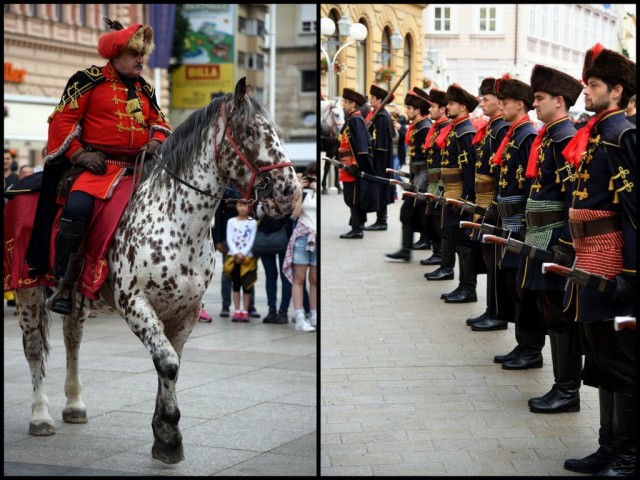
Cameron-Croatia-Zagreb-COTG Collage

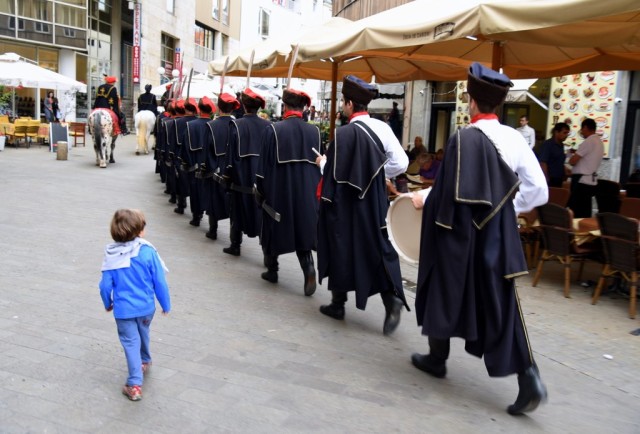
A couple of years ago, for the first time ever, Zagreb created a Changing of the Guard ceremony on weekends. It’s designed to maximize photo ops, strategically passing by all of the big sights.

Cameron-Croatia-Zagreb-Changing Guard Kid

This cute kid got caught up in the Changing of the Guard excitement, stomping his way through the streets alongside the big boys.

Cameron-Croatia-Zagreb-St Marks Church 1

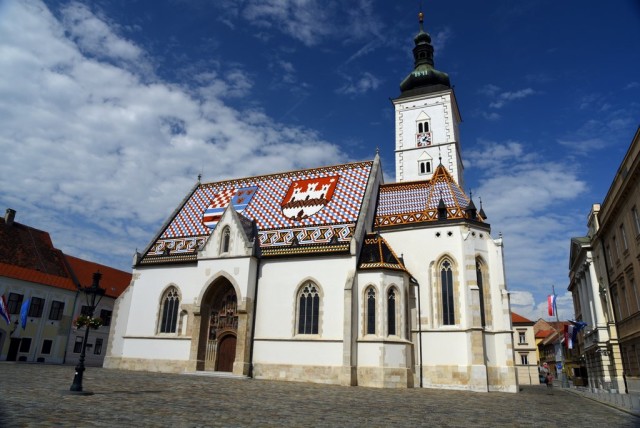
Most of Zagreb’s top tourist attractions are conveniently clustered in a tiny area at the top of its original hill town. This area is anchored by the gorgeous mosaic roof of St. Mark’s Church, which is flanked by the Parliament and the offices of the Croatian President. Just a few steps away are the city’s top museums — and my two favorite museums in all of Croatia.

Kovacic

Rabuzin

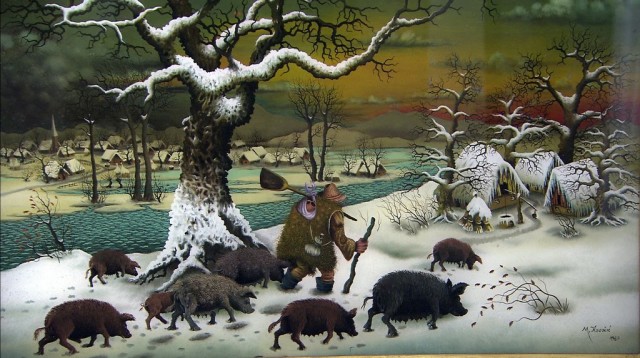
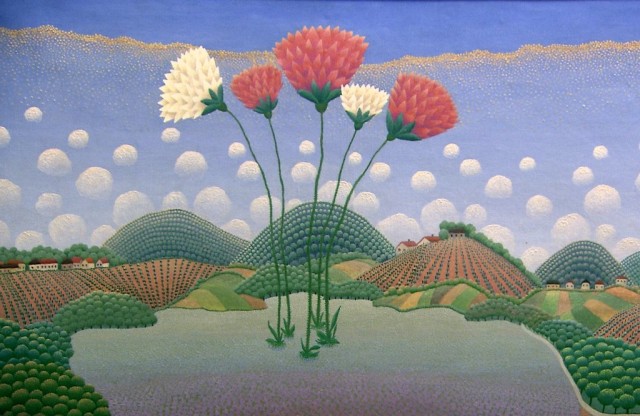
The Croatian Museum of Naive Art celebrates untrained peasant artists of the early 20th century. During this era, art world insiders began to seek out talented outsiders who produced great art. It was part of a broader movement designed to demonstrate that artistic talent was inborn, rather than taught. (This coincided with Picasso’s fascination with African masks, Gaugin’s trip to Tahiti, Béla Bartok’s codification of folk music from the Transylvanian countryside, the Art Brut movement, Grandma Moses, and the elevation of children artists.) I love the Naive Art Museum because it’s one of those places displaying artists — and an entire movement — that most visitors have never heard of. But it grabs you immediately, pulls you in, and wins you over. You’ll leave wondering why you didn’t learn about Ivan Generalić in your college art seminar.

CH11OctZagreb_018.JPG

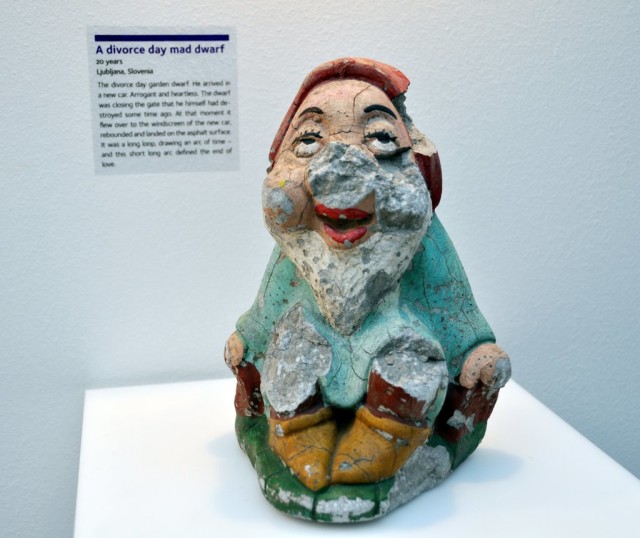
Breakups are ugly. But the Museum of Broken Relationships is a total delight. Opened in 2010 by a couple who had recently split up, this clever museum collects true stories of failed couples from around the world. They provide a succinct, one-sided explanation of what went wrong, which accompanies an item that embodies the relationship: discarded wedding albums, sex toys with stories about unreasonable requests for kinky acts, children’s playthings representing the innocence of young love (and, perhaps, the universality of stuffed animals), and plenty of items broken with vengeful wrath. To me, the Museum of Broken Relationships captures the wry, urbane, and artistic sensibilities of the Croatian capital.

Cameron-Croatia-Zagreb-Stone Gate 1

Cameron-Croatia-Zagreb-Stone Gate 2

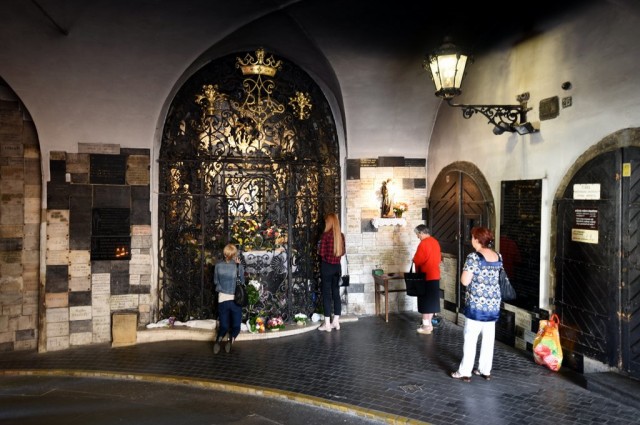
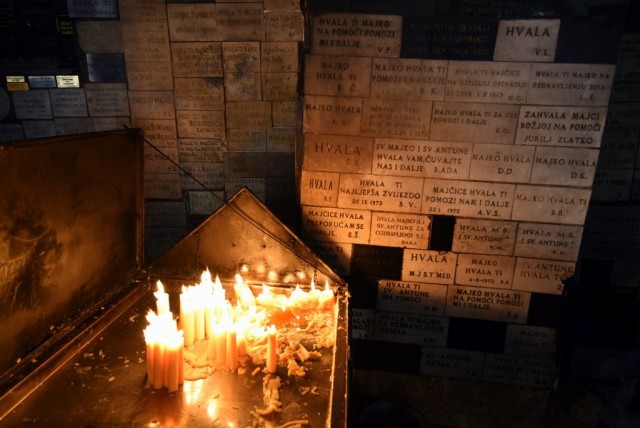
One of the most touching scenes in Zagreb is the Stone Gate, which hides just a few steps below St. Mark’s along a covered passageway between the city’s two old towns. Inside, the chapel’s focal point is a painting of Mary that miraculously survived a major fire in 1731. Zagrebians often pause to light a candle and stay a prayer here, oblivious to the tourists and commuters wandering through. The twinkling candlelight illuminates many plaques with a simple message: Hvala…thank you.

Zagreb: Croatia’s Continental Palate-Cleanser

I love Zagreb. Most people couldn’t imagine loving Croatia’s landlocked capital…or even going there. But trust me: It’s a great city.

On my first trip to Zagreb, I wasn’t sure what to expect…but it certainly wasn’t much. Let’s face it: Even just the name of the city sounds like a wet Slavic belch. But when I first got to know Zagreb, my low expectations were wildly exceeded. “Hey,” I thought. “This is a really cool place!”

Then I brought Rick Steves here. It took some convincing. But as he strolled through the town, gradually succumbing to its charms, he said to me, “Hey, this is a really cool place!”

A couple of years later, Rick and I came back with a film crew to shoot a travel show on Zagreb. Simon, our producer, and Karel, our cameraman, warmed up to the city immediately. They both turned to me and said, “Hey, this is a really cool place!”

Then, just a couple of years ago, I brought my wife here. And you’ll never guess what she said to me…

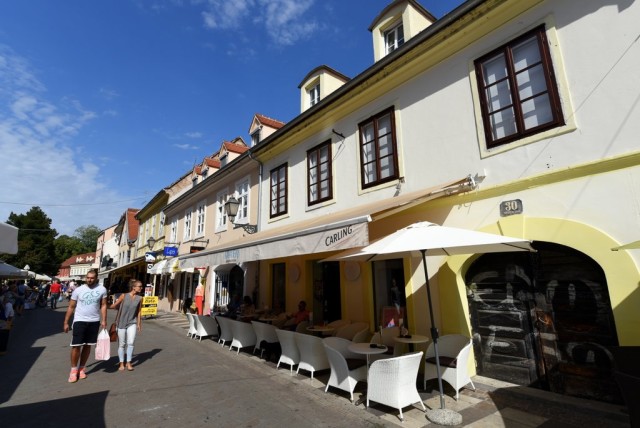
You get the idea. Zagreb is a delight. One out of every six Croatians lives in this hive of commerce, which is closer to Slovenia and Hungary than it is to any beach. As a onetime leading city of the Habsburg Empire, it has a “little Vienna” vibe to it — with Old World elegance, classy Baroque flourishes, and a certain tidiness. Some of its historic streets, like the tongue-twisting café drag Tkalčićeva, have an almost Prague-like charm.

Cameron-Croatia-Zagreb-Tkalci

From a traveler’s perspective, Zagreb also benefits from a contrast effect. Most people visiting Croatia focus on the coast — which, don’t get me wrong, is glorious. But after several days of island-hopping, choosing from the same seafood-and-pizza menu every day, and stubbing your toes on underwater rocks and sea urchins, urbane Zagreb is just the place to recover from your sunburn. In this country so focused on its coastal destinations, Zagreb is a continental palate-cleanser.

Zagreb has always had nice bones. But it’s been a thrill to observe the city fleshing out those bones over the last several years. Today’s Zagreb is flourishing, with an exciting new bustle and vitality: Great restaurants, from artisanal bakeries to foodie splurges. Slick design stores and fashion boutiques that meld Croatian tradition with contemporary style. More great museums than the rest of Croatia combined. And non-stop festivals that enliven the summer.

Cameron-Croatia-Zagreb-Park

Zagreb is a city of magnificent parks. The old town is ringed by forested hills and ravines. And zigzagging through the urban core is a “Green Horseshoe” of thoughtfully manicured parklands, punctuated by genteel historic buildings. During my visit on a sunny September weekend, these parks, and the city’s squares, were packed with revelers…three separate outdoor festivals were going on at the same time.

CH09Spring_635.JPG

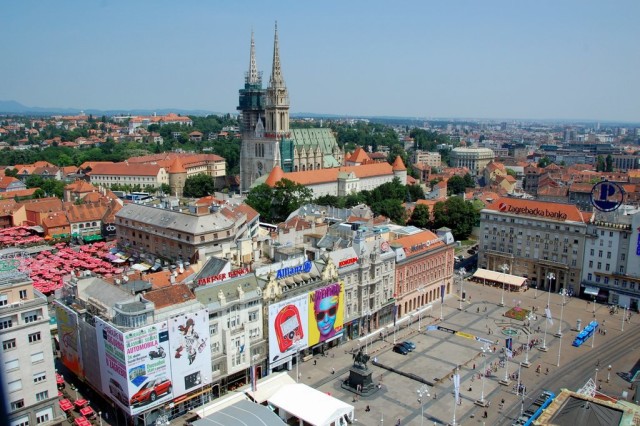
Jelačić Square — Zagreb’s main urban crossroads — is big, angular, and a little imposing. Giant billboards advertise Croatian brands you’ve never heard of, and trams zip through constantly.

Cameron-Croatia-Zagreb-Flowers

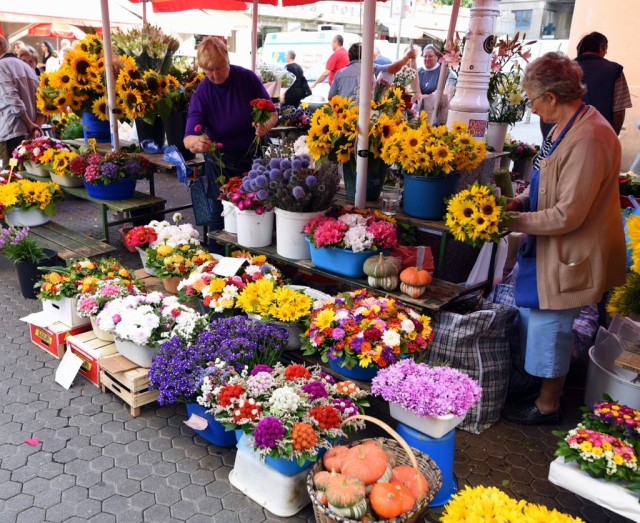
But even here, the hard edges are softened by local life. On weekends, one corner of Jelačić Square is filled with the stalls of a colorful flower market.

RS09Spring_533.JPG

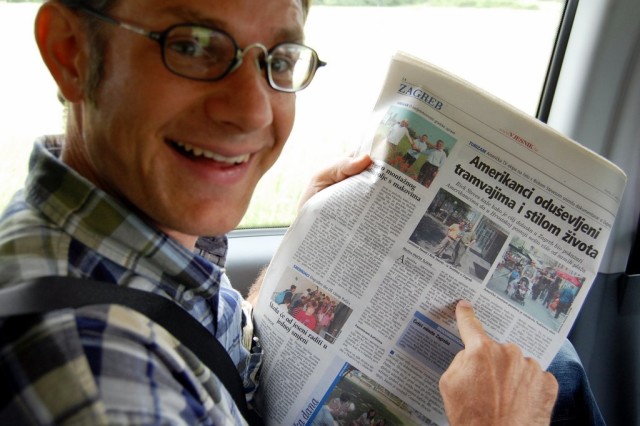
Being back on Jelačić Square, I remember when I was here with Rick in 2009, filming our TV show about Croatia. The tourist board asked us to take an interview with a local newspaper. Trying to convey his excitement about the general bustle and commercial metabolism of the city, Rick mentioned how he enjoyed seeing the trams come and go, with commuters piling on and off. When the paper came out, we bought a copy and got a kick out of seeing — but not reading — the article, which was in Croatian. Later, I showed it to a Croatian friend and asked for a summary. Skimming it, he said, “Hmmm…they say that Rick is really, really excited about the public transportation.”

Cameron-Croatia-Zagreb-Flags

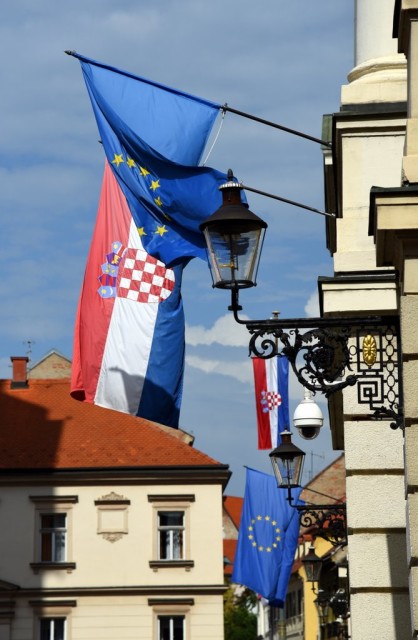
Croatia officially joined the European Union in 2013, and today, civic buildings fly both the red, white, and blue Croatian flag and the yellow stars on a blue field of the EU. Like any country that joins the EU, Croatians expressed a lot of angst leading up to membership. But it seems like most Croatians are already satisfied that, overall, it was the right choice. On the other hand, Croatia — and Zagreb in particular — is facing a trial by fire, as it’s become a highway for refugees from Syria (and other places) making the long journey to a better life in Austria or Germany. I actually met some of those refugees in the Zagreb train station, and later saw their abandoned tents at the border — a very powerful reminder of the human face behind the “refugee crisis.”

I’ll be sharing more photos and insights about Zagreb over the next few days. Stay tuned!