My co-author and frequent collaborator, Cameron Hewitt, is well-traveled, smart, and insightful. And, while he and I are in perfect sync in our travel styles and priorities, he gives voice to the next generation of "Rick Steves travelers." Join me in enjoying his reports right here. —Rick

D’oh! A Deer: Taking Two “Sound of Music” Tours Back-to-Back

Salzburg’s tour guides are understandably jaded.

“Understandably” to me, anyway, because I’m not really a fan either. I mean, like any red-blooded American, I grew up watching The Sound of Music — or bits and pieces of it — every Easter and Christmas on TV. Some of the songs are catchy. Pretty scenery, and all that. But I never loved it loved it.

The thing is, I only have to deal with the Von Trapp clan twice a year — and at that rate, they’re harmless and quaint. But if you’re a tour guide in Salzburg, you have no choice: The Sound of Music is your entire life.

Sound of Music tours are a huge business in Salzburg. I was told they attract 100,000 Von Trapp pilgrims annually. At around $50 a pop, that makes it cool $5 million-per-year industry. Our Rick Steves guidebook recommends two Salzburg-based Sound of Music tours: one with a big bus, and the other with a minibus. Both get an unusual number of reader complaints. To get to the bottom of things, I devoted a little Salzburg research time to trying each one — to re-evaluate them, to better explain them in the book, and (hopefully) to make sure our readers fully understand what they’re investing fifty bucks and a half-day in.

(You may be wondering why someone who isn’t a fan of the movie would be given this assignment. I would counter that someone who isn’t a fan of the movie may just be the perfect person for this assignment. My steely-eyed analysis isn’t clouded by gauzy memories of whiskers on kittens and schnitzel with noodles. And while we’re on the topic, nobody actually eats schnitzel with noodles. Too many carbs.)

And so, here I am, in a minibus with six North American SoM devotees — the only one not singing along to “Doe, a deer…” My travel companions for the day are two fiftysomething Canadian women whose husbands skipped out on the tour to visit Hitler’s Eagle’s Nest in Berchtesgaden (smart guys) and four American college students. It’s clear that the movie — 50-plus years young and still going strong — exerts a powerful, cross-generational appeal.

Everybody — young and old alike — knows every word to every song. They know when to sing “flibbertigibbet” and when to sing “will-o-the-wisp.” They’re full-on geeking out on each little morsel of information. And everybody “oohs!” and “aahs!” on cue when our guide shows us, for example, the trees where the kids were hanging from the branches in their curtain clothes, or whatever…I wasn’t really paying attention.

cameron-austria-trapp-mansion

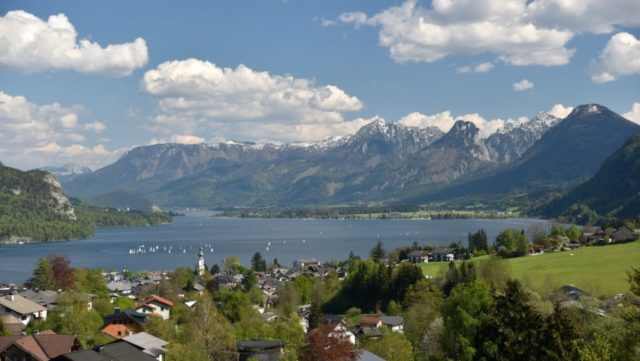
We pull up to a mansion on the shore of a beautiful alpine lake. This is not the actual Von Trapp family house. And it’s only one-third of the movie Von Trapp family house. (The back of the house, and the interior, were each filmed elsewhere.) But even so, people gobble up the stories of the youngest Von Trapp falling out the wrong side of the canoe and being rescued by Liesl.

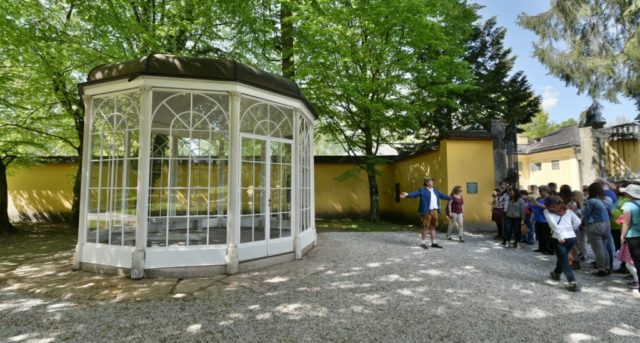
Our guide explains that The Gazebo (where Liesl hooks up with a teenaged Nazi) was built just for the movie, next to the mansion. But then, years later, cinephiles were still showing up in droves, making a racket, singing and waltzing and taking pictures. So they moved The Gazebo across the lake to a biergarten. But the same thing happened: Tourists would make a ruckus, disturbing the biergarten patrons.

Just to be entirely clear on this point: The Sound of Music fans were so rowdy, they were bothering a bunch of Austrian drunks chugging one-liter mugs of beer.

And so, The Gazebo is not anywhere near this lake anymore. They moved it several miles away, to Hellbrunn Palace, where they dumped it outside the wall near the parking lot, between the garbage cans and the toilets. And there, each day, a steady stream of tour buses pull up to let 50 people take turns photographing each other in front of The Gazebo, gazing wistfully into each other’s eyes. Then they use the toilets and get back on the bus. Very handy.
cameron-austria-SOM-gazebo

All of this fuss is about a movie prop from the 1950s. And it’s not even a pretty prop. In my hazy memory of the movie, I pictured some fanciful, lacy, wrought-iron objet d’art with leaded glass that twinkled in the moonlight. But no. In real life, it’s a boxy white frame with clear glass. I’ve seen nicer prefab ones at the Home Depot.

And what about The Meadow — the one where Julie Andrews spun herself silly? Like Hitler’s Bunker in Berlin, its real location is shrouded in mystery: Everyone claims to know where it is, but each one of them will take you to a different place. (Apparently, the actual The Meadow is on private property, and strictly off-limits to the curious public.) But it doesn’t really matter anyway. Guides told me that for their American visitors, any alpine meadow will do — so they just pull over wherever it’s handy. One of them told me, “Local farmers can’t figure out why all of these Americans are always spinning in their fields.”

Our guide, an elderly Austrian gentleman, has a real knack for doling out Julie Andrews trivia at the appropriate rate. (“Did you know that Audrey Hepburn also auditioned for the role of Maria?” he asks. “Yes, in fact, I did know that!” no fewer than three of my fellow SoM aficionados exclaim.)

But there’s a lack of mirth in our guide’s delivery. I don’t sense a deep-in-his-bones love affair with “The Lonely Goatherd.” He seems to get a minor kick out of the story of the Trapp Family Singers…but would he lie down in traffic for Christopher Plummer? As a SoM cynic myself, I can relate. When he asks if we have any questions, I can barely stop myself from asking, “So, how do you solve a problem like Maria?”
cameron-austria-SOM-tour

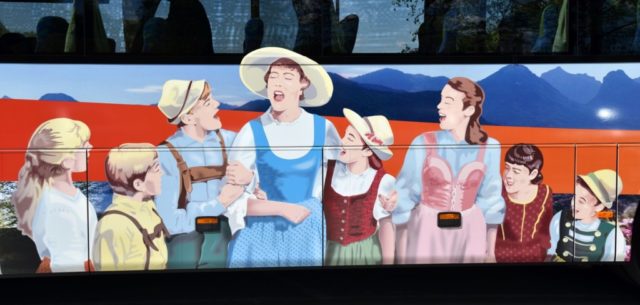
Day two. The big bus tour has a similar itinerary but more people. Lots and lots more people…49 SoM fanatics on a 50-seat bus. A sneezing Fräulein Maria on the side of the bus (Gesundheit!) seems to guarantee that this will be one heck of a fun day. And our lederhosen-clad guide — even more polished than the minibus guide — recites his tightly crafted spiel with the poise of a seasoned stand-up comic. I imagine he’s been regaling his audience with these same quips, puns, and factoids, twice a day, for many years. The bus offers a comfy ride and a higher vantage point. But loading and unloading at each stop is a chore. And, by the trip’s end, rather than feeling the warm camaraderie of the minibus, I feel a need to escape.
cameron-austria-wolfgangseeOV

All told, each type of tour has its pros and its cons, but both were perfectly fine. So what’s with all of the complaints? After taking both tours, I think I figured it out: The Austrian local guides never can, and never will, equal their customers’ intensity of affection for the movie.

The Sound of Music is an American phenomenon. Yes, the exteriors were filmed in Salzburg. (And after these tours, I’m wondering if there’s a square inch of this city that didn’t wind up somewhere in that movie.) But fundamentally, it’s an American movie, based on an American stage play, by American composers who wrote songs in English that have nothing to do with Austria’s musical tradition. Most Austrians haven’t even seen the movie; those who have, certainly weren’t reared on it. Mozart is in their bones. But Sound of Music is this weird thing that just happened to them.

And so, when our guidebook readers go on one of these tours, then write us a note complaining that the guide was gruff, or the tour felt rushed…I’m not saying these people are wrong to be disappointed. But it’s hard to blame the guide for maybe phoning it in, just a little bit.

OK, look at it this way: Imagine that some obscure-to-you movie was filmed in your hometown. Just for the sake of argument, let’s say it was the 1990 Tom Hanks comedy Joe Versus the Volcano. So, Joe Versus the Volcano was filmed in your hometown. That’s cool. But it’s been decades now, and you’ve moved on. Everybody in your hometown has gone on to bigger and better things. As it should be.

But here’s the thing: People keep showing up, having traveled at great distance and great expense to see everything in your town relating to Joe Versus the Volcano. They want to see the shop where Joe bought his four steamer trunks that he later lashed into a raft. They want all of the tinseltown tales about Meg Ryan’s artistic journey in playing three different roles. They are desperate to see the very pier from which Joe set off on his sailboat trip to Waponi Woo.

Now, these people are willing to pay you a lot of money. Like, every day, a dozen of them will hand you fifty bucks apiece to show them this stuff. There are many other things in your town that you are legitimately passionate about. But these people don’t want to see those things — and six hundred bucks ain’t bad for a half-day’s work, am I right? So you take them to see the vacant lot where Abe Vigoda and Lloyd Bridges had their trailers. Because you’ve got to give the people what they want. But — and this is a big but — that doesn’t mean that you actually enjoy it.

There’s more to Salzburg than just The Sound of Music. But you are really excited about The Sound of Music. And that’s great! Just be prepared for an enthusiasm gap between you and your guide. They’ll take you to the locations. They’ll tell you the stories. And they’ll play you the songs on the bus. And they’ll do it all with a smile (as much as Austrians ever smile). But cut them a little slack…and don’t expect them to sing along.


If you savor the Schadenfreude of hearing about good trips gone bad, check out the other posts in my “Jams Are Fun” series. How about that time I was stuck on a cruise ship during a massive storm in the North Sea? Or the time I ran out of gas on Scotland’s remote north coast? Or that time I got pulled over by keystone kops in a remote corner of Bosnia? Or, really, the entire experience of driving in Sicily

If, on the other hand, you are so excited about the idea of a Sound of Music tour that you can’t wait to learn more…then pick up our Rick Steves Vienna, Salzburg & Tirol guidebook.

And for a taste of Austrian Christmas that isn’t quite so, um, Julie Andrews-y, check out Rick’s classic European Christmas special.
The Gelato Wars of Corniglia

My wife’s Great-Great-Aunt Mildred traveled far and wide, long before such a thing was fashionable. Late in life, Aunt Mildred wrote a memoir about her experiences. The title: Jams Are Fun. It turns out that, after seeing so much of the world, Aunt Mildred realized that it’s not always the big museums, the fancy dinners, or the castles and cathedrals that stick with you most. It’s those serendipitous moments when things go awry. And so, in the spirit of Aunt Mildred, this part of my “Jams Are Fun” series — about when good trips turn bad, and the journey is better for it — takes place in a tiny hill town on Italy’s Cinque Terre.

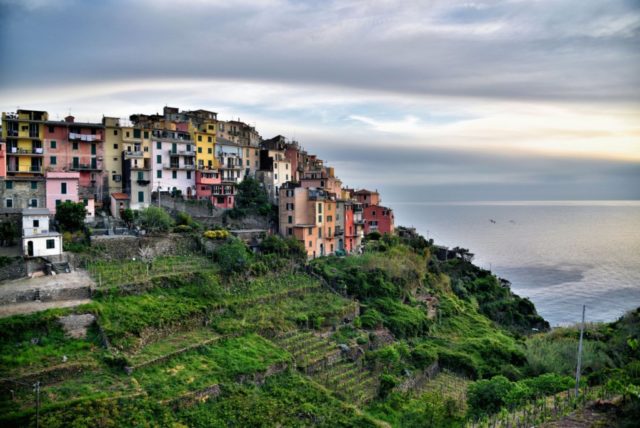
The Cinque Terre — five charming, traffic-free villages on the Italian Riviera — is a delightful place to be on vacation. But when it comes to updating the Cinque Terre chapter in our Rick Steves Italy guidebook…meh, not so much. Anytime a researcher is dispatched to the Cinque Terre, they return with tales of woe. It turns out this lovely strip of coastline is a minefield of allegiances and grudges that can only exist in a tiny town. And the most intense conflict I’ve stumbled into anywhere involves — of all things — gelato.

cameron-italy-corniglia

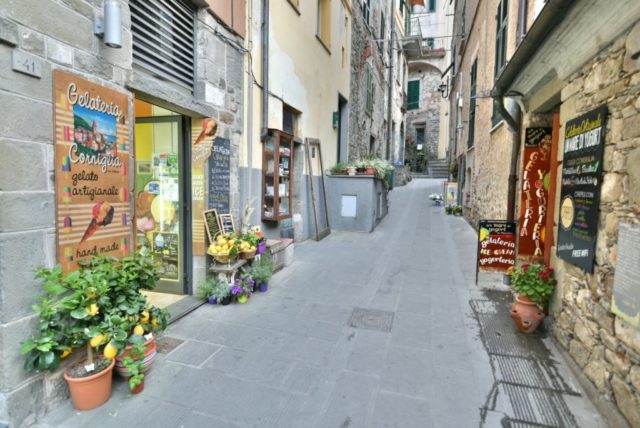
A few years ago, I hiked from Vernazza over the bluff to Corniglia — the Cinque Terre’s resident hill town, perched on a ridge overlooking the Mediterranean. On the outskirts of town, I stopped off at a hotel I needed to update for our book. As I was leaving, the owner stopped me. “Listen,” he said, conspiratorially. “If you want some gelato, I strongly recommend the first gelato place on the main street.” He made severe eye contact with me. “Not the second one! The first one. You understand? This is important.”

A bit puzzled, I left with a noncommittal “grazie for the tip” and headed into Corniglia. Sure enough, on the main street through the old center of town, two rival gelaterie stood next to each other. I thought nothing of it, and proceeded to update our listings with several hoteliers and restauranteurs. Strangely, as I made my rounds, a few other locals also weighed in — completely unsolicited — on which gelateria was the better one.

Curious — and ready for a snack — I dropped in at the gelateria that we recommend in the book. I was warmly greeted by Alberto, who couldn’t be more excited by my visit. He showed me a photo of himself with Rick, and a cover shot of our book that he likes to put in the front window. He forced several samples on me, and dished up a tipsy cone piled comically high with scoops of different flavors. He even pulled out a little plastic container and offered to load it up with even more gelato for later. (Facing a long, hot train ride back to the next town, I politely declined. He almost forced it on me anyway.)

cameron-italy-corniglia-gelato-guidebook

As I was leaving, Alberto pulled me in close. “Before you go,” he said, “can you do me a very big favor? That gelateria next door…” He practically spat on the floor as he said it. “They put up a picture of your book. But they are not recommended! They are lying! You must do something about this. This must be illegal! You have a responsibility to stop them.”

I walked past the other shop’s window. No Rick Steves sign. Oh, well. But Alberto chased after me. “Aha! They take it down because they know you are here. Please go in and tell them to stop!”

“Look,” I said, “if they don’t have the sign up when I’m here, then what can I do?” (In fact, there’s nothing I can do in any case. We’ve seen this from time to time: Once a place recognizes the touristic currency of a Rick Steves endorsement — whether they are actually recommended or not — there’s basically nothing we can do to police them. We just hope that our readers are actually using our book’s tips, rather than trusting random signs.)

Clearly, the gelato situation in Corniglia is a Big Deal. Somehow, all of this little town’s frustrations, conflicts, and grudges, dating back many generations, have boiled down to these two little neighboring shops. And I had been enlisted to play Solomon. I managed to escape that trip without any more conflict…but I could never forget the gelato controversy that raged in little Corniglia.

Flash forward a few years. I’m back in the Cinque Terre, and back in Corniglia, updating our book. This time, I’m prepared. I arrive in town with my shields up. I will not be drawn into Gelatogate. I will do my work and leave…as quickly as possible.

The day goes well. I make my rounds and am ready to head out. I’ve saved the gelato for last — partly to forestall further conflict, and partly to treat myself before the train ride home. But just before that, I’m updating one last restaurant. The restauranteur is warm and gregarious. We talk about his menu, and his enthusiasm and pride lull me into a sense of normalcy.

But then, when I have one foot out the door, like a coiled cobra — he strikes.

“Say…did you see the new gelateria at the start of town?” he asks me, conversationally…but a little too eagerly. Uh-oh. I know where this is going.

“It’s a very good one. You should see it.” His tone shifts from casual to severe, as his laser-beam eyes pierce mine. “You must see it.” The next few moments are a blur, as somehow I find myself following him down the street, to where he physically plants me inside this new gelateria.

cameron-italy-corniglia-gelato-wars

Aren’t two gelaterie more than enough for this tiny town? Do they really need a third? This is what I’m wondering as I get the hard sell.

I ask a few probing questions. And finally they ‘fess up that this is, in fact, a second outpost of one of the original gelaterie — the one that’s NOT in the book. I admire the bold gambit. Now there are two clone gelaterie, across the street from each other, before you even get to Alberto’s. (It also means that Alberto’s is, technically, no longer the “second one.”)

Scanning the flavors in this new interloper, the many skirmishes of the gelato wars become clear. Alberto’s shop has a delicious honey flavor, which we recommend in the book. This shop, too, has a honey flavor. Alberto is very proud of his basil flavor — new for this year. This shop, too, now has a basil flavor. Like JFK and Khrushchev, these two gelato makers are keeping pace with each other as they slowly…slowly…escalate the gelato wars.

Case made, the restauranteur tries to close the deal. “So…you will put this gelateria in your book?”

I hedge. “Uh, I’ll think about it.”

“Think about it!?” the restauranteur demands. In an instant, the tone of our conversation has turned sour and confrontational. “What’s to think about? It’s the best one. The best one!” (Mind you, he is — as far as I know — not the owner, nor in any way professionally involved in this gelateria. He’s just a very, very, very concerned citizen.)

I try to explain myself. But he won’t let me finish. “The last time Rick Steves was here, I took him to this gelateria. And it’s still not in the book. That was nearly two years ago! What is taking so long?”

I bail out of the shop, as politely as possible, and try to ignore the now-furious restauranteur as he hangs his head, Charlie Brown-style, and theatrically sulks back to his own restaurant — stomping his feet like a frustrated toddler.

It’s awkward, sure. But at least I get to leave town. For these poor villagers, this is just the latest salvo in the gelato wars of Corniglia.

I’m sure you’re wondering: Which one is best? Easy: Alberto’s. How do I know? Because on both trips, I tasted both. And Alberto’s wins the taste test, hands down. So if any Corniglia gelato warriors are reading this, now you know: If you want in the book…make better gelato.


To find quality ice cream on your own — whether you’re in a tiny town or a huge city — check out my tips on how to find Italy’s best gelato.

There are plenty more mishaps in my “Jams Are Fun” series. Such as the time I was stuck on a cruise ship in a North Sea storm. Or the time I ran out of gas on Scotland’s remote north coast.

And you can also read more posts about the Cinque Terre from this trip.

This happened to me while updating the Cinque Terre chapter in our Rick Steves Italy guidebook. We also have a more concise and focused, full-color Rick Steves Pocket Cinque Terre book.

A Stroll Through Ljubljana — My Favorite City in Europe

Ljubljana — the capital of Slovenia — is my favorite city in Europe.

There, I said it.

Yes, I know how ridiculous that sounds. And yes, I really do mean that I like it better than Paris, Amsterdam, Barcelona, or Rome. Not that it’s objectively “better” than any of those places — just that I like it better.  (For the record, London, Budapest, and Sarajevo are also on my personal “favorite cities” list.)

One of Europe’s smallest capitals, Ljubljana feels even cozier than its population of 280,000. Everyone here knows each other. I have a handful of friends here, and I usually bump into them before I have a chance to look them up.

In town to update my Rick Steves’ Croatia & Slovenia guidebook, I’m finished with the day’s work and ready to meet up with my friend Marijan. I’m standing by the vivid-pink church that crowns the cozy main square, scrolling through my phone’s contacts to find Marijan’s number. Just then, I feel a bicycle pull to a stop next to me. Sure enough, it’s Marijan. “Dobrodošli!” Marijan says. “Welcome back to Ljubljana.”

We begin strolling together through the cobbled streets. Marijan — who leads tours all over Europe for Rick Steves — knows more than anybody about Ljubljana, and Slovenia, and the Balkans, and Europe…and, basically, everything. When I’m working on a guidebook, I can barely scribble fast enough to capture all of the insights that tumble out of Marijan’s mouth. But this afternoon I’m taking a break from all that, and just enjoying Ljubljana.

Wandering through the mellow hubbub of Prešeren Square, I comment on how serene this space has become. I remember — just a few years ago — watching motorcycles rip through the middle of the square. But today, students lounge, loiter, and flirt furiously at the base of the statue of national poet France Prešeren. Street performers blow big bubbles, gyrating the vivid colors: the fluorescent-pink church, the green treetops, and the deep-blue sky. Even the commuters don’t seem in a hurry. “Yes, so much of the center is traffic-free now,” Marijan says. “Mayor Janković has really remade the whole city.”

Zoran Janković, a former supermarket magnate, has been mayor of Ljubljana since 2006. Picture starting with the most people-friendly city you can imagine…and then aggressively pursuing an agenda to make it even better. In his decade in office, Janković has pedestrianized much of the urban core, realized long-delayed urban beautification plans, and connected formerly dilapidated exurbs into the city’s grid, all while keeping the budget under control.

“Yes,” I say. “As an outsider who drops in every year or two, I see so many improvements under Janković, and basically zero downside. But he must have his critics. ”

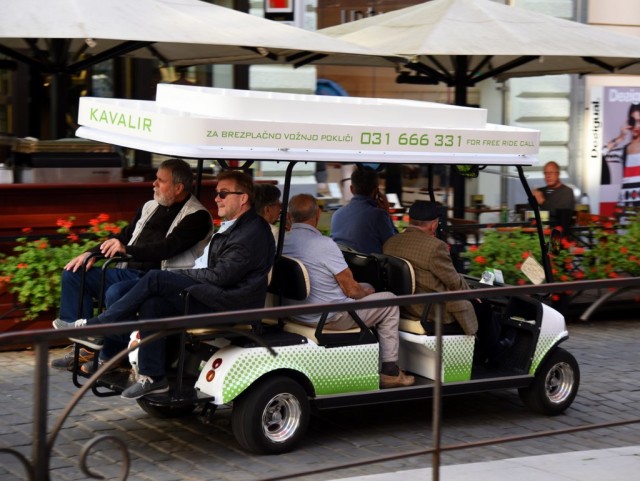
“Sure, a few,” Marijan says. “For example, some older folks who live in the city center became upset because the pedestrian zones made it impossible to drive to their homes. So Janković created a free shuttle system.” Just then, a bright-green golf cart, like a clown car packed with senior citizens, silently rolls past us. “Anyone can just call and tell them where you are, and where you want to go, and in a few minutes one of those carts pulls up.”

cameron-slovenia-ljubljana-kavalir

Despite his over 80% approval rating as mayor, Janković was narrowly edged out when he ran for prime minister a few years back. So he returned to his niche, winning a landslide re-election as mayor. And today, he just keeps on making his improvements to the city.

OLYMPUS DIGITAL CAMERA

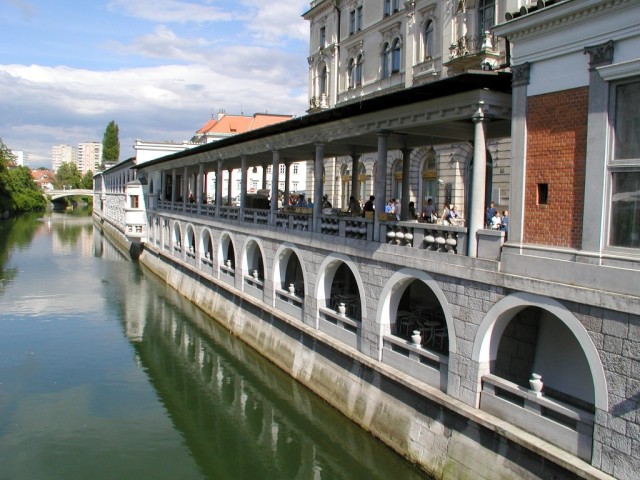
We cross the river on the Triple Bridge, hang a left, and walk along the colonnaded embankment to the outdoor market. The bridge, the embankment, the market, and much of Ljubljana were designed in the early 20th century by Jože Plečnik. This prodigiously talented architect-slash-urban planner is as revered by his fellow Slovenes as he is unknown to everyone else. When you ask locals why Plečnik is so important to them, tears appear in the corners of their eyes as they struggle to find the words.

After a successful career in Vienna, Prague, and Belgrade, Plečnik returned to his hometown. He lived at one end of Ljubljana, and worked at the other, so every day he strolled along this very riverbank. If anyone knew how to make this city more inviting and pedestrian-friendly, it was Plečnik — and that’s exactly what he did.

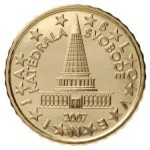
slovenia 10 euro centAt the edge of the market, Marijan points out an eight-foot-tall, cone-shaped monument. “This commemorates Plečnik’s unrealized vision for a Slovenian acropolis. He wanted to build a cone-shaped parliament on top of the hill, where the castle is now. But his plan was just too ambitious. Do you have a €0.10 coin, minted in Slovenia?” Digging in my pocket, I find one. “See, there,” he says, flipping to the back of the coin. “That’s Plečnik’s never-built parliament.”
“I just love this place,” I say, to nobody in particular. “What other country puts an imaginary building on their money?”

cameron-slovenia-ljuibljana-market-stalls

Deeper in the open-air market, rustic stands tidily display today’s produce. Marijan points out that a few of the stands are actually carts, with wheels. “Some garden patches are well within the city center,” he says. “People pick their veggies, pile them into the cart, and hand-push them directly to the market.”

cameron-slovenia-ljubljana-mlekomat

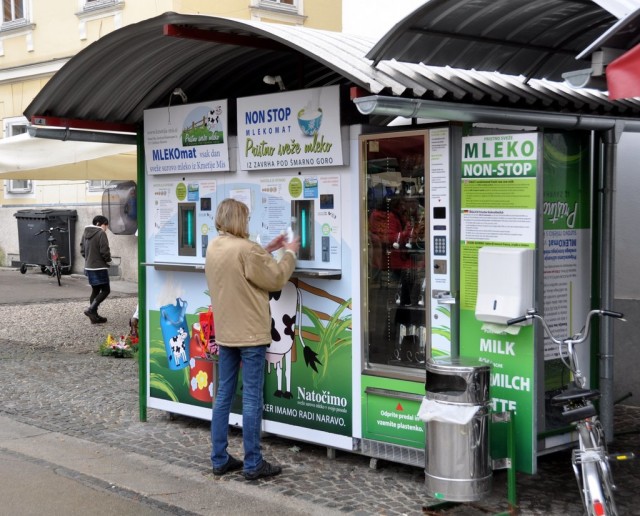
By the meat hall, we pass the “Mlekomat” — a vending machine with a big cartoon of a cow. Just drop in a couple of coins, and the machine fills and seals a glass bottle of farm-fresh, organic milk.

Pausing in the middle of the market, Marijan points in one direction, to the funicular that trundles up the hill to the castle, and then in the opposite direction, to a modern footbridge. “Two more projects that Mayor Janković finally brought about.” I remember hearing about both ideas, many years ago. Each time I visited, people swore the funicular would be up and running by next year…and it never was. But once Janković took over, it actually happened.

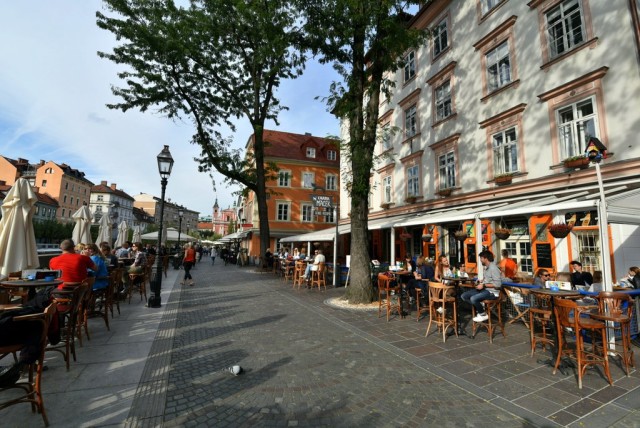
Done with our shopping, Marijan and I walk along another once-traffic-clogged, newly pedestrianized street to a row of riverbank cafés. Shaded by wispy willows and pointy poplars, crammed with tipsy high tables, and populated by easy-to-get-to-know Slovenes, this is my favorite spot in Europe…and maybe on earth. I’ve never quite put my finger on why I love this embankment so much. Maybe it’s because when I travel, I tend to get caught up in my “to do” list. These café tables demand that I slow down for a few minutes and take it all in.

cameron-slovenia-ljubljana-cafes-1

Marijan and I grab a table at my preferred hangout and order two bela kavas (“white coffee,” as they call lattes here). The pastel colors of Ljubljana’s townhouses pop against the hazy blue-and-white sky. The tables around us are filled with students turning a cheap cup of coffee into an opportunity to master the art of conversation. Flowing past us is a steady stream of young families, tourists, and urbanites commuting by foot.

cameron-slovenia-ljubljana-cafes-2

Marijan’s wife Barbara arrives. She tells me about the Rick Steves tour that she just finished guiding (she arrived home from Dubrovnik just last night). And they catch me up on their progress renovating the house Marijan inherited from his grandmother — a years-long project that has been continually delayed by red tape and corrupt contractors. (Apparently Mayor Janković can’t fix everything.)

cameron-slovenia-ljubljana-marijan-barbara

It’s dinnertime. “Do you like burgers?” they ask me. Next thing I know, we pile into their car and drive to Hood Burger, one of my favorite budget-foodie finds of this trip. On our way back to my apartment, Marijan turns off onto a side-street that he thinks is a shortcut, only to find it’s been made one-way in the opposite direction. “Mayor Janković again,” they tell me. “He’s been re-routing streets to improve traffic flow. It can be…difficult to keep track of.” It’s the first time I’ve ever heard either of them breathe a less-than-enthusiastic word about their mayor. Barbara shakes her fist in mock fury. “Curse you, Janković!”

From Marijan and Barbara, to Jože Plečnik and, yes, Mayor Janković, Ljubljana is a city of people whose life’s mission is making their own little corner of the world a better place. This is a city where a two-buck coffee comes with a million-dollar view. Where imaginary buildings and farm-fresh milk are at your fingertips. Where golf carts shuttle old timers to wherever they’re going, and where most people seem to be going nowhere in particular…and loving every minute of it. That’s why I’ll be coming back to this underrated, wonderful little city for the rest of my life.


For more on this fine little city, check out my post about a €25 “budget foodie” day in Ljubljana. I also included Ljubljana’s wonderful Open Market street food event on my list of 10 European Discoveries for 2020.

And there’s much more to Slovenia, including some stunning scenery at Lake Bled and high in the Julian Alps.

We’ve got full coverage of Ljubljana in our Rick Steves Croatia & Slovenia guidebook. It’s also the first stop on our Best of the Adriatic in 14 Days Tour.

A Tuscan Thanksgiving Dinner (Don’t Worry — There Was Turkey)

When I tell people I was in Tuscany for Thanksgiving, their first question is — with a note of concern — “Did you have turkey?”

Americans love Thanksgiving dinner. And many of us simply can’t fathom counting our blessings without an oversized portion of turkey, stuffing, mashed potatoes, and gravy. Our agriturismo host, Isabella, understands this, so very early in the planning stages she reassured her nervous American guests: “And of course we will celebrate Thanksgiving with a special Thanksgiving meal — one with a Tuscan twist.” Well, phew!

cameron-italy-tuscany-Thanksgvng-001

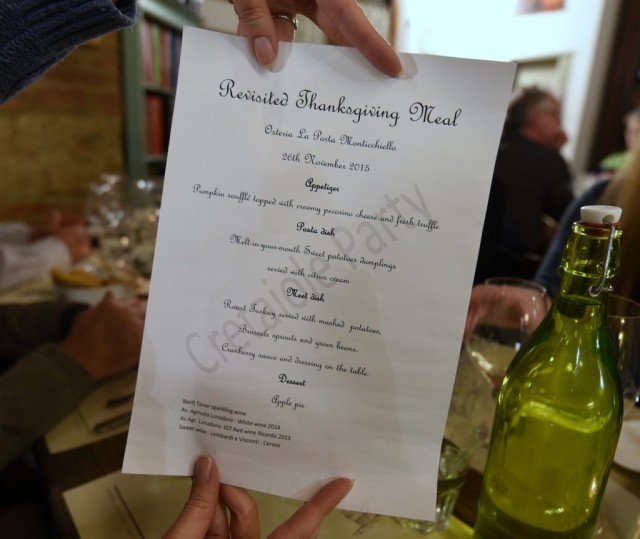
In typically thoughtful fashion, Isabella had arranged a fantastic feast, which happened to be at one of my favorite restaurants in the region (Ristorante Daria, in the tiny hill town of Monticchiello). Months before, Isabella had conspired with the owner/chef, Daria, over a list of traditional Thanksgiving dishes. And the gang at the restaurant had come up with a delicious mashup of American and Tuscan.

cameron-italy-tuscany-Thanksgvng-003

cameron-italy-tuscany-Thanksgvng-004

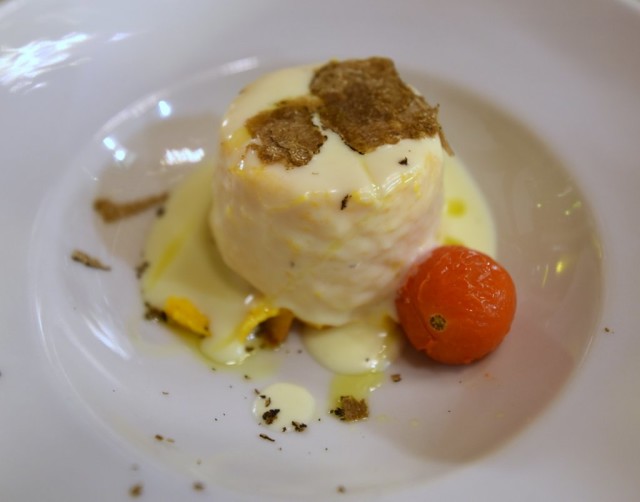
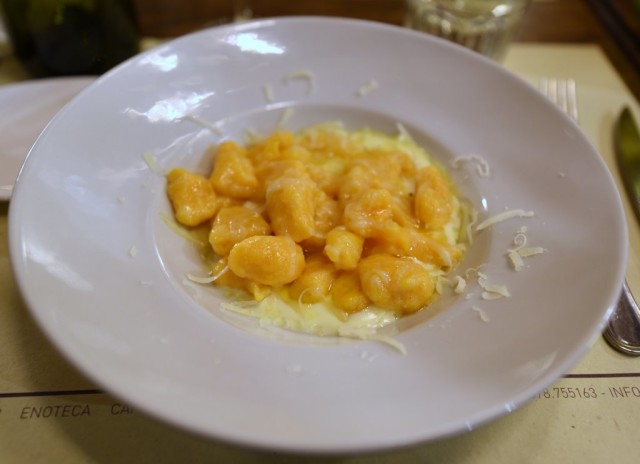
The first two courses were the most Tuscan, but cleverly informed by “our” Thanksgiving ingredients: a delicate pumpkin soufflé, topped with creamy pecorino cheese and fresh-grated truffle. And a dish of pillowy sweet potato gnocchi, gently nestled in a subtle citrus cream. I would not mind seeing either of these dishes on my Thanksgiving table for many years to come.

cameron-italy-tuscany-Thanksgvng-006

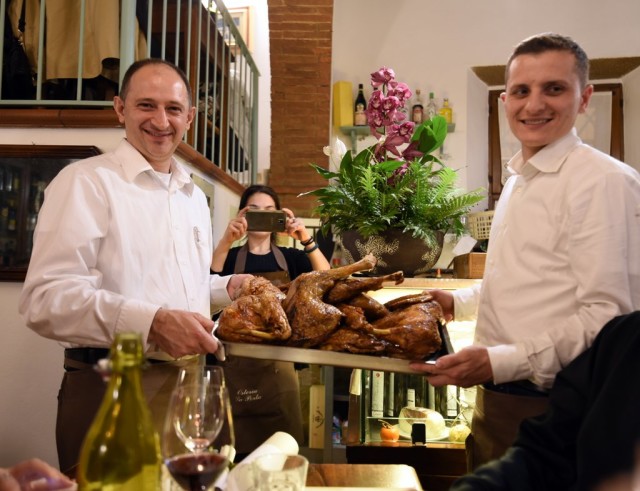
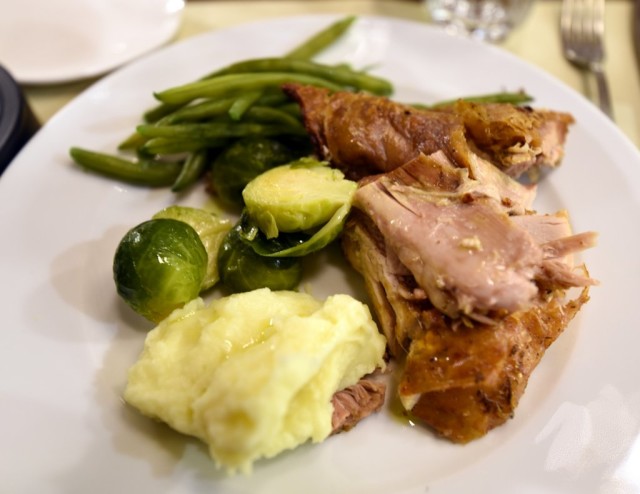
Then it was time for the main event. They loaded all of the turkey onto a tray and ceremonially paraded it through the restaurant. Then they took it back into the kitchen and re-emerged with beautiful — and very traditional — plates of turkey, green beans, Brussels sprouts, and mashed potatoes (with, in a delicious Italian twist, a trickle of fresh-pressed olive oil).

cameron-italy-tuscany-Thanksgvng-007

They also brought out some fantastic gravy and surprisingly traditional cranberry sauce. Daria explained that she’d asked some American friends to ship her some cranberries, which are completely unknown in Italy.

Sitting around the dinner table, watching Isabella’s family, and my family, enjoying an American-Italian hybrid dinner, was poignant. But it made me sad to think that people might pass up an idyllic week in off-season Tuscany with their families, just because of a fear that they may not get their turkey fix.

This is particularly unfortunate because Thanksgiving food isn’t all that exciting to begin with. I sparked something of a riot at our Tuscan Thanksgiving dinner table when I half-jokingly told Isabella, “I’ll let you in on a secret: Nobody really likes Thanksgiving food.”

Yes, we love Thanksgiving dinner. But is it really because of the food? Or is it more about tradition, gauzy memories, and the fun of assembling a blowout meal once a year? Think about it: When’s the last time you got home from work on a Friday night, turned to your spouse, and said, “Hey, you know what I have a taste for? Let’s go out for Thanksgiving food!”

Don’t worry. Plenty of my friends and coworkers have already passionately informed me of my wrongheadedness. But I’ve decided to stick by my highly controversial theory. And, while this rant is partly tongue-in-cheek — and I love a good turkey-and-stuffing dinner as much as the next guy (read: once a year) — it hides a kernel of real travel wisdom.

Holiday traditions are powerful. But keep open the option of busting out of your rut every so often. Risk not having turkey at Thanksgiving. Spend Christmas at a radish festival in Oaxaca instead of singing carols around a fir tree. Skip trick-or-treating in order to be in Slovenia the day after Halloween, when everybody in the country goes to the cemetery to lovingly decorate their family graves. I’ve been fortunate enough to experience all of those things, and never regretted what I was missing out on. And if holidays are primarily about surrounding yourself with the people you care about, you can do that anywhere. Your traditions will always be there, back home, waiting for you…next year.

Ghosts and Skeptics in Britain

A few years ago, I visited a half-timbered old guildhall from the time of King Henry VI, in what little survives of the historic town center of Coventry, England. As I explored the vast, echoey space, I noticed that the two museum attendants were listening to a recording of white noise. On my way out the door, I asked, “What’s that?”

The attendants — a younger man and a middle-aged woman — exchanged a knowing glance. Should we tell him? She took a deep breath. “Look, you may not believe this, but this place is extremely haunted. So every night we set up this recorder to keep a log of the many creaks and bumps. See?” She showed me a long, handwritten list of times and types of noises. Just then, a loud clapping sound — like a chair being tipped over onto a wooden floor — erupted from the recorder. “Ah. There’s another one,” she said, adding it to the list.

My interest piqued, I probed a bit further. “So, have you two actually experienced this?” Another knowing glance, this time with barely suppressed smiles. “Oh, constantly. Every day, we hear some bump or knock.”

They proceeded to tell me stories that curled my toes: Normally it was just a strange sound coming from a room they knew was empty. But other things had also happened. Strange things. People on the overnight cleaning crew kept quitting — refusing to give a reason. And one time, when the two attendants were certain they were the only people in the building, one last patron — an elderly woman — arrived to look around. As she was leaving, she filled out a comment card. When they read it later, it said, “Fascinating old space. But that gentleman dressed in historic clothes in the back room was very unfriendly. I kept talking to him, but he never said anything back!”

I asked if they’d personally seen anything strange. Both of them had — usually just flashes of light or inexplicable shadows. But the young man described one particularly harrowing experience. One evening, he was all alone in the building, closing up. He went up to the rickety old minstrel’s gallery overlooking the hall to carry out his duties. When he turned back toward the stairs — the only stairs — he found a ghostly figure blocking his path. Terrified, and with no other options, he simply pushed his way through the phantom and quickly left the building. “What did it feel like?” I asked. “Cold,” he said. “Very, very cold.”

“That’s terrifying! How do you spend so much time here?” They shrugged. “It’s not so bad, really. We get used to it. It’s routine — just part of the job. And we’re never in danger. We’re not so much frightened, but curious. That’s why we record the noises. Try to see if there’s any pattern.”

Maybe I’m a total sucker. Maybe they sit there with their tape recording all day, waiting for a live one to nibble at the bait. But I don’t think so. They seemed like decent, honest people. They didn’t breathe a word of the hauntings until I asked them about it, and even then, they were initially reluctant. I think they really believe these stories. Whatever was happening — explainable by science or not — was happening a lot.

Tonight in Stirling, Scotland, I took one of those nighttime “haunted walks.” An actor, dressed as the ghost of the hangman, led us through the old kirkyard, reciting a carefully composed litany of ghostly stories from the city’s history as we walked between the tombstones.

After the show, he broke character, and we chatted as we walked back down into town. Turns out he’s a serious historian, who’s written two books about the history of Stirling.

We passed the heavily grilled top window of the old tollbooth building, which during his spiel he’d described as the place where the condemned would await the death penalty. Pointing it out again now, he said, “That was actually my office for four years. I didn’t even realize that there was anything strange about it until one day, I mentioned the space to a friend, and he said, ‘Don’t you know that’s the most haunted place in town?'”

I asked him if he’d ever actually had any strange encounters himself. “I’ve had plenty of strange encounters in this town. But none of them were paranormal.” It turns out that the person who has devoted his life to studying, researching, and writing about paranormal activity in Stirling for the last two decades…is a total skeptic. In fact, he has accompanied “paranormal investigators” into the graveyard, and prides himself on finding scientific facts to debunk any unusual findings they come across.

He described an example. One of the town’s historic pubs took down an old bit of paneling, revealing a hidden compartment. Suddenly, the workers were overcome with a terrible sensation. They couldn’t breathe and felt distressed. The only items in the compartment were some empty cans and a faded old black-and-white picture of what appeared to be a priest.

Paranormal investigators and psychics came in to investigate. And while they were doing that, our “ghost hangman” decided to do some actual historical research. He found a faded watermark on the back of the photograph, and conferred with a local museum curator. It turns out, in Victorian times, the pub was owned by the town’s portrait photographer. His wife hated the fumes from the developing chemicals, and insisted that he do his work at the pub. Then, at some point, his darkroom was abandoned and boarded up, with all those nasty chemicals inside, evaporated and trapped for over a century…until modern-day workers unsealed the space and inhaled them.

Should we believe the haunted museum attendants in Coventry? Or the skeptic ghost walker in Stirling? Or perhaps both? One of the joys of travel is being exposed to different real-world perspectives…then having an opportunity to make up your own mind.

Have you experienced any unexplained happenings in your travels around Europe?


I was in Stirling working on our Rick Steves Scotland guidebook.

While on my Scotland trip, I did a lot of blogging (all archived on our website). For a roundup of what I learned, check out my post on Top 10 Tips for Traveling in Scotland.

We can’t promise ghost sightings…but our Rick Steves Best of Scotland in 10 Days Tour does stop in Stirling. And lots of other great places.